A few weeks ago I entered a Five Below store and bought their finest reusable film camera, for $7.00. It works, but it’s not better than a disposable camera. And after burning one roll of film, my conclusion was that a beginner to film photography would be better off spending a few dollars more, somewhere between $35.00 and $50.00, either on a new fix focus point and shoot like the Kodak M35 or the Ilford Sprite, or on a used autofocus compact zoom manufactured in the nineteen nineties.

I was curious, and started hunting for bargains on the site of Shopgoowill.com.
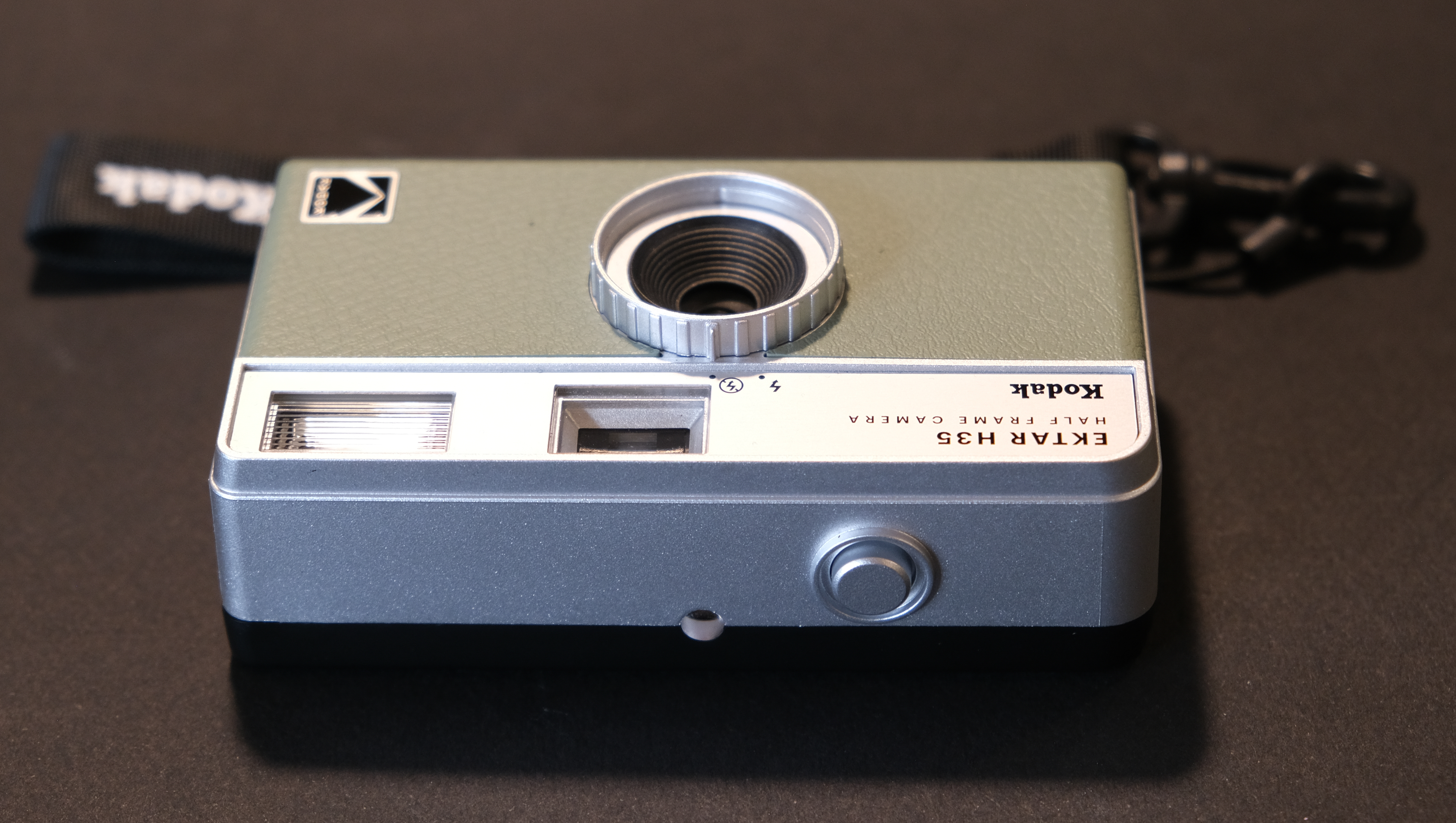
I found a nice copy of a the Kodak Ektar H35, a reusable, fix focus camera, with its coordinated Grapsa case. The camera sells new for $50; add $15.00 for the case; here, second hand, the starting price of the auction was $9.99, and after a fierce bidding war (just kidding), the H35 became mine for $16.00. Adding handling, shipping and taxes, the H35 cost me just a tad under $30.00.
The Ektar H35 is not made by Eastman Kodak, the name is used under license by Reto, a Hong-Kong based company. The big differentiator, ironically for a product proudly wearing the name of Kodak, is that being a half frame camera, it will save you money on film and processing, by giving you twice as many images on a standard roll of 35mm film.
The high cost of film and of film processing makes shooting 24x17mm frames very tempting, financially – and since most images are destined to be shared on the small screen of smartphones, the loss of resolution (compared to a full frame 36x24mm negative) is not a real issue.
The H35 is styled like an old Kodak Instamatic, and is technically almost as simple as its remote ancestor – the fix focus 22mm lens opens at f/9.5 (22mm on a half frame gives you the angle of view of a 35mm lens on a full frame camera), and the shutter operates at 1/100 sec. The electronic flash is brought in service by turning a ring around the lens. That’s it. Compared to a disposable or to the original Instamatic, it has a better lens (2 elements, optical grade acrylic), and contrarily to its Kodak predecessor, it’s using standard 35mm film (the Instamatic’s negatives were 28x28mm, from a “126” film pack).

For the record, there is new version of this camera, the Ektar H35N, where the lens has been upgraded to include one glass element, and one aspherical acrylic element.
The Ektar is a recent and extremely simple camera – with not much to go wrong – and I was not taking a big risk buying it on Shopgoodwill.
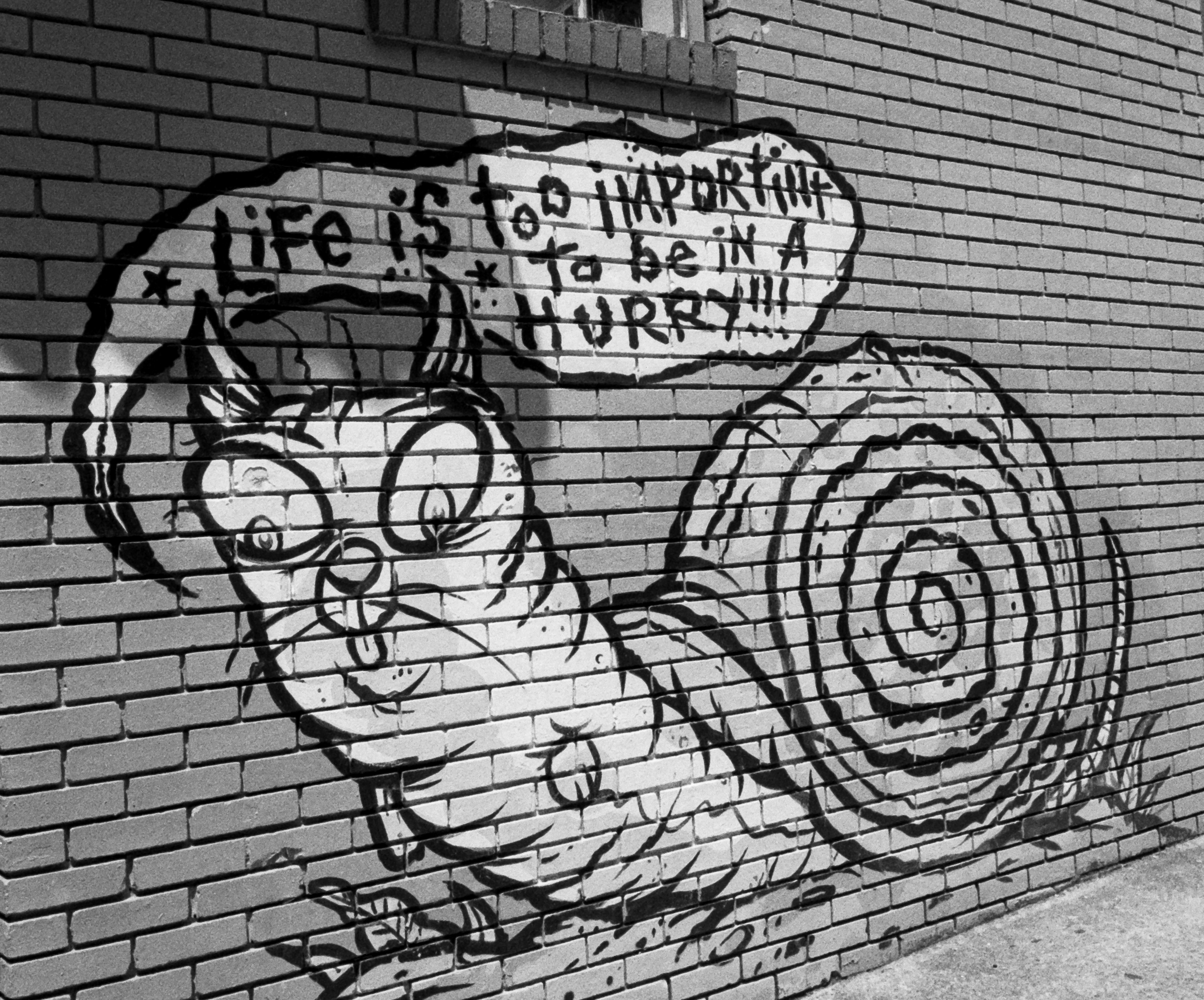
Comparing the images out of the camera (as shot)

From the same vantage point, the same day, with another half-frame camera, the Pentax 17
Shooting with the Ektar 35H
In its coordinated green case, the H35 looks very good. Much better than expected for such a cheap product. The film advance and the shutter release are smooth. But don’t look too close, though – it’s plastic, plastic, plastic. The film rewind crank is filmsy and looks really fragile – how long will it last? The viewfinder (oriented vertically – it’s a half frame camera) looks like the viewfinder of a full frame 35mm camera where two black strips would have been glued left and right: it’s narrow, uninspiring, and makes it difficult to predict exactly what will be in the frame.
In all honesty, I really had to make a conscious effort to use the Ektar. It did not come naturally to me, and whatever other camera I had with me that day saw more use than the little Kodak. And if I had no other camera, I still preferred taking the picture with my phone. I never enjoyed using disposable cameras, and the truth is I did not enjoy using the H35 either.
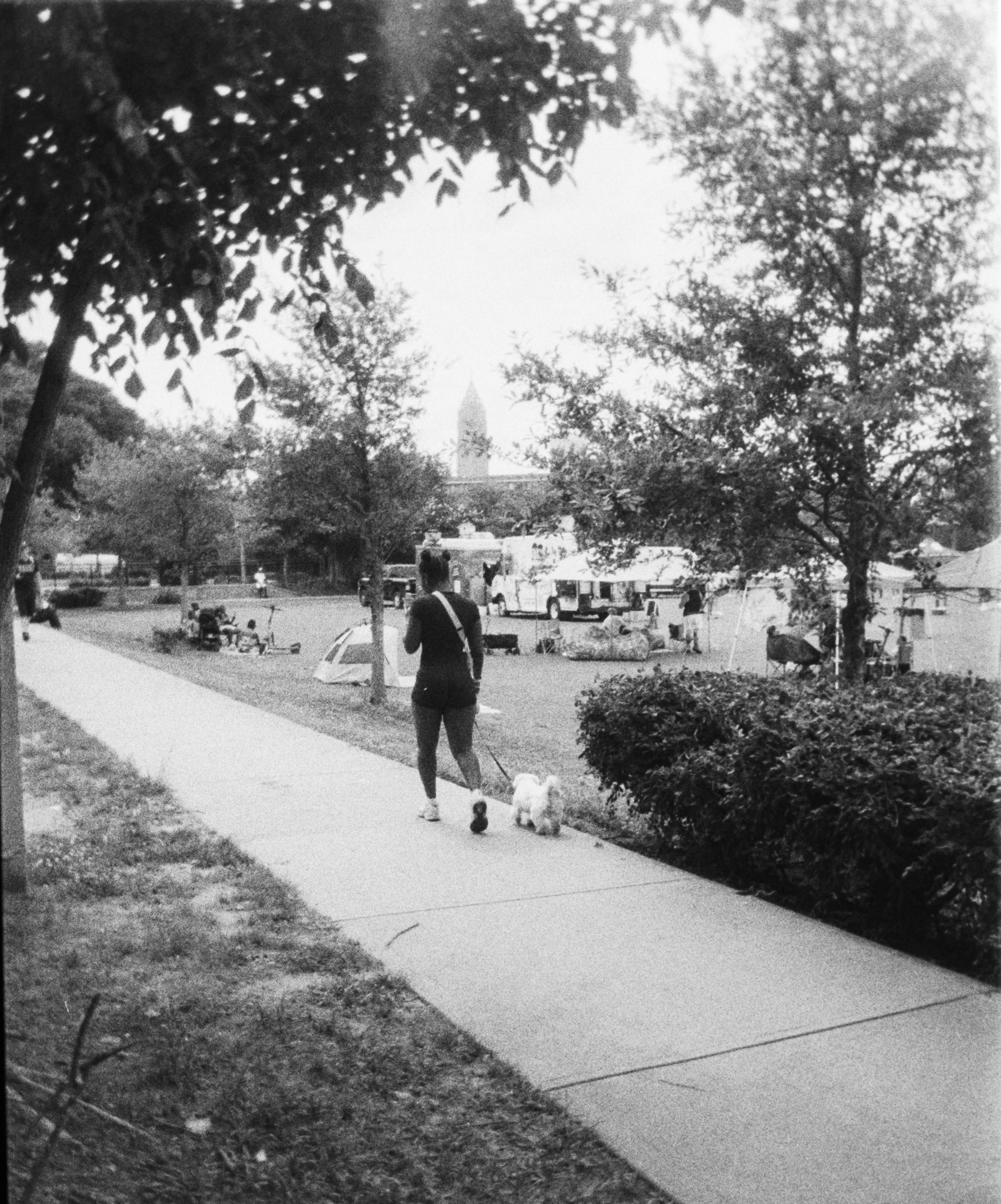
Image Quality
It took me months to finish a single roll of film, (48 frames on a 35mm roll sold for 24 “full frame” images, remember) and it stayed in my photo sling next to my “camera du jour” without seeing much use. But it gave me the opportunity to use it in parallel with a recent (and much more expensive) half frame camera, the Pentax 17, and with an older and generic point and shoot cameras of the turn of the century, the Argus M5600d.
The Pentax and the Argus are both larger, heavier, but much more interesting to use as cameras. But what about the image quality?
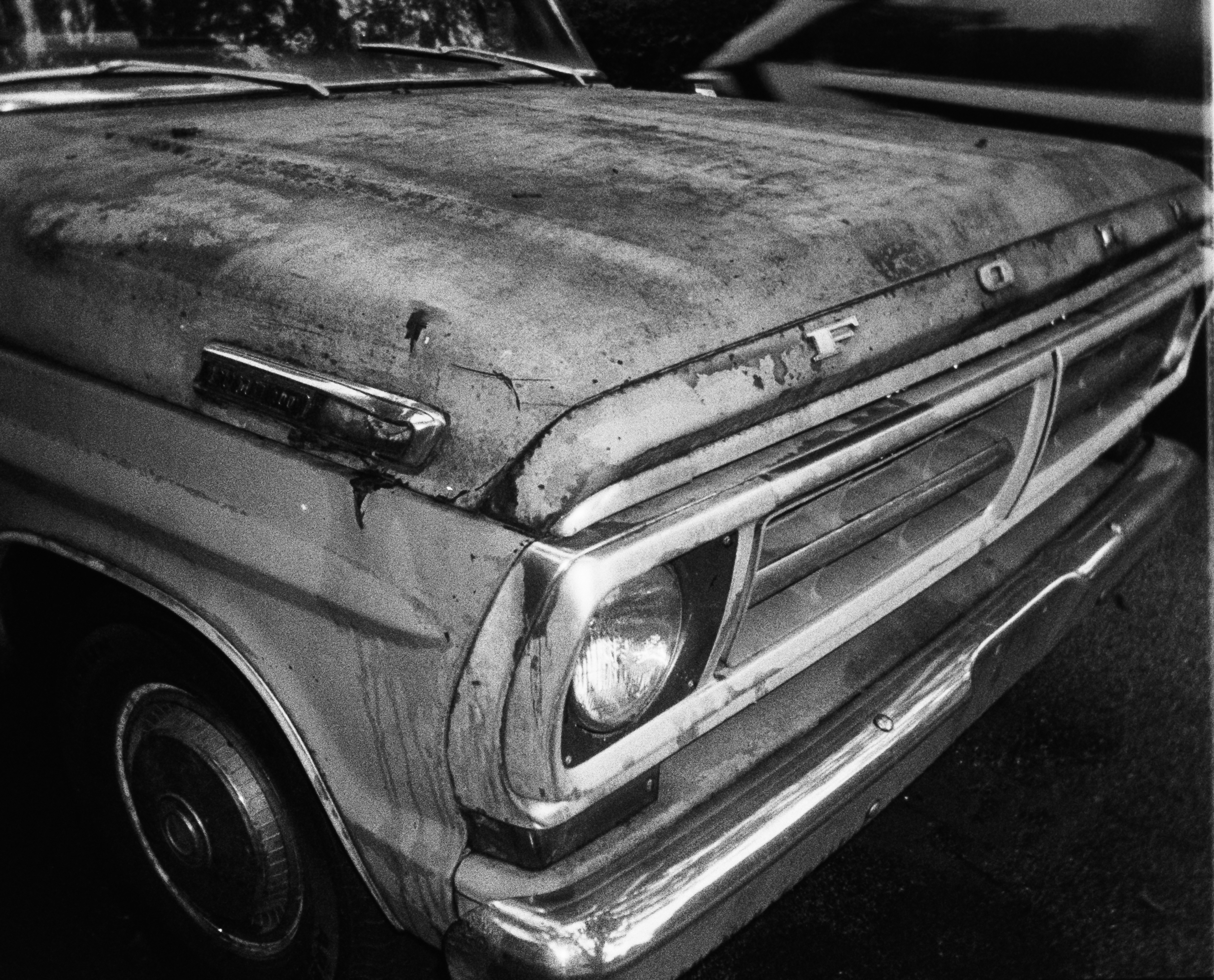
Looking at the B&W negatives shot with the Ektar, it’s obvious that there are huge differences in density from one image to another one – some are extremely dark, some are extremely clear, almost transparent – a consequence of the absence of any exposure control system in the camera. You have to rely on the exposure latitude of the film, on the image enhancing algorithms of the lab’s scanners, and on your ability to massage the picture in post-processing.
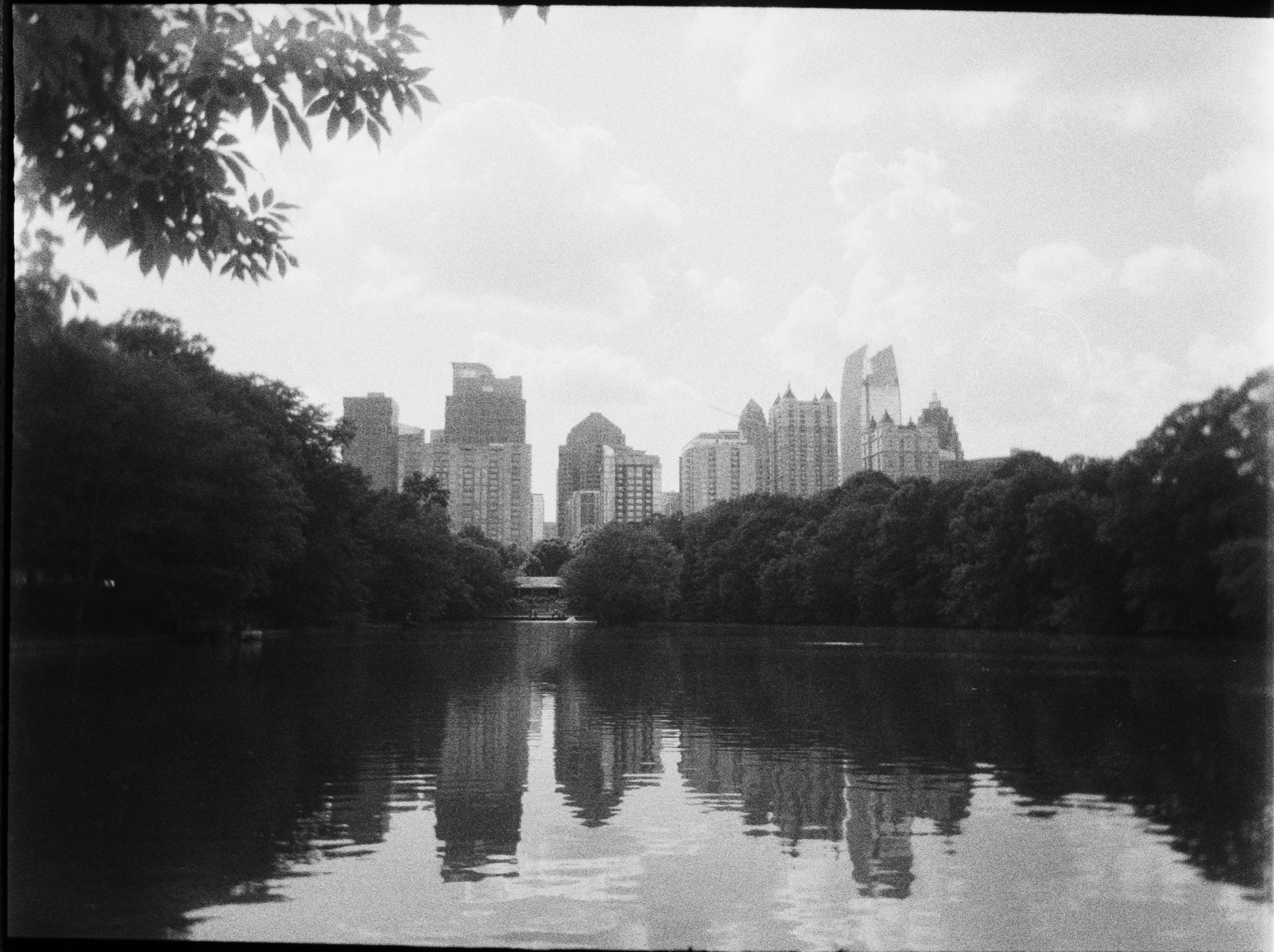
Comparing two half frame cameras:
and shot the same day from the same vantage point, with the Pentax 17:
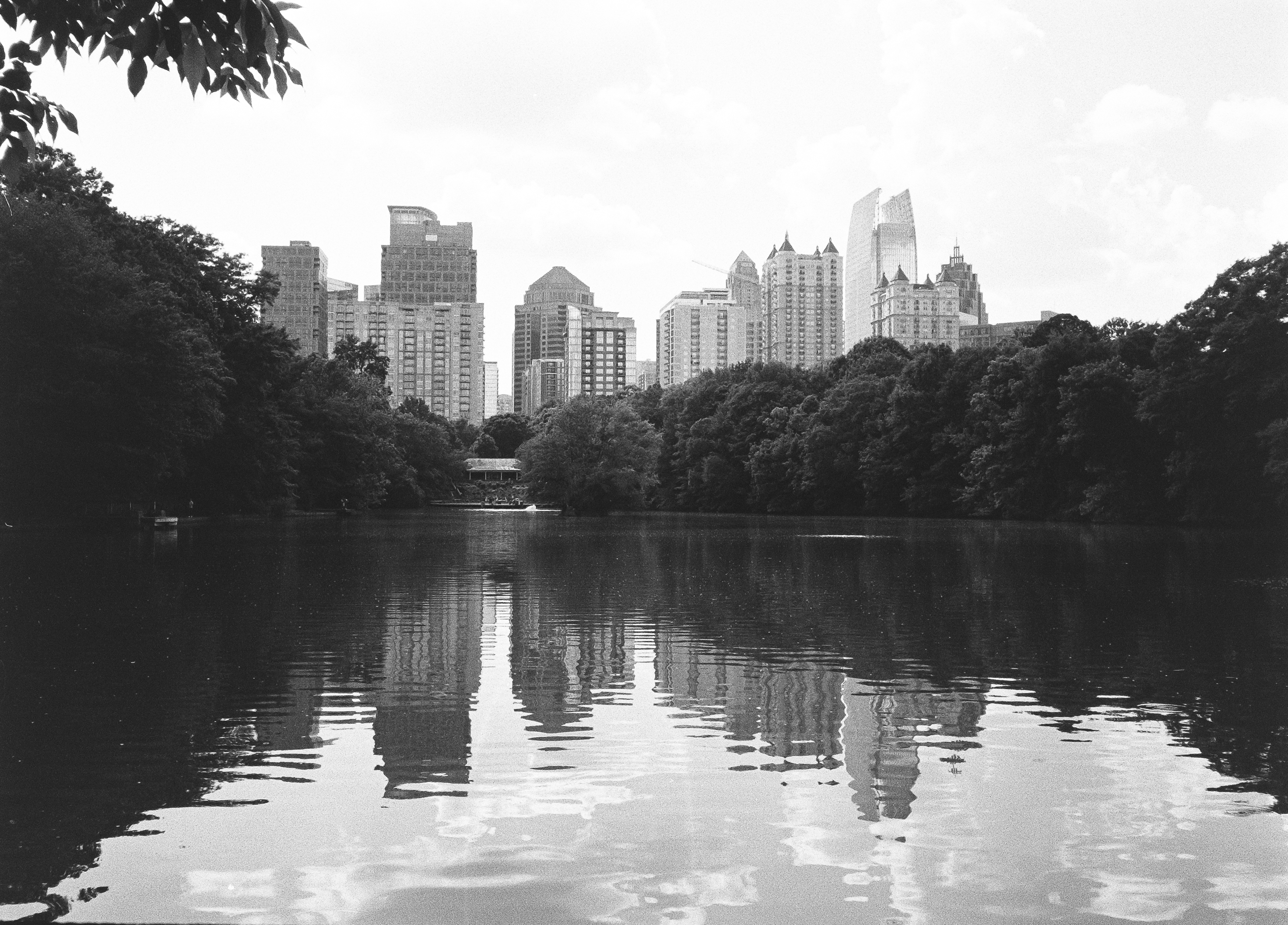
The B&W negatives were not scanned in the true sense of the word, they were simply digitized with a Fujifilm X-T4 equipped with a Micro-Nikkor 55mm lens and the JJC Digitizing Adapter, then imported and inverted in Lightroom with only adjustments to the S curve. The images labelled “as shot” did not benefit for any other enhancement, and represent what the camera is really capable of, before any software filter or any artificial intelligence trickery is applied.
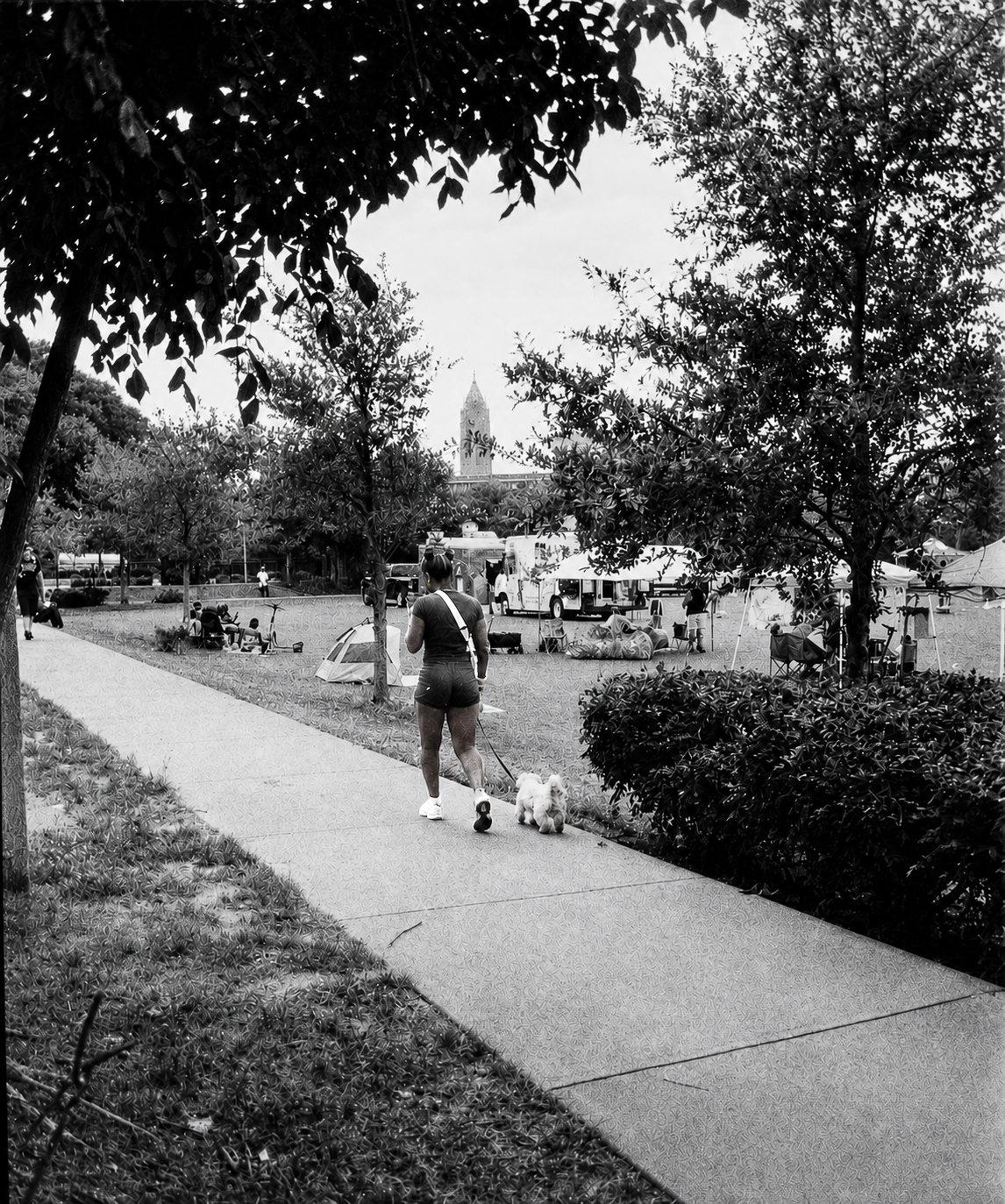
The images are a mixed bag – this Ektar is clearly a sunny-16 type of camera, and the best pictures are taken on a bright day, middle of the morning and middle of the afternoon. Don’t use it for landscapes – even urban landscapes – it seems optimized for subjects in the 4 to 30ft zone and anything beyond that is blurry.
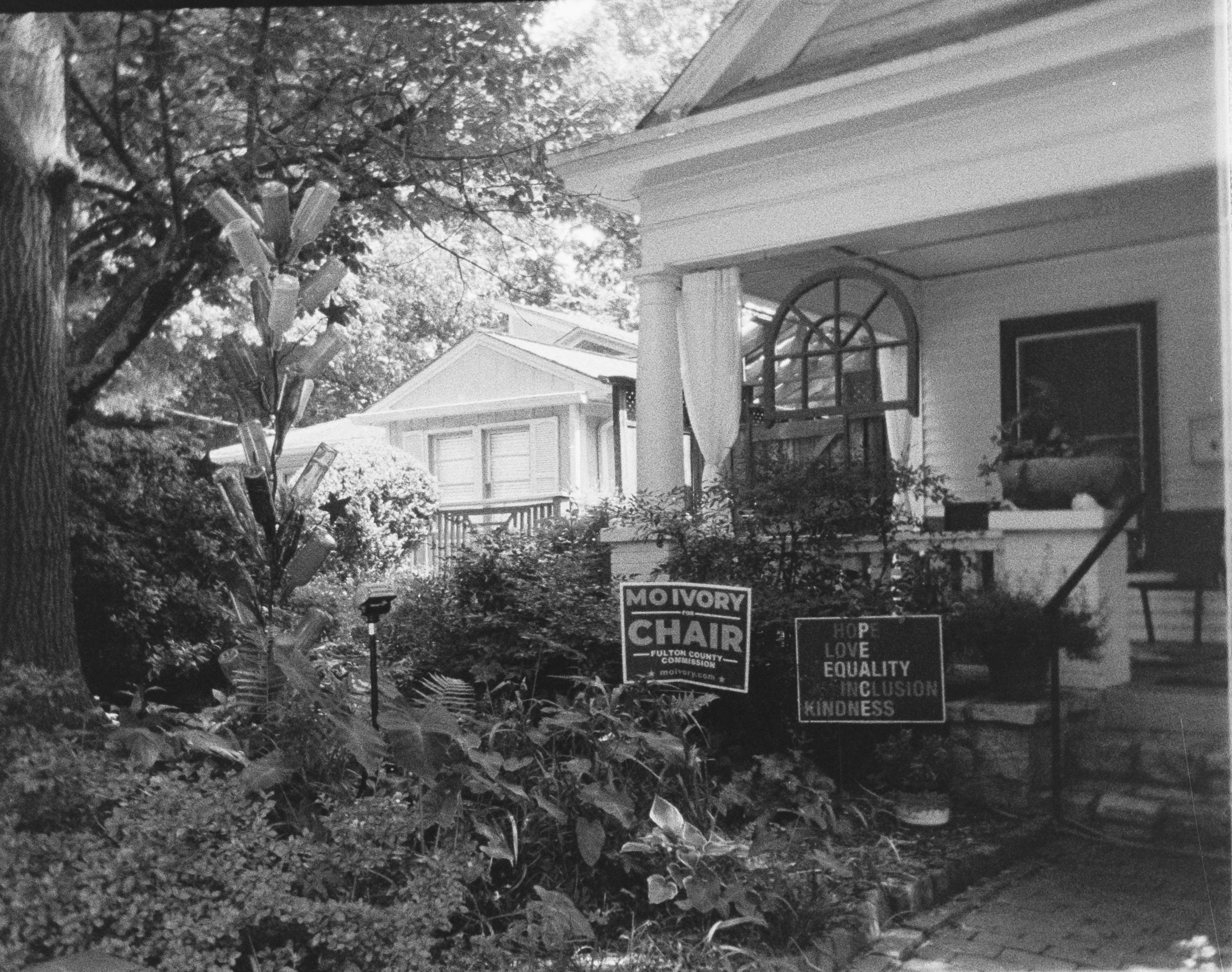
On the other hand, some images – close-ups, street scenes, statues, are “interesting”, and pictures of houses and front yards are generally nice. Go figure.
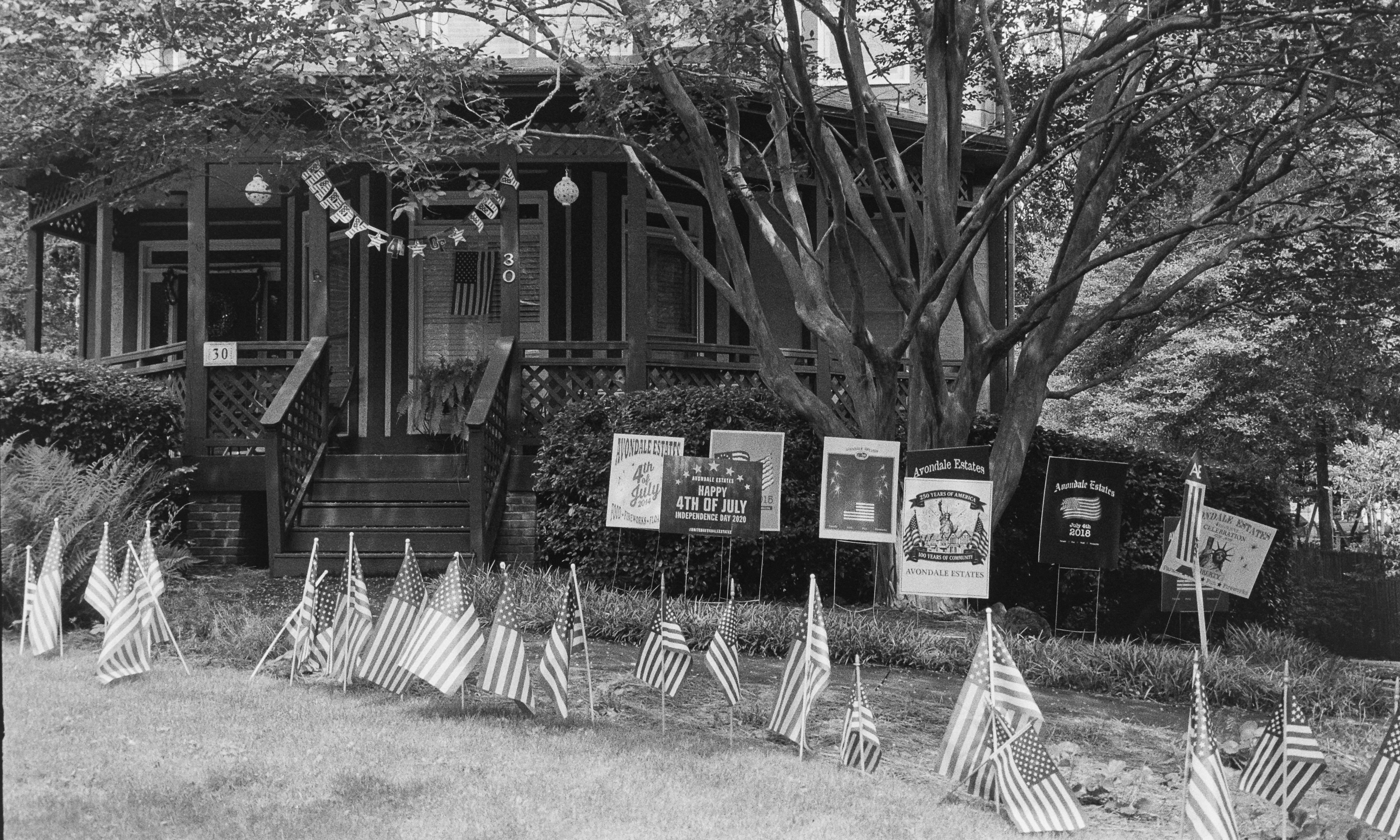
Even at its preferred focusing distance, the resolution is surprisingly poor – it’s closer to an Holga than to any decent autofocus film camera like the Argus M5600 and its clones. As long as you look at them on the relatively small display of a smartphone, the images look fine. But they rapidly reach their limits, and on an iPad or a 15in laptop display they will look fuzzy, lacking definition and contrast.
On a final note, I tried to use the flash multiple times, and not a single one of the images was even remotely acceptable.
Another comparison – here the Ektar….
Here, the Argus M5600d
Conclusion
If you’ve read this blog entry that far, you have understood that the H35 is not for me. It may be cute, but it’s still extremely basic, not really better than a single-use, throw away camera.
I was really disappointed by the image quality: displayed on a smartphone, some images can be somehow “acceptable” without ever being great – while some are not even salvageable, except maybe by AI – but what’s the point, then. And on anything larger than a smartphone display, they will generally fare poorly.
To the camera’s defense, I did not shoot with color film, and did not have the film processed and scanned on the Noritsu or Frontier machines of a pro lab – their software apply all sorts of enhancements to the images before saving them as Jpegs, and I’m sure their pictures would look better.
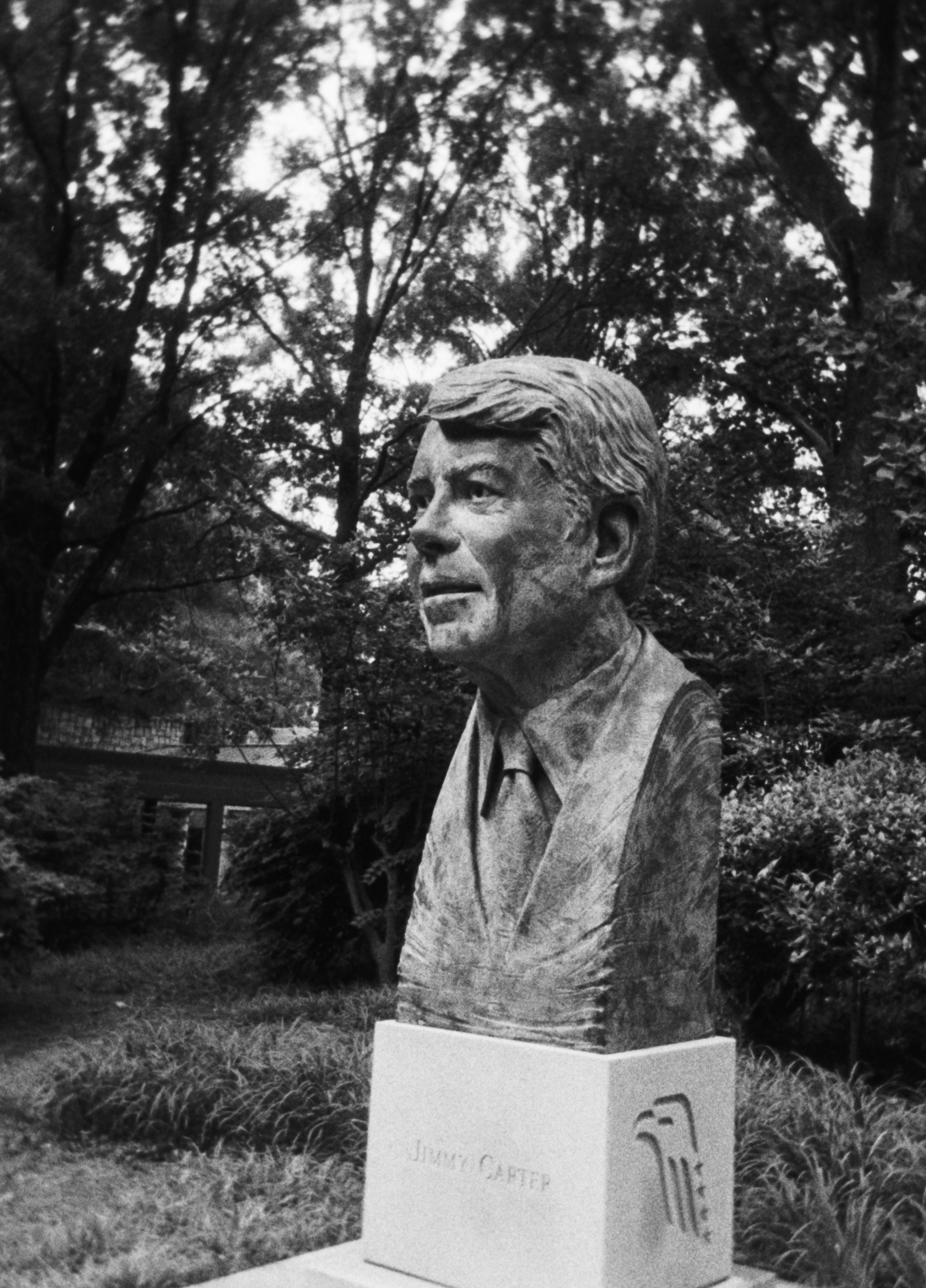
In other words, it’s not a camera that will give me the type of images I like. But it may work for photographers with different styles and tastes.
Photography is at the same a craft, and an art. If you don’t really care for the “craft side” of this activity, but have a keen eye, good image composition skills, and like your images on the rough side, a fix focus camera like the Ektar, or even a toy camera like a Holga or a Diana may be a good fit – you’ll have to learn how to exploit their limitations and their flaws to create images reflecting your unique vision.

Was I fair in my evaluation of this camera, and is the Ektar H35 that bad?
I believe I was fair. The Ektar was in my photo bag when I was shooting with the Pentax 17 and the Argus, and although I clearly preferred having those two cameras in my hands, I still made a point of shooting one or two images per scene with the Ektar.
The cameras were not all loaded with the same film stock (I was using Fujifilm Acros and Ilford Delta 400 on the Pentax, Kentmere 400 on the Argus and the Ektar), but all three are good films, and the Kentmere gave me results that positively surprised me with the Argus.
The two rolls of Kentmere 400 (the Argus’ and the Ektar’s) were developed together, in the same tank, with Ilford’s Ilfosol 3 at standard dilution, so a botched film processing routine can not be pinned as a cause for the relatively poor quality of the pictures.
I had a peek at the images of the Ektar user group in Flickr. The pictures generally look better than mine, but the images I posted here are as shot, not enhanced by the software of the Noritsu or Frontier scanners used by the photo labs, or by an AI tool. For the sake of the argument, I submitted two of my images to ChatGPT, and after a few adjustments in Lightroom, I got the images shown below. Better, but are they still “my” images, or something else entirely?


I’ve not bought any of these new “Kodak” cameras for just the reason you demonstrate here: that they might not be very good. But I think you’ve unlocked the master stroke here: if you just have to try one, wait until you can get them for peanuts on Shop Goodwill!!
This Kodak opened my eyes on another phenomenon – the digitized negatives are often very bad, but the images posted in Flickr by Kodak Ektar shooters are much nicer – because photographers are posting images scanned by pro photo labs with Frontier and Noritsu scanners. Those machines perform a lot of enhancements to the images – and if you drop the “raw” digitized negative in ChatGPT, it will literally reconstruct a higher quality image. More about it in my next two blog entries…