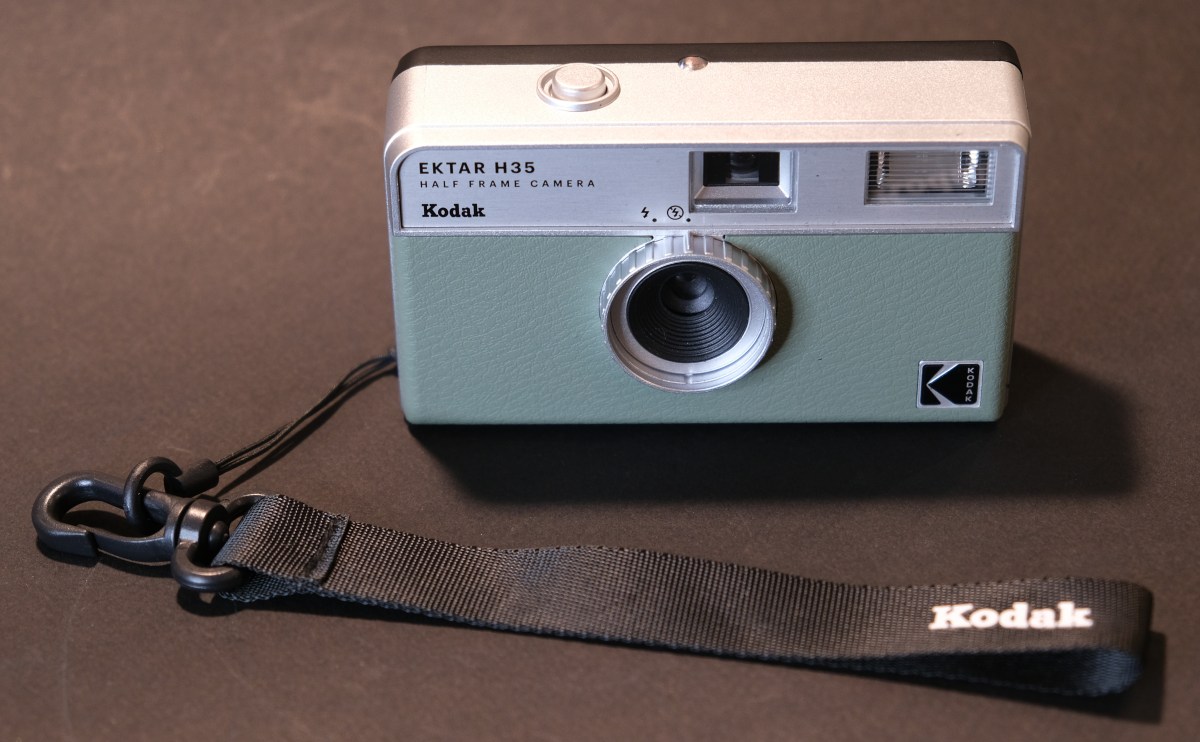
Kodak Ektar H35 and the quest for the cheapest usable film camera

A few weeks ago I entered a Five Below store and bought their finest reusable film camera, for $7.00. It works, but it’s not better than a disposable camera. And after burning one roll of film, my conclusion was that a beginner to film photography would be better off spending a few dollars more, somewhere between $35.00 and $50.00, either on a new fix focus point and shoot like the Kodak M35 or the Ilford Sprite, or on a used autofocus compact zoom manufactured in the nineteen nineties.

The Kodak Ektar H35 in its (optional) color coordinated case – the whole set looks much better than a disposable camera.

I was curious, and started hunting for bargains on the site of Shopgoowill.com.

I found a nice copy of a the Kodak Ektar H35, a reusable, fix focus camera, with its coordinated Grapsa case. The camera sells new for $50; add $15.00 for the case; here, second hand, the starting price of the auction was $9.99, and after a fierce bidding war (just kidding), the H35 became mine for $16.00. Adding handling, shipping and taxes, the H35 cost me just a tad under $30.00.

The Ektar H35 is not made by Eastman Kodak, the name is used under license by Reto, a Hong-Kong based company. The big differentiator, ironically for a product proudly wearing the name of Kodak, is that being a half frame camera, it will save you money on film and processing, by giving you twice as many images on a standard roll of 35mm film.
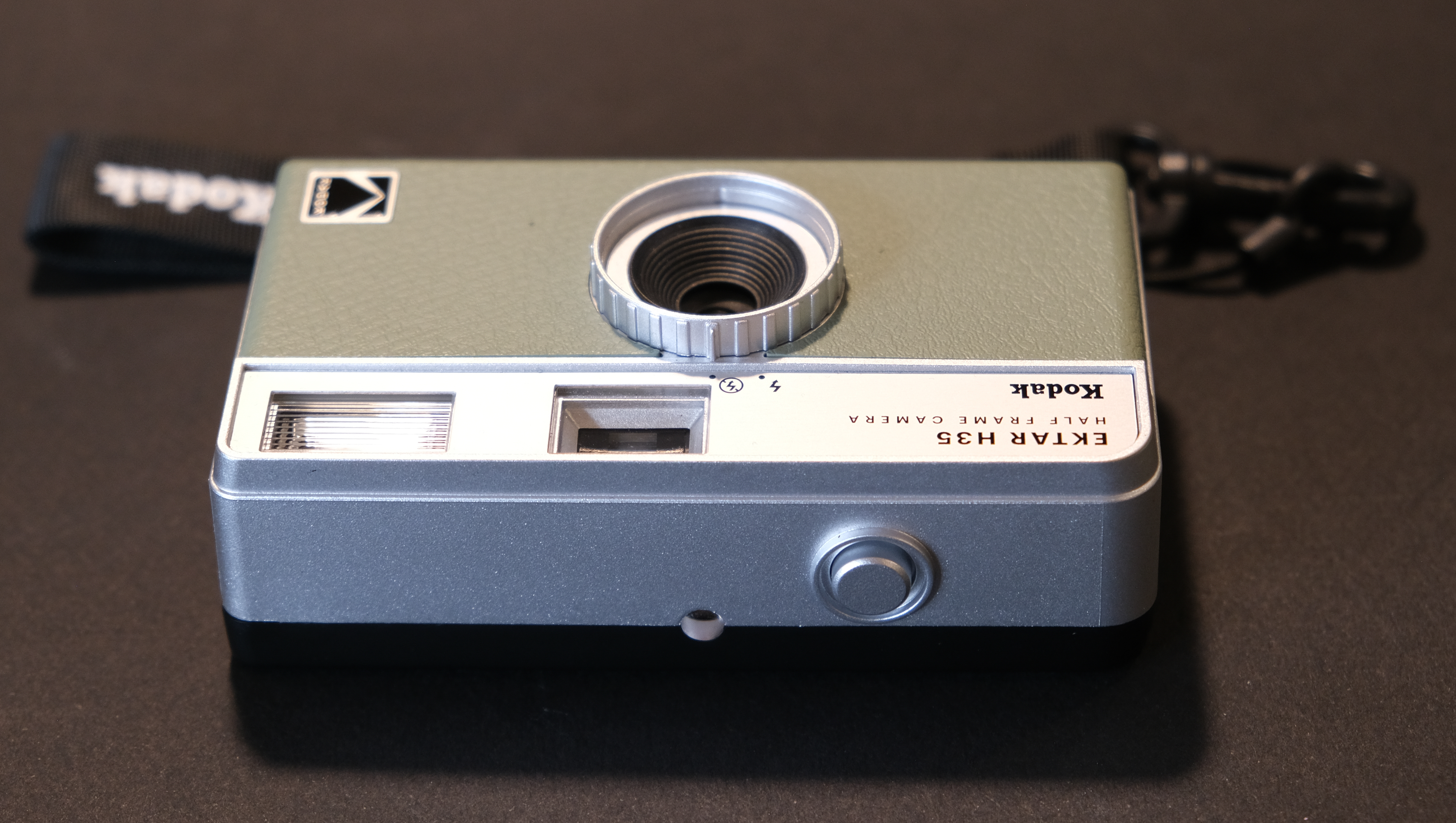
The shutter release button, and the ring surrounding the lens to turn the flash on. That’s it.

The high cost of film and of film processing makes shooting 24x17mm frames very tempting, financially – and since most images are destined to be shared on the small screen of smartphones, the loss of resolution (compared to a full frame 36x24mm negative) is not a real issue.

The H35 is styled like an old Kodak Instamatic, and is technically almost as simple as its remote ancestor – the fix focus 22mm lens opens at f/9.5 (22mm on a half frame gives you the angle of view of a 35mm lens on a full frame camera), and the shutter operates at 1/100 sec. The electronic flash is brought in service by turning a ring around the lens. That’s it. Compared to a disposable or to the original Instamatic, it has a better lens (2 elements, optical grade acrylic), and contrarily to its Kodak predecessor, it’s using standard 35mm film (the Instamatic’s negatives were 28x28mm, from a “126” film pack).

Two half frame cameras. The Pentax sells for 10 times the price of the Kodak. But there is a huge difference in Image Quality.

For the record, there is new version of this camera, the Ektar H35N, where the lens has been upgraded to include one glass element, and one aspherical acrylic element.

The Ektar is a recent and extremely simple camera – with not much to go wrong – and I was not taking a big risk buying it on Shopgoodwill.


Comparing the images out of the camera (as shot)

Somewhere in the North Highland neighborhood, Atlanta, GA – Kodak Ektar H35 Camera – Kentmere 400.

From the same vantage point, the same day, with another half-frame camera, the Pentax 17

Somewhere in the North Highland neighborhood, Atlanta, GA – Pentax 17 – Ilford Delta 400.

Shooting with the Ektar 35H

In its coordinated green case, the H35 looks very good. Much better than expected for such a cheap product. The film advance and the shutter release are smooth. But don’t look too close, though – it’s plastic, plastic, plastic. The film rewind crank is filmsy and looks really fragile – how long will it last? The viewfinder (oriented vertically – it’s a half frame camera) looks like the viewfinder of a full frame 35mm camera where two black strips would have been glued left and right: it’s narrow, uninspiring, and makes it difficult to predict exactly what will be in the frame.
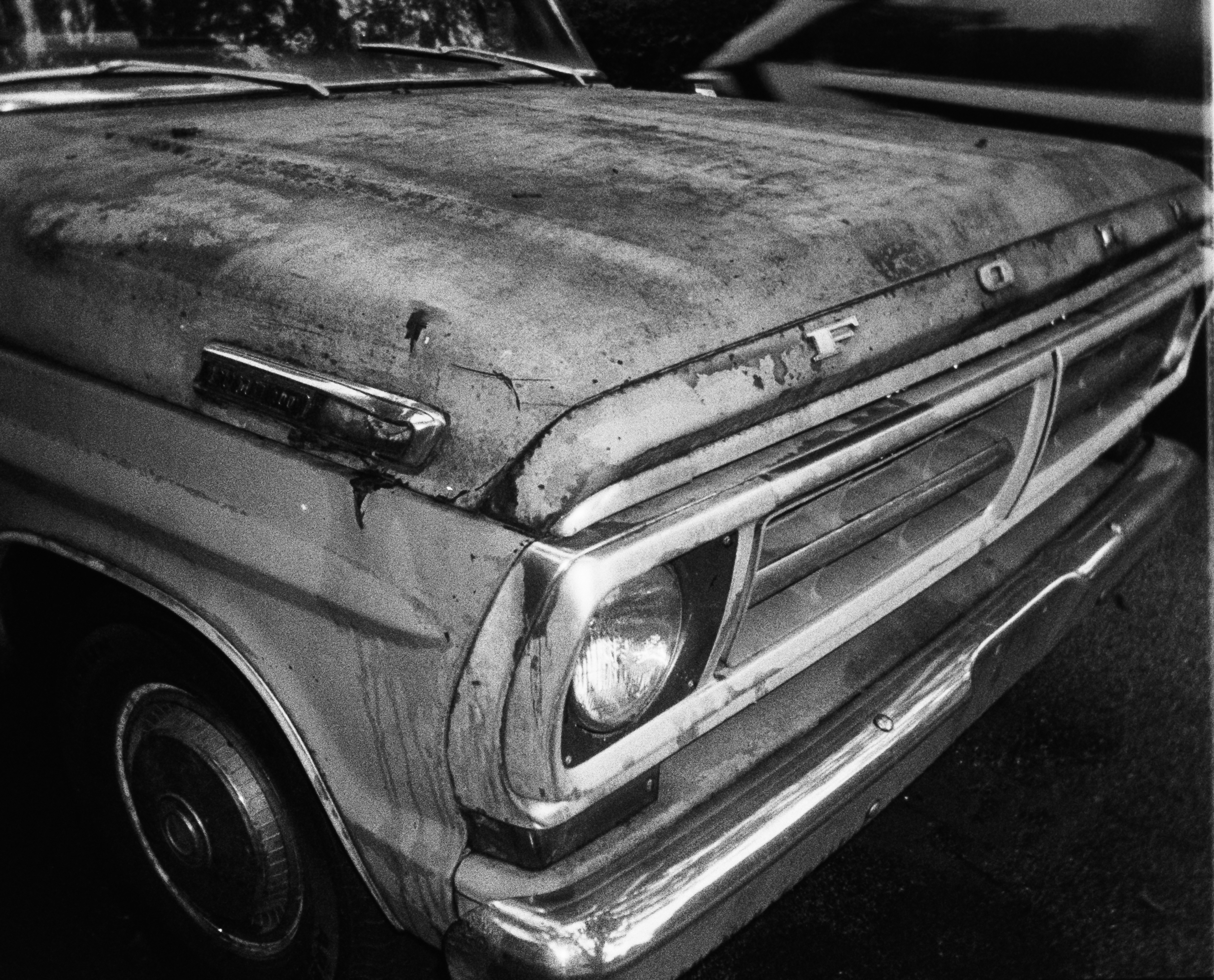
Inman Park Neighborhood – Ford Pickup – Kodak Ektar H35, Kentmere 400, as shot

In all honesty, I really had to make a conscious effort to use the Ektar. It did not come naturally to me, and whatever other camera I had with me that day saw more use than the little Kodak. And if I had no other camera, I still preferred taking the picture with my phone. I never enjoyed using disposable cameras, and the truth is I did not enjoy using the H35 either.
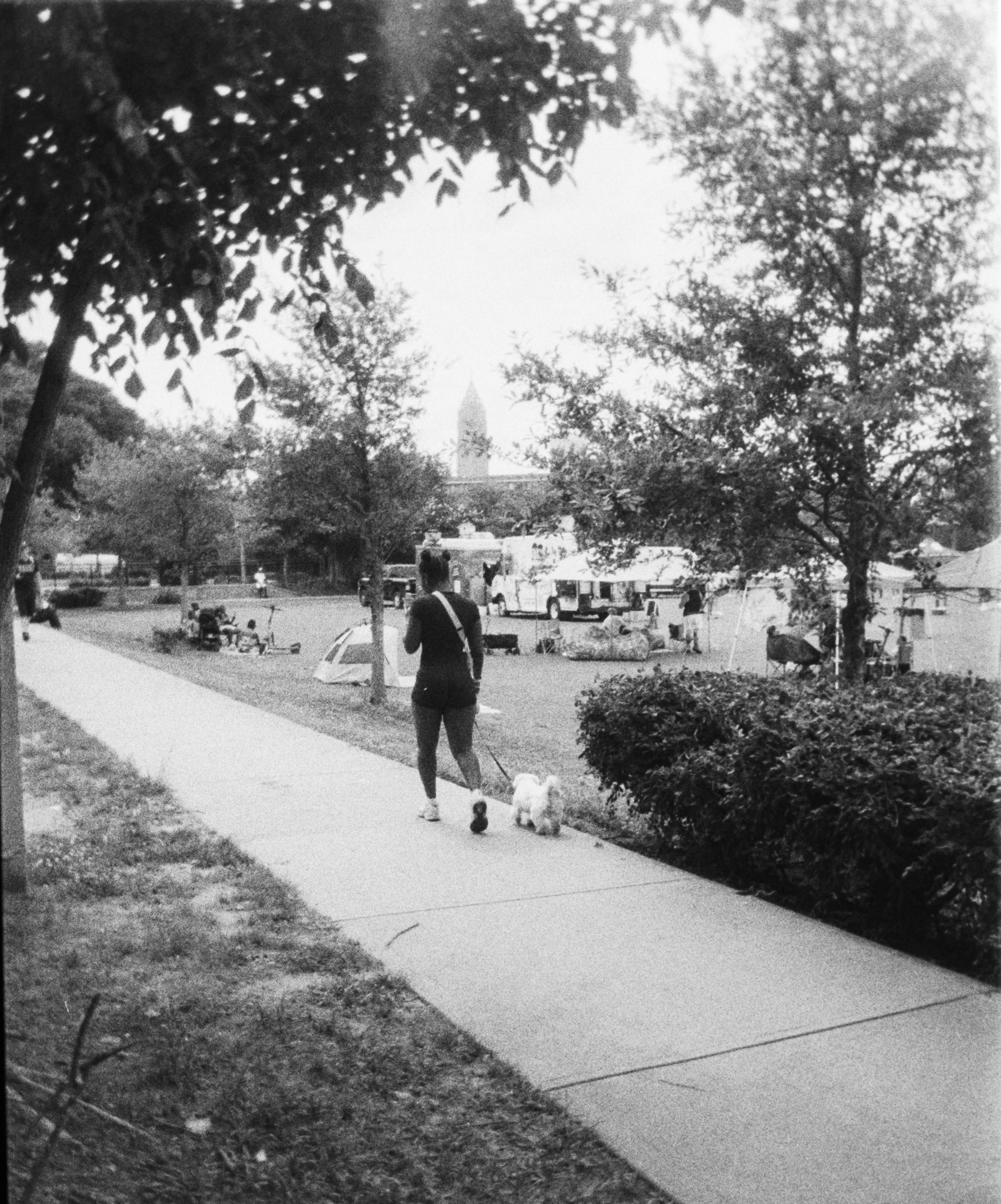
Somewhere on the Atlanta Belt Line, Kodak Ektar H35, Kentmere 400as shot.

Image Quality

It took me months to finish a single roll of film, (48 frames on a 35mm roll sold for 24 “full frame” images, remember) and it stayed in my photo sling next to my “camera du jour” without seeing much use. But it gave me the opportunity to use it in parallel with a recent (and much more expensive) half frame camera, the Pentax 17, and with an older and generic point and shoot cameras of the turn of the century, the Argus M5600d.

The Pentax and the Argus are both larger, heavier, but much more interesting to use as cameras. But what about the image quality?

Looking at the B&W negatives shot with the Ektar, it’s obvious that there are huge differences in density from one image to another one – some are extremely dark, some are extremely clear, almost transparent – a consequence of the absence of any exposure control system in the camera. You have to rely on the exposure latitude of the film, on the image enhancing algorithms of the lab’s scanners, and on your ability to massage the picture in post-processing.


Comparing two half frame cameras:
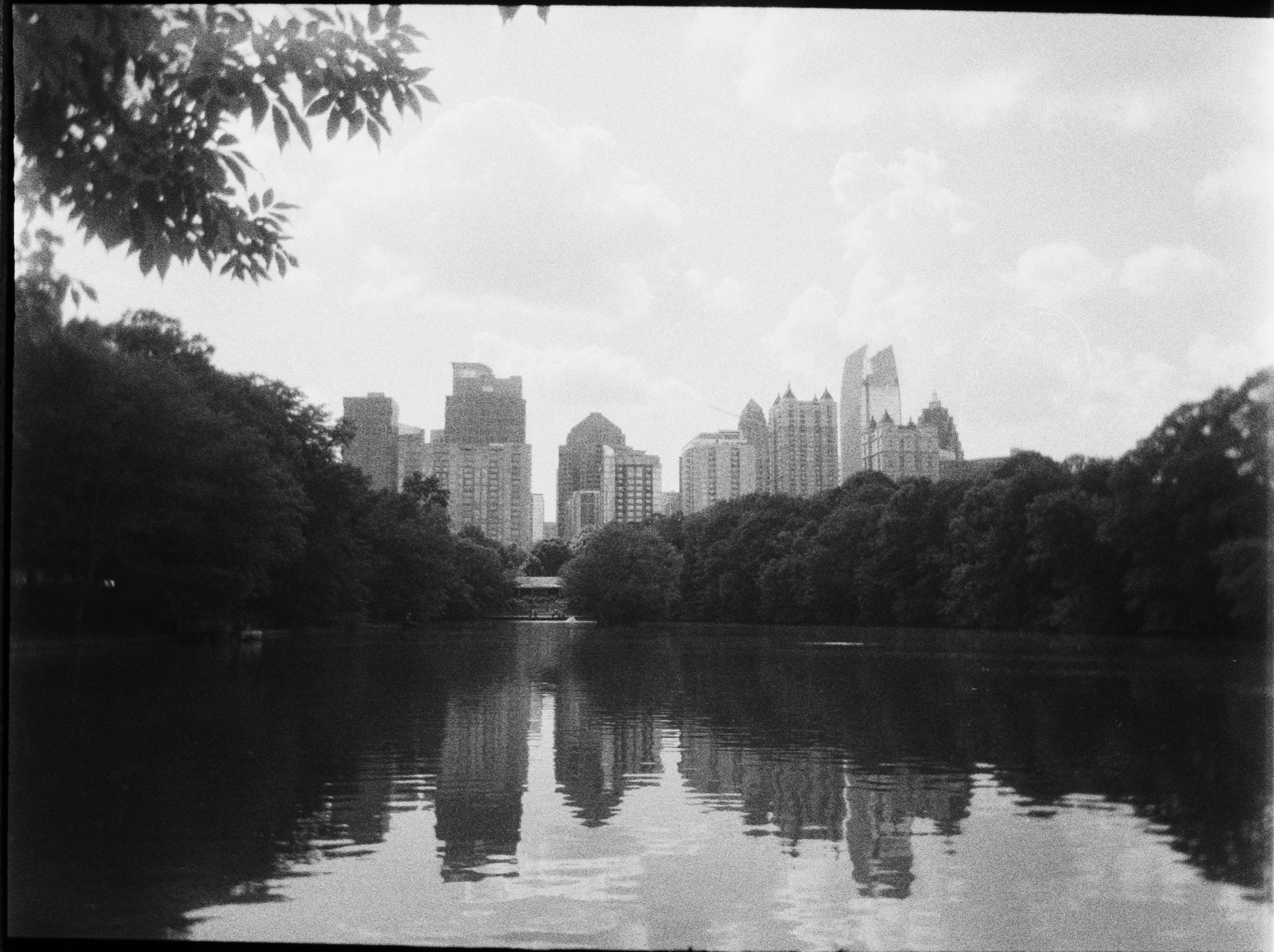
Lake Clara Meer and midtown skyline – Atlanta – Kodak Ektar H35 – Kentmere 400, as shot

and shot the same day from the same vantage point, with the Pentax 17:
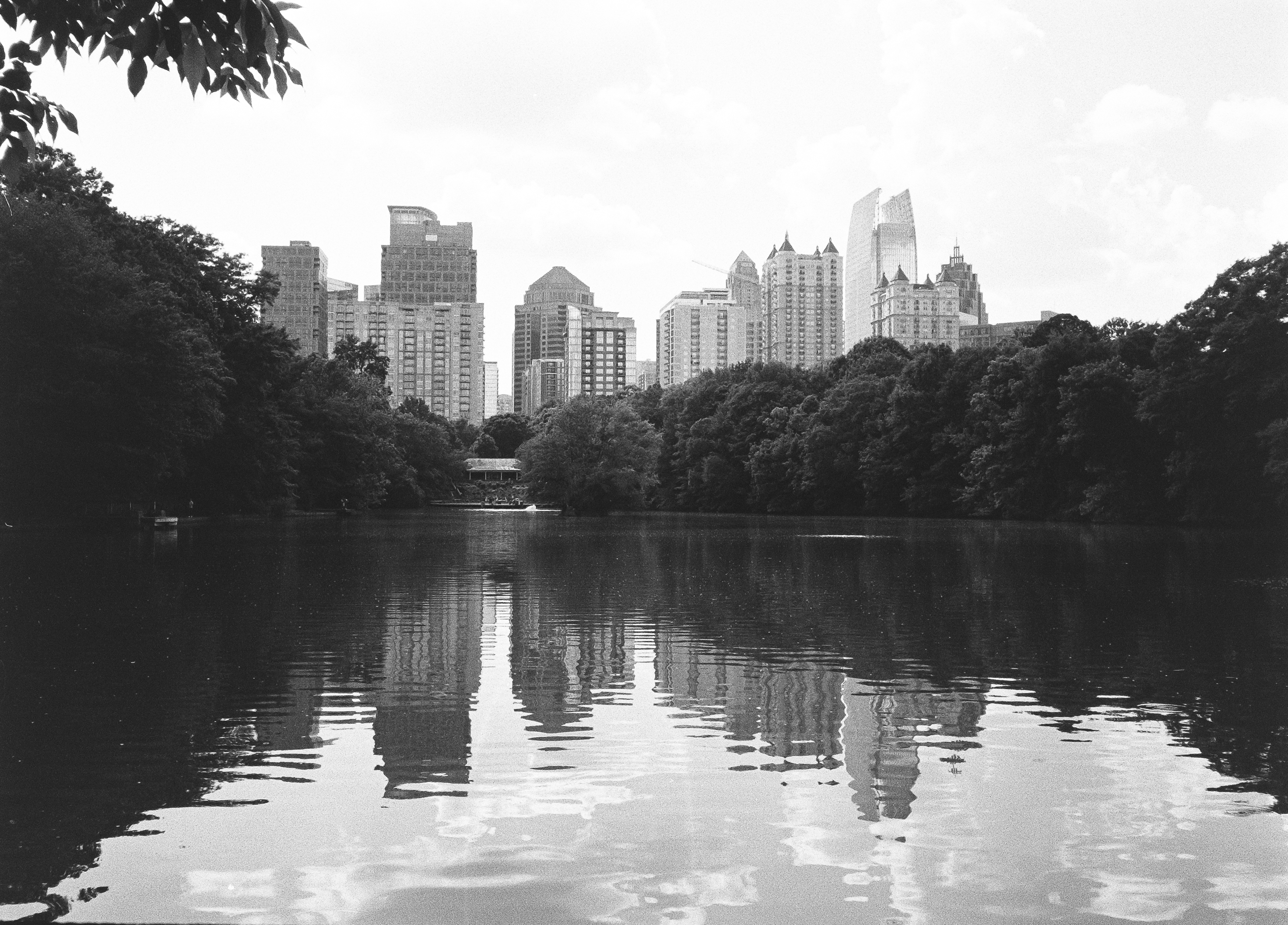
Lake Clara Meer and midtown skyline – Atlanta – Pentax 17 – Fujifilm Acros 2 100 ISO, as shot

The B&W negatives were not scanned in the true sense of the word, they were simply digitized with a Fujifilm X-T4 equipped with a Micro-Nikkor 55mm lens and the JJC Digitizing Adapter, then imported and inverted in Lightroom with only adjustments to the S curve. The images labelled “as shot” did not benefit for any other enhancement, and represent what the camera is really capable of, before any software filter or any artificial intelligence trickery is applied.

The images are a mixed bag – this Ektar is clearly a sunny-16 type of camera, and the best pictures are taken on a bright day, middle of the morning and middle of the afternoon. Don’t use it for landscapes – even urban landscapes – it seems optimized for subjects in the 4 to 30ft zone and anything beyond that is blurry.

On the other hand, some images – close-ups, street scenes, statues, are “interesting”, and pictures of houses and front yards are generally nice. Go figure.

Even at its preferred focusing distance, the resolution is surprisingly poor – it’s closer to an Holga than to any decent autofocus film camera like the Argus M5600 and its clones. As long as you look at them on the relatively small display of a smartphone, the images look fine. But they rapidly reach their limits, and on an iPad or a 15in laptop display they will look fuzzy, lacking definition and contrast.

On a final note, I tried to use the flash multiple times, and not a single one of the images was even remotely acceptable.


Another comparison – here the Ektar….
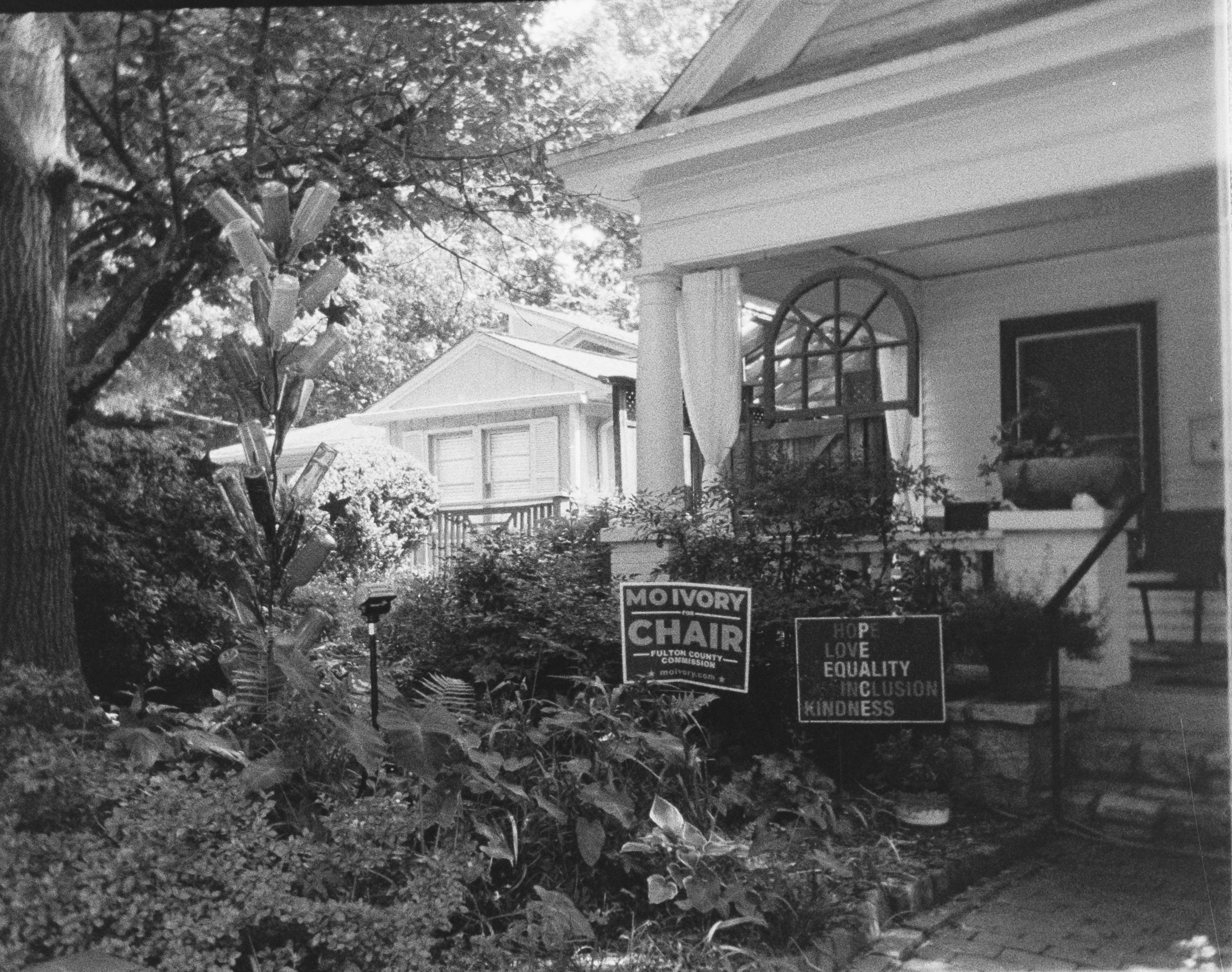
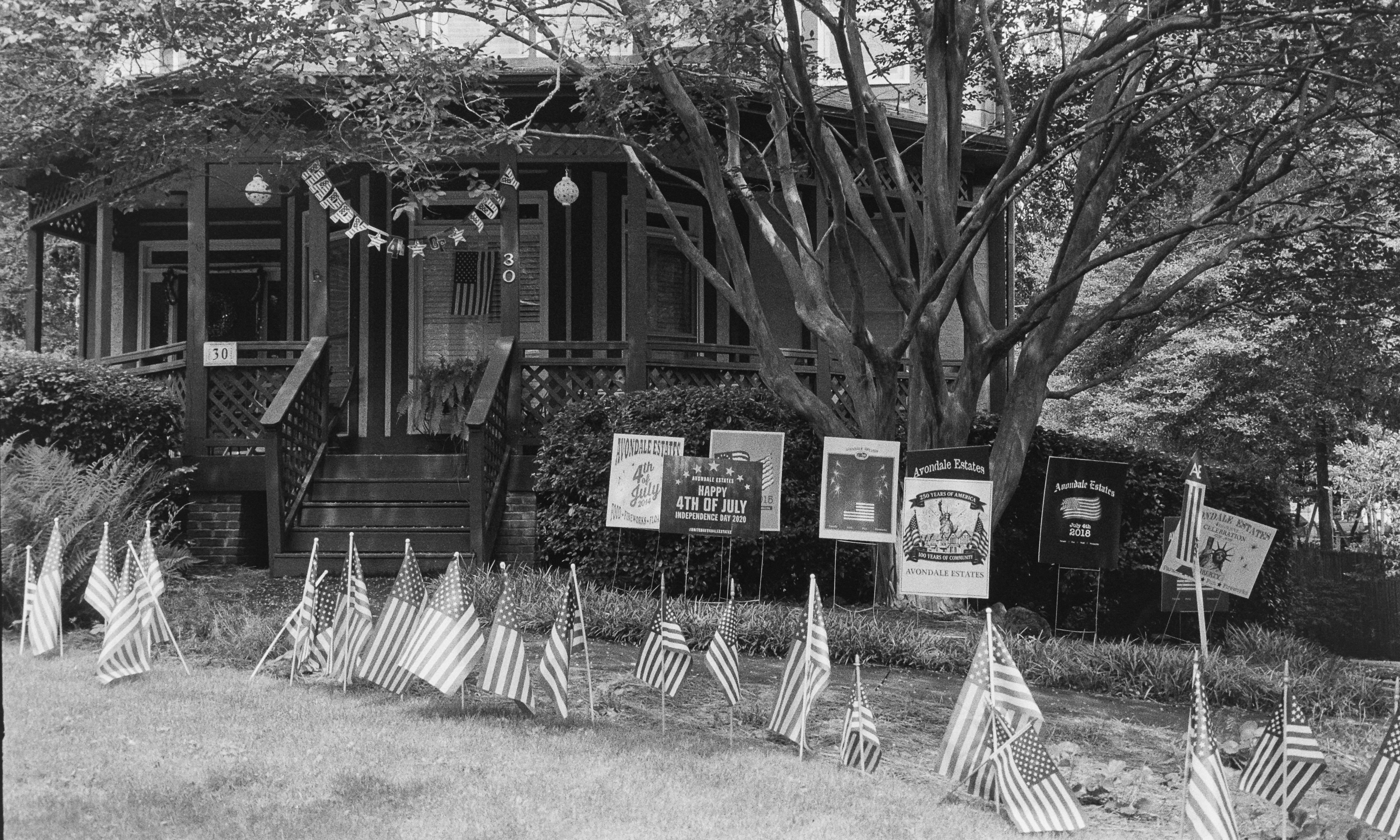
Avondale Estates, GA – Kodak Ektar H35 Camera – Kentmere 400, as shot

Here, the Argus M5600d

Avondale Estates – Argus M5600d – Kentmere 400 – minor adjustments in Lightroom.

Conclusion

If you’ve read this blog entry that far, you have understood that the H35 is not for me. It may be cute, but it’s still extremely basic, not really better than a single-use, throw away camera.

I was really disappointed by the image quality: displayed on a smartphone, some images can be somehow “acceptable” without ever being great – while some are not even salvageable, except maybe by AI – but what’s the point, then. And on anything larger than a smartphone display, they will generally fare poorly.

To the camera’s defense, I did not shoot with color film, and did not have the film processed and scanned on the Noritsu or Frontier machines of a pro lab – their software apply all sorts of enhancements to the images before saving them as Jpegs, and I’m sure their pictures would look better.

Jimmy Carter Presidential Library, Atlanta, GA – Kodak Ektar H35, Kentmere 400, as shot.

In other words, it’s not a camera that will give me the type of images I like. But it may work for photographers with different styles and tastes.

Photography is at the same a craft, and an art. If you don’t really care for the “craft side” of this activity, but have a keen eye, good image composition skills, and like your images on the rough side, a fix focus camera like the Ektar, or even a toy camera like a Holga or a Diana may be a good fit – you’ll have to learn how to exploit their limitations and their flaws to create images reflecting your unique vision.

Little Five Points, Atlanta – Kodak Ektar H35, Kentmere 400, as shot.

Was I fair in my evaluation of this camera, and is the Ektar H35 that bad?

I believe I was fair. The Ektar was in my photo bag when I was shooting with the Pentax 17 and the Argus, and although I clearly preferred having those two cameras in my hands, I still made a point of shooting one or two images per scene with the Ektar.

The cameras were not all loaded with the same film stock (I was using Fujifilm Acros and Ilford Delta 400 on the Pentax, Kentmere 400 on the Argus and the Ektar), but all three are good films, and the Kentmere gave me results that positively surprised me with the Argus.

The two rolls of Kentmere 400 (the Argus’ and the Ektar’s) were developed together, in the same tank, with Ilford’s Ilfosol 3 at standard dilution, so a botched film processing routine can not be pinned as a cause for the relatively poor quality of the pictures.

I had a peek at the images of the Ektar user group in Flickr. The pictures generally look better than mine, but the images I posted here are as shot, not enhanced by the software of the Noritsu or Frontier scanners used by the photo labs, or by an AI tool. For the sake of the argument, I submitted two of my images to ChatGPT, and after a few adjustments in Lightroom, I got the images shown below. Better, but are they still “my” images, or something else entirely?
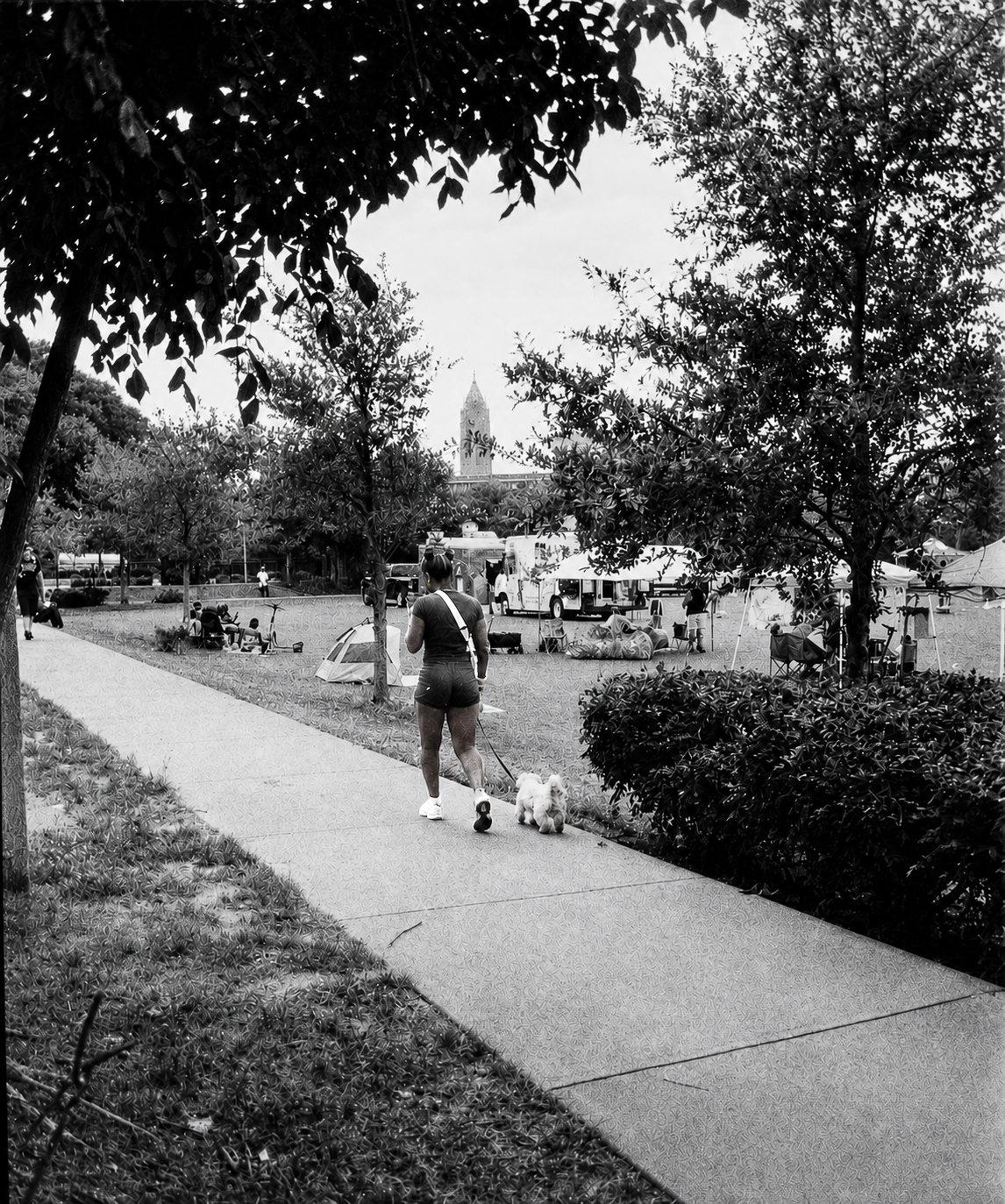
Enhanced by ChatGPT for sharpness and contrast, then adjusted with a mask on the young lady to correct under-exposure in Lightroom.

Enhanced by Chatgpt for sharpness and contrast

Who’s really manufacturing film in 2025?

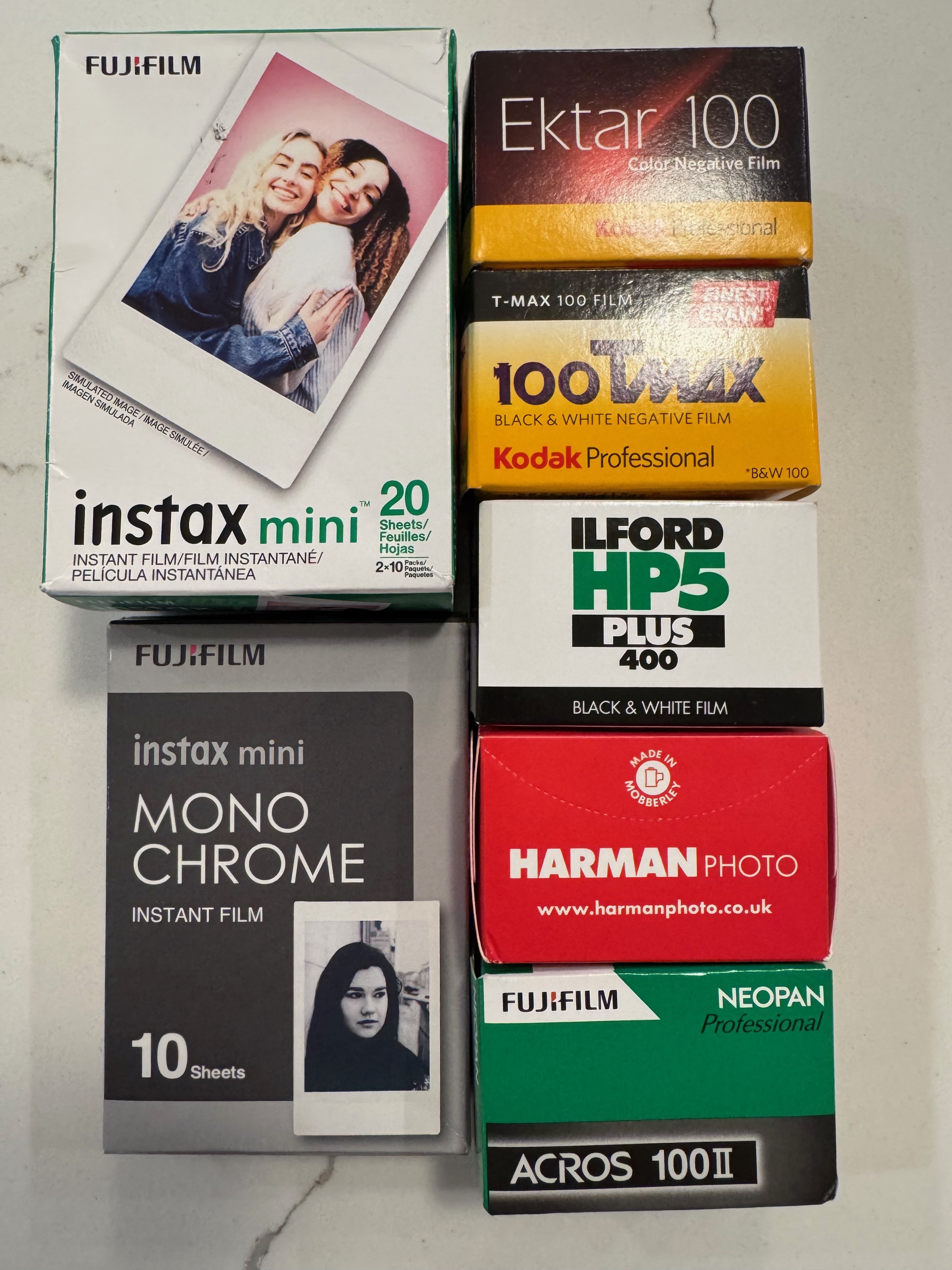
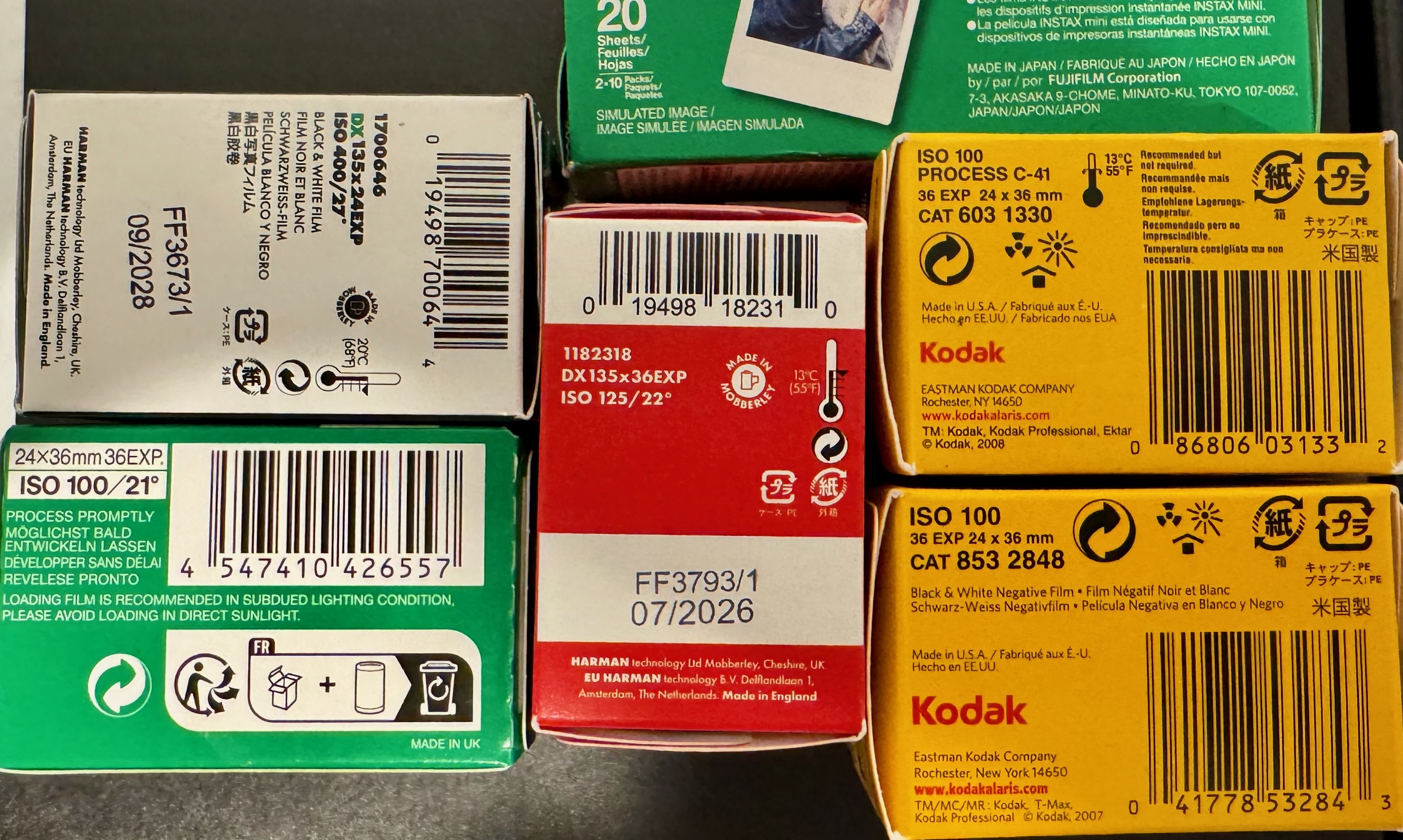
There is a store named Bellows in Little Five Points (a neighborhood in Atlanta) where they still sell a wide selection of 35mm and 120 film. I stopped by yesterday and bought film from Kodak, Harman and Fujifilm.

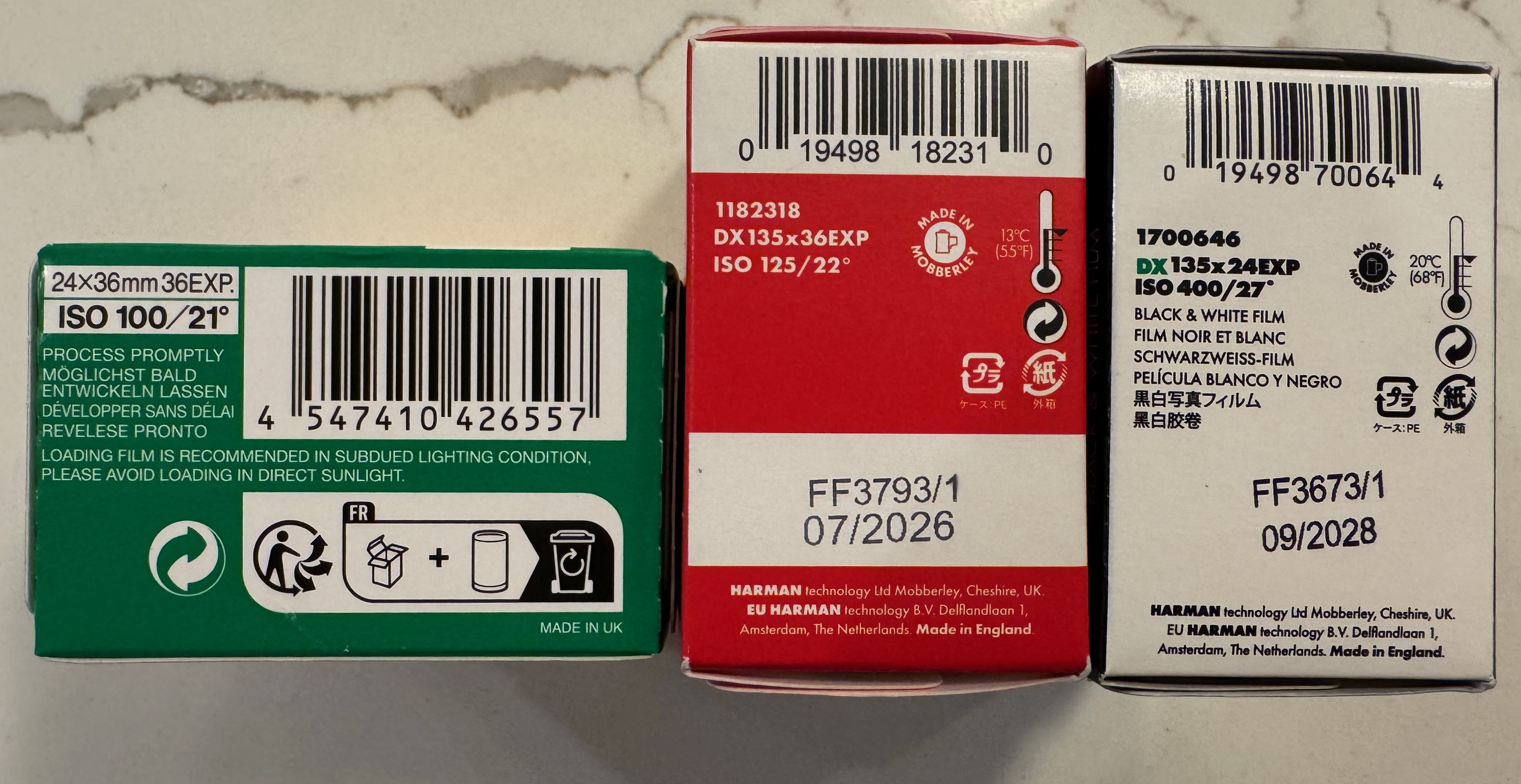
Back home, I looked at the box of Fujifilm Acros 100 II that I had just bought. It clearly mentions it’s made in the United Kingdom. Fujifilm? In England? A quick research confirms it: the Acros 100 II film is made by Harman Technologies Ltd, the British company that manufactures its own Ilford and Kentmere Black & White film, and also supplies B&W film for brands such as Agfa, Rollei, Oriental Seagull and … now Fujifilm. No wonder that Harman can boast of a 80% market share in the segment of B&W photo film.

Made in Mobberley (UK) with pride.

The company currently known as Harman Technologies Ltd is the result of a management buy out of Ilford Imaging UK Ltd, after it went under in 2004. Founded in 1879 by a Mr Harman, the manufacturer of photographic material we know as “Ilford” still operate from their historical facilities in Mobberley, near Manchester, and have added color film to the well known range of B&W film stock (Ilford FP4 Plus, HP5 Plus, XP2, Kentmere) they produce in their plant.

Over its 146 years of operations, Ilford went through an incredible number of acquisitions, mergers, rebrands, splits, receiverships and buy-outs, and as a result Harman Technologies does not even own the “Ilford” brand.

Eastman Kodak, Fujifilm, Harman Technologies – the volume leaders of what remains of the photographic film industry. But who manufactures what, and for whom?

The “Ilford” brand currently belongs to Ilford Imaging Europe GmbH, which inherited it along with the Swiss side of the old Ilford business (which used to manufacture Cibachrome and later Ilfochrome photographic papers). That side of the Ilford historical business went through its own series of plant closures, acquisitions and bankruptcies, and does not produce film or photographic paper anymore. It licenses the use of the “Ilford” brand to Harman Technologies for its B&W products, and simply distributes a range of color photographic products under the Ilford brand.

As a consequence, the current Ilford Ilfocolor film and the Ilford Ilfocolor single use cameras have nothing to do with Harman Technologies or the Mobberley plant (Harman’s own color film is sold as the “Harman Phoenix”), and are probably made by one of the companies that picked up the pieces after the East German (ORWO) and West German (Agfa) film manufacturing giants went under.

I can’t describe how this whole constellation of remote descendants of Agfa and ORWO is organized, as the situation still seems very murky, with insolvencies and lawsuits left and right. The German side of Agfa is long gone, and I don’t know if the current reincarnation of ORWO is still in operation. If they are, it (probably) makes them one of the only four companies in the world still in the color film manufacturing business, alongside Eastman Kodak and Fujifim – the heavyweights, and Harman – the new entrant (*)

At least one small (and reputable) company, ADOX, could salvage some of the industrial assets of the fallen giants (as well as some of the machines of the Swiss side of Ilford), and operates a B&W film plant in Germany.

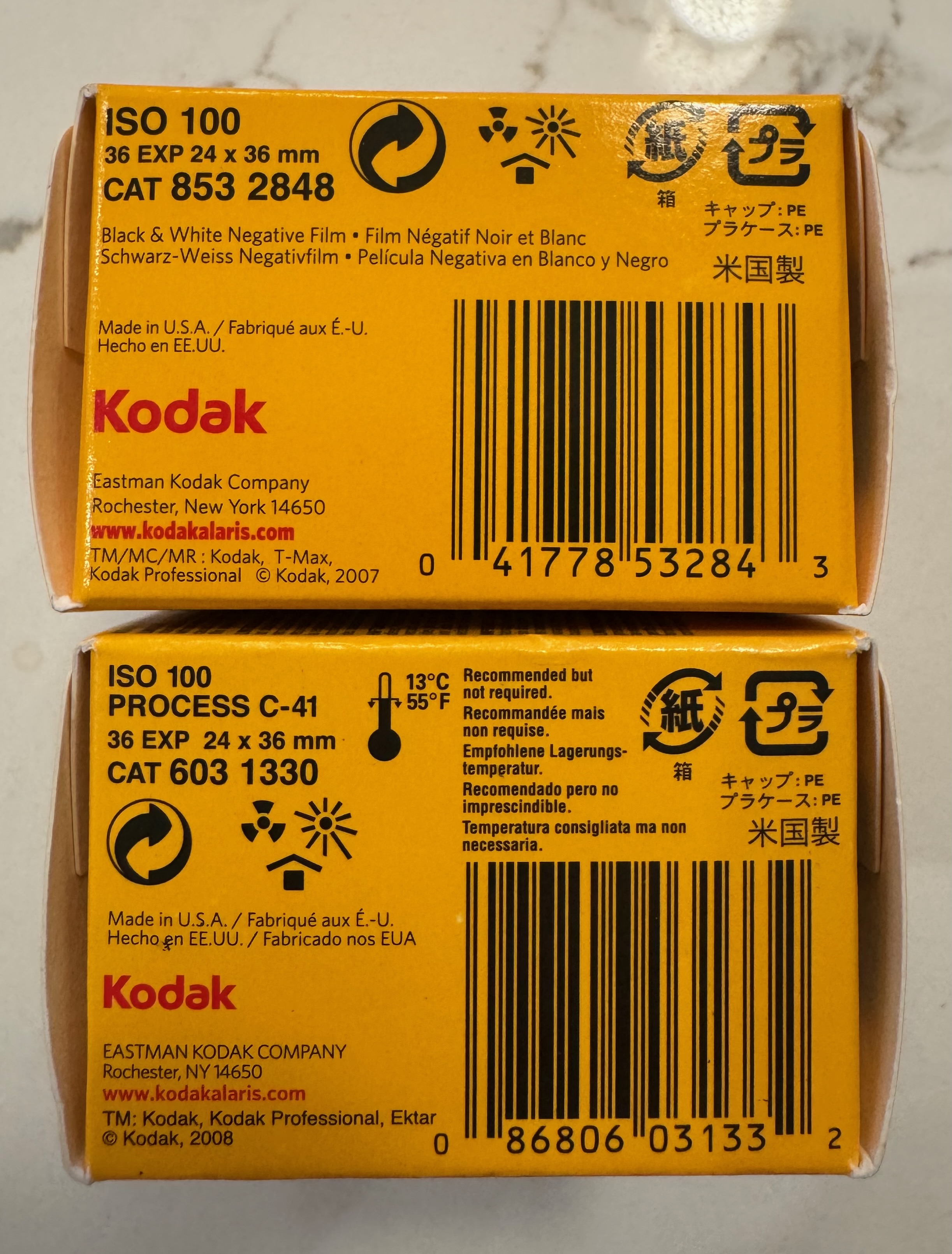
After this detour through Switzerland and Germany, let’s go back to Fujifilm. Do you know that the Fujicolor 200 film sold over here in the US is manufactured by… Eastman Kodak. Which may not be the case in other parts of the world – Fujicolor 200 film is also packaged in China through a partnership with a local company, presumably to serve the Asian markets.

Made in the US by Eastman Kodak, distributed by Kodak Alaris.

In addition to Eastman Kodak, Harman, Fujifilm and the remnants of the German photographic film industry, a few players still manufacture film: in Belgium, Agfa-Gevaert produce specialty B&W film for aerial photography, Foma Bohemia make B&W film in the Czech Republic, and Ferrania are trying to restart a B&W film factory in Italy.

Photographic film is definitely manufactured in China and possibly in the Ukraine (by China Lucky and Svema respectively) but those brands are not distributed in the US and I have no precise information about them.

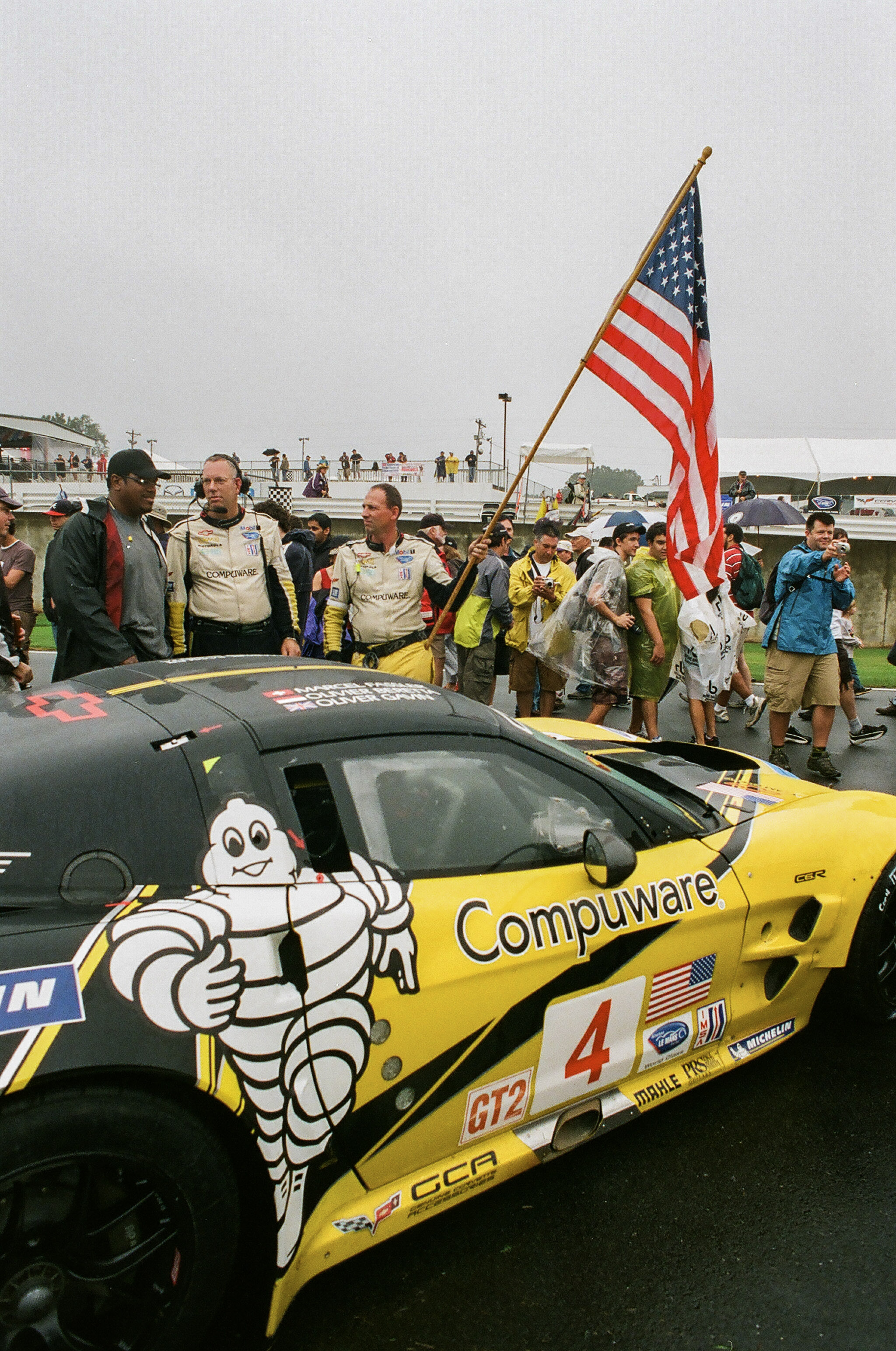
American Petit LeMans (2009 edition). Yellow and American. Like Kodak. Shot on film in 2009 with a Nikon camera.

The rest of the brands (Arista, Cinestill, KONO Manufactur, Leica, Lomography, Rollei, …) may commission the manufacturing of limited batches of their own proprietary film from one of the player listed above, or create their own “experimental” film by altering cinematographic film they buy mainly from Kodak, or simply re-label film produced by Harman, Foma, Adox and a few others.

As for the Instax instant film (one of the fattest cash cows of Fujifilm – $1Billion revenue with a 20% margin in 2024), it’s still made in Japan. Polaroid’s manufacturing operations are split between a main plant in the Netherlands and a smaller unit in Germany (one of the Agfa offshoots) which supplies the negative layer of the instant film. An exception in this industry, Polaroid has reunited under the same owner the brand and the plants, and manufactures and distributes its own products.

Green boxes do not necessarily come from Japan anymore.

There are no reliable statistics about the total value of the photography film market in the world – I’m reading anything between $500 million to $2.5 Billion a year – a fraction of what the market was as its peak in 1999 (Kodak’s revenue alone that year was $17Billion, which would equate to $32Billion in today’s US dollar).

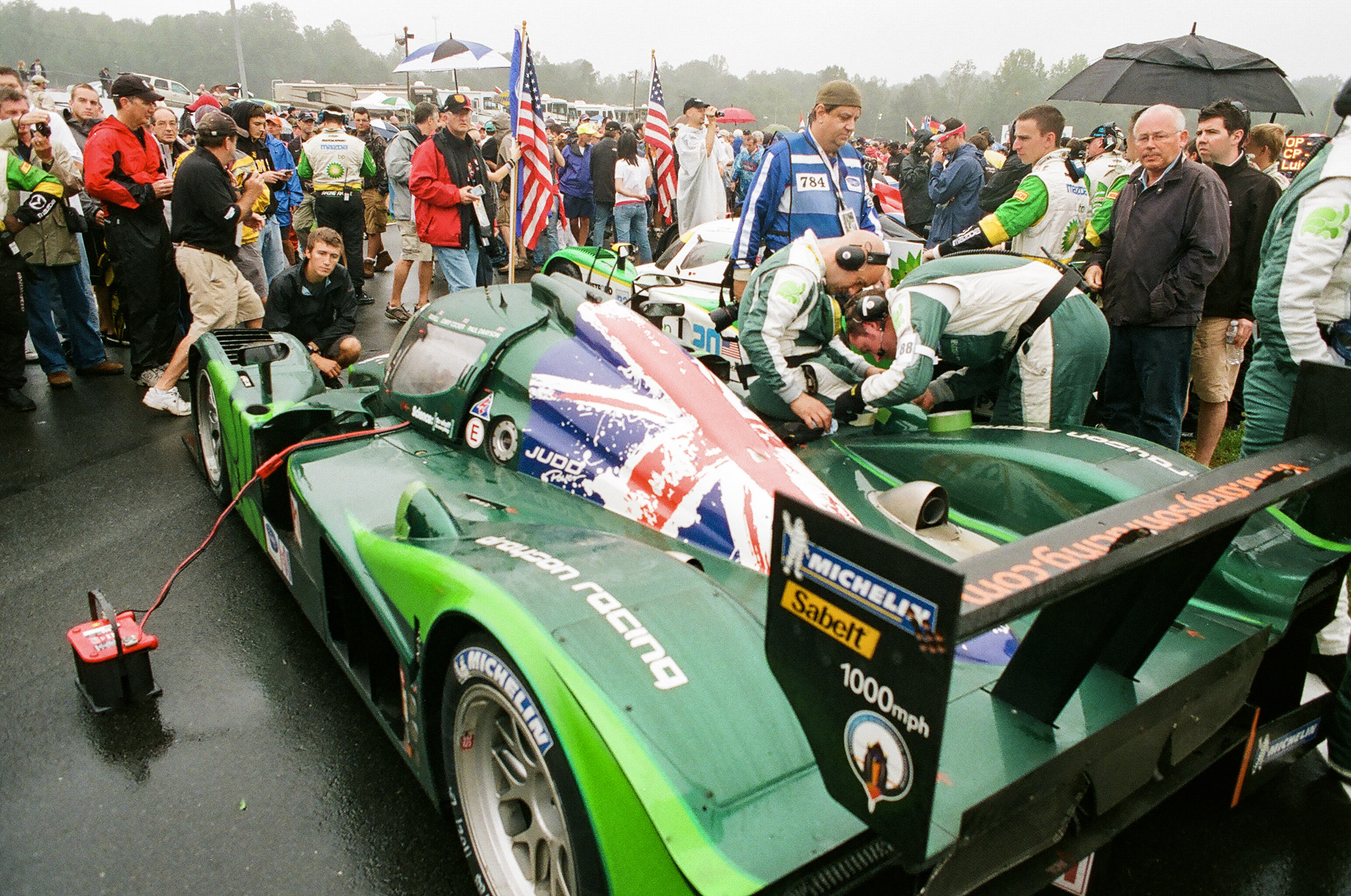
American Petit LeMans – Braselton (GA) – another Japan-England cooperation: the Mazda-Judd Shot on film with a Nikon Camera in 2009

With the exception of Fujifilm, all the big players of the twentieth century (Kodak, Ilford, Agfa, Orwo, Polaroid) have been dismantled, with the ownership of the brands often decoupled from the ownership of the remnants of the manufacturing assets, and the actual manufacturing and distribution activities under the responsibility of new actors. It explains the proliferation of new or resuscitated brands such as ADOX, Harman, Harman Phoenix, Kentmere, Original Wolfen or Rollei.

Does it matter? Not to me – as long as I can find good film to feed my cameras.


(*) Why is Harman entering the color film business, by the way ? They see a strategic opportunity in color film, obviously, and they’re also uniquely placed to take advantage of it because of their experience with chromogenic film.

Harman (as the successor of the pre-receivership British side of Ilford) has been manufacturing monochrome chromogenic film since 1981 (the XP, XP2 and now the XP2 Plus). The XP2 Plus (like the defunct Kodak BW400CN) is conceptually a simplified version of the typical chromogenic negative color film (think Kodacolor or Fujicolor), with only one layer of neutral color dyes as opposed to three layers of colored dyes in the negative color films.

In the heydays of film photography, the benefit of chromogenic monochrome film was primarily that it could be processed with negative color film, in the same machines using the same baths – the photo processing labs and the minilabs did not have to dedicate equipment and chemicals to the XP2 or BW400CN film like they would have had to do with “true” B&W film.


Two good sources of information about film photography:

silvergrainclassics.com

Kosmofoto : the new photographic films released in 2025, so far.


More about film, film cameras and old gear in general in CamerAgX.com:


Paris – Canal de l’Ourq – Leica CL – Summicron 40mm
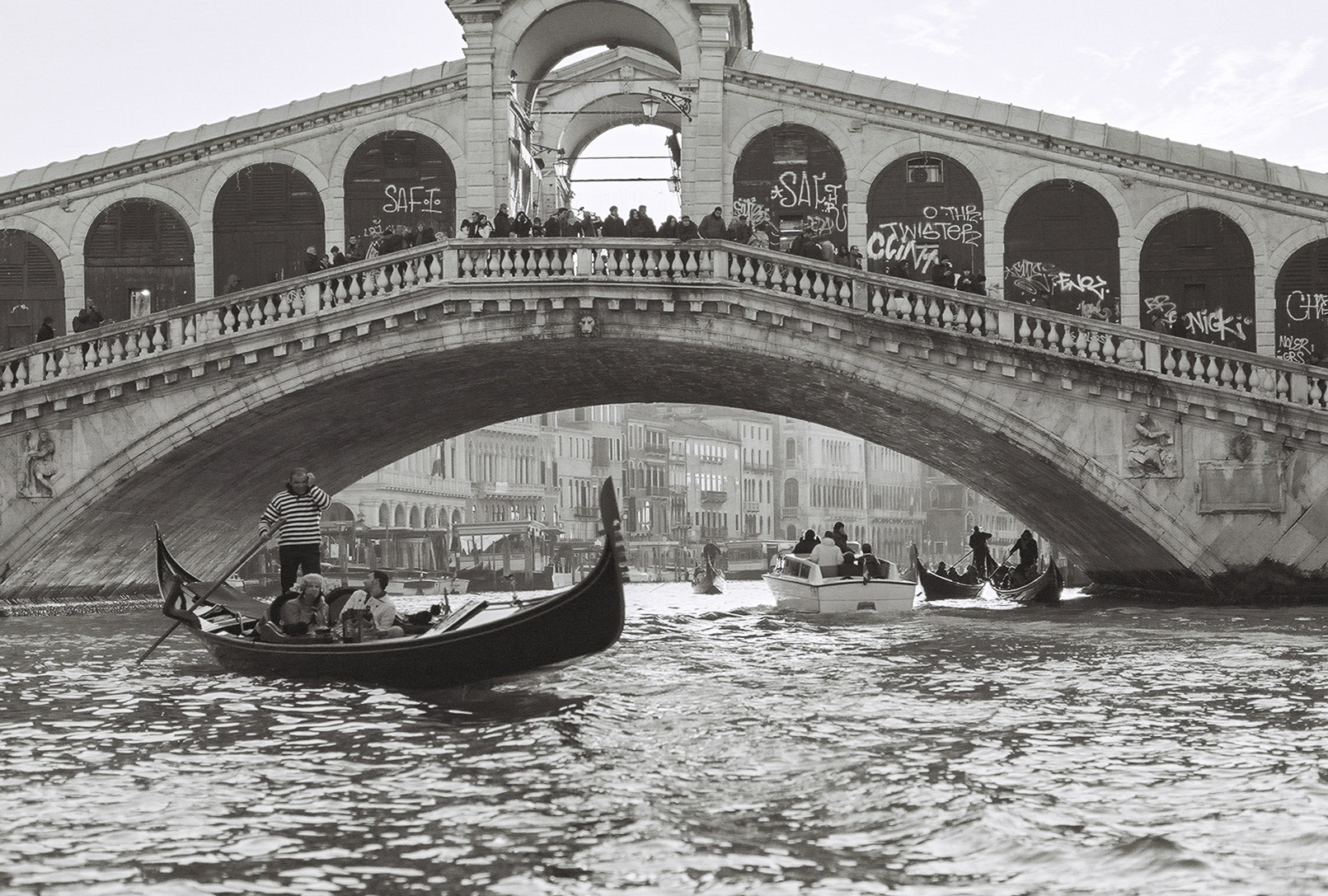
Rialto Bridge, Venice – Nikon FE2.

Who still makes “amateur color film” today?

With smart phones and wireless Internet connections being cheap and ubiquitous, billions of human beings have access to an always available camera of very decent quality and can easily share the pictures they shoot via messaging, photo sharing or social networking apps.

I don’t think there is any geography where film photography is still broadly considered an easier to use and cheaper alternative to digital (smartphone and digicam) photography.

Some people may still want their 4×6 prints, they may refuse to deal with smartphone apps or with memory cards at the self service kiosk of a pharmacist, and stick to film for those reasons. But there is no doubt that they form a small minority.

The rest of the film photographers are not necessarily enamored with 4×6 prints and don’t refuse to use PCs. They scan film or have it scanned, and insert the resulting files in a digital workflow. For them, there are roughly three options: premium film, boutique film, and expired stock.

  • premium film is designed to offer the best performance (finest grain, highest dynamic range, most realistic colors, most constant quality), but at twice or three times the price of standard amateur film,
  • boutique film is produced by small outfits, and prioritize special effects (color rendition and image resolution of the sixties, strong color hues, scratches, ….). Prices are all over the map, with some films in the low-cost category, and others being 4 to 5 times more expensive than the standard amateur film.
  • The ultimate bargain chasers are looking for expired film, and enjoy the consequences (unpredictable rendering, bizarre color hues).

Where does it leave the typical “amateur” color negative film like Kodak’s Gold and Fujifilm’s Superia, that casual photographers used to trust for their annual family reunions or for the trip of a lifetime ?

Almost nowhere.

FH000001
Venezia – Nikon FE2 –

Firms like Fujifilm, judging by the type of film they dedicate to this usage, perceive people still sticking to a conventional film processing chain and to 4×6 prints as more price than quality sensitive, and reformulated their Fujicolor 200 ISO stock to make it cheaper to manufacture (it’s now sold as the Fujifilm C200).

Brick and mortar stores only seem to carry old inventory about to expire, the low-cost Fujicolor C200 mentioned above, and sometimes Fujifilm’s Superia X-TRA 400. Online retailers like Amazon or Adorama still carry Kodak Gold and Ultramax, but they also tend to put forward cheaper products from the same manufacturer.

How does it translate in the offer of film?

My observations are based on the US market, and on what the three major photo retailers (Amazon, B&H and Adorama) are offering. The situation may be different in other countries – (Kodak is probably better represented in the US than in the rest of the world, but Fujifilm’s catalog is wider in Japan), and here and there there are small specialized distributors also selling products from smaller brands.

  • Kodak

The part of the old Kodak Company which is still in the film business is named Kodak Alaris (Alaris belongs to the pension fund of the British employees of the Yellow Giant, but the products I’ve purchased over here are still manufactured in the USA, and sold under the Kodak name).

Looking at their Web site, it’s obvious that Kodak Alaris wants to sell “professional” (understand “premium”) film (Ektar, Porta, TMax and Tri-X). Amateur color print films (Gold 200, Ultramax 400) are impossible to find in the menu hierarchy of the site, or with the built-in search tool. Google Search still returns the spec sheets of all films currently in the catalog of Kodak Alaris (the list includes includes Gold and Ultramax), and the three major photo retailers of  the US still sell the whole range of Kodak Alaris products.

Amazon and Adorama are also selling Kodak ColorPlus 200 – but there is no spec sheet on Kodak Alaris site,  and it does not seem to be widely available in the US. It’s a budget film – supposedly relying on a simpler/older formula than the Gold 200, and it falls in the same low-cost category as the Fujicolor C200 – you use it if you look for the absolute lowest price (for a Kodak branded product, that is) , or if  you want a rendering similar to the one you could get in the eighties/nineties.

Kodak also has a large range of B&W film (Tmax in 100, 400 and 3200 ISO declinations) as well as the old Tri X. They have announced they will soon manufacture slide film (Ektachrome) again.

ektar--3
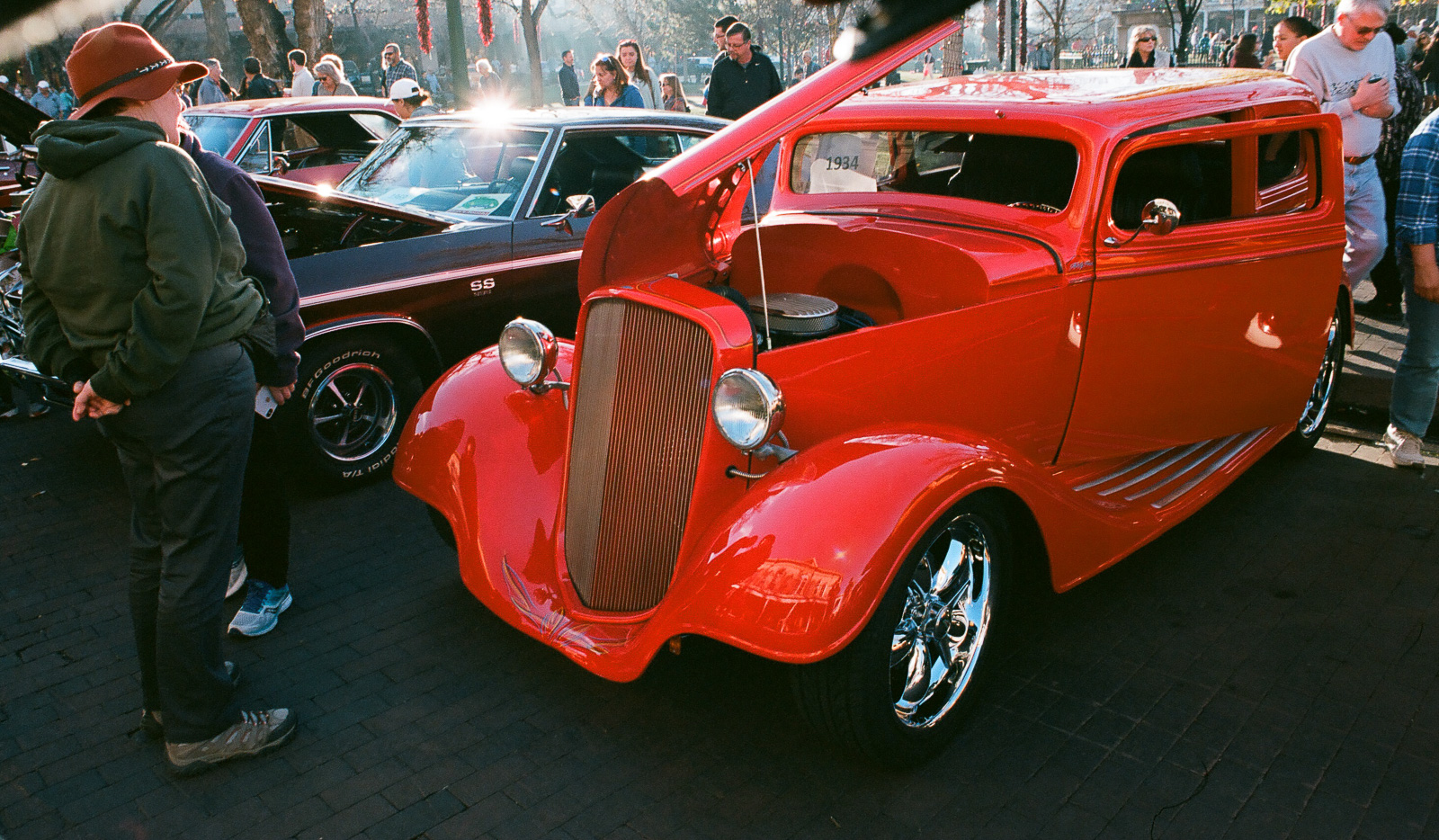
Santa Fe (NM) – Car show on the Plaza. Nikon FM – Kodak Ektar 100.

  • Fujifilm

In the US, Fujifilm have significantly reduced their product range (they have retired most of their Superia color print films last year) – leaving us with only the “low cost” C200 sold at Wal-Mart or CVS (available in 24 exposure cartridges only, manufactured following a simplified formula and replacing the more elaborate and now retired Superia 200), and a single Superia reference, the X-TRA 400 ISO (in packs of three 36 Exposure cartridges only). With Kodak having left the amateur market and deserted the brick and mortar stores, Fujifilm is the only major vendor of general purpose “amateur” color negative film.

Fujifilm only offers a single “professional color negative” film, the Pro H 400, aimed at Portrait photographers, and a single Black and White reference, the Neopan Acros. But they still  offer three slide films (Velvia 50, Velvia 100 and Provia 100).

Obviously Fujifilm is more interested in pushing their highly profitable Instax film packs, which are declined in multiple sizes (mini, square, wide), and available in black and white as well as color stock.

NikonF3--4
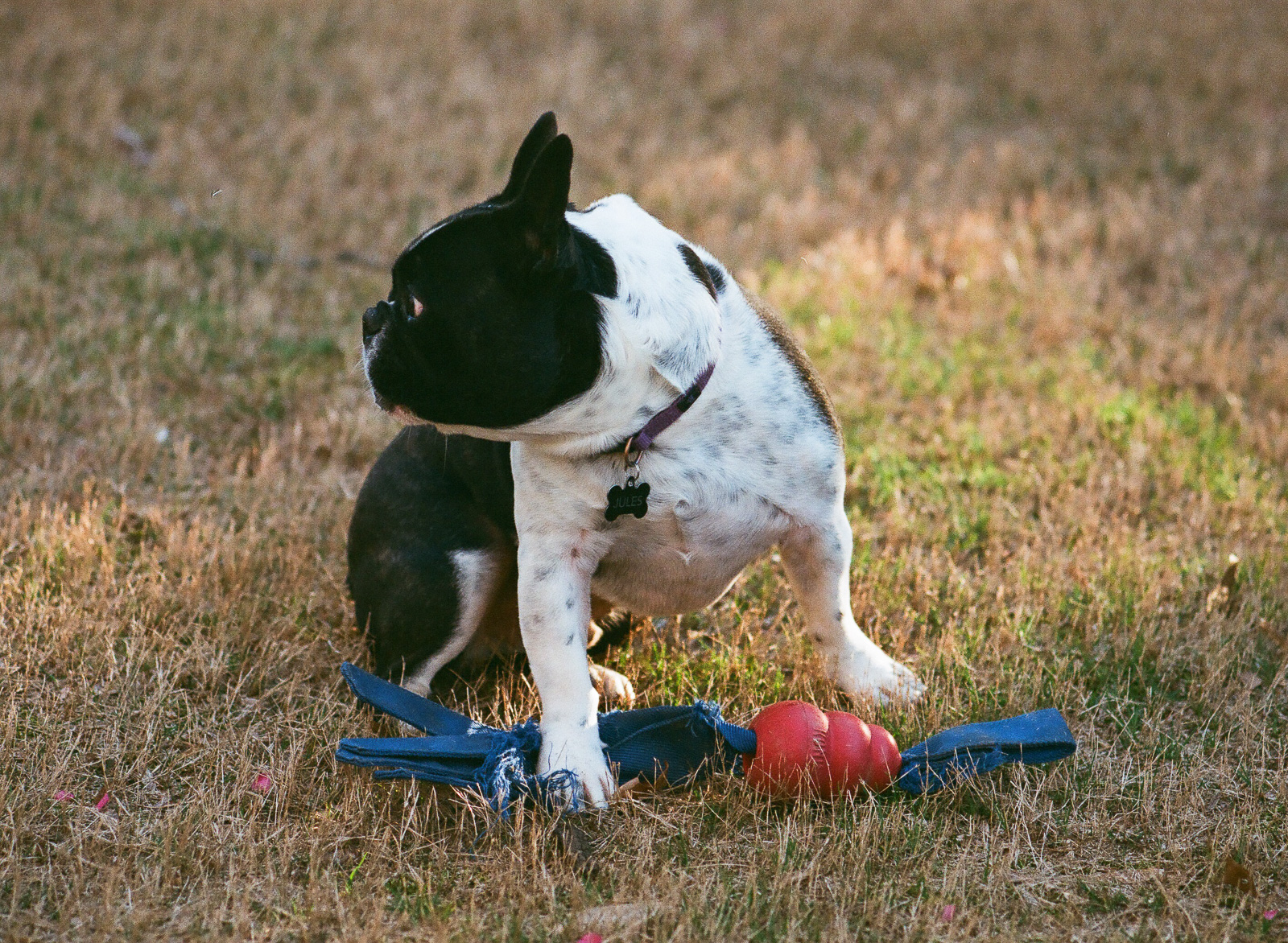
Jules – French Bouledogue – Nikon F3 – Nikkor 135mm f/2.8 AI lens – Fujicolor 400

  • Harman / Ilford

It’s been a very long time since Black and White film was last considered the default choice for the casual “amateur” photographer. And Ilford (now part of the Harman Technology group) does not manufacture or sell color film. But Ilford is worth a mention here:  they have the largest catalog of  Black and White film (classics like the Pan F, the FP4 or the HP5, fine grain products of the Delta series, and products now unique such as the XP2 (a Chromogenic B&W film that can be processed in the same chain as color print film).

summer2017-r5--24
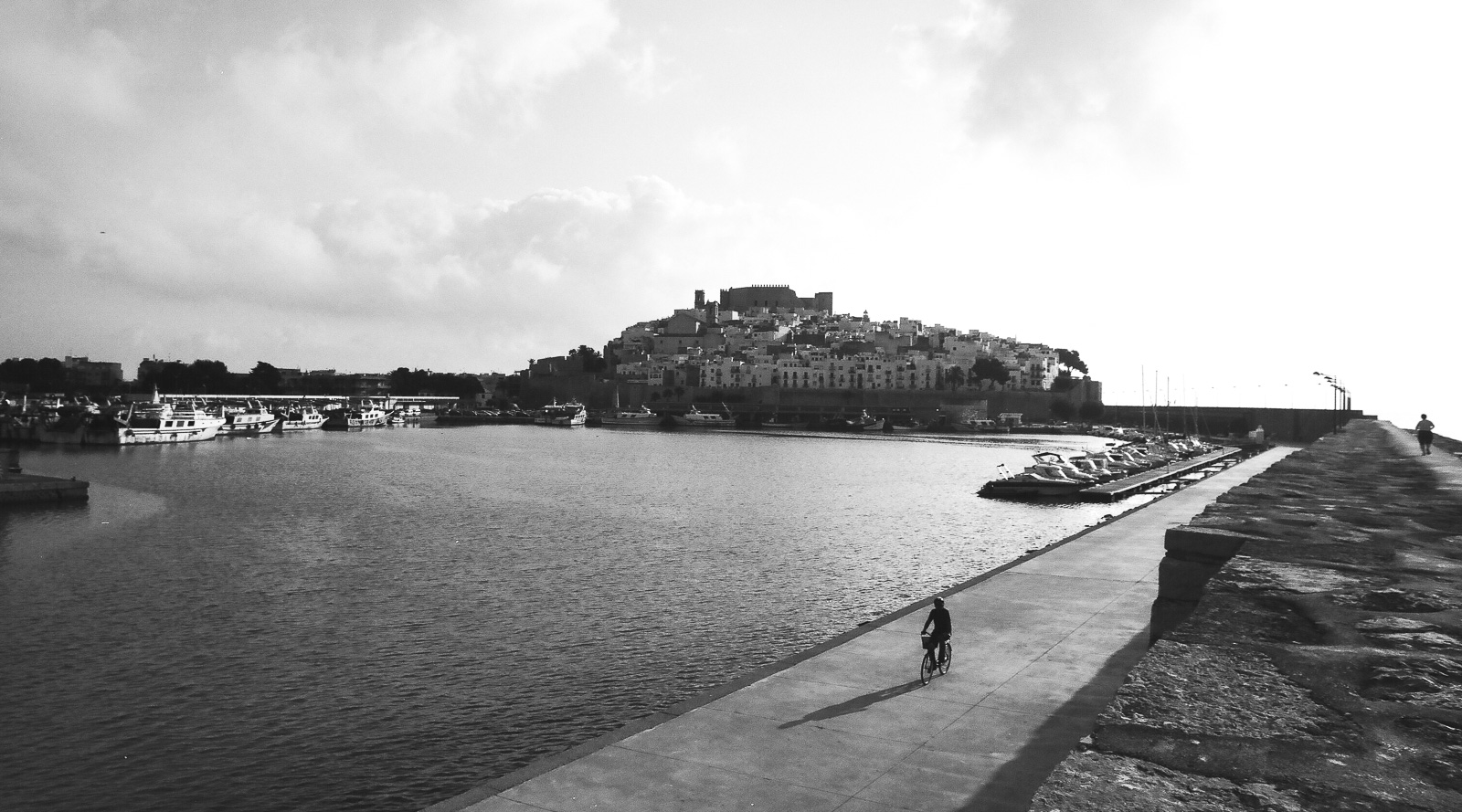
Peniscola (Spain) – Canon T90 – Ilford film.

  • The rest:

Cinestill, Lomography, Revolo, Rollei, fall into the Boutique category. I don’t know much about Boutique film – and now that some of my old favorites are gone (Fuji Reala, Kodak CN400), I tend to stick to Kodak’s Ektar 100, that I use alongside Fujifilm’s Superia 400 and Ilford’s FP4 Plus B&W film.

The costs

I have to admit that I don’t really get this “low cost at all cost” thing: in the US, a 35mm (24  exposures) cartridge sells for anything between $2.75 and $3.50 – with premium film being generally sold in rolls of 36 exposures at prices between $6.75 and $9.90. Worst case, the cost difference between low-cost and premium amounts to $0.20 per exposure.

Processing a single 35mm cartridge will cost approx $8.00 to $10.00, and scanning another $5.00 to $10.00 (postage included). Some processors may advertise cheaper prices, but only scan in low-resolution, or don’t return the negatives (they destroy them), or charge a significant extra fee for the postage or for a higher resolution.  All in all, consider that $17.00/cartridge is the best price an occasional/low volume user can get for a decent service (it’s a scale game, and prices get lower when the volume goes up).

And if you spend that much on processing, why not buy the best film you can get?


Where?

Brick and mortar stores (big box and pharmacists):  not much to chose from, only Fujifilm’s products.

On line: besides the big Three (Adorama, Amazon, Bhphotovideo), there are a few sites specialized in ‘Boutique” film:  Freestyle Photo ; Lomography


ektar--34
Atlanta – Piedmont Park – Nikon FM – Kodak Ektar 100


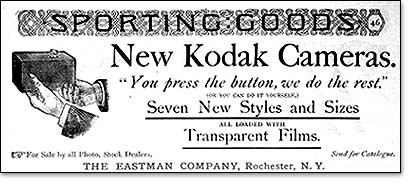
You press the button, we do the rest

Of the importance of convenience in photography, and how it will drive conventional digital cameras to irrelevance for casual photographers.

kodak1890ad

Before they lost everything, Kodak had built an empire on convenience. They had made a process which was seen as extremely complex and cumbersome – taking photographs – into something as simple as pressing a button.

Apple, Google, Facebook, Instagram and a few others have made an activity which was discouragingly complex for billions of people – taking pictures, uploading them to a computer, editing them and sharing them with family, friends or perfect strangers over the Internet – so simple that a 6 year old can do it.  For the casual photographer, there is no better camera than a smartphone.

paris_iphone5s
Paris-Plage – iPhone 5s – August 2016

How is the obsession with simplicity and convenience going to impact photography as we know it? 

It may take a few years, but digital photography as we know it is going to leave the mass market and become a niche:

  • Smartphones and their cloud ecosystem will only get better at meeting the needs of casual photographers. They will not only take better pictures, but will also offer more functions and even more convenience than today, in a way that will be impossible to match with conventional digital cameras. Imagine the possibilities of combining Presence, Search, Face Recognition, Augmented Reality and Video to make pictures more beautiful, more flattering for the subject, more relevant, easier to share and easier to retrieve for the average user.
  • Conventional digital photography, with its big and heavy cameras and its cumbersome workflow requiring PCs or Macs and Terabytes of storage will not be able to compete on convenience with smartphones. It will leave the mainstream, and will increasingly be the field of people passionate about creating the absolute best pictures. Those photographers will form a small niche – with its forums, its Web galleries, its exhibits, its sub-culture. The situation of digital photographers  will be comparable to what photographers shooting with film experience today. They will form a new minority of enthusiasts.
  • I don’t expect photographers working with digital cameras to abandon their 50 Megapixel sensors and the Terabytes of disk space where they store their RAW or DNG files to go back to film.
  • But you can wonder what newcomers to photography will do. If they have an interest in photography as a craft or as a form of artistic activity, and want to go beyond the pictures that the smartphones of Apple and Google will have prepared for them, will they invest in digital cameras and in the digital workflow, or will they go to film? I don’t know. But I’d like to bet on film.

Londres-82100021 copy
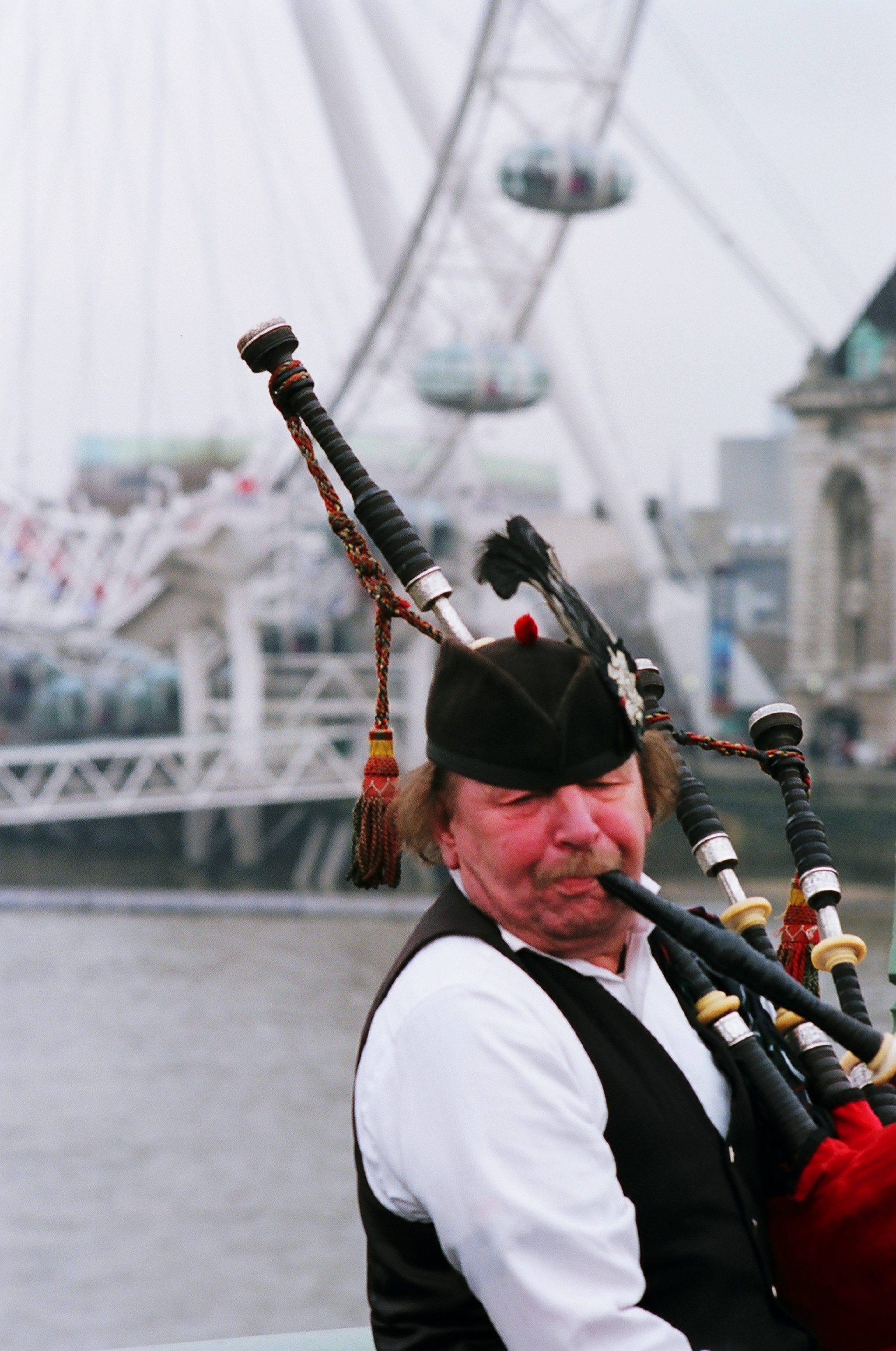
Bagpipe Player – London – Jan. 2012 – Nikon F3.

Pictures of Venice on Kodak film processed by Ritz-Camera – Thomas Mann’s “Death in Venice” revisited?

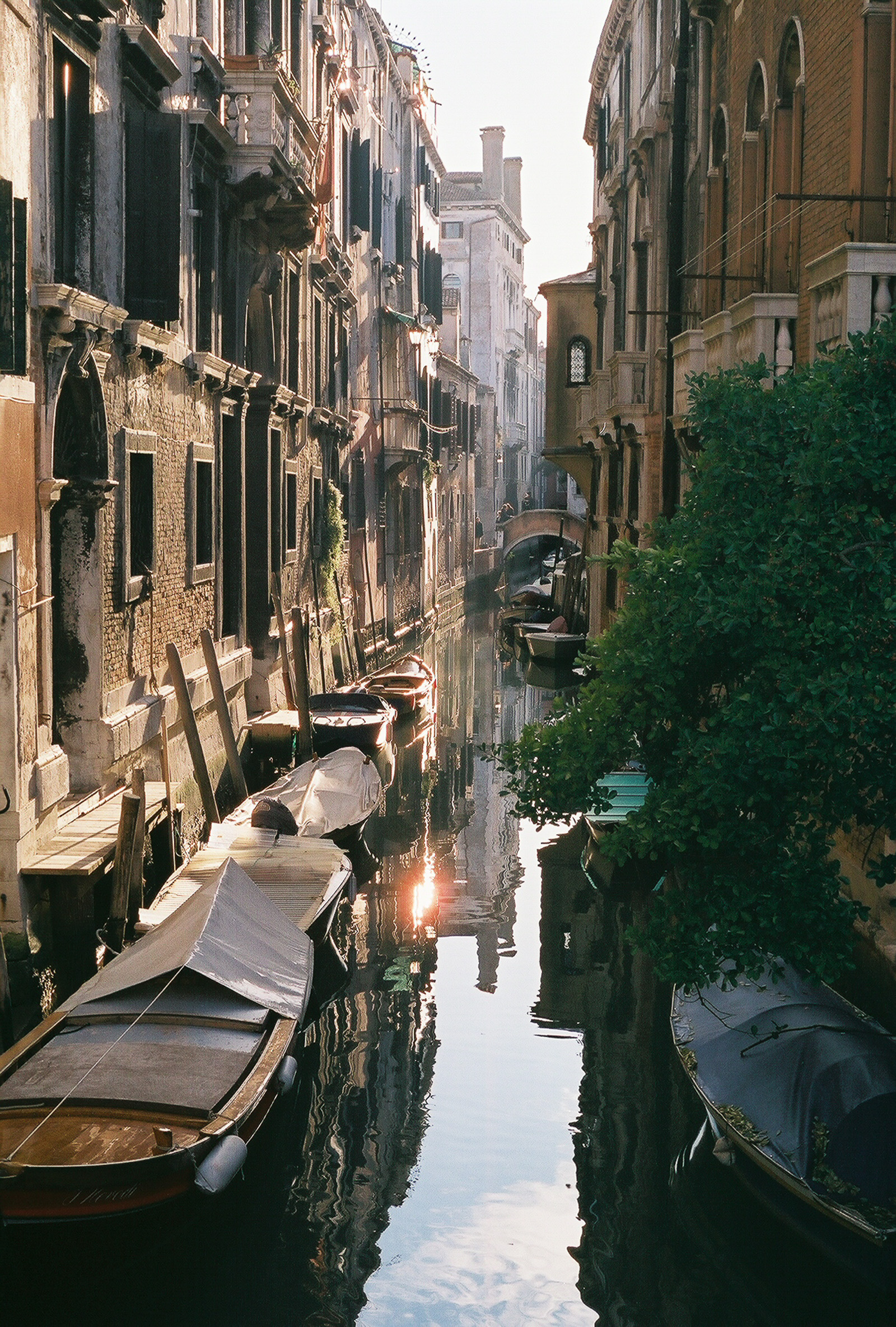
The last time I used a Kodak film - so far One of the many canals of Venice. Nikon FE2 – Kodak CN 400 film

I was in Venice during last year’s holiday season – a family reunion of sorts. I did not suspect that it would be the last time that I would have Kodak film processed by Wolf Camera (a local brand of the Ritz Camera empire). Admire the irony. Is there a better subject than Venice to illustrate the decline and fall of the glorious.

Venice - Nikon FE2 - Fujicolor 400 Venice – Nikon FE2 – Fujicolor 400 – Dec. 2011

The weather in Venice was absolutely splendid, except for a few days of rain and fog at the end of our stay. There was so much to shoot that I felt I had no time to lose fiddling with manual (film) cameras, and I shot primarily with digital cameras and with my smartphone. After one week of robotized photography, though, I felt like using a “real” camera again, and loaded my beloved Nikon FE2 with Fuji color film and with Kodak’s chromogenic B&W film, the CN400.

After heading back home, I was immediately absorbed by the daily routine, and forgot about the rolls of film from Venice. A few week-ends ago, I finally cleaned my desk and found the unprocessed film cartridges. The following day, I stopped at a rather large Wolf Camera store which still processed film, and generally did a decent job at scanning the negatives. The day after, I heard on the radio that their parent company, Ritz, was being liquidated. I was a bit concerned for my film.

In the evening I stopped at the store (which had yellow liquidation posters all over its windows). The guys said they had not processed my film yet (by the sad look of it, it was obvious that their film processing machine had some sort of problem) and they promised they would call me when the job was done. Three days later, they had not called. I stopped by again and I was decided to ask them to give me my film cartridges back. To my surprise, the processing machine had been fixed, and my CD was ready.

I was glad to get it, but I was sad for the staff of the store. Those guys were more competent and more helpful than the average of their colleagues working in smaller Wolf stores, and I don’t know what they’re going to do now.

I live in a rather big metro area – 4 million people call it home – but with Wolf going out of business in a matter of days, we’ll be down to one single walk-in, full service camera store for the whole area.

As for Kodak, they announced a few weeks ago that they were planning on selling their consumer film business. It’s likely the buyer will have the right to use the Kodak name – at least for a few transitional years, so there will still be Kodak film on store shelves for a while, even if it will only be very remotely connected to the Yellow Grandfather.

I love Venice. It’s beautiful and weird, a world in itself. The city used to rule the Eastern Mediterranean world but today it has lost all of its influence and most of its inhabitants. It is primarily a tourist destination. But it still lives and keeps on inspiring writers, musicians and all other sorts of artists.

May film photography follow the same tracks.


Venice - gondoliers Venice – Gondoliers in the sunset. Nikon FE2. Fujicolor 400 film

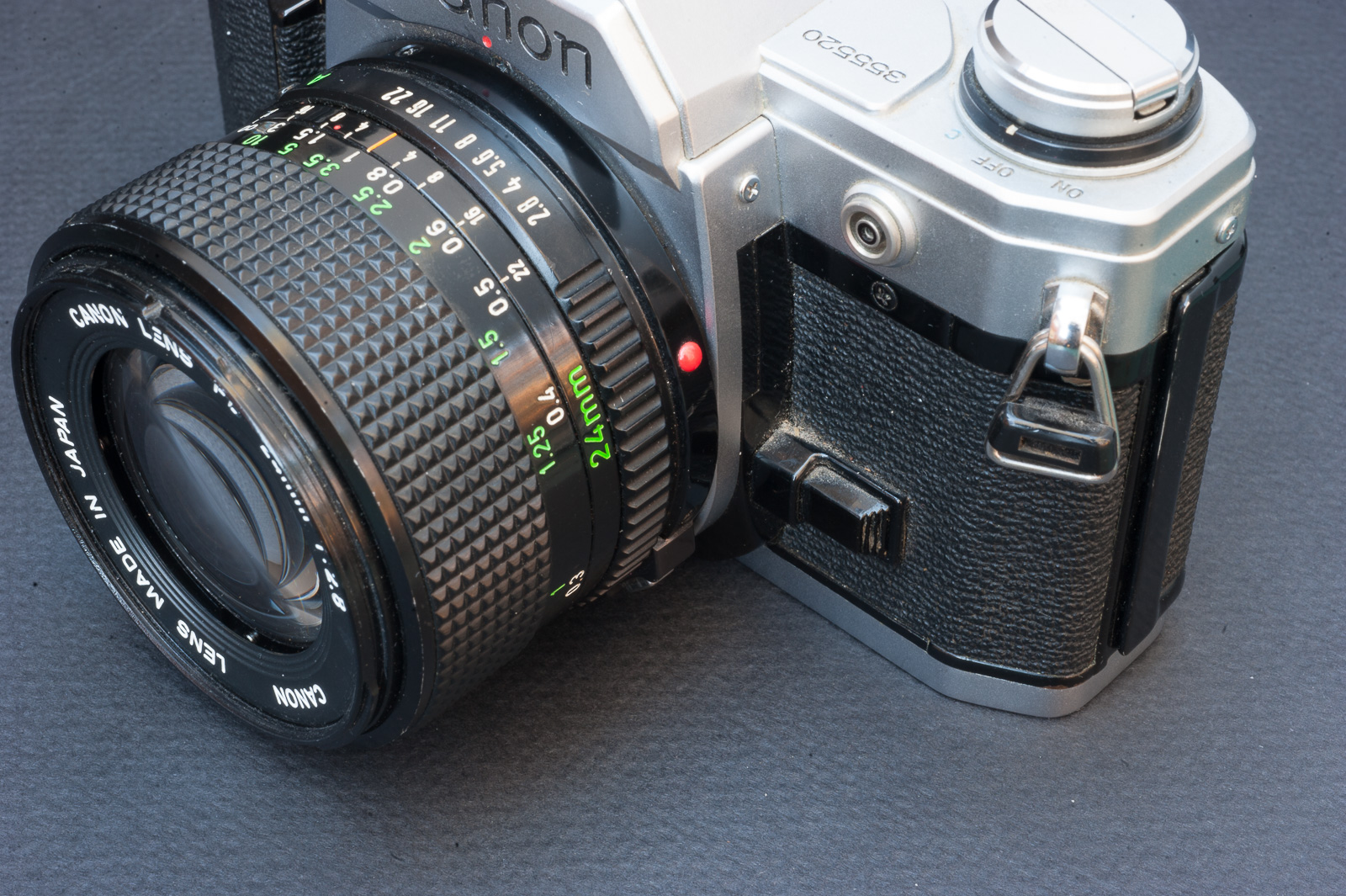
And now for something completely different. My father in law gave me his old Canon A1 (pristine) as well as battered Canon FT, with an incredible 55mm f:1.2 lens. As strange as it may sound I had never owned – or even used – a Canon SLR before. I’m planning on testing them in the weeks to come. Stay tuned.