I bought another compact film camera. Second hand, of course, you don’t change a winning formula. But not a vintage this time. This one was manufactured in 2024.
I had been intrigued by the recent proliferation of new “semi-premium” compact film cameras. In the $500 to $800 price range. Cameras like Mint’s re-interpretation of the Rollei 35, Lomo’s MC-A and Pentax’s 17. Three original designs, with not much in common, except for the use of a wide angle prime lens and of course, of 35mm film.
I had read the reviews, watched the Youtube videos. And I picked my champion. The Pentax 17. Because it’s different. Reviewers have compared Mint’s AF 35 to the classic Rollei 35 that inspired it, and the Lomo MC-A to the pinnacle of compact film cameras, the darling of the influencers, the Contax T2. Nobody has found a classic camera they could compare the Pentax 17 to.
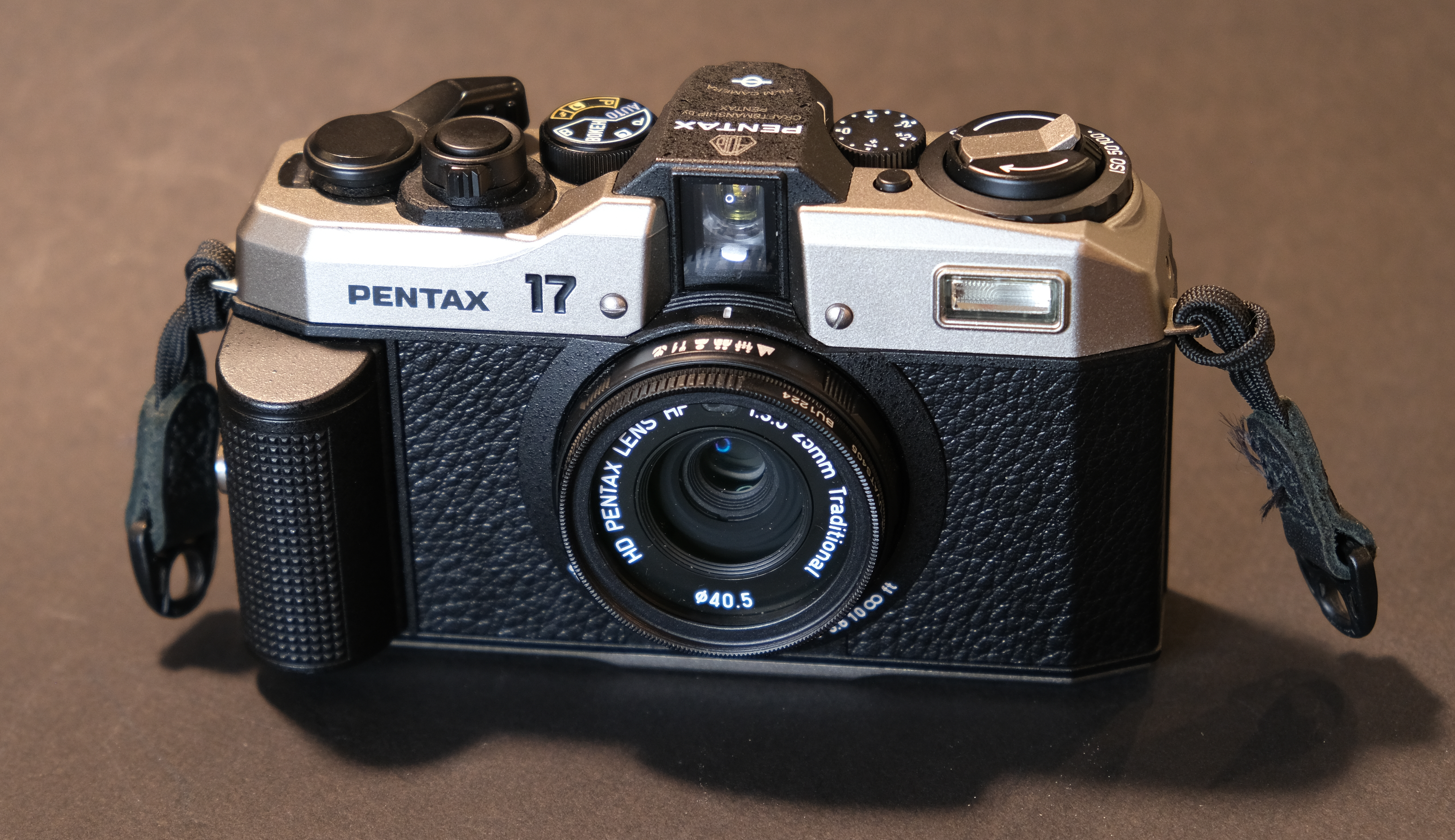
This blog entry is not going to be another review of the Pentax 17. There are enough of them already. And on the whole, they’re positive. Reviewers generally approve of the lens and of the metering system. And when they complain, it’s because they were secretly longing for a modern Contax T2.
For those complainers, the lens and the exposure determination system of the P17 were wasted on a camera that offered the controls of a cheap toy. As if Leica had put their best glass or Nikon their best exposure metering system on a Holga.
The Pentax 17 was not designed to be a substitute to a manual focus SLR or to a rangefinder camera. The goal of its creators was to bring new people to film photography, and, eventually, to force seasoned photographers out of their zone of comfort. Let’s see how I adjust to it.
The context
Pentax at its core is a single lens reflex company – starting with its name – which evokes the pentaprism of a SLR. Contrarily to Canon or Ricoh who came to SLRs after having sold rangefinder cameras in the nineteen fifties, Pentax had never designed or sold any camera that was not a SLR before they launched their first autofocus compact camera in 1982. And contrarily to Canon or Ricoh, they had never sold a half-frame camera either.
For their return to film, Pentax could have made a re-edition of one of their best programmed auto exposure, autofocus, motorized 24×36 cameras. An Espio Mini of sorts. The same, but built with modern electronic components and with a one year warranty. Demand would probably have kept their production lines buzzing.
They chose to start from a blank sheet instead, and targeted an audience with limited experience in “legacy”, conventional photography (that is to say, taking pictures with a stand alone, dedicated camera that consumes film). The Seventeen is something without any precedent in Pentax’s own history (or any other camera manufacturer for that matter). And it could not make everybody happy.
A few words about the specs
You have to consider the Pentax 17 from the point of view of a person who is new to film photography, and whose experience of image capture is often limited to the camera app of a smartphone, and to a few snapshots taken with a disposable camera.
For people aspiring to film photography, the cost of a roll of film, and the cost of having it processed are the first two hurdles to clear. Pentax elected to resurrect the “Half Frame” format – meaning that instead of an horizontal image of 36x24mm, the Pentax 17 captures a vertical image of 17x24mm. Twice as many images on the same roll of standard 24×36 film.
“Legacy” photographers know how to take care of the exposure, they master the magic exposure triangle (aperture-shutter speed-film sensitivity) and understand how the depth of field works.
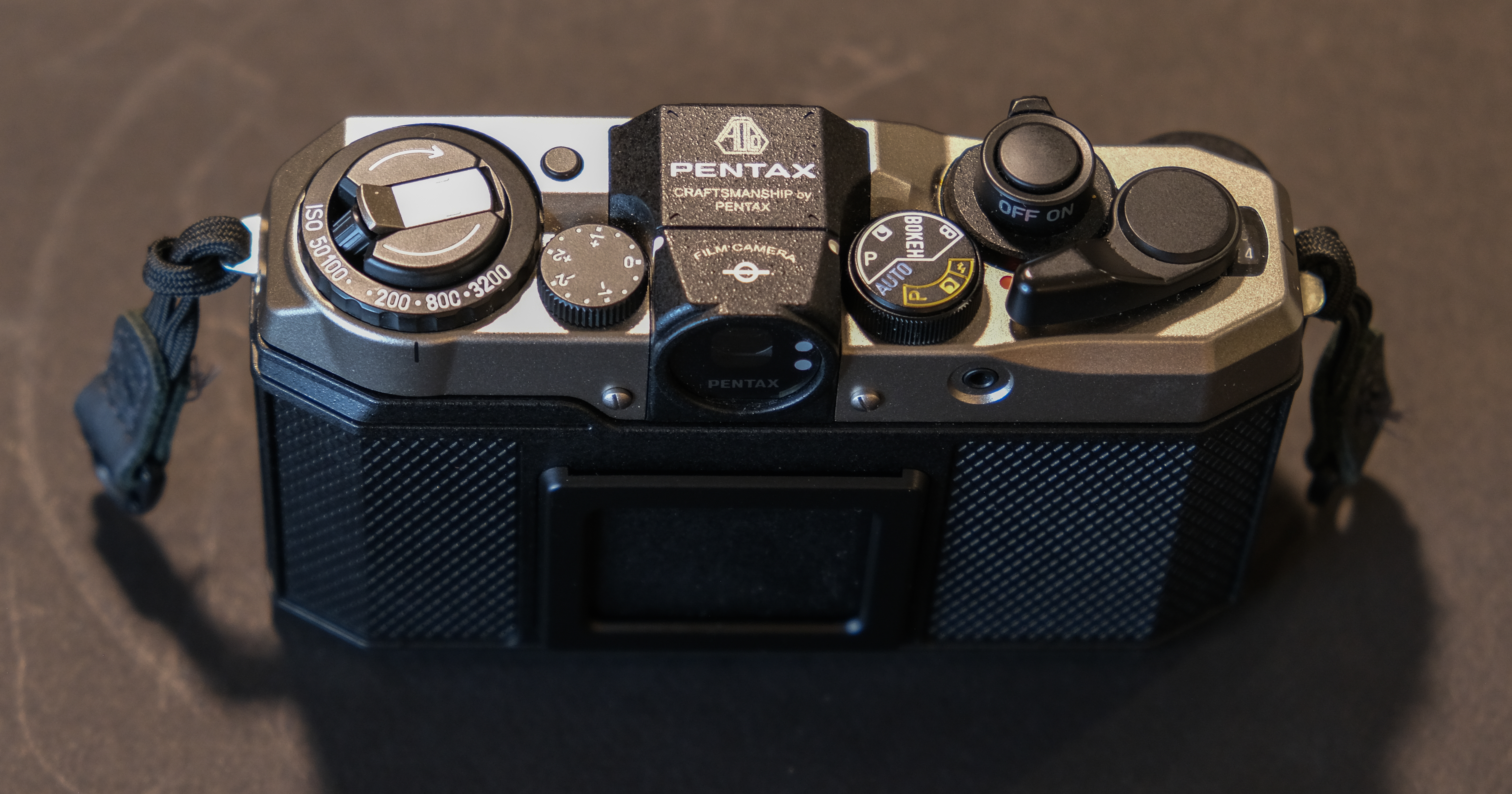
“Creators” used to camera apps did not have to bother with any of that to get great images. Pentax have tried to simplify their task by tying the automatic exposure modes and focusing in interesting (and original) ways:
- Focusing (moving the lens assembly) is motorized, in a sort of fly by wire arrangement.
- Depending on the auto exposure mode selected by the photographer, focusing can be “automatic” or left to the responsibility of the photographer.
- Pentax does not give a lot of information about the “Auto” mode. When the camera is set to “Auto”, it selects a narrow aperture (my guess is something varying between f/8 and f/16), and sets the focus to a point that maximizes the depth of field (another guess: 2.50m). Pentax deliberately don’t use the word “hyperfocal”, but that’s what it looks like. The focus ring is inoperative, but if there’s enough light, subjects located between 1m and the infinity should be reasonably in focus. In the “Auto” mode, the camera behaves more or less like a very nice fix focus point and shoot.
- If the Program mode is selected, aperture will vary between f/3.5 and f/16, and the shutter speed between 4 sec and 1/350 sec.
- A “Night” and a “Bokeh” modes can be selected to force the camera to use slow shutter speeds in the first case, or to operate at the widest aperture in the second case.
- The built-in electronic flash is activated automatically in the Auto mode (of course), but the Program and the Night modes can be selected in either of two versions – one with the flash, one without.
- In all exposure modes other than “Auto”, focusing is under the responsibility of the photographer, who will be guided by icons (mountain, group of people, …) or by a conventional distance scale. That’s the so-called zone-focus.
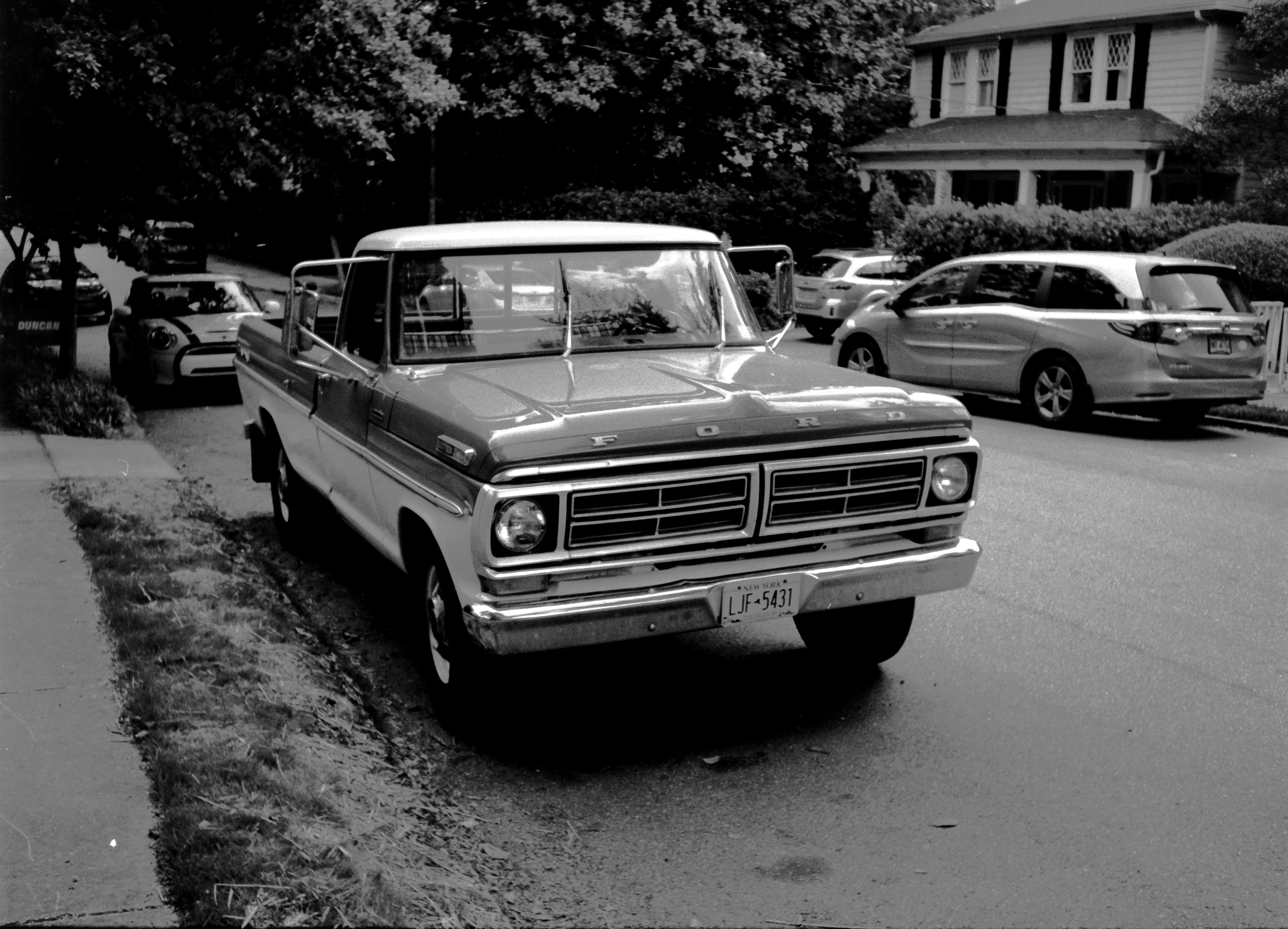
The P17 does not offer conventional ways to determine the aperture or the shutter speed (no PASM selector, no aperture or shutter speed ring). What the Seventeen proposes, at best, are indirect ways to influence the aperture /shutter speed combination. Which may be great for beginners: Program if you want some control over the focus and the use of the flash, Bokeh, when you want the blurry backgrounds, Night and Bulb when you want long exposures, and Auto when you want to enjoy an event and not have to think too hard about any of the settings.
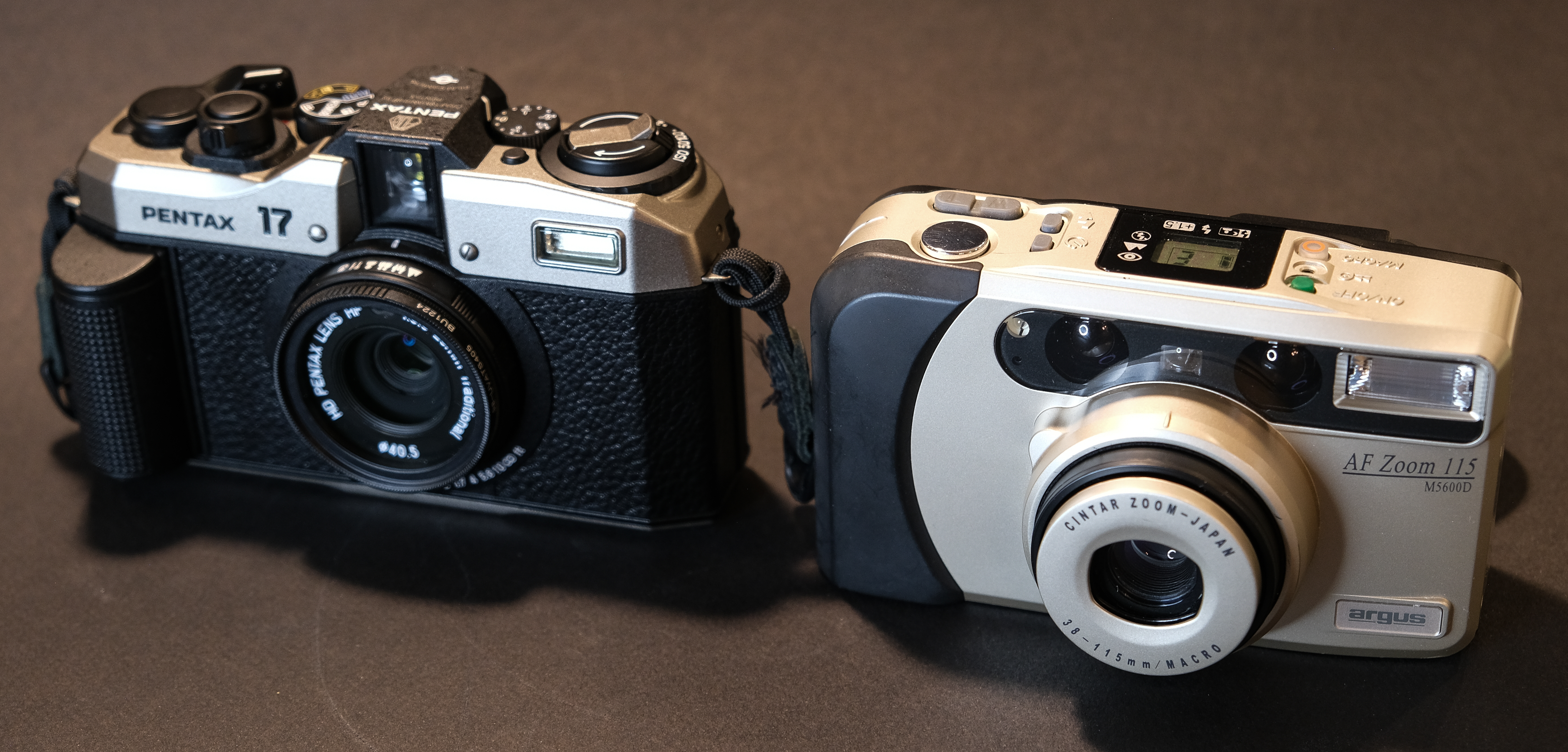
First photo stroll
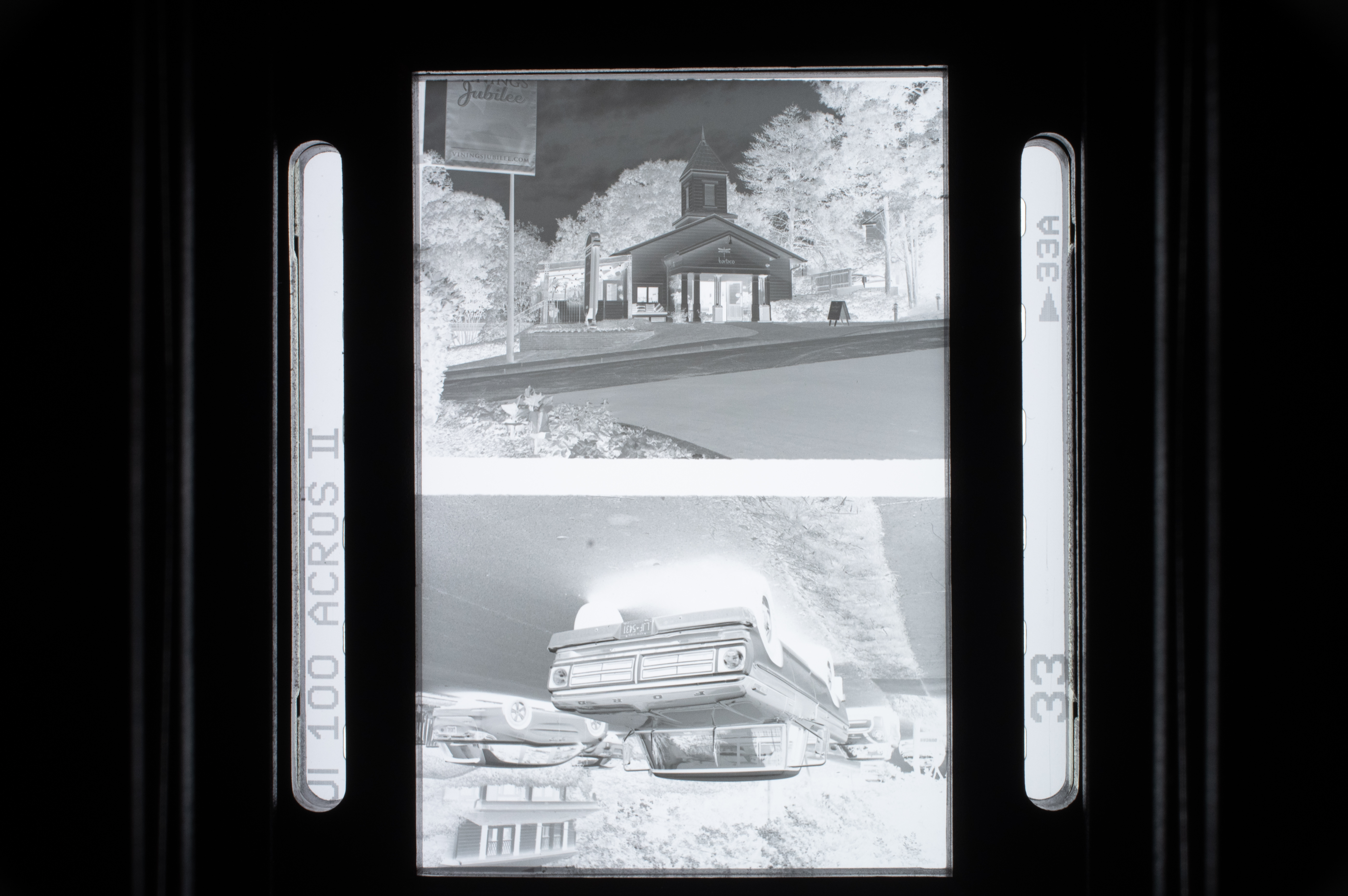
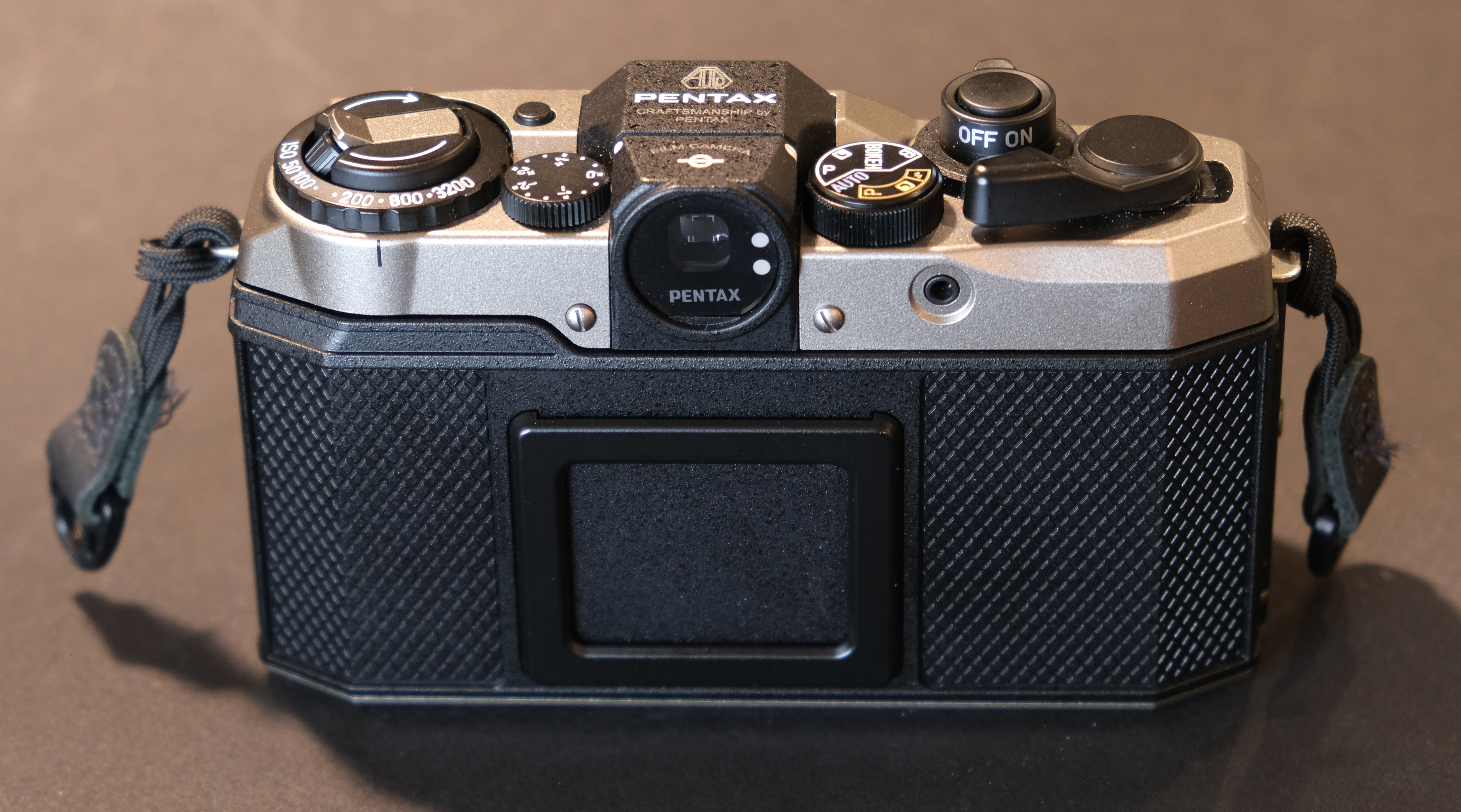
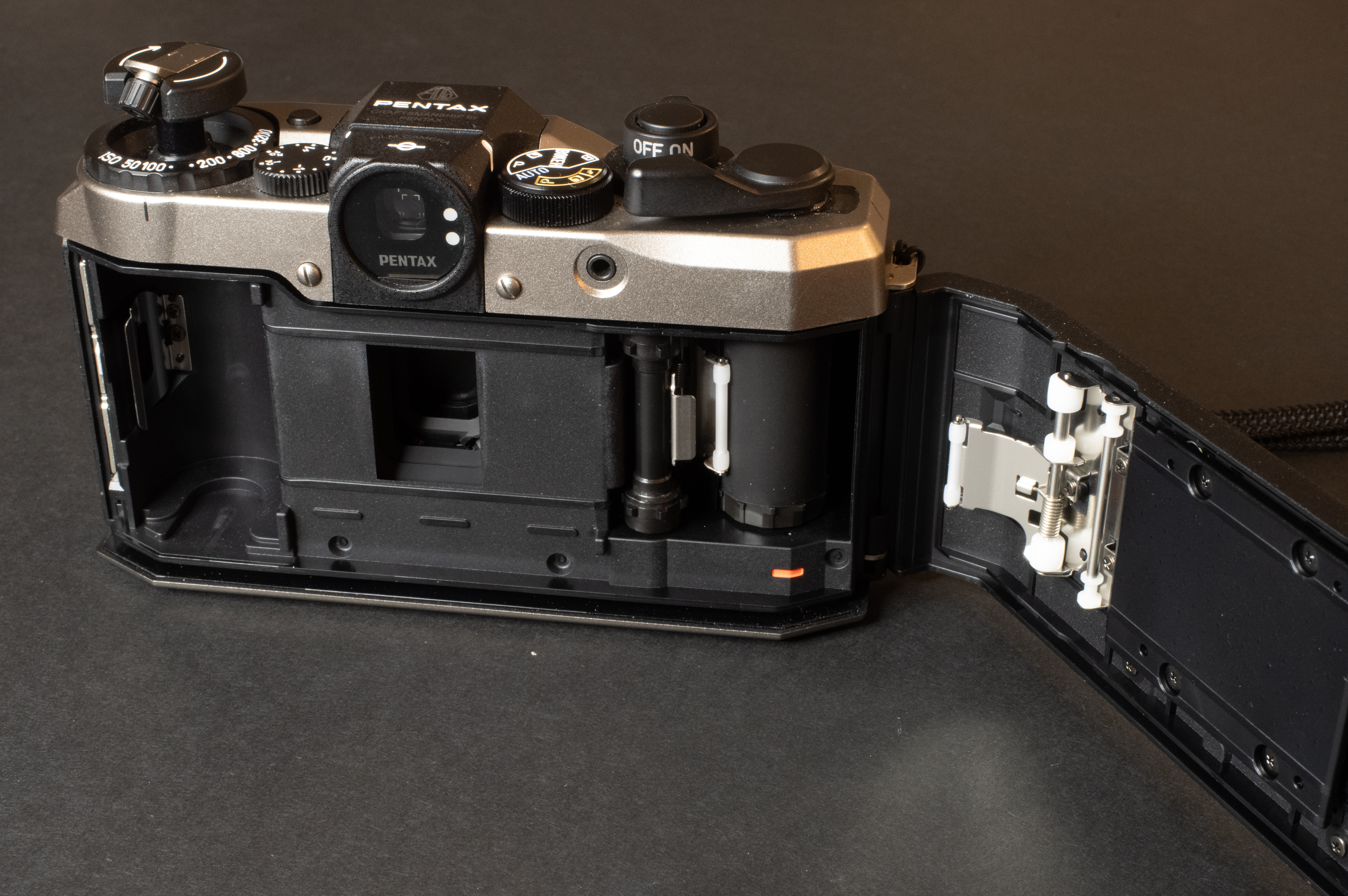
Contrarily to those reviewers who expected Pentax to release a modern Nikon 28ti, I have no complaint about the appearance or the build quality of the camera – it has obviously been designed, manufactured and assembled with care, with components of quality. The top and base plate are in magnesium, the rings click discreetly when you rotate them, the film advance lever is smooth, the tactile experience is rewarding. The viewfinder is large with bright projected frame lines, and the lens is a glass triplet, treated with Pentax’s most recent “HD” coatings.
I’ve never set the P17 in its Auto, fix focus-emulator, mode. I don’t see the point. Most of my images were shot in the Program mode, a few in Bokeh and a handful with the flash on.
Shoot with the Pentax 17 in Program mode for a few minutes, and a few things immediately strike you:
- The two LEDs in the viewfinder keep on flashing – it’s the camera telling you that you have left the lens cap in place, or forgotten to rearm the shutter, or that you should enable the electronic flash. After 60 minutes, the camera has trained you, and the warnings are far less frequent.
- The viewfinder shows you an image oriented vertically. Of course you can rotate the camera 90 degrees left or right and compose an horizontal image, but the camera is designed to incite you to shoot as many vertical images as possible.
- focusing is un-assisted: on a “normal” camera, you don’t have to think hard about the focus – the camera is either autofocus, or equipped with efficient focusing aids – a rangefinder, a focusing screen, a ring of micro-prisms, a split image telemeter. Here, nothing. You have to determine the focus on your own – with the sole assistance of a few icons. It’s not extremely difficult, but it’s a task you have to accomplish every time you’re facing a new scene.
- On a typical photo stroll in the street or in a park, you rapidly take the habit of anticipating, adjusting the focus in advance… just in case what you see 50 ft ahead becomes an interesting scene when you get closer.
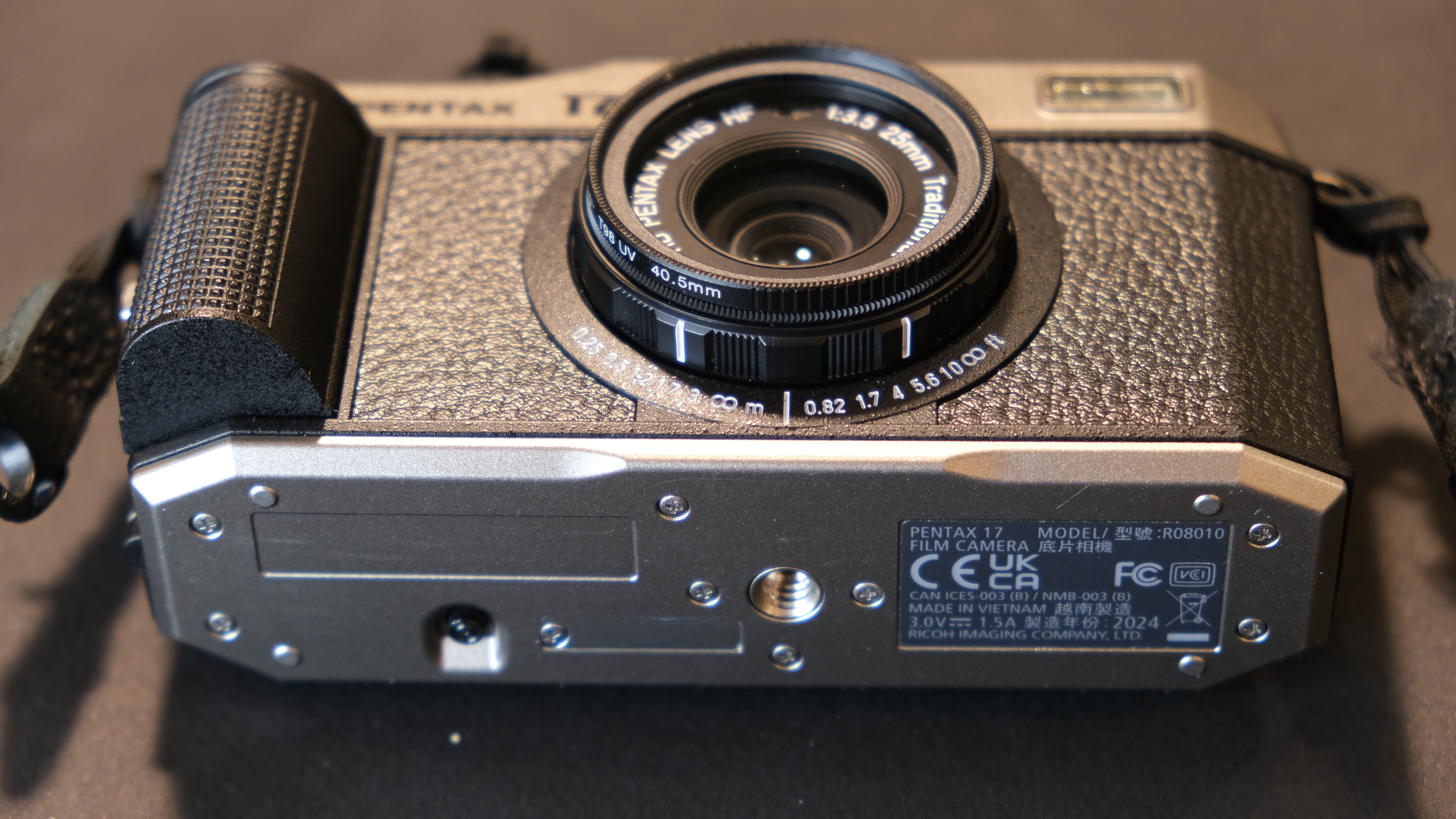
Is it a keeper?
I don’t know if the camera reached its target audience – I only know that Ricoh-Pentax have no plan to follow up with another film camera at the moment.
Like Fujifilm, Ricoh (the corporation, not the team of enthusiasts who are developing new cameras) seem to be happy to have successfully transitioned out of film, and to have survived the contraction of the photography market during the COVID years. They don’t seem to have much appetite for the risks inherent to a return to the film business, that they had worked so hard to escape from.
The Pentax 17 is one of a kind in the current photography landscape. Not because it’s consuming film, but primarily because it involves the photographer differently. It’s a sort of unique combination of characteristics normally found on toy and fix focus cameras, with the build quality, the lens and the exposure determination system of a “serious” camera.
The photographer has no direct control of the aperture or the shutter speed, and only an approximative control of the focusing distance. The limited control over the aperture and the focusing distance naturally leads to simpler compositions, as the photographer cannot precisely manage the depth of field, or take advantage of the longer reach of a non-existent zoom to isolate the subject.
But it would be wrong to assume that the P17 is no different than an entry level film point and shoot – that you can get for $5.00 or less in garage sales. Point and shoot compact cameras are far less involving and could easily be replaced by a smartphone. And the fact is that they were.
The 17’s zone focusing forces the photographer to anticipate how the scene could develop and pre-set the focus accordingly. The camera encourages the photographer to frame vertically, and to pair the images in diptychs. And to use special effects modes like “bokeh” or “night”. To plan. To think. Beyond the pleasant tactile experience that shooting with the Seventeen offers, that’s where the fun resides.
Does it have a future in my photo bag? Definitely – because shooting with the Pentax 17 is a challenge, and an experience that no other camera, past or present, can totally emulate.
More about the Pentax 17 in those pages in a few weeks – after a few more rolls of film.
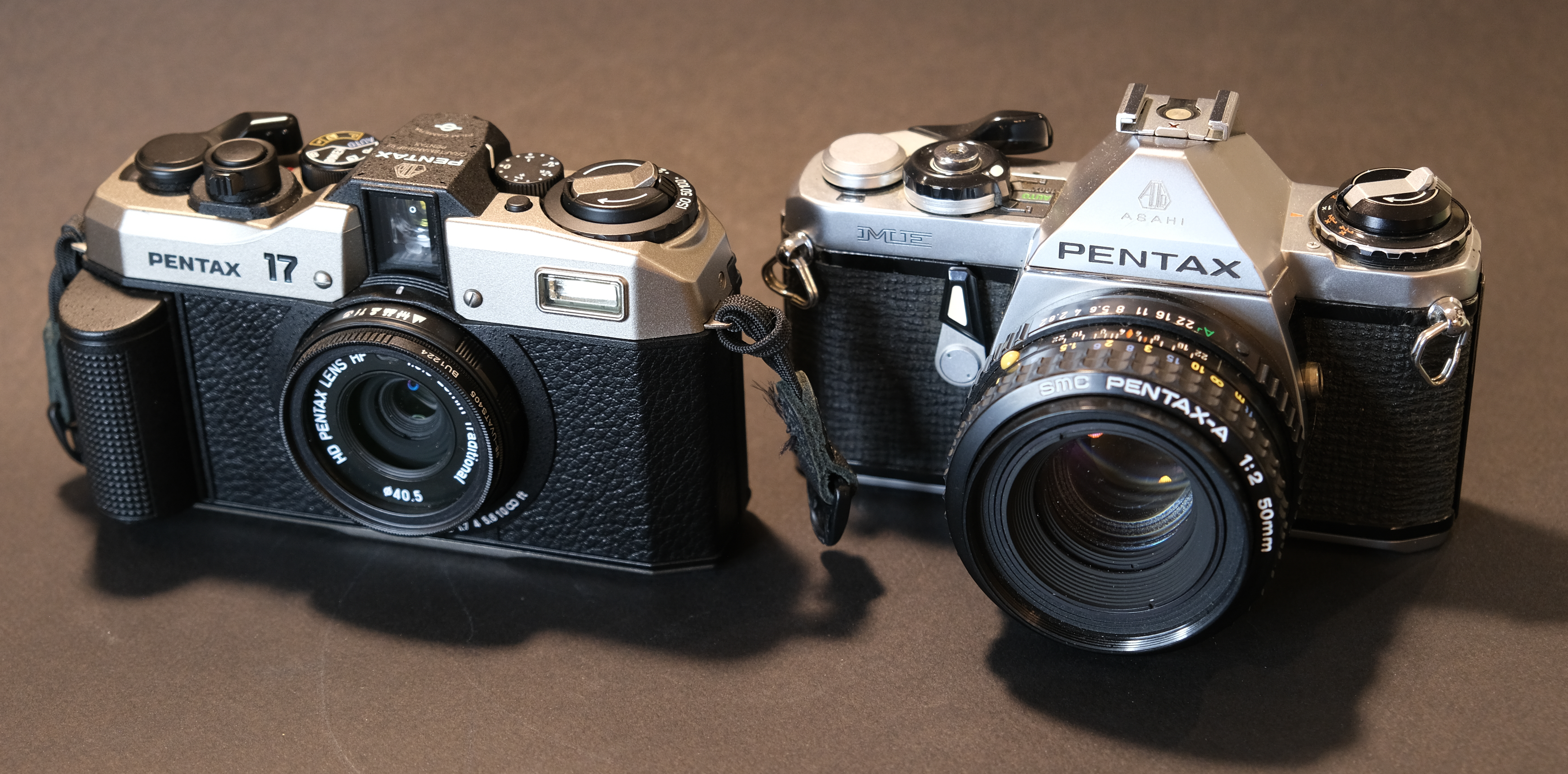
Why 17?
Along this page, I kept on calling the camera indifferently “17”, “P17” or “Seventeen”. But its official name is “Pentax 17”.
17, because the negative of a half frame camera is 17mm wide.
What’s to like?
- It’s different – it’s not “another compact film camera”
- It’s different – it has to be used it with intent.
- The build quality
- The visual and tactile experience
- Half frame – twice as many frames for the same cost
What’s NOT to like?
- It’s different – and its talent is wasted if you simply use it as a basic point and shoot compact camera, in Auto mode
- The mode selector knob: too soft
- The frame counter: too small
- The half frame negatives – they’re small and require more care (processing, scanning) than larger negatives.
How Much?
The Pentax 17 is still on Pentax’s catalog, and available (new) from major photo retailers for $499. So far pricing has been very solid and nobody is discounting it (you get one or two free rolls of film with the camera, at best). Very few Seventeens are available on the second hand market. When they are, they sell from the high three-hundreds to the mid four-hundreds.
More about the p17
https://www.35mmc.com/17/06/2024/pentax-17-review/
https://analoguewonderland.co.uk/blogs/film-photography-blog/pentax-17-camera-review
https://www.pentaxforums.com/reviews/pentax-17/introduction.html
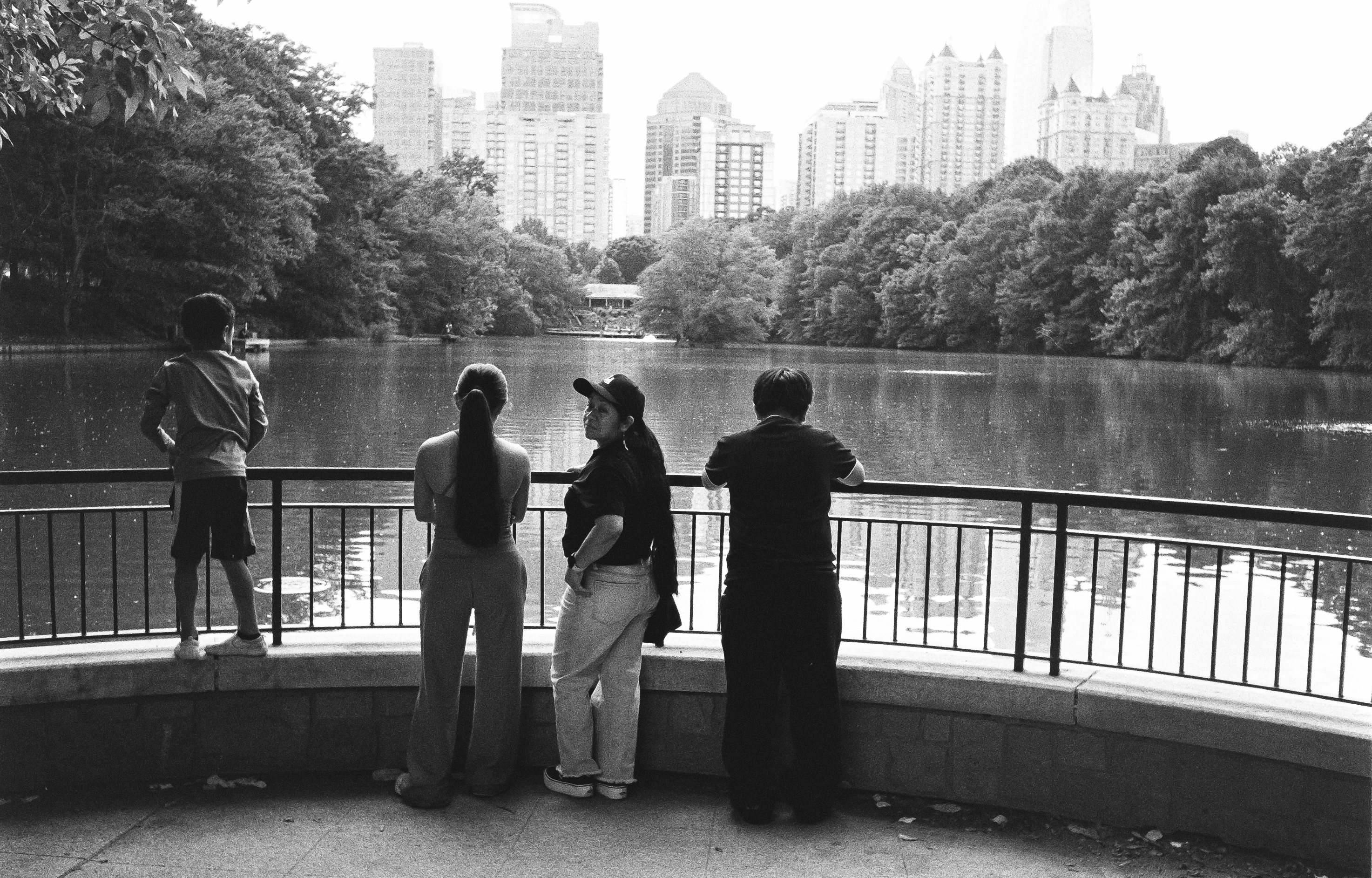
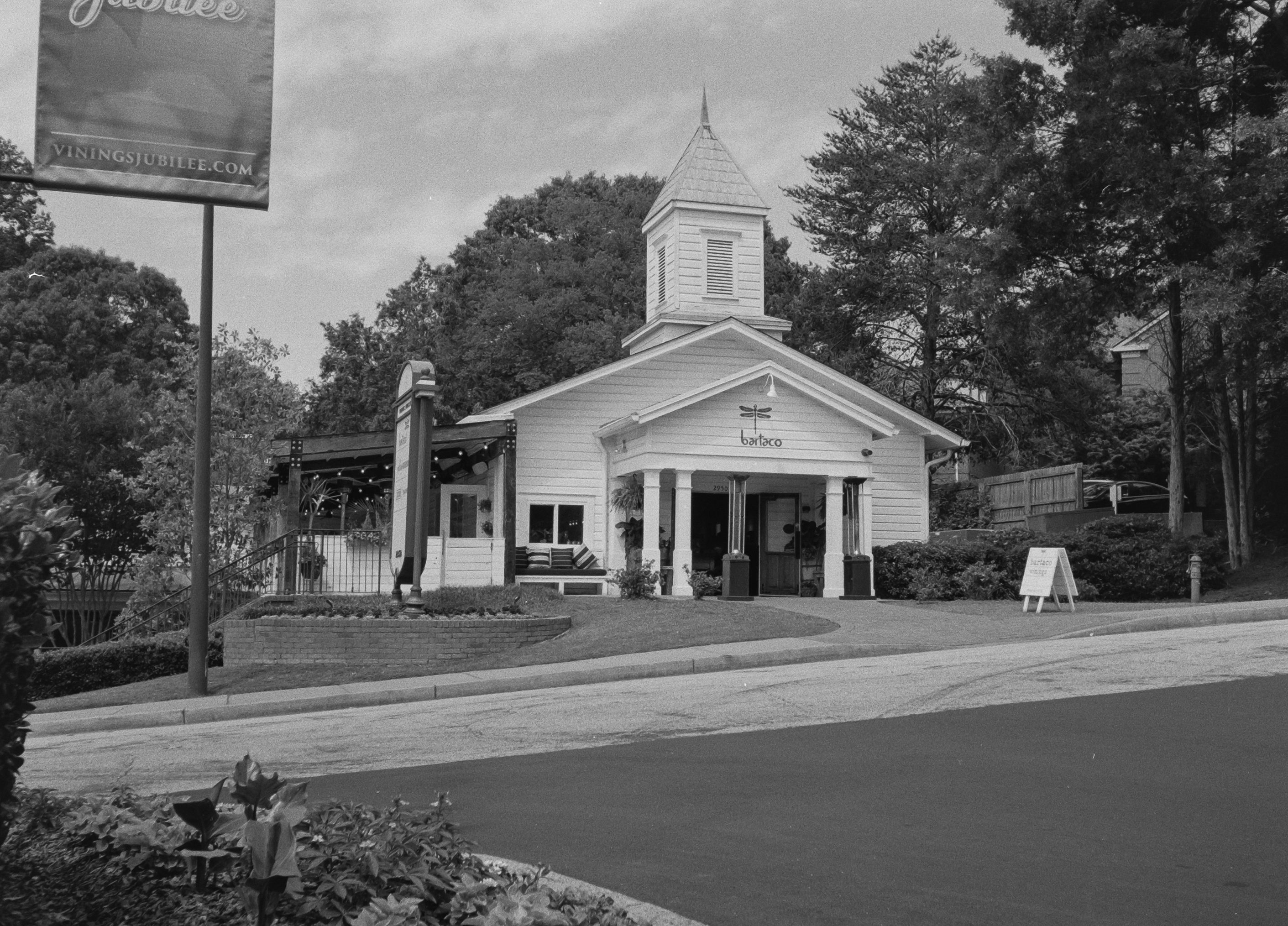
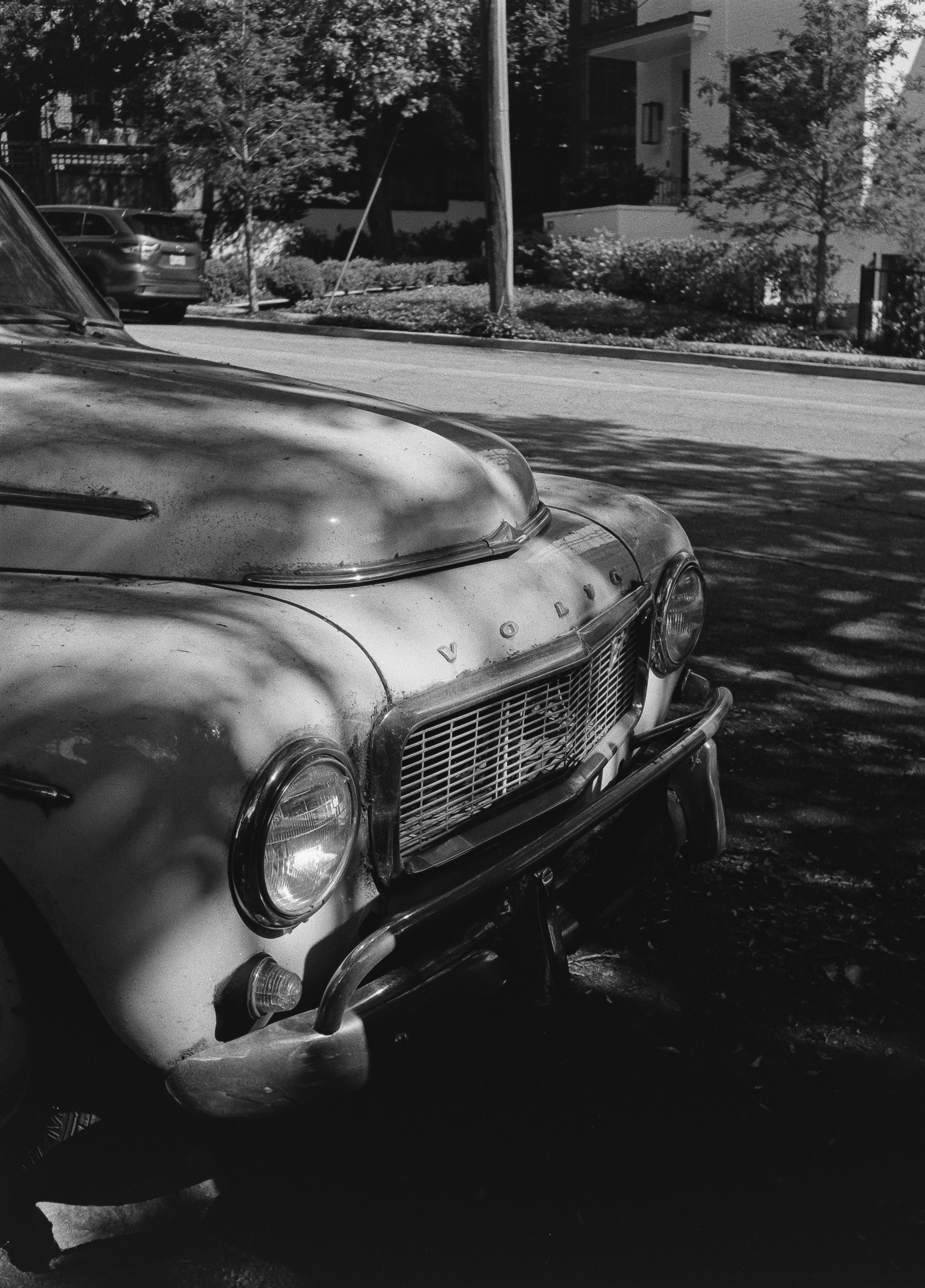
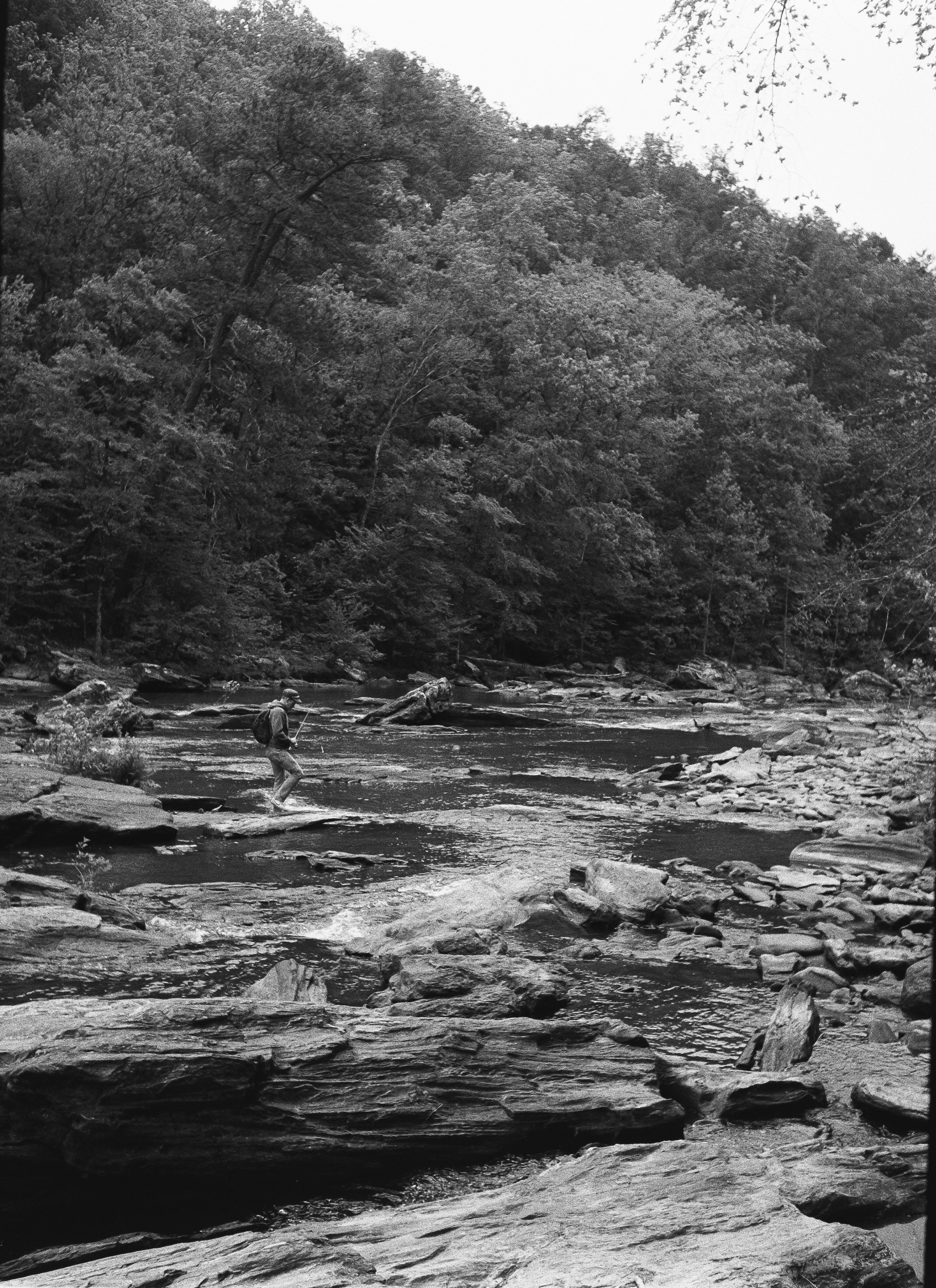
All b&W pictures below were shot on Fujifilm Acros 2 film, and digitized on a Fujifilm XT-4 body with a Micro-Nikkor 55mm f/2.8 lens and the JJC digitizing adapter.