The “CCD Sensor look” is all the rage nowadays, and after having resuscitated my old Canon Digital Elph SD400 (that still impressed me) and bought a Pentax *ist DS (that one was a disappointment), I was still curious, and eager to reunite with a camera equipped with what is considered the best APS-C CCD sensor ever, the Sony 10 Mpix ICX493AQA. This chip (or one of its a close relatives) was integrated in Nikon’s D200, D80, D40X, D60 and D3000, as well a few models from Pentax (the K10D, K200D and K2000/k-m) and Sony’s early Alpha series cameras (the A100, A200, A300 and their derivatives).
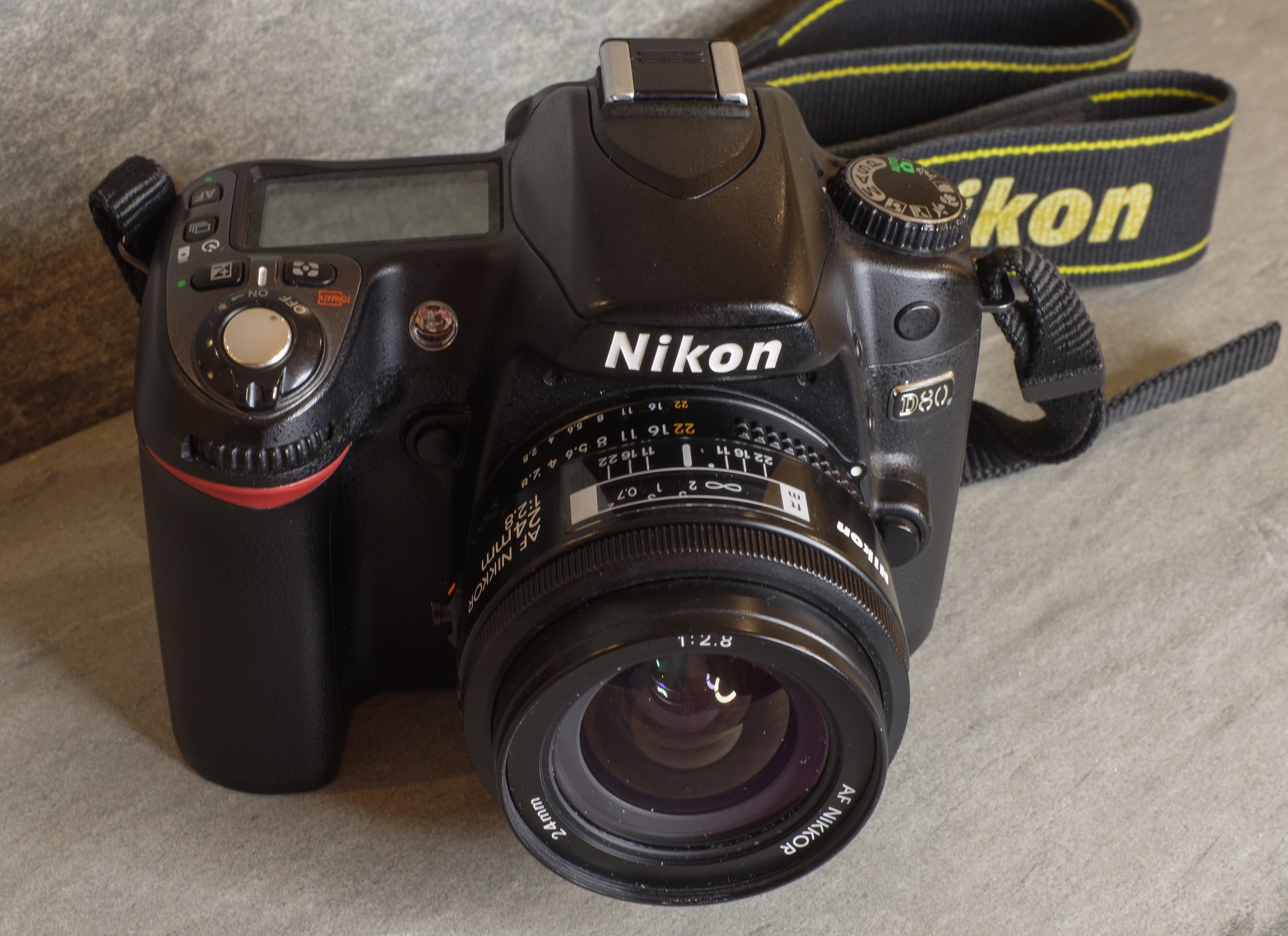
In this list, the Nikon D80 was the easy choice. To me, it was a known quantity, – a D80 had been my main camera for 8 years – I still have a few Nikon “screw-drive” autofocus prime lenses, and I like the ergonomics and the UI of Nikon’s middle of the range dSLRs. And good copies of the D80 are still abundant, and cheap.
I had briefly considered buying one of the “CCD” Pentax bodies, but they are all significantly more expensive than the D80 (surprising? a supply and demand thing, I presume), and are not known for the quality of their JPEGs (the “CCD look” is a JPEG thing and the Pentax JPEGs were lagging their competition).

So, I bought a Nikon D80. And because the goal of this return to the D80 was to produce the most “CCD-like” images possible, I configured it with a Custom Picture profile featuring slightly increased sharpening and color saturation, combined with reduced tone compensation to keep contrast under control. I chose the Color Mode IIIa, fixed the white balance to Daylight, and applied a modest exposure compensation of –0.3 EV.
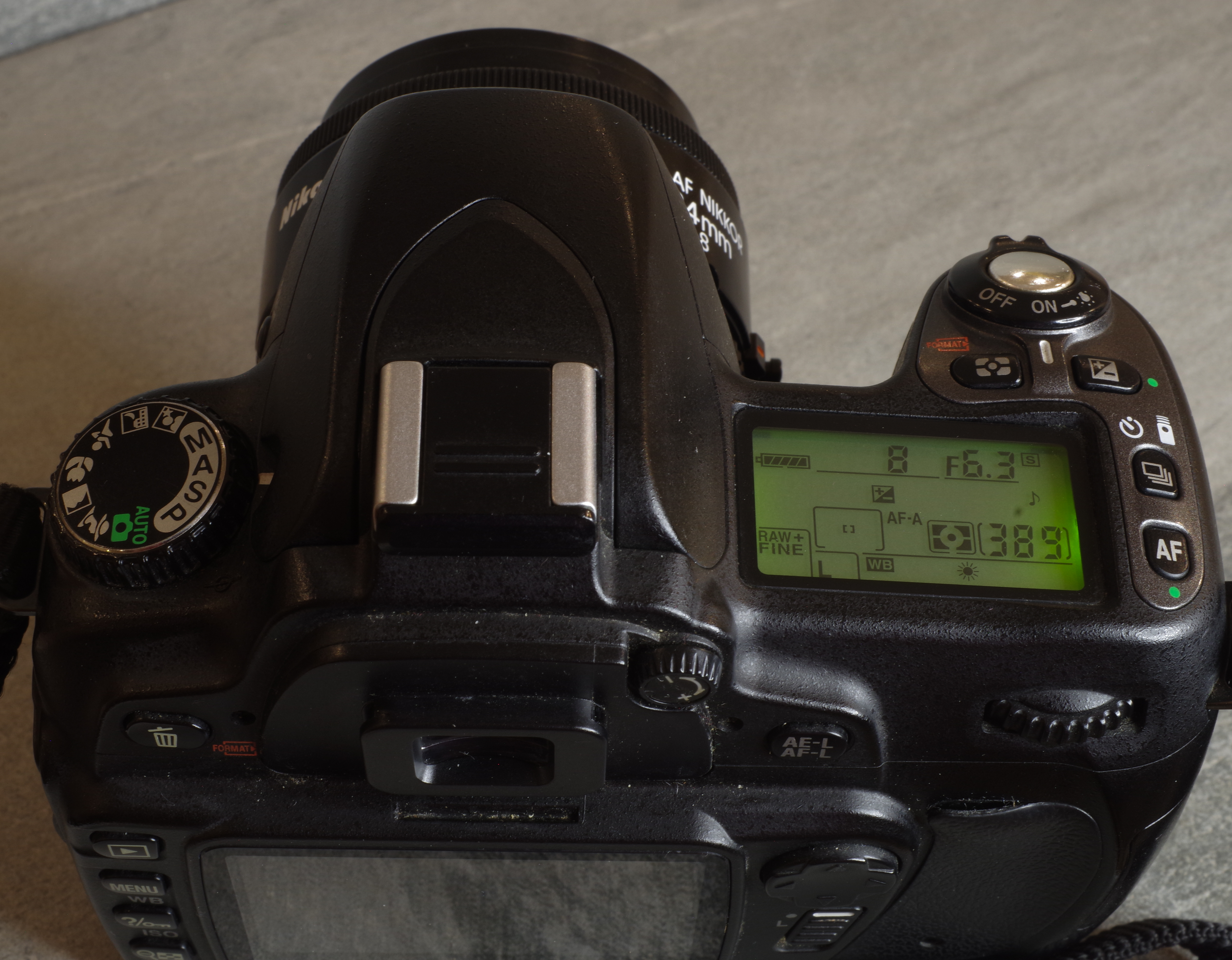
The camera was set to record both JPEG and RAW files, with the JPEGs intended as the primary output and the RAW files kept as a safety net for any images that might benefit from additional processing.
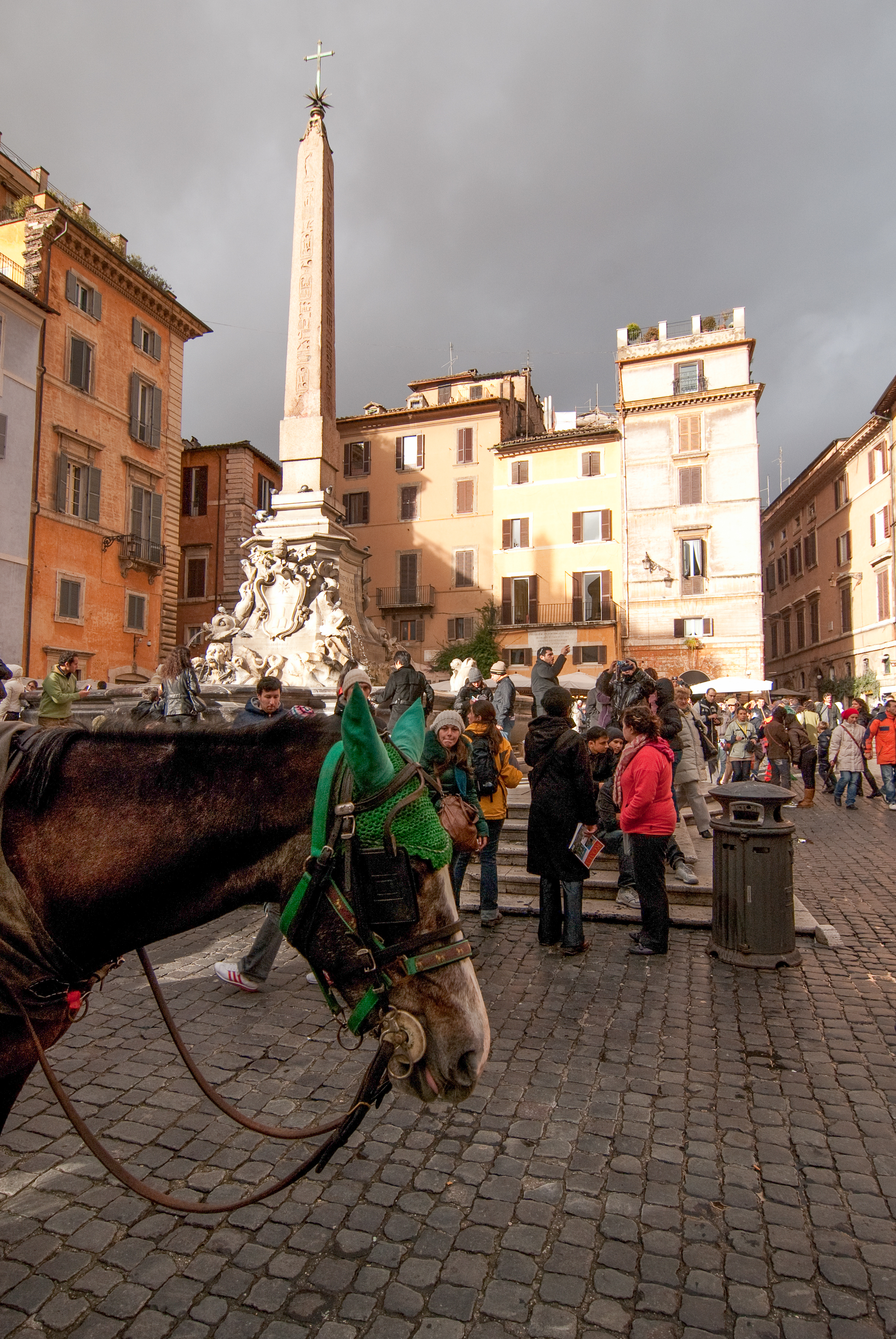
Shooting with the D80 20 years after it was launched
When shooting stills (it does not record videos), the D80 is still perfectly usable – it’s reactive, and gets focus and exposure right, as long as there’s enough light – but not too much of it. And compared to modern mirrorless ILCs, it does not look too big – as long as it’s fitted with a small prime lens.
The ergonomics are good, the viewfinder is luminous and large enough, but a long list of limitations shows its 2006 roots:
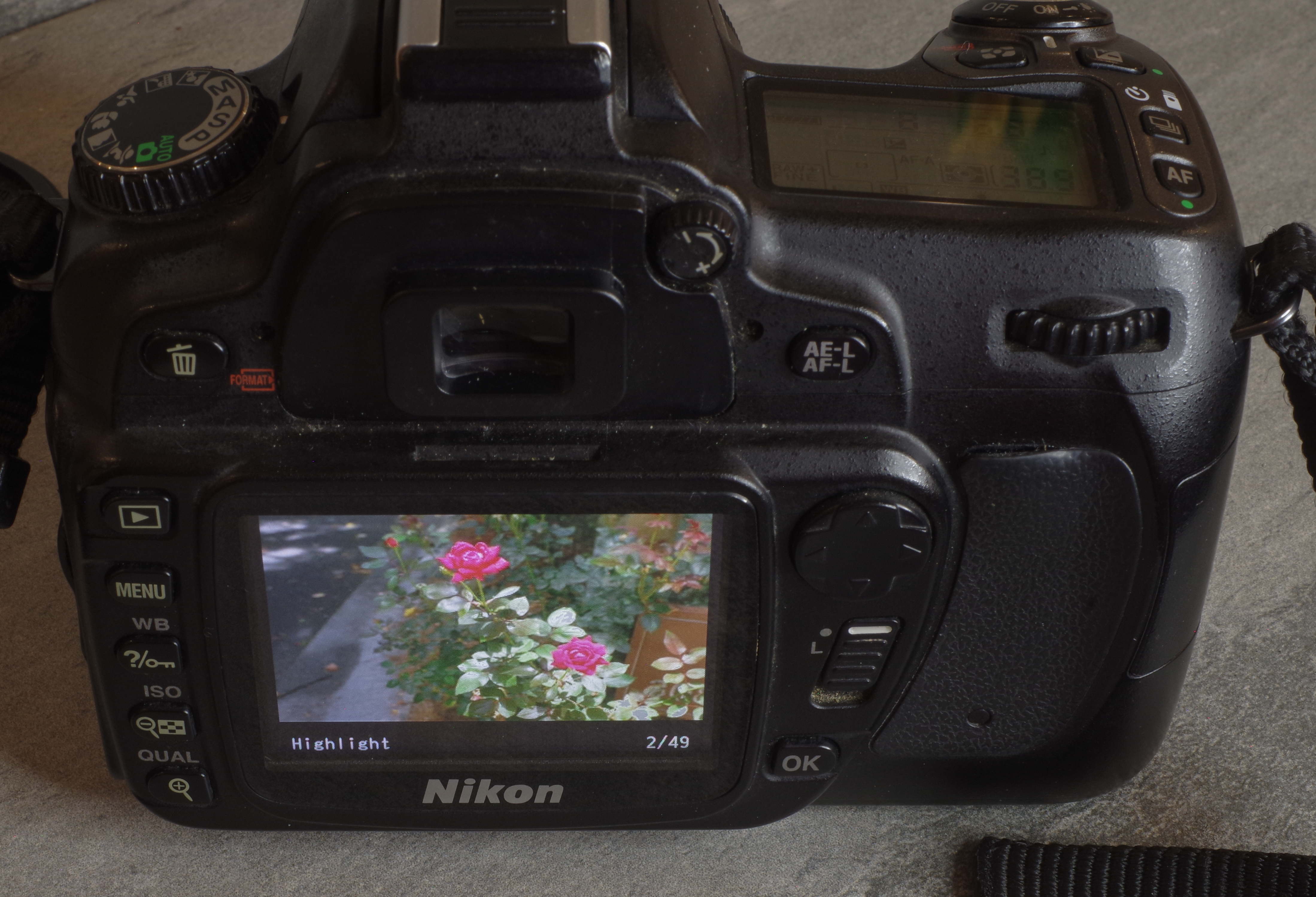
- The limited dynamic range – the control of the highlights is clearly the biggest challenge of this camera (and its sensor), and my camera is set with “highlight warning” as the default playback option. It is generally recommended to expose for the highlights, and – if necessary – to try and save the shadows in post production (starting from the RAW file).
- A limited usable ISO range – 200 is the normal sensitivity, anything beyond 800 is only to be used in last resort.
- No IBIS (in-body image stabilization)
- The 3 points above combine to severely limit the performance of the D80 in low light and make the purchase of a good flash (a cobra with a big reflector) almost mandatory.
- The small and poorly defined rear display (2.5in, 230,000 points) makes it difficult to judge quality of a picture before you’re back home and upload the SD Card to a PC.
- None of the comforts of modern cameras: no Quick Menu, no Face Detection AF, no WiFi, no Bluetooth, no USB charging, no touch screen, no joystick.
- And the usual limitation of the Nikon F system – no native APS-C (aka DX) prime lens except for a 35mm f/1.8, a 40mm f/2.8 macro and a 10mm fish-eye. Nikon never invested in a line of APS-dedicated prime lenses. It is particularly an issue on the wide angle side: you either have to shoot with a DX zoom, or with wide angle prime lenses designed for Full Frame cameras. Both tend to be big and expensive. And it also means that there is no “pancake-style” lens like the Fujifilm XF 18, 23 and 27mm, or Pentax DA Limited 21 or 40mm. Nikon have always expected their most “serious” photographers to shoot Full Frame, and not be too concerned with the size, weight or cost of their equipment.

What about the images?
Within the limits of its sensor (limited dynamic range, tendency to burn the highlights and inability to deliver usable images above 1600 ISO), the Nikon D80 used to deliver very nice pictures, with beautiful skin tones and deep blues and greens. Nothing has changed today and the output of the camera is still very satisfying.

As far as the CCD-look is concerned, I’ve found my benchmark. Of course, a camera from 2006 comes with all sorts of limitations, and cameras a few years younger (like a Fujifilm X100 or a Pentax K-5) will be much more flexible and can be set to deliver images approaching the “CCD-Look”, without any of the limitations of the Nikon D80. That’s what I’m going to confirm in the coming weeks.
CCD-look or not, this D80 is nonetheless a very good choice, and a good introduction to conventional photography: Nikon build quality, full compatibility with almost any Nikon lens made since 1977, great ergonomics, great images, long battery life, in a relatively compact package, and for next to nothing. Two weeks after I had bought this nice little D80 for less than $80.00 (shipping and taxes included), I was still receiving offers from competing eBay stores, proposing equally nice D80s for as low as $65.00.
Why (specifically) a D80 and not a D40X or a D60 or a D3000?
In Nikon’s camera line up of the time, there were three levels: consumer, enthusiast or expert consumer, and professional. The D80 was the model dedicated to the “enthusiast-consumers”, that is to say photographers who wanted most of the features and most of the performance of a Nikon “Pro” camera, but did not need a tool capable of shooting 100 frames a day, every day, for five years, in the most demanding environments.
The D40X and its derivatives D60 and D3000 were clearly targeting the mass market, and were made smaller, lighter (and cheaper) than the D80 primarily by abandoning the compatibility with screw-drive autofocus lenses, and trading a pentaprism viewfinder for a pentamirror. The D40X was a very nice little camera in its own right, but 20 years later there is not much of a cost difference between a D40X and a D80 on the used equipment market, and a photographer interested in learning more about the technical side of photography will be better served by a D80.
More about the Nikon D80
The original review of the Nikon D80 in DPReview: https://www.dpreview.com/products/nikon/slrs/nikon_d80
A (recent) opinion about the Nikon D80: https://www.cameralabs.com/nikon-d80-retro-review/
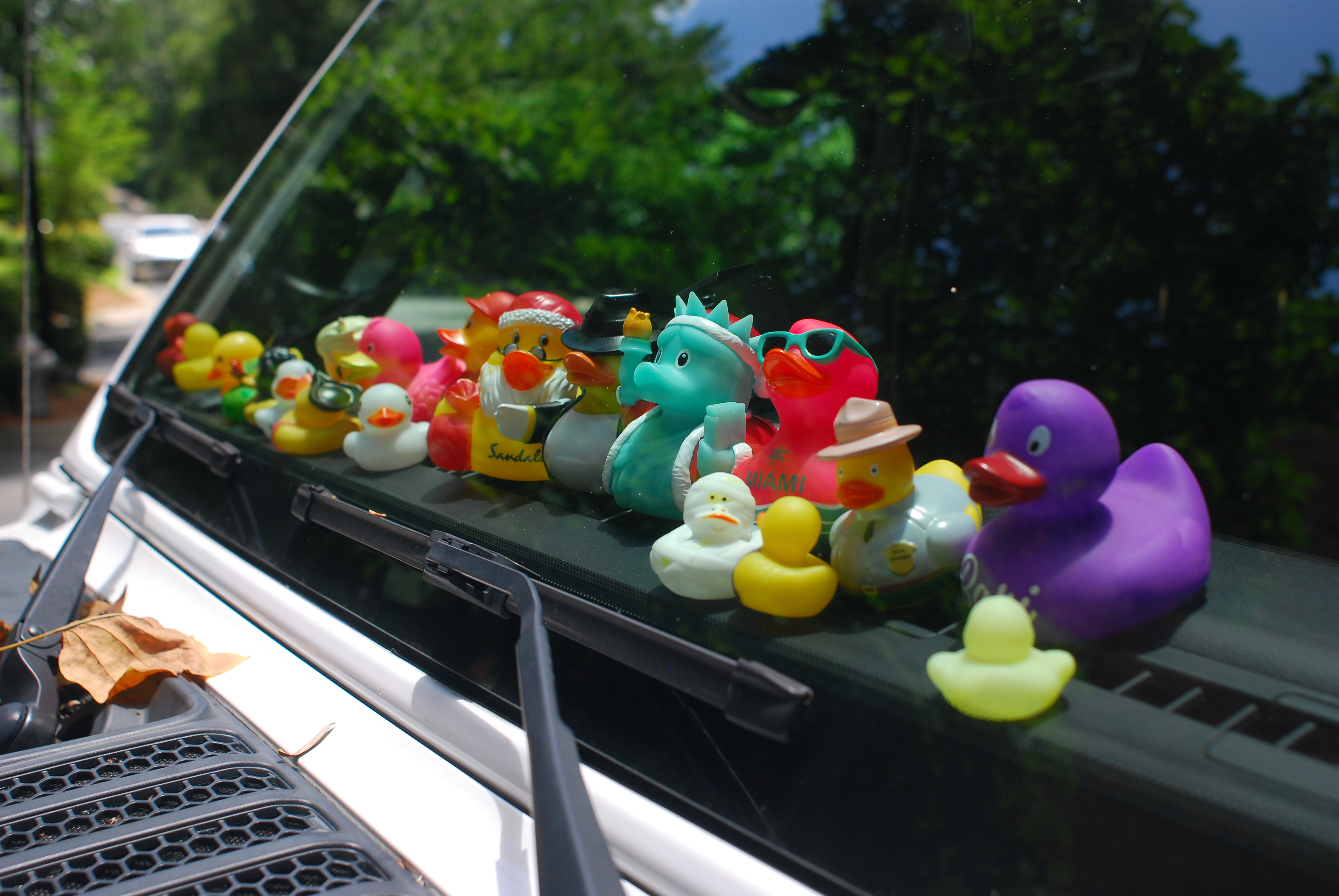
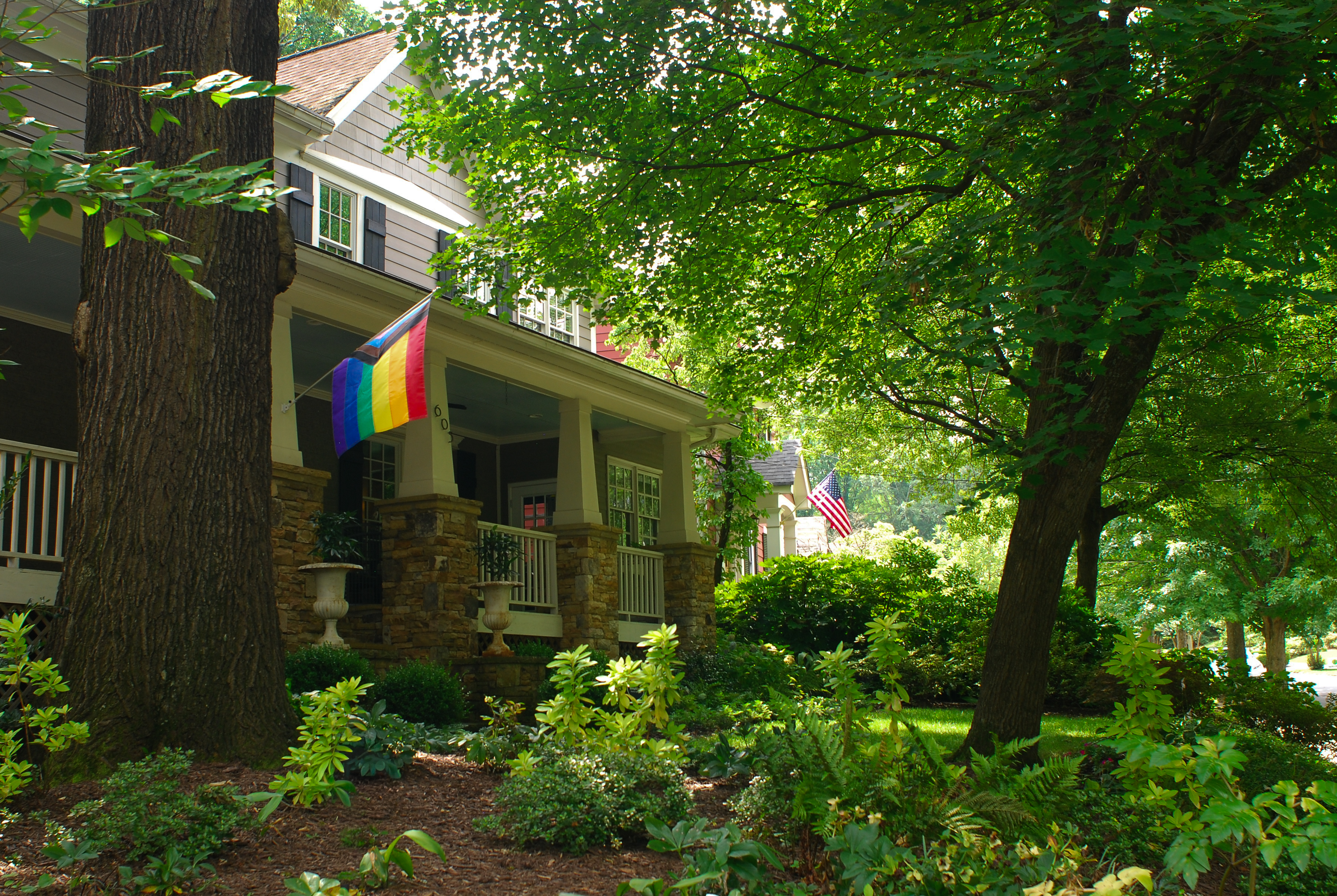
All images in this series are JPEGS – with minimal adjustments in Lightroom (exposure and highlights, mainly)





2 thoughts on “Nikon D80 – the CCD-look at its best ?”
Comments are closed.