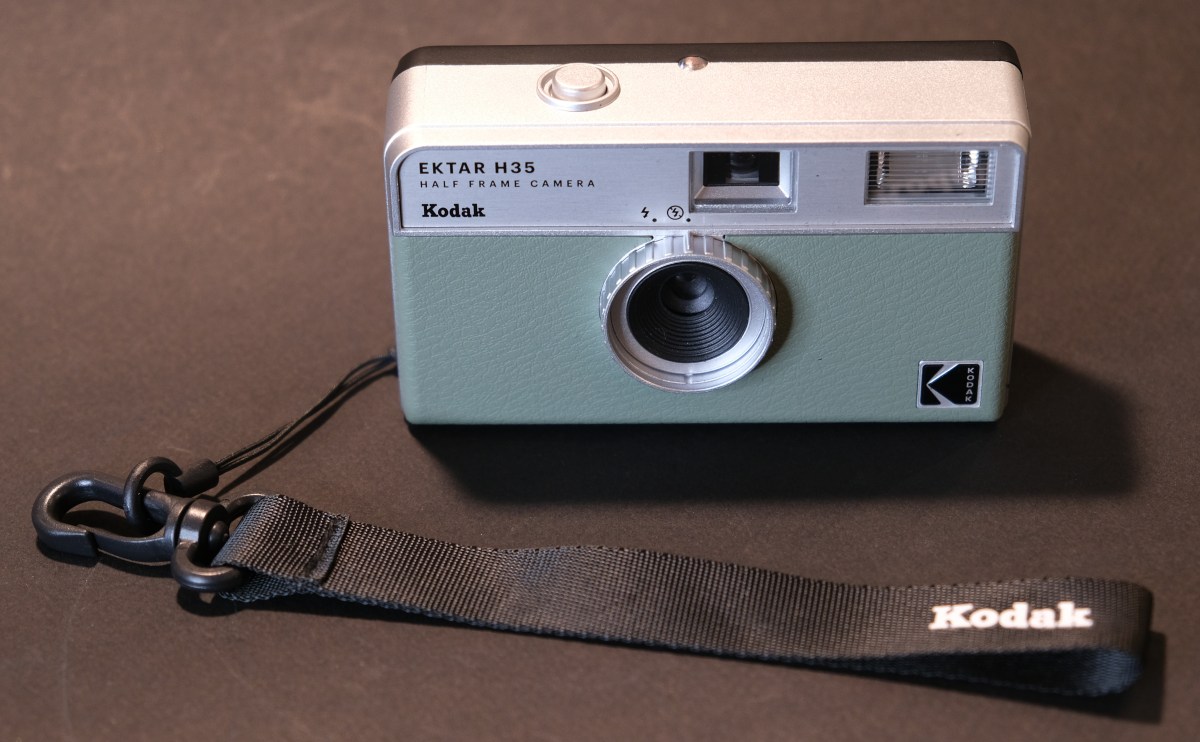
Kodak Ektar H35 and the quest for the cheapest usable film camera

A few weeks ago I entered a Five Below store and bought their finest reusable film camera, for $7.00. It works, but it’s not better than a disposable camera. And after burning one roll of film, my conclusion was that a beginner to film photography would be better off spending a few dollars more, somewhere between $35.00 and $50.00, either on a new fix focus point and shoot like the Kodak M35 or the Ilford Sprite, or on a used autofocus compact zoom manufactured in the nineteen nineties.

The Kodak Ektar H35 in its (optional) color coordinated case – the whole set looks much better than a disposable camera.

I was curious, and started hunting for bargains on the site of Shopgoowill.com.

I found a nice copy of a the Kodak Ektar H35, a reusable, fix focus camera, with its coordinated Grapsa case. The camera sells new for $50; add $15.00 for the case; here, second hand, the starting price of the auction was $9.99, and after a fierce bidding war (just kidding), the H35 became mine for $16.00. Adding handling, shipping and taxes, the H35 cost me just a tad under $30.00.

The Ektar H35 is not made by Eastman Kodak, the name is used under license by Reto, a Hong-Kong based company. The big differentiator, ironically for a product proudly wearing the name of Kodak, is that being a half frame camera, it will save you money on film and processing, by giving you twice as many images on a standard roll of 35mm film.
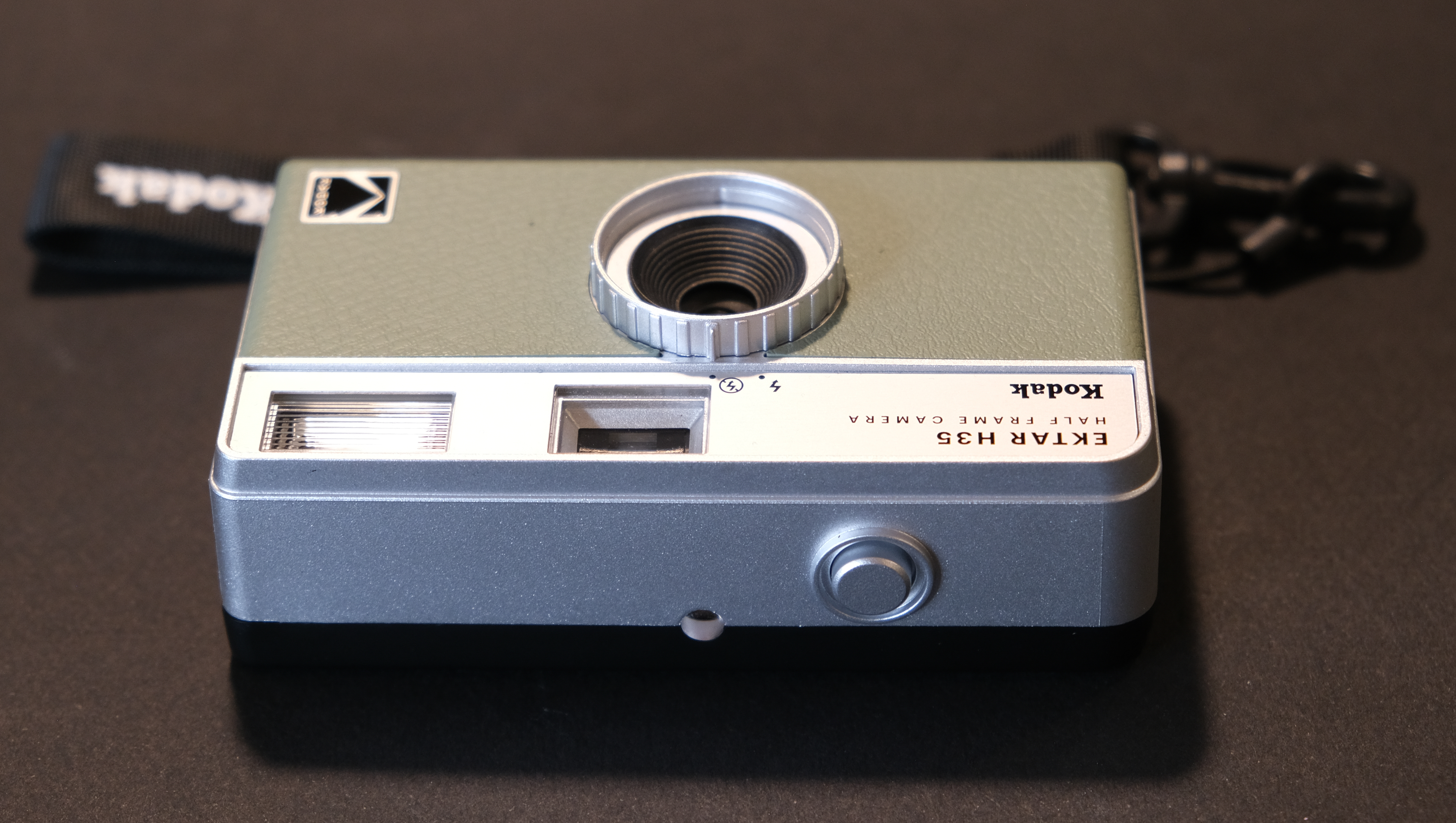
The shutter release button, and the ring surrounding the lens to turn the flash on. That’s it.

The high cost of film and of film processing makes shooting 24x17mm frames very tempting, financially – and since most images are destined to be shared on the small screen of smartphones, the loss of resolution (compared to a full frame 36x24mm negative) is not a real issue.

The H35 is styled like an old Kodak Instamatic, and is technically almost as simple as its remote ancestor – the fix focus 22mm lens opens at f/9.5 (22mm on a half frame gives you the angle of view of a 35mm lens on a full frame camera), and the shutter operates at 1/100 sec. The electronic flash is brought in service by turning a ring around the lens. That’s it. Compared to a disposable or to the original Instamatic, it has a better lens (2 elements, optical grade acrylic), and contrarily to its Kodak predecessor, it’s using standard 35mm film (the Instamatic’s negatives were 28x28mm, from a “126” film pack).

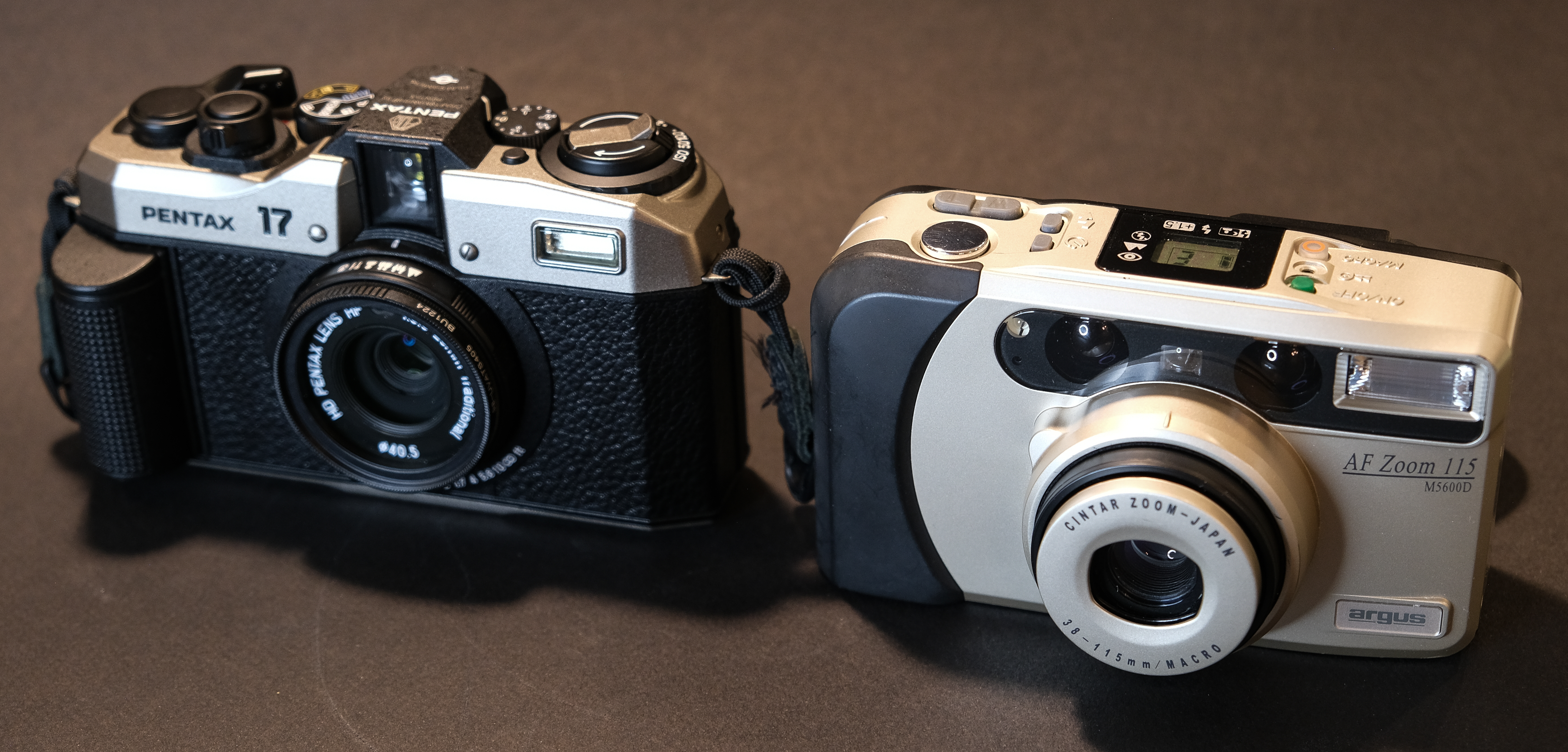
Two half frame cameras. The Pentax sells for 10 times the price of the Kodak. But there is a huge difference in Image Quality.

For the record, there is new version of this camera, the Ektar H35N, where the lens has been upgraded to include one glass element, and one aspherical acrylic element.

The Ektar is a recent and extremely simple camera – with not much to go wrong – and I was not taking a big risk buying it on Shopgoodwill.


Comparing the images out of the camera (as shot)

Somewhere in the North Highland neighborhood, Atlanta, GA – Kodak Ektar H35 Camera – Kentmere 400.

From the same vantage point, the same day, with another half-frame camera, the Pentax 17

Somewhere in the North Highland neighborhood, Atlanta, GA – Pentax 17 – Ilford Delta 400.

Shooting with the Ektar 35H

In its coordinated green case, the H35 looks very good. Much better than expected for such a cheap product. The film advance and the shutter release are smooth. But don’t look too close, though – it’s plastic, plastic, plastic. The film rewind crank is filmsy and looks really fragile – how long will it last? The viewfinder (oriented vertically – it’s a half frame camera) looks like the viewfinder of a full frame 35mm camera where two black strips would have been glued left and right: it’s narrow, uninspiring, and makes it difficult to predict exactly what will be in the frame.
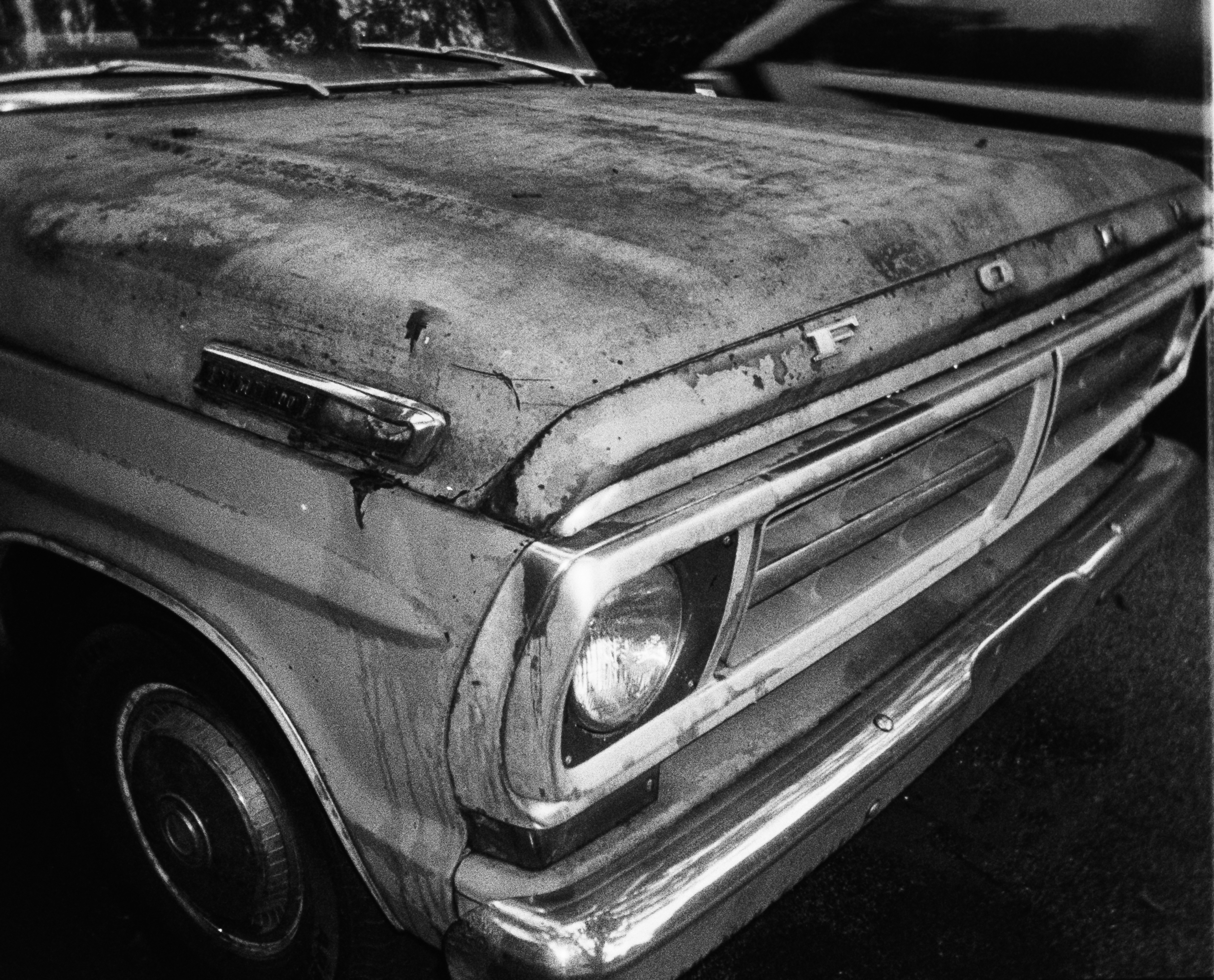
Inman Park Neighborhood – Ford Pickup – Kodak Ektar H35, Kentmere 400, as shot

In all honesty, I really had to make a conscious effort to use the Ektar. It did not come naturally to me, and whatever other camera I had with me that day saw more use than the little Kodak. And if I had no other camera, I still preferred taking the picture with my phone. I never enjoyed using disposable cameras, and the truth is I did not enjoy using the H35 either.
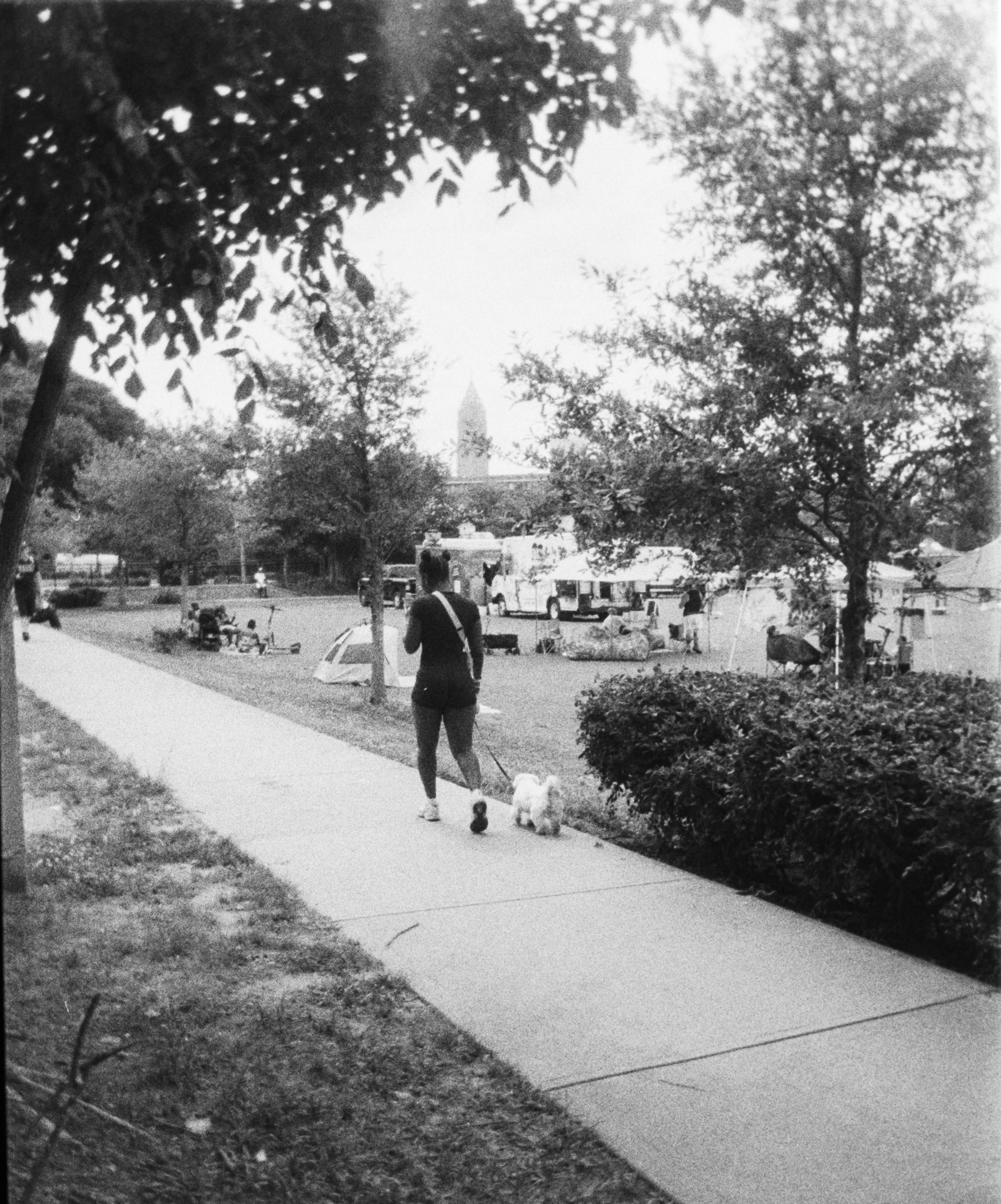
Somewhere on the Atlanta Belt Line, Kodak Ektar H35, Kentmere 400as shot.

Image Quality

It took me months to finish a single roll of film, (48 frames on a 35mm roll sold for 24 “full frame” images, remember) and it stayed in my photo sling next to my “camera du jour” without seeing much use. But it gave me the opportunity to use it in parallel with a recent (and much more expensive) half frame camera, the Pentax 17, and with an older and generic point and shoot cameras of the turn of the century, the Argus M5600d.

The Pentax and the Argus are both larger, heavier, but much more interesting to use as cameras. But what about the image quality?

Looking at the B&W negatives shot with the Ektar, it’s obvious that there are huge differences in density from one image to another one – some are extremely dark, some are extremely clear, almost transparent – a consequence of the absence of any exposure control system in the camera. You have to rely on the exposure latitude of the film, on the image enhancing algorithms of the lab’s scanners, and on your ability to massage the picture in post-processing.


Comparing two half frame cameras:
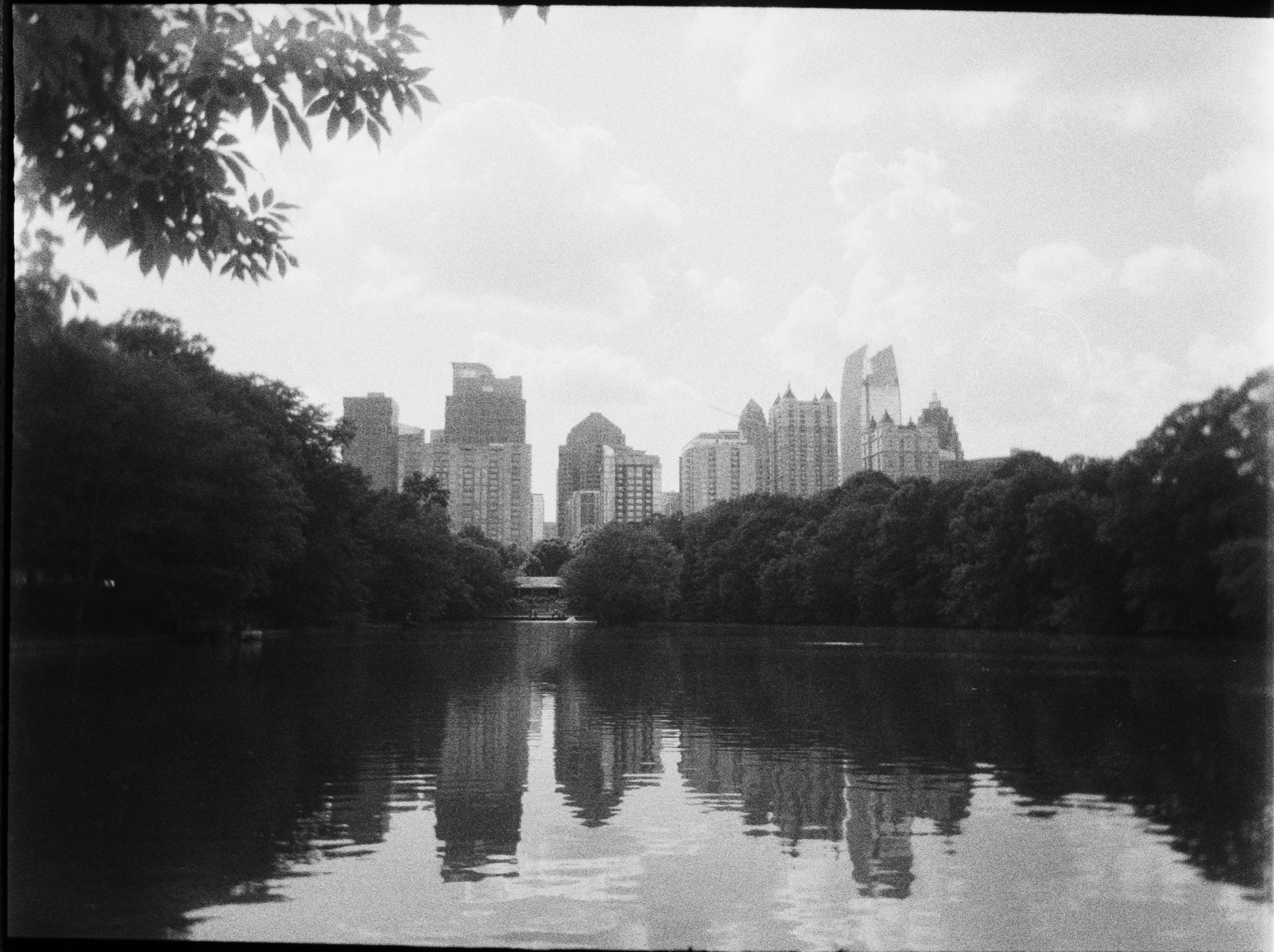
Lake Clara Meer and midtown skyline – Atlanta – Kodak Ektar H35 – Kentmere 400, as shot

and shot the same day from the same vantage point, with the Pentax 17:
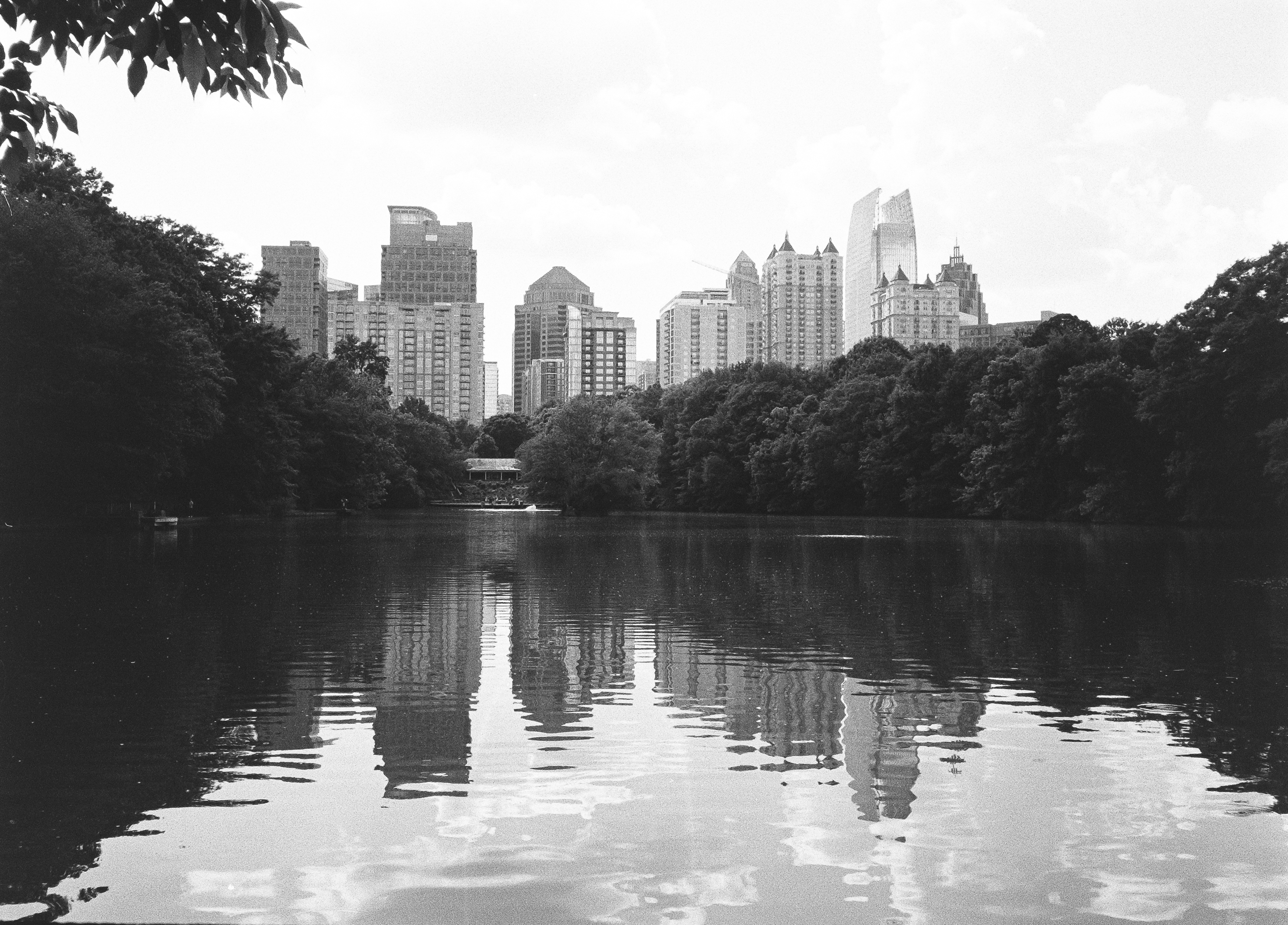
Lake Clara Meer and midtown skyline – Atlanta – Pentax 17 – Fujifilm Acros 2 100 ISO, as shot

The B&W negatives were not scanned in the true sense of the word, they were simply digitized with a Fujifilm X-T4 equipped with a Micro-Nikkor 55mm lens and the JJC Digitizing Adapter, then imported and inverted in Lightroom with only adjustments to the S curve. The images labelled “as shot” did not benefit for any other enhancement, and represent what the camera is really capable of, before any software filter or any artificial intelligence trickery is applied.

The images are a mixed bag – this Ektar is clearly a sunny-16 type of camera, and the best pictures are taken on a bright day, middle of the morning and middle of the afternoon. Don’t use it for landscapes – even urban landscapes – it seems optimized for subjects in the 4 to 30ft zone and anything beyond that is blurry.

On the other hand, some images – close-ups, street scenes, statues, are “interesting”, and pictures of houses and front yards are generally nice. Go figure.

Even at its preferred focusing distance, the resolution is surprisingly poor – it’s closer to an Holga than to any decent autofocus film camera like the Argus M5600 and its clones. As long as you look at them on the relatively small display of a smartphone, the images look fine. But they rapidly reach their limits, and on an iPad or a 15in laptop display they will look fuzzy, lacking definition and contrast.

On a final note, I tried to use the flash multiple times, and not a single one of the images was even remotely acceptable.


Another comparison – here the Ektar….
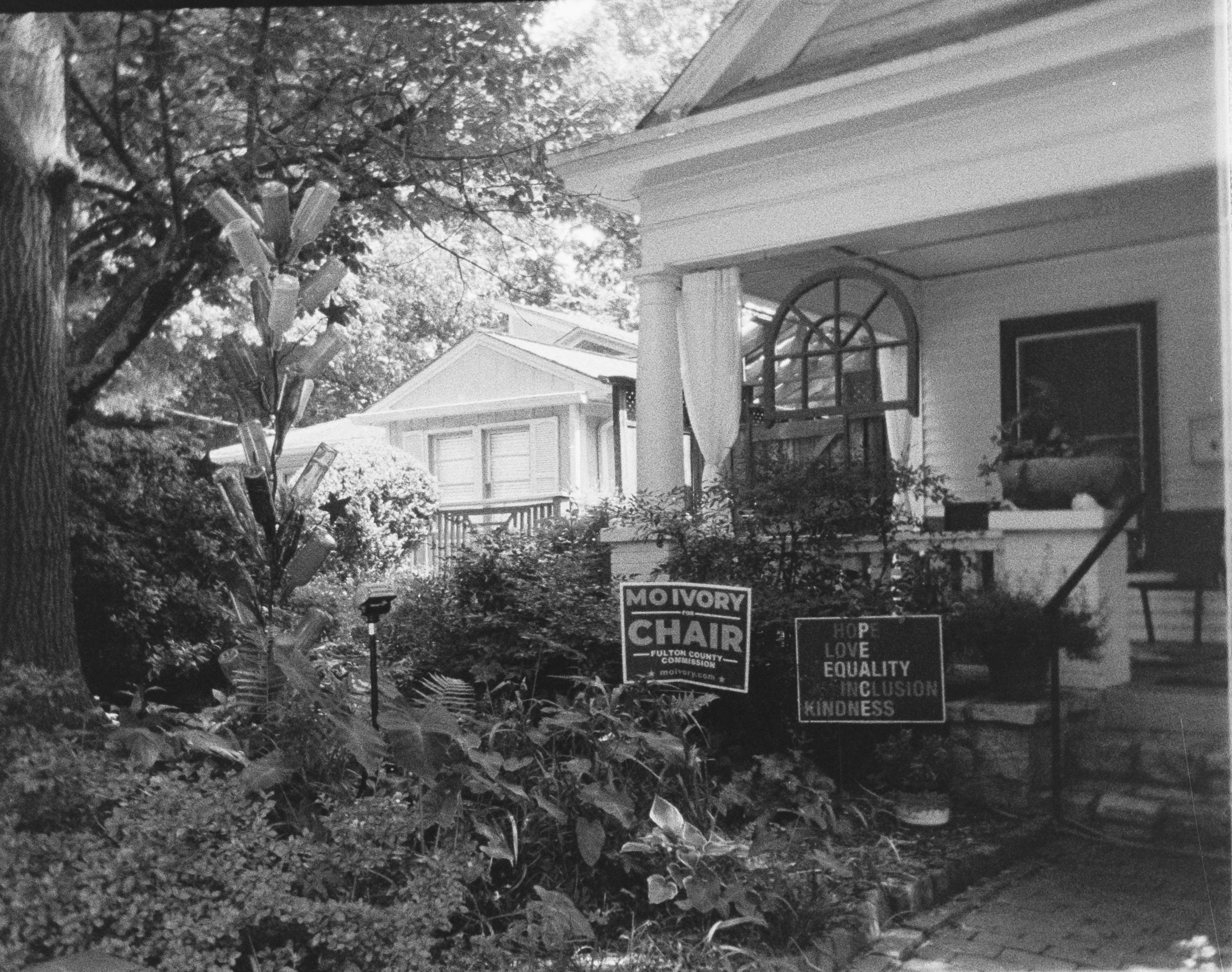
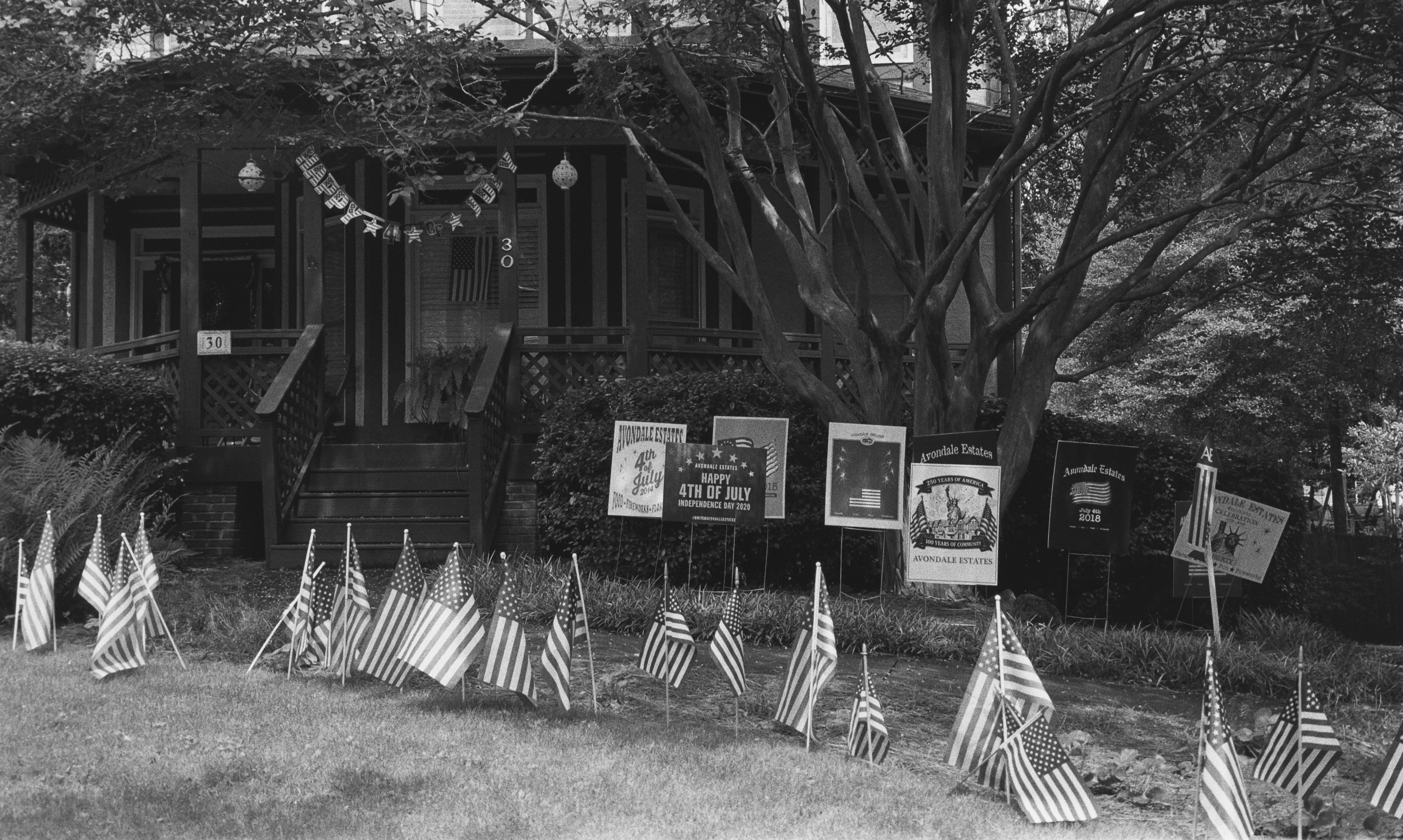
Avondale Estates, GA – Kodak Ektar H35 Camera – Kentmere 400, as shot

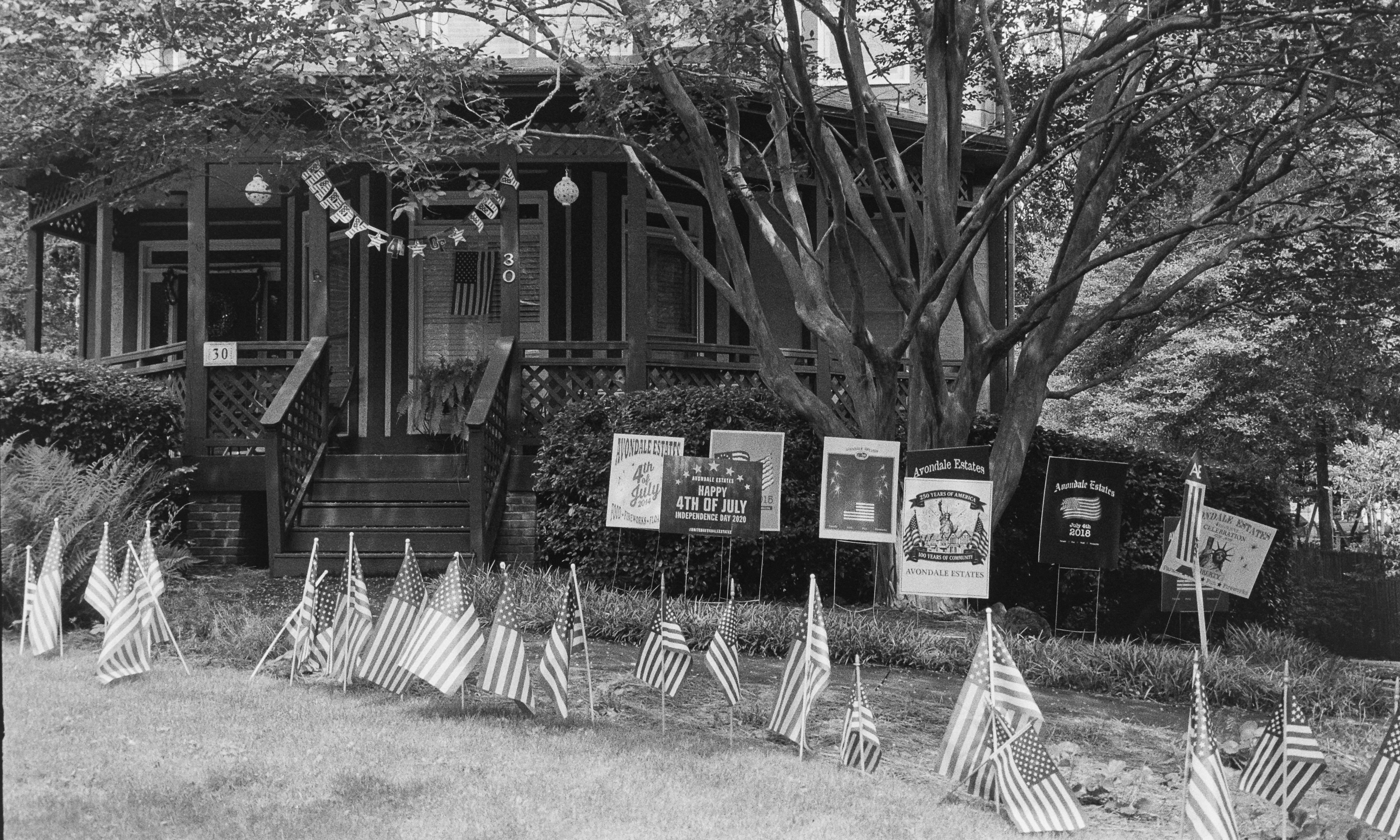
Here, the Argus M5600d

Avondale Estates – Argus M5600d – Kentmere 400 – minor adjustments in Lightroom.

Conclusion

If you’ve read this blog entry that far, you have understood that the H35 is not for me. It may be cute, but it’s still extremely basic, not really better than a single-use, throw away camera.

I was really disappointed by the image quality: displayed on a smartphone, some images can be somehow “acceptable” without ever being great – while some are not even salvageable, except maybe by AI – but what’s the point, then. And on anything larger than a smartphone display, they will generally fare poorly.

To the camera’s defense, I did not shoot with color film, and did not have the film processed and scanned on the Noritsu or Frontier machines of a pro lab – their software apply all sorts of enhancements to the images before saving them as Jpegs, and I’m sure their pictures would look better.
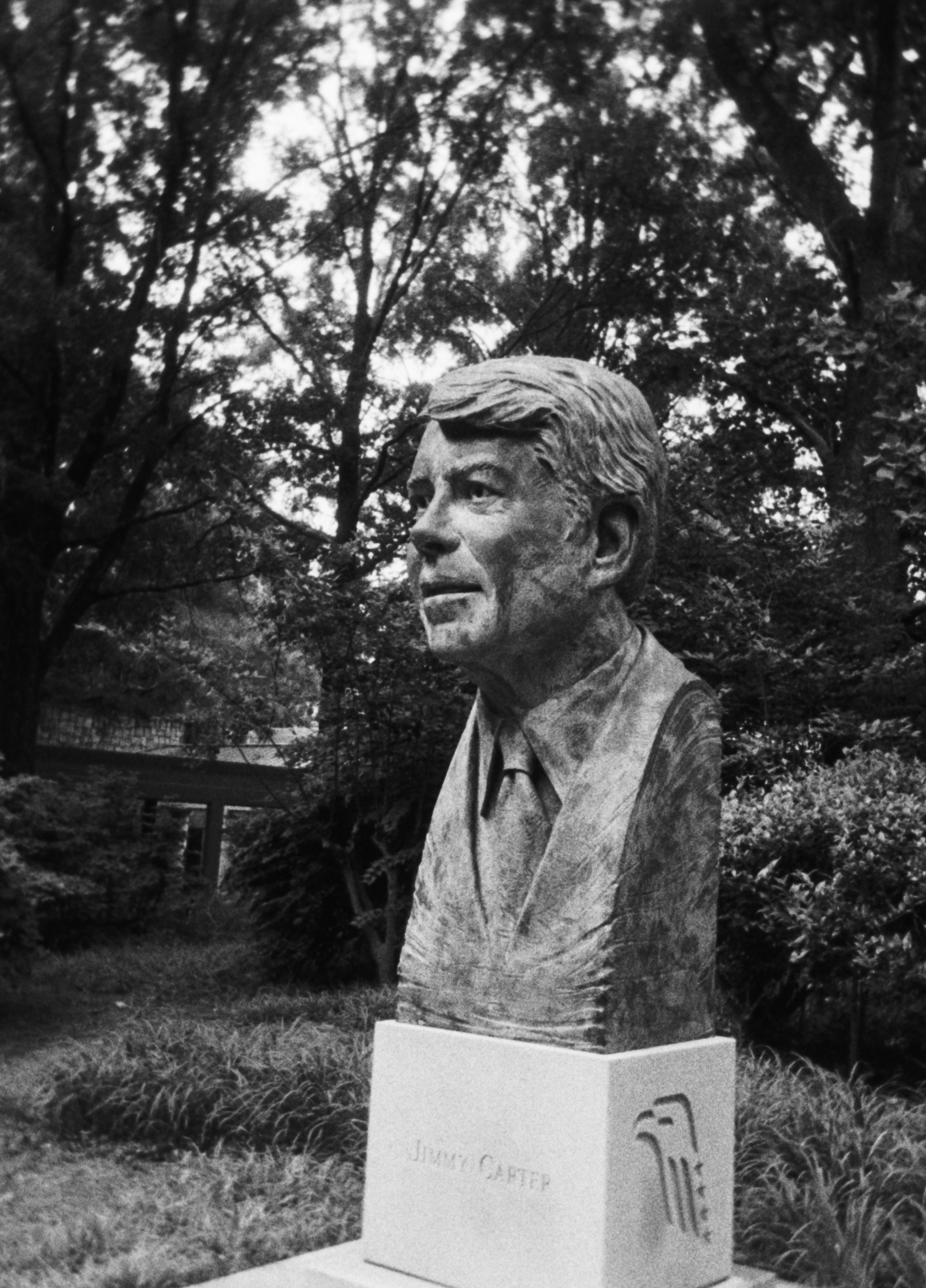
Jimmy Carter Presidential Library, Atlanta, GA – Kodak Ektar H35, Kentmere 400, as shot.

In other words, it’s not a camera that will give me the type of images I like. But it may work for photographers with different styles and tastes.

Photography is at the same a craft, and an art. If you don’t really care for the “craft side” of this activity, but have a keen eye, good image composition skills, and like your images on the rough side, a fix focus camera like the Ektar, or even a toy camera like a Holga or a Diana may be a good fit – you’ll have to learn how to exploit their limitations and their flaws to create images reflecting your unique vision.
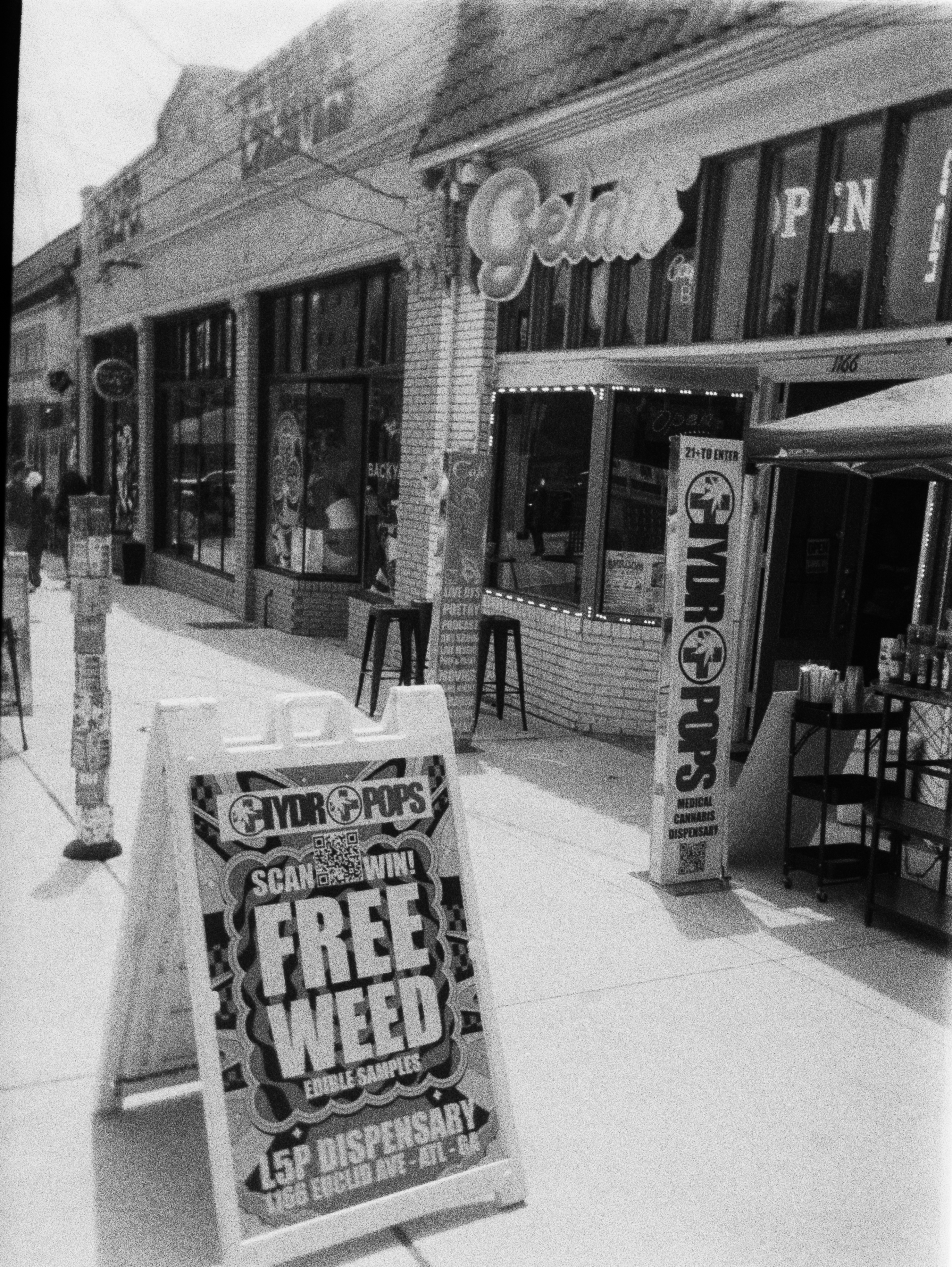
Little Five Points, Atlanta – Kodak Ektar H35, Kentmere 400, as shot.

Was I fair in my evaluation of this camera, and is the Ektar H35 that bad?

I believe I was fair. The Ektar was in my photo bag when I was shooting with the Pentax 17 and the Argus, and although I clearly preferred having those two cameras in my hands, I still made a point of shooting one or two images per scene with the Ektar.

The cameras were not all loaded with the same film stock (I was using Fujifilm Acros and Ilford Delta 400 on the Pentax, Kentmere 400 on the Argus and the Ektar), but all three are good films, and the Kentmere gave me results that positively surprised me with the Argus.

The two rolls of Kentmere 400 (the Argus’ and the Ektar’s) were developed together, in the same tank, with Ilford’s Ilfosol 3 at standard dilution, so a botched film processing routine can not be pinned as a cause for the relatively poor quality of the pictures.

I had a peek at the images of the Ektar user group in Flickr. The pictures generally look better than mine, but the images I posted here are as shot, not enhanced by the software of the Noritsu or Frontier scanners used by the photo labs, or by an AI tool. For the sake of the argument, I submitted two of my images to ChatGPT, and after a few adjustments in Lightroom, I got the images shown below. Better, but are they still “my” images, or something else entirely?
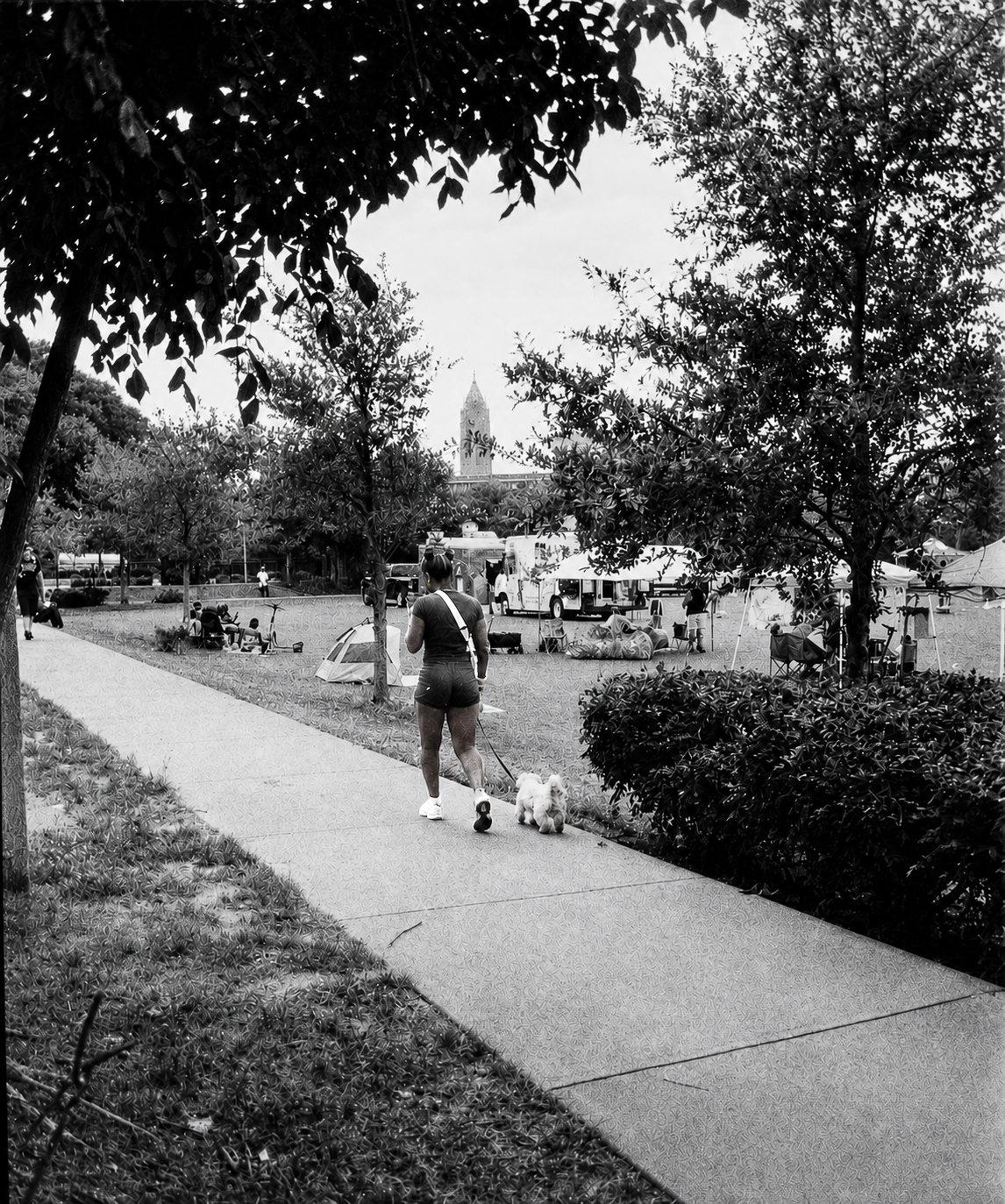
Enhanced by ChatGPT for sharpness and contrast, then adjusted with a mask on the young lady to correct under-exposure in Lightroom.

Enhanced by Chatgpt for sharpness and contrast

Argus M5600D – A generic long zoom “travel” compact film camera with an American household name

You may have read about my recent experiences with the Five Below Reusable Camera (bought in store, new, for $7.00), and my quest for something a bit better, but in the same price range.

What if I was looking for the cheapest possible option, a motorized, autofocus, long zoom compact film camera of the late nineteen nineties. In other words, something that nobody wants. Could it be a hidden gem?

A Goko Camera product, sold under the Argus, Concord, Polaroid and Olympus Superzoom logos

Locating a cheap and working copy of a motorized, autofocus, compact camera made at the end of the nineties is difficult. Autofocus, motorized compact cameras are significantly more complex than a fix focus reusable camera, and most of them did not age well, suffering from all sorts of issues with their electronics, and with the aging of the plastic parts used in the power zoom and in the film advance mechanisms.

The price I was willing to pay ruled out cameras from the big Japanese brands. I found an autofocus, motorized camera with a 38-115 zoom, that according to Shopgoodwill had passed some very basic tests, for $5.00. No bidding war for this one, but hefty handling and shipping fees brought the delivered price to $19.00.

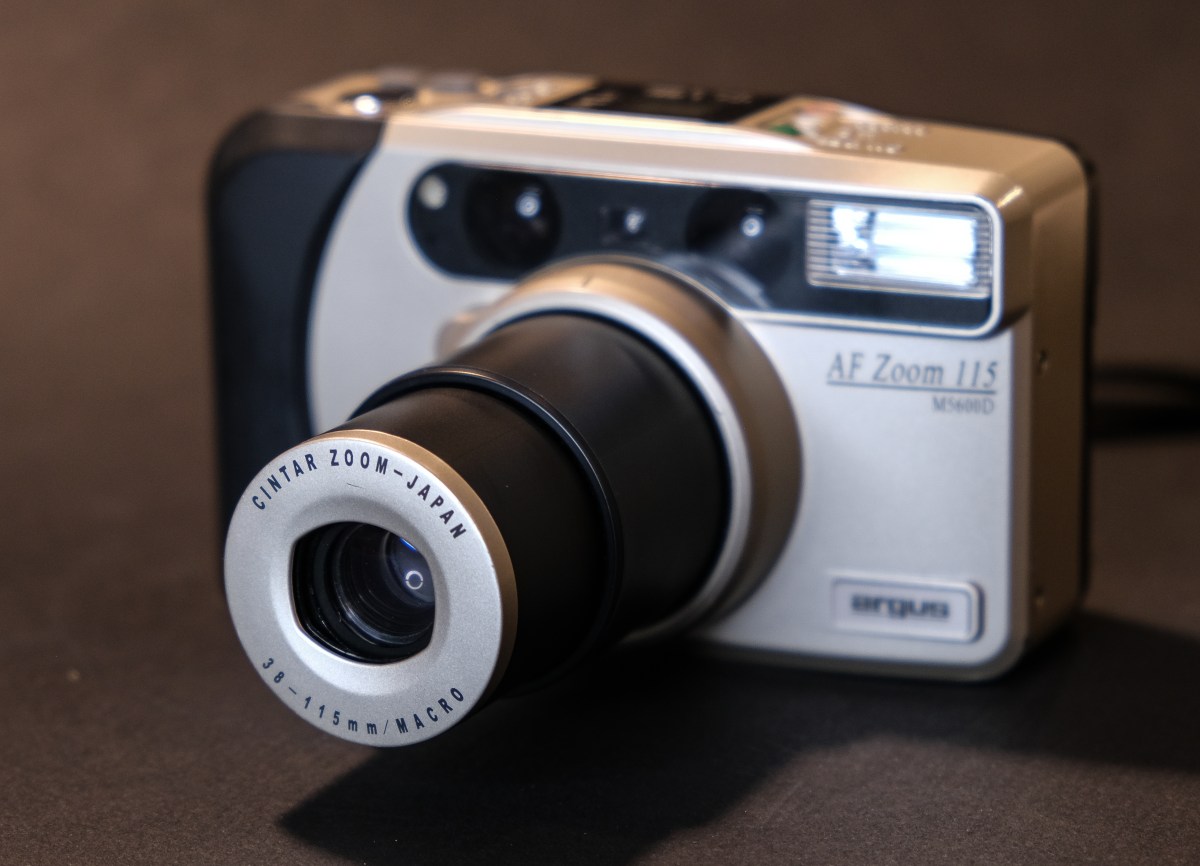
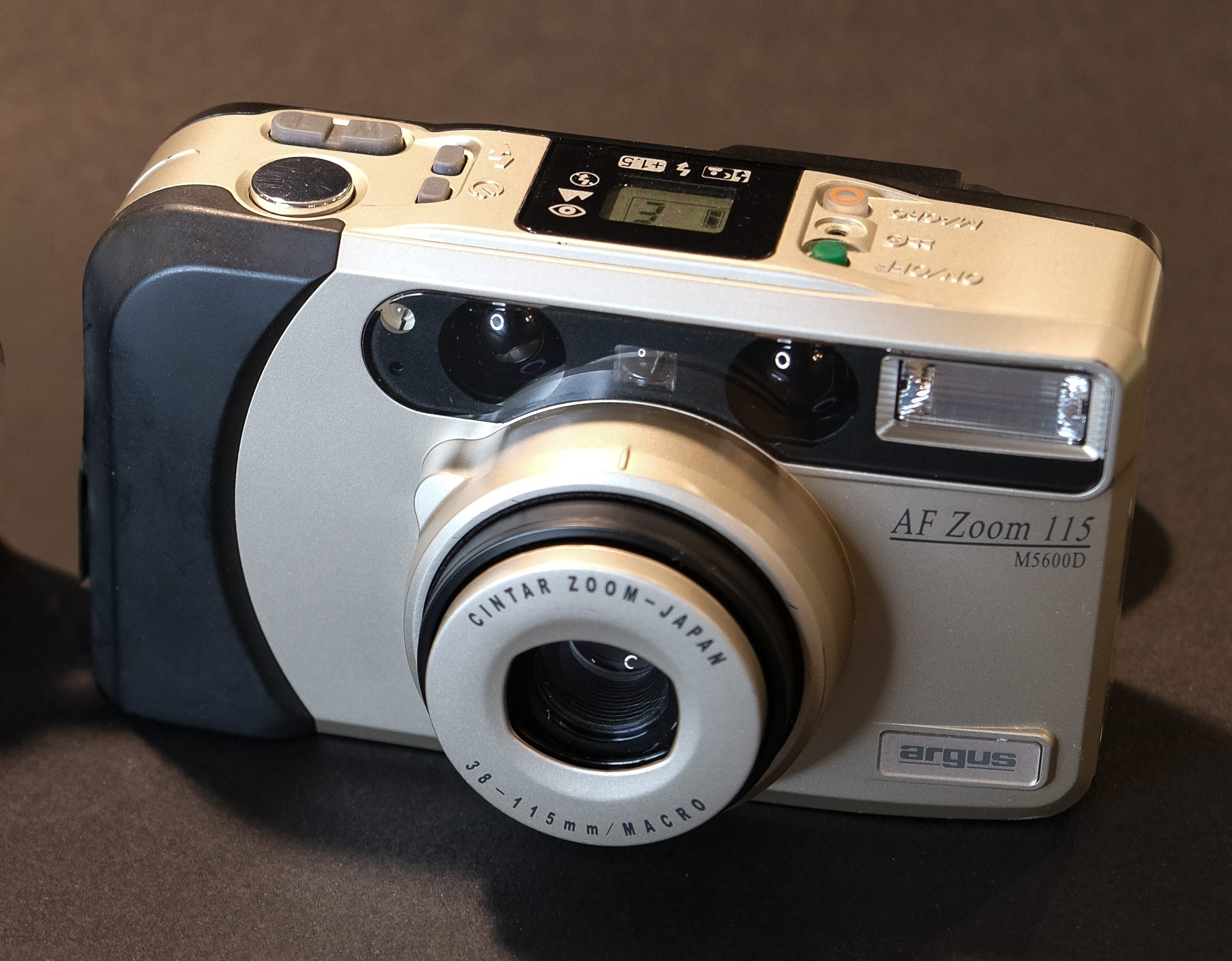
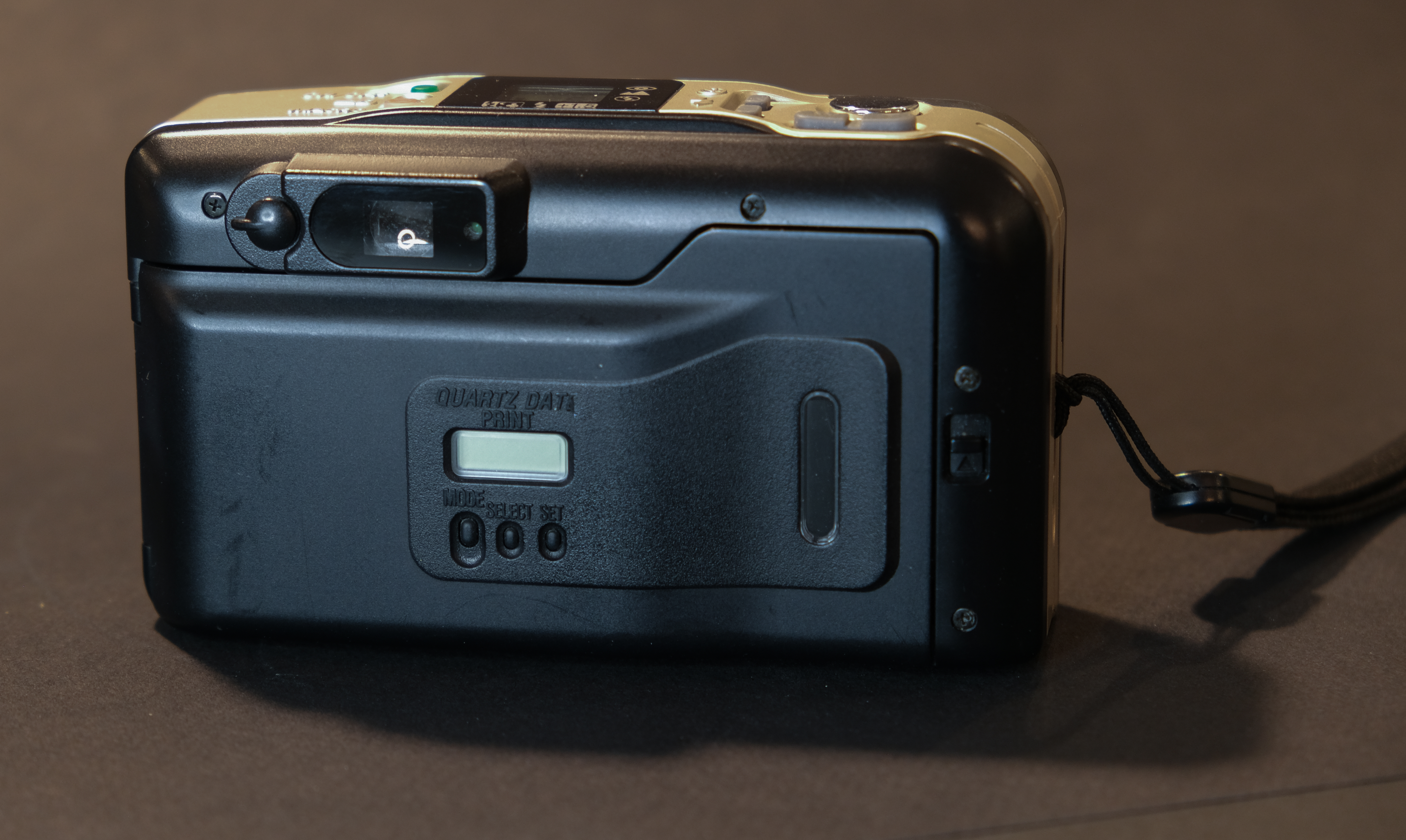
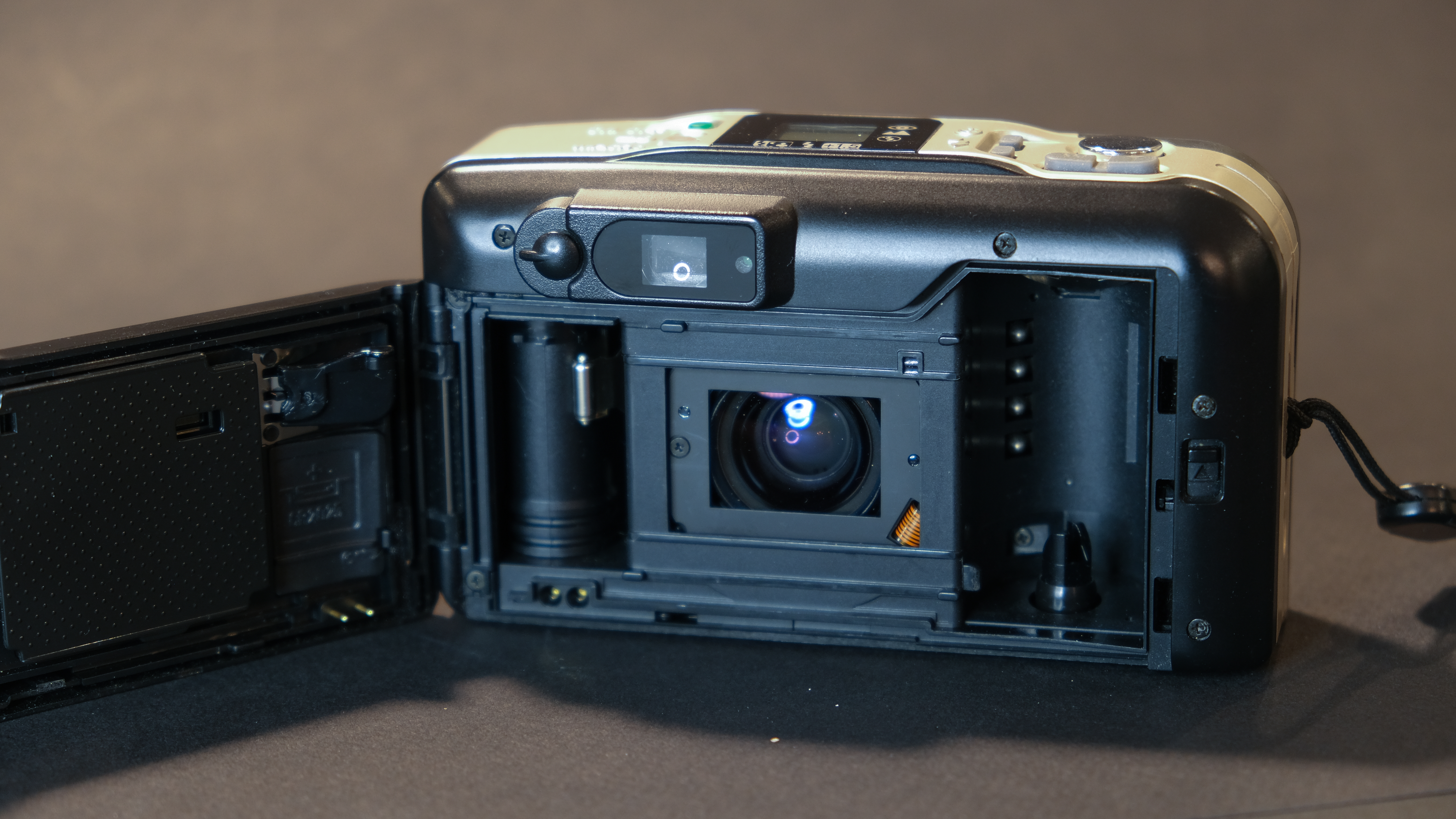
Argus M5600D – date back and dioptric correction in the viewfinder – a well spec’d camera.

Its design easily qualifies as “bland”, but the camera is technically elaborate, for a compact point and shoot camera. Its specifications are in line with well considered “travel cameras” like the Olympus Stylus/Epic 115 or the Pentax Espio/IQZoom 115V.

This autofocus compact is branded “Argus”. This glorious American brand was bought in 1990 by a company named Concord Camera Corp, which was distributing generic cameras made in Asia, under the different labels it owned or licensed. Most cameras of the Concord group were very basic and mainly sold under a plastic blister in supermarkets and drugstores.

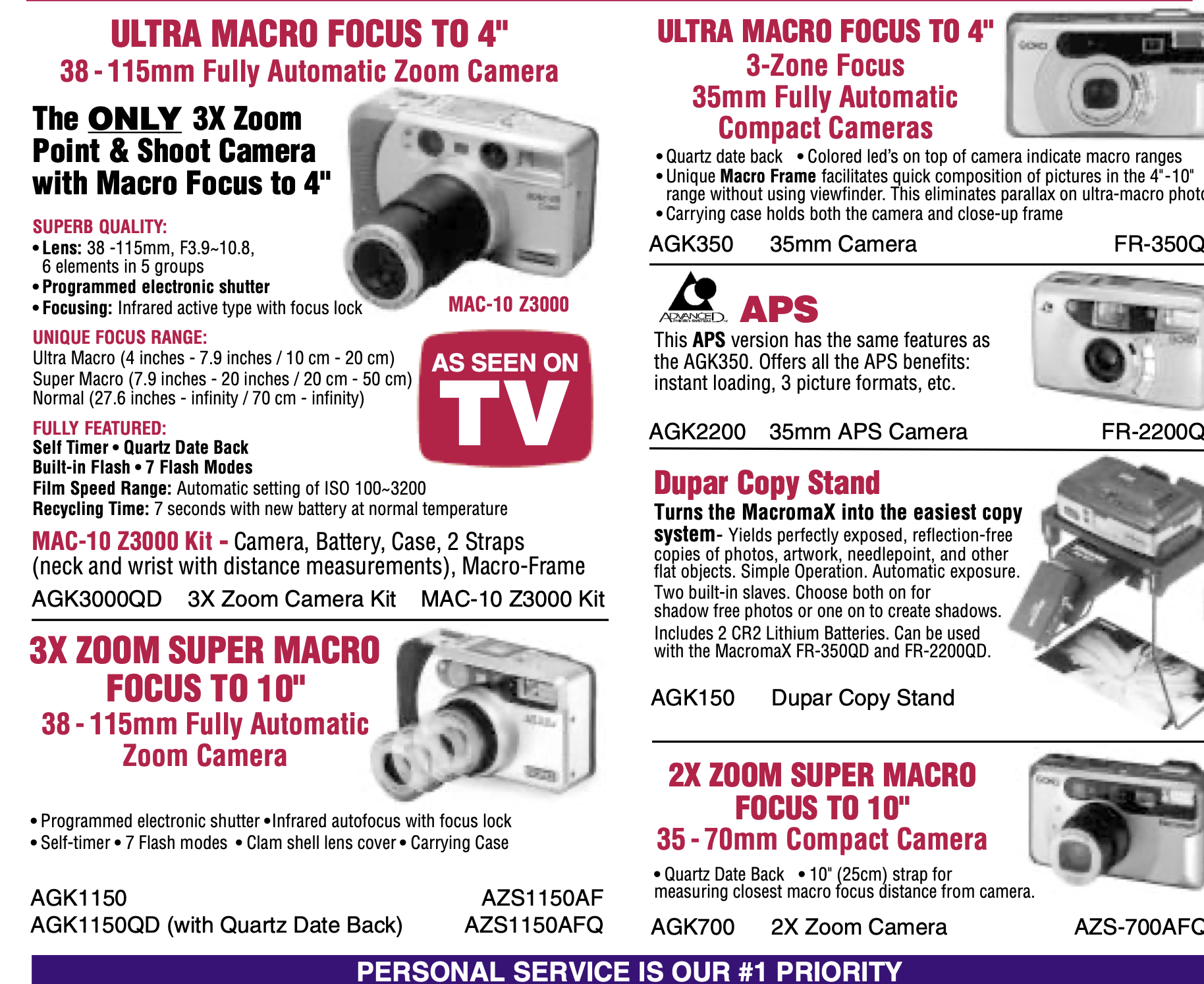
the MacromaX product range in an Argraph catalog from 2004 – the M5600d is a clone of the Goko AZS1150

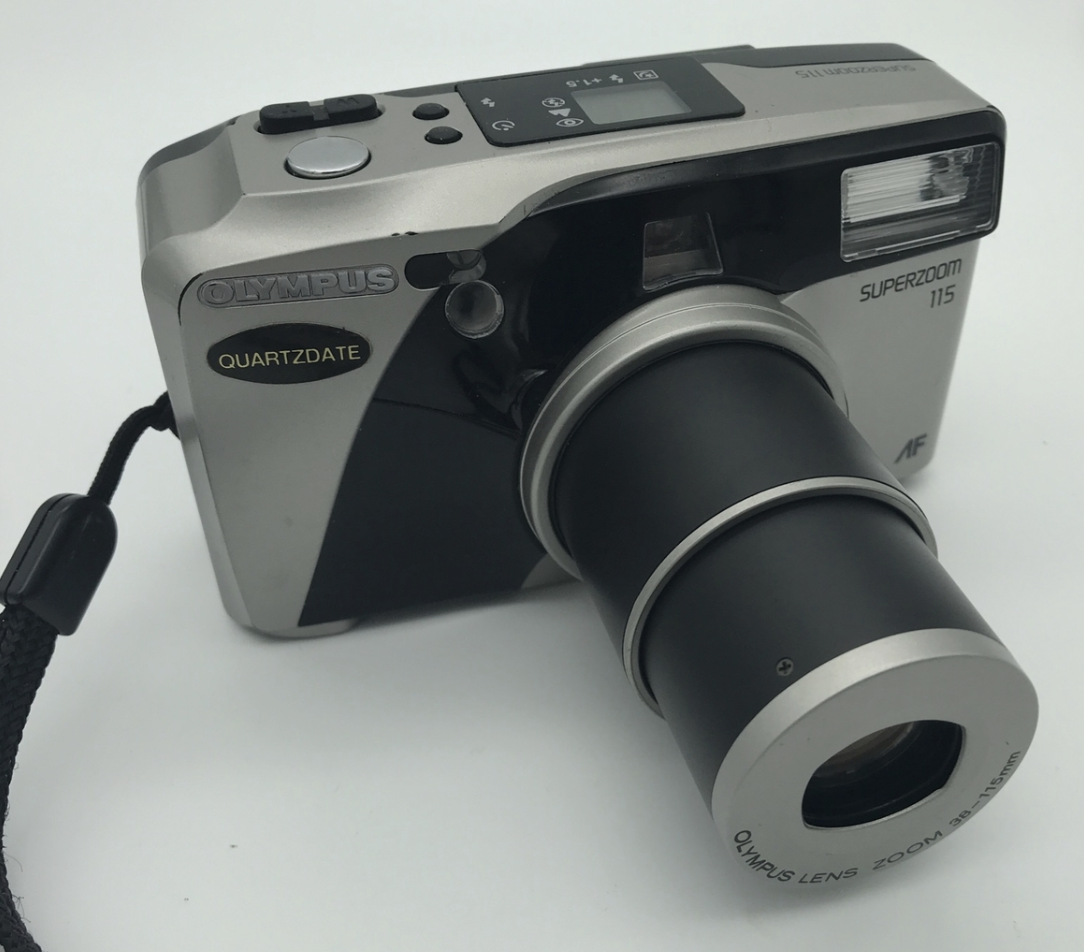
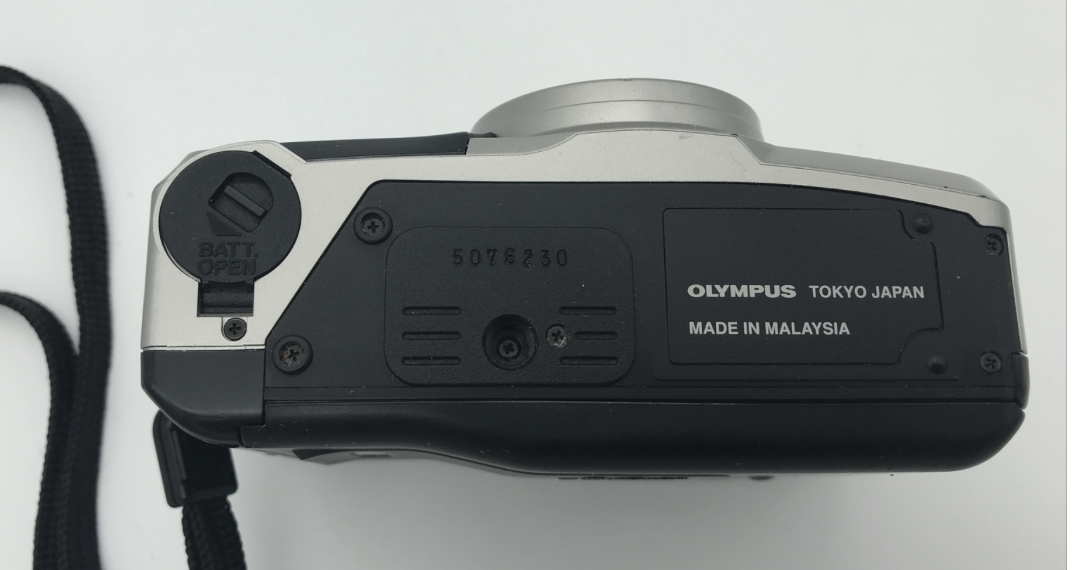
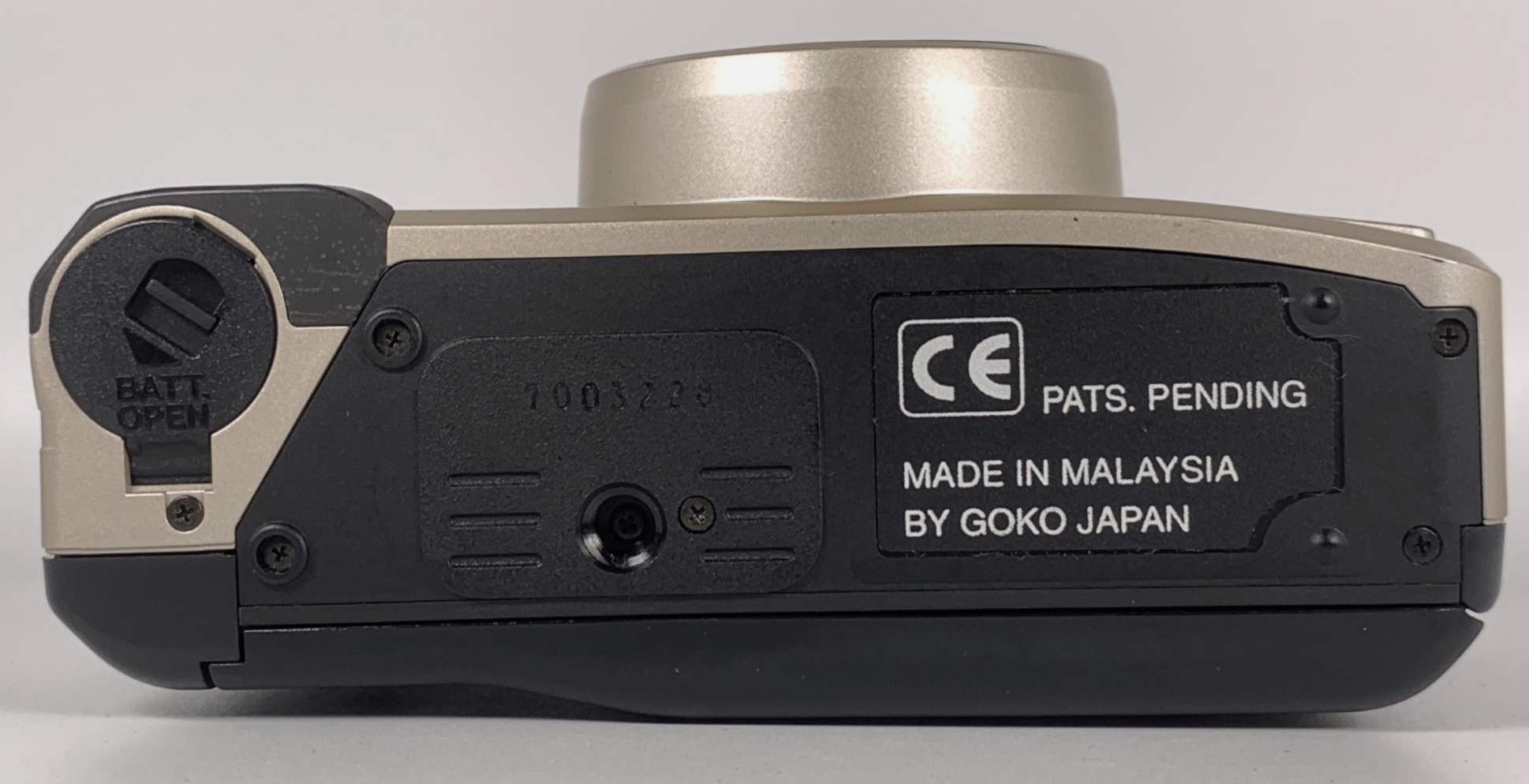
This Argus M5600D was made in Malaysia in the Year 2000 by a major Japanese OEM named Goko Camera. It was virtually identical to Goko’s own MacromaX AZS 1150 AFQ, to Concord’s C3000 Super Macro, and to Polaroid’s 8500Z. More surprising, it looks like it’s almost the same camera as the Malaysia-made Olympus Superzoom 115 of 1999 – the only visible differences being the front fascia and the placement of one or two buttons. Olympus never acknowledged the lineage, but there is no doubt for me that this Superzoom 115 belongs to the MacromaX Z family of Goko cameras. (*)

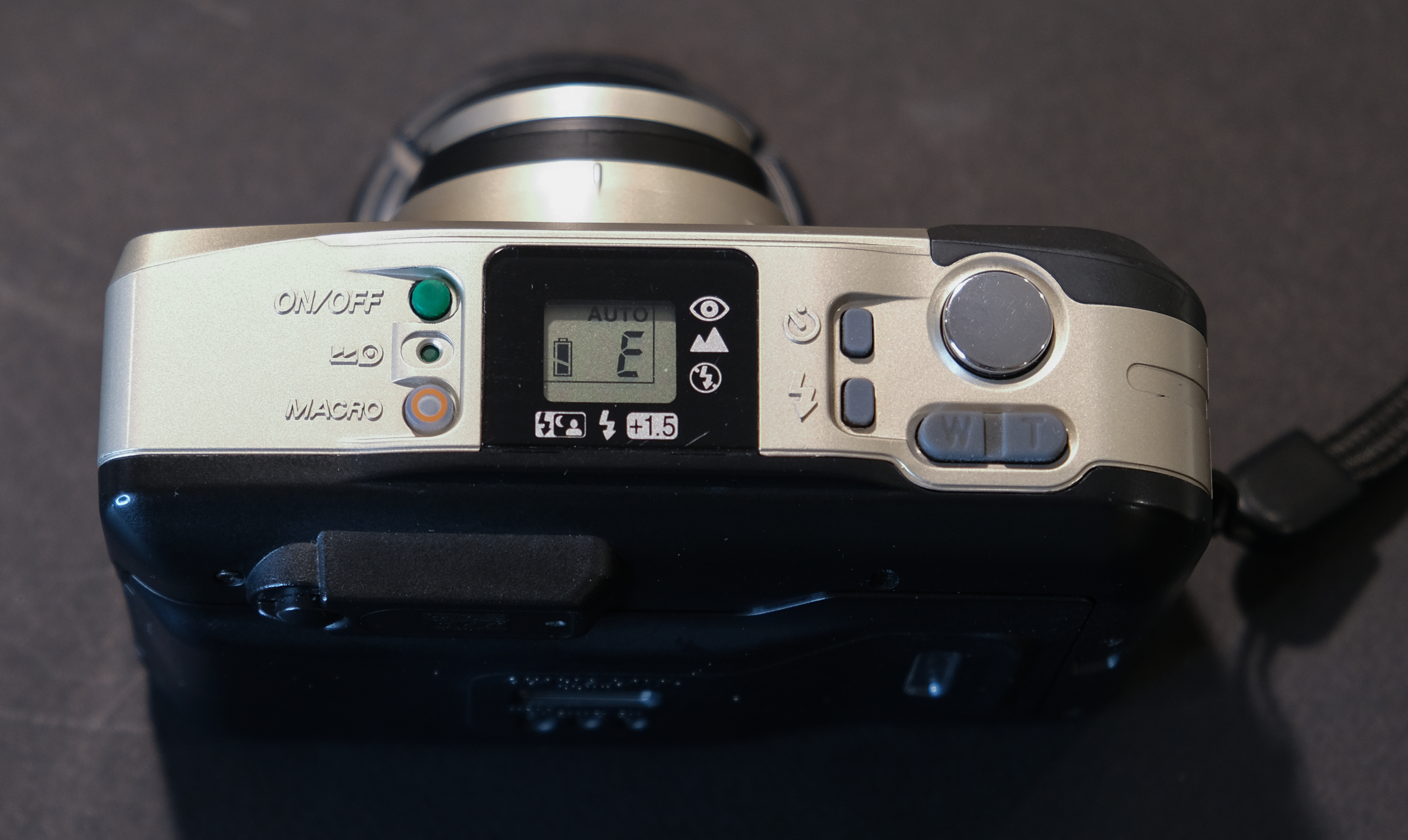
The M5600D’s lens is proudly labeled Cintar Zoom Japan, with a 6 elements/5 groups design, and a maximum aperture varying between f/3.9 and f/10.8. The camera came equipped with a date back, and has dedicated buttons to control the flash modes, and force the focusing distance to the infinite or to 0.25m. Surprising for a compact camera – there is also a way to set a +1.5 EV exposure compensation.

The M5600D requires an easy to find CR123 disposable battery, and considering the slow aperture of the zoom, should be loaded with 400 ISO film.

So, on paper, this camera looks like a much better photography tool than a reusable fix focus point and shoot.

The inside of the Argus M5600D is clean and the camera seems well built.

First impressions

When I received the camera, I was pleasantly surprised. Not that it was in a very nice condition (film cameras of the early 2000s have often seen little use, having been rapidly eclipsed by digicams in the bag of amateur photographers), but that it seemed well built, with an apparent concern for maintainability. I inserted a new battery and a cartridge of Kodacolor 400 (film loading was automated, and easy) and I was ready to shoot.

In the absence of a user manual – which does not seem to ever have been made available as a PDF file – it’s difficult to know exactly what this camera is capable of, but for a point of shoot, it’s exceptionally configurable.

Shooting with the M5600D is a pleasant affair – the camera’s body is large enough without being too big or too heavy, the viewfinder is large and relatively luminous, and the camera responsive. Maybe the lens is horrible and the images are going to lack contrast and resolution, but at this stage, and after having burned two rolls of film, I don’t think that the M5600D is any worse (or any better) than the equivalent models from Olympus or Canon.

Pentax 17 on the left: $499.00 – Argus M5600D on the right: $5.00

The proof is in the pudding

I first loaded the camera with a roll of Kodacolor 400, but the lab (it will remain unnamed – I want to give them a second chance) took almost two months to process the negatives. I was getting impatient and then burned a second roll of film (Ilford’s Kentmere 400, a B&W stock I could develop at home).

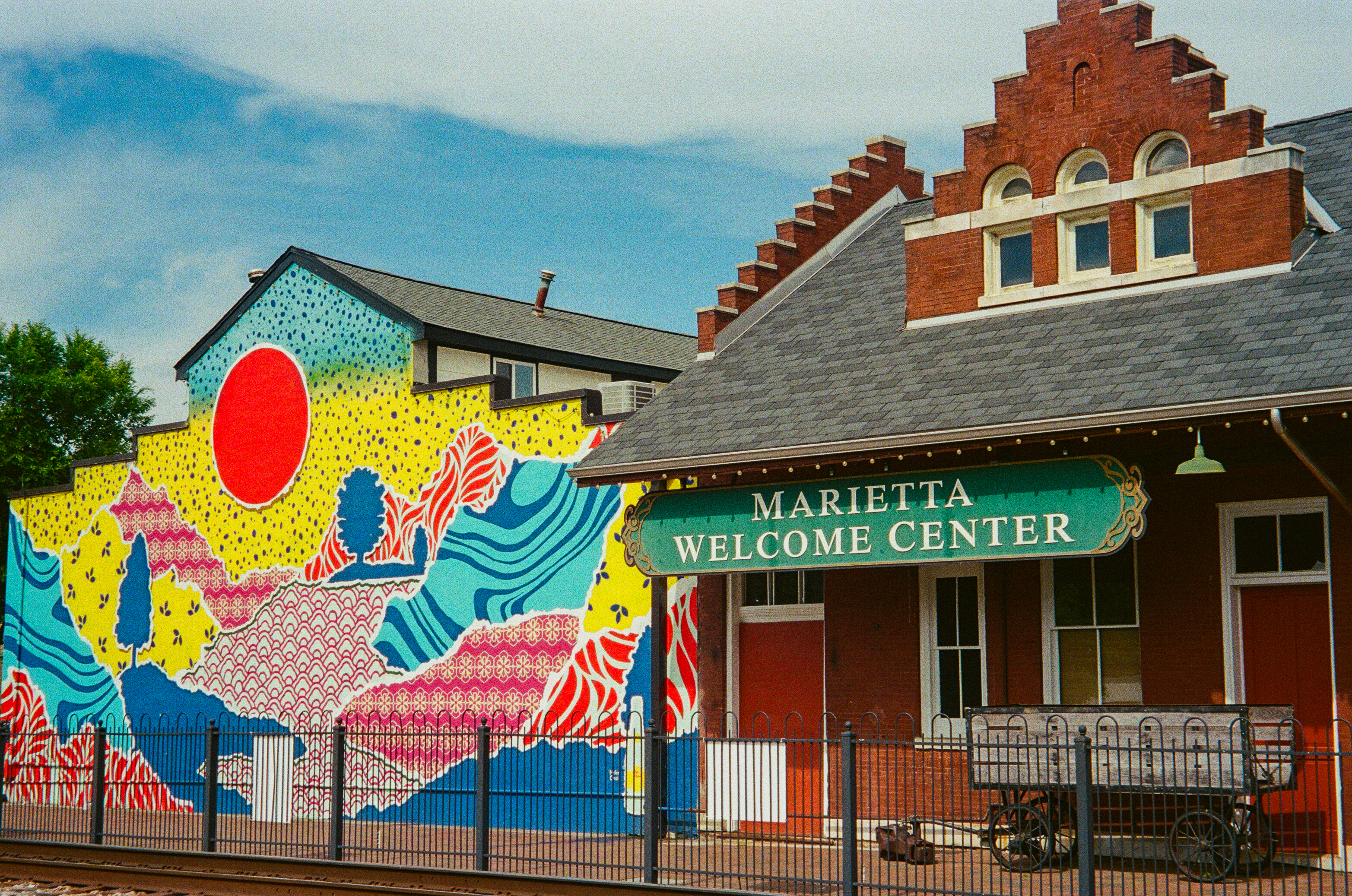
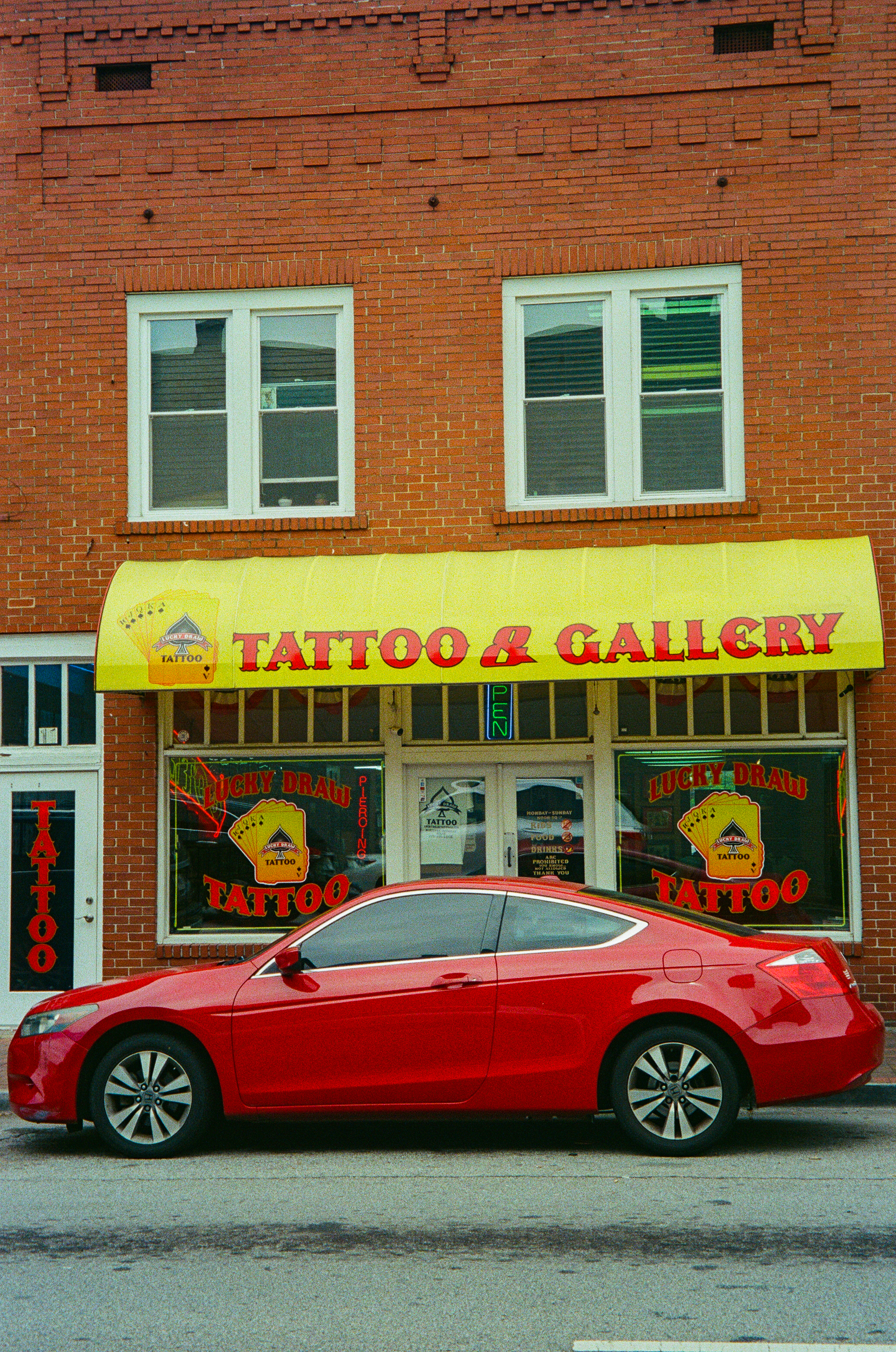
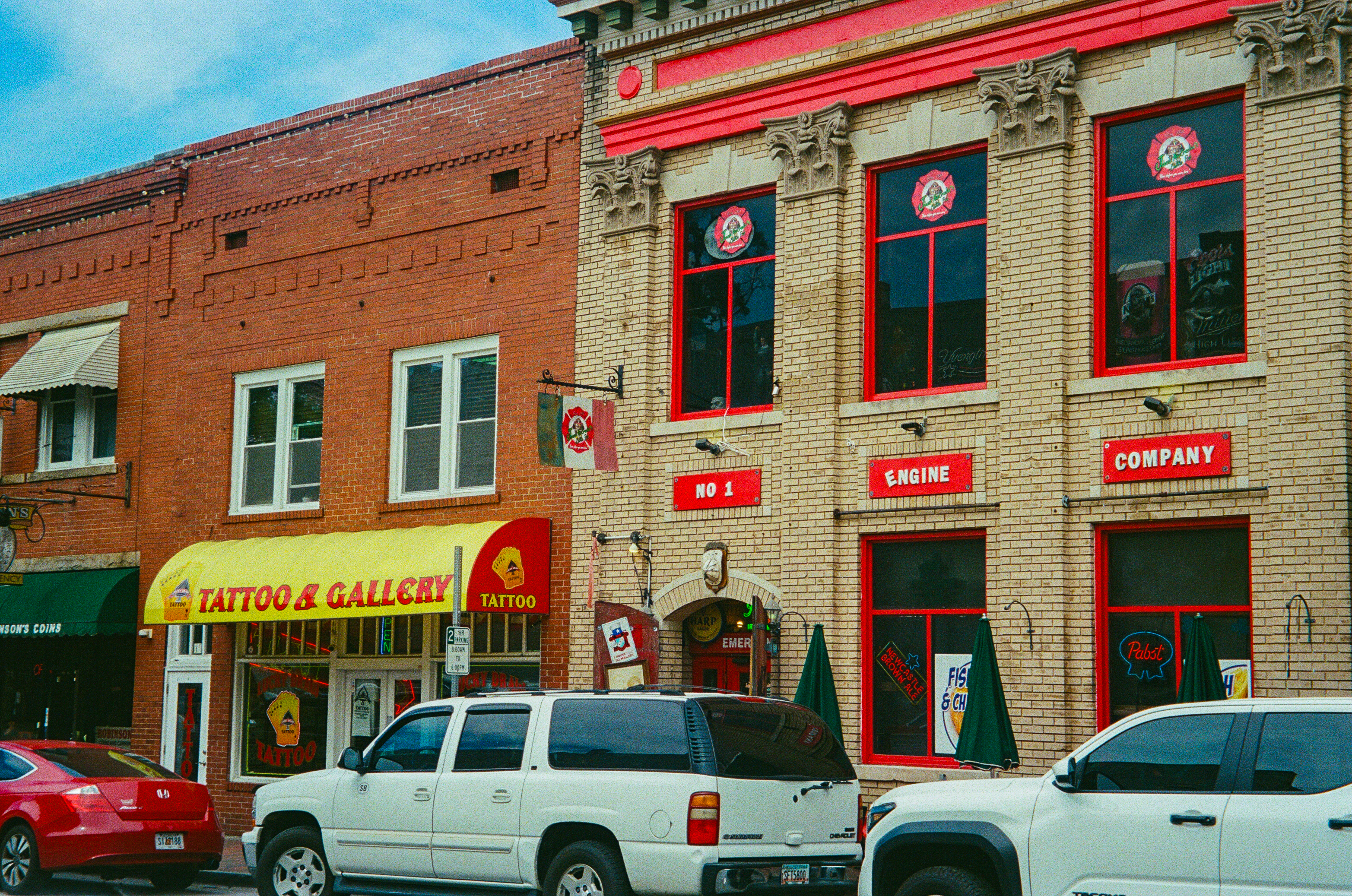
Marietta, GA – Argus M5600D – Kodacolor 400.

A first glance at the developed negatives shows that all the frames of the film have been exposed (no accidental double exposure or blank images), and are regularly spaced. The B&W negatives are beautiful, the images seem correctly exposed and to the naked eye, they don’t look totally blurred or completely out of focus. This Argus is not a total lemon.

Let’s look at the scans.

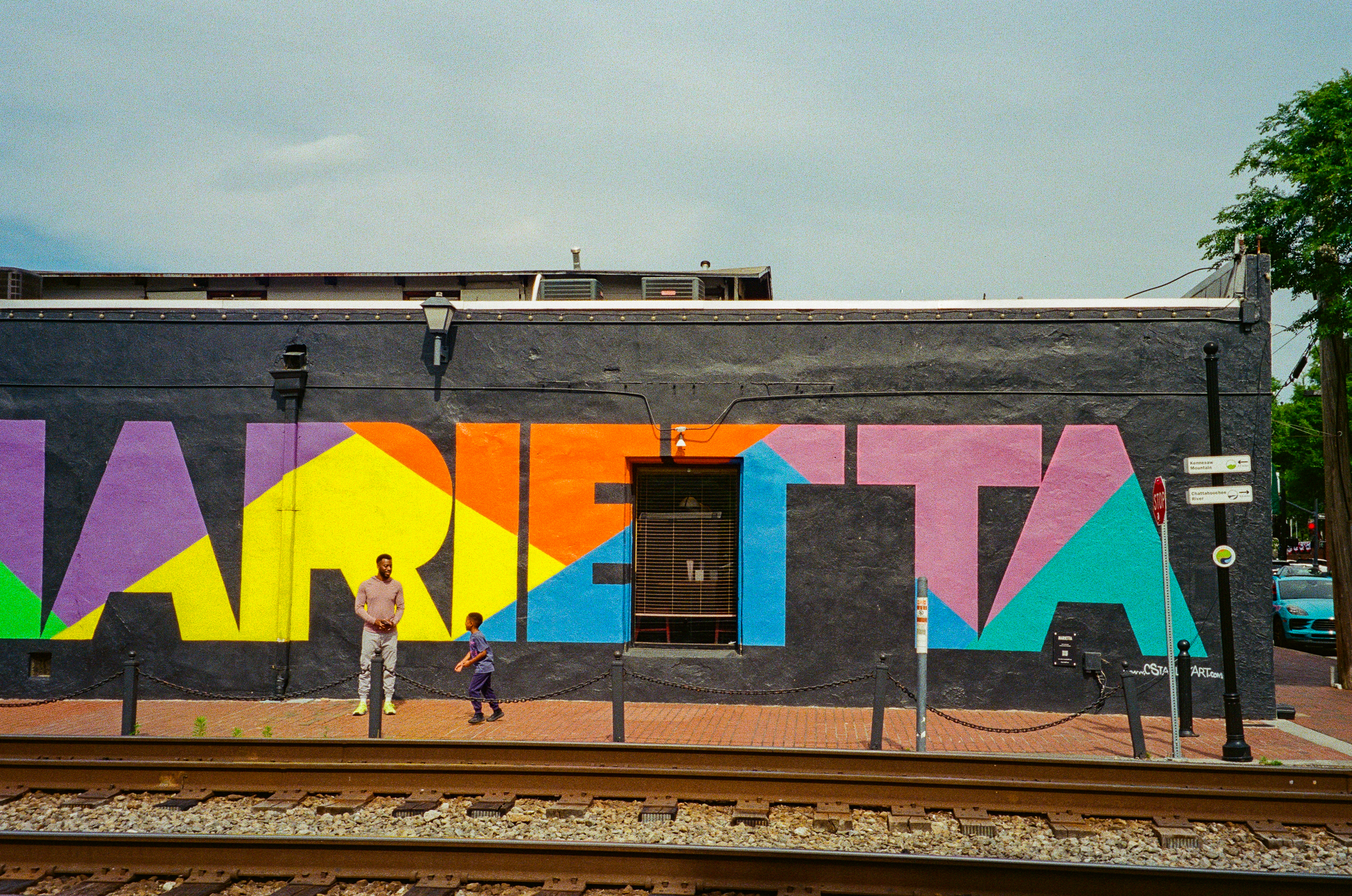
Marietta, GA – Argus M5600D – Kodacolor 400.

They’re not bad at all. The exposure is not always perfect and the color scans are rather dull, but a few adjustments in Lightroom (vibrance, clarity) make them pop. Surprisingly, the lens is very good at resolving really fine details and the focus is right on, most of the time.

Avondale Estates, July 4th – Argus M5600d – Kentmere 400.

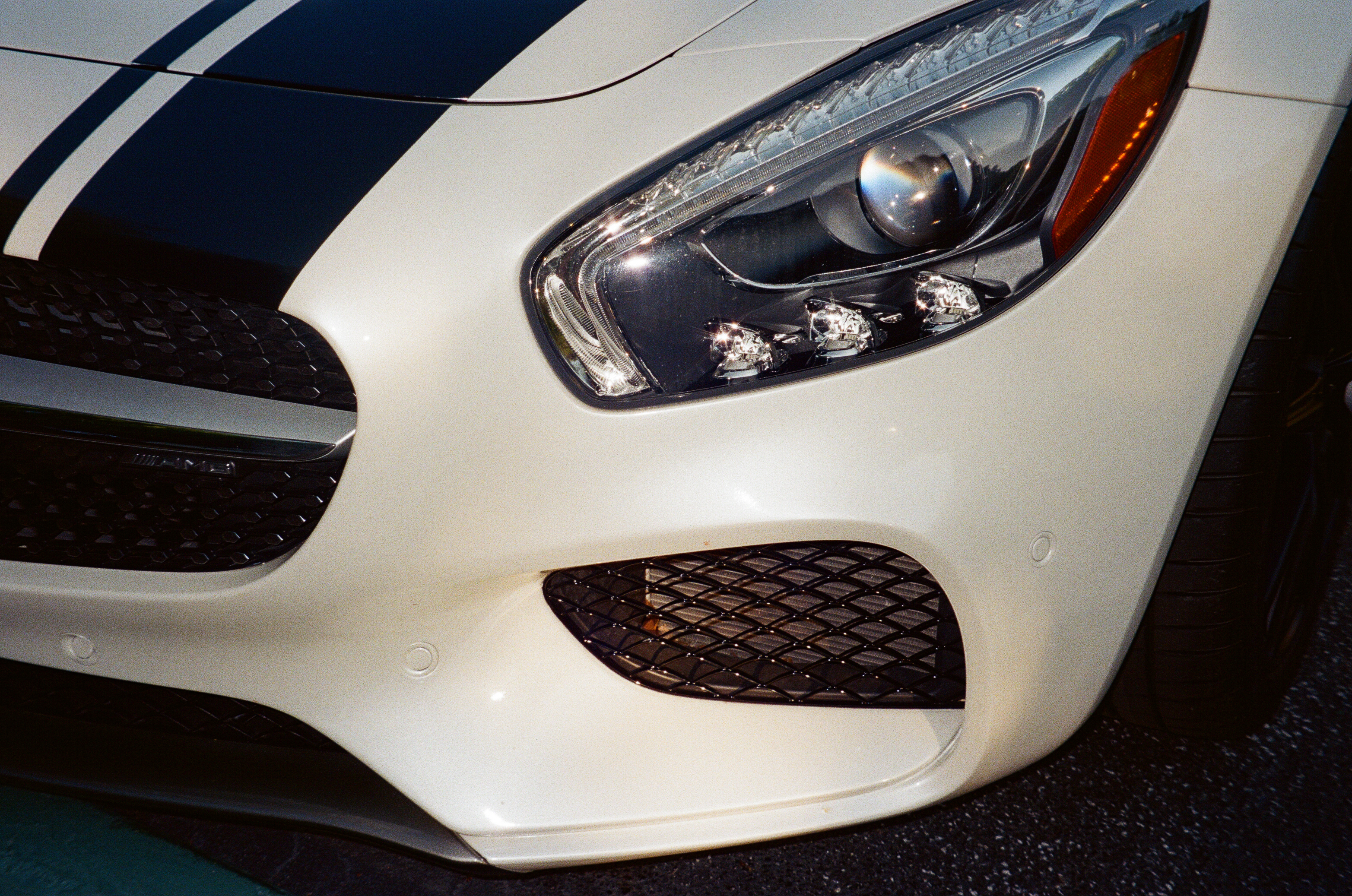
The macro mode is a mystery – pictures of flowers look horrible (the flash was on and if the subject is brightly lit, the background is totally dark) – but I shot a few close-up of cars and the images came up pretty good. As usual for this type of film camera, portraits shot at the light of the built in flash are bad enough to consign you to the dog house for a few days if you have asked your significant other to be your model.

You will have to be a pretty good photographer to win a photography contest with this Argus, but provided there is enough light and you shoot in exteriors, you’ll get very decent and perfectly usable images frequently enough.

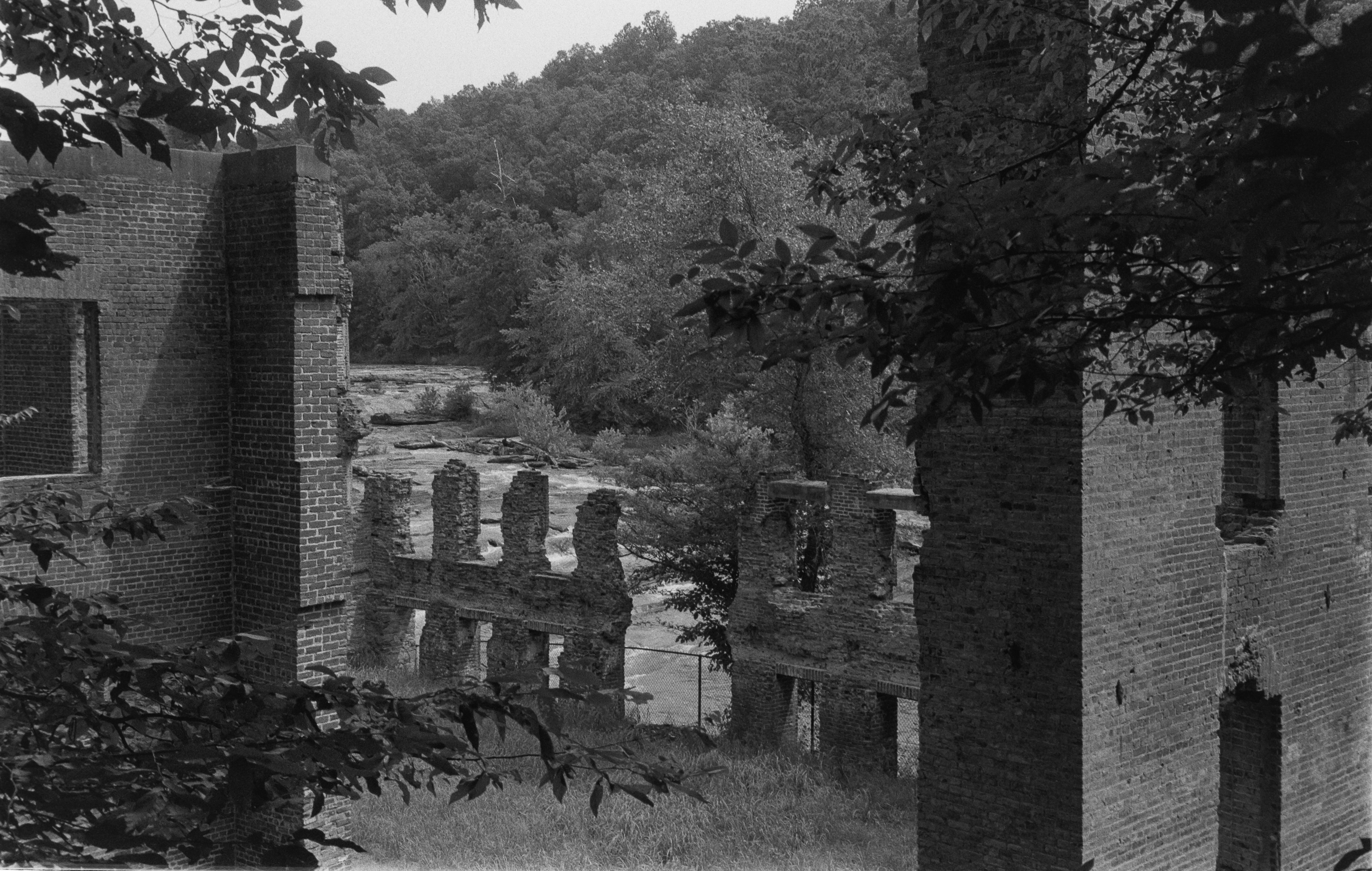
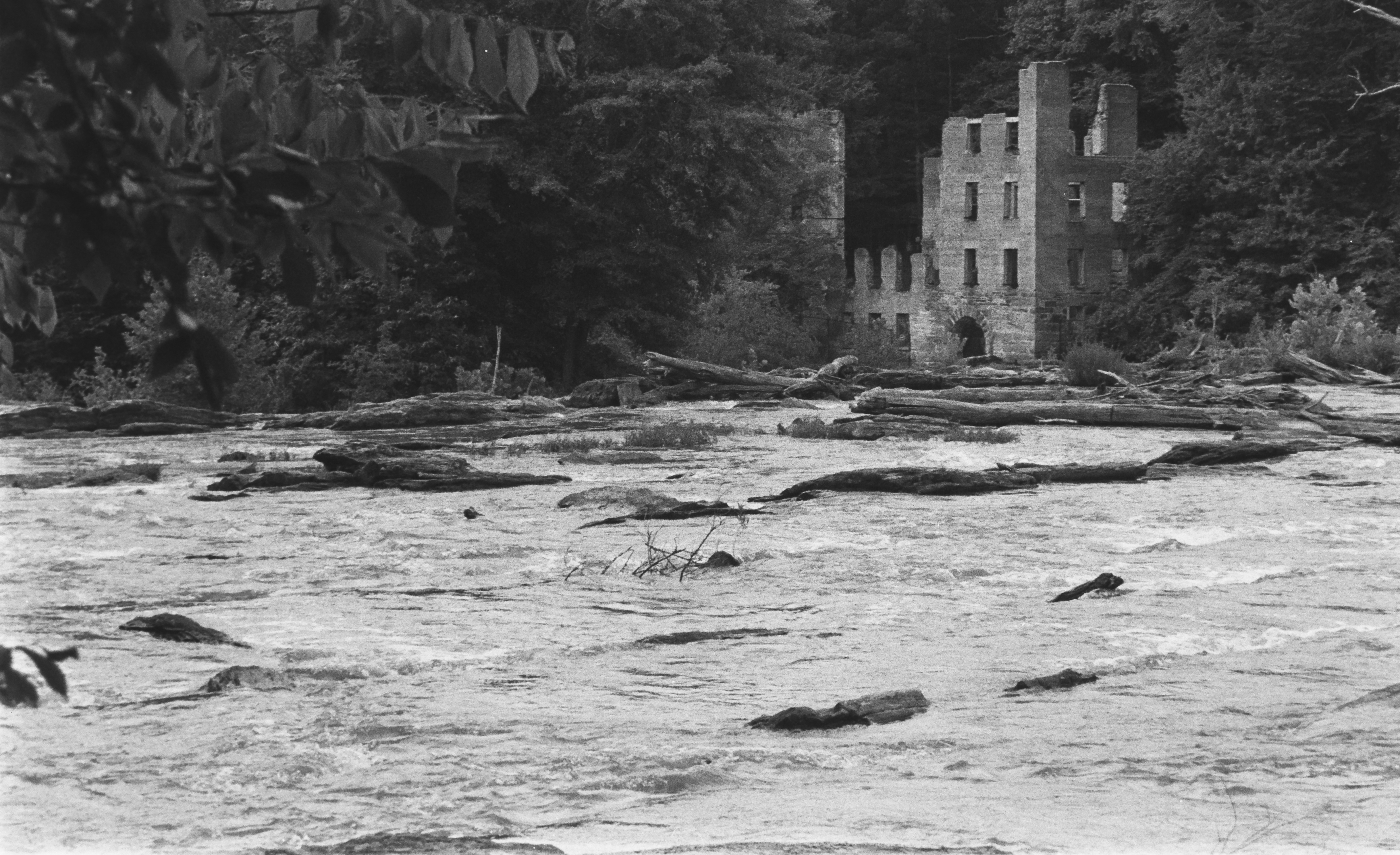
The Manchester Mill (Sweetwater Creek Park, GA) – Argus M5600D – Kentmere 400.

As a conclusion – is it better than a “reusable” fix focus camera?

Yes, it’s definitely better than a fix focus camera (single use or reusable). There’s no comparison. The images of the M5600D will be correctly exposed, and its autofocus system will deliver much sharper pictures than a fix focus lens set on the hyperfocal. With a lens opening at f/4 at the wide end, it will operate in dimmer environments than a typical fix focus camera, and with a relatively long range of 115mm, its zoom will let the photographer isolate its subject.

Under a fair weather and in the bright hours of the day – it will give you surprisingly good images – but can not compete with a film SLR when the scene is not generously lit, or when shooting sports, or taking portraits in an interior, or macros of flowers, or in all situations when a good cobra flash or a direct control of the shutter speed and the aperture would be necessary.

Its performance envelope is much wider than a fix focus throw away camera, but also narrower than a single lens reflex camera and a set of good lenses. It belongs to this intermediate category which was nicknamed “travel or tourist cameras” for a reason.

A Mercedes AMG – Argus M5600D – Kodacolor 400.

I was honestly very surprised by the quality of the images delivered by this Argus M5600d. Unless you’re in love with the “Instamatic” look of the images taken with a single-use camera, a 25 year old motorized autofocus like this Argus is a much better choice.

It might have been a generic South East Asian beige camera, but it was a pretty good one, and I’m curious to compare it side by side with the best point and shoot cameras that Canon were proposing in the nineteen nineties.

Ultimately, the problem of the M5600D (and of all the fully automatic compact film cameras of similar design) is named digital photography. Anything that the M5600d does, a high-end smartphone or a recent digital camera will do better. The Argus has a good viewfinder and the ergonomics of a real camera, but it does not give you more control over your images than a smartphone, and contrarily to a nice mechanical camera, it is not a particular gratifying object to work with.

For $5.00, it’s an incredible bargain, and if you really love shooting film and don’t want to carry a single lens reflex, it’s a much better option than a single-use camera.

The featured picture – the top plate of the Argus M5600D – the dedicated “macro” key is a Goko MacromaX differentiator.

(*) Do not confuse the Olympus Superzoom 115 (the clone of the MacromaX AZS1150 and the Argus M5600d) with the Olympus MJU II or StylusEpic 115 (you recognize it by its clamshell body). The cameras have not much (if anything) in common.

For more about the Goko MacromaX series of cameras, and Goko in general – read Mike Eckman’s excellent review of the Goko MacromaX FR-350, and Goko’s “historic” pages: https://www.gokocamera.com/en/legacy-products/

The MacromaX cameras were primarily designed to be sold in developing countries, but were briefly sold in the US (1997 till early 2000s) under the Goko brand, and, badged as Concord, Argus or Polaroid, under labels belonging to Concord Camera Corp. Today Goko are still involved in photography, but have left the consumer market and specialize in cameras used in industrial or lab environments.

https://camera-wiki.org/wiki/GOKO_MacromaX_AZS_1150_AF

Compare with the pictures of the Argus M5600D – all members of the same big and happy family


Marietta, GA – Argus M5600D – Kodacolor 400.
The Manchester Mill – Sweetwater Creek Park – Argus M5600D – Kentmere 400 – shot at the longest position of the zoom (115mm)
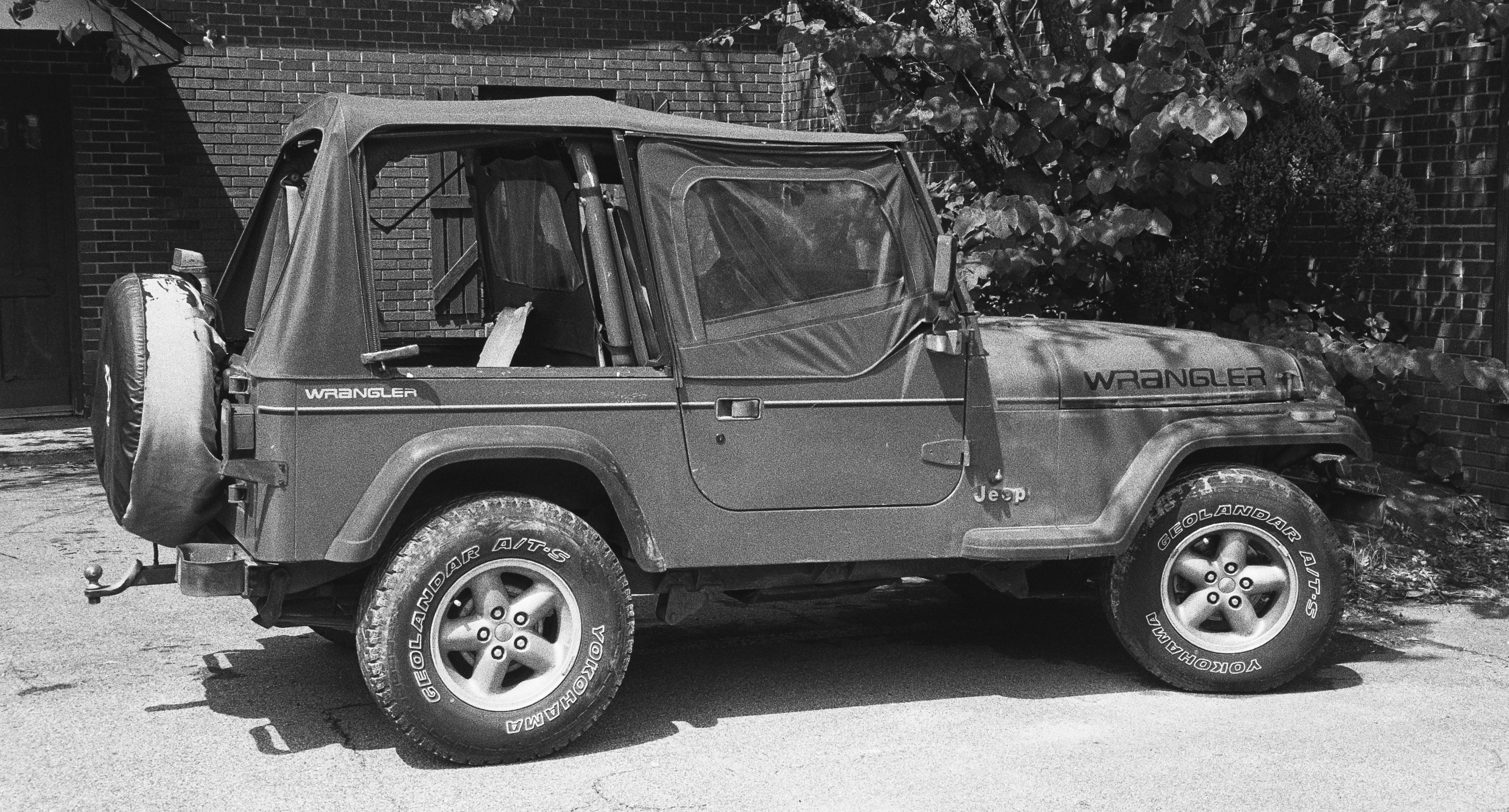
Jeep Wrangler YJ – Argus M5600d – Kentmere 400.