For the readers not familiar with the American retail landscape, Five Below is a chain of stores selling “stuff” (cosmetics, candies, gadgets, beach towels, electronics) for really cheap, like $5.00 and below. Not eveything is under $5.00 – the reusable, waterproof film camera, and the b&w film it needs are both priced over that symbolic mark, at $7.00. There is a cheaper version of the same camera. Selling for $5.00. But I elected to spend two extra dollars to get the waterproof variant. It’s the same camera, simply inserted in a transparent waterproof shell.
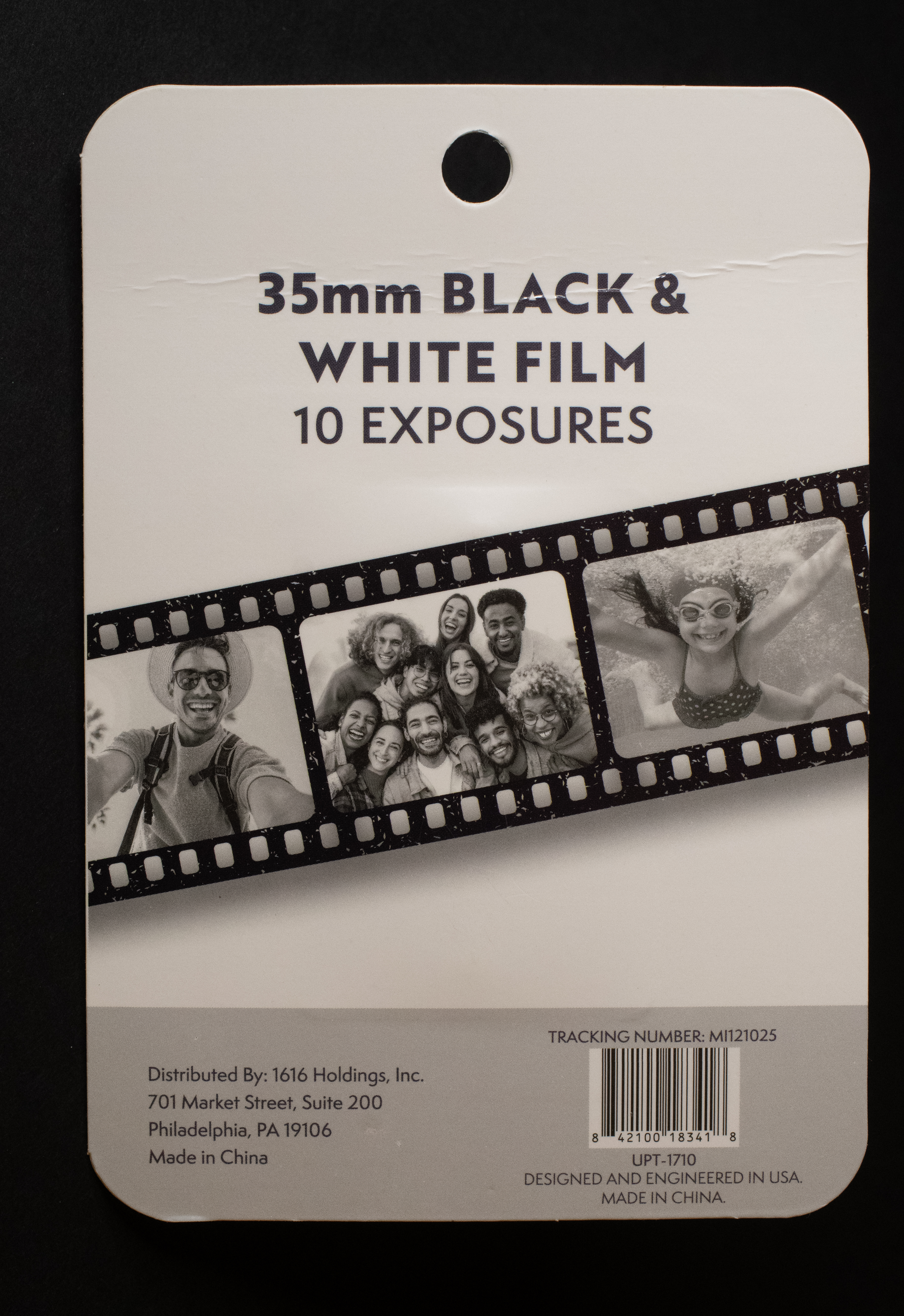
While I was at it, I decided to splurge and also bought two 10 frame cartridges of Five Below’s 100 ISO B&W film. 10 (yes, ten) frames for $7.00. One roll for the Five Below camera, the other for my benchmark, the Minolta AF-C – an autofocus camera from 1982.
Research on the Web and on ChatGPT did not return any useful information about this film, but $0.70 a frame for a Chinese film of unknown provenance, it’s not exactly a bargain when B&H will sell you a 36 frame cartridge of Ilford’s excellent FP4 for less than $12.00.
It looks like Five Below are applying the tried and tested Gillette pricing technique – sell the razor at cost, and make a comfortable profit on the blades.
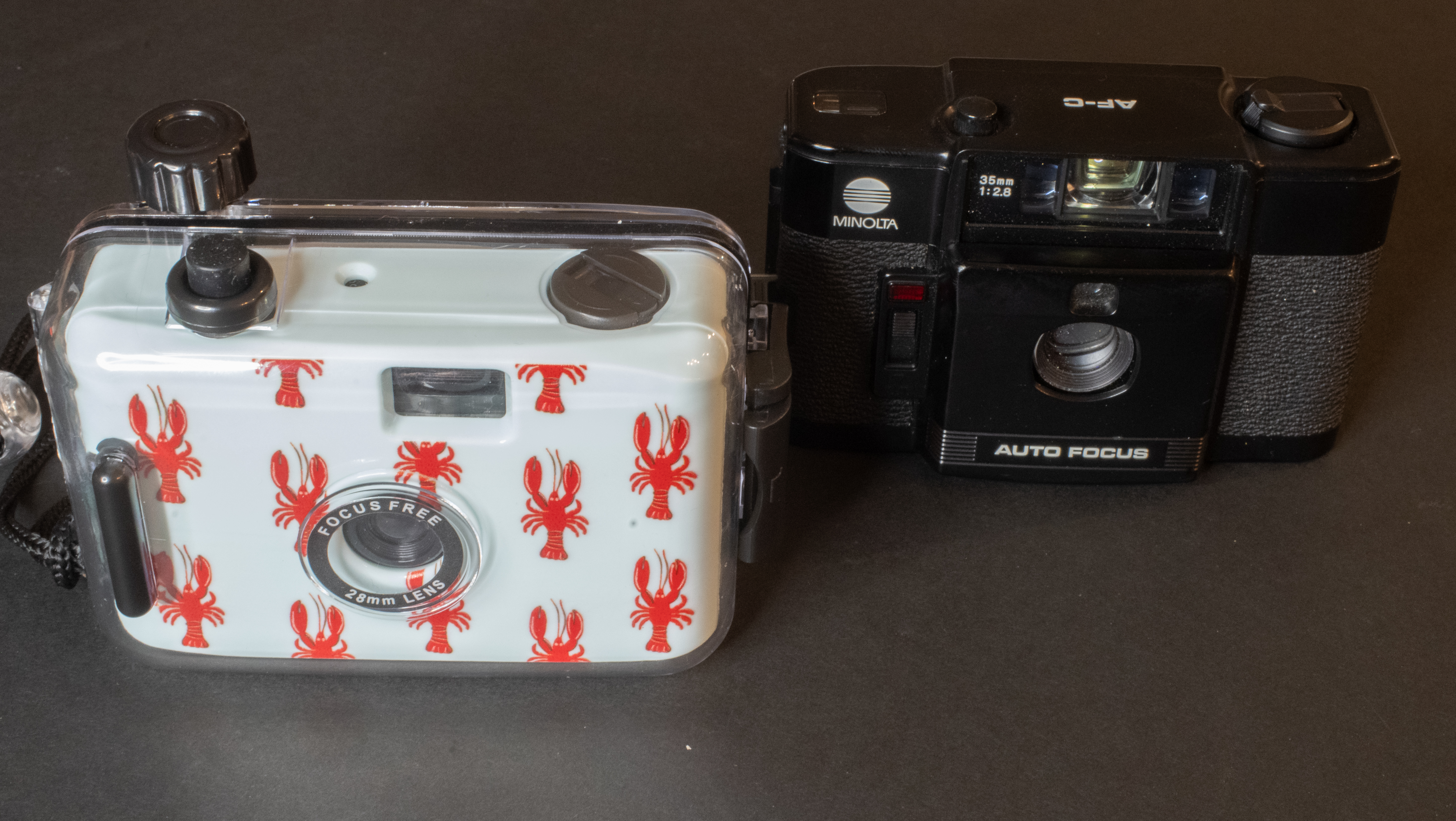
The Five Below camera is obviously not an original design. A similar fix focus, 28mm point and shoot camera has been sold (or given away) under various brand names in the past. The camera is almost totally made of plastic, as I doubt that there are more than three metal parts in it. At best a spring in the shutter mechanism. And two small metal rods to keep the door of the waterproof case in place. And not a single part is made of glass.
The lens is a 28mm f/8 piece of plastic (probably a simple meniscus). The shutter is calibrated to deliver 1/100sec snapshots. And, contrarily to all disposable cameras, this one has no electronic flash.
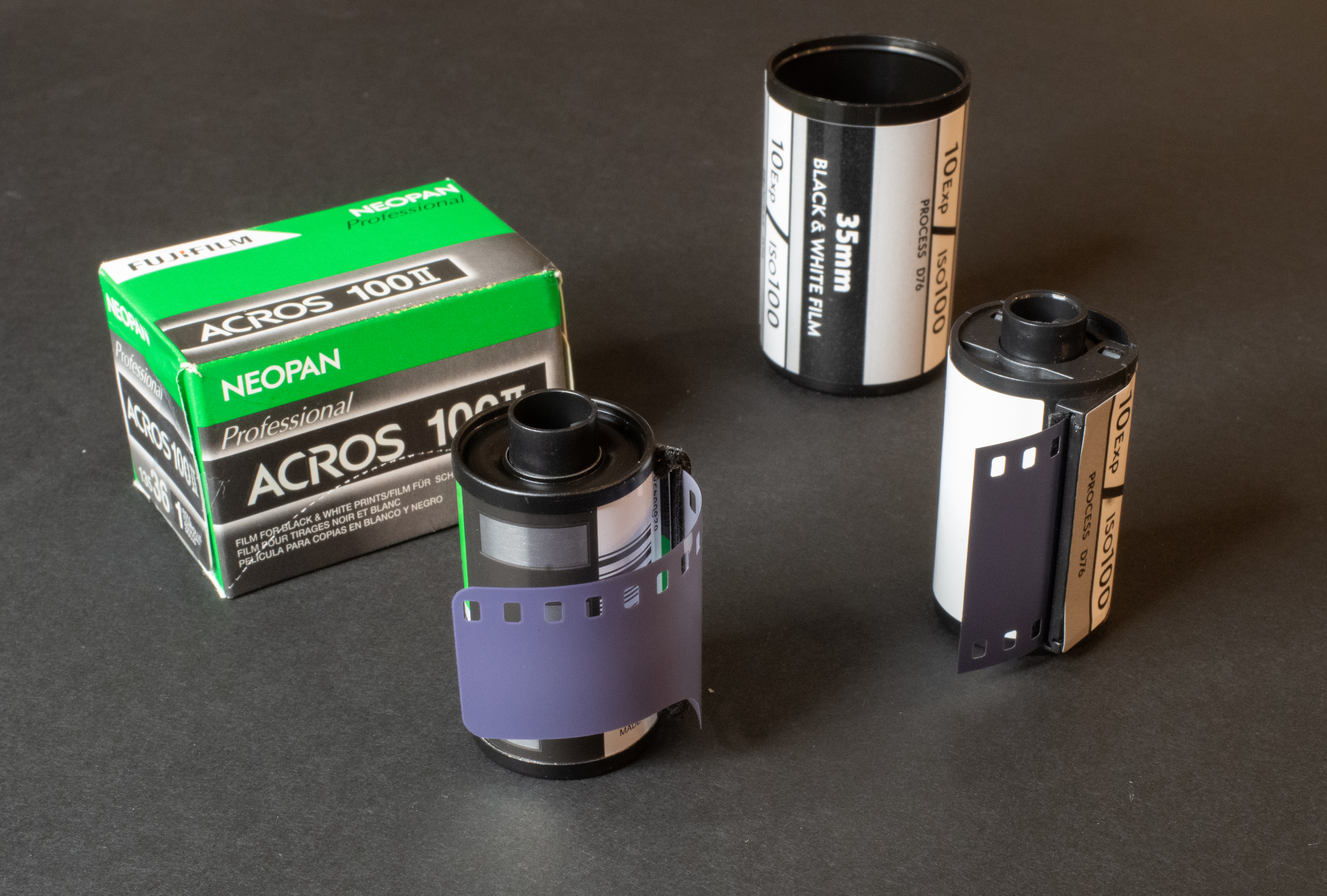
Strangely enough, it does not look as lightly built as most disposable, single use, cameras. Loading the camera with Five Below’s film is surprisingly easy. Maybe it’s thanks to the unusual shape of the film leader. It’s cut straight, when every other roll of 35mm film I’ve seen is tapered. What works well for the Five Below does not work for cameras that expect a tapered leader, like this Minolta AF-C – I had to cut the leader to give it the shape of a “normal” 135 film.
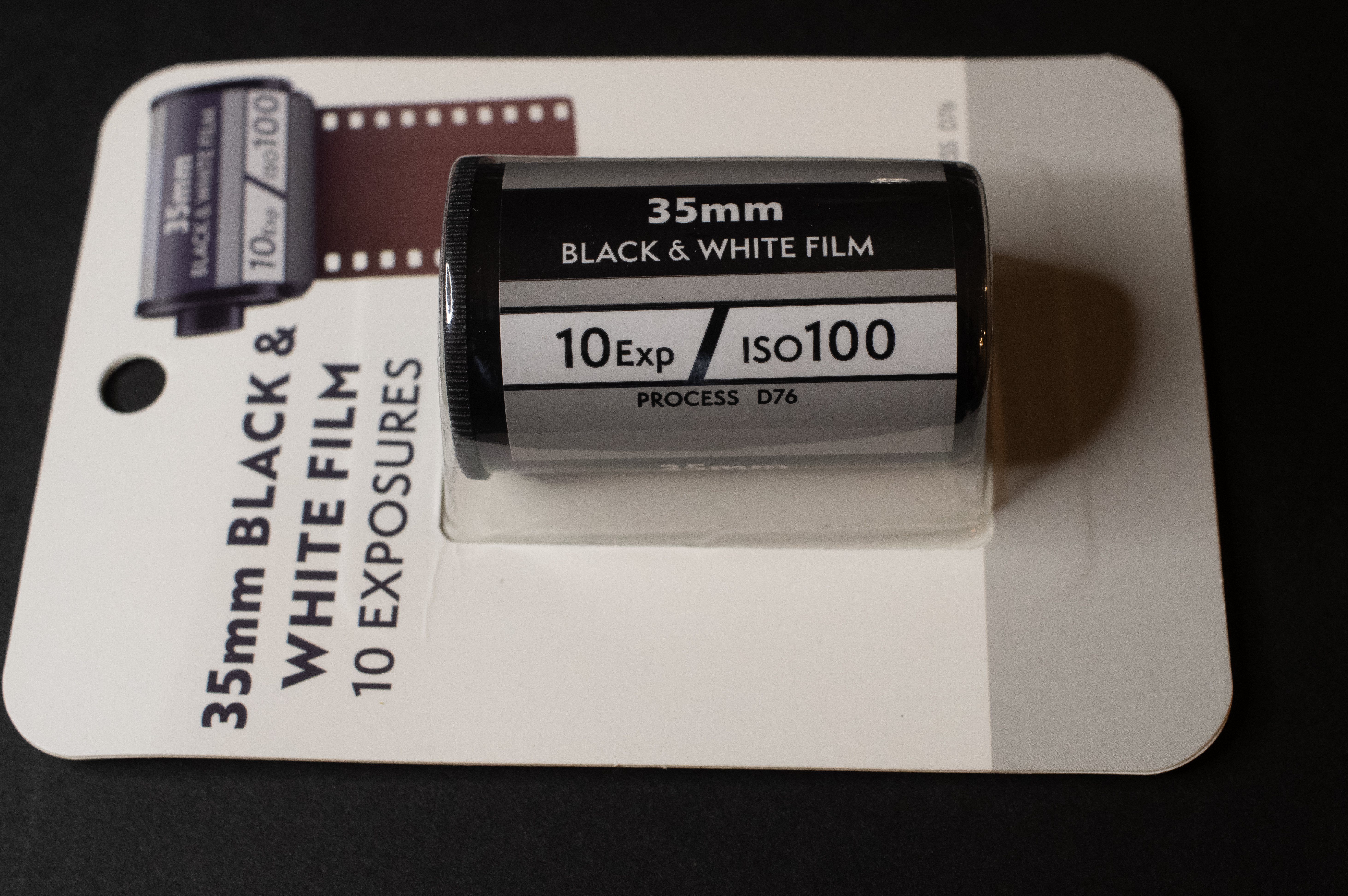
Developing the Five Below film
The only indication provided is that the film has to be processed in D76 chemistry. No other direction is provided. Considering the film is very likely a respooled / unbranded industrial or cinema-derived film, I decided to develop the film for a longer time than what a usual 100 ISO photography stock would require. With my usual Tetenal Parvofin tabs at the “economy” dilution, I opted for a development time of 6 minutes at 26∘𝐶.
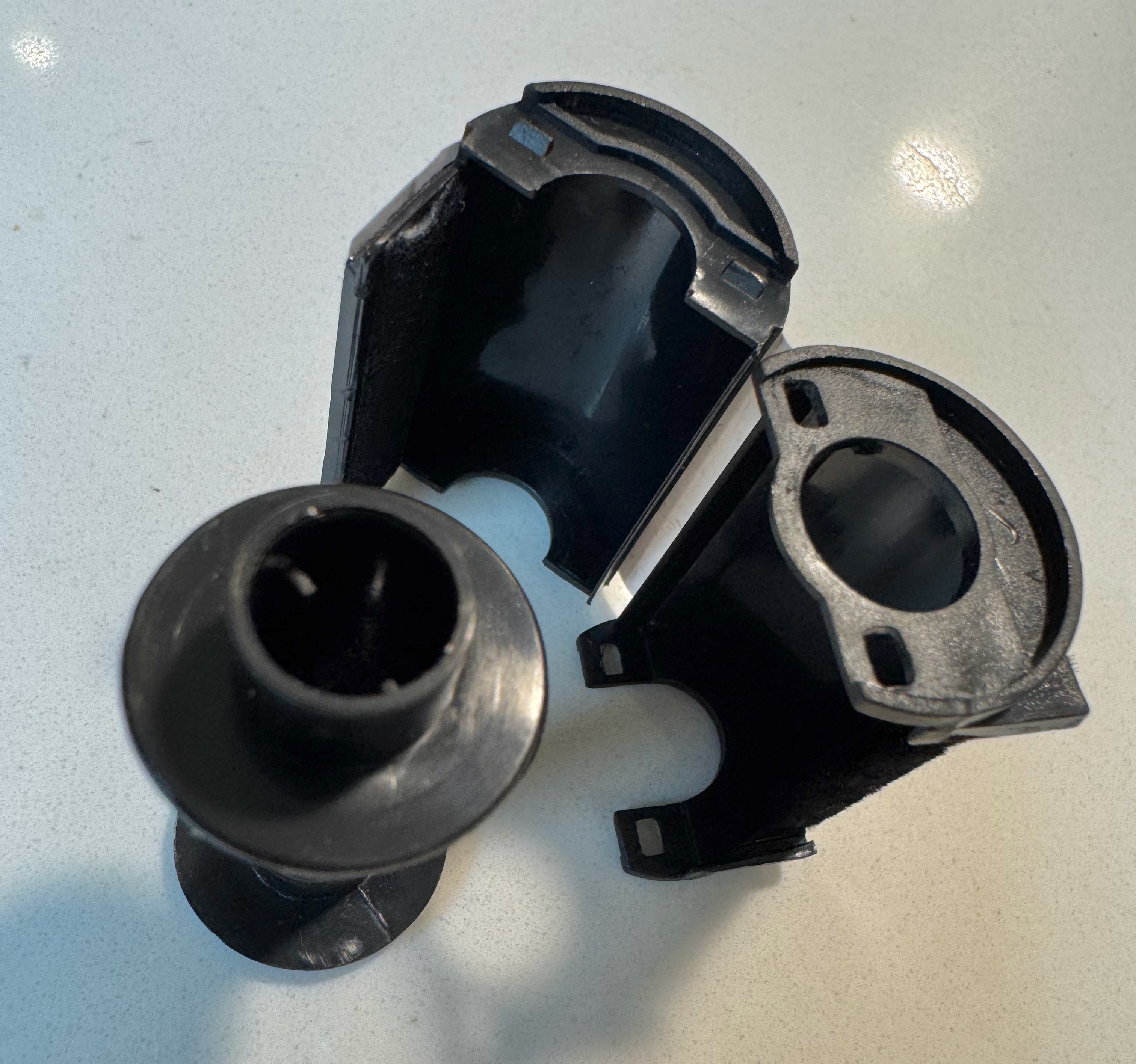
The cartridge is made of two half shells of plastic that are clipped together. Opening the cartridge to extract the film does not require a cartridge opener – I simply pried it open with a screwdriver (in a changing bag, obviously).
Compared to my usual Ilford or Kodak film, I found the film more difficult to spool on the Paterson spirals – it seems that the film base is made of a clear and rigid type of plastic (probably PET) rather than the triacetate used by almost all 135 film manufacturers – which could explain that the film advance is so stiff on the Reusable, and that I got involuntary double exposures on the Minolta AF-C.
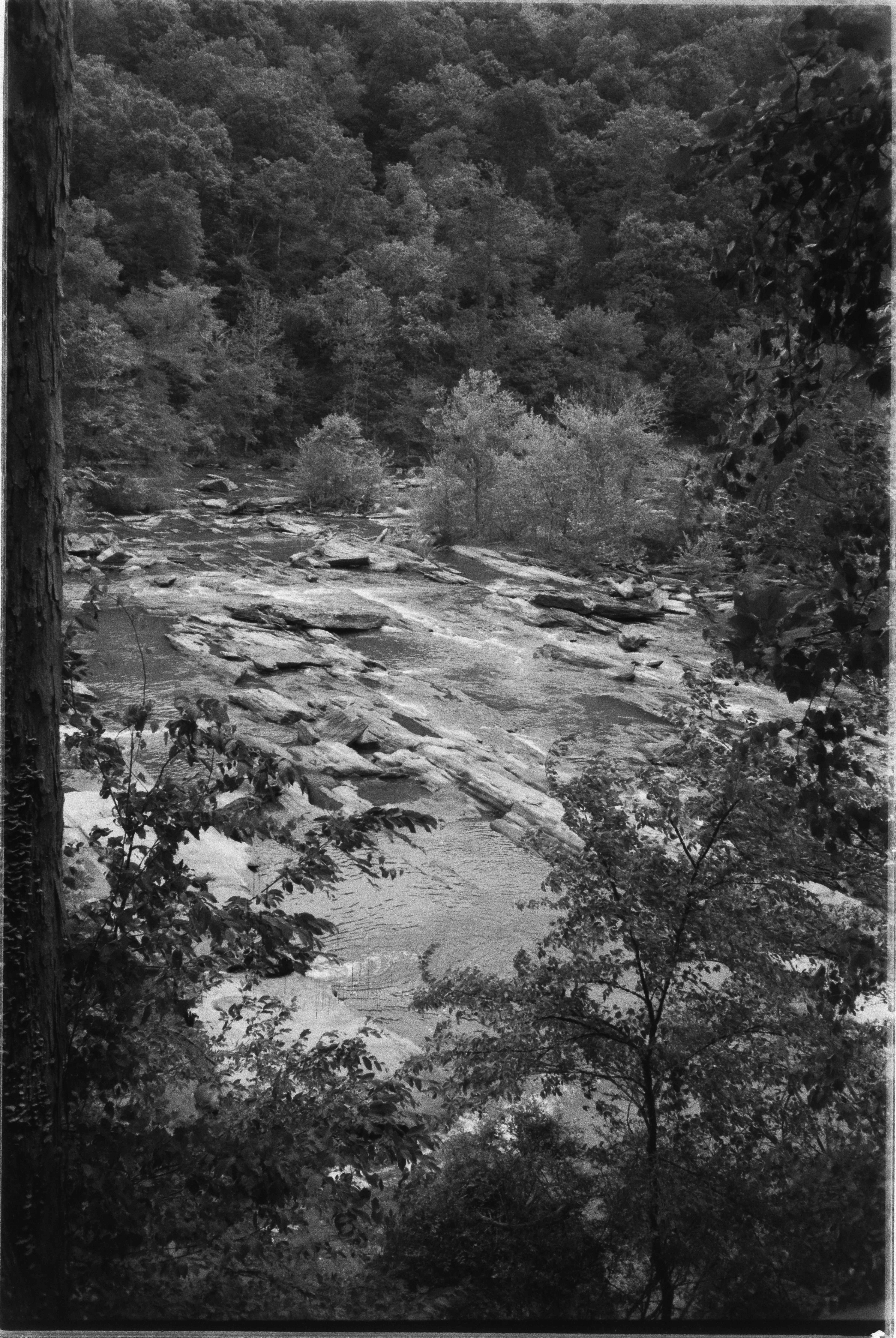
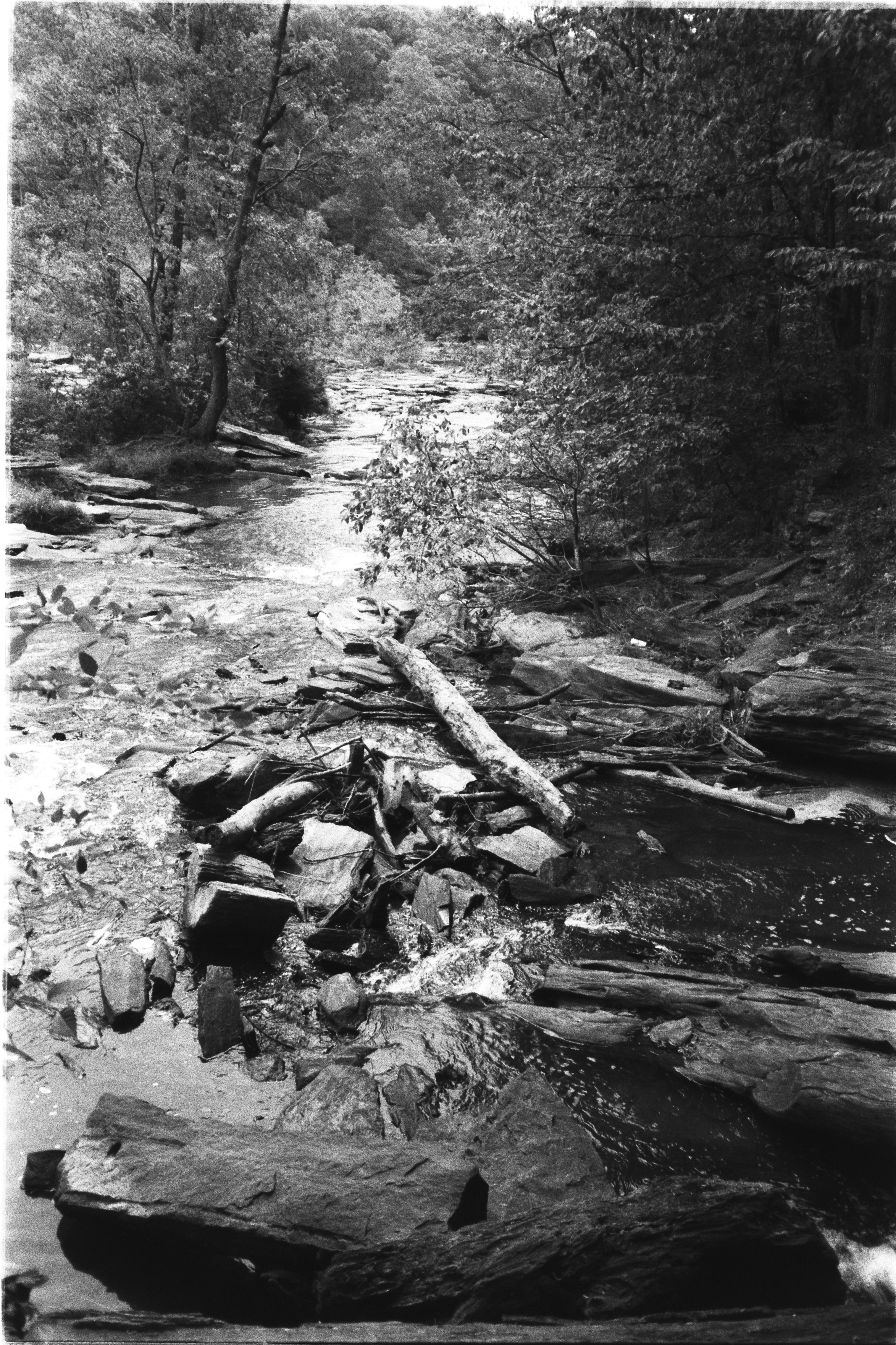
Once developed, the film does not show any marking – the manufacturer will remain unknown – but contrarily to what I was afraid of, the processed negatives look OK, in particular those shot with the Minolta AF-C, which are clearly more defined than the negatives of the Five Below Reusable.
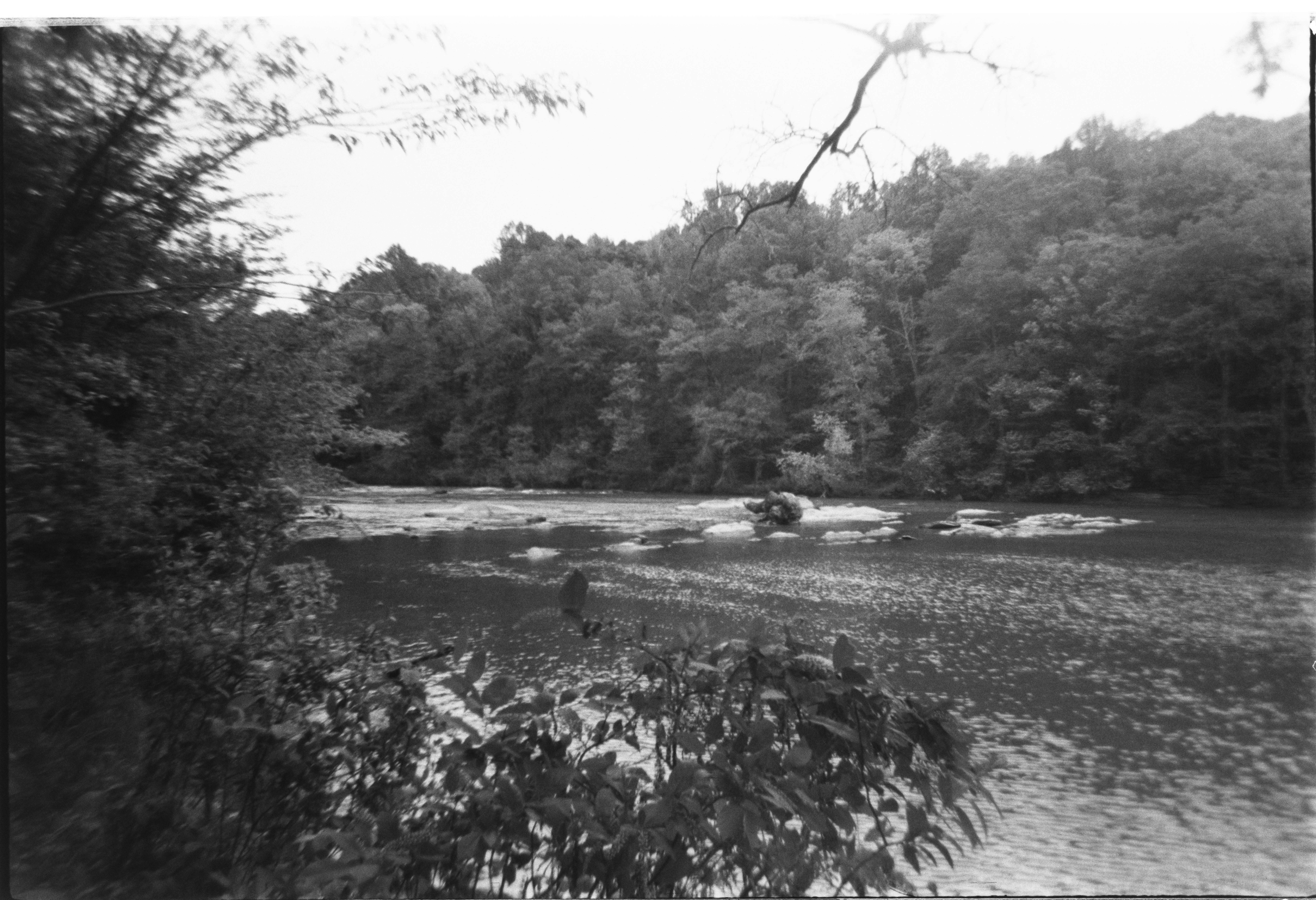
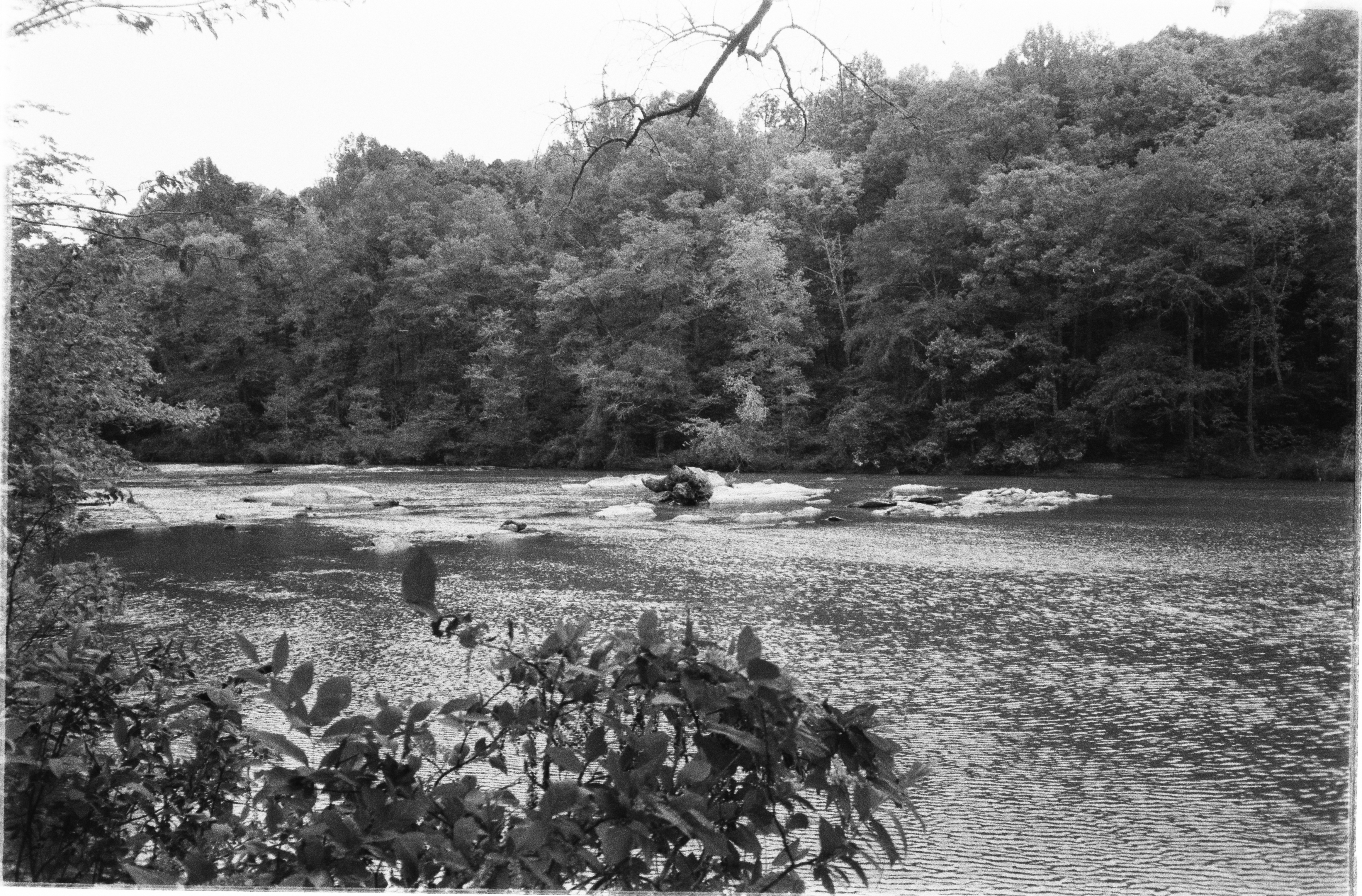
Two pictures taken from the same vantage point at the same time – the photo taken with the Five Below Reusable is dull compared to the image taken with the Minolta.
The total length of the film strip is 19in 1/2 (49cm), but unless you load the camera in a dark room and only lose one exposure to the loading process, it will be difficult to get 10 exposures out of the roll of film (I got 7 on each of the cameras, but I could have probably squeezed 9 exposures out of them had I been less risk adverse).
I also lost one exposure in the middle of the roll shot with the Five Below camera (the shutter probably did not fire), and one to a partial and totally involuntary double exposure on the Minolta (which is a very reliable camera, normally). The unusual stiffness of the film may have caused it, but I suspect that the real reason is that the film had not been spooled regularly.
Five Below vs Minolta
The Minolta AF-C is a fine camera. The film advance is smooth, the viewfinder large and accurate, with a clearly defined projected frame, and the 35mm f/2.8 lens is true to the premium positioning of the camera when it was new. The auto-exposure system and the autofocus did their job and the negatives are correctly exposed and as sharp as the film permits them to be.
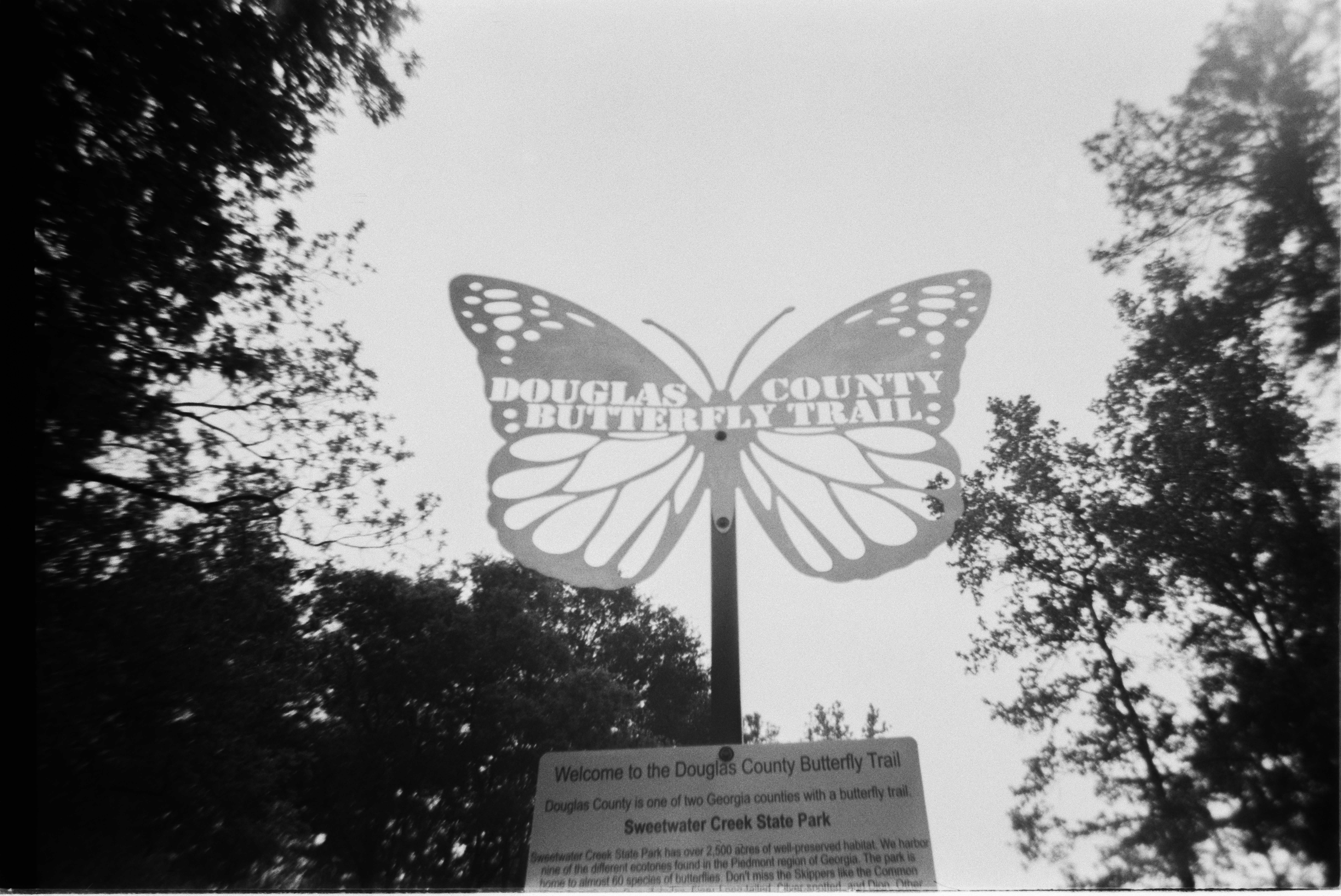

The Five Below Reusable Photo Camera fared better than I expected. The viewfinder is poorly implemented (it shows you the angle of view of a 40mm lens, when the lens is actually a 28mm), and the word “resistance” was invented to describe the film advance ratchet wheel. Not a pleasant experience, but you still get usable negatives in the end. The negatives lack density – which clearly points to under-exposure. The camera has no way – manual or automated – to adjust the shutter speed or the aperture to the luminosity of the day, and on the day I took the pictures, the weather was overcast. The negatives are also mushy, the lens is definitely not a champion of sharpness: the image quality is low without being unacceptable, but there is no light leak and the frames are evenly spaced on the film.
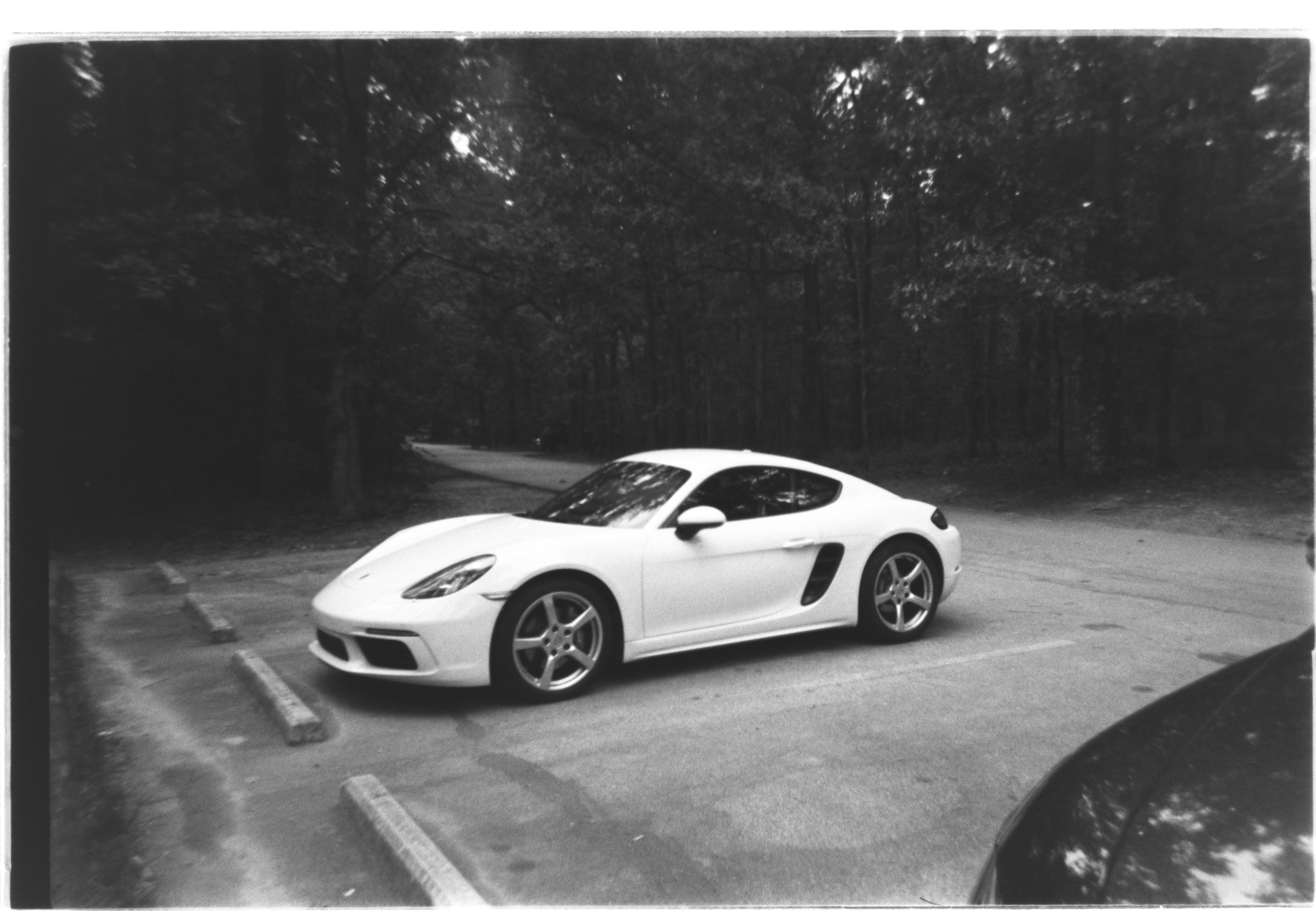
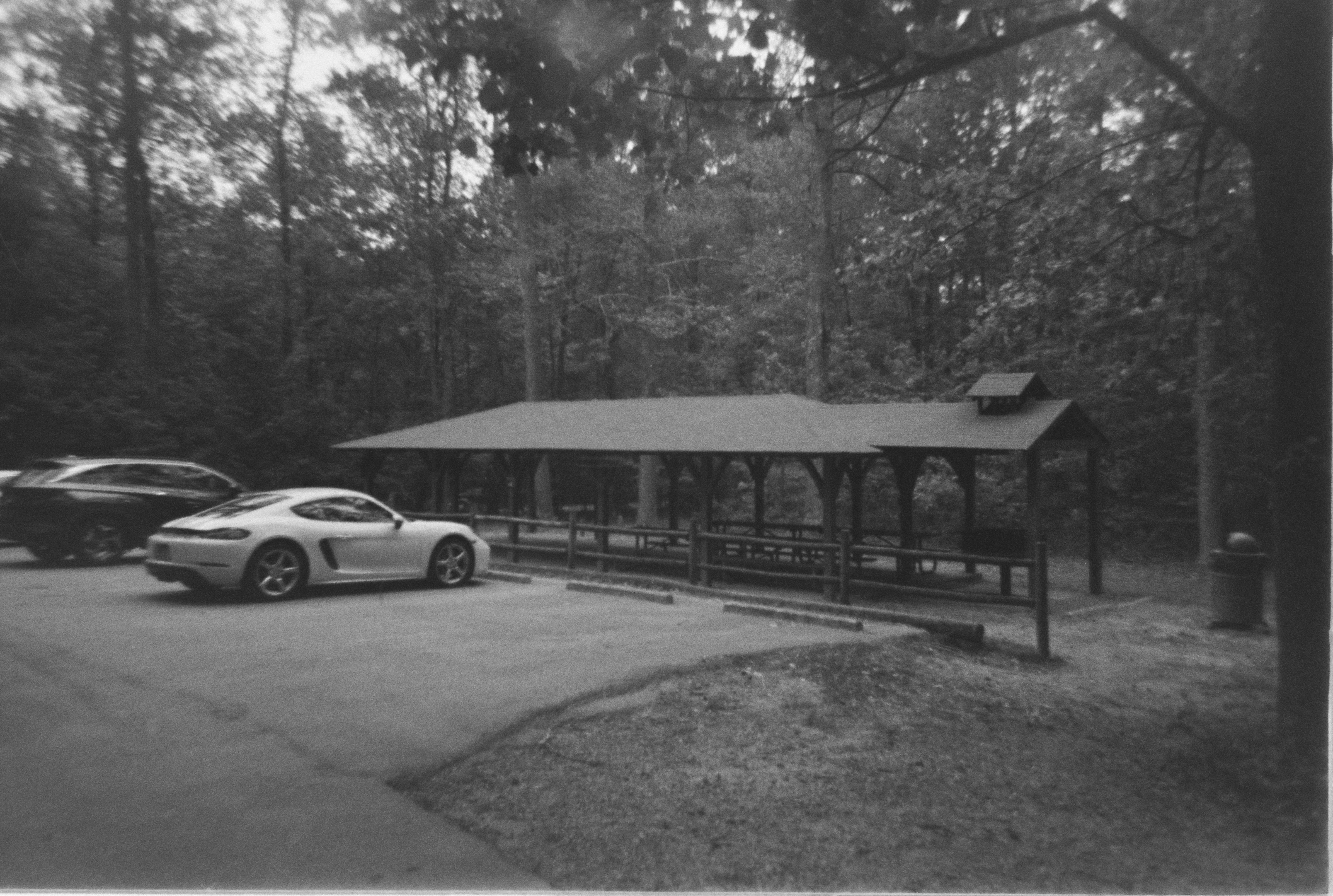
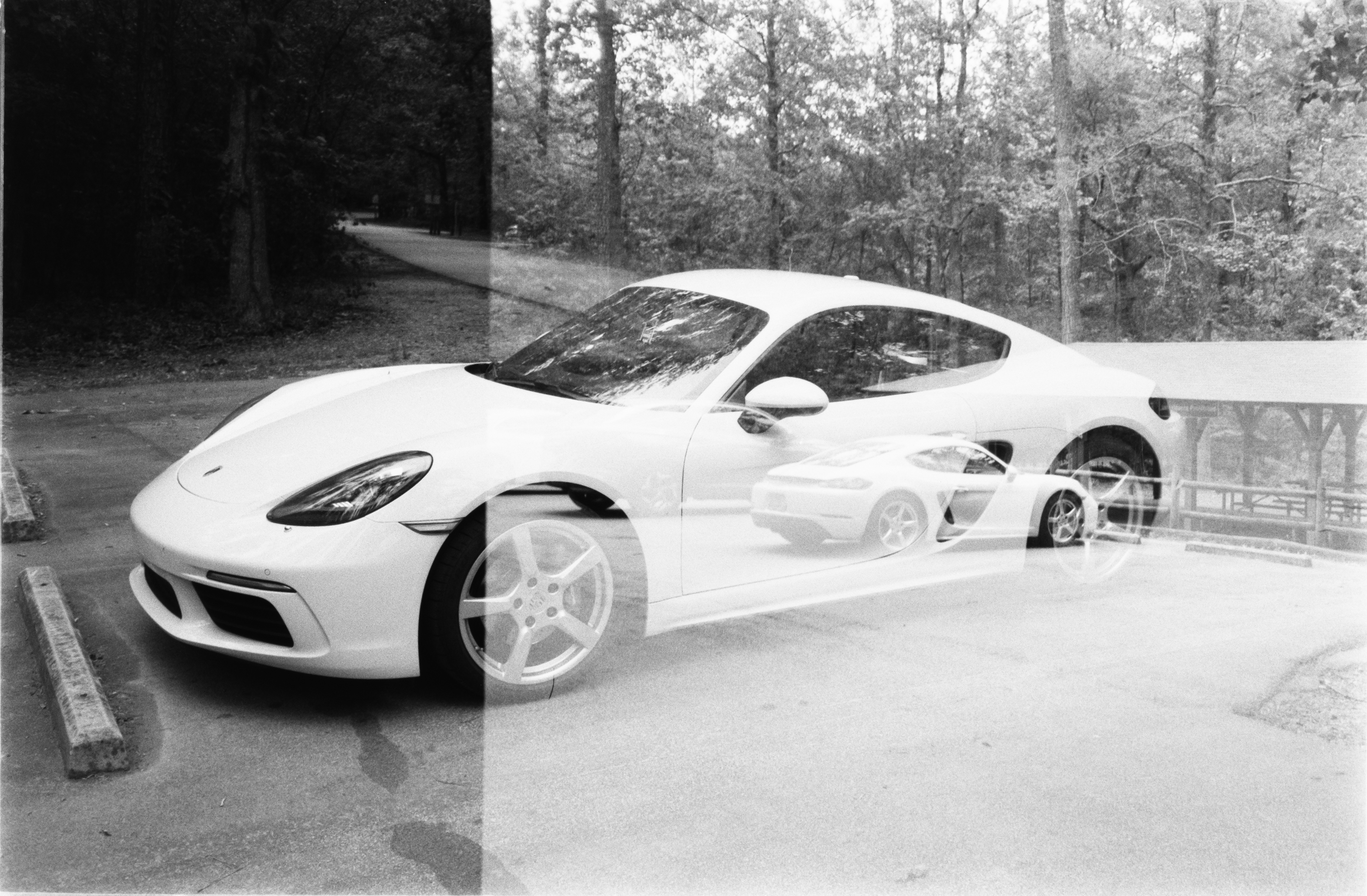
As a conclusion
The “Five Below Reusable Photo Camera” looks cool in its pale blue color, and the little lobsters are fun. It’s deprived of a flash, and will only be usable outdoors, by good weather. On the beach, or practicing water sports. If you lose it or drown it, no big deal – you’ve only lost $7.00. Some of the issues I observed – the very stiff film advance, in particular, were probably caused by the film, and are not to be blamed on the camera.
I have no idea of the life expectancy of the camera – you will certainly be tired of it before it gets tired of you. Kodak, Ilford, Yashica and a few other propose much nicer reusable cameras (with a flash) for approximately $50.00, and a patient buyer will be able to score a very good motorized, autofocus compact zoom camera made in the nineteen nineties by Canon, Minolta, Nikon or Pentax for less than $35.00 (shipping and handling included) on their favorite auction site.
Left – the Five Below 100 ISO film reacts like “normal” B&W film – Right – there are better low budget options that this Five Below camera
The resulting images will be much better, and the price difference between the different models of cameras becomes negligible once you start considering that a photo lab will charge you many times the price of the Five Below camera to simply develop your first film and print 10 images.
As for the Five Below B&W 100 ISO film, in a good camera, it will deliver images which are not bad at all, with decent sharpness and contrast. There is no light leak, no dust, and all images are usable. But I can’t recommend it.
The PET base, those short 49cm strips, the absence of any film marking or processing direction, the straight cut leader, the same clipsable plastic film cartridges used by photographers spooling (not very well) their film at home, everything points to a low budget scrap recycling project. For the same price you can get a 36 frame roll of Ilford’s Kentmere 100. As such, this Five Below film is massively, obscenely, terminally overpriced. To be avoided.
More recent content in CamerAgX


Thanks for this review. I’ve seen a few Five Belows, but did not know that they sold film and cameras. Yeah, that b&w film is overpriced, but at least this means there’s another spot to get film if you’re in a tight spot and away from a good retailer, as the era of every mini-mart and drugstore carrying film is long behind us. Did they have any color film as well?
Also, I wonder if “process D76” just means use Kodak D76 developer?
At the moment they only sell B&W film. And they wrote D76 on the box to make the difference with the color film they used to sell. You don’t need specifically D76. Any B&W developer will do (I use Tetenal Parvofin).