Underwater adventures – digital cameras make more sense


I recently had the pleasure to spend one week snorkeling and scuba diving in the Caribbean. True to my calling, I had decided to bring a film camera, and purchased a Nikonos V on eBay a few weeks before the departure.


The Nikonos V
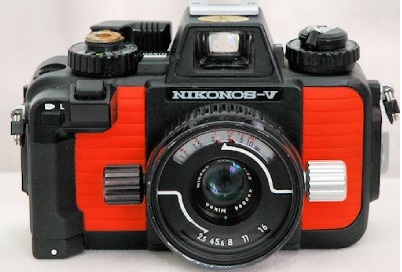

Nikonos V
The Nikonos V (source: eBay)


The Nikonos V, launched in 1984 and sold until 2001, is an underwater viewfinder camera with interchangeable lenses. It can operate at depths of 50m (150ft), beyond what is considered the limit for recreational scuba diving. Some lenses were specifically designed for underwater use, but the “standard” lens (a 35mm W-Nikkor) could also be used above the water, for white water sports or for photography in all sorts of very humid environments. A special “camouflage” version was even manufactured by Nikon for war correspondents following conflicts in some remote jungle.


Technically, the Nikonos V – which is a viewfinder camera – is more or less aligned on the Nikon SLR bodies of the mid eighties: Through The Lens (TTL) exposure, aperture priority automatic shutter, and – importantly for an underwater camera – Through the Lens flash metering. I uses the same W and U/W Nikkor lenses as the previous Nikonos bodies, and provides no focusing assistance to the photographer, who has to guess the distance between the camera and the subject, and set the lens accordingly.


I could not test the Nikonos V in its element. The one I bought on eBay happened to have a defective metering system, and the seller did not know enough about the camera to understand it did not work as it should have. I returned it and go my money back, but I was back to square one, with no camera for my vacation.


Lesson #1: if you really want to buy a Nikonos V, buy it from a store specialized in underwater equipment. You will pay more (a good Nikonos V costs between $250.00 and $350.00) but the seller will be able to certify that the camera really works, and has not suffered from an unplanned bath of salt water in the past.


The Nikon Action Touch
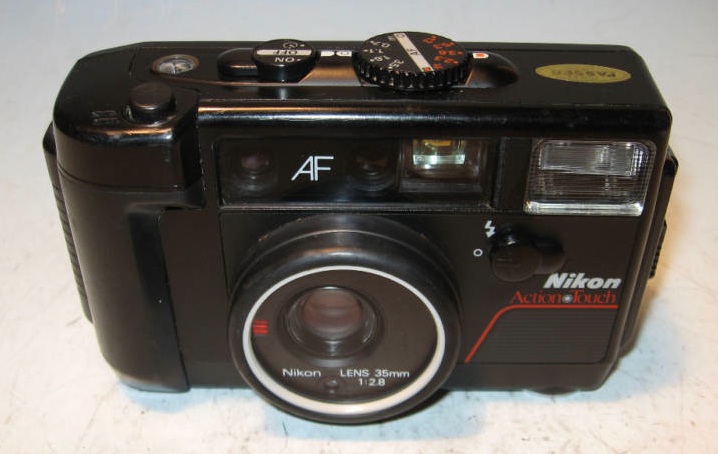

Nikon Action Touch (source: eBay)


When I bought the Nikonos V, I decided I needed a backup camera. I found (on eBay again) an old Nikon Action Touch, an autofocus Point and Shoot from the eighties, designed for use in depths of 10 ft (3 meter) or less. I had read good reviews of the camera, and since I could have it for less than $8.00, the risk was minimal. I tried it in a swimming pool. It seemed to work. On the first dive in the ocean, it died. Salty water had found its way in the film chamber, making the camera unusable.


Lesson #2: old waterproof cameras do not necessarily stay waterproof over time, and a dip in a swimming pool can not be compared to a dive in the ocean.


Lesson #3 is to take the claims of the manufacturers regarding the water resistance of their products with a grain of salt (no pun intended). Cameras manufacturers now use the IP code (International Protection Rating) to define the water resistance of their products in different circumstances (sprays, water jets, immersion, for instance), but the performance of older cameras was more loosely defined, and important safety margins have to be taken.


The Canon Powershot D10
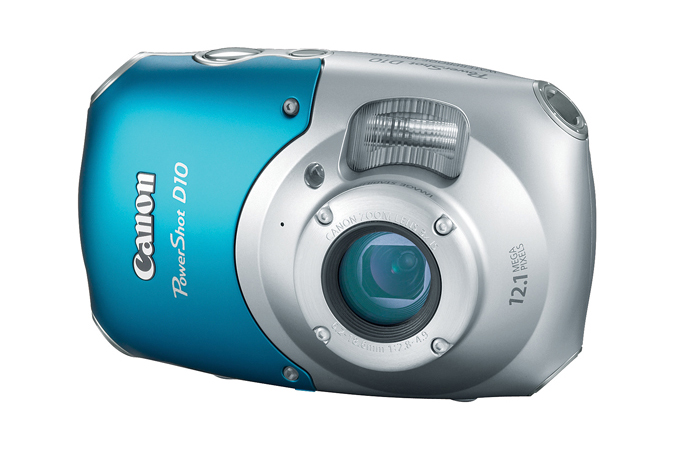

Canon D10 (source: Canon)


With two old film cameras out of commission, I had to admit that underwater cameras do not age well, and that buying a new digital Point and Shoot camera was the safest solution if I wanted to bring back at least one picture from my trip. The Canon Powershot D10 was the winner of a dpreview test last summer. It is rated “IP8X” equivalent at 10m (33 ft), making it appropriate for beach activities and for snorkeling. The Canon D10 is a typical middle of the range digicam – with a 12 Mega Pixel sensor, a 35-105 equivalent zoom, and 18 different “special shooting modes”, including “underwater” and “beach”. Selecting a special shooting mode is the only thing the photographer can do: the camera will take care of the rest. It does a good job at it – most of the time – but the inability for the photographer to really control the exposure parameters can be frustrating in complex lighting situations (sunsets, for instance).


Rated for depths up to 10 meters, the Canon D10 can not be used for scuba diving, but can be brought along when snorkeling. Its “underwater” special shooting mode is very good at finding the right color balance, but the shutter lag is typical of a point and shoot camera (far to high), the autofocus reacts too slowly – or not at all, and pictures of mobile subjects are very difficult to take. The LCD monitor has to be “on” all the time, which drains the battery rapidly. That being said, a good diver should be able to bring back decent pictures of relatively static subjects located in shallow waters.


Lesson #4: even dpreview comparative test winners can not overcome the limitations of their middle of the range point and shoot origins. Waterproof digicams are small and light, and will be faithful companions of white water or snorkeling adventures. But they offer little control over the pictures and are limited to a few feet of depth, which explains why dedicated diver-photographers use high-end digicams or SLRs, that they protect with massive (and often massively expensive) underwater housings.


What good diver-photographers do


While on vacation, I had the pleasure to meet Dr Alain Feulvarc’h – he’s an MD, a passionate diver and amateur photographer who was volunteering as the scuba-doctor of our little group.


He was not on the boat to teach underwater photography, but he shared a few tidbits of information: like most of the diver-photographers, he’s using a digital SLR enclosed in a metal underwater housing, and equipped with a very wide angle (10mm) lens. He also uses a 100 mm macro for close ups. Most pictures are taken with a flash (one strobe at least), and at close distance from the subject. He does not rely on the automation capabilities of the camera, and operates in manual mode. Underwater photography is a fairly complex activity, and using digital technologies improves the learning curve dramatically. I was surprised to see that even underwater, some photographers took the time to check the histograms of their images, and to adjust their settings accordingly; this trial and error process would be impossible with film.


You can watch Dr Alain’s stunning pictures on Flickr.


Star Fish - Turks and Caicos - Canon D10
Star Fish - Turks and Caicos - Canon Powershot D10 - The star fish was lying on the sand, at a depth of 2m. (6 ft) approximately. It was well lit and static, and the camera had no difficulty capturing its image.


More about underwater photography


The excellent Photo.net published an interesting Underwater Photography Primer more than 10 years ago. At that time film photography still reigned supreme, but most of the principles exposed in the article still hold true.


The pictures of Alain Feulvarch are on Flickr (aka Alain76 on Flickr)


The characteristics of the Canon Powershot D10 are on Canon’s official site.


The Nikonos family on Photography in Malaysia‘s web pages


And for geekiest of us all, the detailed description of the IP ratings
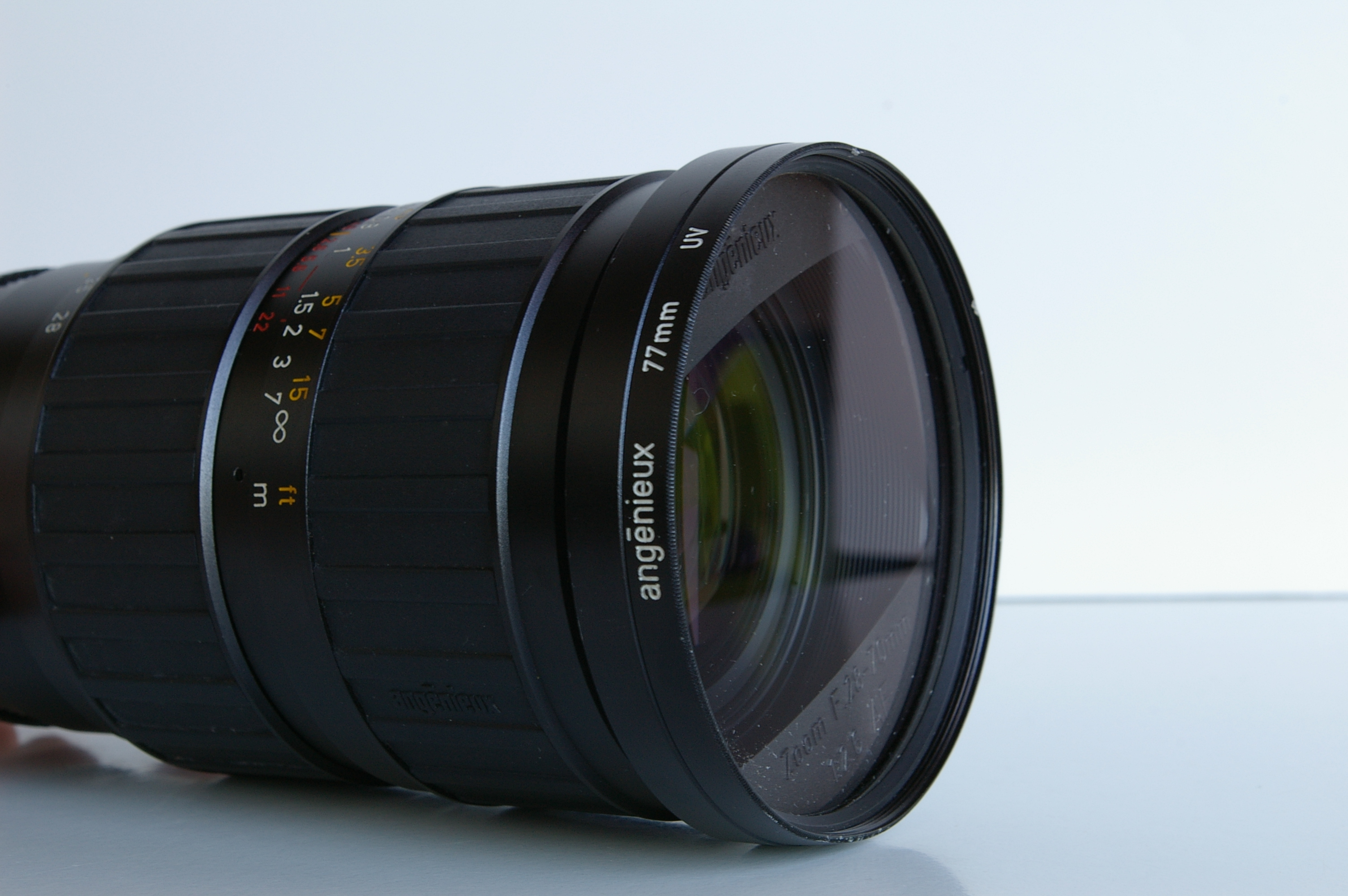

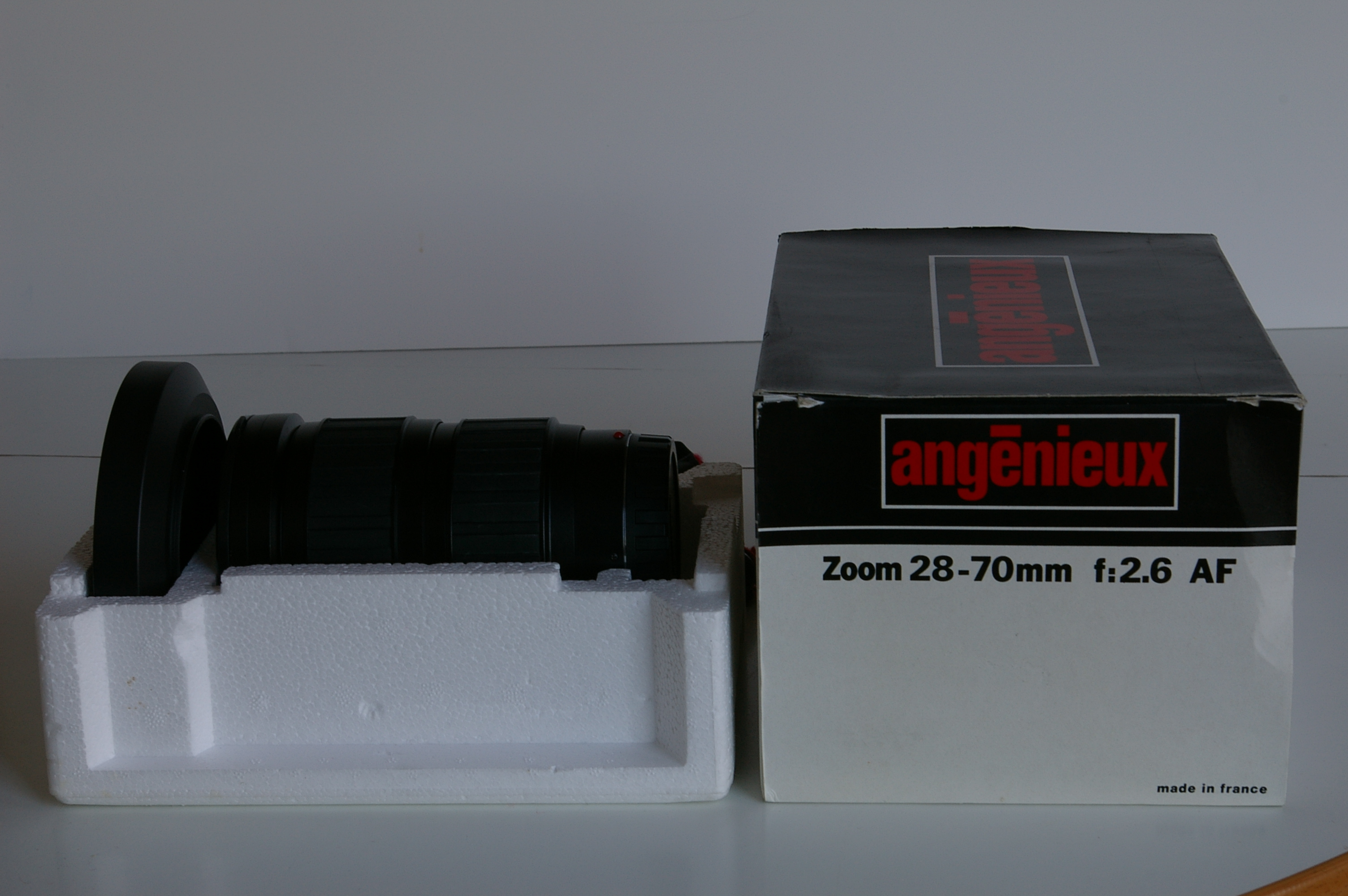
More pictures of the Angenieux 28-70 f:2.6 zoom

When it comes to the Angenieux 28-70 f:2.6, the visitors of this blog never seem to have enough. I just found two old pictures of my beloved French zoom. Don’t try to buy it from me, I sold it a few years ago.

Angenieux 28-70 f:2.6
Angenieux 28-70 f:2.6 (detail of the 77mm Angenieux UV filter)
Angenieux 28-70 F:2.6
Angenieux 28-70 F:2.6 – the original packaging

More about the Angenieux 28-70 f:2.6


The original CamerAgX blog entry


[added in April 2018 – I’m a hobbyist, and can’t justify spending north of $1,500.00 on an Angenieux 28-70 AF zoom. But nostalgia is a powerful driver – I just purchased the best substitute to the Angenieux 28-70 AF I could find – a Tokina AT-X PRO II 28-70 f/2.8. More to read about the Angenieux lens and its Tokina cousins in my most recent blog entry: “The four Tokina 28-70 AF Zooms and their Angenieux roots“].


norway_1
Lake Gjende (Norway). Scanned from print – Minolta 700 Si – Angenieux 28-70 AF (Aug. 1996)

The Olympus OM system and a camera to rediscover: the OM-2s

Take any line of manual focus 35mm reflex camera from the eighties and mid-nineties, Leica R included. Comparable models will be worth less, on the second hand market, than an Olympus OM-4T, not to mention the OM-3 and its ultra-rare and ultra-expensive offspring, the OM-3T. Why, in spite of their very serious limitations, are the single digit OM cameras so sought after? In this test of the OM-2s, the little brother of the OM-4, we’ll try and find out why.

The OM system

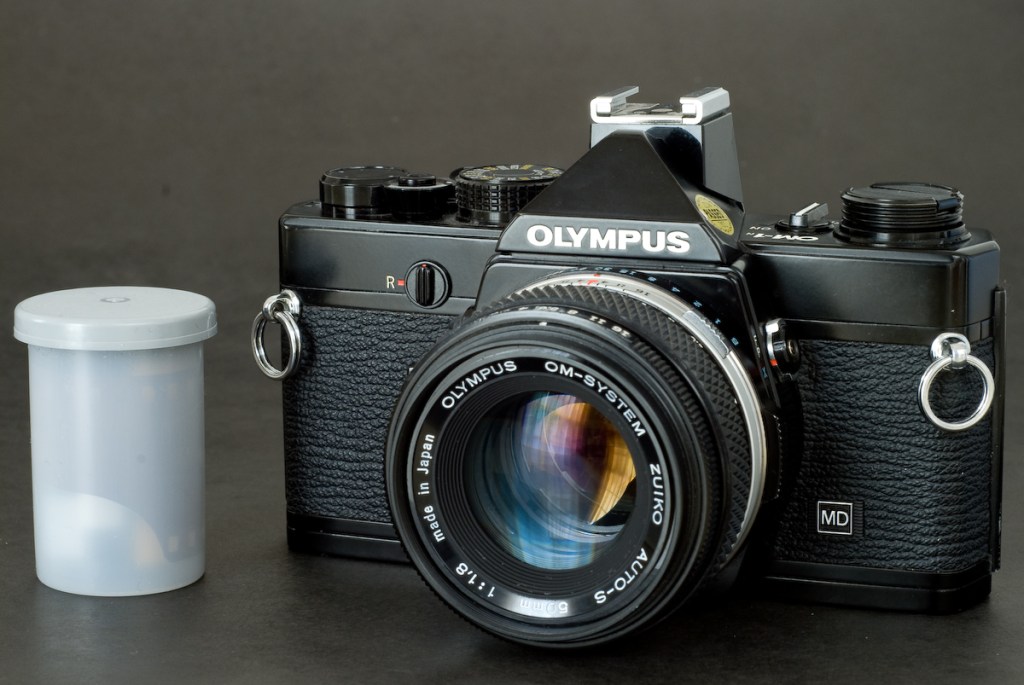
Olympus OM-1 (front view with 35mm cartridge)
Olympus OM-1n next to a 35mm film cartridge. The competition needed almost 10 years to introduce more compact SLRs, but they were designed for beginners. In the enthusiast-amateur and pro categories, the OM family remains unchallenged to this day.

Launched in the early 70s, the Olympus OM-1 and its system of lenses and accessories were incredibly compact, very well designed, and at the same time solid enough to please the pros and the very serious amateurs. The competition (Nikon in particular) needed years to develop models approaching the size of the OM-1, which sold by the millions.

The OM-2, introduced in 1974 with the same ergonomics and a similar external appearance, was the automatic exposure version of the OM-1. It pioneered the use of direct exposure metering in the film chamber, and was the first camera with Through The Lens Flash metering. The competitors followed Olympus’ example, and almost every SLR cameras introduced after 1985 measures the exposure in the film chamber and offers TTL flash metering.

The OM-2s, OM-3 and OM-4 which followed in the eighties were relatively minor updates of the previous models. They shared a new body and had much more elaborate metering options, but they retained the relatively slow shutter of the OM-1 and OM-2. Their viewfinders were not as great as the ones of the OM-1 and OM-2, and the first models had some reliability issues. The OM-3T and OM-4T (with titanium top and bottom plates and more reliable electronics) raised the level of quality of the OM line, and soldiered on until Olympus finally stopped the production of film cameras, in 2002.

The limitations of OM-x cameras

The incredible prices reached by the OM-3T and to a lesser extent by the OM-4T on the second hand market could lead us to believe that those cameras are perfect. They have some unique qualities (more about them in the next section), but they also suffer from serious limitations.

Olympus OM-2s-5
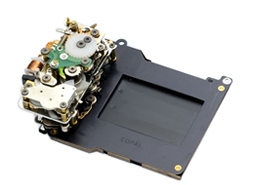
The textile focal plane shutter of the OM-2S is virtually identical to the mechanism mounted in the other automatic OM cameras. In this version it is limited to 1/1000sec. The OM-3 and OM-4 reach 1/2000sec, but the synchro flash speed remains the same for all models: 1/60sec.
  • The textile focal plane shutter.
    The shutter of the OM-1 and OM-2 cameras was in line with what the competition proposed in 1975 (1/1000 Sec, Synchro Flash at 1/60sec), but ten years later, the OM-3 and OM-4 were confronted to the Nikon FM2n, FE2 and FA or the Canon T90, all with metallic shutters reaching 1/4000sec and offering 1/250sec synchro flash. A slow shutter is a serious limitation now that 400 ISO films are the de facto standard (it means that in sunlight you can only work with an aperture of f:16 or f:11), and it reduces the opportunities to use the fill-in flash technique in the open air.
  • The reliability and the power consumption of the electronics
    Olympus experienced some difficulties when the engineering of cameras became almost exclusively focused on electronics. All models suffered from glitches, some models more than others. The first OM-2S cameras, in particular, were plagued with electronics related issues. The bad apples have most probably been eliminated in the past 25 years, and reliability should not be too much of a concern for a photographer buying one of those cameras now. Excessive power consumption affected all the models launched in the first half of the eighties (when using a flash or at rest), and was only brought back under control with the OM-3T and OM-4T models.
  • Olympus missed the auto-focus revolution
    Olympus’ first auto-focus SLR was really horrible (and the lenses were not better – with no focusing ring at all). The auto-focus system was rapidly withdrawn from the market. Olympus did not even try to improve on it. They just placed the manual focus OM system on life support without any significant upgrade for the subsequent 15 years. Contrarily to Nikon’s or Pentax’s film SLRs, which can still share some lenses and accessories with modern digital SLRs, the OM bodies and lenses have very little in common with today’s digital cameras. If brought along modern Olympus digital cameras on a photo-shoot , they will need their own lenses, which at least doubles the weight and the volume of the equipment to be carried around.


Unique qualities of the OM series

The cameras of the OM series also have unique qualities, which gained them the unconditional support of a small group of passionate photographers.

  • The size and the fit and finish:
    When Olympus launched the OM-1, it was the smallest 35mm Single Lens Reflex camera ever made. The competition needed almost 10 years to catch up, but if their cameras were marginally smaller, they were entry level models made of plastic, and could not be compared to the high end “single digit” OM cameras available at the same time. The fit and finish of the OM-1 was impressive, and the black or grey “”T’ and “ti” models remain among the nicest cameras ever made.
  • The Viewfinder:
    Bring an OM-1 to your eye, and you will still be impressed by the viewfinder. With 97% coverage and 92% magnification, it presents a very large image of the subject. They eye relief is short (at 14mm approximately), but since the viewfinder does not provide any information at the periphery of the image, it is not an issue, and even photographers wearing glasses can see all of the scene easily. Only much bulkier and high-end cameras (such as the Nikon F3) offer a better user experience. The subsequent models were still very good, but not as impressive: over the years, Olympus had to shoe-horn LCD displays at the periphery of the viewfinder (in support of the increasingly elaborate metering system of the cameras), and introduced a diopter adjustment mechanism, which led to a progressive reduction of the magnification. But the user experience was still far better than what a Nikon FE2 or FE had to offer.
    (More about the viewfinder of SLRs in this Post of CamerAgx)
  • The ergonomics and the level of control offered to the photographer
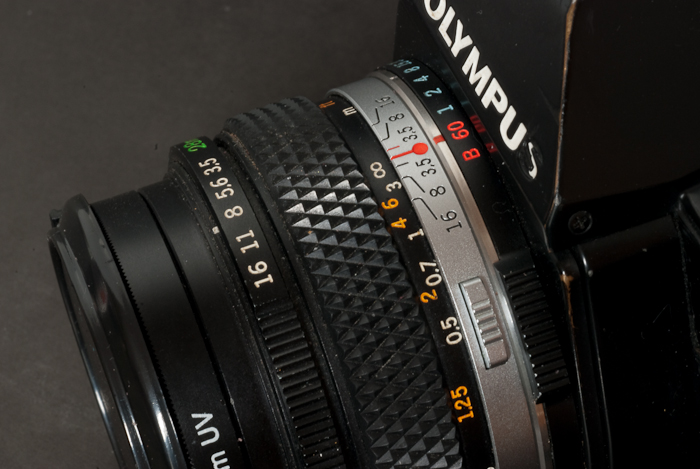
    Until the end, Olympus remained attached to the ergonomics defined with the OM-1: the shutter speed selection ring was positioned around the lens mount, and the aperture ring was pushed at the front of the lens. It made a lot of sense in 1970 – when the command of the mechanical shutter was stiff and the ring needed to be as large as possible, and when the settings on a lens were limited to the focus and the aperture. The generalization of (very soft) electronic shutter commands and of zoom lenses made the Olympus ergonomics a bit of anachronistic at the end of the seventies.

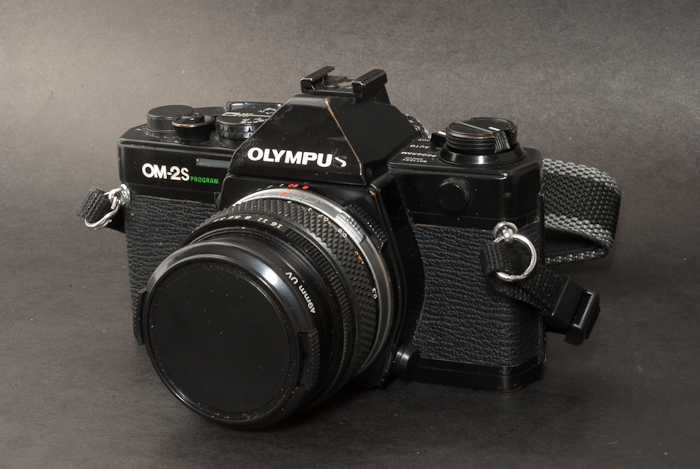
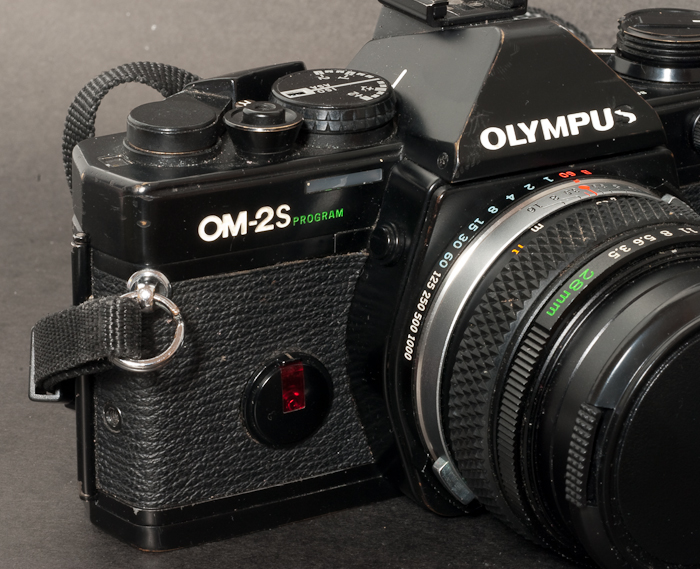
    Olympus OM-2S The shutter speed command ring is positioned around the lens mount
    Olympus OM-2S. The shutter speed command ring is positioned around the lens mount, and the aperture ring is at the front of the lens. 1/60 and B shutter speeds are mechanical (marked in red). Setting the camera at 1/60 when at rest addresses the battery leak issues this camera is famous for.

    More important is the conscious decision made by Olympus to put the photographer in total control of metering. When most of the cameras manufacturers were trying to make photography less intimidating (using databases and analysis algorithms to make the process of exposure determination transparent to the photographer), Olympus decided to offer spot metering (OM-2s/OM2-SP) and multi-spot metering (OM-3 and OM-4 bodies). On the OM-3 and OM-4 cameras, the photographer could make up to eight successive spot measurements, whose result were presented in the viewfinder on an analog bar scale showing each individual result and the average, letting the photographer determine the exposure of the picture following the principles of the zone system. The cameras also had a “shadow” and a “highlight” push button,  for the times when you have to shoot a Scottish terrier on a pile of coal and a white cat on the white sofa (more about metering in this post of Cameragx)

    This approach did not get a lot of traction on the marketplace (matrix metering has become the standard) but the small group of photographers who really wanted to be in control of the exposure of their pictures still use OM-3 and OM-4 cameras today. Their unique metering capabilities also explain why they kept their value so well.

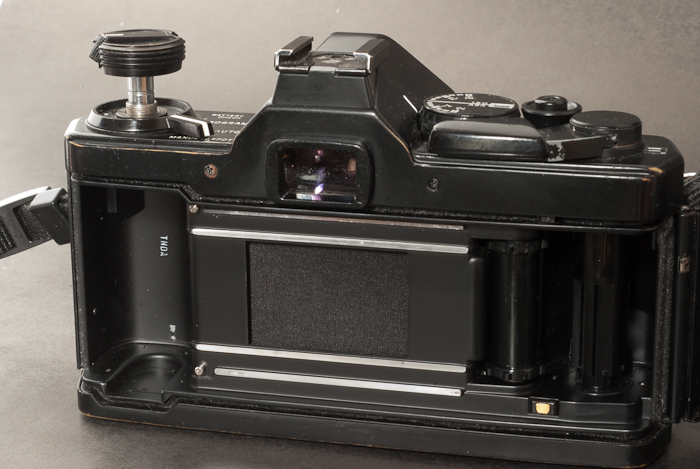
    Olympus OM-2S The body of the OM-2S is identical to the OM-3 and OM-4.
    Olympus used the same body for the OM-2S and for the OM-3 and OM-4. They are marginally larger than the OM-1 and OM-2 models, but have a built-in flash mount.
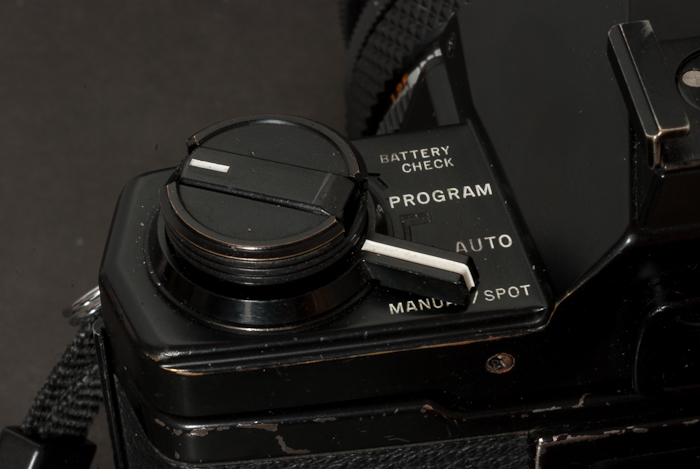
    Olympus OM-2s- the control of metering and exposure modes
    The control of metering and exposure modes of the OM2S. The OM-2S operates in aperture priority and in program mode with a center weighted average metering, and in semi-auto mode with spot metering. Those combinations make a lot of sense.
    Olympus OM-2 S was named OM-2 SP on some markets.
    Olympus OM-2S was named OM-2 spot/program (or SP) on some markets.


  • Using the OM-2S
    The OM-2S is not as sought after as its OM-4 or OM-3 brothers. It is true that the latter gained their status of “classics” when the “T” and “ti” versions were launched. The OM-2S never benefited from the titanium parts of the later OM bodies, and remained an entry-level model during its short commercial career. The OM-2S also gained a bad reputation because of power leak issues (the integrated circuit was not properly designed, and when a flash was mounted on the body, it tended to drain the battery of the camera rapidly).The OM2-s is a very pleasant camera to use, though. Compact, with a large viewfinder, it leaves total control of the exposure to the photographer in the semi-auto mode, which is logically combined with the Spot metering system. The exposure parameters are presented on bar graph at the left of the viewfinder. They’re visual and very easy to read. When determining the right exposure is not too tricky, the photographer can rely on the automatic (aperture priority) mode, which uses a more conventional center weighted average metering. The Program mode is almost useless, because the photographer has no way of knowing the aperture selected by the camera (the selected shutter speed is displayed in the viewfinder, but aperture is not).

    The OM2-s’ biggest limitation is the shutter (its fastest speed is 1/1000 sec). The situation is made worse by lenses which can not be set to an aperture smaller than F:16. When taking pictures on a bright sunny day with 400 ISO film (like Kodak’s CN400 that I use a lot because it’s still easy to have it processed), the photographer can only use a narrow combination of speed and aperture, and can not play with the depth of field as much as he would like.
    Not too common but not eagerly sought after by the Olympus fanatics, the OM-2S is a good pick for a photographer looking for a compact SLR with a big viewfinder and exceptional control of the metering. With unconventional but well designed commands, the OM-2S is simpler to use than the OM-3 and OM-4 with their complex multi-spot and zone system metering functions. The OM-2S can be found for less than $150 (stores specialized in second hand cameras) and even cheaper ($50 to $80) on eBay. Small aperture Zuiko (Olympus) lenses are dirt cheap (a 28mm f:3.5 or a 135mm f:3.5 can be had for less than $30), but wide aperture Zuikos are very rare and very expensive.


    More about the Olympus OM-2S

    Ken Norton’s Zone-10 web site has interesting reviews of Olympus cameras (film and digital) and wrote a few pages about the OM2-S.

    Photography in Malaysia is primarily focused on Nikon cameras, but they have very good pages about the OM-1, OM-2 and OM-2S cameras.


    Historic center of Powder Springs (GA). Olympus OM-2s with OM-Zuiko 28mm f:3.5. Kodak CN400

And now for something completely different: the Polaroid PoGo Instant Printer


Almost 10 years after digital photography started replacing silver-halide technologies for everyday use, there is still no equivalent to the user experience that the instant cameras (Polaroid) of yesteryear used to offer. With a digital camera (or a good mobile phone), you can take pictures and immediately visualize them, email them or post them on social networking sites, but you still need a relatively bulky equipment to print pictures. Distributing prints during a party of a social event – a very common (although expensive) practice in the Polaroid days, now requires some planning: you need a laptop, a printer, a table and one or two power outlets – a far cry from the press-the-shutter-release-share-the-print experience of instant cameras.


Polaroid PoGo printer next to a Pictbridge compatible camera
Polaroid POGO printer next to a Pictbridge compatible camera. A picture taken by the camera and printed on the PoGo is shown next to a business card. The business card is a bit wider than the printed picture.


A few weeks ago, Polaroid started selling a relatively low end digital camera (5MP), the PoGo Instant Digital Camera , equipped with a built in printer. It is a welcome evolution from the PoGo Instant Printer they launched last year.


In both cases, Polaroid is using a technology developed by a company named ZINK (for Zero INK). In a nutshell, ZINK is using a thermal paper containing cyan, yellow and magenta crystals, which are revealed by the heat provided by the printer head. Apart from the paper itself, no consumable is needed, and the process does not use any liquid and produces no waste. It does not need a lot of power either, and can be packaged in a pocket sized device powered by Lithium-Ion batteries.


The PoGo Instant Printer was the first product based on ZINK technologies to be widely available in the US. The size of a paperback book, it fits in a large pocket. It is battery powered, contains a pack of 10 sheets of ZINK paper, and is ready to use provided you find a cell phone or a camera compatible with it.


Printing with the PoGo printer:


Compatibility is one of the issues that the user of the PoGo printer will face:

  • cell phones can only connect to the PoGo if a “Bluetooth print” driver has been implemented by the phone manufacturer.
  • Polaroid published a long list of compatible phones, but it does not include the iPhone or any Android device, or any phone brought to market during the last 18 months. It looks as if the cell phone makers (and the carriers) had stopped supporting the PoGo technology. Too bad.

  • digital cameras supporting the PictBridge standard.
  • Pictbridge is an industry standard adopted by the major manufacturers of digital cameras. I tested the PoGo printer with a tiny Sony Cybershot T20, and with a Nikon D80. In both cases, it is necessary to use the USB cable provided with the camera. The PoGo is very sensitive to the connection sequence (practice before you use it in public for the first time) but once you know what to connect and power on first, it works as advertised: select the picture to print on the camera, activate the Pictbridge “print” command, and after sixty seconds, the PoGo magically ejects a print. It has to be noted that the PoGo only prints JPEG files (no RAW files – convert them to JPEG in the camera before printing).


    Print with a Pogo Printer
    Color print produced by a Pogo printer connected a Nikon D80 with the Pictbridge function enabled)


    The quality of the prints


    The prints are small – 7.5cm x 5.0 cm (approximately 2×3″). Since the camera and the PoGo printer are directly connected, all the adjustments to the images have to be done through the menus of the camera. The color balance is difficult to set right – the pictures coming from the Sony T20 tended to have a pinkish-redish hue, the pictures coming out of the Nikon D80 were a bit yellow, but it can be fixed. The definition of the pictures is surprisingly good, and dynamic range of the prints is acceptable: the shadows are detailed, but the highlights tend to be a bit washed. The prints are perfectly usable, and thanks to their small size, they will fit in a wallet between two credit cards.


    Conclusion


    The PoGo printer is a first attempt at producing a really pocketable printer. It works relatively well, and is not very expensive ($40 for the printer, $0.30 per print), but it it is not very practical to use and looks a lot like a proof of concept for the ZINK process.

  • Most of the cell phones and smart-phones that people currently buy and use are not compatible with the PoGo
  • cameras have to be connected to the printer with a USB cable (the printer only offers Bluetooth connectivity for cell phones, and does not support WiFi).
  • Its battery is depleted after 15 images have been printed, and the power brick is as large – and heavier – than the printer itself.

  • The ZINK process shows lots of promises – it’s a relatively cheap and eco-friendly way to produce pictures on the go. Polaroid’s decision to integrate the printer in a digicam (and to resurrect the old Polaroid instant camera experience) is obviously the way to go. Zink is also proposing 4 x 6 paper, but nobody so far has tried to integrate a 4 x 6 printer in a digital camera. That would be great, though. A sort of modern equivalent to the SX-70 cameras. Mr Polaroid, please…


    More about the PoGo printer


    An interesting review by Tracy and Matt (that’s the name of their Web site)


    Polaroid SX-70 Alpha 1 Model 2 (close up) - when will we get a ZINK equivalent?
    Polaroid SX-70 Alpha 1 Model 2. The lens (4 glass elements with close focus capabilities) is much better than the single element plastic lens used on the non folding Polaroid cameras such as the One step.

    The Allure of the Automobile – until June 27th, Atlanta High Museum of Art


    It is very unusual for an art museum to have cars on display. Maybe one. Or two. But eighteen? Eighteen unique or extremely rare hand built cars, selected by a true car lover for the beauty of their bodies, and the quality of the craftsmanship. Works of art. The High Museum of Art of Atlanta is presenting “the Allure of the Automobile”, until June 27th.


    Pierce Arrow Silver Arrow (1933)
    Pierce Arrow Silver Arrow (1933) - The Allure of the Automobile - Atlanta (Olympus OM-2s -28 mm - Kodak Ektar 100)


    I like cars, and I have visited more than a few car museums, and I’ve probably never seen so many remarkable cars under the same roof. A Duesenberg and a Packard, both built for Clark Gable, a Pierce Arrow – so modern, a Ferrari berlinetta which won its class at the 24 Hours of Le Mans, Steve McQueen’s Jaguar – a loud brute as could be expected, the Porsche 550 which earned the “Carrera” name for its remote descendants, the prototype of the Chevrolet Corvette Sting Ray.


    Some of the cars shown at the High are also technically significant or innovative , but all are stunningly beautiful.


    Taking pictures in a museum is never easy, and, shame on me, I came unprepared. I only had an old Olympus SLR with a 28mm lens and 100 ISO film, and the few pictures I took can not be compared with the images posted on the Web site of the High Museum of Art, or with the wonderful pictures of the book celebrating the exhibit(“The Allure of the Automobile” – Ronald T. Labaco & Ken Gross). But the Olympus OM-2s did a very good job, with a precise exposure and very few vibrations. More about the Olympus OM family soon.


    Chevrolet Corvette Sting Ray (1959)
    Chevrolet Corvette Sting Ray - The Allure of the Automobile - Atlanta (Olympus OM-2s -28 mm - Kodak Ektar 100)

    The Impossible Project’s PX100 – the ultimate “low-fidelity” film ?


    Manufacturers of Instant Cameras and Instant Film used to cater to two main audiences: the professionals who needed photographic documentation for insurance claims or real estate listings, and amateurs looking for the instant gratification of seeing on paper what they had shot. When they used instant cameras, the professionals did not face the risk of receiving bad pictures from the photo lab two days after they had left their customer, and the amateurs bringing their instant camera at a party or a reunion could show and share their pictures with their friends and guests, right on the spot.


    Polaroid SX-70 with PX100 film
    Polaroid SX-70 with PX100 film pack. The black and white instant film is not manufactured by Polaroid, but by the Impossible Project. With a 100 ISO sensitivity, it's compatible with the original SX-70 color film from Polaroid.


    The professionals who used instant film cameras now use digital technologies to produce their reports or leaflets, and casual photographers use their cell phones to take pictures, that they forward electronically to their friends, or share on social networking sites. Printing digital pictures requires some extra hardware – a photographic quality printer – and the effort of manipulating memory cards or USB cords while navigating in complex menus. Sharing prints during a party or a reunion will obviously requires some planning. For the people who still prefer the no-fuss experience of instant cameras, Fujifilm is still selling its Instax line of cameras and film.


    Take a few pictures with the PX100 film, created by the Impossible Project for the Polaroid SX-70 cameras, and it becomes evident that a completely different audience is targeted. It’s not about ease of use or instant gratification – the image has to be kept in the dark during the development process and takes more than a few minutes to reveal itself. In fact, it’s not about gratification at all: the images have a very low resolution, an extremely low contrast, and have to be scanned and reworked in Photoshop to be barely usable. I was so puzzled by the results that I checked what other users of the PX100 were posting on Flickr (check those groups: polapremium and PX100) and I read the same story over and over. People who want to be polite talk about a “touchy” film, the positive minded guys discuss work arounds, but the truth is that the PX100 Instant Film is not a reliable photographic medium.


    Portrait shot on PX100 film (scanned as shot, no adjustment)
    Portrait shot on PX100 film (scanned as shot, no adjustment)


    The fans of Holga cameras started the “low-fidelity” or “Lo-fi” photographic movement a while ago (check my test of the Holga 120CFN). When you use a Holga camera, you put a very decent roll film elaborated by Kodak or Fuji in a camera of very questionable quality, and you sometimes get interesting results. When you put PX100 film in a nice Polaroid SX-70 camera from the 1970s, it’s just the opposite. The camera may be good, but the behavior of the film is largely unpredictable.


    A positive note to conclude: the Impossible Project started shipping its PX600 film this week. It’s supposed to be more usable. Color film will follow in a few months. Check the Flickr groups to see how they perform.


    Portrait on PX100 Film (exposure adjusted in Photoshop)
    Portrait on PX100 Film (exposure adjusted in Photoshop)

    The Impossible Project – PX 100 film received

    The Impossible Project is more than just buzz and hype. I received today the two film packs I had ordered 10 days before. Nice packaging (all white with embossed Impossible and PX 100 logos, almost Apple-esque).

    The film shipped is the Silver Shade / First Flush variant. I suspect there will be other declinations of the PX 100 film in the future. The PX 100 is 100 ISO Monochrome Instant Film. It’s made in the Netherlands for the Polaroid SX-70 cameras, and interestingly there is an Ilford logo on the side of the box.

    Little disappointment: the pack’s capacity is limited to 8 pictures, which makes it a very expensive proposition ($21.00 plus shipping).
    More about it in a few days.

    The on-line Store of the Impossible Project: Impossible Shop (US).

    The return of the SX 70 instant film pack


    The Impossible Project PX100 film for SX 70 cameras
    The Impossible Project PX100 film for SX 70 cameras


    Today, March 25th, the Impossible Project (www.the-impossible-project.com) started accepting orders for its new black-and-white instant film for SX 70 Polaroid cameras, the PX 100 Silver Shade. Produced in a plant which used to belong to Polaroid, the PX100 is presented as the first member of a new family. It will be followed by another black-and-white film pack for the cameras of the 600 series, and later this year, by color film for SX 70 and 600 cameras.


    Instant film had never totally disappeared – Fujifilm still manufactures cameras and film for the amateur photographer market (the Hello Kitty generation) as well as the peelable film compatible with the Polaroid 100 format used by committed medium format photographers. But the return of the SX 70 and 600 film formats is an important milestone, and a new sign of the rebirth of silver halide as the technology of choice for creative and experimental photography.


    The customers buying the new SX 70 compatible film will probably be very different from the real estate agents, insurance adjusters and young moms who formed the target audience of the original SX 70 cameras. The Impossible Project’s site obviously targets a niche of amateurs and pros who want to take pictures differently, and are looking for out of the norm results. The focus will not be on the fidelity of the reproduction of tones or on the sharpness of the pictures – that’s what digital cameras are there for nowadays. The SX 70 film will find its place in the tool box of amateurs of “weird and artistic photography”.


    I’m waiting impatiently to receive my first film pack.


    More about Instant Photography


    Wikipedia: list of Polaroid Cameras


    Shot by impossible testlab (Zora Strangefields)
    Shot by impossible testlab (Zora Strangefields) - The Impossible Project PX 100 film
    Shot by impossible testlab (Josh Coleman)
    Shot by impossible testlab (Josh Coleman)- The Impossible Project PX 100 film

    Why are manual exposure cameras worth more than automatics ?


    The facts


    Let’s take three lines of manual focus cameras which still have a very active second hand market today: the Leica R series, the Nikons FM & FE and their derivatives, and the Olympus OM-1 & OM-2 and their “single digit” descendants. Each line contains automatic exposure cameras (Leica R4, R5, R7; Nikon FE, FE2, FA; Olympus OM-2, OM2s, OM4, OM4t), and manual exposure cameras (Leica R6, R6.2; Nikon FM and FM2; Olympus OM-1 and OM-3).


    For a given generation of camera, manual exposure models are almost always worth more than their automatic exposure siblings.


    Average retail price of a camera in Excellent Condition (source: a reputable specialist of used photographic equipment)

    Brand Manual Camera Auto exposure Camera
    Leica R6.2: $ 999 R7: $ 550
    Nikon FM: $ 190 FE: $ 170
    Nikon FM2: $ 245 FE2: $ 199
    Olympus OM-1: $ 150 OM-2: $ 190
    Olympus OM-3: much more than $500 * OM-4: $ 235
    Olympus OM-3T: much more than $1,000 * OM-4T or TI: $ 450


    * No OM-3 or OM3 TI in excellent condition available – prices derived from eBay completed listings.


    Nikon FM - Mechanical Shutter - It does not need batteries to operate. 1/1000s. Synchro Flash up to 1/125s

    The reasons why


    Buyers of film cameras belong to two non-mutually exclusive categories: collectors looking for rare, technically or historically significant cameras, and photographers looking for an alternative to modern all automatic digital cameras. Each category has different reasons for preferring cameras with mechanical shutters, which also happen to be manual exposure cameras.

  • Collectors


    One can only speculate when trying to understand what makes a camera valuable on the collectors’ market. Rarity and the perceived technical value of the camera are probably the two main factors driving the price of film SLRs on the second hand market. In the decade which saw the end of manual focus cameras (from 1980 to 1990), automatic exposure cameras sold in greater number than their manual exposure equivalent. Manual exposure cameras were already considered a specialty item, when automatic exposure SLRs were more mainstream, even for professional activities (Nikon F3, Canon T90). Even Leica users, who are among the most respectful of traditions, bought more automatic R7 than manual R6.2 in the nineties (29,500 vs 22,500 units produced).


    The case for the technical value is more difficult to make. Electronic cameras offering multiple auto-exposure modes were very elaborate, and could be considered more valuable technically than simpler manual exposure SLRs, but this technical sophistication is now seen as an unnecessary source of complexity and unreliability.


    The same way mechanical watches appeal to the collector who will ignore electronic time pieces, SLRs built around a mechanical shutter are generally more sought after than their electronic siblings. And when the manufacturer originally positioned the manual exposure camera as a high price/low volume item, the collectors go crazy about it. The Olympus OM-3TI sold for more than $1,500 when new, and only 4,000 were produced. No wonder that it’s extremely difficult to find now, and that it can reach prices in excess of $3,000.


  • Nikon FE2 - Electronically controlled shutter - it needs 2 silver oxide or one lithium battery to operate. 1/4000s - synchro flash up to 1/250s - backup mechanical shutter speed: 1/250s

  • Users


    I don’t know what is the proportion of buyers of film cameras who actually use them. I hope a lot of them do. Photographers may use film cameras as a way to learn the basics of photography, as a backup – in case the battery or the electronics of their dSLR goes on strike, or because they like the direct control over the aperture, shutter speed and focus provided by cameras built before the advent of all-electronic-all automatic SLRs.


    To my taste, aperture priority automatic exposure cameras are faster and easier to use their manual exposure equivalents – I miss a smaller proportion of potential interesting shots in auto exposure mode – and provided they benefit from some form of exposure memorization, automatic cameras will yield a higher proportion of good pictures than what I would get with manual cameras.


    But I recognize I may be an exception. Photographers generally have two issues with auto exposure cameras: their dependency on batteries, and their supposed absence of reliability of their electronic circuits as they age.


    When the battery of an auto exposure camera is dead, the camera will – in the best of the cases – limp on a single back-up mechanical shutter speed (1/60sec or 1/125s for most of the cameras, 1/250s for the Nikon FE2 or FA). The silver oxide batteries used in the eighties did not like cold temperatures, and auto exposure cameras were not ideal when attempting to shoot winter sports. But batteries are small, light and inexpensive, and keeping a set of fresh batteries in the camera bag is not too big of a constraint. Most cameras from the eighties can now use CR1/3n Lithium batteries, which have a very long (10 years) shelf life and are much more resistant to the cold than the silver oxide batteries commonly sold 30 years ago.


    Manual exposure cameras have a mechanical shutter which wears with time, but is supposed to be easier to service or repair than the electronic controlled shutter of automatic cameras. Electronic components do not always age well, and can not be serviced or repaired; if they fail, they have to be replaced, and since they are not available from the manufacturers anymore, a circuit failure makes the camera as useful as a paperweight. Unless the photographer has an alternate source of spare parts, of course. If you really like a particular model of automatic camera, the best solution is probably to buy an extra one (or two) for parts, just in case.


  • The reason for the exceptions


    Hybrid Shutter of the Nikon FM3a
    The Hybrid Shutter of the FM3a - It can operate as a mechanical or as an electronic controlled shutter - Source: Nikon's official web site


    There is no rule without a small list of exceptions. Two exceptions have to be mentioned.

  • The manual Olympus OM-1 is less expensive than its automatic siblings, the OM-2 and OM2-s. It’s a camera of the early seventies, which was produced in the millions during a fourteen years production run, and needs batteries of a type outlawed in the US since the eighties. There are substitutes, but they come with limitations (see the article about batteries in Photoetnography.com). The OM-2 and OM-2s work with easy to find alcaline or silver oxide batteries.

  • The Nikon FM3a. Built as a limited series camera by Nikon from 2001 to 2006, the FM3A combines in the same body the mechanical components and the electronic circuits needed to operate as a manual, mechanical shutter camera, and as an automatic, electronic shutter SLR. The best of both worlds. Its unique characteristics combined with relatively low production numbers (for a Nikon SLR) explain its high value on the second hand market: at least $500 for a nice one, much more for like-new items in their original box.


    More


    A good source for second hand cameras: KEH


    Everything you need to know about camera batteries: photoethnography.com


    Casa Batlo (lamp) - Barcelona - Jan 2009 - Nikon FM
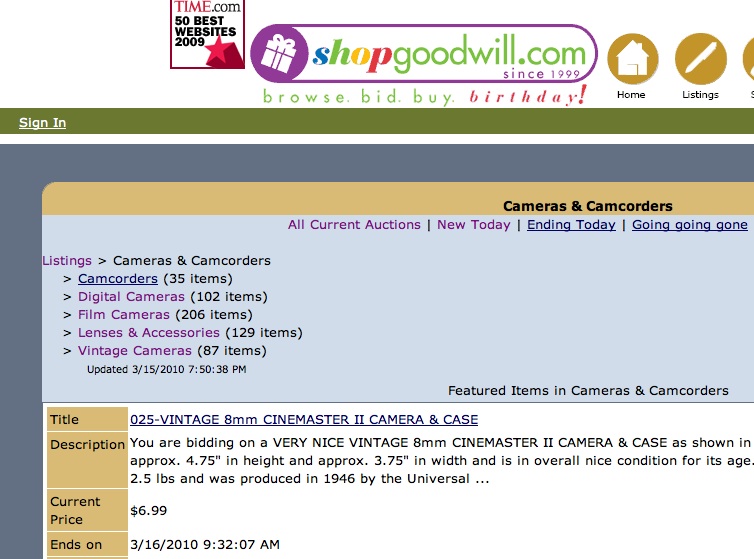
  • An alternative to eBay? shopgoodwill.com


    eBay has been here for 15 years now. Buyers and sellers had ample time to learn all the tricks of the trade, and if reasonably careful, they face little risk of a really bad surprise.


    A significant percentage of the sellers on eBay are professionals, or experts in their field. Others have been using a product for years and can write about its history. Most know the value of the products they’re selling, and how to attract the attention of their audience. They take good pictures of the items they want to sell, and because they want to preserve their hard earned feed-back, they won’t provide blatantly misleading product descriptions.


    But if the risk is somehow limited, the odds of scoring big are also getting pretty slim. With more than 200 million registered users, 2 million new auctions a day, and all sorts of search and reporting options, eBay is as transparent as a market can get. If the seller did his home work and followed the rules of the game when posting his listing, more than one buyer will notice, a small bidding war will take place, and the final price of the item will be very similar to the average of what similar items sold for during the weeks preceding the auction.


    Shopgoodwill.com – the online auction site of Goodwill Industries – is a much smaller marketplace. Founded in 1999, it “provides a safe and secure venue for Goodwill® member organizations to sell donated items through an online auction“.


    The photography related auctions of the day
    The photography related auctions of the day


    On Shopgoodwill, the cameras and lenses presented for auction have been donated, and the people describing the products know very little about their past. Most of them are not specialists of photographic equipment, either. They do not want to raise false expectations, and will stay extremely conservative in their assessments. In the best case, they will write that the product “appears to be in a good condition” or that it “appears to be working”, but all items are sold as is.


    The item descriptions are sometimes very generic (“Nikon Camera”) or written by someone who can’t tell the difference between a filter and camera (“Hoya 49mm camera made in Japan”). The quality of the pictures of the items improved significantly lately, but they are still low res, and it’s often difficult to find out what’s really being sold.


    While not as large as eBay, the number of potential buyers is far from small, and the odds are that a rare and valuable item will be discovered by more than one buyer. I’ve seen a few Leica cameras for sale on Shopgoodwill, and they all fetched good prices. But I’ve also seen nice vintage cameras stay unnoticed.


    So where is the fun? Shopgoodwill is like a garage sale or a flee market. Tonight 27,000 film cameras were listed on eBay. Less than 300 were listed on Shopgoodwill. You have relatively few items to look at, and you can go rapidly through the list of cameras or lenses being auctioned. The product descriptions are not always very good, but lovers of old equipment will raise to the challenge and put their geekiness to good use, with the hope of discovering a true gem.


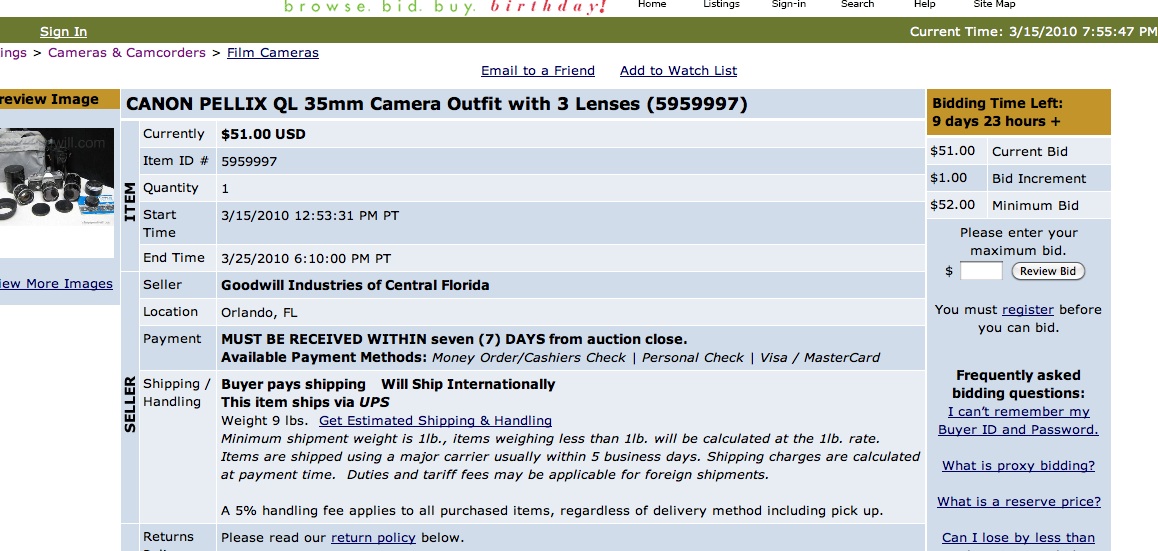
    Example of a listing on Shopgoodwill.com


    Buying a camera or a lens at Shopgoodwill is a bit of a gamble. The intentions of the sellers are undoubtedly good, but their expertise is somehow limited, and the buyer will know little about the true condition of the item he’s bidding for. I never had the guts to buy a really expensive camera or lens on Shopgoodwill, and I never spent more than $30 on an item.


    The camera I bought (a Praktica camera sold under the “Cavalier” name in the US) was cosmetically nice, and ended up working after some TLC, in spite of its old age. I also bought a lens, on a separate occasion. Although a bit dirty, it was in good general condition, and proved to be a very nice item once cleaned. A good experience overall. Try your luck too; it’s for a good cause.


    More about Shopgoodwill.com
    The presentation of the Shopgoodwill site by Goodwill Industries
    A review of Shopgoodwill by Time: 50 best Websites 2009: Shopgoodwill.com


    Olympus OM-1 / Praktica LTL - The Praktica (sold as a Cavalier in the US) was bought on Shopgoodwill.com.