The introduction to Through The Lens (TTL) Light metering and its consequences on the lens mount
Now that the instant return mirror and the preselection mechanism of the diaphragm had made SLRs usable for action photography, the manufacturers managed to address the next challenge: the determination of the exposure.
That’s the question that photographers hate the most. Nobody ever asked Picasso what type of brush he was using to paint “Guernica”, and photographers believe they are the ones taking the pictures. For them, their camera is just a tool, that they use it to communicate their vision.
Well, it’s not completely true. Granted, the camera is a tool, and tools don’t create. But the camera’s characteristics, its size, its weight, its ability to withstand adverse environmental conditions, the number of manual steps needed to take a picture, the performance of the shutter, the aperture of the lens, all limit the ability of the photographer to take a usable picture of what he’s witnessing, or to convert his vision into an image. Every now and then, a breakthrough in the design of cameras gives photographers more opportunities to report what they see. Whenever a new generation of cameras hits the market, photographers start experimenting, and in the process, harvest a new crop of pictures, which sometimes, will change the way they show the world to the rest of us, and ultimately, change the way we all see the world.
Few cameras had an impact comparable to that of Leica cameras’ in the first half of the 20th century. The originality of Alessandro Pasi’s book – “Leica, Witness of a Century”, is that it’s an attempt to show how the Leica changed photography, and how photographers still use it today to make different pictures.
Leica - witness of a century (Alessandro Pasi)
Alessandro Pasi’s book is organized is six chapters, each covering a different period, and showing in detail the most emblematic Leica camera of the era, as well as the pictures taken with it by the most prominent photographers of the time.
There will be no striking discovery for the well learned Leica aficionado. The cameras shown here have already been described in detail in many books, and at least half of the photographs assembled by Alessandro are well known “classics”.
But the author also included less known pictures taken by Italian photographers, as well as family snapshots taken by amateurs over the course of the century.
The texts are well written and informative, the layout is clear and the pictures are always given the priority.
This book is a very good illustration of the saying about the whole being greater than the sum of its parts.
It’s a pleasant voyage through one century of photography, an homage to the ingenuity of the creators of the Leica, and the proof that sometimes, “what camera took these pictures?” is not as stupid a question as it sounds.
Leica, Witness to a Century, is available in brick and mortar book stores, and also at Amazon . 159 pages. $35.00
For the 75th anniversary of the Leica, in 1989, the Leica Camera Group published “75 Years of Leica Photography”, which showcases more than 300 pictures taken with Leica cameras, from the test shots of Oscar Barnak in 1914 to the fall of Berlin wall in 1989. A very interesting follow up if you liked Alessandro’s book. It can still be found – used – for a bit less than $100.00
In the mid seventies, a new generation of SLRs hit the market. They were following the example set by the Olympus OM-1 and were much more compact than their predecessors. They also used less mechanical components and more electronics.
The FM was Nikon’s response to the OM-1, and to similarly compact cameras from their main competitors. The FM outlived them all. The FM and its derivatives, the FM2 and the FM3a, were sold for more than 30 years, and when the production of the FM3a was finally stopped, they were still in such demand that for a while used FM3a’s were selling for more than when their price when new.
Compact, reasonably light and rock solid, the FMs were often used as backup cameras by professional photographers until they stopped using film a few years ago.
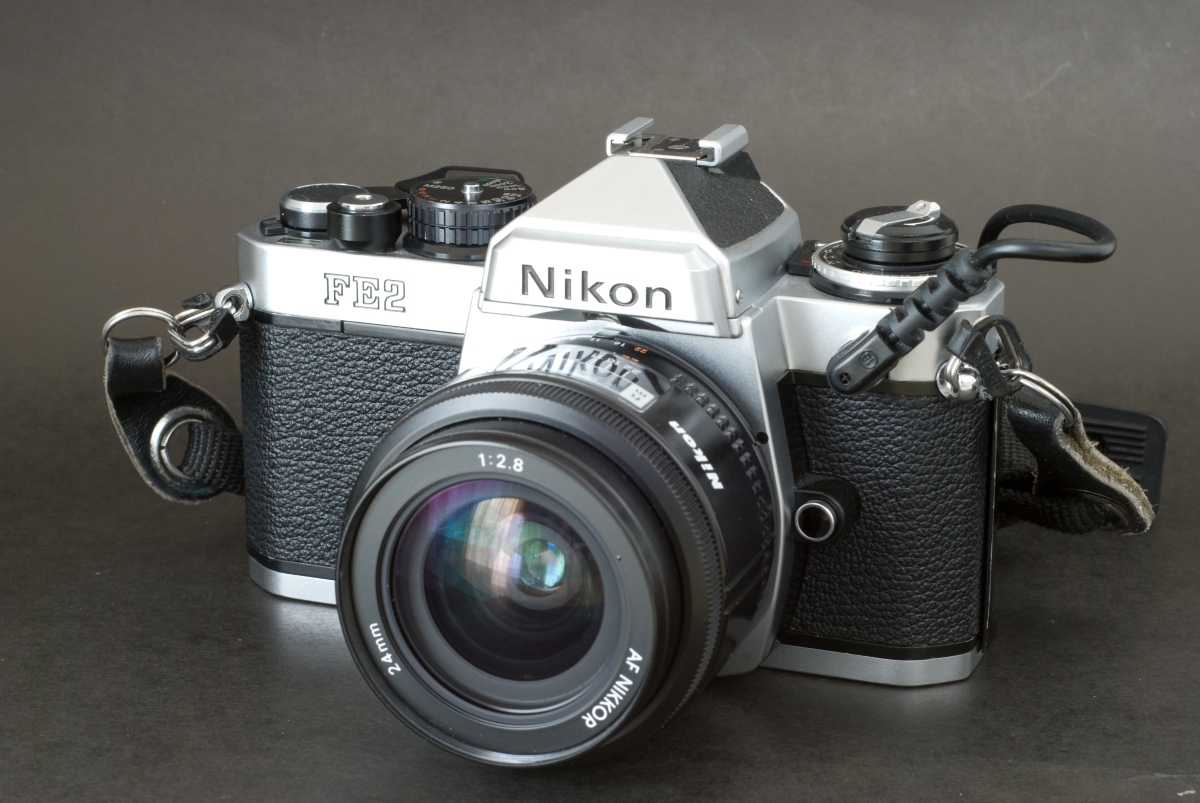
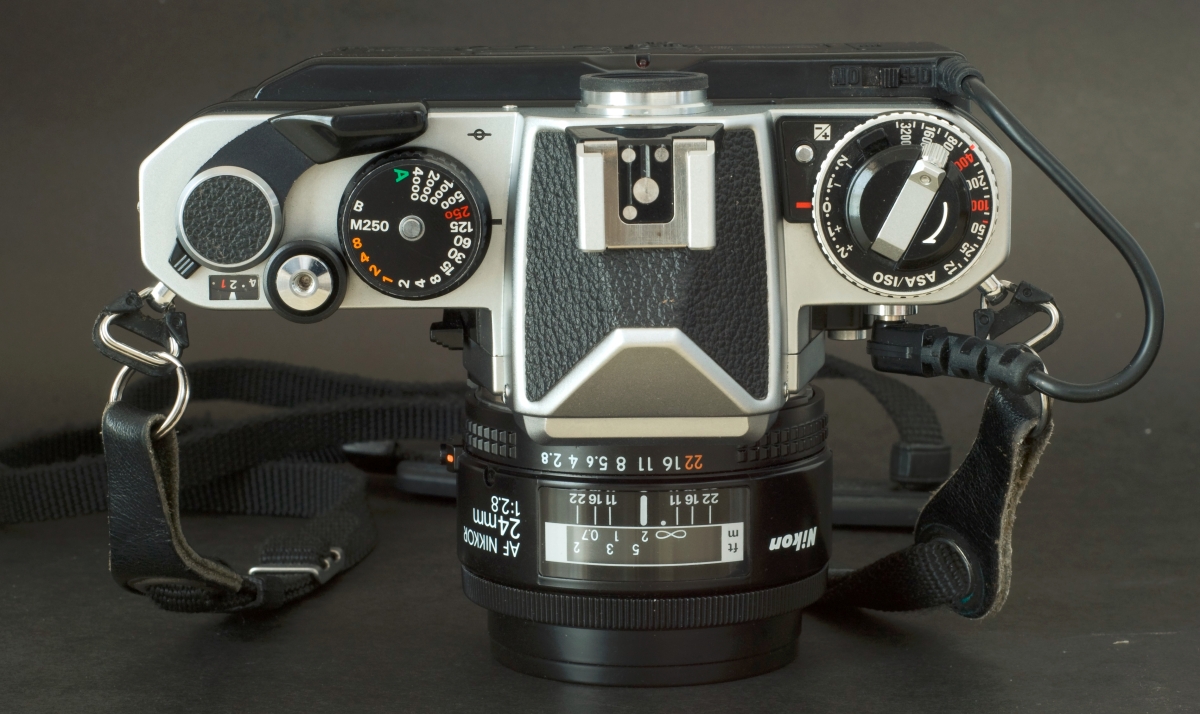
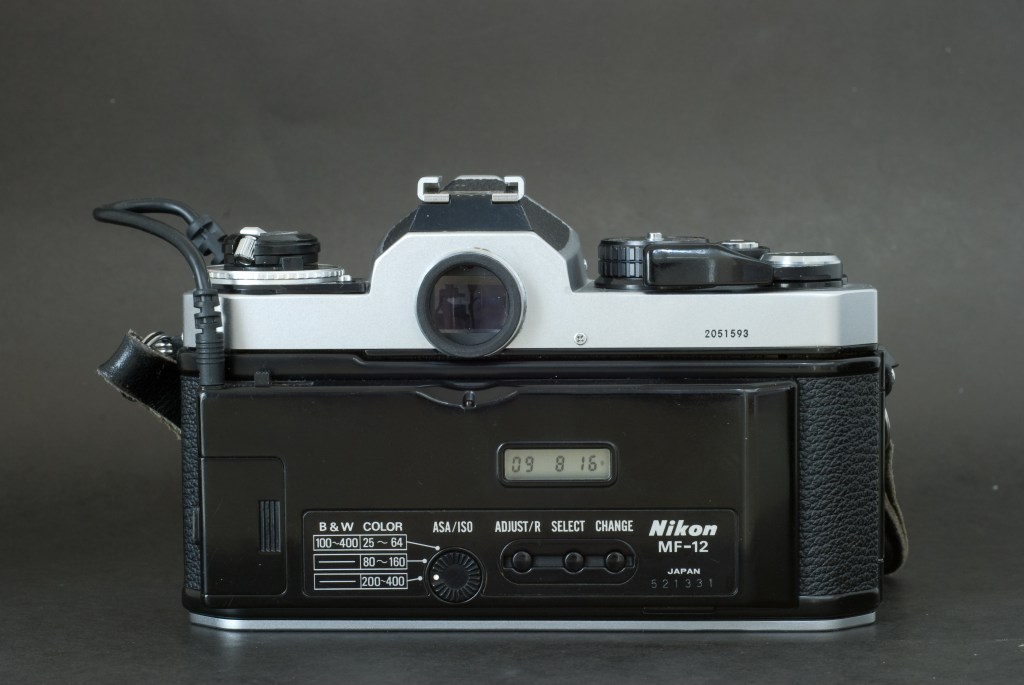
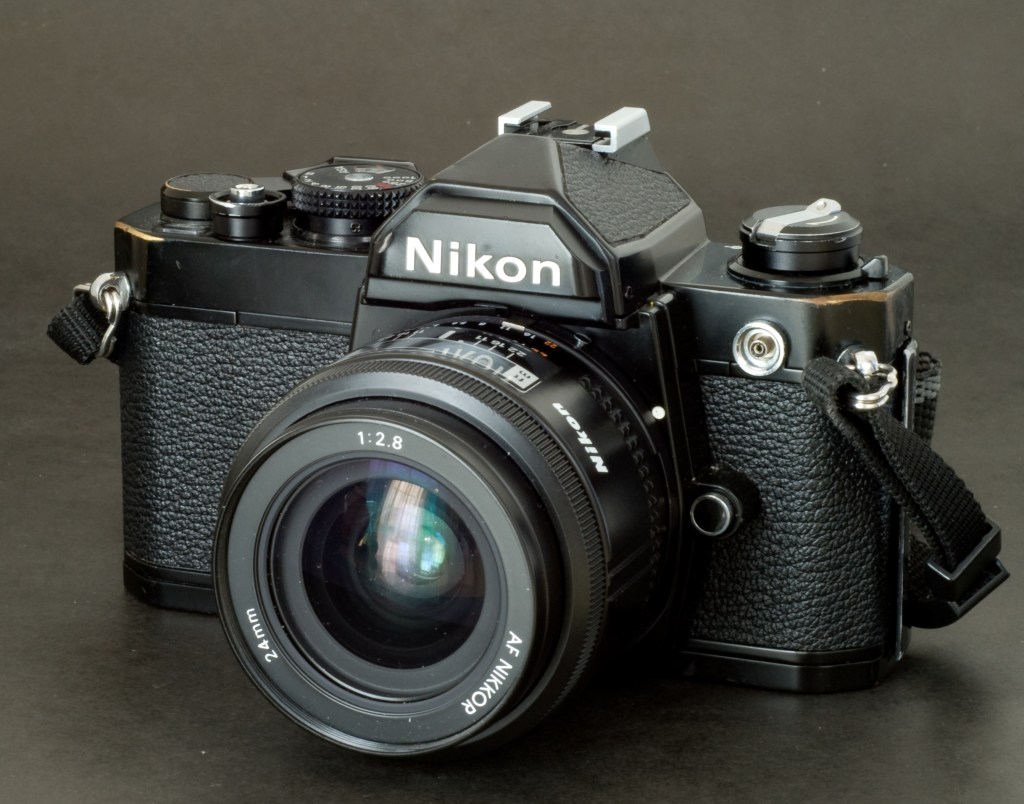
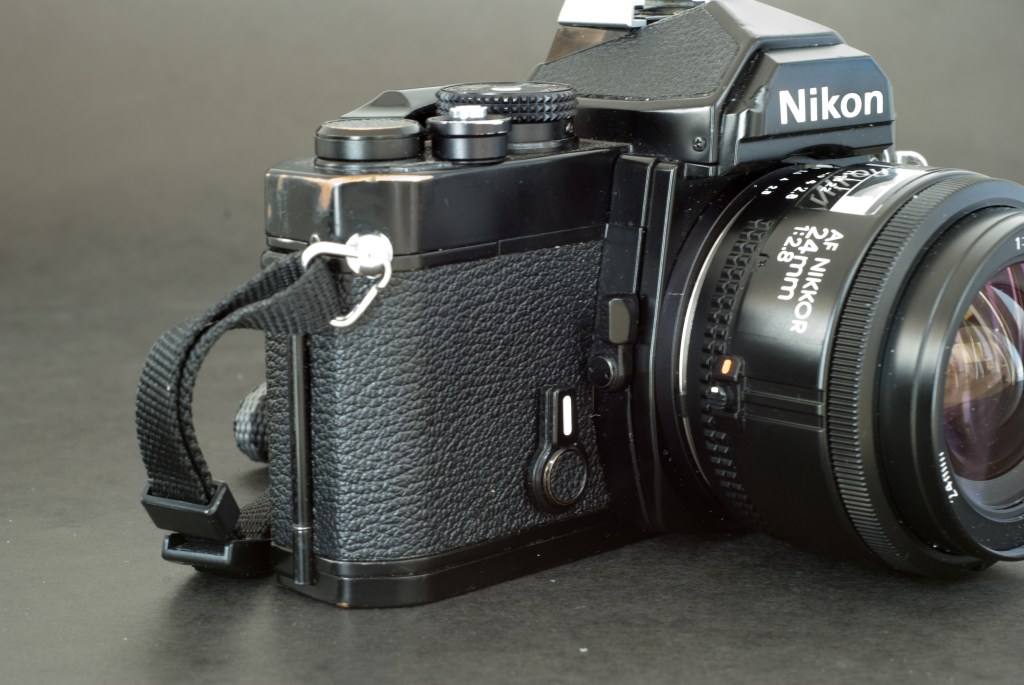
Nikon FM – it accepts pre-AI lenses, AI, AIS, AF and AF-D lenses.
The FM is a mechanical, manual focus, semi-auto camera. It leaves you total control over your images, and does not change the aperture/speed combination you selected on its own. No need to memorize the settings in backlit pictures. But total control comes at a cost: speed of operations in a rapidly changing environment. It’s a nice camera for landscapes, travel, street photography, but more recent autofocus cameras will deliver better results for sports and action photography.
The flash control system is also old school – the camera exchanges very little information with the flash unit, and the photographer has to set the shutter speed and the aperture by himself, using guide number tables: there are obviously better cameras to shoot indoors.
The FM as a photographic tool
By modern standards, the FM is a bit of a disappointment. On the one hand, it feels very well built and solid, and it can be carried around everywhere because of its (relative) small size. The Olympus OM1 or the Pentax M series are still smaller, but don’t feel as robust. Like the other semi automatic cameras with mechanical shutters, the FM also works without batteries. The light meter does not use a galvanometer (no needle) but a series of bright red LEDs are the right of the viewfinder screen: there are very few parts that can break on a FM.
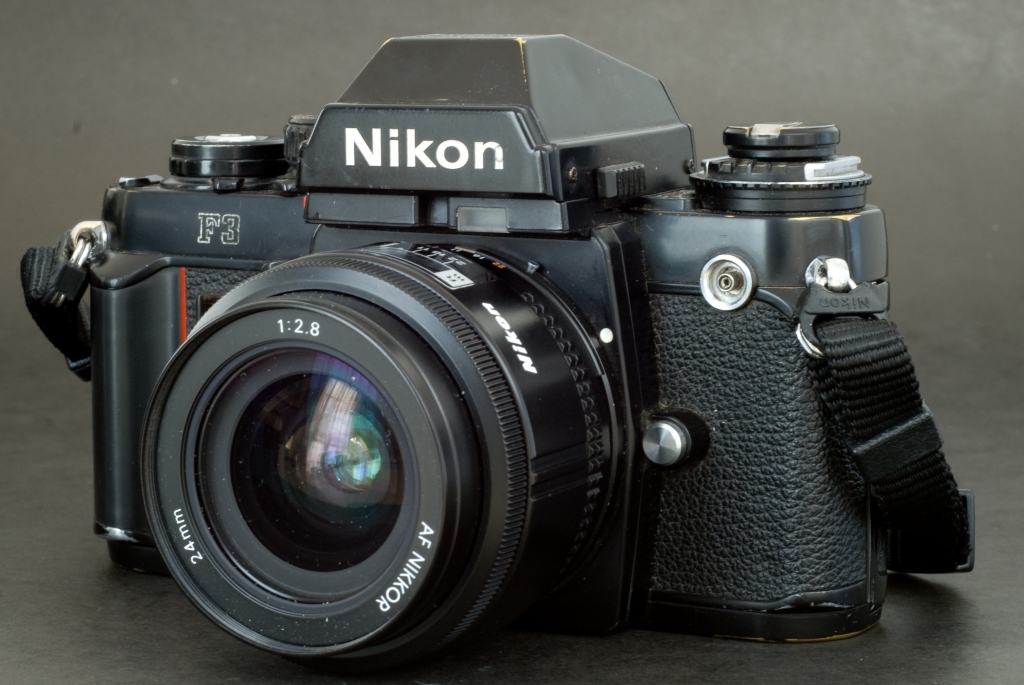
On the minus side, the mechanical commands are firm, and the advance film lever doubles as a shutter release lock: you can only use the light meter and press the shutter release if the advance film lever is pulled out of the body (by an angle of approximately 45°). It’s not very practical, and slows down the operations. I missed more than a few snapshots because the lever was pushed flush with the camera body, in the off position. I guess you can get used to it, but it’s not ideal. (the Nikon F3 does not have this issue; the film advance lever does just that).
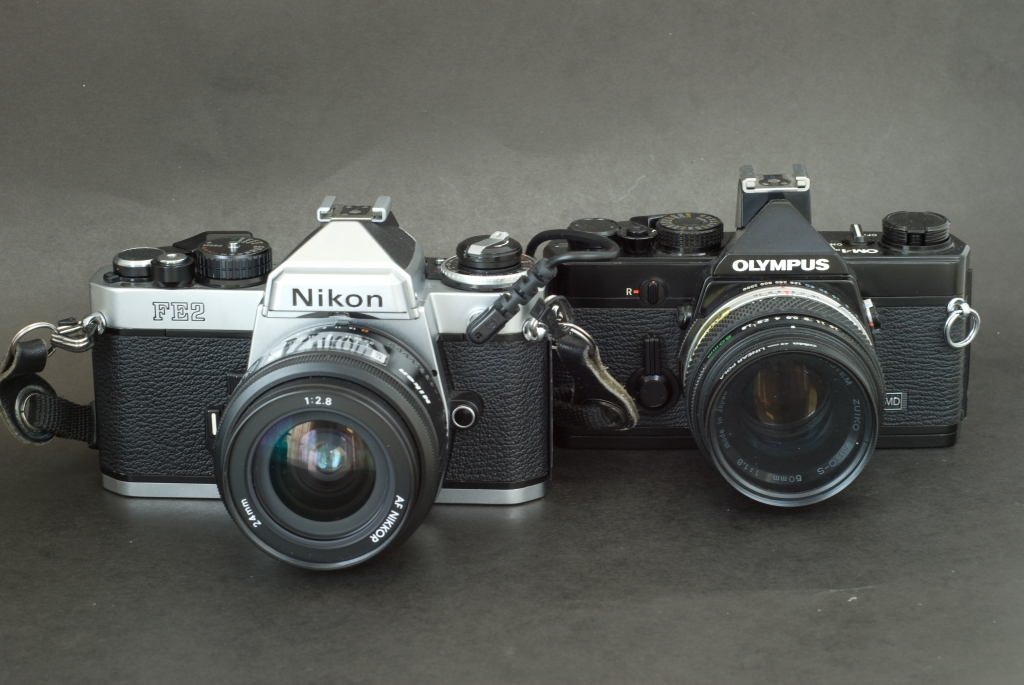
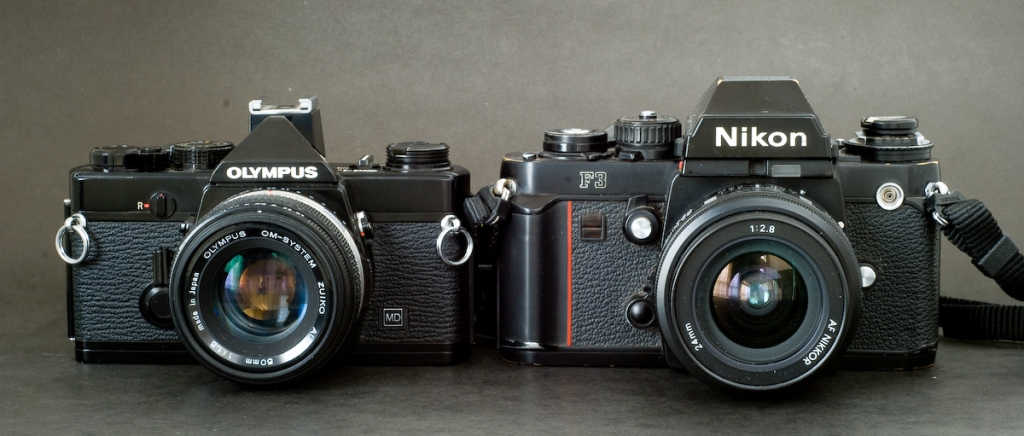
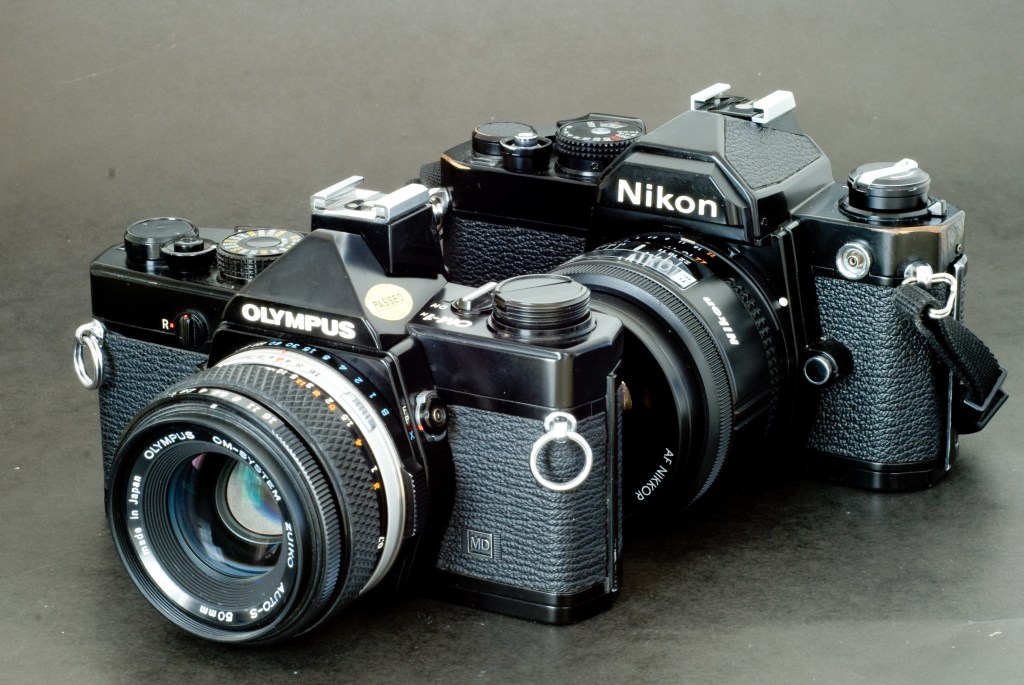
Nikon FM / Olympus OM1n – the smaller prism cover make the OM-1 look smaller.
The Olympus OM1 was the forerunner of a new generation of very compact but still very capable SLRs. Coming a few years later, the FM is not as compact as the OM1, but not that much larger. It’s heavier, though. Its electronics (the light meter, the rest of the camera is mechanical) aged very well, the batteries it needs are still easy to find, its mechanical components are solid and it’s compatible with any Nikkor lens built between the early sixties and the last few years.
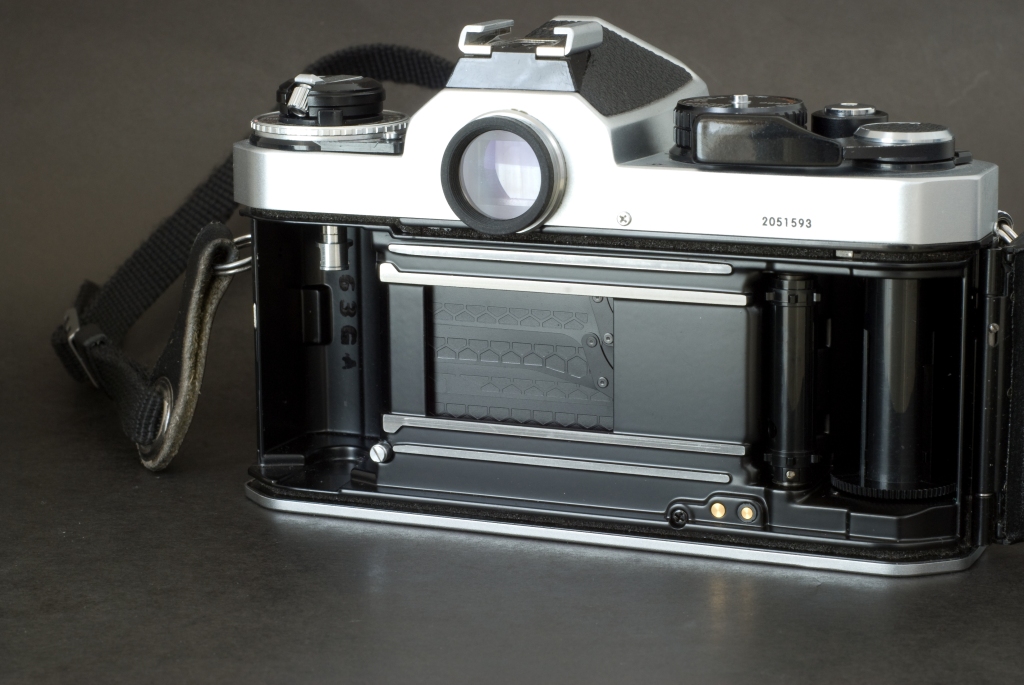
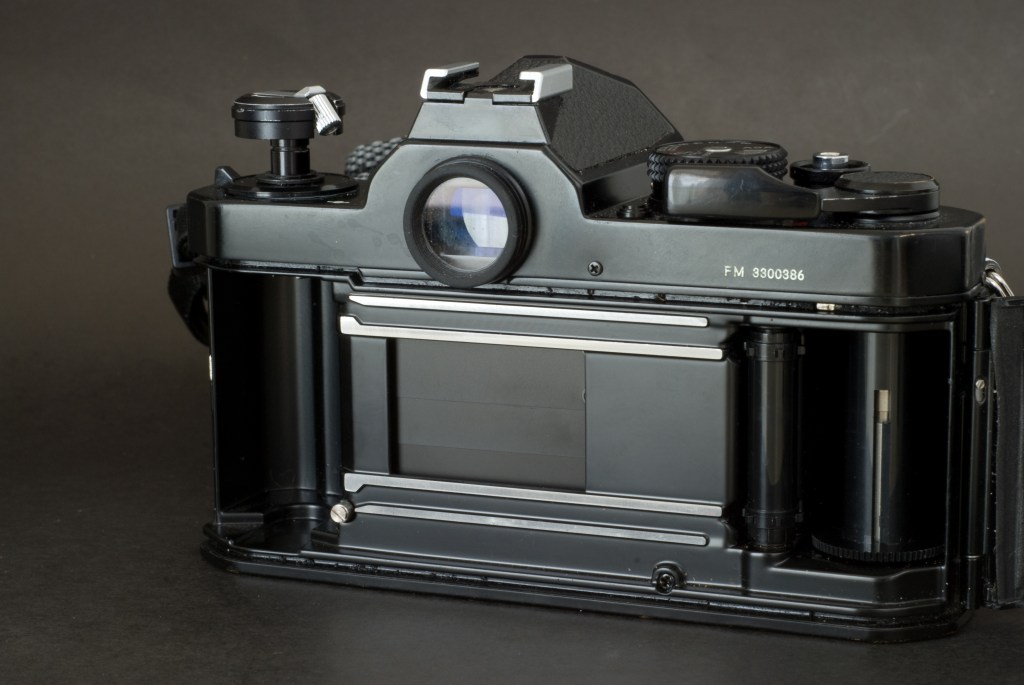
Nikon FM – Metallic shutter. Clearly a camera from the seventies.
The FM has a mechanical metallic shutter. Its fastest speed is 1/1000sec, with a maximum flash synchronization speed of 1/125 sec. The different versions of the FM2 and the FM3a have much faster shutters, built in aluminum or titanium, with a maximum speed of 1/4000s and a flash synchronization. speed of 1/200 (early models) or 1/250.
Nikon FM – depth of field preview lever and self-timer at the right of the lens.
The FM holds a special place in the Nikon product range: it’s one of the few Nikon cameras (the only other compact SLR to share this characteristics is the FE) which is compatible with the pre-AI lenses as well as the modern AI, AIS and AF lenses. The other members of the family – FM2, FE2, FA, F3A – are only compatible with the AI, AIS and AF lenses; trying to mount an older pre-AI lens can damage the camera.
That’s the reason why the FM is sometimes referred as the Rosetta Stone of Nikon cameras
Summary
The Nikon FM is a simple, compact, rock solid and reliable camera, with a decent viewfinder and an accurate light meter. It’s not very fast to operate and not always pleasant to use because of firm commands and of the protruding film advance lever, but it can take advantage of a huge variety of lenses, built by Nikon over a period of almost 50 years. The FM2/FE2 are a bit smoother, the automatic FE and FE2 are also faster to operate, but the F3 beats them all, with its very soft commands, its good ergonomics and its large viewfinder.
The last FMs were produced in the early eighties, and good ones are still easy to find. They command lower prices than the much more sought after FM2’s and FM3a’s. A very nice one from a reputable seller will not cost you more than $150, and not so nice ones can be bought for less than $70 on eBay.
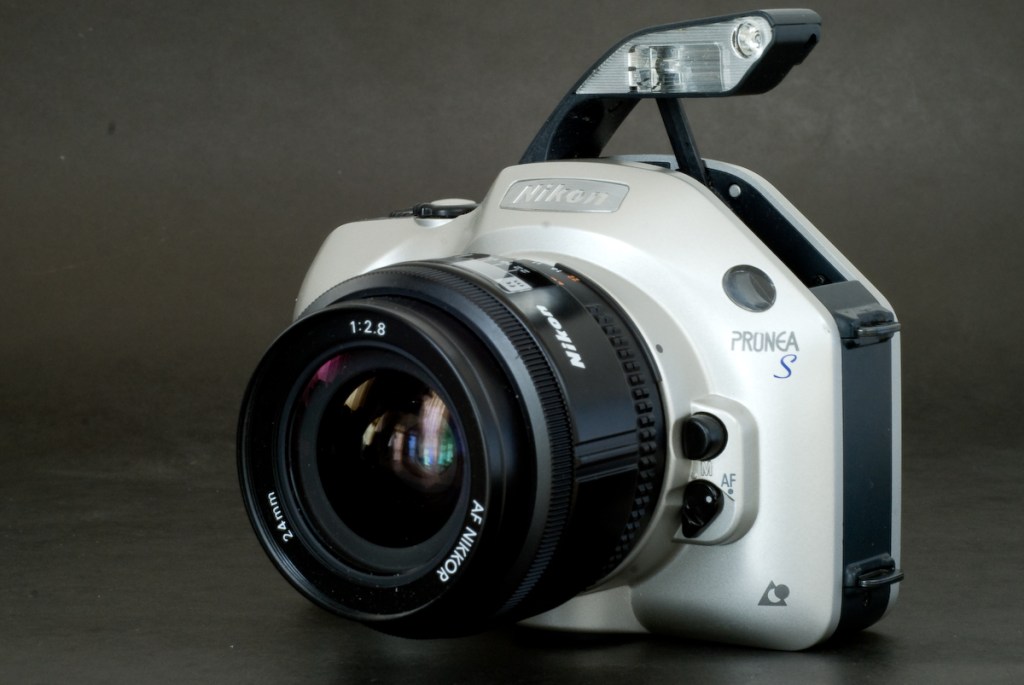
Launched in 1998, the Pronea S is Nikon’s second and last APS SLR. Nikon rapidly lost interest in the APS format, and refocused its R&D (and sales) efforts on the more promising Coolpix digital cameras. With its smaller image format and lenses, the Pronea can be considered a remote ancestor of the vastly more successful Nikon D40.
Nikon Pronea S (with the built-in flash deployed and a Nikkor AF 24mm lens)
Apart from the fact it’s using APS film instead of more conventional 135 (24x36mm) film, there is nothing really remarkable about the Pronea S. Its characteristics are aligned on the other mid-level amateur cameras of its time.
It benefits from the advantages brought by the APS format (smaller size than 24×36 cameras, choice of three aspect ratios for the prints) but it also suffers from all the limitations that ultimately caused the demise of the APS format.
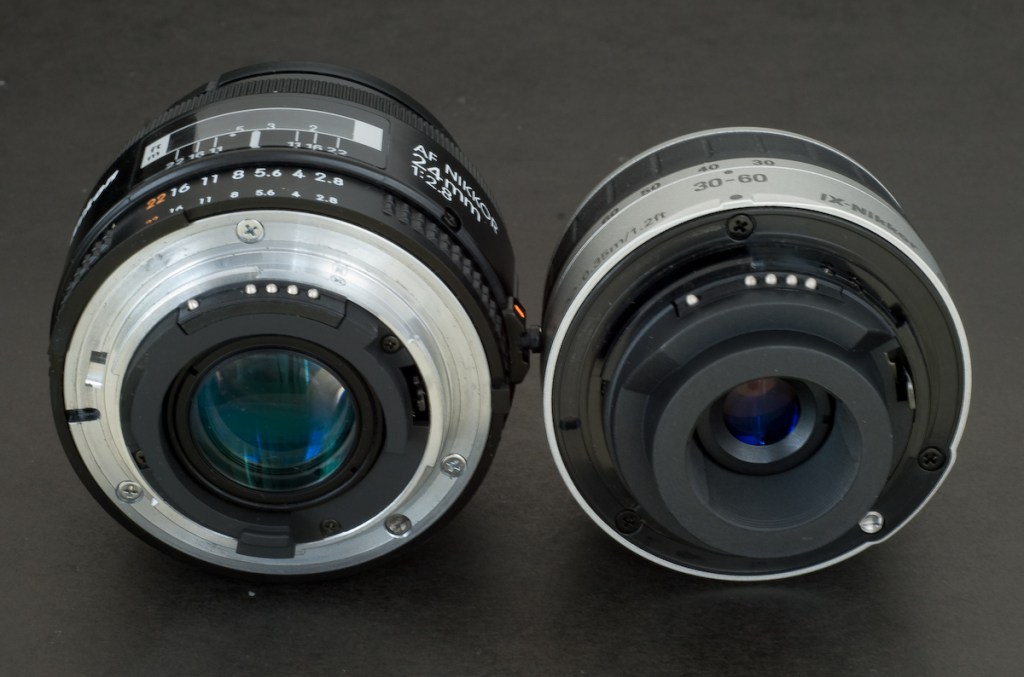
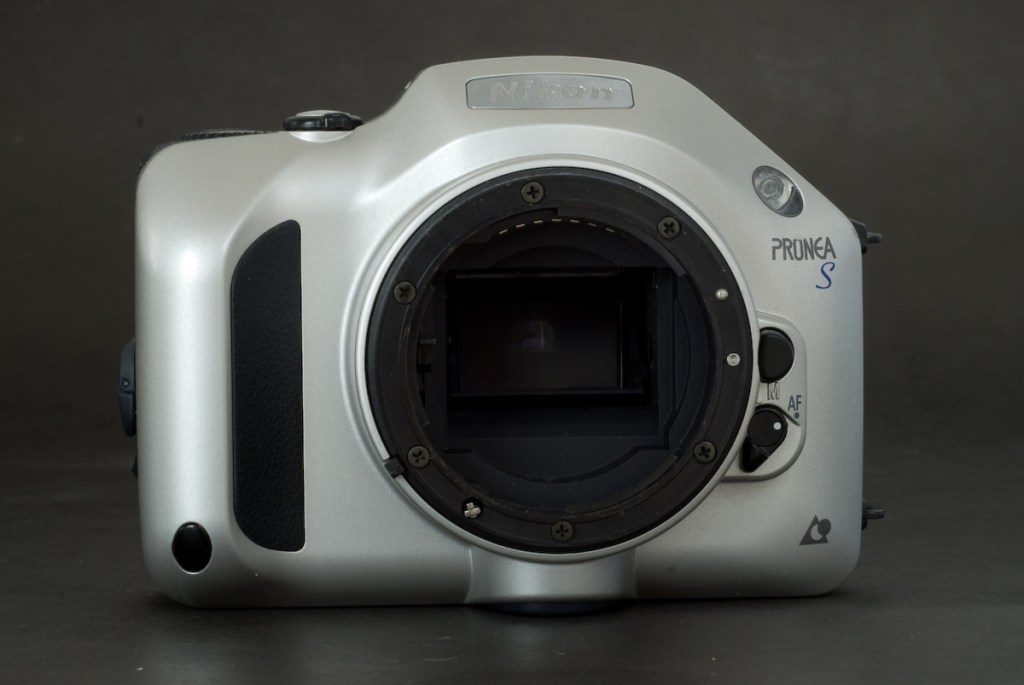
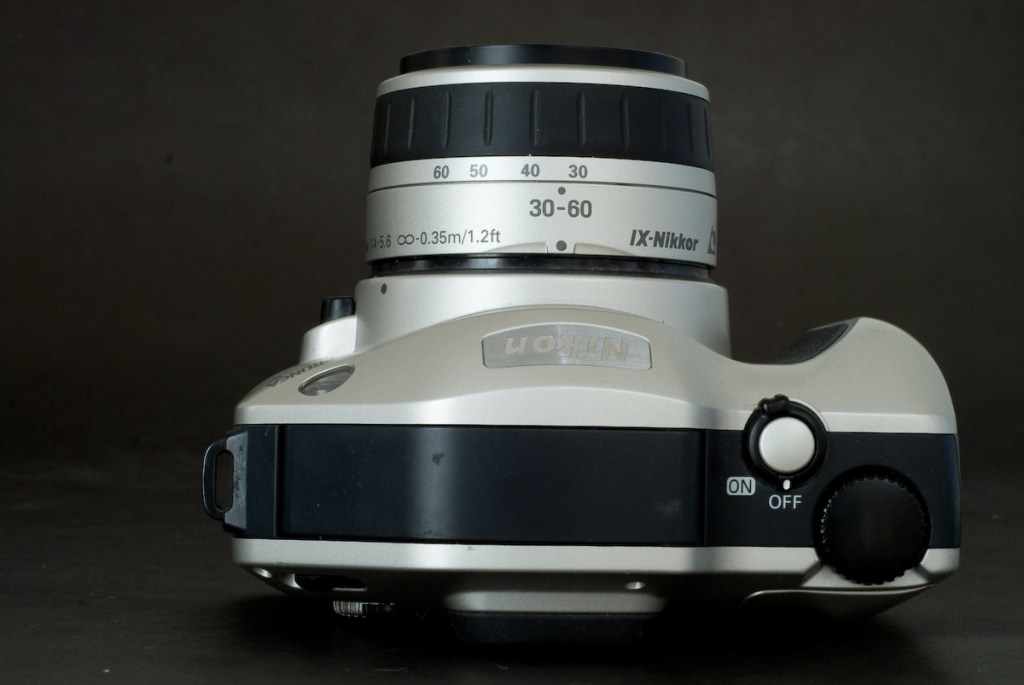
In a typical Nikon fashion, the Pronea S preserves some form of compatibility with the large family of Nikkor F lenses: in fact, modern AF and AF-S lenses work perfectly on a Pronea. However the IX-Nikkor lenses, designed specifically for the Pronea and its smaller APS format are absolutely incompatible with the rest of the Nikon bodies: the back of the IX lenses protrudes so far in the reflex chamber that it would be on the trajectory of the reflex mirror of a 24×36 SLR.
Both use the F mount, but an IX lens can only be mounted on a Pronea body
The back of the IX lens protrudes much more in the reflex chamber than the back of a Nikkor AF or AF-s lens
The resale value of the Nikon Pronea S is very limited. Mint (if not new) cameras and lenses can still be found, and they generally sell for a few dozens of dollars. They can be collected as curiosities, but their usage value is limited: Kodak and Fuji may cease manufacturing APS film rapidly, and the IX-Nikkor lenses are absolutely incompatible with any “normal” Nikon body.
Nikon Pronea S
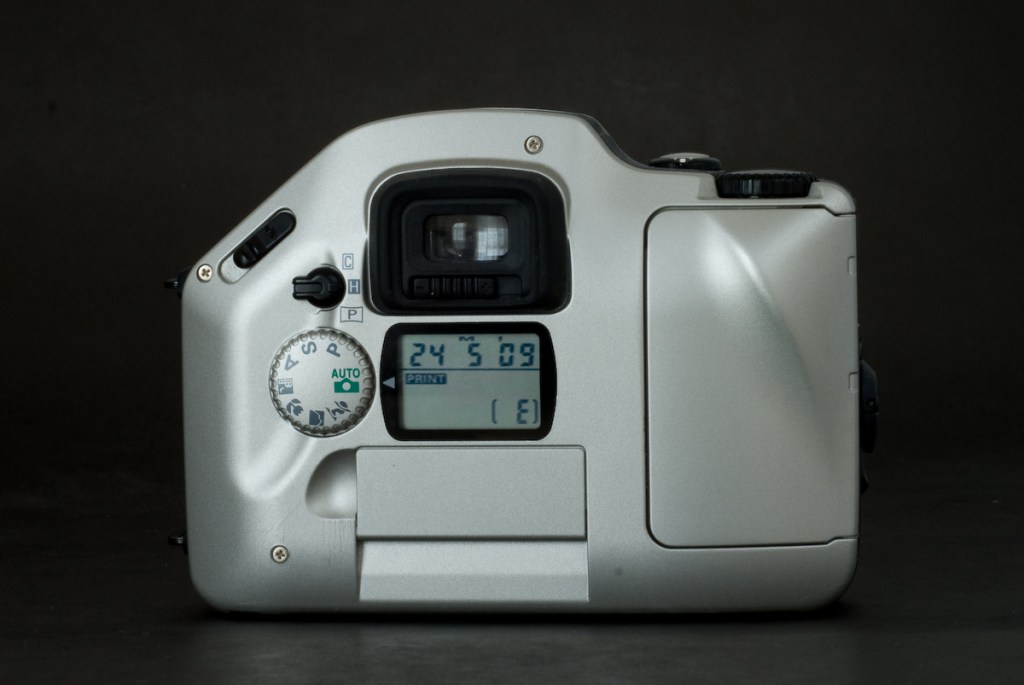
Nikon Pronea S (back) – not the “C-H-P” selector at the left of the viewfinder – the photographer can select the aspect ratio of the prints.
Nikon Pronea S
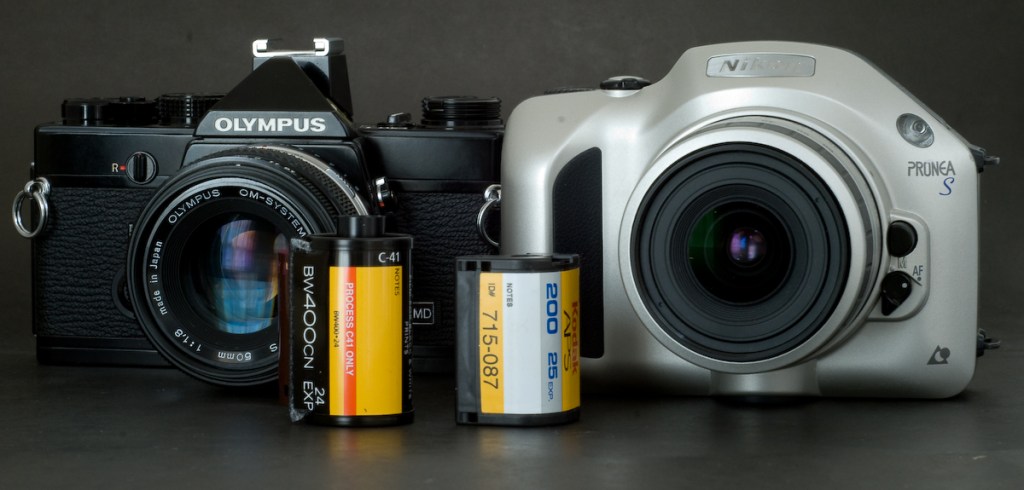
Olympus OM1n / Nikon Pronea S (Side)
APS SLR cameras are smaller than a comparable 24×36 autofocus SLR with a built-in flash, but the Pronea S is larger than an older SLR such as the Olympus OM-1
The choice of films was already very limited when the format was supposed to be the next big thing: practically, color print film from Kodak and Fuji in 100, 200 and 400 ISO declinations was the only thing you could get. Now that the format is near extinct, only 200 ISO film is available.
Color slide and black and white film were never widely available, if available at all.
Compared to a 24×36 image, an APS image is 56% smaller. APS requires higher enlargement ratios, which makes film grain more visible.
The film loading mechanism of APS cameras is fragile. The film can stay trapped in the camera if one of the little plastic parts holding the cartridge in place breaks.
The Nikon FA is the last major manual focus SLR launched by Nikon. An evolution of the FM2 and FE2 cameras, it shares with the latter most of its body shell, a very fast shutter (up to 1/4000sec., 1/250sec. flash synchro speed) and a TTL flash metering mechanism. It finally catches up with Canon’s A1 and offers the same four automatic exposure modes (aperture and shutter priority, program and semi-auto).
Its “Automatic Multipoint Metering” (AMP) – a world premiere – is its real claim to fame. Better known under names such as “matrix”, “evaluative” or “multi-segmented” metering, it is now the default metering system of every dSLR in production.
Launched in 1983, this conservatively styled camera with very conventional ergonomics had a relatively short sales career. It was made obsolete in 1985 when Minolta took the market by storm with its first autofocus SLR, the 7000 (Maxxum 7000 in the US). Minolta’s competitors, Nikon included, spent the best part of the following three years trying to catch up. The FA stayed on Nikon’s catalog until 1988, and was not replaced. Its semi-automatic sibling, the FM2n would be sold until 2001, when the FM3a, a sort of combination of the best characteristics of the FM2 and the FE2, was launched. An impressive (and heavy) camera: the Nikon FA with the MD-15 motor drive.
The metering system
Until the FA was launched, most of the cameras only offered some form of center weighted metering: the exposure sensor evaluated the luminosity of the whole scene, and because the sky is typically in the upper third of the frame, and the main subject of the picture in the center, it was designed to give more importance to the portion of the picture located at the center of the lower part of the frame.
It worked for most of the cases. If the subject was back-lit and not centered, the photographer had to determine the exposure with the subject at the center of the frame, memorize the exposure settings, and move the camera to compose the desired picture.
Some high end cameras also had a second exposure metering system, which evaluated the luminosity of a much narrower portion of the scene, almost a spot in the middle of the viewfinder. But spot metering and exposure memorization are not always easy to use , and are far from being idiot proof. The engineers at Nikon were pretty sure that with the newly unleashed power of integrated circuits, they could develop a new approach.