Fujifilm X-100 – a rangefinder camera for the rest of us?

If like me you’ve used primarily single lens reflex cameras in the time of film, and dSLRs or mirrorless systems after switching to digital, using a rangefinder camera with an optical viewfinder has always been a challenge. I have a Leica CL that I bought second hand a long time ago when I was living a few blocks from an official Leica store (temptation was permanent, I could not resist), but I don’t use it much. Recently, I tried to use a fully restored Canon QL17 (the Canonet GIII, the most sought after model), but in one year I may have taken 20 pictures at the most, and I don’t know how many more months (or years) I’ll need to take the remaining 16 and have the film processed.

DSCF7241
Family Reunion. Fujifilm X100

On the one hand, I like those cameras – they’re compact, silent, and their direct optical viewfinder is easier on the eyes than the focusing screen of the SLRs. Their field of view is greater than the lens in use, and you also see what is going on outside of the frame: it helps me with the composition of the image, and it will help street photographers better anticipate the action.
IMG_6082
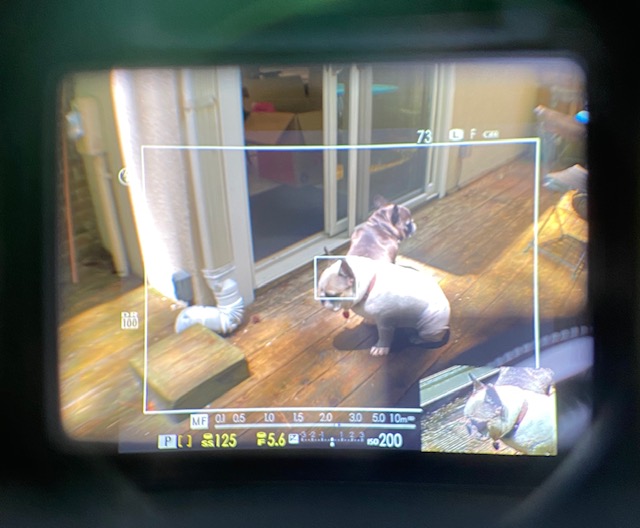
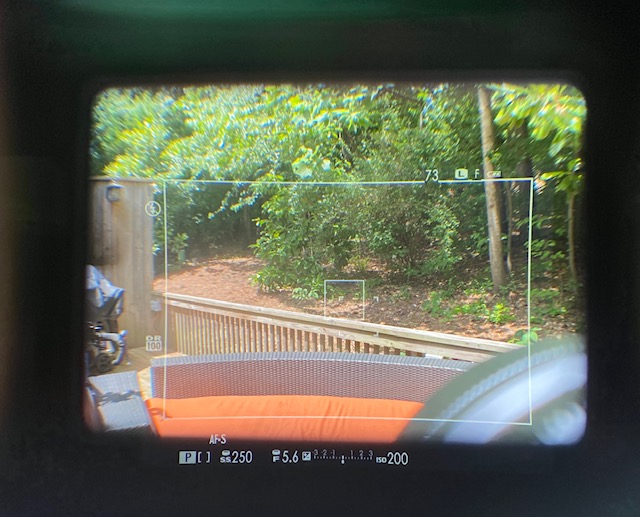
Fujifilm X100T – the optical viewfinder – the white frame and the various indications are a digital overlay – you can see the lens hood in the lower right corner of the image.

But it comes at a cost. You have no idea what the depth of field will be like, and if you forget to adjust the focus (which happens to me frequently in the heat of the action), you’ll find out about your mistake when you download your scans, a few weeks too late. There’s a steep learning curve – I find that with a rangefinder camera it’s much more difficult to anticipate what a photo will look like than with an SLR, and in my opinion, a film rangefinder camera has to be used a lot, if you want your success rate to approach what you get with a single lens reflex camera.
IMG_6085
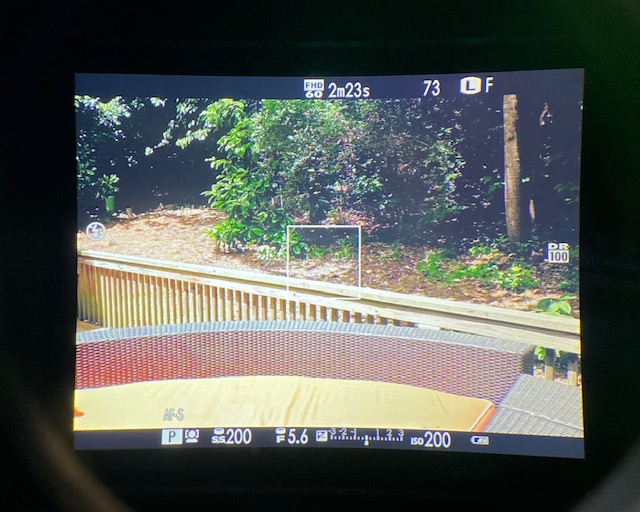
The Fujifilm 100T – the electronic viewfinder – not different from what you get with  millions of mirrorless cameras.

In 2010, Fujifilm tried a new approach – they developed a compact camera, the X100,  with an hybrid viewfinder – that could be switched from a rather conventional direct optical mode, to a more contemporaneous electronic mode (an EVF). Since the camera also had a 2.8 inch LCD display at the back, the photographer could use the camera in three totally different ways: like an auto-focus point and shoot of the film era (with the optical viewfinder), like a simple digicam (composing on the LCD) or like a good mirrorless camera (with the EVF).

2016-11-NYC-2-71
Macy’s Thanksgiving Parade – NYC (2016)- Fujifim X100

The camera looked like a rangefinder camera from the seventies, and was graced with an analog interface (aperture ring, shutter speed knob), but it was a modern inside, with a very good 12 Megapixel APS-C sensor, and the four PASM exposure modes a photographer expects on a digital camera.

I had a X100 for a few years. It was a great camera for casual portraits, family reunions, or impromptu landscape. Being small and almost silent, it did not draw attention. But its auto-focus was extremely slow and incapable of detecting where the subject was without human assistance, and I was still missing too many pictures – as soon as the subject was moving or was not centered, in fact.

2016-11-NYC-2-7
Hotel Hudson, NY – Fujifim X100

So I finally upgraded to the third generation of the model, the X100T (the X100S is the Second, the X100T the Third, the X100F the Fourth…it’s easy) and I finally have a optical viewfinder camera that gives me a good success rate (let’s say 90% of the pictures are correctly exposed and in focus, which is a huge improvement over the 30% success rate I used to get with the Leica CL).

DSCF7334
Dragon Con 2016 – Atlanta – Fujifilm X100

Apart from the autofocus, the other big difference between the first and the third generation is the sensor – the X100 still has a conventional 12 Megapixel sensor (with the so-called Bayer matrix), while the X100T has a 16 Megapixel sensor with Phase Detection pixels (to accelerate the auto-focus process) and Fujifilm’s patented Trans-X matrix. The X100T is also the first the X100 series to offer the ability to connect over WiFi to transfer images to a smartphone, which is extremely convenient when you travel without a laptop. (*)

fujix100t-6708
It may look like a small point and shoot from the early seventies – but it’s packed with modern technology. Here, the model T from 2014.

If you use the X100 with the EVF, a recent version (X100S and better) will be reactive enough and provide an experience very similar to what a very light and very compact mirrorless camera with a 35mm fixed focal lens (full frame equivalent) would bring. But the real fun is to use the optical viewfinder.

DSCF7337
Dragon Con 2016 – Atlanta – Fujifilm X100

Like often with optical viewfinders,  the view of the lower right edge of the image is masked by the lens hood, and of course, you never visualize what part of the image will be in focus, and what part will not. But you get the benefit of a clear, un-intermediated view of your subject. Sure, you have to learn – from experience – when you can let the auto-focus and the auto-exposure modes play their magic, and when to take control back from them. There’s a learning curve, but at the end of the curve, lies the reward.

fujix100t-6711
Where the magic happens – push the lever to switch from the optical viewfinder to the EVF – and back.

How much? 

Of course, the X100 can be bought new – the current model (the X100V) sells for approximately $1,400. Brand new copies of older models can be found for approx. $1,000 (X100 F).

Used models are a bit cheaper, in the $800s for the X100F.

The X100S and the X100T are technically very close, and sell for anything between $450 and $700, depending on condition, on the second hand market.

The first X100 is a sort of classic and sells for approximately $300.00. It’s slow, but it still makes great pictures – if your subject is not too mobile.

fujix100t-6716
Fujifilm X100T – a “real” shutter speed knob and a “genuine” aperture ring – for when Programmed Auto Exposure is not good enough – Beware: the exposure compensation dial (bottom right) is very soft – it tends to move to + or – territory on its own…

There is another a difference between the X100S and the X100T – the so-called “electronic rangefinder” of the latter:

  • a clarification first – simple cameras (such as a Kodak Instamatic or the Rollei 35) have a direct optical viewfinder. Its most refined implementation, “the bright-line viewfinder, is essentially an inverted Galilean telescope system with an optically projected rectangle outlining the frame area”. (Encyclopaedia Britannica); they are NOT rangefinder cameras, because they’re missing … the rangefinder.
  • the Leica M is the perfect example of a rangefinder camera. Its direct optical viewfinder is supplemented by a coupled optical telemeter, the rangefinder, which assists with focusing.
  • technically, the X100 and the X100S are NOT rangefinder cameras: they’re cameras with a direct optical viewfinder, supplemented with an electronic auto-focus system (contrast detection for the X100, contrast and phase detection for the X100S).
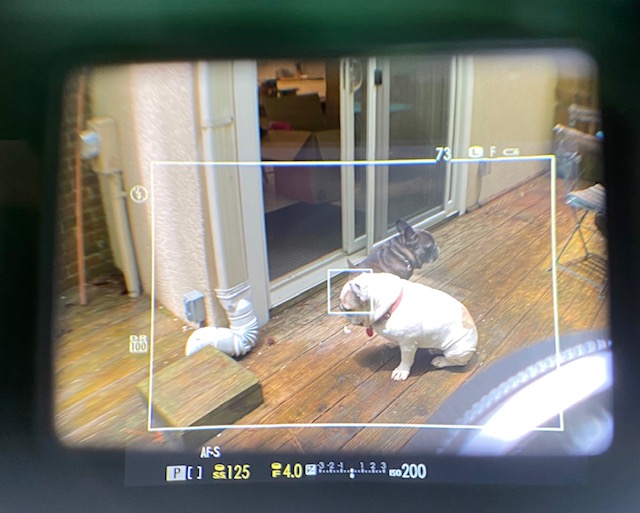
  • With the X100T (and all following models), the photographer can enable an “electronic rangefinder” if working with the optical viewfinder in manual focus mode – it’s a very small EVF display projected in the bottom right corner of the optical image, that shows an enlarged view of the section of the image that the photographer will focus on. As per Fujifilm, “this makes manual focusing while using the optical viewfinder much easier, and more like a mechanical rangefinder”.

In my opinion, on a Fujifilm X100, it’s more a marketing gimmick than anything else; if you really want to focus manually, switch to the EVF. Interestingly, the “rangefinder emulation” is also available on other Fujifilm X cameras,  (the ones with interchangeable lenses), even those with an EVF and no optical viewfinder.
IMG_6111
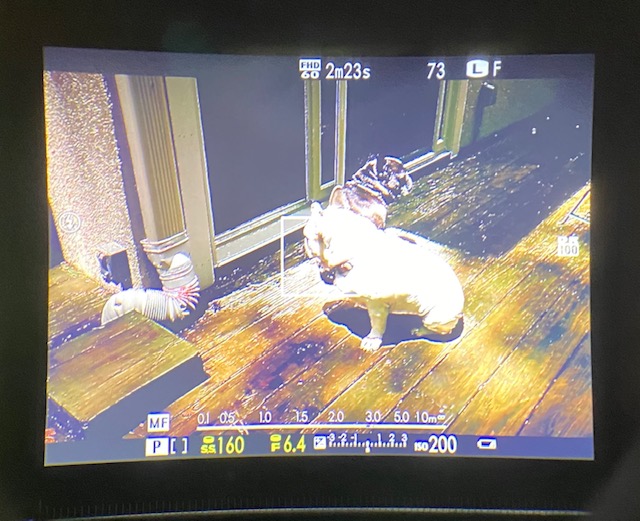
Fujifilm X100T – Optical Viewfinder – AF-S mode.
IMG_6109
Fujifilm X100T – EVF (manual focus) with focusing aid set to “Focus Peak Highlight – Red”. There are other options (Standard and Split Image MF Assist modes are also available)
IMG_6106
Fujifilm X100 in manual focus mode – Optical viewfinder with “electronic rangefinder insert”

More about Fujifim’s digital cameras in CamerAgX


In the series …. shooting pictures in Atlanta in times of social distancing…. All those places are generally magnets for residents and tourists alike, and would have been packed in normal circumstances.

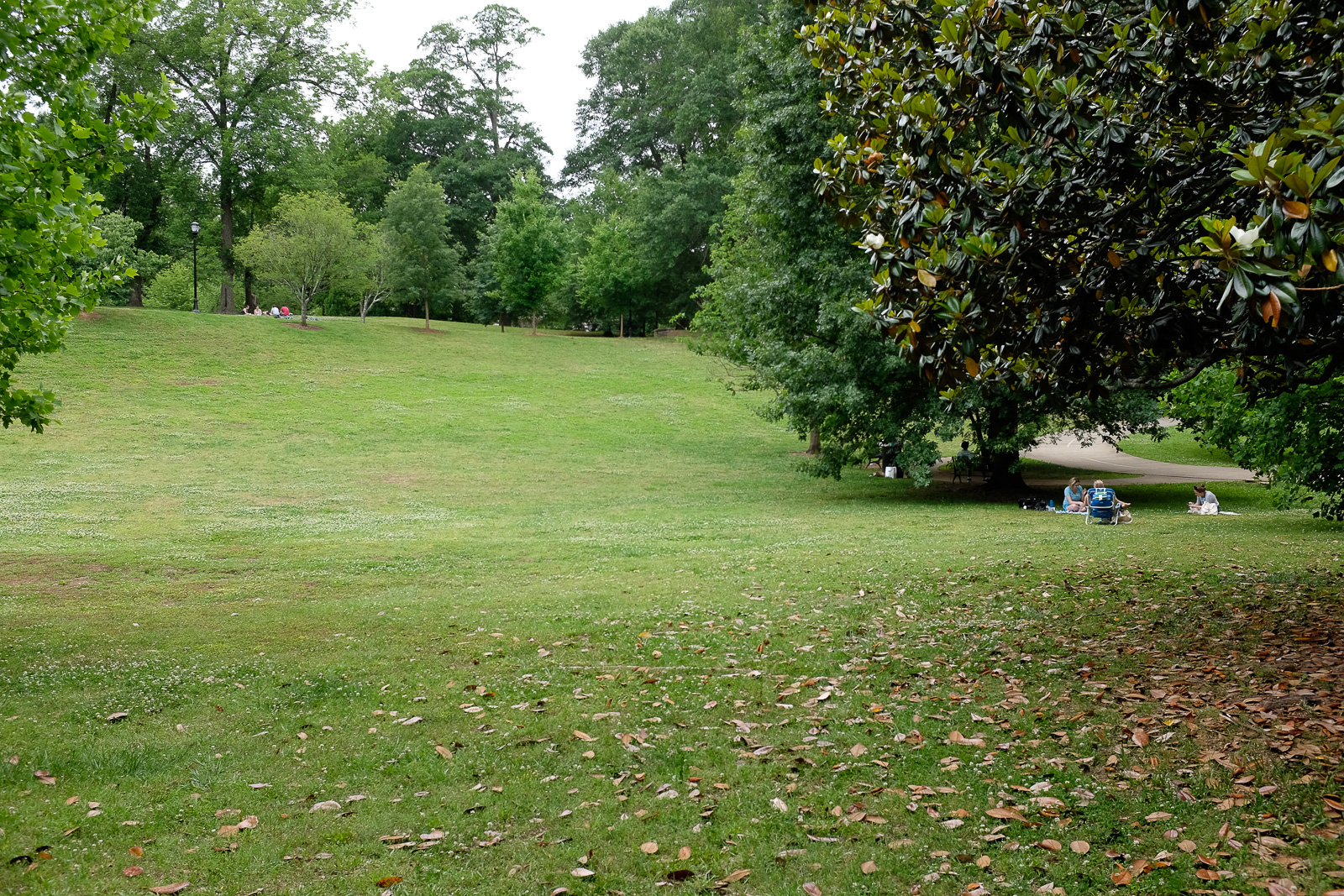
ATL_F100T-8203
Atlanta – Memorial Day Week-End – Little Five Points – Fujifilm X100T
ATL_F100T-8208
Atlanta – Memorial Day Week-End – Inman Park – Fujifilm X100T
ATL_F100T-8213
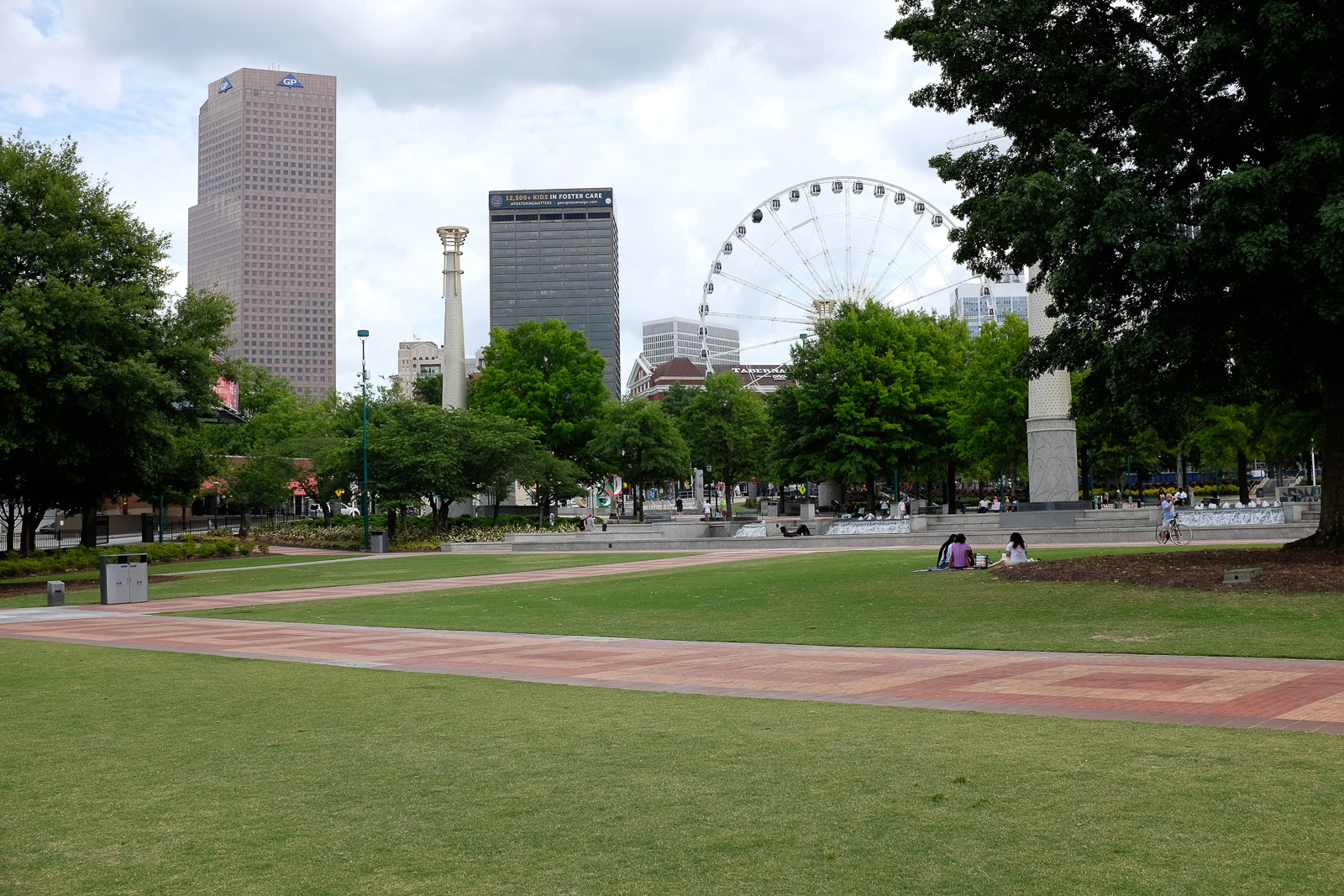
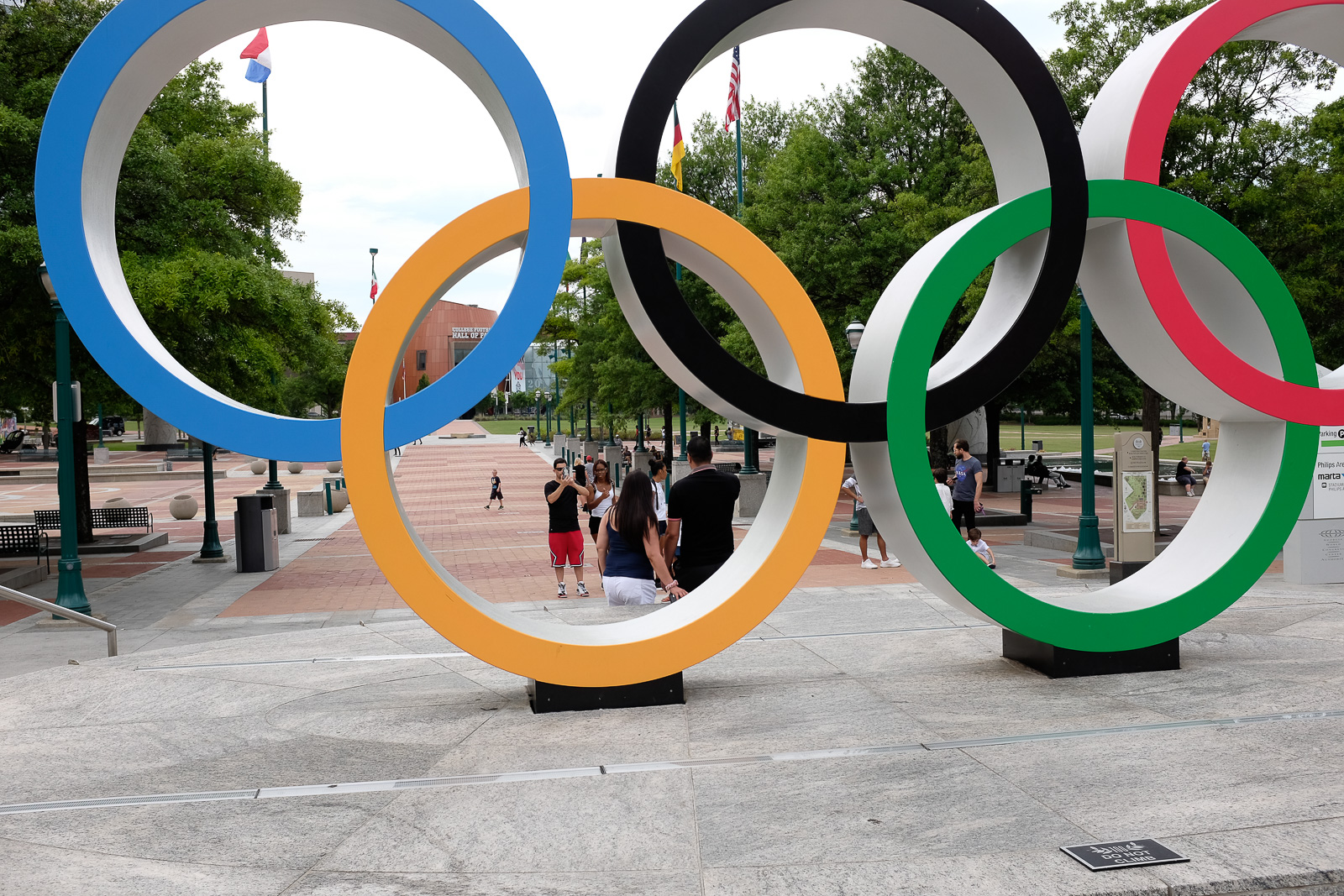
Atlanta – Memorial Day Week-End – Centennial Park – Fujifilm X100T
ATL_F100T-8216
Atlanta – Memorial Day Week-End – Centennial Park – Fujifilm X100T
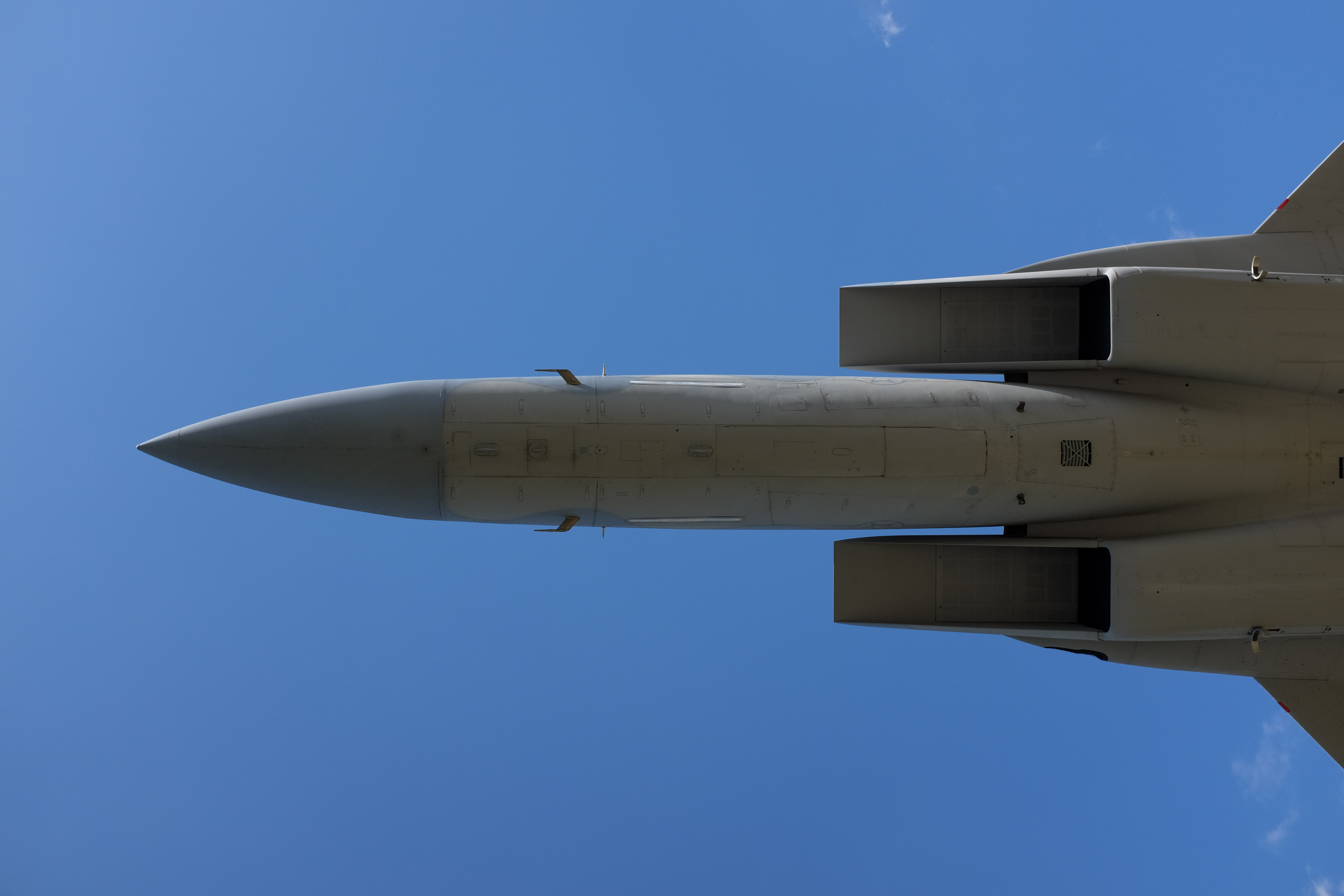
Warner Robbins USAF Museum (May 2025) – Fujifilm X100T – even in this poorly lit museum, the camera delivers stunning pictures.
Warner Robbins USAF Museum (May 2025) – Fujifilm X100T – I keep on using this camera regularly – it’s a great do-it all and I don’t see the need for an upgrade.

Viewfinders: coverage, magnification and eye relief

Eye Relief
Eye Relief

A large proportion of photographers wears prescription glasses – I know, I’m one of them – and almost everybody wears sun glasses occasionally. But surprisingly, until high eye point or high eye relief viewfinders appeared – on the Nikon F3 HP in the early eighties, photographers with glasses could not see the integrality of the scene – let alone the aperture or speed information on the LED displays surrounding the view of the scene- without having to move their eye balls up and down and left to right.

As far as viewfinders are concerned, some cameras are better than others, though. The quality of the viewfinder of a manual focus camera is influenced by three factors:

  • Coverage: It’s the percentage of the image captured through the lens which is going to be shown in the viewfinder. 100% coverage is desirable – but expensive to manufacture, and only top of the line cameras (the real “pro” models) show the integrality of the scene in the viewfinder. Most SLRs show between 85% and 95% of the scene. Point and shoot cameras, (more precisely the few P&S which still have an optical viewfinder) are much worse. The best of them, the Canon G11 only shows 77% of the scene that will be captured through the eye piece.
  • Magnification: If the magnification was equal to 1, an object seen through the viewfinder would appear to be the same size as seen with the naked eye (with a 50mm lens on a 35mm camera). The photographer could even shoot with both eyes open. If the magnification ratio is lower than 1, then the object will appear smaller in the viewfinder than seen with the naked eye.Magnification has an impact on composition and focusing. If the magnification ratio is very low (below 0.4) the image becomes so small that it’s difficult to compose the picture. Magnification is also a critical factor for picture sharpness on manual focus cameras: the accuracy of the focusing is directly related to what the photographer can see on the matte focusing screen, and the higher the magnification, the easier it’s going to be for him or her to focus accurately.On a 35mm single lens reflex camera, the magnification is measured with a 50mm lens, and varies between 75 and 95%. Full frame digital SLRs have viewfinders offering comparable magnification values. dSLRs with so-called APS-C sensors advertise very high magnification ratios, but after the crop factor of the small sensor is taken into consideration, the real magnification value lies between 0.46 and 0.62. Read Neocamera‘s article for more information about the real viewfinder magnification ratio of dSLRs.
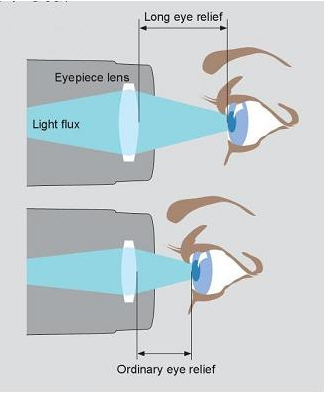
  • Eye relief: “The eye relief of a telescope, a microscope, or binoculars is the distance from the last surface of an eyepiece at which the eye can be placed to match the eyepiece exit pupil to the eye’s entrance pupil.” (Wikipedia, eye relief entry).The longer the eye relief, the more comfortable the camera is going to be for a photographer wearing glasses, but the smaller the focusing screen is going to look.A photographer wearing glasses will need an eye point of approximately 20mm (depending on the dimensions of the frames and the thickness of the lenses of the glasses) to be able to see entire the viewfinder image, plus the exposure information without having to move his eye balls left to right and up and down. Camera manufacturers describe them as “High eye Point” or HP viewfinders.

A comparison between a few 35mm cameras

As is often the case with engineering, a good design is the result of a successful compromise between conflicting requirements. Most photographers desire a long eye relief, but at the same time want a magnification ratio high enough, so that they can compose their image with precision and focus accurately. With the F3, Nikon offered 2 versions of its standard viewfinder. The DE-2 of the original F3 had an eye relief of approximately 20mm, and a magnification of 80%; the DE-3 viewfinder of the F3 HP had a much longer eye relief (25mm) but a smaller magnification ratio of 75%. The market decided in favor of the longer eye relief and the DE-3 became the standard viewfinder of all subsequent versions of the F3. The advent of autofocus SLRs accelerated the trend towards longer eye relief and lower magnification ratios.

Subjective results
The experience confirms the figures. The Nikon F3 has by far the best viewfinder, followed by the tiny Olympus OM-1. The Nikon FM-FE-FA are far behind.

  • Nikon launched the F3 with a standard viewfinder (model DE-2) which offered 100% coverage and already had a relatively long eye point. The standard F3 can comfortably be used by photographers wearing glasses. A few years later, Nikon introduced another version of its flagship camera, the F3 HP, which was the first to offer a viewfinder with the very long eye point of 25mm (one inch). The long eye point came at the cost of a lower magnification (down to 75%) and an higher weight. The F3 HP was a sales success, and all subsequent F3 cameras would come from Nikon with the HP viewfinder (the DE-3).
  • The Olympus OM-1 has an incredible viewfinder, with a very high coverage and a very high magnification. The viewfinder does not offer any exposure information besides the match-needle arrangement at the right of the image, and even if the eye point is rather short, the photographer has the impression he’s watching all of the scene. Subsequent OM models offered a little more information at the periphery of the viewfinder and a little less magnification, and in a world where hi-point viewfinders were becoming the norm, they were far less remarkable than the OM-1.
  • The Nikon FM, FE and FA provide more exposure information than the Olympus cameras (the selected aperture, in particular). Compounded with the very short eye relief (14mm), it makes it impossible for a photographer wearing glasses to see the whole scene and the exposure information at the periphery without some eye movements. While similar on paper to the other compact Nikon SLRs, the viewfinder of the Nikon FG fares worse than its stablemates in real life.

Rangefinder cameras work by different rules. Their viewfinder covers far more than what will be captured on the film, and very little exposure information is displayed in the viewfinder. Even if the Leica M offers an eye relief of only 15mm, a photographer wearing glasses will not have any problem visualizing the image in the viewfinder.

With a few exceptions such as the Canon G11, Point and Shoot digital cameras don’t offer optical viewfinders anymore. The G11’s may be used as a last resort in a very bright environment, (when using the LCD is not an option), but it’s very small and very unpleasant to use. Low end digital SLRs with small sensors (Four Thirds or APS-C) are equipped with very low magnification viewfinders, and have a very pronounced tunnel effect. Manual focusing is not an option, and composing an image with precision can be challenging. Mid-level dSLRS (like the Canon 7D or Nikon’s D90 and D300) have much better viewfinders, with relatively long eye relief (22 and 19.5mm respectively) and real magnification ratios of approximately 0.625.

More about it

Luminous Landscape – Mike Johnson’s “Understanding SLR viewfinders”

Neocamera: Viewfinder of digital cameras

Foca *** with a Foca turret viewfinder / Olympus OM-1n. The Foca is a French rangefinder camera from the late forties, and its viewfinder is unusable if you wear glasses. And hardly usable even without them.
Model Coverage Magnification Eye Point Comment
Nikon F3 HP (DE-3 finder) 100 % 75% 25mm The camera that introduced Hight Point viewfinders to the public.
Nikon F3 with the standard DE-2 viewfinder 100 % 80% Not known. Probably 20mm The original pre-HP viewfinder. Even with glasses one can easily see all of the scene and the little LCD display.
Olympus OM-1 97% 92% Not known. Probably 15mm Incredible. How can such a small camera deliver such a large image? Short eye point, but since the viewfinder does not provide any exposure information at the periphery of the frame, not much of a problem.
Nikon FM, FE, FE2, FA 93% 86% Not known. Probably 14mm Short eye point, plenty of information at the periphery of the viewfinder. Not the best recipe for photographers wearing glasses.


Single Lens Reflex or Rangefinder Camera? A few days with a Leica CL


I was back in Paris for a few days at the end of last year, and since there was still room in my equipment bag, I pulled my old and battered Leica CL from a drawer and took it with me. A good opportunity to check whether I could get acceptable results out of it this time.


I never was a rangefinder guy. When I started being interested in photography, semi-automatic Single Lens Reflex cameras (SLRs) were already the norm, and Leica an expensive brand of obsolete cameras. My formative years were spent with a Pentax MX, and I’ve always found natural to see the world on the matte focusing screen of a reflex camera. But I was intrigued by the Leica legend, and one day, purchased a Leica CL. Over the last 15 years, I used it rarely, but being light and compact, it could find a slot in my equipment bag from time to time.


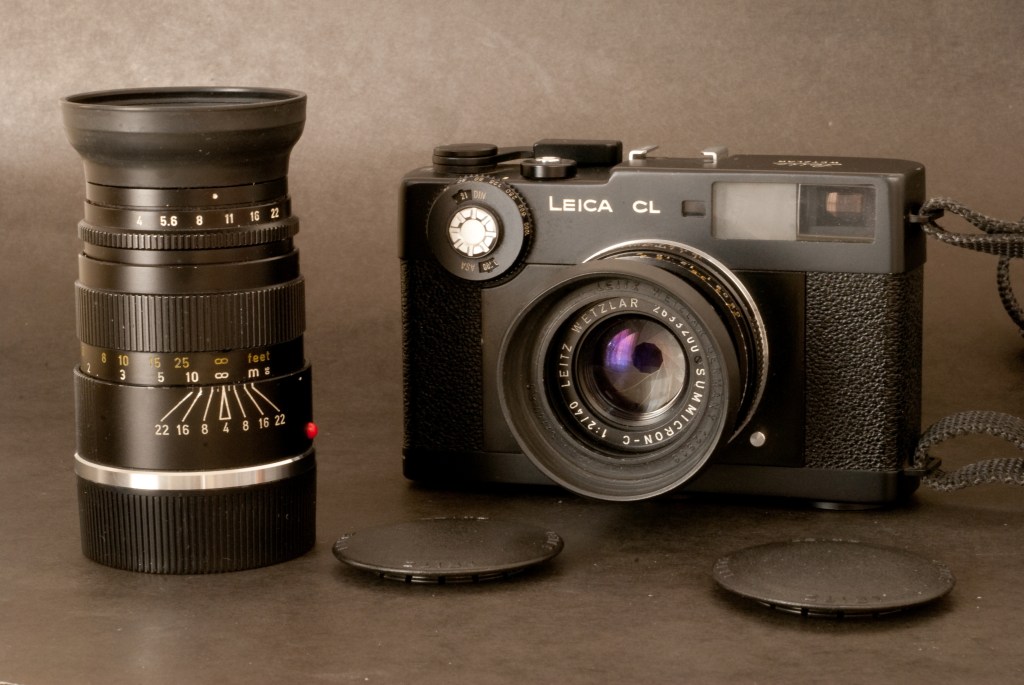
Leica CL with its two lenses

The CL was a sort of entry-level rangefinder camera, designed by Leitz in Germany and built by Minolta in Japan from 1973 to 1976.


From a technical point of view, it is a miniature M5, and very advanced for a Leica of its time. A semi-auto camera with through the lens metering, it used a mechanism very similar to the system used in the much maligned M5’s.


After the CL and the M5 were abandoned in the mid seventies, Leitz reverted to fully manual cameras with no metering capabilities, and aficionados had to wait for another 10 years before a semi-auto rangefinder camera was proposed again by the German firm.


With its M bayonet mount, the CL could use the 50 mm lenses of its bigger brothers, but Leitz had also designed two lenses specifically for the CL, a 40mm Summicron (F:2) and a 90mm Elmar (F:4).

Using the Leica CL


A true Leica, it also used a focal plan textile shutter (1/2 sec up to 1/1000 sec). The rangefinder has a short base and is not as accurate as the M6’s, but is good enough for the 90mm Elmar.

A class at the Louvres Museum- Jan.2010. Paris
A class at the Louvres Museum- The CL is small and silent, and nobody paid attention to me or to the camera.


With its mechanical shutter, the CL only needs a battery for metering, and uses it sparingly. Mine still has the mercury battery I bought it with, but I suspect it must be at the end of its life, because the recommendations of the metering system were so bizarre that I decided to forget about it and apply the “sunny 16” rule. With a battery in working order, the determination of the exposure is very simple (a match needle at the right of the viewfinder).


On the CL, the image in the viewfinder is large and clear. The viewfinder has a greater field of view than the 40mm lens normally mounted on the camera, and projected bright lines show to the photographer what the actual picture will look like. There is little difference between the respective field of views of the viewfinder (similar to a 35mm) and of the 40mm lens, but the bright frame projected of the 90mm lens will seem minuscule at the center of a viewfinder, whose enlargement factor does not change. Disconcerting, but not dramatic.


What really requires adaptation is focusing. On a manual focus Single Lens Reflex camera, the image of the subject is projected on a matte ground glass, and the photographer can see immediately whether the image is in focus or not. Similarly, with tele-zooms used at large apertures, the effects of the reduced depth of field are easily visible, and the photographer can visualize what will be in focus, and what will be pleasantly blurred.

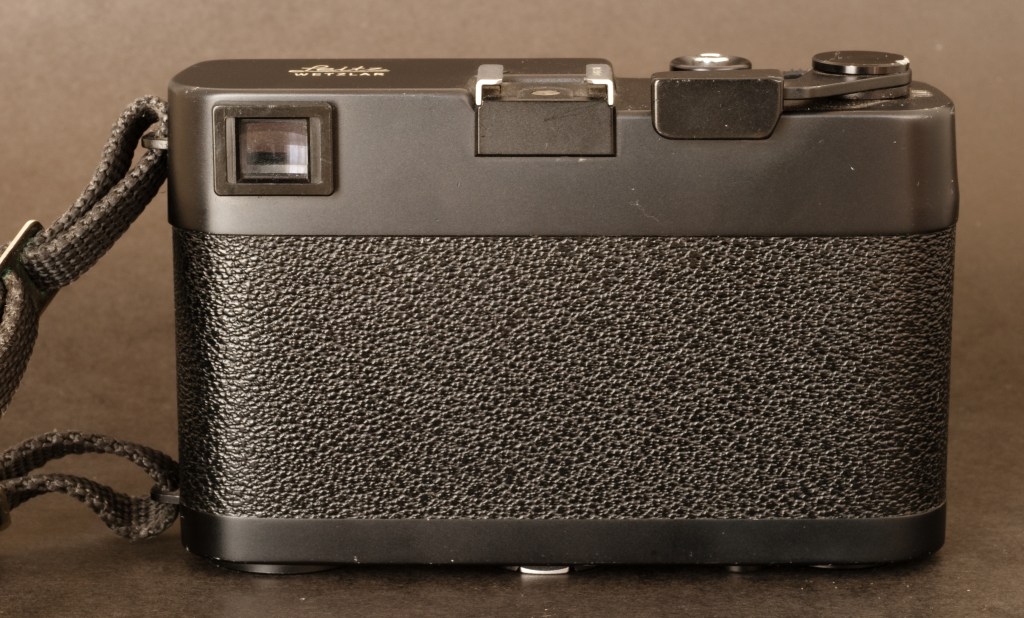
The back of the Leica CL
The back of the Leica CL – Note the viewfinder at the top left corner of the body, leaving ample space for the nose of the photographer


On a rangefinder camera, the finder does not provide any feed-back when it comes to focusing. Every element of the image seems in focus: it’s very easy too forget to set the focus, and very difficult to predict the depth of field.


The coupled rangefinder is materialized by a small window at the center of the viewfinder. It’s extremely accurate, but the focusing ring on the small lens is narrow and rather stiff, and you get the impression that you could have reacted much faster with the large focusing ring of the 50mm lens of your SLR.


I guess it gets better with experience, but it’s very frustrating for a beginner.


If you can get over the idiosyncrasies of the viewfinder, the Leica experience is very rewarding. The camera is virtually silent, and being small and black, gets totally unnoticed. The pictures are sharp, with a lot of micro-contrast, and give the impression of being of higher quality than the images taken with most of the SLRs (provided you could master the focusing system). Your success rate will be lower than with a manual SLR, and far lower than with a dSLR of the latest generation, but when the images are good, they’ll be very good.


Buying a rangefinder camera


Rangefinder cameras are markedly different from SLRs, and will not produce good pictures without some serious practice. The first attempts will be frustrating, and there is no point in spending a lot of money in a Leica M9 if you discover after a few days that you’re totally allergic to this style of cameras.


The Leica CL is one of the cheapest options for a photographer who would like to try rangefinder cameras. Good Leica CL are rather easy to find in the US or in Europe. Even in a pristine condition, they never cross the $1,000 threshold, and nice items can be found between $300 and $600. In Japan, the CL was sold as a Leitz-Minolta camera, with no other difference with the “Leitz only” CL than the logo.


A few years after the production of the CL was stopped, Minolta launched the CLE, an automatic exposure version of the CL, and the first camera to propose On the Film (OTF) flash metering. There is no semi-auto or manual mode. The CLE contains much more electronics than the CL, and it can not be repaired if the main circuit decides it had enough. The CLE is much more difficult to find than the CL. Expect to pay $600 for a nice one, and thousands for collector editions.


Full size M series Leica are either more primitive (no exposure metering) or more recent and significantly more expensive than the CL. Even in poor condition, a Leica M6 can not be found for less than $1,000. Cosina is still producing a line of rangefinder cameras, sold under the Voigtlander brand, and available with Leica M lens mount as well as less common mounts such as the Nikon and Contax rangefinder mounts. Amongst all the the rangefinder cameras from Voigtlander, the Bessa R3M is the closest to the CL (it accepts the same 40 and 90mm lenses), and can be found between $400 (used) and $600 (new).

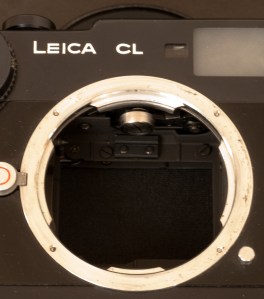
Leica CL - The shutter is not armed
The light chamber of the Leica CL – In this picture, the shutter is not armed. As a consequence, the CdS sensor of the exposure meter is not deployed.

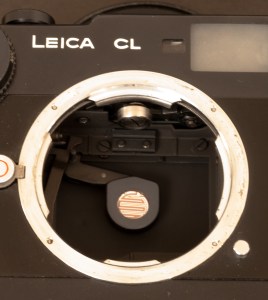
Leica CL -Armed shutter
The shutter is armed; the CdS sensor of the exposure meter is deployed. It will retract when the shutter release is pressed, just before the shutter opens.


References and links


A specialized source for rangefinder cameras (Leica, Nikon and modern Voigtlander): http://www.cameraquest.com/leicacl.htm


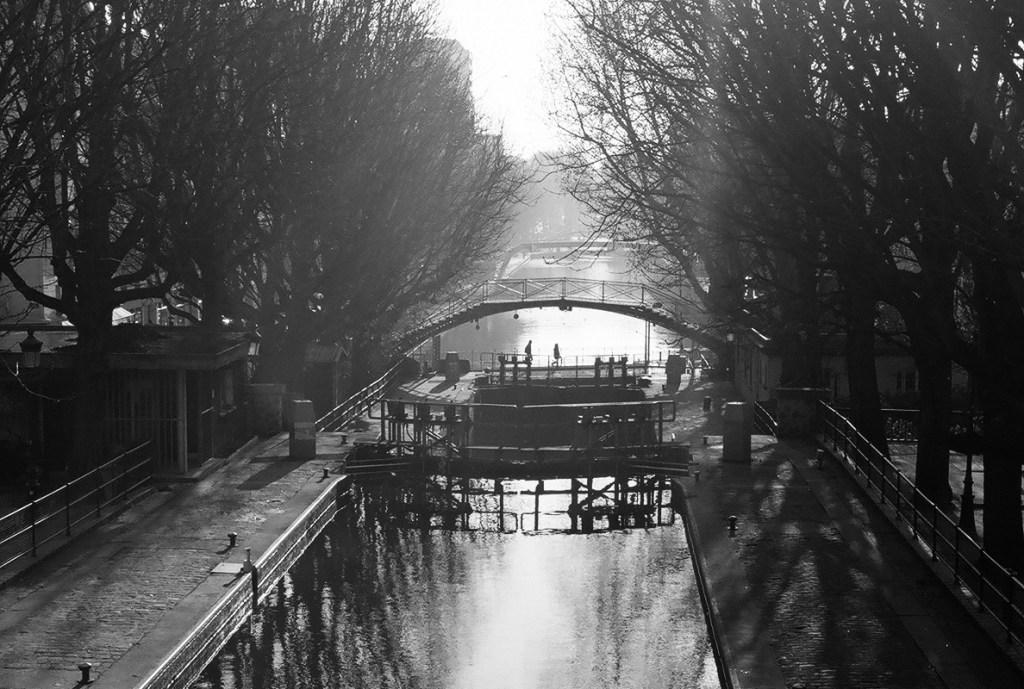
Canal St Martin - Paris - Located between the Gare de l'Est and the Bastille, the canal was a favorite set of the French film makers in the thirties. Using a Leica with B&W film seemed appropriate.
Canal St Martin – Paris – Located between the Gare de l’Est and the Bastille, the Canal was a favorite set of the French film makers in the thirties. Using a Leica with B&W film seemed appropriate