In 1999, Nikon launched the D1, their first entirely in house-designed dSLR. And in 2003, Canon introduced the first mass-market digital dSLR, the Rebel 300D.
In the space of four years, the film SLR had gone from a mass market product to a specialty item. Which makes the SLRs launched between 1995 and Year 2000 the last generation of film reflex cameras targeting a wide audience of photographers.
The ZX/MZ series models were Pentax’s last full line of film SLRs, the *ist that came in 2003 being a one off, significantly different from to the ZX/MZ family. The name of the models sold in America were starting with “ZX” while the “MZ” prefix denotated models sold in the rest of world. But the cameras were otherwise identical.
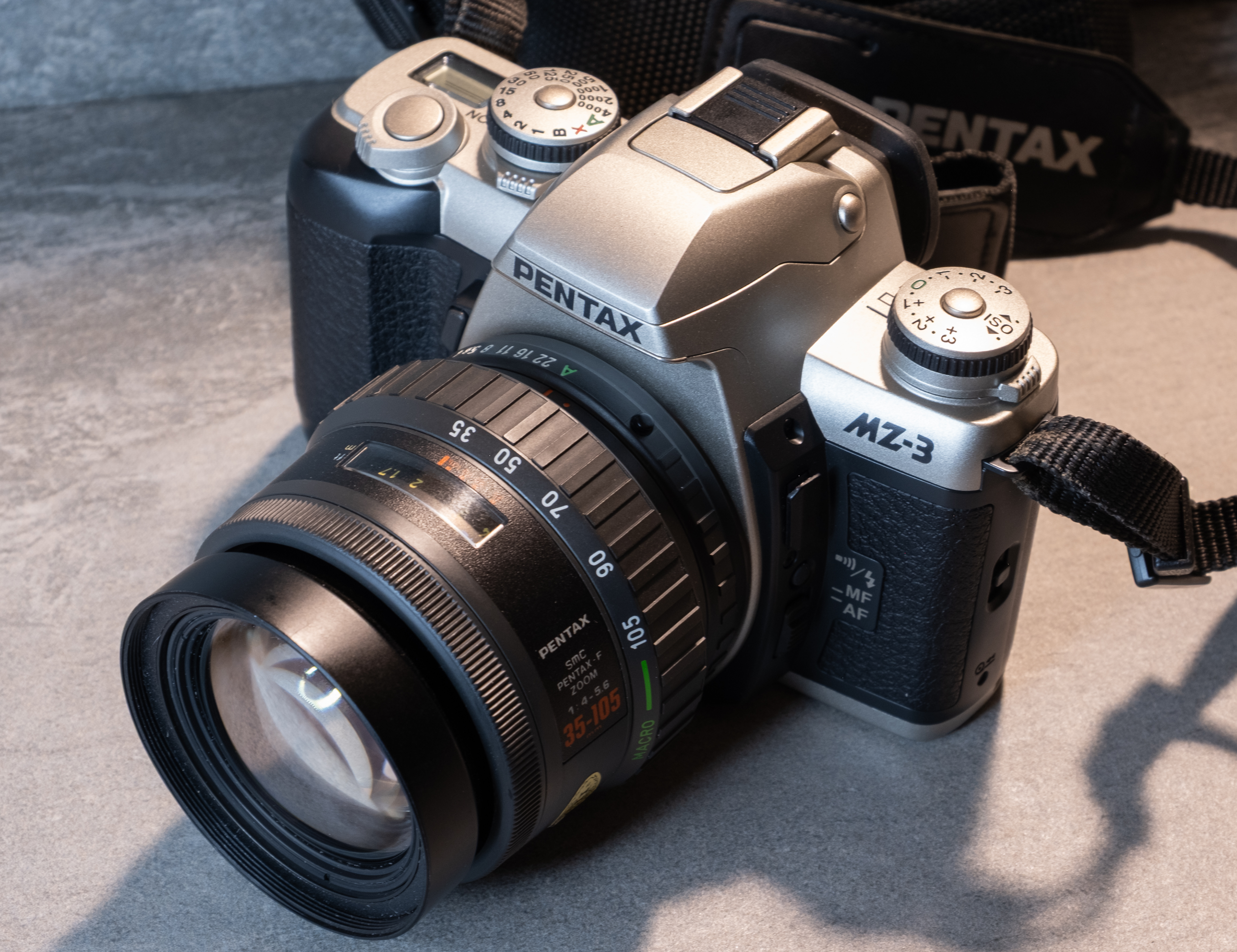
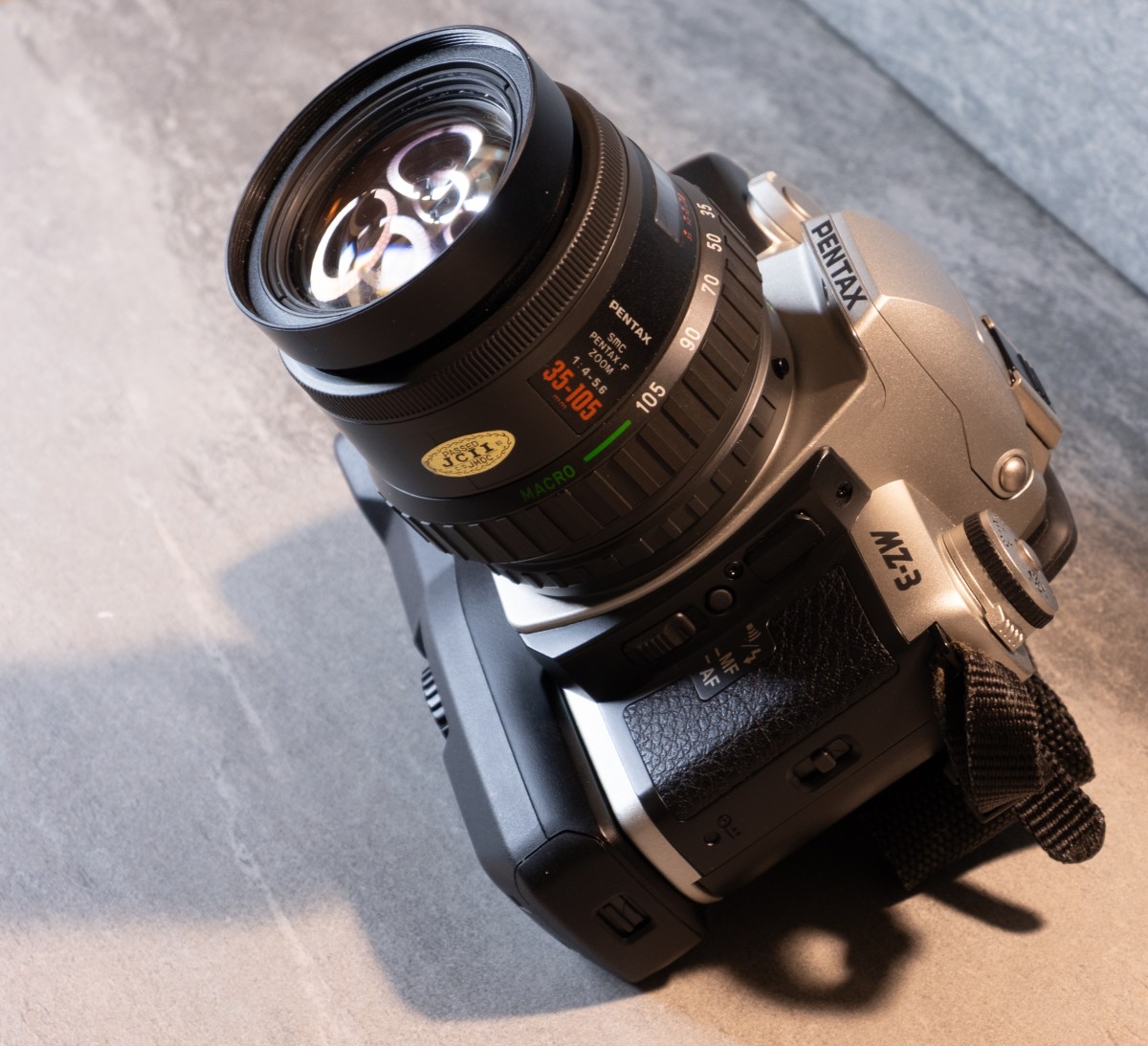
All the cameras of this series were very compact and favored ease of use over feature overload. Models like the ZX/MX 6, 7, 10, 20, 30, 50 and L (in no specific order) were targeting beginners and were controlled primarily by picture modes. The ZX-5/MZ-5 was aimed at photographers familiar with the interface of semi-auto cameras, but was too lightly spec’d for experts and aspiring pro photographers. The MZ-3 and the ZX-5n (almost identical twins positioned slightly above the ZX/MZ-5) were an evolution of the ZX/MZ-5, and formed the top of the ZX/MZ series until the launch of a substantially different (and higher-end) MZ-S, in 2001.
This generation of Pentax cameras was well received on the marketplace (more than one million units sold), with Pentax insiders reporting that the ZX-5/MZ-5 and MZ-3 were a major hit and sold well above the firm’s expectations.
Caveat Emptor (buyer beware)
All cameras of the ZX/MZ family shared an unfortunate characteristic that makes them a risky purchase today.
Contrarily to the cameras of the previous generation, the ZX/MZ had been designed to be very compact – and their construction relied heavily on small components made out of plastic, that did not age or support heavy usage gracefully.
The gear set of the return mechanism of their reflex mirror is a well known weak point, and is the reason why purchasing one of those cameras is generally avoided by film lovers today. Except if you can find a copy painstakingly refurbished and upgraded by a specialist of the brand.
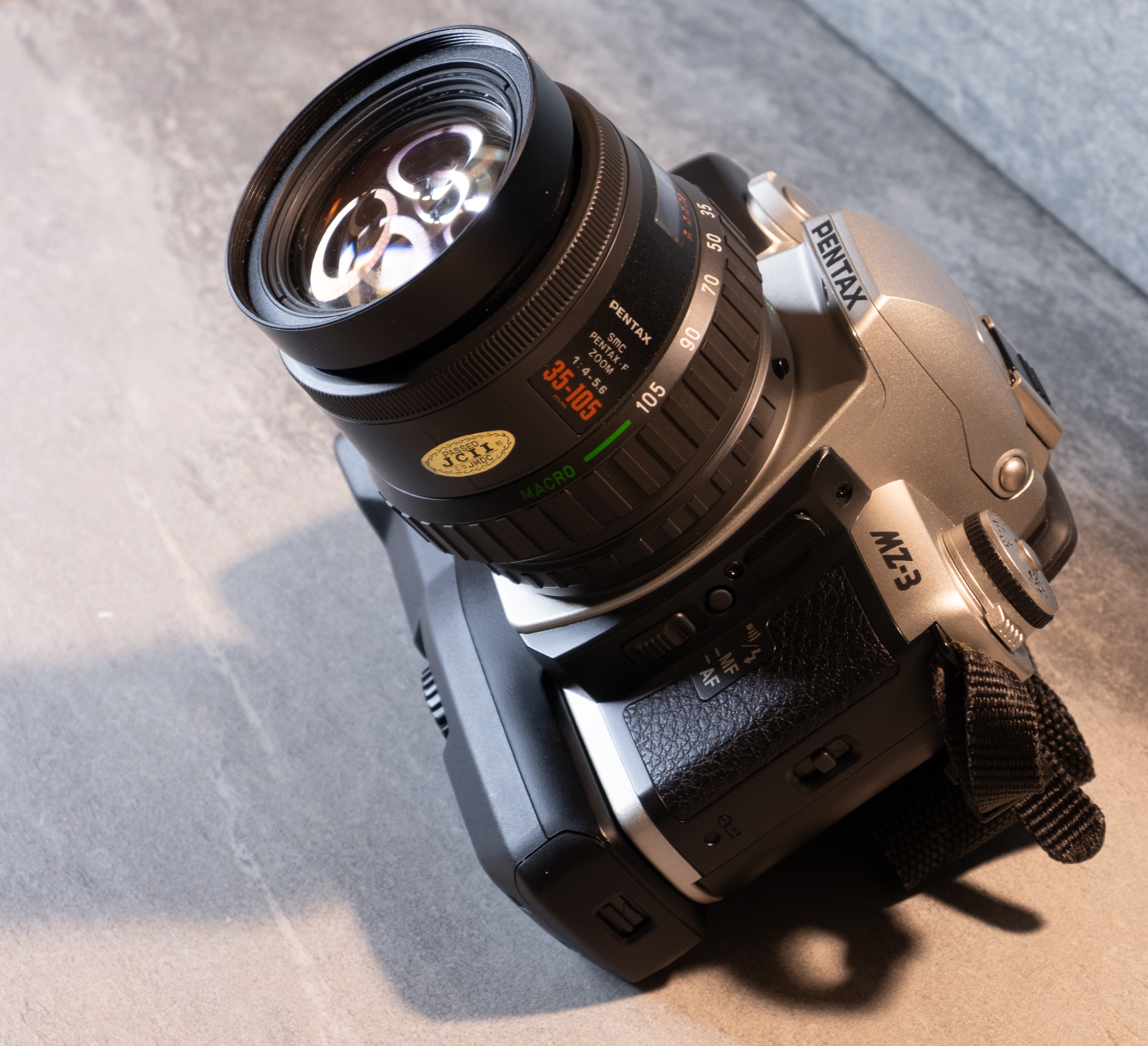
I found one of those on Buyee.jp, and I’m now the proud owner of a “better than new” Pentax MZ-3, refurbished with brass gears and re-soldered contacts. As often with cameras bought from Japanese sellers, this one is in pristine condition – it is hard to believe it is 30 years old.
The specifications
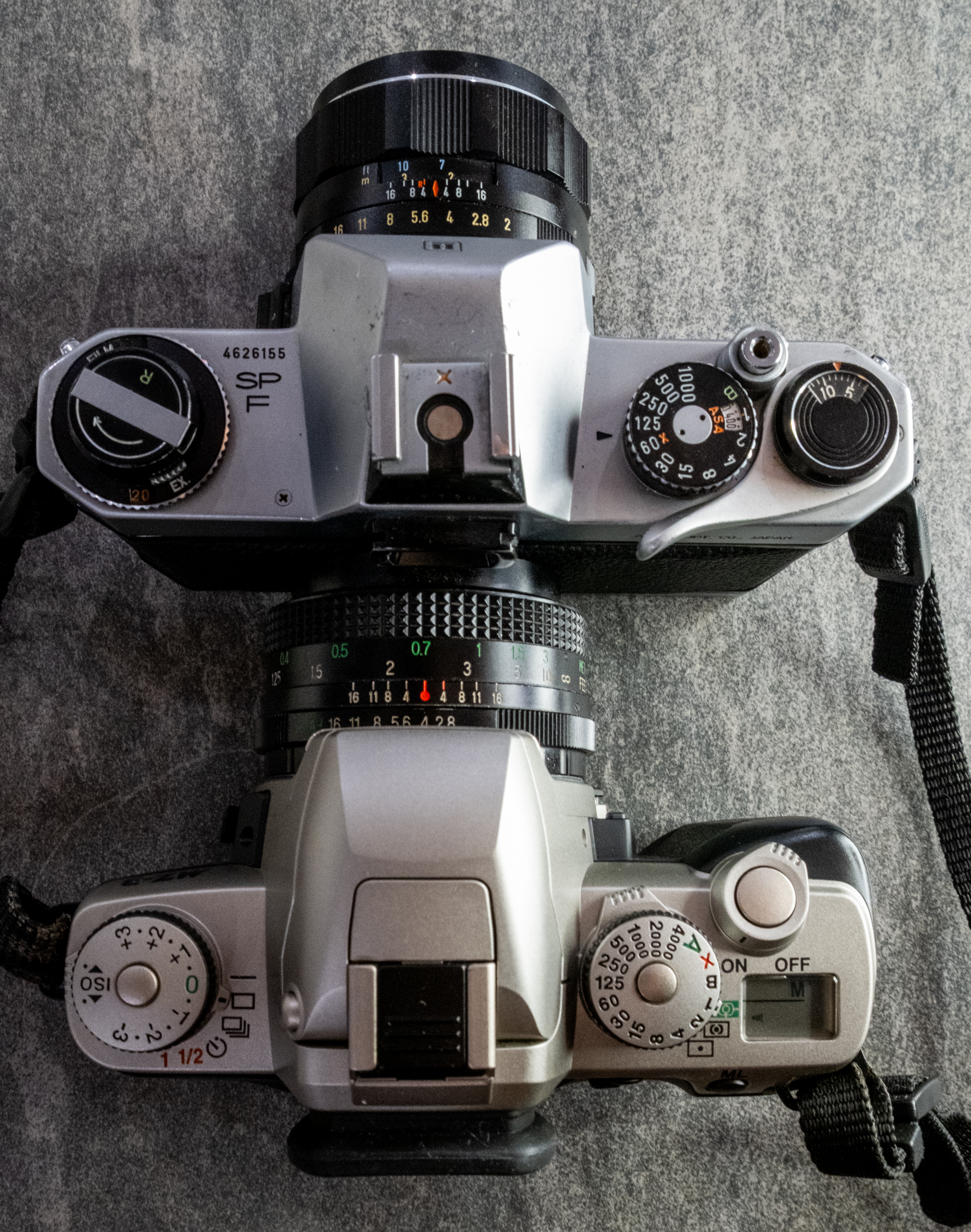
The ZX/MZ series were designed to be simple to use. The ZX/MZ-5 and its derivatives offered a “classic” interface, with dedicated dials for the shutter speed and the exposure compensation, and expect the aperture to be controlled by the aperture ring on the lens itself. This design is reminiscent of the organization of commands of the semi-auto cameras of the nineteen sixties and seventies, like the Pentax Spotmatic.
Beyond the interface, another point of differentiation between reflex cameras is the construction of the viewfinder – “amateur-oriented” SLRs and dSLRs (whatever the brand) were designed with a cheaper to build but not as wide or luminous penta-mirror viewfinder, while higher end models benefited from a better (more luminous, wider but also heavier) glass pentaprism.
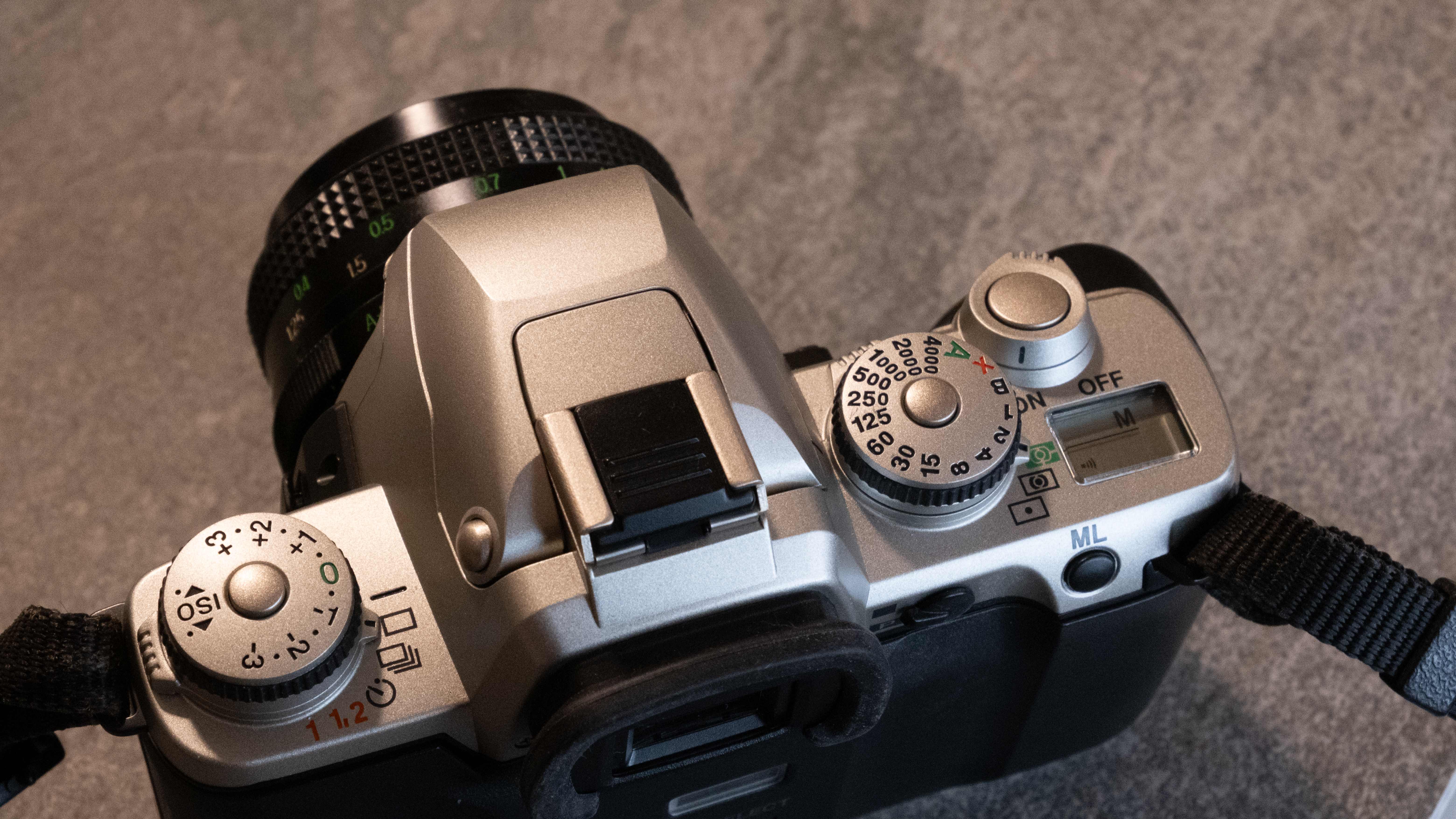
Classic interface, pentaprism, shutter rated up to 1/4000sec, exposure memorization and depth of field preview commands, the MZ-3 clearly sits in the “camera for experienced enthusiasts” category. But its full plastic construction (except for the bayonet mount, though) excludes it from the real “pro” category, where cameras tend to have chassis built out of metallic alloys, a faster and more durable shutter, and a viewfinder offering almost 100% coverage (Nikon F100, Minolta Maxxum 9, or Canon EOS-1n).
The MZ-3 needs two easy to find 3V CR2 disposable lithium batteries, or, if equipped with the optional FG grip, a set of four standard AA batteries.
ZX-5, MZ-3, ZX-5n: what are the differences?
First came the ZX-5 (MZ-5) of 1996. The MZ-3 was launched in 1997 in “selected markets”. The improvements over the exteriorly similar ZX-5 included a faster maximum shutter speed (1/4000 instead of 1/2000) and a flash sync speed raised to 1/125sec (from 1/100s). AE lock, Depth of Field preview buttons and an auto-exposure bracketing mode were also added, and the command dials (shutter speed, exposure compensation) were made a bit bigger to improve the ergonomics. The ZX-5n was launched on the American market at the same time, and is essentially a MZ-3 with the slower shutter mechanism of the original ZX-5.
Conclusion
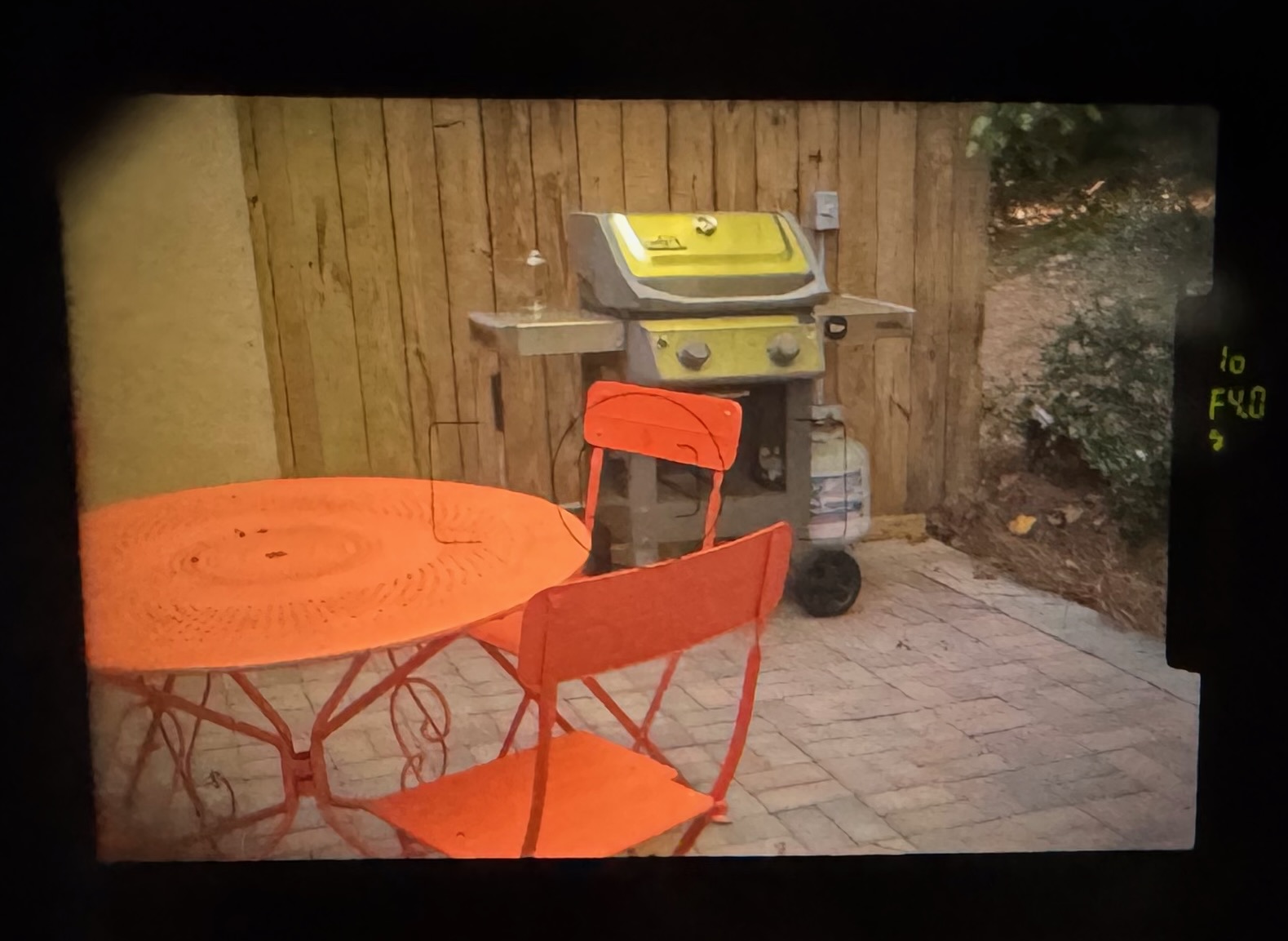
The MZ-3 is easy to live with: small, light but not excessively, it falls well in the hands, with a large and informative viewfinder. The commands are well thought and it’s easy to understand how the camera is set up. Using it feels totally natural: you do your thing (you look for the right angle and compose), and it performs the technical chores (metering, focusing) mostly reliably, in the background. It’s a film camera, of course – its low light performance will be limited by the sensitivity of the film, and you can’t expect any image stabilization magic from a camera that old.
Compared to equivalent Minolta Maxxum/Dynax bodies (the 600si of 1995 is very similar in its definition), a MZ-3 is not as well spec’d on paper (fewer evaluation segments in the matrix metering system, for instance) but it seems built from nicer plastics and assembled with more care (a paradox, considering the reliability issues of the ZX/MZ series). In my opinion, there is not a huge performance difference between a camera like this MZ-3 and other “enthusiast-oriented” and “almost pro” cameras such as the the Nikon N90S. Except for the flash synchro speed (1/250s on the Nikon, 1/125 for the Pentax) which makes the N90S a much better camera for fans of fill-in flash. For the rest, as always with film cameras, image quality is mainly dependent on the characteristics of the film itself, and on the performance of the lenses.
Cameras from the second half of the nineteen nineties like this MZ-3 are a mixed bag. Except for very high end models, they’re built almost exclusively out of plastics, and they’re entirely controlled by electronic components – which impacts their long term repairability.
If you pick one of these enthusiast SLRs in good condition, you will get a camera with matrix metering, multi-zone autofocus and programmed auto-exposure that will deliver very good pictures in most situations. In edge cases, when auto-everything won’t guarantee a good photo, the camera will let you pick your own settings – with aperture or shutter speed preferred auto-exposure, spot or evaluative metering, assisted manual focus and exposure lock.
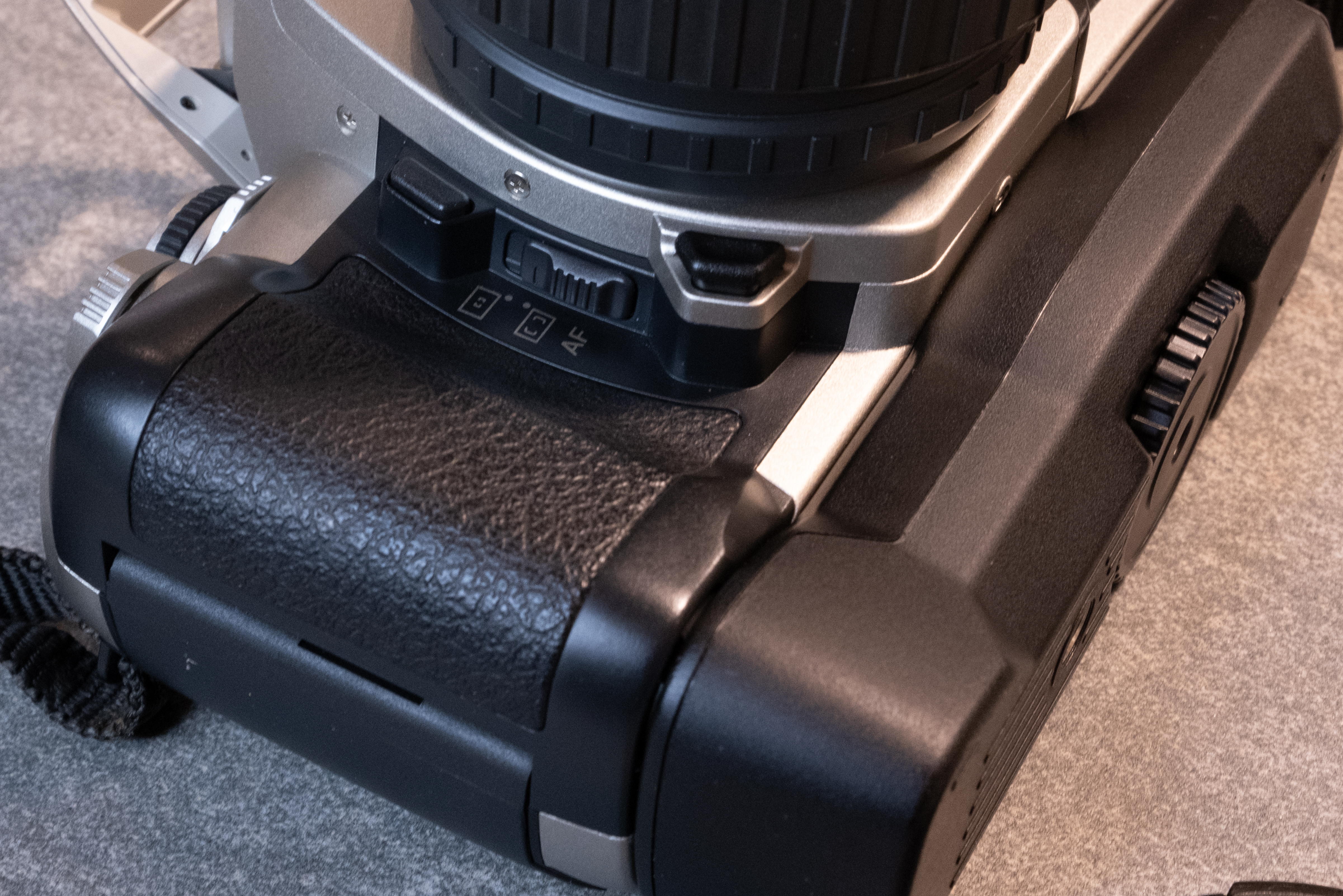
Today, provided their electronics and their plastic internal components don’t misbehave, a Pentax ZX-5 or a MZ-3 form a good introduction to film photography. Because their automatisms can generally be trusted, beginners will have a satisfying rate of success from the get go, and photographers already familiar with the technical side of photography will have enough control of the camera settings to develop their own style.
A Pentax MZ-3 in working condition can be found on eBay for anything between $100.00 and $140.00 – expect to pay a bit more for cameras whose typical weak points (the mirror return gear, the flash pivot) have been addressed. A marginally lower spec ZX-5n is easier to find in the US, and can be had for less than $50.00, but at this price point you should not expect the typical issues of this family of cameras to have been fixed preemptively.
More about the Pentax Autofocus SLRs: an interview (in Japanese) of the retired Pentax engineers having worked on the design of the MZ series: https://photoandculture-tokyo.com
What lenses for the Pentax ZX/MZ series cameras?
When Pentax launched the K bayonet in 1975, they presented it as the successor of the “Universal” 42mm screw mount, and they let other camera brands like Ricoh, Chinon, Cosina or Vivitar use it. But after a few years they changed their stance and started “closing” the K mount (they progressively excluded their competitors and the independent lens manufacturers from the successive evolutions of the mount’s design). No other camera brand was licensed to use the first autofocus variant of the K mount (although third party lens manufacturers could still use it), and today the current declinations of the K mount (KAF2, KAF3, KAF4) are exclusive to Pentax branded cameras and lenses.
An important caveat is that although they all use an evolution of the original bayonet K mount, all Pentax camera models of a given generation do not offer the same level of compatibility with the lenses of the brand. What we’re describing below is true for the ZX/MZ-3, 5, 5n and S models, but not necessarily for the cheaper ZX/MX-6, 7, 10, 20 30, or 50 bodies, that are sometimes deprived of the couplers needed for a full compatibility with manual focus lenses.
Mounting an original K mount lens on a ZX or MZ camera is technically possible but too limiting to make sense: no programmed auto exposure, no matrix metering, and of course, no autofocus. The SMC-Pentax-M lenses are just a more compact variant of the original K mount lenses, but the bayonet mount capabilities remain identical.
The KA evolution of the mount enables all auto exposure modes and all metering options available in ZX/MZ-3 or 5 bodies (lenses labeled SMC-Pentax-A) but you have to look for the KAF and KAF2 declinations of the mount to get Autofocus (lenses labeled SMC-Pentax-F and SMC-Pentax-FA).
Lenses designed as low cost entry models (FAJ) and those specifically designed for digital cameras (SMC and HD D FA, SMC and HD DA) may (for some of them) offer limited compatibility in a few auto-exposure modes, but it’s probably simpler to assume they are not compatible at all.
At the end of the film era, I don’t think that Pentax reflex cameras were still being purchased by many professional photographers, and with the exception of a few very interesting “Limited” prime lenses, most of their product line consisted of the sliding aperture zooms that amateurs could afford.
Second hand Pentax autofocus trans-standard zooms and manual focus prime lenses are still abundant today and tend to be on the cheap side. As often with brands that only had a limited following among pro photographers, autofocus prime lenses and constant aperture f/2.8 zooms can be difficult to find, and are at least as expensive as their Canon and Nikon equivalents.
More recent content in CamerAgX