I had not bought a semi-auto single lens reflex camera on the second hand market in a long time (a Canon AT-1 is probably my most recent purchase in this category, and that was 10 years ago). Taken by a bout of nostalgia, I was recently on the hunt for a nice copy of the first camera I fell in love with (but did not buy), when I was a student, a long long time ago. And I was surprised how expensive it was.
$150 to $250, that’s what you have to pay for a semi-auto exposure single lens reflex (SLR) of good reputation, consuming film, with a working meter and an accurate shutter, that can operate without its silver oxide batteries.
In this category, all SLRs are manual focus cameras, of course. And because they have a mechanical shutter, buyers assume that those cameras will be less subject to the terminal decay of their few electronic components, and be easier to repair than auto-exposure cameras.
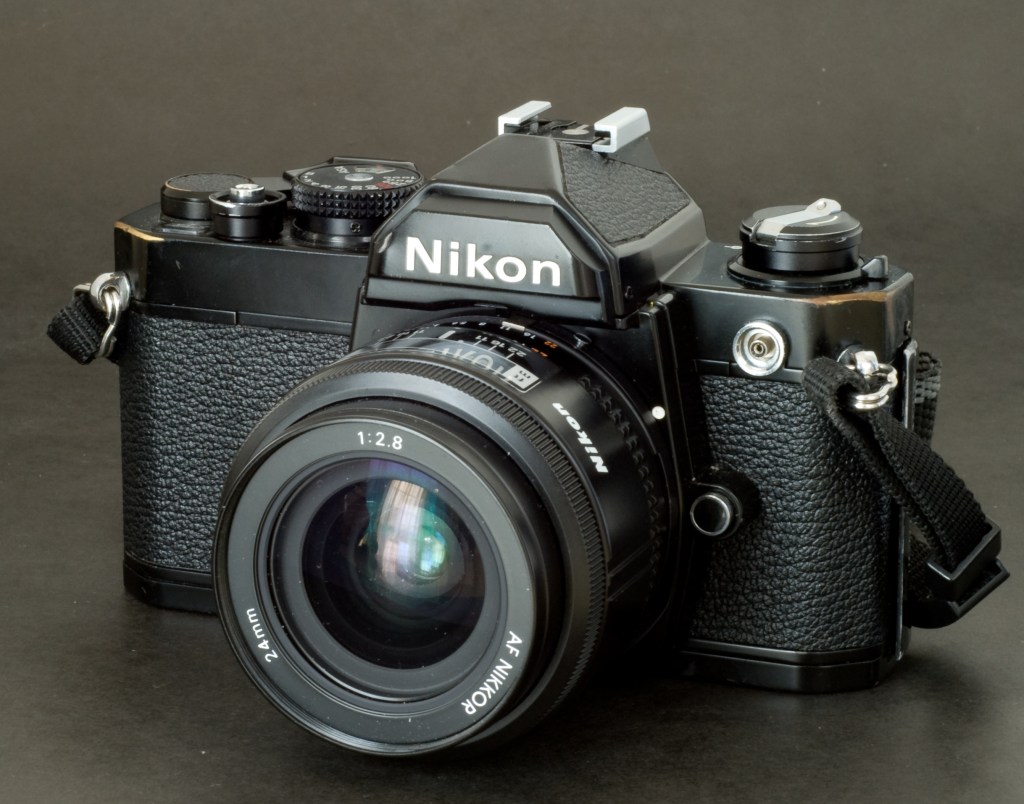
Below is a selection of good semi-auto cameras from the seventies and eighties:
- Nikon: the FM and the FM-2
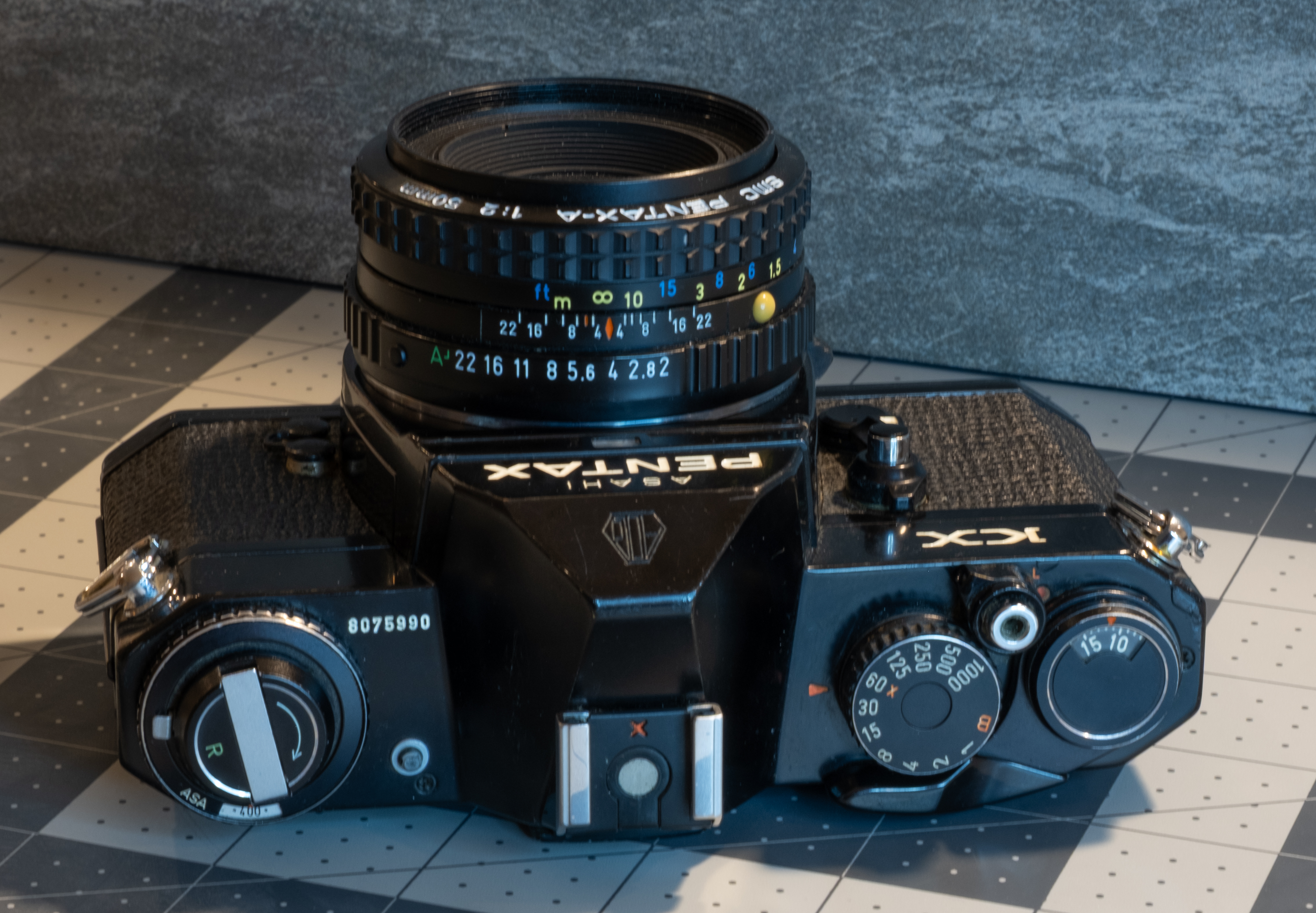
- Pentax: the K1000, KM, KX and MX
- Olympus: the OM-3ti
- Ricoh, Cosina and a few others proposed semi-auto cameras using Pentax K lens mount, which were also sold under store brands.
- Leica and Contax semi-auto reflex cameras are beautiful and the lenses… exceptional – but you definitely won’t find them for $150.00
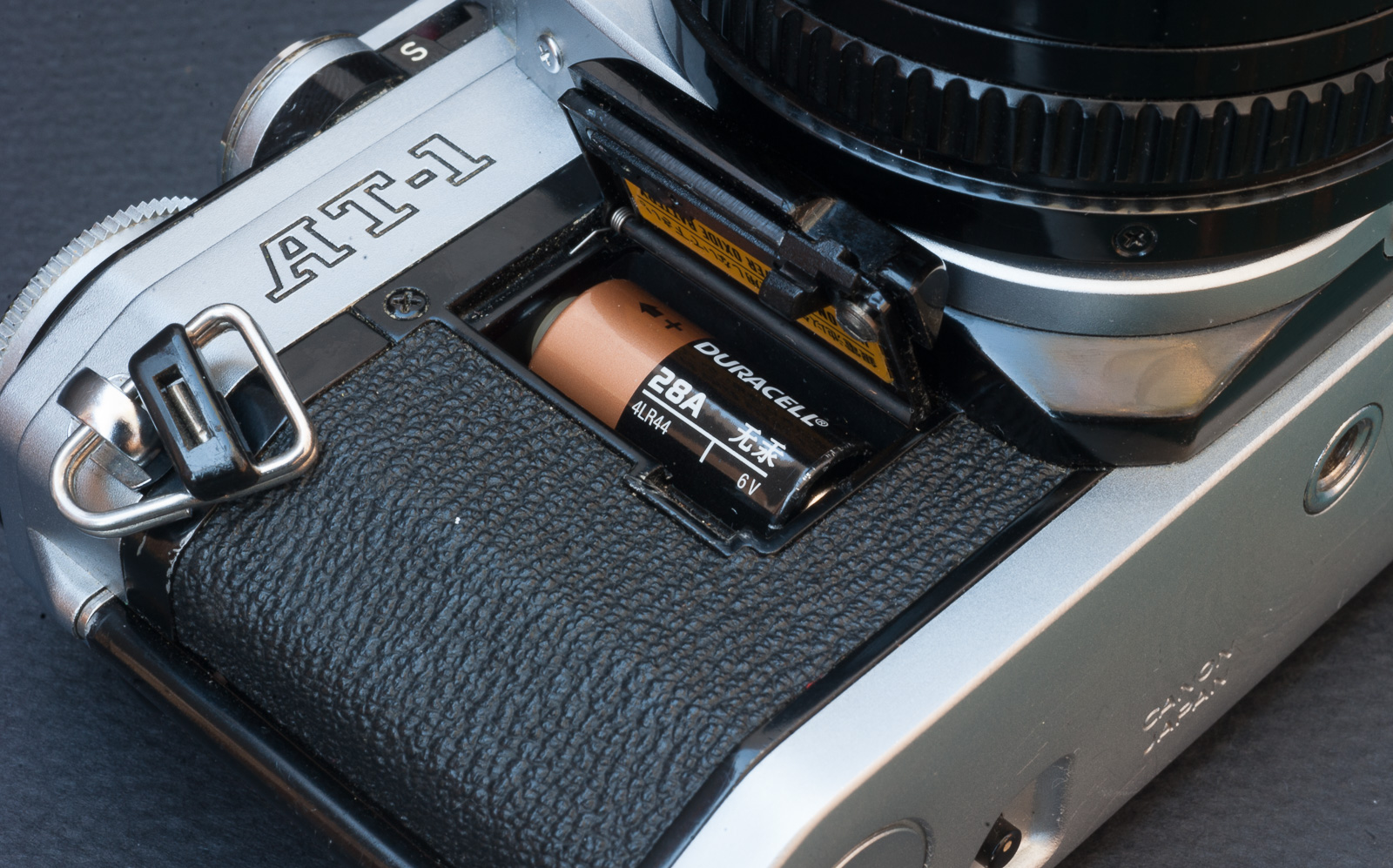
The Canon AT-1 fits more or less the description, with one major restriction – because its shutter release command is electromagnetic, it does not work – at all – without an (easy to find) 6v battery and is less in demand than a Nikon FM or a Pentax semi-auto camera.
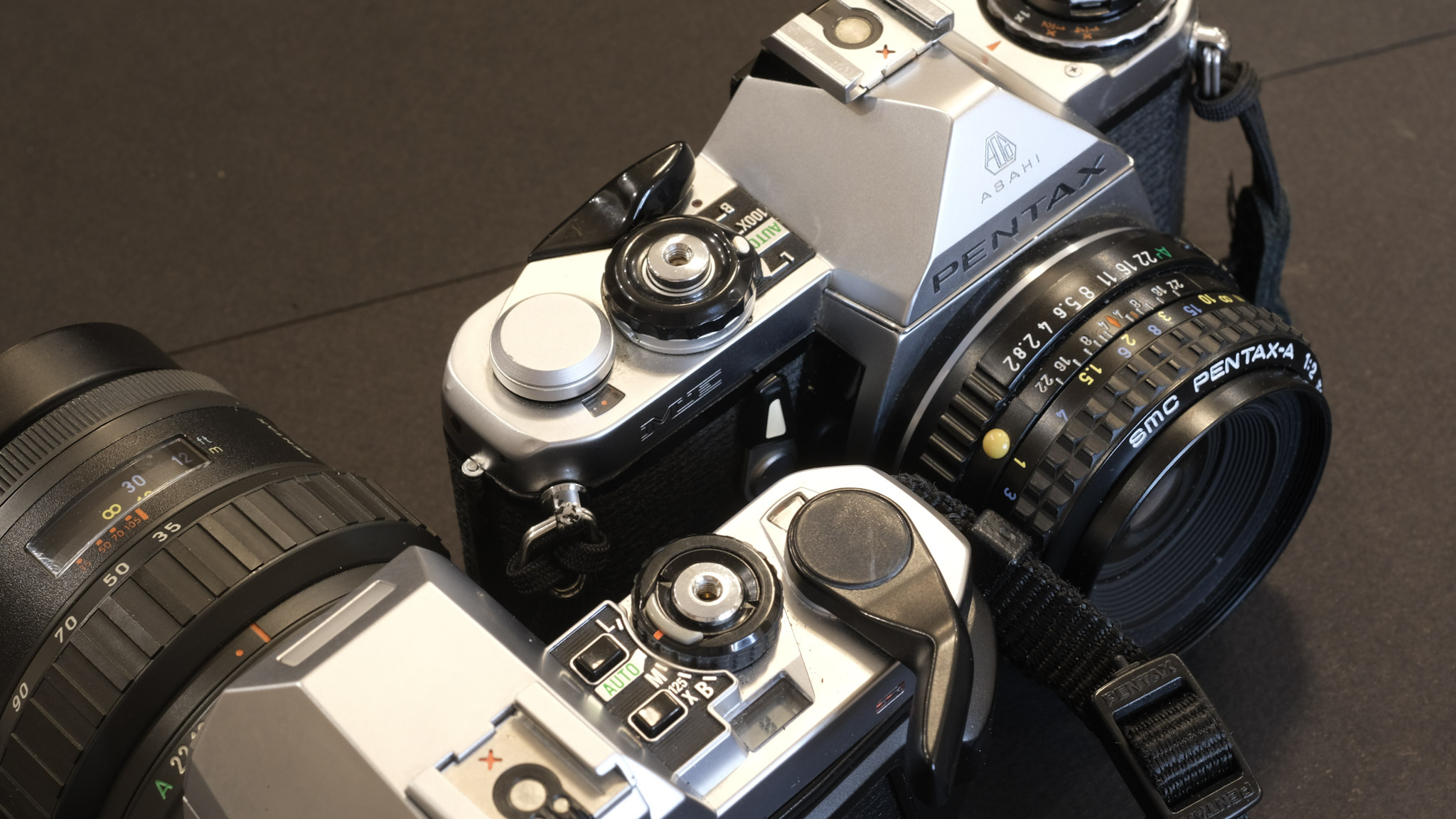
The other cameras of the 1975-1985 years are all automatic exposure cameras – and they absolutely need a battery to work. Some of them offer very little control over the exposure parameters (no semi-auto mode, no exposure memorization, and at best a single shutter speed accessible in full “manual” mode) – the Pentax ME, Nikon EM, Olympus OM-10, and Canon AV-1 all fall into that category.
Other auto-exposure cameras can be easily operated in full semi auto mode, in addition to one or more auto-exposure and program modes, and are not limiting for the skilled photographer: the Nikon FE, FE2 and FG, Pentax ME Super and Program-Plus, and most cameras of the Minolta X series.
Therefore the price hierarchy on the second hand market, from less desirable to most sought after:
- Fully automatic with no manual override
- Fully automatic with manual override
- Canon AT-1
- Mechanical semi auto cameras
Automatic, semi-automatic and manual exposure determination
A quick reminder – modern digital cameras (and almost all autofocus film cameras sold after 1985) offer some form of programmed automatic exposure: the camera evaluates the luminosity of the scene, and selects – automatically – a shutter speed and an aperture combination that will ensure that the image is correctly exposed.
If the photographer wants to control the depth of field, he or she will impose a specific aperture (adjusting the control wheel or the aperture ring of the lens if it exists), and the camera will set the shutter speed on its own. That’s the Aperture Priority Auto Exposure. If the photographer needs to directly select the shutter speed, the camera will determine the aperture automatically – it’s the Shutter Speed Priority automatic exposure mode.
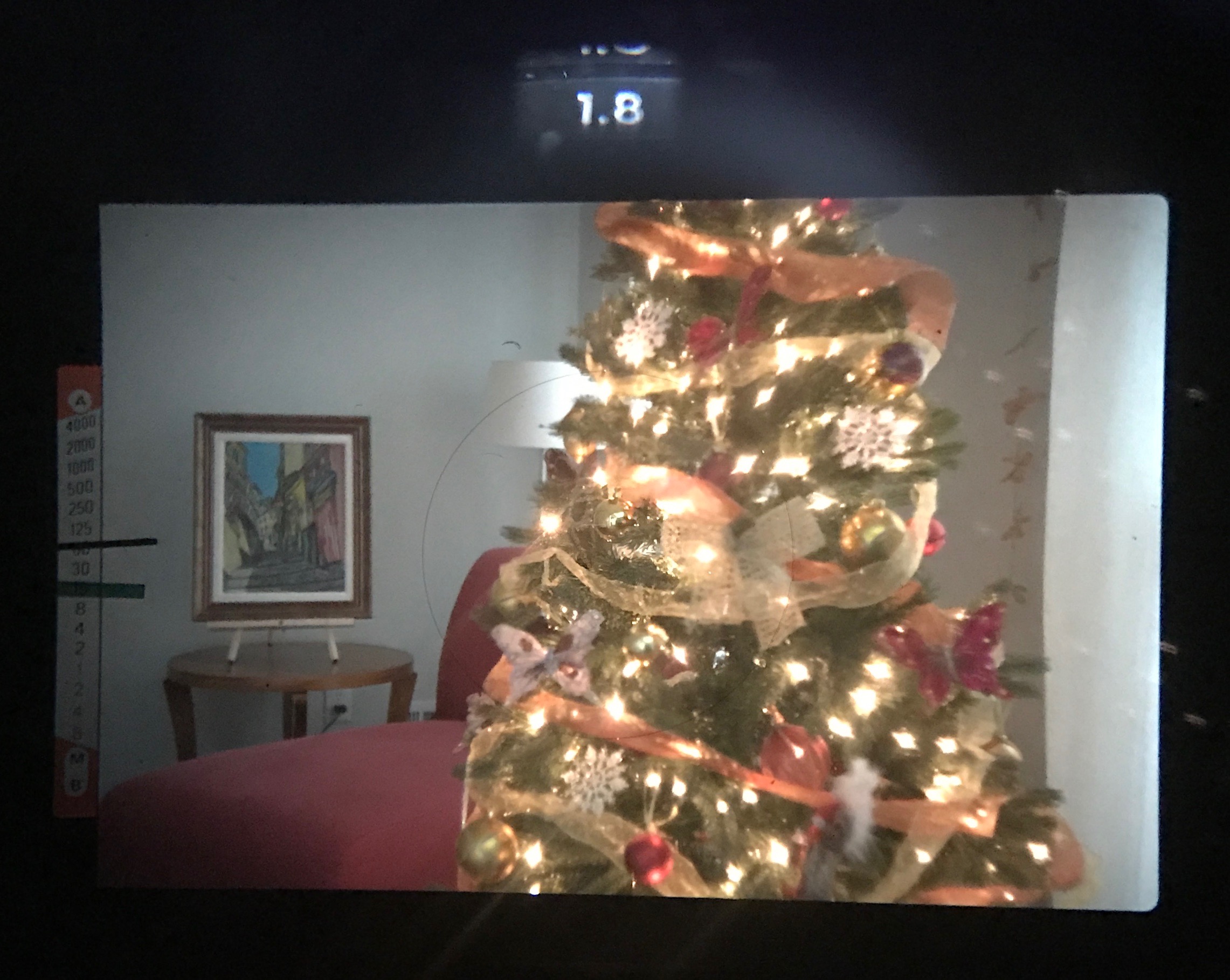
Before auto-exposure cameras became ubiquitous, the best you could get was a semi-automatic camera – the photographer had to turn the shutter speed dial or the aperture ring left or right, until the “matching needle” of the exposure meter stabilized between the + and the – markings in the viewfinder. One more recent models (Fujica ST801, Nikon FM, Pentax MX), the matching needle arrangement is replaced by a series of three or five LEDs, to the same effect.
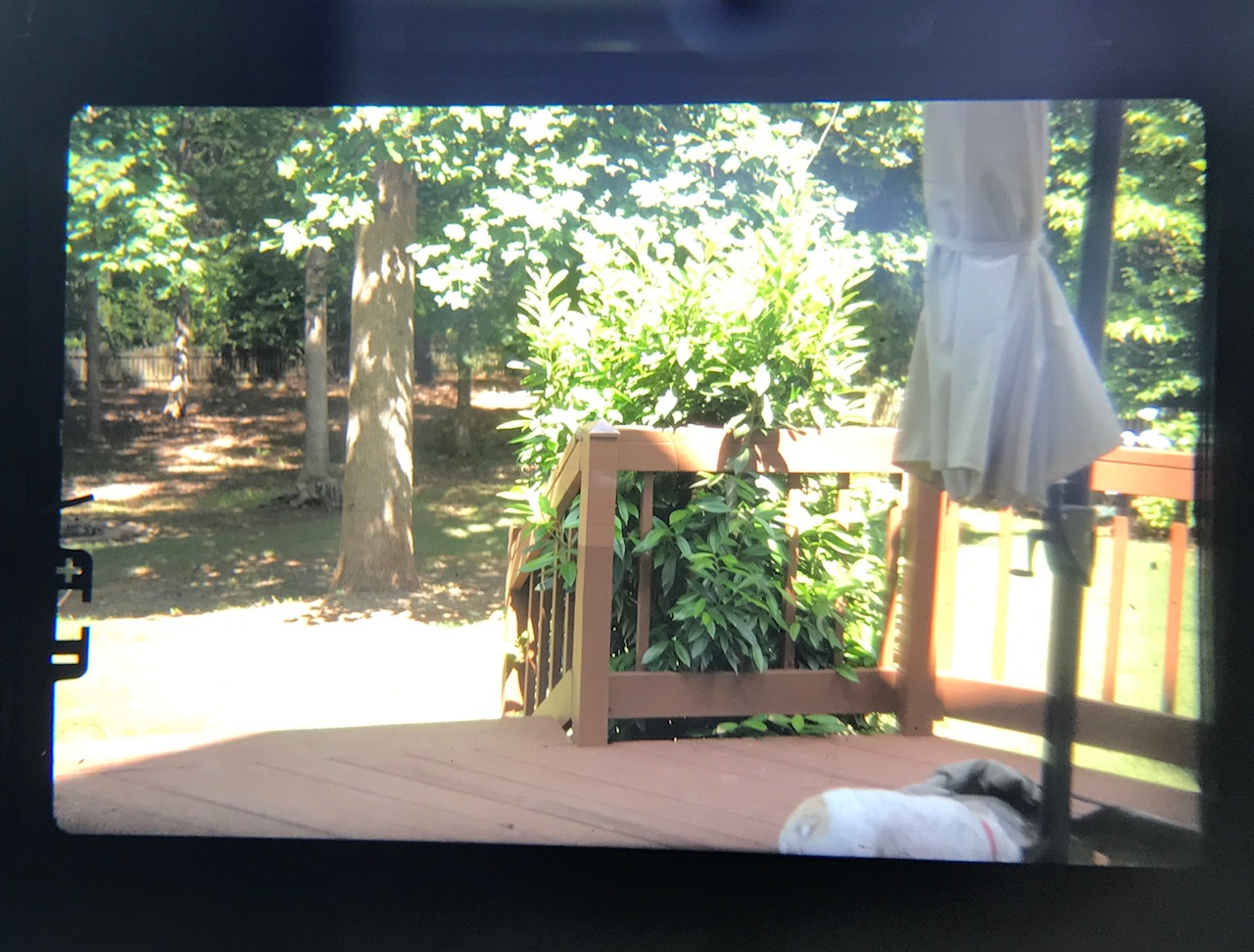
Lastly, if the camera is devoid of an exposure meter (or if the batteries are dead), some cameras operate in full manual mode – the photographer has to rely on experience (or on an external meter) to determine the best aperture/shutter speed combination. More about the exposure determination modes.
Where?
You can buy a used film single lens reflex at different places – Ranked by cost (from the cheapest to the most expensive)
- Garage sales, Facebook Marketplace
- Shopgoodwill
- eBay or Buyee.jp
- Etsy
- brick and mortar stores specialized in second hand cameras
Caveat: the price reflects the distribution channel, but is not a good indicator of the quality of the camera:
- there are good deals to be made in garage sales or on Shopgoodwill – but you need to know what you’re doing.
- if you buy at auctions, stay away from bidding wars. Those cameras were manufactured in the millions. If you don’t get this one, you’ll get the next one.
- It is even more important with Shopgoodwill auctions – considering there is no warranty and no return policy, you should pay far less on Shopgoodwill than on eBay or in an established brick and mortar store.
- I don’t know Etsy very well – cameras may look good because they may have been cleaned, lubricated and adjusted (CLA’d), but they can be expensive compared to eBay.
- I would not buy a camera in an antique store, unless they were reselling cameras CLA’d by a reputable photo repair shop that would offer a warranty. And good or bad, they will be expensive.
How much?
Using eBay.com and Buyee.jp as benchmarks, only looking at completed sales. The cameras are advertised as “working” and/or “tested”. For each model, there is a very wide discrepancy between the smallest and the largest amount spent by the buyer. In any case, there is a very significant premium for cameras with black bodies. Brick and mortar will be more expensive than eBay or Buyee.jp (sometimes by a factor of two or three) – it may be worth it for refurbished cameras offered with some form of warranty.
Less than $50.00
- Canon AV-1, Nikon EM, Pentax ME, Olympus OM-10
$50 to $150
- Canon AT-1
- Nikon FE and FG
- Olympus OM-2 and OM-2n
- Pentax MX
- Pentax Program Plus and Super-Program
- the clones of the Cosina CT-1 released under big name brands : Canon (T-60), Nikon (FM-10) and Olympus (OM-2000 Spot)
$150 to $250
- Nikon FM
- Pentax KX
- and auto-exposure cameras like the Nikon FE2 and some Minolta X series,
Between $250 and $500
- Contax S2
- Nikon FM2
Always over $500, often selling far above $1000
- Leica R6.2,
- Olympus OM-3ti
- Nikon FM-3a
Why have those cameras become so expensive?
Three phenomenon are at play:
- Demand – there is a film renaissance, with semi-automatic cameras in high demand.
- Scarcity – nobody has build a film, manual focus SLR in the last 20 years, and the cameras we’re considering here are 40 to 50 years old. Not that many survivors in good shape.
- The impact of the US trade policy: tariffs, the end of the “de-minimis” exemption last year and related changes in the cost of shipping from Japan have made a major source of good film cameras – the Japanese second hand market – much more expensive than before – on a camera selling for $100.00 on the Japanese domestic market and that you could get on you doorsteps for a total of $120.00 two years ago, you now have to add at least $60.00 for tariffs, custom broker fees and shipping by premium carriers such as Fedex. A 33% increase of the cost of a camera in the price range we’re considering – that also pulls the price of cameras already in the US towards higher brackets.

The cameras I would avoid
I’m not going to make friends…
- all the auto-only cameras (Canon AV-1, Nikon EM, Pentax ME, Olympus OM-10)
- cameras with spotty reliability record (Pentax ME Super, Pentax P3/P30, Yashica FX-3 Super 2000)
- all the cameras that require mercury batteries (it includes the Olympus OM-1 – too bad). There are substitutes to mercury batteries, and voltage compensation diodes can be added to the circuit board of the camera, but it’s a hassle.
- cameras from second tier brands only catering to amateurs, with a proprietary bayonet lens mount and close to no presence on the enthusiast and pro-markets (Fujica, Konica, Yashica to name a few). Why? the lens choice. Today, 50mm standard lenses and 135mm tele lenses are easy to find on the second hand market in any lens mount – that was what you used to find in the photo bag of an amateur in the seventies, but if you want anything else (21, 24, 28 or even 35mm wide angle lenses, macro lenses, long tele lenses), you have a much better chance with brands like Canon, Minolta, Nikon, Olympus and Pentax. They sold in larger volumes, and benefited from a wider adoption by experts and pro photographers, who were buying a wider selection of lenses than amateur photographers.
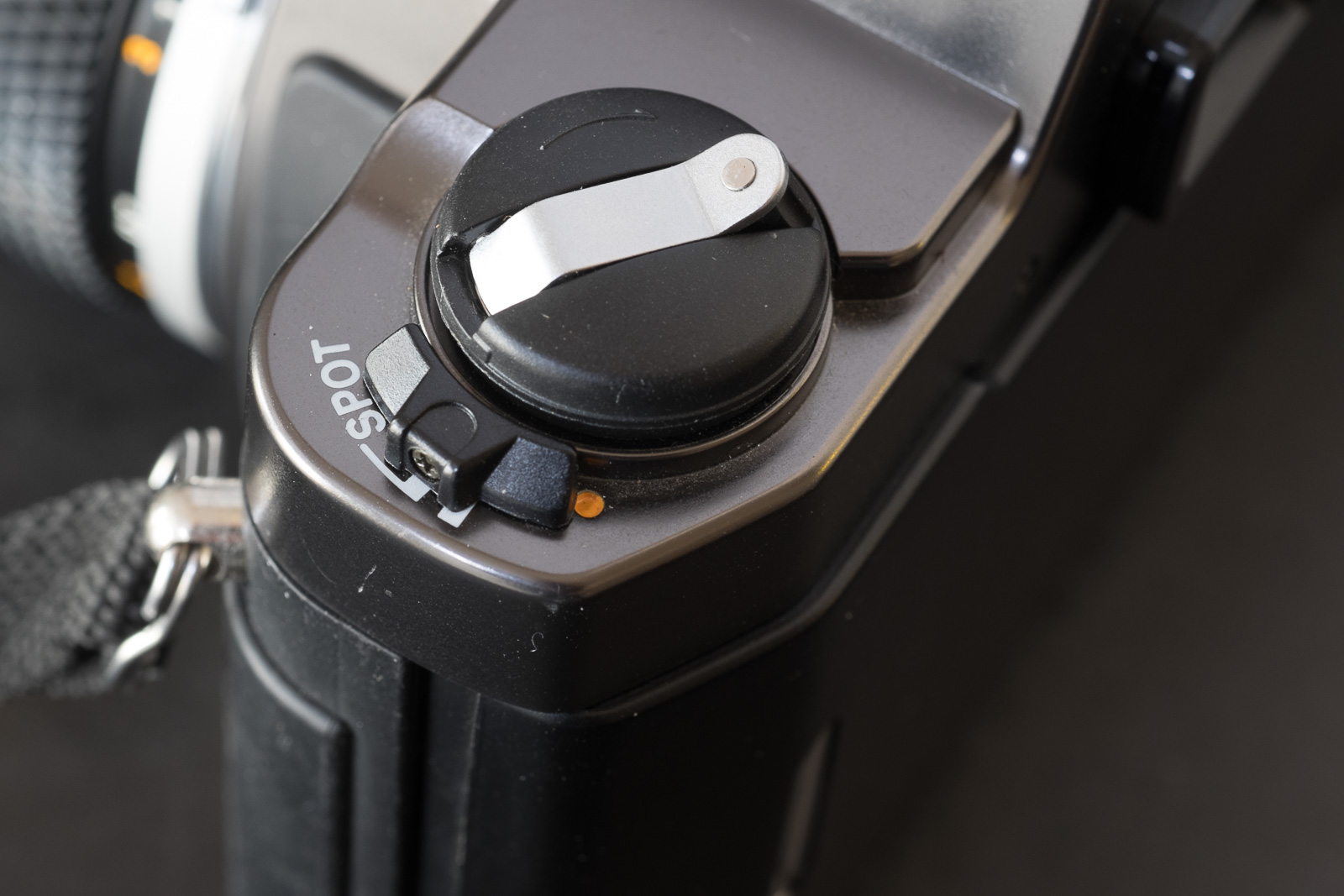
The Pentax K1000 is a special case – the prices on eBay are all over the place (from $25.00 to $250), and the auctions on Shopgoodwill now easily pass the $100 barrier. In my opinion, any dollar above $100.00 is a lot of money for what used to be a stripped down learner camera with technical roots in the Spotmatic F of 1973.
My favorites
Let’s finish on a positive note: my favorite manual focus film SLRs:
In the semi auto category:
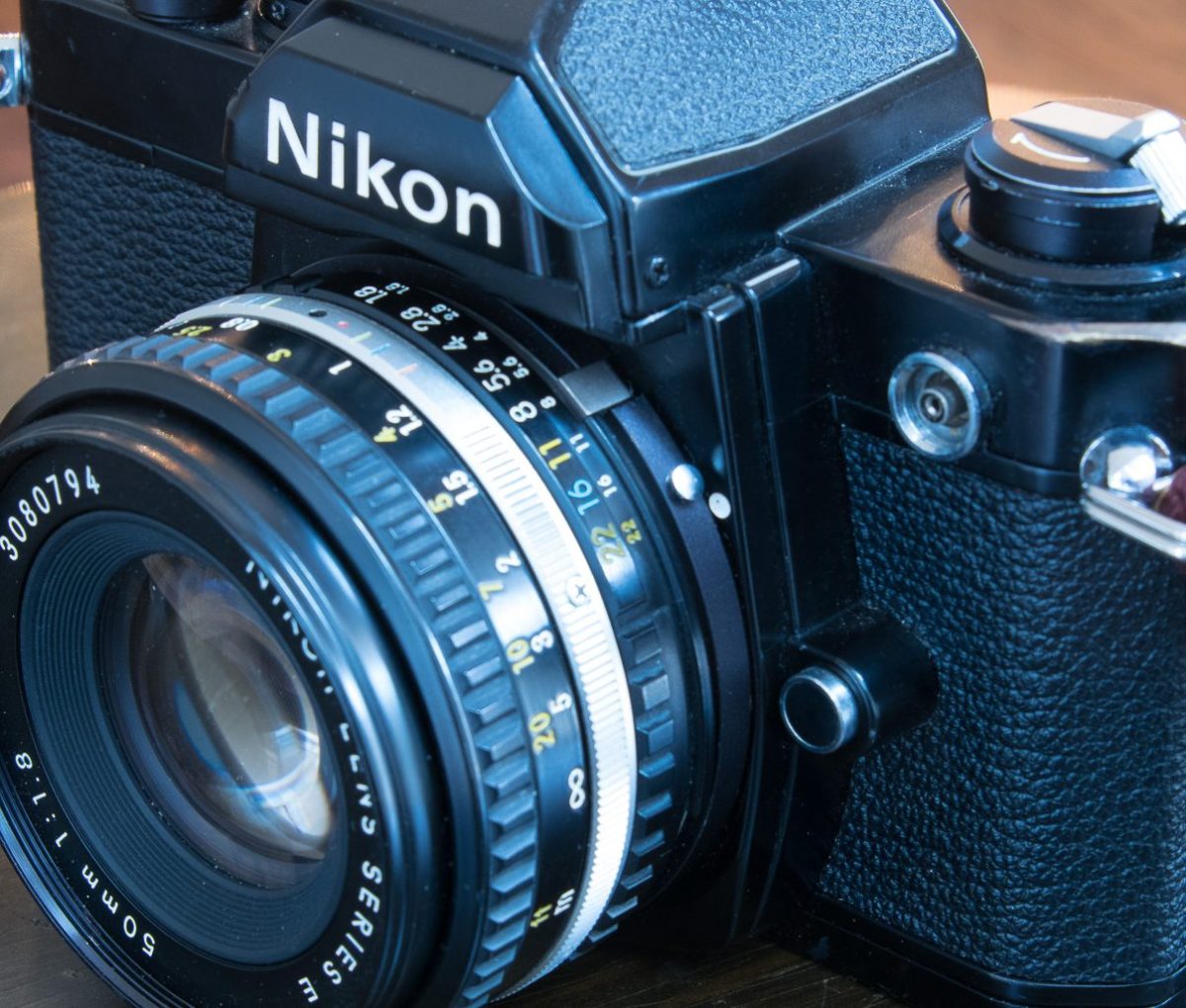
- Nikon FM – robust, reliable, it works with almost any Nikon F lens made between 1959 and the early 2000s. The short eye relief of its viewfinder makes it difficult for photographers wearing spectacles to easily see the whole frame.
- Canon AT-1 – pleasant to use, technically simple, with great viewfinder, and a great choice of lenses as long as you’re not looking for a trans-standard zoom. Of course it does not work without a battery, but you can find one in any drugstore and it’s not even expensive.
- Pentax KX – another nice camera, two years older than the FM and the AT-1. Technically more or less on par with the Nikon FM (but probably not as robust). Good viewfinder, informative and easy to the eyes of people wearing glasses. Huge selection of lenses (OEM or third party) built around the Pentax K, KA, KAF lens mounts.
In the auto-exposure category
The three cameras listed below all offer at least one auto-exposure mode, but the implementation of their semi-auto mode is very well thought.
- Nikon FE2 – very well built, great shutter, fine and luminous ground glass in the viewfinder, well thought semi-auto mode – but a viewfinder with a short eye relief (14mm), which is not that great for photographers wearing glasses.
- Olympus OM-2 and OM-2n – very compact, very well built, with an incredibly wide viewfinder, and a minimalist implementation of the semi-auto exposure – but a choice of lenses more limited than with Nikon or Pentax.
- Pentax Program A and Super Program – small, great viewfinder, more auto modes than the FE2 or the OM-2, great choice of lenses.
and a totally unreasonable choice:
- Canon T90 – a multi-automatic camera – big, loud and beautiful, with a great viewfinder, the ergonomics of a modern camera, and cheap….Because it’s a ticking time bomb (it relies on batteries soldered on its circuit board and on capacitors that don’t age well). The semi-auto mode is poorly implemented, and the exposure metering not easy to master. But great Canon FD lenses, and did I say… beautiful?

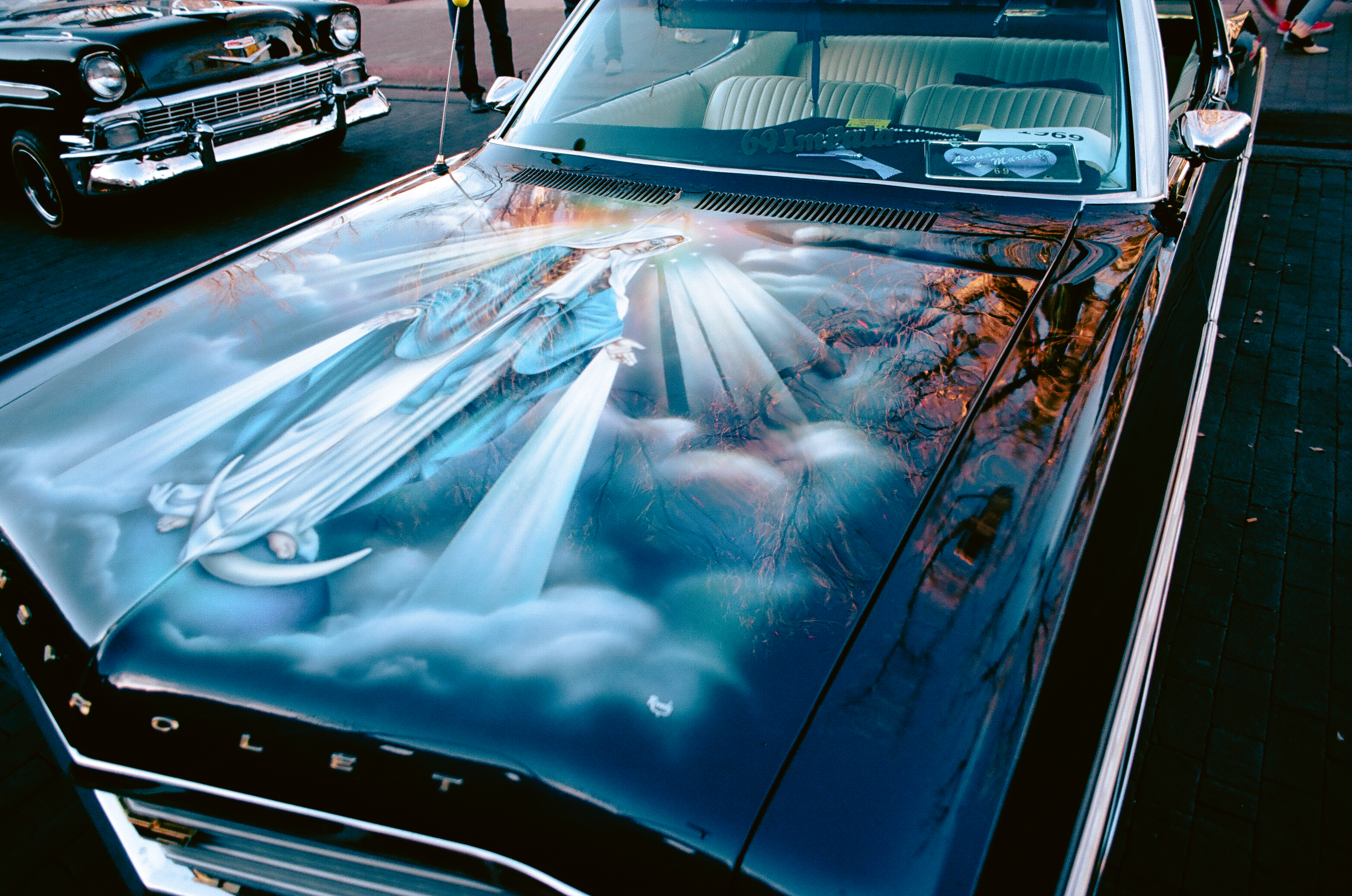
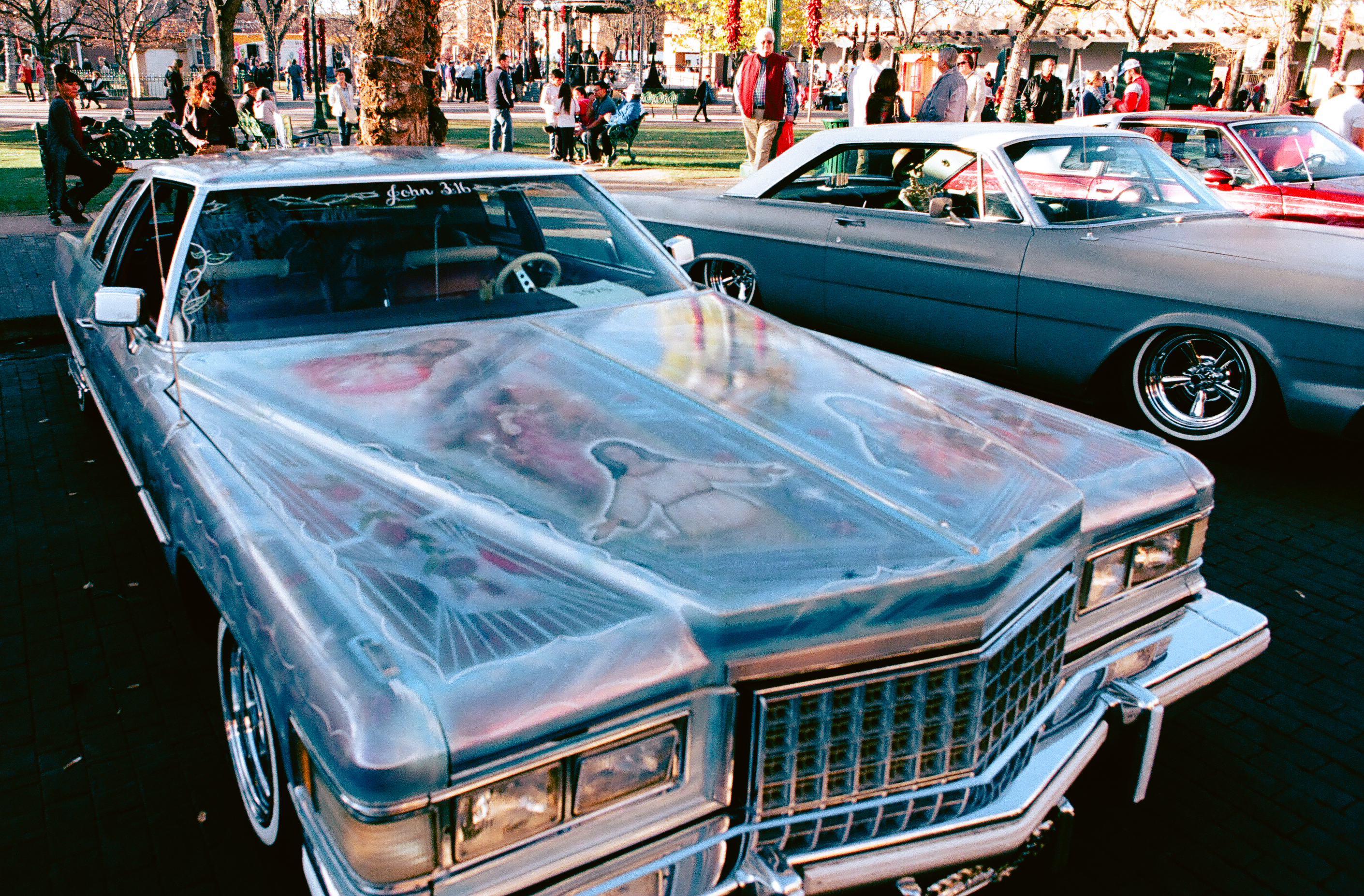
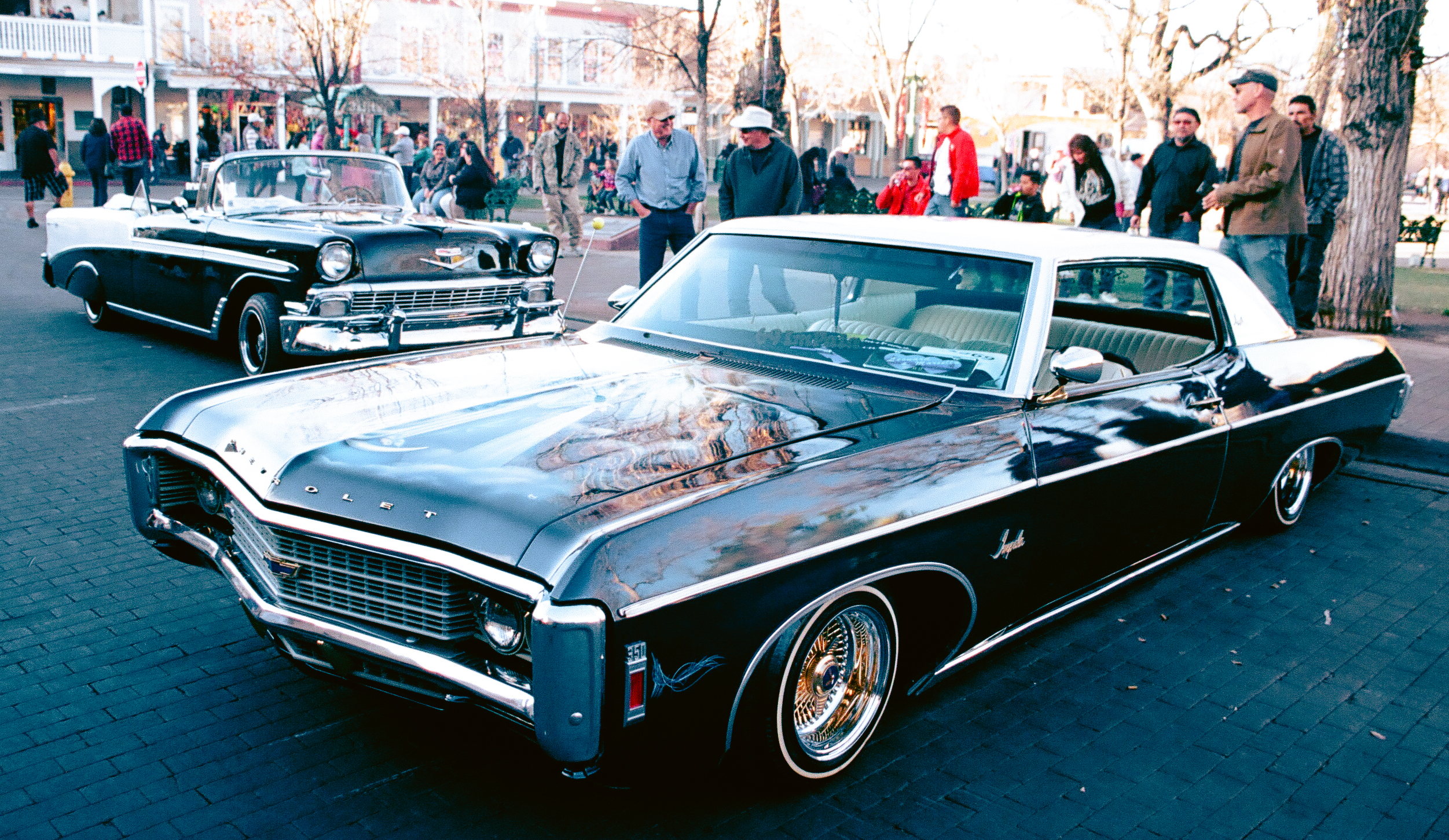
Series shot in Santa Fe, NM – Nikon FM – Nikkor 28-70 AF – Kodak Ektar 100 – Noritsu scanner – “film inspired” profile 02 or 03 in Adobe Lightroom