Buying photo equipment on eBay


I bought most of my cameras and lenses on ebay.com, sometimes through auctions, sometimes at  “buy it now” prices. I never had a bad experience so far.


If you buy on eBay, you will face three types of sellers:

  • on-line stores specialized in photographic equipment, new or second hand.


That’s the low risk option. Some stores limit their inventory to a few brands, and only carry high quality, very nice to pristine cameras. Others are less restrictive, and also have cameras which have lived a more difficult life. If your intention is to really use the camera you’re purchasing, buying a comestically challenged camera may be a good option, as long as it’s in good mechanical condition. Specialized stores are supposed to know what they sell, and will not plead ignorance if the product does not work or is not completely similar to the published description. They will arrange for a free return, and a refund.


A word of caution, though: the products are evaluated before being listed, and the obvious lemons don’t pass, but the tests are not always as thorough as one would wish: a lens may have looked OK when tested on a particular type of body, but will fail to operate on another one, which is in theory 100% compatible but is interacting with the lens differently. Always test the equipment you purchased as soon as you receive it, and contact the seller if there is any issue. Reputable stores will listen to you, and they have a good return policy.


Over the years, I bought cameras or lenses from Adorwin (the eBay store of Adorama), Betteroffblu, Cameta and Shutterblade and could appreciate their professionalism.

  • Stores not specialized in photography


That’s the riskiest option, in my opinion. The store could be anything, from a pawn shop to an antique dealer, the worst being a dollar store or a shady repair shops buying broken electronic equipment in bulk and making one sellable camera out of 3 broken ones. Even if they know a few things about the products they’re selling, they will generally plead ignorance, and will offer little or no support if there is an issue with the equipment. I never had a really bad experience on eBay, but it’s with this type of seller that I came the closest to being seriously disapointed. Buyer beware.

  • Low volume and non professional sellers


Low volume sellers belong to multiple sub categories. You will see items sold by a person who pretends he got the equipment he’s selling from a friend but that he knows nothing about it, and  you will find the passionate amateur photographer who bought his equipment new 20 years ago, used it day in day out and took great care of it; he will take pride in providing a honest and accurate description of his equipment, and that’s the person you want to be buying from.


Because of the way the auctions work, the prices tend to be highly variable and very unpredictable. Professional sellers tend to protect themselves with a “buy-it-now” price, and if the item does not sell this time, they just list it again. Non professional sellers tend to use the auction system more than professionals. With the number of people watching eBay listings every day, it’s difficult to find a real bargain, but some sellers (lazy or inexperienced) still publish unappealing listings (blurry pictures, ambiguous descriptions) that a trained bargain hunter will be able to interpret to his advantage: I bought my Nikon F3 this way, at 30% of what the action would have reached if the listing had been professionally layed out.


As always, do your homework and try and understand the market first (ads in magazines, completed items list on eBay). Set a limit for the price of the equipment you want to buy second hand. In any case, read the ads very carefully, ask questions, and only place a bid if you feel confident enough.


Other reputable sources

  • keh.com


    I never had the opportunity to buy second hand equipment from keh, but good friends did. keh has the reputation of being very conservative in the way they describe the equipment they’re selling (if they say it’s in good condition, then it’s very very good). They only sell over the phone or on the Internet – no walk-ins.

  • bhphotovideo.com


    B&H is a big photo video mail to order company, with a huge brick and mortar store in New York. I bought new equipment from them on multiple occasions. A very pleasant experience. I never had the opportunity to buy second hand equipment from them, though.


Feel free to share your comments and experiences. Thank you.

Nikon FE2
Nikon FE2

Why are manual exposure cameras worth more than automatics ? (Intro)


The facts


Let’s take three lines of manual focus cameras which still have a very active second hand market today: the Leica R series, the Nikons FM & FE and their derivatives, and the Olympus OM-1 & OM-2 and their “single digit” descendants. Each line contains automatic exposure cameras (Leica R4, R5, R7; Nikon FE, FE2, FA; Olympus OM-2, OM2s, OM4, OM4t), and manual exposure cameras (Leica R6, R6.2; Nikon FM and FM2; Olympus OM-1 and OM-3).


For a given generation of camera, manual exposure models are almost always worth more than their automatic exposure siblings.


Average retail price of a camera in Excellent Condition (source: a reputable specialist of used photographic equipment)

Brand Manual Camera Auto exposure Camera
Leica R6.2: $ 999 R7: $ 550
Nikon FM: $ 190 FE: $ 170
Nikon FM2: $ 245 FE2: $ 199
Olympus OM-1: $ 150 OM-2: $ 190
Olympus OM-3: much more than $500 * OM-4: $ 235
Olympus OM-3T: much more than $1,000 * OM-4T or TI: $ 450


More after the jump

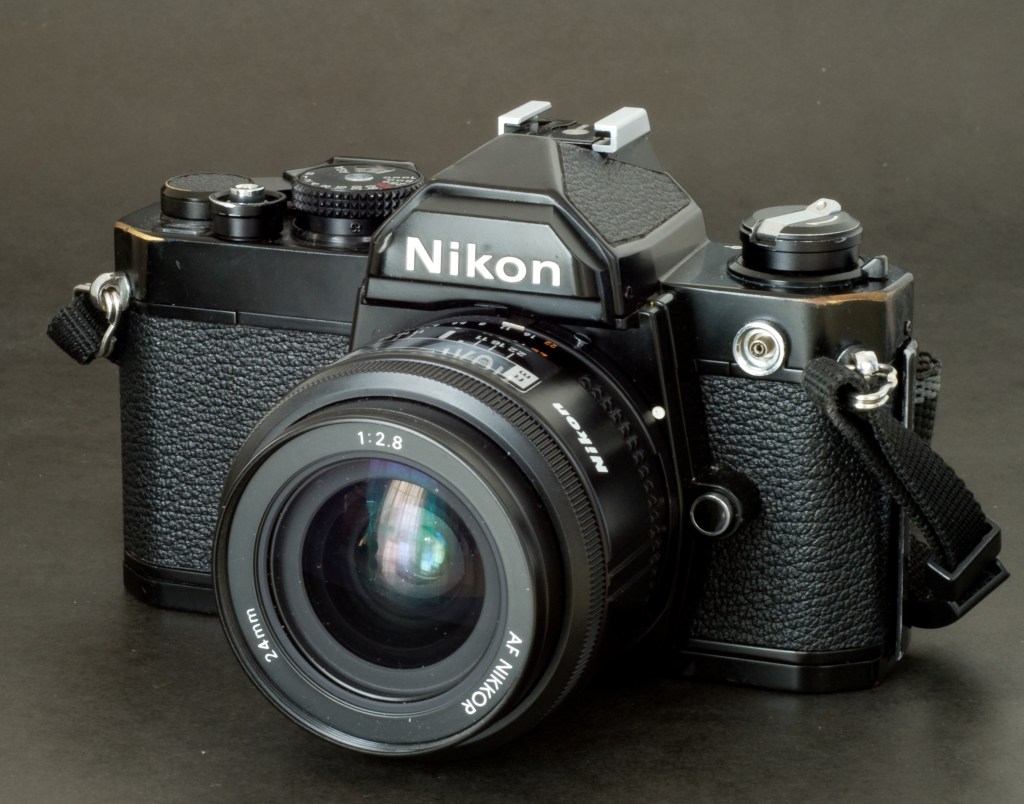
Nikon FM: compact and rock solid, a good risk-all backup camera for Nikon users


In the mid seventies, a new generation of SLRs hit the market. They were following the example set by the Olympus OM-1 and were much more compact than their predecessors. They also used less mechanical components and more electronics.


The FM was Nikon’s response to the OM-1, and to similarly compact cameras from their main competitors. The FM outlived them all. The FM and its derivatives, the FM2 and the FM3a,  were sold for more than 30 years, and when the production of the FM3a was finally stopped, they were still in such demand that for a while used FM3a’s were selling for more than when their price when new.


Compact, reasonably light and rock solid, the FMs were often used as backup cameras by professional photographers until they stopped using film a few years ago.


Nikon FM
Nikon FM – it accepts pre-AI lenses, AI, AIS, AF and AF-D lenses.

 The FM is a mechanical, manual focus, semi-auto camera. It leaves you total control over your images, and does not change the aperture/speed combination you selected on its own. No need to memorize the settings in backlit pictures. But total control comes at a cost: speed of operations in a rapidly changing environment. It’s a nice camera for landscapes, travel, street photography, but more recent autofocus cameras will deliver better results for sports and action photography.

 
The flash control system is also old school – the camera exchanges very little information with the flash unit, and the photographer has to set the shutter speed and the aperture by himself, using guide number tables: there are obviously better cameras to shoot indoors.


The FM as a photographic tool


By modern standards, the FM is a bit of a disappointment. On the one hand, it feels very well built and solid, and it can be carried around everywhere because of its (relative) small size. The Olympus OM1 or the Pentax M series are still smaller, but don’t feel as robust.  Like the other semi automatic cameras with mechanical shutters, the FM also works without batteries. The light meter does not use a galvanometer (no needle) but a series of bright red LEDs are the right of the viewfinder screen: there are very few parts that can break on a FM.


On the minus side, the mechanical commands are firm, and the advance film lever doubles as a shutter release lock: you can only use the light meter and press the shutter release if the advance film lever is pulled out of the body (by an angle of approximately 45°). It’s not very practical, and slows down the operations. I missed more than a few snapshots because the lever was pushed flush with the camera body, in the off position. I guess you can get used to it, but it’s not ideal. (the Nikon F3 does not have this issue; the film advance lever does just that).

Nikon FM / Olympus OM1n
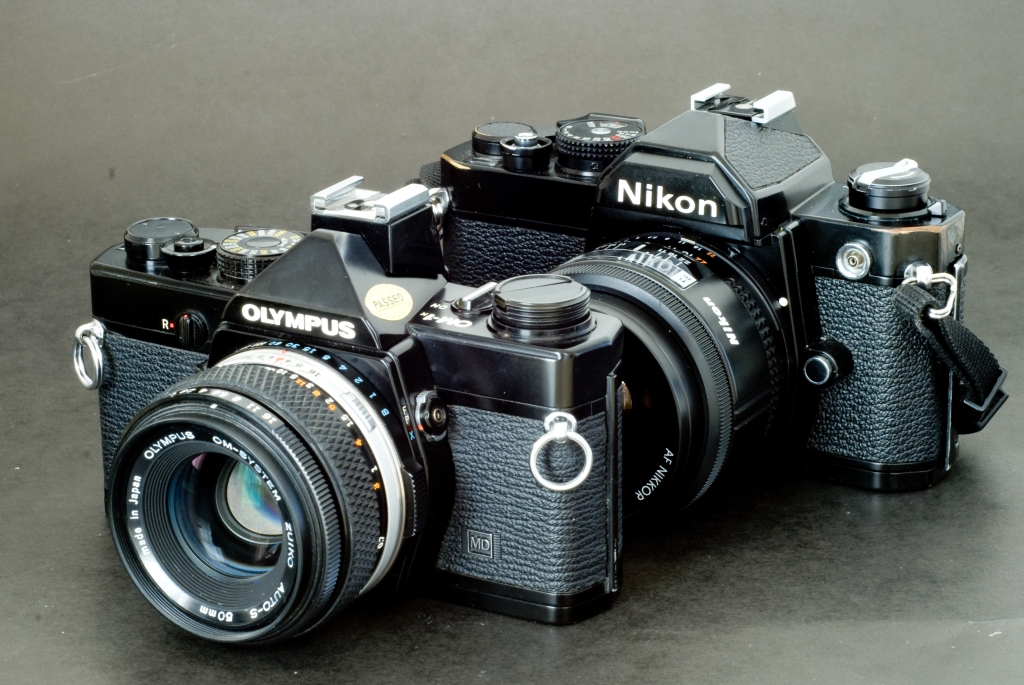
Nikon FM / Olympus OM1n – the smaller prism cover make the OM-1 look smaller.


The Olympus OM1 was the forerunner of a new generation of very compact but still very capable SLRs. Coming a few years later, the FM is not as compact as the OM1, but not that much larger. It’s heavier, though. Its electronics (the light meter, the rest of the camera is mechanical) aged very well, the batteries it needs are still easy to find, its mechanical components are solid and it’s compatible with any Nikkor lens built between the early sixties and the last few years.


Nikon FM - Shutter
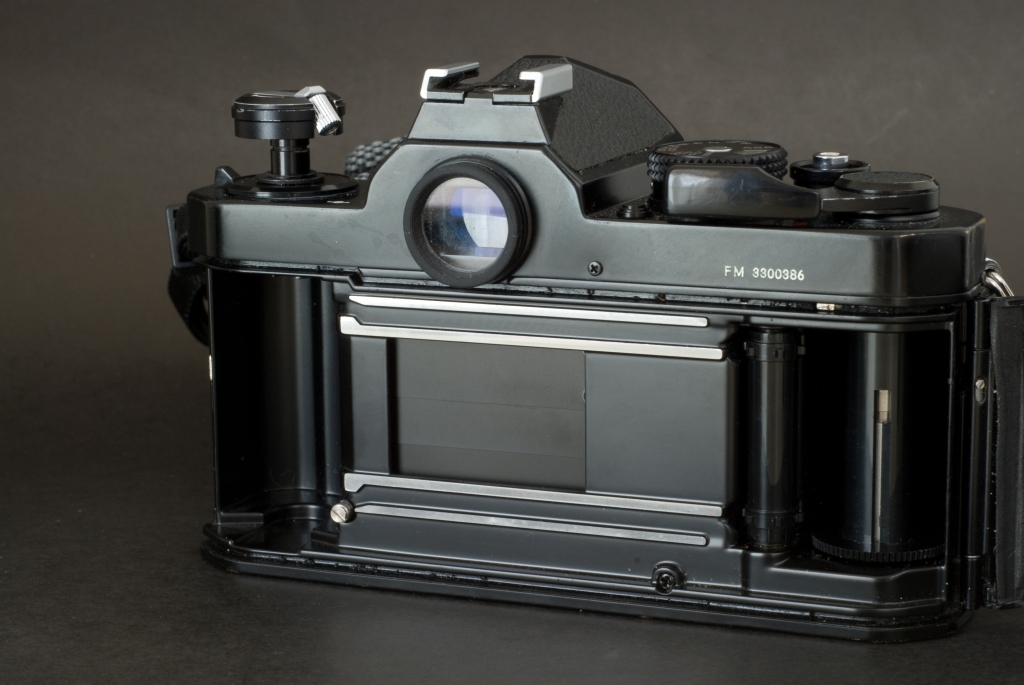
Nikon FM – Metallic shutter. Clearly a camera from the seventies.


The FM has a mechanical metallic shutter. Its fastest speed is 1/1000sec, with a  maximum flash synchronization speed of 1/125 sec. The different versions of the FM2 and the FM3a have much faster shutters, built in aluminum or titanium, with a maximum speed of 1/4000s and a flash synchronization. speed of 1/200 (early models) or 1/250.

Nikon FM
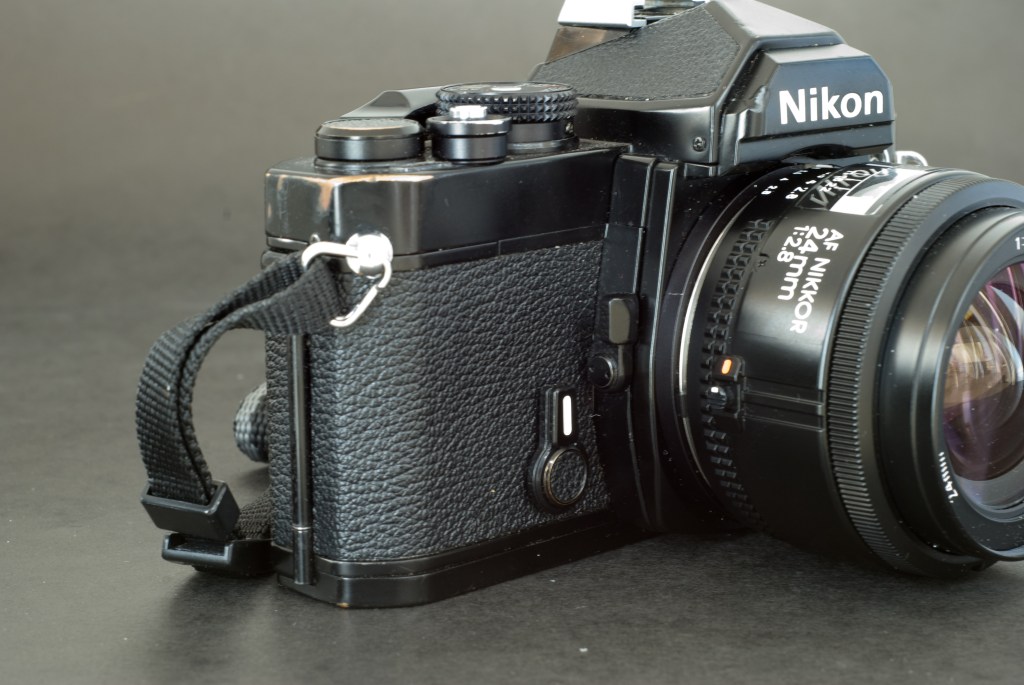
Nikon FM –  depth of field preview lever and self-timer at the right of the lens.


The FM holds a special place in the Nikon product range: it’s one of the few Nikon cameras (the only other compact SLR to share this characteristics is the FE) which is compatible with the pre-AI lenses as well as the modern AI, AIS and AF lenses. The other members of the family – FM2, FE2, FA, F3A – are only compatible with the AI, AIS and AF lenses; trying to mount an older pre-AI lens can damage the camera.

That’s the reason why the FM is sometimes referred as the Rosetta Stone of Nikon cameras


Summary


The Nikon FM is a simple, compact, rock solid and reliable camera, with a decent viewfinder and an accurate light meter. It’s not very fast to operate and not always pleasant to use because of firm commands and of the protruding film advance lever, but it can take advantage of a huge variety of lenses, built by Nikon over a period of almost 50 years. The FM2/FE2 are a bit smoother, the automatic FE and FE2 are also faster to operate, but the F3 beats them all, with its very soft commands, its good ergonomics and its large viewfinder.


The last FMs were produced in the early eighties, and good ones are still easy to find. They command lower prices than the much more sought after FM2’s and FM3a’s. A very nice one from a reputable seller will not cost you more than $150, and not so nice ones can be bought for less than $70 on eBay.


Charleston - July 09 - Nikon FM - Nikkor 24mm
Charleston – July 09 – Nikon FM – Nikkor 24mm


More about the Nikon FM


The best site of reference about the Nikon FM: Photography in Malaysia


The site has not been updated recently, but it contains very detailed information about the Nikon cameras and lenses manufactured until the F5.


Nikon Pronea S

Nikon Pronea

Originally published in August 2009


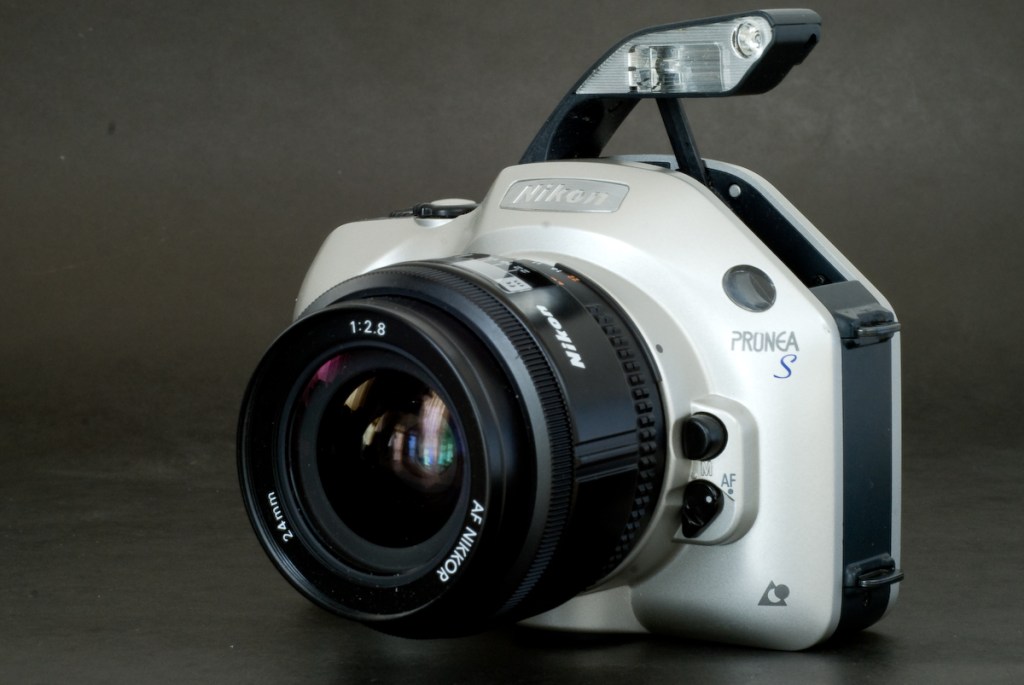
Launched in 1998,  the Pronea S is Nikon’s second and last APS SLR. Nikon rapidly lost interest in the APS format, and refocused its R&D (and sales) efforts on the more promising Coolpix digital cameras. With its smaller image format and lenses, the Pronea can be considered a remote ancestor of the vastly more successful Nikon D40.

Nikon Pronea S (flash deployed)
Nikon Pronea S (with the built-in flash deployed and a Nikkor AF 24mm lens)


Apart from the fact it’s using APS film instead of more conventional 135 (24x36mm) film, there is nothing really remarkable about the Pronea S. Its characteristics are aligned on the other mid-level amateur cameras of its time.


It benefits from the advantages brought by the APS format (smaller size than 24×36 cameras, choice of three aspect ratios for the prints) but it also suffers from all the limitations that ultimately caused the demise of the APS format.


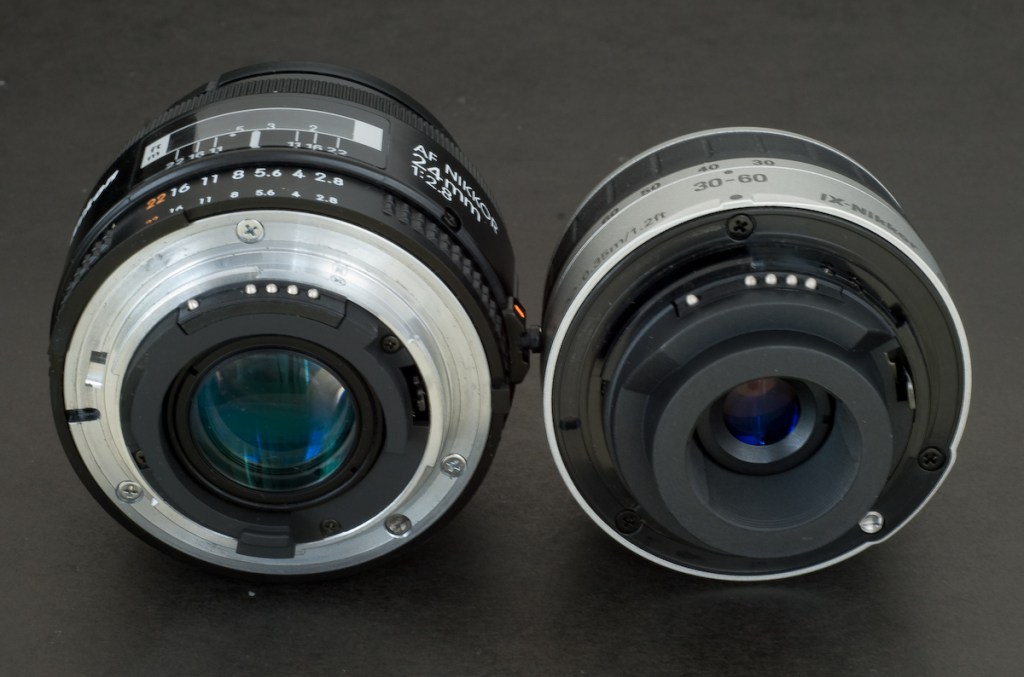
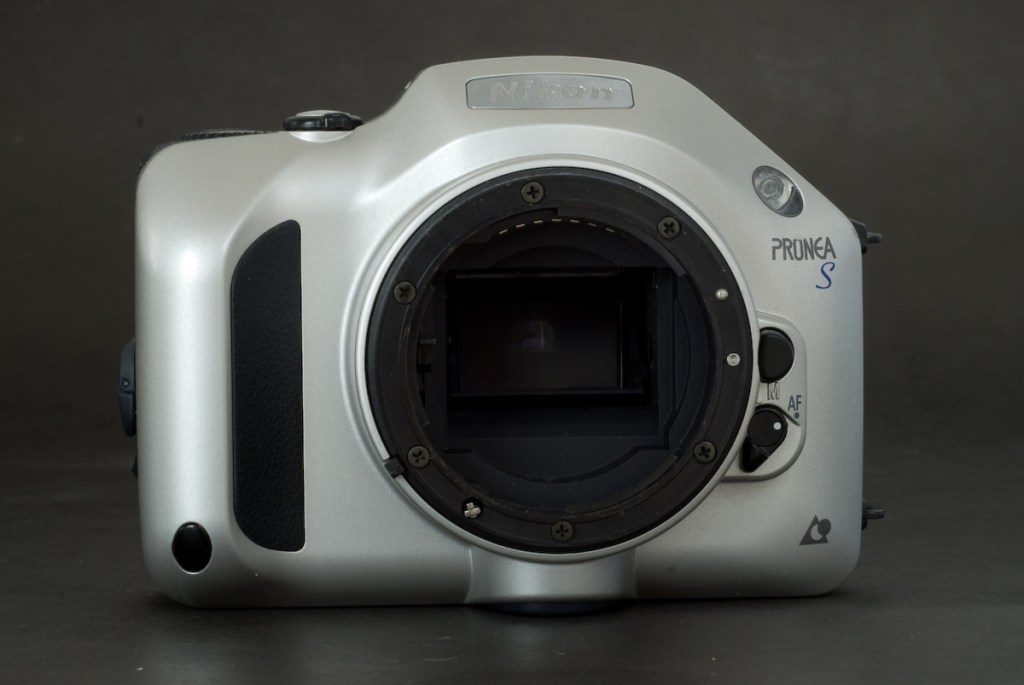
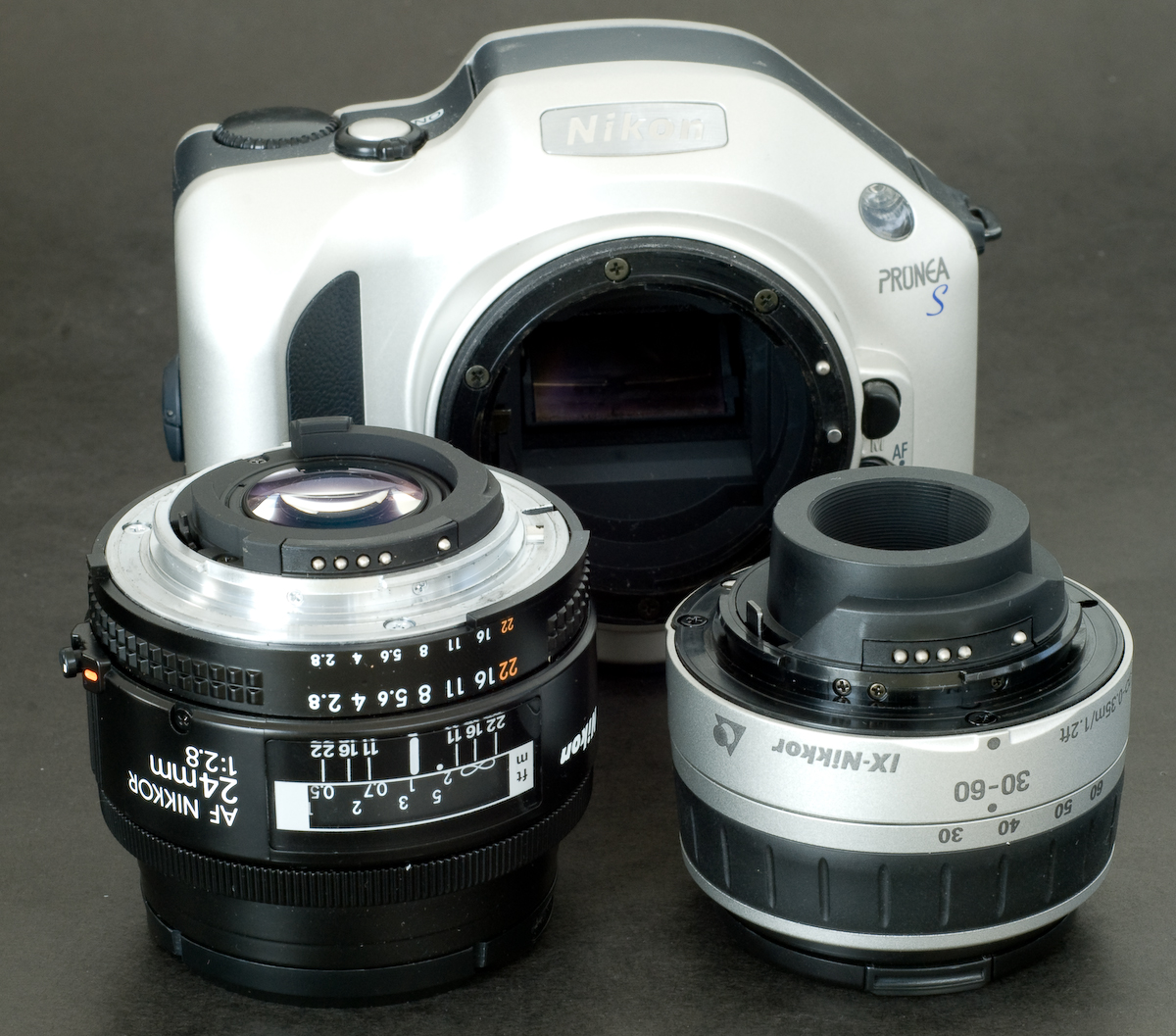
In a typical Nikon fashion, the Pronea S preserves some form of compatibility with the large family of Nikkor F lenses: in fact, modern AF and AF-S lenses work perfectly on a Pronea. However the IX-Nikkor lenses, designed specifically for the Pronea and its smaller APS  format are absolutely incompatible with the rest of the Nikon bodies: the back of the IX lenses protrudes so far in the reflex  chamber that it would be on the trajectory of the reflex mirror of a 24×36 SLR.

Nikon F mount / Nikon Pronea mount
Both use the F mount, but an IX lens can only be mounted on a Pronea body
Nikon F mount / Nikon Pronea mount
The back of the IX lens protrudes much more in the reflex chamber than the back of a Nikkor AF or AF-s lens

The resale value of the Nikon Pronea S is very limited. Mint (if not new) cameras and lenses can still be found, and they generally sell for a few dozens of dollars. They can be collected as curiosities, but their usage value is limited: Kodak and Fuji may cease manufacturing APS film rapidly, and the IX-Nikkor lenses are absolutely incompatible with any “normal” Nikon body.

Nikon Pronea S (front)
Nikon Pronea S
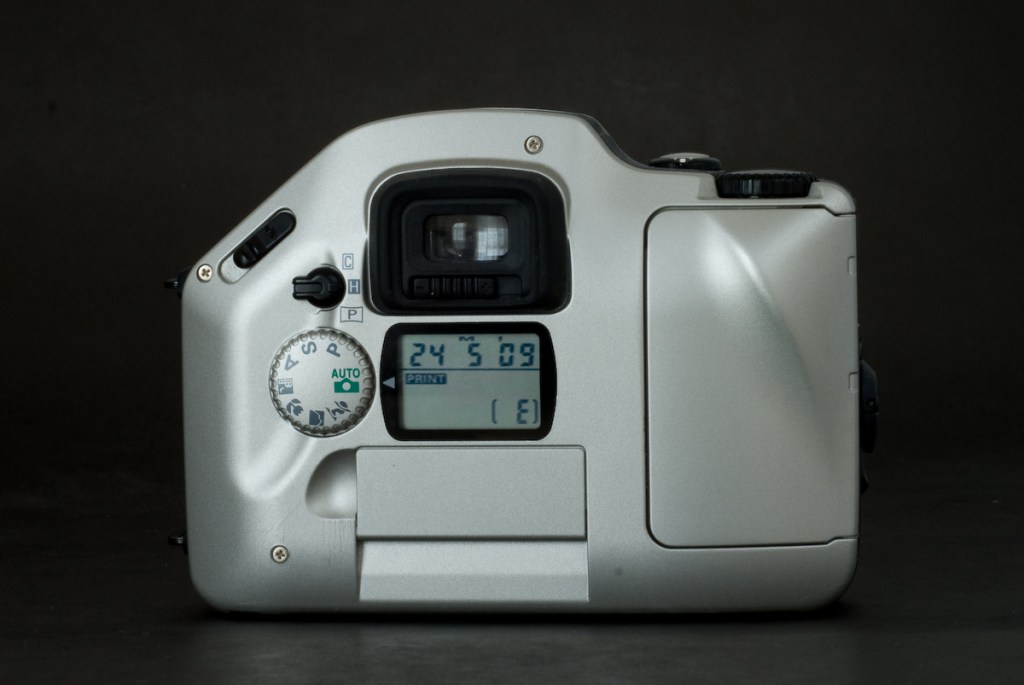
Nikon Pronea S (back)
Nikon Pronea S (back) – not the “C-H-P” selector at the left of the viewfinder – the photographer can select the aspect ratio of the prints.
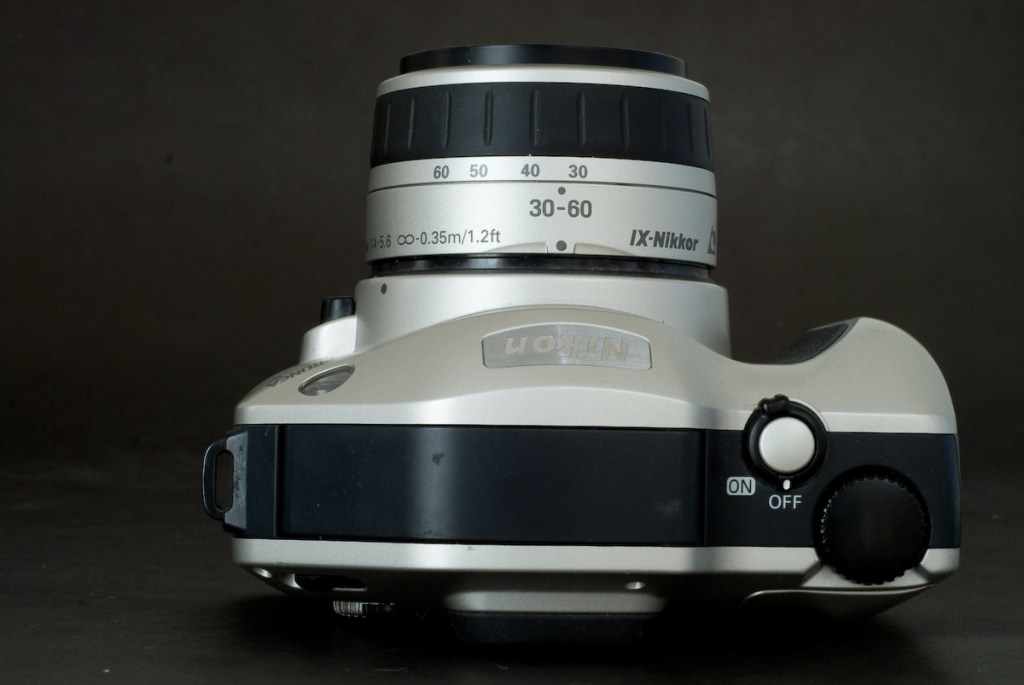
Nikon Pronea S (above)
Nikon Pronea S

Olympus OM1n / Nikon Pronea S (Side)
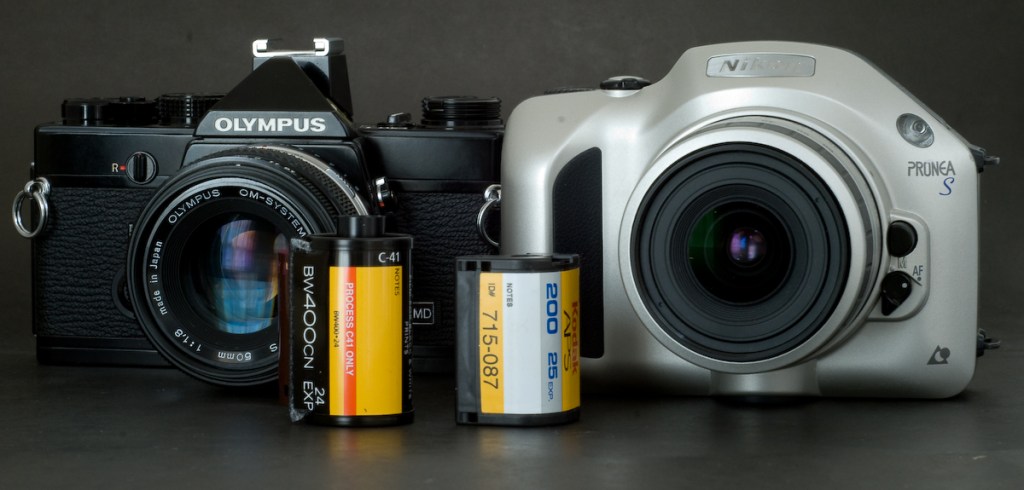
  • APS SLR cameras are smaller than a comparable 24×36 autofocus SLR with a built-in flash, but the Pronea S is larger than an older SLR such as the Olympus OM-1
  • The choice of films was already very limited when the format was supposed to be the next big thing: practically, color print film from Kodak and Fuji in 100, 200 and 400 ISO declinations was the only thing you could get. Now that the format is near extinct, only 200 ISO film is available.
  • Color slide and black and white film were never widely available, if available at all.
  • Compared to a 24×36 image, an APS image is 56% smaller. APS requires higher enlargement ratios, which makes film grain more visible.
  • The film loading mechanism of APS cameras is fragile. The film can stay trapped in the camera if one of the little plastic parts holding the cartridge in place breaks.
Olympus OM-1/ Nikon Pronea S / Cartridge

For more about the Pronea S

Another point of view about the Pronea S, courtesy of Ken Rockwell.

More about APS Film And APS cameras in CamerAgX:

APS Film Format

Minolta Vectis S-1


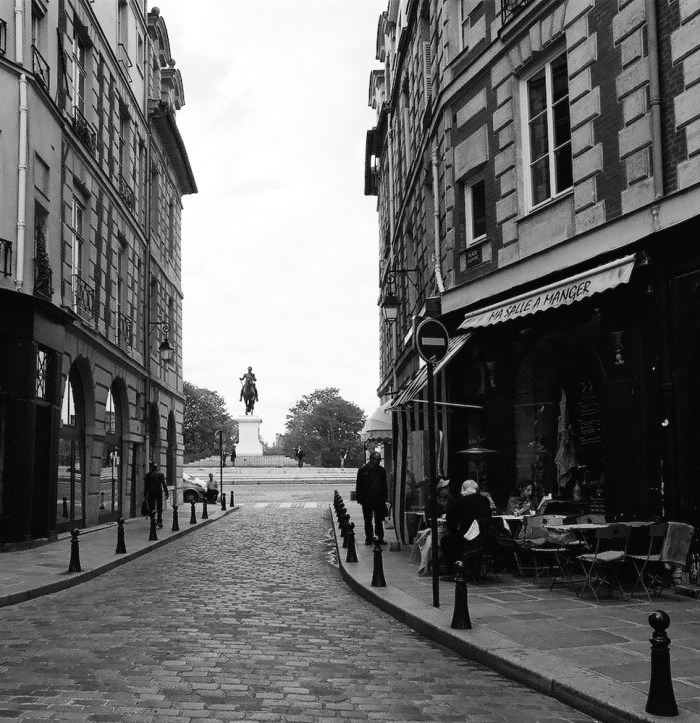
Paris – Garden of the Pont Neuf


Located at the very center of Paris, and linking the right and left banks of the Seine with the western end of the “Ile de la Cite”, the Pont Neuf (New Bridge) is the oldest bridge of Paris. It was built at the end of the XVIth century, under the reign of Henri IV whose equestrian statue dominates the area. A public garden lies below the bridge. It’s one of the most beautiful places in Paris. A (relatively) quiet place in a big city.


Henri IV - Pont Neuf - Paris

Gardens of the Pont Neuf - Paris

Continue reading

The APS Film Format

Originally published in August 2009 – with an update in July 2025.

Harbor of Porsall, Britany (France). Minolta Vectis S1
Harbor of Portsall, Brittany (France). Minolta Vectis S1

In 1991, Kodak, Fuji, Canon, Minolta and Nikon started working on a new film format, designed to address all of the supposed shortcomings of the 135 (24x36mm) format and bring a new lease of life to film before its replacement by digital technologies.


The development of the new APS format took longer than expected, and APS was not launched before 1996.
Alas, digital cameras became viable earlier than when everybody had anticipated, and as early as 1998, the camera manufacturers had come to the conclusion that the APS format was a lost cause
.

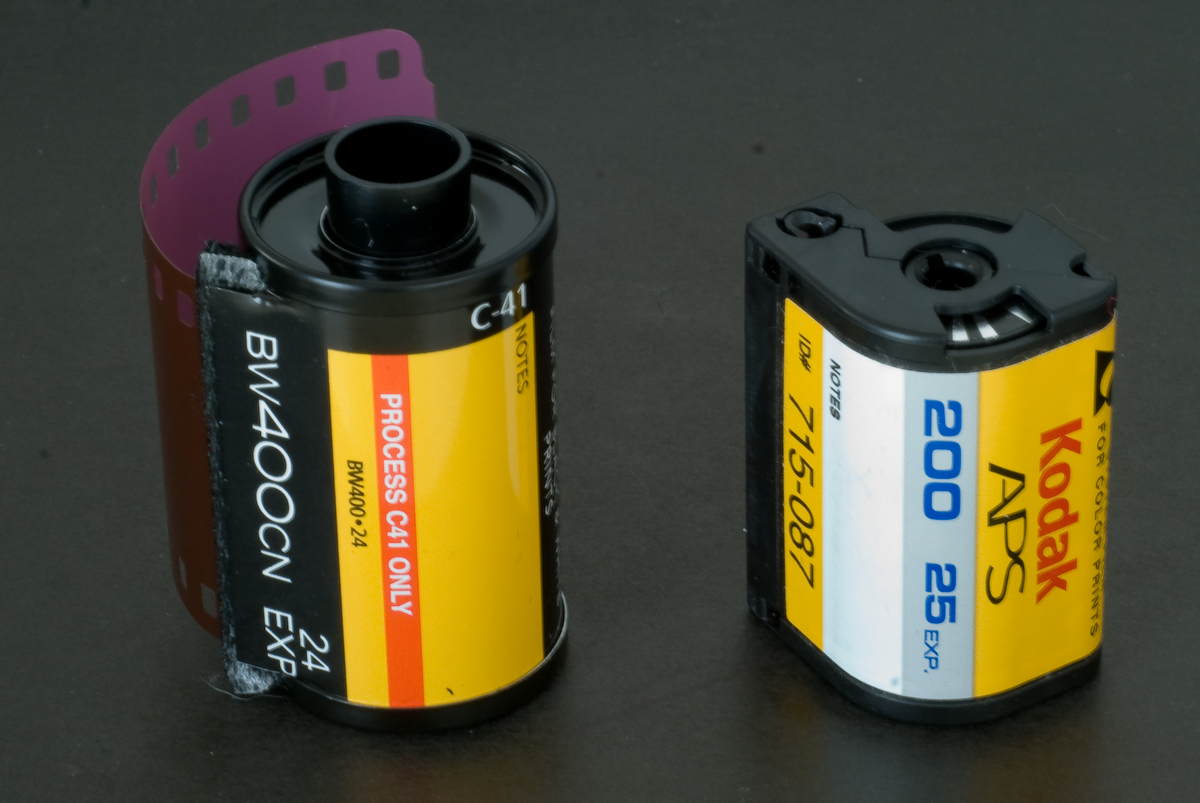
135 (24×36) and APS cartridges side by side. The APS cartridge is more “intelligent” than the conventional 135 film container. An icon at the bottom of the cartridge shows the status of the film (new, partially exposed, totally exposed, processed) and a magnetic strip at the back of the film records the camera’s setup and the user’s preferences, in particular the form factor of each print (APS-C, H or P)

The most emblematic APS camera, the Canon Elph (known as the Canon Ixus in Europe) was superseded by the first Digital Elph in Year 2000. In 2002, all the cameras manufacturers had reverted to 24x36mm or gone digital, and APS was dead.

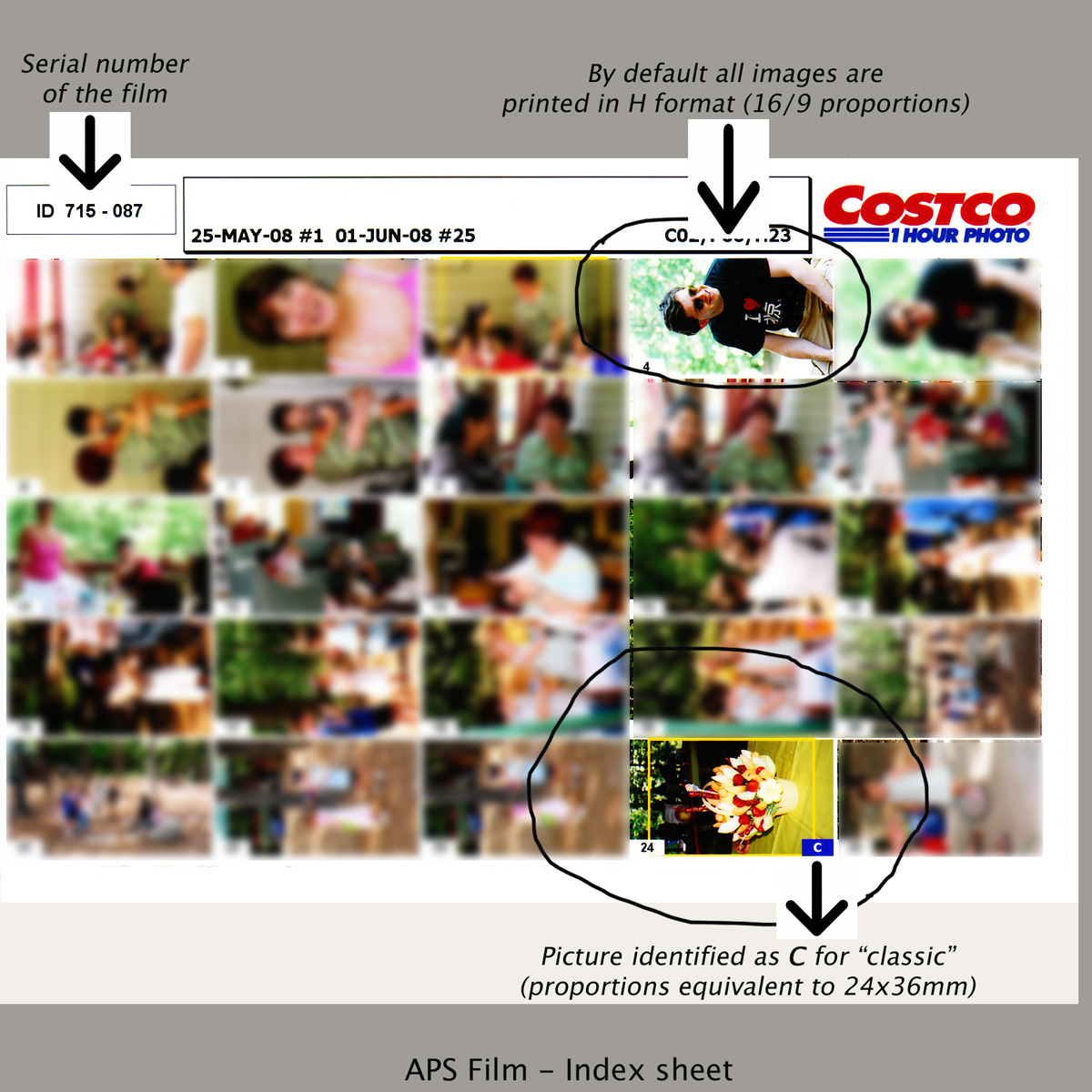
APS Index sheet – Costo – July 2008 – Index sheets were an APS innovation, soon available also to 24×36 film users. Note that some vignettes show crop lines. The images will be printed in the APS-C format (3×2 form factor). The other images will be printed in the default APS-H format (16×9 form factor). Another crop format, APS-P, was used for panoramic pictures, but is not represented on this index sheet.

Bad timing is often advanced as the main reason for the failure of APS, but it’s not the only one. Kodak, Fujifilm and the big processing labs in their orbit positioned APS as a premium product. Processing an APS roll was 50% more expensive than a 135 cartridge. Unfortunately the prints, although delivered in large and fancy boxes with index sheets, were generally not as good as what you could get with a conventional 24×36 camera. The smaller film format (the APS film surface area is only 56% of 135 film) and the decision to make 200 ISO the new standard film speed (amateur 135 film was usually 100 ISO) were primarily to blame for the lower quality of the prints.

To make the situation worse, APS cartridges once exposed were not that easy to get processed: Kodak and Fuji had left the small processing labs and the minilabs out of the APS equation, and the films had to be sent to a few big processing plants. As a result, it was impossible to get APS prints in less than 48 hours.

Lower quality, higher prices, less convenience… not a recipe for success. The price premium charged for APS prints disappeared over time, but the harm was done and APS never recovered. 


APS Cameras


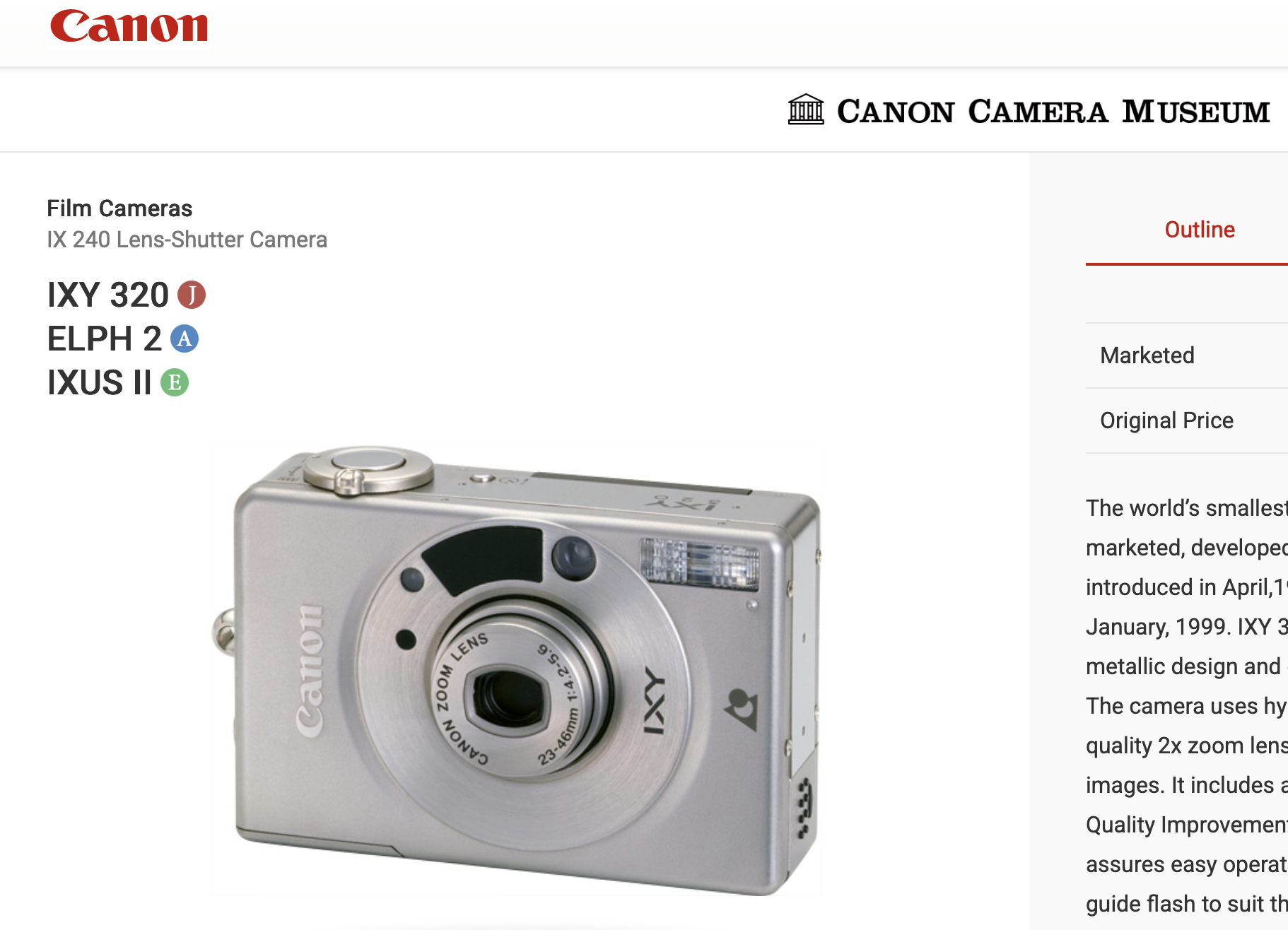
When APS was launched, very few cameras stood out: most were a simple adaptation of tried and tested 24×36 designs to the particularities of the new film format. Canon is probably the only manufacturer who developed an original concept with the Elph/Ixus. The model was very successful, and its modern digital derivatives are still selling like hot cakes nowadays.

Canon’s Elph/Ixus/IXY – in my opinion, one of the only two interesting APS film cameras (the other one is the Vectis S-1) – from the Canon Camera Museum


Canon, Minolta and Nikon also launched APS SLRs. Minolta bet (and lost) the farm on a brand new line of Vectis S cameras (new bodies, new lens mount, new lenses), while Nikon and Canon proposed a few dedicated APS lenses on two new bodies but retained the lens mount of their 24×36 product line.

In terms of features, the three manufacturers positioned their cameras above their entry level 24×36 SLRs and priced them like advanced amateur 24×36 models. Their high price, compounded with the inherent quality challenges presented by the small film surface and the absence of slide or black-and-white film greatly limited the impact of the APS SLRs on the enthusiast amateur market, and retailers soon tried to get rid of them at fire sale prices.

Nikon Pronea S – an APS SLR using the conventional Nikon F mount.


Buying an APS camera today – even for a few dollars – is a very bad investment. While it’s very likely that 135 film will still be used and processed for many years to come, the future of APS is dimmer. The user base was never that large to begin with, and the category of users which composed the APS constituency has migrated to digital by now.


Minolta Vectis S-1 – a new lens mount and new lenses developed specifically for APS. The Vectis S-1 was an original design and a very good camera – too bad the film format itself was flawed.

The last APS cameras were sold – new – in 2002, and I would not be surprised if Kodak and Fuji pulled the plug on APS in the next 2 years. Some of the cameras are interesting curiosities, but the drop-in load mechanism – which was part of the standard – is very fragile and does not age well.

Minolta Vectis S-1 – the gun metal version sold in Europe. The 28-56 kit zoom was fragile and crappy and the 200 ISO film a bit grainy, but with a decent lens like this 22-80 zoom and a slower 100 ISO film, the S1 formed a compact package and delivered very nice pictures.

An update from July 2025

As predicted in 2009 when this blog post was originally published, Kodak and Fujifilm stopped producing APS film in 2011. And today, APS film cameras are practically worthless on the second hand market.

But the “APS” name itself had a surprising legacy.

In an APS film camera, each frame is measuring 30mm x 16mm. Always. But there is a magnetic strip at the back of the film where the camera can record the aspect ratio desired for each print. The printer of the processing lab will read the instructions, and will deliver images cropped to the desired aspect ratio.

When setting the camera before shooting a series of pictures, the photographer can elect:

  • to receive prints covering the entirety of the frame, in which case the print will be designated as an APS-H picture,
  • or a smaller central 25mm x 16mm section, in which case the image will be referred to as an APS-Classic (or APS-C) print,
  • or an even smaller 30mm x 9mm section, for APS-P or Panoramic prints.
  • The APS-C aspect ratio is “Classic”, because it respects the 3×2 proportions of a traditional 35mm picture, as opposed to the 16/9 proportions of the APS-H settings.
Nikon Pronea S (back) – the photographer will use the “C-H-P” selector at the left of the viewfinder to record the desired aspect ratio of the prints (Classic, 16/9 or Panoramic). The instructions are written on a magnetic strip at the back of the film itself, and will be read by the printer of the processing lab.

When the camera makers started switching to digital, the factories (the “fabs”) manufacturing image sensors had very low yields, and large sensors (anything larger than 8mm x 6mm) were extremely difficult to manufacture and as a consequence prohibitively expensive.

Even the pros buying Nikon and Canon high end bodies could not have afforded a camera equipped with an image sensor of the same size as a 35mm negative.

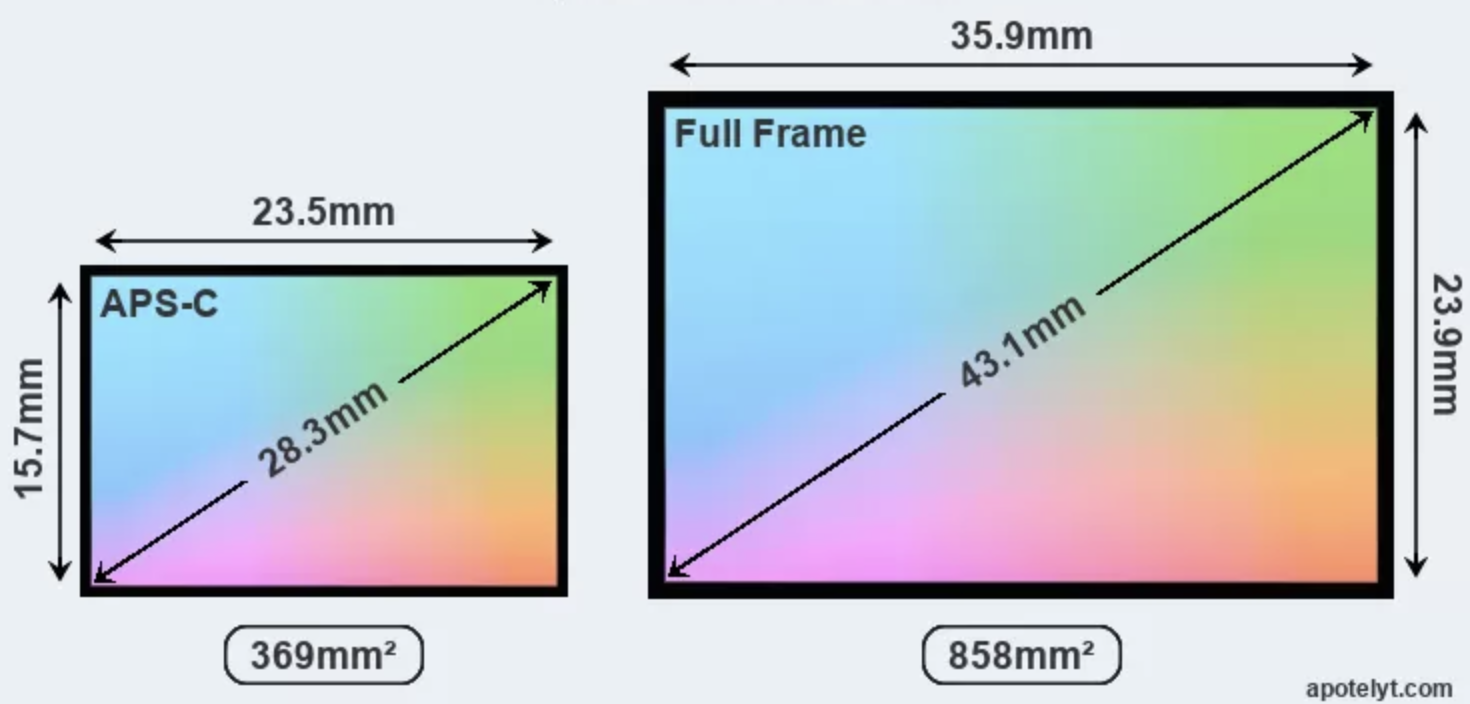
Canon’s Web Site in 2025 – the offer is still segmented between cameras with APS-C and Full Frame Sensors

The best Nikon could offer on their first digital SLR, the D1 of 1999, was a sensor of approximately 24mm x 16mm, which was close to the size of an APS-C crop in the film era. Because the buying public was somehow familiar with the APS Film format and understood what APS-C meant, the moniker stuck and we still designate cameras using sensors of that size as “APS-C” camera.

A modern APS-C sensor next to a full frame sensor


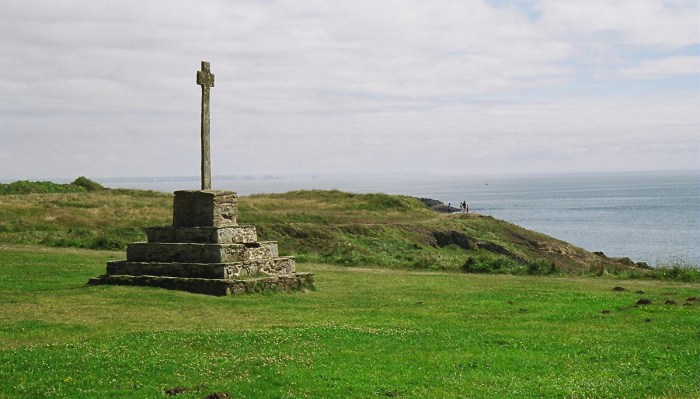
Pointe St Matthieu - Britany (France) July 2003 - Minolta Vectis S1
Pointe St Matthieu – Brittany (France) July 2003 – Minolta Vectis S1

For more about the APS film format

Another point of view on the APS debacle, courtesy of Ken Rockwell.


SaveSave

Innovative Metering – Fast Shutter – Conventional Ergonomics – The Nikon FA (Intro)


The Nikon FA is the last major manual focus SLR launched by Nikon. An evolution of the FM2 and FE2 cameras, it shares with the latter most of its body shell, a very fast shutter (up to 1/4000sec., 1/250sec. flash synchro speed) and a TTL flash metering mechanism. It finally catches up with Canon’s A1 and offers the same four automatic exposure modes (aperture and shutter priority, program and semi-auto).


Its “Automatic Multipoint Metering” (AMP) – a world premiere – is its real claim to fame. Better known under names such as “matrix”, “evaluative” or “multi-segmented” metering, it is now the default metering system of every dSLR in production.


Launched in 1983, this conservatively styled camera with very conventional ergonomics had a relatively short sales career. It was made obsolete in 1985 when Minolta took the market by storm with its first autofocus SLR, the 7000 (Maxxum 7000 in the US). Minolta’s competitors, Nikon included, spent the best part of the following three years trying to catch up. The FA stayed on Nikon’s catalog until 1988, and was not replaced. Its semi-automatic sibling, the FM2n would be sold until 2001, when the FM3a, a sort of combination of the best characteristics of the FM2 and the FE2, was launched.

Nikon FA with the MD-15 motor
An impressive (and heavy) camera: the Nikon FA with the MD-15 motor drive.


The metering system


Until the FA was launched, most of the cameras only offered some form of center weighted metering: the exposure sensor evaluated the luminosity of the whole scene, and because the sky is typically in the upper third of the frame, and the main subject of the picture in the center, it was designed to give more importance to the portion of the picture located at the center of the lower part of the frame.


It worked for most of the cases. If the subject was back-lit and not centered, the photographer had to determine the exposure with the subject at the center of the frame, memorize the exposure settings, and move the camera to compose the desired picture.


Some high end cameras also had a second exposure metering system, which evaluated the luminosity of a much narrower portion of the scene, almost a spot in the middle of the viewfinder. But spot metering and exposure memorization are not always easy to use , and are far from being idiot proof. The engineers at Nikon were pretty sure that with the newly unleashed power of integrated circuits, they could develop a new approach.


More after the jump