Underwater adventures – digital cameras make more sense


I recently had the pleasure to spend one week snorkeling and scuba diving in the Caribbean. True to my calling, I had decided to bring a film camera, and purchased a Nikonos V on eBay a few weeks before the departure.


The Nikonos V
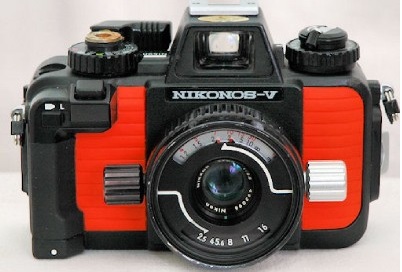

Nikonos V
The Nikonos V (source: eBay)


The Nikonos V, launched in 1984 and sold until 2001, is an underwater viewfinder camera with interchangeable lenses. It can operate at depths of 50m (150ft), beyond what is considered the limit for recreational scuba diving. Some lenses were specifically designed for underwater use, but the “standard” lens (a 35mm W-Nikkor) could also be used above the water, for white water sports or for photography in all sorts of very humid environments. A special “camouflage” version was even manufactured by Nikon for war correspondents following conflicts in some remote jungle.


Technically, the Nikonos V – which is a viewfinder camera – is more or less aligned on the Nikon SLR bodies of the mid eighties: Through The Lens (TTL) exposure, aperture priority automatic shutter, and – importantly for an underwater camera – Through the Lens flash metering. I uses the same W and U/W Nikkor lenses as the previous Nikonos bodies, and provides no focusing assistance to the photographer, who has to guess the distance between the camera and the subject, and set the lens accordingly.


I could not test the Nikonos V in its element. The one I bought on eBay happened to have a defective metering system, and the seller did not know enough about the camera to understand it did not work as it should have. I returned it and go my money back, but I was back to square one, with no camera for my vacation.


Lesson #1: if you really want to buy a Nikonos V, buy it from a store specialized in underwater equipment. You will pay more (a good Nikonos V costs between $250.00 and $350.00) but the seller will be able to certify that the camera really works, and has not suffered from an unplanned bath of salt water in the past.


The Nikon Action Touch
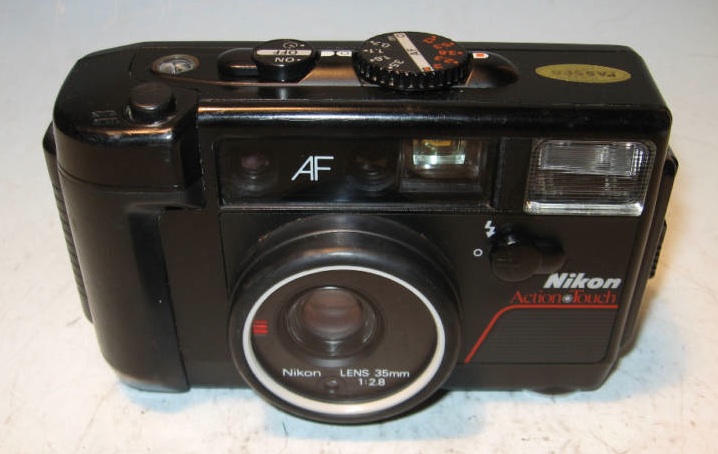

Nikon Action Touch (source: eBay)


When I bought the Nikonos V, I decided I needed a backup camera. I found (on eBay again) an old Nikon Action Touch, an autofocus Point and Shoot from the eighties, designed for use in depths of 10 ft (3 meter) or less. I had read good reviews of the camera, and since I could have it for less than $8.00, the risk was minimal. I tried it in a swimming pool. It seemed to work. On the first dive in the ocean, it died. Salty water had found its way in the film chamber, making the camera unusable.


Lesson #2: old waterproof cameras do not necessarily stay waterproof over time, and a dip in a swimming pool can not be compared to a dive in the ocean.


Lesson #3 is to take the claims of the manufacturers regarding the water resistance of their products with a grain of salt (no pun intended). Cameras manufacturers now use the IP code (International Protection Rating) to define the water resistance of their products in different circumstances (sprays, water jets, immersion, for instance), but the performance of older cameras was more loosely defined, and important safety margins have to be taken.


The Canon Powershot D10
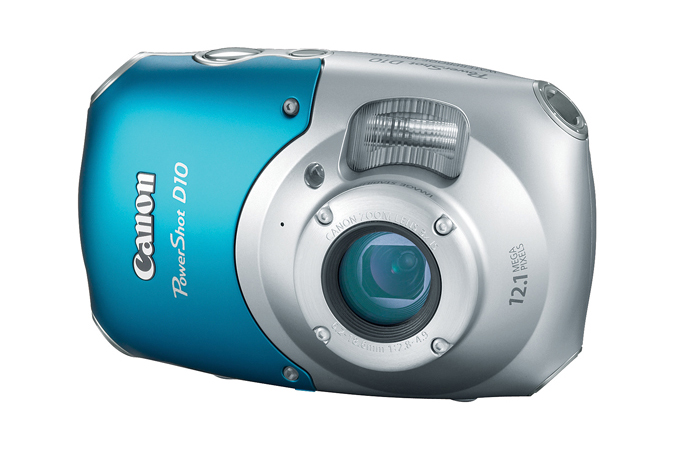

Canon D10 (source: Canon)


With two old film cameras out of commission, I had to admit that underwater cameras do not age well, and that buying a new digital Point and Shoot camera was the safest solution if I wanted to bring back at least one picture from my trip. The Canon Powershot D10 was the winner of a dpreview test last summer. It is rated “IP8X” equivalent at 10m (33 ft), making it appropriate for beach activities and for snorkeling. The Canon D10 is a typical middle of the range digicam – with a 12 Mega Pixel sensor, a 35-105 equivalent zoom, and 18 different “special shooting modes”, including “underwater” and “beach”. Selecting a special shooting mode is the only thing the photographer can do: the camera will take care of the rest. It does a good job at it – most of the time – but the inability for the photographer to really control the exposure parameters can be frustrating in complex lighting situations (sunsets, for instance).


Rated for depths up to 10 meters, the Canon D10 can not be used for scuba diving, but can be brought along when snorkeling. Its “underwater” special shooting mode is very good at finding the right color balance, but the shutter lag is typical of a point and shoot camera (far to high), the autofocus reacts too slowly – or not at all, and pictures of mobile subjects are very difficult to take. The LCD monitor has to be “on” all the time, which drains the battery rapidly. That being said, a good diver should be able to bring back decent pictures of relatively static subjects located in shallow waters.


Lesson #4: even dpreview comparative test winners can not overcome the limitations of their middle of the range point and shoot origins. Waterproof digicams are small and light, and will be faithful companions of white water or snorkeling adventures. But they offer little control over the pictures and are limited to a few feet of depth, which explains why dedicated diver-photographers use high-end digicams or SLRs, that they protect with massive (and often massively expensive) underwater housings.


What good diver-photographers do


While on vacation, I had the pleasure to meet Dr Alain Feulvarc’h – he’s an MD, a passionate diver and amateur photographer who was volunteering as the scuba-doctor of our little group.


He was not on the boat to teach underwater photography, but he shared a few tidbits of information: like most of the diver-photographers, he’s using a digital SLR enclosed in a metal underwater housing, and equipped with a very wide angle (10mm) lens. He also uses a 100 mm macro for close ups. Most pictures are taken with a flash (one strobe at least), and at close distance from the subject. He does not rely on the automation capabilities of the camera, and operates in manual mode. Underwater photography is a fairly complex activity, and using digital technologies improves the learning curve dramatically. I was surprised to see that even underwater, some photographers took the time to check the histograms of their images, and to adjust their settings accordingly; this trial and error process would be impossible with film.


You can watch Dr Alain’s stunning pictures on Flickr.
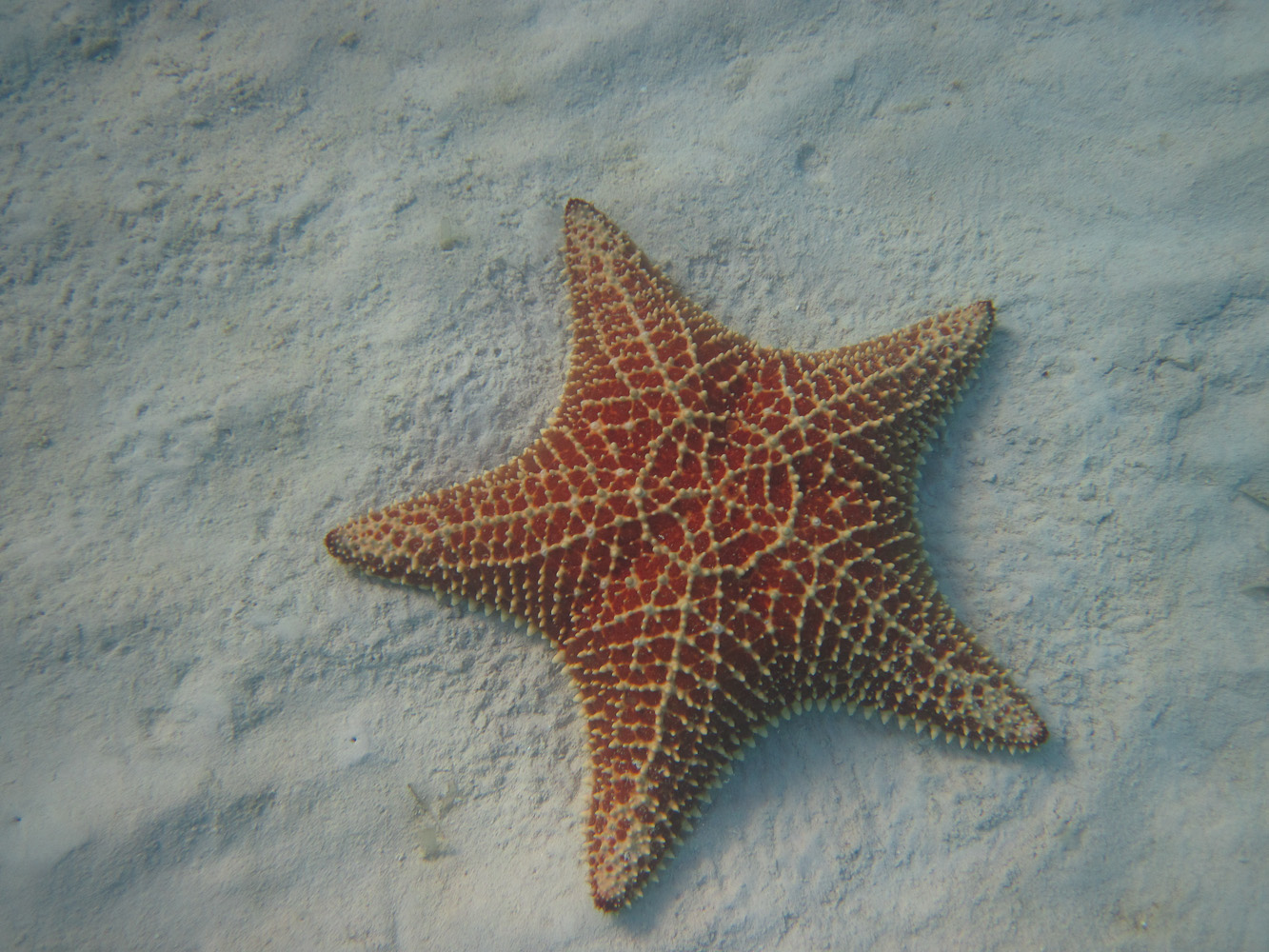

Star Fish - Turks and Caicos - Canon D10
Star Fish - Turks and Caicos - Canon Powershot D10 - The star fish was lying on the sand, at a depth of 2m. (6 ft) approximately. It was well lit and static, and the camera had no difficulty capturing its image.


More about underwater photography


The excellent Photo.net published an interesting Underwater Photography Primer more than 10 years ago. At that time film photography still reigned supreme, but most of the principles exposed in the article still hold true.


The pictures of Alain Feulvarch are on Flickr (aka Alain76 on Flickr)


The characteristics of the Canon Powershot D10 are on Canon’s official site.


The Nikonos family on Photography in Malaysia‘s web pages


And for geekiest of us all, the detailed description of the IP ratings

The Impossible Project – PX 100 film received

The Impossible Project is more than just buzz and hype. I received today the two film packs I had ordered 10 days before. Nice packaging (all white with embossed Impossible and PX 100 logos, almost Apple-esque).

The film shipped is the Silver Shade / First Flush variant. I suspect there will be other declinations of the PX 100 film in the future. The PX 100 is 100 ISO Monochrome Instant Film. It’s made in the Netherlands for the Polaroid SX-70 cameras, and interestingly there is an Ilford logo on the side of the box.

Little disappointment: the pack’s capacity is limited to 8 pictures, which makes it a very expensive proposition ($21.00 plus shipping).
More about it in a few days.

The on-line Store of the Impossible Project: Impossible Shop (US).

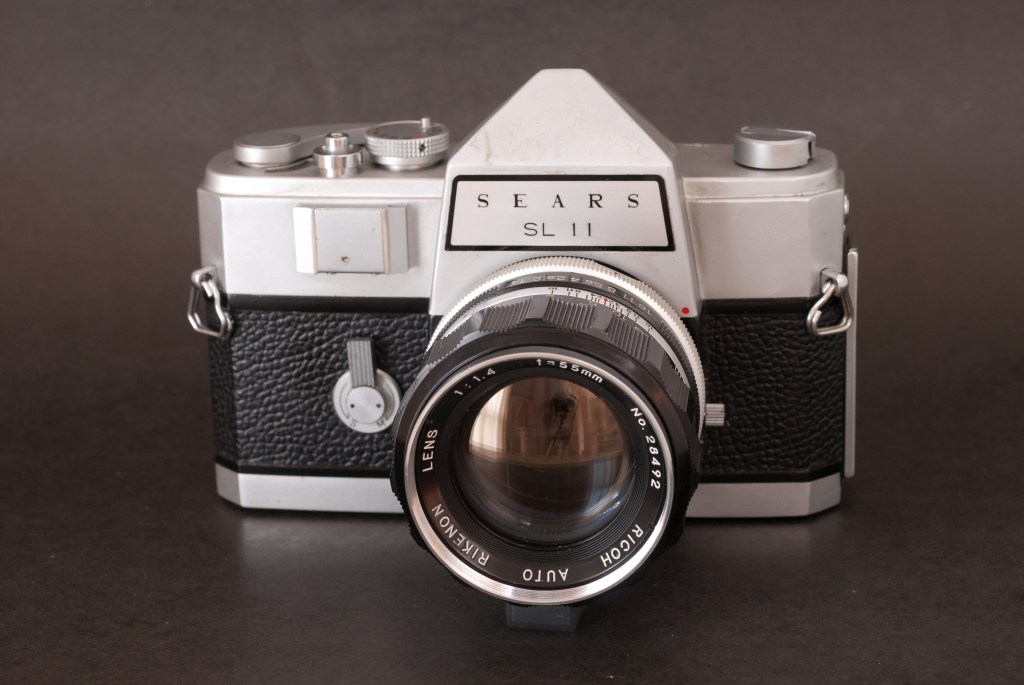
Sears SL11 from 1964 – a relabeled Ricoh SLR with a Nikon F mount.


Few cameras have more obscure and incestuous origins than this one.


At the beginning of the Sixties, Mamiya was ready to launch its first 35mm SLR, the Prismat, and following a suggestion of its US importer, agreed to develop and manufacture a version of the camera for Nippon Kogaku, the maker of the already famous Nikon F. The Nikkorex F was launched in 1962, at half the price of the model F. Nikon expected that the new camera would penetrate the amateur phographer market and increase the sales potential of the Nikkor lenses. Nikon learned quite a few things in the process, and put that experience to good use when they launched the Nikomat in June 1965.


In 1964, Ricoh presented the Singlex, which was very similar to the Nikkorex F, F mount included. It is unclear whether Ricoh was just relabeling cameras made by Mamiya, or whether they had bought the plans and the tooling after Nikon and Mamiya had lost interest in their joint venture. In any case, Ricoh was one of the main manufacturers supplying Sears-Roebuck with private label cameras, and the Singlex was rapidly incorporated to the Sears catalog under the Sears SL11 moniker.

The Sears SL11 with the standard Rikenon 55mm lens


Technically, it can be argued that the Ricoh and Sears cameras were not using the real “F” mount, but only a very close variant: Nikon’s bayonet mount is using lugs to help position the lens on the body (3 body-side lugs imbricated with 3 lens-side lugs). On the Ricoh and Sears bodies, one of the lugs was shorter than Nikon’s , leaving room for a larger lug on the lens side. As a consequence, a Nikon lens with its “small lug” could be mounted on the Ricoh and Sears camera bodies, but the “big lug” Rikenon lenses shipped with the cameras could not be mounted on a Nikon body.


In 1967, Ricoh and Sears replaced the Singlex and the SL11 with new models designed and built by Ricoh. They did not use the Nikon F mount, but the ubiquitous 42mm screw mount, and were equipped with a TTL CdS exposure meter. It seems that Ricoh and Sears designated the new models with the same Singlex and SL11 names as the models they were replacing, at least for a while. The cameras were also sold as Ricoh Singlex TLS and Sears SLS or TLS in the subsequent years. As we can see, using confusing product references is not a recent practice.


How to spot a Sears SL11?

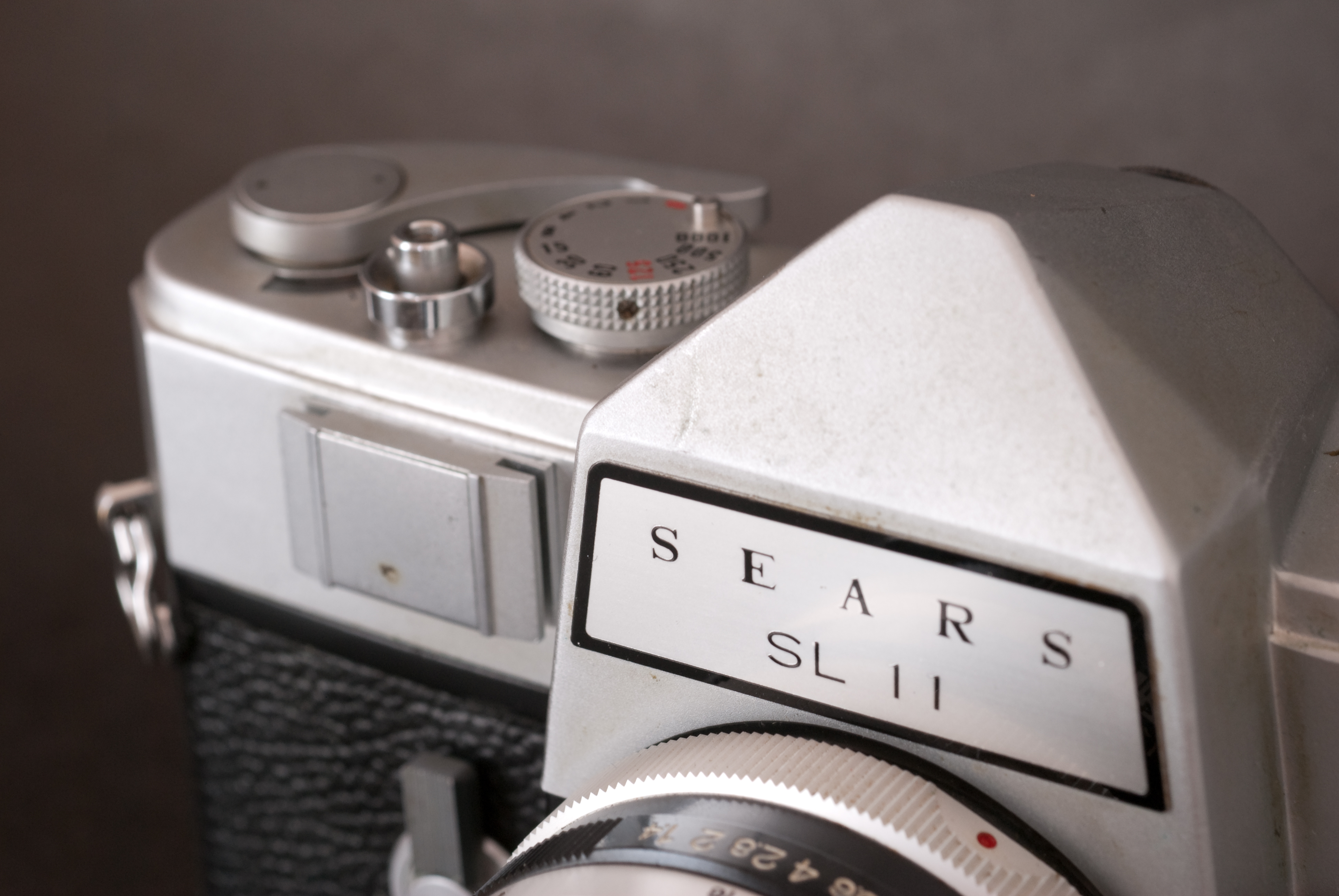
The Sears label on the pentaprism housing. The Sears retained the accessory holder of the Nikkorex.
The Sears label is glued on the pentaprism housing. The Sears SL11 retained the vertical accessory holder of the Nikkorex, at the left of the mount.
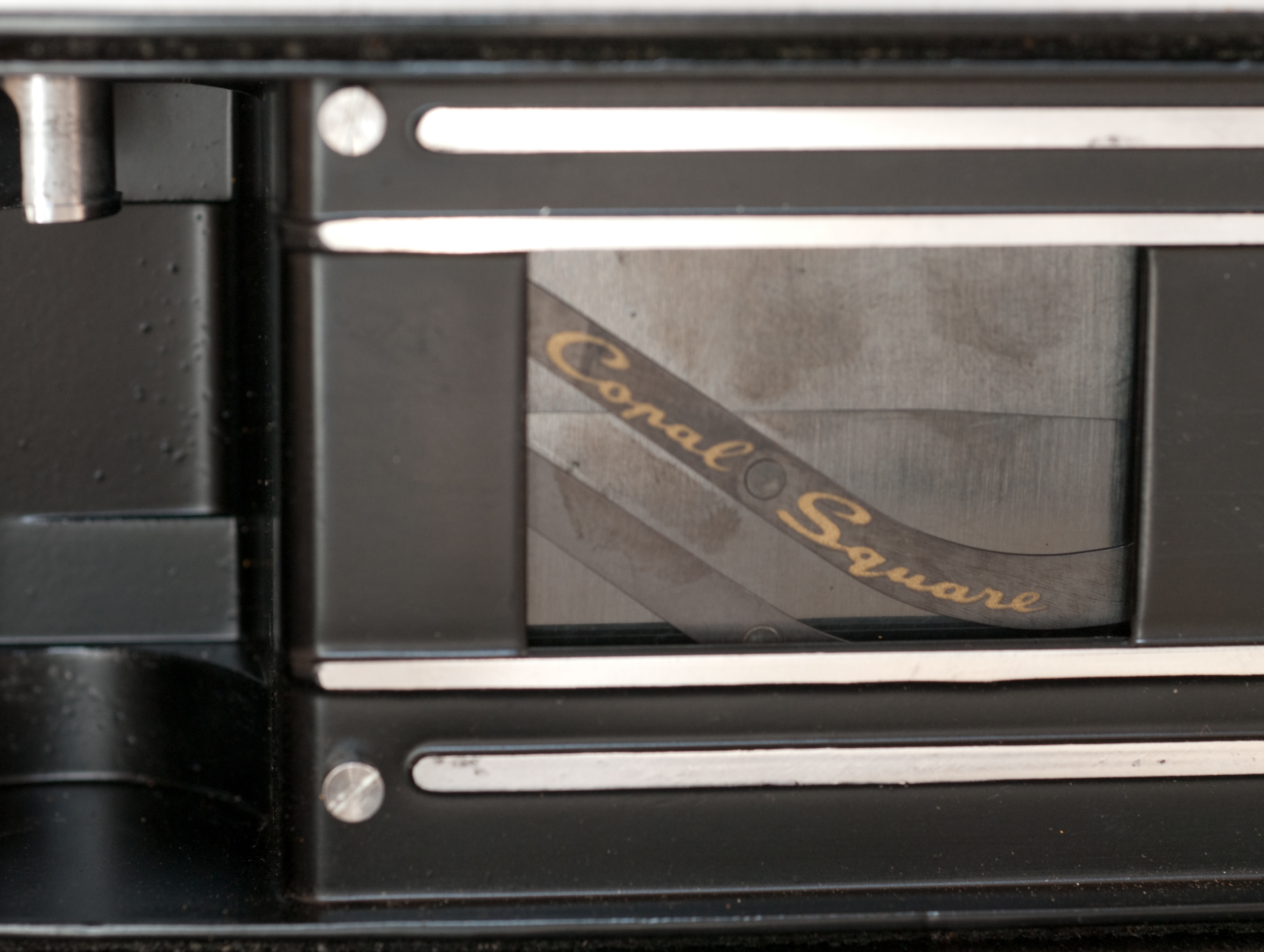
The Copal metal shutter
The Copal metal shutter. Mamiya was the first camera manufacturer to use a vertical Copal shutter. Nikon and Ricoh kept it in the Nikkorex and the Singlex.
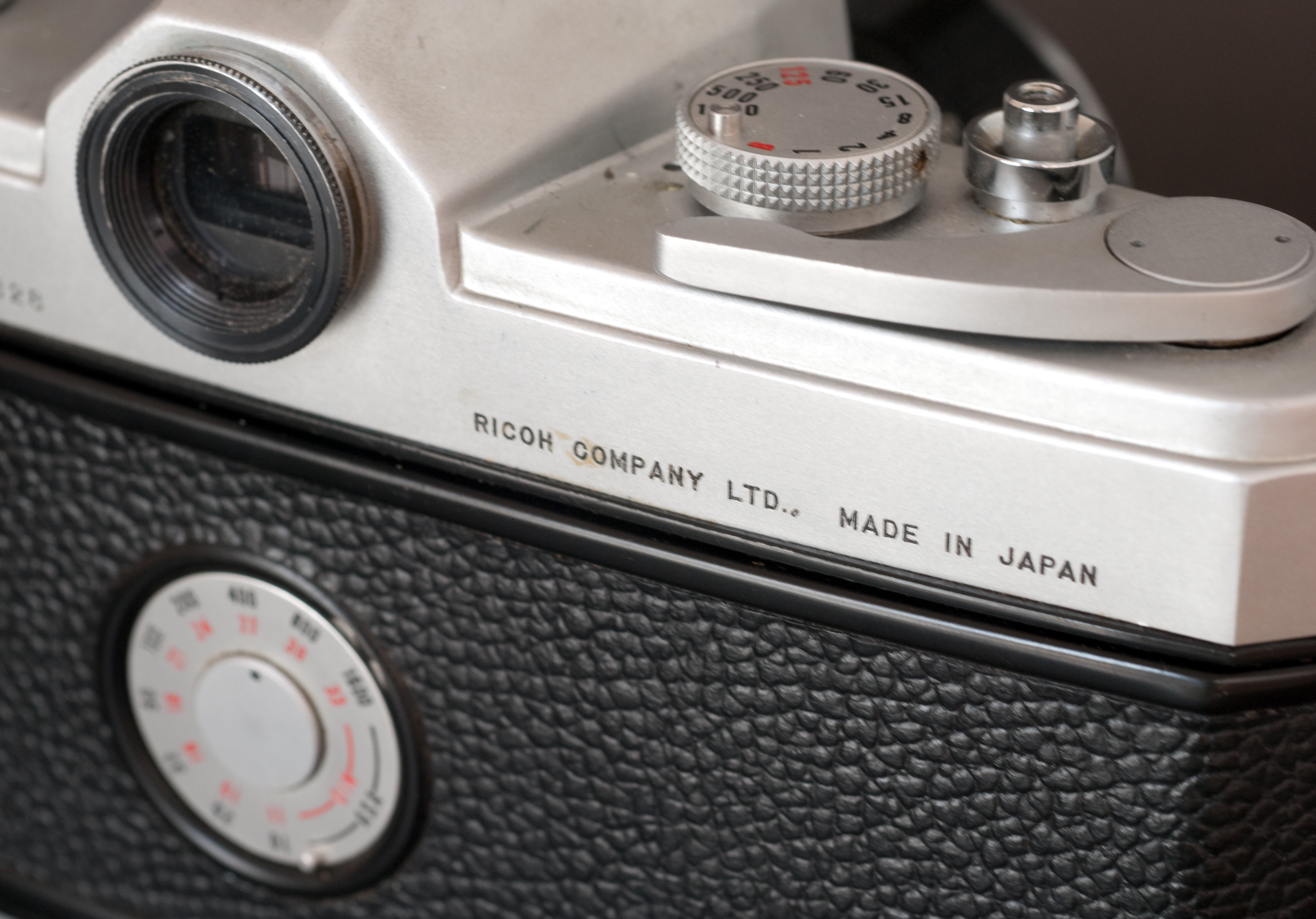
Made by Ricoh
On the back of the body, the name of Ricoh is engraved. There are some traces of glue. A Sears label may have covered Ricoh’s name originally.

Using the Sears SL11


The big difference between film and digital photography is that the body of a film camera does not play such an important role as the body of a digital camera in the final quality of the picture. If the photographer is technically competent and has enough time to set up the camera, any Single Lens Reflex with no light leak and an accurate shutter will give good results, provided a good film and a good lens can be used.

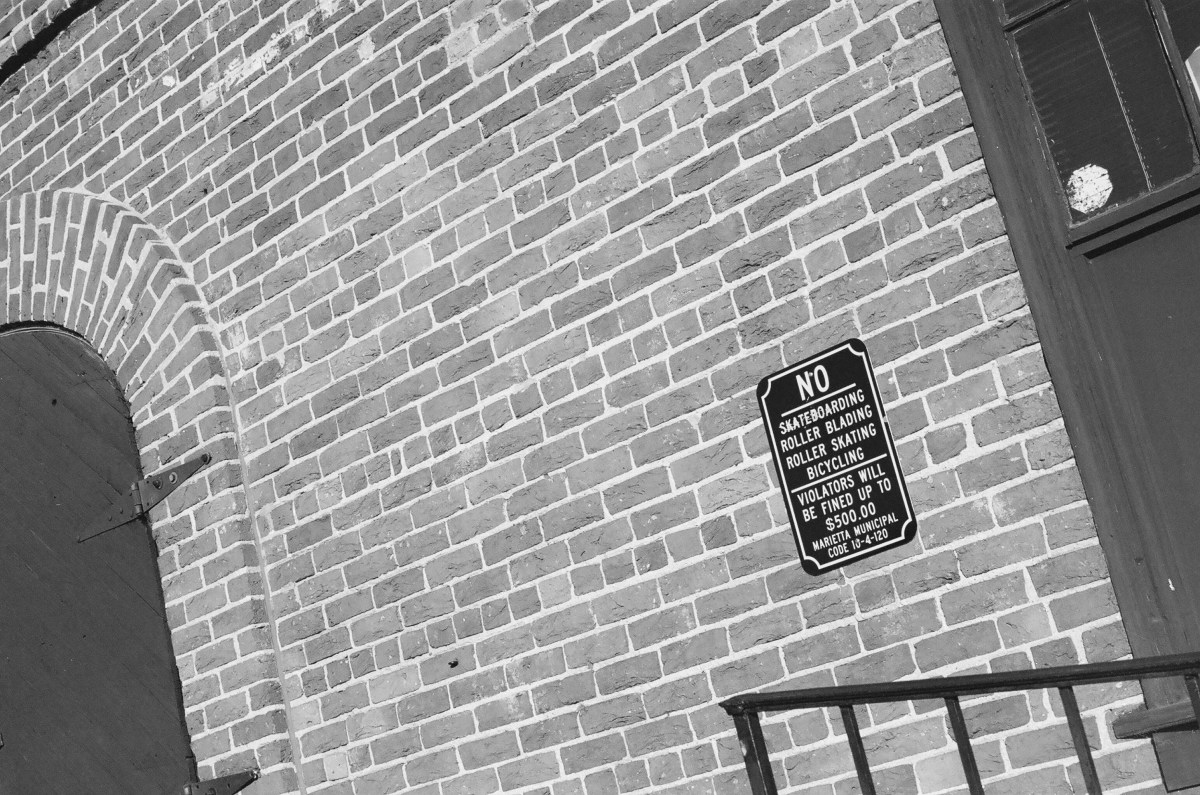
Marietta-the wall of the train station
Marietta, GA- The wall of old the train station. The shutter release of the SL11 is very sensitive, and this picture was taken accidentally. The camera took the decision for me and I tend to like the result.


With a recent Nikon fast prime lens and fine grain film, the SL11 will not be as convenient to use as a modern film SLR (no exposure metering, no autofocus), but if the subject is static or cooperative, there will be little difference as far as the pictures are concerned.


The SL11 is a fairly large and heavy camera – it’s larger than the Nikon F and with its standard 55mm lens, it tips the scale at more than 1.2 kilos. I’ve also held a Nikkorex F in hands, and both cameras share the same matte aluminum finish, which seems very difficult to keep clean in the long run (dust and grease seem like ingrained in the camera’s outer shell). The body shell of the Sears model is not exactly similar to the Nikon’s, but the SL11 is absolutely identical to the Ricoh Singlex, with the exception of a Sears label pasted on the prism cover; Ricoh’s name is engraved on the back of the camera, so that there s no doubt on its origin.


As can be expected from a camera designed in 1962, no exposure meter has been incorporated, and the photographer will have to rely on his experience, on a hand exposure meter or on the Sunny 16 rule to determine the right aperture/shutter speed combination. The camera and the lens support Nikon’s automatic aperture pre-selection, and the diaphragm stays at full aperture until the shutter release is pressed. As a consequence, and surprisingly for a camera that old, the viewfinder is very bright.


In the field, the camera surprises with a very sensitive shutter release, and the very high demultiplication of the focusing ring of the lens seriously slows down the operations. As expected, the shutter is rather loud. The lens is still very good. There is some flare in back-lit situations, but at mid aperture (f:8 or f:11), it produces razor sharp pictures.


A camera without a built-in exposure meter is too slow to use to my taste, but this one is an interesting curiosity. Compatible with any Nikon lens made in the last 50 years, provided it has an aperture ring, it will find a place in the equipment bag of a “Nikonist” between a FE2 and a D300, for a film roll of nostalgia.


More about the SL11 and its cousins

The Sears SL11 with a Nikon 24mm AF lens. It simply works.
The Sears SL11 with a Nikon 24mm AF lens. The SL11 is compatible with any Nikon lens provided it has an aperture ring.


The common ancestor: the Mamiya Prismat NP.
Ron Herron’s site is totally dedicated to Mamiya 35mm cameras.


The predecessor of the SL11: the Nikkorex F and Nikon’s own version of its history, reported by Kenji Toyoda.
Kenji Toyoda went to the source and talked to the Nikon engineers who worked on the development of models such as the FM, the FE or the FA. For Nikon, they’re “the best of the rest”.


Nikon’s official Web site offers a very detailed history of the most important cameras of the company: More about the history of the Nikon cameras – the legendary and the other ones : Nikon Imaging Products


A few sites have a pages dedicated to the twins of the SL11:
– the Ricoh Singlex (first model).
– another source of information for the Singlex and the Nikkorex F : Richard de Stoutz and his Nikon F collection.


As explained above, Ricoh and Sears kept on using the Singlex and SL11 names after they abandoned the original design of Mamiya. The user manual of Ricoh Singlex TLS of 1967 is still available.
The Sears labeled version of the camera is also shown here as the Sears SLS.


Marietta, GA - Jan. 2010
Marietta, GA – Jan. 2010 – Sears SL11 with Rikenon lens (55mm f:1.4)-Lodak CN400