Who’s really manufacturing film in 2025?

There is a store named Bellows in Little Five Points (a neighborhood in Atlanta) where they still sell a wide selection of 35mm and 120 film. I stopped by yesterday and bought film from Kodak, Harman and Fujifilm.

Back home, I looked at the box of Fujifilm Acros 100 II that I had just bought. It clearly mentions it’s made in the United Kingdom. Fujifilm? In England? A quick research confirms it: the Acros 100 II film is made by Harman Technologies Ltd, the British company that manufactures its own Ilford and Kentmere Black & White film, and also supplies B&W film for brands such as Agfa, Rollei, Oriental Seagull and … now Fujifilm. No wonder that Harman can boast of a 80% market share in the segment of B&W photo film.
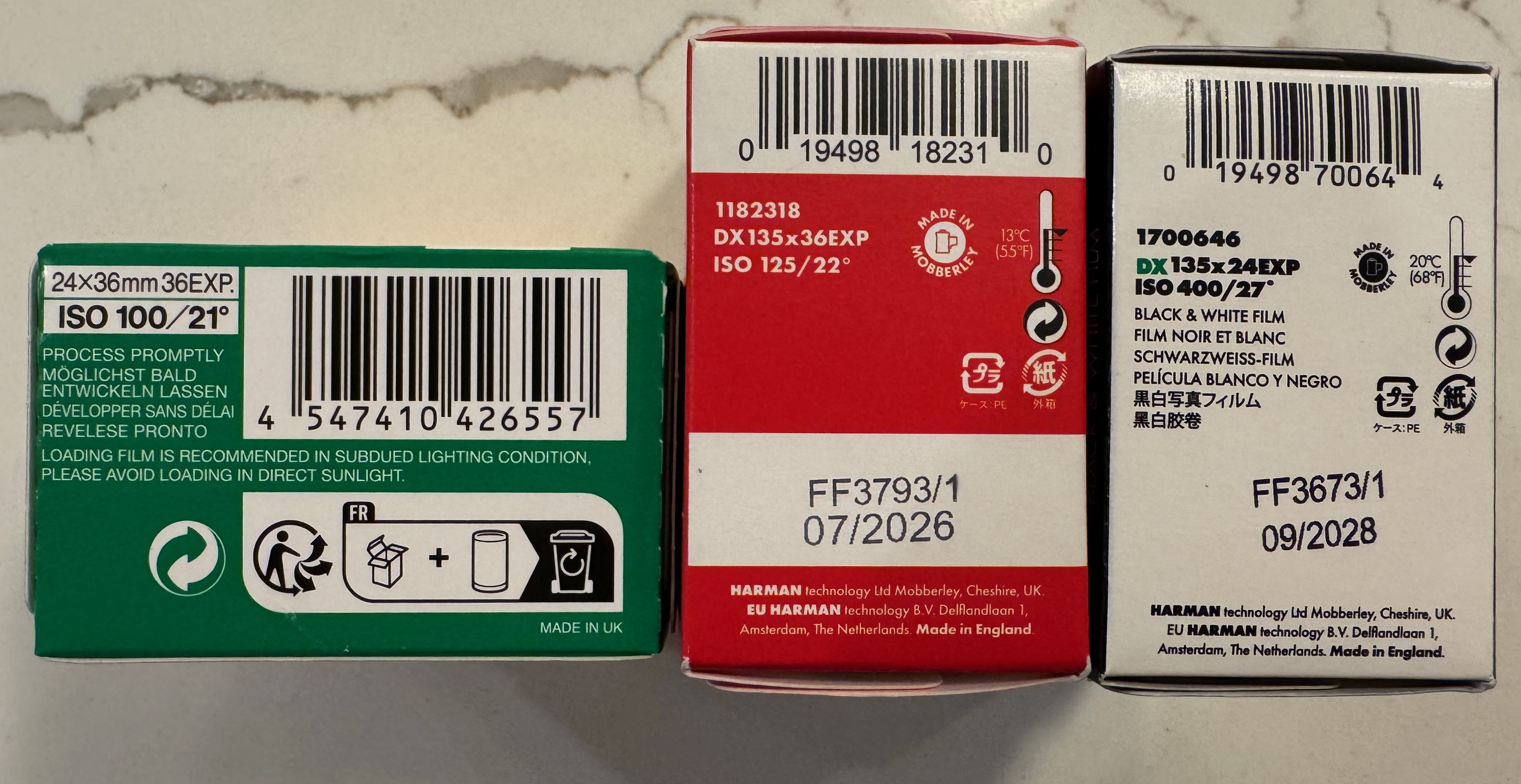
Made in Mobberley (UK) with pride.

The company currently known as Harman Technologies Ltd is the result of a management buy out of Ilford Imaging UK Ltd, after it went under in 2004. Founded in 1879 by a Mr Harman, the manufacturer of photographic material we know as “Ilford” still operate from their historical facilities in Mobberley, near Manchester, and have added color film to the well known range of B&W film stock (Ilford FP4 Plus, HP5 Plus, XP2, Kentmere) they produce in their plant.

Over its 146 years of operations, Ilford went through an incredible number of acquisitions, mergers, rebrands, splits, receiverships and buy-outs, and as a result Harman Technologies does not even own the “Ilford” brand.
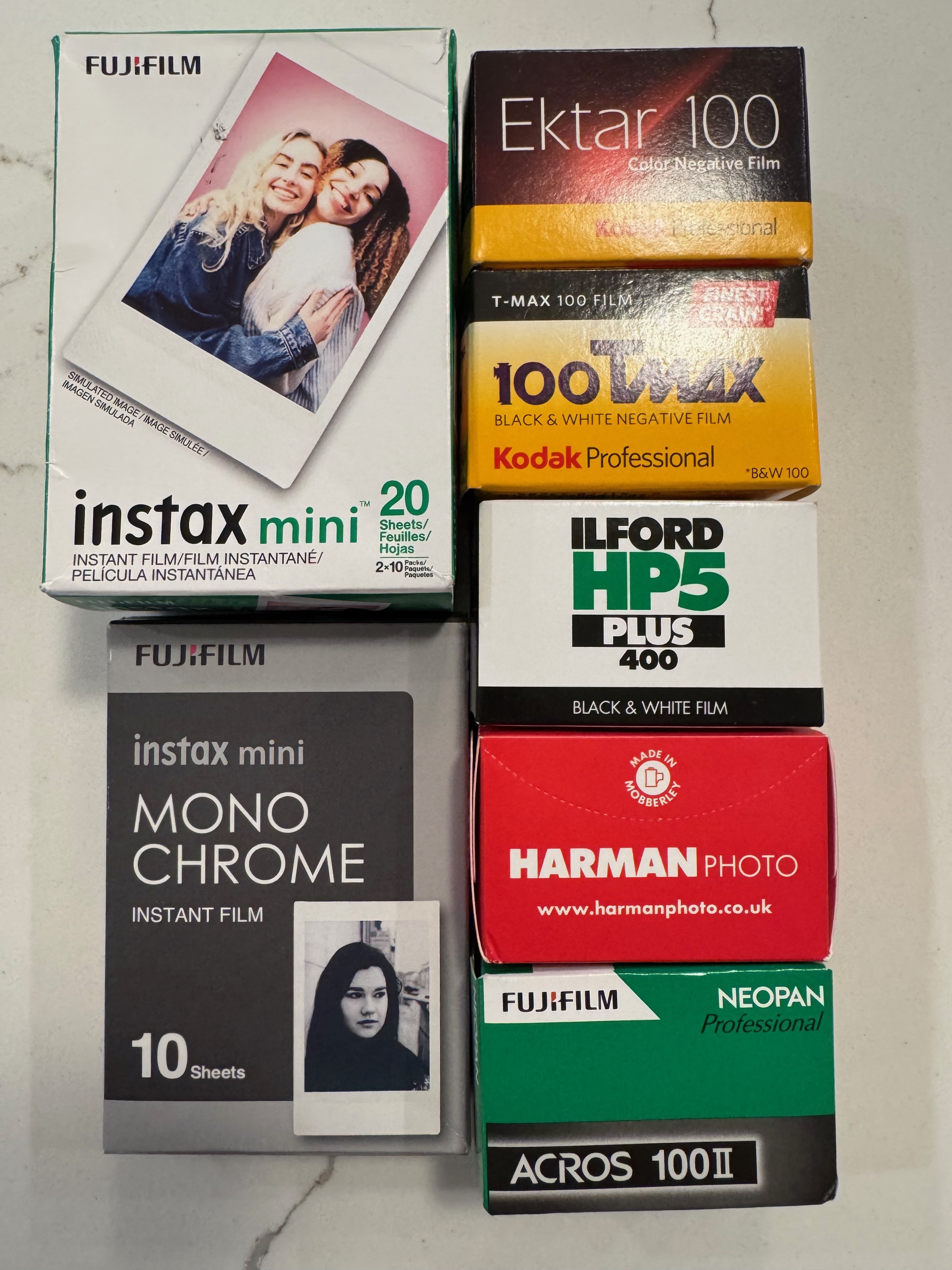
Eastman Kodak, Fujifilm, Harman Technologies – the volume leaders of what remains of the photographic film industry. But who manufactures what, and for whom?

The “Ilford” brand currently belongs to Ilford Imaging Europe GmbH, which inherited it along with the Swiss side of the old Ilford business (which used to manufacture Cibachrome and later Ilfochrome photographic papers). That side of the Ilford historical business went through its own series of plant closures, acquisitions and bankruptcies, and does not produce film or photographic paper anymore. It licenses the use of the “Ilford” brand to Harman Technologies for its B&W products, and simply distributes a range of color photographic products under the Ilford brand.

As a consequence, the current Ilford Ilfocolor film and the Ilford Ilfocolor single use cameras have nothing to do with Harman Technologies or the Mobberley plant (Harman’s own color film is sold as the “Harman Phoenix”), and are probably made by one of the companies that picked up the pieces after the East German (ORWO) and West German (Agfa) film manufacturing giants went under.

I can’t describe how this whole constellation of remote descendants of Agfa and ORWO is organized, as the situation still seems very murky, with insolvencies and lawsuits left and right. The German side of Agfa is long gone, and I don’t know if the current reincarnation of ORWO is still in operation. If they are, it (probably) makes them one of the only four companies in the world still in the color film manufacturing business, alongside Eastman Kodak and Fujifim – the heavyweights, and Harman – the new entrant (*)

At least one small (and reputable) company, ADOX, could salvage some of the industrial assets of the fallen giants (as well as some of the machines of the Swiss side of Ilford), and operates a B&W film plant in Germany.

After this detour through Switzerland and Germany, let’s go back to Fujifilm. Do you know that the Fujicolor 200 film sold over here in the US is manufactured by… Eastman Kodak. Which may not be the case in other parts of the world – Fujicolor 200 film is also packaged in China through a partnership with a local company, presumably to serve the Asian markets.
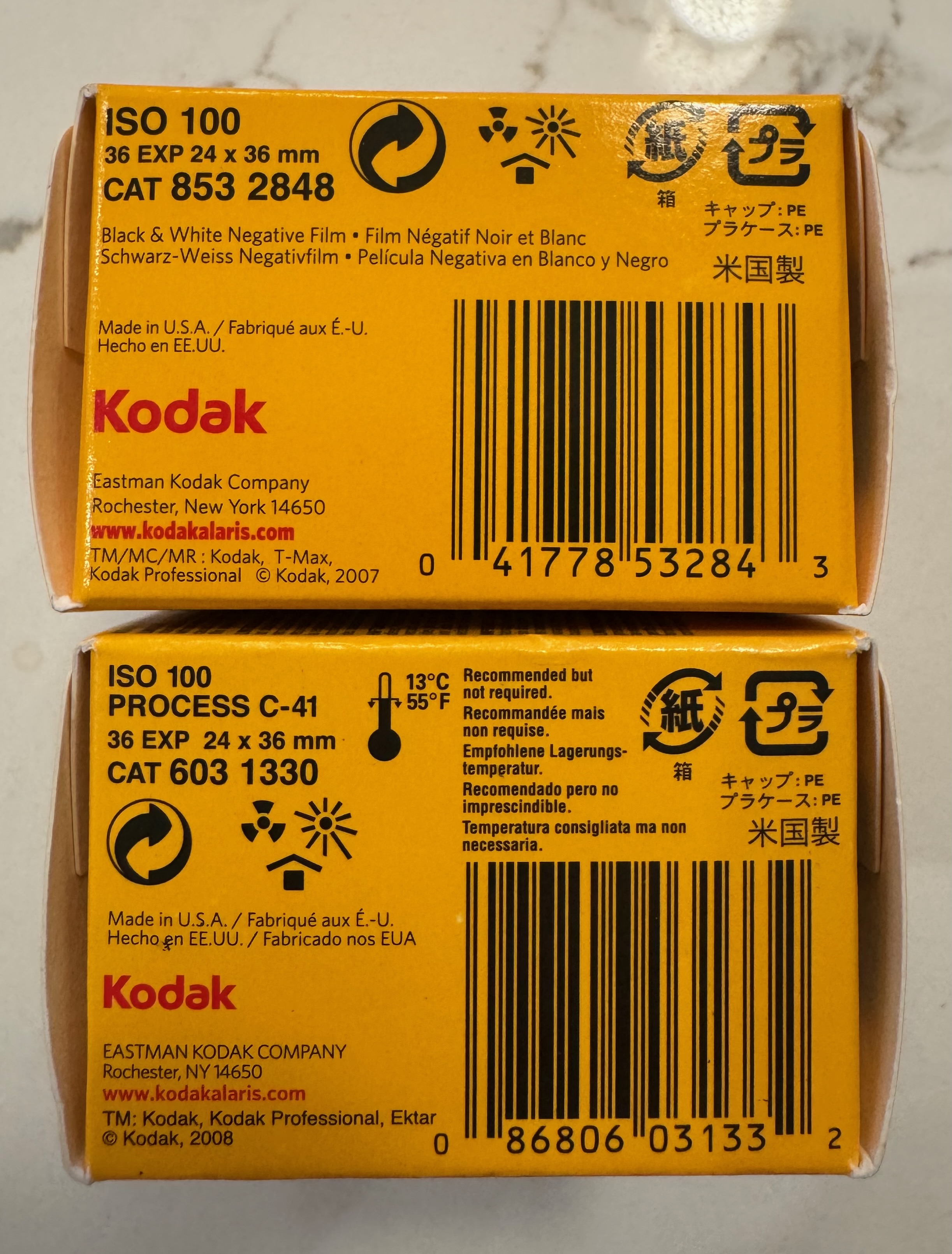
Made in the US by Eastman Kodak, distributed by Kodak Alaris.

In addition to Eastman Kodak, Harman, Fujifilm and the remnants of the German photographic film industry, a few players still manufacture film: in Belgium, Agfa-Gevaert produce specialty B&W film for aerial photography, Foma Bohemia make B&W film in the Czech Republic, and Ferrania are trying to restart a B&W film factory in Italy.

Photographic film is definitely manufactured in China and possibly in the Ukraine (by China Lucky and Svema respectively) but those brands are not distributed in the US and I have no precise information about them.
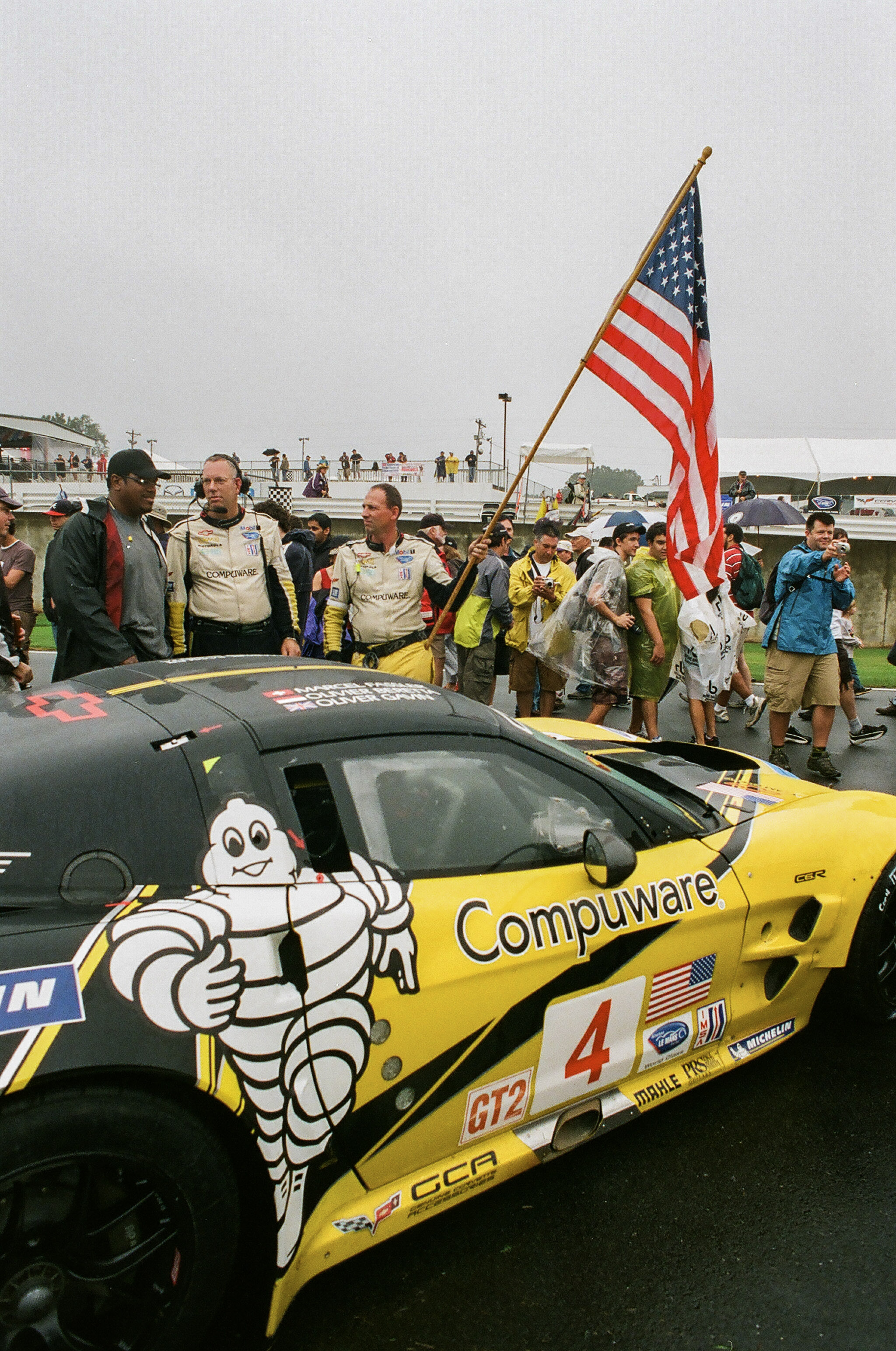
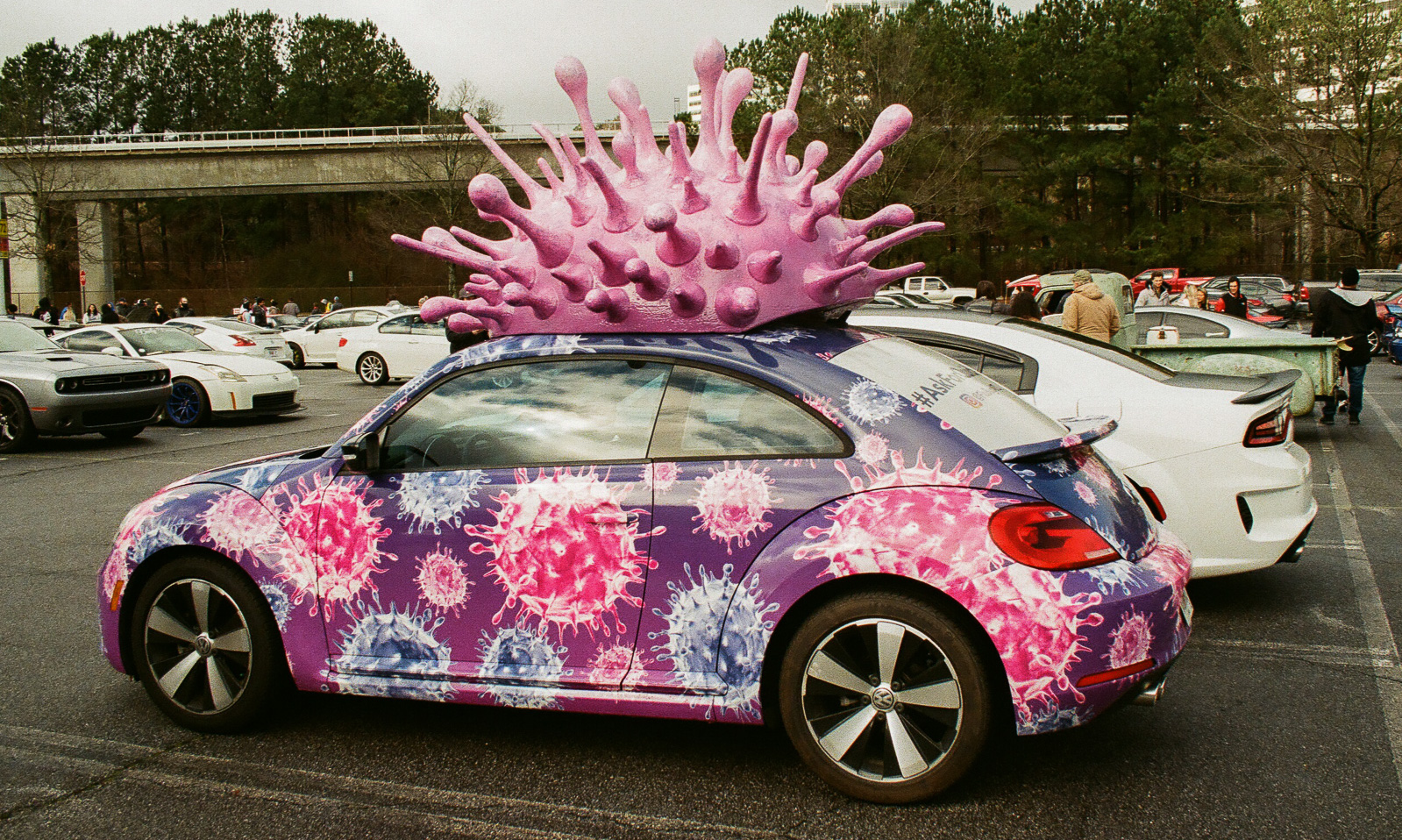
American Petit LeMans (2009 edition). Yellow and American. Like Kodak. Shot on film in 2009 with a Nikon camera.

The rest of the brands (Arista, Cinestill, KONO Manufactur, Leica, Lomography, Rollei, …) may commission the manufacturing of limited batches of their own proprietary film from one of the player listed above, or create their own “experimental” film by altering cinematographic film they buy mainly from Kodak, or simply re-label film produced by Harman, Foma, Adox and a few others.

As for the Instax instant film (one of the fattest cash cows of Fujifilm – $1Billion revenue with a 20% margin in 2024), it’s still made in Japan. Polaroid’s manufacturing operations are split between a main plant in the Netherlands and a smaller unit in Germany (one of the Agfa offshoots) which supplies the negative layer of the instant film. An exception in this industry, Polaroid has reunited under the same owner the brand and the plants, and manufactures and distributes its own products.
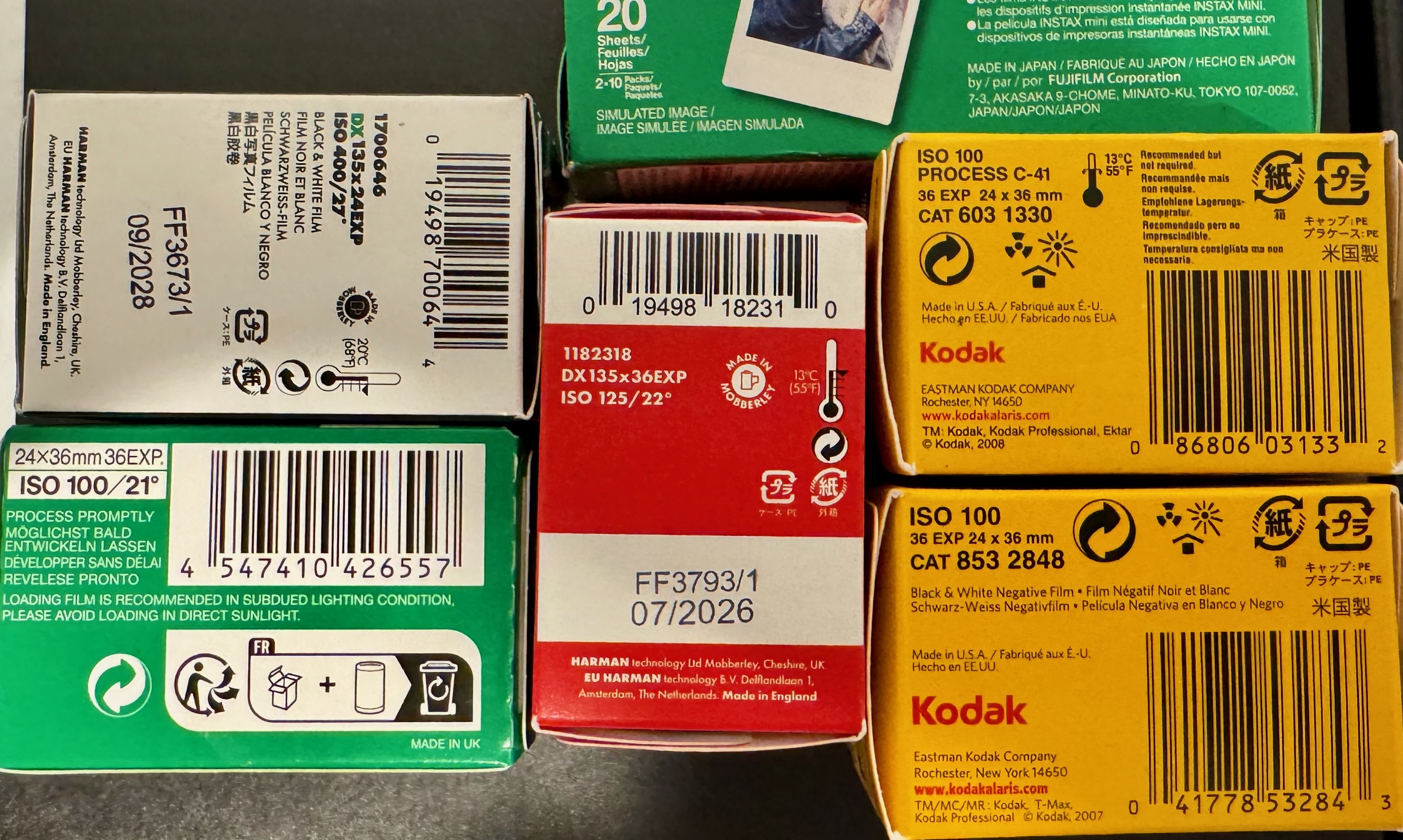
Green boxes do not necessarily come from Japan anymore.

There are no reliable statistics about the total value of the photography film market in the world – I’m reading anything between $500 million to $2.5 Billion a year – a fraction of what the market was as its peak in 1999 (Kodak’s revenue alone that year was $17Billion, which would equate to $32Billion in today’s US dollar).
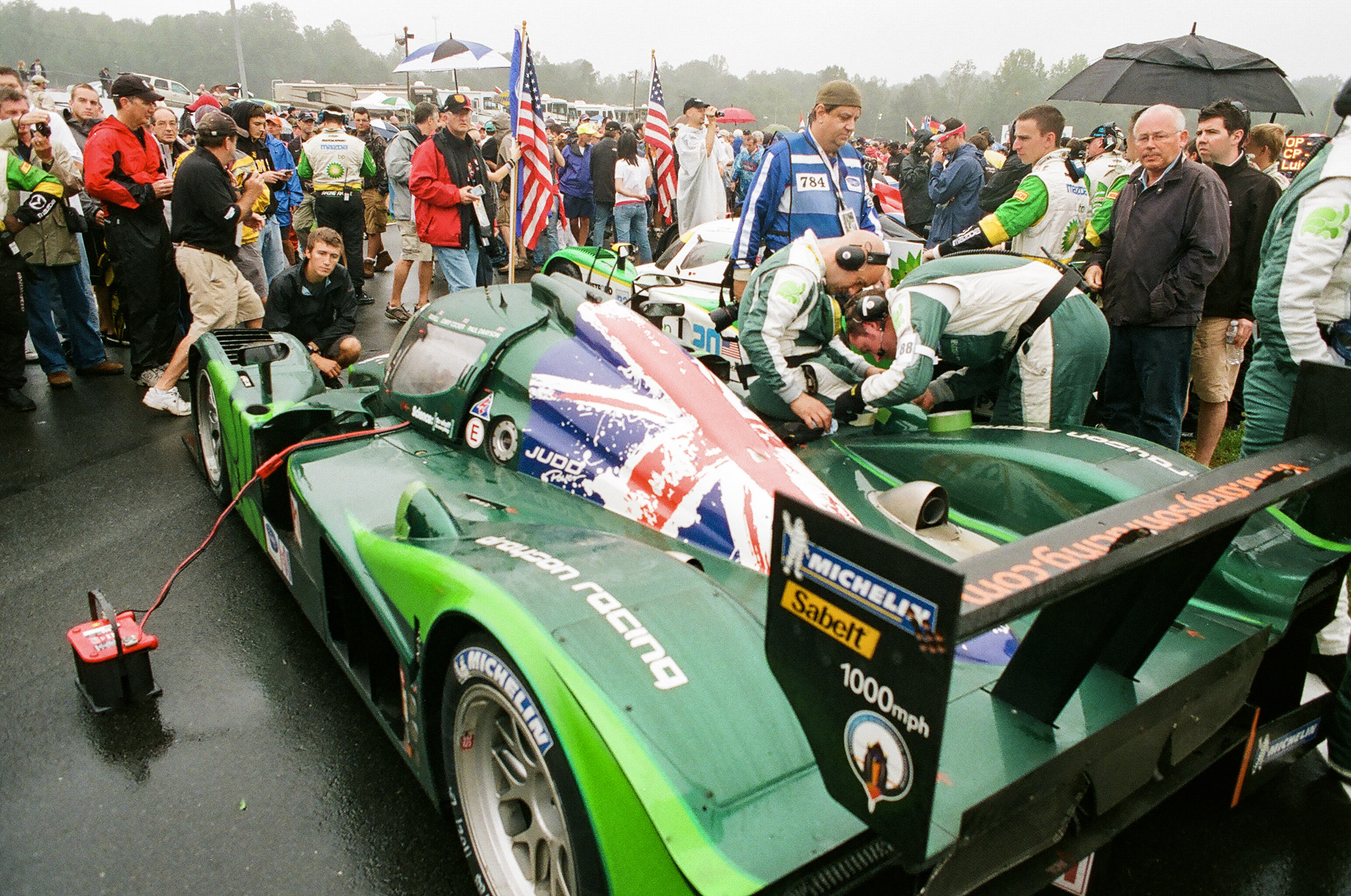
American Petit LeMans – Braselton (GA) – another Japan-England cooperation: the Mazda-Judd Shot on film with a Nikon Camera in 2009

With the exception of Fujifilm, all the big players of the twentieth century (Kodak, Ilford, Agfa, Orwo, Polaroid) have been dismantled, with the ownership of the brands often decoupled from the ownership of the remnants of the manufacturing assets, and the actual manufacturing and distribution activities under the responsibility of new actors. It explains the proliferation of new or resuscitated brands such as ADOX, Harman, Harman Phoenix, Kentmere, Original Wolfen or Rollei.

Does it matter? Not to me – as long as I can find good film to feed my cameras.


(*) Why is Harman entering the color film business, by the way ? They see a strategic opportunity in color film, obviously, and they’re also uniquely placed to take advantage of it because of their experience with chromogenic film.

Harman (as the successor of the pre-receivership British side of Ilford) has been manufacturing monochrome chromogenic film since 1981 (the XP, XP2 and now the XP2 Plus). The XP2 Plus (like the defunct Kodak BW400CN) is conceptually a simplified version of the typical chromogenic negative color film (think Kodacolor or Fujicolor), with only one layer of neutral color dyes as opposed to three layers of colored dyes in the negative color films.

In the heydays of film photography, the benefit of chromogenic monochrome film was primarily that it could be processed with negative color film, in the same machines using the same baths – the photo processing labs and the minilabs did not have to dedicate equipment and chemicals to the XP2 or BW400CN film like they would have had to do with “true” B&W film.


Two good sources of information about film photography:

silvergrainclassics.com

Kosmofoto : the new photographic films released in 2025, so far.


More about film, film cameras and old gear in general in CamerAgX.com:


Paris – Canal de l’Ourq – Leica CL – Summicron 40mm
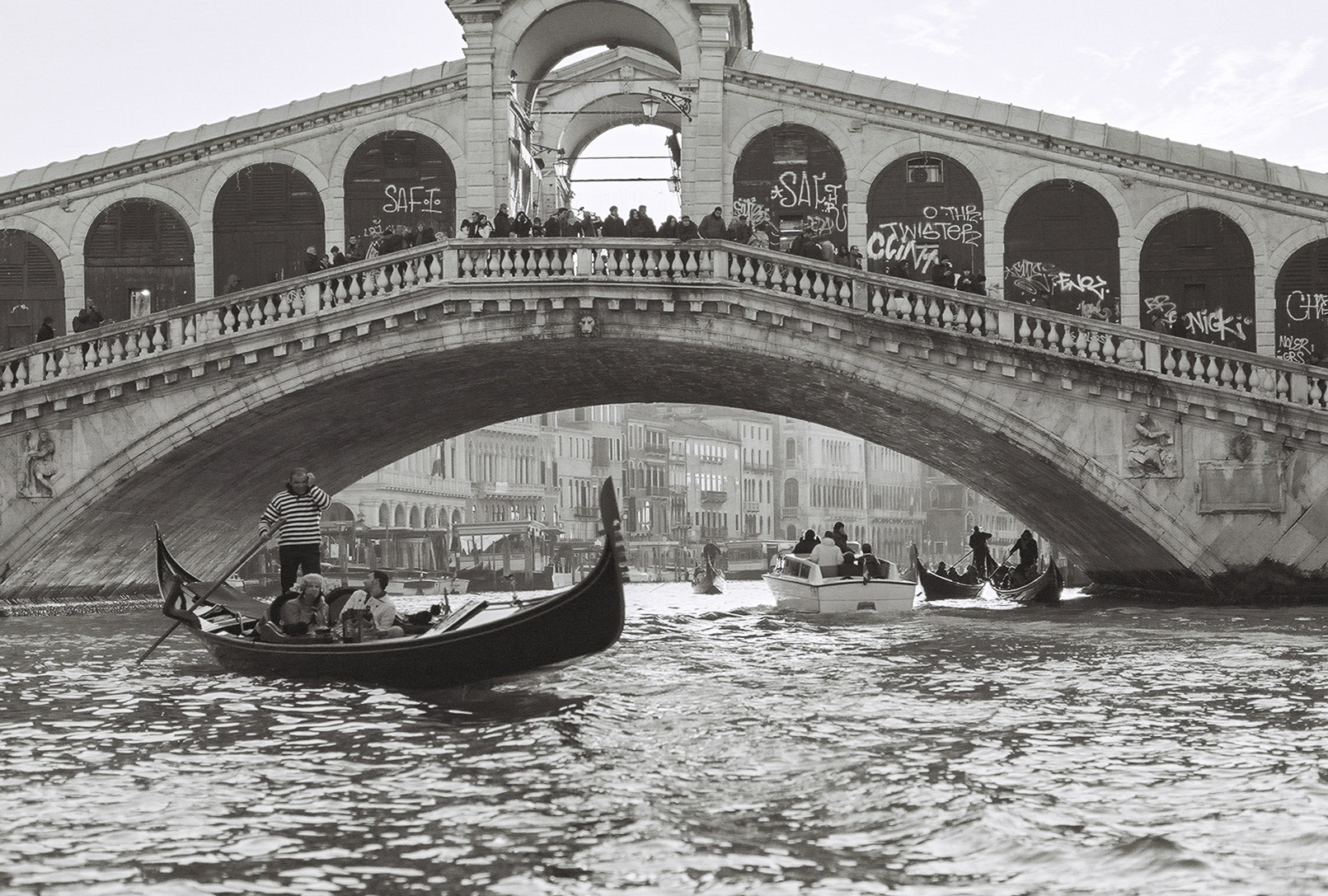
Rialto Bridge, Venice – Nikon FE2.

Back to Flickr, on to Bluesky

This blog is written on WordPress, with a theme that fits the purpose – providing a support for blog entries combining text with a small selection of pictures illustrating what the text was trying to convey.

Sometimes I feel the need for sharing more pictures than this small selection, and from now on I will link, when it makes sense, a Flickr album to a new blog entry. I already tested the format on a few albums – Miami-Wynwood with the Olympus OM-2, Paris in B&W with a Nikon F3, or Atlanta (Cabbage Town) with the Canon Epoca. I’m still trying to perfect the formula and I will welcome your feedback.

Until something like one year ago, new posts on CamerAgX were automatically announced on Twitter (it was a feature of WordPress). Following disagreements between WordPress and Twitter’s new owner, the feature was sunset. A substitute is finally available – on a relatively new micro-blogging site named Bluesky (and abbreviated as bsky.app). Click on this link to subscribe to CamerAgX on Bluesky.

Next week, we’ll return to the normal weekly posts – the ones with cameras. Because of the sorry weather we have to endure over here, I did not have the opportunity to shoot as much as I wanted and my next three posts are still waiting for some real life shooting experience before I can push the “Publish” button.

Thank you for having the curiosity and the patience to come back to this blog regularly.

Xavier T.


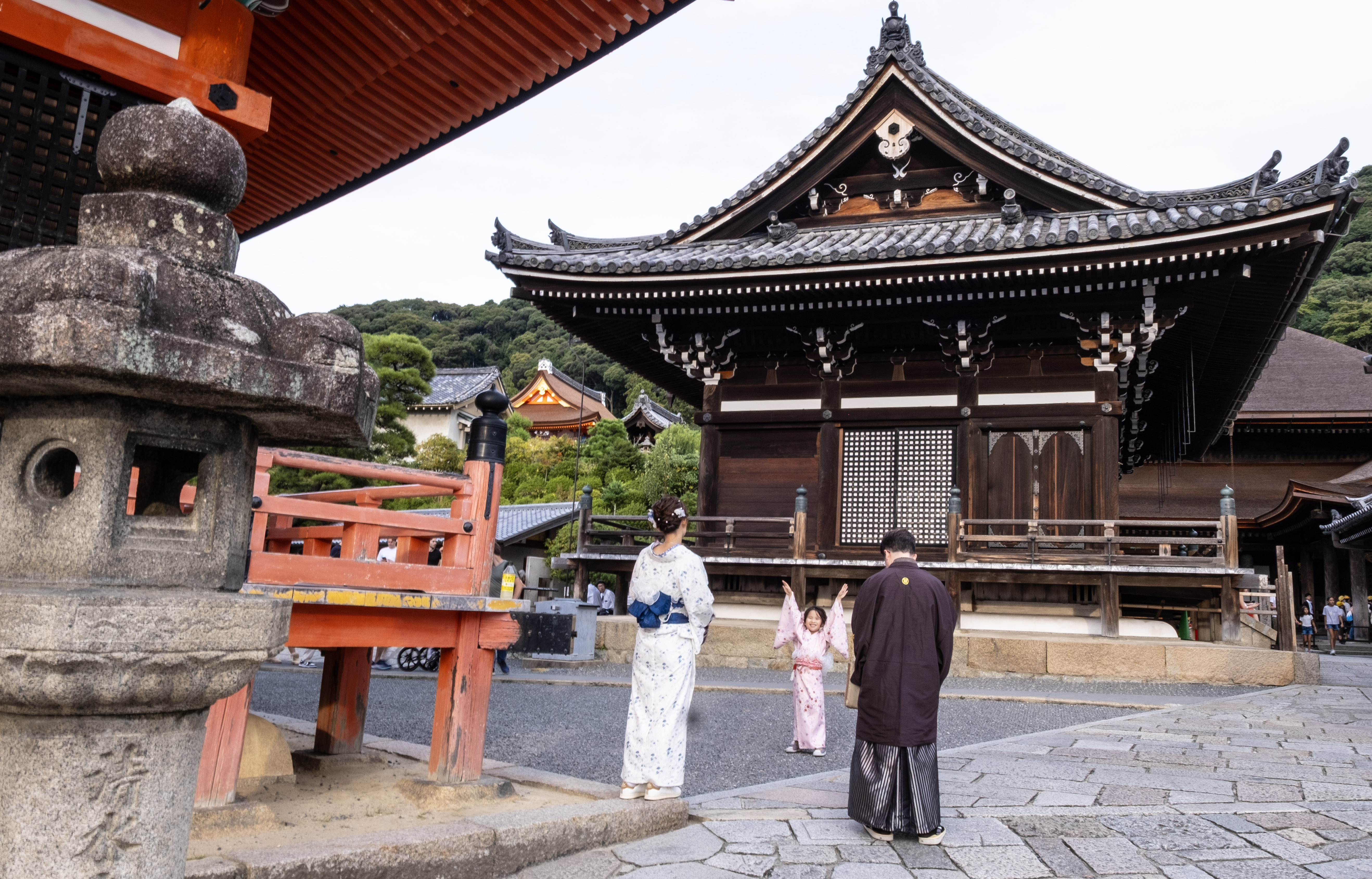
Kyoto (Japan) – Kiyomizu-dera temple

One last look at 2024….

This blog is running on WordPress, and they provide basic statistics about this site’s traffic, that I’m sharing with you.

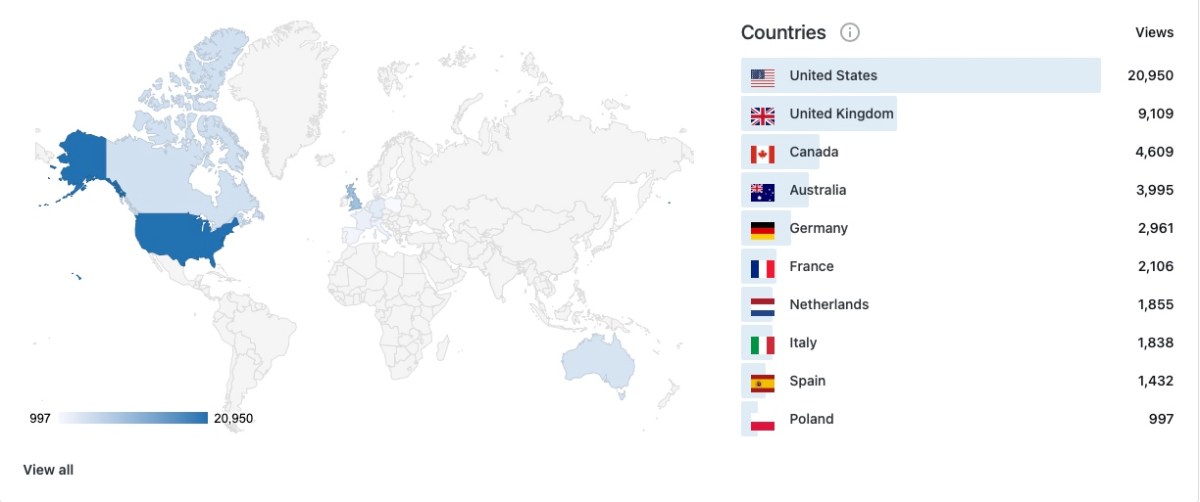
Approximately 52,000 of you visited Cameragx.com last year, for a total number of 69,000 page views. Those numbers have been fairly constant over the last few post-COVID years. Thank you.

As can be expected (since this blog is written in English), traffic is originating primarily from English speaking countries.

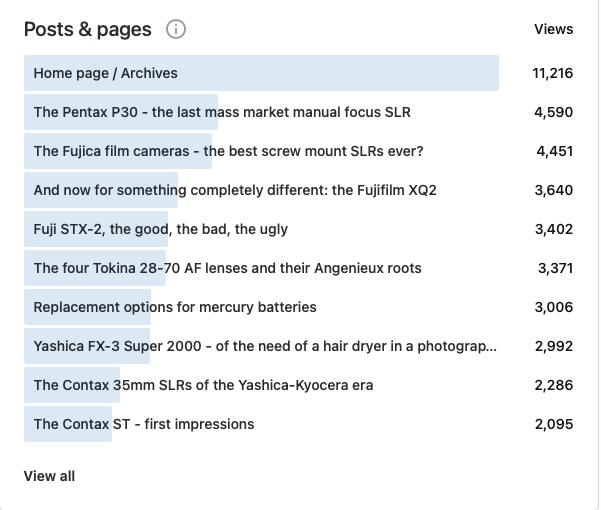
More interesting is to look at the most popular posts.

CamerAgX in 2024 – most popular pages

Pentax P30, Fuji STX-2, Yashica FX-3 Super 2000, all entry level, manual focus, single lens reflex cameras primarily used by learners, and less expensive than the Canon AE-1 that people new to film photography tend to buy as their first film camera.

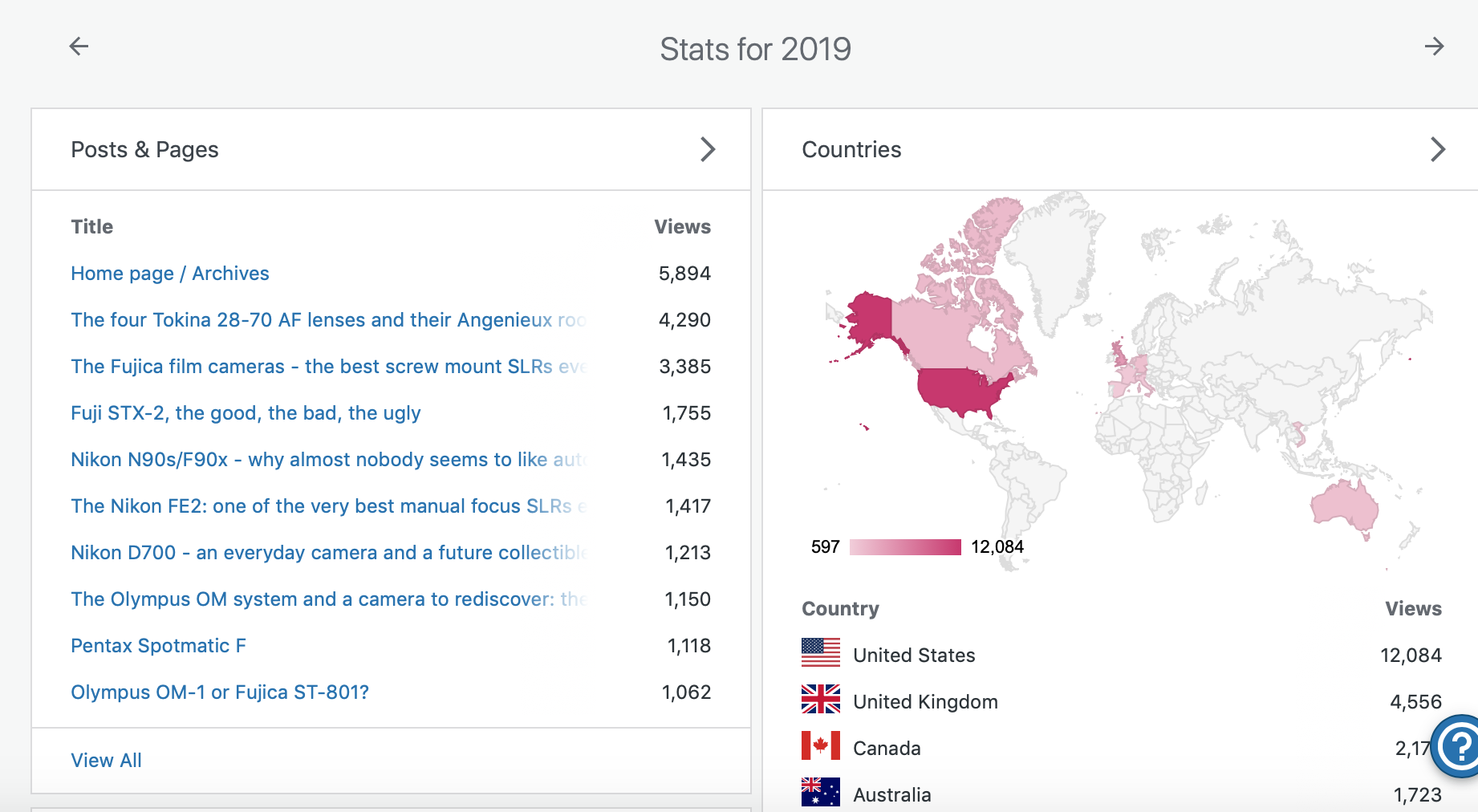
A few years ago, there was more interest in Nikon cameras, and less in Pentax SLRs.

the same stats collected in January 2020

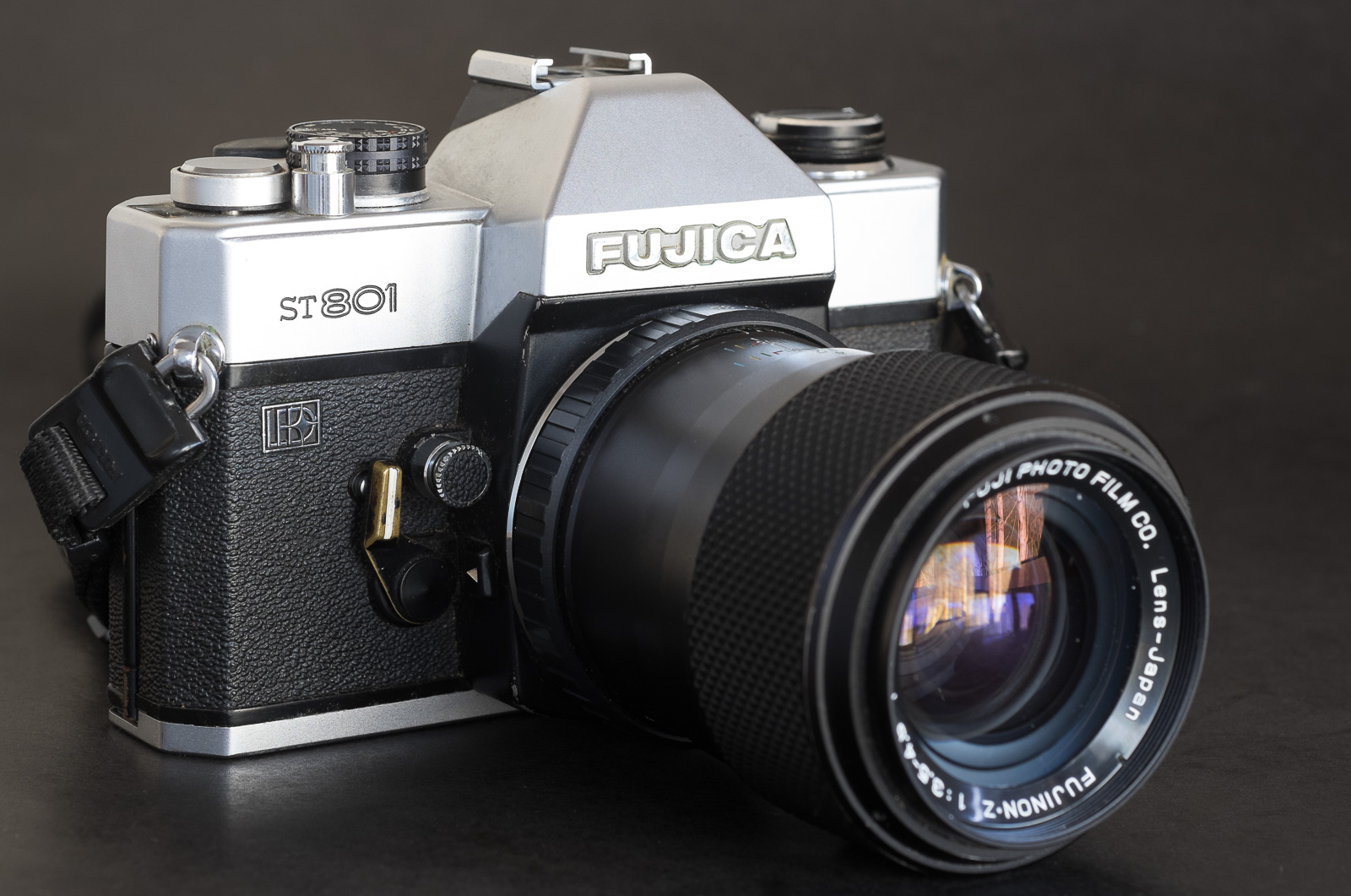
There seems to be a constant interest for all things Fujica, Fuji and Fujifilm – I happen to like to current crop of Fujifilm digital cameras, and a few of their SLRs from the seventies – I still believe that the ST-801 is an all time great. In-between, there are cameras like the bayonet mount SLRs from the late seventies (the AX series) which are not very well known, and for which CamerAgX is one of the rare sources of information. By the way, the index of all the cameras reviewed in those columns has been updated recently.

Recently, I’ve introduced more content related to digital cameras or to the digital workflow, but I’ll keep on reviewing film cameras in the future as well – with a focus on relatively unknown, still inexpensive, really compact cameras of the eighties and nineties.

Feel free to provide suggestions.

That being said, I wish you a Happy New Year, and plenty of success in your photographic endeavours.

X.T.


Tokyo – Tea at the Hamarikyu Gardens – Fujifilm X-T4
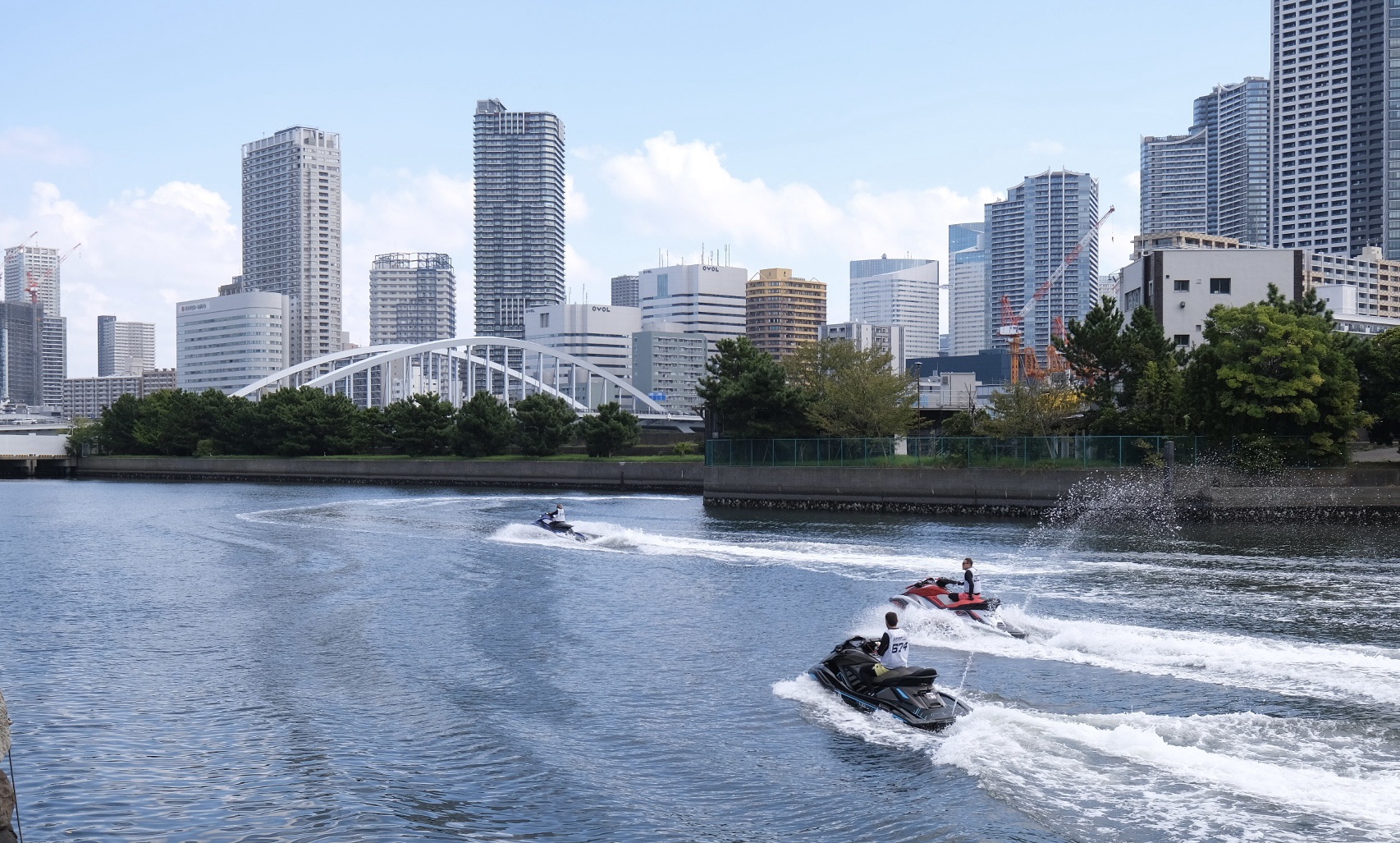
Tokyo – Tsukiji River – Fujifilm X-T4.
Tokyo – sake barrels at the Meiji Jingu – Fujifilm X-T4

Things to look forward to in 2021

Atlanta – Sweet Auburn – Pentax Super-Program – Lens Pentax AF 35-105 f/4-5.6 – Kodak Ultra 400

You can’t say that 2021 started under the best auspices, but hopefully we’ll see the end of COVID related restrictions and will be able to return to a more normal life soon.

What do I have on my bucket list?

I’m still hesitant because of the time commitment it would require, but I may start processing film myself – having film processed by good labs is getting seriously expense – but if developing conventional Black and White film is relatively easy and does not require much in terms of equipment and time, scanning requires good hardware and is extremely time consuming. I may give it a try, though.

I still believe that Nikon cameras from the late-seventies/early eighties offer the best compromise between reliability, optical quality and usability, but I can’t help trying my luck with cameras from other brands – I’m still looking for a really good lens for my recently acquired Pentax Super-Program (I decided I like it after all), and for a good camera to pair with the great Contax Vario-Sonnar I bought last year: the Contax ST is so big it scares people, and the Yashica FX3 is simply too unreliable. I may finally buy a Contax Aria – if I can find one costing less than a mortgage payment.

Contax Aria – Ebay

Last but not least, I’m keeping an eye on the new Nikon mirrorless system (the Z6 in particular) – it would be a great way to use my favorite full frame lenses on a digital camera. Of course, I would have to sell a few of my cameras to pay for it, but the value of film cameras has risen dramatically recently, so it should not be too difficult to fund.


Atlanta – Sweet Auburn – Pentax Super-Program – Lens Pentax AF 35-105 f/4-5.6 – Kodak Ultra 400

2020 in the rearview mirror…

Let’s be social, from a distance…

I’m glad 2020 is over – and that, with vaccine starting to be available (not everywhere – Georgia is a laggard) – 2021 brings some hope of a return to normalcy.

I did not take many pictures last year, I did not travel much and tested my recently acquired cameras primarily in Atlanta neighborhoods – Piedmont Park – often – and Sweet Auburn – frequently.

It did not prevent the traffic on this site to explode – with 36,000 visitors and 52,000 pages viewed over the year – thank you.

CamerAgx – 2020 traffic

As in previous years, the Angenieux 28-70 f/2.8 zoom and its Tokina cousins were at the top of the list, followed by the Fujica 35mm reflex cameras and a newcomer to the top 5, the Nikon N90. Readers are predominantly coming from English speaking countries (USA, UK, Canada, Australia), followed by the non-English speaking countries of Western Europe.

CamerAgx – Posts and pages – views in 2020

I finally had a couple of 35mm cartridges processed (and by the way, film processing is getting seriously expensive in those post COVID days) and I’m preparing a series of posts on some of your favorite subjects – the Tokina 28-70 zoom and the Pentax Super-Program, of course, while exploring new territories with a surprisingly good Canon QL17.

Thank you for following this blog, and sharing comments – now that the worst seems over, Happy Rest of the Year…


Hopefully soon an image from the past…Coffee and Octane – Feb. 2021 – Atlanta (Nikon FE2 – Tokina 28-70 f/2.8 – Kodak Ultra 400)

The most read Posts of 2019

Screen Shot 2020-01-03 at 8.16.44 AM
The typical WordPress dashboard…

There is little to add:

    • I did not devote much attention to CamerAgX last year, but still had 27,000 visitors who read almost 40,000 pages. Thank you for your fidelity.
    • Stating the obvious, most (75% approximately) of the visitors were directed to CamerAgX by a search engine, predominantly Google. The rest followed links posted by contributors in forums dedicated to photography (including DPreview, surprisingly).
    • anything related to the Angenieux 28-70 f/2.6 lens or its Tokina cousins hits the top of the charts (and has been doing so for years).
    • I must have become a specialist of the Fujica 35mm SLR  cameras of the  seventies and early eighties – Fujica related pages are #2, #3, and #9 on the list of most read blog entries – truth to be told there is very little written about those cameras over the Internet – people interested in the subject have little choice outside of this blog.
    • Two of my favorite brands (Nikon, Olympus) round up the top ten. Canon cameras are not represented – I only started writing about Canon film cameras rather recently, and the field is so crowded it’s difficult to be noticed by the search engines
    • Lastly, most of the visitors of this site live in the Anglo-Saxon world – with readers from Non-English-Speaking European countries (Germany, Italy, France, Netherlands) rounding up the top 8.

Your comments are appreciated as always.

Happy New Year

Xavier


Scan_4492x6770_Paris-22
Paris –  Shot from the Pont Neuf -Minolta 7xi – Angenieux zoom 28-70 F/2.6 – Fuji Velvia (July 1992)

59 years after, a new Nikon mount…

I don’t want this blog to turn into a Nikon fansite. But Nikon related pages are now the most read: the Nikon D700 and FE2 entries have been the two most visited pages lately, leapfrogging the pages related to the Angenieux 28-70 f/2.6 zoom, which had been the readers’ favorite for years. And I can’t hide that Nikon film cameras are those I prefer, and that I’ve put my money where my mouth was.

Interesting things are happening at Nikon’s. On August 23rd, they will unveil a new full frame mirrorless digital system, launch a new lens mount and at least one lens.

nikon-mirrorless-brightened-620x465
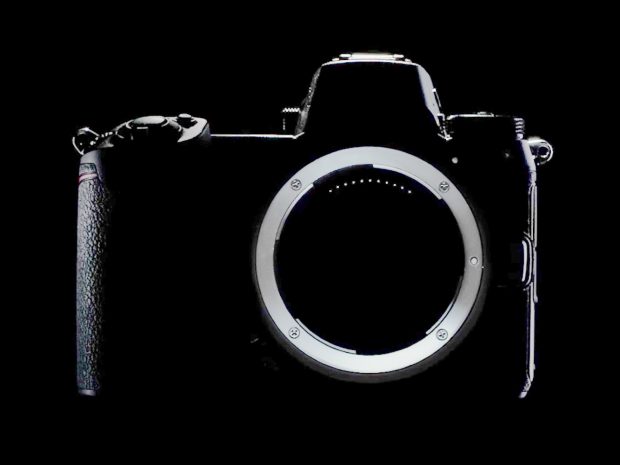
Teaser from Nikon: the silhouette of Nikon’s new mirrorless body, and its huge lens mount. It looks much simpler than the Nikon F mount below,

The new lens mount will be typical of modern mirrorless cameras (short flange distance, and, I assume, no mechanical interface at all – autofocus and aperture control being all electric ), but its diameter will be unusually large – much larger in any case that the Sony E lens mount.

Nikon’s micro site presenting the new lens mount: https://www.nikonusa.com/en/nikon-products/mirrorless-is-coming.page

Over its 59 years of commercial life (so far), the Nikon F mount has gone through many revisions to support successively aperture indexing, automatic aperture indexing, matrix metering, auto-focus, silent wave auto-focus motors, and more recently, electronic diaphragm control.

Because Nikon has made a core business principle to guarantee at least a modicum of compatibility between its older lenses and its newer generation of bodies (particularly for high-end cameras sold to professionals), the new full frame mirrorless body will accept Nikon F lenses, via an adapter. But Nikon has not shared any detail about this adapter yet.

Nikon_F4-7507
Nikon F mount – clockwise from top, on the mount’s flange : the meter coupling lever used for aperture indexing, the lens type signal pin, the lens release pin, the auto-focus shaft. On the inside of the exposure chamber: the electrical contacts used by AF lenses (top), the focal length indexing pin (right) and the aperture stop-down lever (left).

  • The adapter could be made simple, with no electrical contact and no mechanical linkage to the lens. Generally speaking, mirrorless cameras are not dependent on the automatic aperture pre-selection capabilities of the lens, so it’s likely that any Nikon F lens old enough to have an aperture ring will not only physically mount on the adapter, but will somehow work when the camera is set to semi-automatic exposure and manual focus mode. But recent lenses deprived of an aperture ring (or with an electronic control of the aperture) would not work with such a simple adapter. Which would go against Nikon’s tradition of preserving compatibility in priority for recent and/or expensive pieces of equipment.

canon_adapt-7378
2 very simple adapters: Canon FD to Fujifilm X (left), Nikon F to Fujifilm X (right). In both cases the mirrorless body does not control the aperture on the lens (no pre-selection, no shutter priority or program automatism).

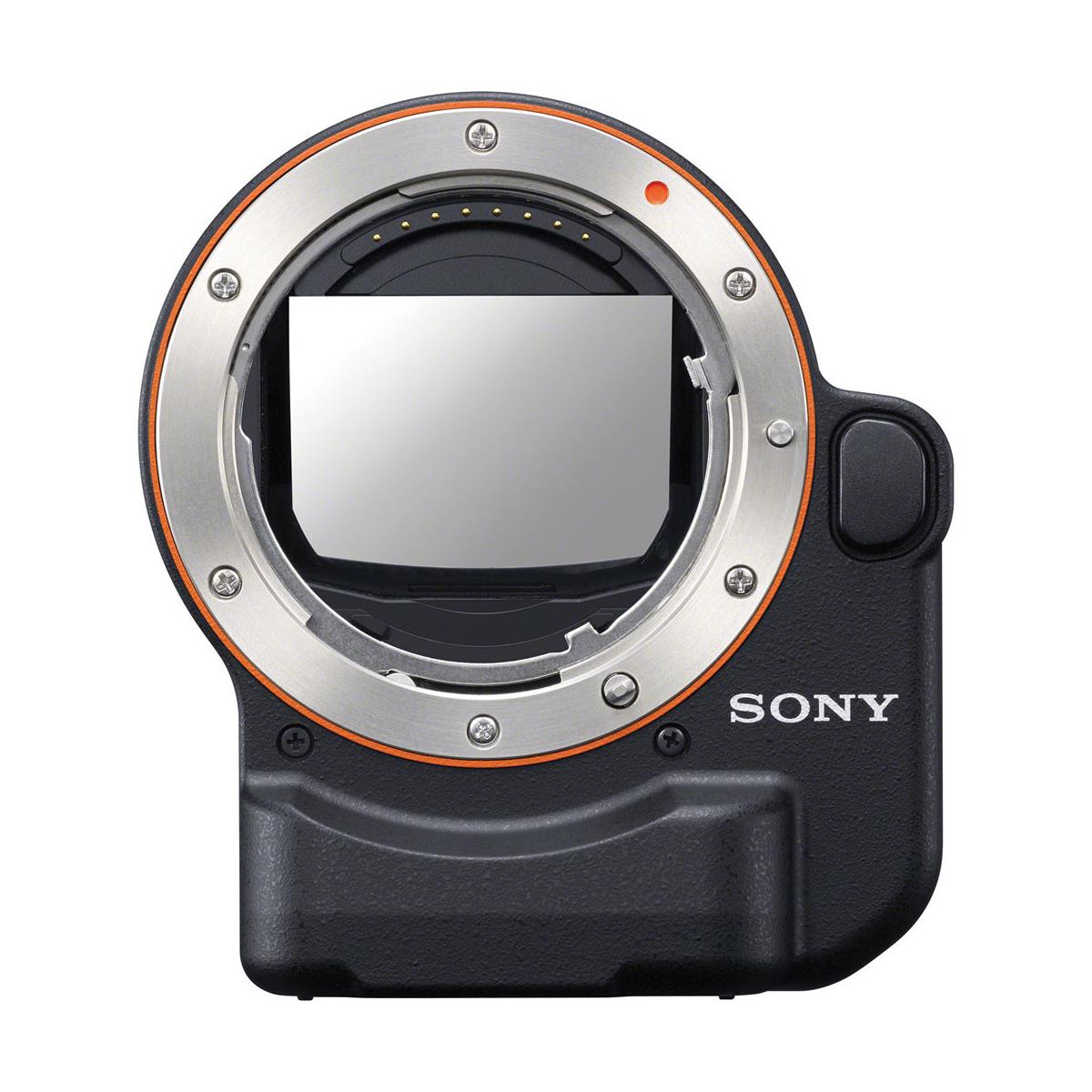
  • The adapter could be made very complex. Sony supports Minolta/Konica-Minolta/Sony A mount lenses on its E Mount mirrorless bodies thanks to two models of adapters. The most complex of the two, the LA-E4, has its own autofocus motor in order to provide support and adequate AF performance for screw-drive autofocus lenses (which still constitute the majority of the Series A lenses offered by Sony today). Sony’s adapter also has a Phase Detection AF module, probably because its A series lenses were not designed for the contrast detection auto-focus system of its NEX mirrorless bodies.Nikon’s original AF and AF-D lenses (the screw drive lenses without an auto focus motor) could be supported using a similar setup if Nikon really wanted to, but I doubt they’ll have any appetite for such a solution (one of the reasons being that professionals have been buying AF-S lenses with a built-in auto focus motor for almost 20 years now – and probably don’t use many screw-drive auto-focus lenses anymore).

    sony_LA_EA4
    Sony LA-E4 A NEX Camera Mount Adapter (Source: Adorama). With its built-in auto-focus motor, it accepts any Minolta/Konica/Sony A lens (with the AF drive shaft), and its Phase detection AF module behind a semi-transparent mirror offered better performance than the contrast detection AF of the early Sony Nex bodies.
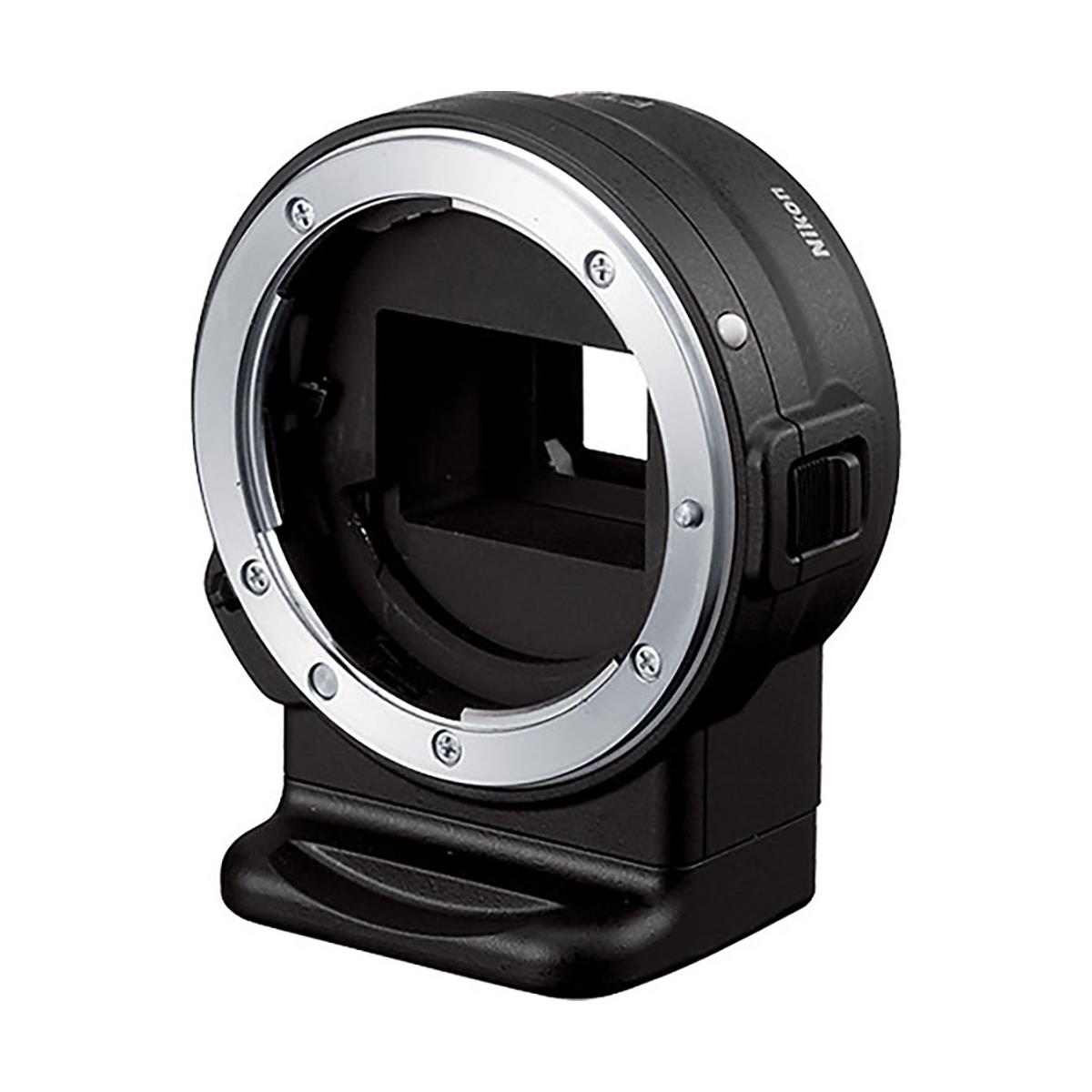
  • Nikon’s now defunct One series (J1 to J5 viewfinder-less cameras and V1 to V3 SLR like models) could accept F mount lenses thanks to an adapter. With the FT1 adapter, auto-focus lenses with a built-in auto-focus motor (AF-S lenses, with or without an aperture ring) are fully supported (all auto-exposure modes, vibration reduction and auto-focus, of course).
    Older auto-focus lenses (the AF and AF-D lenses) can be used in all the auto-exposure modes but don’t auto-focus. Lastly, AI and AI-S manual focus lenses will only be usable in Manual or Aperture Priority Auto Exposure modes.

Nikon FT1: compatible modes: https://imaging.nikon.com/lineup/acil/lenses/mount_adapter_ft1/restrictions.htm

Nikon_ft1_adapter

Nikon FT1 adapter (Nikon F to Nikon One lens mount adapter) – the adapter is seen from the front (where the F lens will be mounted).  Source: Adorama

My bet is that the new adapter will offer the same functions as the FT1. It will fully support any lens introduced in the market since the last years of the XXth century (AF-S, AF-S G, VR, AF-P), and with reduced capabilities, most of the older lenses.

Will there be a penalty in terms of auto-focus performance for users of AF-S lenses ?

That’s the real question.

First answers on Aug. 23rd…


Update: Aug 24th, 2018

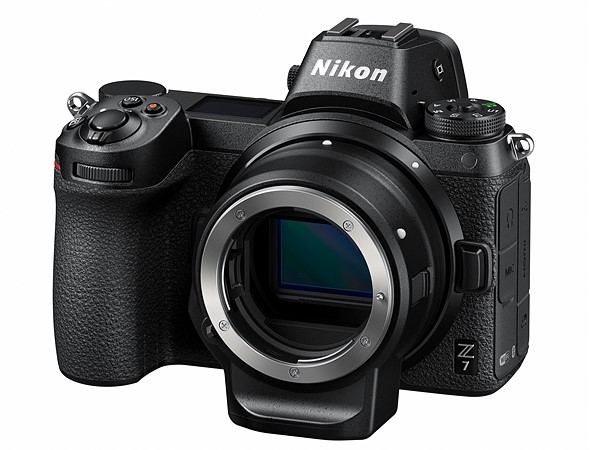
So.. Nikon had a busy day yesterday: they launched a new Z series of bodies with 2 cameras, the Z6 and the Z7, 3 lenses of a new S series, and a F to Z adapter.

3875164987
Nikon Z7 body with the adapter in place – it’s the only official picture of the adapter seen from the front of the camera. The mechanical actuator operating the aperture is visible on the left, inside the lens mount. Source: Nikon.

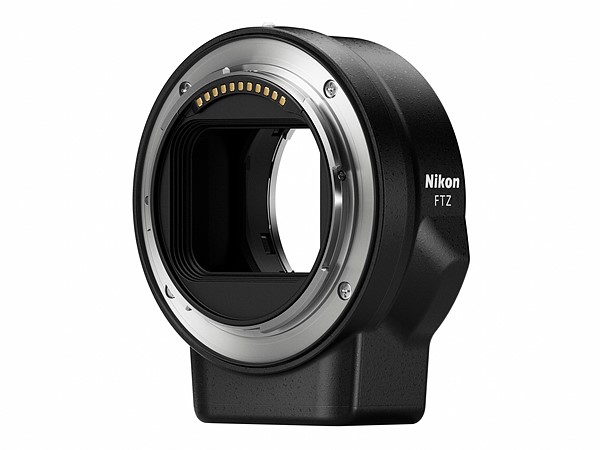
In the picture above, the Nikon F to Z adapter looks very similar to the FT1 adapter – no built-in auto-focus motor, no auto-indexing mechanism to support full aperture metering for AI or AI-S lenses, but “a mechanical actuator to operate the aperture on the lens you mount to it” (according to DPREVIEW)

ftz_adapter
Nikon F to Z adapter – What you see here is the back of the adapter – which will be attached to the Z6/Z7 body. The diameter of the back of the adapter is larger than the front – the new Z mount is definitely huge. (Source: Nikon)

As I expected last week, lenses released during the last 18 years (AF-S, AF-S G, VR, AF-P) are fully supported, and the VR lenses gain 5 axis image stabilization in the process.

Older lenses (AF, AF-D) will not auto-focus but will still access all the auto-exposure modes of the Z bodies. Older manual focus lenses will mount but will have more limited exposure control capabilities.

For more (and in particular an opinion about the auto-focus performance), you can check DPREVIEW’s very interesting first take on the F to Z adapter.


israel_--101
Massada (Israel) – Kodak CN400, Nikon F501 – Nikon E series 35mm f/2.5 lens.


Lomo Instant Square – just delivered…

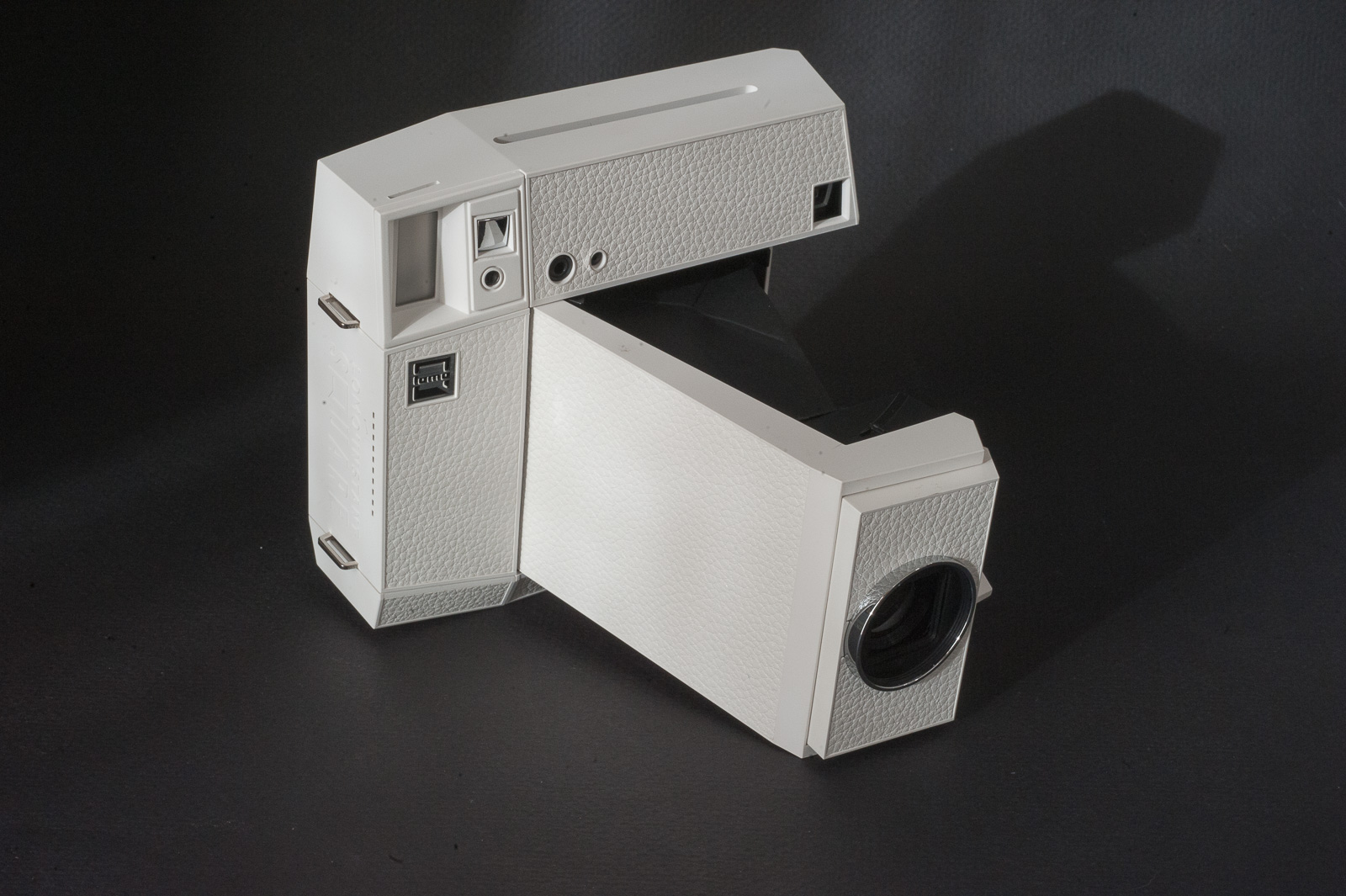
A few months ago, I pre-ordered a Lomo Instant Square on Kickstarter, and I received it last week. It came without film, and I had to order the new Fujifilm Instax Square film on Amazon ($12.45 a pack of 10 instant prints).

On paper, the Lomo Instant Square is a very interesting camera:

  • it works with the new Fujifilm Instax Square film, which yields images significantly larger than the Instax Mini, without needing cameras as large as those accepting the Instax Wide film.
  • It also accepts the Instax Mini film – but it needs a different film door, which is only sold as part of a bundle of accessories ($59.00). I’ll pass for the moment.
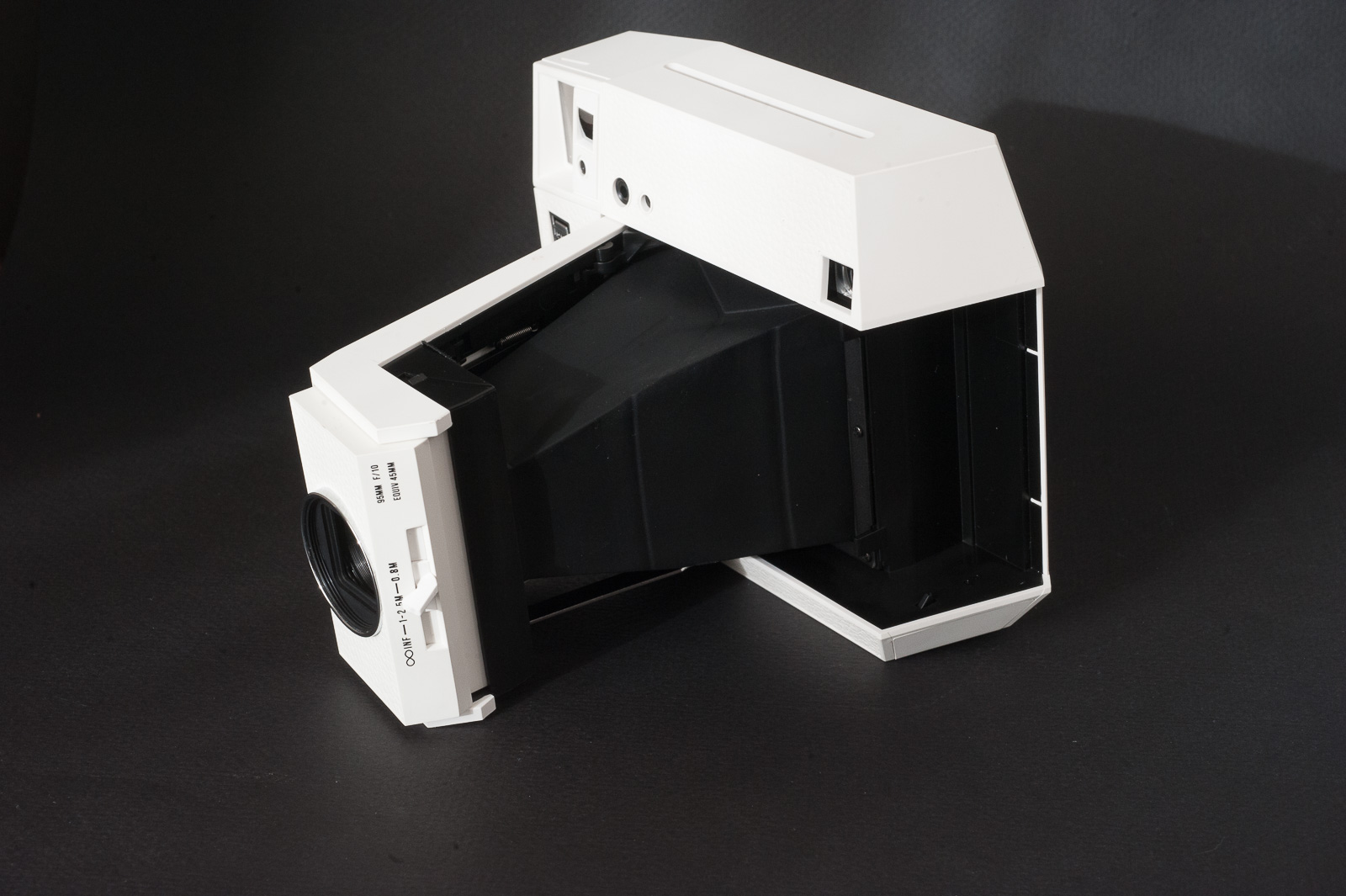
  • It has a lens with glass elements. The focal distance is 93mm, and the maximum aperture F/10.
  • Thanks to its folding construction and light weight, it’s easy to carry.

I’ve only shot a few pictures so far, but because it’s a brand new model that only Kickstarter subscribers have received so far, I decided to post a few pictures of the camera with my comments.

The Lomo Instant Square in 4 bullet points:

  •  it’s intelligently designed, with the needs of serious photographers in mind.
  • the build quality is good – for a Lomo camera – it’s not a Leica for sure, but it worked out of the box, and looks like its going to withstand the test of time in the hands of a moderately careful user.
  • the Fujifilm “Square” prints are much larger than the “Minis” (which are credit-card size), but they’re still significantly smaller than the Polaroid SX700/600 format. The Impossible Project and Polaroid have a clear advantage here.
  • I need to test the camera in different situations (in particular taking pictures of people with and without a flash – which seems to be the typical use of an instant film camera) – but what I’ve seen in admittedly difficult conditions shows potential – it’s hundreds time better than the combination of a Holga 120 and a Lomo Instax Mini back.

LomoSquare-6092
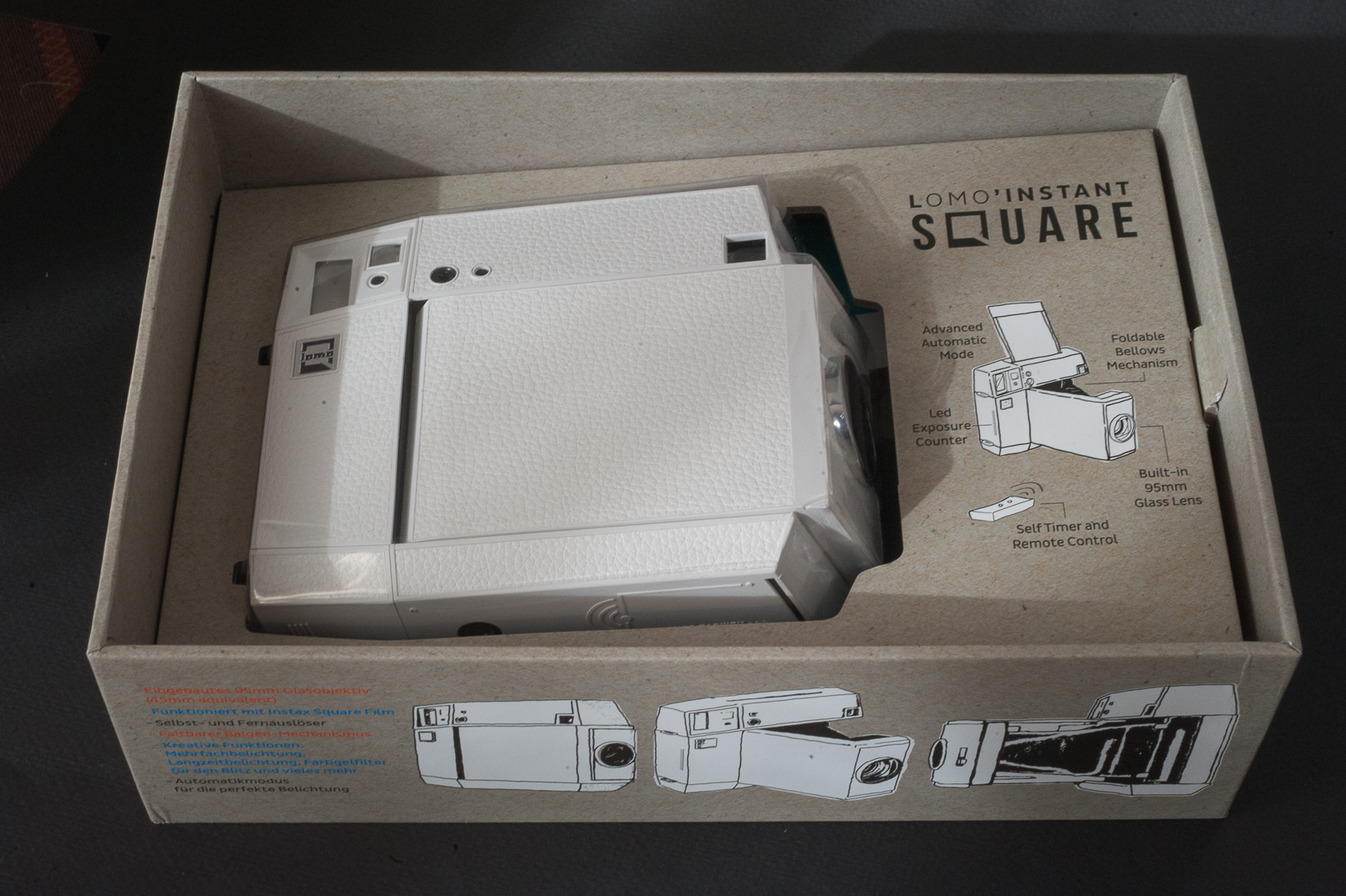
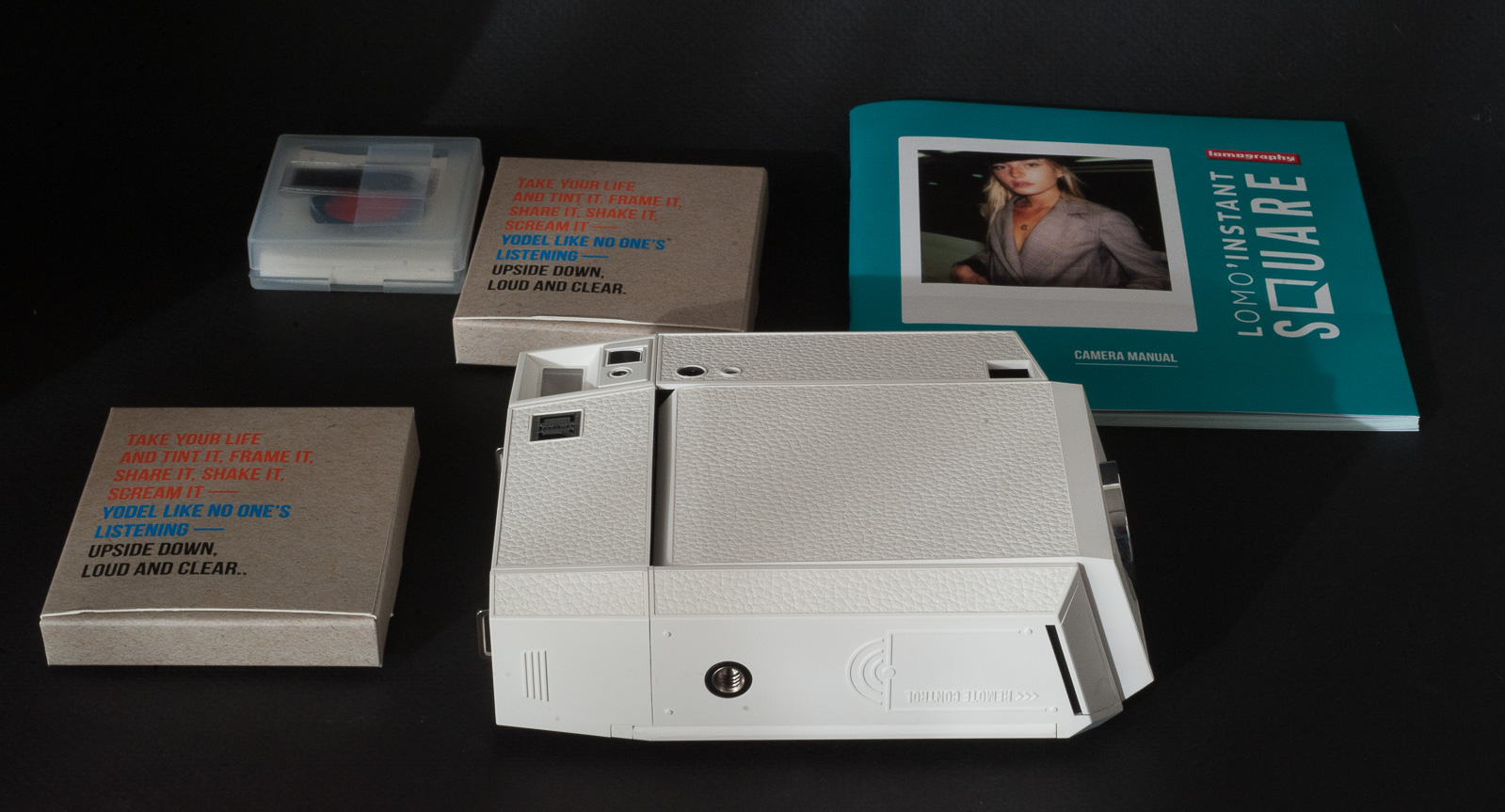
Lomo’instant square in its box – it’s available in three colors. As you can see, this one is white. The camera comes without the film, and more surprising, without batteries.

LomoSquare-6094
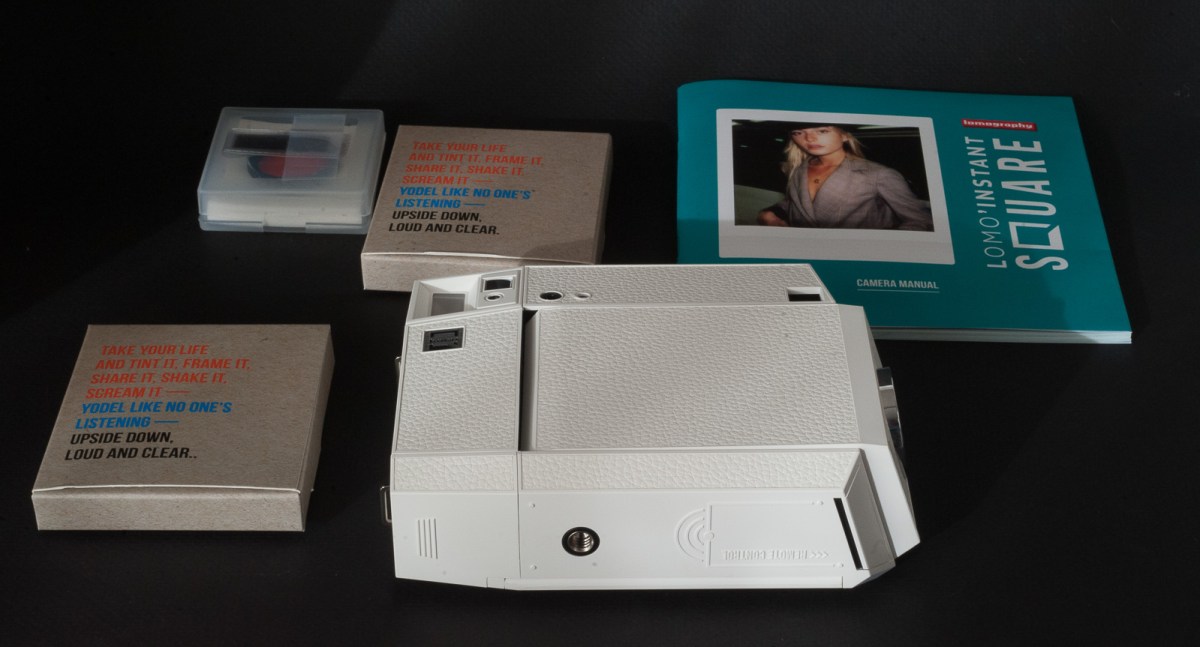
the camera, a manual, a box of accessories, a box of sample pictures, and a filter. The remote control is stored in the base plate of the camera (you have to buy the batteries of the remote separately)

LomoSquare-6096
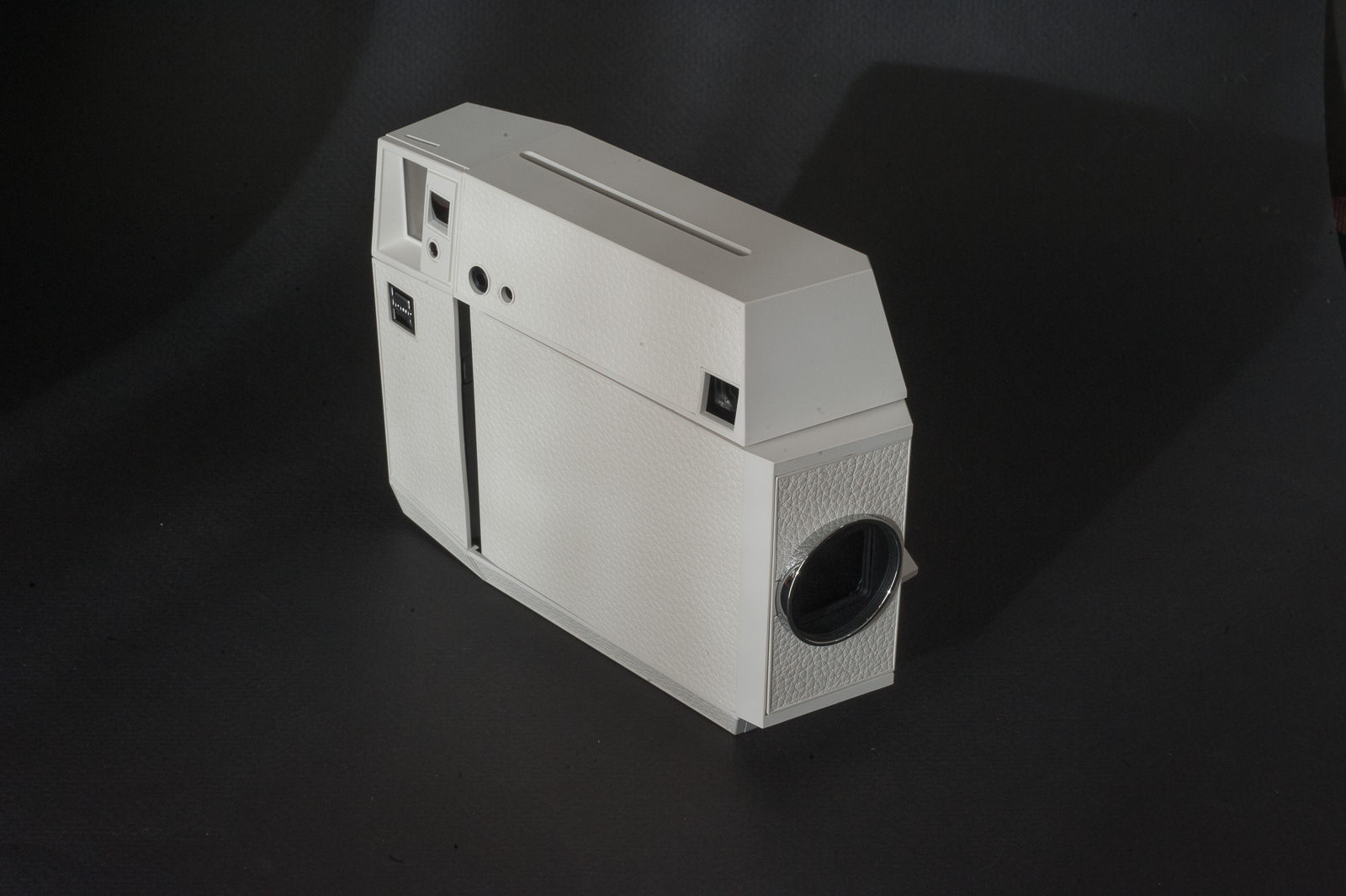
Lomo’Instant Square – folded – the lens (93mm, F/10) is protected by plastic curtains. They retract when you unfold the camera.

LomoSquare-6097
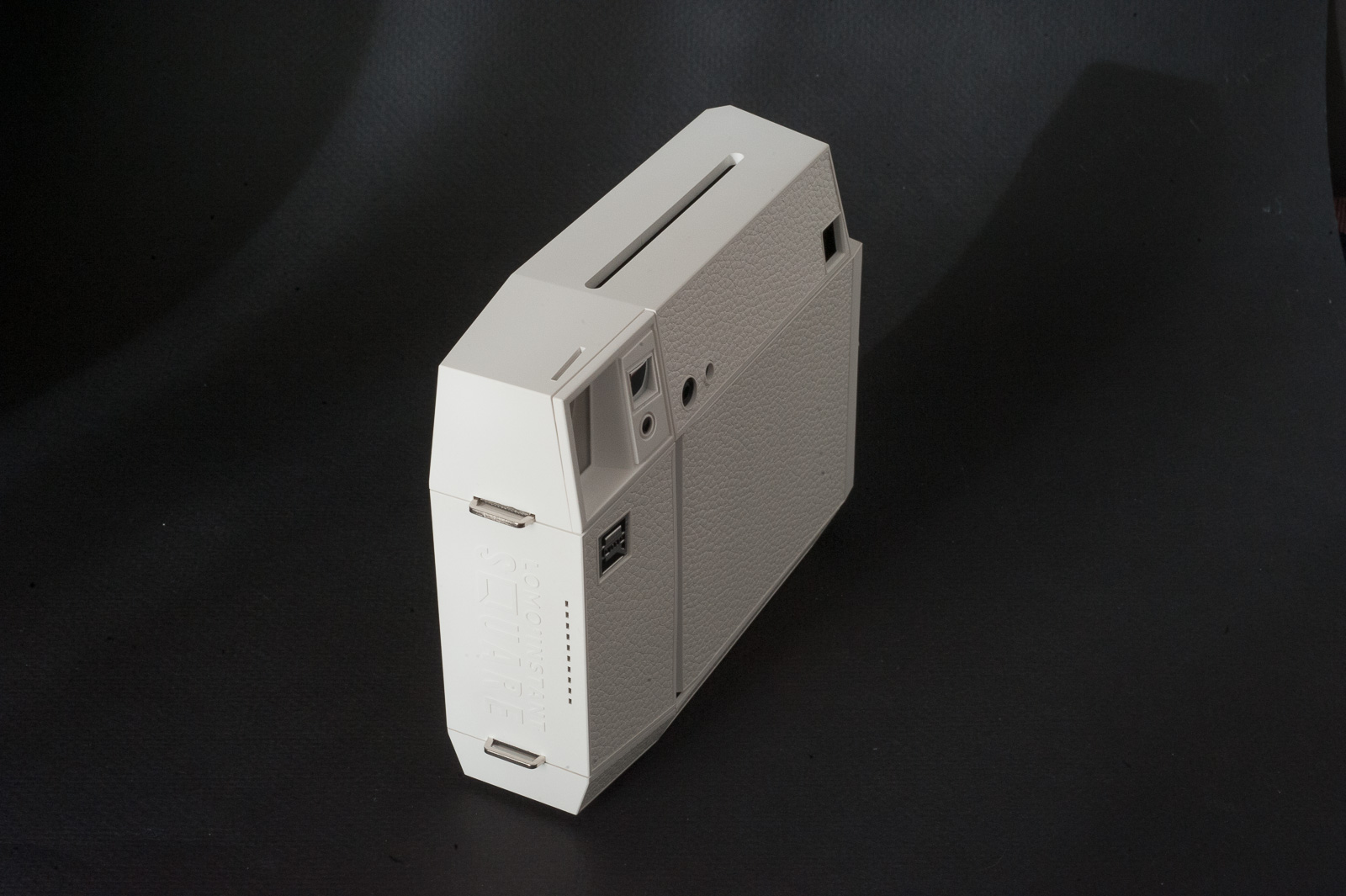
The Lomo has two strap lugs, but the strap does not come with the camera (it’s $9.90 extra if you want it)

LomoSquare-6098
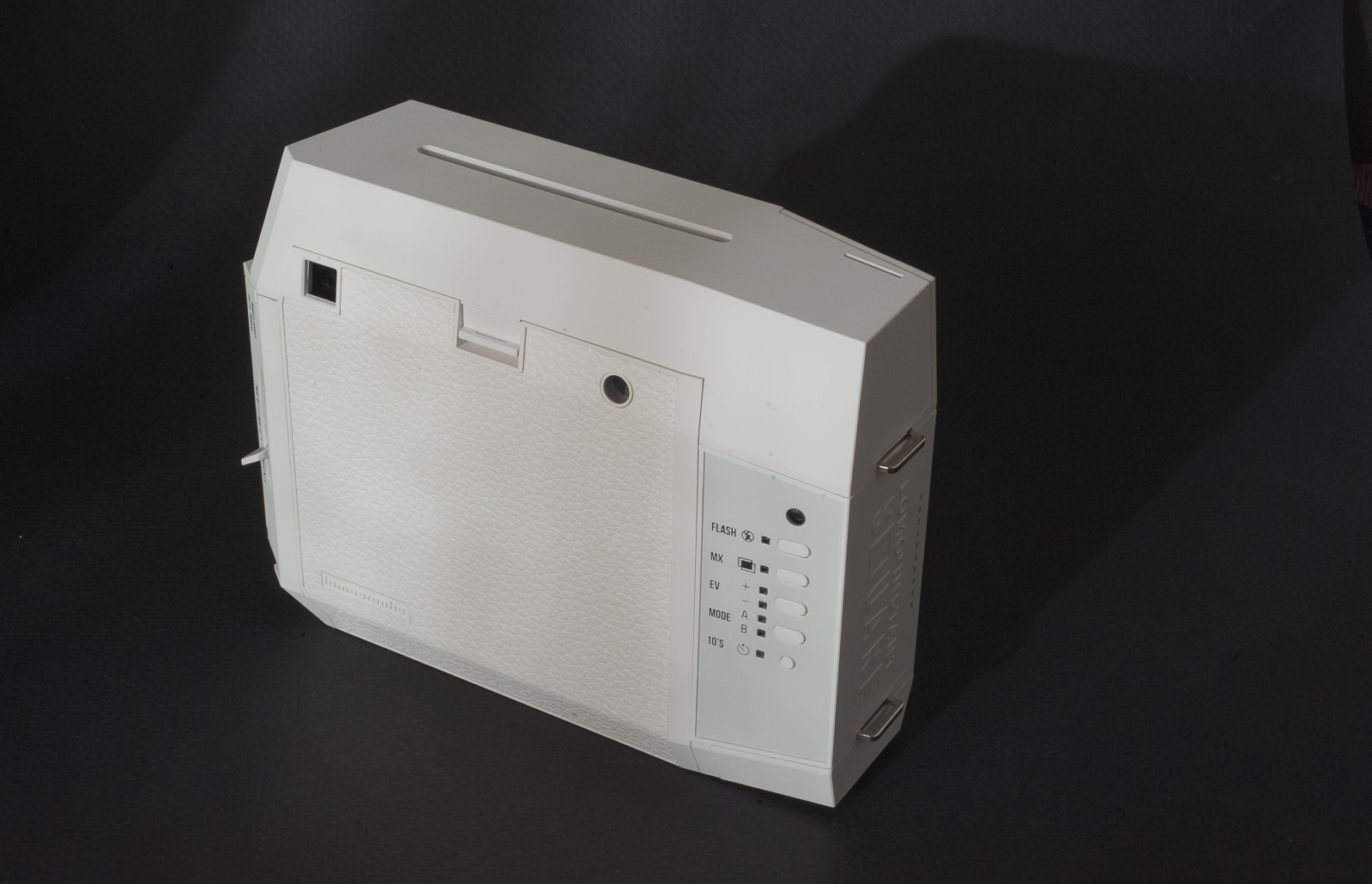
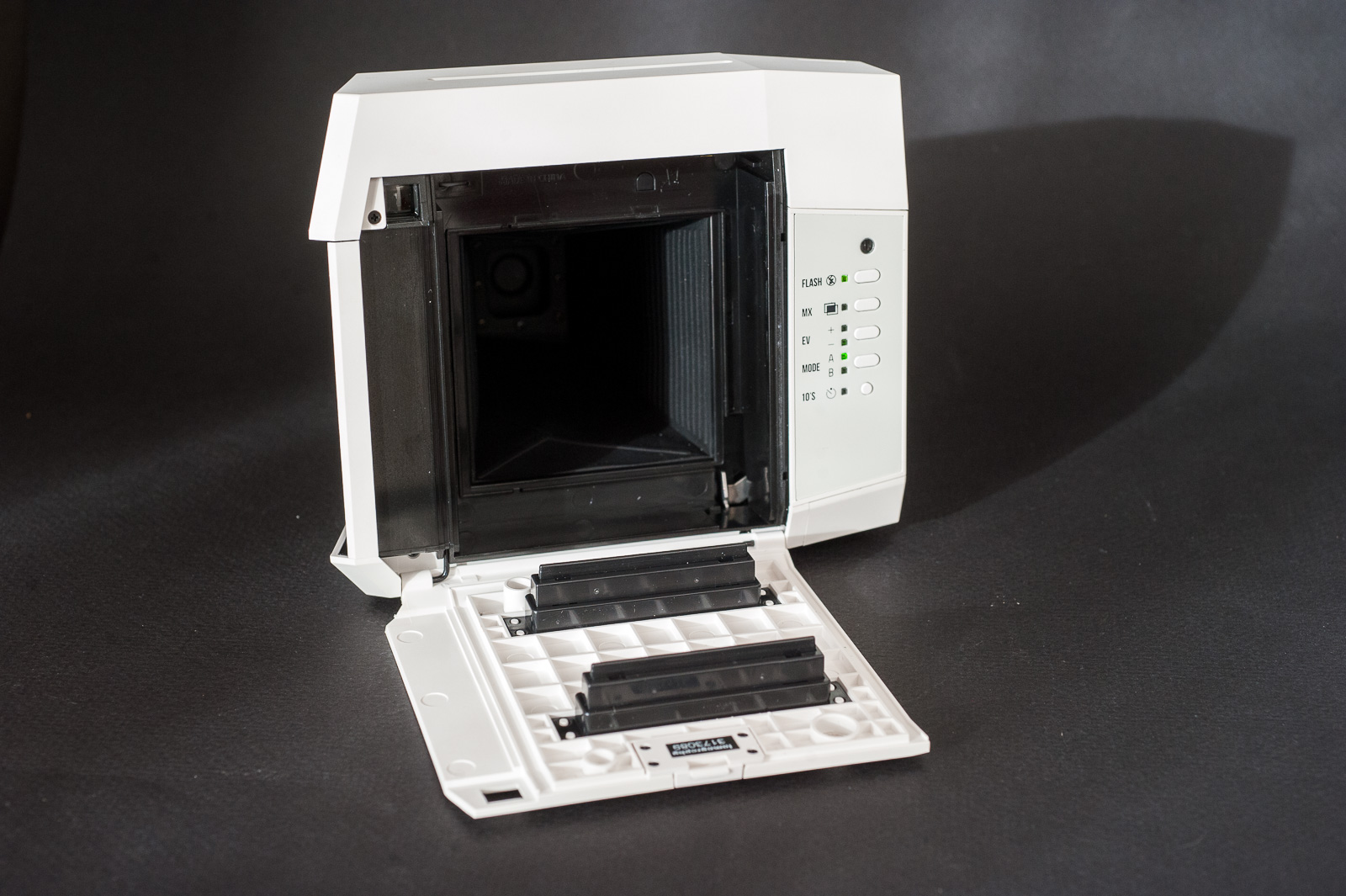
The commands at the back – flash off, multi-exposure, exposure correction, mode Normal or pause B, timer. The film door can be replaced by a door designed for the Instax Mini film (a $59.00 extra – you start seeing a theme here? )

LomoSquare-6100
The shutter release button is the square (of course) Lomo logo on the front.

LomoSquare-6102
It’s a folding.The lens (with glass elements) can be set in 3 positions: 0.8m, 1 to 2.40m (the default position), and the infinite.

LomoSquare-6108
Lomo ‘instant Square internals – the Fujifilm Instax Square has a sensitivity of 800 ISO

jules_lomo_photo_1
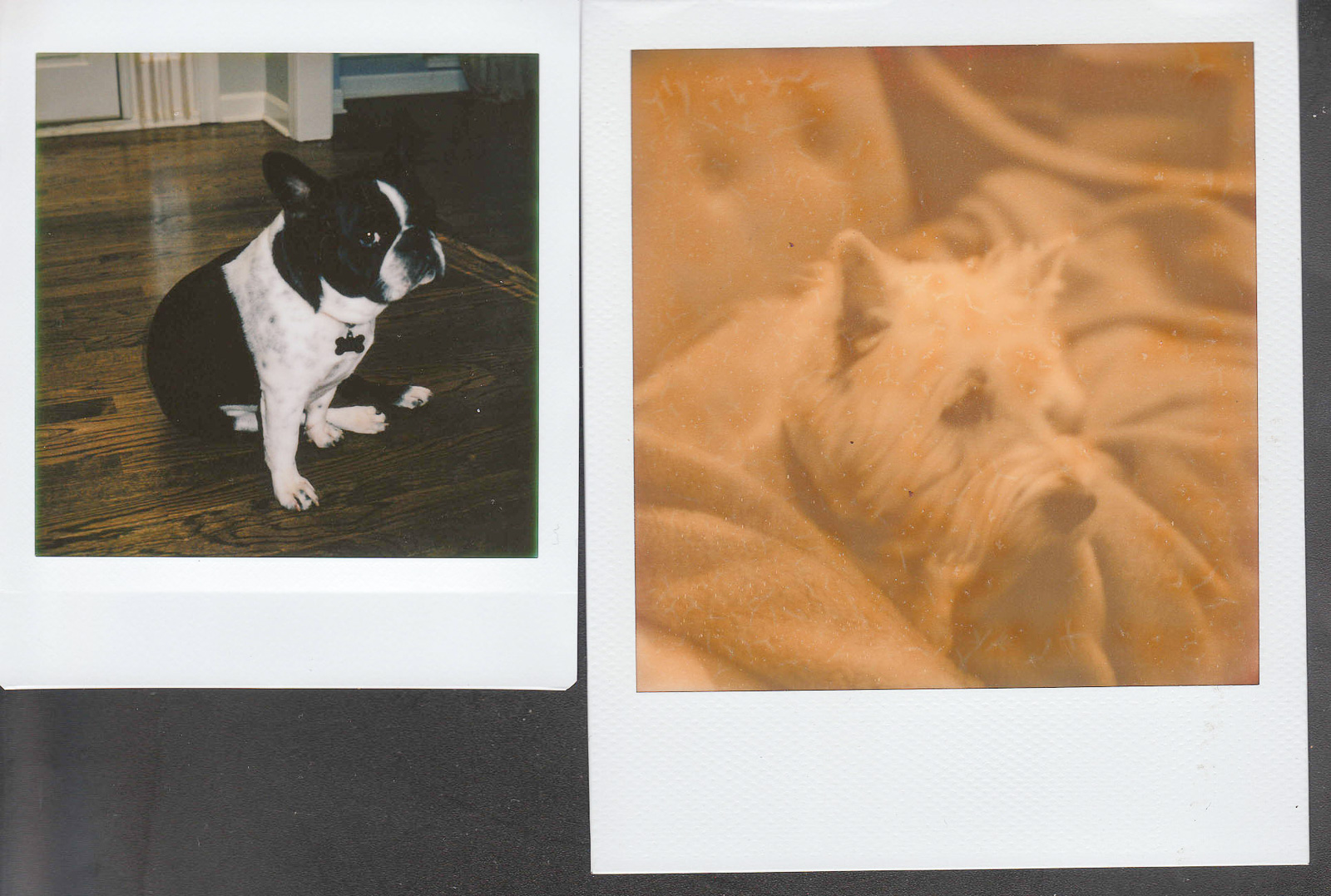
Jules – my first picture with the Lomo Instant Square  (scanned on multi-function printer) – real size: 6cm x 6cm image, on a 8.5cm x 7cm print.

When I took this picture, it was already getting dark in the house, and Jules was somehow back-lit. With a lens opening at F/10 and a 800 ISO film, I was clearing flirting with the limits. The camera did well considering  the circumstances. The picture is too dense (under-exposed), and the color balance is blue-ish, but the result is encouraging – the lens shows potential, and it’s my first Lomo camera that produces decent results out of the box without requiring some form of surgery.

LomoSquare-6112
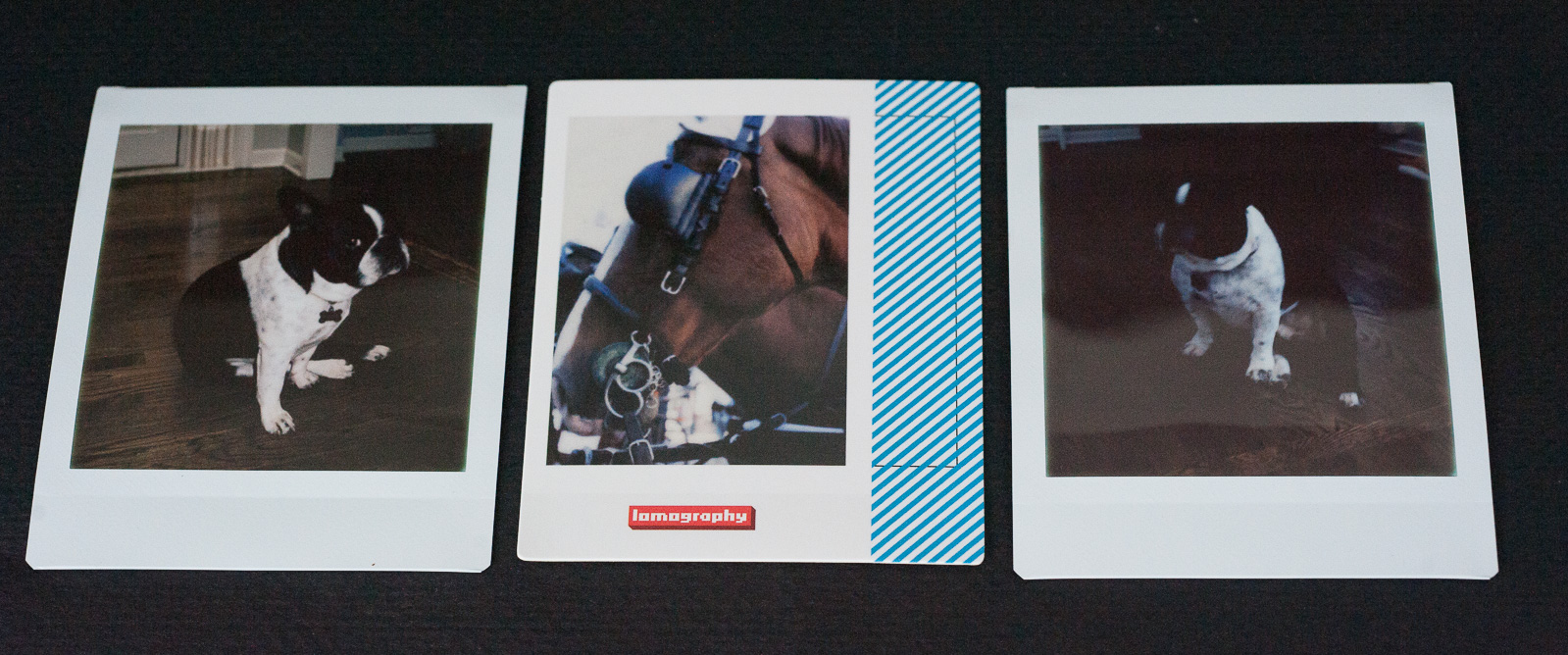
The picture in the center is one of the examples provided with the camera – it shows the relative size of the Instant Square picture compared to the Instax Mini. Left – a picture taken with the Square (default exposure); right a picture taken with the exposure on “-“. On the Lomo, “+” over exposes, and “-” under exposes.

lomosquarecompare-2
The Instax Square picture is much smaller than the Impossible Project’s SX70 film. The Lomo seems to under-expose, but the picture has much more contrast than the first iteration of the Impossible Project’s film (picture on the right was shot in 2010, with a Polaroid SX70 camera)

LomoSquare-6116
When comparing the quality of pictures, all things are relative. After I was finished shooting pictures of the Lomo, I took a picture of Jules at the same place, but this time with a Nikon D700 and its Nikkor 55mm f/2.8 lens (1600 ISO, f/4, 1/60 sec, cropped and adjusted to taste in Lightroom).


A few links

Lomo’s official site

My previous experiences with instant film:
Fujifilm and the instant film bonanza

The Impossible Project’s PX100 – the ultimate “low-fidelity” film ?

New Isola theme for CamerAgx

This blog had been using the same WordPress theme since the beginning, in 2009.

A change was overdue. Today, it’s been upgraded to a new theme, Isola. Clean, simple, more smartphone and tablet friendly, with more room for content. The menu and widgets are now tucked behind a button in the top bar. I also paid a few extra dollars to have the ads removed.

Nothing else is changing. If you love taking pictures, if you love old cameras, we’re in the same frame of mind and you’re welcome.

summer2017-13
Morning at the Beach – Peñíscola, Spain – Canon T90 – Canon 24mm f/2.8 FD – Kodak Ektar 100

CamerAgX – The three most popular blog entries of the past quarter

The three most popular blog entries over the last quarter

Angenieux 28-70 f:2.6 Angenieux 28-70mm f:2.6 AF

Nikon FE2 The Nikon FE2: one of the very best manual focus SLRs ever.
 

Eye Relief Viewfinders coverage, magnification and eye relief


The three most popular recent blog entries

 The Fujica film cameras – the best screw mount SLRs ever?

 Canon A-1 or Fujica AX-5?

Canon FD to Fuji X adapter, and Canon FL 55mm Old lenses on new gear – manual focus lenses on mirrorless cameras


Charleston – July 2009 – Nikon FM Nikkor 24mm


SaveSave

SaveSave

SaveSave

SaveSave

SaveSave