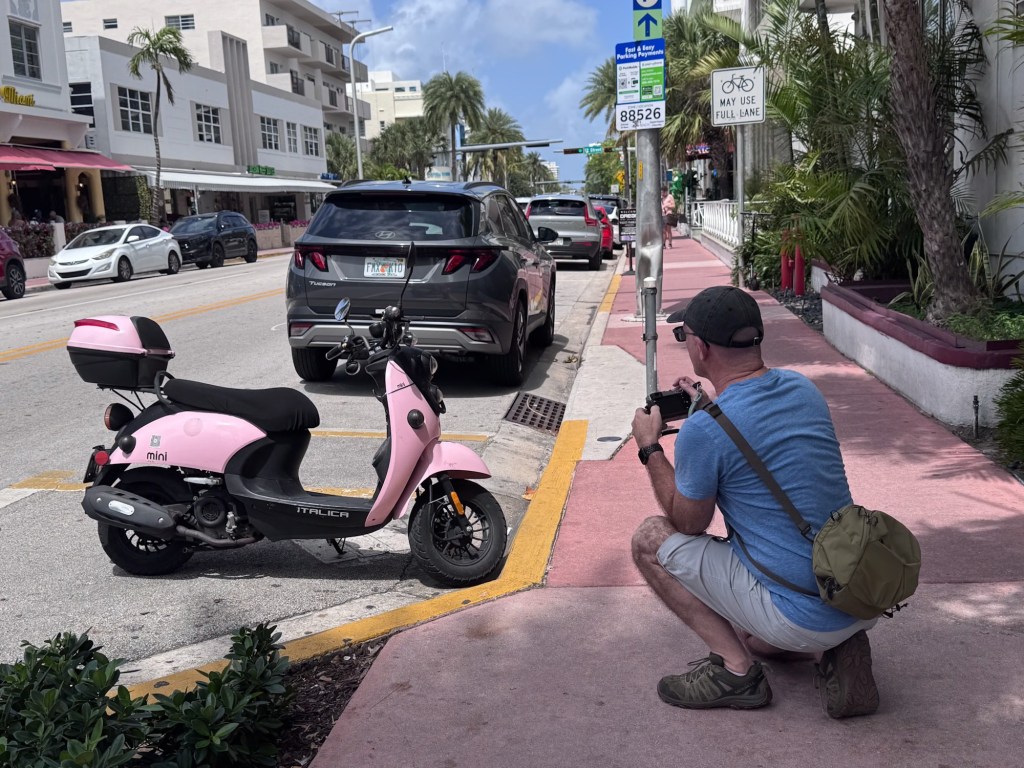
A “camera bag” search on amazon.com returns 40,000 references. And there are 70,000 camera bags for sale on eBay.com. Camera bags come in all shapes and forms, attempting to cover the needs of a nature photographer hiking at 18,000 ft as well as those of a street photographer carrying a rangefinder camera and 2 prime lenses in the public transportation system.
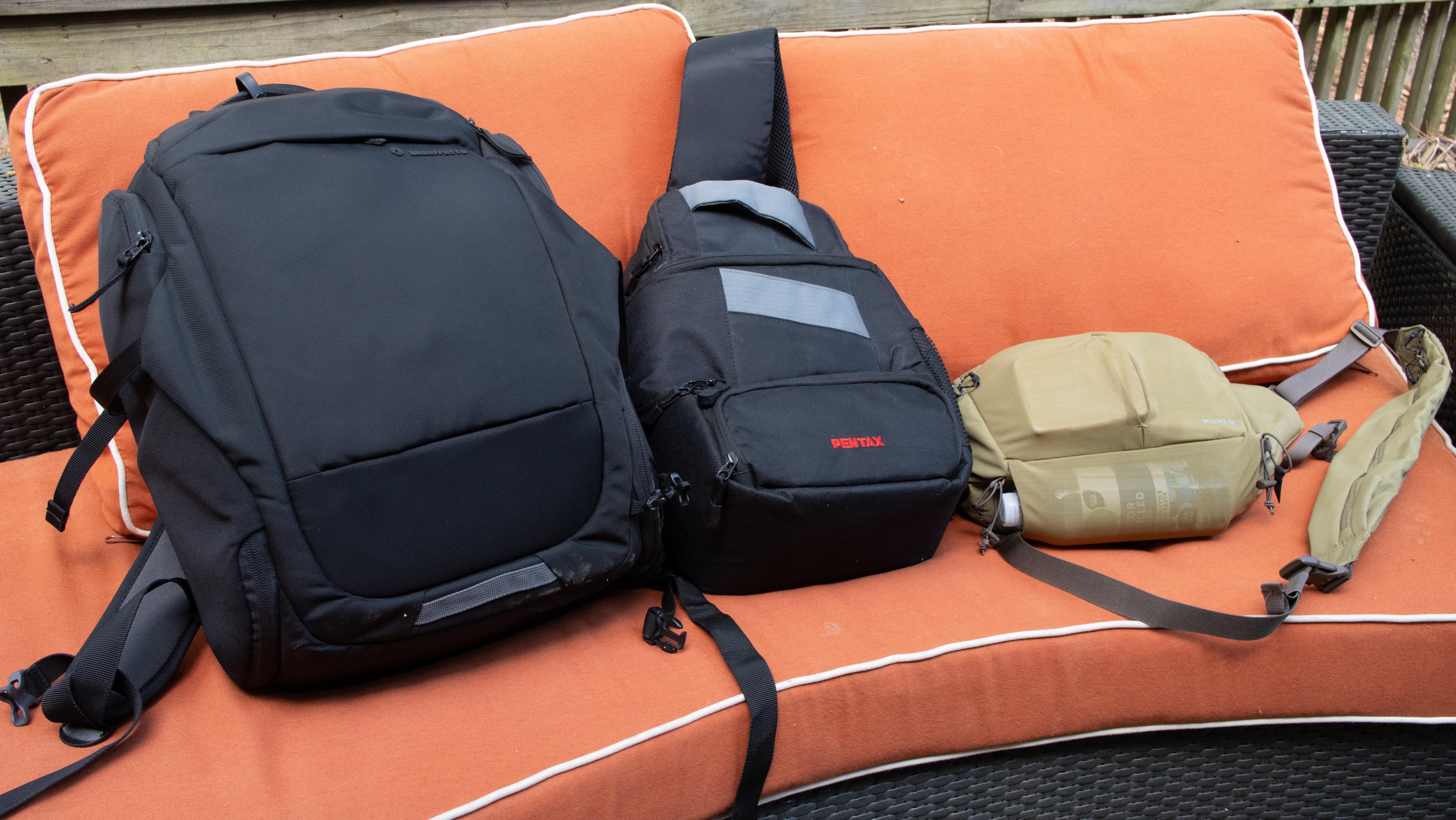
At this stage, I’ve settled on three camera bags, corresponding to three use cases:
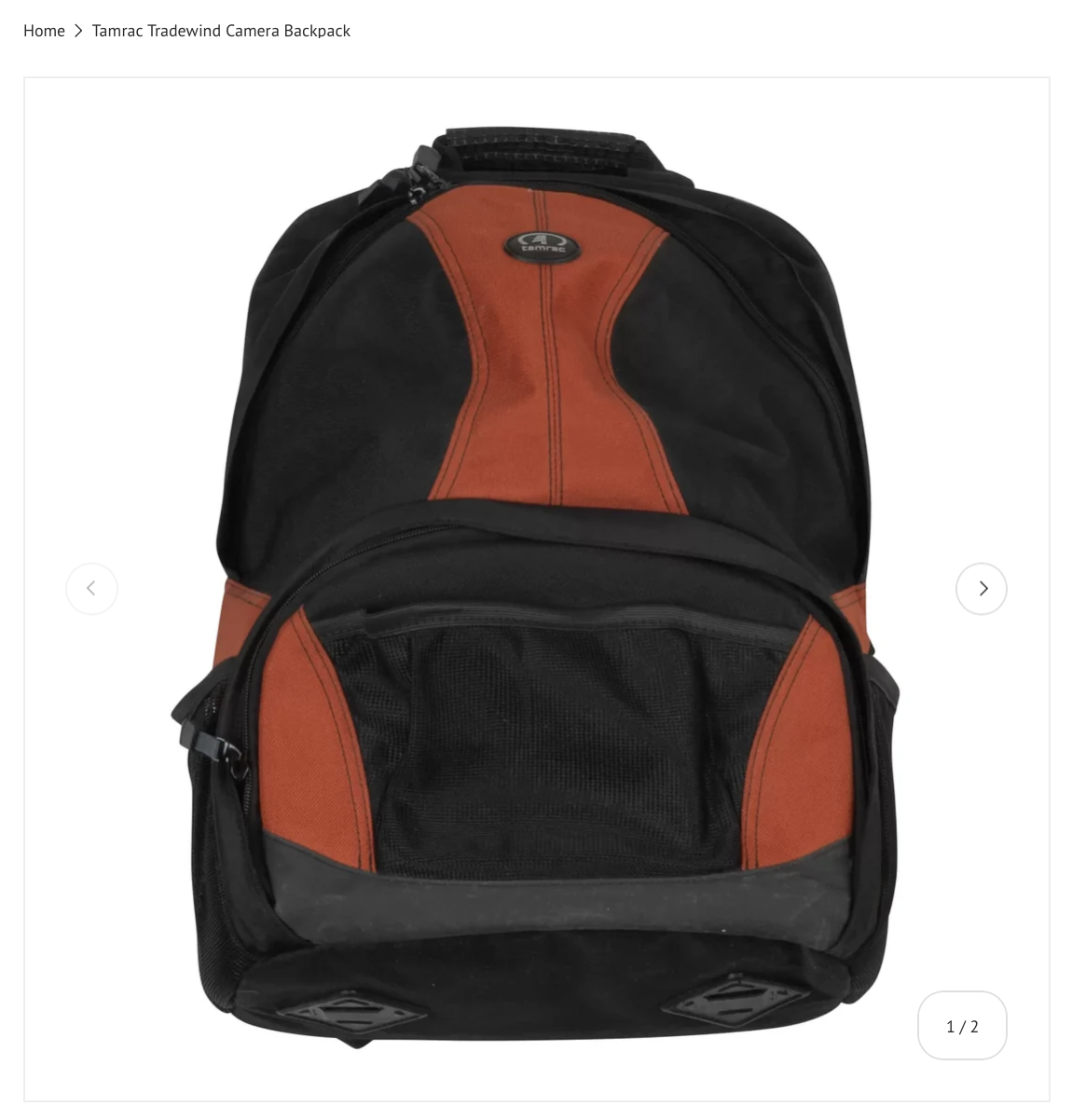
- a photo dedicated, “formal”, back pack: the Manfrotto Advanced MB MA3-BP-T (capacity: 24 liters). It replaces a Tamrac Tradewind backpack designed to meet an approaching set of requirements, that had reached the end of its life during one my recent travels.
- a medium sized photo dedicated sling, the Pentax DSLR Sling 2 – Model 85231 (no more than 12 liters in my calculations)
- and a smaller hybrid Every Day Carry (EDC), a sling bag with removable compartments: the Moment Balance Sling (capacity: 7 liters).
Back pack and sling bags
- Back packs have two shoulder straps, and will let you carry more weight and for a longer time than sling bags. Photo dedicated back-packs are generally designed to carry up to eighteen pounds, but retrieving the equipment typically requires to remove bag from one’s shoulders and place it on the floor. And carrying expensive equipment behind your back makes you a target for thieves in crowded settings.
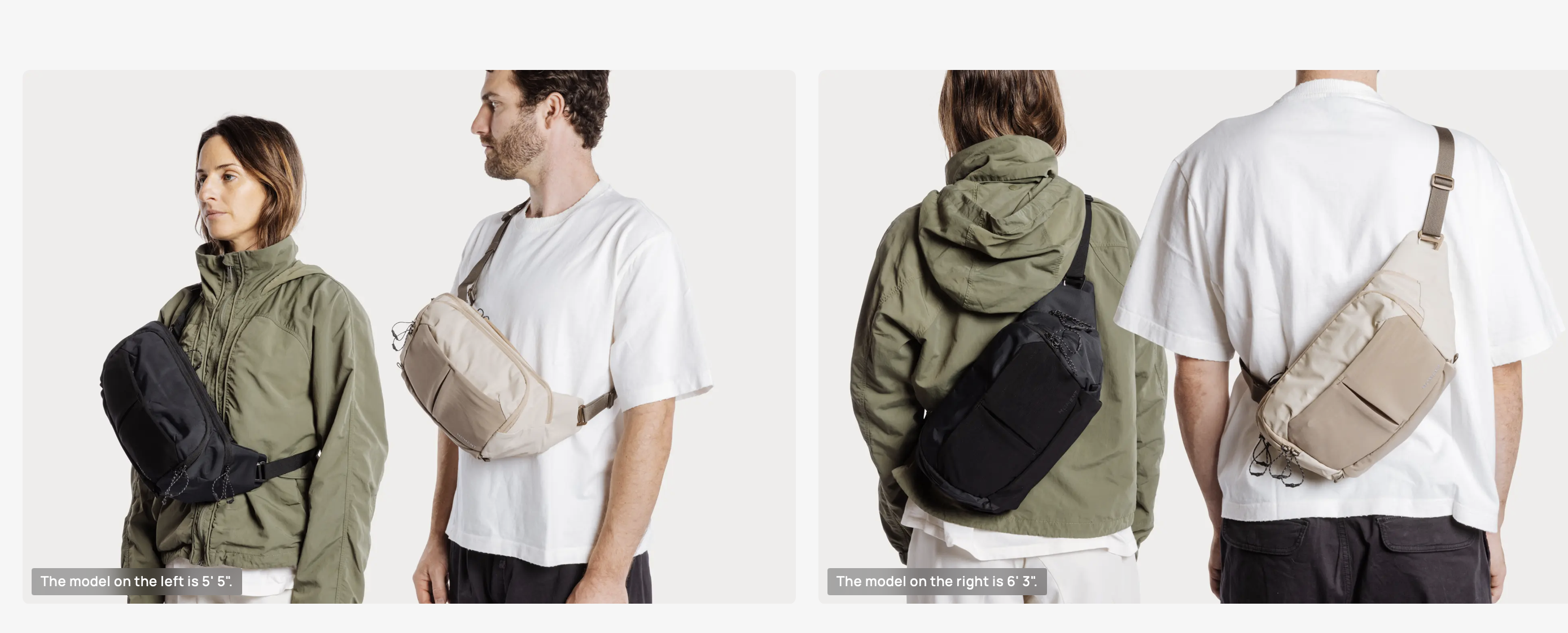
- Sling bags have only one strap, and can be carried in the back or in the front of the body, or in any position in-between. Carrying the bag in front of you addresses the “thief problem”, and grants an easy access the equipment (to change a lens for instance) without having to remove the bag and drop it on the ground. But because there is only one strap crossing the front of the chest, slings have a reduced ability to carry heavy loads.
- The imagination of the marketing teams of the manufacturers of photo equipment is limitless, and all sorts of “hybrids” between conventional backpacks and slings exist.
The Manfrotto Advanced MB MA3-BP-T
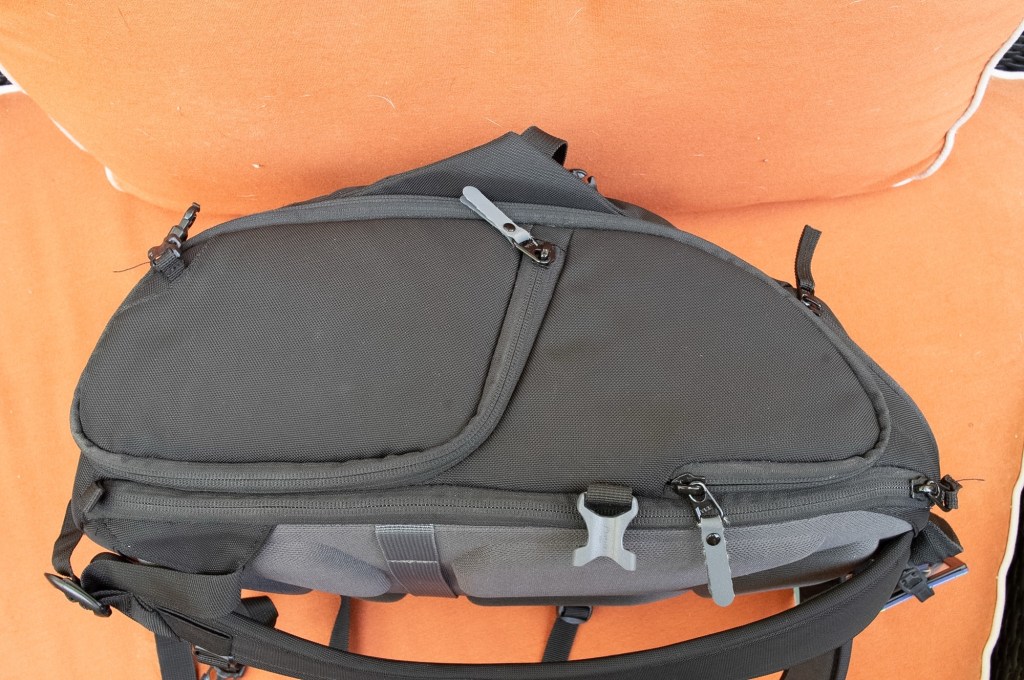
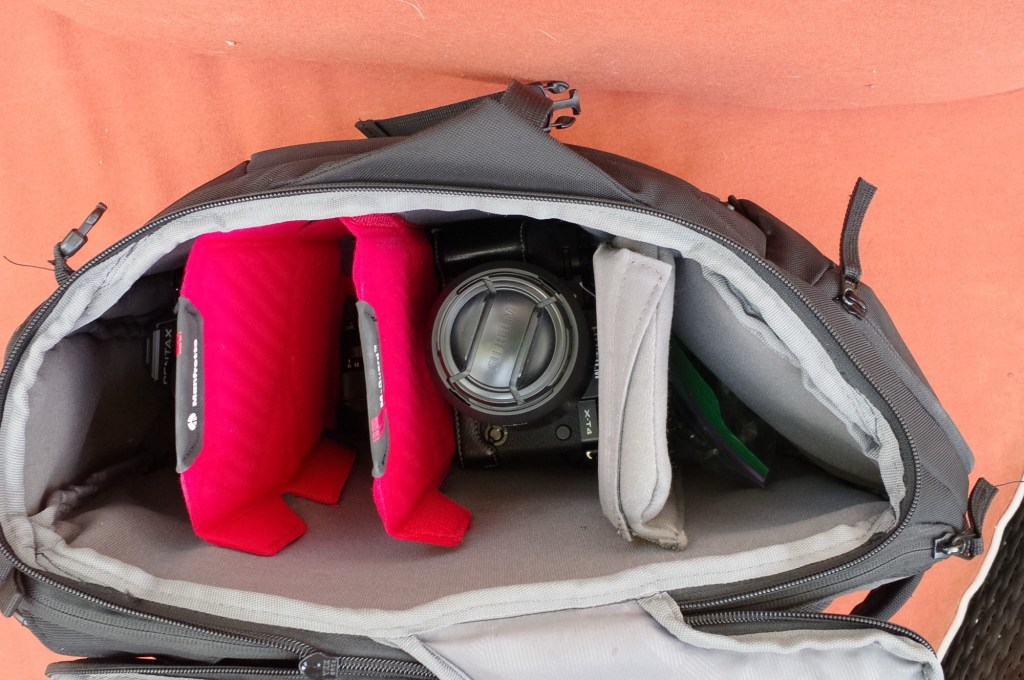
- it’s a true back pack, but designed for photographers. Finished in a dark (charcoal) and water repellent nylon-polyester blend, it’s more formal than casual, more urban dweller than overlander.
- The main opening is lateral, but there are two shoulder straps. A photographer with a bit of upper body flexibility can slip their left shoulder out of the strap, letting the backpack hang from the right shoulder and making its contents accessible on the fly. This can work if the load is light, but in most cases, retrieving a lens still requires taking the bag off and setting it down.
- the bag is large with a 24 Liter capacity – there is room for a 15in laptop and/or tablet (in two separate compartments), 1 or 2 dSLR bodies, a few lenses, batteries and power bricks. The photo equipment section is divided in four main configurable compartments, and a small bundle of clothes or toiletteries (one or two tee shirts, underwear, a toothbrush) can be carried in one of the compartments if the photographer is capable of travelling really (really) light. But there’s definitely no room for a jacket, a sweater or a beach towel if you’re also carrying photo equipment. There is a large pocket on the opposite site of the bag where a tripod can be stored, or a water bottle if you trust it not to leak.
- Compared to a backpack like the Tamrac Tradewind 24L, the Manfrotto Advanced will carry much more photo equipment, but will not be as good at carrying change clothes and toiletteries. The two bags are equally comfortable if not too heavily loaded (you can keep them on your back for a whole day of sightseeing if you limit the payload to a few kilograms), but will strain your back if you load them at full capacity.
- Fully loaded, they are at their best when travelling or commuting between two photo opportunities. In a plane, they’re narrow and flat enough to fit under the seat in front of you when the overhead bins are full.
- As far as I know, Manfrotto bags are not sold in the US, but they are available in Europe and in Japan. I paid the equivalent of $110 USD for mine, which is a tremendous value for a very well built piece of luggage.
- It’s a typical photo dedicated, vertical, mid sized sling bag. There are equivalent models in the product lines of Thinktank, Lowepro, Mindshift, Tarion…
- This bag is not available from Pentax or from big photo retailers anymore – there are a few new old stock (NOS) items on eBay, selling for approximately $80.00. Mine came with the Pentax KP I bought second hand from a thrift store.
- There are three compartments – the one in the middle is the largest and will be for the camera and one lens, the top and the bottom compartments are smaller and will store accessories (like a flash or a charger), and maybe one or two small lenses in the bottom compartment. There is a mesh pocket on the right side of the bag, but in my experience anything you place in that pocket will fall as soon as you carry the bag as a sling.
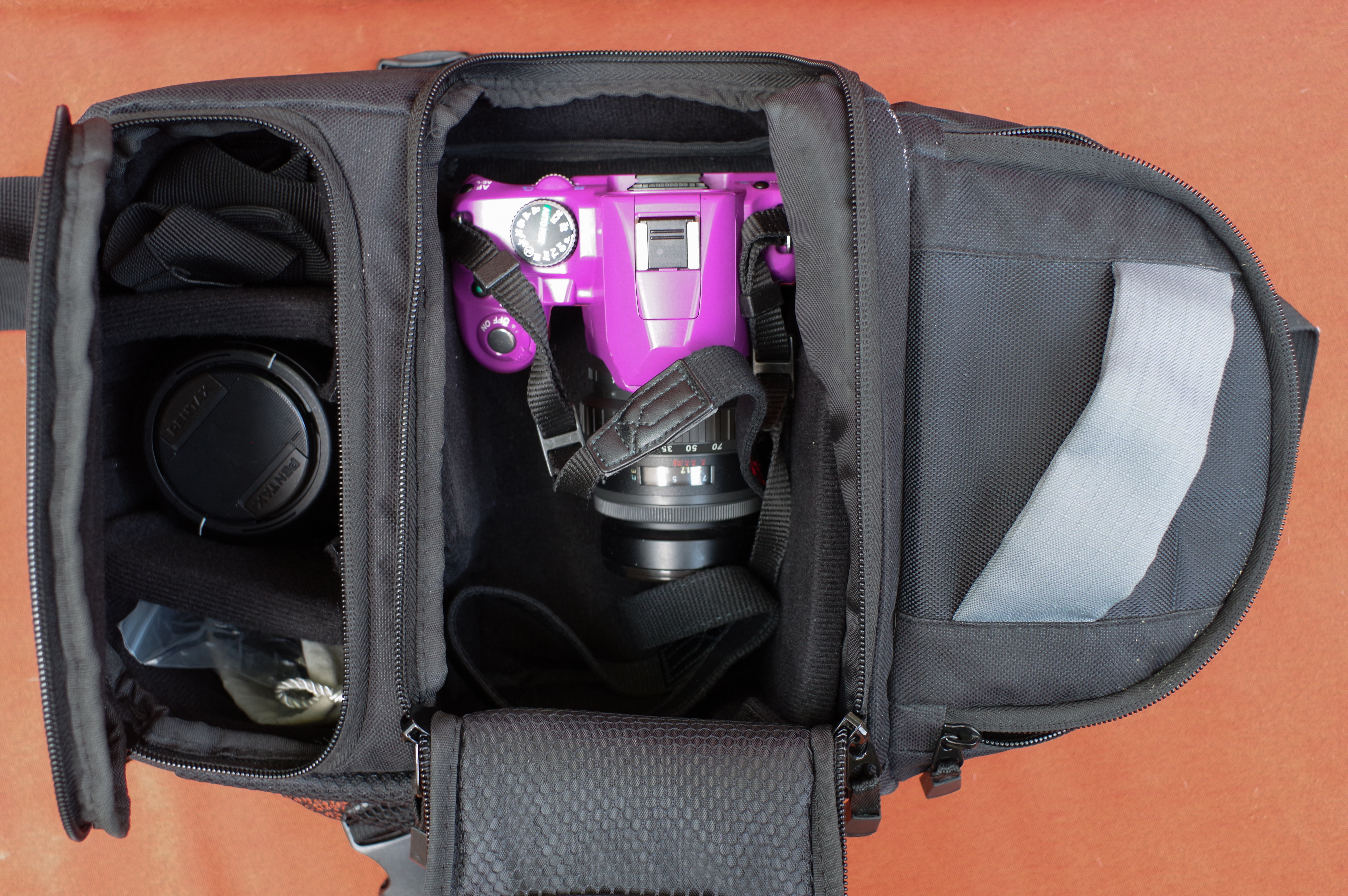
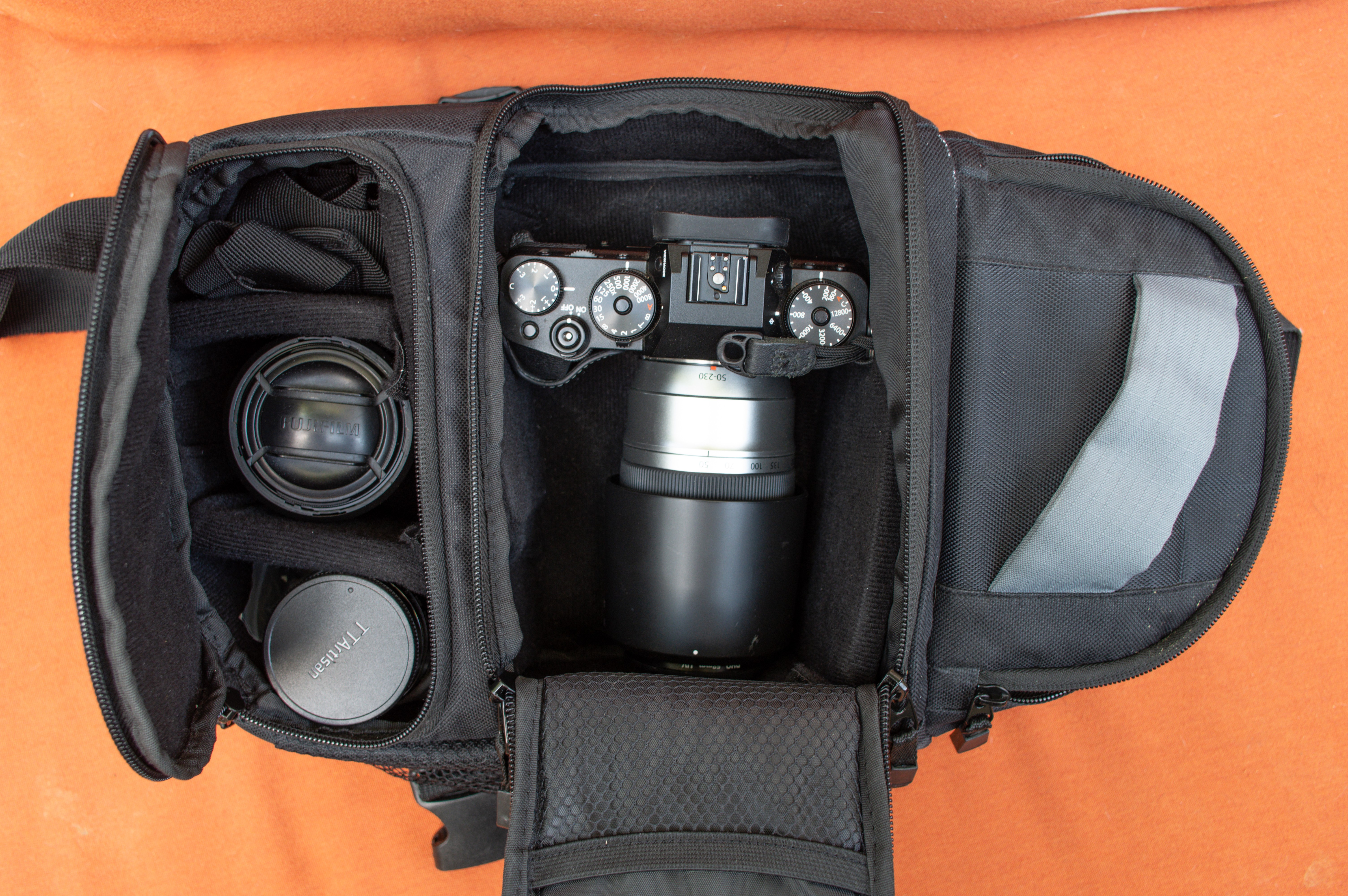
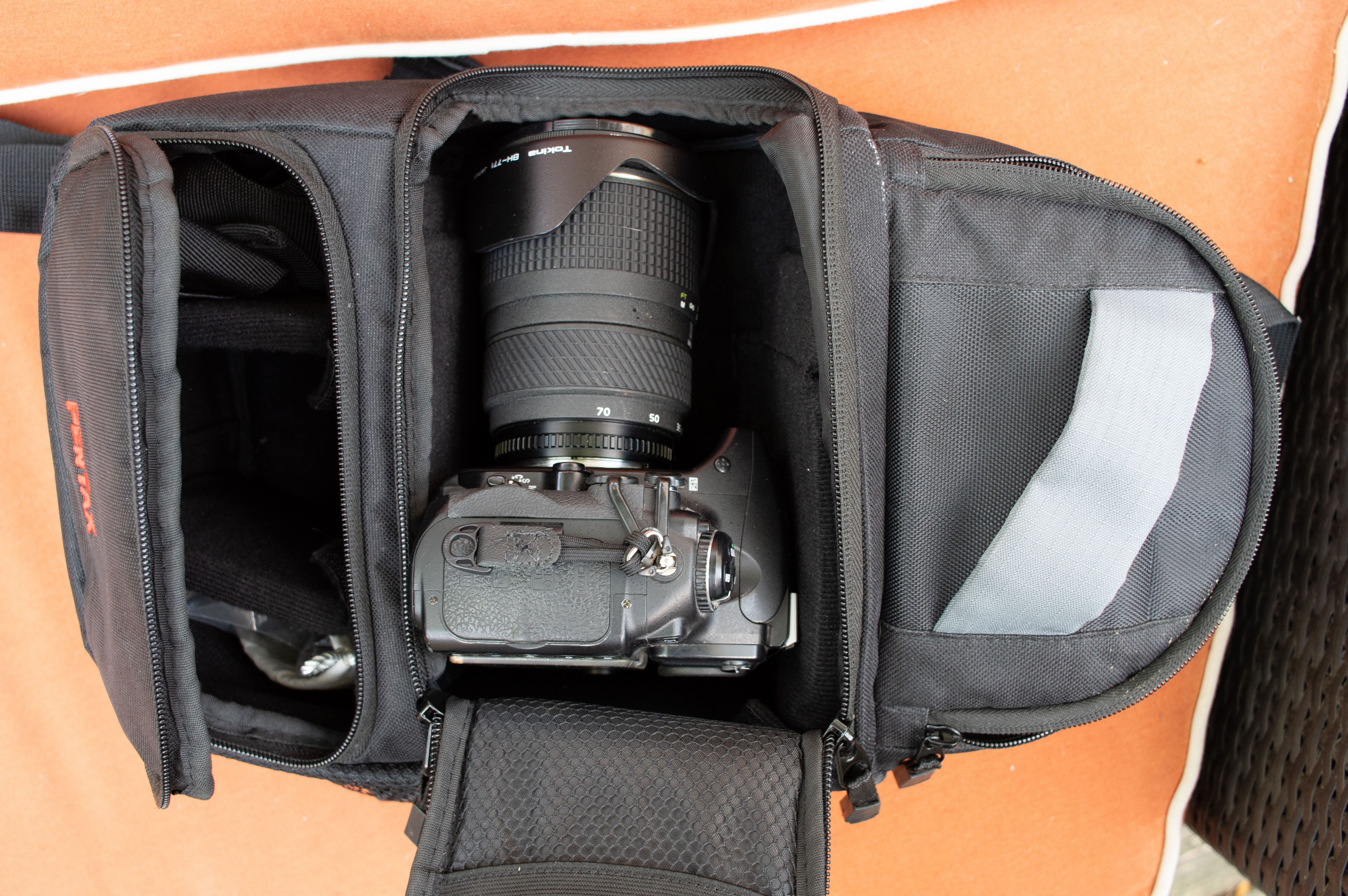
- An interesting characteristic: the strap is central and the bag can be carried on the right or on the left shoulder, even if the opening of the central compartment is designed for photographers wearing the sling on their right shoulder. And it comes with a removable waist belt to keep the bag in place when cycling.
- There is no reliable info about capacity – my estimate is around 11 or 12 Liters.
- 11 liters is rather capacitous: it fits an APS-C dSLR like the Pentax KP with its battery grip, or Fujifilm X-T4, both with a trans-standard zoom or a prime lens. The bag still has enough room for at least another zoom, another prime, a charger, a few batteries and a cobra flash. A full frame body and its pro-lens hardly fit, and the weight more than the volume becomes the problem.
- The bag was designed in the early 2010s, and at that time Pentax had not imagined that photographers could not survive without a tablet or a bottle of water. There is no compartment – and no room – for any form of portable computer (maybe an iPad mini or a Kindle, but nothing larger than that), and no external compartment where even a small 500ml / 16.9 OZ bottle would fit.
- The bag is comfortable as long as it’s not too heavily loaded (1 body, 1 prime, 1 standard zoom is the sweet spot). If you start adding a battery grip or a pro zoom (a constant aperture f/2.8 monster), the payload becomes a bit too heavy for the sling form factor (the strap compresses the chest) and it becomes difficult to carry the bag for more than a few minutes.
- The “Pentax” branding, the black and grey colors and its general shape clearly indicate it carries photo equipment. And you can’t carry a bottle of water or a 9in tablet in it. But if you can live with those limitations, it’s a very good compromise for photographers on the move.
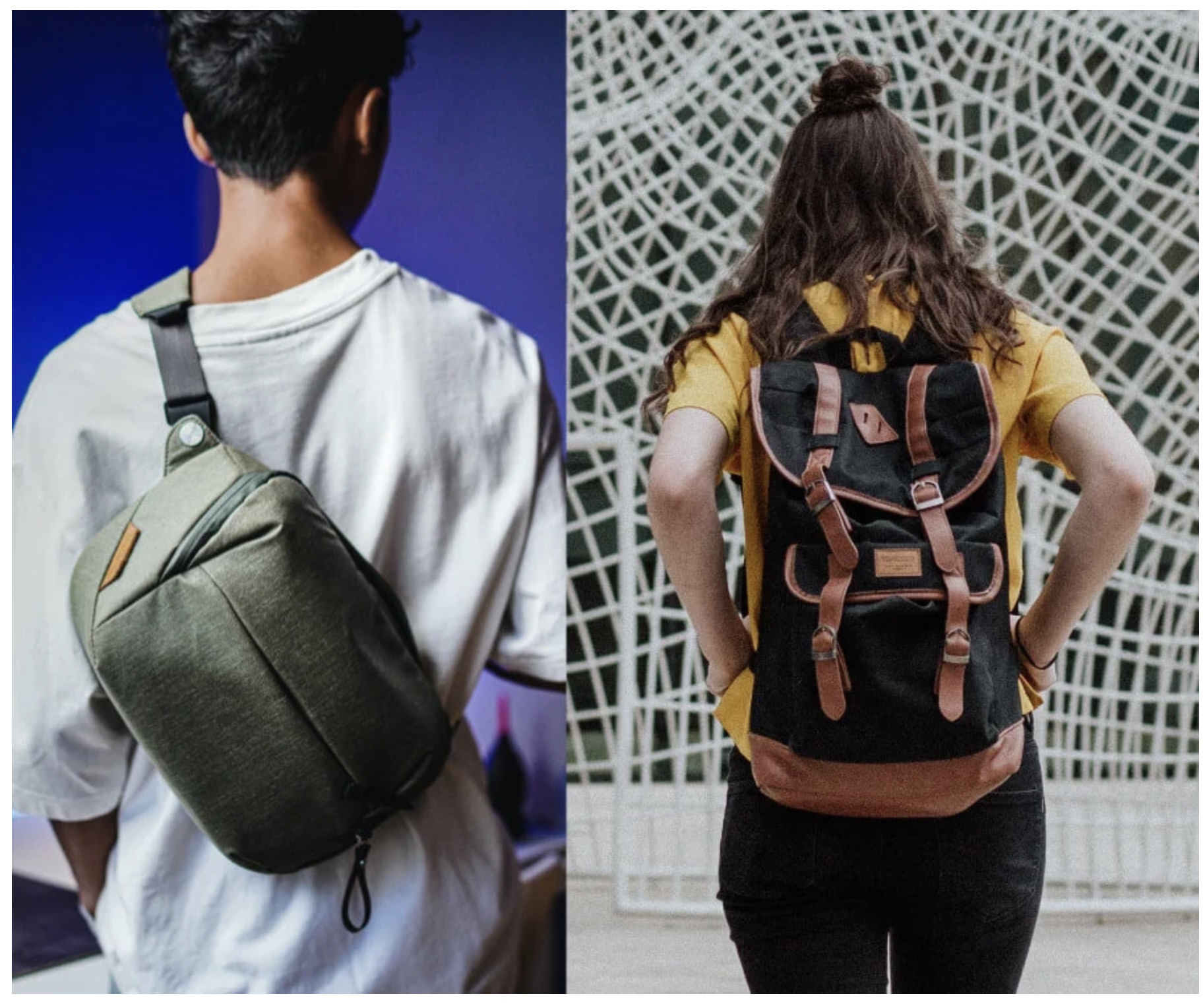
Moment Balance Sling Bag (7 Liter)
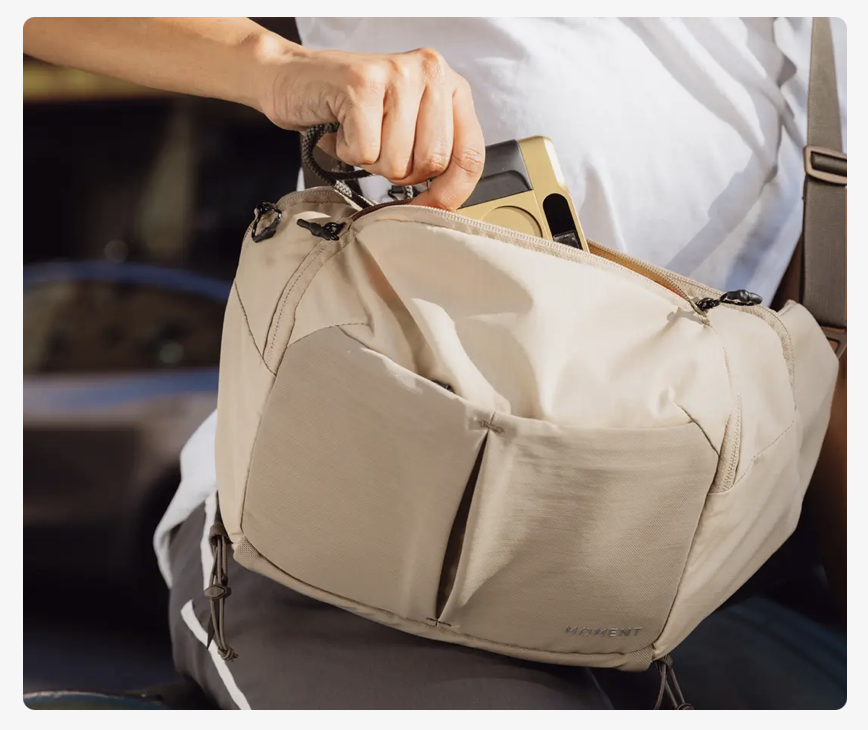
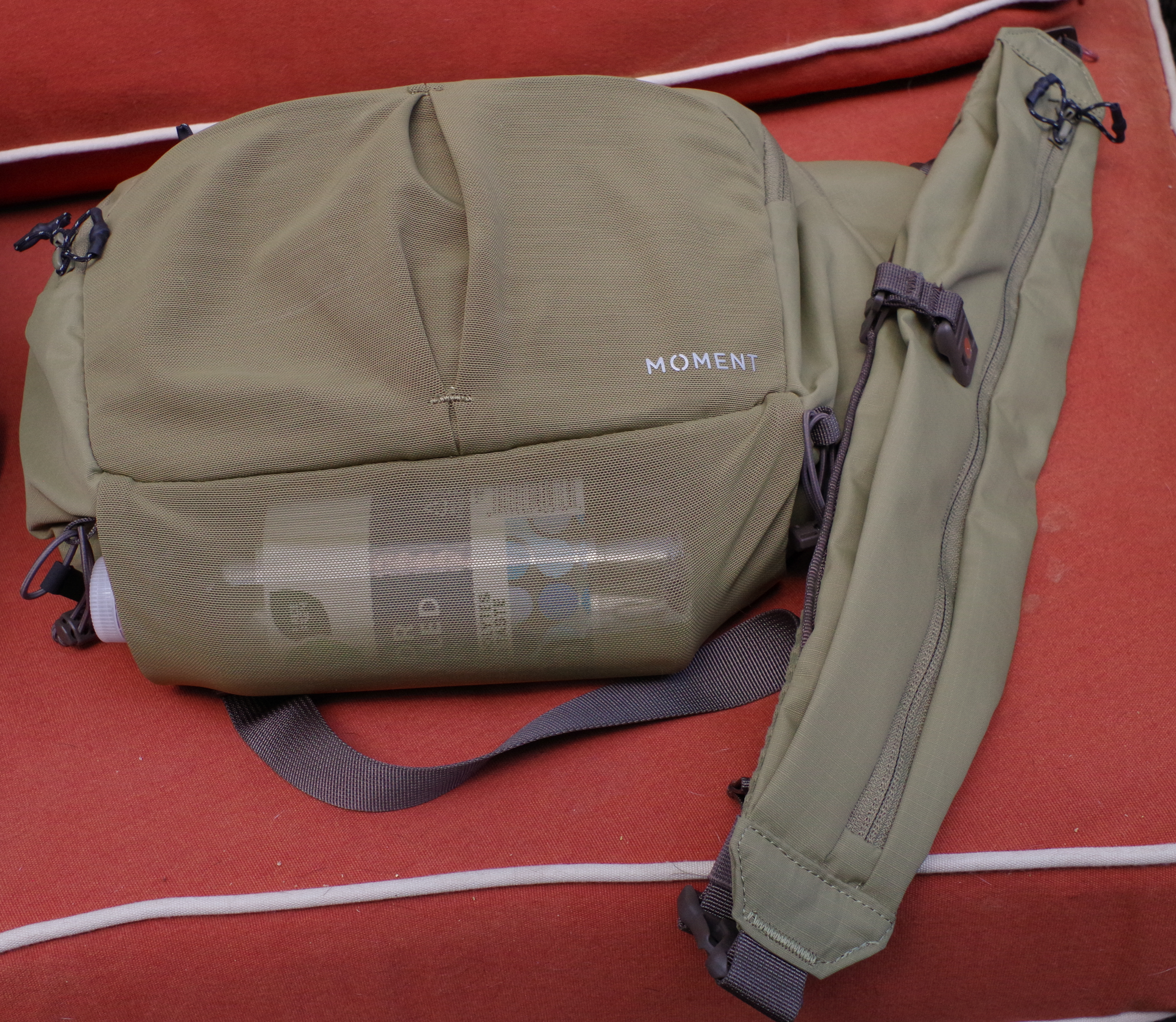
- This one is clearly designed with photographers in mind, but is not photo dedicated. There are lots of pockets for non-photo stuff, including a compartment for a standard 9in iPad (it’s a tight fit) or a Kindle. The central compartment is padded and lined with Velcro, and a removable divider will separate the camera body and its main lens, from a second lens. An elastic pocket under the bag is the ideal place for a water bottle. The Moment Balance Sling is fairly versatile: it can be used as small every day carry (EDC) if you carry some photo equipment, or as a large capacity EDC after you remove the compartment divider and leave the camera at home.
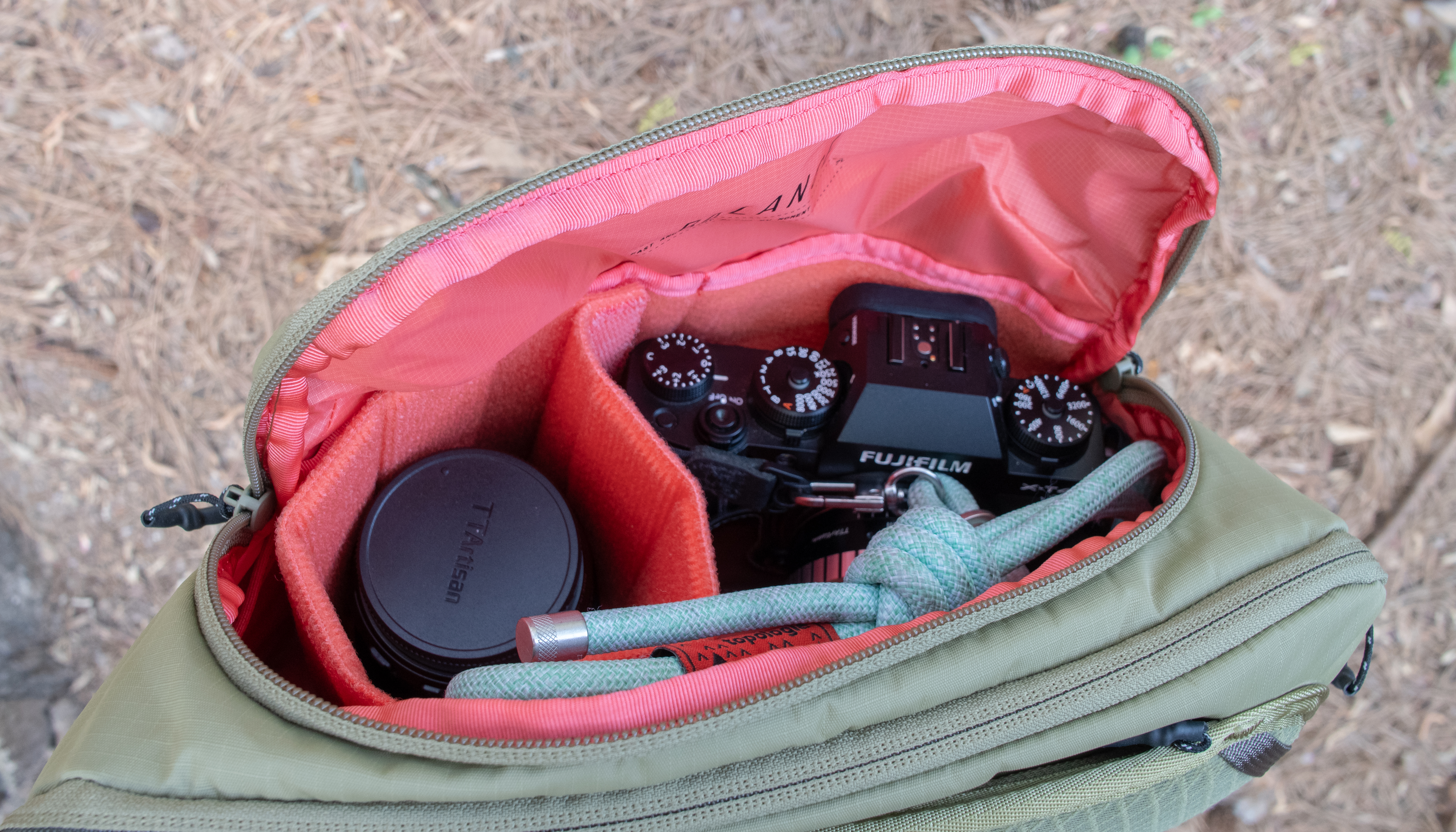
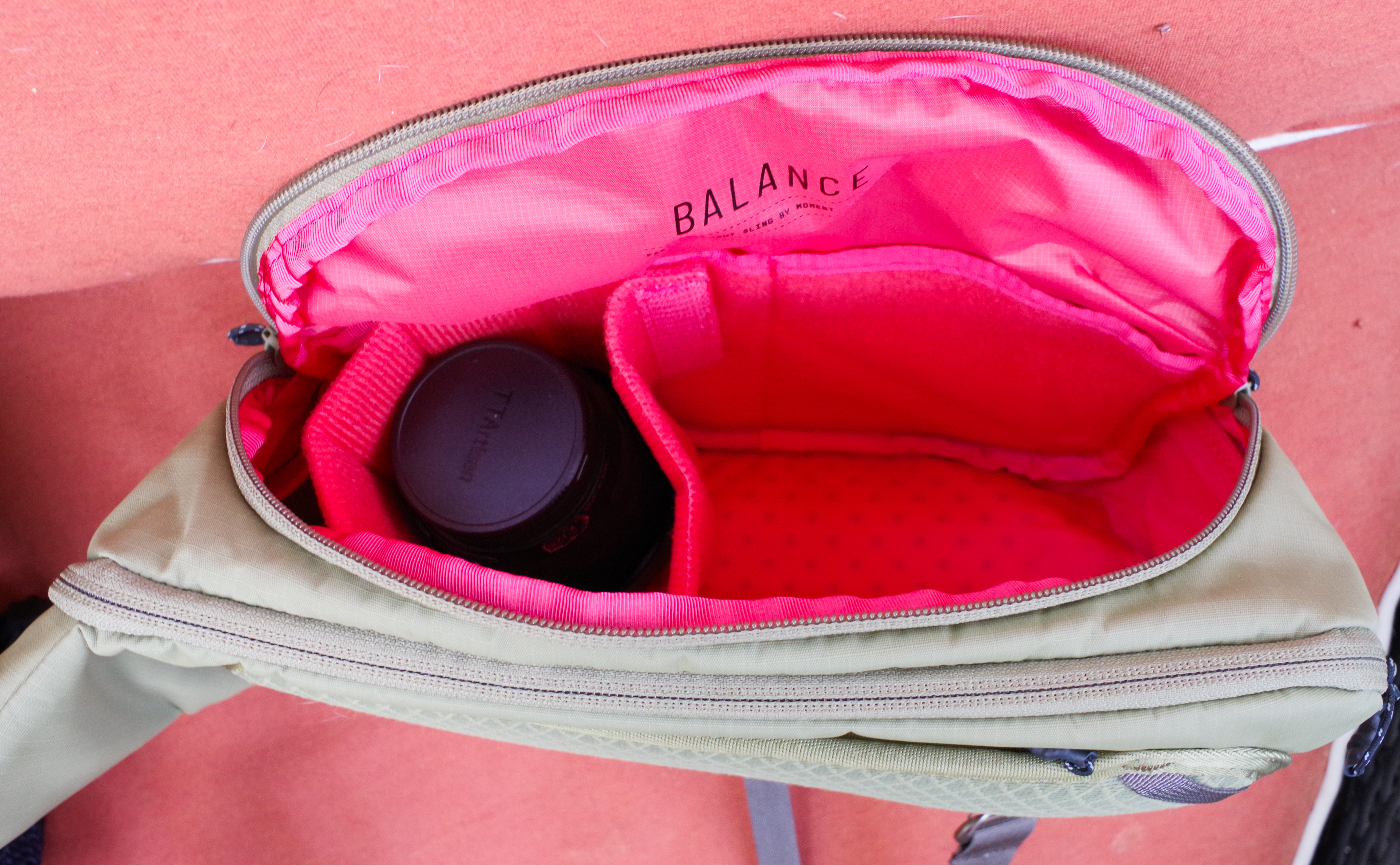
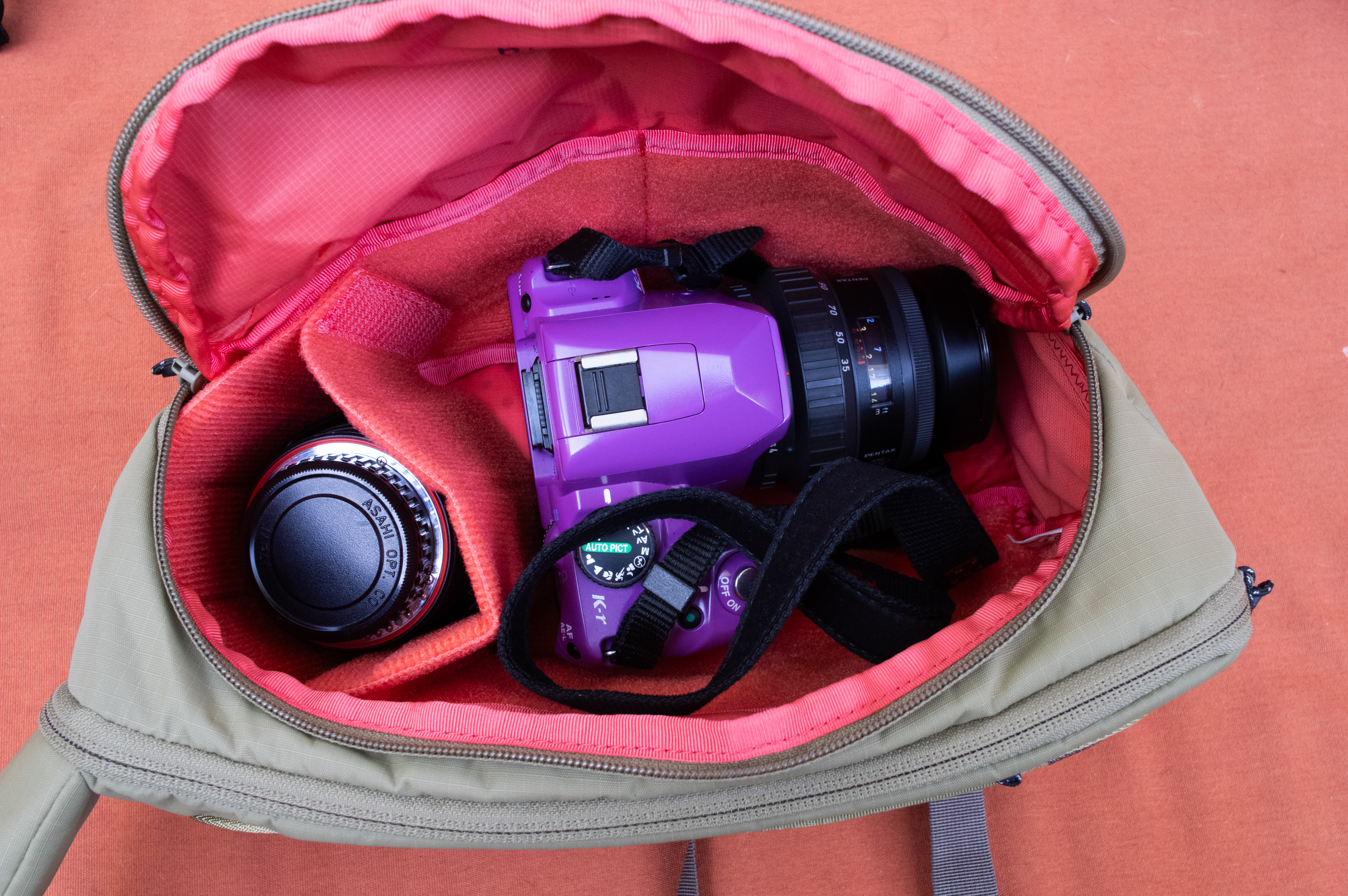
- The only part of this bag which is rigid is the removable divider of the main compartment- remove it and fold it, and the bag can be stored flat when not in use.
- There is enough room for an APS-C camera like a Pentax KP or a Fujifilm X-T4 (without their battery grip), with a maximum of two compact lenses (one mounted on the body, the second next to it in the bag). I would not try to carry a pro full frame dSLR with a f/2.8 constant aperture zoom – the combination is too big, and above all too heavy.
- Sling bags are designed to move easily around the torso of the photographer, but that very characteristic can be a serious drawback if you’re riding a bicycle – the Balance Sling comes with second strap equipped with a magnetic buckle, that will help stabilize the whole setup and keep the sling on your back while you’re on the move.
- The Moment Sling is the perfect bag for a photo stroll – with the bag opening right in the front, there is little risk of equipment falling on the ground when you attempt to change a lens.
- Lastly, the Moment Balance does not shout “photo equipment inside” – in fact, with its soft structure, its elastic mesh pockets at the front and its “moss” color, it looks like a tired surplus army bag and does not attract attention (it’s available in “sable” and “black” if you don’t like the military surplus look). That being said, it seems well built, with components of quality.
- At $120, it’s pricey for what it looks like, but it does the job it’s been designed for.
Conclusion
- There is an abundance of form factors on the marketplace – from high capacity backpacks with a bottom compartment that can be flipped laterally (for accessing the gear while hiking), to slings only large enough for a compact point and shoot camera.
- Generally speaking, sling camera bags sacrifice the carrying capacity for the ability to be opened on the fly, while still wrapped around the body of the photographer.
- More than the volume of the gear, its weight is the enemy – slings are OK if you carry one APS-C body and 2 lenses – they may still be OK-ish with a small mirrorless full frame camera, but in that case you should avoid carrying a large and heavy zoom. I can’t imagine carrying a full frame dSLR and a large aperture zoom in the Moment Balance. Even a full frame dSLR is a tight fit for the Pentax Sling, unless it’s paired with a small wide angle prime and not much else.
- Even if the weight and the volume are contained, there is no guarantee that the sling will be comfortable (I returned a PGYTech sling because the body of the bag was too rigid and was pressing on my back, and the narrow strap was compressing my chest).
- Backpacks like the Manfrotto are ideal to carry lots of equipment with elegance between two photo shoots, but too big for street photography and – if loaded to their maximum capacity, for a 5mi hike in the hills;
- Small slings (6 or 7 Liter) are ideal if you can survive with a camera body, two small lenses and a bottle of water. They’re perfect for shooting in urban settings and for street photography. Larger slings (10 to 15 liters) will contain more equipment, but all slings become a pain to carry if you load them with more than a few pounds of gear.
More recent content in CamerAgX