In the mid seventies, a new generation of SLRs hit the market. They were following the example set by the Olympus OM-1 and were much more compact than their predecessors. They also used less mechanical components and more electronics.
The FM was Nikon’s response to the OM-1, and to similarly compact cameras from their main competitors. The FM outlived them all. The FM and its derivatives, the FM2 and the FM3a, were sold for more than 30 years, and when the production of the FM3a was finally stopped, they were still in such demand that for a while used FM3a’s were selling for more than when their price when new.
Compact, reasonably light and rock solid, the FMs were often used as backup cameras by professional photographers until they stopped using film a few years ago.
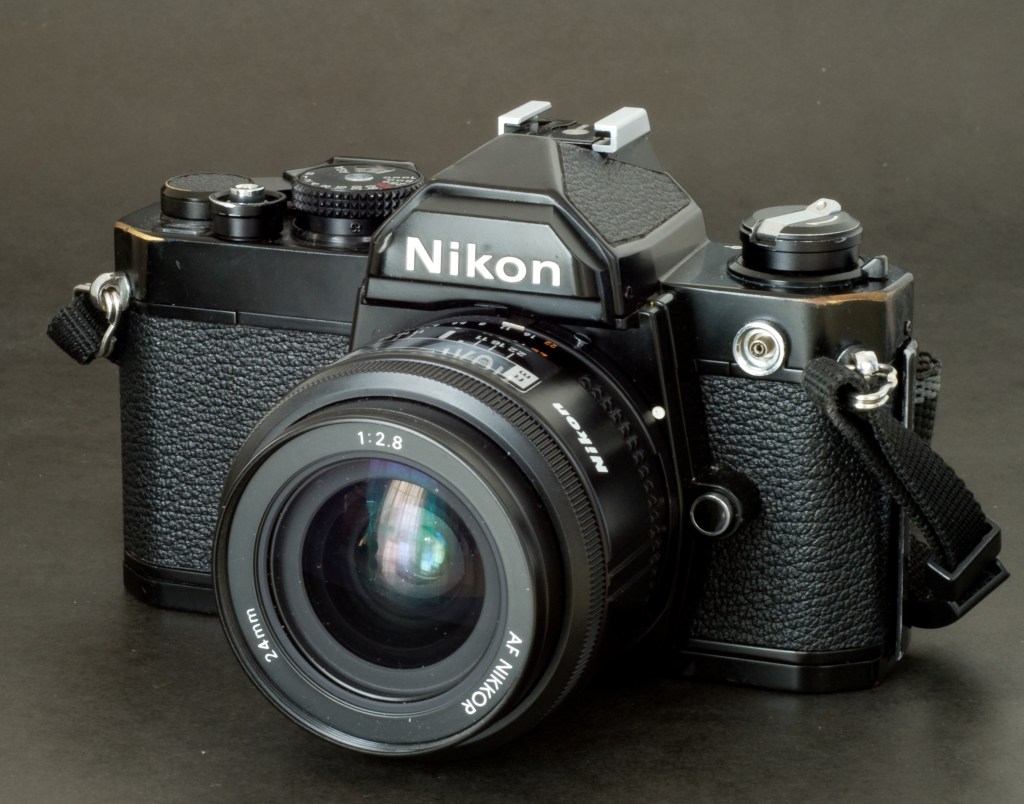
The FM is a mechanical, manual focus, semi-auto camera. It leaves you total control over your images, and does not change the aperture/speed combination you selected on its own. No need to memorize the settings in backlit pictures. But total control comes at a cost: speed of operations in a rapidly changing environment. It’s a nice camera for landscapes, travel, street photography, but more recent autofocus cameras will deliver better results for sports and action photography.
The flash control system is also old school – the camera exchanges very little information with the flash unit, and the photographer has to set the shutter speed and the aperture by himself, using guide number tables: there are obviously better cameras to shoot indoors.
The FM as a photographic tool
By modern standards, the FM is a bit of a disappointment. On the one hand, it feels very well built and solid, and it can be carried around everywhere because of its (relative) small size. The Olympus OM1 or the Pentax M series are still smaller, but don’t feel as robust. Like the other semi automatic cameras with mechanical shutters, the FM also works without batteries. The light meter does not use a galvanometer (no needle) but a series of bright red LEDs are the right of the viewfinder screen: there are very few parts that can break on a FM.
On the minus side, the mechanical commands are firm, and the advance film lever doubles as a shutter release lock: you can only use the light meter and press the shutter release if the advance film lever is pulled out of the body (by an angle of approximately 45°). It’s not very practical, and slows down the operations. I missed more than a few snapshots because the lever was pushed flush with the camera body, in the off position. I guess you can get used to it, but it’s not ideal. (the Nikon F3 does not have this issue; the film advance lever does just that).
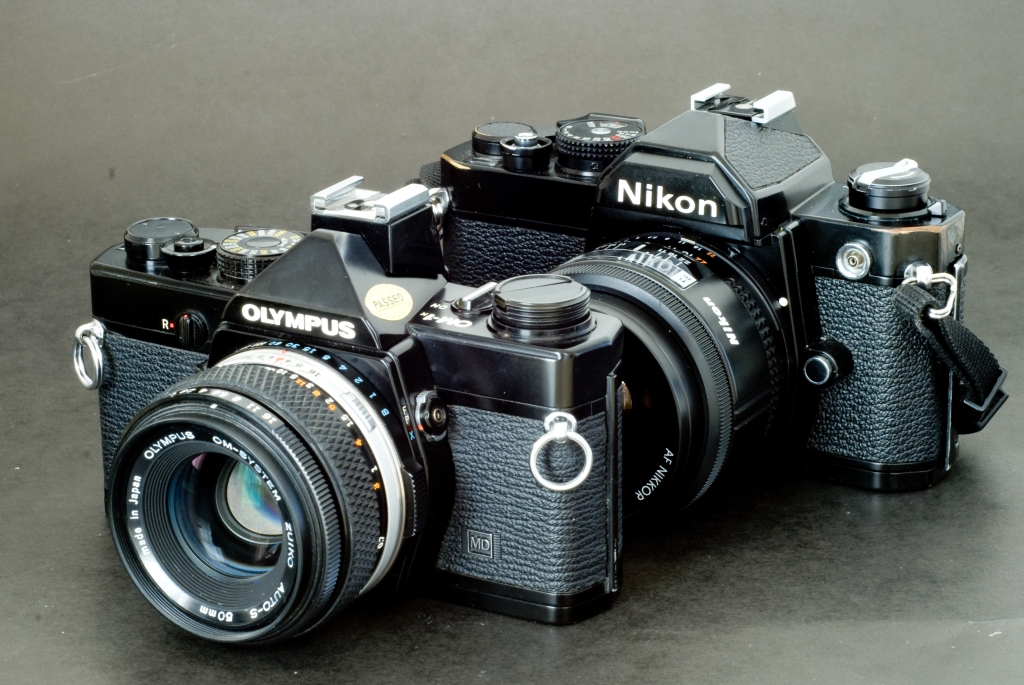
The Olympus OM1 was the forerunner of a new generation of very compact but still very capable SLRs. Coming a few years later, the FM is not as compact as the OM1, but not that much larger. It’s heavier, though. Its electronics (the light meter, the rest of the camera is mechanical) aged very well, the batteries it needs are still easy to find, its mechanical components are solid and it’s compatible with any Nikkor lens built between the early sixties and the last few years.
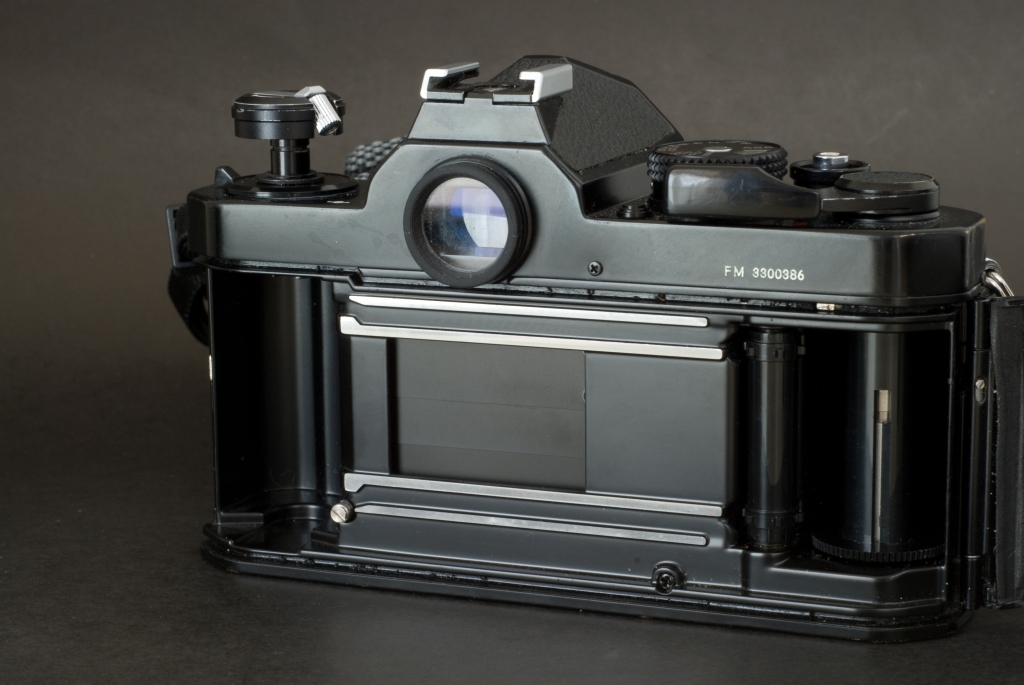
The FM has a mechanical metallic shutter. Its fastest speed is 1/1000sec, with a maximum flash synchronization speed of 1/125 sec. The different versions of the FM2 and the FM3a have much faster shutters, built in aluminum or titanium, with a maximum speed of 1/4000s and a flash synchronization. speed of 1/200 (early models) or 1/250.
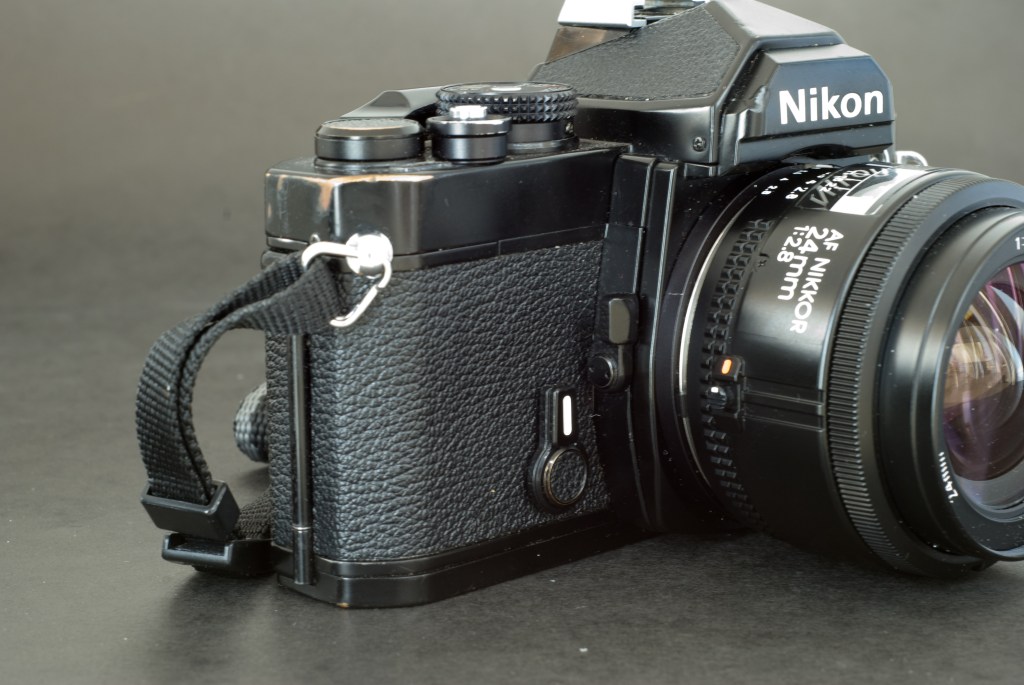
The FM holds a special place in the Nikon product range: it’s one of the few Nikon cameras (the only other compact SLR to share this characteristics is the FE) which is compatible with the pre-AI lenses as well as the modern AI, AIS and AF lenses. The other members of the family – FM2, FE2, FA, F3A – are only compatible with the AI, AIS and AF lenses; trying to mount an older pre-AI lens can damage the camera.
That’s the reason why the FM is sometimes referred as the Rosetta Stone of Nikon cameras
Summary
The Nikon FM is a simple, compact, rock solid and reliable camera, with a decent viewfinder and an accurate light meter. It’s not very fast to operate and not always pleasant to use because of firm commands and of the protruding film advance lever, but it can take advantage of a huge variety of lenses, built by Nikon over a period of almost 50 years. The FM2/FE2 are a bit smoother, the automatic FE and FE2 are also faster to operate, but the F3 beats them all, with its very soft commands, its good ergonomics and its large viewfinder.
The last FMs were produced in the early eighties, and good ones are still easy to find. They command lower prices than the much more sought after FM2’s and FM3a’s. A very nice one from a reputable seller will not cost you more than $150, and not so nice ones can be bought for less than $70 on eBay.

More about the Nikon FM
The best site of reference about the Nikon FM: Photography in Malaysia
The site has not been updated recently, but it contains very detailed information about the Nikon cameras and lenses manufactured until the F5.




 CamerAgX - a new life for old gear