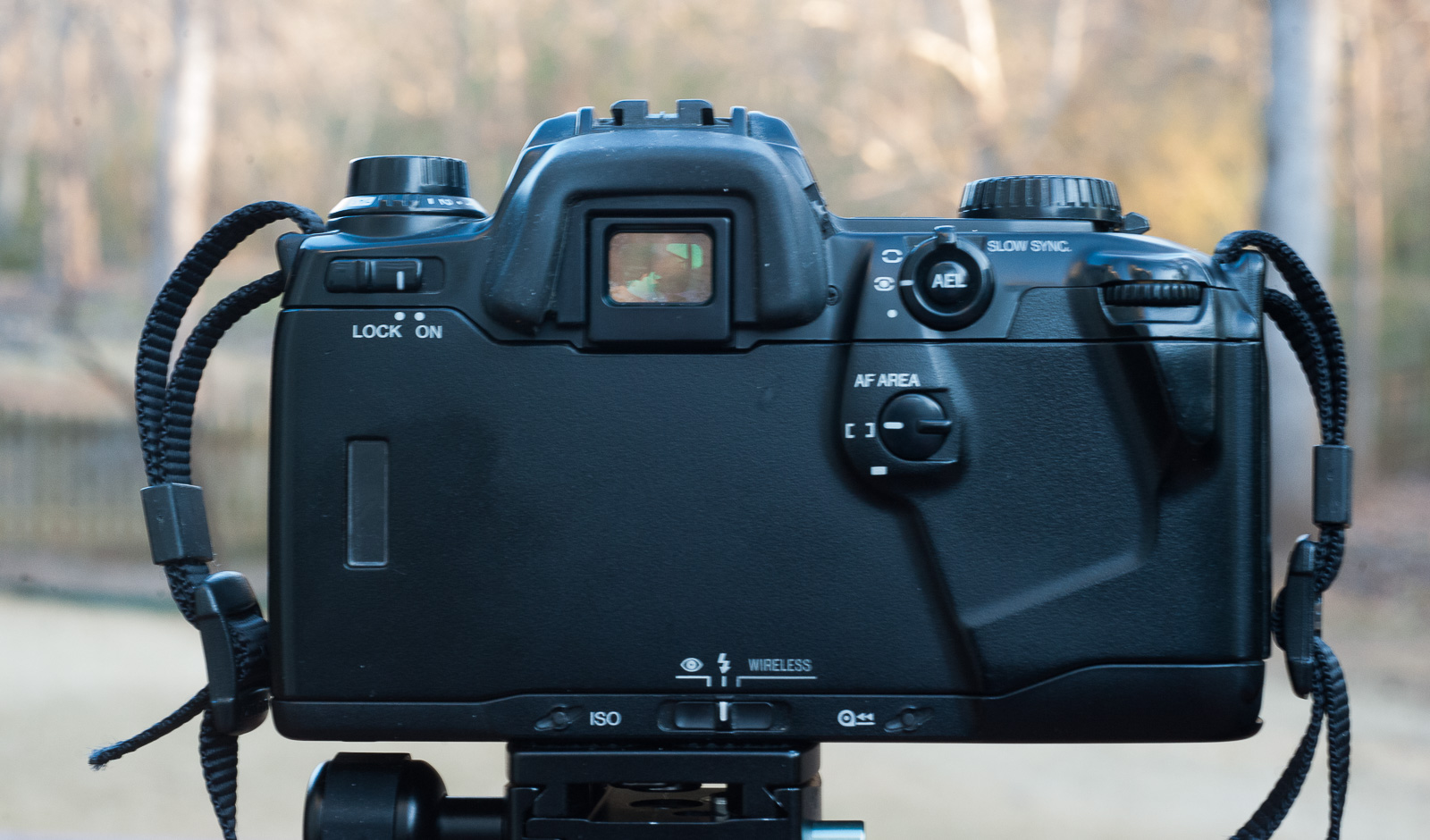
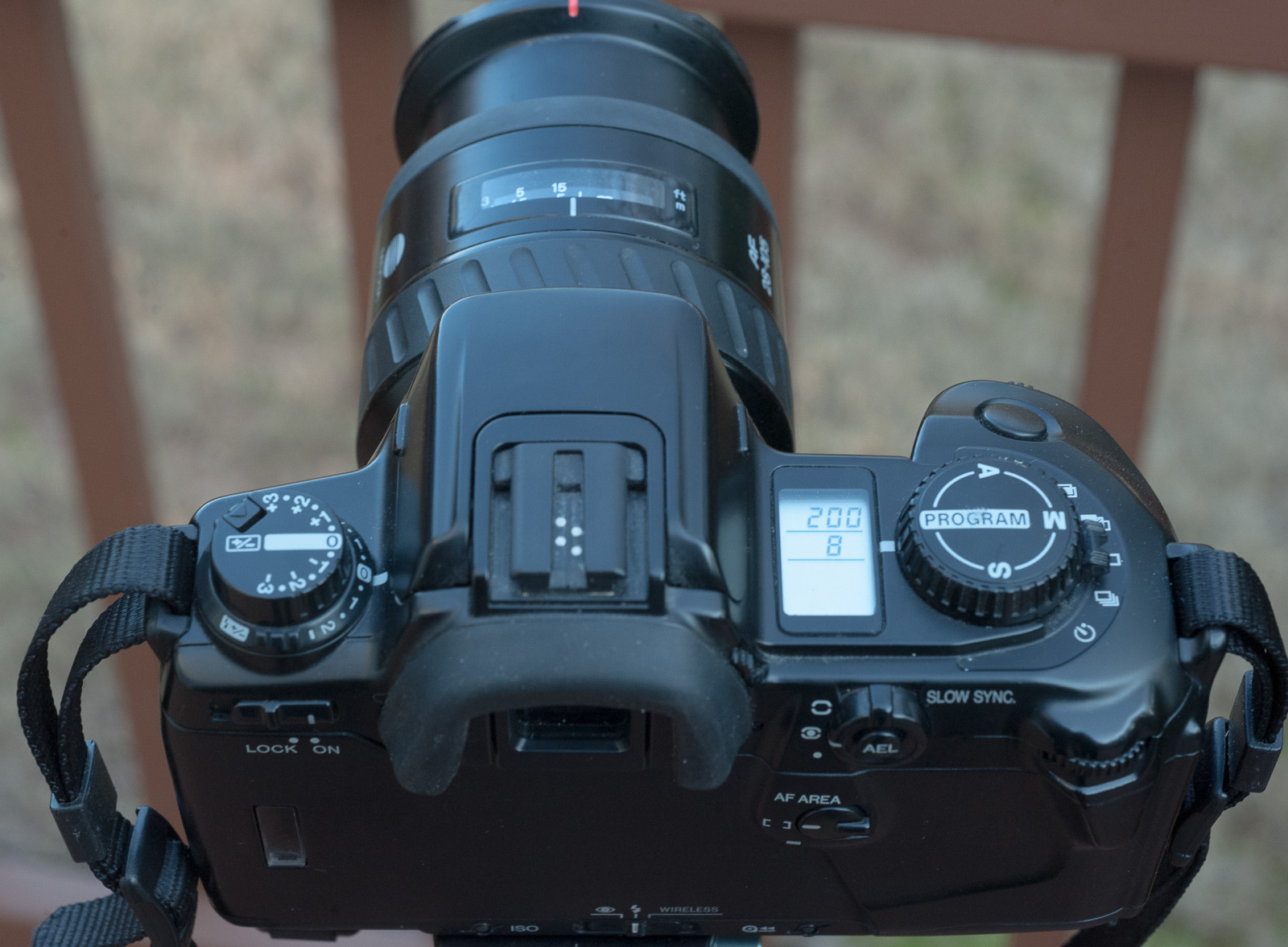
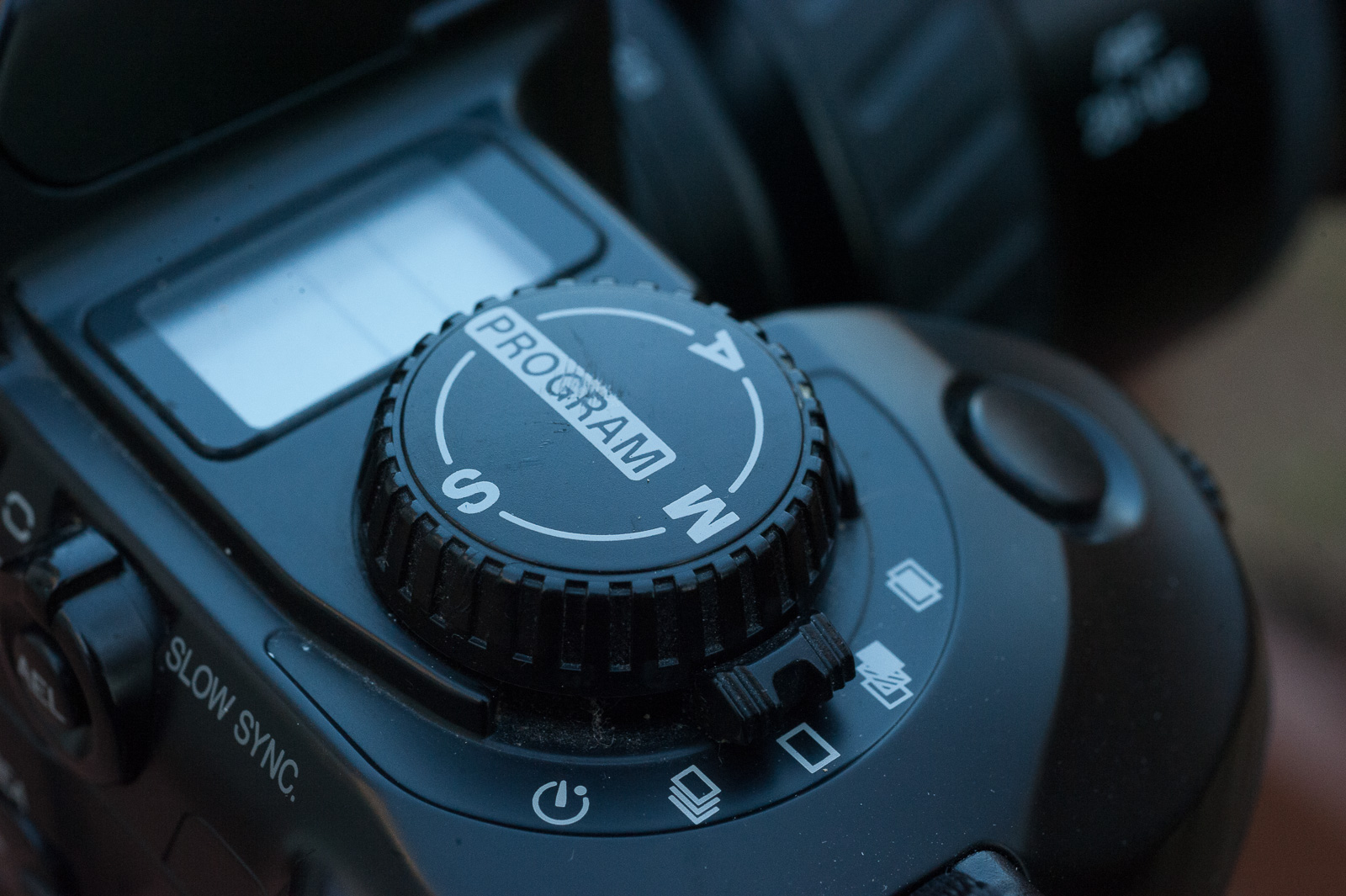
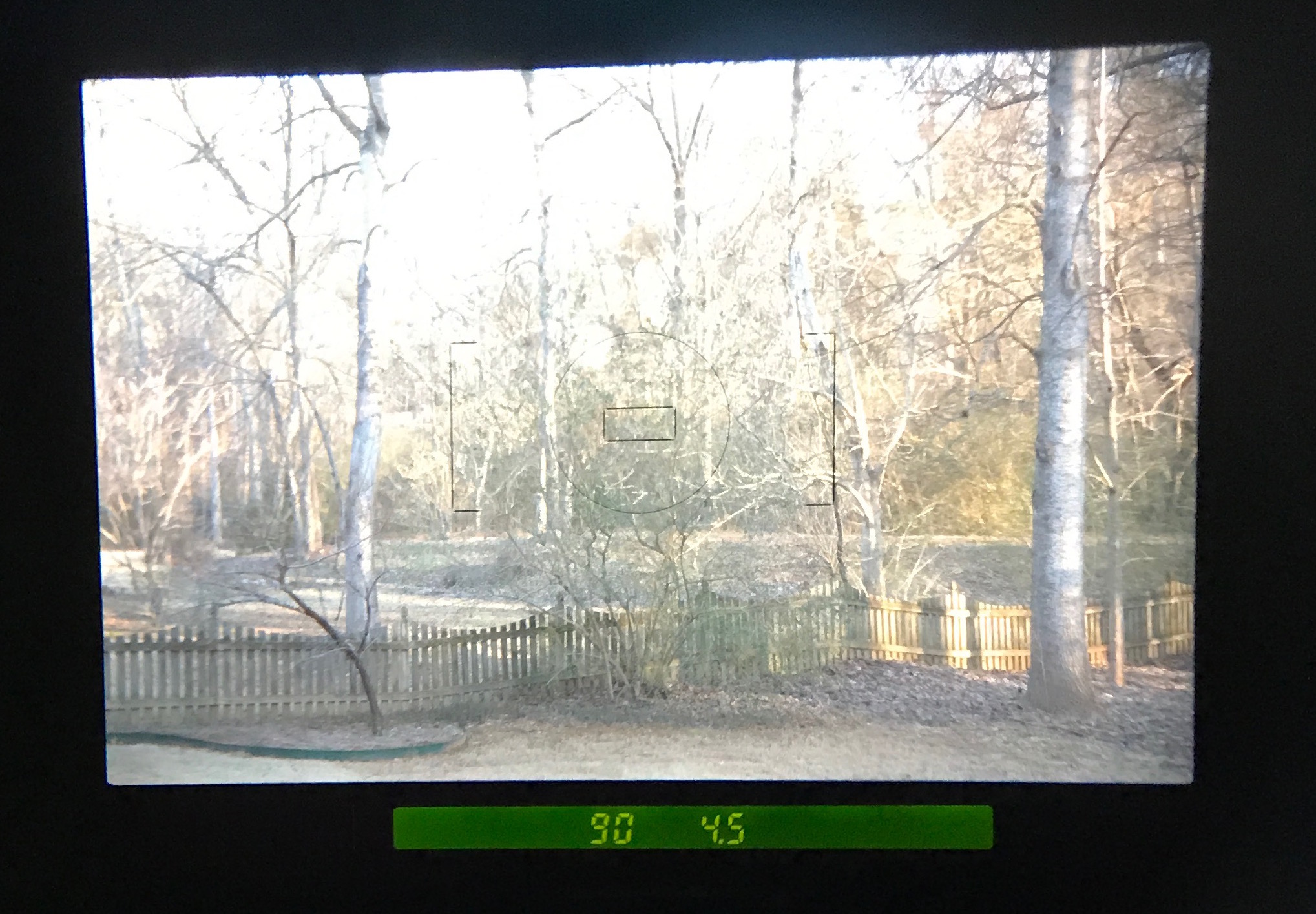
Finding a product name that is not ridiculous or offensive when selling it to international audiences is difficult – there are famous examples of faceplants.
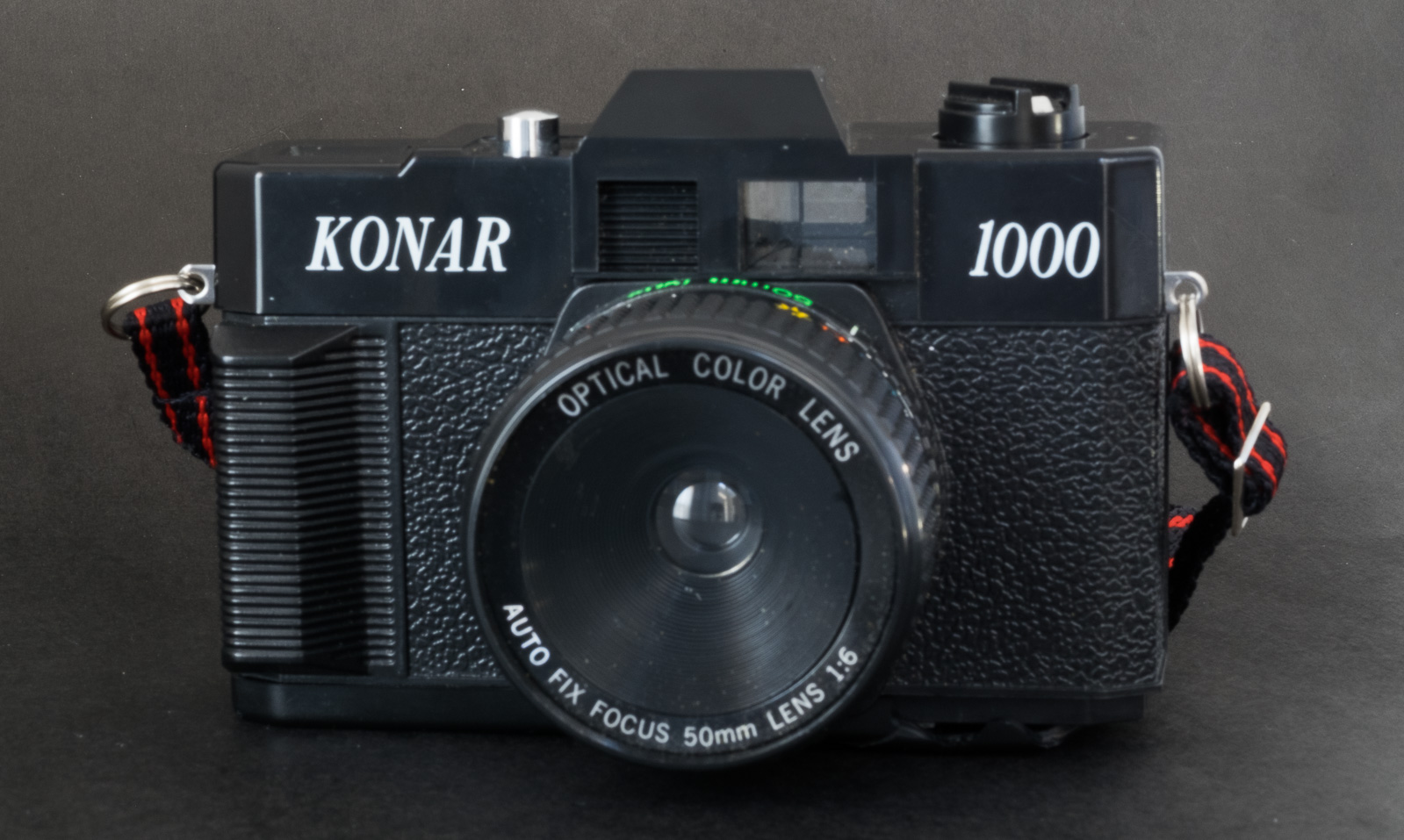
Konar 1000 – a taiwanese camera from 1985.
In the world of cars. Rolls Royce, for instance, has a tradition of naming its cars “Silver-something”, the “something” being a word evoking “ghosts” or “spirits”, in reference to the car that made them famous, the Silver Ghost of 1906.
It does not always work that well, though. Rolls Royce’s bread and butter model of the sixties was destined to be named “Silver Mist”, which unfortunately would have translated into “silver manure” in German. Germany was a market of significant importance for Rolls-Royce, and the issue was addressed in time: the model was launched as the “Silver Shadow”, which was better, although not that huge of an improvement. “Shadow” sounding pretty much like “Shade”, the German word for “pity” or “shame”.
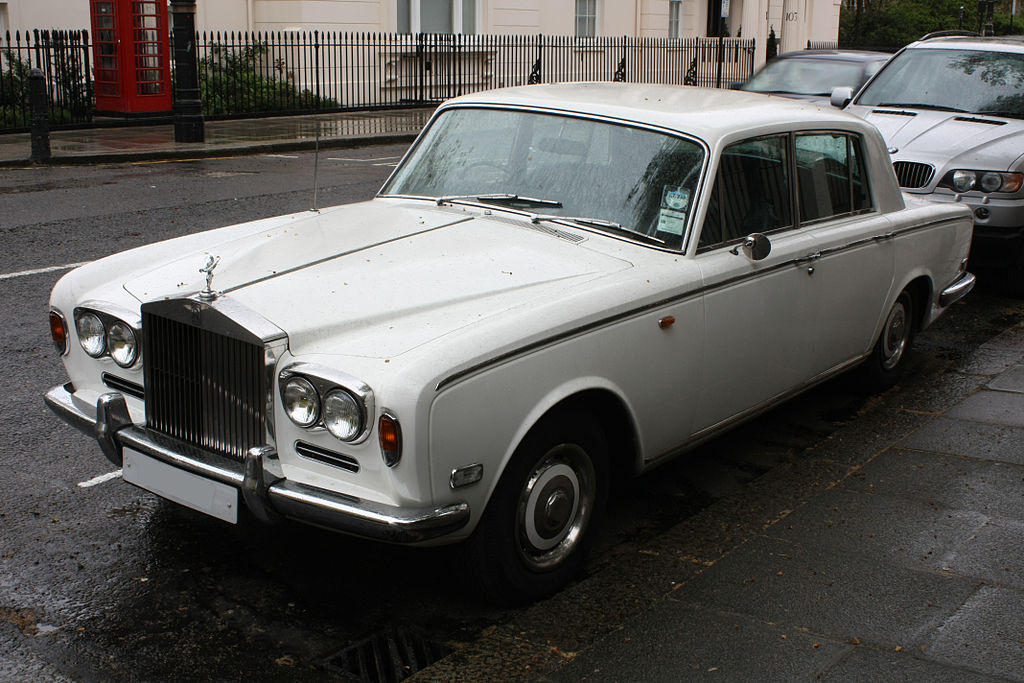
Rolls-Royce Silver Shadow – it sounds like “silver shame” in German (Source: wikipedia).
Toyota had the same issue with a little two seater they were selling in the nineties – named MR2 in most of the markets, it was simply named MR in France because MR2, phonetically, would have sounded like “Merde” or “Merdeux” (“Shit”, or “Shitty”).
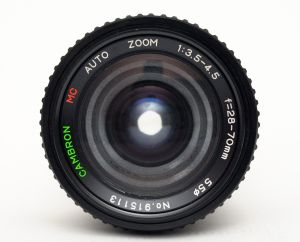
Cameron lens (Source: eBay)
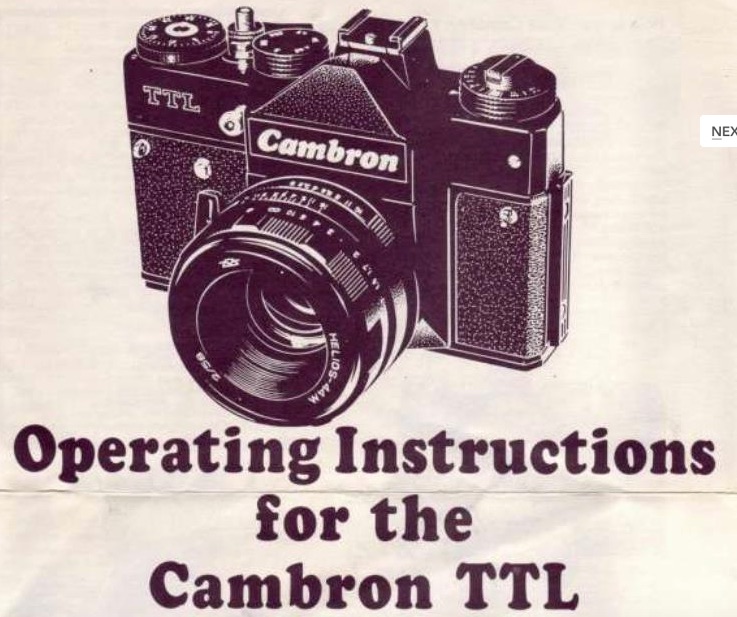
In this country, I was surprised to find lenses named “Cambron” – the private label of the Cambridge Camera Exchange store, in New York. They even had their own private label camera, the Cambron TTL, manufactured in the USSR by KMZ and sold all other the world as the Zenit TTL.
Cambronne was a general in Napoleon’s army at the Waterloo battle – when asked to surrender, he famously shouted what is still known in France as the “word of Cambronne”, “Merde!” (a word which in addition to meaning “shit” – as Toyota’s marketing department had found out – is also used in French to convey exasperation – a very impolite form of “go to hell”).
I would have liked to find a Cambron TTL – I found a Konar instead….
Speaking about French, a rather strong insult in that beautiful language is “connard” [pronounce ko-nar]. A “connard” is a despicable man, at the same time profoundly stupid, petty and mean. “A.. H..e” would probably be a good translation in modern English.
As I could not find a Cambron TTL, my consolation prize was a Konar 1000 – a very simple point and shoot camera with the looks of a SLR. The trademark belonged to a “Selectdirect Inc”, and has been available since 1987.
No comment
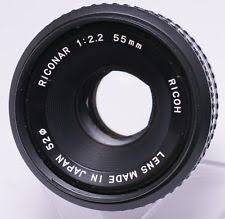
You could understand that a small photo equipment store in New York, NY or a company importing $1.00 cameras for the US market would not be bothered with checking what a name like Cambron or Konar meant to French people, but what about a large company with a global presence like Ricoh. In addition to their “Rikenon” lenses, they also sold a line of entry level lenses named “Riconar” – which in French sounds literally like the imperative form of “to laugh”, followed by an insult: “Laugh, A.. H..e”, what a name for a product.
What does a Konar look like?
When I found a Konar 1000 camera on Shopgoodwill.com, I had to have it.
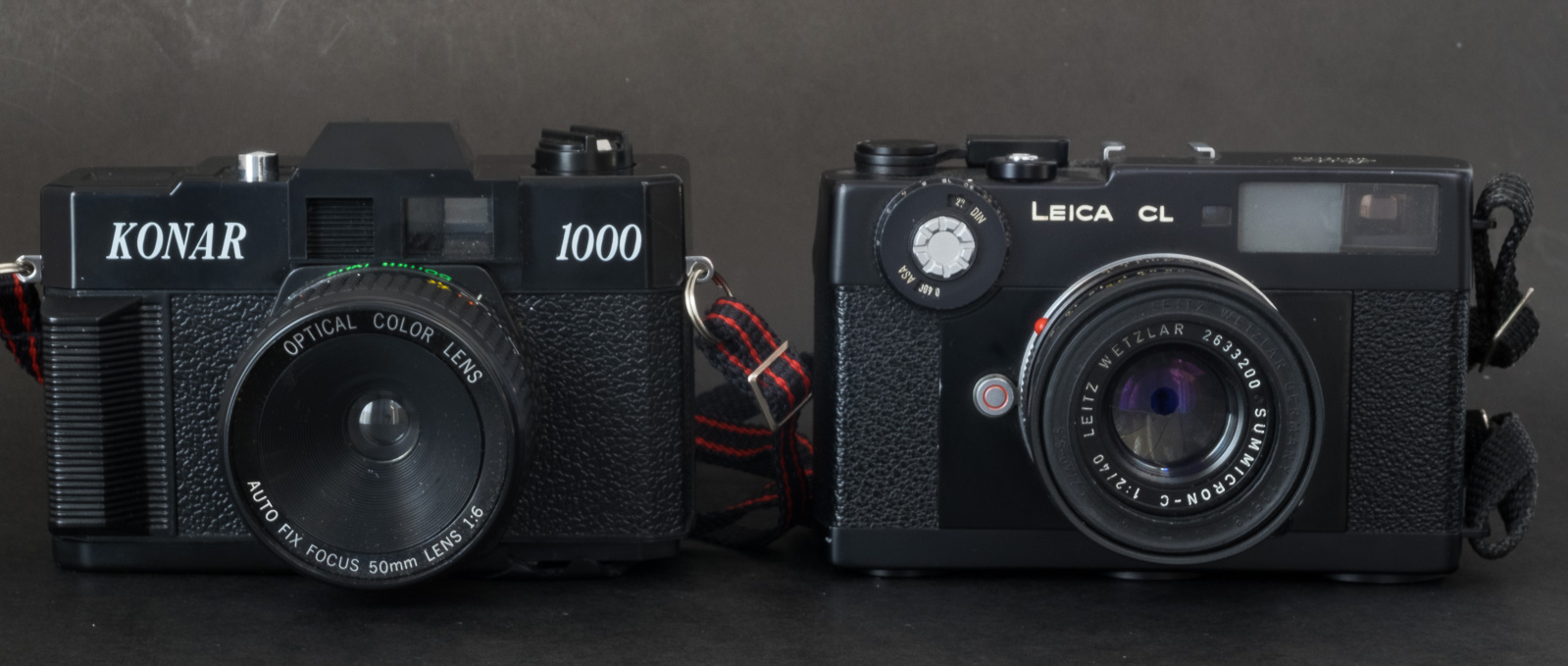
The Konar 1000 is one of those ultra-simple cameras that look – from a distance – like a “real” rangefinder – it even has a small hump where the viewfinder of a reflex camera would be to add to the confusion. It was made in Taiwan in the mid eighties, was also sold under names such as Capital MX II or Ultronic, and was often given out for free with a magazine subscription (the Time Kinetic camera) or after a visit to a casino (there is a golden Caesar’s Palace version).
Konar 1000 – with Auto Fix Focus lens (!)
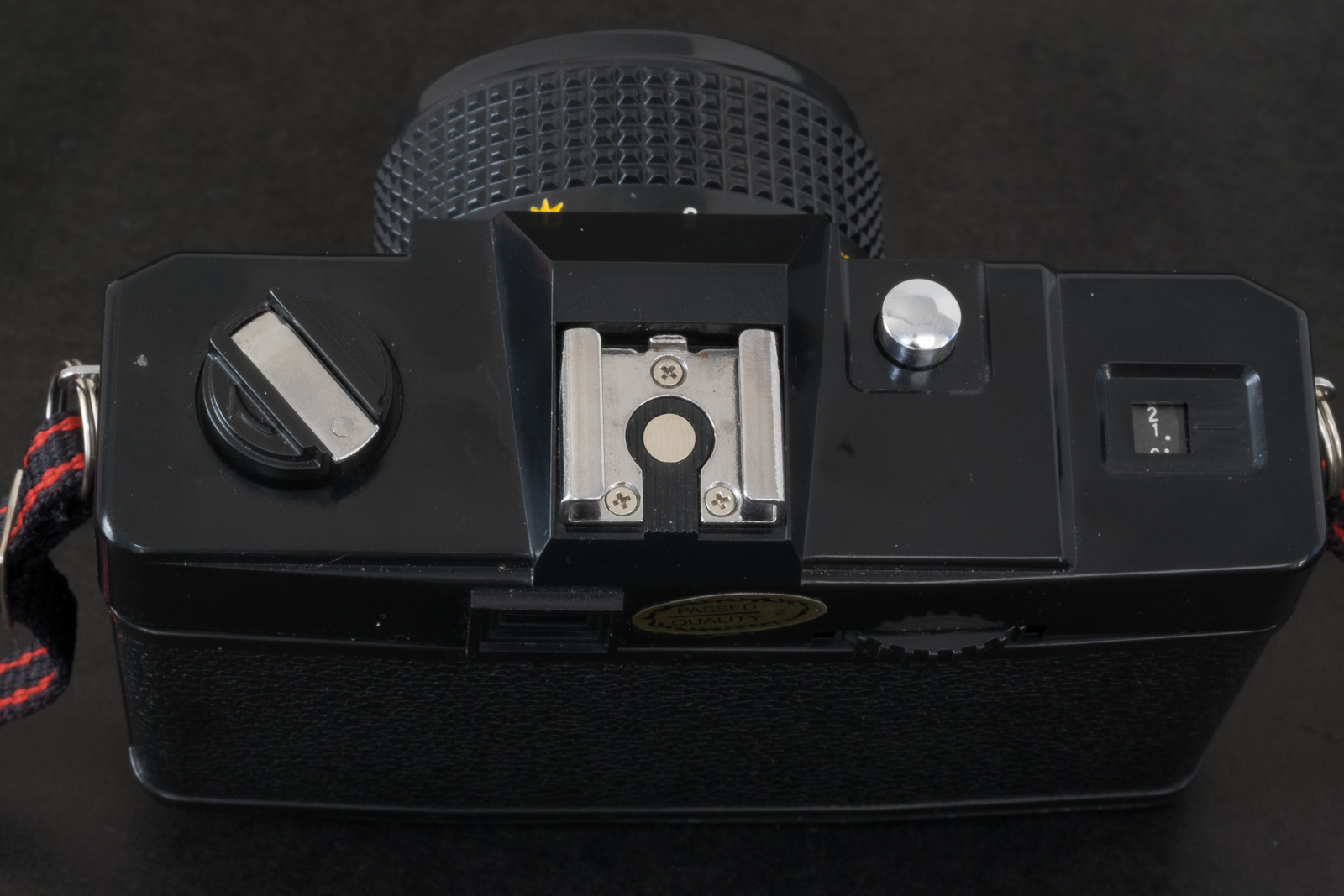
Technically, they’re all the same, and to my surprise, they’re real, functional cameras. They use 35mm film, have a single element fix focus lens (plastic, of course), and a single speed shutter. The aperture can be set at F/6, F/8, F/11 and F/16, but there is no metering or auto-exposure mechanism. The flash hot shoe is functional and the viewfinder – usable.
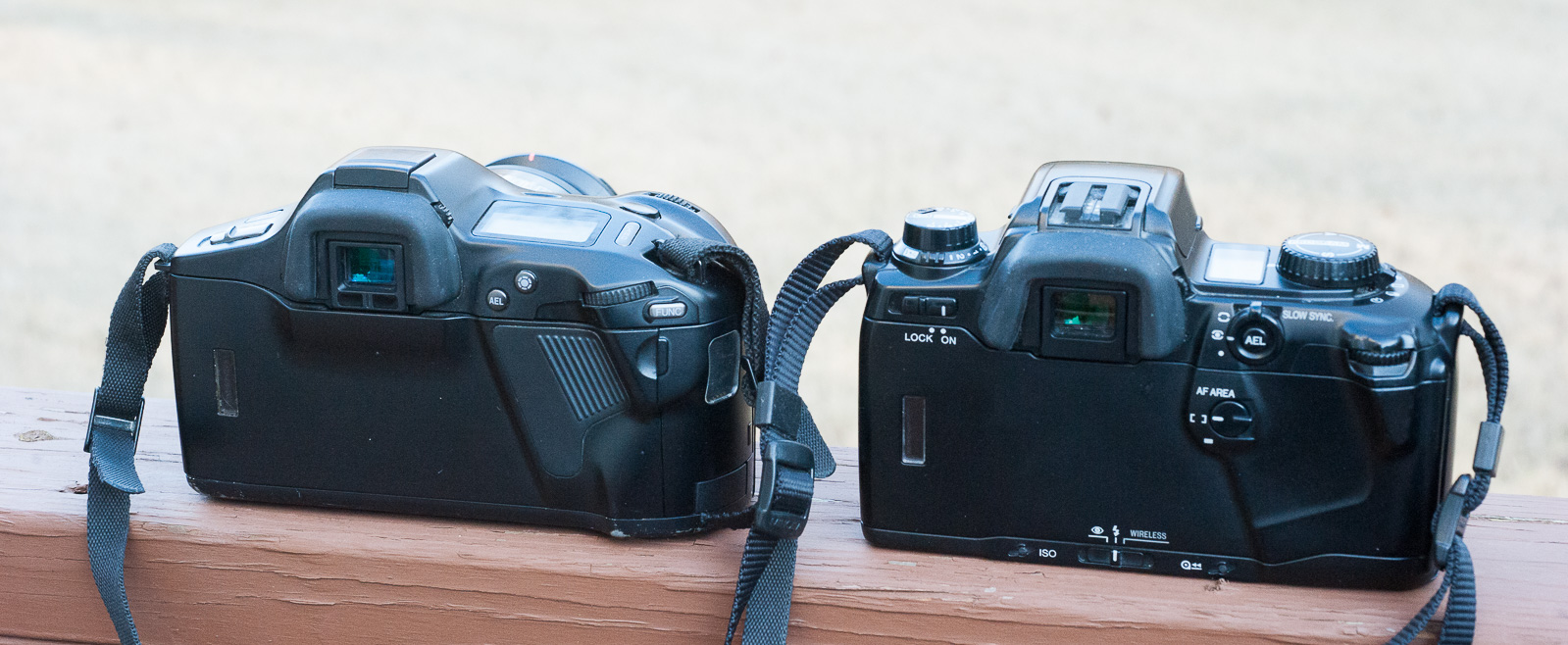
Konar 1000 and Leica CL – the Konar looks like a real camera.
All in all, it does not look any worse than a Holga – and judging by pictures published by users of Capital MX cameras on Lomography.com, the results are somehow OK, considering the lens is a piece of plastic.
Buying a Konar?
They’re no Leica, they’re no Nikon, and have a very limited usage value. Objectively, considering you can get a Nikon autofocus SLR for $3.50, the value of a Konar should be expressed in cents, not in dollars. But sellers won’t be bothered selling a camera for 10 cents, so you’ll have to pay a few dollars to get one. In any case, shipping, packaging and handling costs will exceed the cost of the camera itself.
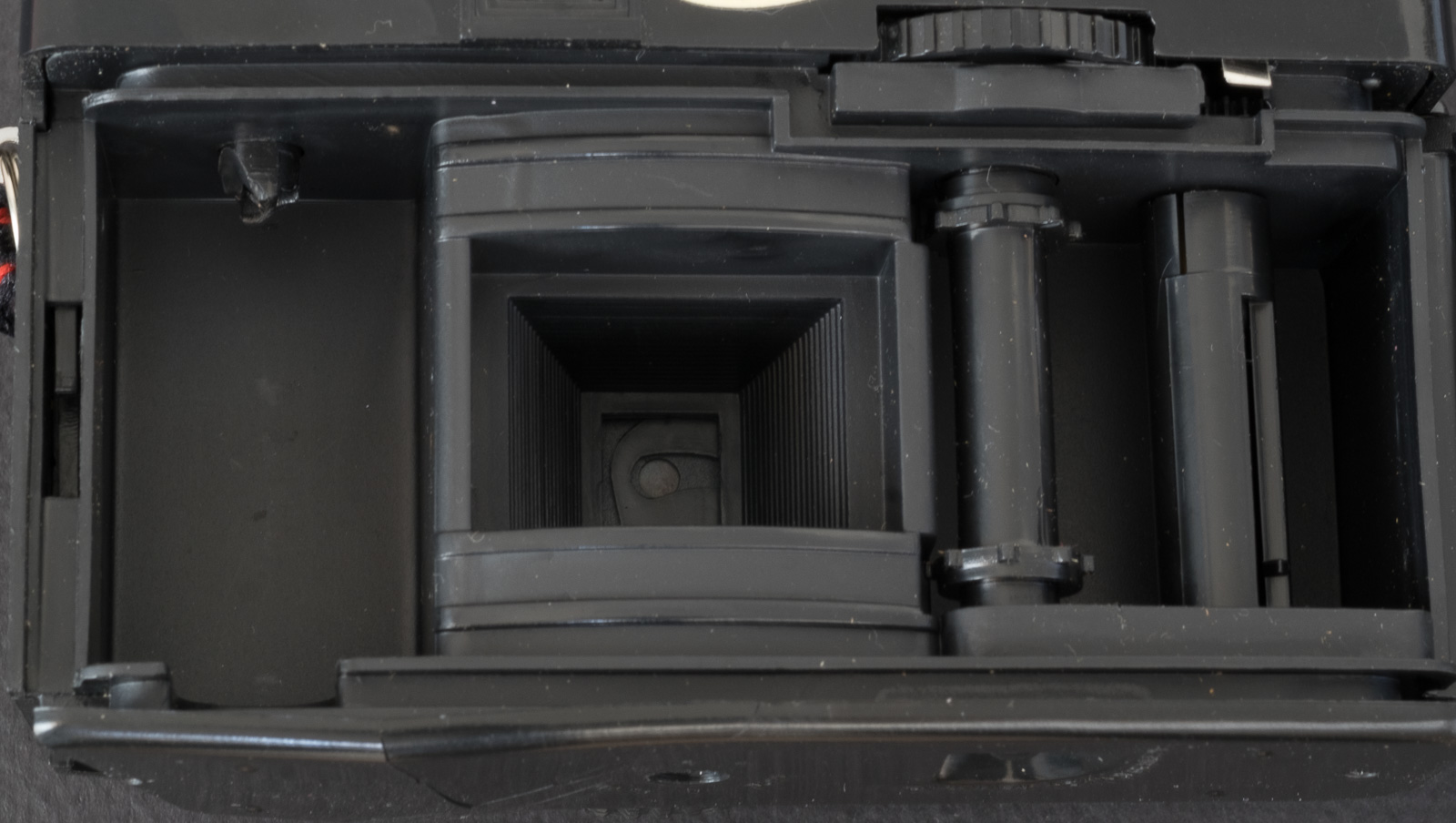
Konar 1000 from above – film rewind crank, functional hot shoe, exposed view counter on the right – it’s a real camera.
The same should be true for Cambron lenses – in theory a manual focus trans-standard zoom from the seventies sold under a distributor’s label is virtually worthless. But surprisingly, there are still people willing to engage on a bidding war to get one.
The Konar 1000 at full aperture (F/6). The aperture is set by a sliding blade located at the back of the shutter.Konar 1000 – the aperture is now set at F/16. The slit in the sliding blade is now much narrower.
I briefly introduced the D700 in a recent post from the perspective of a collector and regular user of Nikon film cameras. Let’s see now how this ten year old dSLR compares with recent mirror-less cameras.
Impressive image quality, impressive white balance, impressive auto-focus
I’m not equipped to test a dSLR, and, honestly, I lack points of comparison. So I will just share a few thoughts.
The d700 – one button or dial per command – an informative top plate LCD, and hundreds of options in the menus
Firstly, for a photographer used to Nikon dSLRs (I’ve had a D80 as my primary camera for almost 10 years until I switched to a mirrorless system), the D700 is very easy to apprehend.
It’s a conventional motorized auto-focus single lens reflex. There are more knobs, buttons and switches than on an enthusiast camera, the menus offer more options and a much greater level of customization, but the D700 is a camera a nikonist will feel immediately comfortable with, without having to spend too much time buried in the manuals.
Nikon D700 – a pro-camera with a very useful built-in flash (it controls Nikon’s cobras remotely)
Secondly, it’s a big and heavy camera. More than three pounds if equipped with a light prime lens or a consumer-grade zoom, almost five if equipped with one of the f/2.8 wide angle or trans-standard zooms that the pros love to use.
Thirdly, its performance is still impressive for a ten year old camera. Admitedly it’s only a 12 Megapixel camera, but when it comes to overall image quality, dynamic range, white balance, auto-focus speed and exposure accuracy, it still holds its rank compared to recent mirrorless cameras.
The D700 – still the ergonomics of a conventional auto-focus SLR
Use a modern mirror-less camera and a D700 side by side – and it’s immediately obvious that the D700 is much closer to Nikon’s last auto-focus SLRs of the film era than to a Sony A7 series or a Fujifilm X-T2. And I’m not even considering the size.
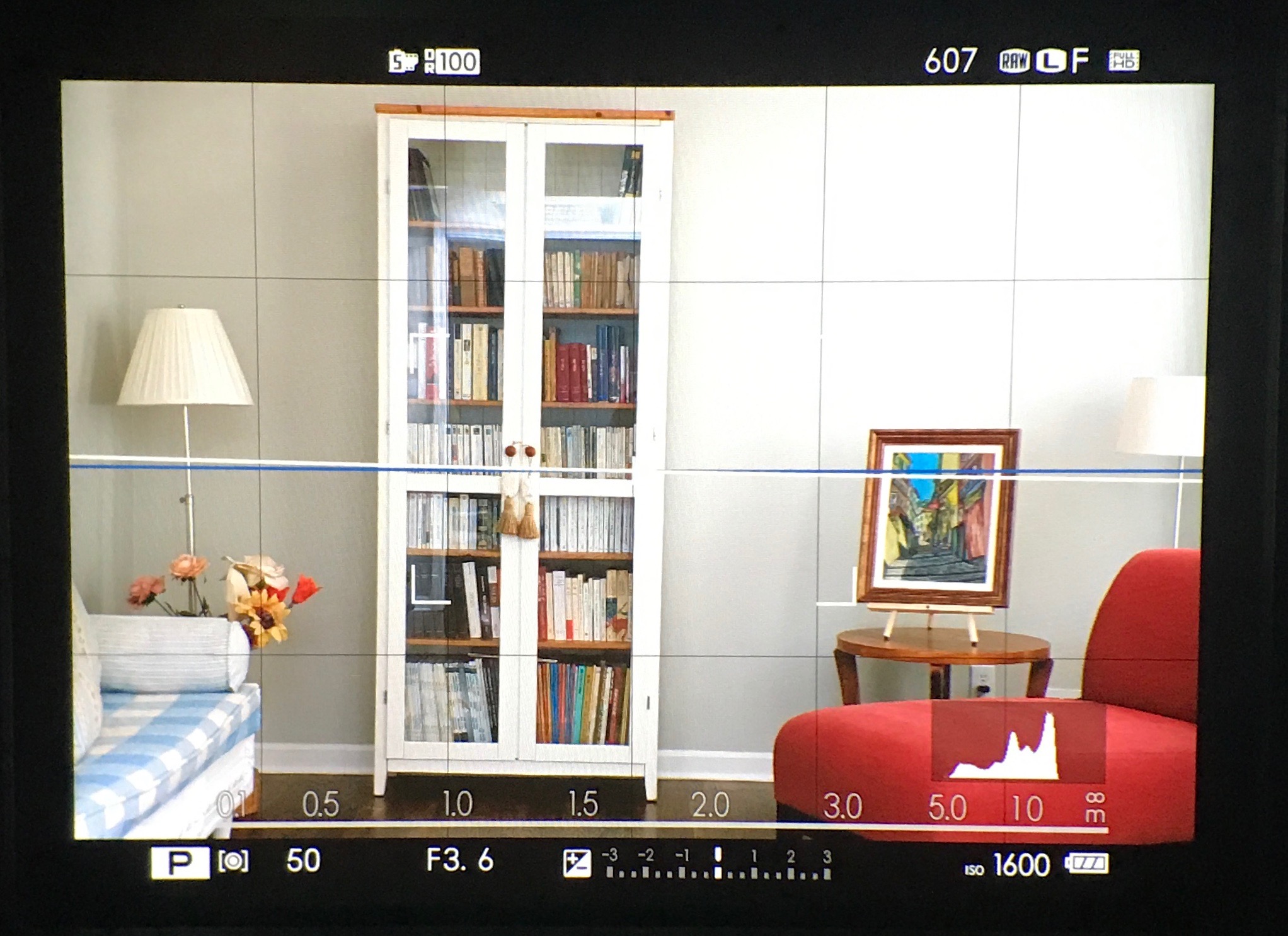
An electronic viewfinder (here the Fujifilm X-T1). It shows the picture as “seen” by the image sensor, and as it will be exposed. Information (like the artificial horizon or the histogram) can be overlaid if the photographers so chooses.
Modern mirrorless cameras have been designed to let the photographer not only frame but also visualize the image as it will be exposed directly on the big LCD monitor at the back of the camera, or in a high-resolution electronic viewfinder.
Sony and Fujifilm cameras have a large exposure compensation dial at the right of the top plate, just under the thumb of the photographer – who can adjust the exposure values based on what is shown on the screen. The LCDs are now good enough to render accurately variations in exposure, contrast and image density as the photographer plays with the settings, and in difficult lighting situations, it’s extremely helpful. What you see is really what you will get.
The top plate of a mirror-less camera (Fujifilm x-t1). The exposure correction dial is large, and is easier to get to than the shutter speed knob. Note the Wi-Fi button, absent from the d700.
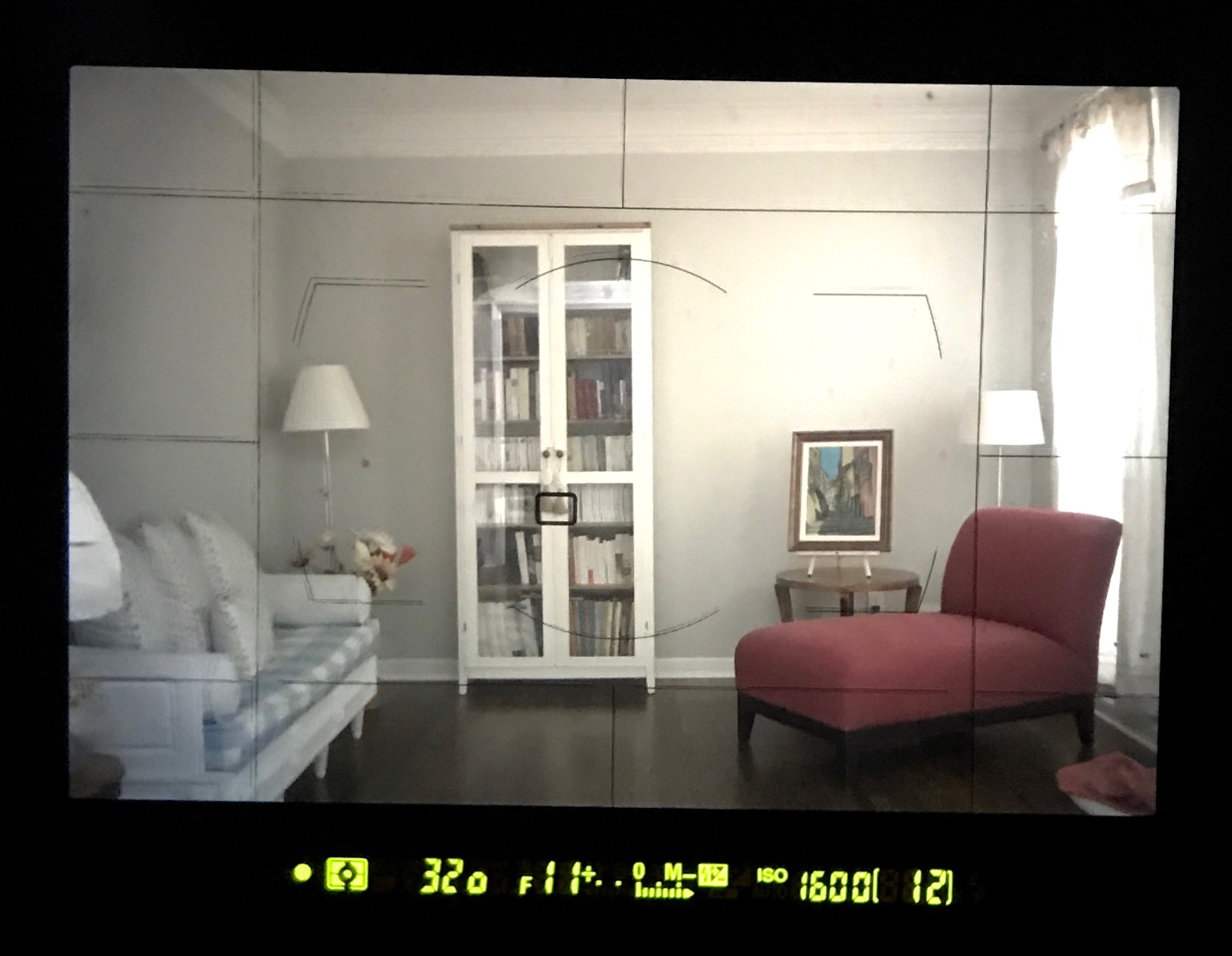
On the D700, the viewfinder, being optical, can not show the image as it will be exposed. And if the photographer plays with the exposure compensation settings, he will have to take one picture and then play it back to visualize what the corrections did to the images.
The D700 has a Live View mode, but it’s very primitive and can’t help with the exposure. It’s slow and relatively loud (the mirror first has to be lifted to clear the way to the sensor). The lens is locked at full aperture, and changes made to the exposure parameters (aperture, shutter speed, exposure compensation) are not reflected on the LCD, and the depth of field can not be pre-viewed. Lastly, the LCD monitor is fixed, which further limits the usefulness of Live View – it still is difficult (acrobatic) to frame a picture with the camera close to the ground, or above the heads in a crowd.
Live view 1.0 – it helps when working on a tripod (a detail of the image can be enlarged to facilitate focusing). But the LCD is fixed, and does not show the picture as it will be exposed.
ISO settings
The other difference is what you do with the ISO settings. The best cameras have reached such a performance level (almost no noise up to 6,400 ISO) that they can be left in Auto-ISO mode if the photographer so wishes. Instead of considering the ISO value as a constant and the shutter speed and the aperture as the variables (like in the old film and early digital days), photographers can – for a given scene – set the aperture and the shutter speed to get the depth of field and the movement freeze they want, and let the camera adjust the ISO value to get to the right exposure. On cameras such the Fujifilm X-T1 for instance, it is as easy to adjust the ISO value that it is to adjust the shutter speed, if you don’t want to rely on auto ISO. It’s not that the D700 could not be configured to react like a X-T1 (it supports Auto-ISO and you simply have to press the ISO button on the top plate to change the sensitivity with the control wheel), but it’s not a natural way to operate the camera.
Compact Flash reader and laptop required
Lastly, I have come to expect from a digital camera that it connects to a smart phone or a tablet over wi-fi, in order to edit and share jPEG pictures on the spot.
The D700 does not support Bluetooth or WiFi natively (it’s a camera from 2008). Eye-Fi cards (memory cards with a built-in wi-fi adapter) don’t exist in the Compact Flash format used by the D700. An optional Nikon branded adapter is available (Nikon Wireless Transmitter WT-4), but it costs more than what I paid for the camera. And when laptops have a slot for a memory card, that’s for an SD card, not for a Compact Flash.
For all practical purposes, this D700 will remain tied to a conventional PC based workflow – and a traveling photographer will have to carry a laptop and a Compact Flash reader in addition to the camera (and find an Internet connection) if he/she wants to edit, publish or backup pictures while on the road.
Focusing with manual focus lenses
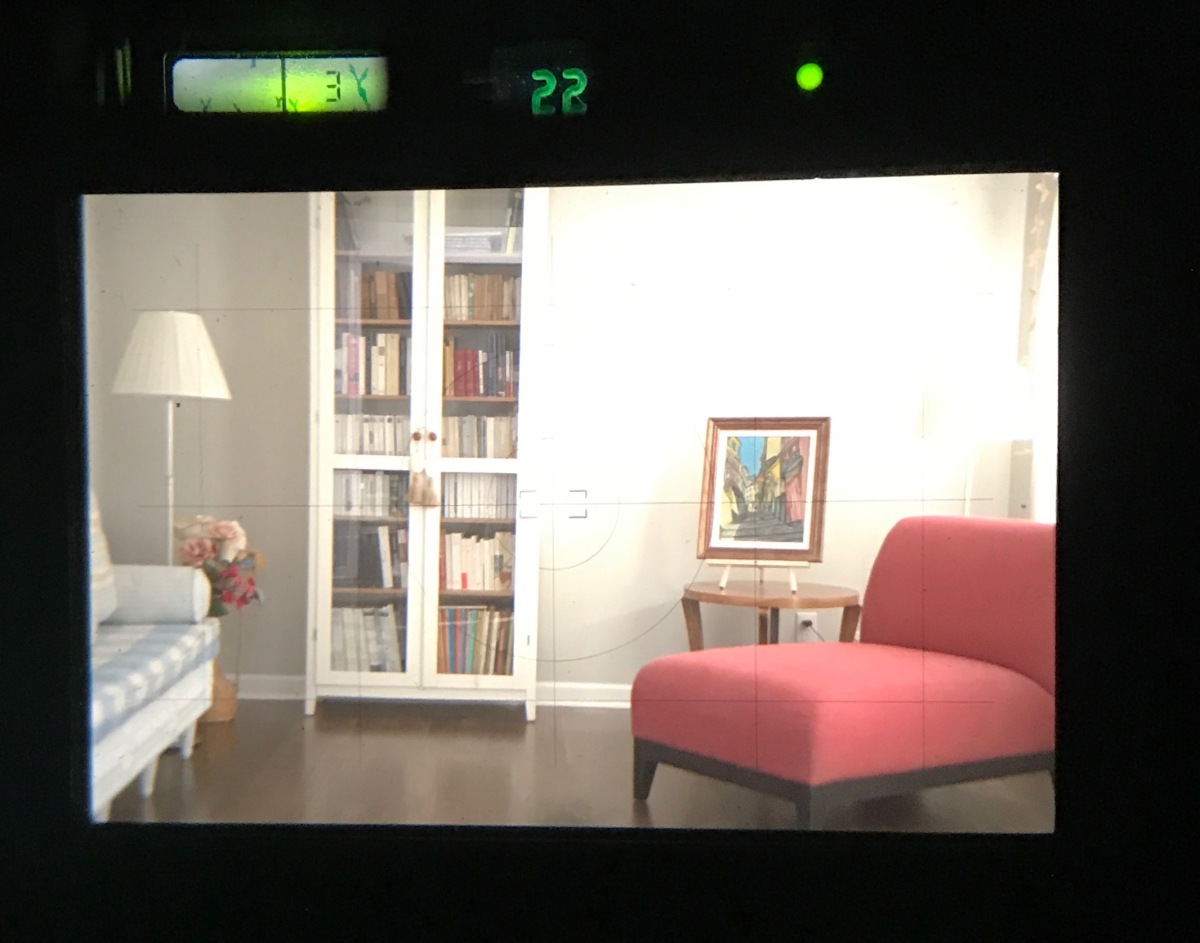
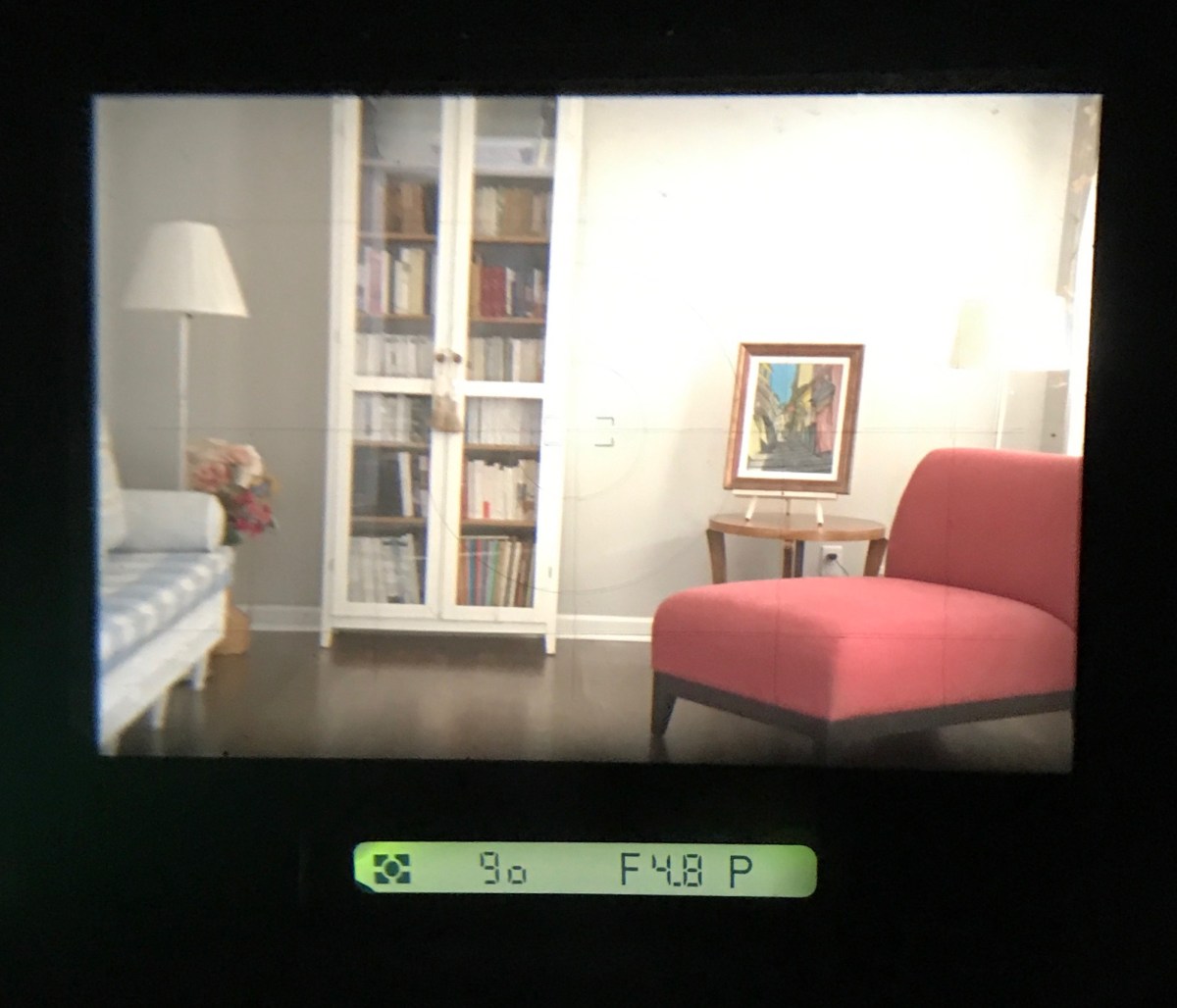
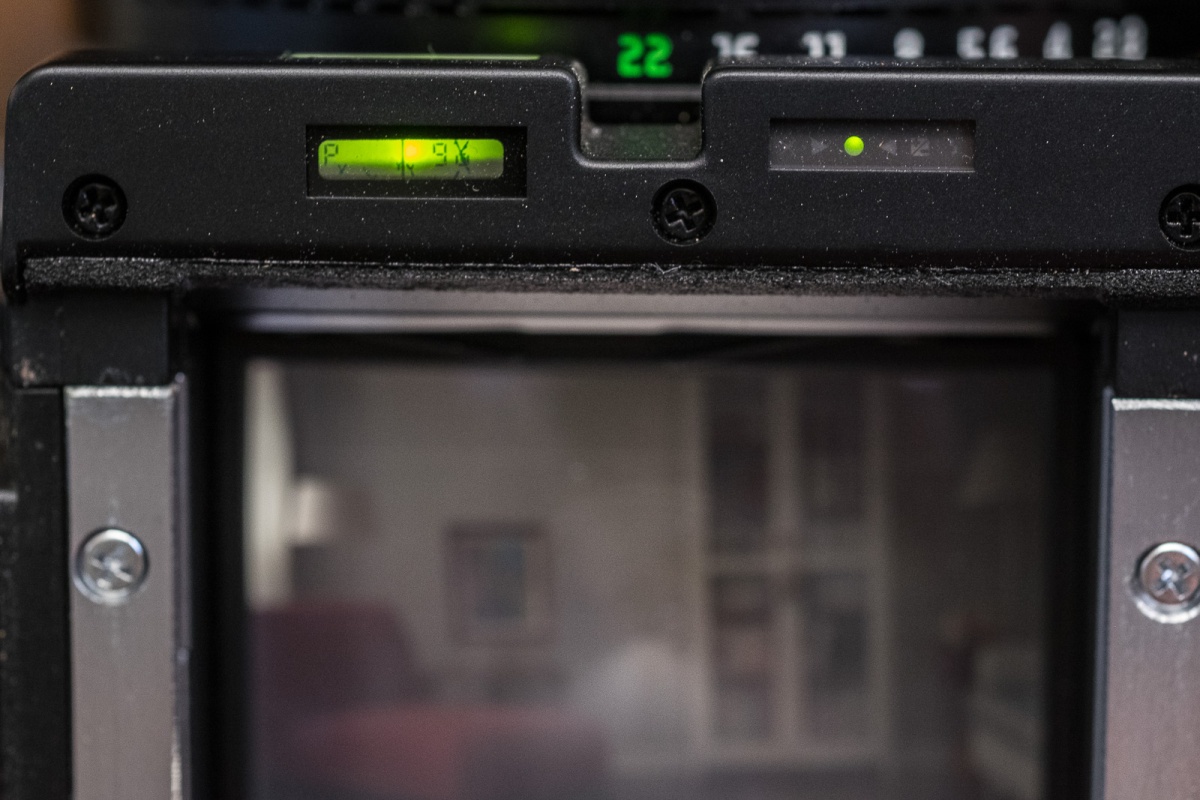
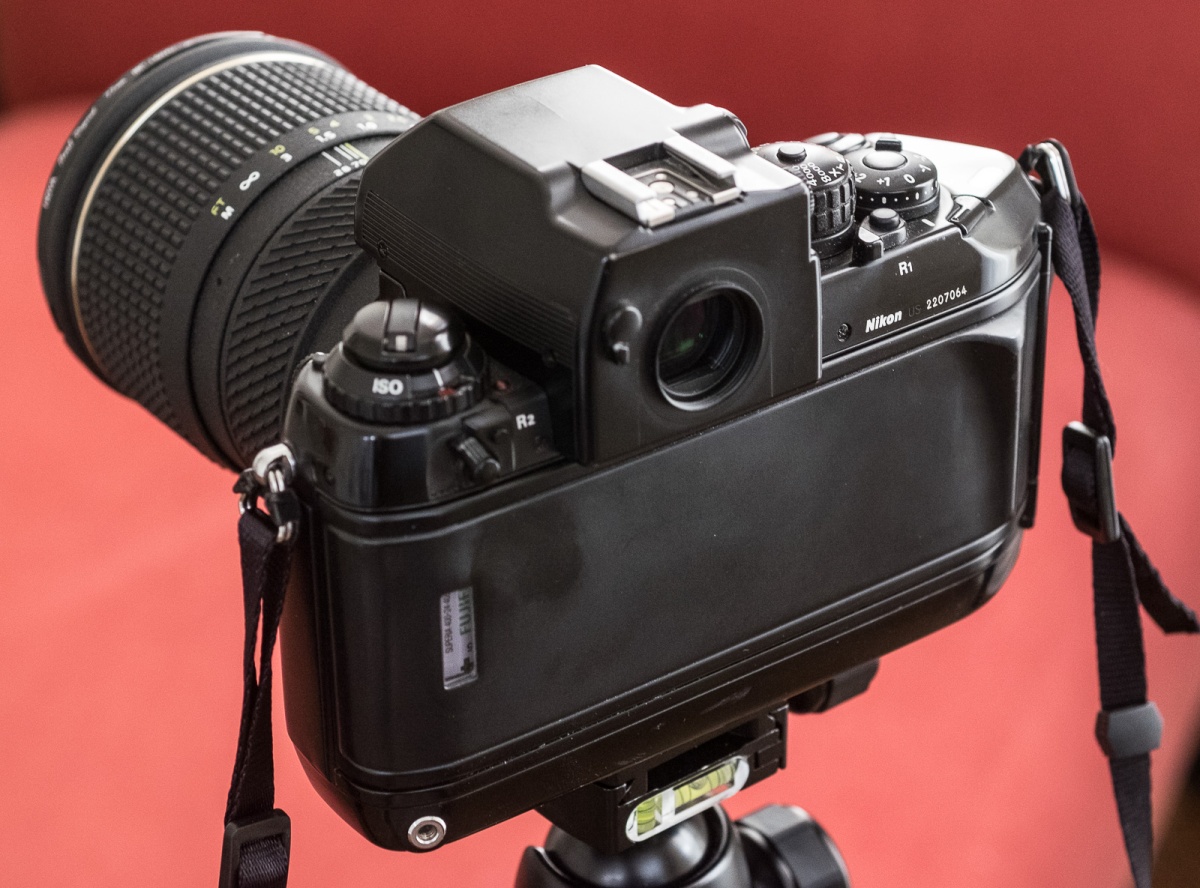
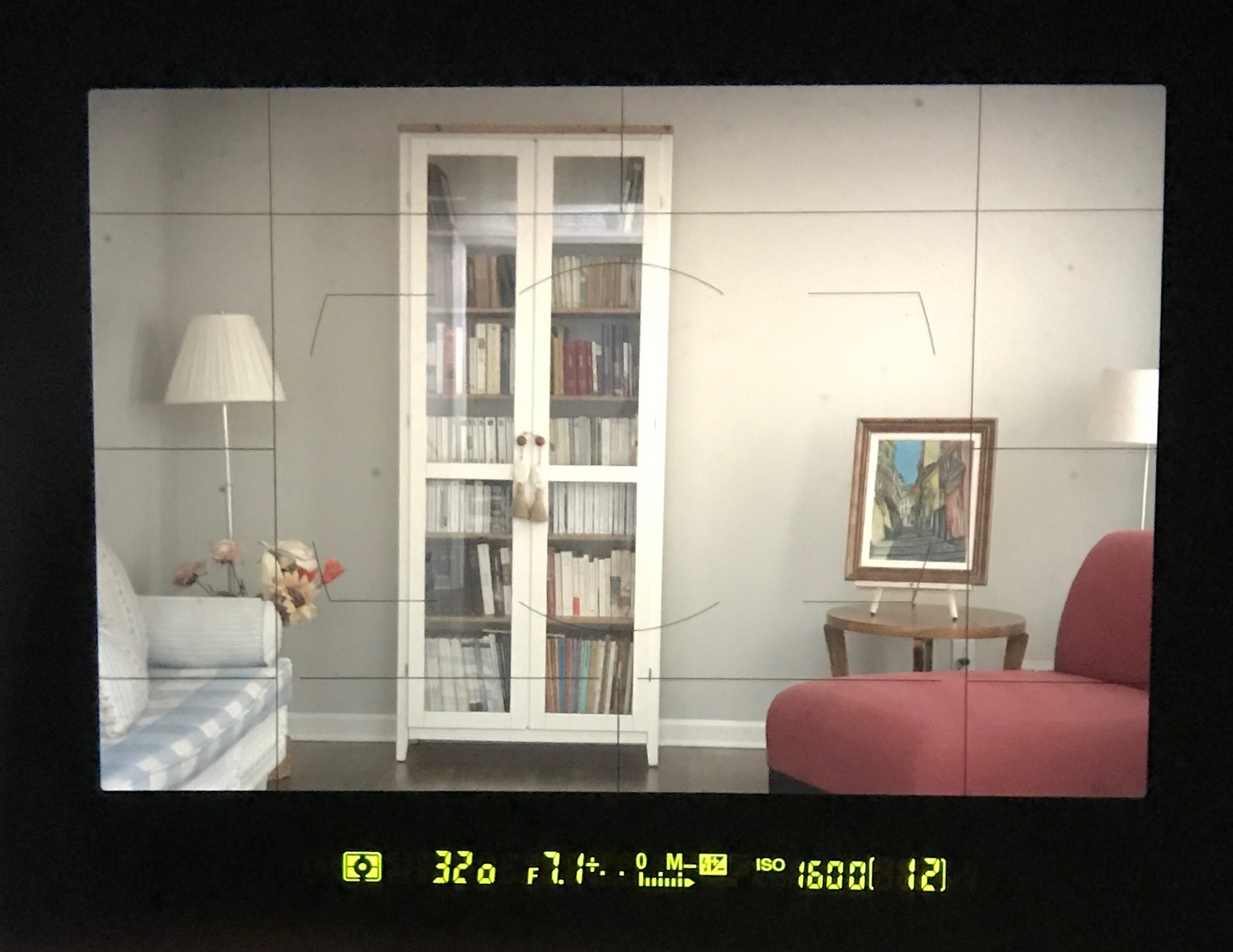
The focusing screen does not offer any of the focusing aids of a conventional manual focus camera (no micro-prism, no split image rangefinder), and no other focusing screen is available from Nikon. When a manual focus lens is mounted on the camera, the auto-focus system is still providing information to the photographer (a green dot in the viewfinder when the lens is focused on the subject), and if the camera is installed on a tripod, you can use Live View and zoom into the image to check if the image will be in focus. But you don’t have any of the fancy manual focus assist systems (Zebra, Focus Peaking, Digital Image Split) of modern mirror-less cameras.
With a manual focus lens, the photographer can still chose the focus area (the black rectangle) and the green dot at the left of the LCD display indicates that the picture is on focus. No other focusing aid is available in the viewfinder.
That being said, the focusing screen is luminous, very fine, and the viewfinder is large (it’s a full frame camera, remember): when it comes to coverage and enlargement it sits somewhere between a N90 and a F3 HP. Getting the focus right with a wide-angle or standard lens does not seem too difficult, even without the focus assist modes.
Nikon D700 – on a digital reflex camera, the photographer will see the image as it comes from the lens, but can not visualize how the sensor and the electronics of the camera will record it before the picture is taken (here with a Nikkor 50mm f/1.8 AF-D mounted on the camera)
Full frame digital – dSLR or mirror-less?
As I’m writing this article (early 2018), the cheapest way to shoot “full frame” is to use second hand dSLRs such as the Canon 5D or the Nikon D700.
Shooting with conventional dSLRs with an optical viewfinder still has its benefits: the optical viewfinder is much easier on the eyes in bright light, the autofocus of dSLRs is still faster and more reliable, and the battery life far superior. If you compound that with Nikon’s decades of experience serving the most demanding professional photographers, and a line of auto-focus lenses built over 30 plus years, you understand why their dSLRs still win comparative reviews when opposed to mirrorless cameras (check DPReview‘s end of the year Buying Guides: Nikon D7500 – best camera under $1,500, Nikon D750 – best camera under $2,000, Nikon D850 – best camera over $2,000).
DPReview may still prefer dSLRs to mirrorless system cameras, but there’s no denying that mirrorless cameras bring unique advantages: you can use indifferently the electronic viewfinder or the LCD monitor to compose your pictures, and you will visualize how the picture will be exposed before you shoot. I had never used the exposure compensation dial on any camera before, because I never knew if I had to set it to +.5 or -.5 or whatever to get the exposure I wanted – I simply used to switch the camera to the manual exposure mode. On a mirrorless camera, exposure compensation becomes extremely easy to use because you see what it does in real time, not after the fact.
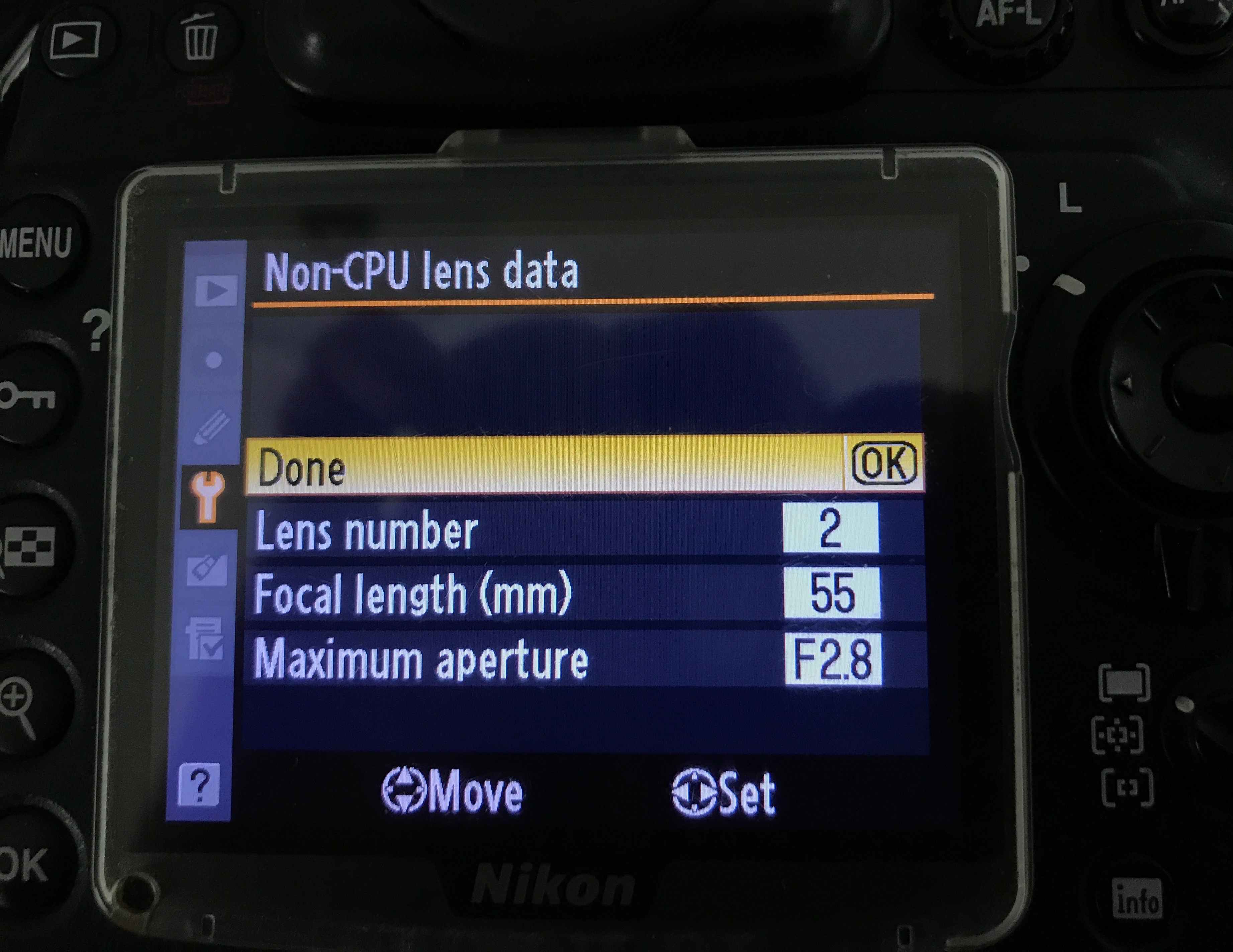
Non-CPU lenses (namely manual focus AI and AI-S lenses) can be preconfigured in the camera – the camera will base its matrix metering exposure on the actual focal length and the actual aperture of the lens – which should make it more accurate.Nikon D700 – when a manual focus lens is pre-configured in the camera, its actual F aperture value is displayed on the LCD (instead of the number of stops above full aperture).
Nikon and Canon are both widely rumored to be launching full frame mirror-less systems in the coming months. Because they’re late entrants on this market, Nikon and Canon can’t be content with “just average” cameras – you can expect their future mirror-less systems to raise the bar of performance to a level not yet reached by Olympus, Fujifilm or Sony. If they manage to preserve a good level of compatibility with their traditional dSLRs systems, many of their faithful customers will rapidly add one of the new mirrorless models to their equipment bag. And it’s likely that the DPReview’s Buying Guides will put forward very different winners at the end of this year.
As for the D700,
it’s a very satisfying camera to use. Like the Nikon F3 in the world of film, it’s a unique opportunity for an amateur photographer to shoot with a tool built for professionals, but still of a manageable weight, size and complexity.
I don’t use my F3 that often, but taking pictures with a camera of such a build quality, with such a great viewfinder is an experience I enjoy from time to time. I suspect the D700 will follow the same path – I’ll shoot with a smaller and lighter APS-C mirrorless camera more often – when traveling in particular – but will go back to the D700 when I need to shoot digital, but still want to use my old Nikkor lenses and enjoy the true Nikon SLR experience.
How does a d700 compare with an entry-level APS-C dSLR such as the Nikon d3400, which can be had more or less for the same price?
only d700s with hundreds of thousands of actuations sell in the same price range as a new d3400. The d700 is a very solid and reliable camera, but buying a used d700 is riskier and could lead to high repair costs.
compared to the d3400, the d700 is a large and heavy camera, which will need larger, heavier and much more expensive full frame lenses.
the d700 is an old camera – it still requires to be used in a traditional workflow (Compact Flash cards instead of SD cards, no Bluetooth, no WiFi). Not that the d3400 fares particularly well in that regard – it also lacks WiFi, and neither the d700 or the d3400 have an articulated lcd monitor on the back of the body.
On the other hand,
The choice of lenses is limited on the d3400 (no wide-angle prime lens, only zooms). No such issue with the d700.
If you’re planning on using lenses of the film era (AI, AI-S, AF and AF-D lenses), the d700 is also a much better pick: it can meter with any of those lenses, it can auto-focus with conventional “screw-drive” auto-focus lenses, it does not “crop” the image, and its large viewfinder makes manual focusing easier.
regarding image quality, DXOmark, – for what it’s worth – rates a d3400 at 86, and a D700 at 80. Not everybody agrees with their methodology, but in their world the d3400 with a 24 Megapixel APS-C sensor and a dynamic range of 13.9 EVs is rated higher than a d700 with a full frame 12 Megapixel sensor and a dynamic range of 12.2 EVs. Interestingly, the d700 still leads in the high ISO race – they consider it’s usable up to 2,300 ISO, while a d3400 will peak at only 1,200 ISO. The benefit of the full frame imaging sensor, and of its relatively low pixel density.
Max – Nikon D700 – Nikon 135mm f/3.5 AI – 1600 ISO – 1/60 sec.
A few months ago, I was wondering whether digital cameras could become collectors. Currently, they’re not.
Judging by the second hand market, the price of digital cameras is still driven primarily by their usage value in comparison to cameras being sold new today – the higher the megapixel count, the higher the ISO sensitivity, the larger the sensor, the higher the cost.
Cameras with a small 2/3in sensor and 8 megapixels or less have a very limited usage value, and are not worth much even if their design is unique and their lens exceptional (the Sony F828, for example). Cameras of undisputed historic importance and build quality (like the Nikon D1 of 1999) can be had for next to nothing, because their performances are extremely limited in comparison to what modern cameras can do.
Digital cameras from the mid-nineties (Sony Mavica, Apple Quicktake, Kodak DCS) are even less usable – they’re at best interesting curiosities. Photographers collecting them will have the same issue that collectors of early computers have been facing – the items are nice on a shelf or running an automated demo in a museum – but why would you ever use something that performs so poorly in the real life?
The sweet spot?
I’m probably a victim of an acute form of the Gear Acquisition Syndrome, but I’m trying to keep my addiction to old cameras in check by following a simple rule: I only buy (or keep) cameras that I know I will shoot more than one roll of film with – no shelf diva for me.
And even if I’ve been tempted to buy old digital cameras in the past (the Sony F828, a Nikon F1, or a Fujifilm Finepix S5 Pro would constitute interesting additions to my collection ), I never actually did it because the cameras are too limited or too cumbersome to insert in a digital workflow compared to current cameras, and I know they would never leave my photo equipment closet.
Fujifilm S5 Pro (source: KEH)
Sony Cybershop F828 – Source KEH
But what if there was a sweet spot – a digital camera still perfectly usable today according to my standards and at the same time of some historic importance? A used digital camera in a sort of pre-collectible status?
Two cameras come to mind – they’re both on Popular Photography’s list of the 30 most important digital cameras in history:
– the Canon 5D of 2005, the first compact and relatively affordable full frame digital SLR – it opened the world of full frame sensors to enthusiasts and prosumers. It was huge commercial success, but its high-ISO/low light capabilities are limited compared to today’s cameras – they’re more 2005 than 2018: the 5D Mark II of 2008 is much more usable by current standards.
– the Nikon D3 of 2007, Nikon’s first full frame digital camera, and the first digital camera with modern High ISO/ low light capabilities. I remember the first time I used one (it was at a fund raiser, I was volunteering as the designated photographer, covering for a friend – and he had let me use his brand new D3) – I could not believe I was making nice portraits of people in a relatively dark room, just with the light of the candles on the tables. It was revolutionary. Digital photography was never the same afterwards. The D3 still holds its ranks today if you don’t need more than 12 Megapixel and 6,400 ISO but it is a massive piece of equipment.
A third camera is not on Popular Photography’s list, the Nikon D700 of 2008: the internals of a D3 (sensor, auto-focus module) in the more compact body of a D300 – at half the price of a D3. 10 years after it was launched, it still enjoys a devoted following, and the fact that it was not directly replaced in the Nikon lineup (Nikon never launched a “compact version” of the D4 or the D5) adds to its aura.
Nikon D700: the sensor and the user interface of a Nikon Professional camera in a (relatively) compact and light body.
When I found a D700 at a low-low price, I jumped on the opportunity. Old Nikon SLRs are the ones I prefer and always come back to (FM, FE2, F3) and adding a full frame digital camera of the same family to my collection was only natural.
380,000 Shutter Actuations
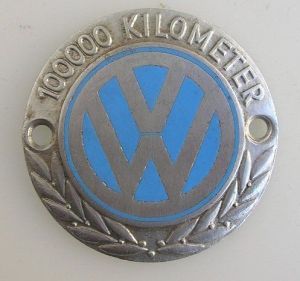
Volkswagen Badge for 100,000 km Source: AlexWoa World of Accessories (eBay)
Of course, there’s a catch. This camera has been through 380,000 shutter actuations already. Assuming it was originally purchased in 2009, that’s 190 actuations per business day, for 8 consecutive years. It’s not a Guinness Book of Records performance, but it’s still impressive. If it was a car and if we were still in the fifties, the previous owner would probably have received a diploma or a commemorative badge from the manufacturer (VW used to do it when a Beetle was reaching the 100,000 kilometers mark).
Nikon and Canon typically disclose the expected life of the shutter of their pro cameras (the D3 is rated for 300,000 actuations, the D700 for 150,000, and the 5D for 100,000) – but it’s an indicative and hopefully pessimistic value– I’ve read about single digit Nikon cameras (D3, D4 or D5) reaching the million actuations mark (with a precautionary mechanical refresh at 500,000 actuations).
In any case, I’m a hobbyist. I won’t be adding a lot of actuations to this camera. In a twisted way, this high shutter actuation count even makes it a more interesting collectible: maybe, one day, Nikon will send me a nice medal too.
The D700 – the photographic equivalent of a muscle-car
In the world of cars, manufacturers sometimes shoe-horn a big and powerful engine in a compact body – like Pontiac did in the sixties to create its archetypical muscle car, the GTO, out of the Tempest.
Nikon D700 – I had to change the rubber grips – but the overall condition of this camera is remarquable considering it shot 190 pictures every business day for 8 years.
To a large extent, the D700 follows the same recipe: the engine of a big camera – the sensor, the image processor, the auto-focus mechanism of the top of the line D3 – in the (relatively) compact body of the D300. Of course, the D700 lost a few things in the transplant (the D3 can shoot 9 frames per second, the D700 only 5, and the D3’s viewfinder shows 100% of the frame, the D700’s only 95%). The D700’s body is probably not as solid as the D3 – but it’s heavy and feels very robust, and few photographers really need to drive nails in a wall with their camera.
Nikon D700 – One button for every function, locks on the rings – a true “pro” camera by Nikon’s standards
Nikon has elected not to develop a direct successor for the D700: cameras of the D600 series are designed for consumers, the D800 series for photographers in need of a very high sensor resolution, and the D750 is still more consumer than pro. As a consequence, lots of photographers stuck to their D700 as long as they reasonably could, singing the praise of their unique “muscle camera” on the Internets and making it a sort of legend.
What’s so interesting about the D700 for a collector of Nikon film cameras?
The D700 is very similar – from an ergonomics point of view – to Nikon’s final high-end film SLRs, such as the F100 or the F6. They also share the same lenses and the same accessories:
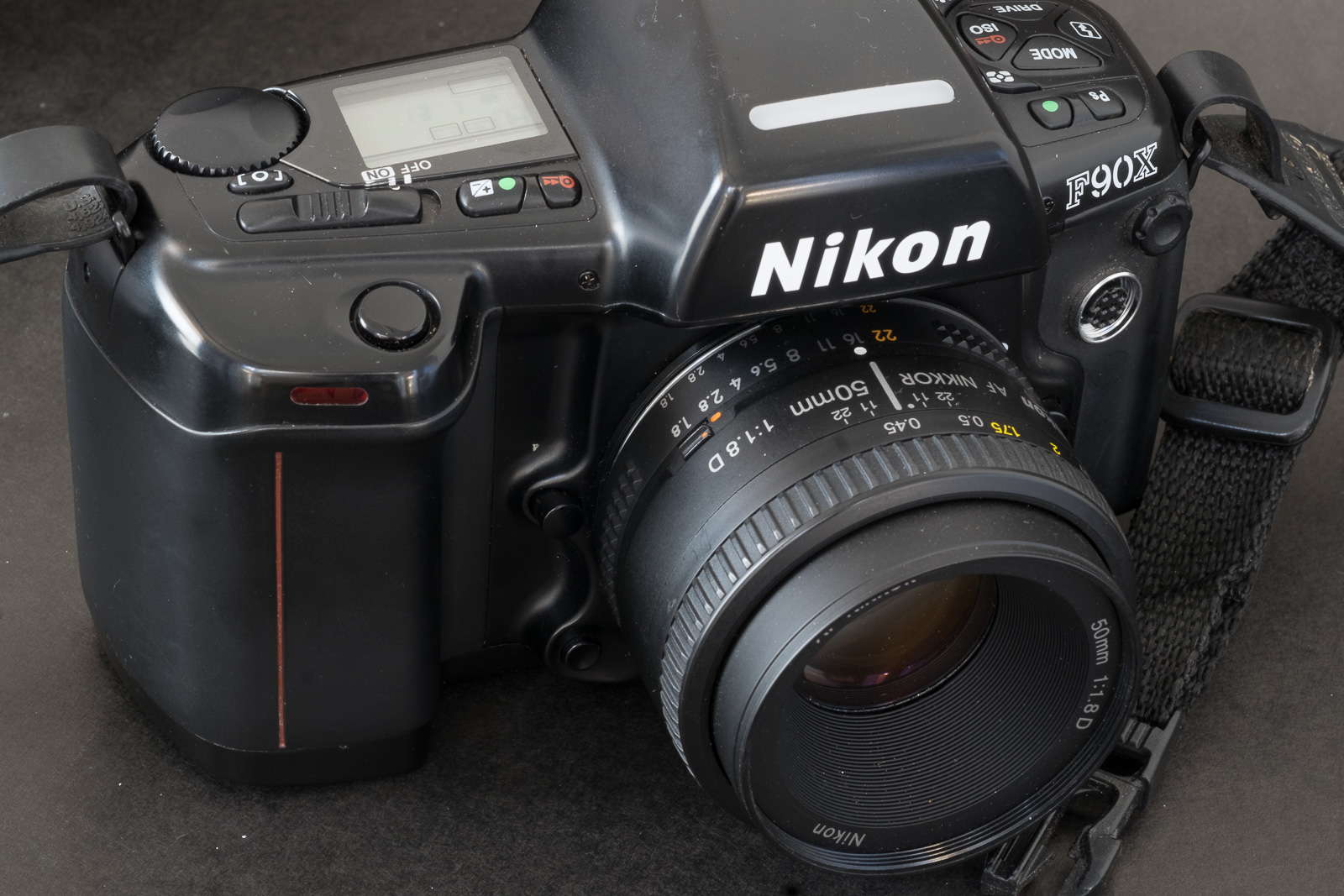
Nikon F90X (N90s in North America) next to a D700 – the two cameras are 15 years apart, but they were designed for the same target audience of serious enthusiasts and pros who don’t want or need the very top of Nikon’s Profesionnal line.
Lens Compatibility
One of the strengths of Nikon has always been the compatibility of the modern bodies with older lenses – but maintaining compatibility across multiple generations of hardware is complex and expensive – think of all the mechanical sensors and levers and electric circuits that you need to add to an all electronic digital camera to make it work with a lens from the early nineteen seventies (and vice versa). As a result, only a few Nikon cameras, generally at the high–end of the model range, live up to Nikon’s promise of full compatibility with older generations of lenses.
Nikon D700 with Nikon Lens 50mm Series E – Aperture Preferred Auto Exposure and Semi Auto Exposure are offered on AI-S and AI lenses.
Some digital SLRs with APS-C sensors (D7200, D500) have a good compatibility level with older AI, AIs and AF lenses, but the 1.5 crop factor of the small sensor seriously limits the benefits of the operation.
Full frame digital cameras don’t have this limitation (a 24mm wide angle on a full frame digital camera has the angle of view of a 24mm on a film camera), but high resolution cameras like the D800 and above (with 36 Megapixel sensors at least) are extremely demanding for the lens and for the photographer (focusing has to be perfect, and no shake is permitted) and mounting an old manual focus lens deprived of vibration reduction on such a camera is not necessarily a great idea.
Nikon D700 with 55mm f/2.8 Micro Nikkor – as long as the lens supports Aperture Indexing (upgraded pre-AI lenses, and AI, AI-S, AF, AF-D or AF-S lenses) it will work with the camera.
The D700, on the other hand, is compatible with all Nikon lenses made after 1977 (and with older pre-AI lenses if they were retro-fitted with an AI compatible aperture ring) – and its 12 Megapixel sensor is not going to make older lenses look too bad.
With the exception of the very recent AF-P lenses, almost all autofocus lenses are supported on the D700 (there are as always a few minor restrictions here and there). Manual lenses can only be operated in Aperture Priority or Manual (semi-auto-exposure) modes: they don’t have the micro chip and the data bus of their auto-focus siblings, but the photographer can enter a simple description of the lens (focal length, wider aperture) through the configuration menus of the camera to make matrix metering more accurate.
Contrarily to the Nikon FM, F3, F4 and the recent Df, the D700 is not designed to support unmodifed pre-AI lenses (the original Nikon F lenses that have not been modified to support Aperture Indexing).
Compatibility with other accessories
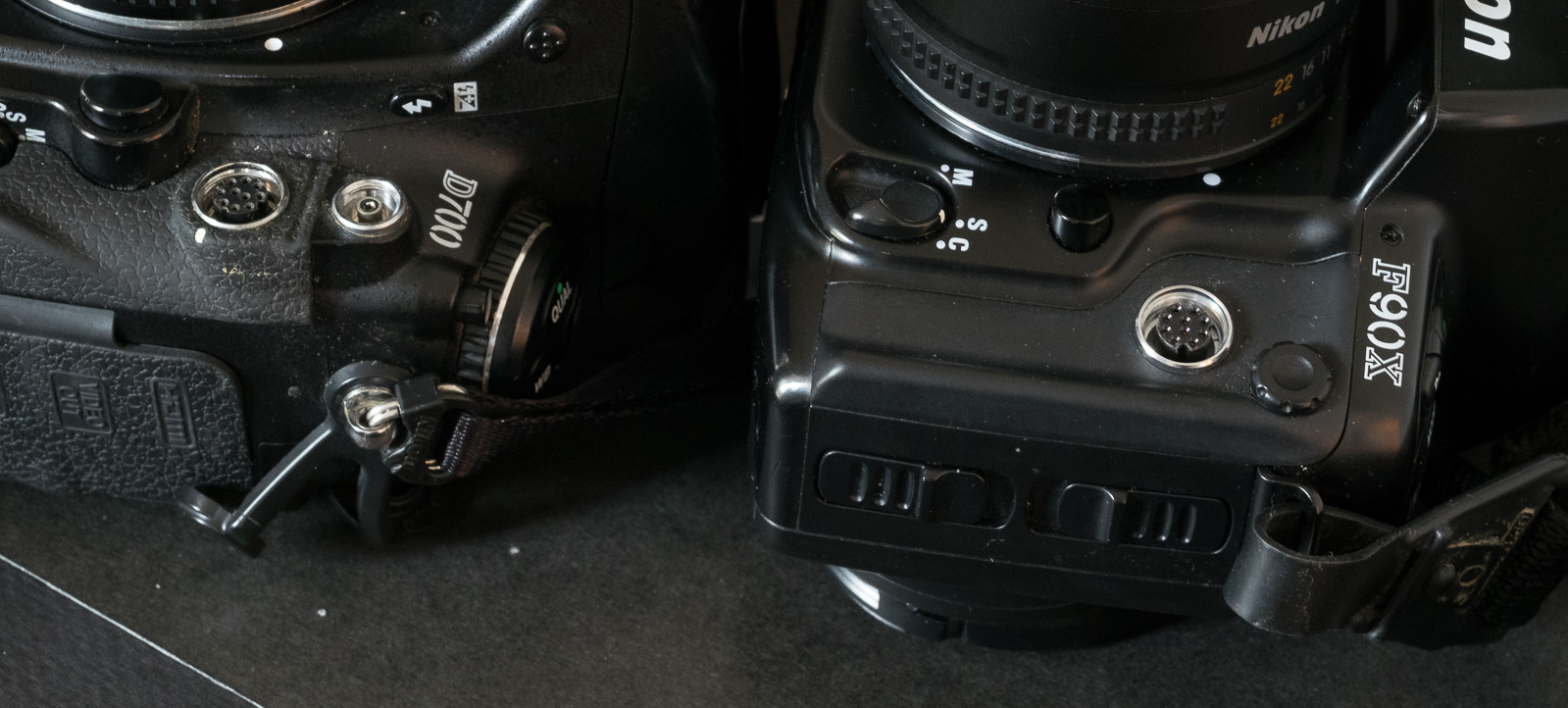
In a typical Nikon way, the D700 can use the same accessories as bodies of current and previous generations, provided they’re in the same class of “prosumer” and professional equipment: it has the same 10 pin connector as a N90 of 1992 or as a D800, and accepts the wired remote trigger release of the N90, but it has no infrared port and can not be used with the remote control of a D80 (which is a more consumer oriented camera).
Nikon D700 (left) next to a F90X from the mid nineties – the remote control connector is still the same.
Same for the correction eyepieces and other viewfinder related accessories – they can be shared with other current and past “high-end” Nikons, but not with the “consumer” product line.
The D700 shares the same round viewfinder accessory mount as the other “high-end” Nikon cameras (here a F90X on the right)
How much?
On the second hand market, the D700 sits between the Canon 5d, which can be had for as little as $250 (USd), and the Nikon D3, which is still far above $500. Its price is to a large extent related to the number of shutter actuations – a copy with hundreds of thousands of actuations will sell for approximately $400 – while a copy pampered by an amateur shooting only a few thousand pictures per year will sell above $600.
The D700 has no known weak point – the rubber grips just tend to come off over time and have to be replaced with new ones. Nikon US do not seem to have them in their inventory anymore. A few Nikon authorized resellers still have them and will make you pay dearly for them, but Chinese made knock offs abound on eBay.
My always available and patient models – the performance of the camera in low light and with multiple light sources of different color temperatures is simply incredible. Nikon D700 – Nikkor 28-70 f/3.5-4.5 AF – 3200 ISO.
A few months ago, I pre-ordered a Lomo Instant Square on Kickstarter, and I received it last week. It came without film, and I had to order the new Fujifilm Instax Square film on Amazon ($12.45 a pack of 10 instant prints).
On paper, the Lomo Instant Square is a very interesting camera:
it works with the new Fujifilm Instax Square film, which yields images significantly larger than the Instax Mini, without needing cameras as large as those accepting the Instax Wide film.
It also accepts the Instax Mini film – but it needs a different film door, which is only sold as part of a bundle of accessories ($59.00). I’ll pass for the moment.
It has a lens with glass elements. The focal distance is 93mm, and the maximum aperture F/10.
Thanks to its folding construction and light weight, it’s easy to carry.
I’ve only shot a few pictures so far, but because it’s a brand new model that only Kickstarter subscribers have received so far, I decided to post a few pictures of the camera with my comments.
The Lomo Instant Square in 4 bullet points:
it’s intelligently designed, with the needs of serious photographers in mind.
the build quality is good – for a Lomo camera – it’s not a Leica for sure, but it worked out of the box, and looks like its going to withstand the test of time in the hands of a moderately careful user.
the Fujifilm “Square” prints are much larger than the “Minis” (which are credit-card size), but they’re still significantly smaller than the Polaroid SX700/600 format. The Impossible Project and Polaroid have a clear advantage here.
I need to test the camera in different situations (in particular taking pictures of people with and without a flash – which seems to be the typical use of an instant film camera) – but what I’ve seen in admittedly difficult conditions shows potential – it’s hundreds time better than the combination of a Holga 120 and a Lomo Instax Mini back.
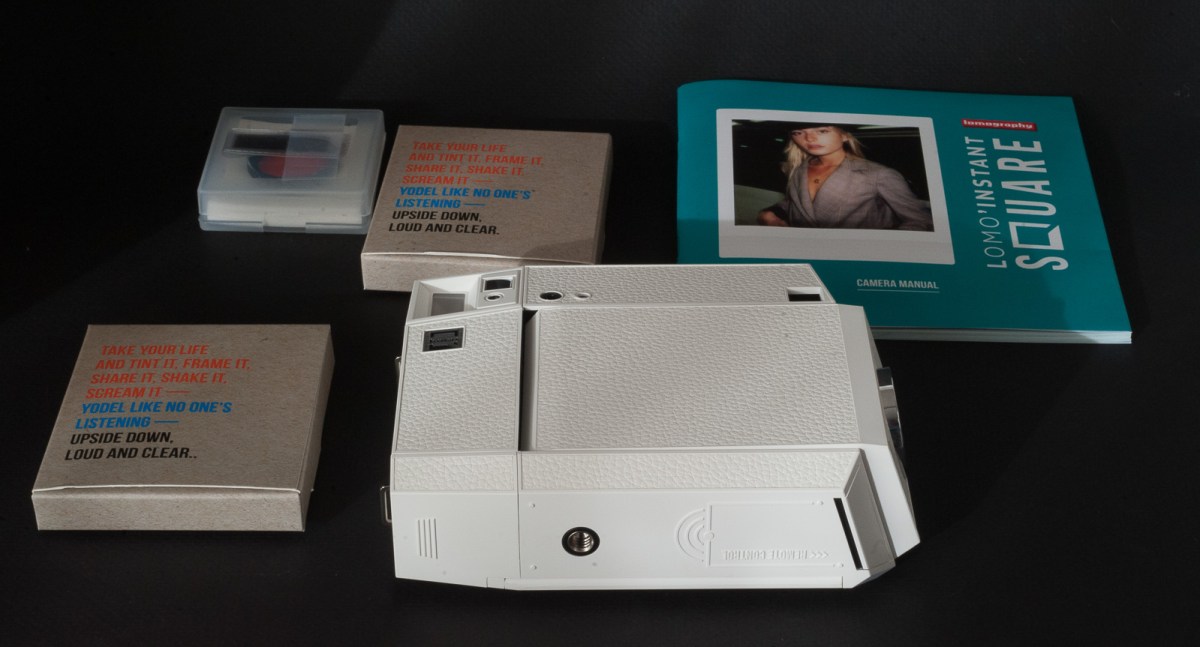
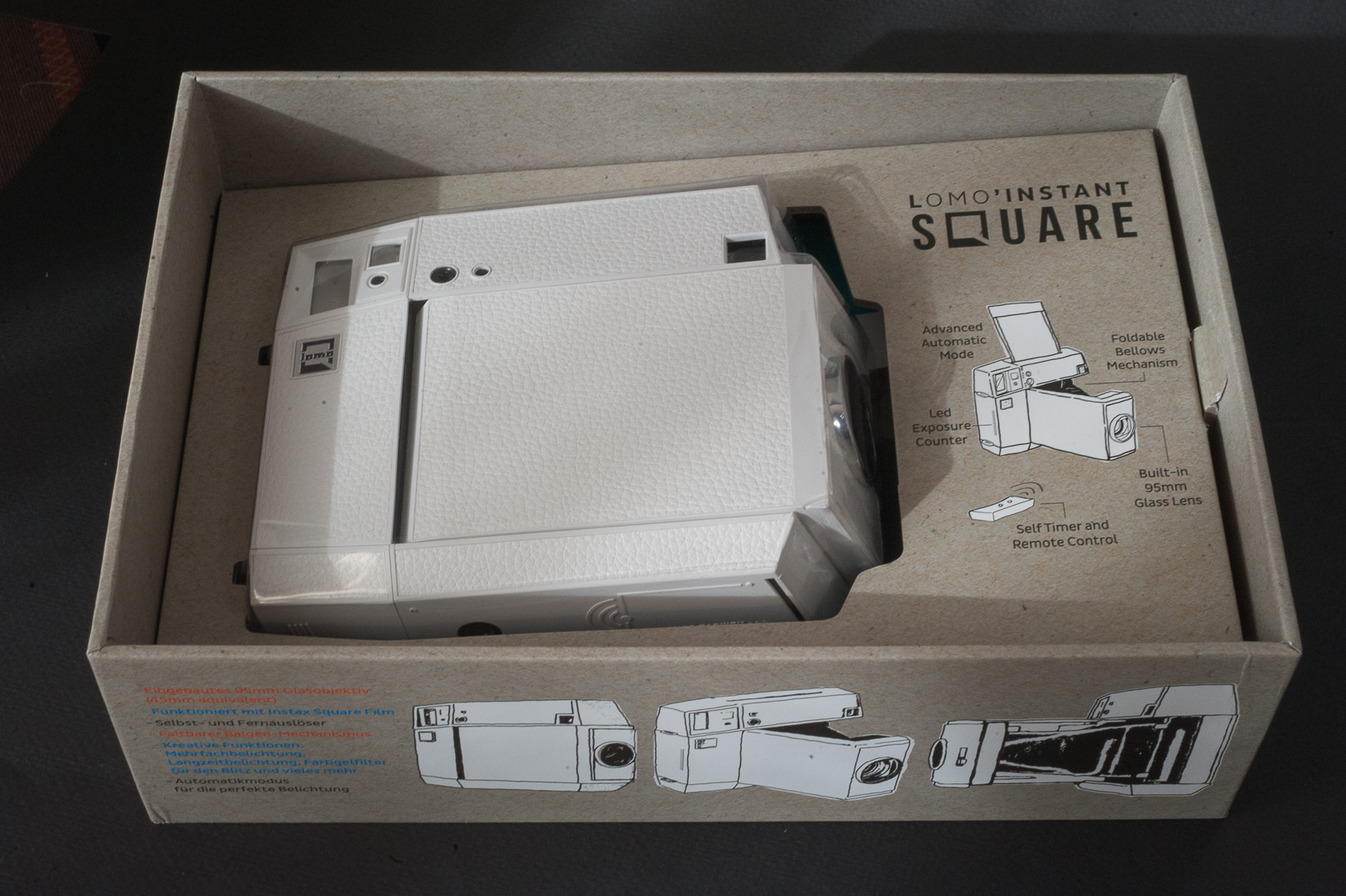
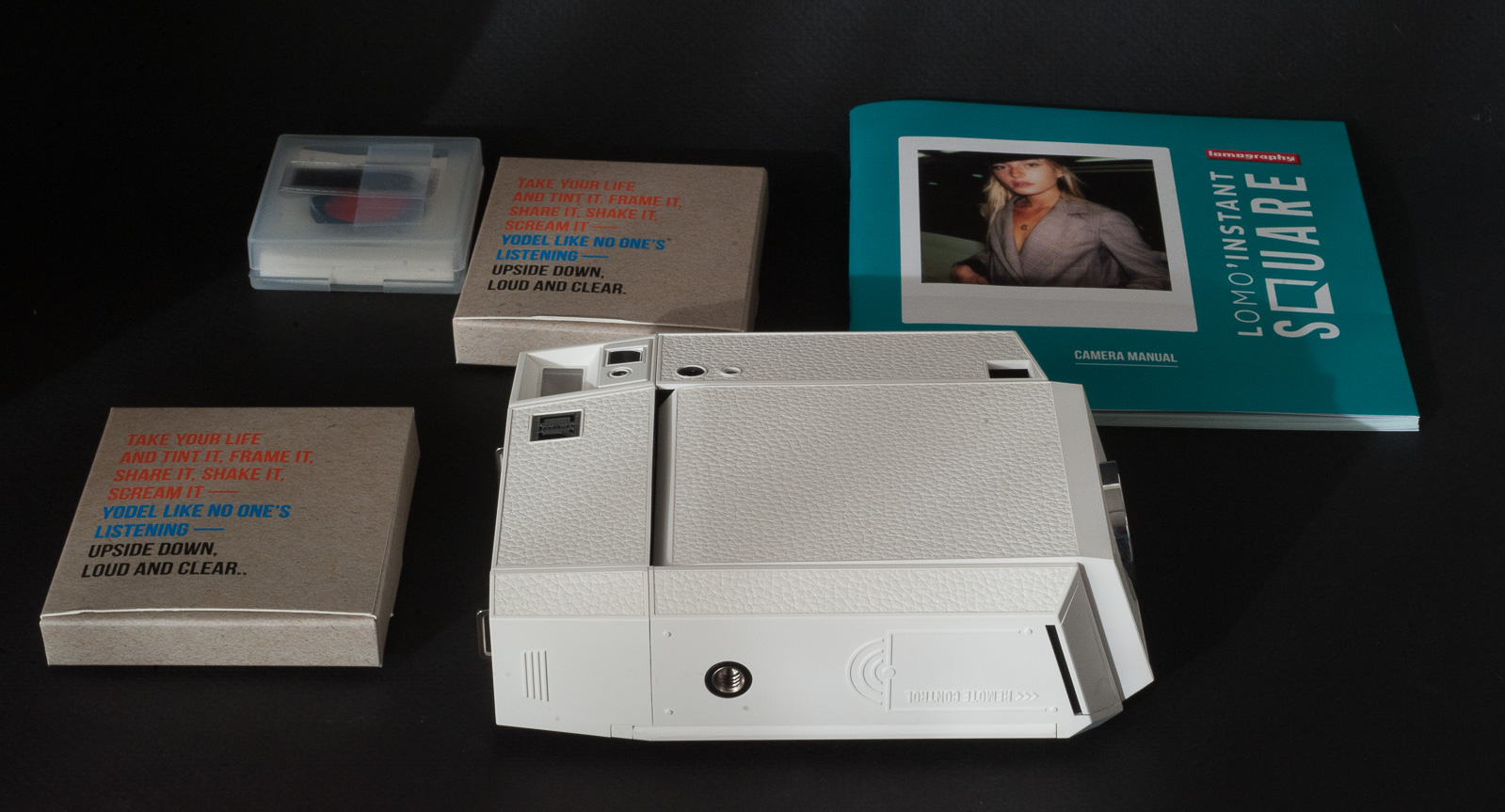
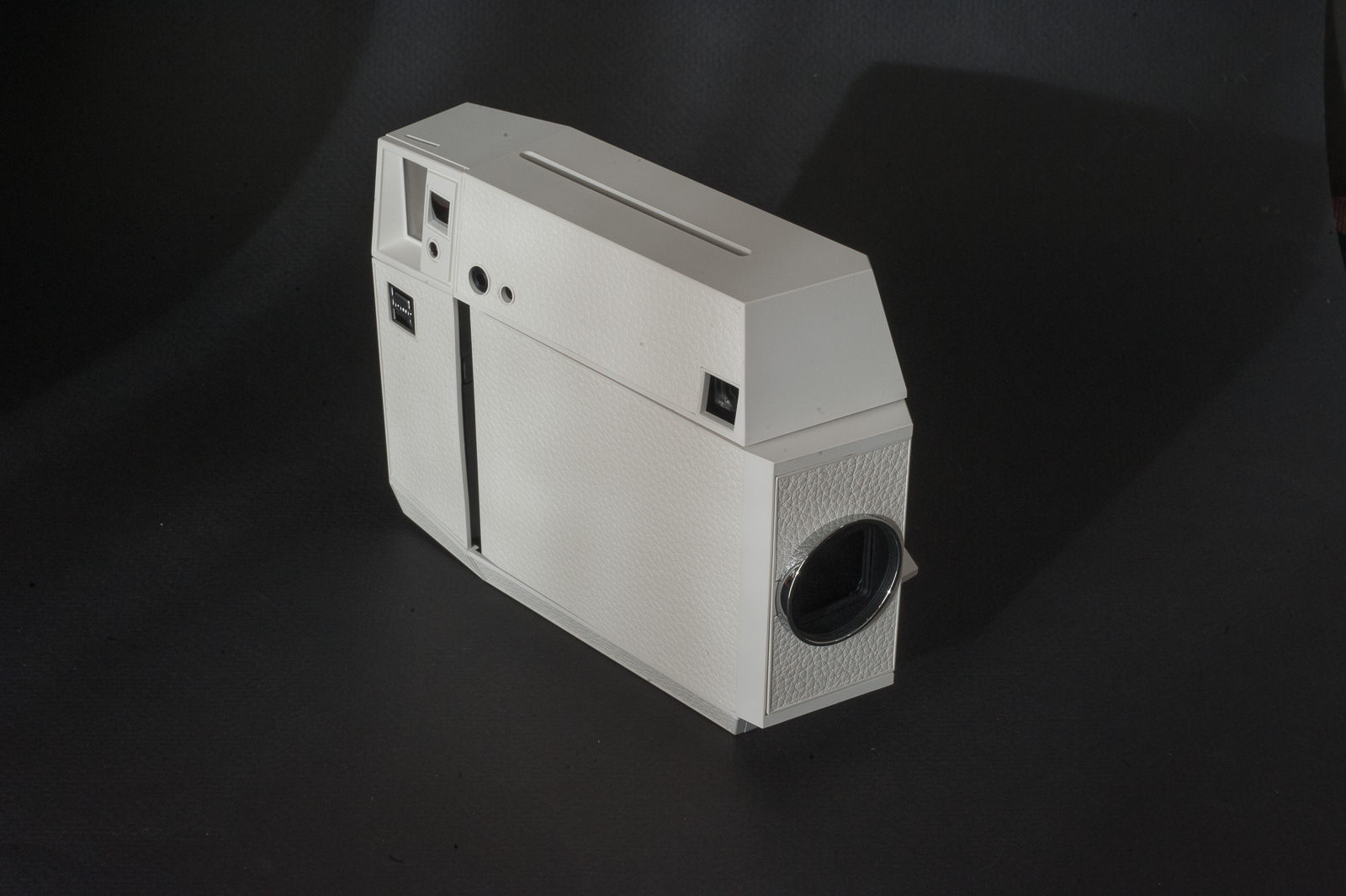
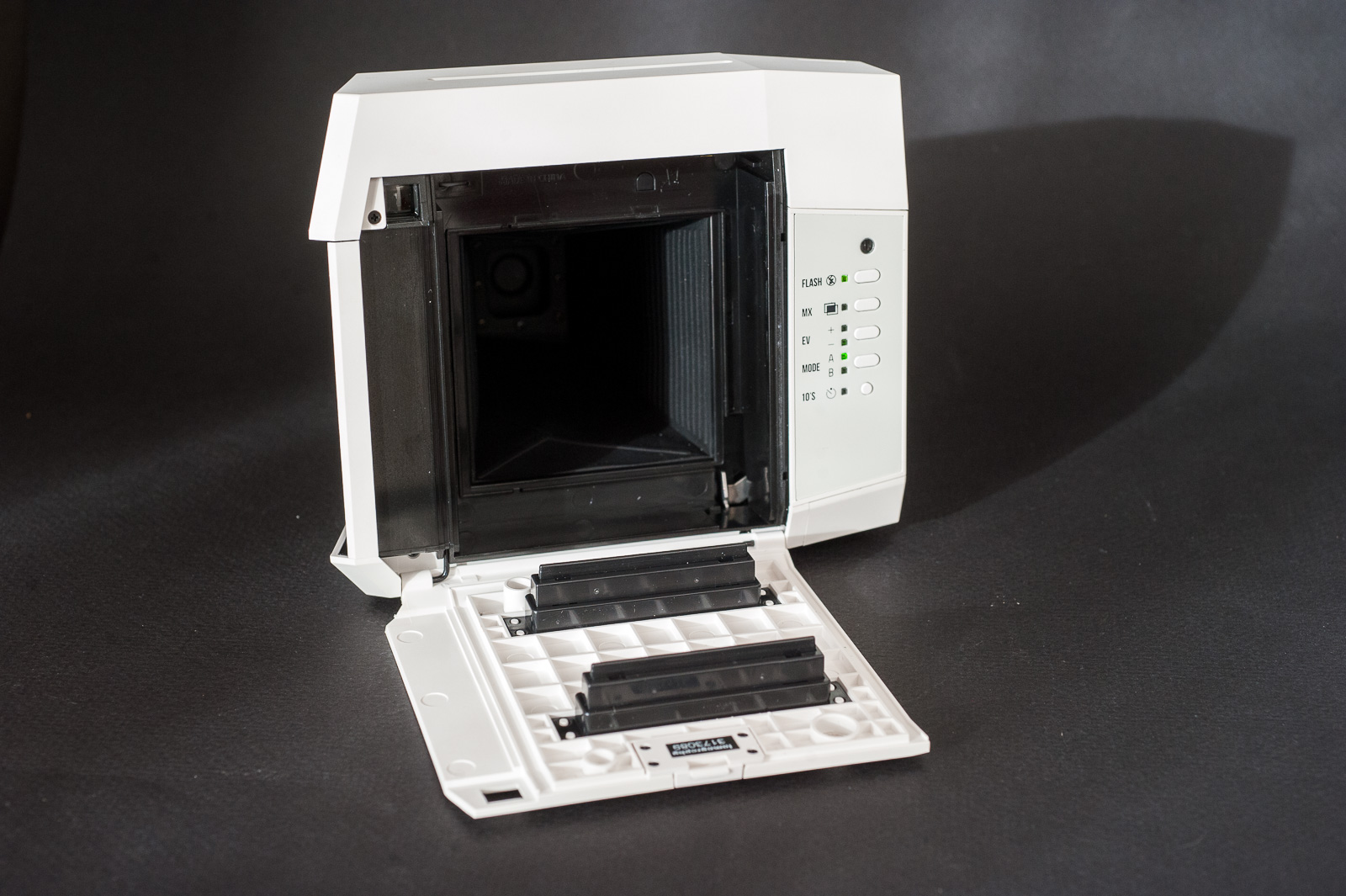
Lomo’instant square in its box – it’s available in three colors. As you can see, this one is white. The camera comes without the film, and more surprising, without batteries.the camera, a manual, a box of accessories, a box of sample pictures, and a filter. The remote control is stored in the base plate of the camera (you have to buy the batteries of the remote separately)Lomo’Instant Square – folded – the lens (93mm, F/10) is protected by plastic curtains. They retract when you unfold the camera.The Lomo has two strap lugs, but the strap does not come with the camera (it’s $9.90 extra if you want it)The commands at the back – flash off, multi-exposure, exposure correction, mode Normal or pause B, timer. The film door can be replaced by a door designed for the Instax Mini film (a $59.00 extra – you start seeing a theme here? )The shutter release button is the square (of course) Lomo logo on the front.It’s a folding.The lens (with glass elements) can be set in 3 positions: 0.8m, 1 to 2.40m (the default position), and the infinite.Lomo ‘instant Square internals – the Fujifilm Instax Square has a sensitivity of 800 ISOJules – my first picture with the Lomo Instant Square (scanned on multi-function printer) – real size: 6cm x 6cm image, on a 8.5cm x 7cm print.
When I took this picture, it was already getting dark in the house, and Jules was somehow back-lit. With a lens opening at F/10 and a 800 ISO film, I was clearing flirting with the limits. The camera did well considering the circumstances. The picture is too dense (under-exposed), and the color balance is blue-ish, but the result is encouraging – the lens shows potential, and it’s my first Lomo camera that produces decent results out of the box without requiring some form of surgery.
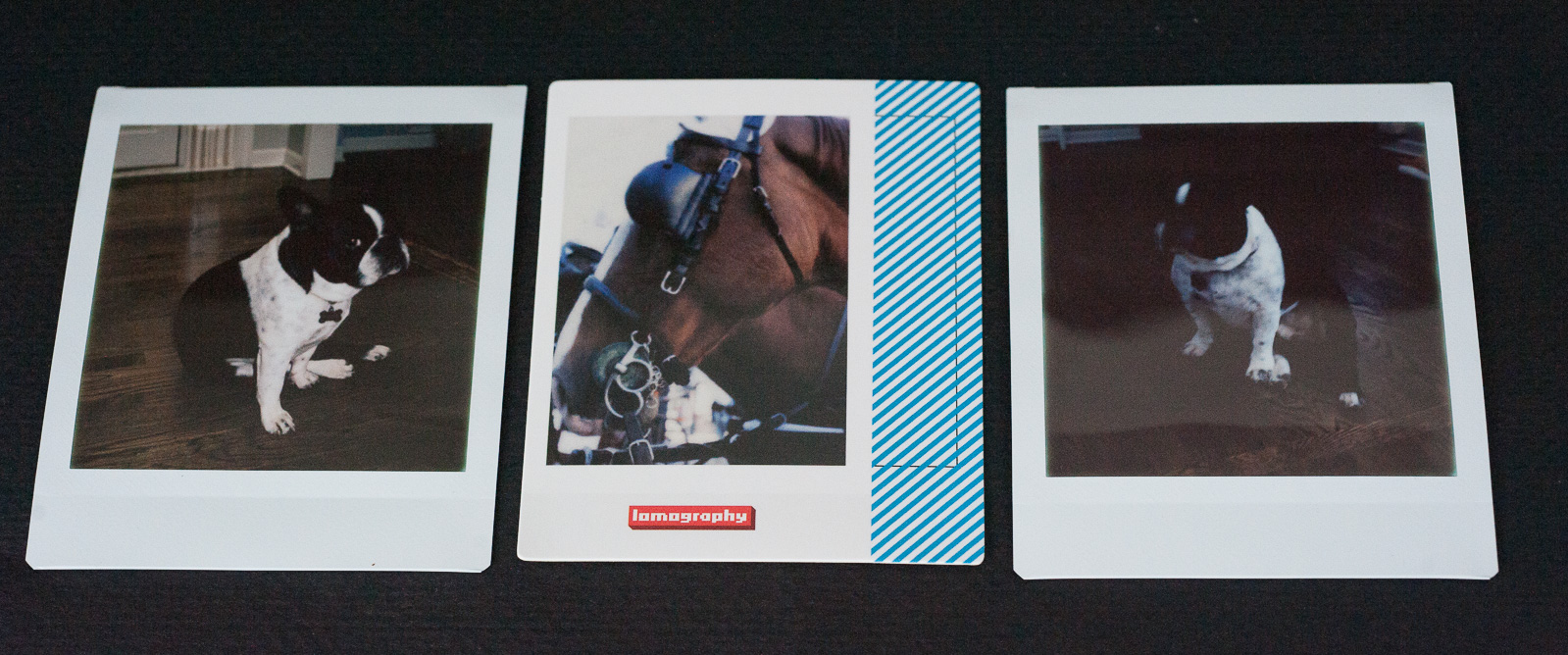
The picture in the center is one of the examples provided with the camera – it shows the relative size of the Instant Square picture compared to the Instax Mini. Left – a picture taken with the Square (default exposure); right a picture taken with the exposure on “-“. On the Lomo, “+” over exposes, and “-” under exposes.The Instax Square picture is much smaller than the Impossible Project’s SX70 film. The Lomo seems to under-expose, but the picture has much more contrast than the first iteration of the Impossible Project’s film (picture on the right was shot in 2010, with a Polaroid SX70 camera)When comparing the quality of pictures, all things are relative. After I was finished shooting pictures of the Lomo, I took a picture of Jules at the same place, but this time with a Nikon D700 and its Nikkor 55mm f/2.8 lens (1600 ISO, f/4, 1/60 sec, cropped and adjusted to taste in Lightroom).
It’s time to trim my collection of film cameras, and make room for newer entrants.
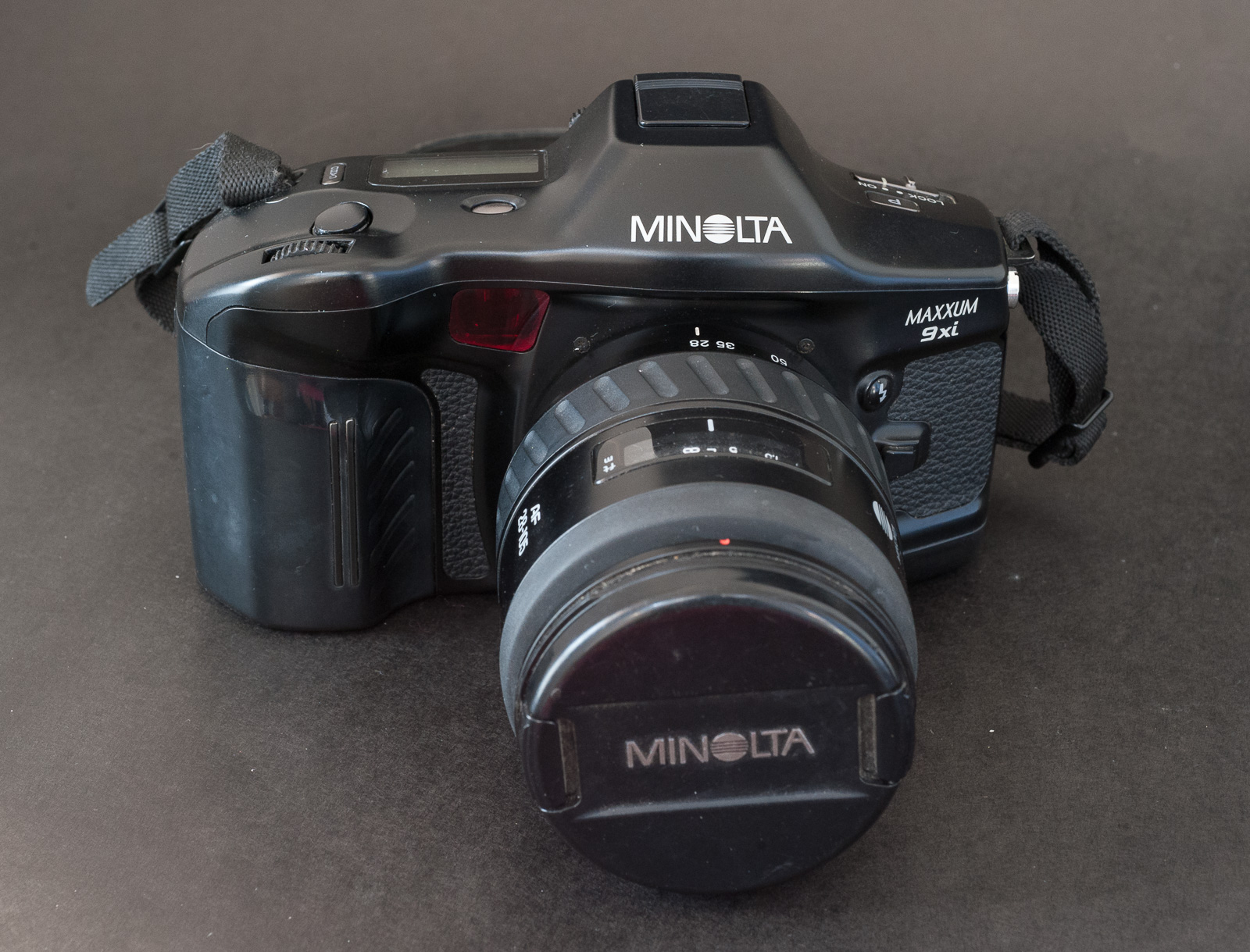
The Minolta Maxxum 9xi has to go – I like it but I can’t use it to its full potential unless I spend more money on a set of Minolta A lenses and, maybe, a flash. I already have 4 sets of lenses for as many different makes of cameras. That’s already one or two too many, I won’t add a fifth one.
The Olympus OM 2000 falls into the same category as my Nikon FM (a modern semi-auto SLR), and is also competing for my attention with an Olympus OM-2 and my beloved Nikon FE2 (which both have very good semi-auto modes). I know I won’t be using it and I need to find a better place for it.
The two cameras are currently listed on eBay. It took them for one last photo shoot …
One last round with the Minolta Maxxum 9xi
I don’t know what drove Minolta out of the photography market – the expensive (and ultimately lost) lawsuit against Honeywell over auto-focus patents, the APS format debacle, or their inability to get more than a tiny fraction of the “pro” market – but at some point they decided to throw the towel and sold themselves to Konica (forming Konica-Minolta). Two years later, Konica-Minolta stopped manufacturing film, and sold its photography line of business to Sony. It explains why current Sony a77 and a99 still work with the same Minolta lenses that the 9xi uses.
The Minolta autofocus SLRs designed for enthusiasts and pros were very pleasant to use and worked very well. The Maxxum 9xi is no exception. It falls very well into the hands, gets the exposure right, and does not impose an information overflow to the photographer. Being designed as a “pro” model, it’s very well made (better than the 700si, for instance) and still looks good (no panel gap, no sticky paint) after all these years. If you love the Minolta brand, or if you are an active Sony Alpha photographer, it’s a camera to have.
Minolta Maxxum 9xi –Heritage Park – Mableton – Minolta 9xi 28-105 AF zoom – Fujicolor 400.
Olympus OM 2000 Spot Metering
The Olympus OM 2000 is a Cosina-made semi-auto SLR, and has little in common with the rest of the Olympus OM family, except for its bayonet mount, of course.
It’s still an interesting camera – good looking, simple, with spot metering (in addition to the conventional weighted-average metering). A good introduction to the OM family of cameras, and a good backup for owners of an OM-3ti or OM-4ti who don’t want to risk damaging their expensive and sometimes temperamental camera in difficult situations.
Olympus OM 2000 Spot MeteringOlympus OM 2000 – the fastest shutter on any Olympus SLR (1/2000sec, Flash X sync up to 1/125)Florida sunrise – Olympus OM 2000
The 600si was at the same time Minolta’s cheapest enthusiast auto-focus SLR, and the test bed for the ergonomics of the future Maxxum 9, 7 and 7d.
After the launch of the 700si – at a higher price point than its predecessor the 7xi, Minolta had a gap to fill in their line-up. And because they had taken heat about the user interface of their xi generation of cameras, they took the opposite route for the 600si.
The design of its interface was so well received that it served as a model for the high end Maxxum 9 and 7 launched at the end of the century. And its influence could still be felt in the Konica-Minolta 7d, and in more recent Sony digital SLRs.
The Minolta 600si – it looks like a “pro” – but its very light construction feels very “consumer”
High level, the 600si is a cheaper variant of the 700si, somehow spec’d down technically, with a very different user interface and a lighter build. Instead of being designed with a modal interface (press the FUNC button to access a menu, and navigate the menu with the control wheels), the 600si is covered with dedicated knobs and rings to control the flash, the exposure mode, exposure compensation, and the drive mode. In addition to which a few rotating switches control the auto-focus setup and the metering modes.
The Maxxum 600si’s mode control knob – it looks and feels really cheap.
The Maxxum 600si is clearly engineered to a price point. Compared to the 9xi and the 700si, some components are one notch below, with a shutter limited to 1/4000 sec, an auto-focus sensor analyzing 3 zones instead of 4, no LCD overlay in the viewfinder and no “creative Card” slot. Fortunately, the camera retains a steel bayonet and the good long eye-point viewfinder of the higher end Minolta cameras. Minolta had cut cost intelligently.
The camera’s body is made of shiny black plastic, and the knobs and dials – in a dark shade of mat gray, look and feel extremely cheap – a bit like those of the low quality electronic devices you find in dollar stores. I’m not aware of any reliability issue specific to the 600si, so it must be better than it looks, but back in 1993 I would never have paid $500.00 for such a sorry looking camera, when the 700si was selling for only $100 more.
As for the interface, I’m not necessarily sold on the “one knob per function” type of ergonomics – I shot hundreds of rolls with a 700si and I never felt that its interface was getting in the way. I also played with a 9xi recently, and provided it’s set up to your preferences, it’s perfectly fine too. What really matters is your ability to verify at a glance how the camera is set up. If the top plate LCD is informative enough, it may be simpler to read it rapidly and know everything about the camera’s setup, than have to check each knob and switch individually.
Minolta 600si – the AF zones are engraved on the focusing screen
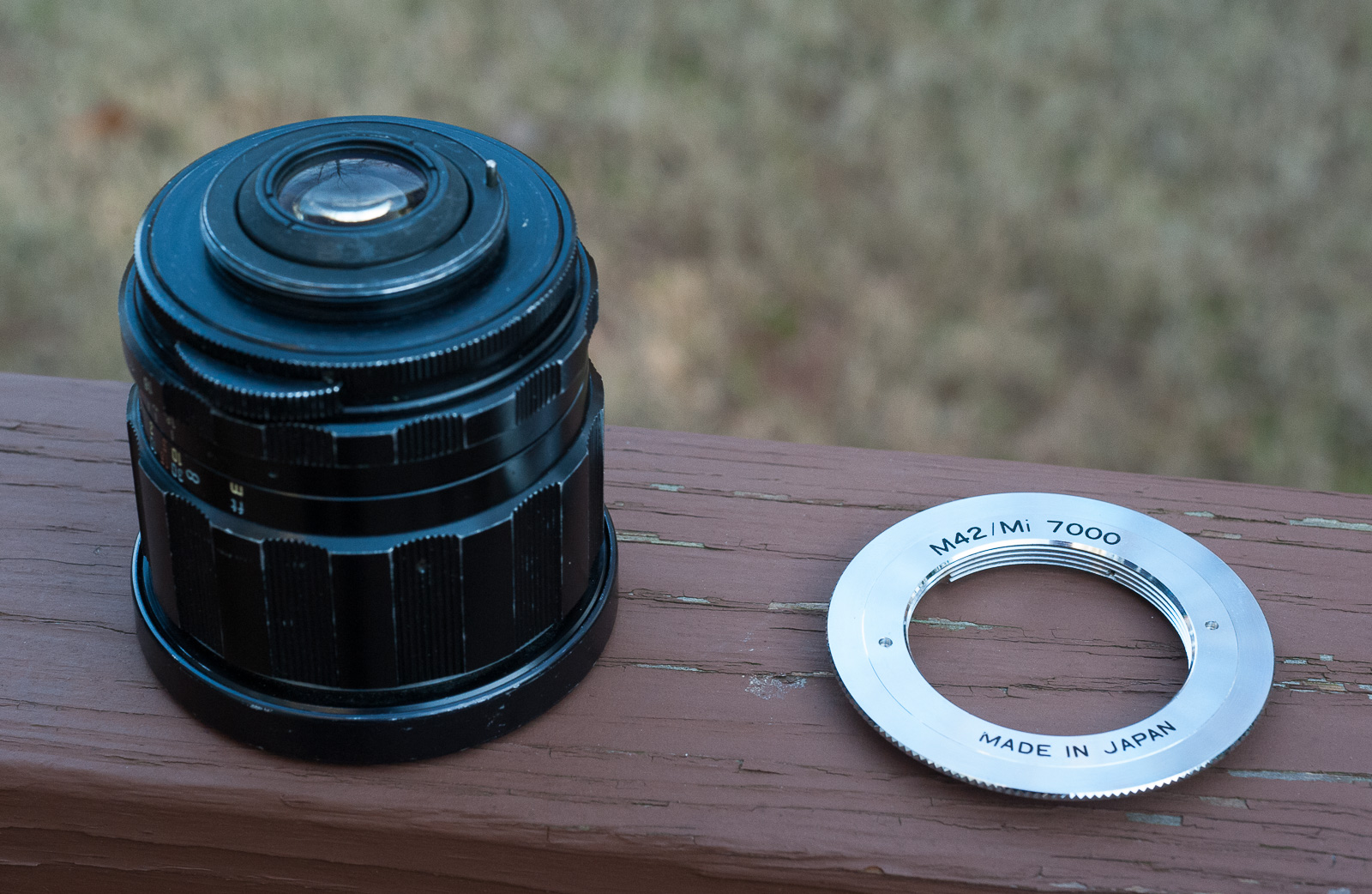
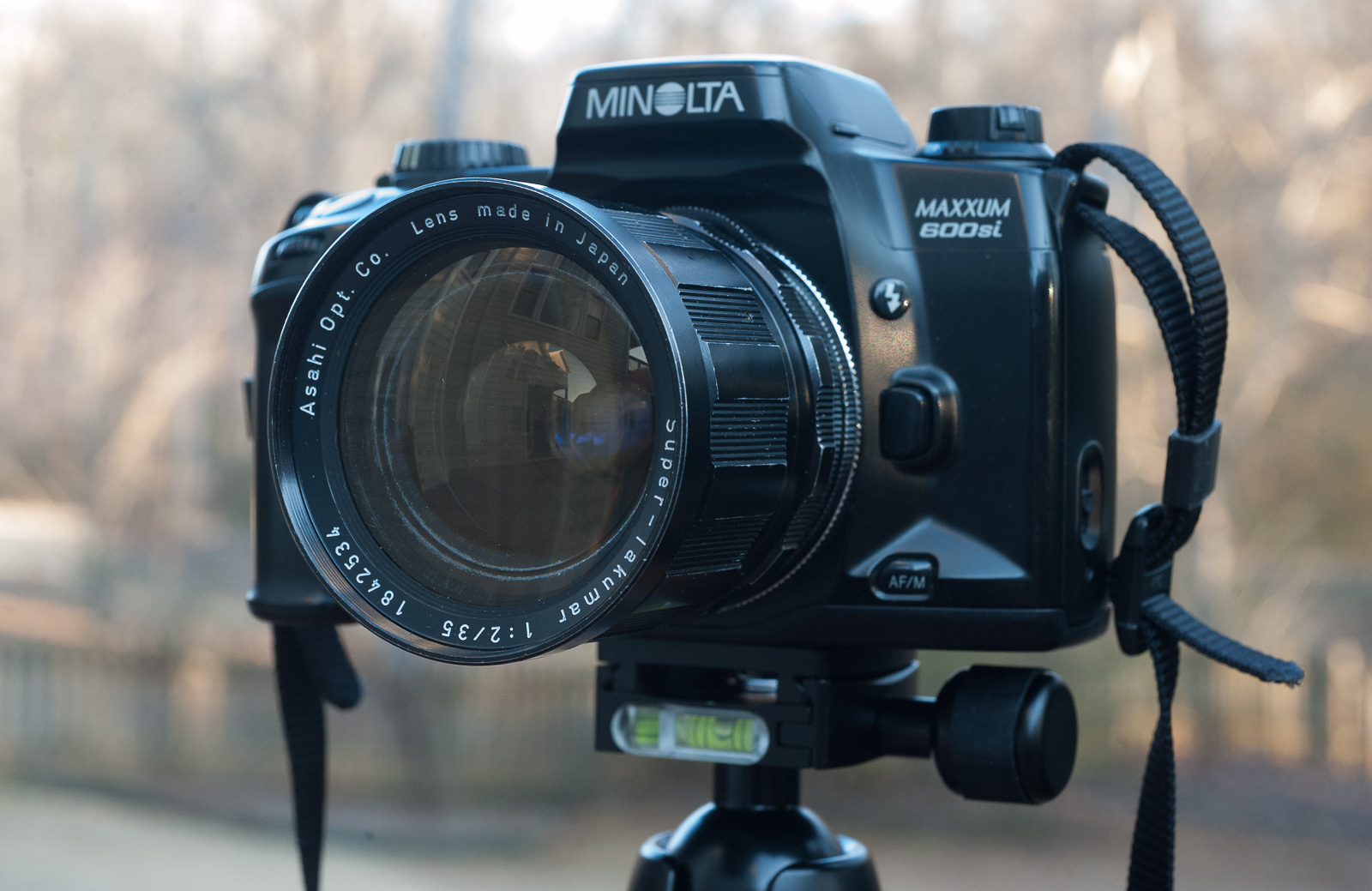
The viewfinder is informative (with a lit up green LCD at the bottom of the focusing screen) and displays a very useful scale in semi-auto exposure mode. Interestingly, the 600si also operates stopped down in semi-auto mode with adapted lenses (using a M42 to Minolta A mount adapter) and is somehow usable with old Pentax Takumar lenses – (focusing manually is difficult through – the focusing screen of an auto-focus camera is not designed for that).
The Minolta m42 to 7000 adapter, and a screw mount lens.
There is very little technical difference between the Maxxum cameras of the “6 to 9 segment” (7xi, 9xi, 700si, 600si, 800si), which were sold for the largest part of the nineties.
Metering and auto-exposure had reached their final form with the 14 segment “honeycomb” pattern of the 7xi, which would be retained on all models until the final Maxxum of 2004.
They share the same 3 or 4 sensor setup for the auto-focus, and still rely exclusively on the in-camera motor. The final models of 1999 and beyond (Maxxum 9 and 7) would adopt a different sensor module, and only the Maxxum 7 would gain the ability to work with ultrasonic (SSM) lenses.
Lastly, they all share the same viewfinder (penta-prism, enlargement, high eye point). When comparing the viewfinder with similar Canon and Nikon cameras, it does not look as bright on the 600si, but we’re really nitpicking here.
Minolta Maxxum 600si with the Minolta m42 to 7000 adapter, and a screw mount lens. It works, but once in place, the adapter is extremely difficult to remove from the body’s bayonet.
What’s my pick in the Minolta family, today ?
The Maxxum 9 and 7 are in a category of their own. They have unique characteristics (the all metal construction and the 100% viewfinder coverage for the Maxxum 9, the user interface for the Maxxum 7 with its large LCD display on the film door and its ability to use current Sony and Zeiss SSM lenses). They are purchased by photographers who want the very best of Minolta SLRs. And they still command top dollar.
Considering that there is no significant cost difference between rest of the Maxxum models – which are all more than 20 years old and are all selling for a few dozens of dollars at most, I would not consider any of the entry or mid level models; I would also avoid the quirky 7xi, and would limit my choice to a few cameras such as the 9xi, the 600si, the 700si and the 800si.
Minolta Maxxum 9xi (left) and the 600si (right). Two very different approaches of the ergonomics
The 600si may be spec’d slightly below the three other models, but it does not really matter for photographers shooting film today – those are ancient cameras in any case and nobody will complain if they don’t shoot 6 frames per second. Any of those four cameras is very pleasant to use, and will produce well exposed pictures. The choice is primarily about your preferences regarding the user interface, and about your expectations when it comes to perceived build quality. Personally, I’ll stay with the 9xi.
What was my pick in the Minolta family, back then ?
Interestingly, when those cameras were on the shelves of the photo stores in the early nineties, I did not even consider the 9xi.
My first pick was the 7xi and its 28-105 Power xi Zoom. There is no doubt that the camera was making good pictures (autofocus and metering were top notch for the time) but it was eating its very expensive lithium batteries with an alarming regularity, the Power Zoom and the built-in flash popping up automatically were a pain, and there was no depth of field preview capability. I got rid of the Power xi Zoom after a few months, and replaced the 7xi with a 700si and its optional vertical grip 2 years later. With the grip, the 700si could run on conventional AA batteries. I liked the 700si a lot, and kept it until I switched from film to digital, in 2003.
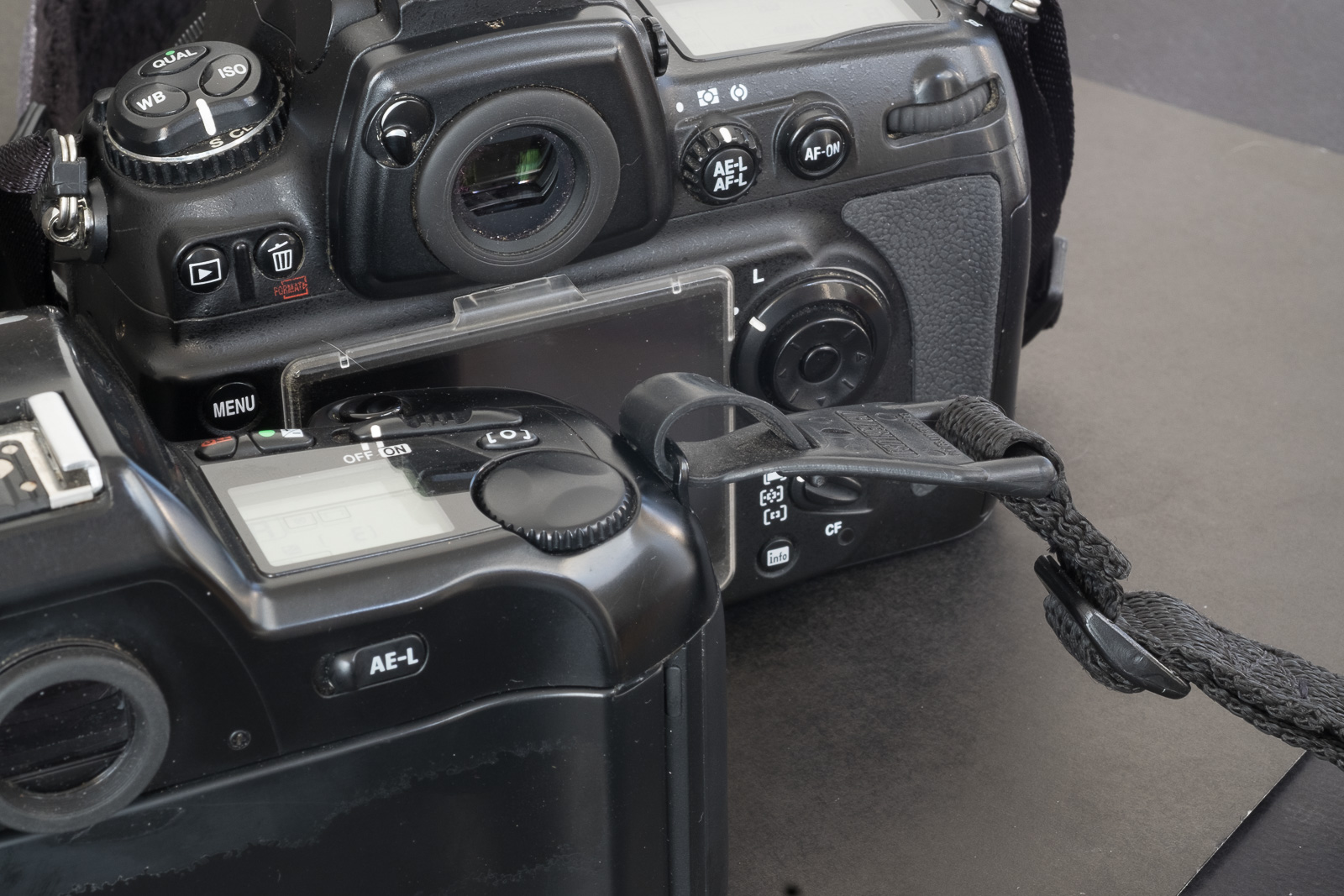
When I bought the 700si, I never considered the 9xi (far too expensive, too big, too similar to the 7xi, with no way to support AA batteries that I knew of). And once I had the 700si, I was never tempted to “downgrade” to a 600si.
Joe – Skipper on Lake Powell (AZ) – Scanned from print – Minolta 700si – Angenieux 28-70mm f/2.6 zoom (May 1994)
Minolta Maxxum 9xi – a streamlined interface – unusual in the world of SLRs.
Back then
I introduced the Minolta Maxxum 9xi in a blog post a few weeks ago. The 9xi was a camera built to near pro quality standards, with a high end specs sheet (the fastest shutter on a 35mm camera, weather sealing, electric command of the depth of field preview), but its user interface and its internals were lifted from the 7xi, a camera designed for the average amateur more than the enthusiast photographer. It faced a difficult task:
In 1992, the lines had been drawn – pros and enthusiasts had already invested in their autofocus camera system, and it’s unlikely that a photographer having recently spent thousands of dollars in new autofocus bodies and lenses would have thrown everything away to enjoy the power-zoom gimmickery of Minolta’s new xi cameras.
It had a formidable competitor – Nikon’s N90. The N90 was positioned by Nikon as a prosumer camera, but this very serious and capable camera was often purchased by pros who needed a faster autofocus than what the F4 could provide, in a smaller and lighter body. The N90 was a very efficient tool, backed by a large range of lenses and an efficient pro support organization that Minolta did not have.
Smooth lines, very few buttons in a nice bronze color, a card slot for extra functions.
Shooting with the Minolta 9xi today
The industrial design of the 9xi is unique (one of the most beautiful examples of “bio-design” in the world of cameras), and its build quality is significantly better than its lesser Minolta siblings (7xi, 700si and 600si). That being said, the 9xi suffers from the usual limitations of the autofocus cameras of the 90s:
It’s piece of black plastic
It’s a battery hog (and needs an expensive 2CR5 Lithium battery)
It’s not excessively heavy but it is really very large
It’s loud when the camera is “hunting” to focus
It can’t work with the most recent lenses or flashes from Konica-Minolta or Sony. To be fair, a similar limitation applies to most of the Nikon autofocus SLRs of the same vintage, which have no real-life compatibility with Nikon’s current AF lenses (the ones deprived of an aperture ring).
Minolta 9xi – the most unconventional interface – a “func” button to call a menu, and a door where “creativity cards” can be inserted – the predecessors of scene modes.
Other limitations are more specific to the Maxxum xi generation:
the 9xi is controlled exclusively by a modal interface (a “Func” push button that you have to press once or twice to access different menus, two control wheels and a LCD, and almost no dedicated button).
hidden functions are only accessible by pressing a combination of buttons during the startup process. And they’re not always mentioned in Minolta’s documentation (I found out about one on them by reading the pages of a fellow blogger)
Minolta Maxxum 9xi – “complex” commands hidden behind a door
The last remaining issue is the choice of lenses, and the impact on the second hand market of Sony’s price policy.
No “pro” lens was available when the 9xi was launched. The issue finally started being addressed by Minolta in 1993, but the brand was always one or two steps behind Canon and Nikon when it came to adopting new technologies (such as the ultra-sonic motorization for the auto-focus).
Because Minolta was a brand only marginally popular with professional photographers, the f/2.8 pro zooms and the fast prime lenses never sold in huge quantities – probably a tiny fraction of what Canon and Nikon sold (*).
Sony’s current A series bodies still are 100% compatible with Minolta’s screw-drive lenses, and Sony’s current lens line up of full frame lenses is only addressing the very high end of the market. In other words, they’re very expensive. Therefore, there is a steady demand for cheaper lenses, and the second hand market does not have enough of the old Minolta prime lenses and of the old “Pro-zooms” to fulfill it.
High usage value, steady demand, relatively limited availability: the price of Minolta’s auto-focus lenses tends to be high on second hand market today.
The only really affordable lenses on the second hand market are consumer level zooms, and Minolta has a mixed record in that area – some of their zooms were good, but some of their entry-level products were really bad, much worse mechanically and optically than the entry level products of Canon or Nikon. Do your homework and pick carefully.
Comparing the 9xi with Nikon’s N90.
If you read the manual (and the forums), set the camera to your preferences, forget about the Power xi gimmickry and mount a conventional auto-focus lens, the 9xi’s behavior will not be that different from the prosumer body of reference, Nikon’s N90. Their interface could not be more dissimilar (the Nikon has one clearly identified button for each function), the Nikon looks more compact (even if it is only marginally smaller) and it works with AA batteries, but the performance of the cameras is comparable, and the photographer will have access to the roughly same set of functions.
The Maxxum 9xi next to a Nikon N90s (aka F90x in Europe). Two very different interface design approaches. The photographers of the nineties obviously preferred Nikon’s.
Both cameras fall pleasantly into the hands of photographers, even if I tend to prefer the two control wheels of the 9xi to the single one gracing the top plate of the N90.
The Maxxum 9xi – there is an LCD overlay on the focusing screen. It’s contextual (here, it shows the selected focusing zone at the center) and not very legible.
The eye point length and the enlargement of the viewfinders are also comparable, and perfectly adequate for photographers wearing glasses. There is a LCD overlay at the top of the focusing screen of the Minolta, to provide contextual information, such as the auto-focus point selected by the camera or the metering area selected by the photographer. It also shows the exposure scale when the camera is operating in semi-auto exposure mode. Unfortunately, the information is difficult to read in low light, and the LCD overlay could be one of the reasons why the viewfinder is not as bright and contrasty as in the N90. By a wide margin: the difference is really striking.
Almost no buttons to control the Maxxum 9xi – the two control wheels do everything. A reminder of their respective functions is displayed at the top viewfinder when you press the Func key.
The Maxxum 9xi has no built-in flash, but in the early nineties no “pro” camera had one. That’s one of the reasons to prefer the 700si or 800si bodies: their built-in flash can be used to command other Minolta flash cobras wirelessly.
Buying a 9xi today?
Committed users of full frame Sony A series cameras (A850, A900, A99) will probably be more interested in the more recent Maxxum 7, which supports all current Sony lenses, including the SAM and SSM lenses with ultra-sonic motorized focus. The Maxxum 9 – the “pro” SLR from 1999 is also an interesting pick for users of Sony’s full frame digital bodies because of its outstanding build quality and its 100% coverage viewfinder, even if it’s not natively compatible with the new SAM or SSM lenses (some cameras have been retrofitted with an updated circuit board by Minolta’s customer service organization). The Maxxum 7 and 9 are the ultimate Minolta cameras and command a much higher price on the second hand market than the generations that came before.
For photographers just interested in setting a foot in the Minolta autofocus system, the 9xi is an interesting pick. Considering the low cost of all Minolta auto-focus SLRs on the second hand market today (except the Maxxum 7 and 9, of course), it makes little sense to settle for an entry-level model designed for beginners or amateurs such as the 3xi or the 400si. Go for a “pro” model for the same price.
The 9xi performs better than the previous generation of Minolta auto-focus cameras (7000, 9000, 8000i), it offers a few important features which are missing on the 7xi (depth of field preview, bracketing, programmable function button, ability to use a AA battery grip). It lacks their built-in flash and its interface is more cryptic, but it is better built than the 700si and 800si that followed without being inferior in terms of features or performance (**).
If you’re looking for a well built auto-focus film cameras with matrix metering, it’s perfectly adequate. The user interface is not to everybody’s taste, but when you get used to it, it works.
As mentioned above, finding good lenses at a good price is a challenge. And you can not mount any generic electronic flash on the camera. The 9xi (like all the Minolta, Konica-Minolta and Sony bodies until the A99 and the A6000) uses a proprietary Minolta accessory shoe. There are adapters, but they add to the budget and are a pain to use.
As usual for cameras which did not sell in huge numbers and have no particular claim to fame, there is no widely accepted price for the 9xi. Prices are all over the place, with some specialized stores in Japan asking for up to $800.00 for a nice 9xi, and the online store of a well know charity effectively selling them for less than $15.00.
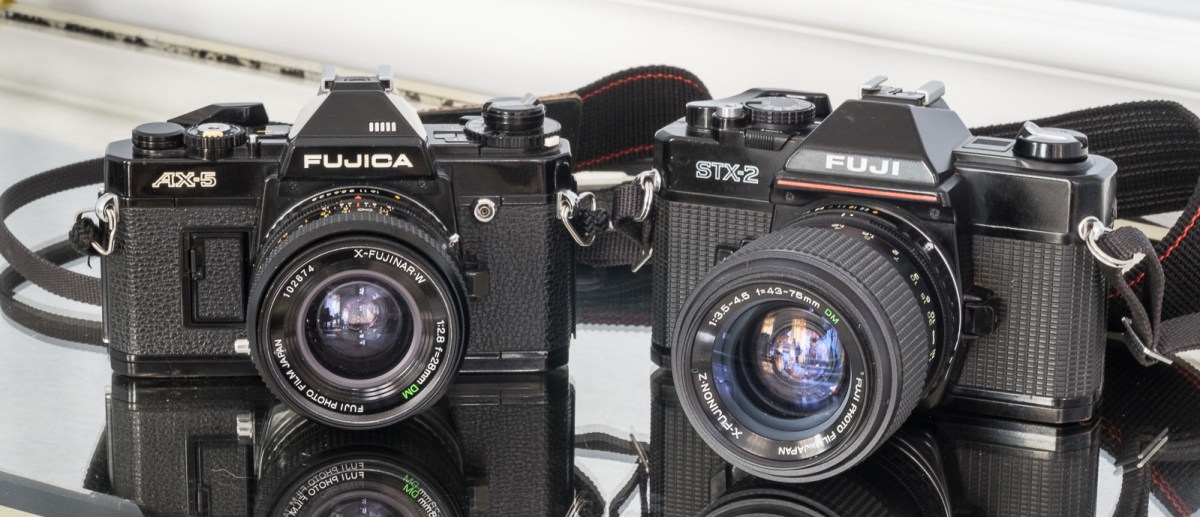
(*) I noticed the same phenomenon when I was trying to find lenses for my Fujica AX-3 and AX-5 cameras a few months ago – wide angle prime lenses and luminous trans-standard zooms are extremely difficult to find, and reach prices in Leica or Zeiss territory. Brands like Fujica, which were not addressing the professional market, and catered primarily to price conscious amateurs, had a few high end lenses in their catalog for the prestige, probably developed for a few friends of the brand, but they were never widely distributed and are now extremely rare.
(**) To a large extent, the 700si was a Maxxum 9xi under a more conventional looking (and cheaper to build) body shell, with a few extra buttons and switches. With the 700si, Minolta got rid of the weirdest aspects of the 7xi, and made some of the features previously present on the 9xi (but undocumented) easier to configure. With an informed use of the boot process (restart the 9xi while pressing a few specific buttons), there are very few of the 700si new features that are really missing on the 9xi.
Instead of posting pictures of my dogs, I went back to the archives and found pictures taken in the mid nineties when I was shooting with a Minolta 700si (the closest cousin of the 9xi). My main lens was the Angenieux 28-70mm f/2.6, but I also used (rarely) the Minolta 50mm f/1.7, the famed beer can (AF 70-210 f/4) and a 35-200 xi power zoom. I liked the camera except for its bulk and weight, and ended up using a Minolta Vectis S-1 for my mountain hikes.
Gjende Lake (Norway). Scanned from print – Minolta 700 Si (Aug. 1996)Another lake in Norway (Bygdin, probably). Scanned from print. Minolta 700si – Aug 1996
The Pentax Spotmatic F and the Nikon FM were probably never on the shelves of photo equipment stores at the same time – when Nikon launched the FM in 1977, Pentax had stopped selling their Spotmatic line of cameras and their m42 screw mount Takumar lenses one year earlier, and were promoting the more compact MX (semi-auto) and ME (automatic) SLRs and their new bayonet lens mount instead.
Logically, the Spotmatic F should be compared with cameras such as the Canon FTb, and the FM with the Pentax MX. But shooting with the Spotmatic F and the FM side by side is a good way to measure the progress made in usability and performance in a just few years.
Size, Weight, Features and Ergonomics Looks can be deceiving. The two cameras are roughly the same size and both weight approximately 600g, but the Spotmatic looks taller and feels heavier.
The ergonomics and the organization of the commands are very similar. Both cameras offer semi-automatic exposure – the Spotmatic F needs the SMC Takumar lenses (sold after 1971) to offer full aperture metering, while the FM needs Nikkor AI lenses (sold after 1977) or older lenses modified for Aperture Indexing to provide the same capability.
Pentax Spotmatic F and Nikon FM – almost exactly the same footprint – surprising…
The shutter of the FM has metallic blades traveling vertically, while the SPF uses a conventional horizontal textile shutter, with a slower electronic flash sync speed (1/60 sec instead of 1/125 sec), and – in my experience at least – a more questionable reliability after a few decades of use.
Lastly, the FM can be equipped with a motor drive, which enables continuous film advance at 3.5 frames per second.
Pentax Spotmatic F and Nikon FM – a very similar organization of the commands
Viewfinder That’s where the progress made in a few years is the most…visible. The focusing screen of the FM has a much finer grain, it’s significantly more luminous, and thanks to the combination of a split screen telemeter and a ring of bright micro prisms, focusing is much easier and therefore faster than on the Spotmatic.
The viewfinder of the FM is also more informative – it shows the selected aperture and shutter speed.
Pentax Spotmatic F – just the matching needle for the exposure on the right, and a small area of micros prisms at the center
On the other hand, I could not have imagined that getting the focus right on the Spotmatic F would require such an effort – even with relatively luminous lenses – the focusing screen is dark, and there is no split screen telemeter to help the photographer when the micro-prism ring is not working. Cameras from the late seventies-early eighties are so much better in that regard – that alone is a reason to shoot with the Nikon FM rather than with the Spotmatic.
Nikon FM – 3 LEDs to help with the semi-auto exposure, a split-image and a ring of micro prisms at the center, a disk showing the shutter speed on the left – a fine and luminous focusing screen.
Metering system The metering system of the Spotmatic F is derived from the first Spotmatic, and like almost all the cameras from the late sixties and early seventies, it’s build around a CdS cell and communicates the exposure value to the photographer with the needle of a galvanometer. CdS cells tend to react slowly to changing lighting conditions (they have memory) and the needle of the Spotmatic is not very precise. Move the aperture ring one stop up or one stop down, and the needle hardly moves. It’s accurate enough for negatives. Not sure it would be precise enough for slide film.
The Nikon FM has a much faster GASP cell (they were all the rage in the late seventies, they were supposed to be better than Silicium cells – the Pentax MX had such a cell too). The right exposure is communicated to the photographer through a set of three red LEDs. The setup is very reactive, and more accurate than the needle of the Spotmatic F.
The big black lever with the white arrow is used for depth of field control with Full Aperture Metering lenses, and for metering on conventional m42 screw mount lenses
Battery The Spotmatic F still came with Mercury batteries (which have been outlawed in the western world for decades). But it’s very tolerant with the non-Mercury-based replacement batteries available today in every drugstore. The FM works with conventional 1.5v Silver Oxide batteries. They also are widely available.

The rotating lock on the shutter release, and the red dot showing that the shutter has been cocked and the camera is ready to fire.
Reliability The Spotmatics are easy to repair – there are still a few specialists who can service them in the US, and based on my personal experience, they’re not going to be out of work any time soon: it seems that the Spotmatics need more tender love and care than more recent cameras. On the other hand, the FM inherited from the robustness and reliability of its older brothers in the Nikon family. Even if it was not considered a “pro” camera in its heyday, it was very often used by professional photographers (war correspondents in particular), as their primary cameras when light, compact and very solid gear was needed, or as a backup camera – in case their big Nikon F2 (or later F3) got into trouble.
Typical view of the film chamber of a Spotmatic – textile shutter, and the label of a Pentax service center (maybe somebody should start collecting those labels).
Scarcity and price
Both cameras belonged to the best selling category of their time – semi-automatic exposure SLRs designed for enthusiast amateurs and professional photographers, they were sold by leading manufacturers with a wide distribution network, and hundreds of thousands (Spotmatic F) or even millions (Nikon FM) were manufactured. Lots of them have survived. The Spotmatic F is older, and finding a good copy is more difficult than locating a good FM. There is relatively little demand for the FM (less than for the more recent FM2 with its 1/4000 sec shutter or for the Cosina-manufactured FM10) and supply visibly exceeds demand, which reflects on prices: the FM tends to be cheaper than the Spotmatic F on eBay ($25.00 vs $50.00 for a camera in working condition).
Same overall size for the camera bodies, but the Pentax lens’ diameter is narrower than the Nikon’s and makes the camera look taller
Lens mount and lenses The Takumar lenses of the Spotmatic have an excellent, and in my experience, deserved reputation. The “entry level” 55mm lens I used with the Spotmatic F produces contrasty pictures, and the older Super-Takumar 35mm f/2 produces creamy pictures with a fabulous bokeh (it also works very well with mirrorless cameras).
The internals of the Pentax ES mount – Pentax added a lever to transmit the pre-selected aperture value and a pin to lock the lens in position.
Takumar lenses with the m42 screw mount are abundant on the second hand market, as are third party lenses – but they have to be operated stopped down. Full aperture metering is only possible with the more recent (1971-1975) S-M-C Takumar lenses with their modified m42 lens mount (they can easily be found on the second hand market), but there is next to no offer from third party vendors.Only Tamron seems to have offered lenses supporting full aperture metering on the Spotmatic F. I’ve tried a 28mm f/2.5 wide angle and a 35-70mm f/4 Tamron Adaptall lens, and they both seem to lack contrast compared to Pentax or Nikon original lenses.
The Nikon FM was launched the same year as the “AI” version of the Nikon F bayonet mount, and as usual with Nikon, some level of compatibility exists with prior and subsequent versions of the lens mount.
Nikon FM with an AI (or AI-S) lens.
The “FM” is one of the “most compatible” of the Nikon bodies – it’s sometimes called the Rosetta Stone of Nikon cameras- and it can be used (with various restrictions) with lenses made from the very beginning of the F mount (1958) until today: Nikon still have AI manual focus lenses in their catalog, and some of their current auto-focus lenses can also be mounted on the FM, provided they have an aperture ring and a mechanical diaphragm control mechanism.
Nikon FM with a non-converted pre-AI lens – the grey metallic tab has to be lifted (you press the shiny mushroom like button below it)
The offer of second hand lenses (Nikon branded or compatible) is also abundant.
Conclusion
When working with old cameras, we all place the bar of the required level of performance at different positions – it’s a function of our experience, and of the type of scenes we tend to shoot.
The Spotmatic F, although a very good camera in its own right, is too much of an antique for me. Its base design is rooted in the sixties (if not earlier) – it’s the last evolution of the m42 Pentax line. Focusing is the biggest issue – you really have to pay attention to it, and it slows me down to the point I feel I’ll miss too many opportunities when I shoot mobile subjects. It still has a real usage value (on relatively static subjects) and can draw from a large supply of very good lenses, but it’s an antique first and foremost.
Big birds – Thompson Park – Mableton – Pentax Spotmatic F – Super Takumar 55mm f/2. Fujicolor 400. Great camera for relatively static subjects.
Only 4 years younger, the Nikon – although not that different on paper – feels like a more modern camera (lower profile, much better focusing screen, more precise exposure determination). I expect it to be more solid and more reliable too. Like the SPF, the FM is compatible with earlier versions of the brand’s lens mount, but unlike the Pentax, it’s also compatible with the manual focus and with some of the auto-focus lenses still sold by Nikon today.
American White Sheperd – Nikon FM – Nikon 28-70 f/3.5-4.5 AF zoom. Not sure the dog would have left me enough time to get the focus right on the Spotmatic.
When kids ask me to let them use an old camera to learn the basics of photography or for an art project at school, I pick the FM with a Nikkor E Series lens – it’s a cheap and very efficient combo and I’m confident they won’t break it.
And the FM – along with its aperture-preferred auto-exposure sibling the Nikon FE2 – is also the camera I bring with me when I need a break from modern, computerized digital cameras – without sacrifying the results.
One last word: the Nikon FM10 has very little in common with the rest of the FM and FE series – it’s a camera manufactured by Cosina, at a time when all manufacturers believed they needed a sub $150.00 manual focus/semi-auto SLR in their product line. The FM10 shares its chassis and its kit lens (except for the lens mount, of course) with the Olympus OM-2000 and with other cameras manufactured by Cosina, and is not a “true” Nikon.
American White Sheperd. Nikon FM-Nikon 28-70 f/3.5-4.5 AF zoom.
The “standard” Asahi Pentax Spotmatic is a camera I would have loved to like. I was attracted to its small size, its nice finish and its pleasant design. The Spotmatic was a camera of high historical significance – the first mass market SLR with Through The Lens (TTL) metering and a best seller in the sixties (the first Japanese SLR to sell in excess of one million units). Last but not least, my first reflex camera and my first dSLR were both Pentaxes and I’ve always had an affinity for the brand. All good reasons to add a Spotmatic to my ever expanding collection.
Pentax Spotmatic F – on the outside, the “F” engraved on the top plate is the most visible difference with previous Spotmatic models
The first one I bought, although superb on the pictures, had a broken shutter. The second one had a capricious rapid wind lever, a shutter release with an enormous lag, a very stiff exposure meter lever, and a meter of uncertain accuracy. I did not trust it and never loaded a single roll of film in it. Those little cameras, as cute as they were, did not seem to have been built like the Nikon SLRs of the same vintage (two of the three cameras I bought recently had the sticker of a camera repair shop in the film chamber).
But I kept on reading nice things about the Spotmatic, and I decided to give it another try. A last chance. This time my pick was the final camera of the Spotmatic family, the full aperture metering Spotmatic F.
Full aperture metering, at last
With the model “F” launched in 1973, Pentax finally brought full aperture metering to its line of semi-automatic cameras, more than seven years after Minolta and Nikon had opened the way with the SRT 101 and the Nikkormat, and two years after Canon, Olympus and Fujica had finally adopted full aperture metering.
Pentax Spotmatic F – this one is a US market model sold by Honeywell. This Super-Takumar lens is an exception – it has the full aperture capable ES mount.
On the outside, nothing had changed. The same compact dimensions, the same pleasant design with the “Pentax touch” – such as a red indicator showing that the shutter is cocked. The only major difference inside was of course that the “F” was a full aperture metering camera.
The Spotmatic F is still compatible with normal 42mm screw mount lenses with aperture pre-selection (Pentax Auto-Takumar, Super-Takumar, as well as hundreds of lenses sold by competitors), but full aperture metering requires the use of the new Super-Multi-Coated (S-M-C) Takumar lenses. Introduced with the Pentax Electro-Spotmatic of 1971 (the first aperture priority automatic exposure SLR with an electronic shutter), the S-M-C lenses remain backwards compatible with the 42mm standard, but add a prong to transmit the value of the pre-selected aperture from the lens to the camera body (this variant of the 42mm universal mount is sometimes named Pentax ES).[*]
Pentax Spotmatic F – with a Super Takumar lens – with this lens the “F” operates like a normal Spotmatic
The Spotmatic F had a short sales run, but a very long legacy. It was superseded after less than 2 years by the new line of Pentax K bodies (KM, KX and K2).
To a large extend, the K bodies were a limited refresh of the Spotmatic design – modified to support the new K bayonet mount and silver oxide batteries; the KM in particular was extremely close technically to the Spotmatic F. All three models were rapidly replaced with a new line of more compact cameras (the MX and ME), but the K1000 (a simplified version of the KM introduced in 1976) remained in the catalog until 1997.
Using the Spotmatic F
It’s a compact camera (much smaller than the Canon FTb or the Nikkormat, almost the same size as a Nikon FM), but it’s surprisingly heavy at approximately 650g without the lens. The fit and finish are in line with Pentax ‘s tradition, which means very good, even if not at the level of Nikon.
Viewfinder – it’s correct for a camera of that vintage, but is clearly not as bright and clear as the viewfinder of the Olympus OM-1, or of cameras that came to the market only a few years later (Nikon FM , for instance). And it’s lacking the split-prism present in its more modern rivals (the viewfinder only shows a small ring of micro prisms. Getting the focus right is not as easy as it should be).
The relatively long eye point makes it usable by photographers wearing glasses – they will just have to be aware that if they want to frame precisely, they will have to look up, down, left, right. As mentioned earlier, focusing is sort of OK with a fast, full aperture capable lens. But with standard m42 lenses, metering is stopped down, and when an aperture narrower than f/5.6 is selected, the focusing screen becomes too dark for composing (the right sequence is compose, focus, lift the metering lever, adjust the exposure, press the shutter release).
Metering – the Spotmatic F is a conventional semi-auto camera, with the needle at the right of the viewfinder. Full aperture metering is more comfortable, but the Spotmatic F can also be used with older Super-Takumar lenses (or any m42 lens), stopped down. The Spotmatic F I bought was in very good shape, and the stopped down lever (at the left of the lens flange) moves very smoothly; it makes a faint “click” when it reaches the stopped down position.
Battery: Another difference with earlier Spotmatics is that the “F” used PX625 Mercury batteries, larger than the diminutive RM640 battery used previously. Of course Mercury batteries can not be found anymore, but the Spotmatic has the reputation of being very tolerant with all sort of batteries – mine is apparently fitted with an Alcaline-Manganese battery, a PX625a, and the metering is still spot-on.
Lens selection: only Pentax lenses sold after 1971 benefit from the modified lens mount supporting full aperture metering on the Spotmatic F (there are exceptions here and there – for more information check this page: https://cameragx.com/2017/10/26/the-pentax-m42-lenses/). In my opinion, the main reason to buy a Spotmatic F (over an older SP or a SP II) is full aperture metering – even if standard m42 lenses are perfectly usable.
So, what are the options?
buy a Pentax Super-Multi-Coated lens, but the selection is limited to prime lenses, and the product line stopped being updated in 1975;
or find a third party lens compatible with the modified Pentax mount (Tamron Adaptall lenses come to mind – there is a specific Adaptall mount for the Pentax ES series, and Tamron offered Adaptall lenses until the end of the XXth century).
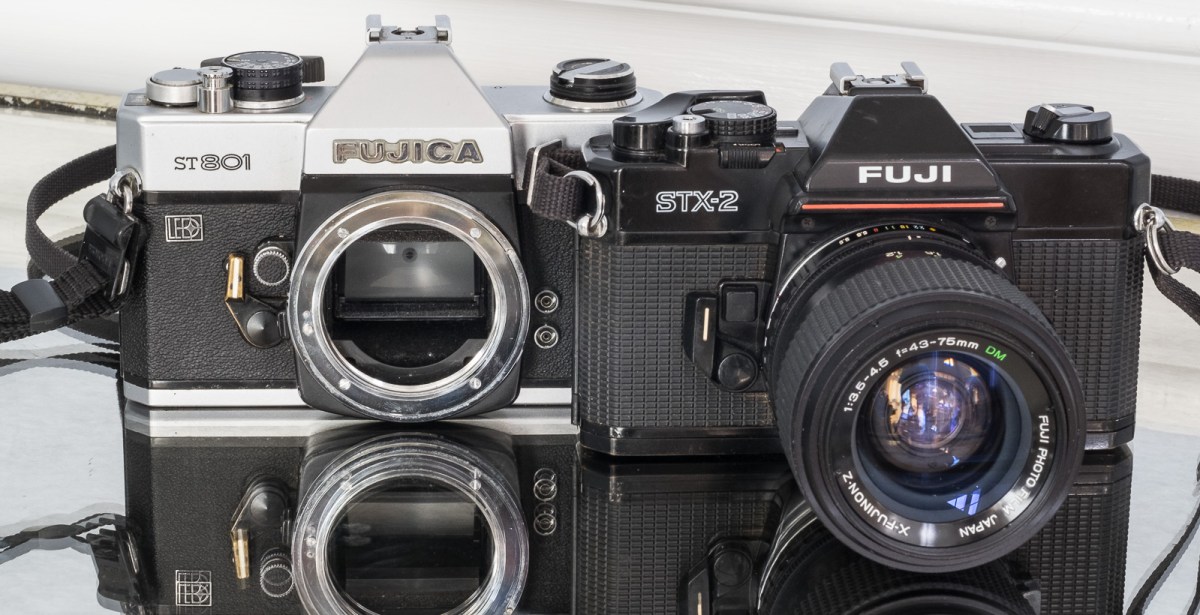
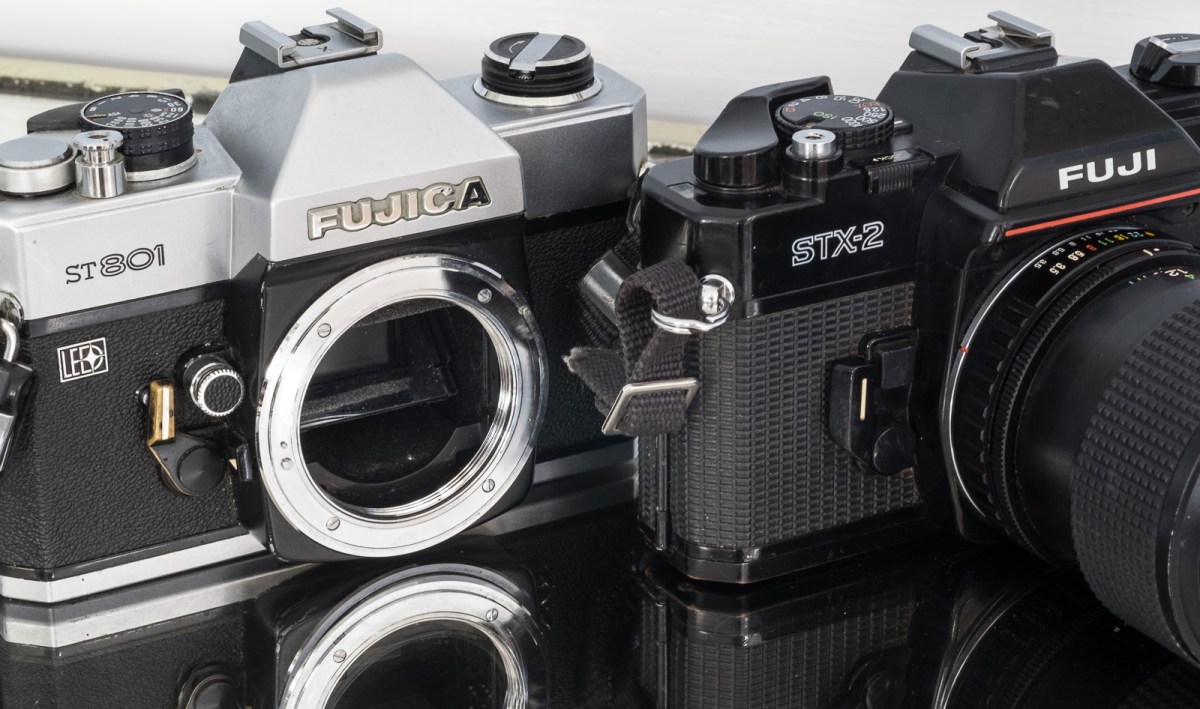
All in all, the “F” is a pleasant, compact, well rounded camera. The viewfinder is a bit of a let down, but compared to what was available in 1973 from the other big vendors (Nikkormat, Canon FTb, Minolta SR-T), the “F” more than holds its rank: it is less bulky than any of the other three, and is simpler to use than the Nikkormat. Of course, the Olympus OM-1 was much more compact, the Fujica ST801 was more advanced technically, and both had a better viewfinder – but if you absolutely want a m42 screw mount camera from the early seventies, it’s a very good pick.
Fall colors – Mableton, GA – Pentax Spotmatic F – Super-Takumar 55mm f/2- Fujicolor 400
Should you buy a Spotmatic F?
When you buy a single lens reflex camera, you buy into a system. If you’re committed to m42 screw mount lenses, the Spotmatic F is a very good choice. It’s a simple, easy to use semi-auto camera, it offers the comfort of full aperture metering, its Takumar lenses have an excellent reputation, and almost any m42 lens can be mounted on the camera.
But you also have to consider that for the Pentax m42 system, the end was close when the Spotmatic F was launched: this camera is the best and final iteration of the Pentax m42 family, a system with its roots in the late fifties. The lens selection was frozen forever in 1975, and there is no upgrade option beyond the “F”. It may not be an issue for you if you’re happy with the technology of the SLRs of the early seventies, and don’t want to have anything to do with programmed auto-exposure, spot metering, fast shutters, long eye point viewfinders, acute matte focusing screens, TTL flash systems and good trans-standard zooms.
In 1973, manual focus SLR systems had not reached their peak yet – a few pretty good cameras and more than a few pretty good lenses would still be launched during the following 15 years. For a photographer interested in investing in a manual-focus camera system, there may be better choices than the m42 system, starting with Pentax’s own K bayonet SLRs of 1975 and beyond.
How much?
Spotmatic cameras (of any type) in perfect working condition are definitely not members of my league of the $5 cameras. The Takumar lenses are relatively abundant and have a great reputation, which contributes to Spotmatic’s high usage value. It’s been more than forty years since the last Spotmatic was manufactured, and they seem to require more care and maintenance than equivalent cameras from other brands. Although they were manufactured in large quantities (3.6 million over a 12 year production run) the supply of good copies is starting to dry, driving the sales price up.
The Spotmatic F is not as common as the older stopped down Spotmatics (approximately 600,000 units were sold in 3 years), and it is slightly more expensive. Expect cameras in perfect working order to be in the 50.00 to $75.00 bracket.
[*] no rule without an exception – the Super-Takumar lens that came with this particular camera is using the “ES” version of the m42 mount, and supports full-aperture metering. It was Pentax’s entry-level kit lens in the early seventies, and probably to keep its cost in check, Pentax deprived it from the “Super-Multi-Coating” treatment.
More about the line of Pentax Spotmatic cameras:
A blog mainly focused on Asahi Pentax cameras with a Penta-Prism viewfinder: http://www.pentax-slr.com
A blog dedicated to manual focus cameras: https://www.678vintagecameras.ca with a very informative page about Pentax cameras and lenses
For people who love statistics, an estimate of the sales volumes of the cameras of the 70s-80s by brand: http://knippsen.blogspot.ca/
Fall colors – Mableton, GA – Pentax Spotmatic F – Super-Takumar 55mm f/2- Fujicolor 400
Ultimate: “last in a progression or series: final” (Source: Merriam-Webster)
Film cameras stopped selling in any significant quantity in the first years of this century – and the production of film cameras had almost completely ceased by 2008. But almost until the end, Canon, Minolta and Nikon kept on launching new models.
Most of those cameras were forgettable entry level models (their main justification was to occupy a lower price point than digital cameras), but a few high end models were nonetheless introduced.
The Canon EOS 3 (launched in 1998), the Minolta Maxxum 9 and the Nikon F100 (1999), the EOS-1v and the Maxxum 7 (2000), and last but not least the Nikon F6 (2004), were all at the pinnacle of film camera technology, and there will probably never be any new film camera as elaborate as they were.
Minolta Maxxum (alpha) 7 – Source: Meta35
They did not sell in large numbers. But they kept their value remarkably well, much better than the autofocus SLRs of the previous generation, and than the first mass market digital SLRs that replaced them in the bags of photographers.
Today, if you exclude the limited editions models that Minolta and Nikon had sometimes added to their product lines, it seems that for each of the big three Japanese camera manufacturers, the most expensive film camera on the second hand market is always their most recent high-end autofocus model.
Let’s look first at models launched at the very end of the film era, between the end of 1998 and 2004:
(source: eBay “sold” listings, body only, for a used camera in working order – I did not include “new old stock”, “Limited Editions”, “as-is”, “please read” and “for parts” listings.)
Canon
EOS1-V $350 to $800 launched: March 2000
EOS-3 $150 to $700 launched: November 1998
Minolta (excluding “Limited Series”)
Maxxum 9 $200 to $470 launched 1999
Maxxum 7 $150 to $230 launched 2000
Nikon
F100: $200 to $400 launched 1999
F6 (second hand): $600 to $1,300 launched 2004
And let’s compare them with cameras of the generation that came just before
EOS 1n $100 to $300 launched November 1994
EOS Elan II $40 to $100 launched September 1995
Minolta 800si $45 to $60 launched 1997
Nikon F5 $150 to $300 launched 1996
N90S/F90x $40 to $150 launched 1994
Nikon N90s (aka F90x) and Minolta 9xi – the unloved auto-focus cameras of the early to mid-eighties
The “ultimate” models sell for 3 to 5 times more than models that used to occupy the same place in the brand’s line-up, one generation before. Clearly for autofocus cameras, the most recent is also the most sought after, and the most expensive. A few reasons:
They have the highest usage value
Better performance – cameras of the ultimate generation are better machines – they focus faster and more accurately, the exposure is on the spot in more situations, under natural light and with a flash
Better compatibility with the current line of products of the brand (for example the Maxxum 7 accepts current Sony A lenses with ultrasonic motorization (Sony SSM lenses), and the Nikon F100 can work with lenses deprived of an aperture ring (Nikon AF-S lenses). Older models can’t.
There is an expectation that the cameras will be more reliable (they’re more recent, probably have been through fewer cycles, and their electronics components are most certainly better designed than they were in cameras of the previous decade).
Highest potential in collection
For bragging rights: “the most advanced film camera – ever”
For nostalgia: “the last film camera made by … Minolta”
Rarity: cameras launched in 1999 or in 2000 had a very narrow window of opportunity on the market – Nikon D1 launched mid 1999, the Fujifilm S1 Pro and the Canon D30 in the first months of year 2000 – and from there on the writing was on the wall. When the Maxxum 7 or the EOS-1V were launched in 2000, most enthusiast and pro photographers were already saving money for a future (and inevitable) Maxxum 7d or Canon EOS-1d. The last high end film cameras must not have sold in huge quantities.

How are the “ultimate” film cameras doing compared to the first digital models?
The ultimate film cameras are more expensive than corresponding digital cameras sold in the first years of the 21 century – remember, those were dSLRs with 6 MPixel APS-C sensors at best, with mediocre low light capabilities and a narrow dynamic range. They have a relatively limited usage value today (a smartphone does much better in many situations).
Canon EOS d-30 from Year 2000 – a dSLR with a 3.25 million pixel CMOS sensor. Working copies can be found for $40 on eBay. (source: “Canon Museum”)
Are buyers of manual focus cameras also looking for the “ultimate”?
No. Not really.
Canon
T90 $60 to $250 launched 1986
A-1 $60 to $250 launched 1978
EF $90 to $140 launched 1973
Canon T90 from 1986 – far superior technically to the Canon A-1 from 1978 – but sells for the same price on the second hand market.
Nikon
FA $50 to $350 launched 1983
FE2 $70 to $400 launched 1983
F3 $120 to $1,000 launched in 1980
Nikon EL2 $60 to $275 launched 1977
The “ultimate” multi-automatic manual focus SLR from Nikon – it does not sell for more than a simpler aperture priority FE2
To my taste (and for many lovers of film cameras), manual focus film SLRs reached their peak sometime between 1977 and 1983 – before the massive introduction of electronics, motors and poly-carbonate led to the monstrosities such as the Canon T50. What contributes to the value of manual focus SLRs today?
Usage value
Models produced around the turn of the eighties still have a real usage value.
Buyers of manual focus cameras tend to value simplicity and direct control of exposure parameters over complexity and automatism – semi auto exposure cameras often sell for more than auto-exposure cameras.
They also value the beauty of machines built out of brass and steel, using cogs and springs rather than integrated circuits and solenoids.
The reliability of the electronics integrated in the final manual focus cameras is a concern – the electronic components did not always age well, and engineers made bad decisions (like soldering capacitors or batteries on printed circuits or using magnets instead of springs to control the shutter or the aperture).
Therefore, the very last manual focus cameras are often not as well regarded as the generation just before. In spite of being massively superior technically and much more pleasant to use, the T90 is not valued more than its predecessor the A-1 because of concerns over its excessive complexity and questionable reliability. Similarly, Nikon’s FA does not extract any premium over the simpler FM2 and FE2, because its embryo of matrix metering is perplexing. And I won’t mention the Canon T50 or the Pentax a3000, which can not stand the comparison with the AE-1 or the ME Super, if only for esthetical reasons.
Canon A-1 (1978) – Source: “Canon Museum” –
Potential in collection
Manual focus cameras from the big camera brands were often produced by the millions (Canon AE-1, for instance). Other models sold in smaller numbers but over a very long production run (Olympus OM-4t, Nikon F3, for example). The usual law of supply and demand applies, but generally speaking, rarity is not a significant factor in the value of most of those cameras.
Only special edition models in pristine condition can be expected to be worth more than a few hundreds dollars – for the foreseeable future.