Early July 09. A week-end in Charleston. Hot and humid. Adults, Kids and Dogs trying to cool down

Continue reading
Pictures
Early July 09. A week-end in Charleston. Hot and humid. Adults, Kids and Dogs trying to cool down
Continue reading
Located at the very center of Paris, and linking the right and left banks of the Seine with the western end of the “Ile de la Cite”, the Pont Neuf (New Bridge) is the oldest bridge of Paris. It was built at the end of the XVIth century, under the reign of Henri IV whose equestrian statue dominates the area. A public garden lies below the bridge. It’s one of the most beautiful places in Paris. A (relatively) quiet place in a big city.

Originally published in August 2009 – with an update in July 2025.

In 1991, Kodak, Fuji, Canon, Minolta and Nikon started working on a new film format, designed to address all of the supposed shortcomings of the 135 (24x36mm) format and bring a new lease of life to film before its replacement by digital technologies.
The development of the new APS format took longer than expected, and APS was not launched before 1996.
Alas, digital cameras became viable earlier than when everybody had anticipated, and as early as 1998, the camera manufacturers had come to the conclusion that the APS format was a lost cause.
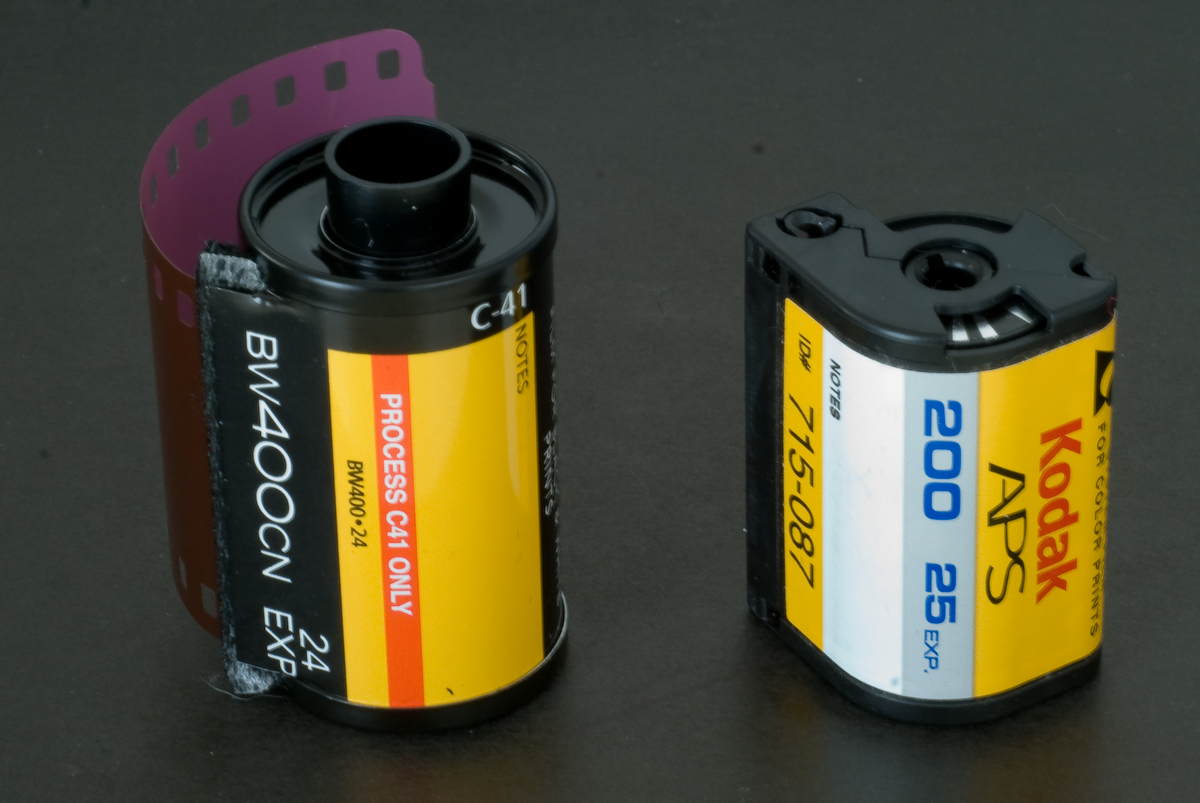
The most emblematic APS camera, the Canon Elph (known as the Canon Ixus in Europe) was superseded by the first Digital Elph in Year 2000. In 2002, all the cameras manufacturers had reverted to 24x36mm or gone digital, and APS was dead.
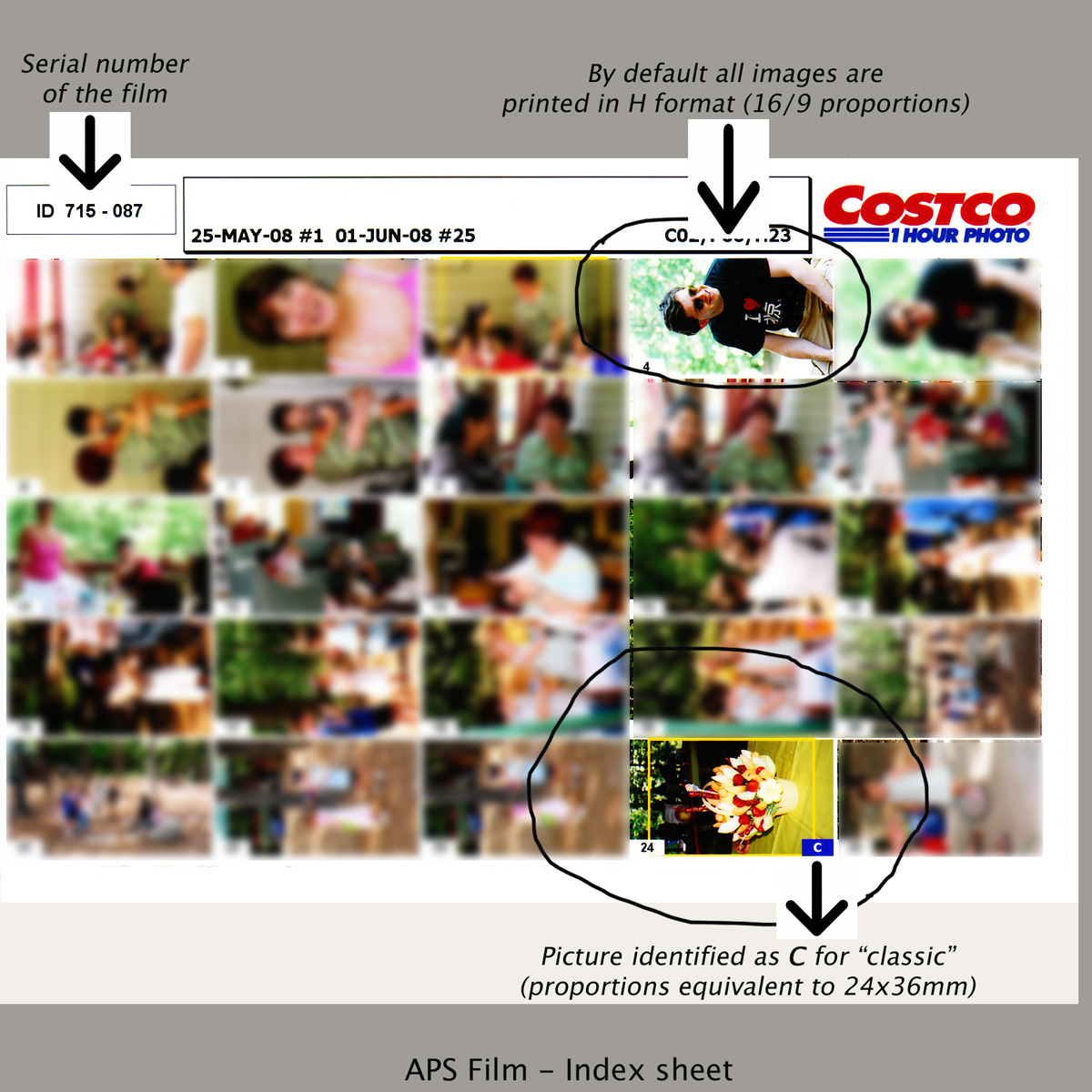
Bad timing is often advanced as the main reason for the failure of APS, but it’s not the only one. Kodak, Fujifilm and the big processing labs in their orbit positioned APS as a premium product. Processing an APS roll was 50% more expensive than a 135 cartridge. Unfortunately the prints, although delivered in large and fancy boxes with index sheets, were generally not as good as what you could get with a conventional 24×36 camera. The smaller film format (the APS film surface area is only 56% of 135 film) and the decision to make 200 ISO the new standard film speed (amateur 135 film was usually 100 ISO) were primarily to blame for the lower quality of the prints.
To make the situation worse, APS cartridges once exposed were not that easy to get processed: Kodak and Fuji had left the small processing labs and the minilabs out of the APS equation, and the films had to be sent to a few big processing plants. As a result, it was impossible to get APS prints in less than 48 hours.
Lower quality, higher prices, less convenience… not a recipe for success. The price premium charged for APS prints disappeared over time, but the harm was done and APS never recovered.
APS Cameras
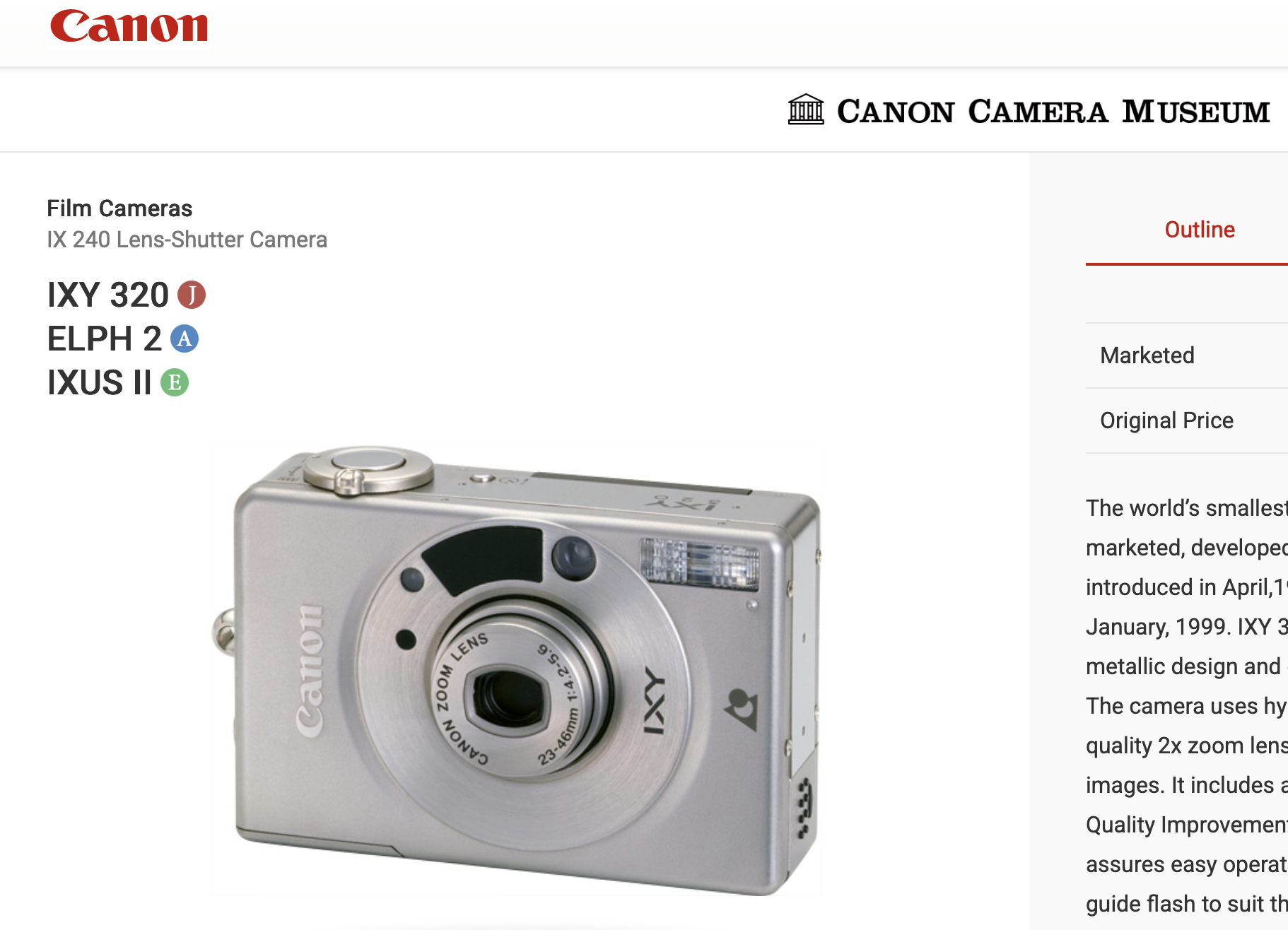
When APS was launched, very few cameras stood out: most were a simple adaptation of tried and tested 24×36 designs to the particularities of the new film format. Canon is probably the only manufacturer who developed an original concept with the Elph/Ixus. The model was very successful, and its modern digital derivatives are still selling like hot cakes nowadays.
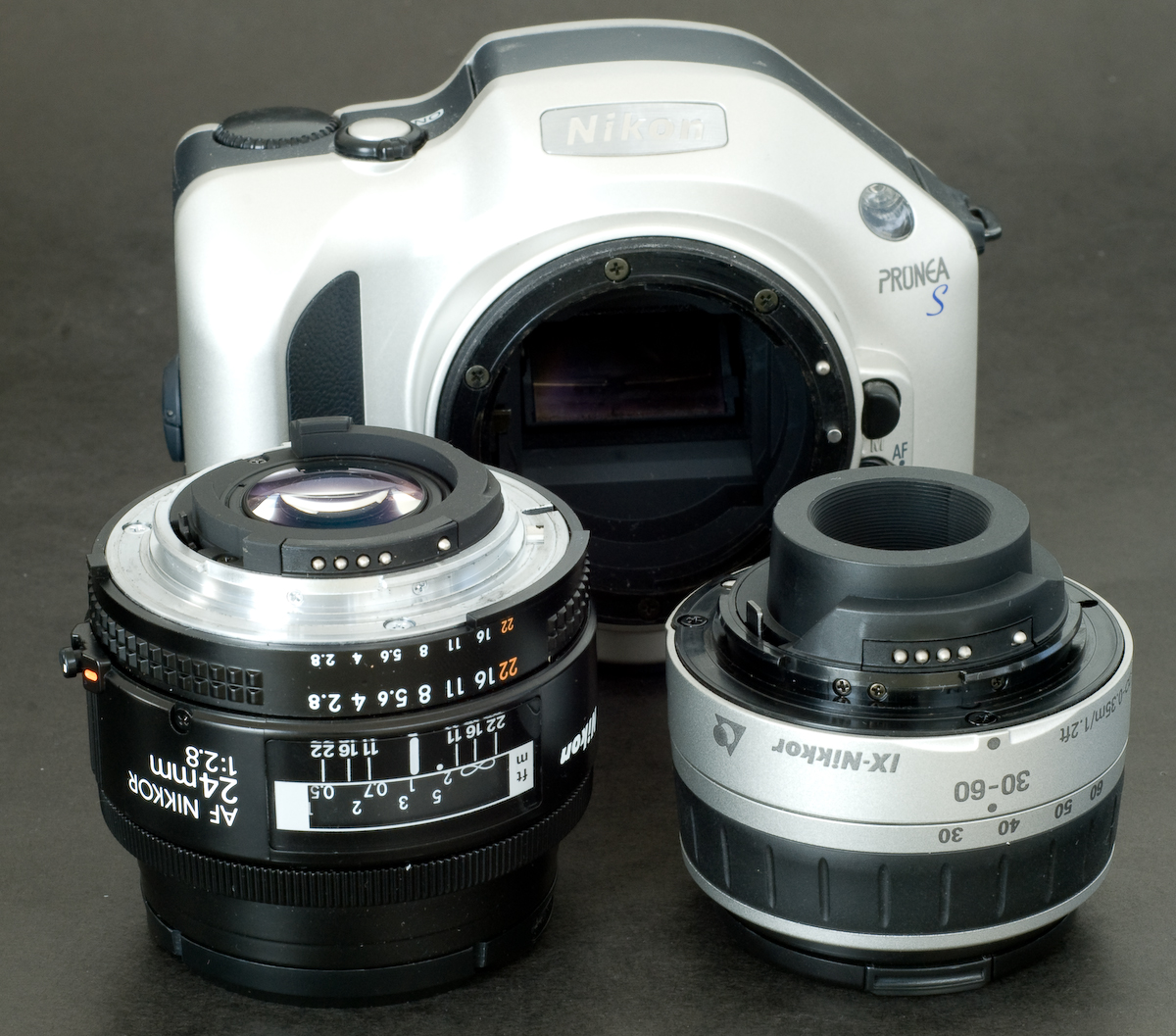
Canon, Minolta and Nikon also launched APS SLRs. Minolta bet (and lost) the farm on a brand new line of Vectis S cameras (new bodies, new lens mount, new lenses), while Nikon and Canon proposed a few dedicated APS lenses on two new bodies but retained the lens mount of their 24×36 product line.
In terms of features, the three manufacturers positioned their cameras above their entry level 24×36 SLRs and priced them like advanced amateur 24×36 models. Their high price, compounded with the inherent quality challenges presented by the small film surface and the absence of slide or black-and-white film greatly limited the impact of the APS SLRs on the enthusiast amateur market, and retailers soon tried to get rid of them at fire sale prices.

Buying an APS camera today – even for a few dollars – is a very bad investment. While it’s very likely that 135 film will still be used and processed for many years to come, the future of APS is dimmer. The user base was never that large to begin with, and the category of users which composed the APS constituency has migrated to digital by now.

The last APS cameras were sold – new – in 2002, and I would not be surprised if Kodak and Fuji pulled the plug on APS in the next 2 years. Some of the cameras are interesting curiosities, but the drop-in load mechanism – which was part of the standard – is very fragile and does not age well.

An update from July 2025
As predicted in 2009 when this blog post was originally published, Kodak and Fujifilm stopped producing APS film in 2011. And today, APS film cameras are practically worthless on the second hand market.
But the “APS” name itself had a surprising legacy.
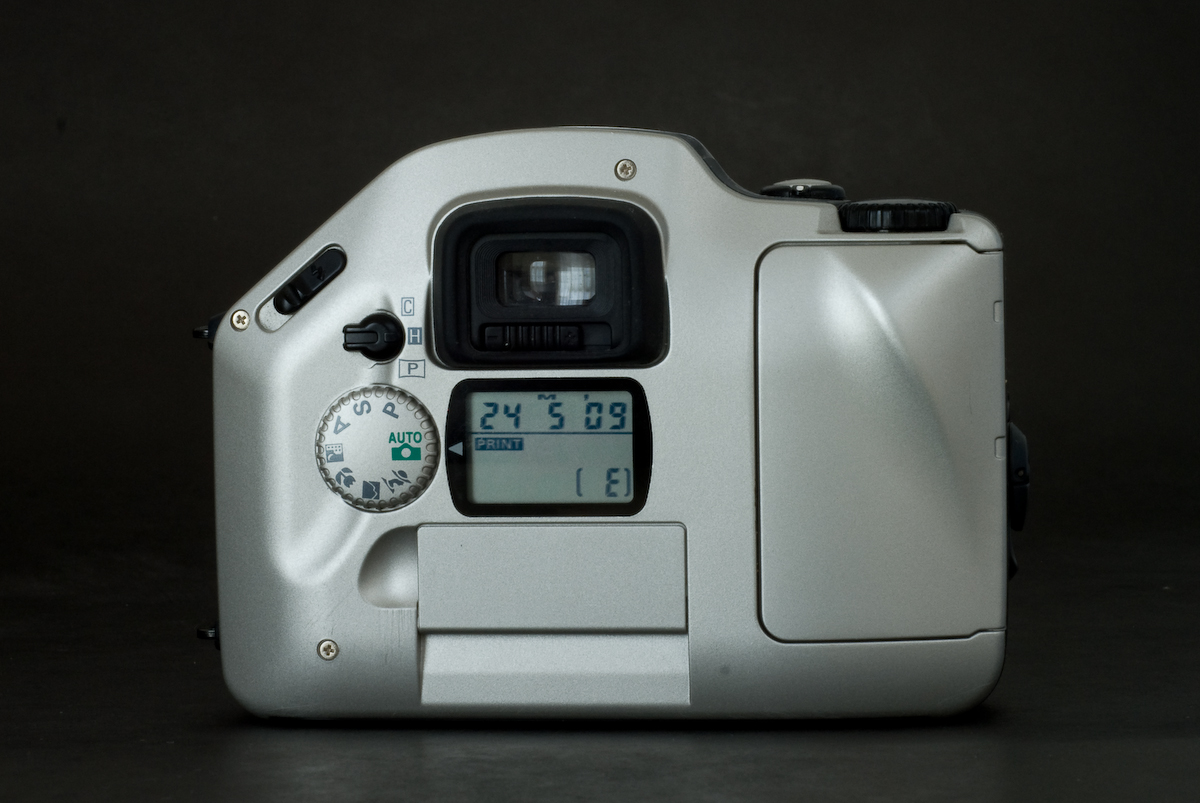
In an APS film camera, each frame is measuring 30mm x 16mm. Always. But there is a magnetic strip at the back of the film where the camera can record the aspect ratio desired for each print. The printer of the processing lab will read the instructions, and will deliver images cropped to the desired aspect ratio.
When setting the camera before shooting a series of pictures, the photographer can elect:
When the camera makers started switching to digital, the factories (the “fabs”) manufacturing image sensors had very low yields, and large sensors (anything larger than 8mm x 6mm) were extremely difficult to manufacture and as a consequence prohibitively expensive.
Even the pros buying Nikon and Canon high end bodies could not have afforded a camera equipped with an image sensor of the same size as a 35mm negative.

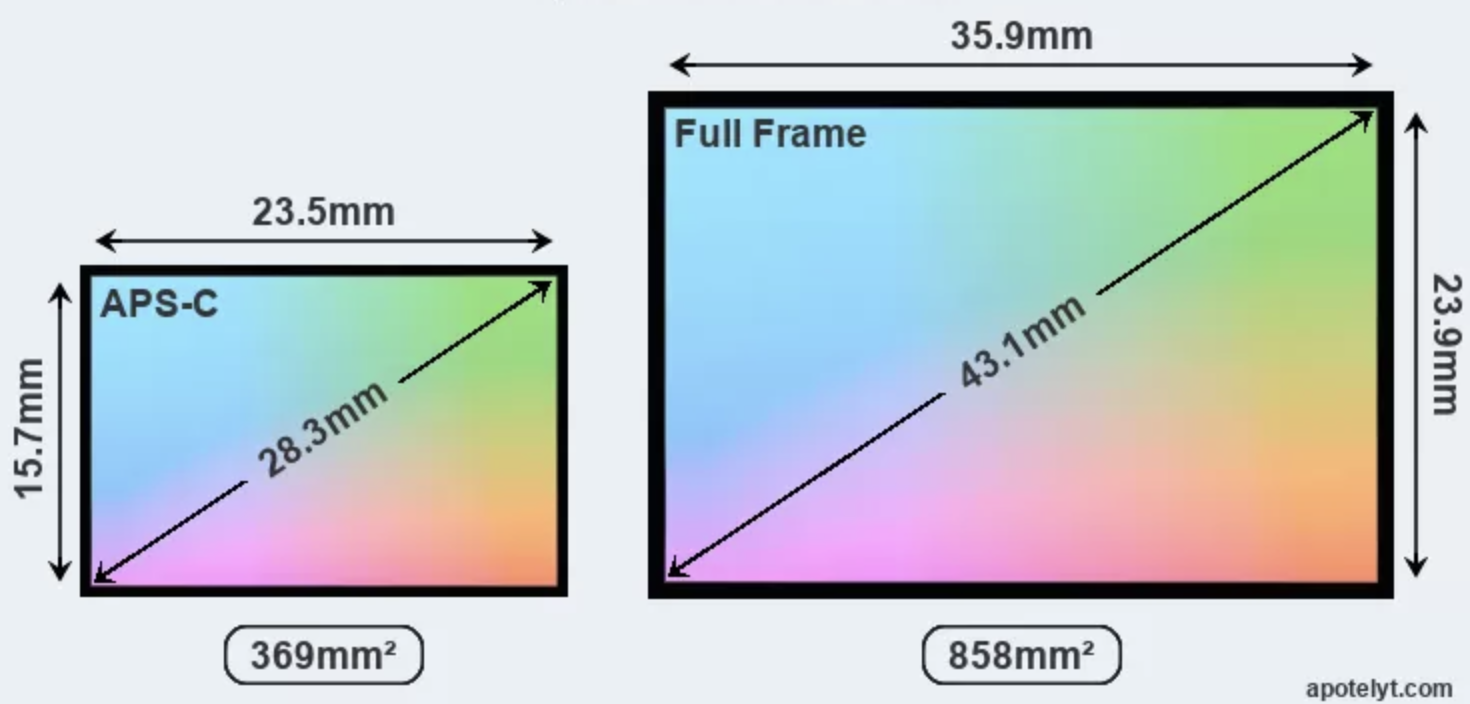
The best Nikon could offer on their first digital SLR, the D1 of 1999, was a sensor of approximately 24mm x 16mm, which was close to the size of an APS-C crop in the film era. Because the buying public was somehow familiar with the APS Film format and understood what APS-C meant, the moniker stuck and we still designate cameras using sensors of that size as “APS-C” camera.

For more about the APS film format
Another point of view on the APS debacle, courtesy of Ken Rockwell.
 CamerAgX - a new life for old gear