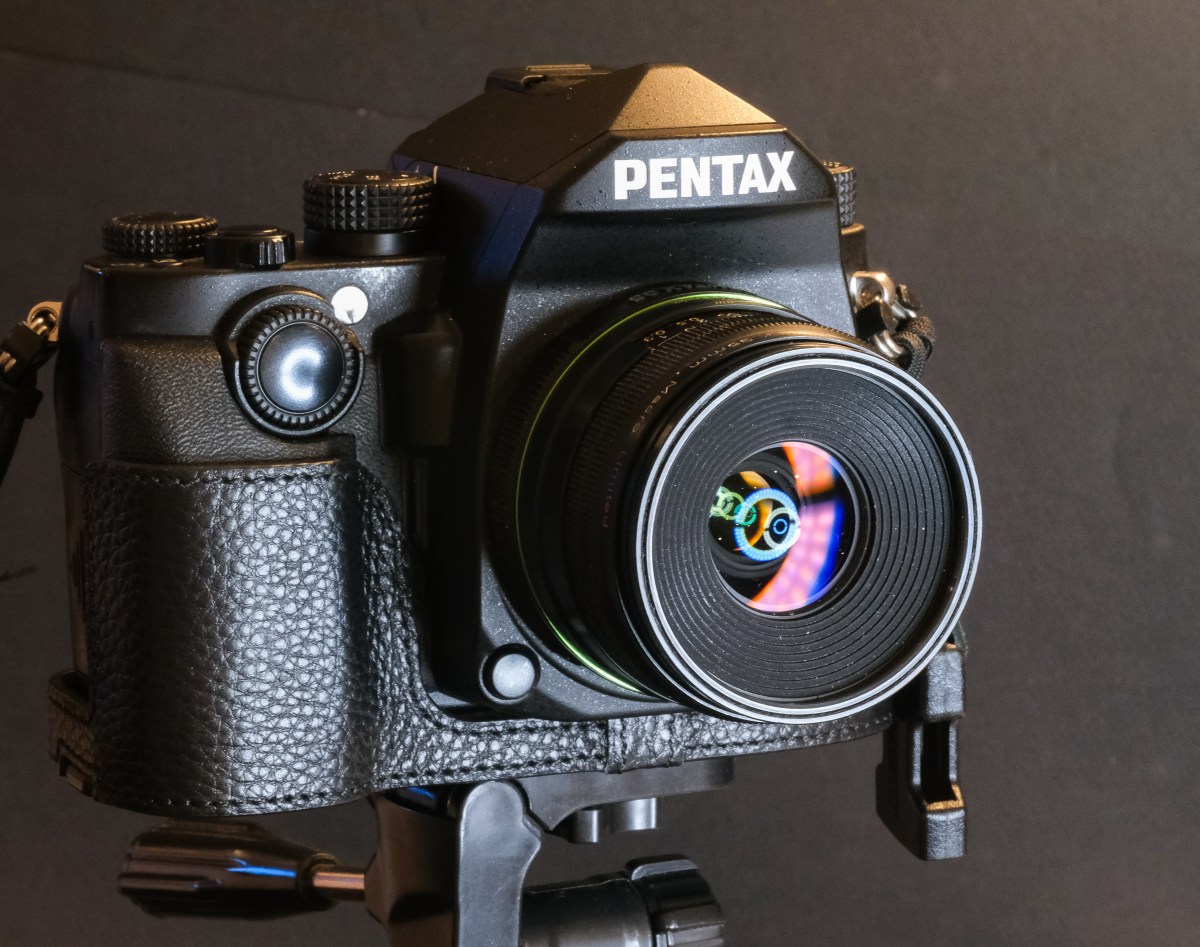
Pentax KP – Quirky grip design – great camera (Part One)

Only Canon, Nikon and Pentax still have dSLRs in their product catalogs, but although they’re still on the shelves of the retailers, I don’t know if any of those dSLRs is still being manufactured.

Pentax is committed to the dSLR architecture, and with the full frame K-1 Mk II, and no less than three cropped sensor models, the KF, the K-3 Mk III and the K-3 Monochrome, they have the youngest dSLR model range of the remaining big three (all four Pentax models were launched between 2018 and 2023).

Between the predecessor of the current KF (the K-70) and a then to come K-3 Mk III, Pentax thought there was room for an intermediate model, the KP, a technical evolution of the K-3 Mk II, but with a totally different design.
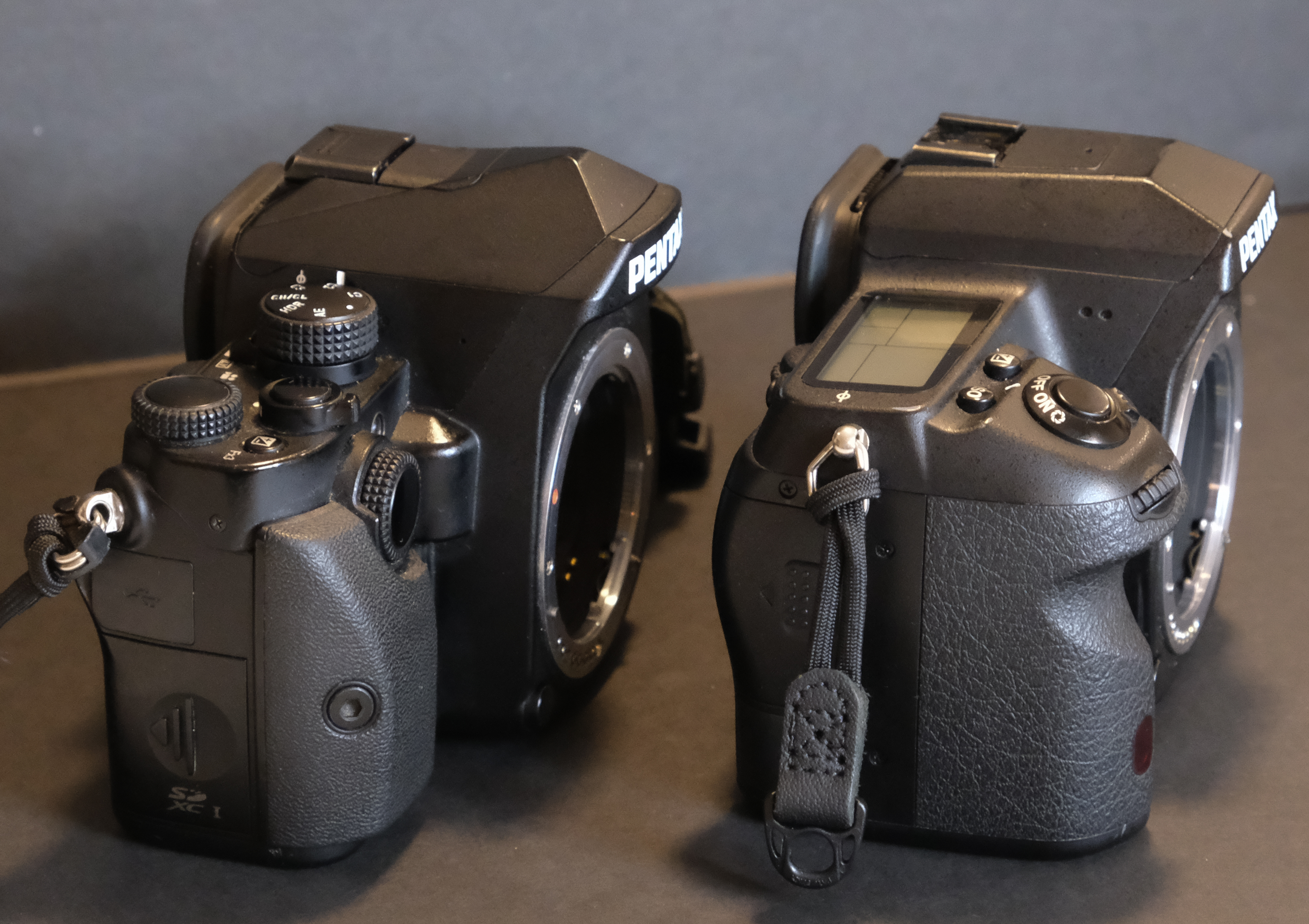
Pentax KP (left) and K-5 (right). A very different ergonomic study (this KP is shown with the “small” removable grip).

Launched in 2017 and retired in 2021, the KP begged to be different – from its Pentax siblings and from Canon & Nikon’ remaining dSLRs.

The KP was designed as a sort of mini K-1, with the aim of looking physically smaller than the K-3, but be more configurable and more solidly built than the entry level K-70. Its styling was reminiscent of the manual focus, non motorized cameras of the nineteen seventies, with a slim body and a shutter release button placed in the middle of the top plate.

Equipped with a newer generation 24 Mpix sensor, the KP retained the autofocus module of the “pro” K-3 Mk II. Like it, it could be fitted with an optional battery grip. It inherited the image processing engine of the K-1, and improved on its full frame brother with a more flexible configuration for its third control wheel.

Beyond the style, the KP’s main differentiation point with the K-70 and the K-3 Mk II was the ability for the photographer to choose between 3 sizes of hand grips.

The design of those interchangeable hand grips is somehow controversial. Professional reviewers like Chris Nichols of DPReview and Petapixel fame positively hated it. Among the Pentax photographers, some like it, some shoot with a KP in spite of it, and some remained true to the K-3 Mk II because of it.
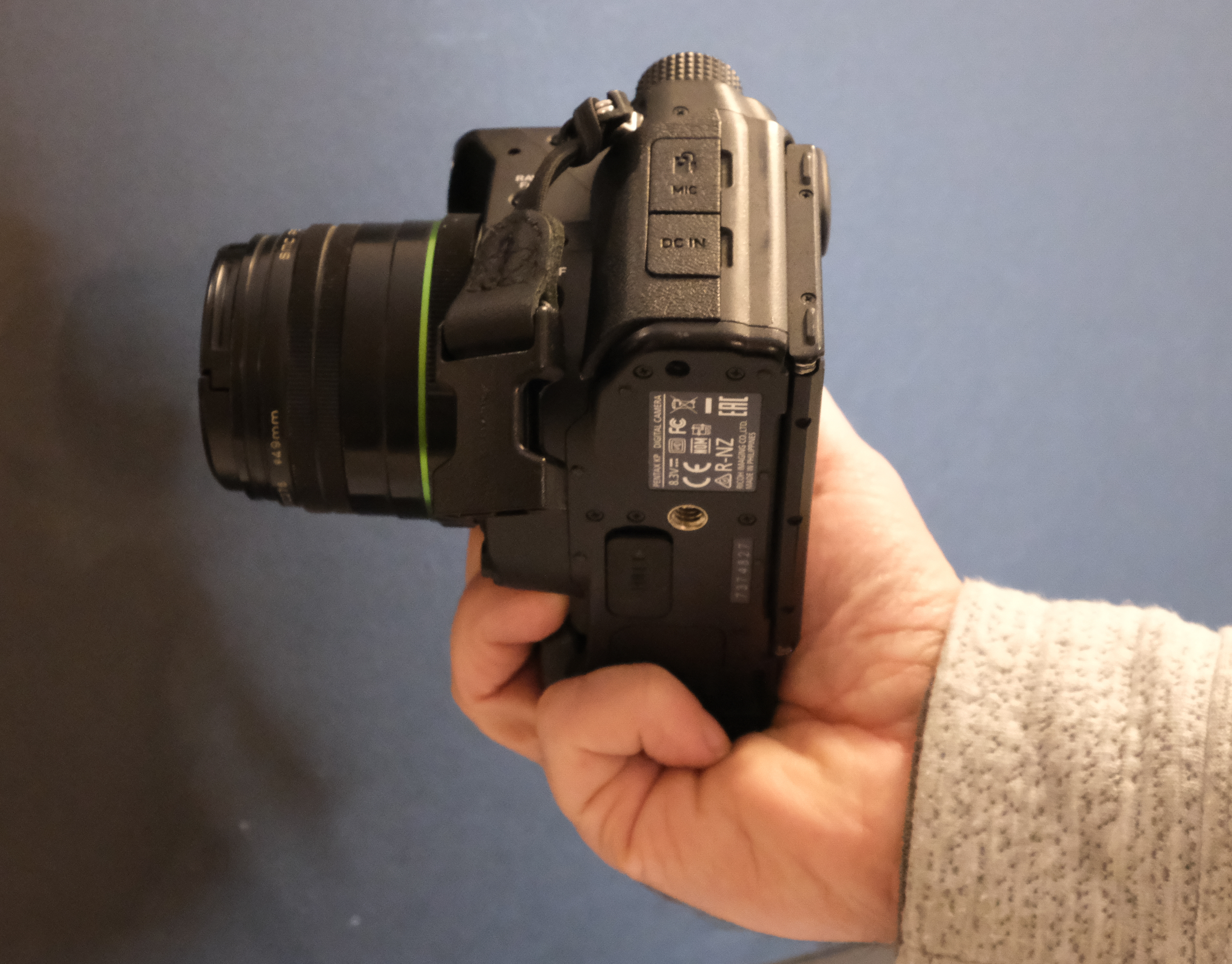
Trying to hold the KP firmly with one hand – a rather uncomfortable way to use this camera

The small grip was supposed to be mounted on the KP when the photographer was shooting with small (and light) primes, the large grip (and the battery grip) when shooting with a long and heavy tele-lens or tele-zoom, and the medium one the rest of time.

In the American market, the camera was packaged with the three hand grips initially, but after a while Pentax only included the small grip in the base configuration, the large one being part of an extra cost bundle also including a battery grip, and the medium sized one being sold separately for $49.99. None of those grips is available now, and my KP will be stuck with its small grip for the time being.
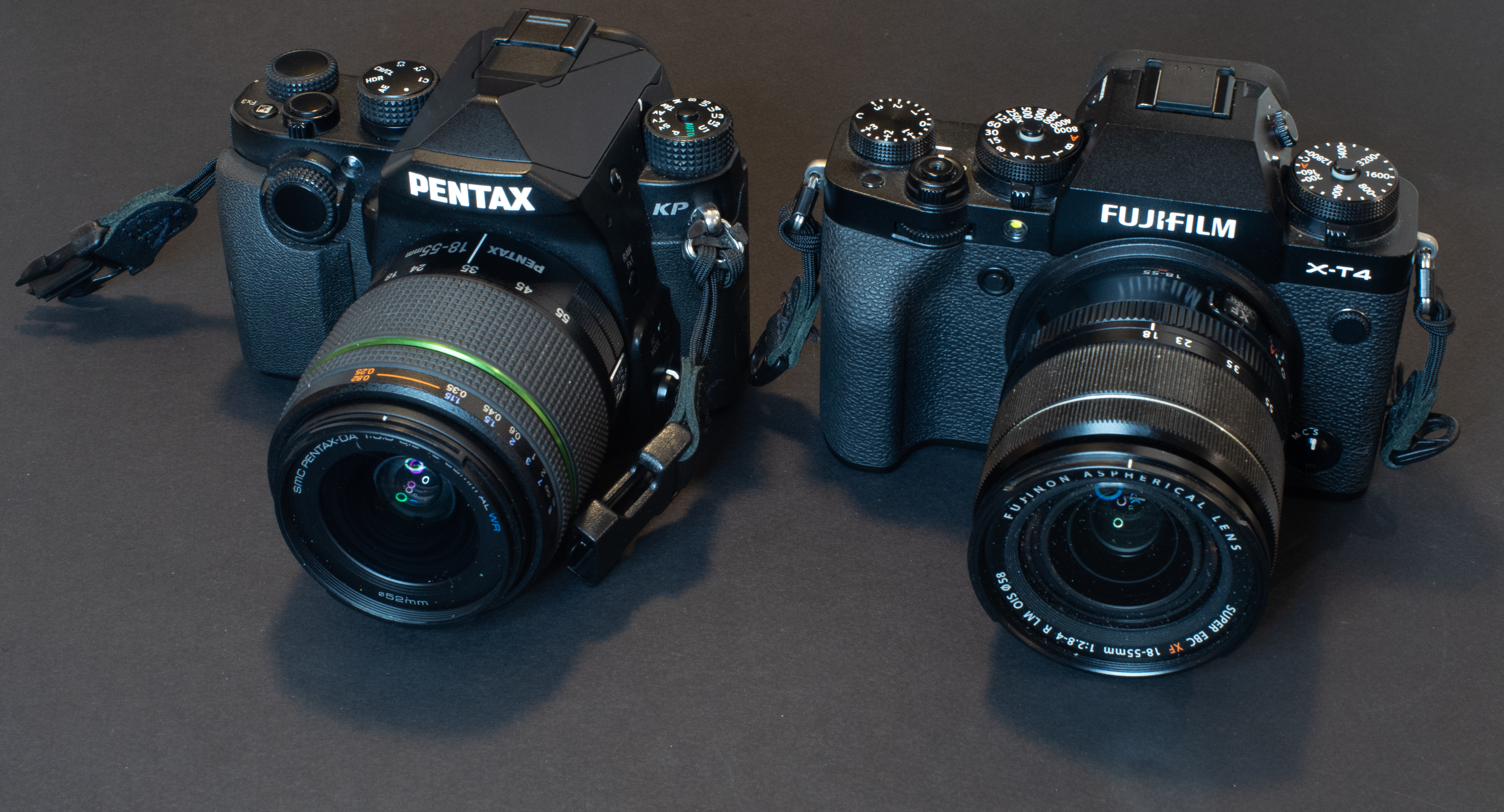
Pentax KP next to a Fujifilm X-T4 – counter-intuitively, the mirrorless camera is larger than the dSLR, and offers a significantly longer battery life.

The Pentax KP is not the only camera with a retro-inspired, small grip design – look no further than the very successful Fujifilm X series, but what works very well on a X-100 or a X-T4 does not click on the KP.

First impressions is the grip worth the buzz?

Pentax APS-C cameras tend to be small, and the KP looks even smaller than its siblings. But it’s not its compact size that strikes you the most when you bring the viewfinder of the camera to your eye for the first time, it’s its weight. It’s not really heavier than a Pentax K-5 or K-3 (all tip the scales at approximately 700 g), but its compact design and its small grip make its weight much more noticeable.
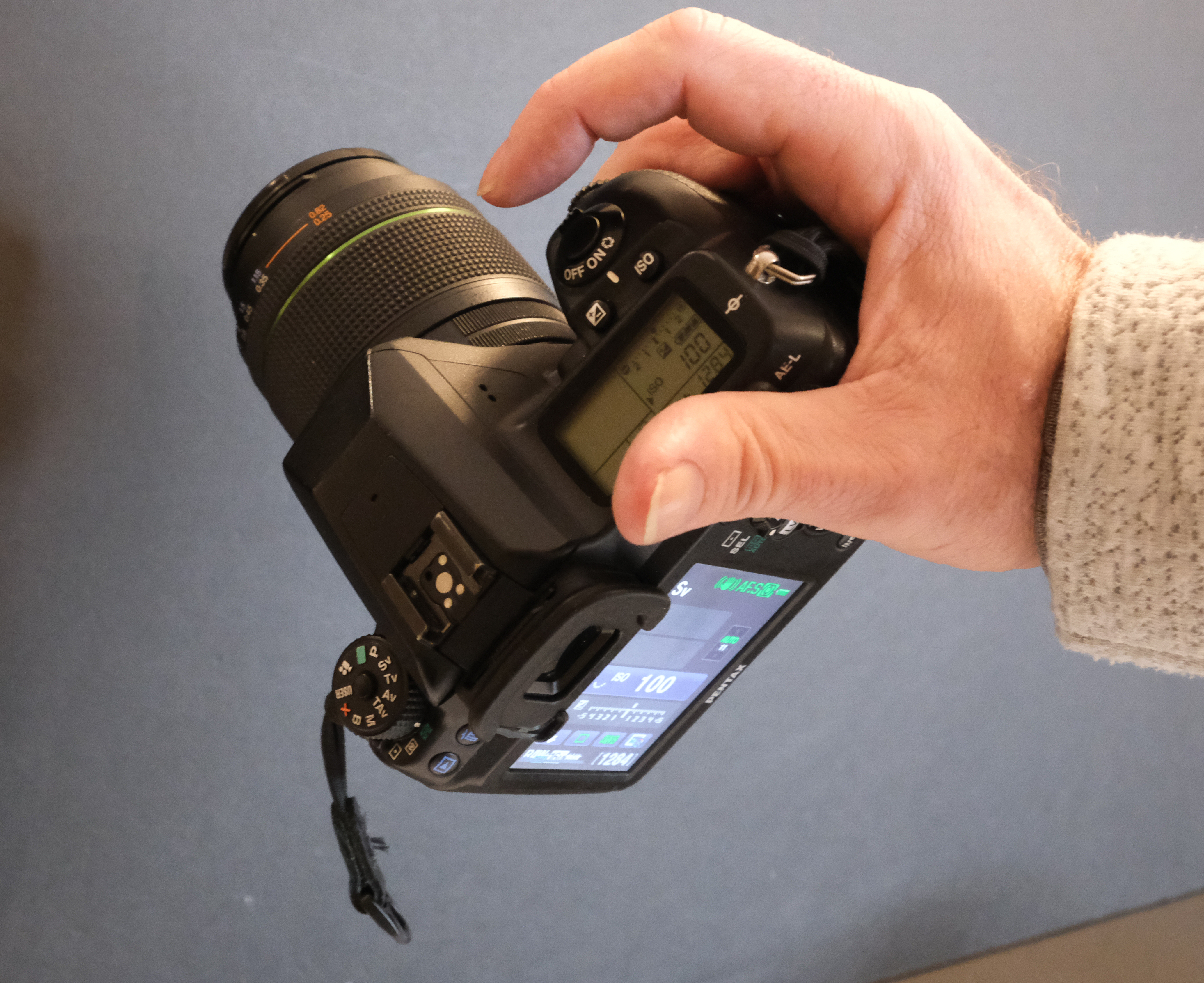
Pentax K-5 – you can hold it with one hand with confidence, and even adjust some settings with the rear control wheel.

On a K-5 or a K-3 (and on other dSLRs of more conventional design), the camera can be held firmly with the palm of the right hand and the three lower fingers, leaving the thumb and the index free to move and reach the different control wheels and commands. You can be confident that you won’t drop the camera while you’re moving around your subject, looking for the right angle.

If you try and hold the KP with one hand, you have to pinch the right side of the camera between your thumb and three of your remaining fingers (no room for the pinky). Even with a prime lens or a light zoom, we’re talking about two pounds of glass and metal here, that you will be afraid to drop if your fingers start releasing their grip (it’s not a coincidence that the previous owner of this camera had included a wrist strap in the package I received).
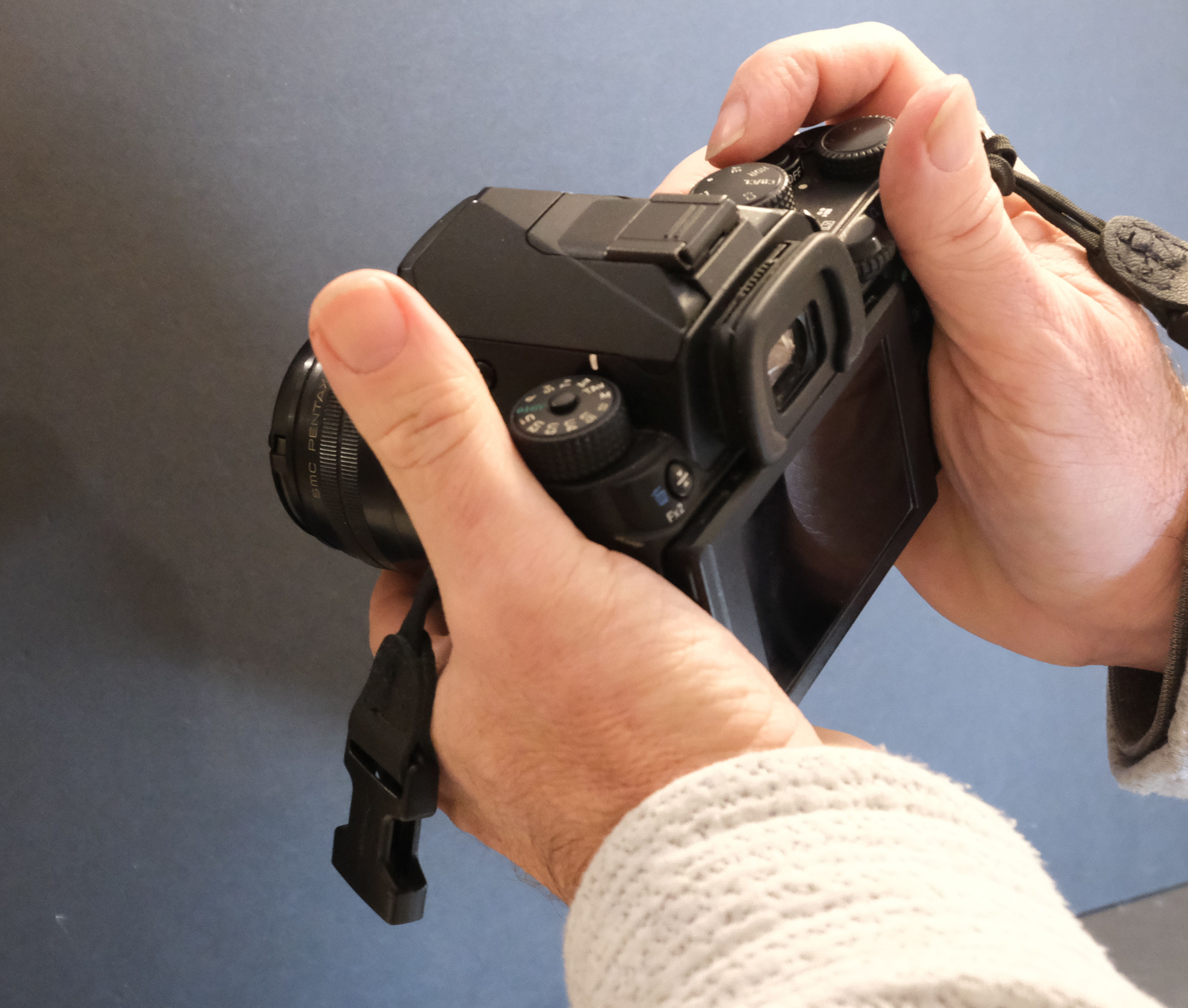
How the KP has to be operated if equipped with the small grip – held firmly in the palm in the left hand, right hand thumb and index on the controls.

With the small grip in place, the KP definitely requires a two-hand operation.

Solutions to the hand grip challenge

The design, the ergonomics and the small grip of the KP may work for you. Personally I would have liked the camera to be more conducive to one hand operations, and I believe that the slim design of the KP would have worked better if the camera had been one or two hundred grams lighter and its body just a bit taller.

The simplest way for me to address my “grip problem” would be to buy the OEM large grip (Pentax reference O-GP1672). Based on the input of other KP users, it should make “one hand operations” easier. If only I could locate one.
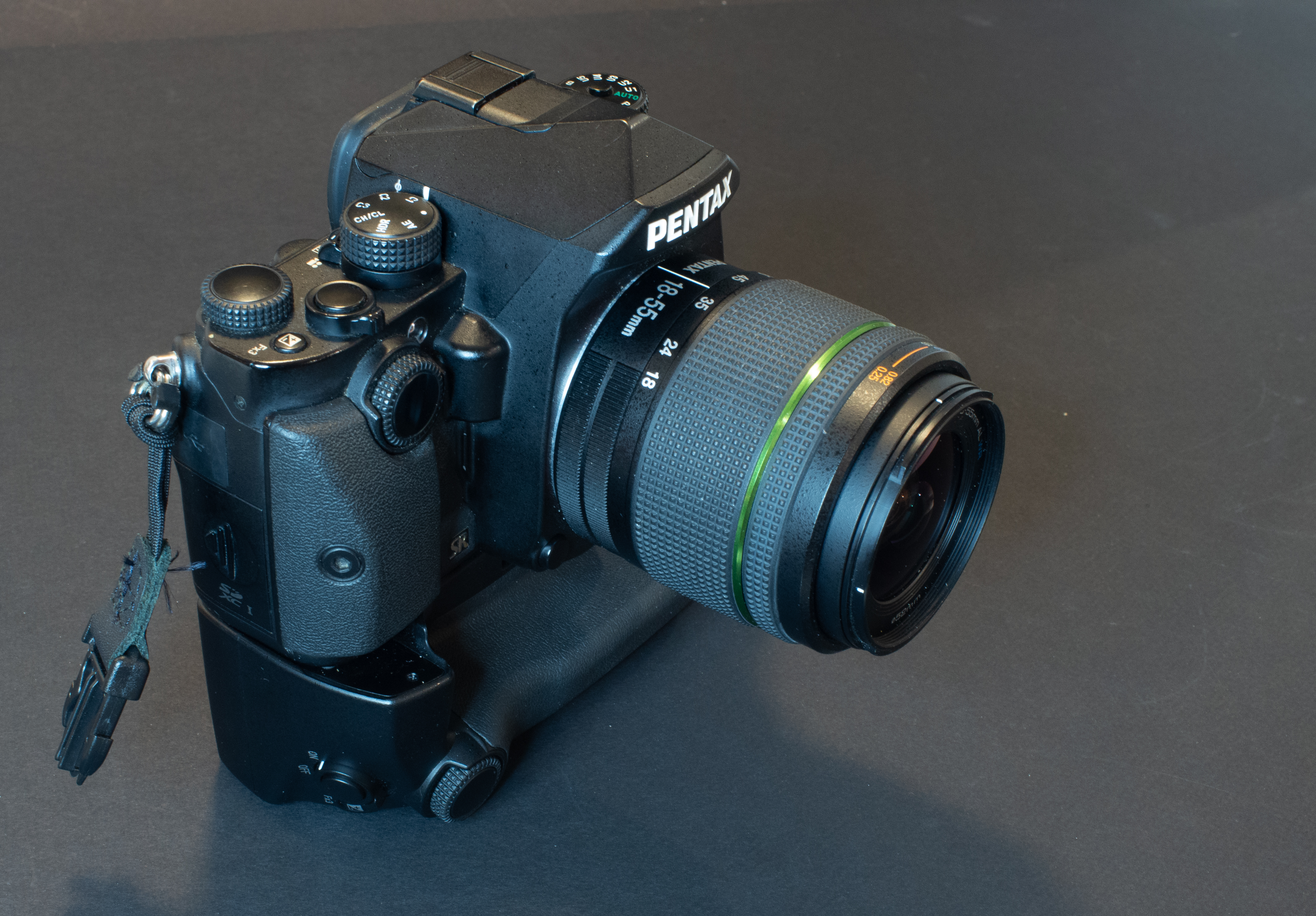
Pentax KP with the Battery Grip – the battery grip is designed to be paired with the large hand grip – but even with the small hand grip still in place, it makes the camera much more comfortable to hold.

The camera I bought came with the optional Pentax D-BG7 battery grip (but without the large hand grip, unfortunately). I’m not a fan of battery grips in general because they make the camera bulkier and often require to remove the battery door, but in the case of the KP, the battery door (and the OEM battery) remain in place, and the grip addresses two of the KP’s glaring issues – the battery life and the ergonomics, without much of a weight penalty (300g approx).

With the battery grip in place, the battery capacity of the camera almost triples: the 1050 mAh battery remains in the body of the camera, and only starts being drained when the battery located in the grip is depleted (the grip accepts the same 1050 mAh battery as the camera does, or the larger 1860 mAh battery of the Pentax K-5/K-3 series).

As for the ergonomics, the battery grip is a huge improvement. It’s supposed to help with vertical composition, but even when composing an horizontal image it makes the camera much easier to hold and control : I’m not afraid to grab it with one hand anymore, and although the front control wheel remains difficult to access, the one at the back of the body is easily reached.

A last option is to do for the KP what I did for my other “slim bodied” cameras (the Fujifilm X series and Sony HX-60): I ordered a Leather Half Case from a non specified Chinese vendor on AliExpress. Those half cases add almost a centimeter of leather under the bottom plate, they also make the front of the camera’s body a bit thicker and increase the surface presented to the fingers, making the camera much easier to hold.

One of the many online stores selling KP half cases.

I picked the black one (it’s also available in fancier colors). This half case is well finished, and makes the KP much more comfortable to hold. A few millimeters here and there can do a lot. I can even reach the rear control wheel while holding the camera firmly in the palm of my right hand. A definitive improvement, and a permanent fixture on my camera now.
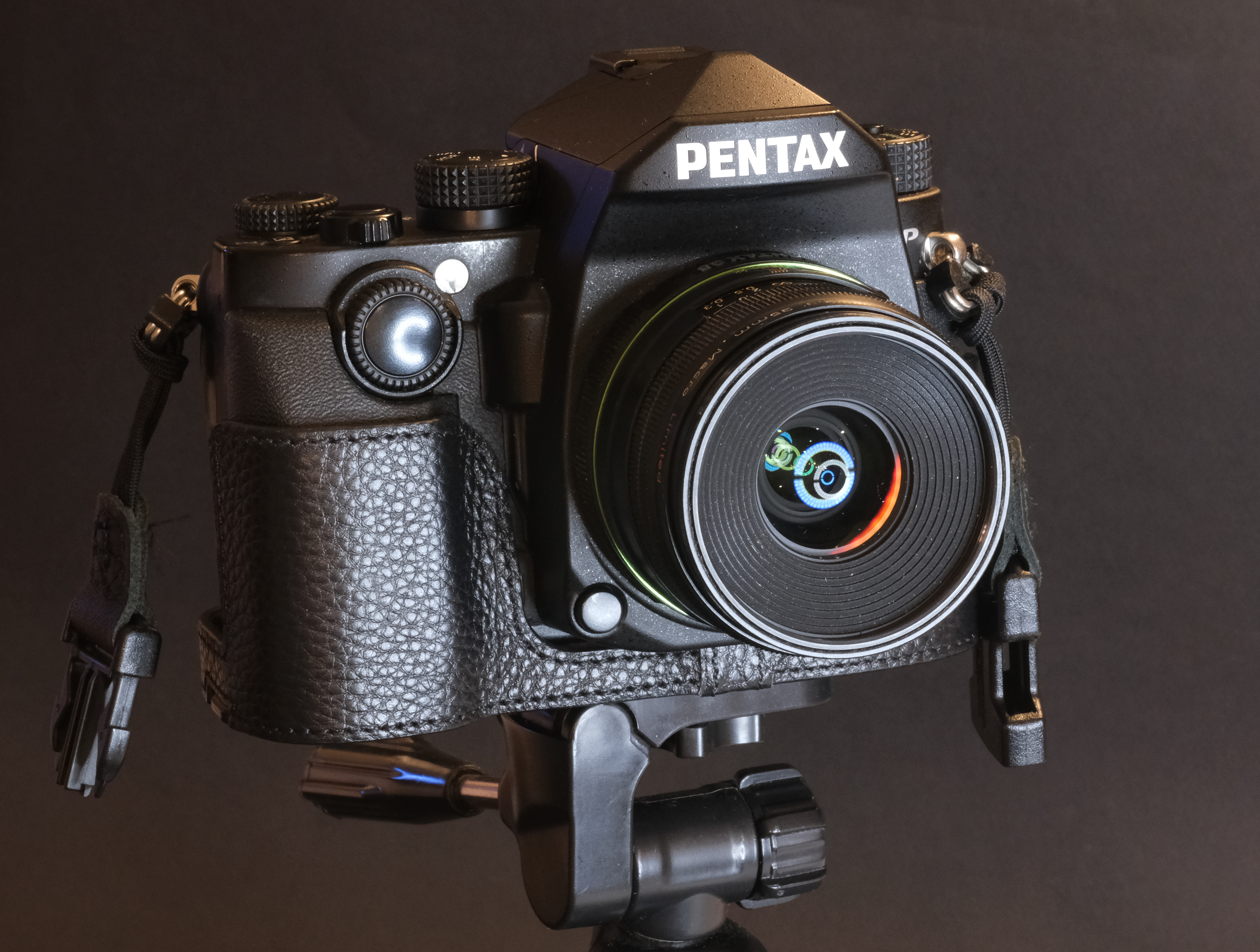
The leather half case makes the KP much easier to work with.

Shooting with the Pentax KP

Now that I’ve described in length my two major gripes with the KP, it’s time to discuss the positives. Optical viewfinder, abundance of physical controls, configurability, and of course, image quality. It’s a very pleasant camera to use, that begs to be taken to a photo stroll, and will reward you with great pictures. More about the Pentax KP in the next blog post, in two weeks.


More recent content in CamerAgX


Georgia pictures from my Flickr Album

Cartersville, GA – home of the first Coca-Cola wall advertisement (1894). Restored in 1989. Pentax KP – Pentax DA Limited 35mm f/2.8 macro
Cartersville, GA – Pentax KP – Pentax DA Limited 35mm f/2.8 macro

Cartersville, GA – one of the many restaurants painted in Coca-Cola colors. Pentax KP. Pentax DA Limited 35mm F/2.8

Cartersville, GA – another Coca-Cola Red restaurant. Still standing. Pentax KP. Pentax DA Limited 35mm F/2.8 macro.
Cartersville, GA – the 4 Way Lunch restaurant – Detail – Pentax KP – Pentax DA Limited 35mm F/2.8

Pentax – the road to insignificance

It’s a bit early to write Pentax’s obituary. But there’s no denying that the company (now a subsidiary of Ricoh) is  a mere shadow of its former self.

Pentax--6056
The Spotmatic – a great camera in the sixties – but Pentax should have replaced it earlier than 1975

From the mid fifties to the early seventies, the Asahi Optical Corporation  was an innovator. They scored an impressive number of “first” :

  • First Japanese single lens reflex camera to enter production (Asahiflex – 1952)
  • First reflex camera with instant return mirror (Asahiflex II b – 1954)
  • First modern single lens reflex (SLR) camera,  with a pentaprism at the center of the top plate, a winder arm and shutter speed knob on the right side, and a folding rewind crank to the left (the “original” Pentax of 1957). This was to be the model for all other reflex cameras for the next 20 years. The camera was so important for Asahi that the whole corporation became later known as “Pentax Corp”.
  • First SLR with Through the Lens (TTL) metering on the market  (Pentax Spotmatic – 1964)
  • First automatic exposure SLR with an electronic shutter (Pentax Electro Spotmatic – 1971)
  • First multi layer coated lens  (or at least the first manufacturer to communicate about multi-layer coated lenses to the public at large – 1971)

As a result, Asahi Pentax was a sales leader in the sixties and early seventies: for example, it was the first Japanese camera company to sell over one million SLRs.

Pentax lost its supremacy during the first half of the seventies

  • they stuck to the Spotmatic form factor until 1975
  • they stuck with stopped down metering on their line of bread and butter Spotmatic cameras until the launch of the Spotmatic F in 1973, and to the m42 screw mount until far too late. Because they had adopted a proprietary bayonet early on, Minolta and Nikon had been able to offer full aperture metering (a major comfort improvement for the photographer) since 1966, with Canon and Olympus following in 1971.
  • As a result, Pentax was out-innovated by new entrants:  Olympus OM-1 (the first ultra-compact SLR and camera system); Fujica ST-801 and ST-901 (first use of Silicon metering cells and of LED displays in the viewfinder); Olympus OM-2 (first implementation of On The Film (OTF) real time flash metering).

The Pentax Spotmatic F (1973) with a Pentax specific version of the universal 42mm screw mount – designed  for full aperture metering.

The second half of the seventies was not better:  Pentax was in reactive mode and started progressively being pushed to the bottom of the market :

  • Changes to their lens mount are always very risky for camera manufacturers. It may not bother the beginner or the amateur who are only going to shoot with the kit lens they bought with the camera, but it’s an invitation for enthusiasts and pros to reconsider their aleigence to the brand.  Between 1971 and 1976, Pentax changed the lens mount of its cameras twice.
  • Pentax could not compete with Canon and Nikon in the “pro” market because they did not have a modular camera to offer until they launched the LX in 1980, and after they did, they lacked some of the specialized lenses and the support network that the pros required,
  • they were out-innovated in the heart of the enthusiast market: Canon with cheaper to manufacture and feature rich micro-processor driven cameras such as the AE-1 and the A-1, Minolta with multi-mode SLRs.
  • they had to face new competitors in the “amateur” segment of the market with  Nikon and Olympus successfully entering the broader consumer market with cameras such as the EM and the OM-10 in 1979.

By the end of the eighties, Pentax had been relegated to the 4th position on the photo-equipment market, behind Canon, Minolta and Nikon. They had completed the transition to auto-focus SLRs, but were primarily known for their two remaining manual focus SLRs (the K1000 and the P3) and their water-resistant point and shoot cameras.

2020-04-Pentax-6673
Pentax P3 – a camera for beginners – very successful on the market (3 million sold between 1985 and 1997)

They survived until the advent of digital photography. Konica-Minolta’s deep troubles gave them one last chance of resurgence in 2003-2004. They recovered the #3 position on the market for a while. But after early successes – their first dSLRs, the *ist D and *ist DS were good cameras, technically on par with contemporary Canon and Nikon offerings –  they did not (or could not) keep up with the pace of their competitors, and let their market share decline to the point where their presence is hardly noticeable today.


More about Pentax’s last manual focus cameras in a few weeks with reviews of the Super-Program (Super-A),  P3 (P30) and ZX-M.

2020-04-Pentax-6660
Pentax’s last manual focus SLR – 1997


IMGP0885
Haleakalā volcano, Maui, Hawaii – Pentax *ist DS – Pentax 18-55mm lens.

IMGP0993
Hawaii – Big Island – Pentax *ist DS

IMGP0968
Hawaii – Big Island – Pentax *ist DS

The Pentax m42 lenses – meet the Takumars

The Asahi Optical Corporation (known for its Asahi Pentax and Pentax cameras) was founded by a gentleman named Kumao Kajiwara. The brother of the founder was a painter of some fame named Takuma Kajiwara, and in his honor, Asahi named its lenses “Takumar”. We’ve seen stranger things in the past: in the thirties, Leica had named a line of lenses “Hektor”, for Oskar Barnack’s dog, and in 1901, Daimler cars had been re-branded  “Mercedes” after the daughter of their main car dealer on the Cote d’Azur.

Takumar lenses still enjoy a very good reputation, and some of them are highly sought after and sell for hundreds of dollars.

Pentax Spotmatic
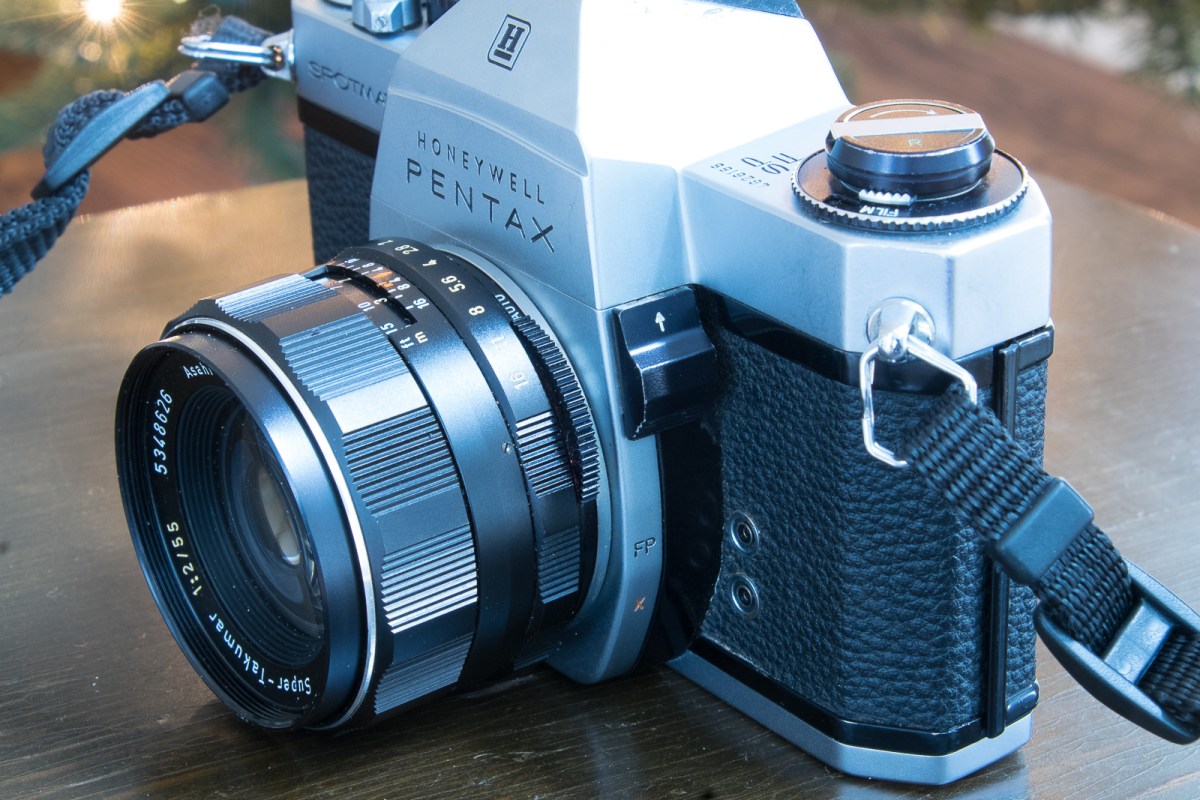
Pentax Spotmatic SP with a 35mm f/2 Super-Takumar lens

With most vendors (Canon or Minolta, for instance), the different generations of lenses are named for their mount (a Canon FL lens has a so called FL mount and works stopped down, while a Canon FD lens has the so called FD mount that enables full aperture metering).  No such thing with Pentax. The name of the lens (Super-Takumar as opposed to Super-Multi-Coated Takumar or SMC Takumar) relates to the coating of the lens. The most recent lenses (Super-Multi-Coated or SMC) are generally the ones with the updated lens mount supporting Full Aperture metering, but there are exceptions both ways. The only way to determine for sure that a Pentax screw mount lens can meter at full-aperture is to have a good look at the mount.

Coating and Multi-Coating – what is it about?

When it comes to the optical lenses used with cameras, flare is the enemy. And reducing light reflections also improves the contrast (the images look sharper). That’s why lens coatings were developed.

A coating treatment is engineered to block the reflections in a given wavelength. Multi-coating treatments block reflections in a wider range of wavelengths.

Lens coating was a process unknown to the public until Pentax and Fuji started using it as a differentiator in their advertising campaigns in the early seventies (it had been invented before WWII in Germany and had long been considered a military secret).

The 42mm Pentax lens series  – an over-simplified summary…

Auto-Takumar: 42mm lens mount, with aperture pre-set: the photographer has to cock the spring loaded aperture mechanism of the lens after each shot, and will compose and focus at full aperture. The lens will automatically stop down to the pre-set aperture when the shutter release is pressed. The pre-Spotmatic cameras of the late fifties-early sixties (Model K, Model S) came with Auto-Takumar lenses.

Super-Takumar: 42mm lens mount. Automatic pre-selection lens for stopped down metering cameras. They were released in the early sixties and their long sales run more or less corresponds to the Spotmatic’s. The aperture pre-set mechanism does not need to be cocked by the photographer anymore. And the lenses benefit from some form of single layer coating.

cameras--6634
The mount on two Super-Takumar lenses: on the left, the Pentax ES variant of the m42 screw mount with the prong transmitting the aperture value to the camera (generally found on S-M-C and SMC lenses) , on the right a Super-Takumar with the conventional m42 mount.

Super-Multi-Coated Takumar: Introduced with the Electro-Spotmatic of 1971, they provide full aperture metering on the ES, the ES II and the Spotmatic F cameras – the lens mount was modified and now transmits the pre-selected aperture value to the camera via a prong (because it made its first appearance with the Pentax Electro-Spotmatic, this variant of the m42 Universal mount is sometimes named Pentax ES mount).

Super-Multi-Coated Takumars remain compatible with the cameras with stopped down metering like the original Spotmatic and the  Spotmatic II (although compatibility issues arise when mounted on cameras of other brands and with some modern lens mount adapters). Obviously, they get their “Super-Multi-Coated” name from Pentax’s multi-coating.

SMC Takumar: Minor cosmetic differences with the “Super-Multi-Coated” Takumar. Same full aperture metering capabilities and same Pentax ES mount. Introduced with the Pentax ES in 1972.

To the despair of Zeiss and Nikon who had been manufacturing multi-coated lenses for years without letting it known, Pentax  decided to use “multi-coating” as a marketing differentiator – and using a short acronym such as SMC probably helped convey the message to the consumers.

In any case, Pentax’s SMC multi-coating was more than a marketing ploy: when Popular Photography tested the multi-coated lenses of Pentax against their competitors, the SMC coating proved to be the best by a wide margin.

The bayonet mount lenses launched with the KM, KX and K2 bodies of 1975 are simply named SMC Pentax.

Are they radio-active?

Some of the high-end (F/1.2, F/1.4) Super-Takumar  are radio-active- as are other ultra-luminous lenses from other vendors like Canon. Because the optical glass contained Thorium. The use of Thorium was banned at a later stage because of the harm it could do to the workers in the glass foundries.

I’m not an expert in this field – what I’m reading is that the lenses are not very radio-active (they would veil the film if they were), and that unless you grind the lens, and ingest or inhale the dust, you should be safe. (more about the issue: http://www.orau.org/ptp/collection/consumer%20products/cameralens.htm).

What to buy?

The Super-Takumar are probably the most common of all (thanks to their long production run), but even the shorter lived S-M-C and SMC Takumars are easy to find. Lenses compatible with the “universal” m42 mount abound, but there are very few third party lenses compatible with the Pentax ES variant. If you want a lens that does not exist in the Pentax SMC line-up (a trans-standard zoom, for instance), Tamron Adaptall lenses are the best option.

More about the Pentax 42mm lenses: http://www.klassik-cameras.de/Pentax_Takumar_e.html


Pentax--6088
Horace – French bulldog – shot with Pentax 35mm f/2 lens (attached to a Fujifilm X-T1)

Mounting a Pentax 42mm screw mount lens or a Nikon F lens on a Canon T90

Mirrorless cameras have made us familiar with the concept of mounting old manual focus lenses manufactured many decades ago on a modern camera. A little known fact is that Canon’s T90 (their top of the line manual focus SLR in the eighties) can work in a full featured semi-automatic mode with Pentax screw mount AND Nikon F lenses, thanks to adapters which were at some point sold by Canon themselves.

Canon-T90-6566
Canon T90 with Asahi Pentax Super Takumar (35mm f/2)

How is it even possible?

The Canon FD mount has one of the shortest flange to film distances of all 35mm SLRs at 42mm. On the other hand, the Nikon F flange distance is one of the longest, at 46.5mm (source:  Wikipedia – Flange focal distance). The “universal” 42mm screw mount (used by Asahi Pentax and the East German offspring of Zeiss until the mid seventies) is close to the Nikon’s flange distance at 45.6mm. Therefore, if a lens mount adapter can be made less than 4.5 mm thick, it will be possible to mount a Nikon lens on a Canon camera without losing the ability to focus to the infinite (and 3.6mm is the right thickness for a 42mm screw mount adapter).

The difficult part of course is to transmit aperture information to and from the lens – but if the camera is designed to work – at least in one specific mode –  without having to exchange information with the lens (semi-automatic exposure with stopped down metering and no aperture pre-selection, for instance), a very simple lens mount converter will be able to do the job.

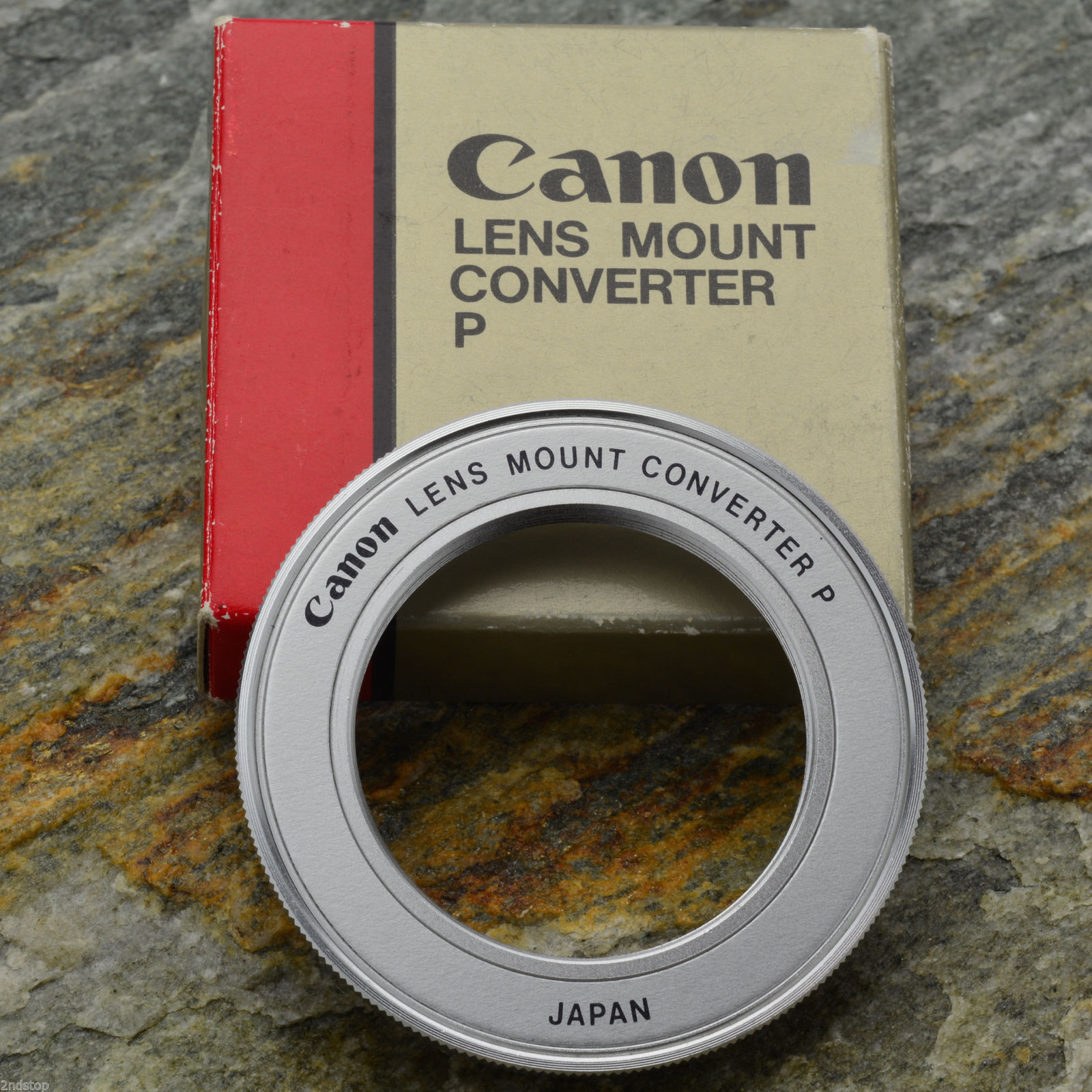
Such adapters can be found on eBay for less than $10.00 (recent Chinese manufacturing). More surprisingly, it appears that Canon used to sell Canon branded, made in Japan adapters in the sixties (source: Cameraquest, Pacificrim).

canon_sales_catalog_1969_lens_adapters
Canon Lens Mount Converters – from Canon’s 1969 System Equipment catalog (courtesy: Pacificrim.com)

42mm screw mount lenses

I recently found one of those 42mm screw mount to FD adapters, (it does not look like the genuine Canon item shown in the picture below, but it’s made in Japan) and decided to test it with a Pentax Super Takumar 35mm F/2 on a Canon T90.

The T90 is an interesting camera – while it does not offer a true semi-automatic metering mode at full aperture with Canon’s native FD lenses, it simply has to be set to stopped down metering to gain a fully functional semi-automatic exposure mode, non only with Canon FD and FL lenses, but also with “adapted” screw mount lenses.

canon_lens_mount_Converter_P_box
Canon Lens Mounter Converter P (Credit: origin of photography unknown)


The main mission of a lens mount adapter is to position the guest lens (the Pentax 35 mm f/2 in our case) so that its flange will sit at precisely 45.6mm from the film plane – as if it was mounted on an Asahi Pentax camera.

The converter does not provides any mechanical linkage between the adapted lens and the camera, and it has no mechanism to force the lens to stop down to the pre-selected aperture when the photographer presses the shutter release. Therefore, it can only work with lenses with no automatic aperture pre-selection, or lenses where the aperture pre-selection can be switched off to force the lens to always keep the iris at the value shown on the aperture ring.

Not all 42mm screw mount lenses are created equal

Lenses deprived of such a switch can only be operated at their maximum aperture – which makes them mostly unusable. Lenses (such as the Fujinon screw mount lenses) designed to support full aperture metering add another constraint – they typically use a non-standard derivative of the 42mm lens mount (with a protruding pin in the case of the Fujinon) and can not be physically mounted on this adapter (I tried).

Nikon lenses

Nikon has been using the same F bayonet layout for 60 years, but had to go through many iterations of its lens mount to stay current (support of through the lens metering (TTL), introduction of program modes, of matrix metering, and many variants of autofocus).

Canon-T90-6586
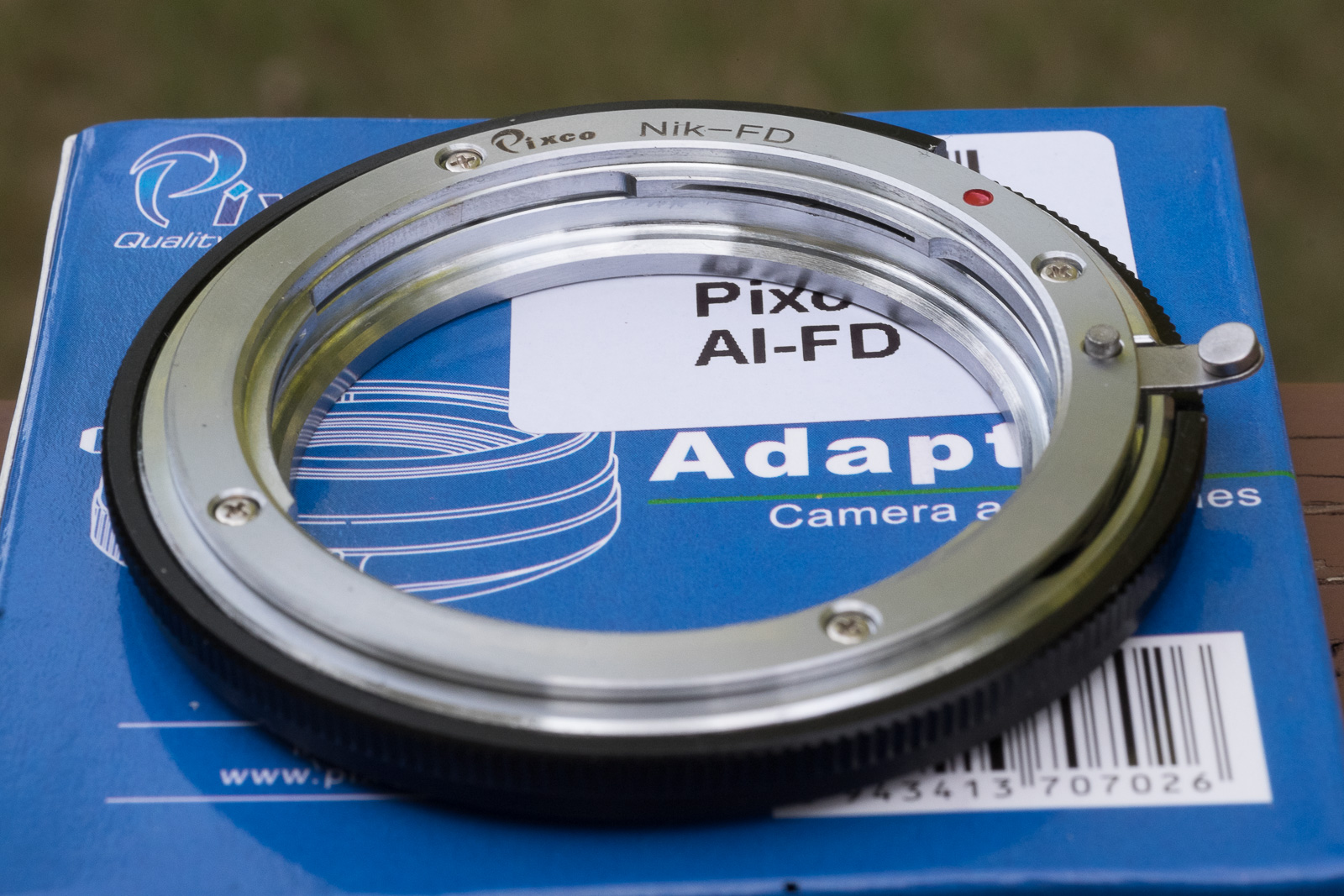
Pixco Nikon AI to FD adapter (bought on eBay)

Genuine and Canon-branded Nikon AI to FD adapters are rare and very expensive (I saw one selling for $150.00 on eBay under the name “MC-N Lens Mount Converter”). I bought  a Chinese one, for a fraction of the cost.

Being devoid of any aperture transmission mechanism, the converter is compatible with any Nikon lens AI, AIS, AF, AF-D lens, and I don’t see why it could not also accept pre-AI lenses.

Does it work? 

Yes. With the right adapter, a 42mm Screw Mount lens set in “manual” (no aperture pre-selection) will work on the T90 the same way a Canon FL lens (set in “manual”) would.

  • screw the adapter on the lens

Canon-T90-6585
The screw mount to FD adapter.

  • Mount the lens on the Canon T90
  • Set the lens to “M”

Canon-T90-6571
Asahi Pentax Super Takumar lens – it has to be set to “manual”

  • push the stopped down metering lever

Canon-T90-6574
The stopped down metering / depth of field preview lever has to be pushed towards the lens.

  • turn the camera ON
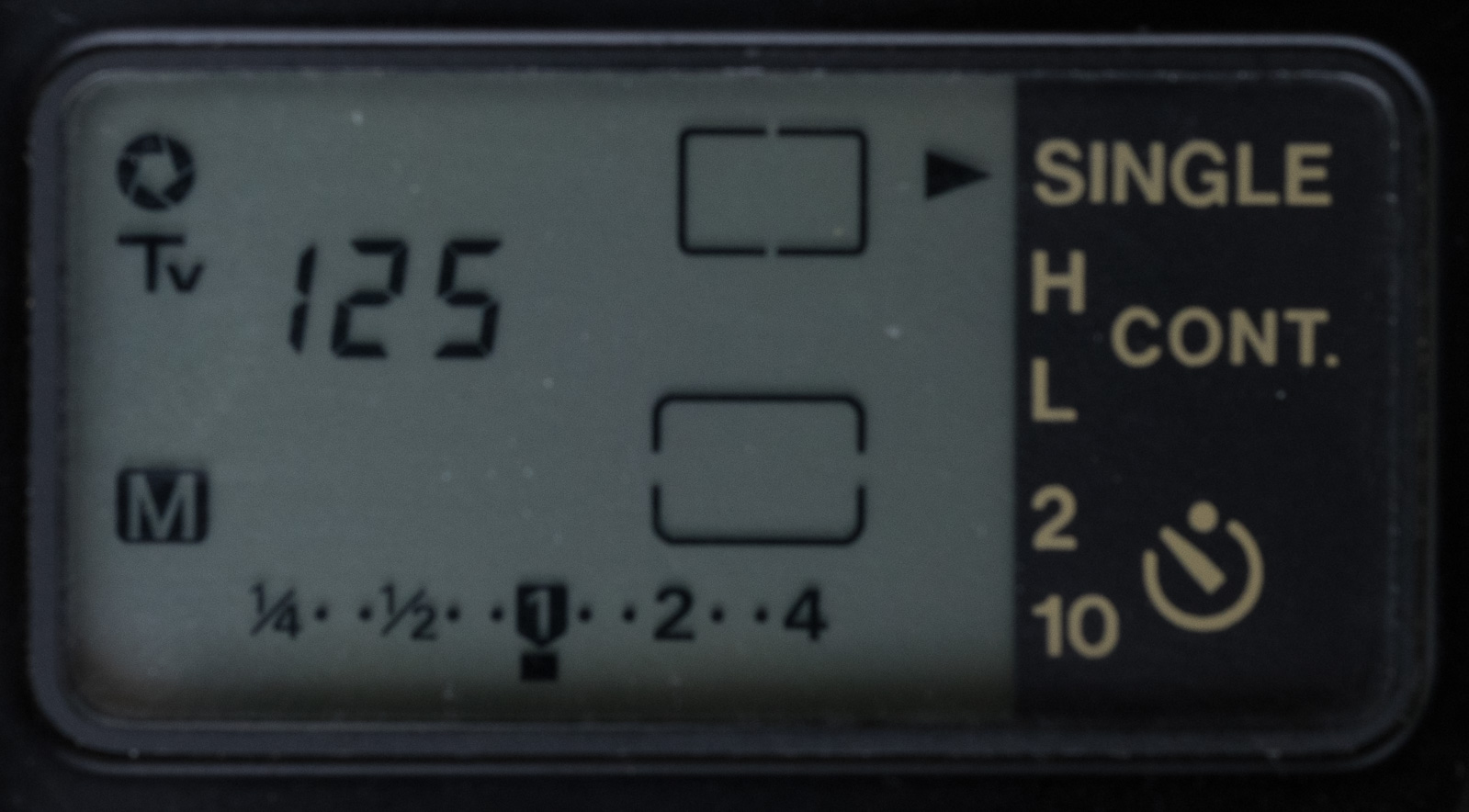
  • set the Exposure Mode to “T” (for shutter priority exposure)

Canon-T90-6570
Canon T90 – the settings for shooting stopped down in semi-auto exposure mode

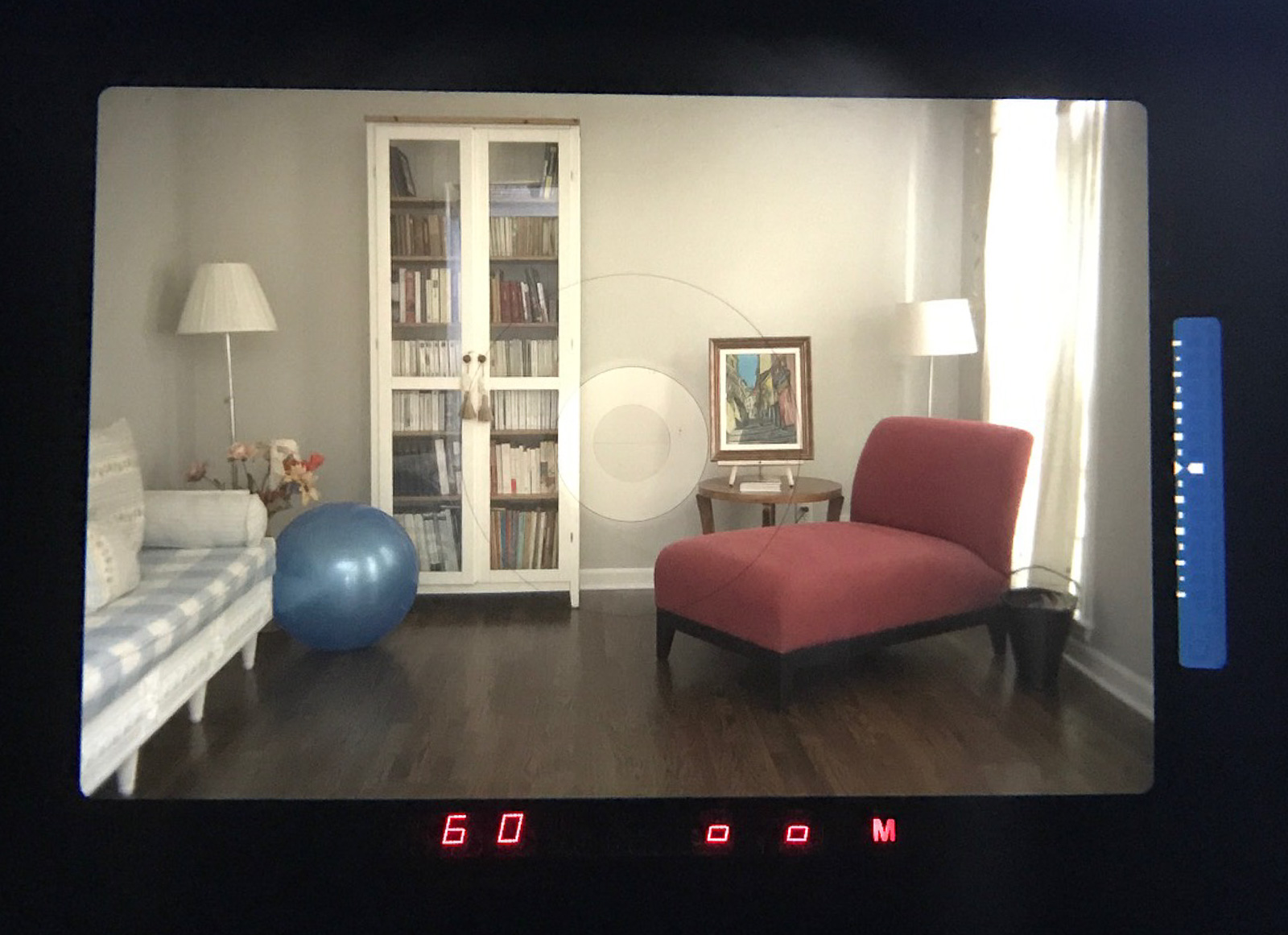
  • turn the aperture ring or the control wheel (controlling the shutter speed) to adjust the exposure as if it was a Canon FL lens used stopped down (the “OP” message on the viewfinder’s LED panel means “Open the iris”, “CL” stands for “close the iris” and “oo”  for “you nailed it”.

untitled shoot-0519
T90 – semi-auto mode – stopped down. Correct exposure – (cursor and triangle aligned on bar graph, “oo” message)

  • Of course, you operate stopped down – but it’s not so much of an issue:
    • the viewfinder of the T90 is very bright and the matt screen very fine, you can focus accurately up to f/8 if you shoot outside on a sunny day,
    • photographers are unlikely to mount slow lenses on the camera, or to shoot at F/16. They will most probably use the converters to mount old and ultra-luminous lenses on the T90, for the bokeh, and for the way the pictures shot with old lenses look.

With screw mount lenses, the T90 is as easy to use as any other semi auto camera, and exposure seems accurate (I obtained the same recommended aperture with the Pentax lens, the FL and the FD lenses, and on a Nikon camera I used as a benchmark).

Canon-T90-6576
Canon T90 with a Nikon 50mm AF lens. It can be physically mounted but the exposure is off by at least 1 stop (compared to FL or FD lenses)

With Nikon lenses, I observed multiple issues: with some lenses, the aperture ring of the lens does not seem to control the aperture, and with some lenses, the exposure is off (1 to 1 1/2 stop) compared with FD, FL or Pentax screw mount lenses. I suspect it’s because the lever controlling the aperture on a Nikon lens is normally pushed to the preselected aperture by a spring loaded lever on a Nikon camera’s body. With this adapter, the spring loaded lever is missing.

Does it make sense?

Owners of 42 mm screw mount lens with manual preselection don’t have many options if they want to use their lens “natively” on modern cameras: Pentax stopped selling screw mount cameras in 1975, Fujica at the end of the seventies, and Cosina briefly sold a Voigtlander Bessaflex SLR in small volumes at the beginning of this century. Nothing recent or widely available. The best they can do is use adapters, to mount their lens on Pentax K SLRs and dSLRs, or of course on many mirrorless cameras. In that perspective, if you’re a T90 enthusiast and still own a few very good 42mm lenses it could  make sense to look for a 42mm to FD adapter.

I’m less convinced it makes sense for owners of old Nikon lenses to mount them on a T90.  Nikon lenses don’t like to be mounted on an adapter that does not control their aperture lever. And if you have old Nikkor lenses that you love, there is no shortage of good film and digital Nikon cameras which still accept them, and will offer full aperture metering and more auto exposure options than an adapted lens on the T90 .

Canon-T90-6591
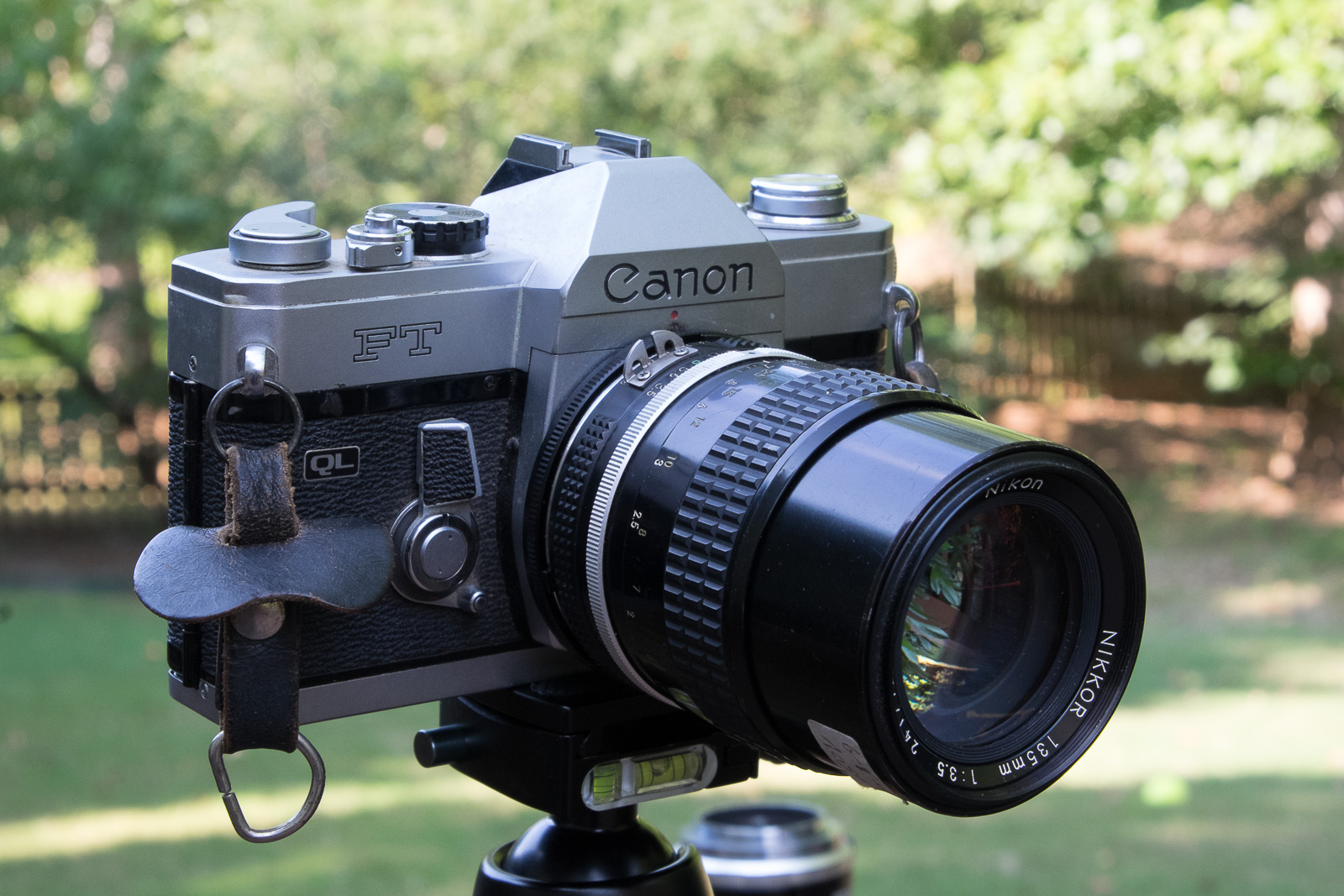
Canon FT with Nikkor AI lens – it’s not because it’s possible that you should do it.

Other Canon bodies

Any Canon body which can operate stopped down with Canon FL lenses can in theory work with the 42mm screw mount or the Nikon F adapter.

  • Canon AV-1: being an “aperture priority” auto-exposure camera,  it works stopped down with Canon FL lenses and adapted screw mount lenses.
  • Canon FT: a semi-automatic camera operating natively with FL lenses, it also works with adapted screw mount lenses.

summer2017-10
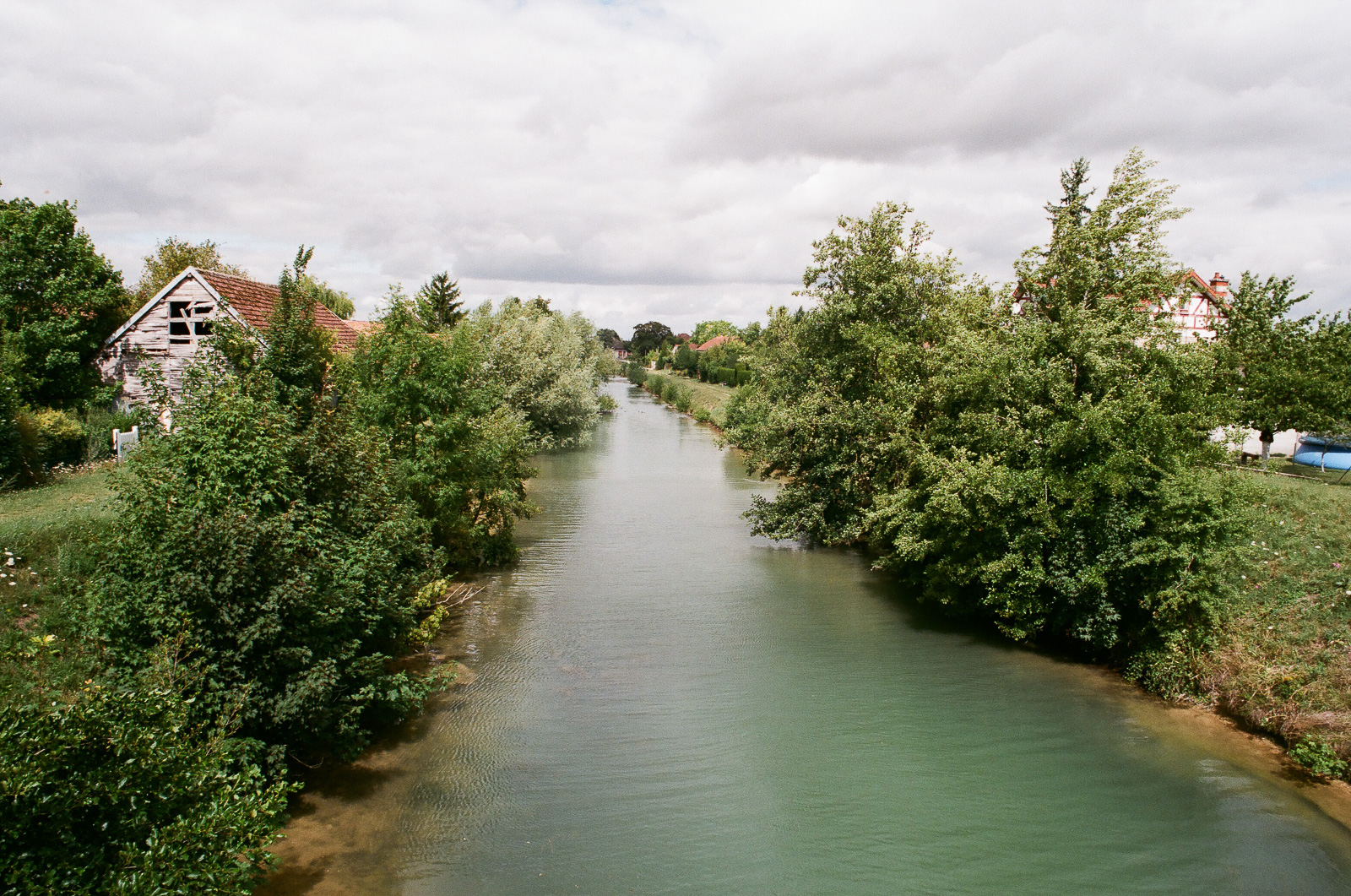
Plancy l’Abbaye – France – Canon T90 – Canon FD 24mm lens – Kodak Ektar 100. I was surprised by the way the Ektar film rendered the colors – pretty different from the reality.


SaveSave