When I was in high school, our physics teacher had tried to explain that sometimes lab instruments were too precise for the job at hand. My 15 year old brain had struggled with the concept. How could an instrument be too accurate, how could a knife be too sharp?
Precise and powerful tools are more demanding – they’ll perform well in the hands of skilled operators who know what they’re doing, but will yield inconsistent results and sometimes be dangerous in the hands of poorly trained users.
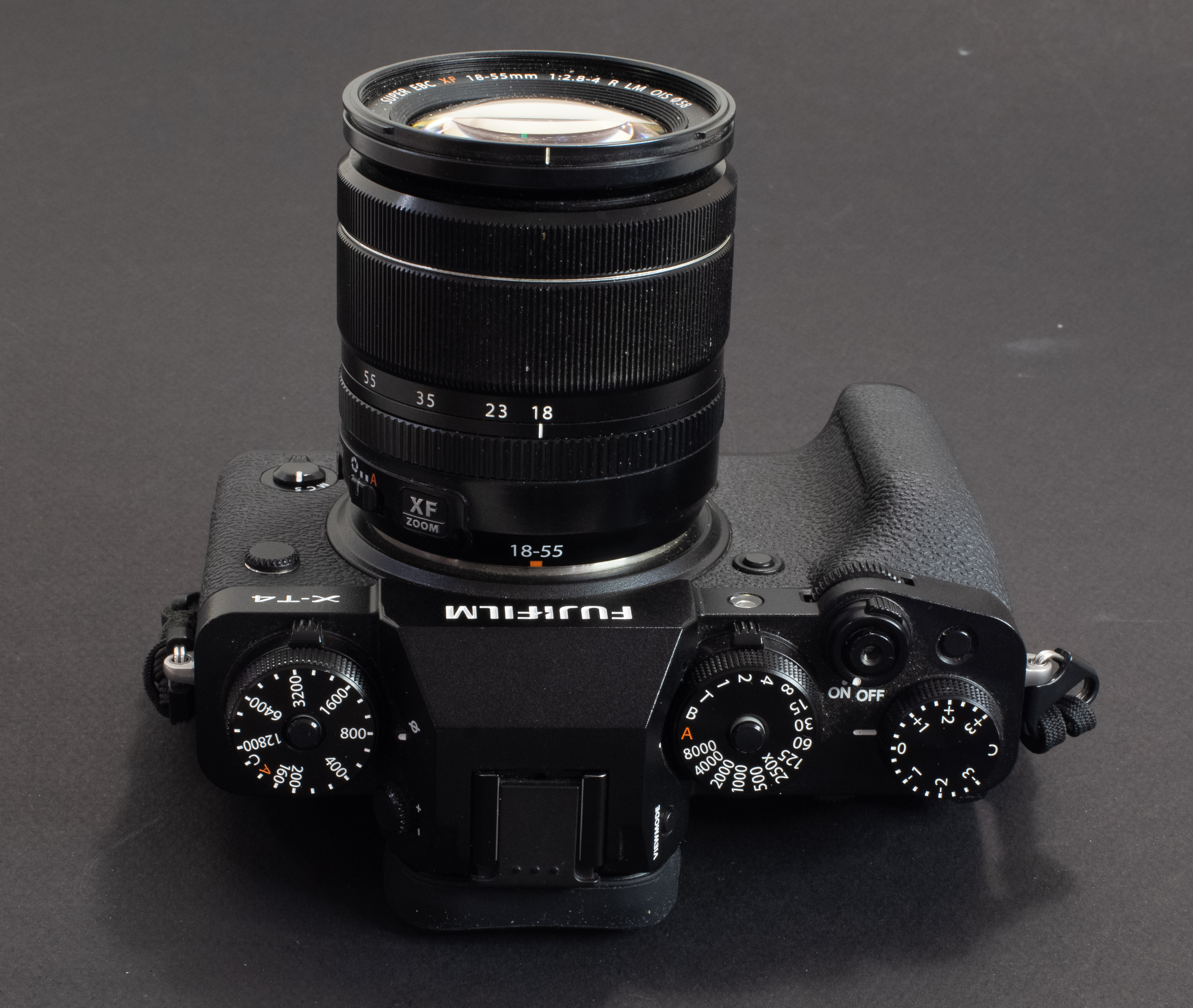
ISO on the left, shutter speed center and exposure compensation on the right – the typical Fujifilm User Interface.
Which brings me to the case of my Fujifilm X-T4. As a tool, it’s very sharp. It’s a highly configurable, 26 mpix APS-C camera, with a great electronic viewfinder and a plethora of dials – ISO, shutter speed, exposure compensation and even a real aperture ring on some lenses. It’s not a camera for beginners or for occasional photographers – there is no “scene”, “green” or “iAuto” mode that you would have found on compact cameras and entry level ILCs, and some useful settings (like choosing between Average, Spot or matrix exposure metering) are hidden deep in the menus.
The step well – Abhaneri, Rajasthan
There is a lot to say about the user interface of Fujifilm’s cameras. Some of their cameras are designed to operate like the first multi-automatic SLRs of the late seventies – with dials and rings that you have to set to “A” (or not) and no PASM mode selector – while other cameras are designed with a modal interface, but with no top plate LCD display and no dial, a bit like an entry level dSLR. The same is true for lenses – some have an aperture ring with markings, some have an aperture ring with no marking, and some have no aperture ring at all. And the camera operates differently depending on the type of lens mounted on it, and on the position of a switch on the barrel of the lens. It’s rather confusing. Honestly, I prefer the modal user interface of Nikon’s high end dSLRs, and I’m not a Fujifilm photographer because of the user interface of their cameras, but rather in spite of it.
The aperture can be controlled automatically (switch on “A”) or by rotating the unmarked aperture ring.
The UI quirks aside, Fujifilm “X” cameras have a lot going for them. They are renown for their beautiful “out of the box” JPEGs, for their best in class film emulation, and for offering the most comprehensive range of great lenses of any APS-C mirrorless system. Top of the line models are also very solidly built while still being compact, a benefit of sticking with cropped sensors. But professional reviewers often complain that their autofocus system is not as good as what Sony and Canon ILCs can deliver.
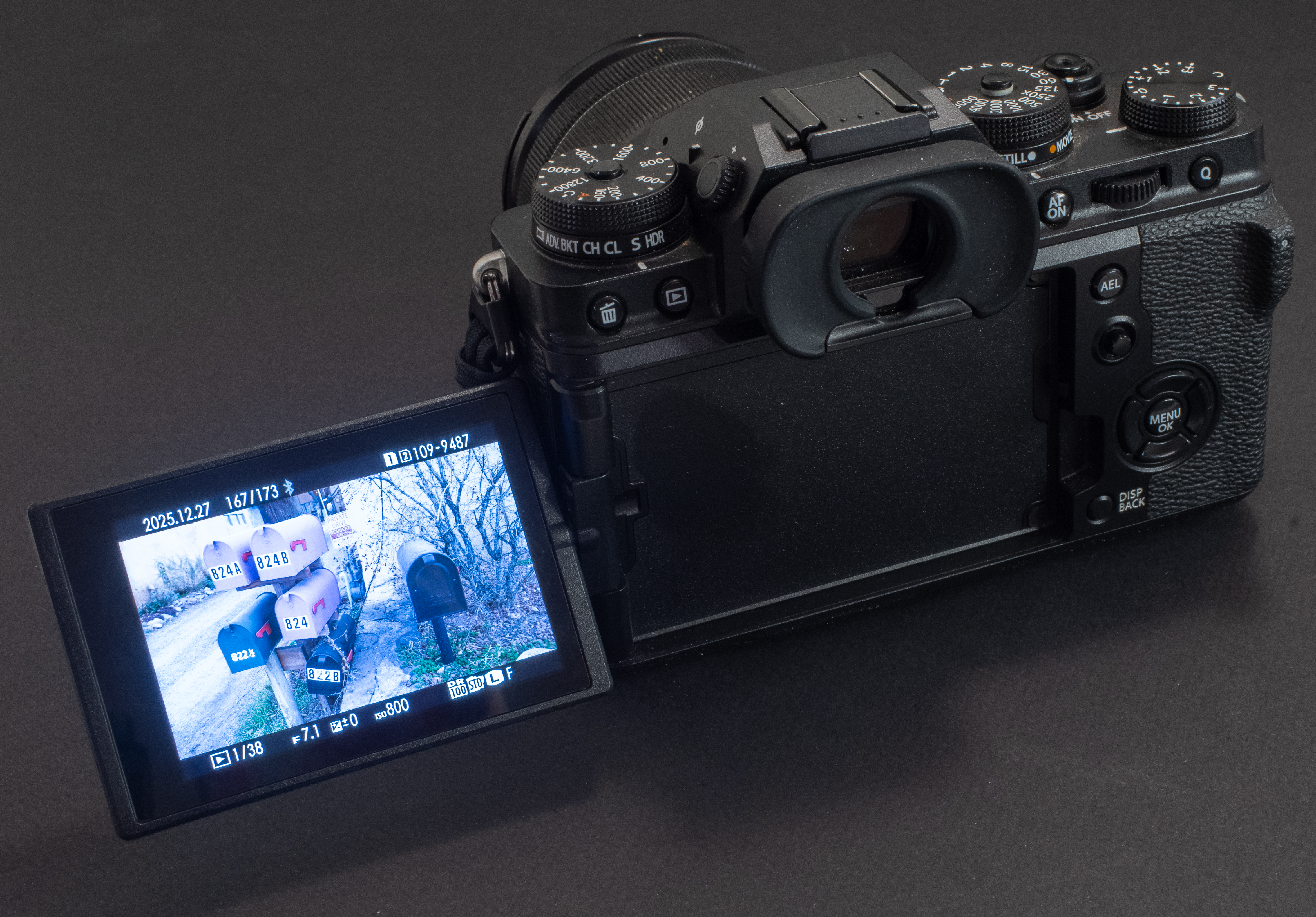
The X-T4 has a fully articulated LCD, in addition to an electronic viewfinder, of course.
Over the two years I’ve been using this X-T4, I’ve never been in a situation where the autofocus was lacking (I don’t shoot sports or wildlife), but I’ve struggled with the exposure – sometimes the UI got me confused, and some other times the matrix metering was not as evaluative as I would have like it to be. To the point that for casual or travel photography (when I don’t have to time to sweat on the settings), the camera is generally set to operate in Program mode, with the good old center weighted metering.
The Taj Mahal – Fujifilm X-T4 – Fujinon XF 18-55mm lens
That’s the problem with sharp tools – they need a skilled and well trained operator – and only lots of practice makes you a master of your domain (“Ubung macht den Meister” as they say in German). If you use it frequently enough and are willing to learn its idiosyncrasies, this X-T4 will reward you with impressive images, but an occasional or moderately motivated photographer may be better off with an easier to use camera.
The so called “Q” menu – where the most important settings can be modified.
Which is a cruel dilemma if like me you also like to play with old cameras – it’s tempting to shoot with the latest of your garage sale finds, but the time spent shooting with a curiosity is time not spent getting intimately familiar with your main, “serious”, camera. A case of too much equipment getting in the way of better pictures.
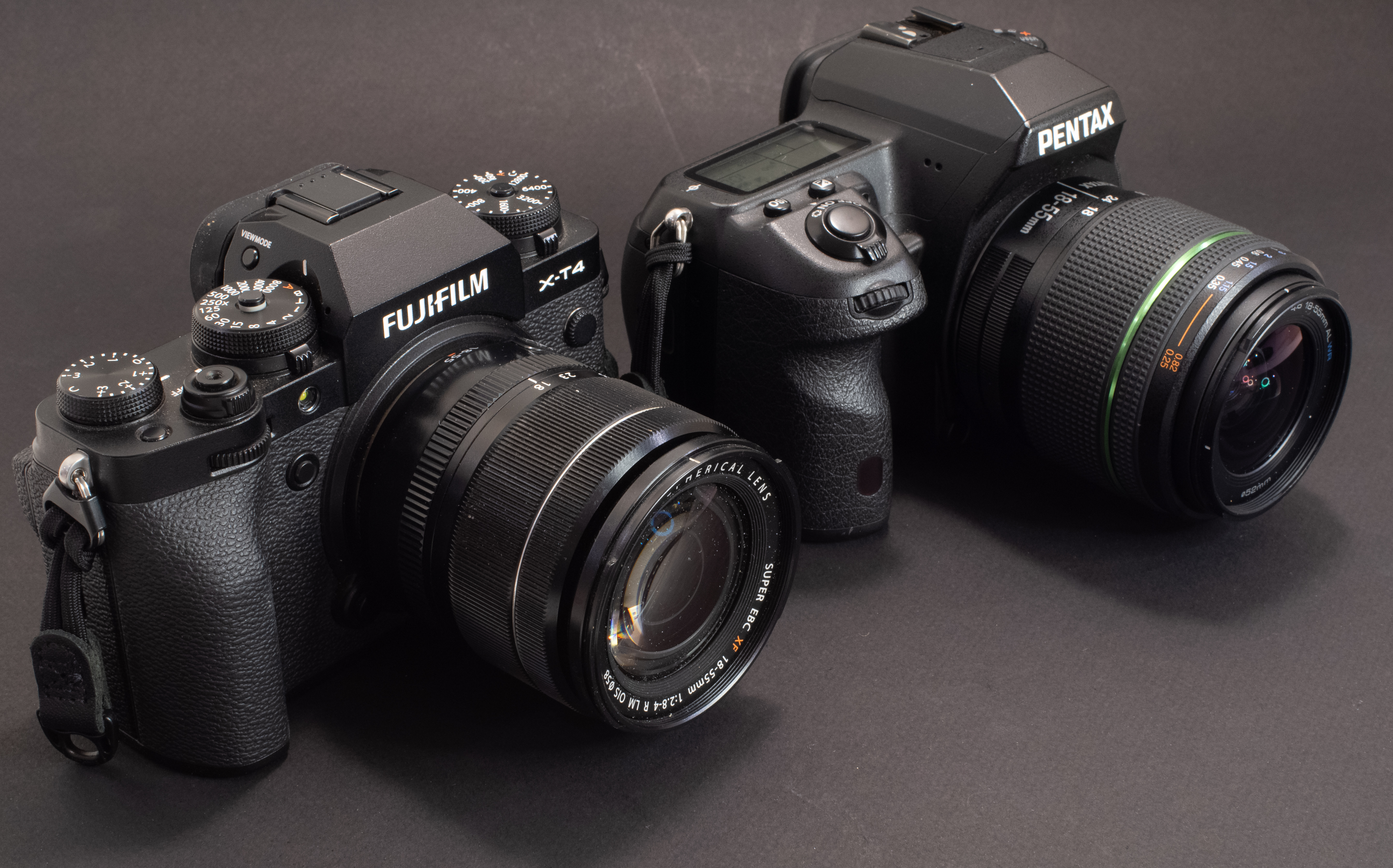
Two APS-C cameras – mirrorless cameras have grown in size, and this X-T4 is not really smaller than the Pentax K-5 next to it. It’s much lighter, though.
I’ve shot almost exclusively with the X-T4 over the last two months, and I’m definitely more comfortable with it by now. It’s time not to follow my own recommendation and to go back to the oldies. I have a few interesting finds in my pipeline.
In the meantime, I wish you a terrific 2026—may it bring you inspiring subjects, rewarding shoots, and many great images.
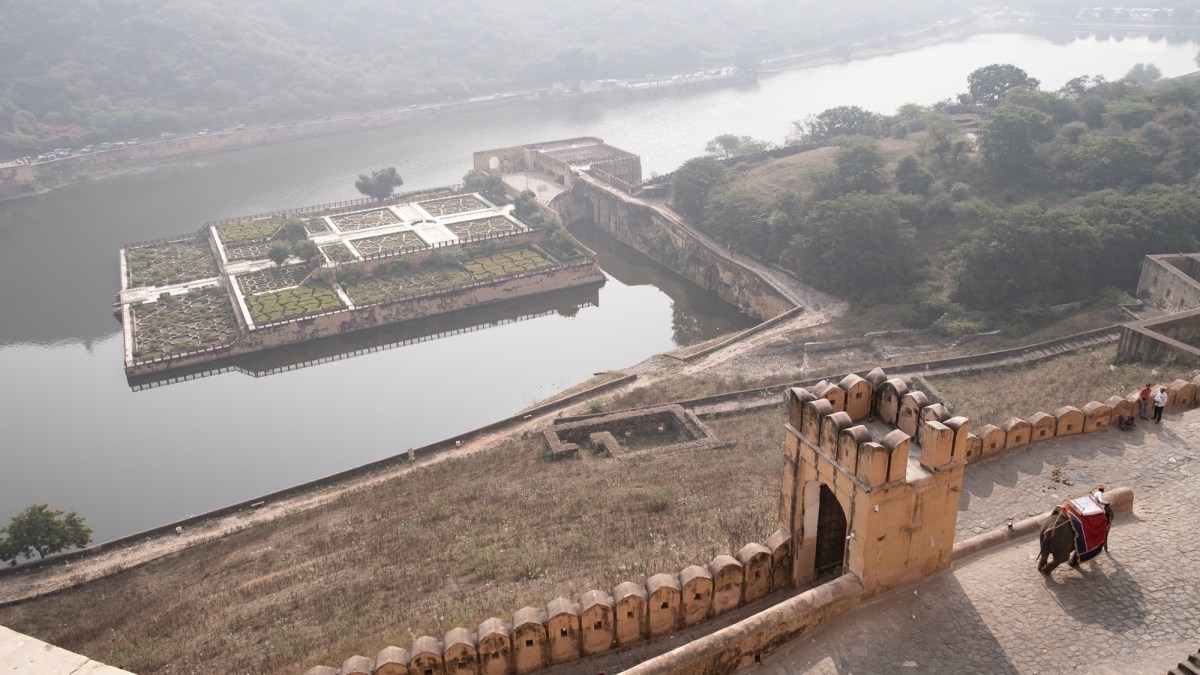
This series was shot in the North West of India (mainly in Rajasthan) a few weeks ago with a Fujifilm X-T4 and the excellent Fujinon XF 18-55mm f/2.8-4. Being larger, heavier and not shooting as wide as the 15-45 XC Power Zoom, the 18-55 is not as convenient when traveling, but it’s a class of its own when it comes to image quality.
Just before Thanksgiving, I posted a picture taken a few years ago in Atlanta’s Little Five Points neighborhood with a Pentax P3, a film camera that suffered a terminal failure a few rolls of film later (an issue with the film advance mechanism like most of the P3s, of course). The lens – the Pentax A 35-70 f/3.5-4.5 – was so bad I got rid of it (my copy was faulty – the lens has a decent reputation otherwise). The image was not that great either but was made more interesting in post-processing with Lightroom, and in a few weeks, it has become my most appreciated image of the year in Flickr.
I even received a request to use it from a pro-bicycle user group…. Go figure.
I’ve been traveling recently, and will be on the road again during the holiday season. I’m not forgetting this blog, in fact I’m harvesting more images for later use, but it’s very likely that this post will be the last one before Christmas.
Happy Holidays to you and to your families.
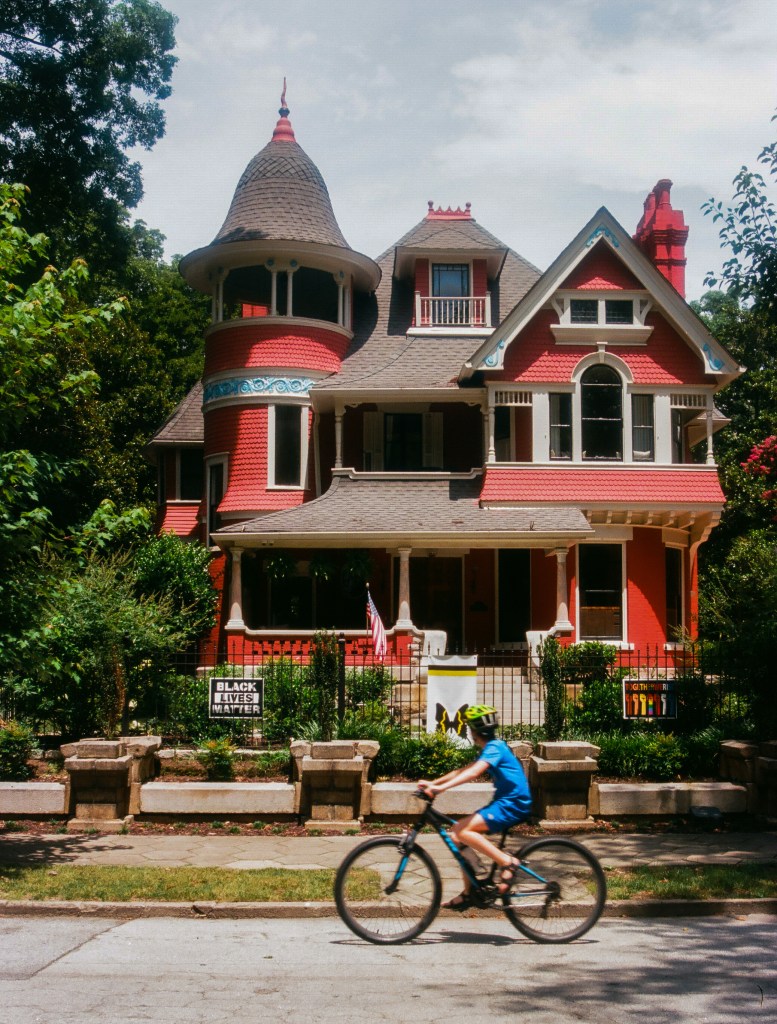
Atlanta Little Five Points. Pentax P3/P30 – Pentax A 35-70mm f/3.5-4.5 – the wall has been repainted since, and is far less interesting…
Trying to save a compromised image in Lightroom.
More of the same series….Same camera, same lens, same roll of film.
Another image from the same roll of film – Atlanta, Inman Park.
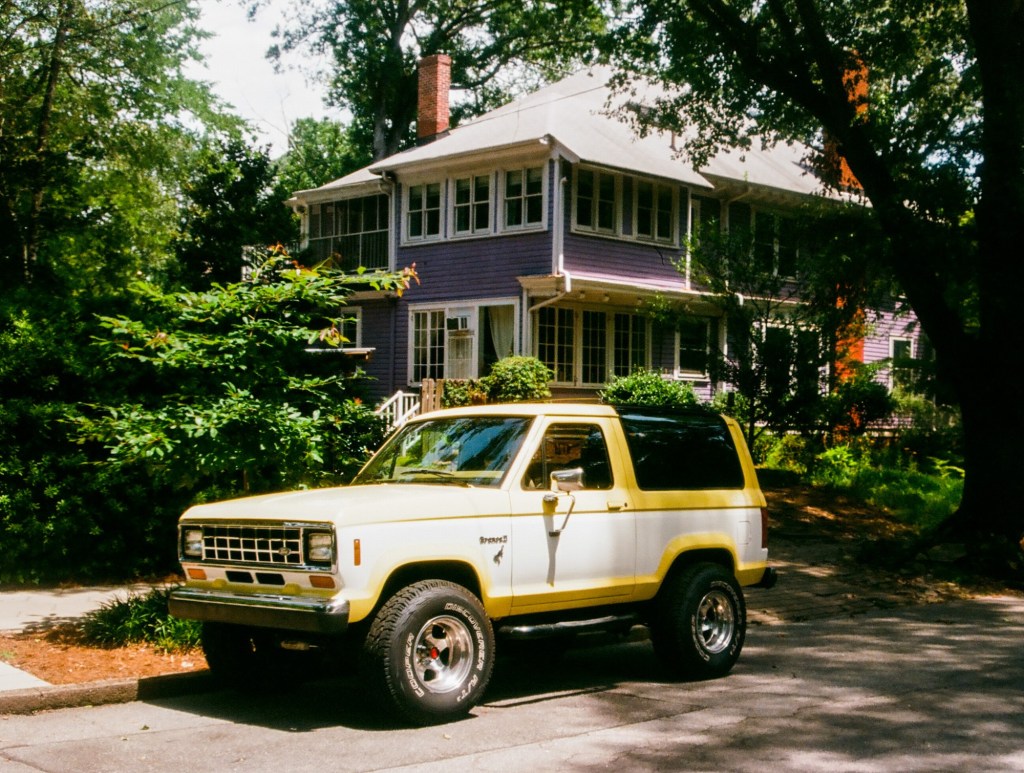
Ford Bronco II – Inman Park Neighborhood, Atlanta.
The price of a digital camera on the second hand market is more or less proportional to the number of pixels of its image sensor – interchangeable lens cameras (dSLRs and mirrorless) with anything between 24 and 50 Megapixel (Mpix) sensors are considered current and command big bucks, while models with less than 10 Mpix are deemed virtually worthless.
Case in point – I bought a Pentax *ist DS (a 6 Mpix dSLR from 2004), a bit scruffy but in working order, for less then $35.00.
For comparison – same lens, same ISO settings, same hour of the day – Pentax K-5 – minor adjustments in Lightroom. Click on the image to see it at full resolution – you will see the difference.
Why the Pentax *ist DS back then?
At the turn of the century, the photography market was different from what it was to become a few years later – there were only four companies in the world selling digital SLRs (Canon, Fuji, Kodak and Nikon). And those cameras were very expensive, and primarily bought by news agencies and well heeled pros.
2002 saw a first wave of more affordable digital SLRs reach the market (Canon, Fuji and Nikon all launched models in the $2000 price range). Pentax and Olympus joined the fray in 2003 with the *ist D and the E-1. At the end of 2003 Canon made digital SLRs affordable for amateurs with the Rebel 300D, the first dSLR to sell for less than $1000.00.
Nikon and Pentax followed rapidly with two models priced around $1000, the D70 and the *ist DS. Like millions of amateurs, I was looking for my first digital SLR in those days, and the *ist DS was my pick. Its specs were not that different from the D70 or the Rebel. What made the difference for me was its small size, its large viewfinder, and the good reviews of its kit lens.
Of course, I sold it after a few years to upgrade to a 10 Mpix camera, which itself was sold a few years later to fund the next upgrade, and so on.
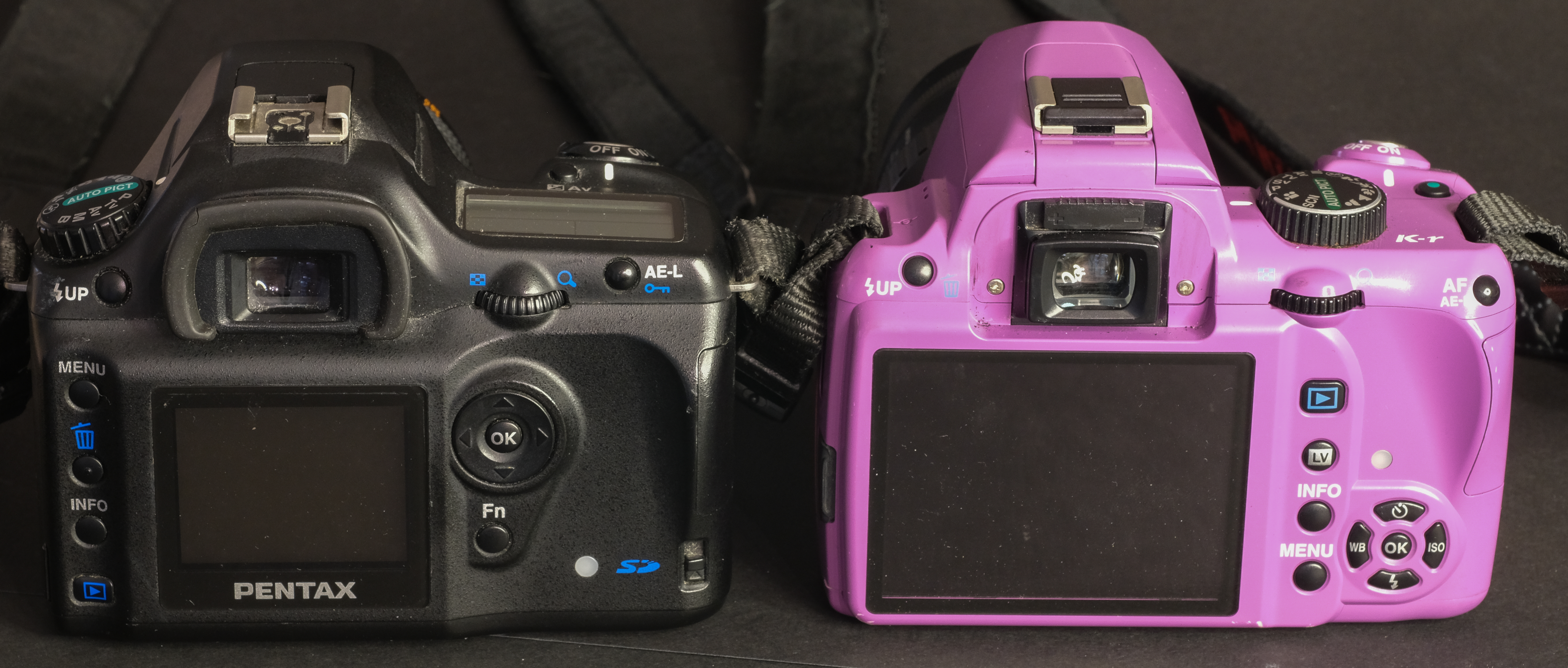
Family Reunion – the *ist DS (left) looks serious in black, the K-r (right) was available in fancy colors.
Why a *ist DS now?
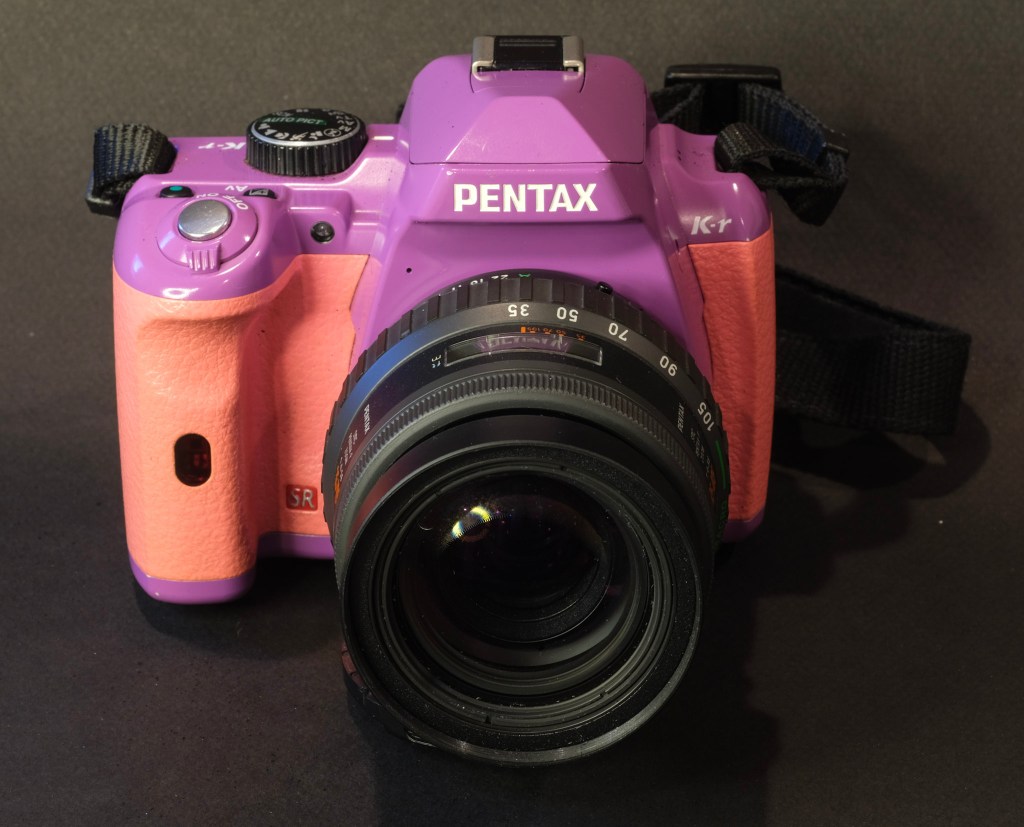
A few months ago, I bought a colorful Pentax K-r (a 12 Mpix camera from 2010) and was surprised by the quality of the RAW files it delivered. You pay a bit more for the colored body of a K-r, but all white and all black models can be found for less than $100.00. In my recollections, the *ist DS was a good little camera, and I was wondering what it would be like to shoot with a 6 MPIX dSLR now. I started checking the usual auction sites, and $34.00 made me the proud new owner of another Pentax camera.
Pentax *ist DS – Pentax 18-55 Kit Lens – Vinings Jubilee (Atlanta) – adjusted to taste in Lightroom
For comparison – same lens, same ISO settings, same hour of the day – Pentax K-5 – minor adjustments in Lightroom. Click on the image to see it at full resolution – you will see the difference.
First impressions
I had shot a few thousand of pictures with my *ist DS in the early 2000s, so this “new” *ist DS is not really a total unknown for me.
What struck me immediately when I received my $35.00 *ist DS is how similar it looked to the K-r; as if Pentax had kept the same moulds over the 7 years that separate the two cameras. The *ist DS is smaller than Nikon’s mid-range APS-C of the same vintage, but the general organization of the commands is strikingly similar to what current Pentax and Nikon APS-C dSLRs look like – to a large extent the dSLR camera had already found its final form in 2004.
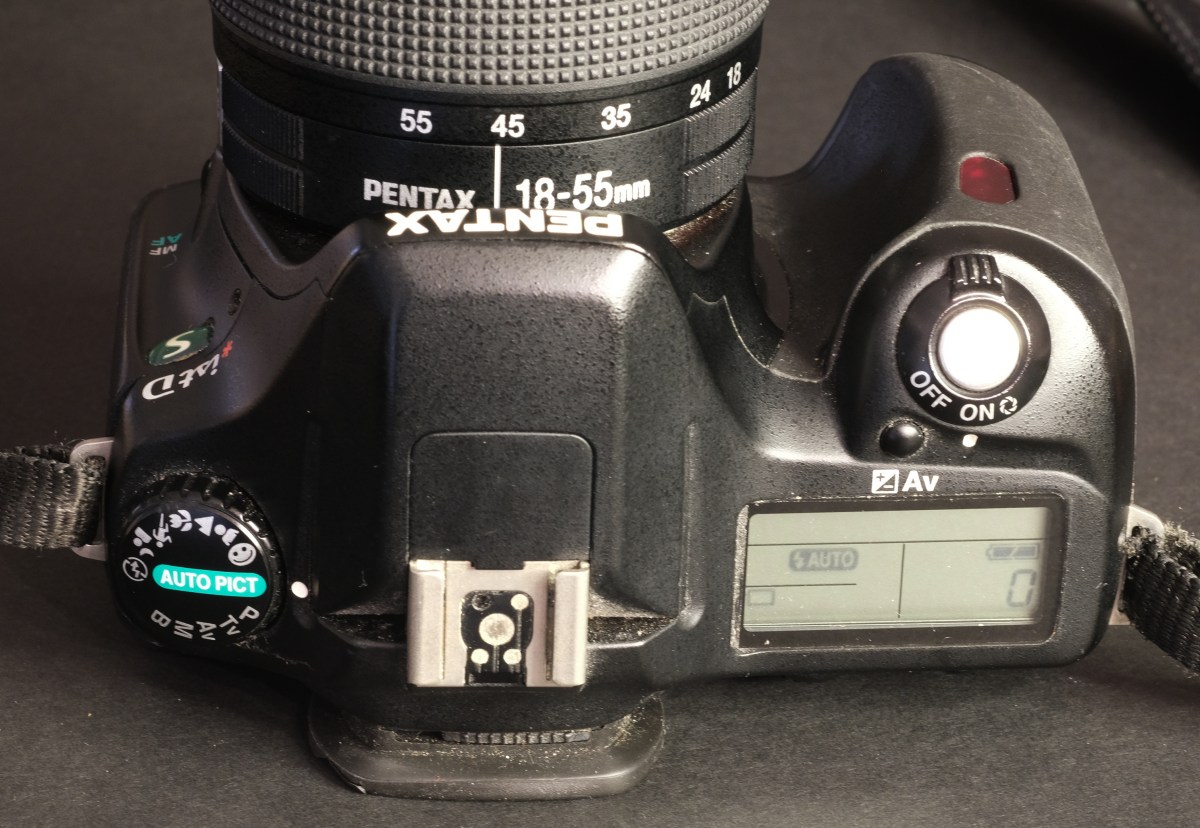
Pentax *ist DS (left) and Pentax K-5 (right) – the layout of the commands is very similar – the most striking difference is the rear LCD display – a huge progress in the space of a few years.
Visually, the biggest difference is the rear LCD display – the DS’ is very small (2in diagonal, some smart-watches have larger displays), and its dynamic range very limited.
Pentax *ist DS – this picture was in the performance envelope of the camera.
My $34.00 camera is old, and definitely not in tip-top shape (the mode selector is stuck in the Auto-Pict position, the integrated pop-up flash seems to be dead), but it still works well enough to get an opinion about this generation of 6 Mpix cameras.
Back in 2005, DPReview was very happy with the responsiveness of the camera, but concerned with the quality of its JPEGs. Today, the standards are different, but the responsiveness is still OKay-ish – when there is enough light for the autofocus to operate – otherwise it hunts desperately.
As for the image quality, even in RAW, it’s often disappointing.
Pentax *ist DS – even in Lightroom and starting from RAW, I could not get the sky, the church and flower bed to be exposed correctly at the same time.
Pentax *ist DS – another image (taken at around 11am) where the limited dynamic range of the sensor is clearly visible.
For comparison – same lens, same ISO settings, same hour of the day – Pentax K-5 – minor adjustments in Lightroom. The difference is striking.
The camera is twenty years old, may have been treated badly by some of its owners, and may not perform as well as when it was new, but, in any case,
the dynamic range of the sensor is limited (DXO evaluates it at 10 EVs, as opposed to 14 EVs for the sensor of a more recent Pentax K-5 for instance). If the scene is lit evenly, the results are correct, but even Lightroom can’t save RAW images like the picture of this old church or that plant on my deck.
I’ve been used to shooting with cameras and lenses equipped with image stabilization mechanisms, which this *ist DS is deprived of. Images which would have been technically good with a camera from the 2010s are blurry because of camera shake,
the autofocus is a hit or miss – it works fine on static scenes, not so well if the subject is moving or the scene too dark.
Pentax *ist DS (left) and Pentax K-r (right) – even an entry level model like the K-r has a much better rear LCD display (and a Live View button). And it will perform much better.
Conclusion
Obviously, this camera works, and in ideal circumstances, will deliver usable images. But even if the images are saved as RAW files, the highlights are often desperately burnt, and the shadows too dark. The autofocus struggles with moving subjects, in particular if they’re not perfectly centered, and because this model is deprived from image stabilization, images will be blurry if the photographer does not pay close attention to the shutter speed. Very clearly, there is a huge image quality and usability gap between this *ist DS and cameras launched six to seven years later.
In the days of $5.00 Starbucks Lattes and $10.00 McDonalds Value Meals, $34.00 is not a huge sum to spend on a digital camera. But if you put the equivalent of six more Value Meals on the table, you’ll get a much more usable Pentax K-r (or any equivalent 12 Mpix dSLR from the early 2010s). Add another five will get you a really nice 16 Mpix dSLR like a Pentax K-5, or an already modern mirrorless camera such as the Panasonic G2 (12 Mpix) or the Sony Nex 3 (14 Mpix).
Pentax K-r – Centennial Park – Atlanta – the K-r only has a 12 Mpix sensor but behaves like a modern camera.
I’m not necessarily attracted to the latest and greatest features of the newest cameras (I also shoot film with cameras from the 1980s…), and will be happy to shoot with a digital camera deprived of movie mode or of wifi/bluetooth connectivity, if it still delivers images of good quality, most of the time.
But if the performance of a camera (by modern standards) is so limited that I start missing too many potentially good pictures, the quest for minimalism goes too far to my taste.
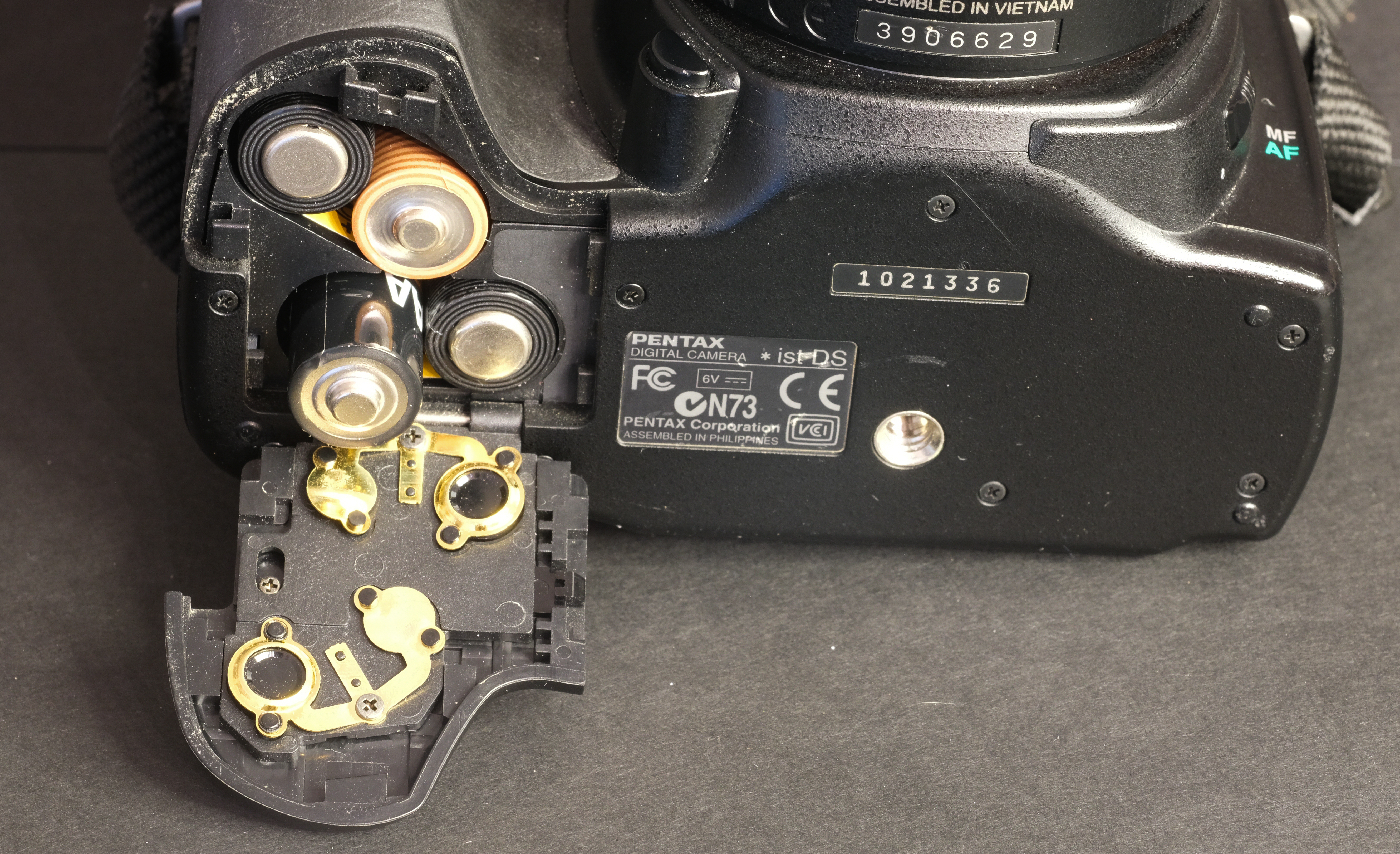
Pentax *ist DS – still powered by conventional AA batteries – no need for a charger (and the battery life is surprisingly good)
It is true that when cameras like the Pentax *ist DS (and its Canon, Konica-Minolta or Nikon 6 Mpix competitors) were launched in 2004, we were impressed by the huge step they represented over the digital point and shoot digicams we’d been using for a few years, and even today, we’re still proud to share the best images we got from those early dSLRs. If I set it up carefully, and use it within the limits of its performance envelope, I’m sure that even my scruffy *ist DS will get me decent pictures.
But today, I see the Pentax *ist DS more as an interesting curiosity, than as a camera I could use day to day. In the six years that separate a Pentax *ist DS from a Pentax K-5 (or a Nikon D70 from a D7000), there has been a huge step forward in reactivity, resolution, dynamic range and low light image quality, a step so large, that if I had to chose, I would spend a bit more on a dSLR or a mirrorless camera of the early 2010s, and forget about the *ist DS.
A motorized, multi-automatic, manual focus, metal built camera with a conventional user interface, the Contax ST had no real equivalent when it was launched in 1992. The Leica R7 and the Olympus OM-4ti were not motorized, and the rest of the cameras targeting the high-end of the market were auto-focus SLRs with a modal user interface.
In fact, there are very few other motorized, multi-automatic, manual focus 35mm SLRs I can think of – the most interesting of them being Canon’s T90.
In 1985, the arrival of the Minolta 7000 AF had caught the industry leaders by surprise: Minolta was the first to launch a brand new – and totally coherent – autofocus system.
At that time, Canon’s engineers were working on a top of the line manual focus camera with a revolutionary modal interface – the T90 – that was launched in 1986, and whose design and ergonomic study Canon would make to good use on their first successful autofocus SLRs, the new EOS 620 and 650, that they launched one year later.
Contax, on the other hand, did not even try its hand at an autofocus SLR until the AX of 1996 (which still used the Contax Carl Zeiss manual focus lenses), and did not launch a real 35mm autofocus camera system until Year 2000. The Contax ST of 1992 is therefore a very conventional manual focus camera.
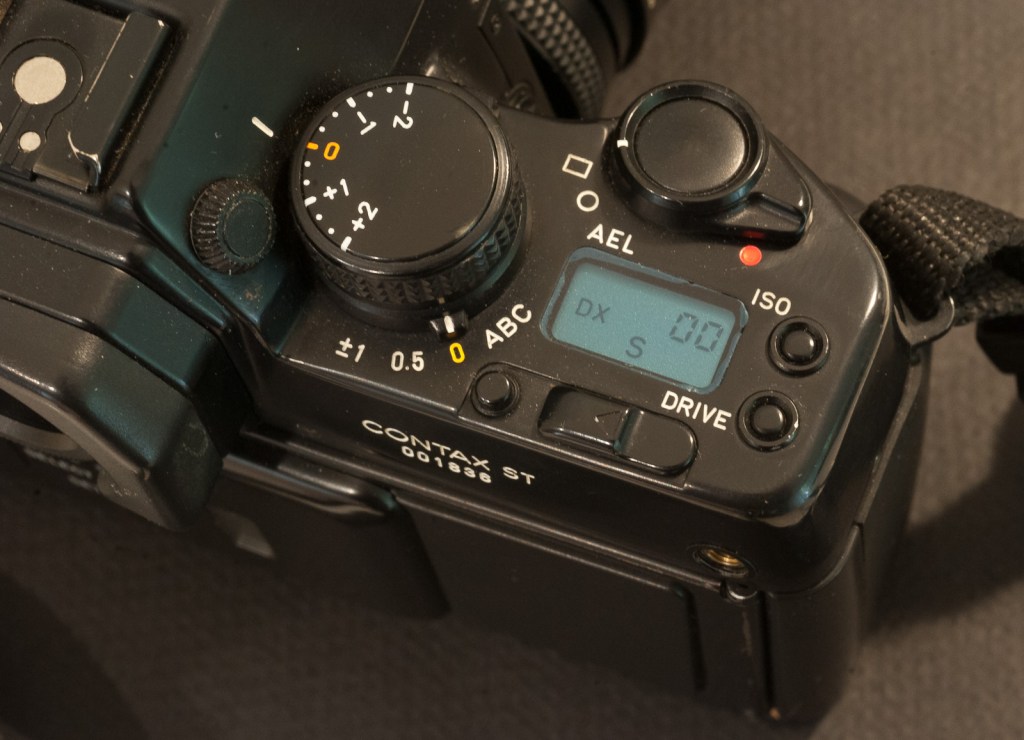
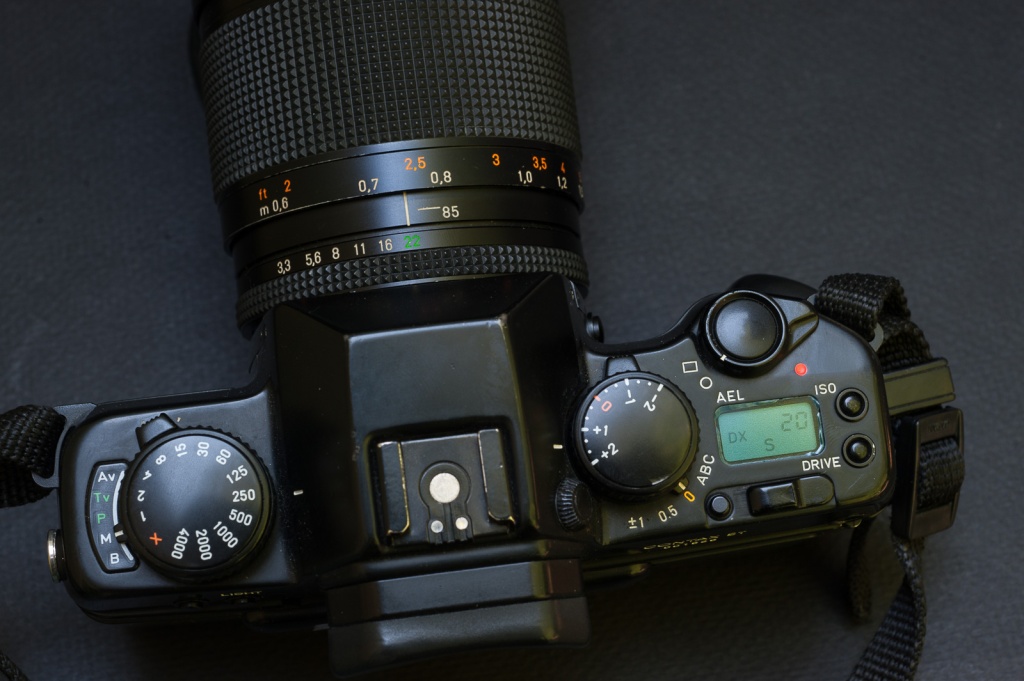
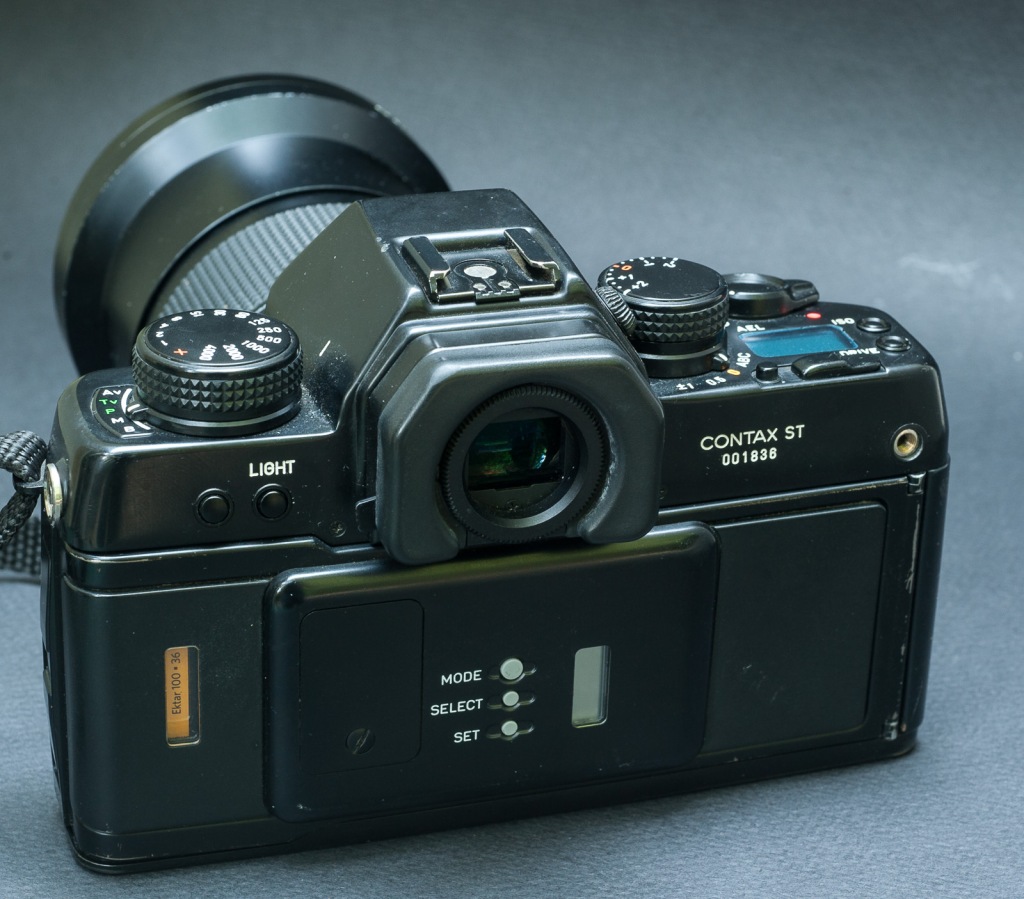
Manual exposure mode, Aperture: F/22, Shutter: 1/250th, exposure compensation at +1.3, spot metering – you read the information directly on the knobs and rings (the view counter and the single/continuous shot mode are shown on the small LCD)
The T90 and the ST have a lot in common – they’re positioned one step under the real professional cameras of their respective brand (the F1 and the RTS III) and boast similar characteristics: they’re large, manual focus, motorized SLRs, with a big high eye point viewfinder, with multiple auto-exposure modes and multiple metering patterns (variants of average and spot metering), LED displays in viewfinder, and they are powered by alkaline AA or AAA batteries.
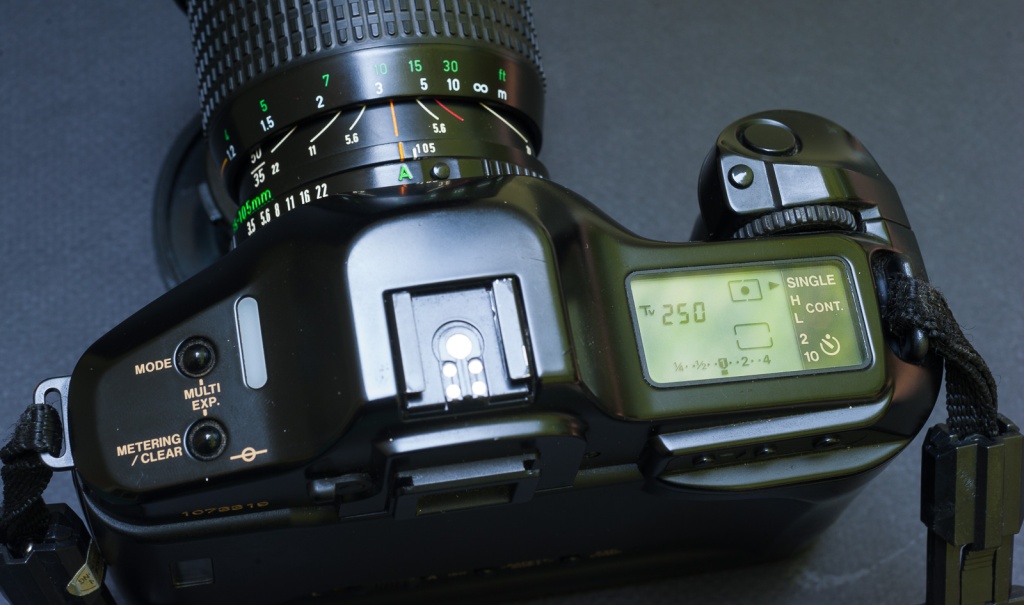
Comparing the interfaces – Tv (Shutter priority), 1/250th, spot metering, single shot, no exposure compensation – everything can be read on the large LCD.
Back then, and today, there are two main justifications for buying one of those cameras:
they are high quality instruments, with a very good viewfinder, great ergonomics, and lots of control options for the photographer who wants to remain totally in charge of focusing and exposure,
they are backed by a renown line of manual focus lenses.
There is one big drawback – of course: those systems are anchored in the past. Canon lost interest in the T90 and in the FD line of lenses as soon as the EOS hit the market, 33 years ago. The last new Contax manual focus 35mm SLR (the Aria) was released in 1998, and Kyocera has stopped providing any type of support a long time ago.
Whether you prefer the ST to the T90 comes down to lenses (the ones you own and the ones you would like to buy), ergonomic preferences, and your expectations regarding reliability.
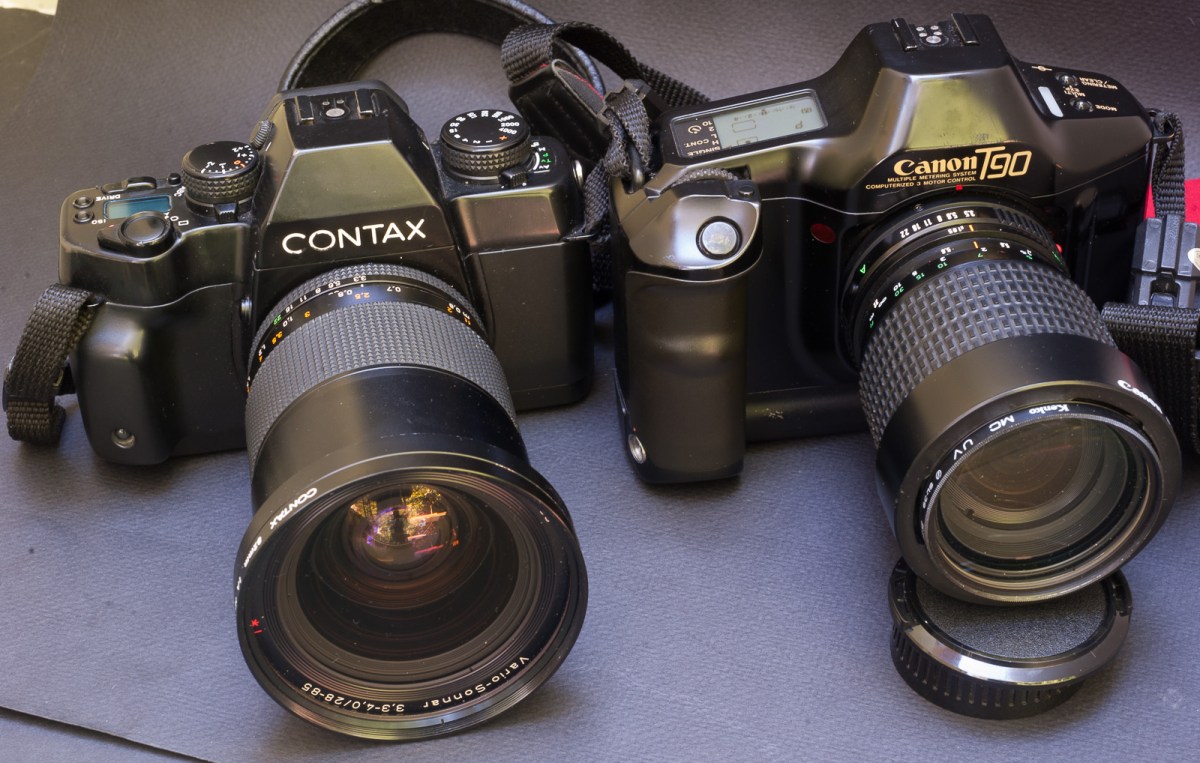
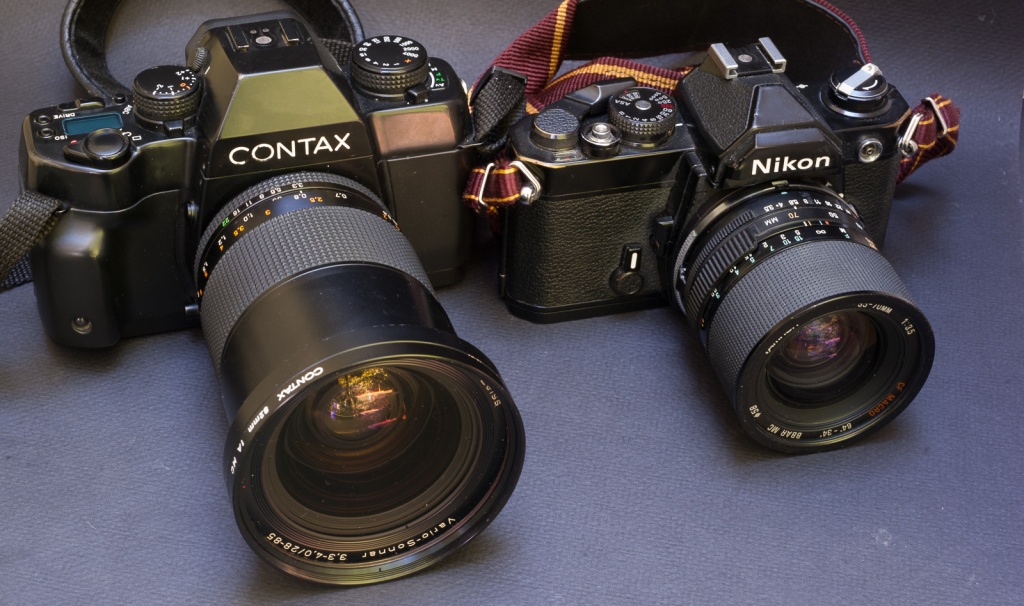
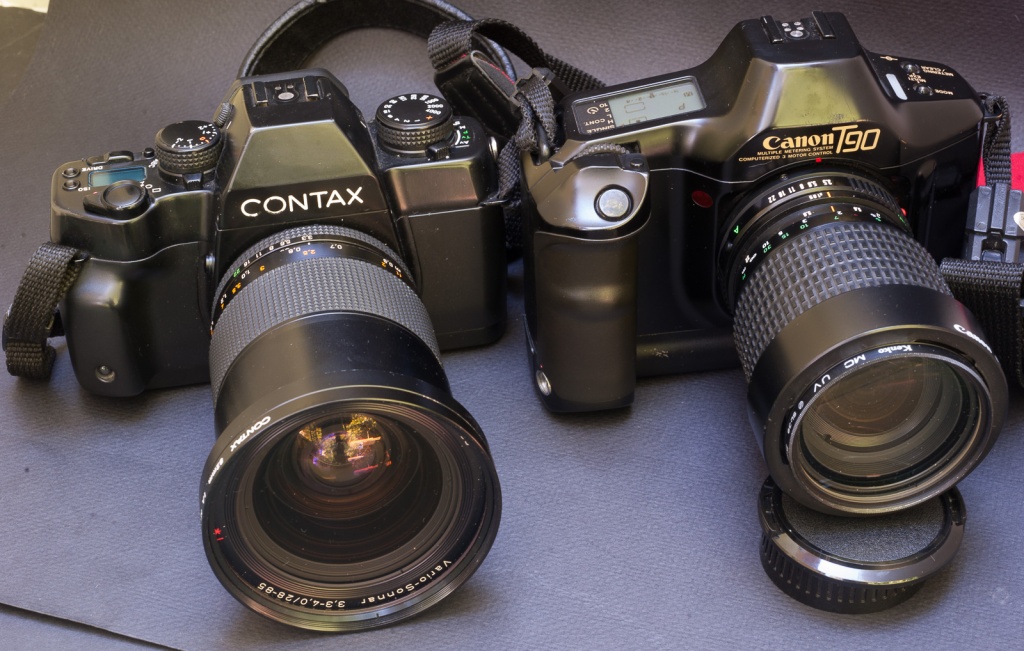
15 years apart: a motorized SLR with a huge 28-85 f/3.3 zoom (1992, left), a non motorized SLR with a tiny 35-70 zoom (body: 1977, lens: 1982, right).
Back then: how did the two cameras compare?
Cost and Availability: having been launched 6 years apart, the two cameras never really competed for space on the shelves of the retailers. The T90 was manufactured for less than a year, but remained on Canon’s catalog until the launch of the EOS-1, in 1990. It was a very expensive camera – in the same price range as the Olympus OM-4ti – only professional cameras such as the Nikon F4 and of course the Leica R series were more expensive. The Contax ST became available at the end of 1992. It also had a very high list price (in the same bracket as the Canon New-F1 or the EOS-1) but cameras were heavily discounted in those days and it’s difficult to know how much people were really paying (and whether Contax cameras were more discounted than Canon’s).
Size, Weight, Features and Ergonomics – The T90 (nicknamed the “tank” in Japan) is not that heavy after all – at 800g, its weights is the same as the ST’s (without batteries) but the Canon uses AA cells which are heavier than the AAAs of the ST. Because of its smaller dimensions (height and depth), the ST looks denser and feels heavier. One of the best examples of “bio-design” the T90 falls naturally in the hands, with all the command easily accessible. It’s also the first example of totally modal interface (I press a key to call a menu, and I rotate the control wheel to select the setting which is shown on a large LCD display on the top plate). The ST offers a very conventional user interface, with one knob, one ring or one switch per command. Because the analog commands are designed to be smooth, the knobs are susceptible to changing position in the bag of the photographer, and the Contax’s commands are protected by a series of locks – it’s useful, but it slows the photographer down until the position of the locks is memorized by the muscles of the hands. More than 30 years later, the market has still not decided which UI it likes best – Canon, Nikon and Sony are committed to the modal interface, while Fujifilm is selling cameras whose command organization is very similar to the ST’s. Both cameras are motorized – but not as fast as the Nikon F4 or the EOS-1 (3 frames / sec for the Contax, 4 frames / sec for the Canon). And both are loud – you can’t shoot unnoticed indoors.
Viewfinder – They’re very comparable on paper – the T90’s viewfinder covers 94% of the actual picture area, with a magnification of 0.77 and an eye point of 19mm. The ST’s viewfinder, on the other hand, covers 95% of the actual picture, with a magnification of 0.8. The eye point is not documented but feels longer than the T90’s.
Practically, the viewfinder of the ST is cinematic, and next to it, the T90 looks narrower, as if affected by tunnel vision.
The viewfinder screens look equally luminous (which means not as luminous as what you would find on a Nikon camera of the same era). The micro prism ring on the T90 is made of coarser elements, and is easier to the eyes than the very fine prisms of the ST, which are very difficult to see, even with the dioptric correction of the viewfinder carefully adjusted.
Both provide information at the bottom and on right side of the viewfinder – the Contax is using only red LEDs, and the T90 a combination of LEDs and of LCDs. Both viewfinders are informative, easy to read, and don’t overload the photographer with useless information.
Shutter and metering system: The T90’s shutter was the absolute best of what was available in 1986 – with a flash X sync speed of 1/250s and a top speed of 1/4000. The Contax ST offers similar performances (it can go up to 1/6000sec, but that shutter speed is not user selectable – practically, 1/4000 is the limit). The Canon T90 is probably the most complex SLR ever designed when it comes to exposure control.
First, it offers no less than four metering patterns: central weighted average, selective (a sort of ultra large spot, for the nostalgics of the Canon FTb), Spot, and last but not least, Multispot. In addition, you can also adjust the exposure for the highlights or the shadows by pushing two small buttons to change the exposure value by increments of 0.5IL. Honestly, it’s a bit too much.
The Center Weighted Average metering (the one you use for casual or travel photography) gives more importance to the sky than I wish, but because you can’t lock the exposure with the camera set for center weighted average, you have to let the camera do what it wants, and it under-exposes a bit. The Multi-Spot is gimmicky, the “Highlight and Shadows” correction is extremely powerful but very difficult to use unless you’re fluent with the theory of exposure. Lastly, only the older FL lenses offer a real semi-auto exposure mode, but you have to operate stopped down.
Compared to the T90, the ST is a model of simplicity – if offers only two metering patterns (center weighted average and spot). Like the T90, you can only lock the exposure in spot, but at least you can work with a real semi-auto mode at full aperture.
None of those cameras offer “matrix metering” – they’re definitely “old-school” in that regard.
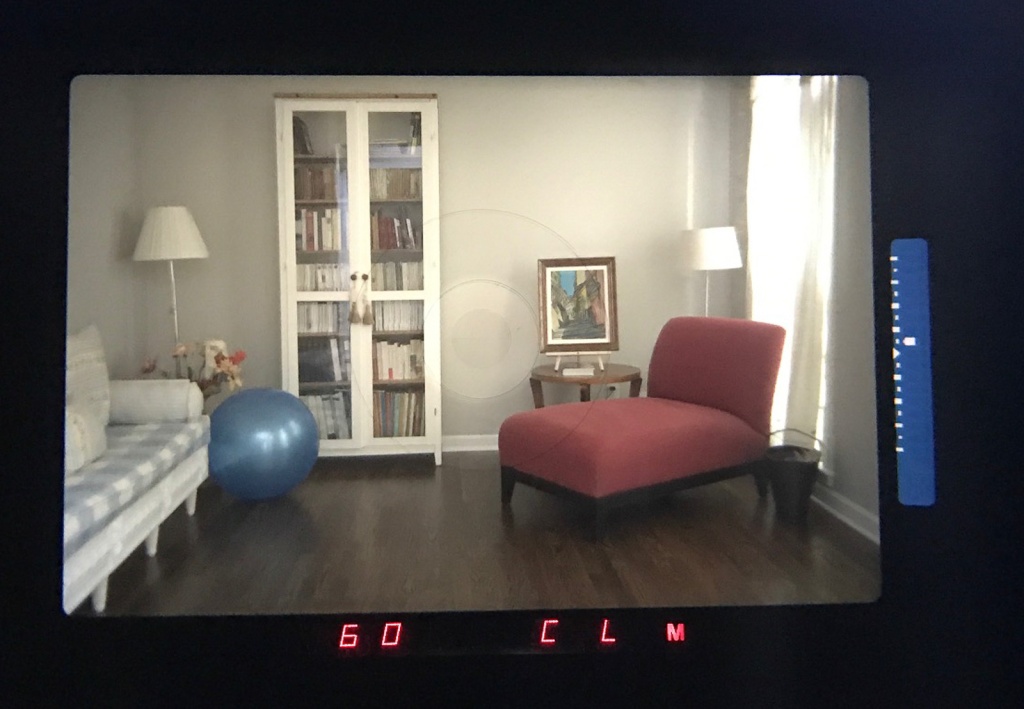
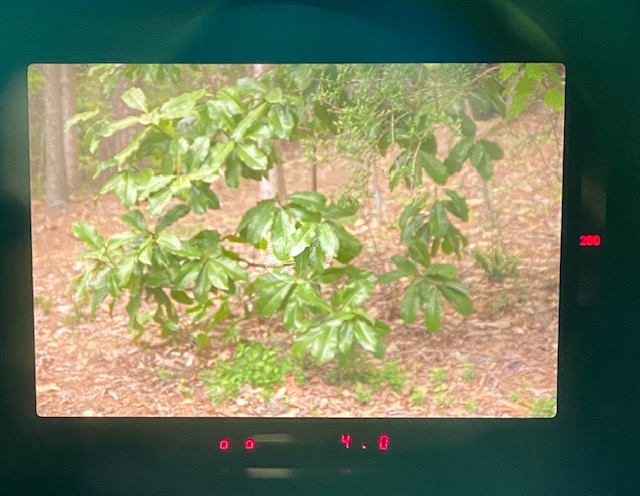
T90 – Semi-auto exposure – stopped down – over exposure (cursor above triangle on bar graph, “CL” message (for
CLose)Contax ST – Viewfinder – the selected shutter speed is shown on the right, the aperture and the view counter at the bottom.
And now
Reliability: “the tank” may have been solidly built, but when trying to innovate with the design the camera, Canon’s engineers went a bit too far, and introduced some weaknesses. With the benefit of hindsight, some of the design decisions look outright stupid (soldering lithium batteries to the circuit board or replacing springs with magnets in the shutter, for instance). The second issue in particular impacts reliability, and it’s the reason the value of the T90 on the second hand market is so low.
The ST is not without flaws either – it seems that Contax cameras of that generation (the RTS III, ST and AX) need the aperture command lever to be re-calibrated every now and then, and the process requires access to a workshop manual and a Contax Planar F/1.4 lens. I could not find a copy of the manual workshop on the Internet so far, and having to buy a Zeiss 50mm f/1.4 lens just to be able to calibrate a camera is not a very palatable perspective (the workaround is to play with exposure compensation dial). Apart from this non trivial issue, I’ve not found or read much (positive or negative) about the Contax ST’s reliability. As far as I know, the only real troubled child of the Contax-Yashica family is the 159MM.
Scarcity: both cameras were very expensive high end machines – which limited their sales volumes – but also ensured that most of their owners did not consider them disposable, and took good care of them.
Most of the interest for the Contax cameras seems to be concentrated in Japan – I could not find any in the US and finally bought my ST on eBay from a Japanese reseller (buying from Japan is generally a very pleasant experience – the cameras are in top condition and you get yours in less than a week through the Postal Service). It’s easier to buy a T90 from a domestic reseller, even if there are only a handful on sale at any given time. And because of the potential reliability issues, I would only buy a T90 from a seller with a very good reputation, who has really tested the camera, preferably with film.
Battery: Contrarily to many autofocus SLRs of the same vintage, the T90 and the ST don’t require expensive and difficult to find single use Lithium batteries. They simply need a few AAA or AA batteries.
Lens selection: The T90 was designed for Canon’s FD lines of lenses, but also works very well (in particular in semi-auto exposure mode) with older FL glass. Canon also sold for a while an adapter for 42mm screw mount lenses. If you add the lenses sold by third parties, the offer is limitless.
There are two issues with Canon FD lenses: the interesting ones (the luminous wide angle lenses in particular) were purchased en masse by users of Sony’s A7 series mirrorless cameras (who use them with an FD to Sony E adapter), which raised the price level on the second hand market. And since production ceased more or less with the launch of the EOS series in 1987, there are relatively few good zooms in the catalog (and in any case none of those f/2.8 constant aperture zooms preferred by the pro photographers).
Contax lenses have a great reputation – and Contax used to cover any need from the 15mm ultra-wide angle to the 600mm telephoto lens, with specialty items such as the 35mm shift lens or the medical lens also represented.
Outside of the 28, 35 or 50mm glass which sell for reasonable prices ($150.00 to $200.00), Contax branded lenses are much more expensive than Canon’s. But since Contax kept on releasing new Carl Zeiss manual focus lenses until 1998 (the last one was a compact zoom for the Aria), the lens designs are a bit more modern than with Canon, which could be good if you’re looking for a zoom.
The Canon T90 is higher than the Contax ST and can’t lay flat on a table (it tips forward). Not an issue, just bizarre. Canon’s 35-105 zoom looks small, in particular when compared to the massive Contax 28-85 Vario-Sonnar
How much? Not much. Probably because of its reliability issues, the Canon T90 is not in high demand and can be found for less than $100.00; the Contax ST is also relatively cheap (approx $150 if you buy it from a Japanese reseller). In the Contax family, the S2, the RX II and the Aria are more sought after, and sell for two to four times the price of the ST.
Conclusion
The Contax ST and the T90 have a lot in common on paper, but are very different cameras in day to day use:
ergonomics – Contax has a conventional user interface, the T90 is modal. Both are extremely pleasant to use and a photographer will enjoy working with each of them – it’s really a matter of taste.
exposure determination – in this specific area, the Contax is more limited, but easier to use, while the Canon is much more complex and sometimes gimmicky. Honestly, none of them is a perfect fit for me: ideally, I would simply like to use the central weighted average metering with an auto-exposure lock – an option none of them offers. A matrix metering option would also have even valuable – but no manual focus Canon camera ever offered it, and Contax fans had to wait for the last manual focus SLR of the brand, the Aria, to benefit from it.
A huge viewfinder – the ST’s most striking characteristic.
Is one of those two the ultimate manual focus 35mm SLR?
Besides the ST and the T90, there are few cameras that can legitimately compete for the distinction: a few Leica R models, the Olympus OM-4ti, a few other Contax cameras, maybe.
The Contax ST is a high quality, carefully designed and nicely built manual focus SLR for photographers who prefer their cameras full featured, but also easy to use and unobtrusive. A very nice tool. But it lacks this ounce of folly and excessiveness that graces the T90.
The Canon T90 is far from perfect – even if its limitations in the exposure department are inherited to a large extend from the FD lens mount’s shortcomings – and it has its own reliability issues. But it was a revolutionary camera in its time: there’s no manual focus SLR like it, and there’s still something magic in the simplicity of its user interface.
It’s a bit early to write Pentax’s obituary. But there’s no denying that the company (now a subsidiary of Ricoh) is a mere shadow of its former self.
The Spotmatic – a great camera in the sixties – but Pentax should have replaced it earlier than 1975
From the mid fifties to the early seventies, the Asahi Optical Corporation was an innovator. They scored an impressive number of “first” :
First Japanese single lens reflex camera to enter production (Asahiflex – 1952)
First reflex camera with instant return mirror (Asahiflex II b – 1954)
First modern single lens reflex (SLR) camera, with a pentaprism at the center of the top plate, a winder arm and shutter speed knob on the right side, and a folding rewind crank to the left (the “original” Pentax of 1957). This was to be the model for all other reflex cameras for the next 20 years. The camera was so important for Asahi that the whole corporation became later known as “Pentax Corp”.
First SLR with Through the Lens (TTL) metering on the market (Pentax Spotmatic – 1964)
First automatic exposure SLR with an electronic shutter (Pentax Electro Spotmatic – 1971)
First multi layer coated lens (or at least the first manufacturer to communicate about multi-layer coated lenses to the public at large – 1971)
As a result, Asahi Pentax was a sales leader in the sixties and early seventies: for example, it was the first Japanese camera company to sell over one million SLRs.
Pentax lost its supremacy during the first half of the seventies
they stuck to the Spotmatic form factor until 1975
they stuck with stopped down metering on their line of bread and butter Spotmatic cameras until the launch of the Spotmatic F in 1973, and to the m42 screw mount until far too late. Because they had adopted a proprietary bayonet early on, Minolta and Nikon had been able to offer full aperture metering (a major comfort improvement for the photographer) since 1966, with Canon and Olympus following in 1971.
As a result, Pentax was out-innovated by new entrants: Olympus OM-1 (the first ultra-compact SLR and camera system); Fujica ST-801 and ST-901 (first use of Silicon metering cells and of LED displays in the viewfinder); Olympus OM-2 (first implementation of On The Film (OTF) real time flash metering).
The Pentax Spotmatic F (1973) with a Pentax specific version of the universal 42mm screw mount – designed for full aperture metering.
The second half of the seventies was not better: Pentax was in reactive mode and started progressively being pushed to the bottom of the market :
Changes to their lens mount are always very risky for camera manufacturers. It may not bother the beginner or the amateur who are only going to shoot with the kit lens they bought with the camera, but it’s an invitation for enthusiasts and pros to reconsider their aleigence to the brand. Between 1971 and 1976, Pentax changed the lens mount of its cameras twice.
Pentax could not compete with Canon and Nikon in the “pro” market because they did not have a modular camera to offer until they launched the LX in 1980, and after they did, they lacked some of the specialized lenses and the support network that the pros required,
they were out-innovated in the heart of the enthusiast market: Canon with cheaper to manufacture and feature rich micro-processor driven cameras such as the AE-1 and the A-1, Minolta with multi-mode SLRs.
they had to face new competitors in the “amateur” segment of the market with Nikon and Olympus successfully entering the broader consumer market with cameras such as the EM and the OM-10 in 1979.
By the end of the eighties, Pentax had been relegated to the 4th position on the photo-equipment market, behind Canon, Minolta and Nikon. They had completed the transition to auto-focus SLRs, but were primarily known for their two remaining manual focus SLRs (the K1000 and the P3) and their water-resistant point and shoot cameras.
Pentax P3 – a camera for beginners – very successful on the market (3 million sold between 1985 and 1997)
They survived until the advent of digital photography. Konica-Minolta’s deep troubles gave them one last chance of resurgence in 2003-2004. They recovered the #3 position on the market for a while. But after early successes – their first dSLRs, the *ist D and *ist DS were good cameras, technically on par with contemporary Canon and Nikon offerings – they did not (or could not) keep up with the pace of their competitors, and let their market share decline to the point where their presence is hardly noticeable today.
More about Pentax’s last manual focus cameras in a few weeks with reviews of the Super-Program (Super-A), P3 (P30) and ZX-M.
The Pentax Spotmatic F and the Nikon FM were probably never on the shelves of photo equipment stores at the same time – when Nikon launched the FM in 1977, Pentax had stopped selling their Spotmatic line of cameras and their m42 screw mount Takumar lenses one year earlier, and were promoting the more compact MX (semi-auto) and ME (automatic) SLRs and their new bayonet lens mount instead.
Logically, the Spotmatic F should be compared with cameras such as the Canon FTb, and the FM with the Pentax MX. But shooting with the Spotmatic F and the FM side by side is a good way to measure the progress made in usability and performance in a just few years.
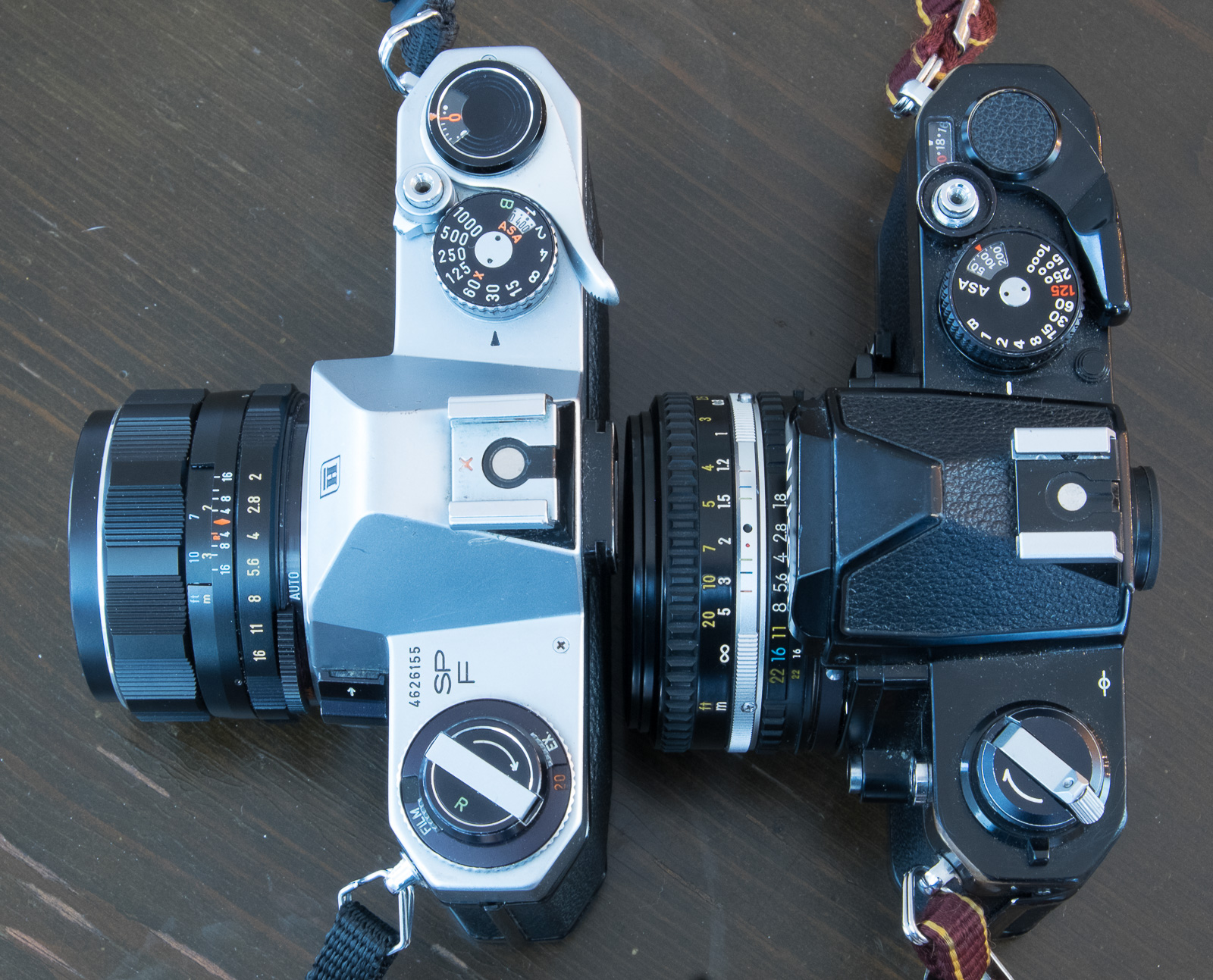
Size, Weight, Features and Ergonomics Looks can be deceiving. The two cameras are roughly the same size and both weight approximately 600g, but the Spotmatic looks taller and feels heavier.
The ergonomics and the organization of the commands are very similar. Both cameras offer semi-automatic exposure – the Spotmatic F needs the SMC Takumar lenses (sold after 1971) to offer full aperture metering, while the FM needs Nikkor AI lenses (sold after 1977) or older lenses modified for Aperture Indexing to provide the same capability.
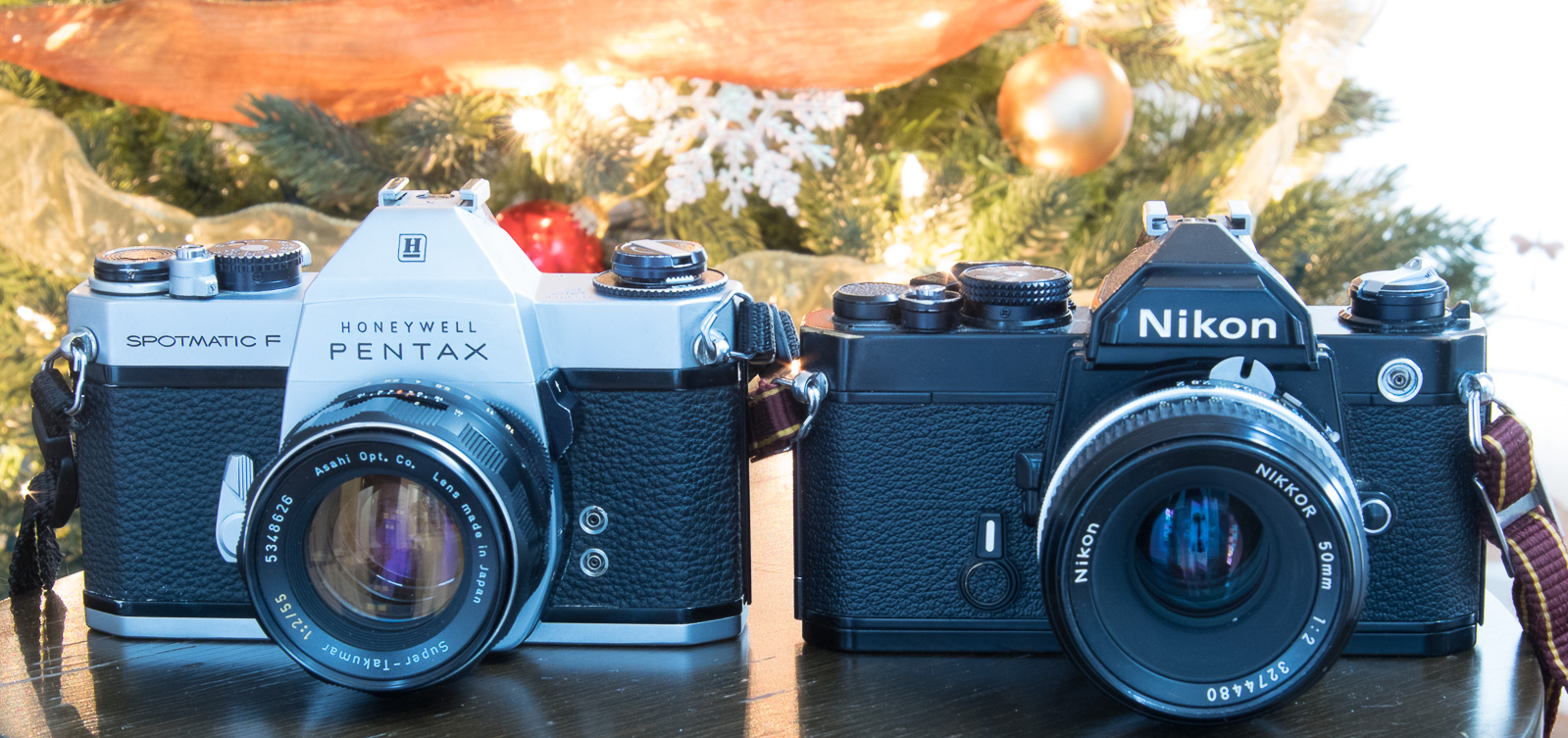
Pentax Spotmatic F and Nikon FM – almost exactly the same footprint – surprising…
The shutter of the FM has metallic blades traveling vertically, while the SPF uses a conventional horizontal textile shutter, with a slower electronic flash sync speed (1/60 sec instead of 1/125 sec), and – in my experience at least – a more questionable reliability after a few decades of use.
Lastly, the FM can be equipped with a motor drive, which enables continuous film advance at 3.5 frames per second.
Pentax Spotmatic F and Nikon FM – a very similar organization of the commands
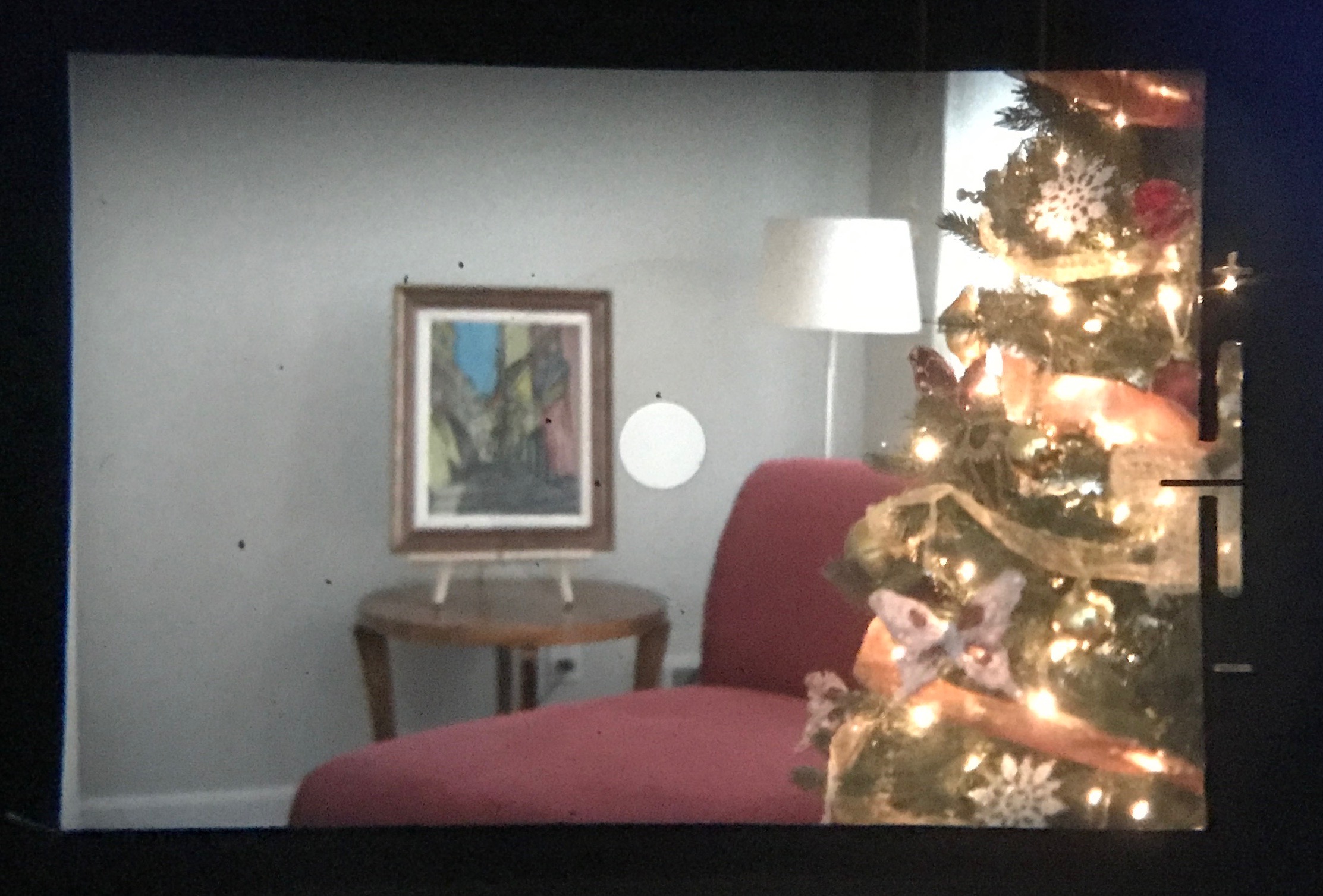
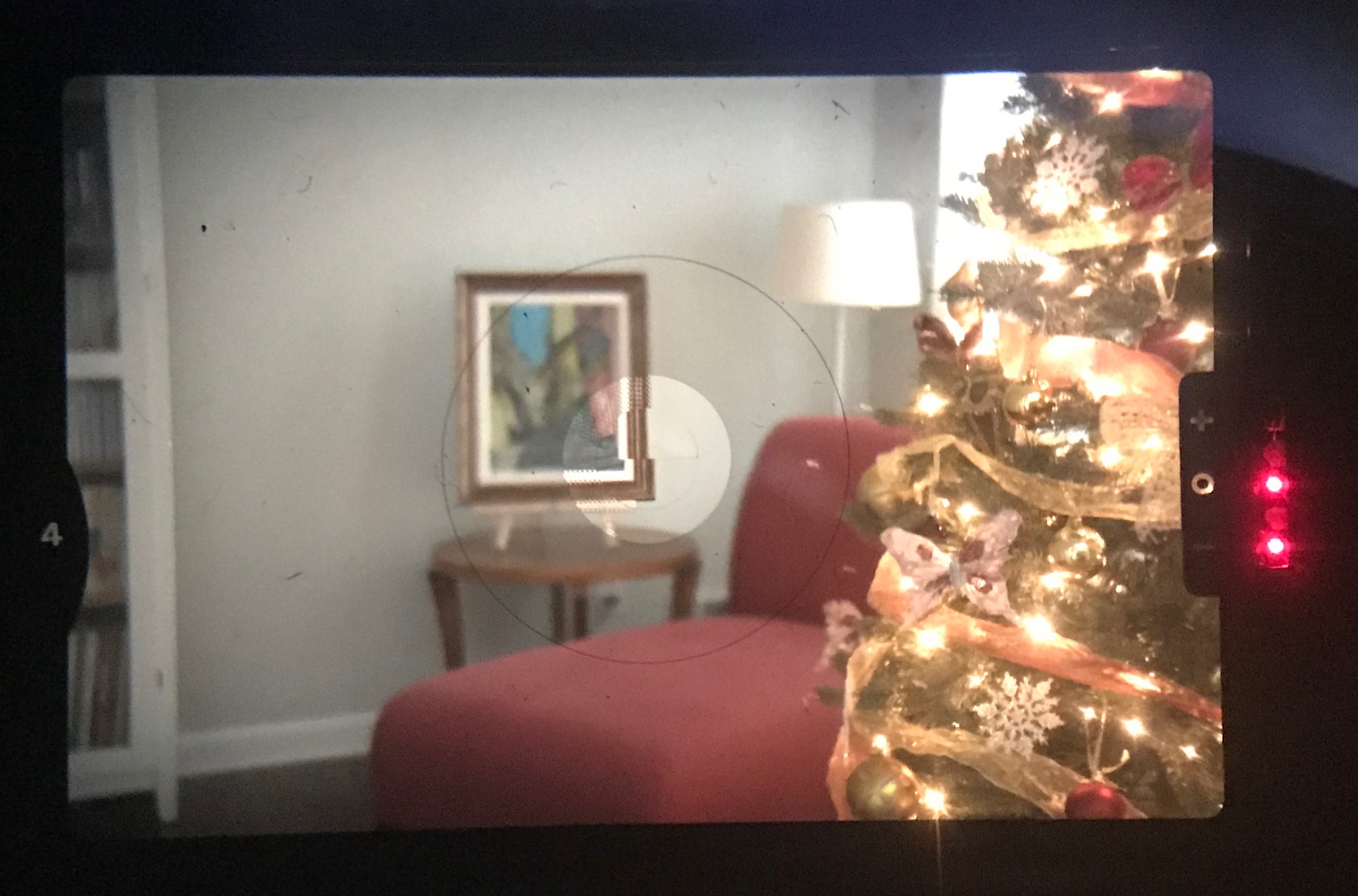
Viewfinder That’s where the progress made in a few years is the most…visible. The focusing screen of the FM has a much finer grain, it’s significantly more luminous, and thanks to the combination of a split screen telemeter and a ring of bright micro prisms, focusing is much easier and therefore faster than on the Spotmatic.
The viewfinder of the FM is also more informative – it shows the selected aperture and shutter speed.
Pentax Spotmatic F – just the matching needle for the exposure on the right, and a small area of micros prisms at the center
On the other hand, I could not have imagined that getting the focus right on the Spotmatic F would require such an effort – even with relatively luminous lenses – the focusing screen is dark, and there is no split screen telemeter to help the photographer when the micro-prism ring is not working. Cameras from the late seventies-early eighties are so much better in that regard – that alone is a reason to shoot with the Nikon FM rather than with the Spotmatic.
Nikon FM – 3 LEDs to help with the semi-auto exposure, a split-image and a ring of micro prisms at the center, a disk showing the shutter speed on the left – a fine and luminous focusing screen.
Metering system The metering system of the Spotmatic F is derived from the first Spotmatic, and like almost all the cameras from the late sixties and early seventies, it’s build around a CdS cell and communicates the exposure value to the photographer with the needle of a galvanometer. CdS cells tend to react slowly to changing lighting conditions (they have memory) and the needle of the Spotmatic is not very precise. Move the aperture ring one stop up or one stop down, and the needle hardly moves. It’s accurate enough for negatives. Not sure it would be precise enough for slide film.
The Nikon FM has a much faster GASP cell (they were all the rage in the late seventies, they were supposed to be better than Silicium cells – the Pentax MX had such a cell too). The right exposure is communicated to the photographer through a set of three red LEDs. The setup is very reactive, and more accurate than the needle of the Spotmatic F.
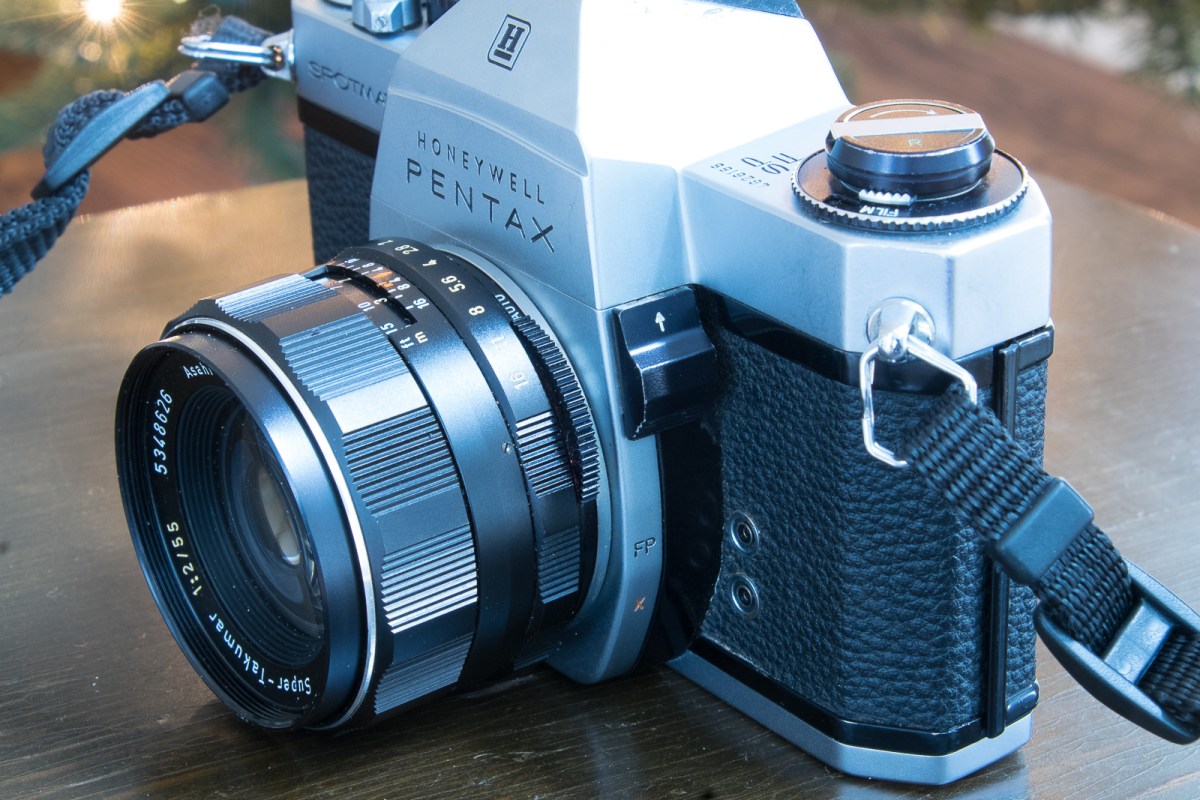
The big black lever with the white arrow is used for depth of field control with Full Aperture Metering lenses, and for metering on conventional m42 screw mount lenses
Battery The Spotmatic F still came with Mercury batteries (which have been outlawed in the western world for decades). But it’s very tolerant with the non-Mercury-based replacement batteries available today in every drugstore. The FM works with conventional 1.5v Silver Oxide batteries. They also are widely available.
The rotating lock on the shutter release, and the red dot showing that the shutter has been cocked and the camera is ready to fire.
Reliability The Spotmatics are easy to repair – there are still a few specialists who can service them in the US, and based on my personal experience, they’re not going to be out of work any time soon: it seems that the Spotmatics need more tender love and care than more recent cameras. On the other hand, the FM inherited from the robustness and reliability of its older brothers in the Nikon family. Even if it was not considered a “pro” camera in its heyday, it was very often used by professional photographers (war correspondents in particular), as their primary cameras when light, compact and very solid gear was needed, or as a backup camera – in case their big Nikon F2 (or later F3) got into trouble.
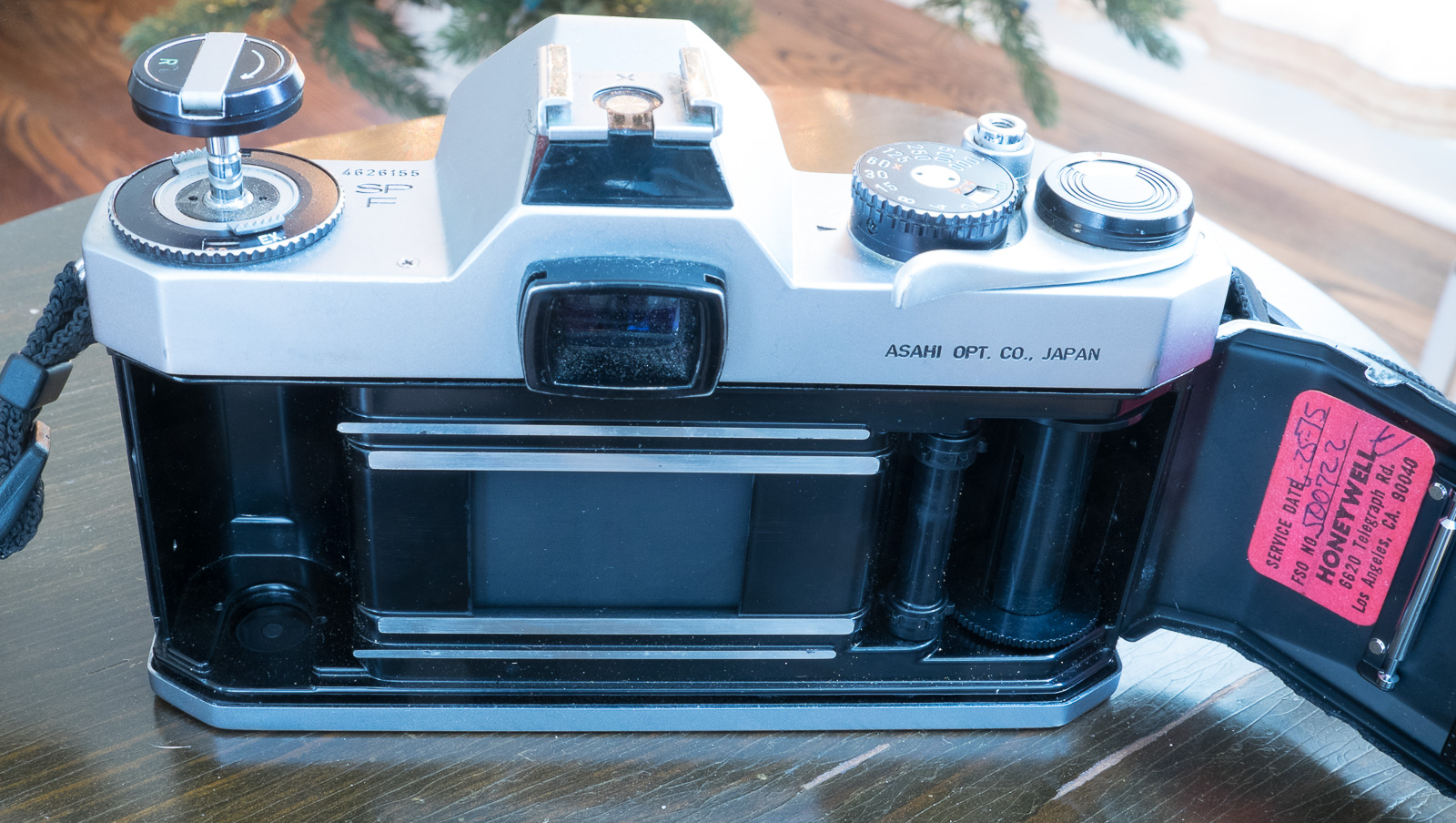
Typical view of the film chamber of a Spotmatic – textile shutter, and the label of a Pentax service center (maybe somebody should start collecting those labels).
Scarcity and price
Both cameras belonged to the best selling category of their time – semi-automatic exposure SLRs designed for enthusiast amateurs and professional photographers, they were sold by leading manufacturers with a wide distribution network, and hundreds of thousands (Spotmatic F) or even millions (Nikon FM) were manufactured. Lots of them have survived. The Spotmatic F is older, and finding a good copy is more difficult than locating a good FM. There is relatively little demand for the FM (less than for the more recent FM2 with its 1/4000 sec shutter or for the Cosina-manufactured FM10) and supply visibly exceeds demand, which reflects on prices: the FM tends to be cheaper than the Spotmatic F on eBay ($25.00 vs $50.00 for a camera in working condition).
Same overall size for the camera bodies, but the Pentax lens’ diameter is narrower than the Nikon’s and makes the camera look taller
Lens mount and lenses The Takumar lenses of the Spotmatic have an excellent, and in my experience, deserved reputation. The “entry level” 55mm lens I used with the Spotmatic F produces contrasty pictures, and the older Super-Takumar 35mm f/2 produces creamy pictures with a fabulous bokeh (it also works very well with mirrorless cameras).
The internals of the Pentax ES mount – Pentax added a lever to transmit the pre-selected aperture value and a pin to lock the lens in position.
Takumar lenses with the m42 screw mount are abundant on the second hand market, as are third party lenses – but they have to be operated stopped down. Full aperture metering is only possible with the more recent (1971-1975) S-M-C Takumar lenses with their modified m42 lens mount (they can easily be found on the second hand market), but there is next to no offer from third party vendors.Only Tamron seems to have offered lenses supporting full aperture metering on the Spotmatic F. I’ve tried a 28mm f/2.5 wide angle and a 35-70mm f/4 Tamron Adaptall lens, and they both seem to lack contrast compared to Pentax or Nikon original lenses.
The Nikon FM was launched the same year as the “AI” version of the Nikon F bayonet mount, and as usual with Nikon, some level of compatibility exists with prior and subsequent versions of the lens mount.
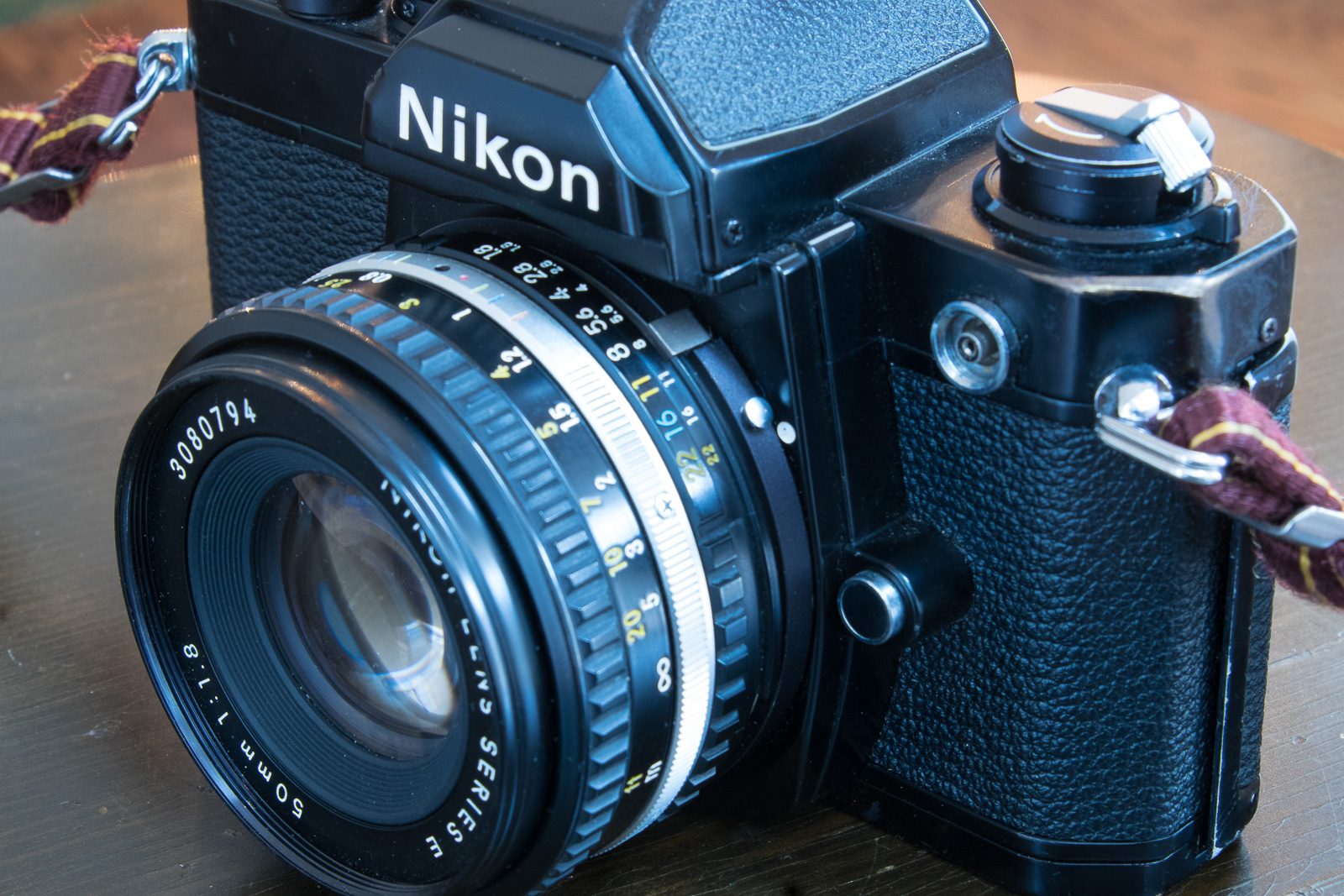
Nikon FM with an AI (or AI-S) lens.
The “FM” is one of the “most compatible” of the Nikon bodies – it’s sometimes called the Rosetta Stone of Nikon cameras- and it can be used (with various restrictions) with lenses made from the very beginning of the F mount (1958) until today: Nikon still have AI manual focus lenses in their catalog, and some of their current auto-focus lenses can also be mounted on the FM, provided they have an aperture ring and a mechanical diaphragm control mechanism.
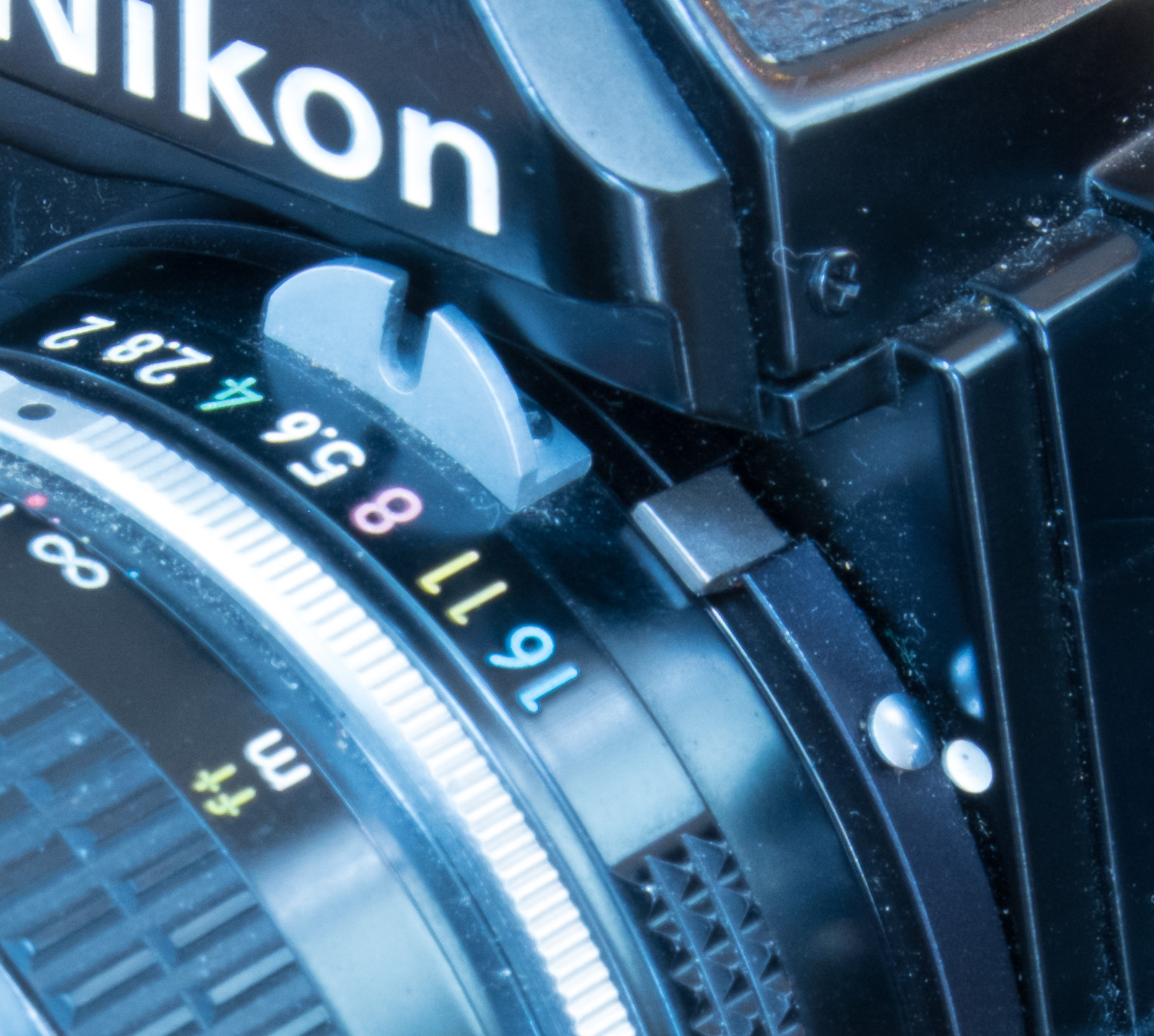
Nikon FM with a non-converted pre-AI lens – the grey metallic tab has to be lifted (you press the shiny mushroom like button below it)
The offer of second hand lenses (Nikon branded or compatible) is also abundant.
Conclusion
When working with old cameras, we all place the bar of the required level of performance at different positions – it’s a function of our experience, and of the type of scenes we tend to shoot.
The Spotmatic F, although a very good camera in its own right, is too much of an antique for me. Its base design is rooted in the sixties (if not earlier) – it’s the last evolution of the m42 Pentax line. Focusing is the biggest issue – you really have to pay attention to it, and it slows me down to the point I feel I’ll miss too many opportunities when I shoot mobile subjects. It still has a real usage value (on relatively static subjects) and can draw from a large supply of very good lenses, but it’s an antique first and foremost.
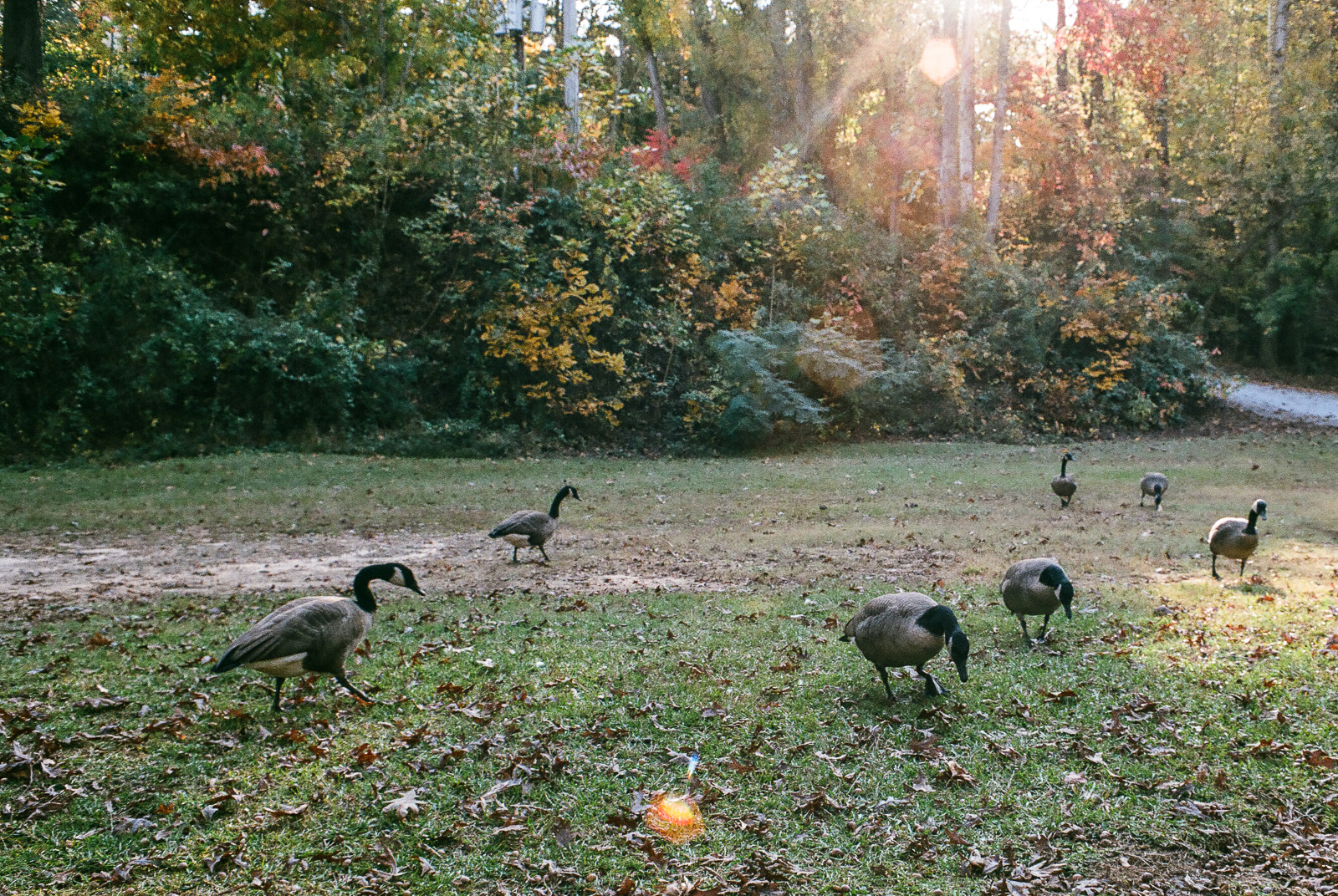
Big birds – Thompson Park – Mableton – Pentax Spotmatic F – Super Takumar 55mm f/2. Fujicolor 400. Great camera for relatively static subjects.
Only 4 years younger, the Nikon – although not that different on paper – feels like a more modern camera (lower profile, much better focusing screen, more precise exposure determination). I expect it to be more solid and more reliable too. Like the SPF, the FM is compatible with earlier versions of the brand’s lens mount, but unlike the Pentax, it’s also compatible with the manual focus and with some of the auto-focus lenses still sold by Nikon today.
American White Sheperd – Nikon FM – Nikon 28-70 f/3.5-4.5 AF zoom. Not sure the dog would have left me enough time to get the focus right on the Spotmatic.
When kids ask me to let them use an old camera to learn the basics of photography or for an art project at school, I pick the FM with a Nikkor E Series lens – it’s a cheap and very efficient combo and I’m confident they won’t break it.
And the FM – along with its aperture-preferred auto-exposure sibling the Nikon FE2 – is also the camera I bring with me when I need a break from modern, computerized digital cameras – without sacrifying the results.
One last word: the Nikon FM10 has very little in common with the rest of the FM and FE series – it’s a camera manufactured by Cosina, at a time when all manufacturers believed they needed a sub $150.00 manual focus/semi-auto SLR in their product line. The FM10 shares its chassis and its kit lens (except for the lens mount, of course) with the Olympus OM-2000 and with other cameras manufactured by Cosina, and is not a “true” Nikon.
American White Sheperd. Nikon FM-Nikon 28-70 f/3.5-4.5 AF zoom.
The “standard” Asahi Pentax Spotmatic is a camera I would have loved to like. I was attracted to its small size, its nice finish and its pleasant design. The Spotmatic was a camera of high historical significance – the first mass market SLR with Through The Lens (TTL) metering and a best seller in the sixties (the first Japanese SLR to sell in excess of one million units). Last but not least, my first reflex camera and my first dSLR were both Pentaxes and I’ve always had an affinity for the brand. All good reasons to add a Spotmatic to my ever expanding collection.
Pentax Spotmatic F – on the outside, the “F” engraved on the top plate is the most visible difference with previous Spotmatic models
The first one I bought, although superb on the pictures, had a broken shutter. The second one had a capricious rapid wind lever, a shutter release with an enormous lag, a very stiff exposure meter lever, and a meter of uncertain accuracy. I did not trust it and never loaded a single roll of film in it. Those little cameras, as cute as they were, did not seem to have been built like the Nikon SLRs of the same vintage (two of the three cameras I bought recently had the sticker of a camera repair shop in the film chamber).
But I kept on reading nice things about the Spotmatic, and I decided to give it another try. A last chance. This time my pick was the final camera of the Spotmatic family, the full aperture metering Spotmatic F.
Full aperture metering, at last
With the model “F” launched in 1973, Pentax finally brought full aperture metering to its line of semi-automatic cameras, more than seven years after Minolta and Nikon had opened the way with the SRT 101 and the Nikkormat, and two years after Canon, Olympus and Fujica had finally adopted full aperture metering.
Pentax Spotmatic F – this one is a US market model sold by Honeywell. This Super-Takumar lens is an exception – it has the full aperture capable ES mount.
On the outside, nothing had changed. The same compact dimensions, the same pleasant design with the “Pentax touch” – such as a red indicator showing that the shutter is cocked. The only major difference inside was of course that the “F” was a full aperture metering camera.
The Spotmatic F is still compatible with normal 42mm screw mount lenses with aperture pre-selection (Pentax Auto-Takumar, Super-Takumar, as well as hundreds of lenses sold by competitors), but full aperture metering requires the use of the new Super-Multi-Coated (S-M-C) Takumar lenses. Introduced with the Pentax Electro-Spotmatic of 1971 (the first aperture priority automatic exposure SLR with an electronic shutter), the S-M-C lenses remain backwards compatible with the 42mm standard, but add a prong to transmit the value of the pre-selected aperture from the lens to the camera body (this variant of the 42mm universal mount is sometimes named Pentax ES).[*]
Pentax Spotmatic F – with a Super Takumar lens – with this lens the “F” operates like a normal Spotmatic
The Spotmatic F had a short sales run, but a very long legacy. It was superseded after less than 2 years by the new line of Pentax K bodies (KM, KX and K2).
To a large extend, the K bodies were a limited refresh of the Spotmatic design – modified to support the new K bayonet mount and silver oxide batteries; the KM in particular was extremely close technically to the Spotmatic F. All three models were rapidly replaced with a new line of more compact cameras (the MX and ME), but the K1000 (a simplified version of the KM introduced in 1976) remained in the catalog until 1997.
Using the Spotmatic F
It’s a compact camera (much smaller than the Canon FTb or the Nikkormat, almost the same size as a Nikon FM), but it’s surprisingly heavy at approximately 650g without the lens. The fit and finish are in line with Pentax ‘s tradition, which means very good, even if not at the level of Nikon.
Viewfinder – it’s correct for a camera of that vintage, but is clearly not as bright and clear as the viewfinder of the Olympus OM-1, or of cameras that came to the market only a few years later (Nikon FM , for instance). And it’s lacking the split-prism present in its more modern rivals (the viewfinder only shows a small ring of micro prisms. Getting the focus right is not as easy as it should be).
The relatively long eye point makes it usable by photographers wearing glasses – they will just have to be aware that if they want to frame precisely, they will have to look up, down, left, right. As mentioned earlier, focusing is sort of OK with a fast, full aperture capable lens. But with standard m42 lenses, metering is stopped down, and when an aperture narrower than f/5.6 is selected, the focusing screen becomes too dark for composing (the right sequence is compose, focus, lift the metering lever, adjust the exposure, press the shutter release).
Metering – the Spotmatic F is a conventional semi-auto camera, with the needle at the right of the viewfinder. Full aperture metering is more comfortable, but the Spotmatic F can also be used with older Super-Takumar lenses (or any m42 lens), stopped down. The Spotmatic F I bought was in very good shape, and the stopped down lever (at the left of the lens flange) moves very smoothly; it makes a faint “click” when it reaches the stopped down position.
Battery: Another difference with earlier Spotmatics is that the “F” used PX625 Mercury batteries, larger than the diminutive RM640 battery used previously. Of course Mercury batteries can not be found anymore, but the Spotmatic has the reputation of being very tolerant with all sort of batteries – mine is apparently fitted with an Alcaline-Manganese battery, a PX625a, and the metering is still spot-on.
Lens selection: only Pentax lenses sold after 1971 benefit from the modified lens mount supporting full aperture metering on the Spotmatic F (there are exceptions here and there – for more information check this page: https://cameragx.com/2017/10/26/the-pentax-m42-lenses/). In my opinion, the main reason to buy a Spotmatic F (over an older SP or a SP II) is full aperture metering – even if standard m42 lenses are perfectly usable.
So, what are the options?
buy a Pentax Super-Multi-Coated lens, but the selection is limited to prime lenses, and the product line stopped being updated in 1975;
or find a third party lens compatible with the modified Pentax mount (Tamron Adaptall lenses come to mind – there is a specific Adaptall mount for the Pentax ES series, and Tamron offered Adaptall lenses until the end of the XXth century).
All in all, the “F” is a pleasant, compact, well rounded camera. The viewfinder is a bit of a let down, but compared to what was available in 1973 from the other big vendors (Nikkormat, Canon FTb, Minolta SR-T), the “F” more than holds its rank: it is less bulky than any of the other three, and is simpler to use than the Nikkormat. Of course, the Olympus OM-1 was much more compact, the Fujica ST801 was more advanced technically, and both had a better viewfinder – but if you absolutely want a m42 screw mount camera from the early seventies, it’s a very good pick.
Fall colors – Mableton, GA – Pentax Spotmatic F – Super-Takumar 55mm f/2- Fujicolor 400
Should you buy a Spotmatic F?
When you buy a single lens reflex camera, you buy into a system. If you’re committed to m42 screw mount lenses, the Spotmatic F is a very good choice. It’s a simple, easy to use semi-auto camera, it offers the comfort of full aperture metering, its Takumar lenses have an excellent reputation, and almost any m42 lens can be mounted on the camera.
But you also have to consider that for the Pentax m42 system, the end was close when the Spotmatic F was launched: this camera is the best and final iteration of the Pentax m42 family, a system with its roots in the late fifties. The lens selection was frozen forever in 1975, and there is no upgrade option beyond the “F”. It may not be an issue for you if you’re happy with the technology of the SLRs of the early seventies, and don’t want to have anything to do with programmed auto-exposure, spot metering, fast shutters, long eye point viewfinders, acute matte focusing screens, TTL flash systems and good trans-standard zooms.
In 1973, manual focus SLR systems had not reached their peak yet – a few pretty good cameras and more than a few pretty good lenses would still be launched during the following 15 years. For a photographer interested in investing in a manual-focus camera system, there may be better choices than the m42 system, starting with Pentax’s own K bayonet SLRs of 1975 and beyond.
How much?
Spotmatic cameras (of any type) in perfect working condition are definitely not members of my league of the $5 cameras. The Takumar lenses are relatively abundant and have a great reputation, which contributes to Spotmatic’s high usage value. It’s been more than forty years since the last Spotmatic was manufactured, and they seem to require more care and maintenance than equivalent cameras from other brands. Although they were manufactured in large quantities (3.6 million over a 12 year production run) the supply of good copies is starting to dry, driving the sales price up.
The Spotmatic F is not as common as the older stopped down Spotmatics (approximately 600,000 units were sold in 3 years), and it is slightly more expensive. Expect cameras in perfect working order to be in the 50.00 to $75.00 bracket.
[*] no rule without an exception – the Super-Takumar lens that came with this particular camera is using the “ES” version of the m42 mount, and supports full-aperture metering. It was Pentax’s entry-level kit lens in the early seventies, and probably to keep its cost in check, Pentax deprived it from the “Super-Multi-Coating” treatment.
More about the line of Pentax Spotmatic cameras:
A blog mainly focused on Asahi Pentax cameras with a Penta-Prism viewfinder: http://www.pentax-slr.com
A blog dedicated to manual focus cameras: https://www.678vintagecameras.ca with a very informative page about Pentax cameras and lenses
For people who love statistics, an estimate of the sales volumes of the cameras of the 70s-80s by brand: http://knippsen.blogspot.ca/
Fall colors – Mableton, GA – Pentax Spotmatic F – Super-Takumar 55mm f/2- Fujicolor 400
The price of used film cameras on eBay is racing to the bottom. No brand is immune – not even Nikon or Leica – only a few models seem to be worthy of the consideration of the buyers and still sell for more than $100.00:
single digit Nikon F models,
Nikon FM2 or FM3A,
Contax 159mm or ST,
pristine and tested Canon T90 or Canon New F-1,
all rangefinder cameras from Leica and a few of their SLRs,
Olympus OM-3t / OM-4t.
The very last high end film auto-focus SLRs of Canon, Minolta and Nikon – such as the EOS-3 and EOS-1 V, the Maxxum 7 and 9, and the F100 and F6 – are also in a a category of their own. As the “ultimate” film SLRs, very close technically from the current dSLRs of the same brand, they can be sold for anything between $200.00 and $2,000.00.
Olympus OM-2000 – a beautiful member of my $5.00 league
The rest is trending towards being virtually free, and autofocus SLRs fare even worse than manual focus bodies: I recently paid $3.25 for a nice N6006, a Nikon SLR from the early auto-focus era and $15.00 for a beautiful Minolta 9xi with a good lens, its original catalog and user manual. We already passed the point where the shipping costs exceed the sale price of the camera, and where a set of batteries can be many times more expensive than the camera itself – the lithium battery of the N6006 cost me $12.00, almost 4 times the price of the camera.
Nikon N6006 – a very competent auto-focus camera, to be had for less than $5.00 on eBay
For the photographer starting to shoot with film, there has never been a better time to buy a good camera on the cheap. Collectors are more attracted by pro or high-end cameras which were expensive when new, and still are in top condition. The “last pro or last high-end film cameras manufactured by a given brand…” fare particularly well: a tested and working Pentax LX, a beautiful Olympus OM-4Ti or a Canon EOS-1 V are relatively rare and can sometimes reach prices between $400 and $1,000.
Canon AV-1 – It was part of a $8.00 bundle which also included 3 other cameras. In all fairness the other cameras were all defective, but this one worked pretty well.
SLRs originally positioned as mid level cameras for enthusiasts or experts provide the best opportunities, in particular if you’re willing to accept a few scratches or blemishes on the body: they tend to be much more usable than entry level cameras (they’re almost as feature rich as the high end models, if not as solid), but don’t catch the attention of the collectors because they’re too ordinary and too easy to find.
On my short list of recommended cameras:
Manual Focus cameras: strangely enough, manual-focus cameras from big brands tend to be more expensive than most of their auto-focus SLRs.
Although not as expensive as a T90, a FM3A or an OM-4Ti, the three cameras listed below can still command prices in the $70.00 to $100.00 range. They are very competent tools, they benefit from a large supply of good lenses, and are a great way to move one step higher with film photography:
Canon A-1
Nikon FE2
Olympus OM-2n
Nikon FE2 – Canon A-1 – certainly not cheap cameras – but still a bargain at the current price level
You can find cheaper manual focus alternatives – the Olympus OM-2000 is one of my $5.00 cameras, but I’d be more prudent with brands like Fujica (and other brands which did not have strong following on the expert or enthusiast markets). Not that they did not make good cameras – but good lenses are going to be more difficult to find – and without a set of good lenses, a SLR camera is not really worth having.
Fujica AZ-1 – the camera can be had for cheap, but apart for the ubiquitous 50mm lens and the zoom shown here, Fujinon EBC lenses (operating at full aperture) are rare and expensive.
Auto-focus Cameras: manufactured in the early to mid-nineties by the big four (Canon, Nikon, Minolta, Pentax), they are mature technically, with a good multi-sensor auto-focus, matrix metering, and a long eye point viewfinder. The lenses are still somehow compatible with the current dSLRs of the brand – and they’re incredibly cheap. A few examples of the “expert” or “enthusiast” category:
Minolta 600si
Minolta 9xi
Nikon N90s
The “prosumer” cameras of the early to mid eighties – they can be yours for $15.00 to $25.00 now, with a (good) zoom included.
Auto-focus cameras designed for amateurs (such as the Minolta 3xi or the Nikon N6006) are the cheapest of them all, but the price difference with the “expert”, “enthusiast” or “prosumer” model of the same brand is minimal (the price of their disposable Lithium battery, roughly). Don’t hesitate. Go for the top of the line.
As usual, I only recommended cameras I’ve used and liked. I’m sure there are very good auto-focus cameras from Canon (EOS mount), and great manual focus cameras from Minolta (MD mount) or Pentax (K mount). They’re all supported by a great line of lenses and will also constitute very good buys.
One last word…of caution
When you buy a camera for less than $5.00, you don’t always win.
shopgoodwill.com is a very good source for cheap equipment, but you have to consider it’s sold as is, by people who – generally – have absolutely no clue of what they’re selling and can’t describe it in any useful way. To me, it has been a bit of a hit and miss – cameras from the 90s (the Olympus OM-2000, the Minolta 9xi, the Nikon N90s) were diamonds in the rough, and after a good cleaning, they worked perfectly. Older cameras (a Spotmatic, a Fujica AX-3) were broken and could not be fixed. The older the camera, the riskiest it gets. But most cameras are sold with a lens, and even if the camera is defective, the value of its lens alone sometimes makes buying the set a good deal.
eBay – thanks to the system of feedback, sellers tend to describe their items with some level of accuracy. In my experience, if you stick with sellers with an almost perfect feedback score (99% or better), and read the item description extremely carefully, you won’t be disappointed.
Dogs playing. Nikon N90s – Fujicolor 400 – The Nikon N90s nailed the exposure and the focus perfectly.
Entrepreneurs operating under the Yashica brand just managed to raise over $1,000,000 on Kickstarter, for a $140.00 camera shooting “digiFilm” (that’s a trade mark). That’s eight times what they expected. It’s a success.
What’s so special about this camera?
It’s a very simple point and shoot digital camera with a tiny sensor and a fix focus lens (not a zoom, and pre-set to the hyperfocal), which looks like a compact camera of the seventies (Canon Canonet 27, Olympus Trip, Rollei 35, …) and is not technically different from the very basic entry level point and shoot digital cameras that were selling by the tens of millions twelve years ago.
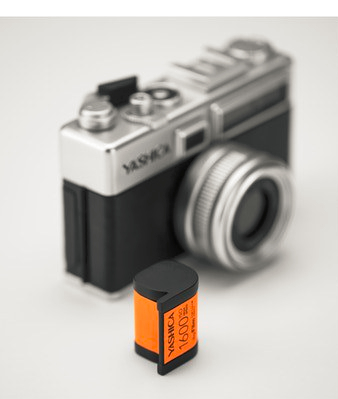
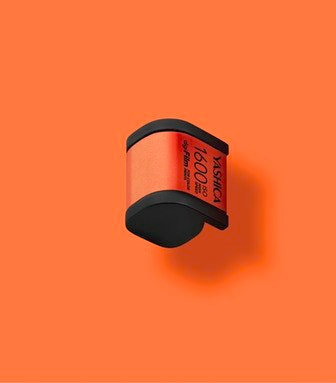
The Yashica Y35 digital camera and its digiFilm canister (source: Kickstarter)
It has no LCD display at the back to visualize the images, just an optical viewfinder. A fake wind lever needs to be activated to arm an inexistent spring loaded shutter.
Its unique selling proposition is that its jPEG files are processed in-camera to emulate 4 different types of film (B&W 400 ISO, 200 and 1600 ISO color film, and a square format); the settings of each “film” are stored in a cartridge that looks like a 35mm film canister. Supposing the camera is shooting “200 ISO color film emulation”, and the photographer wants to switch to Black and White or to 1600 ISO color settings, he/she has to open the back of the camera, remove the 200 ISO cartridge from the camera, and insert the B&W 400 ISO or the 1600 ISO cartridge. As far as I know, the cartridge is not storing any image (there’s an SD card in the camera). It just contains a ROM with a few instructions for the jPEG processing engine of the camera.
The digiFilm cartridge – the cartridge does not store images, just instructions for the jPEG processing engine of the camera ((source: Kickstarter)
Nothing here that a smartphone and a few Instagram filters could not do. Fujifilm has been letting the users of its cameras chose the film emulation they wanted to apply to their images for years – photographers can pick the type of film (Fuji’s own Provia, Velvia, Astia and Acros as well as generic interpretations of “chrome” and “professional negative” film), by simply selecting the desired emulation in a menu, and without the gimmickry of cartridges that have to be purchased, inserted, removed, carried around and possibly lost.
Why such an outcry in the photography blogs?
In the grand scheme of things, the number of subscribers of the Y35 camera on Kickstarter (5,500) is a drop of water in the ocean: Instagram has 700 million users and the Japanese industry sold more than 20 million conventional digital cameras last year.
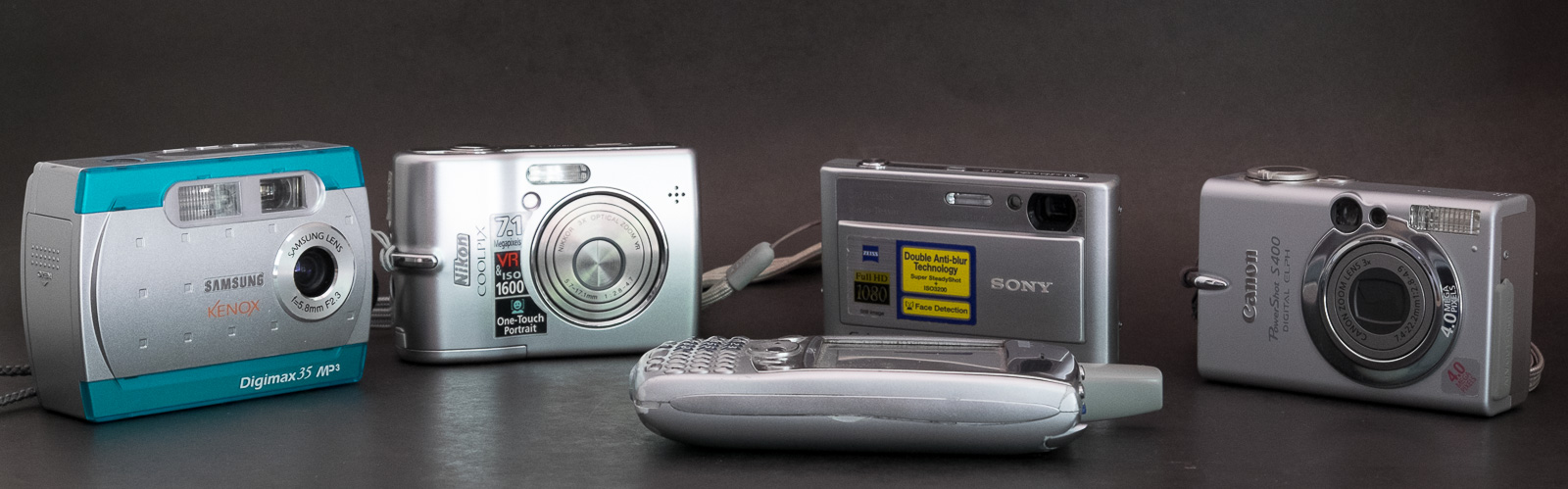
With the exception of the Samsung Digimax 35 (on the left) and the Palm Treo (foreground), any of those old digicams is a more capable photography tool than the Yashica Y35.
To a large extent, this Yashica is a fake. It’s an entry level digicam, masquerading as a film camera, and sold on a promise of simplicity it can not meet. It won’t be easier to use than a conventional digicam (you’ll still need a USB cable or a WiFi enabled SD card to upload your images to your PC, and from there to your favorite messaging or social networking app).
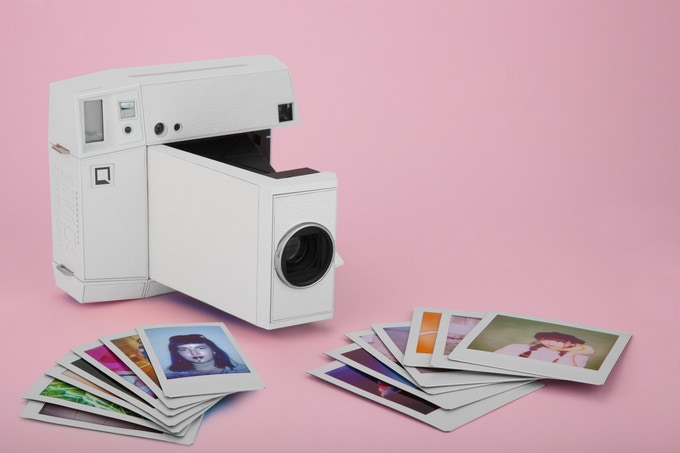
Another Kickstarter project – Lomo’s Instant Square Camera (Picture – source Kickstarter)
But its relative success (the catch is that it was purchased by people who have not seen, let alone tested it) is yet another indication that beyond the smartphones and the serious digital cameras – which both are predominantly operating in the abstract world of software – there is a demand for a simpler, more analog user experience.
Today, it’s the instant film cameras, and not toys like this Yashica digicam, which are the best answer to this quest for simplicity, authenticity, and unencumbered fun.
Jules (French Bouledogue). Instax film. Holga camera with defective shutter.
Is it the right way to give a new life to old film cameras? Or is it a solution in search of a problem? The images below were published on Kickstarter – and as of Oct 4th, 100 people had actually subscribed.
What it looks like from the outside:
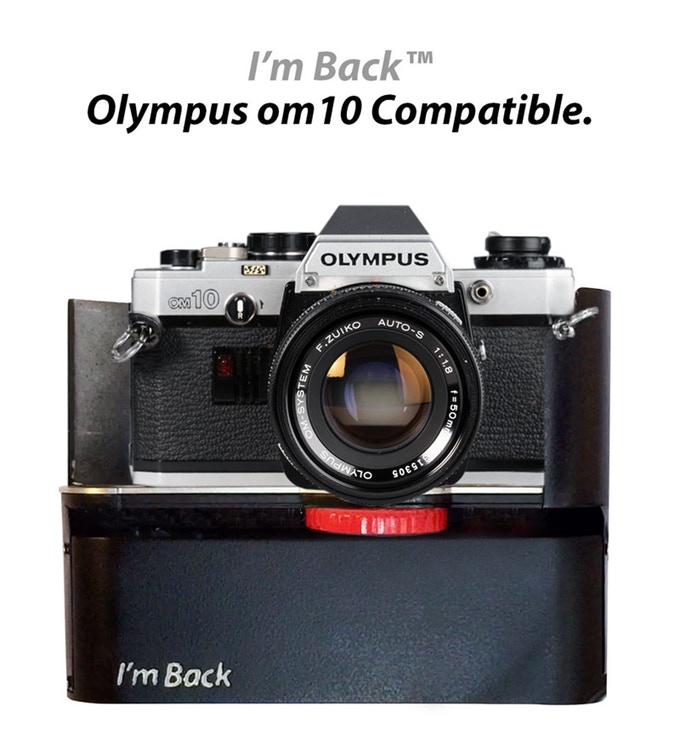
The “I’m back” – Kickstarter project – the prototype mounted on an Olympus OM-10 – “I’m Back is a “Multi-System” that can be adapted to various cameras from the 50s until the 90s!”
How it works
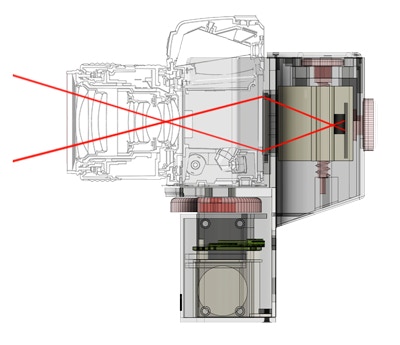
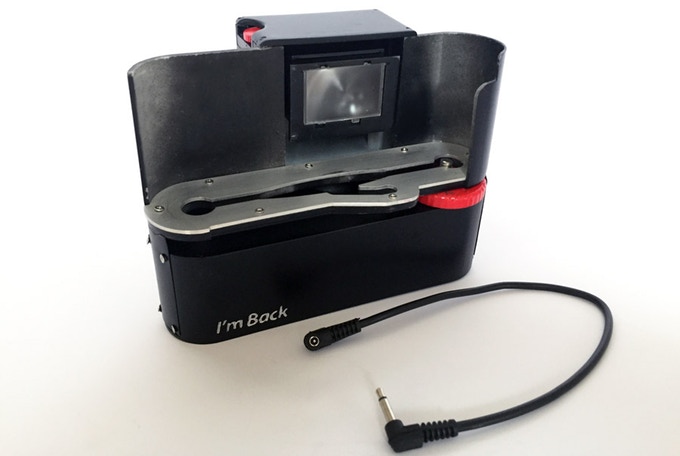
The simplest thing to do is to check the Kickstarter page of the project. A few interesting points: it’s a small sensor, paired with a small lens, capturing a picture of the image projected by the camera’s lens on a mat screen placed where the film would normally have been – the camera has to be set with the exposure in “B” (Bulb), and the shutter button has to be pressed for 2-3 seconds.
I’m back – “The picture is created on the focusing screen which is then captured by I’m Back’s camera module”
How it looks behind the curtain
I’m back – Kickstarter project – final product – “We’re working together to create a high quality product with an Italian Design!” or so they say.
The new and improved version
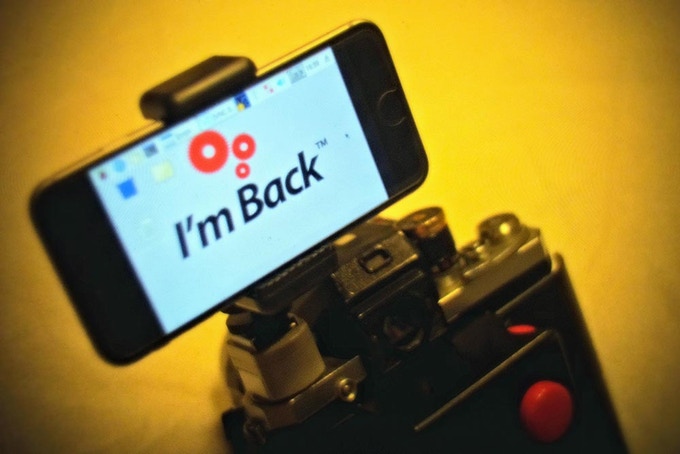
The newest version – using a smartphone as the viewfinder.
My take on it?
If you need a smartphone anyway, why not take the picture with the smartphone? And use the film camera for what it does best: shoot film.
It reminds me of previous attempts of marrying technologies which had nothing to do with each other…
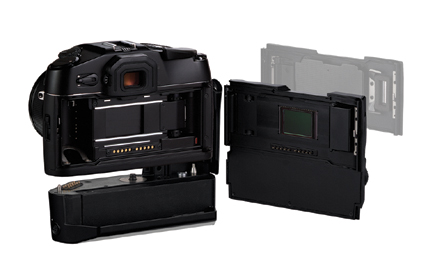
The idea is not new. Leica even made a very serious and very expensive digital back for its R8 and R9 35mm SLRs. It was actually selling (probably in very small numbers) in 2003, for 4,500 Euros (in addition to the cost of the camera body, or course).
Leica Digital Modul-R – it added a 10Megapixel APS-C sensor at the back of a Leica R8 or R9. The best part of it: it worked.
As almost any dSLR of the early years of this century, it did not capture the images full frame, but on a 10 Megapixel APS-C sensor. It was kludgy (if I remember the reviews of the time), but it worked. Look at the pictures taken by a Danish photographer: Thorsten Overgaard.














































 CamerAgX - a new life for old gear