The Blue Ocean, or how Pentax’s positioning of the K-3 III affects second hand camera prices

If you’ve spent time on Pentax dedicated forums, you may have read that Pentax and Ricoh (the owner of the Pentax brand) follow a “blue ocean strategy” and want Pentax dSLRs to become “the Leica M of the dSLRs”.

I don’t know if those statements are coming directly from Ricoh or are just an invention of creative bloggers. But it aligns very well with what Ricoh have been doing with the GR series, and Pentax with the K-3 Mk III.

“Blue Ocean” means that instead of competing with sharks in an area rich in preys – so rich it’s tainted red by the blood of the victims, you retreat to a zone with fewer fish, but also fewer competing predators, and no blood. The Blue Ocean. As for becoming a Leica M equivalent, it obviously relates to a strategy where – by sticking to a technology that everybody else has abandoned, you build a niche for yourself and serve a small group of highly motivated (and wealthy) users with products which are without an equivalent anywhere else.

Pentax K-5 II – Sigma 8-16mm lens – bench in Atlanta, GA

You can see the Blue Ocean strategy at play in the way Ricoh declines its ultra compact GR camera into a series of extremely specialized products (GR IIIX with 40mm lens, GR IV monochrome, GR IV High Diffusion Filter, …). As for being the Leica M of dSLRs, consider the case of the Pentax K-3 Mk III: the last and arguably most elaborate APS-C dSLR launched by any camera manufacturer, it was proposed at a comparatively very high price, and was followed by an even more expensive variant equipped with a monochrome sensor – that’s taken directly from the Leica marketing playbook.

You can argue that Pentax did not have much success as an innovator in the recent years (the Q series and the K-01 did not meet their public), and that until recently they were selling cameras primarily on value.

Pentax K-5 II – Pentax DA 18-55 lens – porch in Marietta, GA

The K-7, K-5 and the K-3 Mk I and Mk II are a good example: not rated as highly as Canon or Nikon’s best cameras when it came to autofocus or video performance (for instance), they produced images of high quality, and offered advantages unique in their category (in body image stabilization, full weather sealing) at a price point lower than their competition.

The pricing strategy started changing with the launch of the Pentax KP in 2017 and became obvious with the release of the K-3 Mk III – which clearly tried to be the best dSLR with an APS-C sensor – ever – but was at the same time more expensive than Canon and Nikon’s offerings.

As of today, you still have to spend almost $1800 for a new K-3 Mk III (that’s the 2025 Holiday promotion, it still lists officially at $2000) and up to $2200 for a K-3 Mk III Monochrome, which is much higher than Canon’s 90D at $1200, and Nikon’s only remaining new APS-C dSLR, the d7500 currently selling for $700.

It percolates on the cost of older Pentax dSLRs on the second hand market – the K-5 and the first two K-3 models could still be considered bargain buys not so long ago, but the K-3 Mk III has pulled the prices upwards. Being the most recent predecessors of the K-3 Mk III, the K-3 Mk II and the KP are logically the most impacted.

The introduction of tariffs on second hand cameras coming from Japan has made the matter worse by cutting the main source for cheap Pentax cameras: imported second hand Pentax dSLRs are subject to tariffs, factor that if you buy from a Japanese retailer.

Pentax K-5 II – Pentax DA 18-55 lens – Hood decoration (Chevrolet)

More about Pentax cameras in CamerAgX

The recent Pentax cropped sensor dSLRs line up today: from the K-5 to the KP in a few words

The Pentax K-5, K-5 II and K-5 IIs: Available new between 2010 and 2013, the K-5 remains a very good value proposition – with a solid build, a long battery life, great ergonomics and a very good 16 MPIX sensor delivering very good images. Some details are dated: there is no WiFi, and live view and video capabilities are very limited, but it’s still a very good camera if you’re shooting exclusively still images. Nice copies of the K-5 can still be found between $200.00 and $250.00. The K-5 IIs is approx. $100 more expensive.

Pentax K-5 and its kit lens

The Pentax K-3 and K-3 II: – Sold between 2013 and 2017, the K-3 and the K-3 II are essentially a K-5 IIs with a 24 Mpix sensor. The K3 II gets a better autofocus system and an integrated GPS but the K-3 and the K-3 II keep the same fundamental qualities and limitations as the K-5. And they make you pay dearly for their 24 Mpix sensor (up to $650 for a K-3 Mk II).

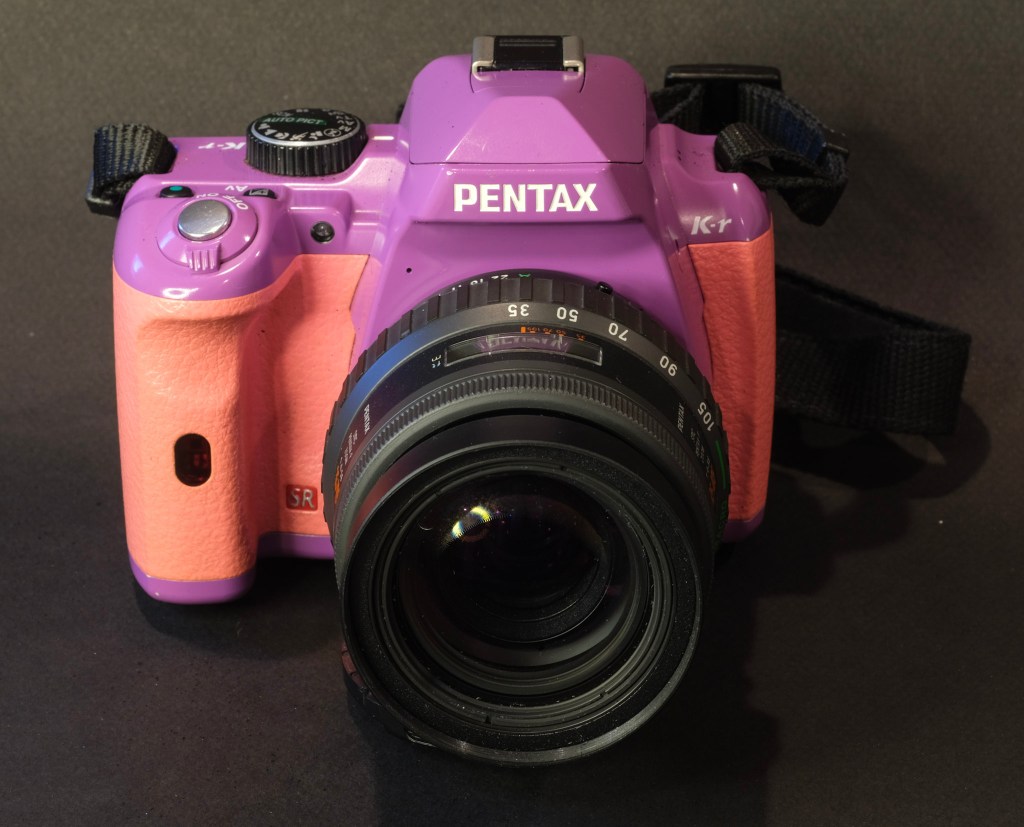
The Pentax K-70 and KF  – launched respectively in 2017 and 2022 – are more or less the same camera under a different name – they are the remote successors of cameras like the K-r tested last year in those pages, the last two representents of a long line of the mid-level Pentax dSLRs. They benefit from some “pro” features like weather sealing and in body image stabilization, they have the same 100% viewfinder and the same 24 Mpix sensor as the K-3 or the KP and offer WiFi and Bluetooth connectivity. The LCD display at the back is fully articulated. But their autofocus module is dated and limited, they’re not as solidly built as a K-3 or the KP (polycarbonate instead of a magnesium alloy), they are deprived of the K-5 and K-3’s top plate display and only have one SD card slot and a smaller battery.

Note that the entry-level or mid level Pentax dSLRs (starting with the K-30 up to the K-70s built before 2021) may all suffer from issues with the solenoid controlling the aperture – the most recent K-70s and the KF are using a different component and will be OK. The KF is still available new for approximately $650.00 in the US, and a nice second hand K-70 can be had for $400.
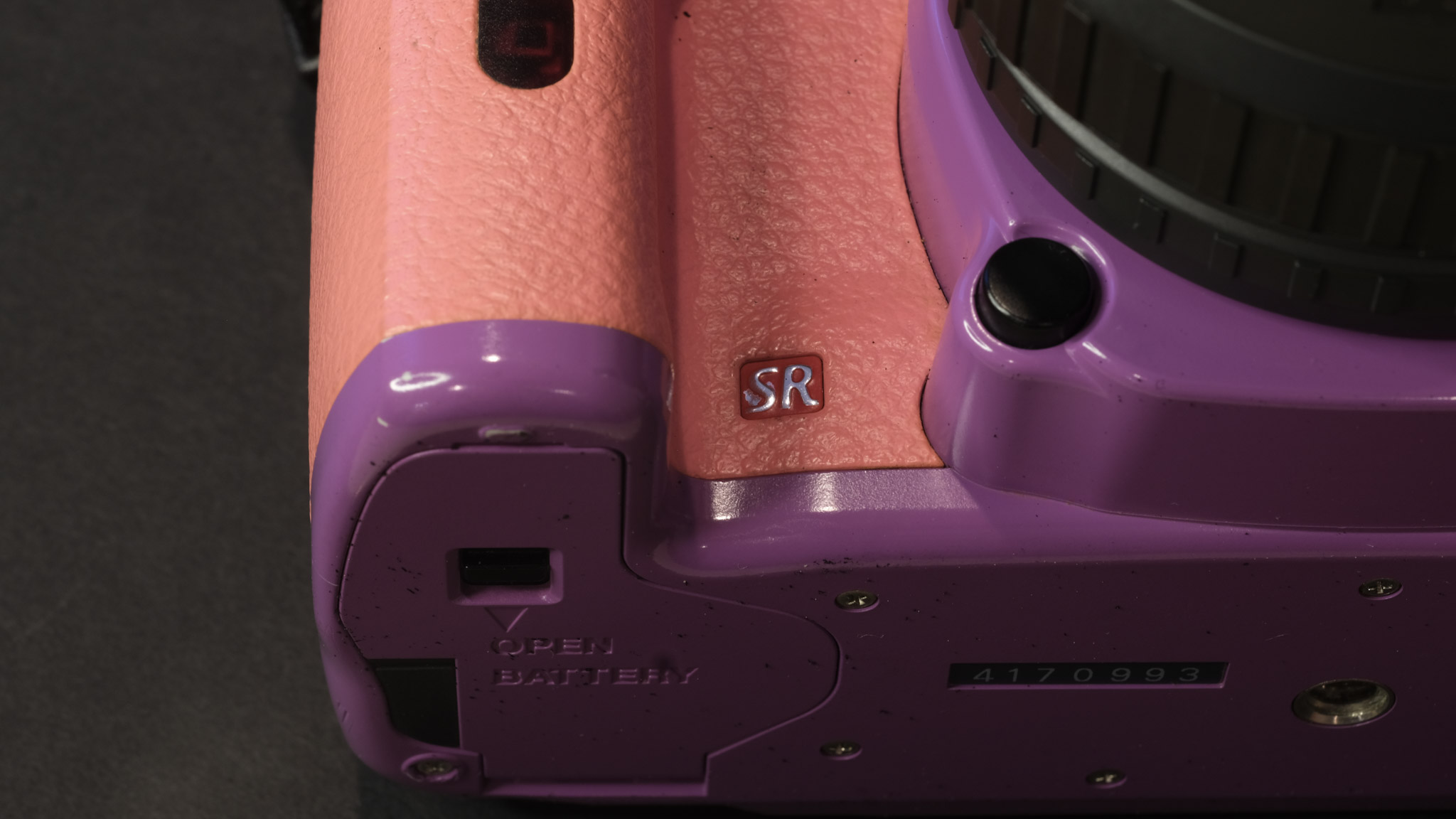
Pentax K-r – “SR” is for “Shake Reduction”. It’s a important differentiator – no other brand offers in body image stabilization (IBIS) on digital reflex cameras.

The Pentax KP was launched in 2017 as a replacement of the K-3 II, and discontinued in 2021. It introduced a new slim, retro-inspired body design with user replaceable hand grips – esthetically pleasant but with controversial ergonomics. It benefited from a new and improved image processing engine and from a tiltable rear display. It combined characteristics inherited from the K-3 II (24 mpix sensor, all metal construction, 27 point autofocus system) with characteristics typically seen on entry level cameras (only one SD card slot, small battery, no top plate LCD display). If you can live with those limitations and its ergonomics, it’s the closest you’ll get to the image quality of the K-3 Mk III, at a fraction of the price.

Like the K-3 Mk II, the KP has become expensive – the typical second hand price being in the $600 to $750 range.
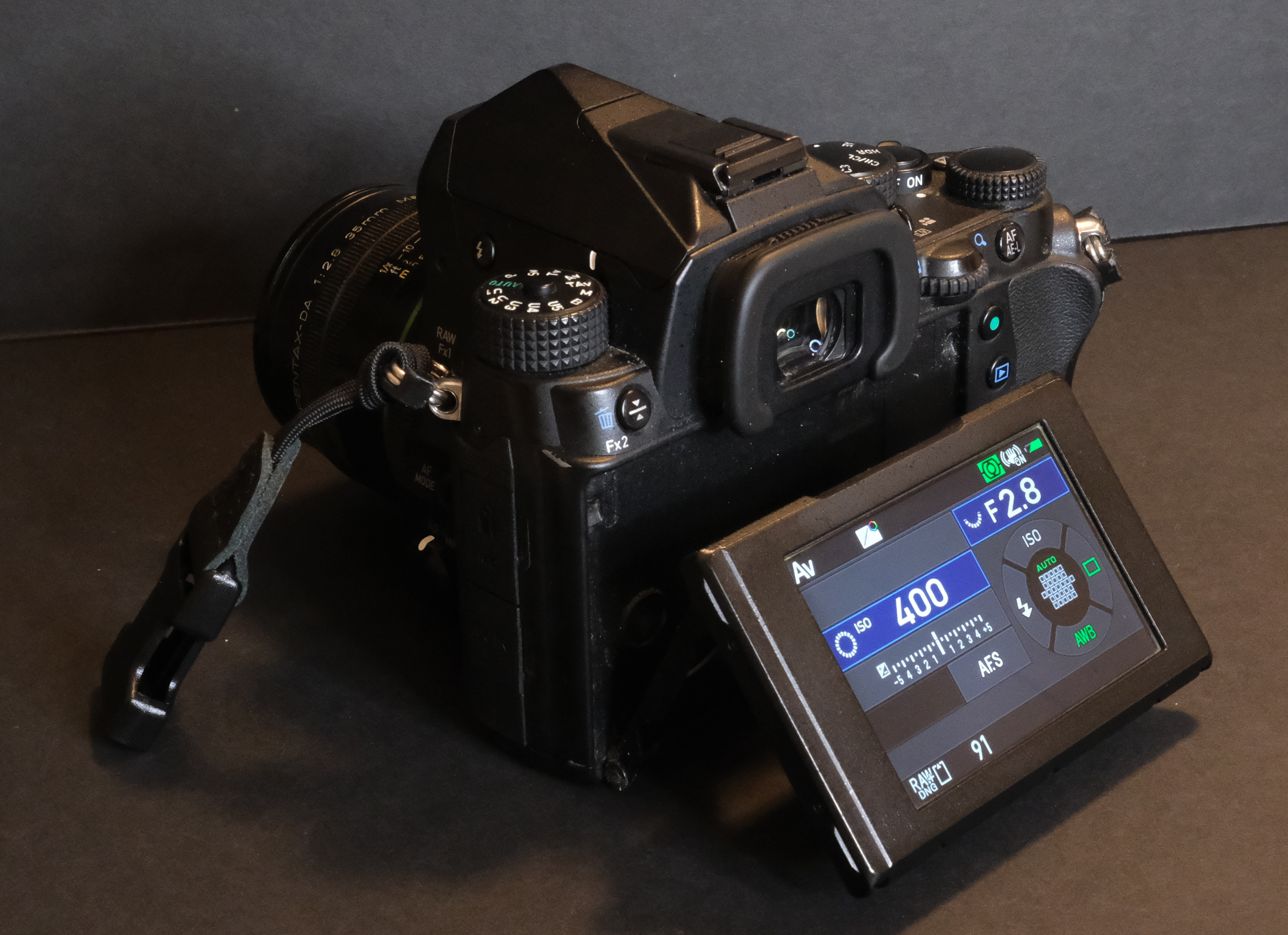
The KP’s differentiator – a tillable rear display

I only know the Pentax K-3 Mk III from its specs sheet, and reviews I’ve read or watched here and there. Under a body that looks similar to the previous K-3s, it’s a very different camera, and now that the Nikon D500 has been discontinued, a credible candidate to the title of most elaborate APS-C dSLR.

With a new 26 MPIX BSI sensor, a new autofocus system, a top plate LCD display, a third control wheel, a touch screen and a joystick to select from 41 autofocus points – it’s a very significant step above the K-3 II and the KP. It has almost everything expected from a top of the line dSLR, and its specs sheet compares favorably with the best APS-C mirrorless cameras. The only glaring omission is the lack of an articulated or tiltable rear screen, which can be an issue when shooting with wide angle lenses or for macro-photography. Still available new from retailers, it can not be found second hand for less than $1300, more than twice as much as a more abundant Nikon D500.


Pentax K-5 II – Pentax DA 18-55 lens
Pentax KP – Pentax DA 35mm f/2.8 macro lens. Sweetwater Creek, GA

An update on the online marketplaces: buying an old compact camera in 2025

Call it the Instagram effect, but there seems to be a renewed interest for compact, point and shoot cameras – from the late film and early digital times (roughly 1990-2015).(see * at the bottom of this page)

But where to find them? Resellers of used photo equipment like KEH or MPB don’t seem to carry any – which leaves us with marketplaces and auction sites like eBay, Mercari or Shopgoodwill.

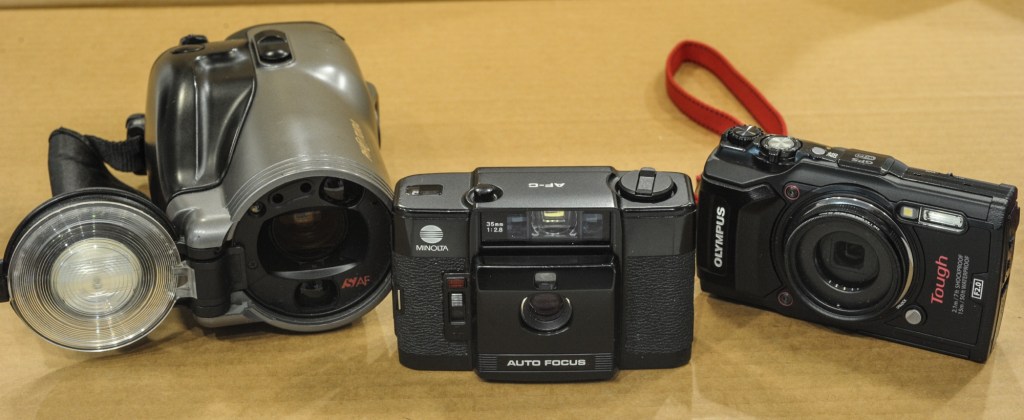
Minolta AF-C – an ultra compact “premium” camera from 1983.

For a photographer looking for an old camera, eBay is relatively buyer-friendly – the feedback mechanism gives the cautious user a good tool to evaluate the reliability of the seller, and eBay organizes the shipping and the delivery to ensure that the transaction is satisfactory for the buyer – most of the time. It does not dispense the buyer from being cautious (beware of sellers with no or extremely limited feedback, of succinct item descriptions and of offers too good to be true).

On eBay, buying from the Mecca of old cameras, Japan, is easy – items often get delivered to your doorstep faster than if you bought them from an American vendor. Just be cognizant to the fact that your Japanese seller will probably have a very limited mastery of the English language, and that some of the Japanese camera manufacturers (in fact, most of them) sold specific versions of their cameras on their domestic market, that could only display Japanese menus and could not be reflashed with an “international” firmware. Validate that the camera you want to buy can be configured to the language of your choice, obviously.

A Canon Photura/Epoca – a very strange bridge camera from 1990.

I don’t know Mercari that well – I’ve always been discouraged by obvious red flags on the listings of a significant number of sellers, and I’ve never bought anything from them. In my limited experience with the site, I’ve noticed that they’re not as good as eBay at policing their site, and at banning obvious scams (sellers with zero history proposing a very sought after camera at half of the normal price). Which casts a doubt on the reliability of the whole marketplace. (see ** at the bottom of this page).

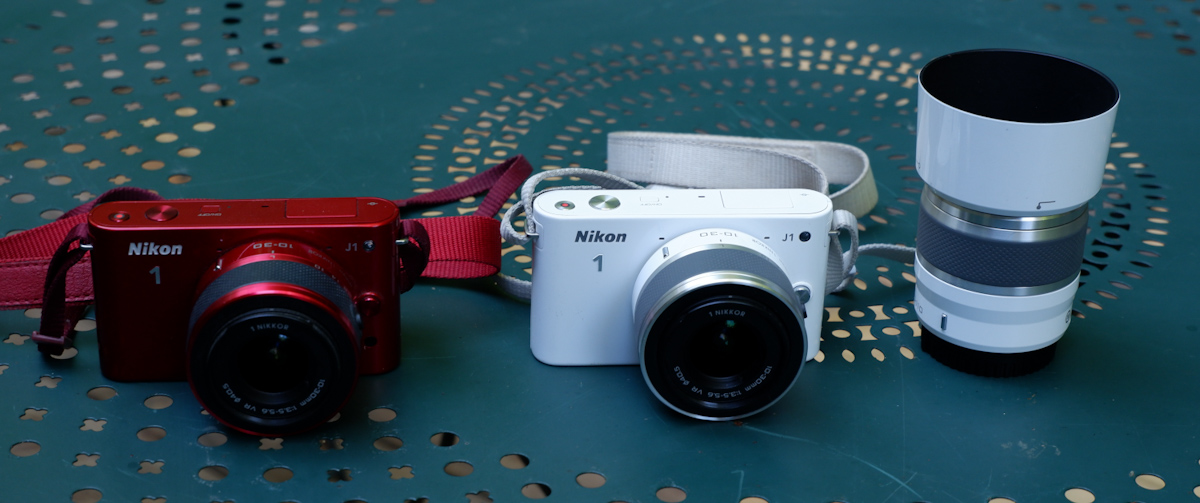
The red body+lens combo was bought on eBay, and worked. The white combo was bought on Shopgoodwill, and the lenses did not work. I had not followed my own rule – buy equipment described as “tested” by the vendor.

Shopgoodwill is changing. Contrarily to eBay or Mercari, it’s not a marketplace – it’s simply the on-line auction site of the Goodwill organization. It operates on a very decentralized model – and the photographic knowledge of most of those local organizations is still abysmal. Sometimes the work is divided in such a way that the poor soul entering the description of the item on the web site has never had it in hand, and only has a few low res pictures to work from – to comical effects: I recently saw a coffee mug in the shape of a Canon IS USM 24-105 lens described as a lens.

But a few local Goodwill organizations seem to have significantly stepped up their game recently, and now describe the cameras they sell accurately (they even list the tests they performed and their outcome). And it works – I’ve not had a bad surprise with Shopgoodwill recently. It could also be that – with experience – I’ve become better at separating the wheat from the shaff.

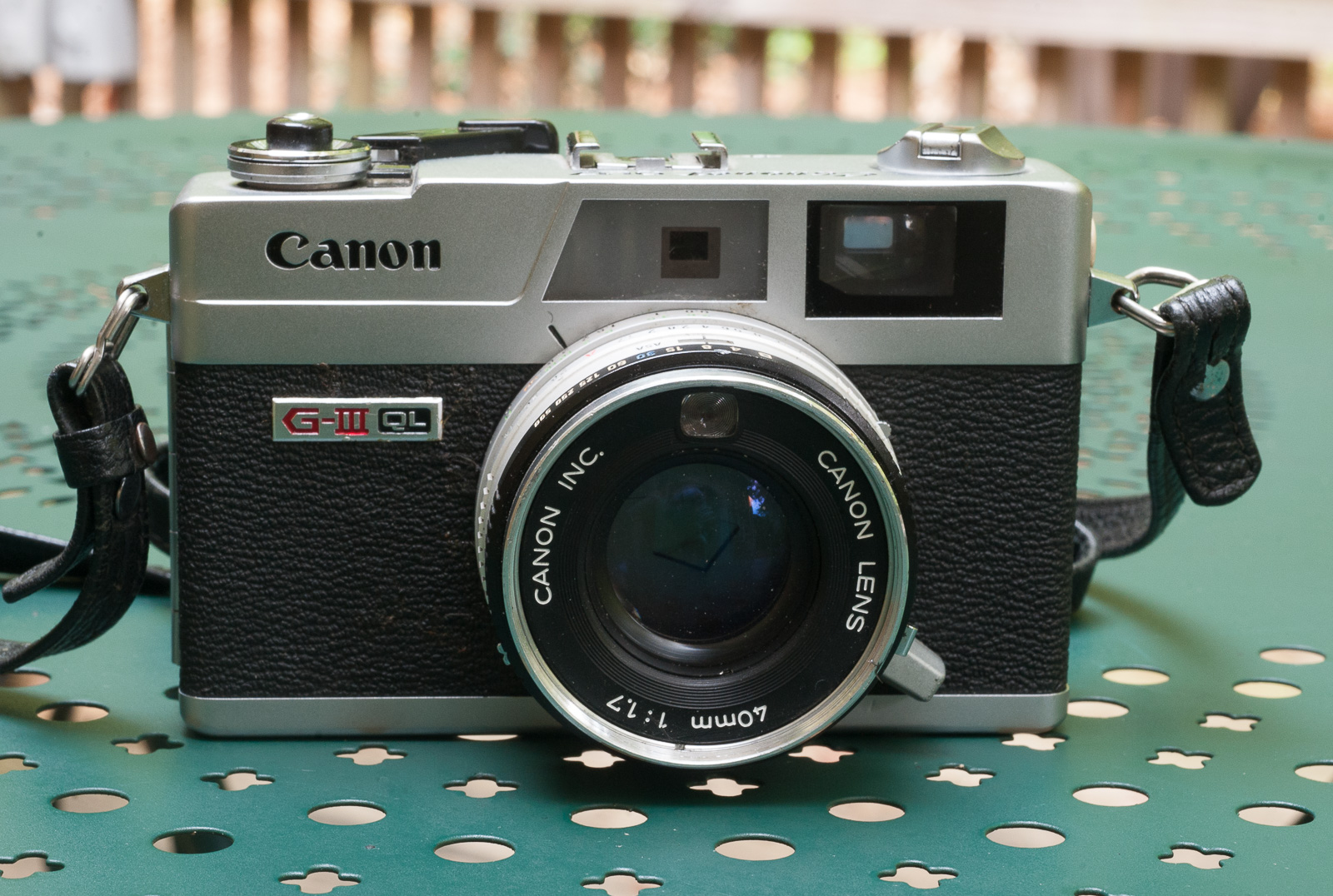
Canon “Canonet” QL17 GIII – Antique markets are generally not a place to buy cameras like this one – but there are exceptions – the seller had a good reputation on the place of Atlanta as a camera repair man.

My rules for buying on Shopgoodwill.com:

1 / Only bid on cameras which have been accurately described and tested, with – in the case of digital cameras – a few photos of their rear LCD to confirm they’re in working order.

2/ Only bid on digital cameras that come with a battery – if there is no battery it’s very likely the cameras were not working when they were donated to Shopgoodwill. If the camera’s battery can’t be recharged without an external battery charger, and that charger is not included, walk away. Consider that batteries and chargers for early digital cameras can be extremely difficult to locate, and seriously expensive. And of course, without a charged battery a camera can not be tested, which brings us back to 1/.

3/ Avoid cameras with a known weak point, or a reputation for aging poorly. There are brands or models I would never buy on Goodwill (almost anything Contax and Yashica, many Pentax models or any premium compact film camera from the nineties). If I wanted such a camera, I would go to a specialized reseller, on their website or on their eBay storefront.

4/ Determine the maximum price you’re willing to pay, and stick to it. Logically, cameras should sell on Goodwill for significantly less than what well known and respected specialized stores would ask on their own web sites or on eBay. As a buyer on Shopgoodwill.com your risk of ending with a lemon is much higher, and you have no recourse because you’re buying “a donated item as-is”. I don’t understand why people are entering bidding wars and end up paying more for an untested piece of equipment than they would pay from a reputable seller on eBay.(see *** at the bottom of this page)

‘For parts or not working”

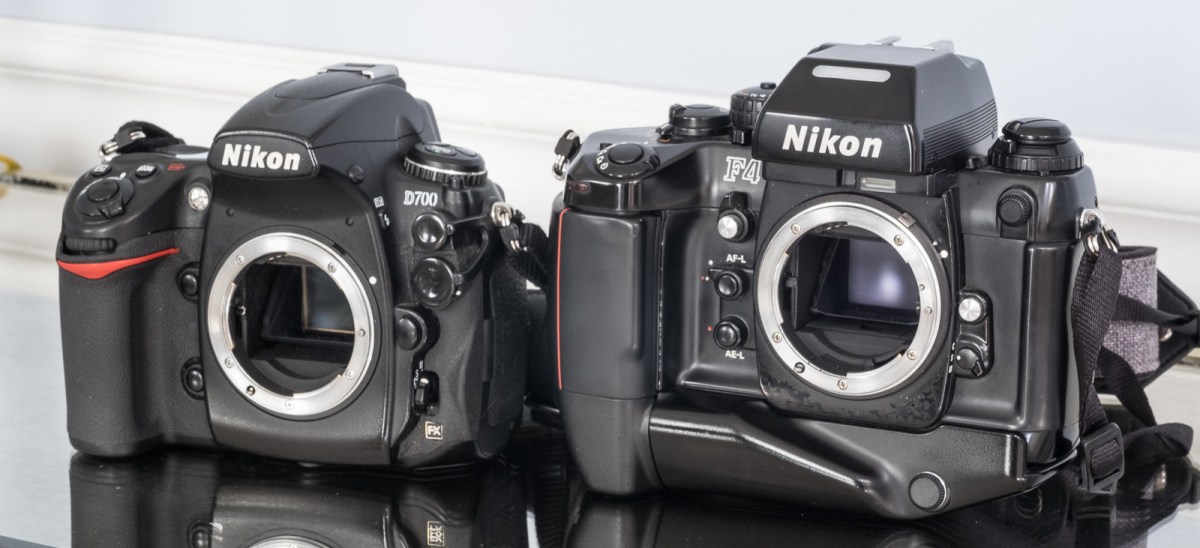
Nikon D700 – 380,000 actuations the day I bought it on eBay – it hasn’t missed a beat since.

Generally, when an item is described as “for parts, not working”, it’s true. A seller would not advertise a camera as “not working” if it was working. Right?

Well, not always.

I can think of two situations when a camera is advertised as “non working” but is actually capable of taking pictures:

Canon or Nikon include the expected lifespan of the shutter of their pro cameras in their spec sheets (you know that the shutter of a Nikon D850 is good for 200,000 actuations, and that on a Canon 6D Mark II it is good for 150,000 actuations). But of course, it’s simply an estimate. Which probably includes a solid safety margin. Some resellers (the big cameras stores, typically) advertise cameras which have passed their “shutter life limit” as “not working” to absolve themselves from any liability in case the shutter dies two days after the buyer has received the camera.

The other situation is when the seller has limited knowledge of cameras in general (it’s a pawn shop, for instance) or of the quirks of a specific brand or model in particular. They can’t make the camera work, and rather than writing it off completely, advertise it as non-working. It happens. Be sure that somebody more knowledgeable will notice the listing, identify the issue, decide to take the risk and score big.

Davy Crockett – the Alamo – San Antonio, TX. The camera had been advertised as “not working”

(*) On the subject of the current used digicam market, you can read this interesting article from the blog aptly named thephoblographer: THE VINTAGE DIGICAM CRAZE IS AFFECTING SONY PRICES.

(**) – Both eBay and Mercari are making efforts to kick the scammers out of their marketplace – eBay will only pay the sellers after they have shared some form of tax ID with them, and after the Postal Service has delivered the item to the buyer. They also validate that the data provided by the seller (address, bank information) is consistent. On Mercari, participants (sellers or buyers) can opt to have their identity (and their existence) verified by a third party – and upon successful verification a little blue checkmark is added next to their name.

(***) By the way, donations to a charity like Goodwill may be tax deductible, but purchases you make online at Shopgoodwill.com are not. As per Shopgoodwill.com, “When you purchase an item on ShopGoodwill.com you are paying fair market value for the item, therefore purchases made through ShopGoodwill.com are not tax deductible“.


Three recent purchases on Shopgoodwill.com – all three work perfectly.

Abbaye de Fontfroide – France. Fujifilm X100t – another eBay find.

Air Travel with photo equipment in the smartphone era…

And other ramblings…

Have you noticed? Everybody’s shooting with a smartphone, anytime, anywhere, and nobody seems to be objecting or even paying attention. But pull a conventional, dedicated camera from a photo equipment bag, and people start freaking out.

And suspicious neighbors or passersby are not the only ones panicking at the sight of a camera.

US Formula One Grand Prix – Austin – Nikon D700

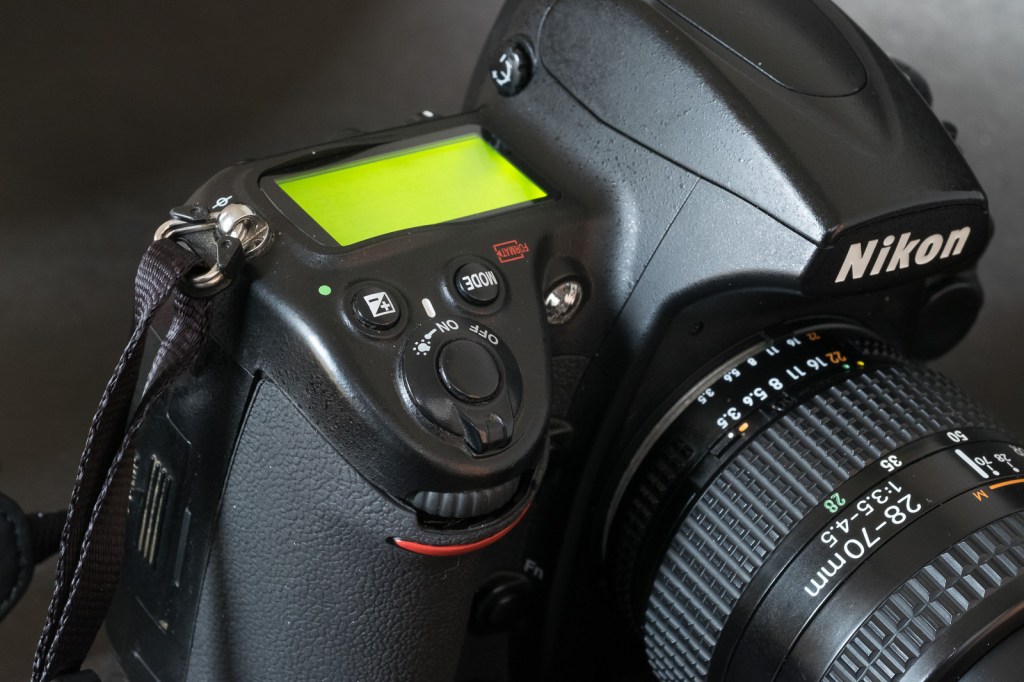
Two weeks ago I was stopped for a good 20 minutes at a TSA checkpoint at the Atlanta airport, because the agents were intrigued by the camera I was carrying (a Nikon D700 with a 28-70 f/2.8 zoom lens). Admittedly, it was a relatively bulky camera + lens combo, but I’ve also been stopped when I was carrying a much smaller Nikon FM with a 35mm fixed focal lens. It’s just that photography as we knew it – with dedicated cameras – has to a large extent left the mainstream. Shooting with film cameras was already an oddity, but it increasingly looks as if shooting with DSLRs is following the same route.

You can see from time to time, typically in touristy areas, a young person carrying a film camera strapped to his or her neck (a Canon AE1 in most of the cases), but I don’t see them actually taking pictures (they wear a camera like you would wear jewelry) and I don’t see film making a come back. Not with those prices, for sure. Film is getting expensive, and the cost of processing and scanning has gone to the roof during the COVID years. My favorite color film is Kodak’s Ektar 100, and it’s now costing $15.00 a roll. Fujifilm are raising their prices massively as well. Processing and scanning are now around $20.00 per roll – which brings the total cost of a scanned image to more than $1.00.

Of course, users of digital cameras don’t have to pay the Kodak or Fujifilm  « tax », but cheap cameras have almost totally disappeared from the new equipment market. And even the best dedicated digital cameras are still miles away from the convenience of smartphones: what the software engineers manage to do with  « computational photography » on modern smartphones never ceases to impress me, and the simplicity of the integration of the iOS or Android native photo apps with all forms of image sharing services is something a dedicated camera user can only dream of: if you’re happy with the resolution of a 12 Mega Pixels image, and with a focal range equivalent to a 13 to 75mm lens on a full frame camera, the smartphone is hard to beat.

Soap Creek Park – Marietta, GA – iPhone 15 Pro – Straight out of the camera

Beyond the obvious (launching cameras with higher resolution sensors and long range zoom lenses that don’t have an equivalent in the smartphone world), the historical camera manufacturers are working at slowly transposing in the dedicated camera world advances we’ve enjoyed on smartphones for years (“global” electronic shutters and the near real time upload of the pictures to the cloud is the most recent example). They’re also working at making the conventional digital workflow of the pros and enthusiasts (shoot in RAW, post-process in Adobe Lightroom, and export to JPEG for social media consumption) less of a given – with film simulations and picture control modes, images can be shared “straight out of the camera”.

Marietta (GA) – the square – JPEG “straight out of the camera”

Lastly, there seems to be a renewed interest for compact digital cameras. Since nobody manufactures them anymore, the second hand market is the only option. And (for no reason I can think of), the Nikon Coolpix seems to be the hottest item – in particular if it’s painted in a striking “velours red”. Maybe it’s the color? Modern dedicated cameras are high end products built out of magnesium, and they would not convey the same image of competent seriousness if they were pink or yellow.

Nikon Coolpix S6900 – pretty in pink

After a long pause, I’m returning to this blog. With a pink compact camera (not a Nikon), a full frame DSLR (a Nikon), and a best of breed mirrorless camera. Stay tuned.

Dia de los muertos 2023 – Atlanta – Shot with a Nikon D750 in RAW and post processed in Adobe Lightroom

Are film cameras grossly over valued today?

I don’t know what percentage of film cameras collectors actually use them.  But the value of a camera is at least in part related to its capacity to be used … as a camera, and help the photographer shoot good, beautiful, interesting pictures.  Without film, film cameras are little more than paper weights.

IMG_5924
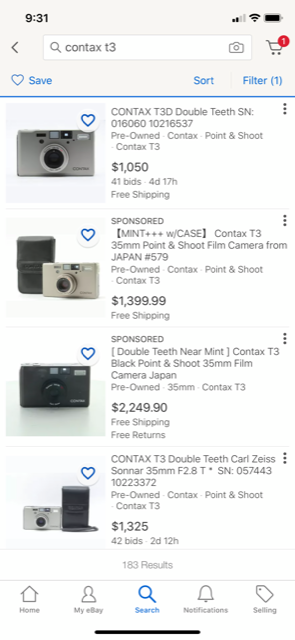
Contax T3 – cameras proposed for sale on eBay 0n 4/24/2020

So if film was to become unavailable, the value of film cameras would change. I don’t believe it’s going to happen anytime soon – Kodak  (Altaris) and Ilford (Harman) are still committed to film because it’s their core business, and Fujifilm will keep one or two film plants running, if only for sentimental reasons. The rebirth of the Polaroid instant film packs (the Impossible Project) and the success of Lomography are also showing that when the big players disengage, boutique producers step in and fill in the void.

Contax T2 - completed listings
Contax T2 – a bit cheaper than the T3. The “completed” listings on eBay show that even if sellers ask for prices in excess of $2,000, the cameras that actually sell are priced a bit more reasonably.

So, let’s assume that film remains available and affordable, and that 35mm film cameras keep a certain usage value. And let’s forget about those commemorative editions, cameras with remarkable serial numbers or other gold plated models, that Leica (and to a lesser extent Nikon), release from time to time for avid collectors. They are destined to be kept forever in their original packaging and in a safe, with no concern for their potential usage value.

In the realm of cameras that actual photographers use to take pictures, Leica cameras hold a special place. They’re “classics“.

On eBay, the price of Leica’s rangefinders has been remarkably stable over the years, with the M5 and the M4 at the bottom of the ladder (around $800), followed by the M2 and M3 a bit above $1,000 (depending on condition, of course). The more modern Leica M (M6, M6 TTL, M7) are selling for two or three times more, reflecting their comparatively higher usage value.

image3
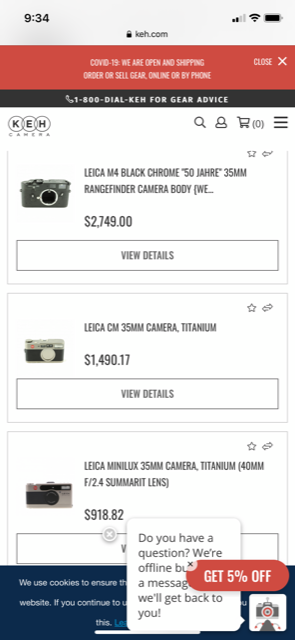
KEH app – the price asked for the T2 is a bit more reasonable – but still in Leica M territory

Manual focus SLRs designed for enthusiasts or pros, and known to be at the same time simple to use and reliable have seen their value rise spectacularly (Nikon FM2, FE2, FM3a or F3, Canon AE-1, Pentax Super Program or LX), while more complex or less reliable models don’t attract the same high prices (Nikon FA, Canon T90). Those new classics were launched between 1975 and 1985, a decade which is increasingly being seen as the golden age of film SLRs.

dirt cheap
Entry level manual focus SLRs with lots of polycarbonate (Canon T50), or amateur-grade autofocus cameras – nobody wants them and the prices reflect that.

At the other end of the price scale, cameras that did not do very well on the second hand market a few years ago are doing even worse now. The list includes any entry level model from any manufacturer if it was launched after 1980, and almost any autofocus SLR except for the very last enthusiast and pro models, probably because of their good compatibility with the current digital offerings of their respective manufacturer (Nikon F100 and F6, Minolta Maxxum 9 and 7, Canon EOS-3).

Photographs don’t like that those cameras were built out of plastics, with a bizarre feature set (often deprived of useful functions – reserved for the “pro” models – and at the same time loaded with useless gimmicks and encumbered by unconventional controls). And many of them require expensive and hard to find single use Lithium batteries. They have little appeal for today’s would-be film shooters,  and can be had for a few dollars, even from specialized stores.

“La Mode, c’est ce qui se démode”*

What’s hot? Any luxury compact (point and shoot) camera, with a titanium body and a lens with a famous name: the top of the top is occupied by Contax with the T2 and T3: the craze started with a few actors and celebrities in Hollywood posting pictures of themselves shooting with their T2 on Instagram), but similarly positioned models such as the  Leica CM and Minilux or the Nikon 35ti also command big bucks (they’re all in Leica M territory).

Pictured-Kendall-Jenner
Kendall Jenner and a Contax T2. Image Source: Getty / Kevin Mazur/MG18

Cameras like the Olympus XA, and even the Cosina CX-2**, which were far cheaper than the luxury cameras from Contax or Leica in the eighties, have also been contaminated – with sellers asking for hundreds if not thousands of dollars for a somehow basic camera.

cosina CX-2
The Cosina CX-2 – the ancestor of the Lomo LC-A – a cheap camera in its heyday. Prices are all over the map now ($240 to $1,250 for what looks like two cameras in the same condition)

As a conclusion:

Old classics hold their value, new classics are on the rise: if you buy one of those, you may not win big, but you won’t lose money if you decide to resell  it after a few years.

Contax luxury compacts are reaching insane values. They’re nice cameras, with a great little Zeiss lens, and demand currently outstrips supply. But those luxury compact cameras (Contax’s and the others) rely heavily on electronics and generally can’t be repaired if a component goes bad. If you don’t have one already, you missed the boat, and I would not spend thousands of dollars trying to get one. You can also wonder how long will celebrities be seen playing with their T2, pushing demand and prices to the sky? Prices could very well go back to more normal levels in a few years.

leica_cm
Two other Titanium-clad point and shoot cameras (Leica CM and Leica Minilux) selling for more than old Leica M3s

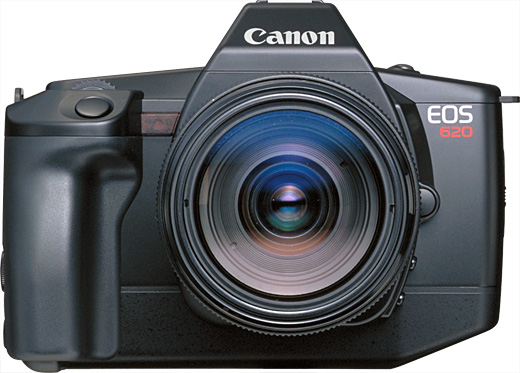
There are still bargains to be found if you’re not obsessed with shooting with a “classic” : the Canon AT-1 has not reached the “new classic” level of the AE-1 and AE-1 Program, and sells for half the price. But in my view, it’s a better camera for an enthusiast photographer. Early Canon EOS cameras  (650, 620) are solid, very pleasant to use (a T90 with matrix metering and without the bugs), and dirt cheap. An entry level camera from the mid eighties, the Pentax P3n, is at least as competent as its more expensive Super Program predecessor, but can still be had for next to nothing. Nikon’s partially motorized N2000/F301 (the manual focus version of the N2020/F501) is also a great buy. So is the Olympus OM-2. Future classics? I don’t think so. But great everyday cameras at a great price, for sure.


(*) “La Mode, c’est ce qui se démode”  (Literally, “Fashion, that’s what going out of fashion” or “Fashion is made to become unfashionable”) – the aphorism is generally attributed to Jean Cocteau and Coco Chanel. Coco Chanel famously added that “Fashion fades, only style remains the same”.

(**) Cosina CX-1 and CX-2  – those cute and very small point and shoot cameras sold reasonably well in the early eighties. With their tiny wide-angle lens they were subject to severe vignetting but they offered more controls to the photographers than the other ultra-compact P&S cameras. A few years later, an almost identical camera was launched as the Lomo LC-A by the LOMO PLC in Saint Petersburg (Russia). The little Lomos were adopted enthusiastically by a group of photographers in Austria, and it started the Lomography movement. But that’s a whole other story.


The Olympus OM-2n – a “new classic” – in my opinion the best camera of the Olympus OM single digit series (OM-1,OM-2, OM-3, OM-4, OM-4ti) for everyday use. Photos shot a few years ago at the Universal Studios in Burbank, CA.

2010-08_California-24040023
Universal studios – Burbank CA – the Studio tour – here the house from Psycho. Olympus OM-2n.

2010-08_California-24040019
Universal Studio (Burbank, CA) – the set of the movie “Waterworld”. Olympus OM-2n

2010-08_California-24040037
Venice Beach (CA). Olympus OM-2n


Reaching new lows on Shopgoodwill.com


New lows like in “new low prices“.

I published a blog entry on $5.00 cameras a while back, and now I have two extra SLR bodies and a lens to add to my league of fivers. I recently became the proud owner of a Canon EOS 620 for $4.95 (nobody seems to like first generation auto-focus SLRs) and of a nice Canon EF 28-70 F3.5-4.5 zoom, (the hidden part of a bundle with the very first generation EOS camera, the EOS 650: $8.95). They both seem to work well and the lens is …pristine.

canon_eos620
My newly purchased EOS 650 – the pictures of the items for sale on Shopgoodwill are getting better. And this camera works as well as it looks.

Generally there is not much in terms of a bargain on shopgoodwill.com : as opposed to eBay where the sellers are independent entrepreneurs competing for your dollar, Shopgoodwill is a sole source marketplace.

On eBay, sellers have to describe the piece of equipment they’re offering in detail and the buyers are protected by the feedback mechanism. On Shopgoodwill, item descriptions are minimalist, and the equipment for sale is almost always “untested, sold as-is”.

I suspect that because purchases at Goodwill can be easily disguised as tax deductible charitable contributions, lots of buyers are not really sensitive to prices, and end up paying a lot for a poorly described and untested piece of equipment. As much as they would pay on eBay for an equivalent camera, but without  the implied warranty of a seller or the support of eBay if things go south.

Lastly, considering that cameras and lenses are sold “untested and as-is”, the risk of buying a lemon is pretty high – if a camera is known for a weak point (fragile shutter curtains, short lived capacitors, temperamental electronic shutter release, for instance), it’s safe to assume that the item for sale will be plagued with it. Even if it looks “pristine” cosmetically.


I would not buy a camera from a series with a known weak point on Shopgoodwill – far too risky. I would buy it from a seller with a great reputation on eBay. 

In my opinion, there are only two ways to score a good deal at Shopgoodwill: buy for cheap something that absolutely nobody wants but that has value for you (a first generation AF cameras for instance if that’s your fancy), or buy a poorly documented bundle, whose perceived value is dragged down by a very disserving description. Imagine an item advertised as “Nikon N4004 + Sears lens” or “Olympus film camera with broken lens”. Nothing to grab the attention of the casual browser. But if you look carefully at the pictures, you notice that only the lens cap is from Sears, and that the lens looks like … a recent Nikon AF-S lens. Or that the Olympus camera sold with the broken lens is a rather rare (and sought after) OM-2000 in seemingly pristine condition.

cameragx-6593
Nikon N90s (aka F90x) and Minolta 9xi – solid cameras with a solid reputation – both were Shopgoodwill purchases and happened to work perfectly.

How is it possible? With a few exceptions, the people who write the item descriptions at Goodwill know nothing about photography, and don’t have time to check or research.

More about my first Canon EOS cameras and how they compare to Nikon’s best in a few weeks.

559376140034_34
Seen in Marietta, GA – Canon EOS 650 – Canon EF 28-70 3.5-4.5 – Kodak Ektar – the camera is a pleasure to use and the lens is pretty good – not bad for $8.95.