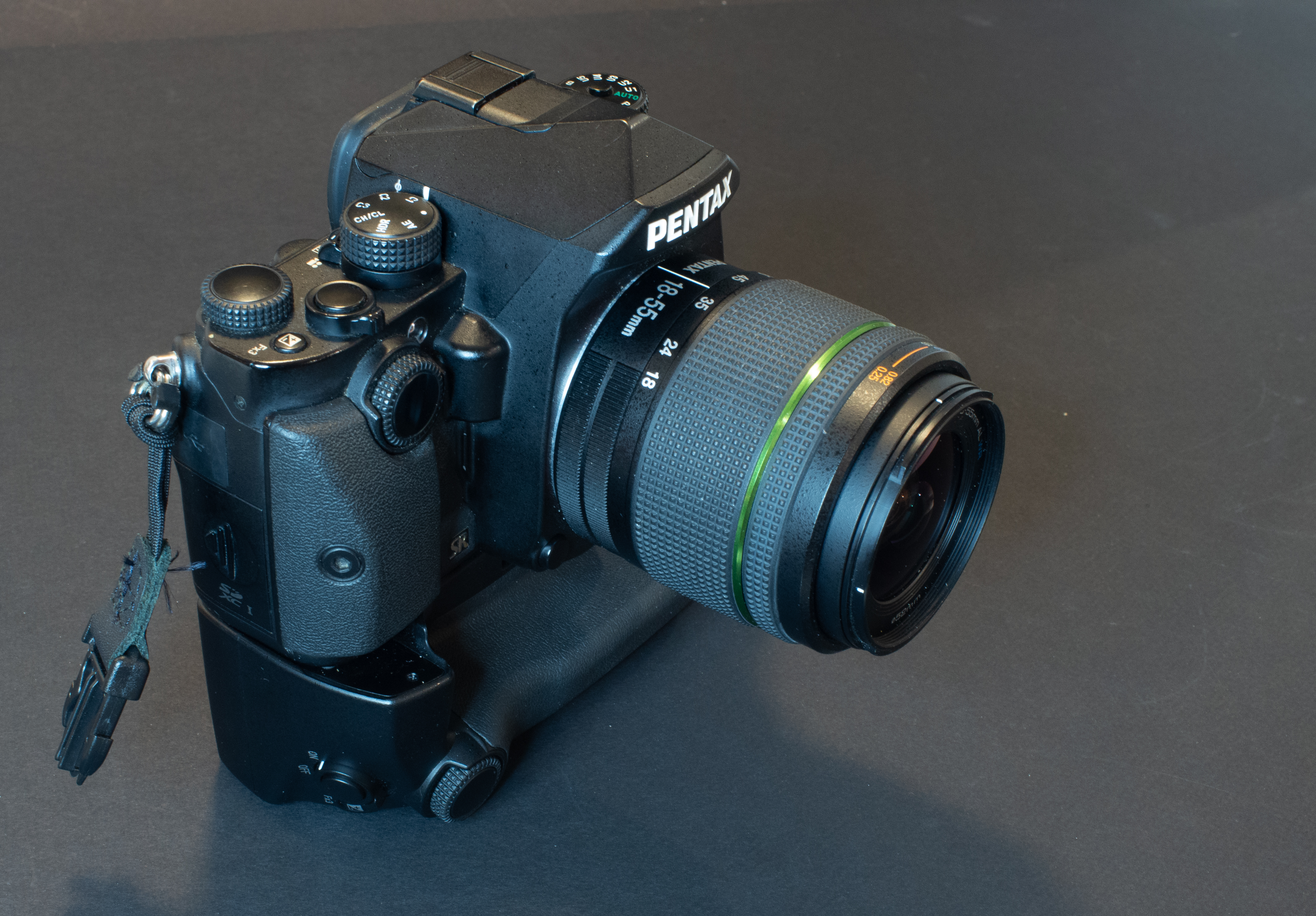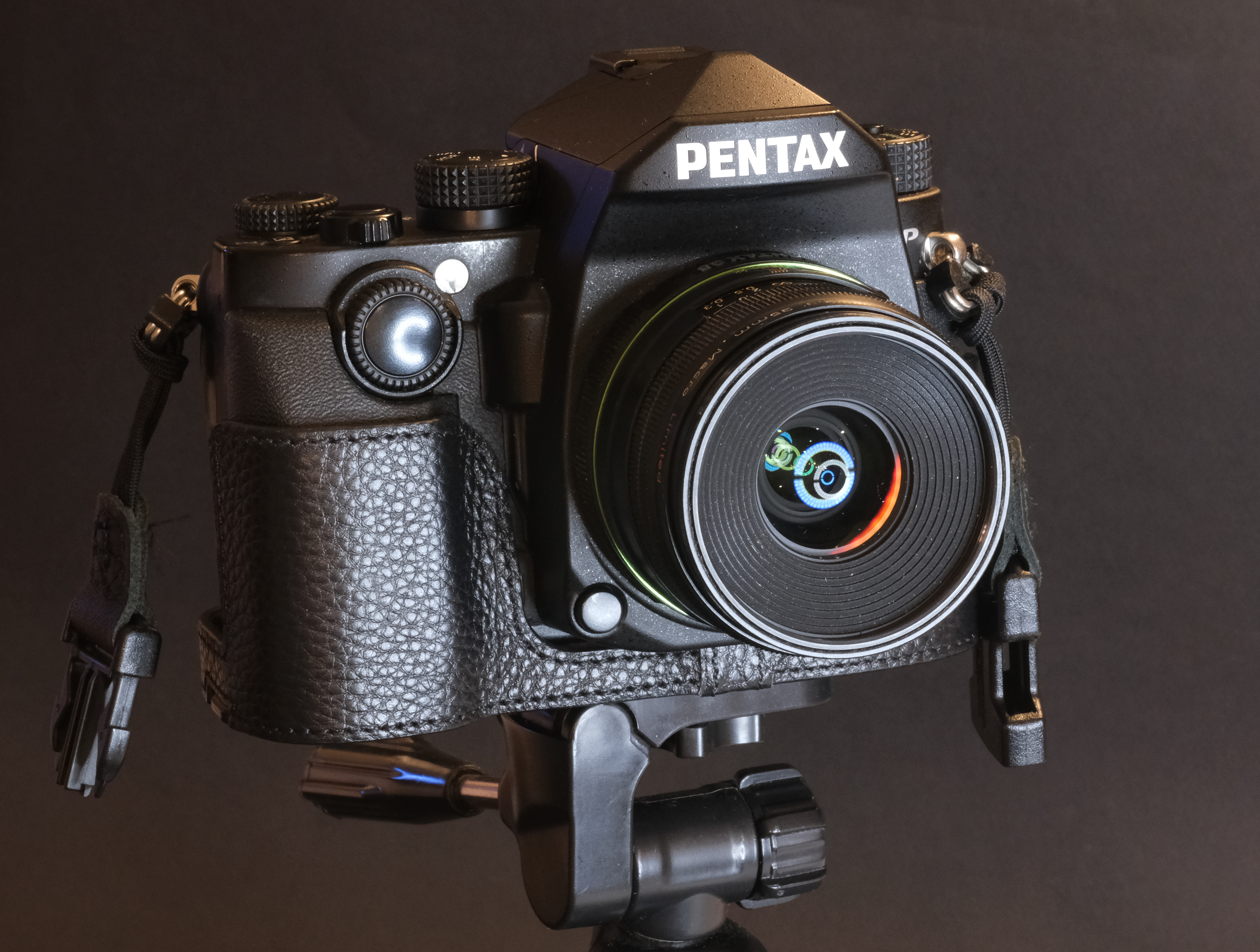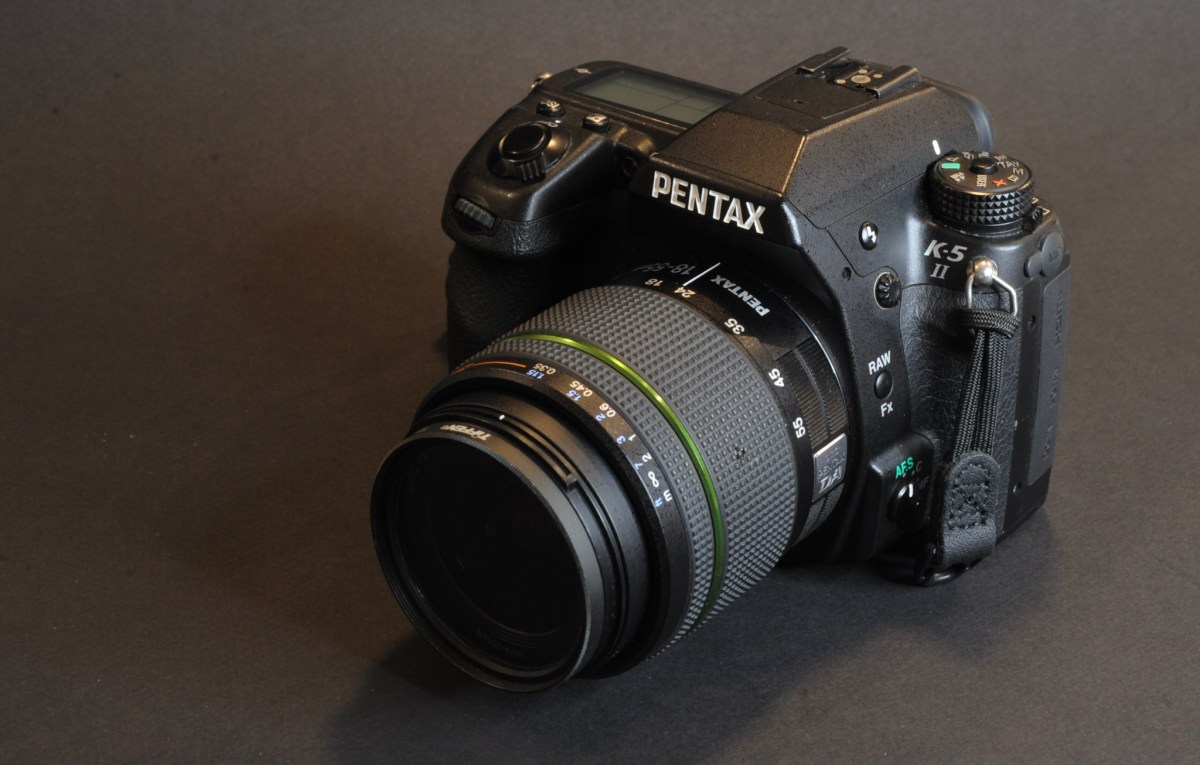
If you’ve spent time on Pentax dedicated forums, you may have read that Pentax and Ricoh (the owner of the Pentax brand) follow a “blue ocean strategy” and want Pentax dSLRs to become “the Leica M of the dSLRs”.
I don’t know if those statements are coming directly from Ricoh or are just an invention of creative bloggers. But it aligns very well with what Ricoh have been doing with the GR series, and Pentax with the K-3 Mk III.
“Blue Ocean” means that instead of competing with sharks in an area rich in preys – so rich it’s tainted red by the blood of the victims, you retreat to a zone with fewer fish, but also fewer competing predators, and no blood. The Blue Ocean. As for becoming a Leica M equivalent, it obviously relates to a strategy where – by sticking to a technology that everybody else has abandoned, you build a niche for yourself and serve a small group of highly motivated (and wealthy) users with products which are without an equivalent anywhere else.
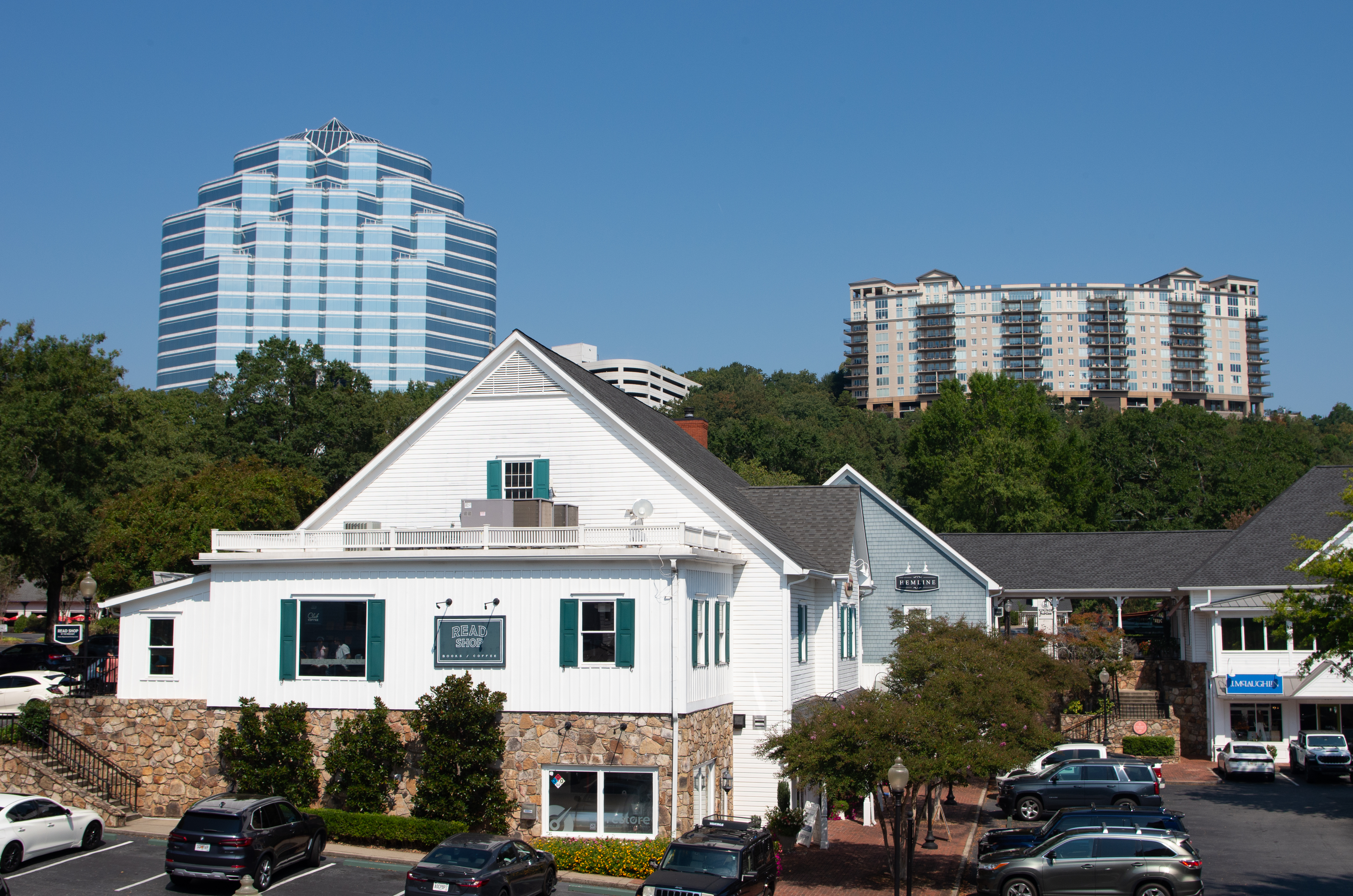
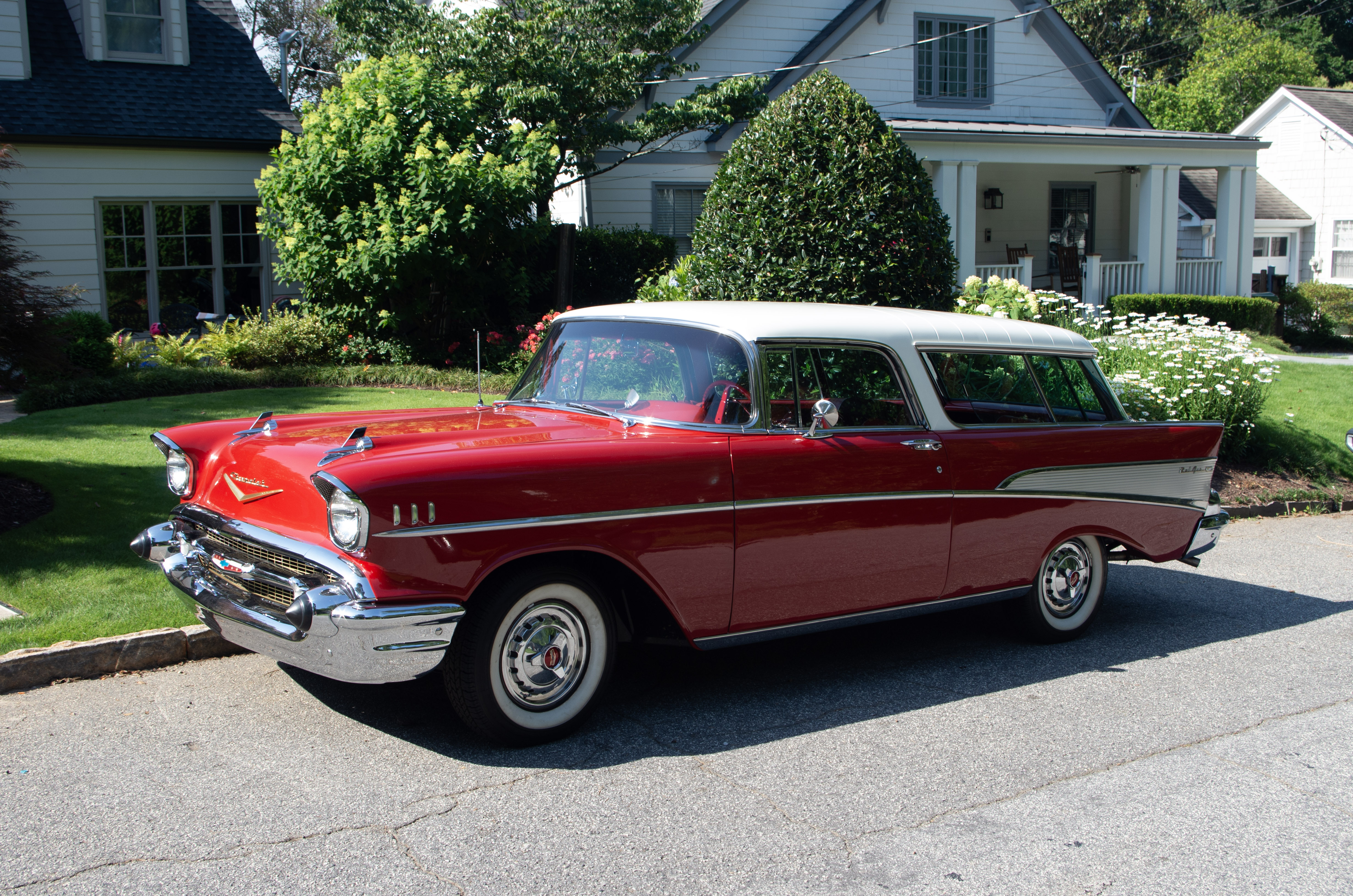
Pentax K-5 II – Sigma 8-16mm lens – bench in Atlanta, GA
You can see the Blue Ocean strategy at play in the way Ricoh declines its ultra compact GR camera into a series of extremely specialized products (GR IIIX with 40mm lens, GR IV monochrome, GR IV High Diffusion Filter, …). As for being the Leica M of dSLRs, consider the case of the Pentax K-3 Mk III: the last and arguably most elaborate APS-C dSLR launched by any camera manufacturer, it was proposed at a comparatively very high price, and was followed by an even more expensive variant equipped with a monochrome sensor – that’s taken directly from the Leica marketing playbook.

You can argue that Pentax did not have much success as an innovator in the recent years (the Q series and the K-01 did not meet their public), and that until recently they were selling cameras primarily on value.
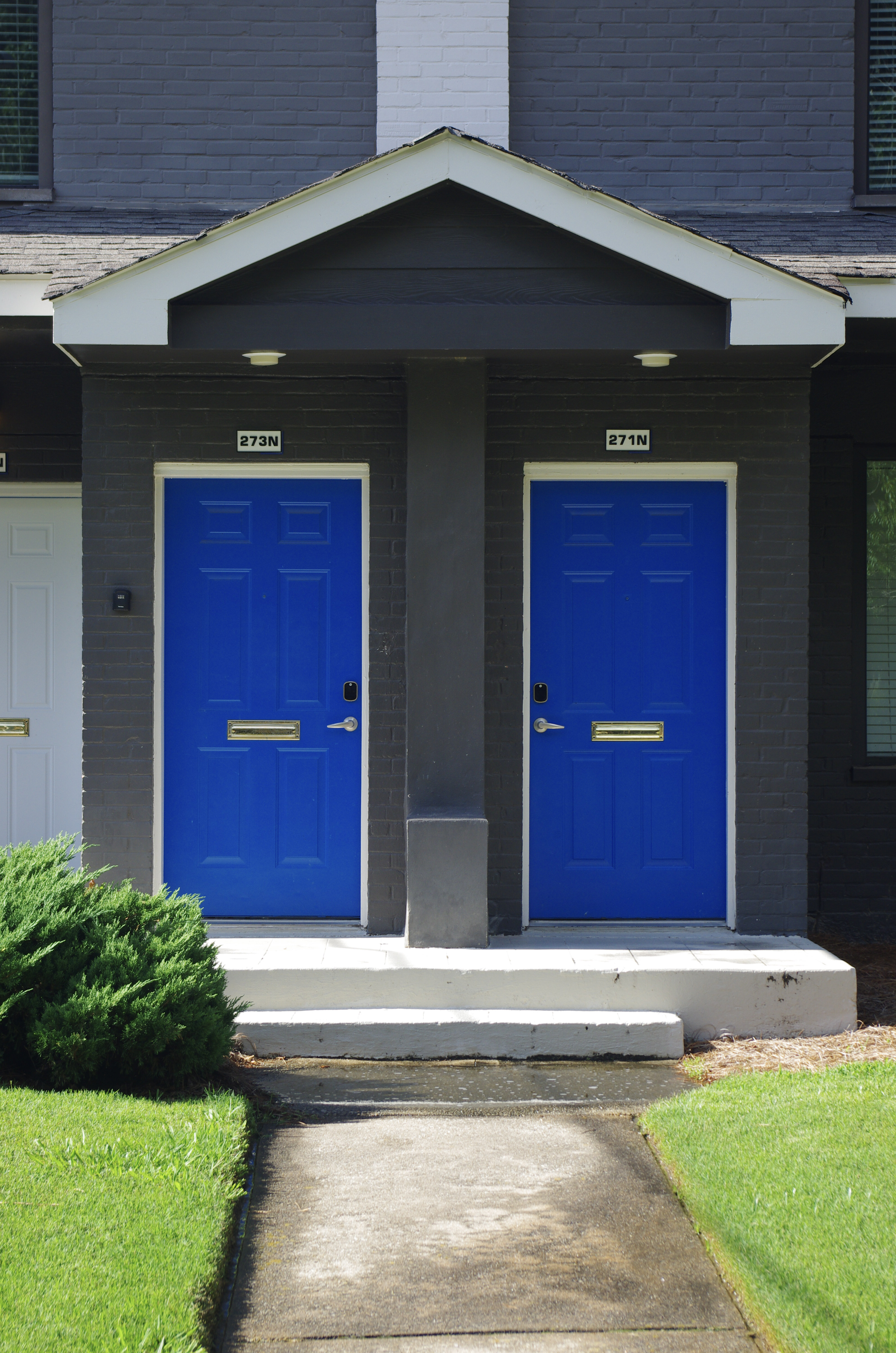
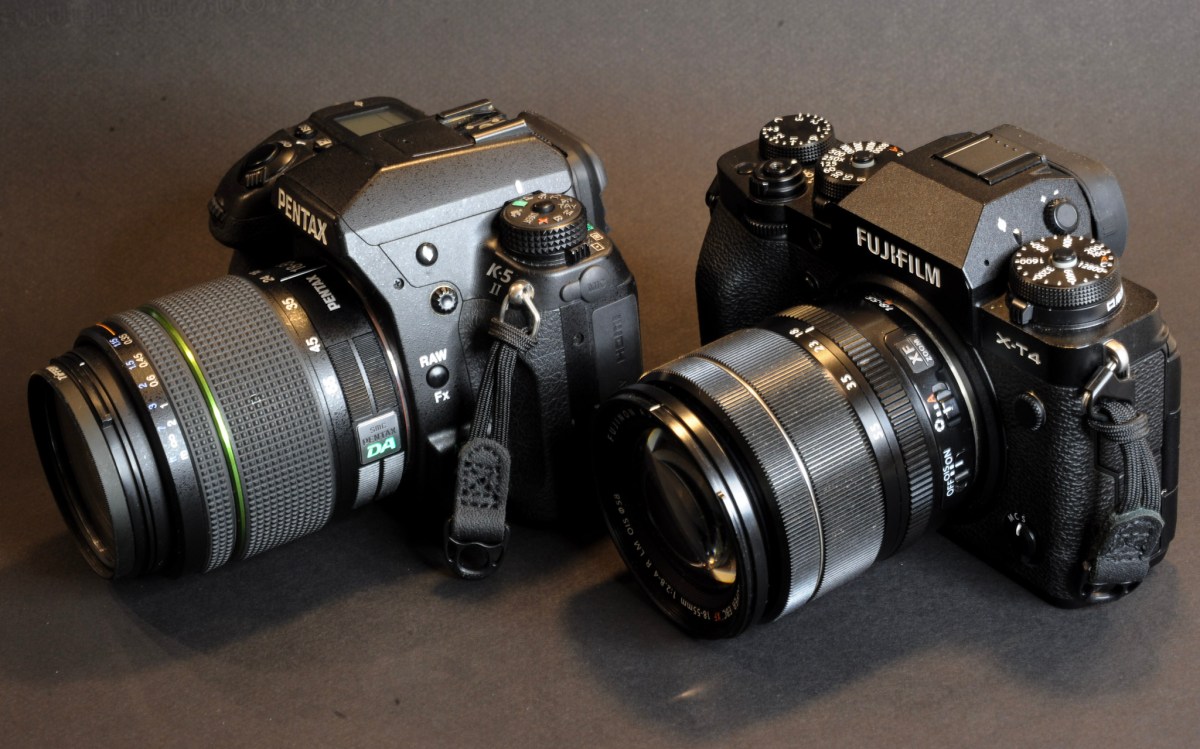
Pentax K-5 II – Pentax DA 18-55 lens – porch in Marietta, GA
The K-7, K-5 and the K-3 Mk I and Mk II are a good example: not rated as highly as Canon or Nikon’s best cameras when it came to autofocus or video performance (for instance), they produced images of high quality, and offered advantages unique in their category (in body image stabilization, full weather sealing) at a price point lower than their competition.
The pricing strategy started changing with the launch of the Pentax KP in 2017 and became obvious with the release of the K-3 Mk III – which clearly tried to be the best dSLR with an APS-C sensor – ever – but was at the same time more expensive than Canon and Nikon’s offerings.
As of today, you still have to spend almost $1800 for a new K-3 Mk III (that’s the 2025 Holiday promotion, it still lists officially at $2000) and up to $2200 for a K-3 Mk III Monochrome, which is much higher than Canon’s 90D at $1200, and Nikon’s only remaining new APS-C dSLR, the d7500 currently selling for $700.
It percolates on the cost of older Pentax dSLRs on the second hand market – the K-5 and the first two K-3 models could still be considered bargain buys not so long ago, but the K-3 Mk III has pulled the prices upwards. Being the most recent predecessors of the K-3 Mk III, the K-3 Mk II and the KP are logically the most impacted.
The introduction of tariffs on second hand cameras coming from Japan has made the matter worse by cutting the main source for cheap Pentax cameras: imported second hand Pentax dSLRs are subject to tariffs, factor that if you buy from a Japanese retailer.
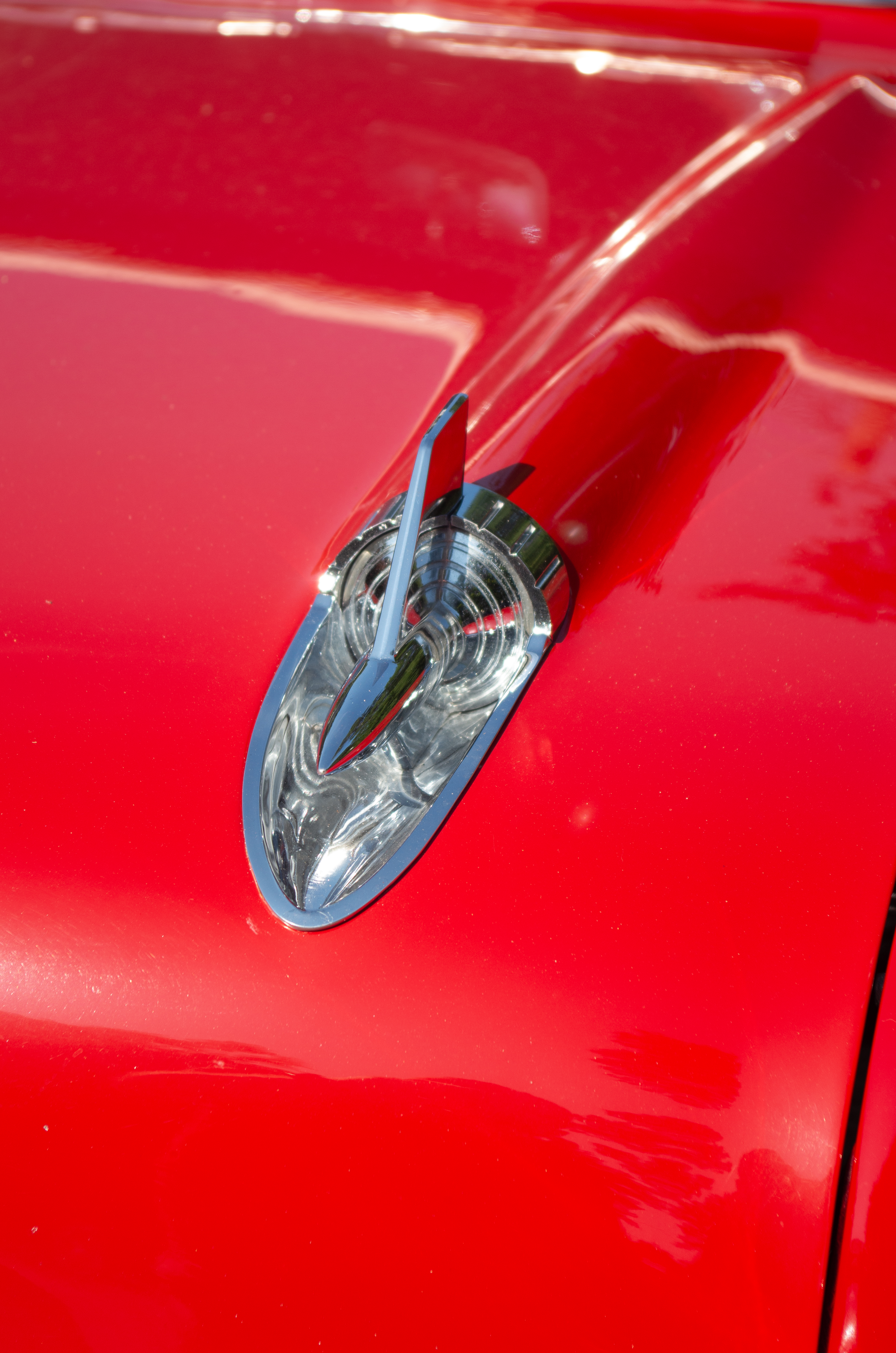
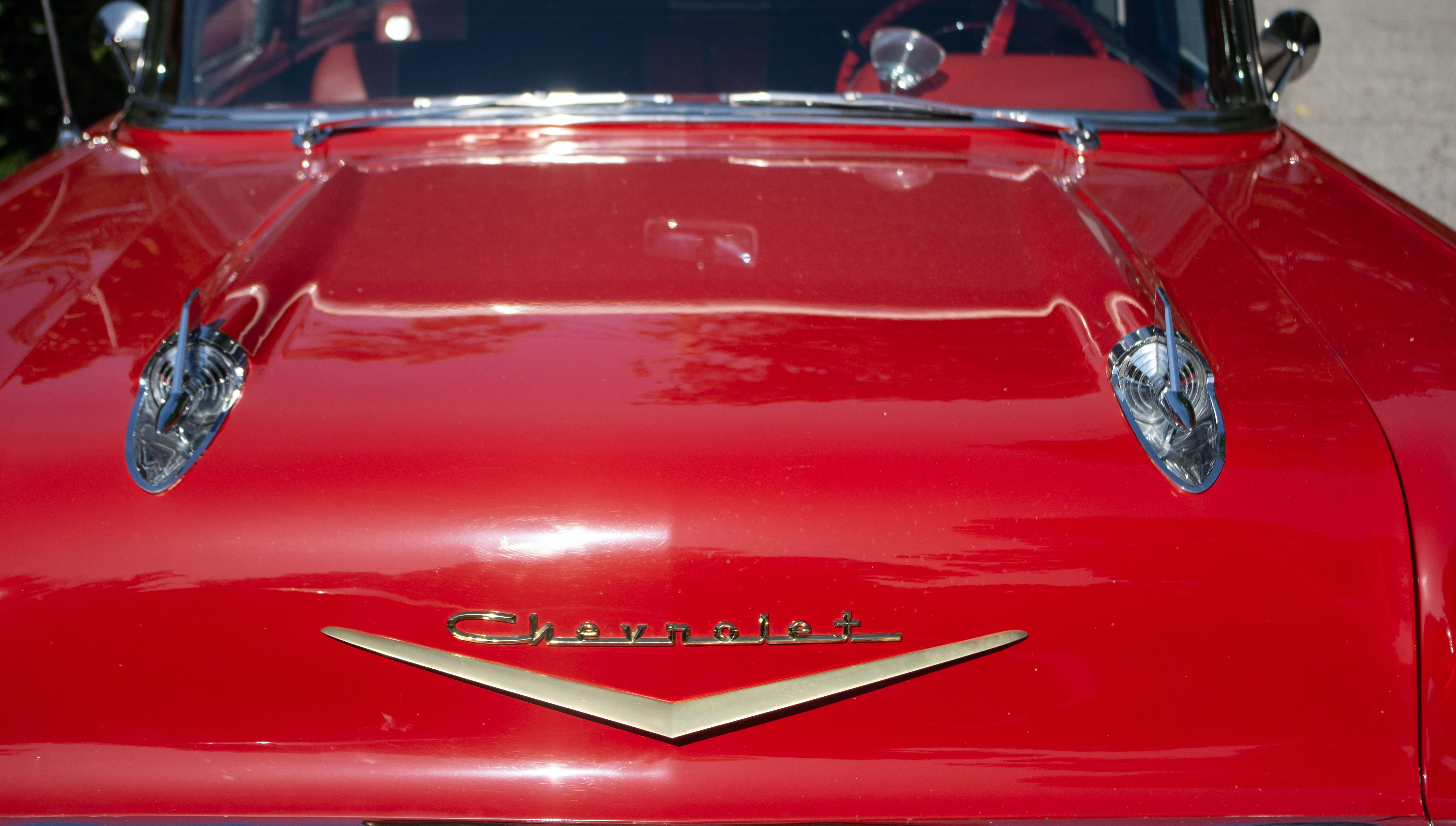
Pentax K-5 II – Pentax DA 18-55 lens – Hood decoration (Chevrolet)
The recent Pentax cropped sensor dSLRs line up today: from the K-5 to the KP in a few words
The Pentax K-5, K-5 II and K-5 IIs: Available new between 2010 and 2013, the K-5 remains a very good value proposition – with a solid build, a long battery life, great ergonomics and a very good 16 MPIX sensor delivering very good images. Some details are dated: there is no WiFi, and live view and video capabilities are very limited, but it’s still a very good camera if you’re shooting exclusively still images. Nice copies of the K-5 can still be found between $200.00 and $250.00. The K-5 IIs is approx. $100 more expensive.
Pentax K-5 and its kit lens
The Pentax K-3 and K-3 II: – Sold between 2013 and 2017, the K-3 and the K-3 II are essentially a K-5 IIs with a 24 Mpix sensor. The K3 II gets a better autofocus system and an integrated GPS but the K-3 and the K-3 II keep the same fundamental qualities and limitations as the K-5. And they make you pay dearly for their 24 Mpix sensor (up to $650 for a K-3 Mk II).
The Pentax K-70 and KF – launched respectively in 2017 and 2022 – are more or less the same camera under a different name – they are the remote successors of cameras like the K-r tested last year in those pages, the last two representents of a long line of the mid-level Pentax dSLRs. They benefit from some “pro” features like weather sealing and in body image stabilization, they have the same 100% viewfinder and the same 24 Mpix sensor as the K-3 or the KP and offer WiFi and Bluetooth connectivity. The LCD display at the back is fully articulated. But their autofocus module is dated and limited, they’re not as solidly built as a K-3 or the KP (polycarbonate instead of a magnesium alloy), they are deprived of the K-5 and K-3’s top plate display and only have one SD card slot and a smaller battery.
Note that the entry-level or mid level Pentax dSLRs (starting with the K-30 up to the K-70s built before 2021) may all suffer from issues with the solenoid controlling the aperture – the most recent K-70s and the KF are using a different component and will be OK. The KF is still available new for approximately $650.00 in the US, and a nice second hand K-70 can be had for $400.
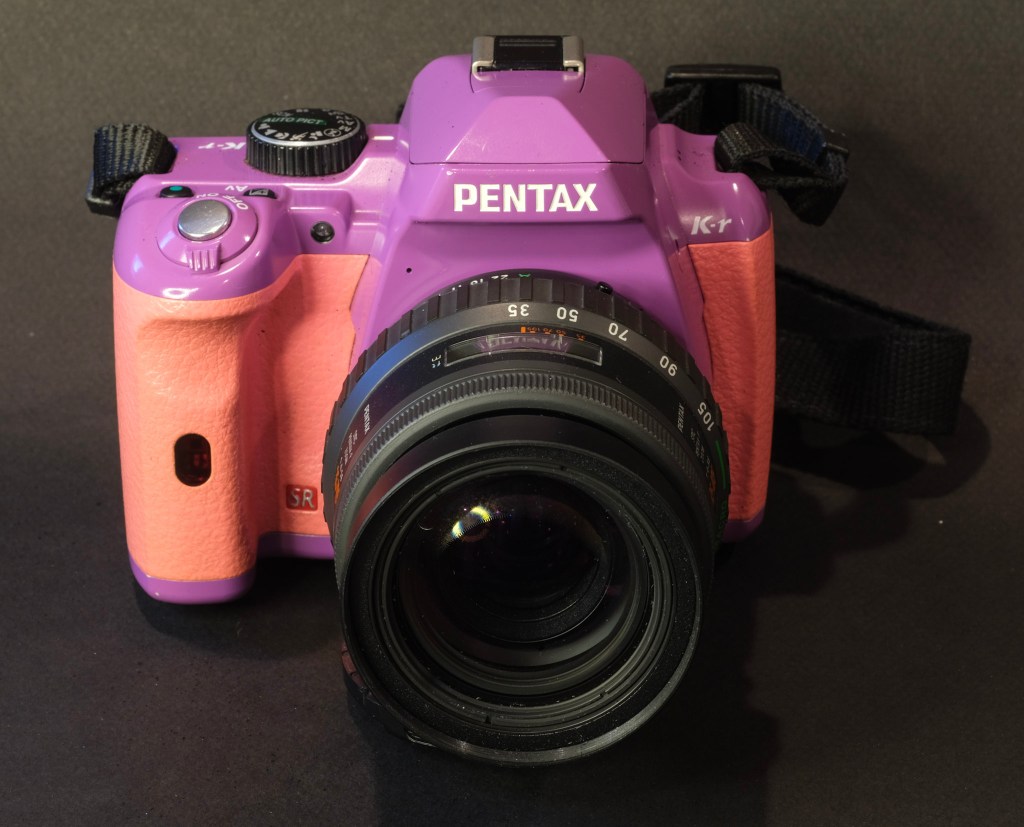
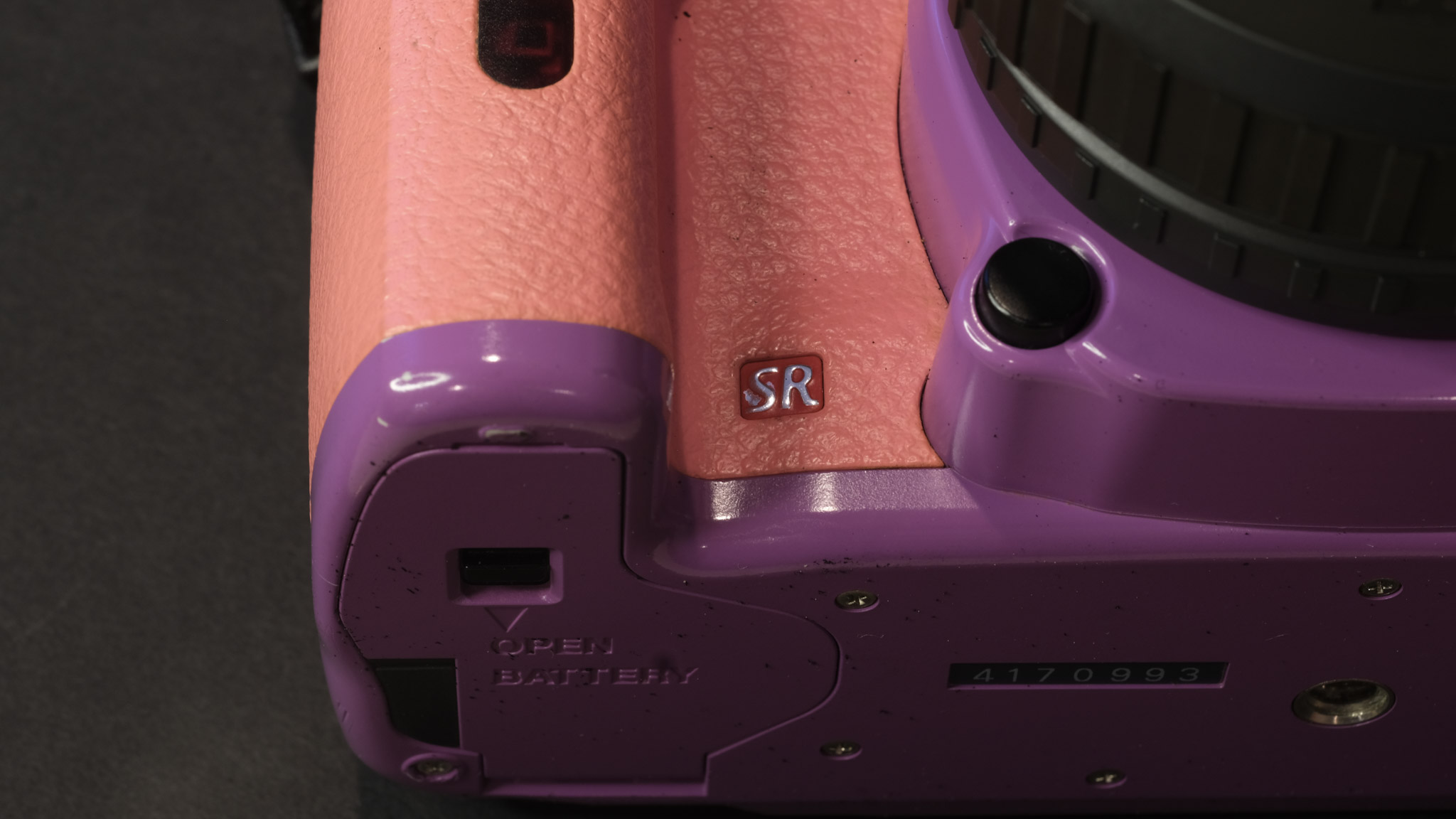
Pentax K-r – “SR” is for “Shake Reduction”. It’s a important differentiator – no other brand offers in body image stabilization (IBIS) on digital reflex cameras.
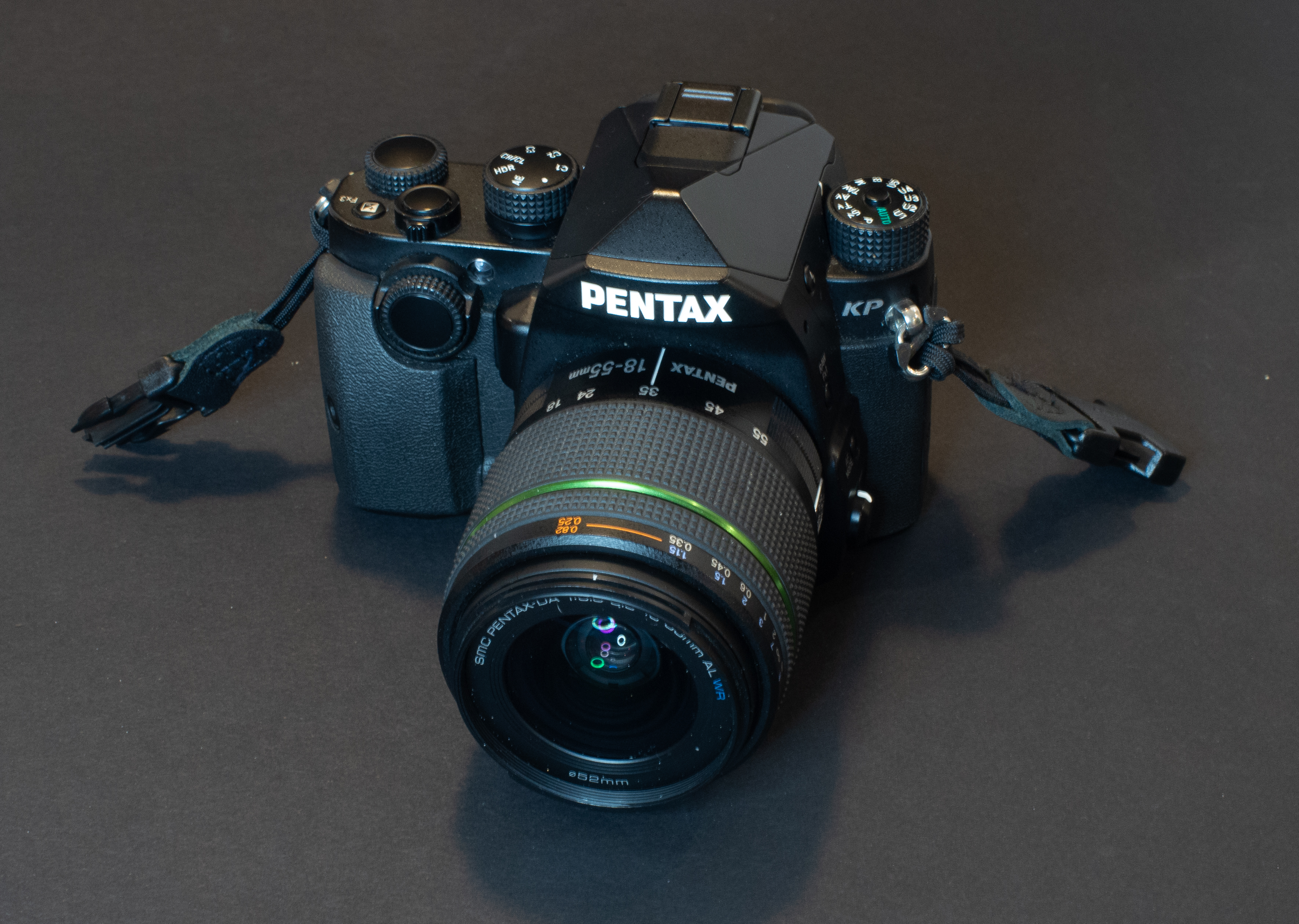
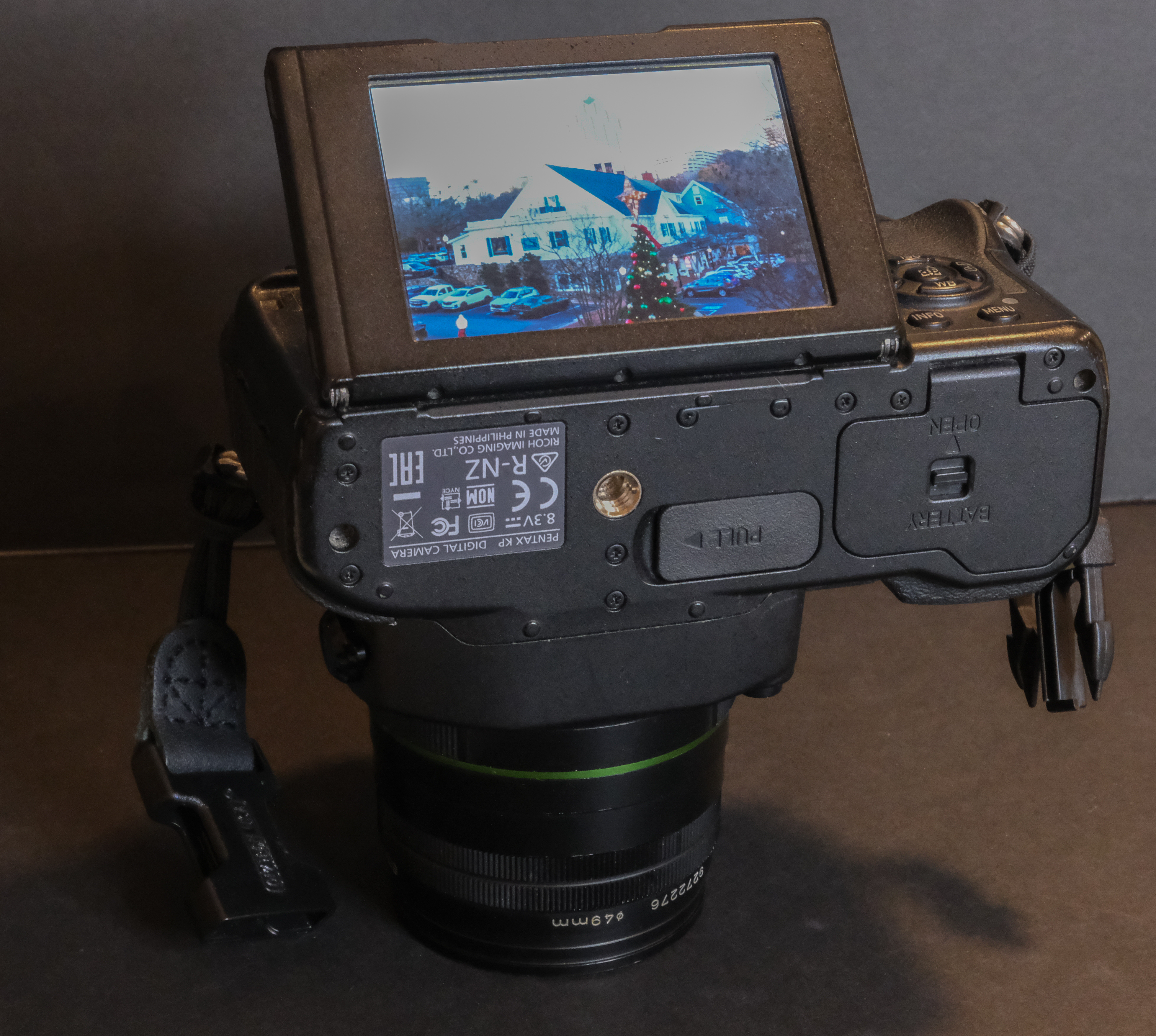
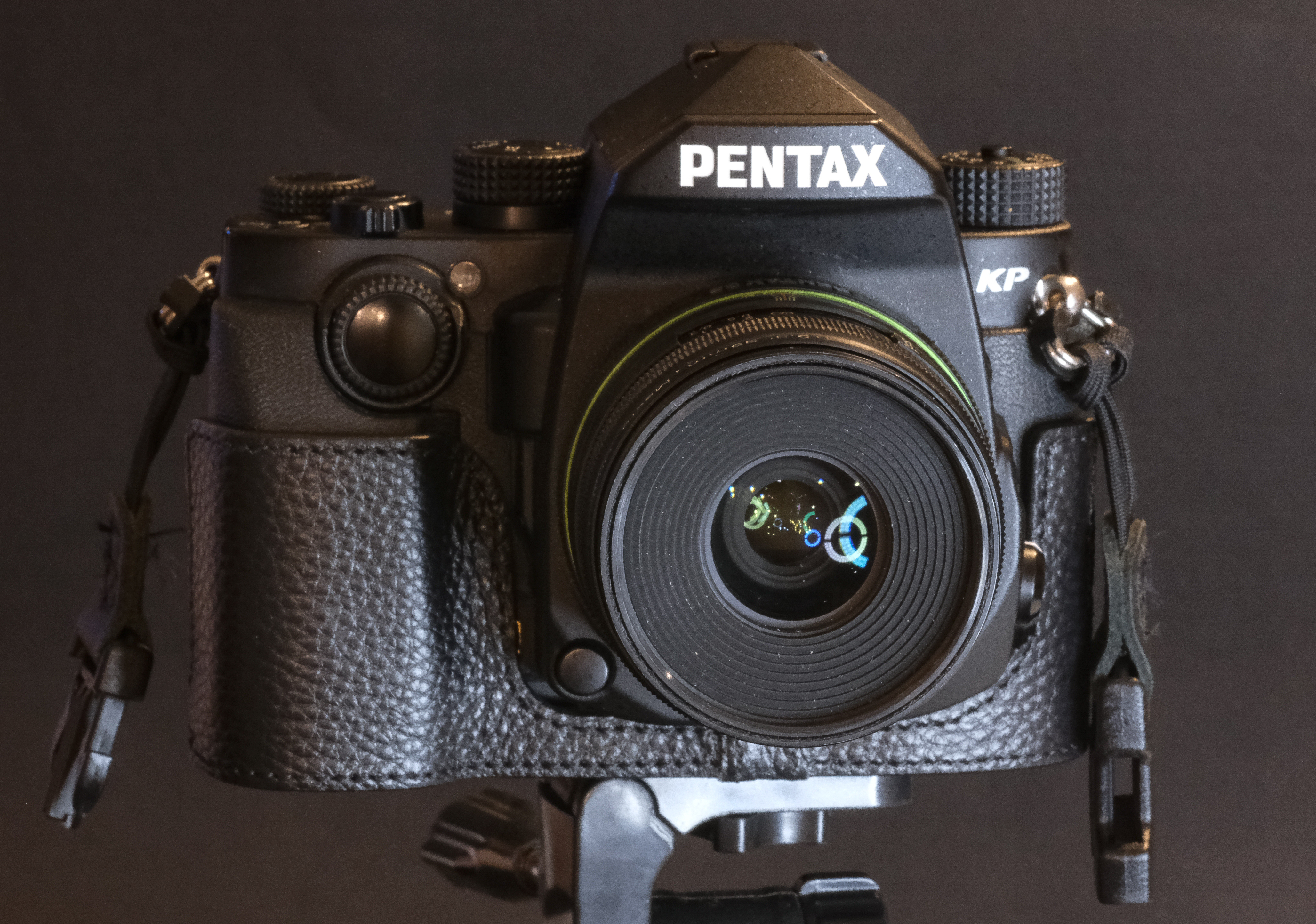
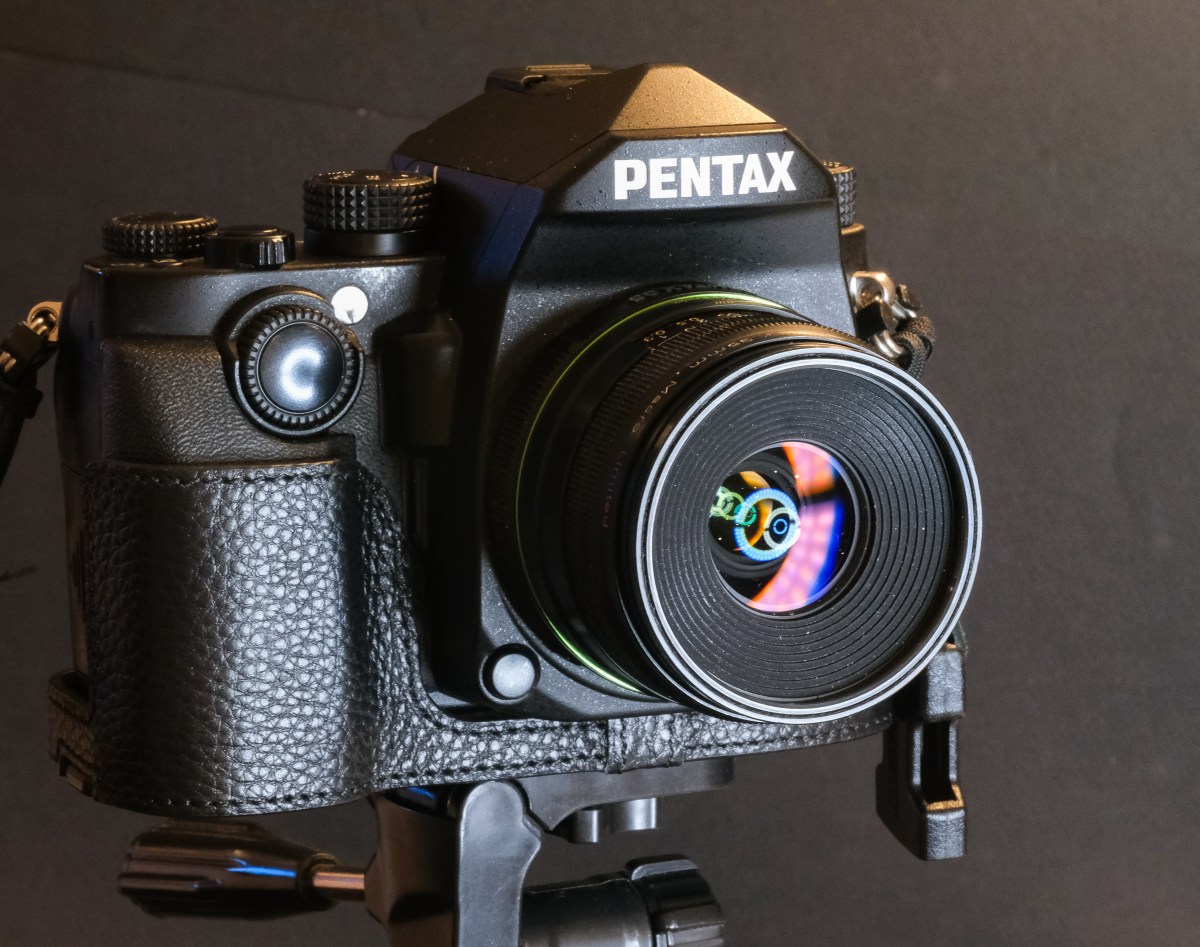
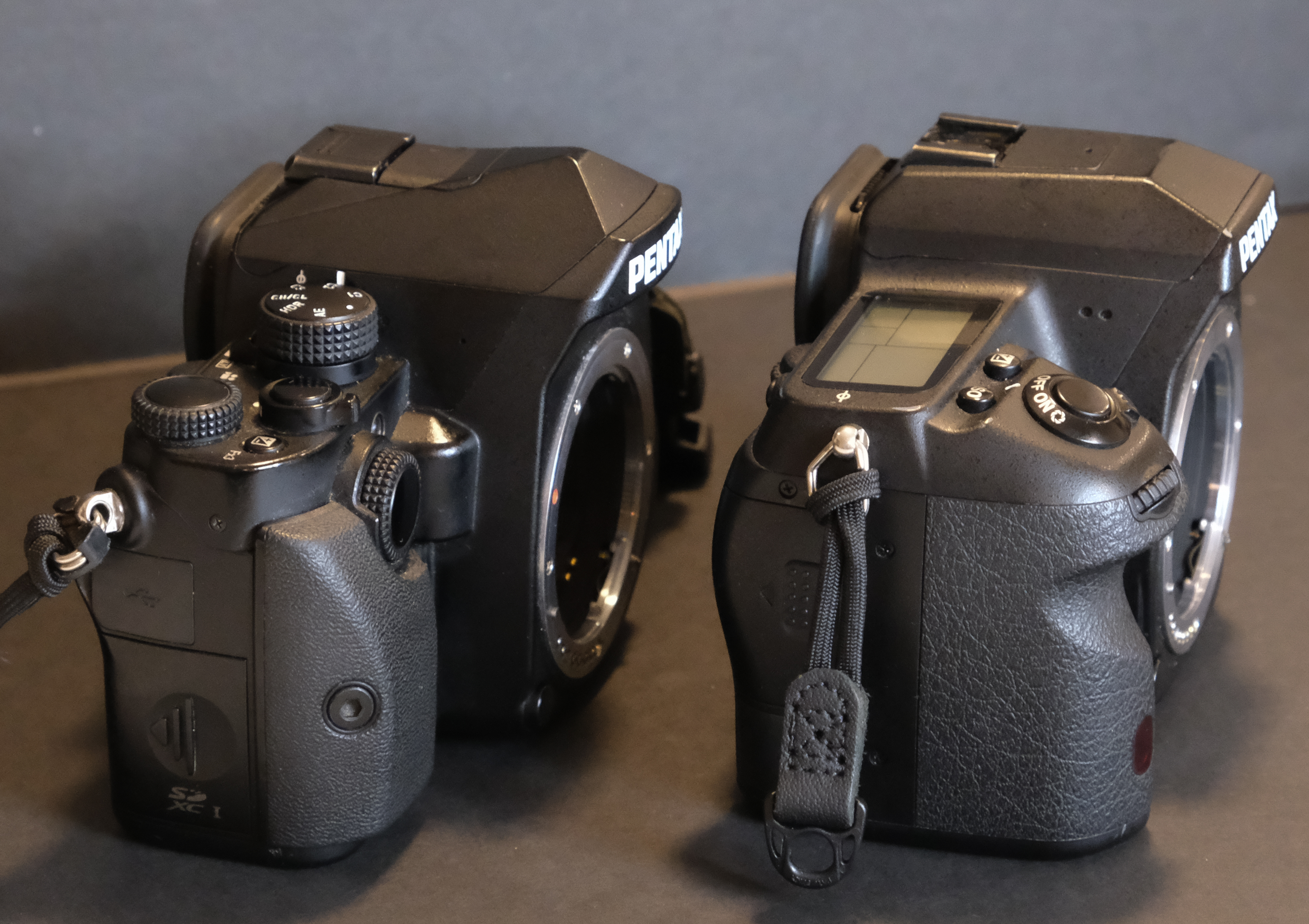
The Pentax KP was launched in 2017 as a replacement of the K-3 II, and discontinued in 2021. It introduced a new slim, retro-inspired body design with user replaceable hand grips – esthetically pleasant but with controversial ergonomics. It benefited from a new and improved image processing engine and from a tiltable rear display. It combined characteristics inherited from the K-3 II (24 mpix sensor, all metal construction, 27 point autofocus system) with characteristics typically seen on entry level cameras (only one SD card slot, small battery, no top plate LCD display). If you can live with those limitations and its ergonomics, it’s the closest you’ll get to the image quality of the K-3 Mk III, at a fraction of the price.
Like the K-3 Mk II, the KP has become expensive – the typical second hand price being in the $600 to $750 range.
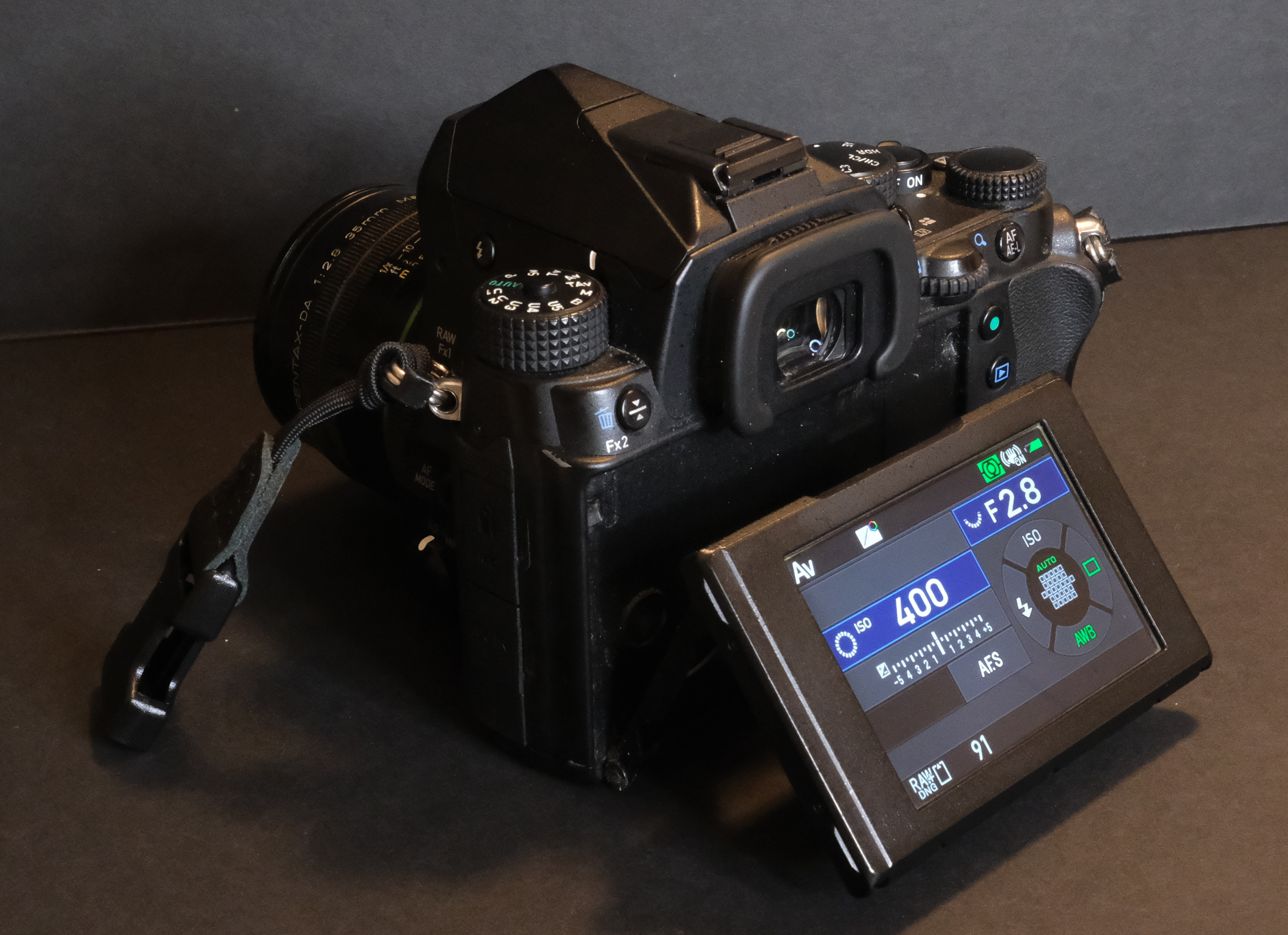
The KP’s differentiator – a tillable rear display
I only know the Pentax K-3 Mk III from its specs sheet, and reviews I’ve read or watched here and there. Under a body that looks similar to the previous K-3s, it’s a very different camera, and now that the Nikon D500 has been discontinued, a credible candidate to the title of most elaborate APS-C dSLR.
With a new 26 MPIX BSI sensor, a new autofocus system, a top plate LCD display, a third control wheel, a touch screen and a joystick to select from 41 autofocus points – it’s a very significant step above the K-3 II and the KP. It has almost everything expected from a top of the line dSLR, and its specs sheet compares favorably with the best APS-C mirrorless cameras. The only glaring omission is the lack of an articulated or tiltable rear screen, which can be an issue when shooting with wide angle lenses or for macro-photography. Still available new from retailers, it can not be found second hand for less than $1300, more than twice as much as a more abundant Nikon D500.
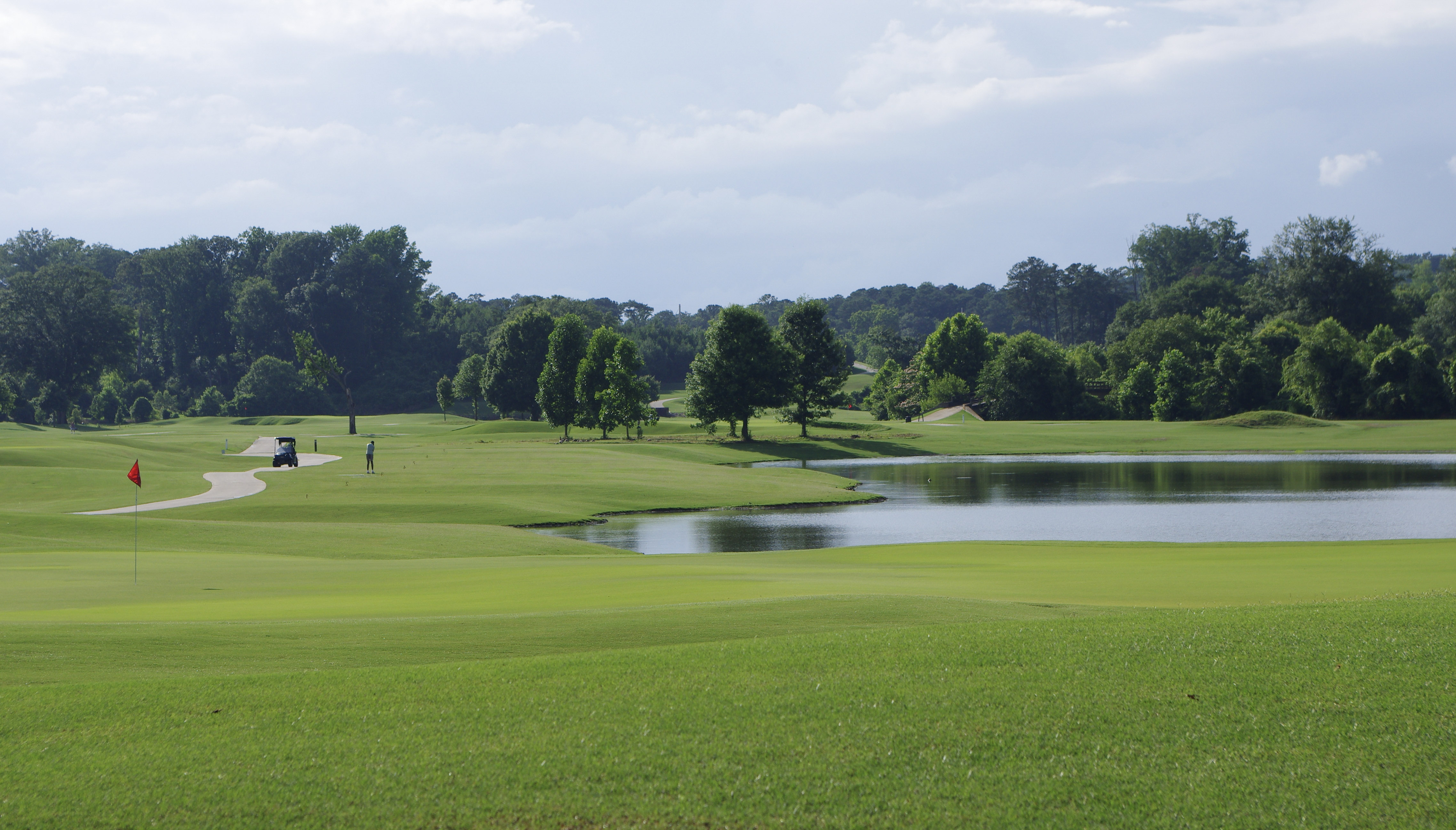
Pentax K-5 II – Pentax DA 18-55 lens
Pentax KP – Pentax DA 35mm f/2.8 macro lens. Sweetwater Creek, GA
Just before Thanksgiving, I posted a picture taken a few years ago in Atlanta’s Little Five Points neighborhood with a Pentax P3, a film camera that suffered a terminal failure a few rolls of film later (an issue with the film advance mechanism like most of the P3s, of course). The lens – the Pentax A 35-70 f/3.5-4.5 – was so bad I got rid of it (my copy was faulty – the lens has a decent reputation otherwise). The image was not that great either but was made more interesting in post-processing with Lightroom, and in a few weeks, it has become my most appreciated image of the year in Flickr.
I even received a request to use it from a pro-bicycle user group…. Go figure.
I’ve been traveling recently, and will be on the road again during the holiday season. I’m not forgetting this blog, in fact I’m harvesting more images for later use, but it’s very likely that this post will be the last one before Christmas.
Happy Holidays to you and to your families.
Atlanta Little Five Points. Pentax P3/P30 – Pentax A 35-70mm f/3.5-4.5 – the wall has been repainted since, and is far less interesting…
Trying to save a compromised image in Lightroom.
More of the same series….Same camera, same lens, same roll of film.
Another image from the same roll of film – Atlanta, Inman Park.
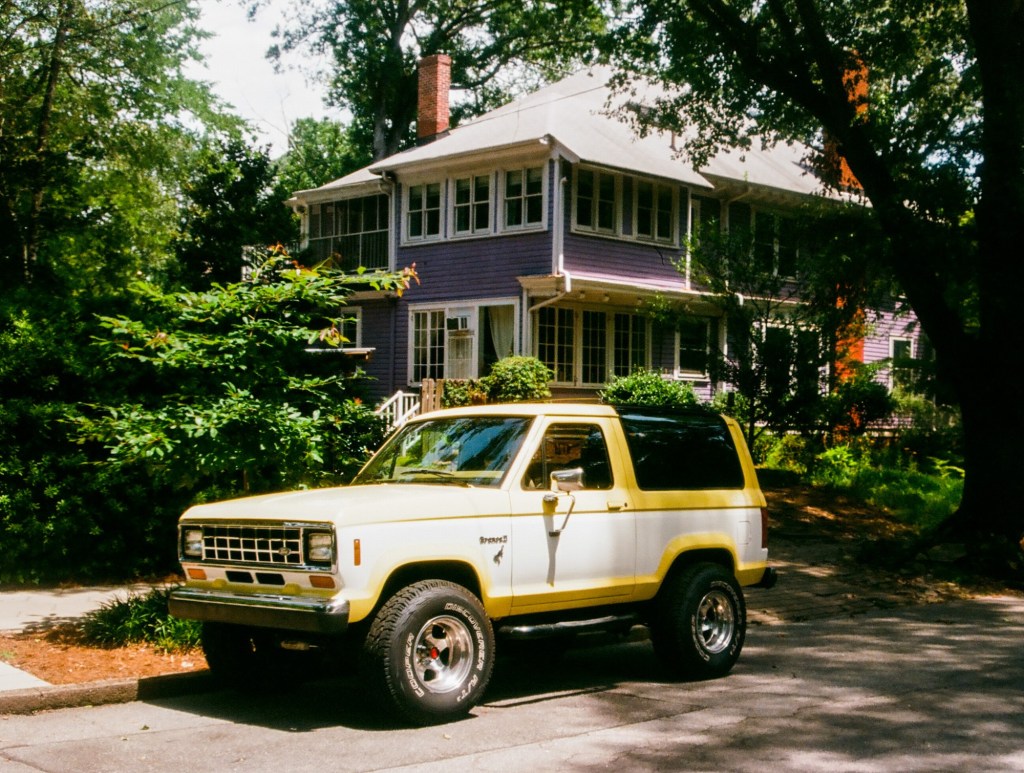
Ford Bronco II – Inman Park Neighborhood, Atlanta.
The price of a digital camera on the second hand market is more or less proportional to the number of pixels of its image sensor – interchangeable lens cameras (dSLRs and mirrorless) with anything between 24 and 50 Megapixel (Mpix) sensors are considered current and command big bucks, while models with less than 10 Mpix are deemed virtually worthless.
Case in point – I bought a Pentax *ist DS (a 6 Mpix dSLR from 2004), a bit scruffy but in working order, for less then $35.00.
For comparison – same lens, same ISO settings, same hour of the day – Pentax K-5 – minor adjustments in Lightroom. Click on the image to see it at full resolution – you will see the difference.
Why the Pentax *ist DS back then?
At the turn of the century, the photography market was different from what it was to become a few years later – there were only four companies in the world selling digital SLRs (Canon, Fuji, Kodak and Nikon). And those cameras were very expensive, and primarily bought by news agencies and well heeled pros.
2002 saw a first wave of more affordable digital SLRs reach the market (Canon, Fuji and Nikon all launched models in the $2000 price range). Pentax and Olympus joined the fray in 2003 with the *ist D and the E-1. At the end of 2003 Canon made digital SLRs affordable for amateurs with the Rebel 300D, the first dSLR to sell for less than $1000.00.
Nikon and Pentax followed rapidly with two models priced around $1000, the D70 and the *ist DS. Like millions of amateurs, I was looking for my first digital SLR in those days, and the *ist DS was my pick. Its specs were not that different from the D70 or the Rebel. What made the difference for me was its small size, its large viewfinder, and the good reviews of its kit lens.
Of course, I sold it after a few years to upgrade to a 10 Mpix camera, which itself was sold a few years later to fund the next upgrade, and so on.
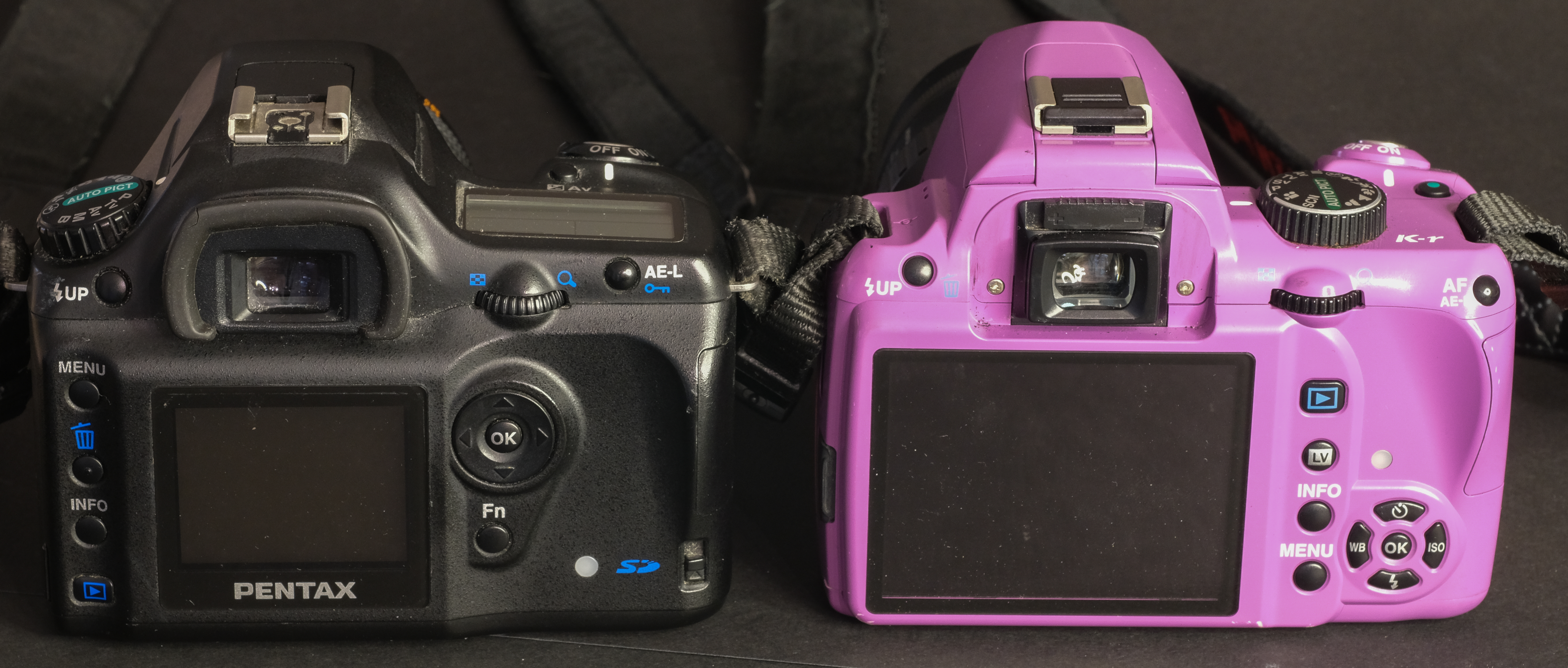
Family Reunion – the *ist DS (left) looks serious in black, the K-r (right) was available in fancy colors.
Why a *ist DS now?
A few months ago, I bought a colorful Pentax K-r (a 12 Mpix camera from 2010) and was surprised by the quality of the RAW files it delivered. You pay a bit more for the colored body of a K-r, but all white and all black models can be found for less than $100.00. In my recollections, the *ist DS was a good little camera, and I was wondering what it would be like to shoot with a 6 MPIX dSLR now. I started checking the usual auction sites, and $34.00 made me the proud new owner of another Pentax camera.
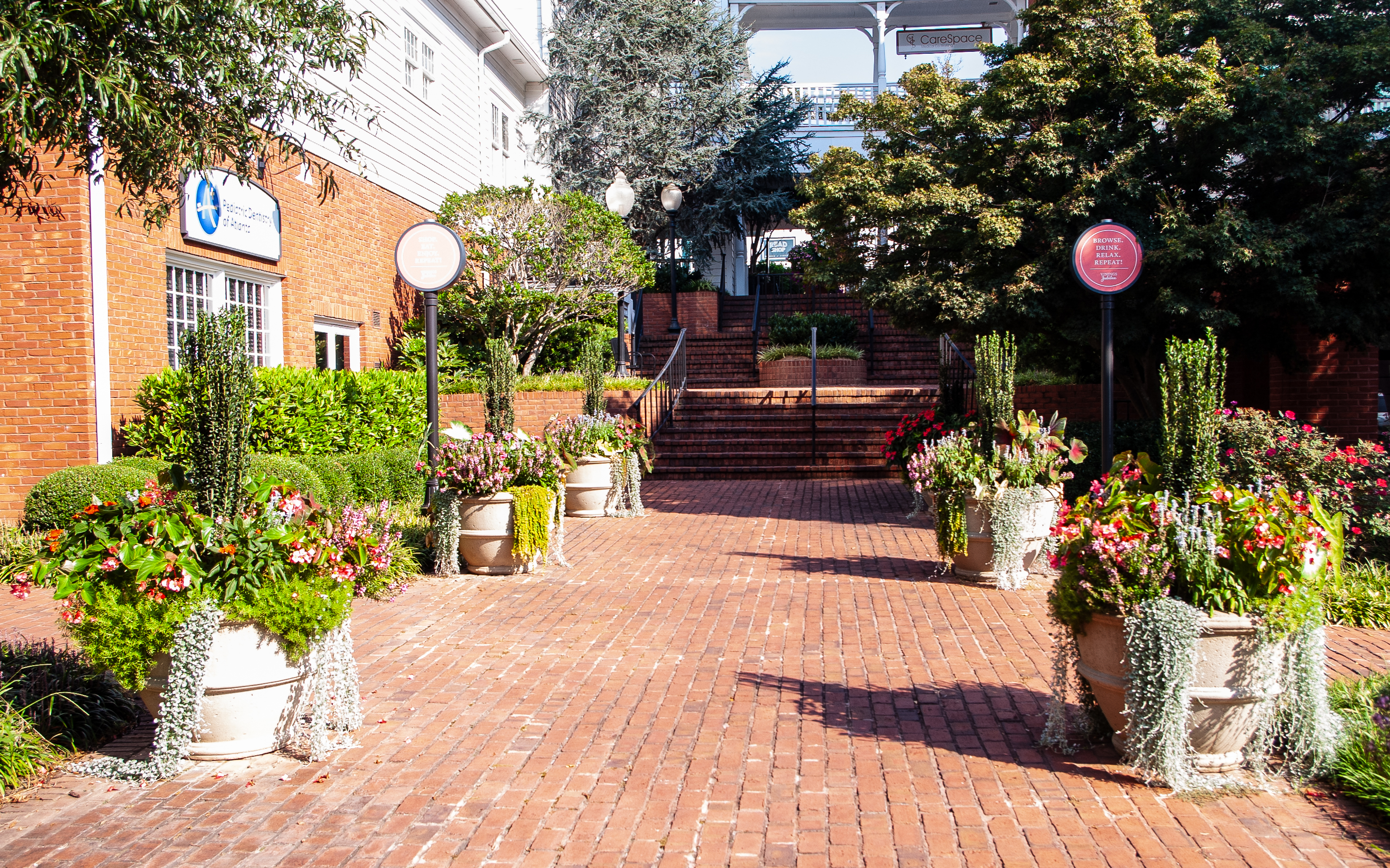
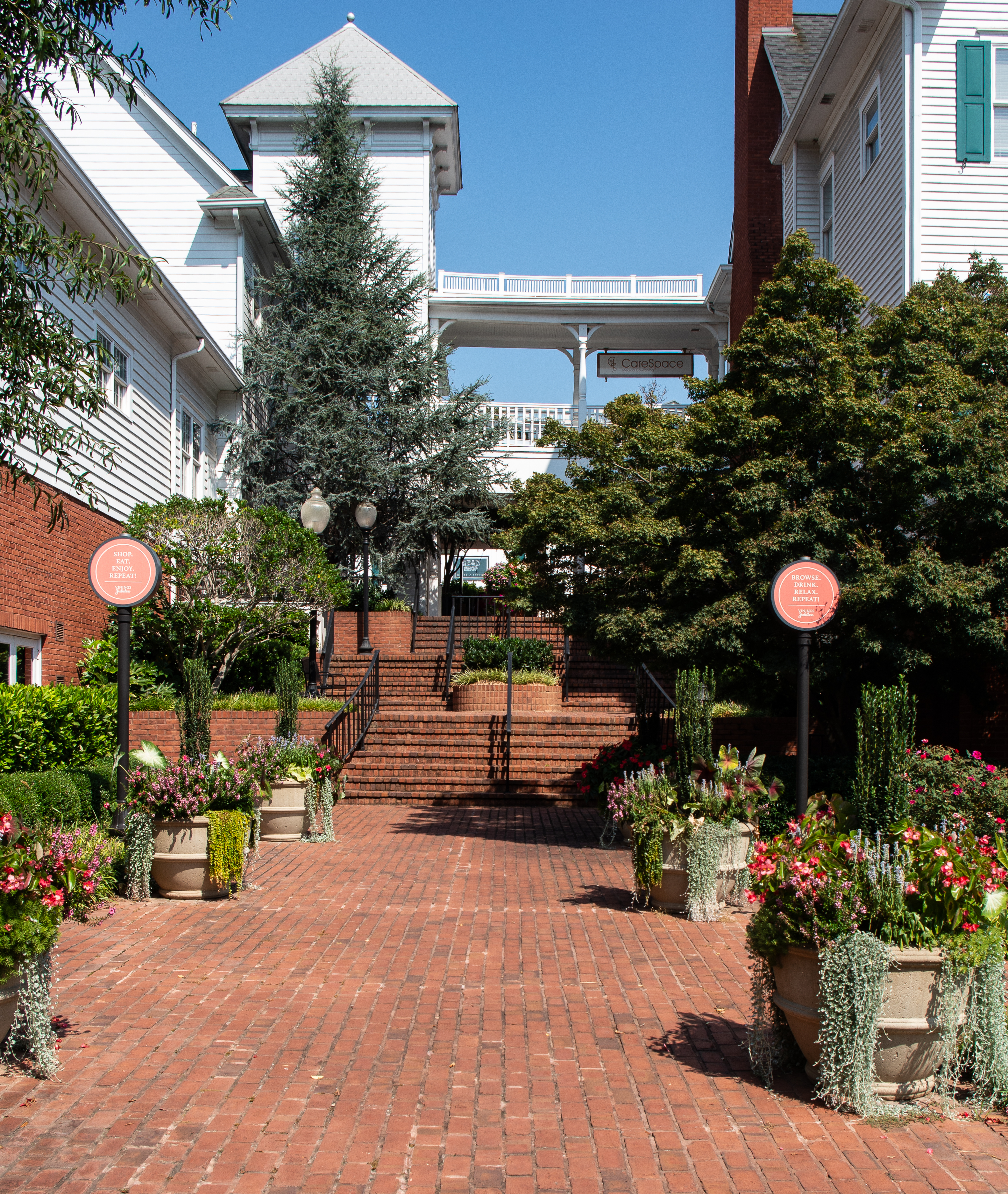
Pentax *ist DS – Pentax 18-55 Kit Lens – Vinings Jubilee (Atlanta) – adjusted to taste in Lightroom
For comparison – same lens, same ISO settings, same hour of the day – Pentax K-5 – minor adjustments in Lightroom. Click on the image to see it at full resolution – you will see the difference.
First impressions
I had shot a few thousand of pictures with my *ist DS in the early 2000s, so this “new” *ist DS is not really a total unknown for me.
What struck me immediately when I received my $35.00 *ist DS is how similar it looked to the K-r; as if Pentax had kept the same moulds over the 7 years that separate the two cameras. The *ist DS is smaller than Nikon’s mid-range APS-C of the same vintage, but the general organization of the commands is strikingly similar to what current Pentax and Nikon APS-C dSLRs look like – to a large extent the dSLR camera had already found its final form in 2004.
Pentax *ist DS (left) and Pentax K-5 (right) – the layout of the commands is very similar – the most striking difference is the rear LCD display – a huge progress in the space of a few years.
Visually, the biggest difference is the rear LCD display – the DS’ is very small (2in diagonal, some smart-watches have larger displays), and its dynamic range very limited.
Pentax *ist DS – this picture was in the performance envelope of the camera.
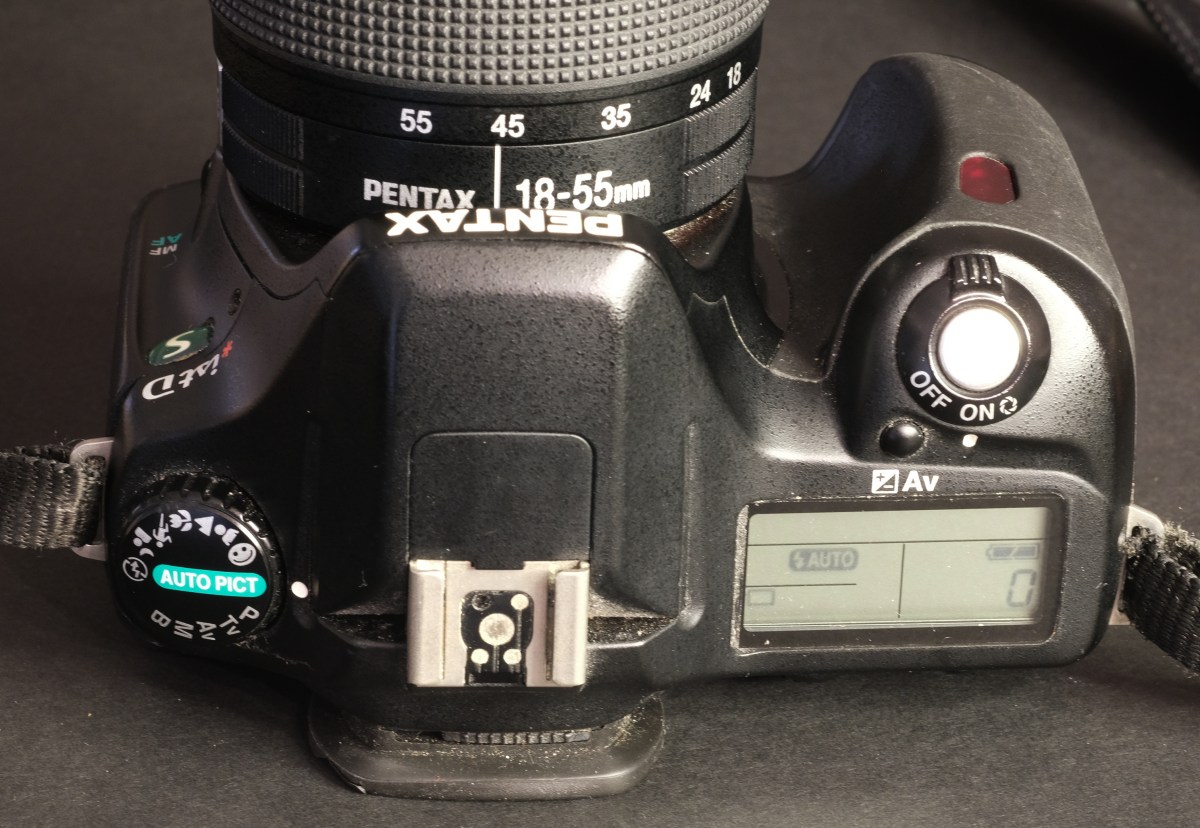
My $34.00 camera is old, and definitely not in tip-top shape (the mode selector is stuck in the Auto-Pict position, the integrated pop-up flash seems to be dead), but it still works well enough to get an opinion about this generation of 6 Mpix cameras.
Back in 2005, DPReview was very happy with the responsiveness of the camera, but concerned with the quality of its JPEGs. Today, the standards are different, but the responsiveness is still OKay-ish – when there is enough light for the autofocus to operate – otherwise it hunts desperately.
As for the image quality, even in RAW, it’s often disappointing.
Pentax *ist DS – even in Lightroom and starting from RAW, I could not get the sky, the church and flower bed to be exposed correctly at the same time.
Pentax *ist DS – another image (taken at around 11am) where the limited dynamic range of the sensor is clearly visible.
For comparison – same lens, same ISO settings, same hour of the day – Pentax K-5 – minor adjustments in Lightroom. The difference is striking.
The camera is twenty years old, may have been treated badly by some of its owners, and may not perform as well as when it was new, but, in any case,
the dynamic range of the sensor is limited (DXO evaluates it at 10 EVs, as opposed to 14 EVs for the sensor of a more recent Pentax K-5 for instance). If the scene is lit evenly, the results are correct, but even Lightroom can’t save RAW images like the picture of this old church or that plant on my deck.
I’ve been used to shooting with cameras and lenses equipped with image stabilization mechanisms, which this *ist DS is deprived of. Images which would have been technically good with a camera from the 2010s are blurry because of camera shake,
the autofocus is a hit or miss – it works fine on static scenes, not so well if the subject is moving or the scene too dark.
Pentax *ist DS (left) and Pentax K-r (right) – even an entry level model like the K-r has a much better rear LCD display (and a Live View button). And it will perform much better.
Conclusion
Obviously, this camera works, and in ideal circumstances, will deliver usable images. But even if the images are saved as RAW files, the highlights are often desperately burnt, and the shadows too dark. The autofocus struggles with moving subjects, in particular if they’re not perfectly centered, and because this model is deprived from image stabilization, images will be blurry if the photographer does not pay close attention to the shutter speed. Very clearly, there is a huge image quality and usability gap between this *ist DS and cameras launched six to seven years later.
In the days of $5.00 Starbucks Lattes and $10.00 McDonalds Value Meals, $34.00 is not a huge sum to spend on a digital camera. But if you put the equivalent of six more Value Meals on the table, you’ll get a much more usable Pentax K-r (or any equivalent 12 Mpix dSLR from the early 2010s). Add another five will get you a really nice 16 Mpix dSLR like a Pentax K-5, or an already modern mirrorless camera such as the Panasonic G2 (12 Mpix) or the Sony Nex 3 (14 Mpix).
Pentax K-r – Centennial Park – Atlanta – the K-r only has a 12 Mpix sensor but behaves like a modern camera.
I’m not necessarily attracted to the latest and greatest features of the newest cameras (I also shoot film with cameras from the 1980s…), and will be happy to shoot with a digital camera deprived of movie mode or of wifi/bluetooth connectivity, if it still delivers images of good quality, most of the time.
But if the performance of a camera (by modern standards) is so limited that I start missing too many potentially good pictures, the quest for minimalism goes too far to my taste.
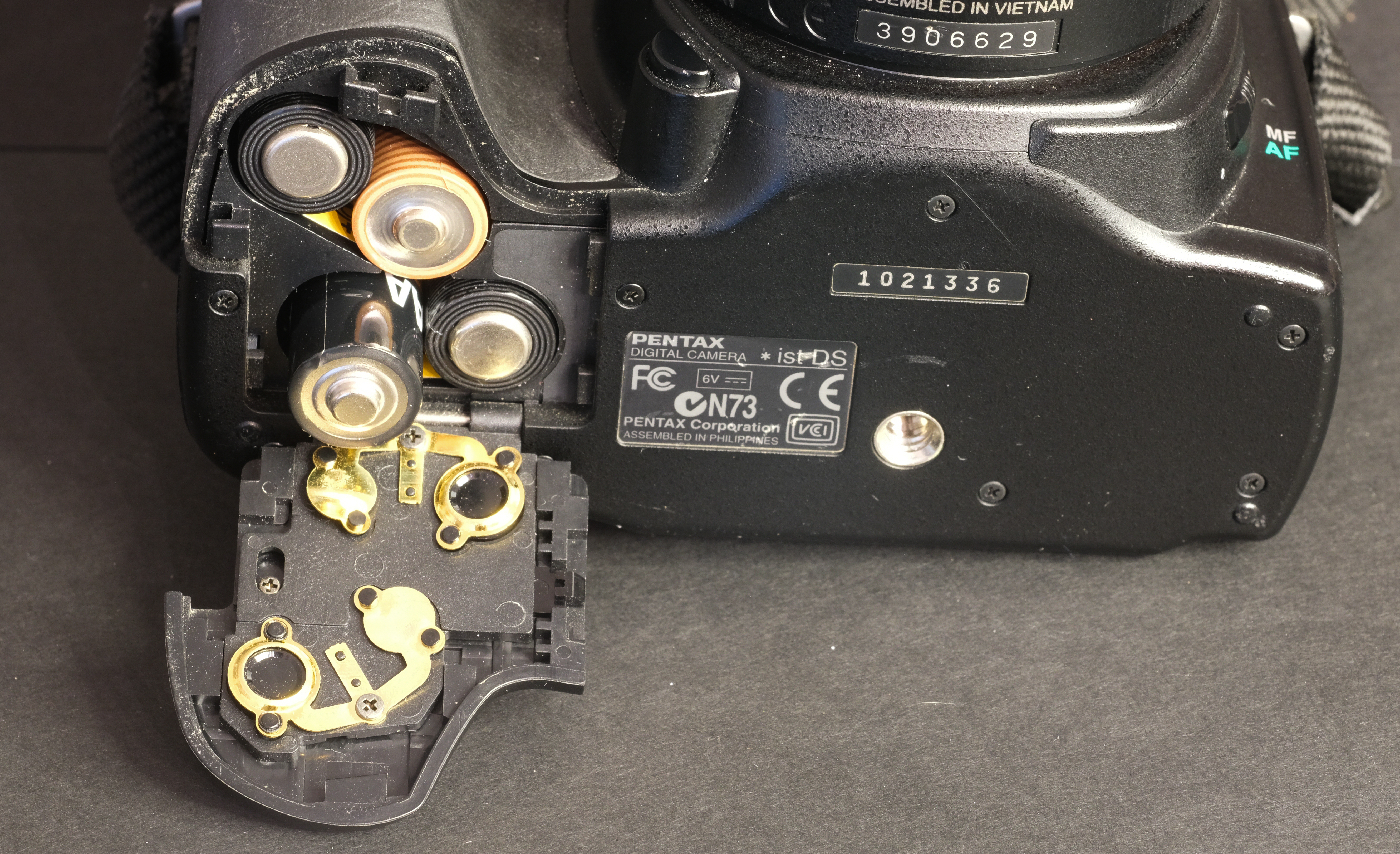
Pentax *ist DS – still powered by conventional AA batteries – no need for a charger (and the battery life is surprisingly good)
It is true that when cameras like the Pentax *ist DS (and its Canon, Konica-Minolta or Nikon 6 Mpix competitors) were launched in 2004, we were impressed by the huge step they represented over the digital point and shoot digicams we’d been using for a few years, and even today, we’re still proud to share the best images we got from those early dSLRs. If I set it up carefully, and use it within the limits of its performance envelope, I’m sure that even my scruffy *ist DS will get me decent pictures.
But today, I see the Pentax *ist DS more as an interesting curiosity, than as a camera I could use day to day. In the six years that separate a Pentax *ist DS from a Pentax K-5 (or a Nikon D70 from a D7000), there has been a huge step forward in reactivity, resolution, dynamic range and low light image quality, a step so large, that if I had to chose, I would spend a bit more on a dSLR or a mirrorless camera of the early 2010s, and forget about the *ist DS.
Digital single-lens reflex (dSLR) cameras still have unique qualities. Even though modern mirrorless cameras outperform them in many situations, using the optical viewfinder on a good digital SLR is a real pleasure. I’ve used almost exclusively SLRs in my formative years, and it probably conditioned my eyes and my brain to be more comfortable and creative when I see a scene through an optical viewfinder. That’s why I finally decided to add another dSLR to my kit in complement to my mirrorless equipment.
Pentax K-5 and its kit lens
I was not willing to spend too much money on this nostalgia trip – I had set a limit of about $150 but I still wanted the camera to have a great viewfinder, a lot of directly accessible commands, and a sensor capable of delivering technically satisfying pictures. The colorful Pentax K-r I reviewed recently was a good introduction to Pentax’s dSLRs family, but certainly not the “advanced”, “semi-pro” APS-C dSLR I was looking for.
My $150 budget consigned me to “advanced” or “prosumer” APS-C cameras from the early 2010s, with an image sensor in the 15 to 20 megapixel range. In that category, Pentax has always had a strong offering, with compact, well built cameras benefiting from a great optical viewfinder. Between the K-7, the K-5 and the K-3, which one was going to be my pick?
Pentax K-5 Mk II – a typical “modal” user interface – most of the settings have their own dedicated key.
Which Pentax K camera to choose?
Over the years, Pentax have introduced three generations of their “advanced” APS-C model line (the K-7, the K-5, the K-3), and have derived Mark II variants of the K-5 and K-3. The current K-3 Mark III launched in 2021 is not as directly related to the K-7 as its predecessors. It’s a very significant upgrade over the K-3 Mark II (it could have been named K-1 if there was not already a K-1 camera in Pentax’s line-up) and part of its appeal is that it’s also available with a monochrome sensor (as the K-3 Mark III Monochrome, of course).
The family saga started in 2009 with the K-7, equipped with a 14 mpix sensor manufactured by Samsung. The camera was so good it was used as the basis of the subsequent K-5 and K-3 models proposed by Pentax, up to the K-3 Mark II. The sensor, on the other hand, could have been better. It yielded good results up to 800 ISO, but gave up at higher sensitivities, producing images with significantly more noise than the competition. Even the K-7’s little brother, the Pentax K-r, equipped with a 12 Mpix Sony sensor, delivered better results in those situations.
Pentax K-5 Mk II – this iteration of the camera has gained an “air gapless LCD screen”
Not surprisingly, the Samsung sensor was replaced by a very good 16 Megapixel sensor in the follow up model, the K-5, launched only one year later. This sensor belonged to a family of high performance chips developed by Sony, which were also used to great results in Fujifilm, Nikon and Sony’s own cameras.
In 2012, the K-5 was replaced by two models, the K-5 II (or K-5 Mark II) – more or less the same camera but with an improved autofocus system, and the K-5 IIs (or Mark II ‘S’) – equipped with a sensor deprived of an anti-liaising filter, and offering a higher resolution of fine details as a result.
The K-3 of 2014 adopted a new 24 MPIX sensor, and was followed by a K-3 Mk II variant equipped with a GPS chip in 2015. As mentioned above, the current Mark III came seven years later with a more modern 26 Megapixel BSI sensor, a vastly improved autofocus system, an extra control wheel, a joystick to select the focus point, and new menus. It is the most “advanced” of all Pentax APS-C cameras, and, with the now discontinued Nikon D500, one of the two most elaborate APS-C dSLRs, ever.
The Pentax K Mount is 50 years old – note the metal bayonet and the red gasket on the 18-55 DA AL WR zoom.
Let’s talk money
Very often the price of a camera on the second hand market is not an exact reflection of its technical capabilities: the K-7 and the first generation K-5 can be found at the same price (between $150 and $200.00), when there is a real performance gap between the two models. The K-5 IIs is often $100.00 more expensive than a K-5, because of the higher resolution of fine details promised by its 16 Megapixel sensor, deprived of an anti-liaising filter.
The K-3 is much more expensive than any variant of the K-5 on the second hand market: with a 24 or 26 Megapixel sensor and no anti-liaising filter, its image quality is on par with the best in the current crop of mid level APS-C cameras, and its price is often established in reference to the hefty sum that Pentax is charging for a new K-3 Mark III. A used first generation K-3 can not easily be found for less than $450.00, and a second-hand K-3 Mark III will cross the $1,000 barrier.
For my needs the K-5 (the non “s” model) represented the best deal in the K-7-5-3 family. I found a very nice K-5 Mark II in the price range I was targeting, and it’s the model we’re going to review today.
Colonial Homes – Blue Symmetry – Pentax K-5 / Pentax lens 18-55 f/3.5-5.6 AL WR
First impressions
Yes, the camera is remarkably compact for a dSLR (in general), and for a model targeting enthusiasts, in particular. It’s not really larger than entry level dSLRs such as the Pentax K-r or the Nikon D3100, and it’s smaller than film era SLRs like a Nikon F90 or a Canon EOS 620. And next to a full frame digital dSLR like a Nikon D800 or a Canon 5d, it’s a dwarf.
Two “advanced” dSLRs – Full frame on the left, APS-C sensor on the right. The difference in size and weight is striking.
In comparison to a K-r or a D3100, it’s almost twice as heavy, though, because it’s built out of metal instead of plastic. It’s very substantial and seems very well built – and really feels like a tool a “pro” would use.
Another reason it’s heavier than a K-r or a D3100 is its viewfinder, which provides a significantly larger and brighter image. It’s visibly not as large or luminous as what you would find on a “pro” full frame camera (film or digital), but when you start considering the size and weight of the combo formed by a full frame body and its trans-standard zoom, then the K-5 looks like a very interesting compromise for action or travel photography.
Lastly, if you’ve been used to the modal interface of autofocus SLRs and dSLRs of any brand, you’ll feel right at home. The most current settings can be changed by pressing a dedicated touch, and then adjusting the value with the control wheel – and there are two of them, as it should be. If you trust Pentax’s default settings, you’ll be ready to shoot in no time.
Pentax K-5 – note the lock on the battery door – Pentax takes “weather proofing” very seriously.
Not everything is perfect, though, and in some areas it shows its age.
The menus look dated (big, low res fonts, plenty of tabs) and not inviting. The large LCD display at the back is fixed, and is not touch enabled. Of course there is no joystick to select the active autofocus area, and no way to upload wirelessly the images to a smartphone or a tablet. And I will not mention “live view” or video capabilities – the K-5 can’t compete with a mirrorless camera on the former, and not even with a recent smartphone on the latter.
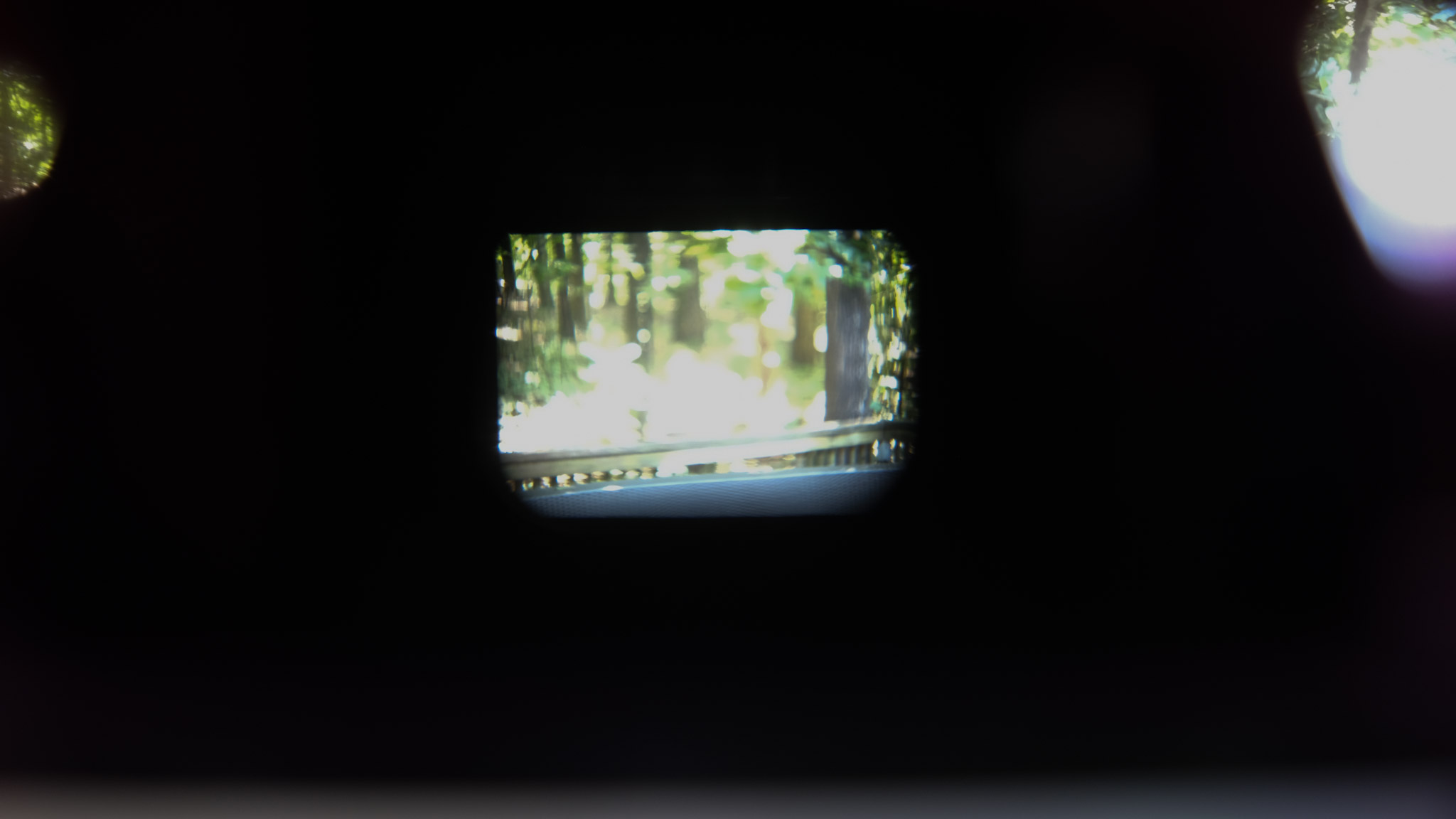
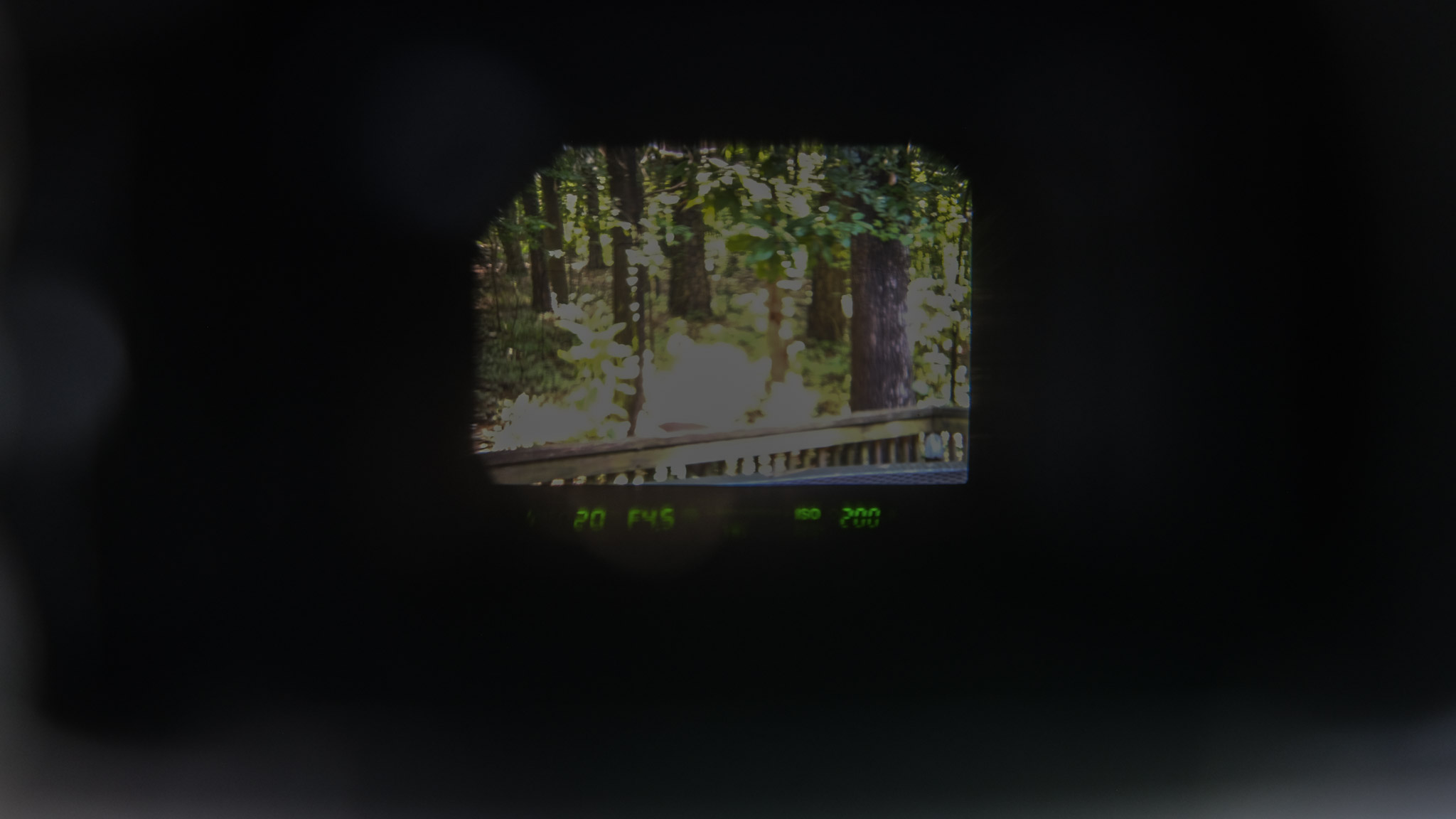
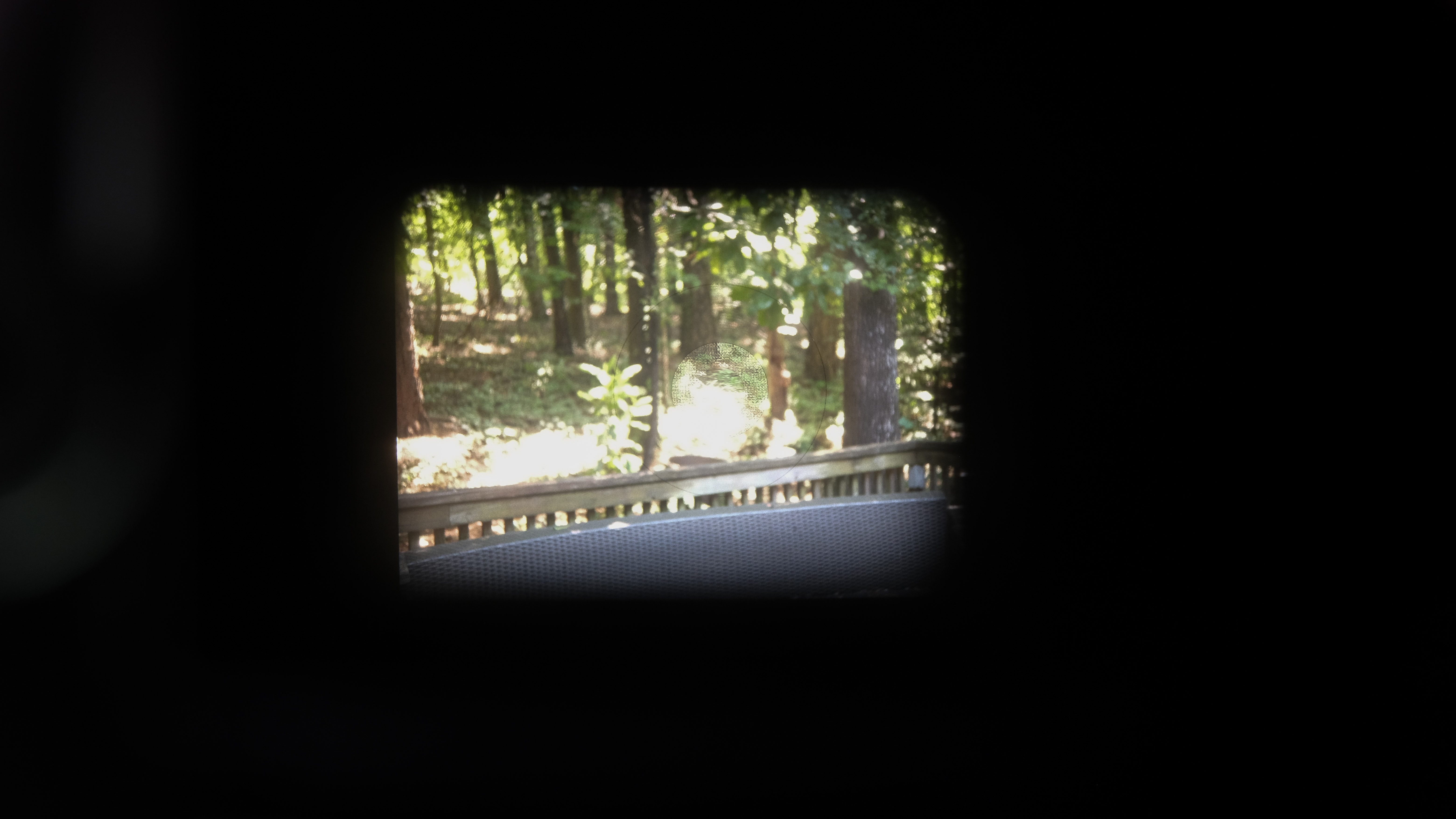
Through the viewfinder of a Pentax K-rThrough the viewfinder of a Pentax K-5Through the viewfinder of a Canon T90.
In the gallery above – shot from the exact same distance from the rear lens of the viewfinder and not cropped in any way- what you see from the viewfinder of a Pentax K-r, a Pentax K-5, and a very good “pro-level” film camera: the Canon T90. The K-5’s viewfinder is not as large as a the viewfinder of a “full-frame” camera, but it’s actually pretty good for an APS-C. The difference with a K-r is very visible.
Shooting with the K-5
Shooting with the K-5 is a pleasant experience The combination of small size, impressive build quality and great ergonomics with a good viewfinder makes for a pretty unique experience.
With the K-5, most commands fall naturally under the fingers while shooting, and after a few minutes you’re totally comfortable with the camera.
You would have to move up to full frame dSLRs to find a larger viewfinder, but I’m not sure the improvement is significant enough to justify the weight and heft penalty, at least when you need to be mobile or operate discreetly.
Image quality was considered among the best for an APS-C camera in 2010 – its 16 Megapixel was praised by testers and users, but obviously 15 years later, the best in class APS-C mirrorless cameras will outclass it when it comes to fine detail resolution and control of noise.
Another area where camera makers have made significant progress since the K-5 was launched is the quality of the JPEG images out of camera – they can be uploaded to a phone wirelessly and from there shared on social media without any post-processing. But since the K-5 does not offer any form of wireless connectivity and can not interact with Ricoh’s iOS and Android app (it’s only supported on cameras launched after 2014), you will need to connect an SD card reader to a computer to upload the images anyway, and you might as well shoot RAW and post-process your images quickly in Lightroom Mobile or Classic while you’re at it.
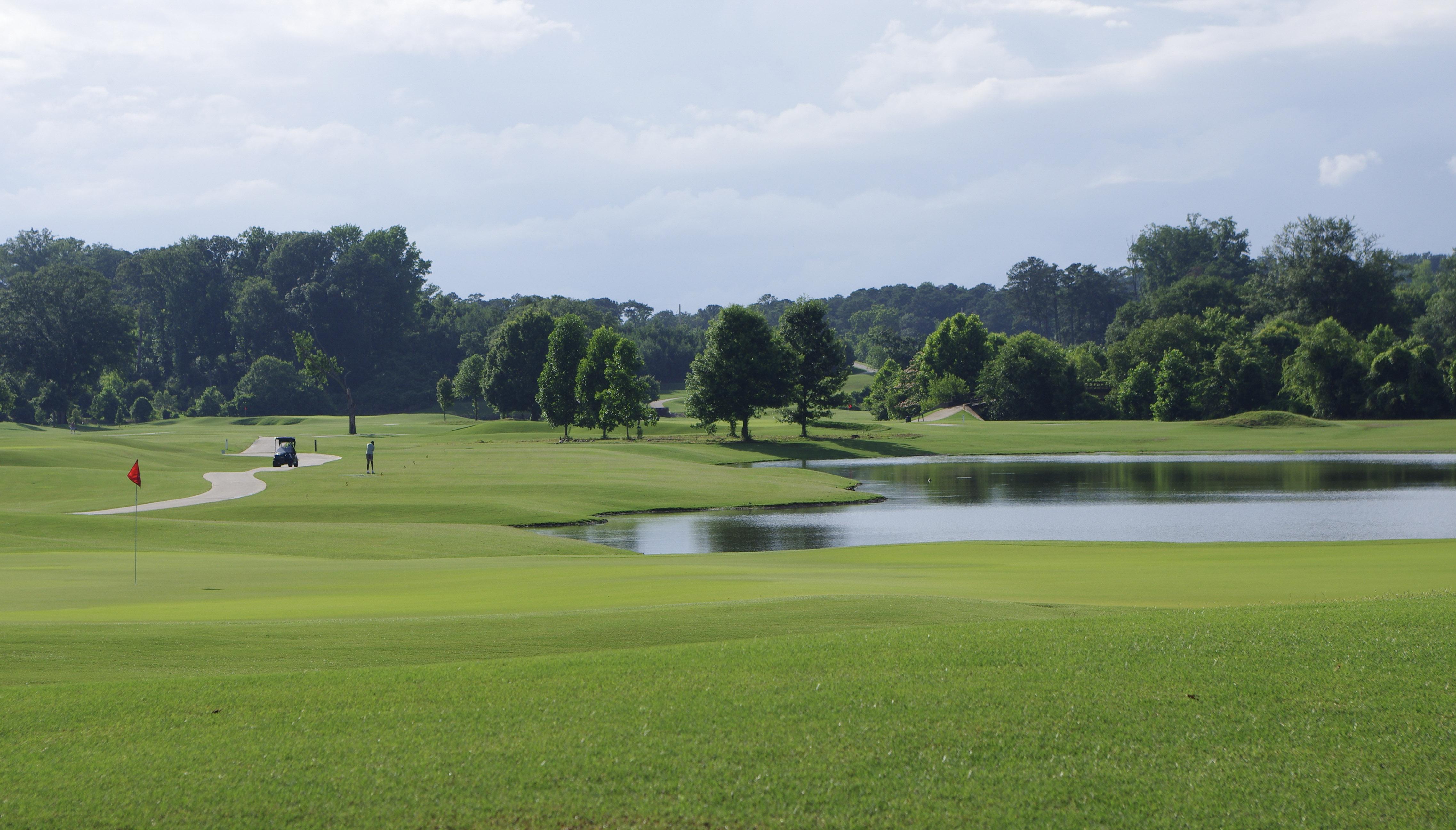
Atlanta – Bobby Jones Golf Course – Pentax K-5 / Pentax lens 18-55 f/3.5-5.6 AL WR
A characteristic unique to Pentax dSLRs is the brand’s “Shake Reduction” system (the SR logo has been on their cameras since 2006). The image sensor is mounted on a platina that moves to counteract camera shake, allowing photographers to capture sharp hand-held images at shutter speeds 2.5 to 4 stops slower than would otherwise be possible – you won’t be afraid of shooting at 1/20sec with a short tele anymore.
Other dSLRs have to rely on an image stabilization system implemented in their lenses (which increases the lenses’ size and their cost) – but Pentax’s SR system works with any lens mounted on the camera (old and recent) because it’s implemented in the camera’s body.
We know that Pentax has been using the same physical “K” lens mount since 1975. Of course the current “KAF4” variant of the lens mount has more electrical contacts and all the autofocus gear needed to support the features specific to today’s cameras, but the K-5 is compatible to various degrees with any Pentax lens made since the mid seventies.
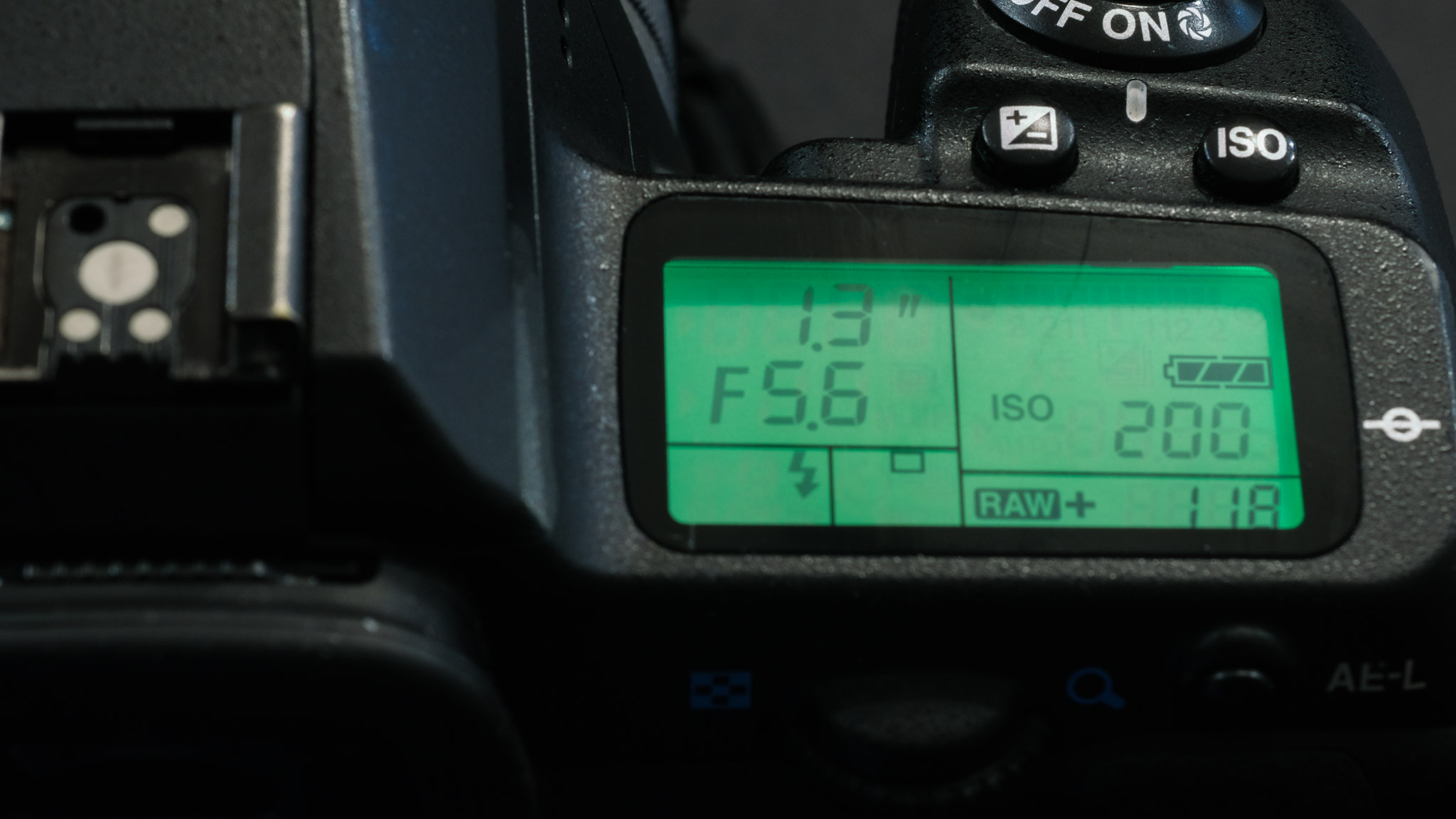
The top plate display – very few APS-C cameras still have one.
As a conclusion
A K-5 can be had for $150, with patience and a bit of luck. It was launched fifteen years ago, and it’s futile to compare its capabilities and performance to what its younger Pentax brother the K-3 Mark III or a Nikon D500 can deliver. And I won’t even start comparing the K-5 with current top of line APS-C mirrorless cameras from Canon, Fujifilm or Nikon.
But dollar for dollar, the K-5 offers a tremendous value: as an introduction to high quality cameras (for photographers upgrading from a smartphone or a digital point and shoot camera), it’s difficult to beat and it’s definitely worth every cent.
For the nostalgics of the optical viewfinder, shooting with a K-5 is also a way to indulge without breaking the bank. Used for what it’s good at, the camera is a pleasure to use and delivers high quality results. As far I could find, it’s also reliable, without any of the issues experienced with Pentax’s more amateur oriented cameras (like the K-30/K-50).
A modern mirrorless camera will do better in more situations and I don’t expect any mirrorless user to sell all their equipment to go back to a K-5, but as a complement to a good mirrorless kit, the K-5 also makes a lot of sense. Enjoy!
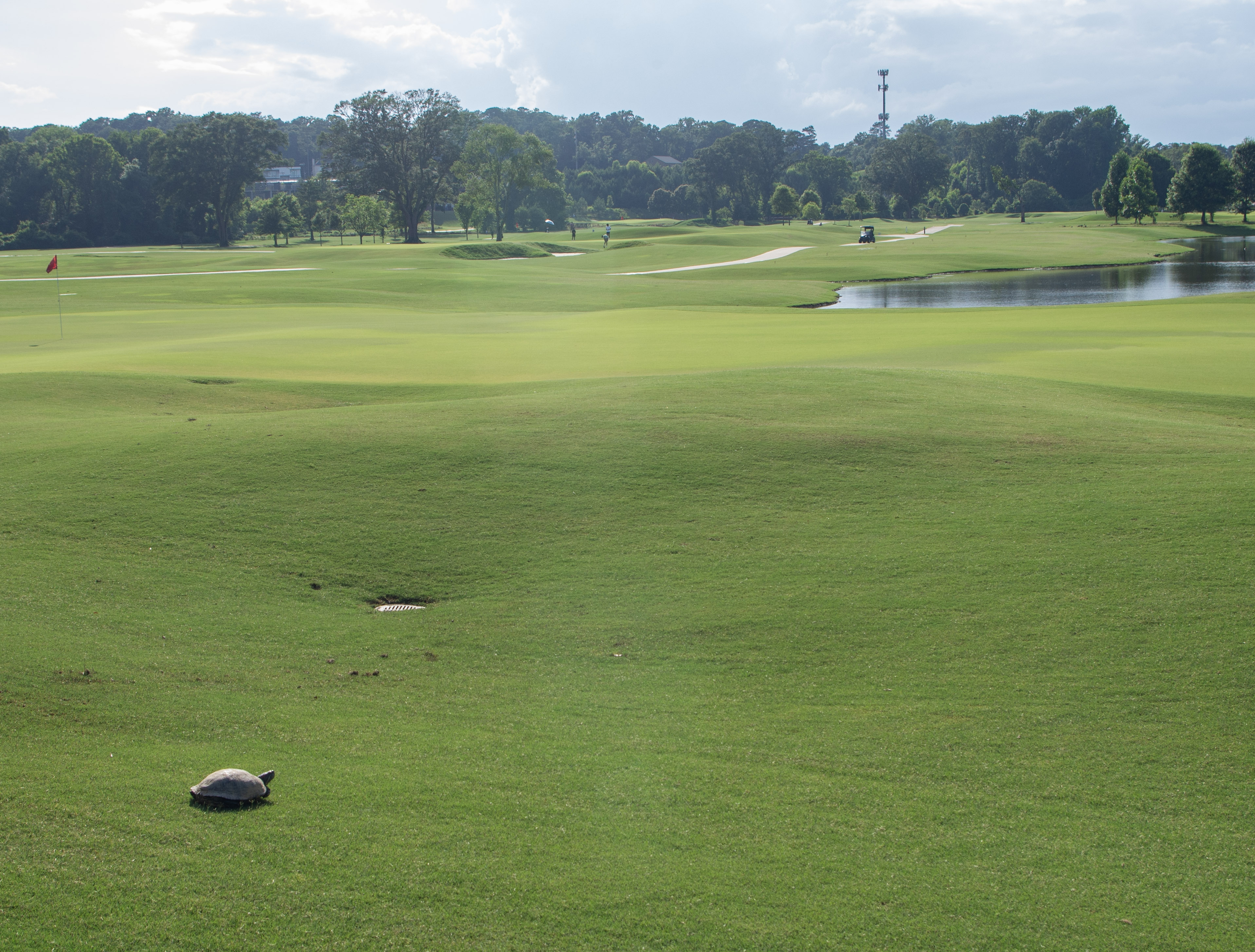
Tortoise lost on the golf course – Atlanta – Pentax K-5 / Pentax lens 18-55 f/3.5-5.6 AL WR
Do cameras and megapixels really matter?
Concerned about working with a “small” 16 megapixel sensor?
I have posted approximately 500 pictures on Flickr since the beginning of the year. The four images with the highest all time views were shot (recently) with a seventeen year old 12 Megapixel dSLR.
Even if high end PCs and laptops can support resolutions up to 8K (that would be 33 million points), most web sites and apps recommend not to upload images larger than 1920×1080 – (roughly 2 million points), and the most popular social network will down scale your images so that they fit in a square no larger than 2048x 2048 (4 million points).
What about prints?
As long as you don’t crop at all, a 10 Megapixel sensor has enough resolution for a high quality print in A4 or Letter format (assuming 300dpi), without any form of interpolation or over-sampling.
A 12 Megapixel sensor will give you more headroom, but you’ll need at least 16 Megapixels for a 11×14 inch high quality print (20 Megapixels would be better), and 24 Megapixels for a high quality 30×45 print (that’s centimeters- roughly 11x17in).
Obviously printing at a marginally lower resolution (250 dpi, for instance) will raise the maximum print size proportionately.
More megapixels and a large sensor may be needed in some circumstances, but ultimately, the old saying “f8 and be there” still rules. Be there. With a camera you’re comfortable with. Nothing else really counts.
I’ve bought a few old Pentax cameras recently, film and digital, and out of curiosity I’ve started following what’s happening in the world of Pentax aficionados.
There was a passionate discussion recently on Pentaxforums.com, started by a photographer who was disappointed by his recent mirrorless camera system, and was considering selling everything to go back to a Pentax dSLR (he was balancing between a K-1 Mark II and a K-3 Mark III).
I am not going to pronounce him right or wrong – what he likes to shoot with or how he spends his money is his business, not mine. But not that many photographers are still interested in new dSLRs.
The fact is that digital single lens reflex cameras (dSLRs) form a rapidly receding niche, and that in the battle for the dollars of photographers (enthusiast amateurs, influencers, vloggers and pros alike), mirrorless cameras have won. A few data points to illustrate it.
Panasonic G2 and Nikon D700 – mirrorless cameras can be made small
When were the last dSLRs launched?
Olympus stopped selling dSLRs in 2013, and Sony officially discontinued their SLR and dSLR “A” Mount in 2021 (their last dSLR was launched in 2016). Canon’s most recent dSLR is the Rebel 8 from 2020, Nikon’s latest is the d780 from 2020, and Pentax’s is the K-3 Mark III, introduced in 2021. A variant of the K-3 with a monochrome image sensor was introduced in 2023, so that would make the K-3 III Monochrome the most recent of them all.
Canon and Nikon have not shared any plan to launch a new dSLR in the future (it’s likely they won’t), but since the launch of the Rebel 8 and d780, they have launched 14 and 11 mirrorless interchangeable lens cameras, respectively.
A very compact APS-C setup – Egypt – Abu Simbel – Fujifilm X-T1 – Fujifilm 15-45mm lens.
Who is still manufacturing dSLRs?
It’s difficult to know for sure what is still being manufactured – what we see on the shelves of the retailers may be New Old Stock or the output of small, infrequent production batches. Some models (like the Nikon D6 or the Pentax K-3 Mark III) have been withdrawn from some markets already, and other models – while not officially discontinued – may not be manufactured “at the moment”.
I checked the Web site of B&H, and here’s what’s still available new in the United States (with the official warranty of the manufacturer).
Canon still have six dSlRs on their US catalog, ranging from the Rebel to the 1Dx (three APS-C cameras, three full frame)
Nikon are proposing four models: the APS-C d7500, and three full frame models: the d780, d850, and D6,
As for Pentax, they are still proposing three cameras with an APS-C sensor, the KF, the K-3 Mark III and the K-3 Mark III Monochrome, and a full frame camera, the K-1 Mark II.
Shooting with a old APS-C dSLR last week – Atlanta – Bobby Jones Golf Course. Pentax K-5 Mk II – Pentax lens 18-55 f/3.5-5.6 AL WR
Why did mirrorless win in the first place?
The Nikon D90 from 2008 was the first SLR capable of recording videos. But the architecture of a single lens reflex camera (with a flipping reflex mirror and an autofocus module located under the mirror) forced Nikon to design a camera that operated differently when shooting stills and videos.
For stills, the D90 worked like any other dSLR ( with a through the lens optical viewfinder and phase detection AF). When shooting videos, the reflex mirror was up, and the viewfinder could not be used. The operator had to compose the scene on the rear LCD of the camera. The phase detection autofocus system was also inoperant. A second system, based on contrast detection, had to be implemented, and could only be used before the videographer started filming.
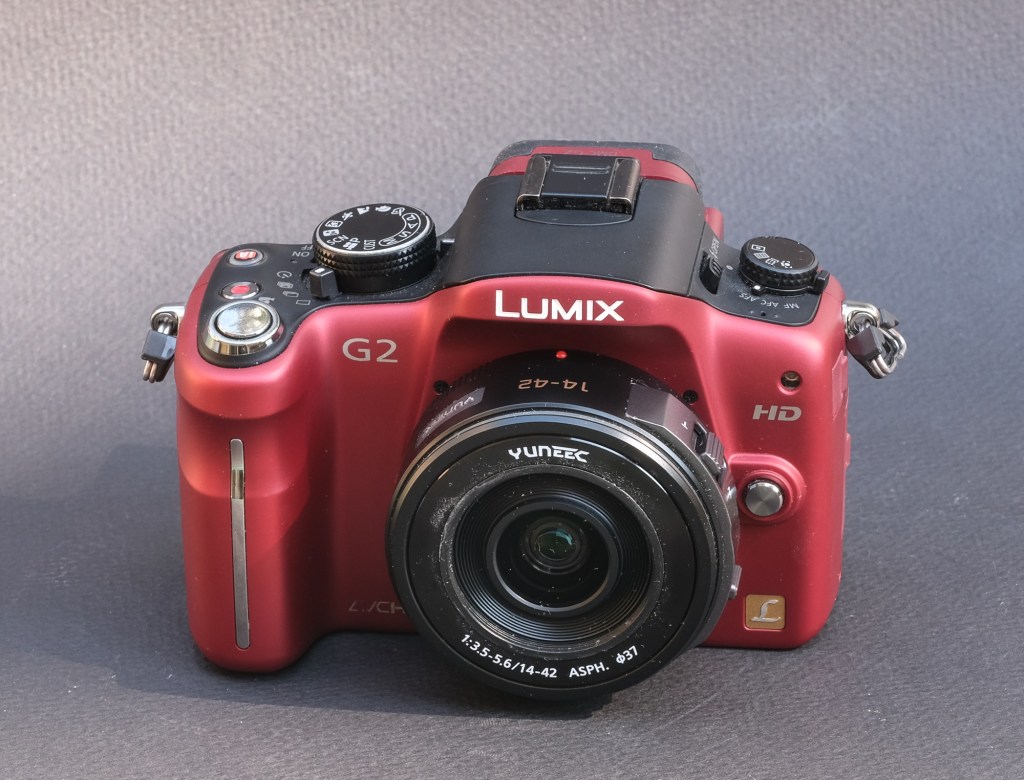
The obvious next step was to replace the flipping mirror and the optical viewfinder with an electronic viewfinder fed directly by the image sensor of the camera, and to improve the contrast detection autofocus to make it as reactive as a phase detection system, and available during the video shoot. Panasonic was the first to do it with the Lumix G2 in 2010. Almost everybody else would soon follow.
The obvious advantage of a mirrorless ILC is that it can shoot indifferently photos and videos – the camera works exactly the same way. It’s a big plus for all the pros and content creators who have to deliver a full set of images (stills and videos) when they film weddings or corporate events.
Mirrorless cameras, being deprived of the mirror box and of the optical viewfinder of a SLR can be made smaller, lighter, and probably cheaper because they are simpler mechanically.
The absence of a mirror box also reduces the lens flange distance, and lenses can be made shorter. Because there is no need for aperture pre-selection and full aperture transmission mechanisms, lens mount adapters are extremely simple to design and manufacture. Practically, almost any lens designed for an SLR or a dSLR can be physically mounted on a mirrorless camera.
Leica Summicron C (40mm f/2) mounted on Sony NEX 3 with Metabones adapter. Mirrorless cameras are more flexible.
Early mirrorless were handicapped by relatively poor electronic viewfinders (lacking definition, reactivity and dynamic range) and a limited battery life. Over time, mirrorless ILCs have made a lot of progress in those two areas – recent prosumer and pro ILCs have really impressive electronic viewfinders.
Electronic viewfinders show the image exactly as the image sensor is “seeing” it. If the viewfinder is good enough, it’s even possible to evaluate in real time the exposure of a scene – and play with the exposure compensation dial to adjust it: what you see is really what you’re going to get.
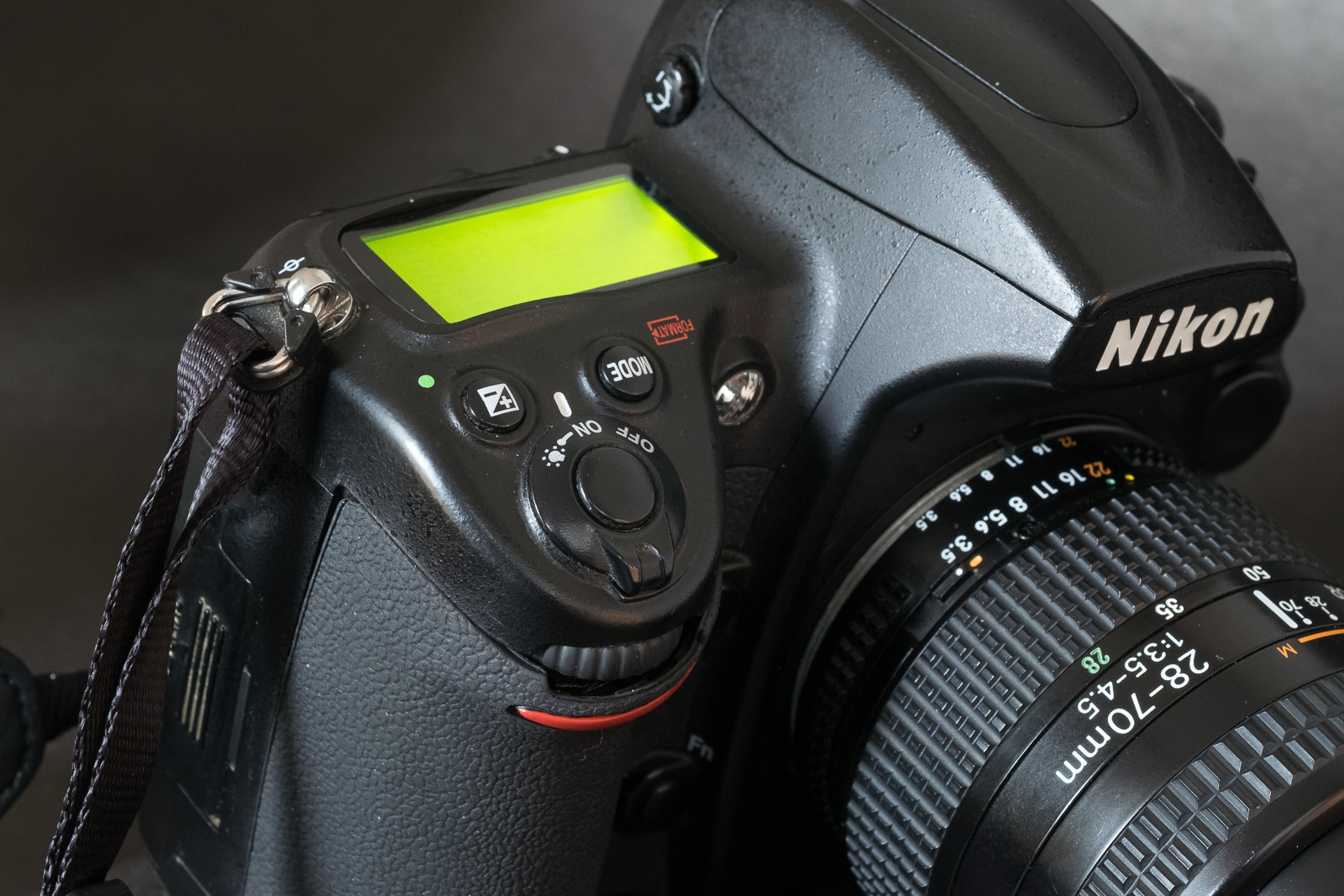
Pentax K-5 Mk II – very few APS-C mirrorless cameras have a top plate LCD and that many dedicated keys.
Advantages of recent dSLRs
The most recent dSLRs were launched between 2020 and 2021, and their capabilities are at best in line with what was the state of the art four to five years ago.
Those dSLRs offer bluetooth and Wifi, and are as easy to connect to a mobile device as modern ILCs.
They keep the traditional advantages of dSLRs: an optical viewfinder, and longer battery life, but as a consequence remain larger and heavier than ILCs.
The native support of lenses designed for the brand’s SLRs and DSLRs over the past decades looks like an advantage, but older lenses may only be partially compatible, and they may lack the resolution required to take advantage of recent image sensors.
As for newer lenses – they’re increasingly difficult to find now that the industry leaders have redirected their R&D and manufacturing efforts towards ILCs.
Bringing a Nikon D700 to a race – because the only tele lens I had was an old Tamron in F Mount. US Formula One Grand Prix – Austin TX
Switching back to a dSLR?
I wrote earlier I would not be judgmental, but I’m still struggling to understand why somebody would take a significant financial hit to move from a very recent, top of the line mirrorless camera system to a dSLR released eight years ago.
Even though I like shooting with dSLRs and older film cameras (they can be more pleasant to use than some mirrorless ILCs) I believe that using a recent mirrorless camera will increase my odds of capturing a technically good image (the artistic value is a totally different story).
Mirrorless cameras are more flexible and will be within their performance envelope in more situations. If the shooting opportunity is unique and I need to deliver – if only for my pride as an amateur photographer – I’ll bring my mirrorless kit with me.
The Nikon D700 remains a fantastic camera. If only it was not so heavy and so big.
As a lover of old gear – even digital – I’d like to offer a suggestion: very nice “prosumer” 16 or 20 Megapixel APS-C reflex cameras from the early 2010s can be found for $150; a “classic” like the Nikon d700 from 2008 (12 Megapixel, full frame) is more expensive, but not by that much if you pick a camera that has been used by professional photographers and has shot hundreds of thousands of pictures.
So, if you feel the dSLR hitch from time to time, my recommendation would be to keep your mirrorless system, and simply augment it with an old dSLR for the days when the call of nostalgia is too strong to resist.
More in CamerAgx about mirrorless and reflex digital cameras
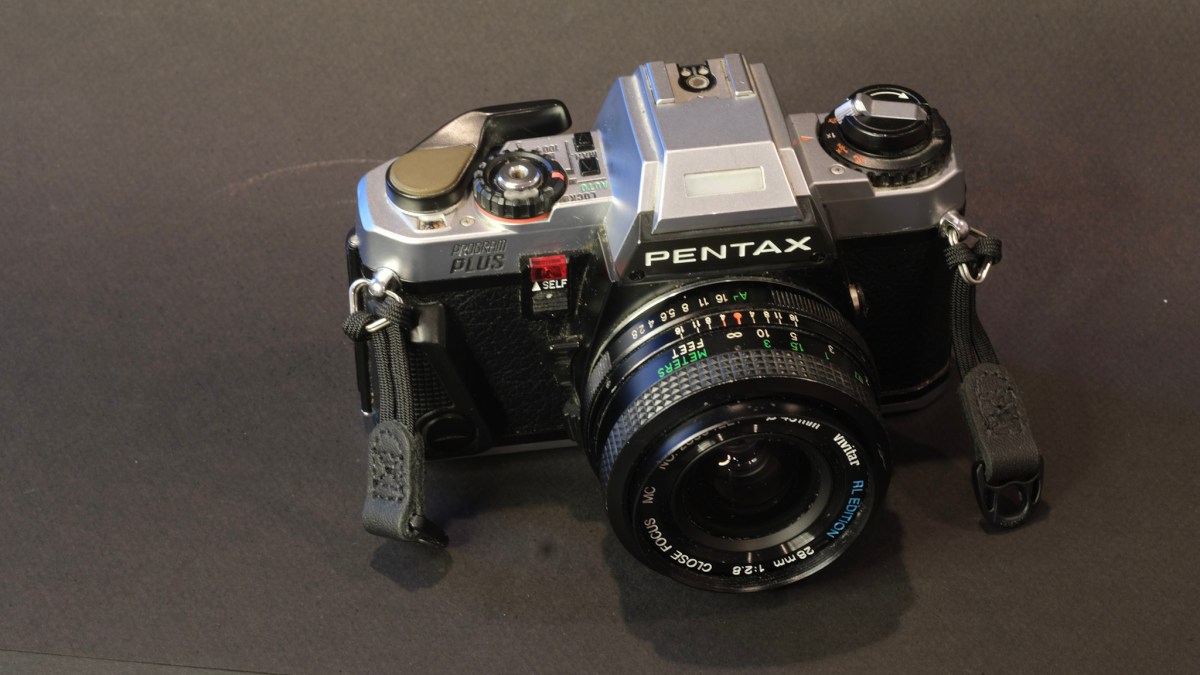
I’ve been lucky with ShopGoodwill.com lately — I recently won a Pentax Program Plus with a 28mm Vivitar lens, all for the princely sum of $21.
Let’s clarify one thing to begin with: like most Japanese camera companies, Pentax was selling its cameras under different models names in different geographies – the camera sold as the Super-Program in North America was sold as the Super-A in the rest of the world, and the Program-Plus was simply known as the Program-A outside of North America [*].
I had been looking for a Program Plus at a good price for a while – it’s the last of the ME family of cameras, a marginally simplified version of the Super Program, that I hoped would strike the perfect balance between too little features (the Pentax ME) and a bit too much (the Super-Program).
Pentax Program Plus – Program Mode (shutter speed and aperture determined by the camera).
Pentax launched the Program Plus one year after the Super Program, and did not remove much: the maximum shutter speed is limited to 1/1000 instead of 1/2000, and the camera only offers two auto exposure modes (program and aperture priority) instead of three on the Super Program.
But the right side of the top plate is a bit less cramped (it does not have a tiny LCD screen showing the selected shutter speed forced between the mode selector and the film advance lever) and the mode selector has been redesigned to be a little bit easier to set as a result.
Pentax Program-Plus with the 28mm Vivitar lens
Vivitar
I had not paid much attention to the lens that came with the camera. I had assumed it was one of those horrible third party lenses that you generally find on cameras donated to Goodwill. Not this time. It was a Vivitar lens – but not any Vivitar lens – it was the highly regarded 28mm F/2.8 Close Focus MC “RL Edition” manufactured by Komine.
You can still find Vivitar entry level digital cameras at Walmart nowadays, but today’s Vivitar is a shadow of what the brand was in the seventies. They used to be a major distributor of very good lenses and electronic flashes, a credible alternative to the leading camera companies. Some historical context, then.
Vivitar 28mm f/2.8 Close Focus MC RL Edition
When the Japanese camera industry started its expansion in the years following WW2, it was still for the most part a cottage industry – even the largest players were relatively small and highly specialized companies (in the early fifties, Nikon was only manufacturing lenses, and Canon only camera bodies, and some of Canon’s cameras came equipped with Nikkor lenses).
Only very few of those companies grew enough to find the financial strength to establish their own distribution networks outside of their country of origin.
Atlanta – Centennial Park – Pentax Program-Plus – Vivitar 28mm – Ilford FP4 Plus – a pretty good lens.
An American company named Ponder & Best saw an opportunity, and started distributing under its own “Vivitar” label the lenses and accessories that it procured from a myriad of small Japanese workshops. Most of those products were probably average, but a few were very good.
Vivitar never disclosed who their suppliers were, but the urban legend attributes the best of the Vivitar lenses to a Japanese company named Komine. Vivitar lenses benefitted from a 5 year warranty, but on the “RL Edition” models made by Komine it was extended to a total of seven years. So, this 28mm from Komine is supposed to be Vivitar’s very best.
A very pleasant little camera
Shooting with the Program Plus
I’ve burnt a few rolls of film with almost each representant of the Pentax ME family recently, and the Program-Plus is the one I prefer. The ME only works in Aperture Priority auto exposure mode, and the Super-Program is borderline too complicated. Even if there is not a huge difference in the organization of the commands on the right of the top plate, it’s a bit less cramped on the Program-Plus and easier to live with.
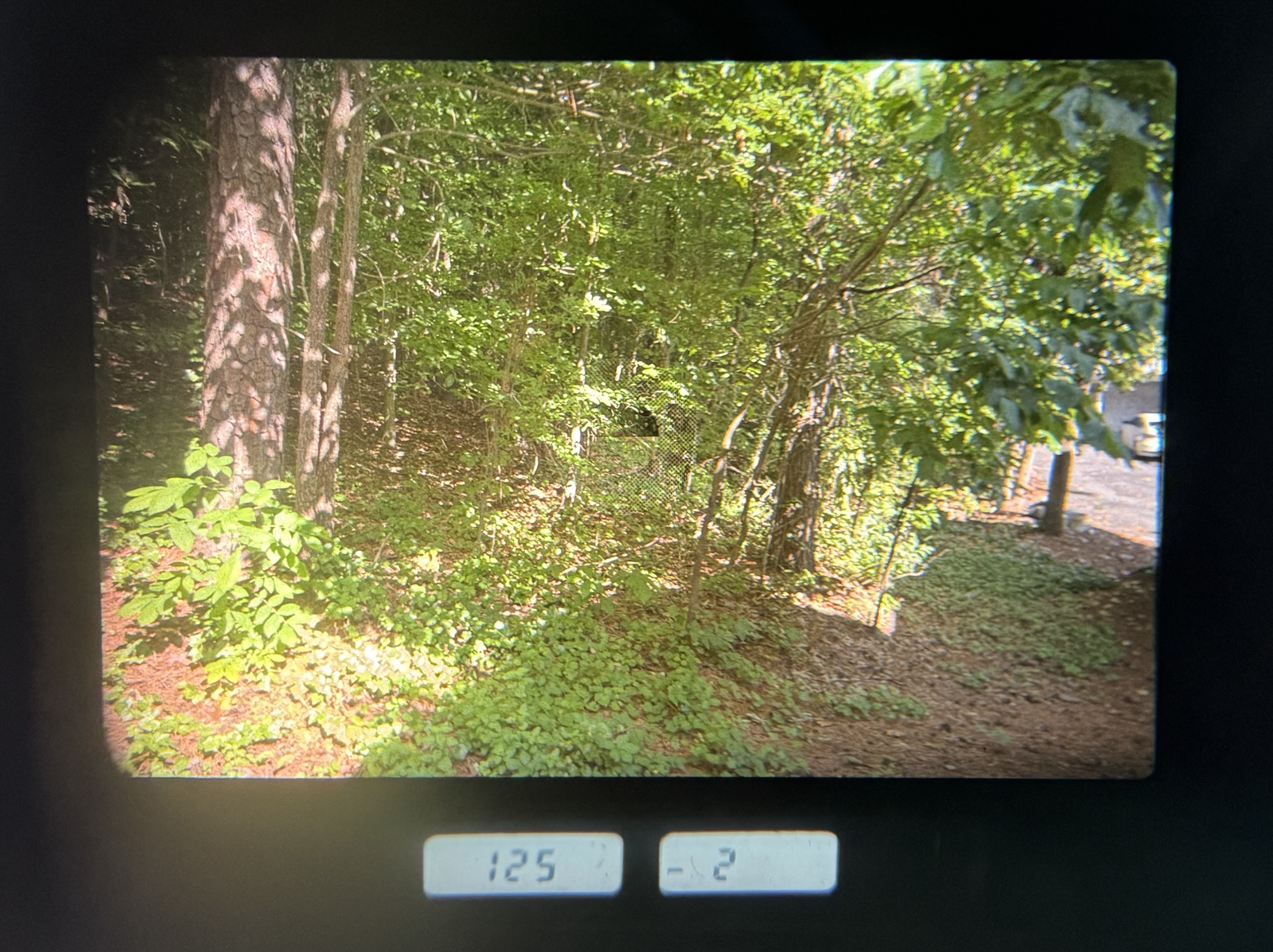
Pentax Program Plus – Semi Auto mode -here the operator has selected a shutter speed of 1/125sec, and the metering system determines that the image will be under exposed by 2 stops.
For an amateur interested in the technique of photography, the Program Plus is a very nice little camera. It’s among the smallest and lightest film SLRs of the eighties, but its compacity does not come at the cost of the user experience – the viewfinder remains very good – wide, bright and informative. The “programmed auto exposure mode” in particular is very well implemented – it lets the photographer know (on two LCD displays in the viewfinder) the aperture and shutter speed selected by the camera’s program. And in semi-auto mode, it displays the selected shutter speed on the left display, and the level of over or under exposure (in EVs) on the right one. Pretty unique in this class of camera in 1983.
Of course, nothing is perfect: the LCDs are back-lit through a large window cut at the front of the prism cover, and become very difficult to read in the dark. The Super Program is equipped with a little lamp that the photographer can activate at the push of a button, but I found it totally useless and I don’t miss it here (one of the things that were removed from the Program Plus).
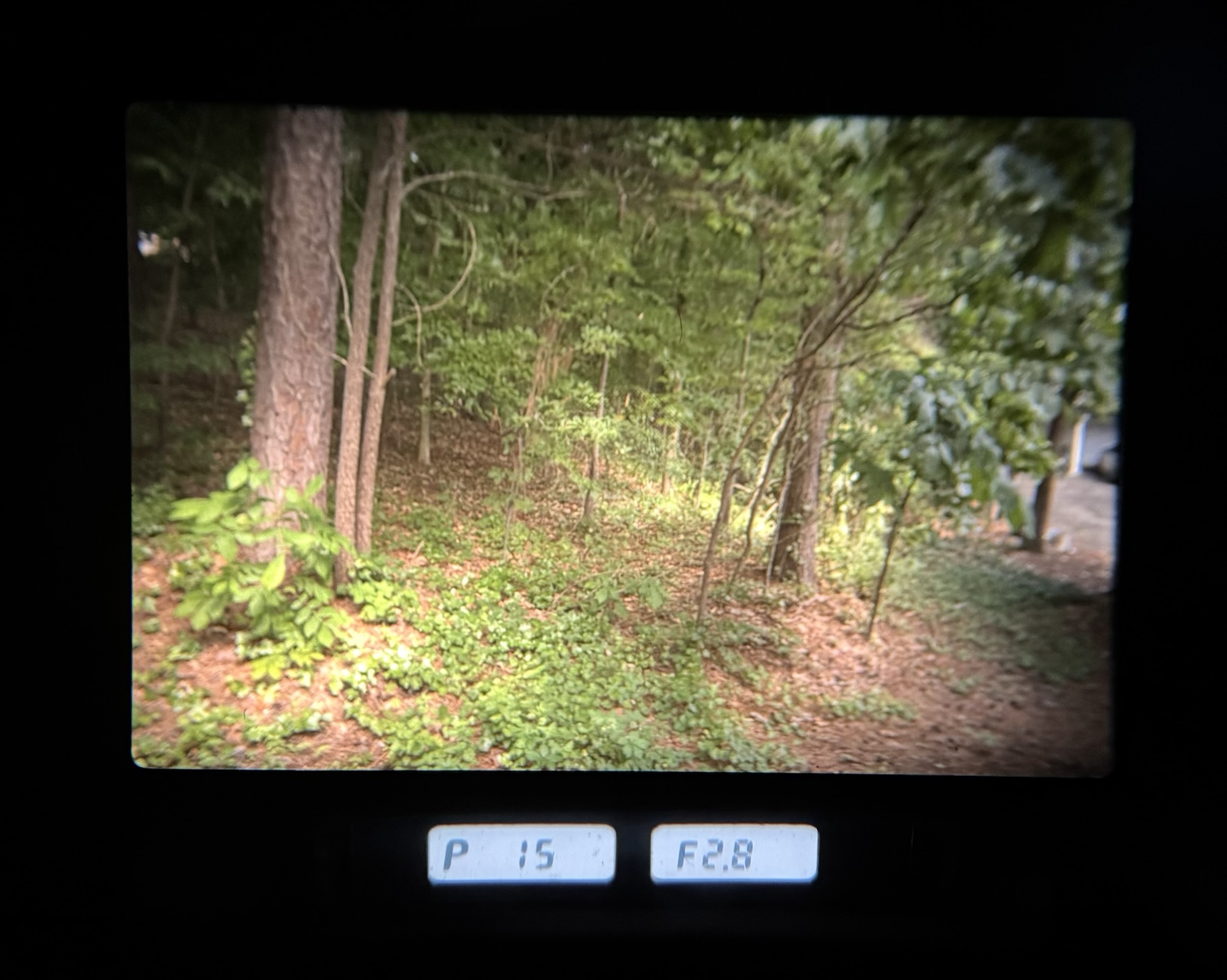
Pentax Program Plus – three exposure determination modes (named M, A & P on a modern camera) are present and selected by playing with the Aperture ring (A or an aperture value) and the mode selector (Auto or Manual) – for instance, P is obtained by setting the aperture ring and the model selector on A/Auto.
For the rest, it’s one of the good Pentax cameras – no horror stories when it comes to reliability, and because it was designed for the “KA” version of the Pentax lens mount, it operates with a very wide range of lenses – anything from Pentax K lenses of 1976 up to some of the most recent D FA models.
While not as nicely finished as an ME or a Super Program, it’s still a well build and solid camera – nothing to be compared with the plastic-fantastic cameras of the following decade that look so cheap today.
Like all the cameras of the ME series, it simply needs two easy to find and (relatively) cheap SR44 1.5 batteries, that it does not seem to tax too rapidly.
As a conclusion
Eight years separate the Pentax ME from the Program-Plus. Being based on a similar platform, they’re not that different of course, but the Program-Plus is definitely a better camera for an amateur who is interested in photography – in addition to the Aperture priority mode of the ME, there is a very useful Program Auto Exposure mode, and a real semi auto mode to use when the exposure is too tricky to trust the automatism. The focusing screen is probably a bit finer as well, and the fragile mechanical selfie timer has been replaced by an electronic one that should be more durable.
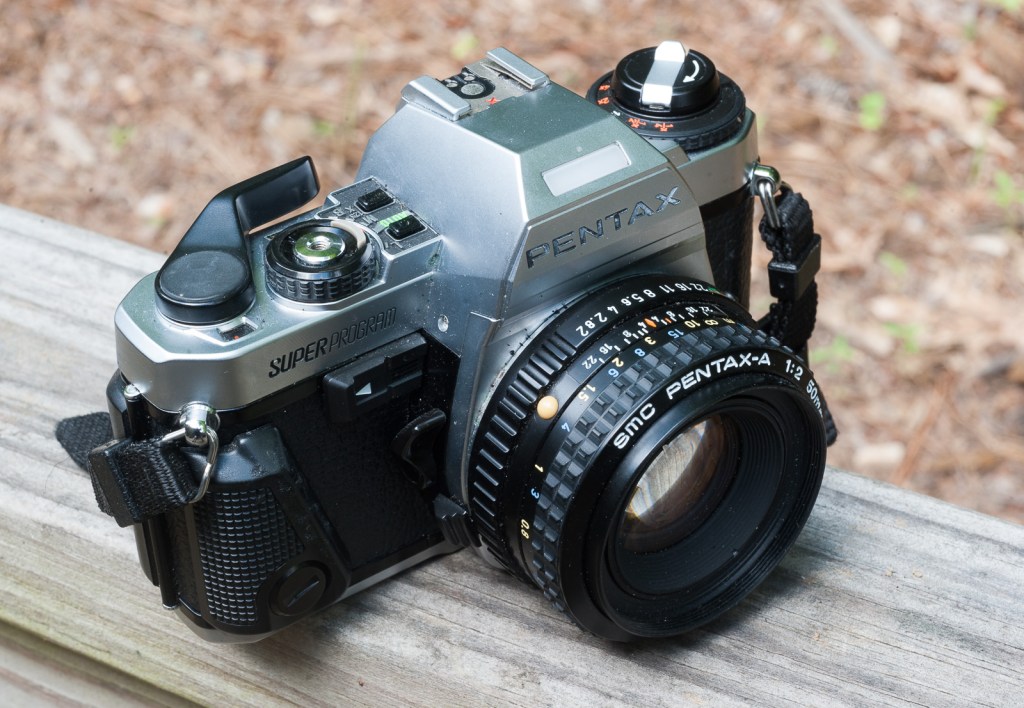
Pentax Program-Plus (top) and Super-Program – some cost cutting is visible on the Plus, but the commands are not as cramped.
At $21.00 (good lens included), my copy is probably on the cheap side (I admit I was lucky on this one), but even from a reputable seller, you should not pay more than $50.00 for a nice one.
The Program-Plus sits with a few other cameras of the same vintage (the Nikon FE2, the Olympus OM-2 and the Canon AT-1) at the top of my very personal list of preferred manual focus film cameras. And it’s definitely one of my keepers.
[*] I don’t know why the Japanese camera makers were using different names for models sold in the US – “to reflect the local preferences” is often mentioned as an explanation (for instance, naming a model “Rebel” would be perceived positively in the US but would not in other parts of the world). I suspect there are other reasons as well – like protecting the US distributors from grey imports, or (maybe), helping the Japanese revenue service make the difference between cameras destined for local consumption (and subject to sales tax), and cameras destined ultimately to be taken out of the country and sold to tourists or Army personnel in the duty free shops or in the PX.
Atlanta – Centennial Park – Pentax Program-Plus – Ilford FP4 Plus
Atlanta – Centennial Park – Pentax Program-Plus – Ilford FP4 Plus – May, 4th, 2025 – May the Fourth be with him.
Atlanta – Centennial Park – Pentax Program-Plus – Ilford FP4 Plus. Centennial Park – all 4 photos developed with the Lomo Daylight Developing Tank and digitized with the JJC adapter.
I rediscovered the Pentax ME and its close family of derivatives recently, after having been disappointed by the Pentax P3 (also know as the P30).
I would have loved to like the Pentax P3. When it works, it’s a great camera. But I bought three copies of them (a P3, a P3n, a P3t) at different times, and they all failed me. Always an issue with the film advance. But if I could not rely on a P3, what about shooting with the Pentax cameras of the following or previous generations?
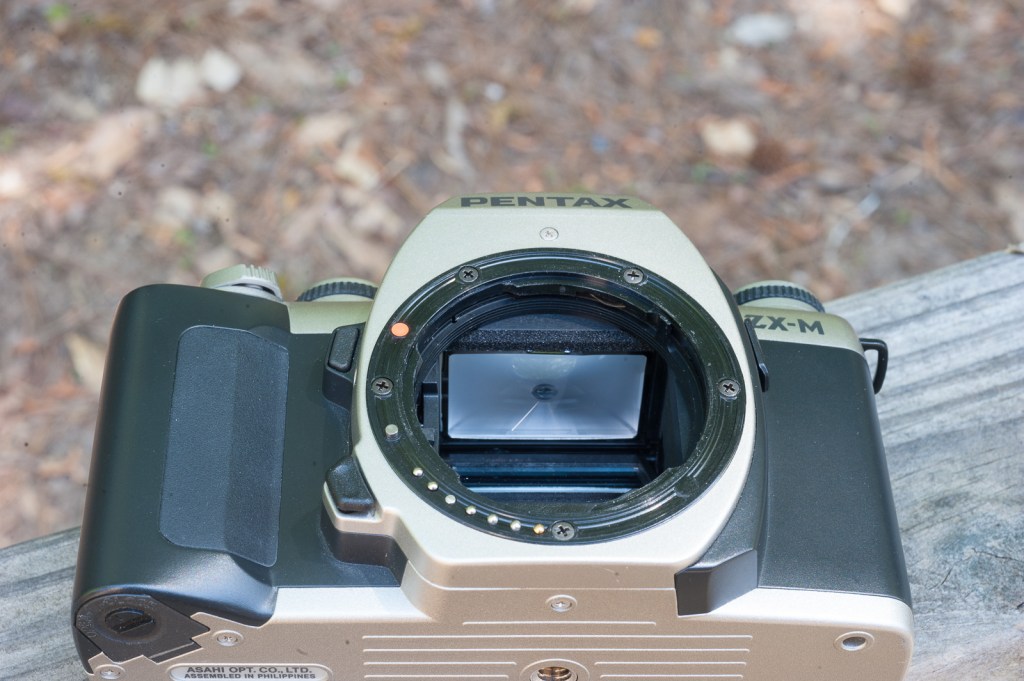
Pentax ZX-M: the bayonet mount is in polycarbonate, like almost everything else in this camera
I’ve burned a few rolls of film with a plastic-fantastic ZX-M (also sold as the MZ-M), a motorized entry-level autofocus camera that Pentax had deprived of its autofocus system to make it a “learner’s camera”. Launched in 1997 to replace at the same time the venerable K1000 and the P3, the ZX-M was one of the last film SLRs released by a major vendor before the amateur photographers switched to digital, and for that reason it did not sell in large quantities.
It works well, but it’s plasticky, it’s loud, the exposure metering is a bit too primitive, and its pentamirror viewfinder is dark and narrow. People shooting with film nowadays do it at least partially for the gratifying experience of interacting with a nice piece of conventional machinery – and it’s definitely something that the MZ-M can’t provide.
At the other end of the timescale, pre-dating the K1000 and the P3, the Pentax ME and all its derivatives – ME Super, MV, MG, Super Program, Program-A – were a sales success, and are still abundant on the second hand market. They are all built on the same very compact platform. So compact there was no room for a conventional shutter speed selector. That’s the series we’re going to explore today.
The ME generation
In 1975, Pentax finally abandoned the 42mm screw mount for the “K” bayonet, and launched a new line of K cameras (KM, KX, K2) which were – to a large extent – similar to their screw mount predecessors, except for the bayonet mount, of course. The K1000 was not part of the initial launch – its turn came a few years later – essentially a KM with a few minor features removed.
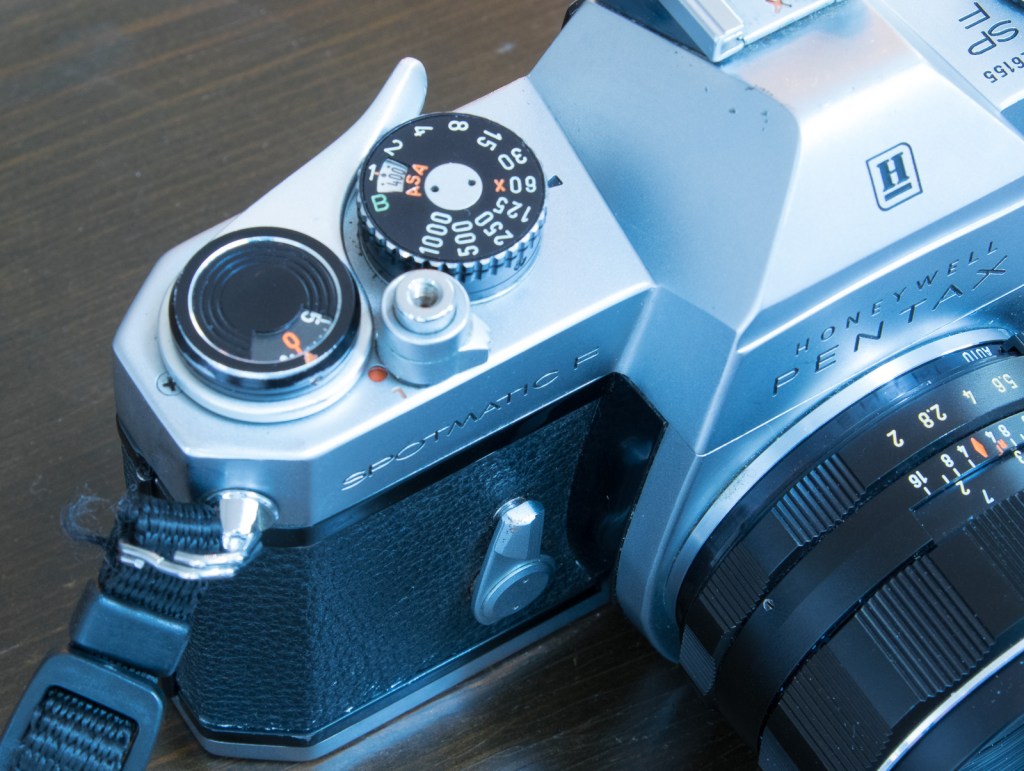
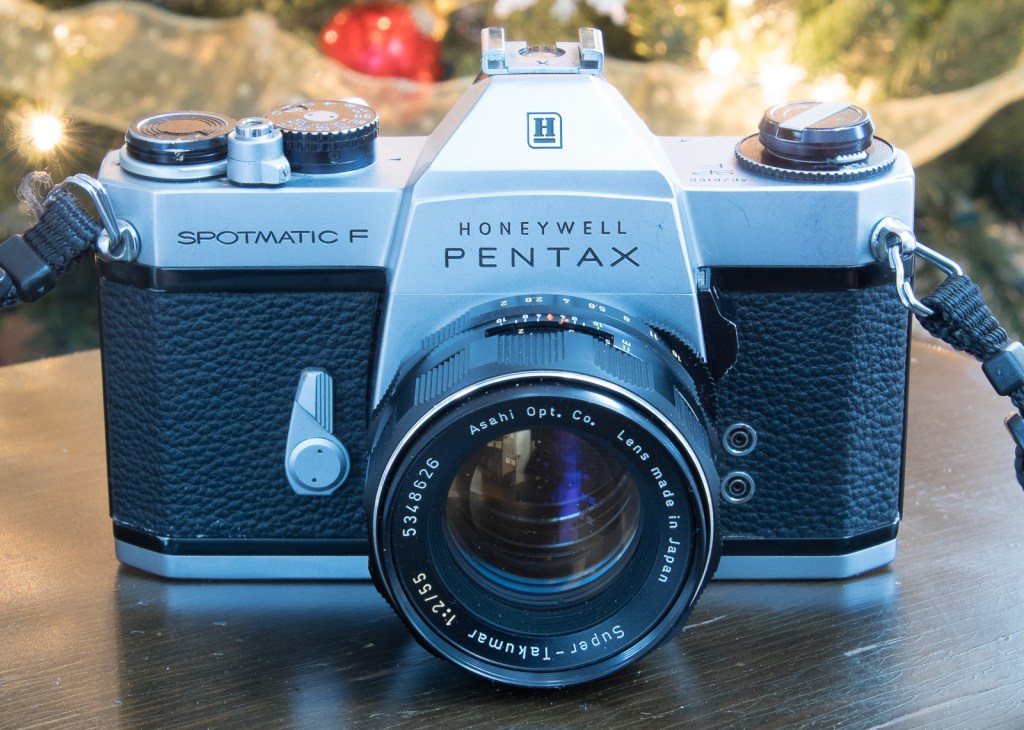
A Spotmatic F from 1973. From this angle it looks almost identical to a KM. The K1000 is a slightly decontented KM.
One year after the KM-KX-K2 cameras, Pentax launched two completely new models, the semi-auto MX, and the Aperture Priority Auto Exposure ME. Both were technically advanced, and really represented the state of the art in the heart of the market. Except for their small size, the two cameras had little in common (their winders and motor drives were physically different and not inter-compatible, for instance).
Pentax MX and ME – from the sales brochure (1976) – Courtsey of Pacific Rim Cameras
The Pentax MX is what an Olympus OM-1 Mark II could have been if Olympus had bothered updating the technology content of their camera. The MX is a super compact, semi auto SLR, with a huge viewfinder. It was my main camera in my younger days. Its electronics ultimately failed, otherwise I’d probably still be shooting film with it. But while it worked (a good 15 years) it was a great little camera.
The MX remained unchanged until Pentax sent it into retirement in 1985, with no direct successor. In the meantime, the buying public had shown it was more interested in cameras offering auto exposure modes, and it was the ME and its derivatives that brought the money to Pentax’s coffers.
When it was launched, the Pentax ME had a singular characteristic: contrarily to almost every single lens reflex before it, it did not have a shutter speed selector – just a rather difficult to move four position switch (off, auto, synchro flash and B). It could only operate in auto exposure mode (you set the aperture, the camera picks the shutter speed), and in totally manual mode at 1/100sec (no meter indication to guide the photographer).
A new category of SLRs without a shutter speed selector rapidly followed the formula inaugurated by the Pentax ME (Nikon EM, Olympus OM-10, Canon AV-1, for instance).
A simplified MV model was launched at a lower price point in 1979, followed one year later by the ME-Super, which offered the ability to select the shutter speed by pushing two small buttons on the top plate. Then came the MG (spec’d like the original ME), then the Super-Program and the Program-Plus [*], with the same tiny shutter speed push buttons already seen on the ME Super, and more automatic modes (Program mode for the Program-Plus, Program and Shutter priority modes for the Super-Program). All models were developed on the same technical platform, and could share accessories like winders and motor drives.
* [Like most Japanese camera companies, Pentax was selling its cameras under different models names in different geographies – the camera sold as the Super-Program in North America was sold as the Super-A in the rest of the world, and the Program-Plus was simply known as the Program-Aoutside of North America]
Pentax ME – a very nice detailing
Shooting with the ME
Shooting with a Pentax camera such as the ME is a pleasure. The camera is small, light, reactive, and provided you control from time to time that the shutter speed (determined automatically by the camera) is still the desired range, you’ll be fine. The viewfinder is extremely large, but I was surprised by how difficult it was to set the focus though – I know I’m getting older (aren’t we all) but I found the glass plane rather dark and the micro-prism telemeter difficult to use. I was shooting with a not very luminous zoom (and not very good if I judge by the results) Pentax A 35-70 f/3.5-4.5 zoom, on a camera that was originally designed and sold for more luminous prime lenses such as the 50mm f/1.7, so it could explain some of that.
A Pentax Program-Plus I was testing in parallel fared better in that regard – in the viewfinder the ring of micro-prisms offered more contrast and focusing was significantly easier.
Pentax ME – Top plate
The absence of a depth of field preview is not a problem for me (I seldom use it when a camera offers the option), and not having a conventional shutter speed knob at my disposal was not really a hindrance. But when the lighting of the scene becomes complex, and without an exposure memorization button and no semi-auto exposure mode, you have to play with the ISO settings dial for exposure compensation, which I’ve always found very difficult (I never know if I need to set the dial to +2 or -2). If only for that reason, I would not bring a ME with me if I knew in advance that the lighting conditions would be tricky.
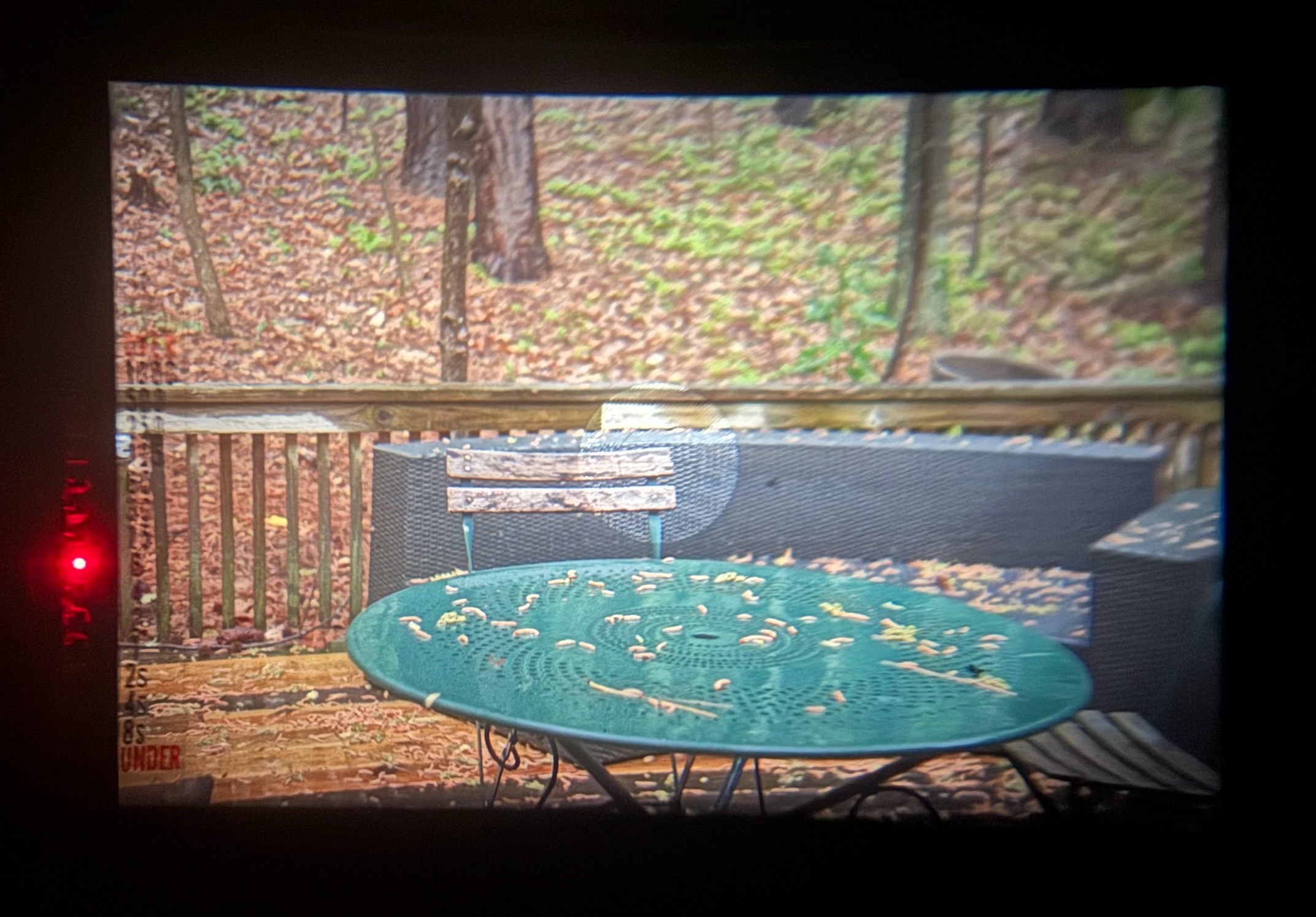
Viewfinder of the Pentax ME – a shutter speed scale on the left, split image and microprism focusing aids at the center. The 0.97 magnification ratio was exceptional .
The camera is nicely finished with a few Pentax touches (red markers on the top plate, little indicator on the back of the camera to show that the film is correctly attached to the film spool). The film spool itself follows an original Pentax design (they called it “Magic Needles”) that makes loading film easier than with most contemporary competitors.
What about the reliability?
The ME and its derivatives are 40 to 45 year old, and as with any other camera of the same vintage, there are quite a few things that can go wrong: their electronics (in general), their exposure metering and their film advance mechanism to name the most obvious.
Pentax ME – the receiving spool is composed of white “Magic Needles” that make film loading very easy.
By very empirical means (counting the hits on Google for a question about film advance reliability) – I came to the conclusion that the ME Super definitely had an issue with the film advance as well. I’m on the fence for the ME, the MV and the Super-Program – there seem to be far fewer Google hits about reliability issues with those cameras, but they sold in smaller numbers than the ME Super. In any case, it’s highly preferable to buy a vintage Pentax SLR from a photographer who has actually used it to shoot film, as those film advance issues are often impossible to detect without having put a roll of film in the camera.
How much?
Film cameras are getting more expensive these days – but you can still find a nice ME for $50.00 on eBay, and probably for a bit less on various auction sites if you’re patient.
Of all major camera vendors, Pentax is the one that has maintained the inter-compatibility between new and old bodies and lenses for the longest time – anything – manual focus, autofocus – sold by Pentax until they launched their first digital SLRs in 2004 will work with the ME.
Pentax Super Program and ME – the former benefits from an electronic self timer, a depth of field preview, and a removable grip.
Pentax has been catering to amateurs more than pros, and it will be difficult to find on the second hand market the specialty lenses (ultra-wide angle, f/2.8 constant aperture zooms) that are relatively abundant in Nikon F or Canon EOS mounts. But as long as you look for lenses typically purchased by amateurs, the offer is plentiful and the prices reasonable.
As a conclusion
The Pentax ME was launched in 1976, at the beginning of a ten year period which saw a whole new generation of amateurs come to “serious” photography and buy their first SLR. Ultra compact, reactive, nicely finished, with a good (for the time) viewfinder and a simplified set of commands, the ME was the right camera at the right time, and sold in the millions.
But this new breed of photographers was demanding more convenience, program mode auto-exposure and zoom lenses, and as result the SLRs launched towards the end of the period of manual focus SLR supremacy (1983, 1984) are simpler to use and have more luminous viewfinders.
Prices on the second hand market do not necessarily follow a perfect logic – and cameras or lenses of the same family (in this case the ME, ME Super, Super Program and the Program Plus) can be had for roughly the same price – irrespective of the performance hierarchy between the different models.
So… the ME is a nice little camera, eminently likable, but if for the same $50.00 price you can find a Super Program or a Program Plus, I would recommend you pick the “Program” over the ME.
A few shots taken during the Inman Park festival a few weeks ago. The Pentax ME behaved – it’s very nice to use as a street photography camera, but the Pentax SMC A 35-70 lens disappointed me, again.
New entry level interchangeable lens cameras can not be had for much less than $800 nowadays in the US, and that’s before the new tariffs start showing their ugly face on the shelves of the resellers. Giving a new Life to Old Gear and buying used equipment is the best answer in the short term.
We’ve seen a few weeks ago that early mirrorless cameras like the Panasonic G1, G2 or G3 can be had for less than $150.00 – those cameras are modern and pleasant to use, and the lenses you would buy for them totally compatible with the current micro four third (m43) cameras from Panasonic and Olympus/OM-System. But the dynamic range of the sensor leaves a lot to be desired.
In the same price range, an alternative is to look for entry level APS-C dSLRs. In that category, Canon and Nikon cameras abound, but a better deal can be found with Pentax, whose entry level dSLRs were well spec’d, and often available in very interesting colors. I recently found a “Gundam” Pentax K-r body at a good price in a Japanese eBay store (for those who are not in the know, “Gundam” is a Japanese science fiction media franchise, featuring giant robots painted in shades of blue, purple and yellow).
a Gundam inspired toy
Launched in 2010 (like the Panasonic G2), the K-r is also a 12 Megapixel camera, but with a significantly larger sensor (APS-C) provided by Sony. Of course, and contrarily to the Panasonic G series, it’s a “conventional” digital SLR with a flipping mirror, and therefore the body and the lenses are larger and heavier than the Panasonic’s. The viewfinder is optical, and the autofocus of the “phase detection” type, as opposed to the electronic viewfinder and contrast detection autofocus of the Panasonics. Lastly, it accepts (with various limitations, of course) almost any lens graced with a variant of the Pentax K bayonet mount – even if it will give its best with Pentax DA, DA-L and DA Limited lenses, designed specifically for small sensor digital cameras.
Pentax K-r “Gundam”
Does the size of the sensor matter?
On today’s market, it will be difficult to find any interchangeable lens camera in the $100 to $150 price range with a resolution higher than 12 Megapixels. But 12 Megapixels is not that bad – it’s enough for a 8x10in (roughly A4) print at 300 dpi, and much higher than what is typically needed to share images on social media: most social media platforms downscale the imported images to bring them down to 2000×1200 points (approximately), when a camera like the Pentax K-r captures images of 4288 x 2848 pixels. Which leaves plenty of headroom.
Comparison of the size of a micro four thirds (m43) sensor with an AS-C sensor (source: apotelyt.com)
There are more factors in the quality of an image than the resolution of the sensor: cameras of the K-r’s generation still needed a low-pass filter to control moire to the detriment of the resolution of small details, and the practical difference in image resolution between a K-r and a 16 Megapixel camera deprived of a low-pass filter will be higher than what a simple math would lead us to believe. The dynamic range of the sensor was also more limited, and the control of noise was more aggressive and not as efficient as what cameras launched a few years later offer.
Only one chance to give a first impression: the size of the camera with its kit zoom
For a dSLR with an APS-C sensor, the K-r is a small camera. And the body on its own is not that big. But mount a lens, any lens with the exception of a few Pentax pancake prime lenses, and it becomes a large object, that it will be impossible to store in the glove box of a car or a lady’s hand bag. If you stop at a bar or a restaurant, and you don’t carry a back pack, you will not know where to place the camera – on the table? hanging at the back of a chair? Nothing seems right. In that regard, it can not be compared to a compact digital camera or to a micro four thirds mirrorless camera like the Panasonic G2, that you can drop in the pocket of a coat.
That being said, the K-r is not heavy, its body is well designed with a big hand grip, the commands are logically placed, the LCD screen on the back of the body large enough, and it’s a very pleasant camera to shoot with. If only those lenses were not so large.
Pentax K-r – “SR” is for “Shake Reduction” (the brand’s image stabilization).
Only one chance to give a first impression: the viewfinder
Besides the size, the second thing that strikes you is the viewfinder. Again, after you’ve spent a few hours with the camera, you’ll find it perfectly fine, but if you’re used to shooting with a 35mm reflex, a full frame dSLR or a recent mirrorless camera with a high resolution electronic viewfinder, you’re in for a shock. The optical viewfinder is small and relatively dark, good enough to compose but not always to be sure you’ve captured the “decisive moment”. You really need to check the image on the display at the back of the camera to be sure it’s any good.
Through the viewfinder – Pentax K-rThrough the viewfinder – Pentax Program-Plus
To Pentax’s defense, the viewfinders of their dSLRs are generally better (larger, more luminous) than what you find on equivalent Canon or Nikon models. And entry level mirrorless cameras in a similar price range (Sony NEX3, Olympus Pen) don’t have a viewfinder at all and require the photographer to compose on the rear LCD, as if using a smartphone. But when mirrorless cameras have an electronic viewfinder (an EVF), it’s not constrained by the size of the sensor, of the mirror or of the penta-prism. Even the Panasonic G2 with its comparatively tiny sensor has a large viewfinder, and provides an experience not dissimilar to the EVF of a full frame camera. Admittedely the image in Panasonic’s EVF is relatively low resolution and its dynamic range is limited, but it’s definitely showing a larger view of the scene than the optical viewfinder of an entry level APS-C camera.
Videos
Not the K-r’s cup of tea obviously. dSLRs in general are not very good at shooting movies, and this one is probably worst than average at that exercise – it only records 720p and autofocus is not available while shooting videos.
The ergonomics
The physical commands are organized more or less the same way as on the Panasonic G2 – one control wheel under the thumb, a few buttons to control sensitivity (ISO), over/under exposure, as well as AF and AE lock. Easy to use if you’re familiar with the modal interface used by most film SLRs since the mid nineteen eighties.
Pentax K-r – the back LCD and the commands
The unique selling proposition: in body image stabilization
One of the oldest rules of photography is that (on a hand held 35mm film camera), the shutter speed should never be slower than the focal length of the lens – if you mount a 28mm lens on your camera, 1/30sec is the minimal shutter speed that will avoid the blur caused by camera (and operator) shake; for a 135mm lens, the minimum speed would be 1/125sec., and so on.
That is, unless some form of image stabilization system is involved. Some camera makers (Canon, Nikon, Panasonic) have elected to equip some of their lenses with optical components that move inside the lens when a picture is being shot to compensate for camera shake. Other camera makers (Olympus, Pentax, Sony) have elected to move the image sensor itself while the picture is being shot. And more recently, both in-lens and in-body image stabilization have been combined to push the performance of the system to a higher level.
Pentax dSLRs – including their entry level models – have been equipped with a “Shake Reduction” system since the K10D of 2006. Because it’s an in-body system, it works with any lens, including manual focus lenses from the early K and KA mount era.
Maxence – Pentax K-r – Pentax lens KAF 35-105 f/4-5.6 – from .dng (RAW) file; processed in Lightroom
Performance
Pentax is a brand for money conscious traditionalists. Across the years, they have preserved the compatibility of their bodies with any lens they’ve made better than any other camera maker, including Nikon. It has its good sides, and its bad sides.
The autofocus is definitely old school. Even today Pentax bodies come with a DC motor to drive the focusing mechanism of lens – something that ensures compatibility with any Pentax Autofocus lens made since 1986. Nikon stopped offering this type of compatibility with the D3000, D5000 series and on the newest of the D7000 series, the D7500.
Pentax K-r – the commands
On the K-r, the autofocus system is generally accurate, but rather slow and definitely loud.
Image quality is very good for a 12 Megapixel camera, but the K-r is one of those old-school cameras that produce significantly nicer RAW files than JPGs. In the absence of Wi-Fi or Bluetooth connectivity (remember, this is a camera launched in 2010), the photographer will have to upload the pictures from the SD card to a photo management software (on a smartphone, a tablet or a personal computer) and will have the ability to process the RAW files before sharing the resulting JPEGs on social media.
Atlanta – the entrance of the “World of Coca-Cola”
Reliability
It’s now a 15 year old model, but nothing really bad has been reported in the Interwebs regarding the reliability of the K-r. As usual buy a camera with a battery and a charger, that the seller has personally tested: “I could not test the camera because it came without a battery or a charger” is a major red flag for me.
A reason I chose a K-r rather than a much better spec’d 16 Megapixels K-30 and K-50 is that those models are known for an “aperture control mechanism” issue, that renders the camera virtually unusable. A small part accessible through the lens mount (an easy to procure solenoid) is the apparent culprit, and DIYers confident enough in their dexterity with a soldering iron can attempt a repair and replace it. Definitely not for me.
Pentax K-r and Panasonic G2 – an APS-C dSLR is definitely larger once a lens in mounted on the body
Lens availability
The K-r is compatible to some level with almost any 35mm lens manufactured by Pentax since 1975, when they launched the Pentax K mount. Lenses released before 1985 won’t offer autofocus, of course, and won’t support certain exposure control modes. With a 42mm to K adapter, pre-1975 Pentax Takumar lenses can even be mounted.
You also have to remember that the K-r’s image sensor is smaller than a 35mm frame, and an old 28mm lens will have the viewing angle of a 42mm lens once mounted on the K-r. In the recent Pentax lens range, the DA lenses are designed for “cropped sensor” (aka APS) cameras like the K-r, and the FA lenses for the full-frame K1.
In order to address the issue of the size of the lens of dSLR cameras, Pentax has developed a line of very compact prime lenses, and (like almost every other camera manufacturer), a retractable standard zoom to make carrying and storing the camera less of a concern.
Atlanta-Centennial Park – one advantage of an optical viewfinder is that there is no lag – you see in the viewfinder the action as it’s happening
How much
As long as you’re ready to go for a black or white body, the Pentax k-r can be found at less than $100.00. The Japanese public could order almost any color combination for the body and the grip, and some models are really unique – but command prices up to $500.00, like this pink camo model below.
Because they’re abundant on the second hand market, Pentax lenses tend to be on the cheap side compared to the lens of other major camera makers. A 18-55 kit zoom can be obtained for less than $15.00 on Shopgoodwill.
Another Pentax K-r: listing on eBay (from a Japanese store, of course)
As a conclusion: early mirrorless or mature dSLR?
For less than $150.00 for a body and its 18-55mm lens (if you’re patient and bid wisely), the Pentax K-r is a combination difficult to beat. Even the cheapest EVF-less 12 megapixel mirrorless cameras from Olympus or Panasonic will cost you more once you’ll have added a small trans standard zoom.
The image quality of the K-r is significantly better than what a Panasonic G1, G2 or G3 offers, and there is a wide choice of lenses available at comparatively low prices. The camera is pleasant to use and will be a good learning platform for photographers looking for their first interchangeable less camera.
But, like the Nikon D3000 series or the equivalent entry level Canon cameras, the K-r is also a representent of a dying category: the single lens reflex camera. All major camera manufacturers – except for Pentax – have moved on and launched mirrorless cameras and a new range of lenses, which offer much better video performance and are – for some of them at least – very significantly smaller and lighter than a conventional dSLR like the K-r.
Unless you’re sure you don’t want to shoot videos, you don’t mind the size, and you love the experience of composing your images through the optical viewfinder of a reflex camera, you have to wonder whether you would not be better off spending more (let’s be honest: at least twice as much) for an early 16 megapixel mirrorless camera from Panasonic, Olympus or Sony and its kit lens [*]. To a large extent, 16 Mpix represent the current sweet spot on the used market nowadays: images captured by a Panasonic GH3, an Olympus OM-5 or a Sony NEX-3 will be visibly better than pictures shot with the K-r’s, and your “investment” will be future proof. And yes, the early NEX-3 cameras were also available in interesting shades of pink, if that’s your thing.
[*] I did not mention Canon and Nikon’s early mirrorless cameras as a viable option in this price range. Canon and Nikon had both created and later abandoned a line of small mirrorless cameras (the Nikon Series One and the Canon EOS M). The early models (that can compete today on price with a Pentax K-r or a Panasonic G2 on the second hand market) were half hearted efforts not devoid of issues and I would not recommend them.Fujifilm mirrorless cameras came later than Panasonic, Olympus or Sony’s, and Fujifilm bodies and lenses are all in another price category. The image quality (out of camera) is outstanding, but the early models are handicapped by a really slow autofocus (X-Pro1, X-M1, X-A1). Later models that addressed those issues (X-Pro2, X-T1, X-E2, X-A5 and above) are also much more expensive, in the same price range as recent mirrorless models of the big three (Canon, Sony and Nikon).
What camera to pick when you’re new to film photography and want to shoot with something a bit better than a point and shoot camera? The question is still bugging would-be film photographers in 2025. In the late nineteen seventies, Japanese camera manufacturers were trying to attract new categories of users to their single lens reflex systems, and started launching small, light and cute SLRs, easier to use and less intimidating than the big, heavy, complex and expensive best sellers of the time.
In order to make those cameras easy to use, they embraced the KISS principle (keep it simple, stupid) and deprived those entry level cameras from features and controls that seasoned photographers were taking for granted – they only operated in automatic mode, and generally did not even have a shutter speed dial.
Nikon EM and Pentax ME – very similar specs
Pentax opened the way with the ME in 1976, followed (in no specific order) by Olympus (with the OM-10), Canon (with the AV-1), Fujica with the AX-1, and least but not least, Nikon. Until that point, Nikon had always tried to convey the image of a manufacturer of high quality products, sold at a premium over the models of its competitors. The Nikon EM from 1979 was a big shift – the privilege of shooting with a Nikon SLR was being made available in a simple camera, at a price point in line with the competition.
Almost 50 years later, cameras like the Nikon EM or the Pentax ME are among the cheapest SLRs manufactured by a first tier brand. Good copies typically sell between $50 and $100, when cameras generally recommended for beginners, like the Pentax K1000 or the Canon AE-1, can command prices above $100, and really nice cameras of the same vintage like the Nikon FE2 routinely reach prices in excess of $300.
Pentax ME – the viewfinder Nikon EM – the viewfinder
The Nikon EM
Like the Pentax ME, the EM is an ultra-compact camera, operating only in aperture priority mode, and deprived from a shutter speed dial and from a depth of field preview lever. Besides the logo on the front of the prism and the bayonet mount, the biggest difference betwen the two is that the shutter speed selected automatically by the camera is indicated by a needle moving on a scale at the left of the viewfinder on the EM, while the ME relies on red LEDs.
Following the example of Pentax with their M series lenses, Nikon developed a line of more compact and lighter lenses for this model (the E series lenses). The 50mm is almost a pancake lens – with an excellent image quality in spite of its really small size (the E series 35mm f/2.5 is also one of my favorites).
Pentax had launched the ME Super and the Super-Program for the photographers who expected more controls on a SLR. Similarly Nikon derived the FG from the EM, with a shutter speed dial and a program auto exposure mode.
The lineage of the ME stopped with the Super-Program and Program-A , the EM’s with the FG20.
The Nikon FG offers a semi-automatic exposure control mode, and a switch to disable the “beep”
Comparing the EM with the ME
The ME and the EM have 4 things going for them today:
they’re incredibly small, in particular with an “almost” pancake lens like the Nikon Series E 50mm or the Pentax M 28mm lens.
they’re nicely finished, – the EM was only available with a black finish, and although the external shell is made of polycarbonate, it still looks cool today, while the ME – still built entirely in metal, has a few clever details (such as the film advance indicator) and a nice detailing.
Almost any lens made by Nikon or Pentax between (roughly) 1975 and the first years of this century can be mounted, including autofocus lenses.
Above all, they’re simple – you set the aperture, place the subject in the frame, adjust the focus, and shoot. Even simplified, they’re still real cameras – with a good viewfinder with precise focusing aids, a direct control of the aperture and an indirect control of the shutter speed.
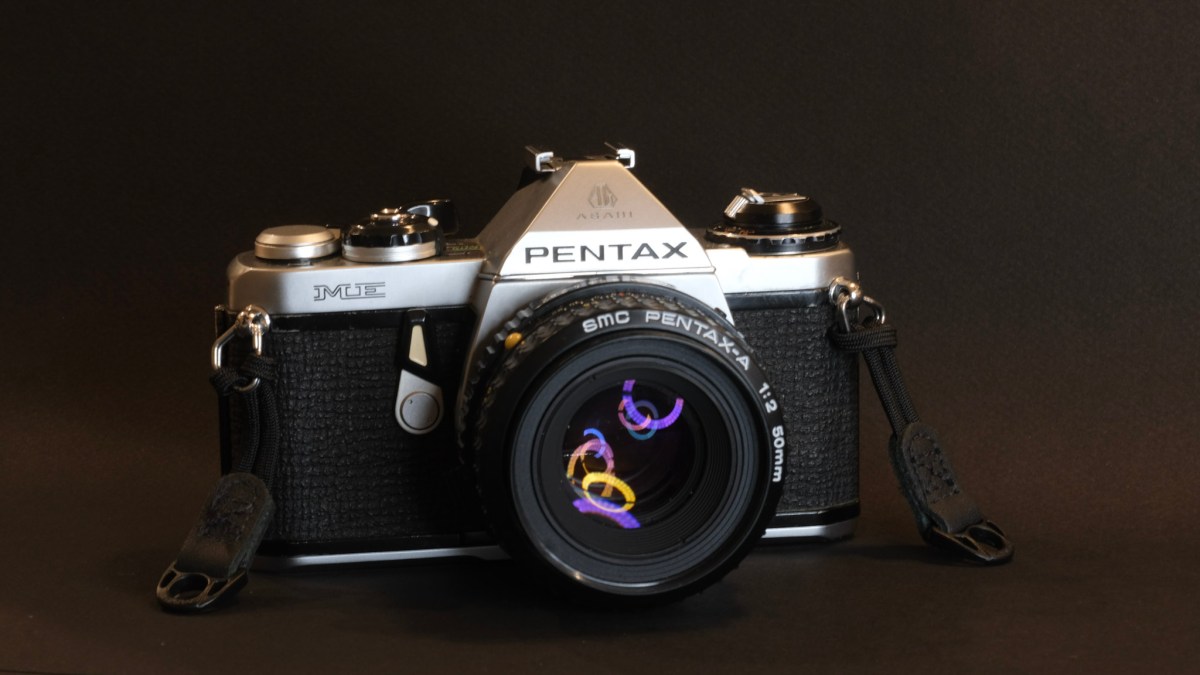
Nikon EM with 50mm E series lens, Pentax ME with a 50mm f/2 A series lens.
They have a few things going against them as well:
Because they’re somehow over simplified, they are more difficult to bring to do exactly what you want than a semi-auto camera or a camera with multi-mode automatism. An experienced photographer will be able to work around it, but beginners will be limited in their progression:
the control of shutter speed is indirect only (you have to adjust the aperture so that the automatism reacts by adjusting the shutter speed – there is no shutter speed dial and therefore no semi auto mode).
there is no exposure memorization either, only primitive exposure compensation systems. The exposure compensation for backlit subjects is either too simple (-2 EV at the push of a button is the only option on the EM) or too complex for beginners (expo compensation dial on the film sensitivity dial for the ME).
there are some irritating quirks – the EM beeps all the time (every time it believes the exposure is going to be under 1/30sec or reach 1/1000 sec). On the ME (and all the ME derivatives up to the Super Program), the control knob around the shutter release button is difficult to use unless you have the fingers of a garden fairy.
The real issue with those two cameras is that in the same price range you can buy the follow up models (Nikon FG, Pentax Program-A and Super Program) that keep most of the good points (small size, beautiful finish, choice of lenses) but are even simpler to use (there is a program mode) and simpler to over-ride (there is also a semi-auto mode).
Pentax Super Program – in some exposure control modes, the shutter speed is selected with the two push buttons and shown in the viewfinder and in the small LCD at the right of the prism
In summary
The EM does not cut it for me. It may be marginally more capable than the Pentax ME (the exposure compensation button is convenient), but the beeps are too irritating. On the FG there is a switch to silence the beeper, but not on the EM. The EM and the FG also seem more fragile than their bigger brothers in the Nikon range. The real problem with the EM (and the FG to a lesser extent) is that they were stepping stones in a range of cameras which included real gems. In the Nikon line-up of the late seventies/early eighties, the FM and the FE offer more flexibility, and a more robust built. Admittedly these two are a tad more expensive and a bit heavier than the EM, but not much larger and nicer to use. As for the FM2 and the FE2, they’re in another league altogether.
On the other hand, the Pentax ME and its descendants were not a low cost point of entry in the Pentax family, they were all that Pentax had to propose if you wanted to use Pentax SMC lenses. I like the Pentax ME – it’s nicely built and refreshingly simple – I even prefer it to the Super-Program, which is more capable but also more complicated to use, and requires even smaller fingers to change the settings. In the Pentax family, I still have to put my hands on the Program-A – it’s a slightly decontented Super-Program (no shutter speed priority mode) and it may be marginally simpler and easier to operate than its “Super” brother.
Nikon EM and Pentax ME – Both deprived of a shutter speed selector
As a conclusion – which one is the best for a beginner?
For a beginner, what makes the difference between two cameras should be the availability of good lenses, and any Nikon and Pentax SLR of that vintage will accept an extremely broad selection of very good prime and zoom lenses, manual focus as well as autofocus.
As cute, easy to use and cheap as they are, the EM and the ME will not be as flexible as a Nikon FG or a Super Program, and the cost difference between those cameras and a Nikon FE amounts to the cost a few lattes at Starbucks.
If you choose Camp Nikon, my recommendation will be to brew your coffee at home for a few days and use the cash you save for the FE. And if you still want your coffee at the drive-thru window, buy a FG rather than an EM. It will let you grow higher as a photographer than the EM.
For Pentaxists, it’s not as clear cut. There is no visible difference in build quality between a ME and a Super Program, and some features present in a Nikon FE and important for an enthusiast photographer (exposure memorization) are still absent from the Super Program. Simply avoid the models with a bad reliability record (ME Super?) and only buy cameras thoroughly tested by their seller.
As a final note, if you’re looking for the absolute bargain in the Nikon world, I suggest you also look at successor of the FG, the Nikon N2000 (F301 in the rest of the world). It’s the twin brother of the better known autofocus N2020 (aka F501), but without the autofocus mechanism, and with a ground glass designed for manual focus operations. With the N2020, it shares the motorized film advance, the semi-auto, program and aperture priority modes, an AE lock button and a great viewfinder. It’s a bit larger than cameras like the EM or the ME (and not as cute for sure), but it runs on AAA batteries that you can find anywhere, and it’s so cheap….one of my preferred $20.00 cameras.
Pentax Super Program and ME – the former benefits from an electronic self timer, a depth of field preview, and a removable grip.
More about cameras I recommend for beginners to film in CamerAgX:
In addition to some of the cameras mentioned above, there are a two other cameras I would recommend for beginners, and if you need more information, the full list of cameras reviewed in this blog since the beginning.
I’ve not had time to finish (and process) the rolls of films I loaded in the ME and the EM. So far, I tend to prefer the ME, because it does not beep like crazy, and also probably because it’s in a better shape than the EM, which is a bit scruffy. I find the LEDs indicating the shutter speed in the viewfinder of the ME easier to read than the needle of the EM, whose movements tend to be erratic – but again it may be a reflection of the better state of conservation of the ME.
Two pictures shot with cameras of the same family – the Super Program and the FG.
San Antonio – the Japanese Tea Garden. Shot with a Pentax Super Program and the Pentax SMC A 35-70 f/3.5-4.5. The zoom did not age well, or a previous owner had covered the front lens with vaseline, but it gives an eerie look to the picture.
from my archives – a photo taken with a Nikon FG on the trails of Kennesaw Mtn.
Today I received the scans of two series of pictures I had taken in the Atlanta area at the height of the Covid-19 pandemic (which explains that the parks and the streets look empty).
Over the last couple of months, I’ve used alternatively my most recent acquisitions, a Contax ST with its very (very) large Contax-Carl Zeiss Vario Sonnar 28-85 f/3.3-4.0 lens, and a Pentax P3 with its very (very) small Pentax SMC-A 35-70 f/3.5-4.5 zoom.
Contax ST and Carl-Zeiss Vario-Sonnar zoom – 28-85 f/3.3-4.0
First observation – almost all pictures are usable – correctly exposed, with the subject in focus. No major flaw with any of the cameras or zooms.
Second observation: I knew that this Contax ST had an issue with the transmission of the value of the aperture selected on the lens to the body, and I set it with a permanent correction of +1.3 EV to counterbalance it. It’s probably too much – I’ll reduce the correction to +0.5 EV in the future. I experienced difficulties with the film rewind on the P3 (I had to open the film door in a dark room and push maybe 6 inches of film back into the cartridge) but only one frame was lost in the process. I suspect the issue to be related to the film receiving spool. Both cameras are approximately 30 years old, they can be temperamental.
Third observation: both cameras have all the features I need (aperture priority auto mode, semi-auto mode, exposure memorization) and a good viewfinder (the Contax’s is fantastic, the Pentax’s is very good considering the original target audience of the camera). Both are really pleasant to use. The Contax is definitely a big and heavy camera, and the lens is even larger and more ponderous. When you use the Contax combo, you get noticed, and you make some people nervous (carry it in a bag, and don’t shoot with it in an area where people tend to be very concerned for their privacy – that would be asking for trouble). The Pentax set, on the other hand, is compact and light, and does not draw attention. But there is a trade off to compactness: image quality.
Pentax P3 – all controls are well placed and large enough, even for photographers with big hands
Which bring us to our fourth observation. My intent was not to perform a scientific comparison between the Zeiss and the Pentax zooms. I shot the pictures on different days at different locations, but since it was in the same type of urban settings, and with the same type of film (Kodak Ektar 100), we can somehow compare the pictures and draw some conclusions. Sorry Pentax fans, the difference is extremely visible. I may have bought a bad copy of the lens, the front element may be dirty (I did my best to clean it, though), but in any case there’s a world of difference between pictures shot with the Vario-Sonnar and the SMC-Pentax-A zoom, in particular when it comes to contrast and sharpness. Thirty years ago, I was using a Pentax KA 35-70 zoom on my Pentax MX (I don’t remember if it was the same f/3.5-4.5 version of the lens, or the constant F/4 model) and I was pleased with the results, so not all Pentax zooms are bad, and I’ll shoot with another Pentax lens as soon as I can.
After I imported the scans in Lightroom, I made adjustments to the exposure and the highlights (the sky was over exposed by both cameras), and I tried to increase (massively) the contrast on the images taken with the Pentax lens, but Lightroom sliders can only do so much if the original picture is too soft. See for yourself.
A word of caution: you won’t see much of a difference if you look at the pictures on a good smartphone – the screen is small and smartphones are very good at enhancing images – but it’s more visible on a tablet, and pretty obvious on the monitor of a full size personal computer. Also, remember that WordPress displays the images of this blog at a relatively low resolution (width: 1024 points) – to really visualize the difference in image quality, click on the images and you will see them full size(they were scanned at 3130 x 2075 points).
Atlanta – Krog Street – Contax ST with Vario-Sonnar 28-85 f/3.3-4.0 – Kodak Ektar.Atlanta – Centennial Park – Contax ST with Vario-Sonnar 28-85 f/3.3-4.0 – Kodak Ektar.Atlanta skyline from the Vinings Mountain – Contax ST with Vario-Sonnar 28-85 f/3.3-4.0 – Kodak Ektar.Atlanta – Old Vinings Inn – Contax ST with Vario-Sonnar 28-85 f/3.3-4.0 – Kodak Ektar.Lely Freedom Horses – Naples, Florida – Pentax P3 – Pentax SMC-A 35-70 f/3.5-4.5 – Kodak EktarLely Freedom Horses – Naples, Florida – Pentax P3 – Pentax SMC-A 35-70 f/3.5-4.5 – Kodak EktarAtlanta – Yellow Bronco Violet House – Pentax P3 – Pentax SMC-A 35-70 f/3.5-4.5 – Kodak EktarAtlanta – Pink house- Pentax P3 – Pentax SMC-A 35-70 f/3.5-4.5 – Kodak EktarAtlanta, Little Five Points – Pentax P3 – Pentax SMC-A 35-70 f/3.5-4.5 – Kodak Ektar