My surprising… image of the year

A few weeks ago I was writing that at least on Flickr, the make and model of the camera had very little influence on how an image was received.

Case in point.

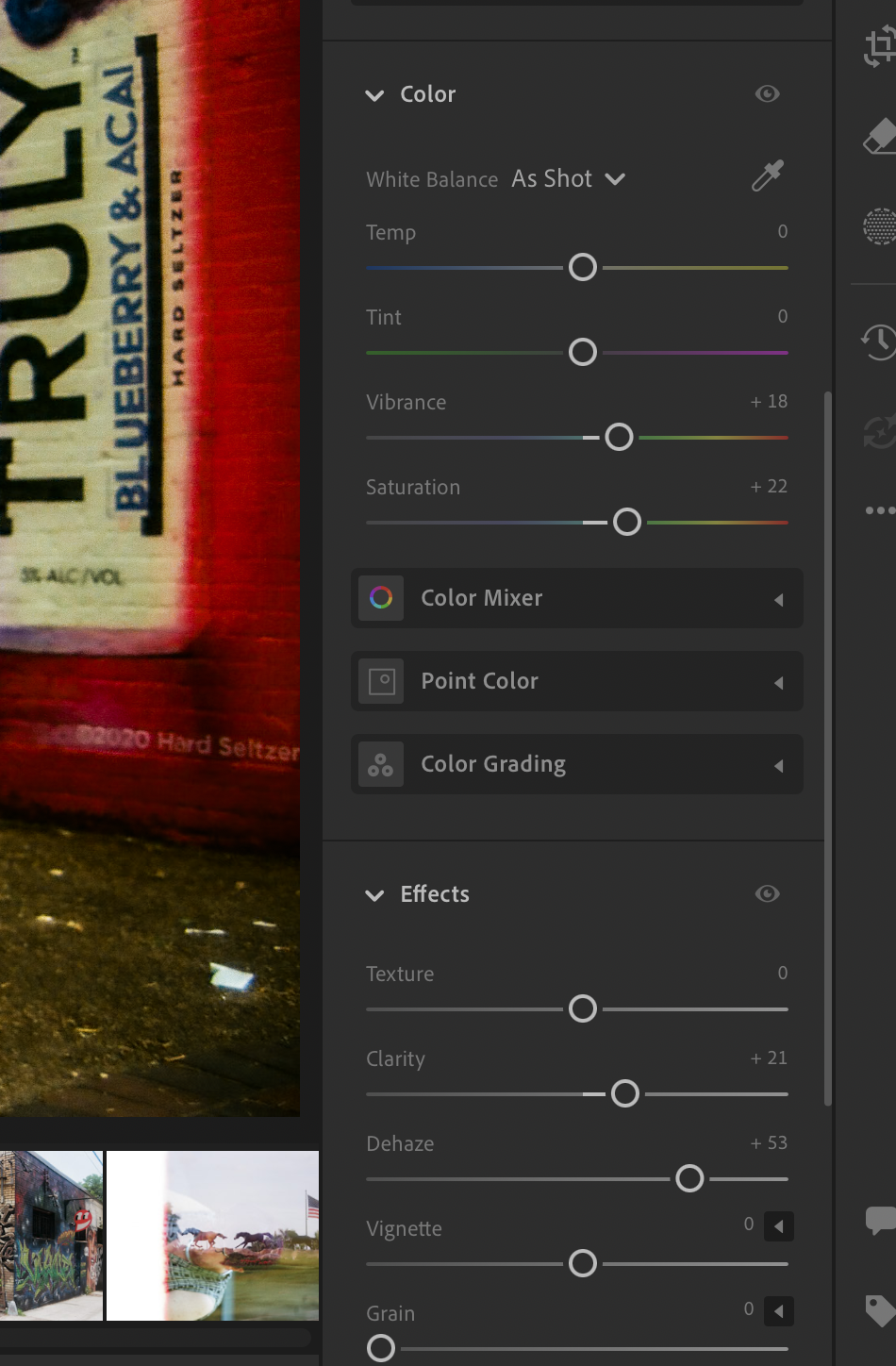
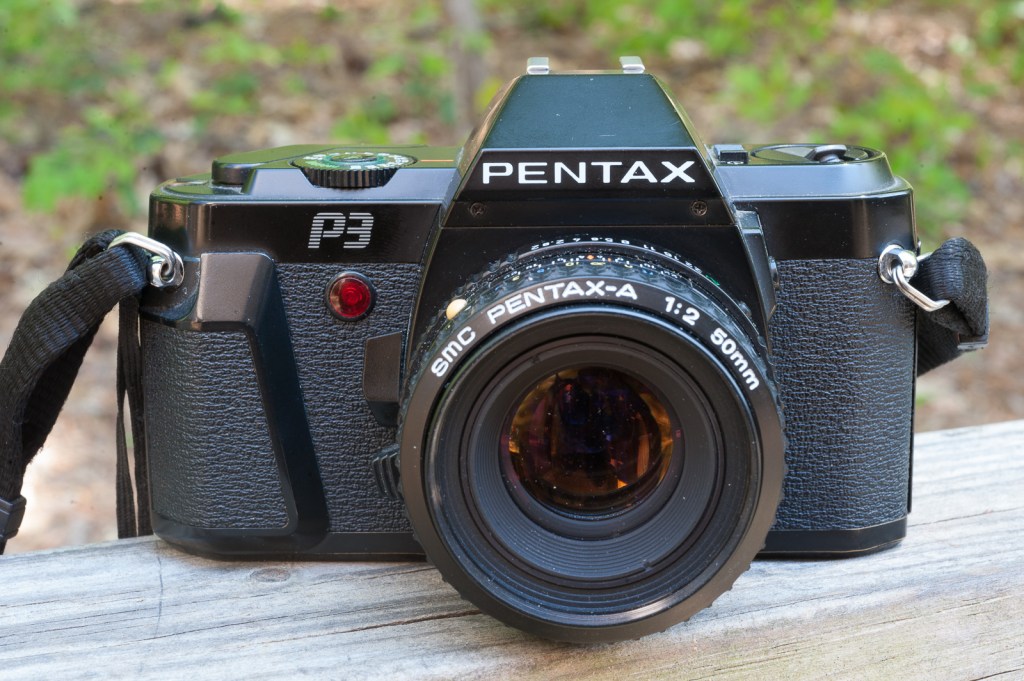
Just before Thanksgiving, I posted a picture taken a few years ago in Atlanta’s Little Five Points neighborhood with a Pentax P3, a film camera that suffered a terminal failure a few rolls of film later (an issue with the film advance mechanism like most of the P3s, of course). The lens – the Pentax A 35-70 f/3.5-4.5 – was so bad I got rid of it (my copy was faulty – the lens has a decent reputation otherwise). The image was not that great either but was made more interesting in post-processing with Lightroom, and in a few weeks, it has become my most appreciated image of the year in Flickr.

I even received a request to use it from a pro-bicycle user group…. Go figure.

I’ve been traveling recently, and will be on the road again during the holiday season. I’m not forgetting this blog, in fact I’m harvesting more images for later use, but it’s very likely that this post will be the last one before Christmas.

Happy Holidays to you and to your families.


Atlanta Little Five Points. Pentax P3/P30 – Pentax A 35-70mm f/3.5-4.5the wall has been repainted since, and is far less interesting…
Trying to save a compromised image in Lightroom.

More of the same series….Same camera, same lens, same roll of film.

Another image from the same roll of film – Atlanta, Inman Park.
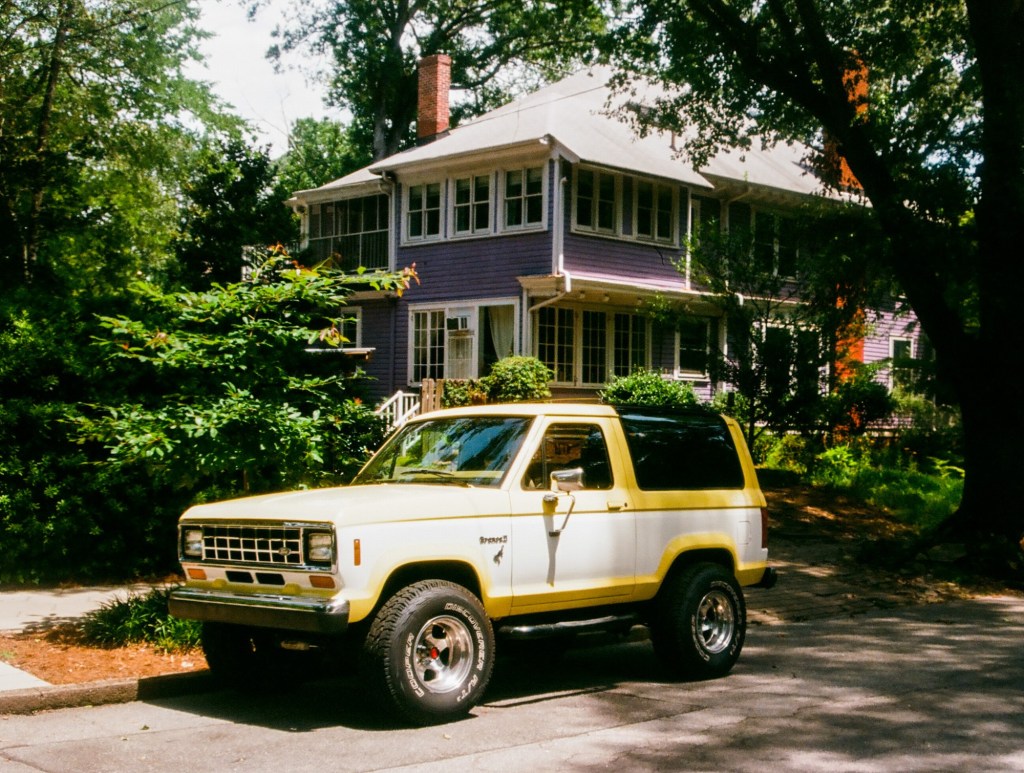
Ford Bronco II – Inman Park Neighborhood, Atlanta.

More recent content in CamerAgX


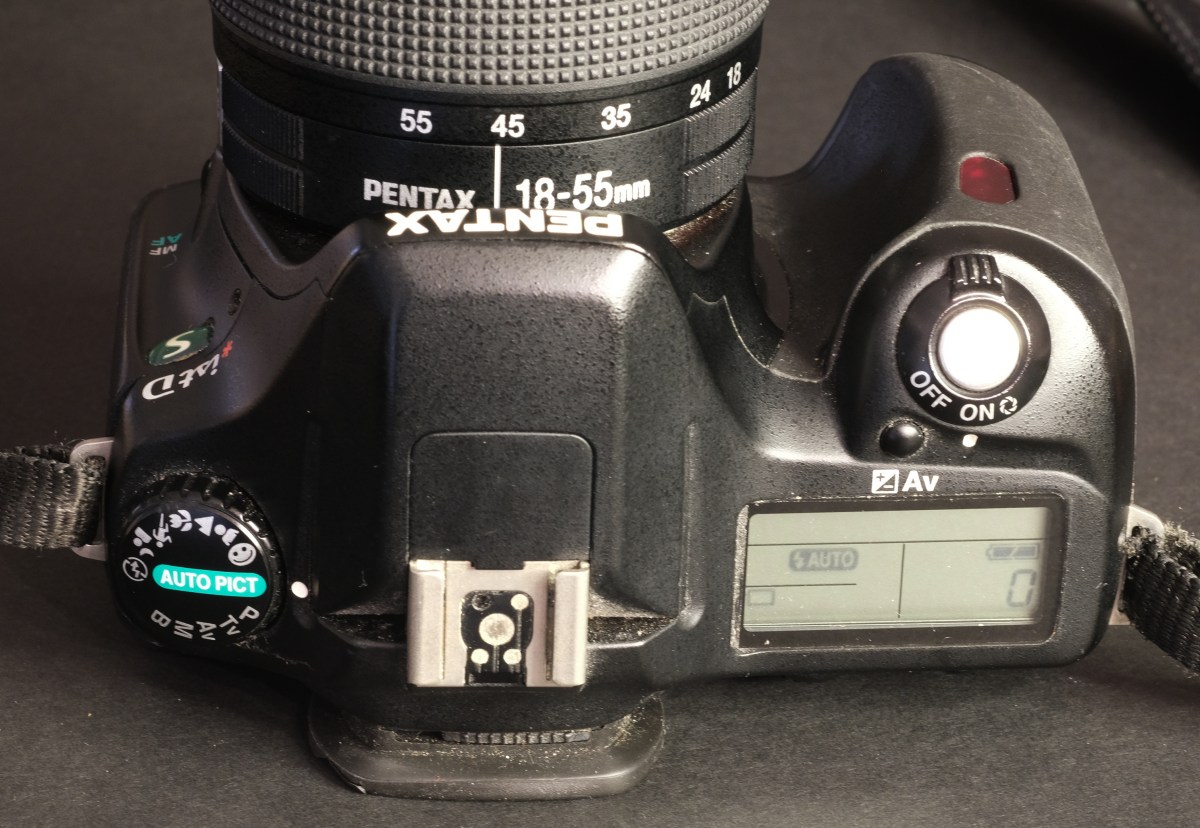
Shooting with a 6Mpix Pentax *ist DS – when old gear is really too old

The price of a digital camera on the second hand market is more or less proportional to the number of pixels of its image sensor – interchangeable lens cameras (dSLRs and mirrorless) with anything between 24 and 50 Megapixel (Mpix) sensors are considered current and command big bucks, while models with less than 10 Mpix are deemed virtually worthless.

Case in point – I bought a Pentax *ist DS (a 6 Mpix dSLR from 2004), a bit scruffy but in working order, for less then $35.00.

So, it’s cheap, but is it still usable?

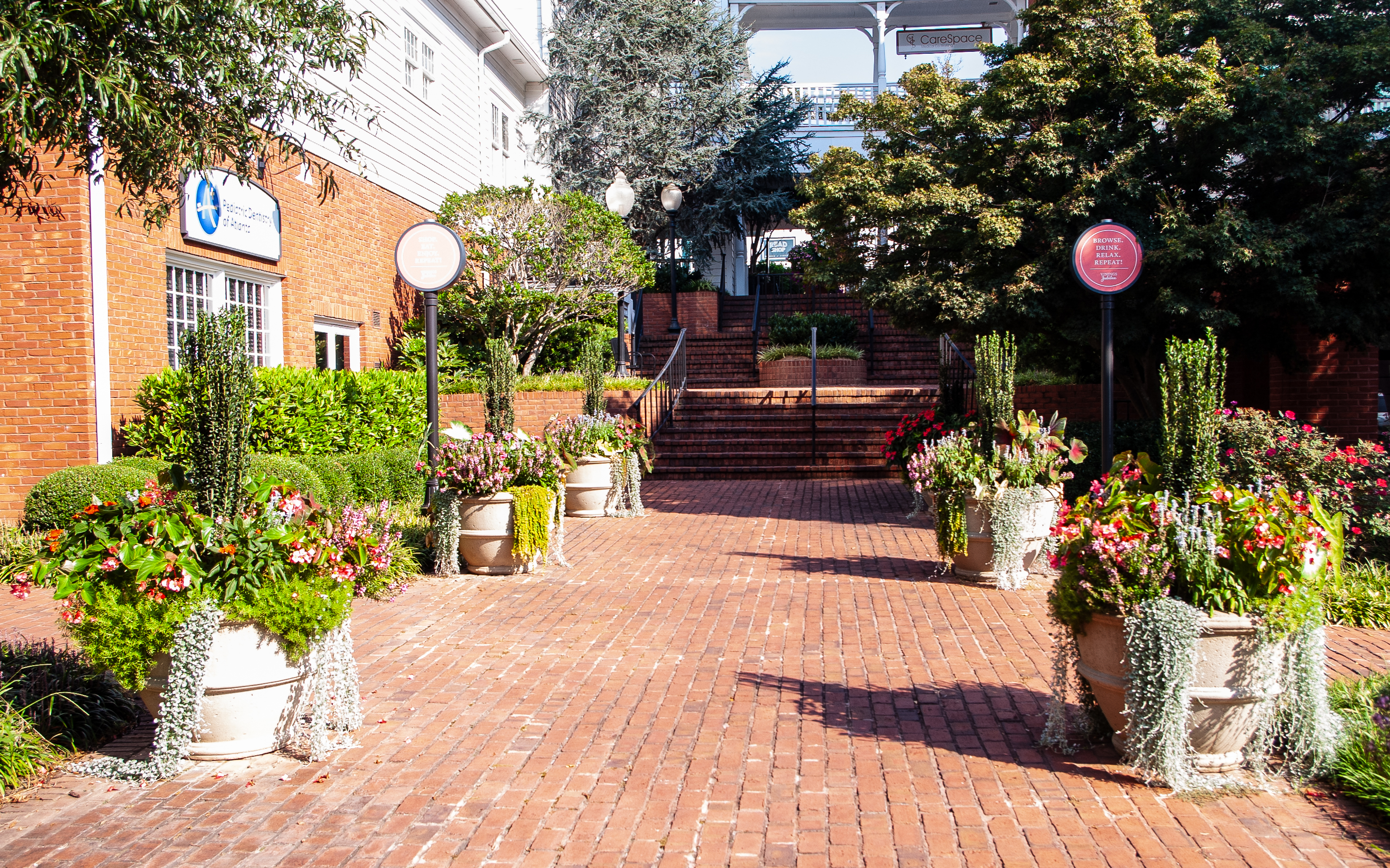
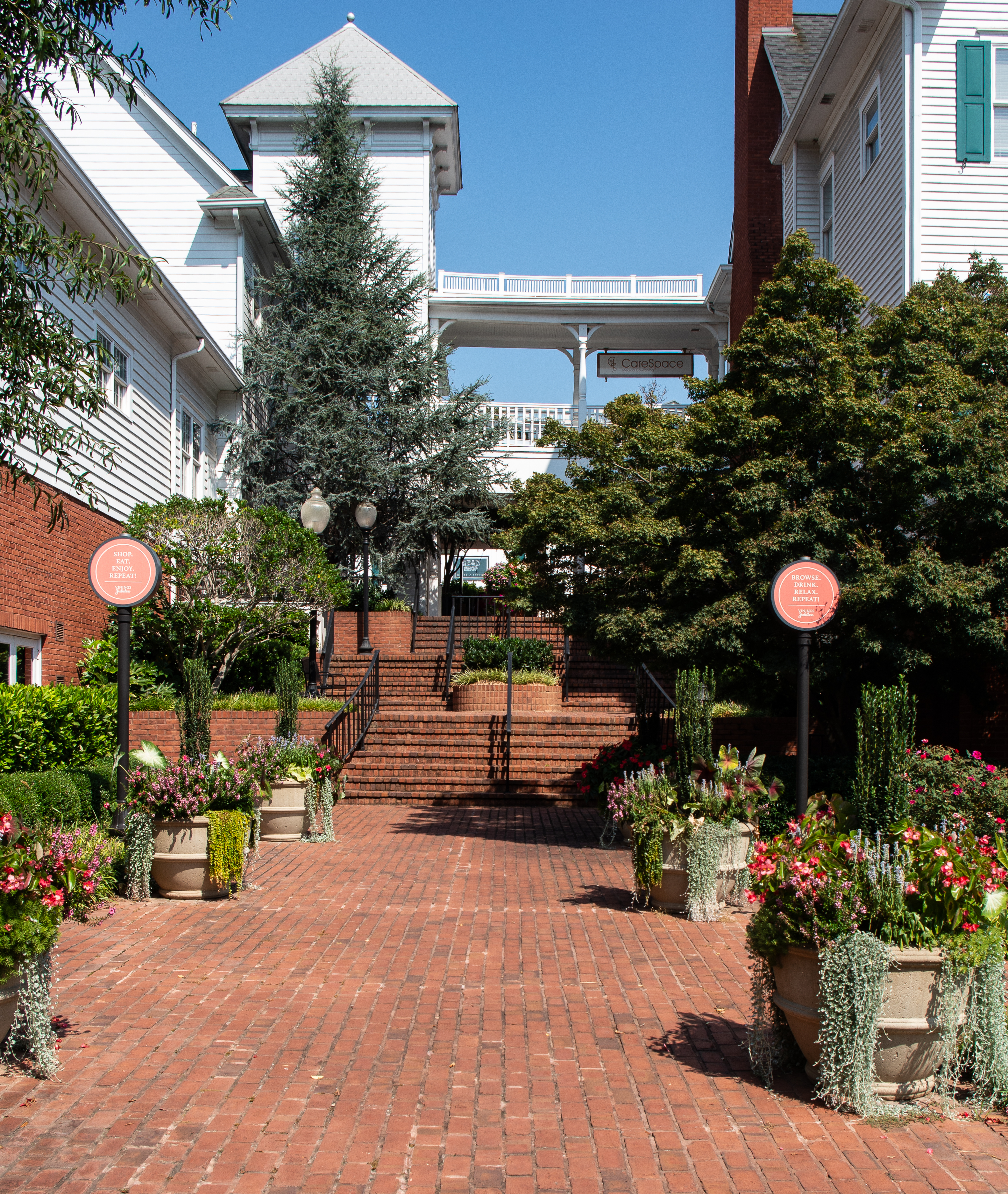
Pentax *ist DS – Pentax kit lens 18-55 – Vinings Jubilee (Atlanta) – Sept 2025
For comparison – same lens, same ISO settings, same hour of the day – Pentax K-5 – minor adjustments in Lightroom. Click on the image to see it at full resolution – you will see the difference.

Why the Pentax *ist DS back then?

At the turn of the century, the photography market was different from what it was to become a few years later – there were only four companies in the world selling digital SLRs (Canon, Fuji, Kodak and Nikon). And those cameras were very expensive, and primarily bought by news agencies and well heeled pros.

2002 saw a first wave of more affordable digital SLRs reach the market (Canon, Fuji and Nikon all launched models in the $2000 price range). Pentax and Olympus joined the fray in 2003 with the *ist D and the E-1. At the end of 2003 Canon made digital SLRs affordable for amateurs with the Rebel 300D, the first dSLR to sell for less than $1000.00.

Nikon and Pentax followed rapidly with two models priced around $1000, the D70 and the *ist DS. Like millions of amateurs, I was looking for my first digital SLR in those days, and the *ist DS was my pick. Its specs were not that different from the D70 or the Rebel. What made the difference for me was its small size, its large viewfinder, and the good reviews of its kit lens.

Of course, I sold it after a few years to upgrade to a 10 Mpix camera, which itself was sold a few years later to fund the next upgrade, and so on.

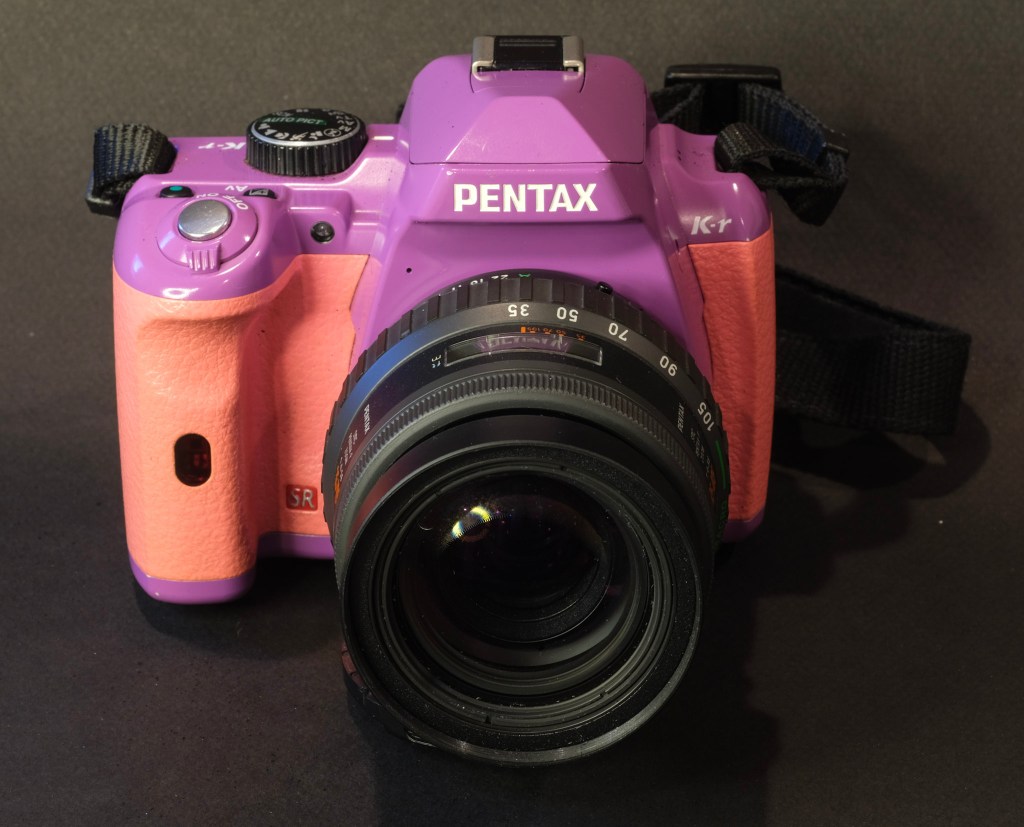
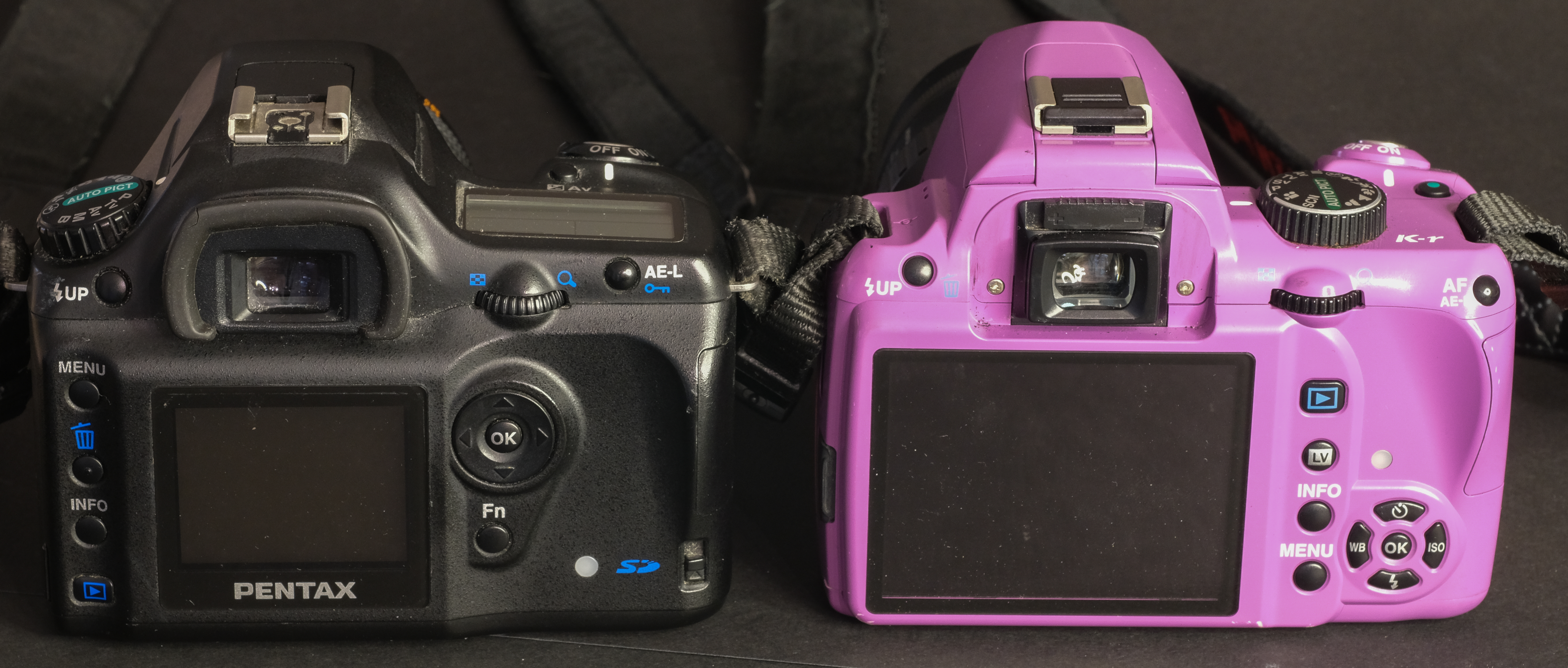
Family Reunionthe *ist DS (left) looks serious in black, the K-r (right) was available in fancy colors.

Why a *ist DS now?

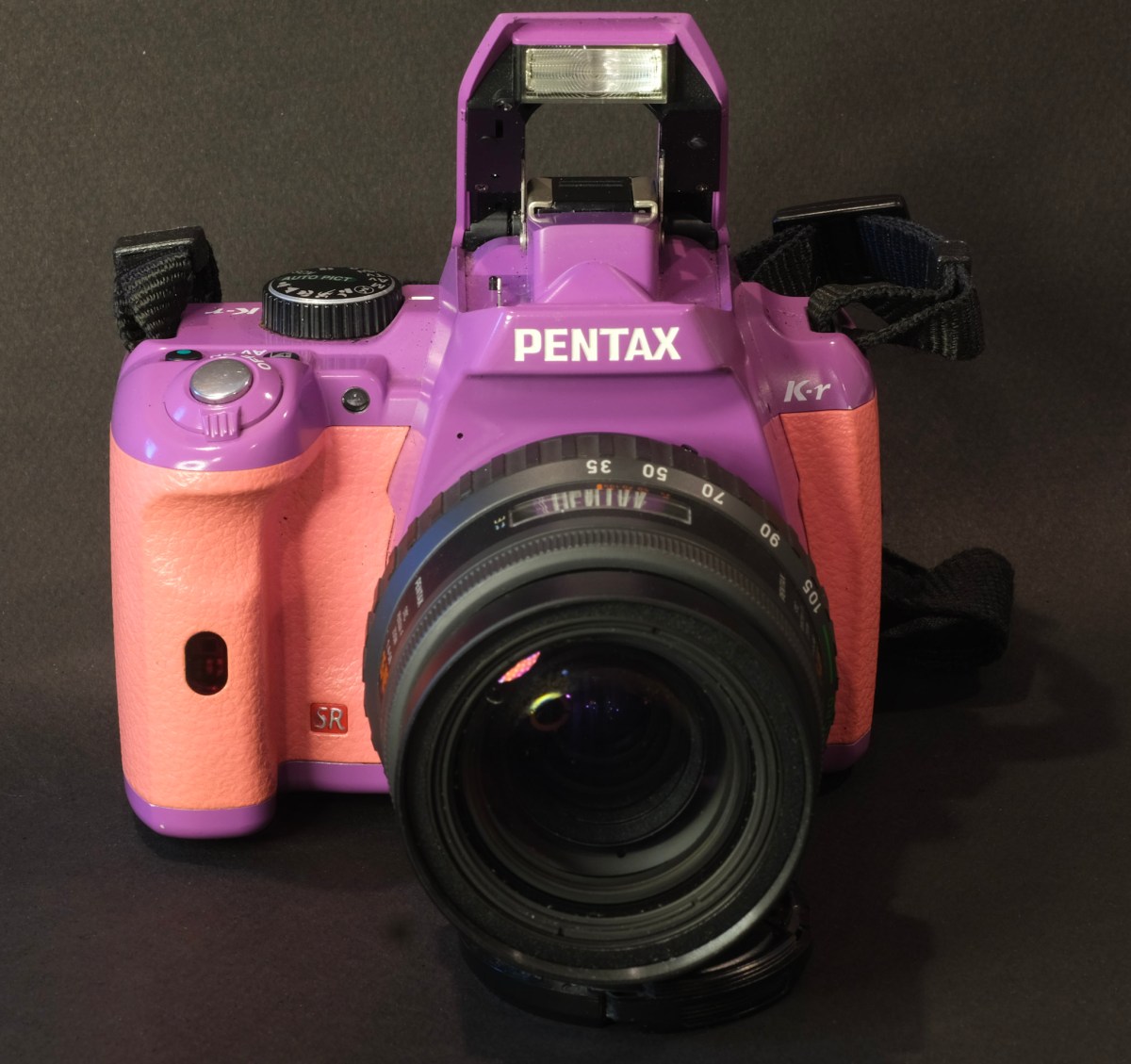
A few months ago, I bought a colorful Pentax K-r (a 12 Mpix camera from 2010) and was surprised by the quality of the RAW files it delivered. You pay a bit more for the colored body of a K-r, but all white and all black models can be found for less than $100.00. In my recollections, the *ist DS was a good little camera, and I was wondering what it would be like to shoot with a 6 MPIX dSLR now. I started checking the usual auction sites, and $34.00 made me the proud new owner of another Pentax camera.

Pentax *ist DS – Pentax 18-55 Kit Lens – Vinings Jubilee (Atlanta) – adjusted to taste in Lightroom
For comparison – same lens, same ISO settings, same hour of the day – Pentax K-5 – minor adjustments in Lightroom. Click on the image to see it at full resolution – you will see the difference.

First impressions

I had shot a few thousand of pictures with my *ist DS in the early 2000s, so this “new” *ist DS is not really a total unknown for me.

What struck me immediately when I received my $35.00 *ist DS is how similar it looked to the K-r; as if Pentax had kept the same moulds over the 7 years that separate the two cameras. The *ist DS is smaller than Nikon’s mid-range APS-C of the same vintage, but the general organization of the commands is strikingly similar to what current Pentax and Nikon APS-C dSLRs look like – to a large extent the dSLR camera had already found its final form in 2004.

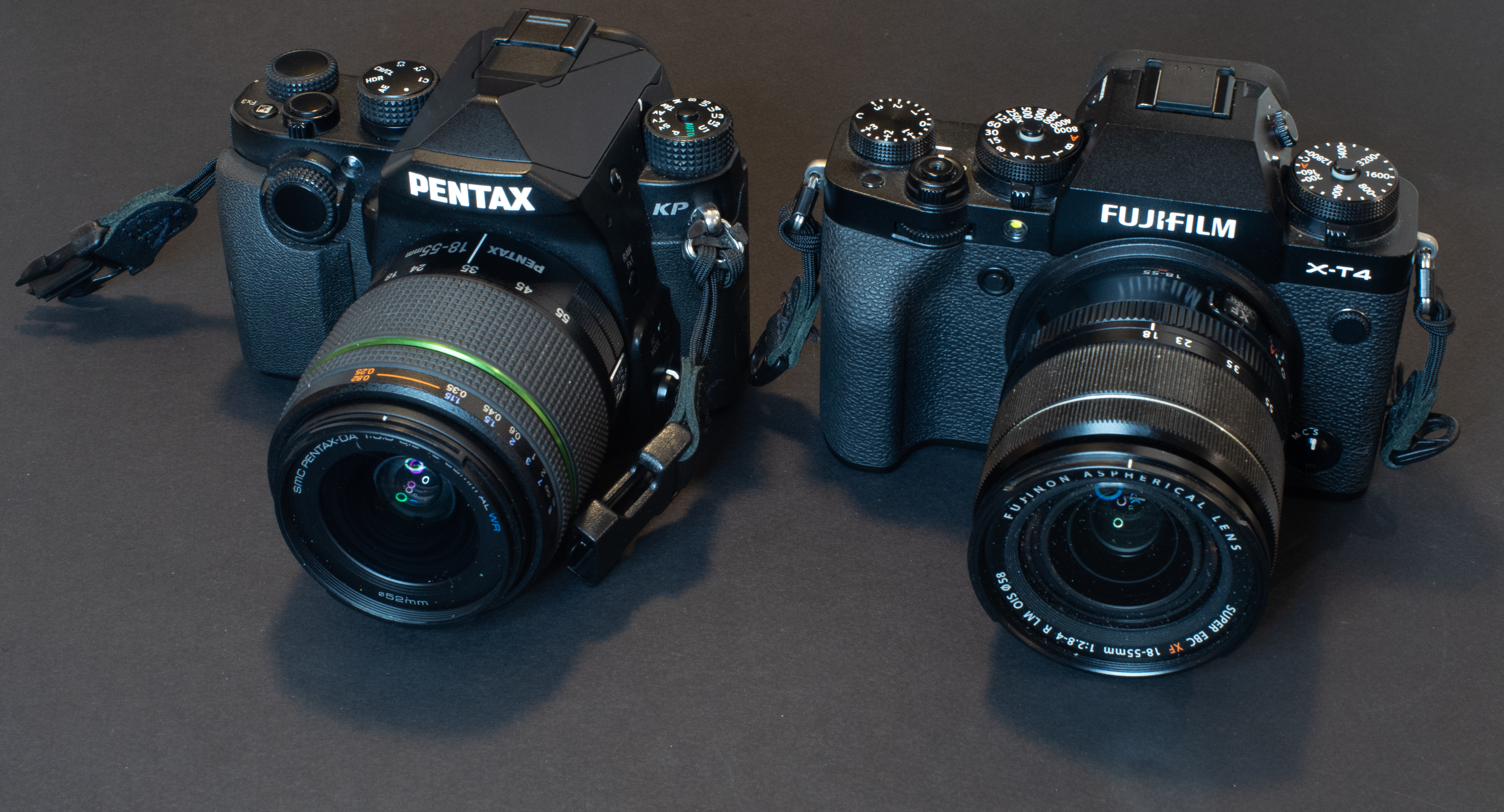
Pentax *ist DS (left) and Pentax K-5 (right) – the layout of the commands is very similar – the most striking difference is the rear LCD display – a huge progress in the space of a few years.

Visually, the biggest difference is the rear LCD display – the DS’ is very small (2in diagonal, some smart-watches have larger displays), and its dynamic range very limited.

Pentax *ist DS – this picture was in the performance envelope of the camera.

My $34.00 camera is old, and definitely not in tip-top shape (the mode selector is stuck in the Auto-Pict position, the integrated pop-up flash seems to be dead), but it still works well enough to get an opinion about this generation of 6 Mpix cameras.

Back in 2005, DPReview was very happy with the responsiveness of the camera, but concerned with the quality of its JPEGs. Today, the standards are different, but the responsiveness is still OKay-ish – when there is enough light for the autofocus to operate – otherwise it hunts desperately.

As for the image quality, even in RAW, it’s often disappointing.

Pentax *ist DS – even in Lightroom and starting from RAW, I could not get the sky, the church and flower bed to be exposed correctly at the same time.
Pentax *ist DS – another image (taken at around 11am) where the limited dynamic range of the sensor is clearly visible.
For comparison – same lens, same ISO settings, same hour of the day – Pentax K-5 – minor adjustments in Lightroom. The difference is striking.

The camera is twenty years old, may have been treated badly by some of its owners, and may not perform as well as when it was new, but, in any case,

  • the dynamic range of the sensor is limited (DXO evaluates it at 10 EVs, as opposed to 14 EVs for the sensor of a more recent Pentax K-5 for instance). If the scene is lit evenly, the results are correct, but even Lightroom can’t save RAW images like the picture of this old church or that plant on my deck.
  • I’ve been used to shooting with cameras and lenses equipped with image stabilization mechanisms, which this *ist DS is deprived of. Images which would have been technically good with a camera from the 2010s are blurry because of camera shake,
  • the autofocus is a hit or miss – it works fine on static scenes, not so well if the subject is moving or the scene too dark.
Pentax *ist DS (left) and Pentax K-r (right) – even an entry level model like the K-r has a much better rear LCD display (and a Live View button). And it will perform much better.

Conclusion

Obviously, this camera works, and in ideal circumstances, will deliver usable images. But even if the images are saved as RAW files, the highlights are often desperately burnt, and the shadows too dark. The autofocus struggles with moving subjects, in particular if they’re not perfectly centered, and because this model is deprived from image stabilization, images will be blurry if the photographer does not pay close attention to the shutter speed. Very clearly, there is a huge image quality and usability gap between this *ist DS and cameras launched six to seven years later.

In the days of $5.00 Starbucks Lattes and $10.00 McDonalds Value Meals, $34.00 is not a huge sum to spend on a digital camera. But if you put the equivalent of six more Value Meals on the table, you’ll get a much more usable Pentax K-r (or any equivalent 12 Mpix dSLR from the early 2010s). Add another five will get you a really nice 16 Mpix dSLR like a Pentax K-5, or an already modern mirrorless camera such as the Panasonic G2 (12 Mpix) or the Sony Nex 3 (14 Mpix).

Pentax K-r – Centennial Park – Atlanta – the K-r only has a 12 Mpix sensor but behaves like a modern camera.

I’m not necessarily attracted to the latest and greatest features of the newest cameras (I also shoot film with cameras from the 1980s…), and will be happy to shoot with a digital camera deprived of movie mode or of wifi/bluetooth connectivity, if it still delivers images of good quality, most of the time.

But if the performance of a camera (by modern standards) is so limited that I start missing too many potentially good pictures, the quest for minimalism goes too far to my taste.

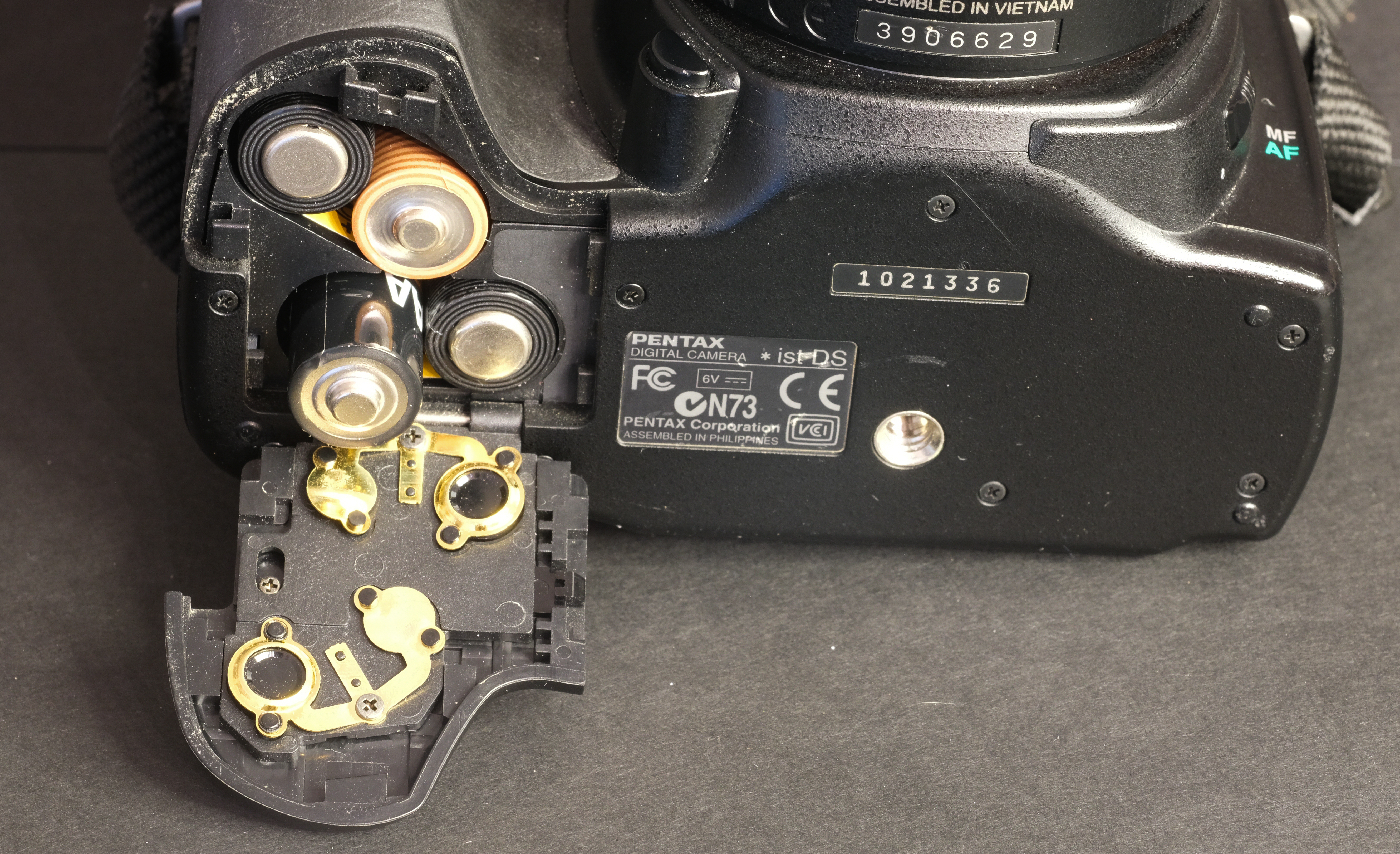
Pentax *ist DS – still powered by conventional AA batteriesno need for a charger (and the battery life is surprisingly good)

It is true that when cameras like the Pentax *ist DS (and its Canon, Konica-Minolta or Nikon 6 Mpix competitors) were launched in 2004, we were impressed by the huge step they represented over the digital point and shoot digicams we’d been using for a few years, and even today, we’re still proud to share the best images we got from those early dSLRs. If I set it up carefully, and use it within the limits of its performance envelope, I’m sure that even my scruffy *ist DS will get me decent pictures.

But today, I see the Pentax *ist DS more as an interesting curiosity, than as a camera I could use day to day. In the six years that separate a Pentax *ist DS from a Pentax K-5 (or a Nikon D70 from a D7000), there has been a huge step forward in reactivity, resolution, dynamic range and low light image quality, a step so large, that if I had to chose, I would spend a bit more on a dSLR or a mirrorless camera of the early 2010s, and forget about the *ist DS.


More about Pentax cameras in CamerAgX


Pictures from my first *ist DS, shot between 2005 and 2007

Pinup, French Bulldog – shot in Jan. 2005 with my first Pentax *ist DS.
Maui, Hawaii – at the top of the Haleakala – Pentax *ist DS
Charleston, SC – April 2005 – Pentax *ist DS

Fort Myers, Florida – Pentax *ist DS – Xmas 2005.
A cenote near Cancun, Mexico – Pentax *ist DS – July 2007

A Pentax K-5 today: a compact, still highly capable dSLR for $150

Digital single-lens reflex (dSLR) cameras still have unique qualities. Even though modern mirrorless cameras outperform them in many situations, using the optical viewfinder on a good digital SLR is a real pleasure. I’ve used almost exclusively SLRs in my formative years, and it probably conditioned my eyes and my brain to be more comfortable and creative when I see a scene through an optical viewfinder. That’s why I finally decided to add another dSLR to my kit in complement to my mirrorless equipment.

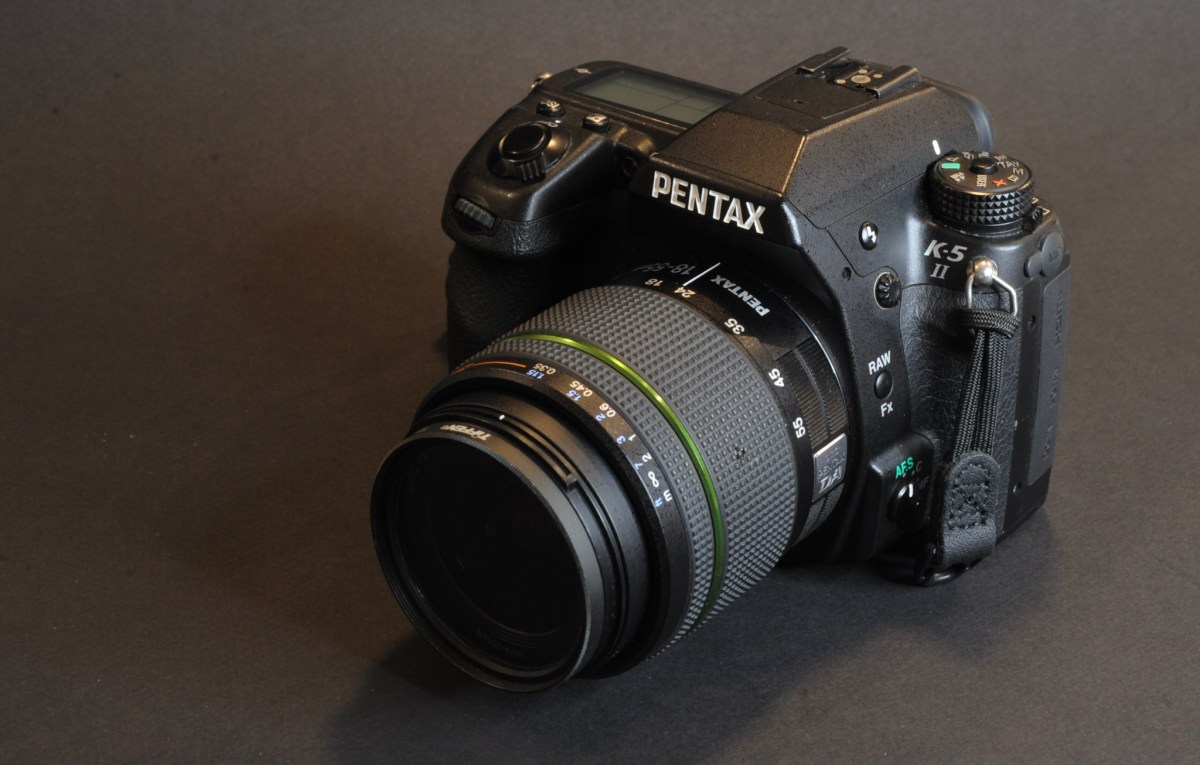
Pentax K-5 and its kit lens

I was not willing to spend too much money on this nostalgia trip – I had set a limit of about $150 but I still wanted the camera to have a great viewfinder, a lot of directly accessible commands, and a sensor capable of delivering technically satisfying pictures. The colorful Pentax K-r I reviewed recently was a good introduction to Pentax’s dSLRs family, but certainly not the “advanced”, “semi-pro” APS-C dSLR I was looking for.

My $150 budget consigned me to “advanced” or “prosumer” APS-C cameras from the early 2010s, with an image sensor in the 15 to 20 megapixel range. In that category, Pentax has always had a strong offering, with compact, well built cameras benefiting from a great optical viewfinder. Between the K-7, the K-5 and the K-3, which one was going to be my pick?

Pentax K-5 Mk II – a typical “modal” user interface – most of the settings have their own dedicated key.

Which Pentax K camera to choose?

Over the years, Pentax have introduced three generations of their “advanced” APS-C model line (the K-7, the K-5, the K-3), and have derived Mark II variants of the K-5 and K-3. The current K-3 Mark III launched in 2021 is not as directly related to the K-7 as its predecessors. It’s a very significant upgrade over the K-3 Mark II (it could have been named K-1 if there was not already a K-1 camera in Pentax’s line-up) and part of its appeal is that it’s also available with a monochrome sensor (as the K-3 Mark III Monochrome, of course).

The family saga started in 2009 with the K-7, equipped with a 14 mpix sensor manufactured by Samsung. The camera was so good it was used as the basis of the subsequent K-5 and K-3 models proposed by Pentax, up to the K-3 Mark II. The sensor, on the other hand, could have been better. It yielded good results up to 800 ISO, but gave up at higher sensitivities, producing images with significantly more noise than the competition. Even the K-7’s little brother, the Pentax K-r, equipped with a 12 Mpix Sony sensor, delivered better results in those situations.

Pentax K-5 Mk II – this iteration of the camera has gained an “air gapless LCD screen”

Not surprisingly, the Samsung sensor was replaced by a very good 16 Megapixel sensor in the follow up model, the K-5, launched only one year later. This sensor belonged to a family of high performance chips developed by Sony, which were also used to great results in Fujifilm, Nikon and Sony’s own cameras.

In 2012, the K-5 was replaced by two models, the K-5 II (or K-5 Mark II) – more or less the same camera but with an improved autofocus system, and the K-5 IIs (or Mark II ‘S’) – equipped with a sensor deprived of an anti-liaising filter, and offering a higher resolution of fine details as a result.

The K-3 of 2014 adopted a new 24 MPIX sensor, and was followed by a K-3 Mk II variant equipped with a GPS chip in 2015. As mentioned above, the current Mark III came seven years later with a more modern 26 Megapixel BSI sensor, a vastly improved autofocus system, an extra control wheel, a joystick to select the focus point, and new menus. It is the most “advanced” of all Pentax APS-C cameras, and, with the now discontinued Nikon D500, one of the two most elaborate APS-C dSLRs, ever.

The Pentax K Mount is 50 years old – note the metal bayonet and the red gasket on the 18-55 DA AL WR zoom.

Let’s talk money

Very often the price of a camera on the second hand market is not an exact reflection of its technical capabilities: the K-7 and the first generation K-5 can be found at the same price (between $150 and $200.00), when there is a real performance gap between the two models. The K-5 IIs is often $100.00 more expensive than a K-5, because of the higher resolution of fine details promised by its 16 Megapixel sensor, deprived of an anti-liaising filter.

The K-3 is much more expensive than any variant of the K-5 on the second hand market: with a 24 or 26 Megapixel sensor and no anti-liaising filter, its image quality is on par with the best in the current crop of mid level APS-C cameras, and its price is often established in reference to the hefty sum that Pentax is charging for a new K-3 Mark III. A used first generation K-3 can not easily be found for less than $450.00, and a second-hand K-3 Mark III will cross the $1,000 barrier.

For my needs the K-5 (the non “s” model) represented the best deal in the K-7-5-3 family. I found a very nice K-5 Mark II in the price range I was targeting, and it’s the model we’re going to review today.

Colonial Homes – Blue Symmetry – Pentax K-5 / Pentax lens 18-55 f/3.5-5.6 AL WR

First impressions

Yes, the camera is remarkably compact for a dSLR (in general), and for a model targeting enthusiasts, in particular. It’s not really larger than entry level dSLRs such as the Pentax K-r or the Nikon D3100, and it’s smaller than film era SLRs like a Nikon F90 or a Canon EOS 620. And next to a full frame digital dSLR like a Nikon D800 or a Canon 5d, it’s a dwarf.

Two “advanced” dSLRs – Full frame on the left, APS-C sensor on the right. The difference in size and weight is striking.

In comparison to a K-r or a D3100, it’s almost twice as heavy, though, because it’s built out of metal instead of plastic. It’s very substantial and seems very well built – and really feels like a tool a “pro” would use.

Another reason it’s heavier than a K-r or a D3100 is its viewfinder, which provides a significantly larger and brighter image. It’s visibly not as large or luminous as what you would find on a “pro” full frame camera (film or digital), but when you start considering the size and weight of the combo formed by a full frame body and its trans-standard zoom, then the K-5 looks like a very interesting compromise for action or travel photography.

Lastly, if you’ve been used to the modal interface of autofocus SLRs and dSLRs of any brand, you’ll feel right at home. The most current settings can be changed by pressing a dedicated touch, and then adjusting the value with the control wheel – and there are two of them, as it should be. If you trust Pentax’s default settings, you’ll be ready to shoot in no time.

Pentax K-5 – note the lock on the battery door – Pentax takes “weather proofing” very seriously.

Not everything is perfect, though, and in some areas it shows its age.

The menus look dated (big, low res fonts, plenty of tabs) and not inviting. The large LCD display at the back is fixed, and is not touch enabled. Of course there is no joystick to select the active autofocus area, and no way to upload wirelessly the images to a smartphone or a tablet. And I will not mention “live view” or video capabilities – the K-5 can’t compete with a mirrorless camera on the former, and not even with a recent smartphone on the latter.

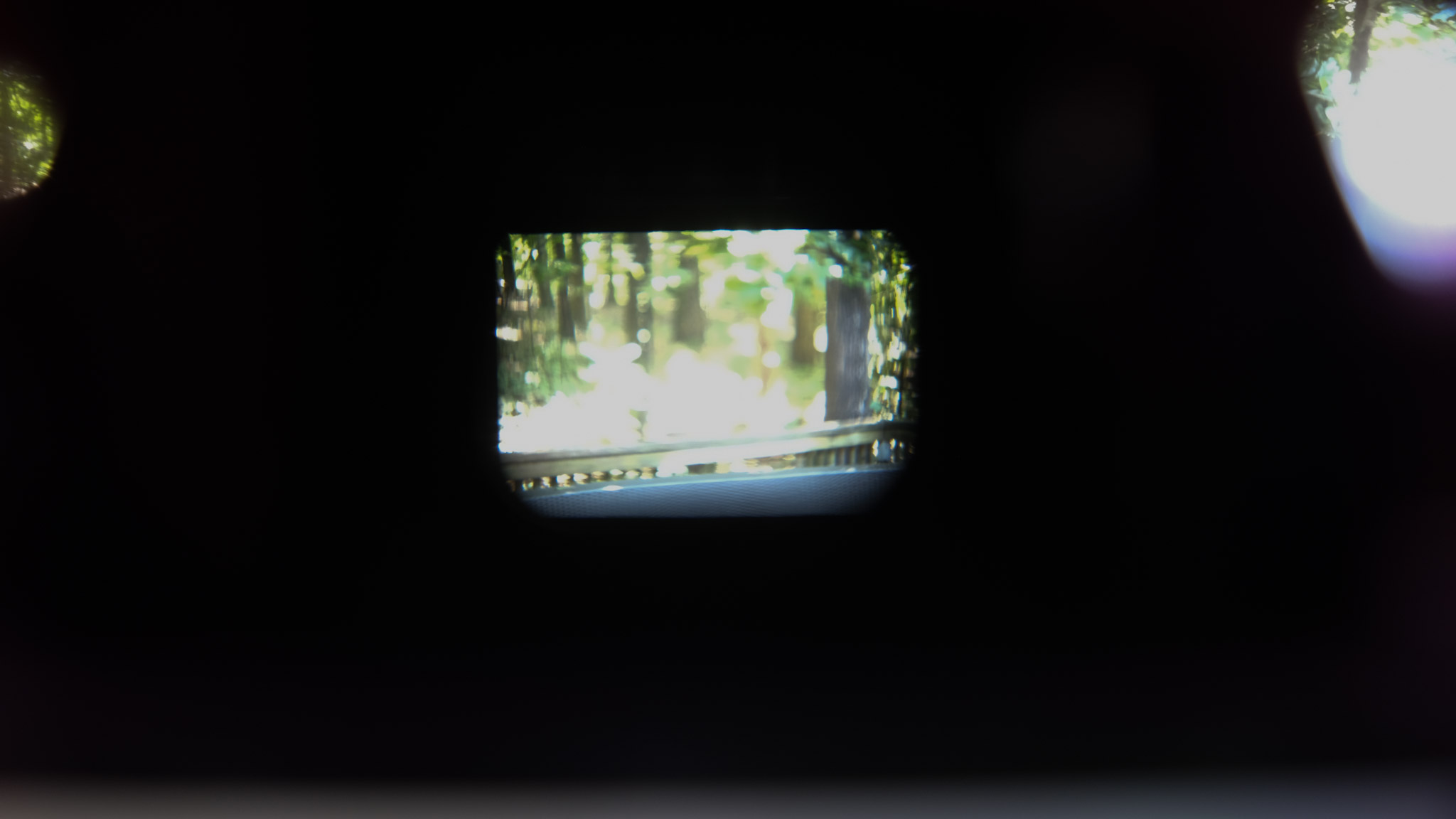
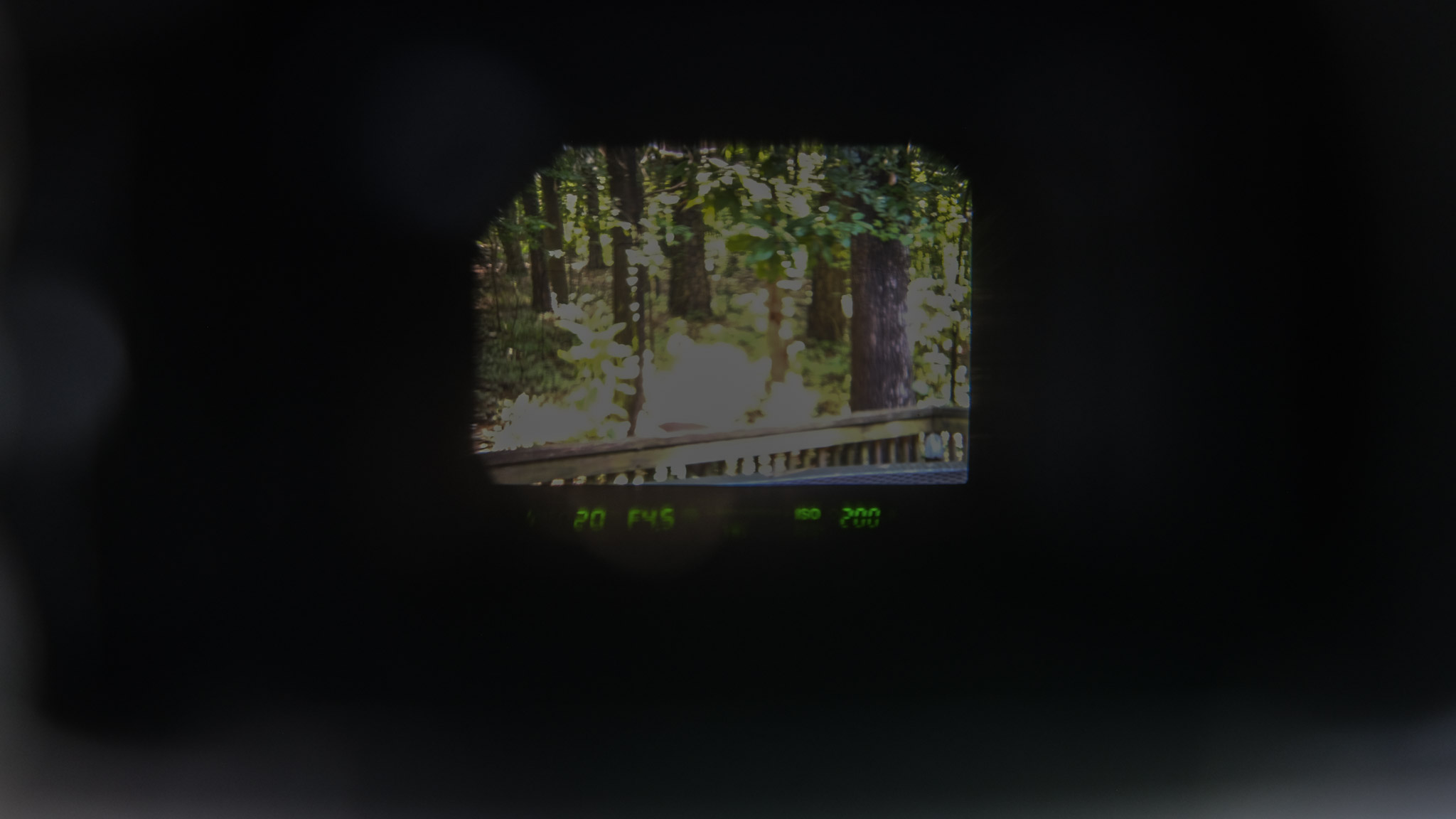
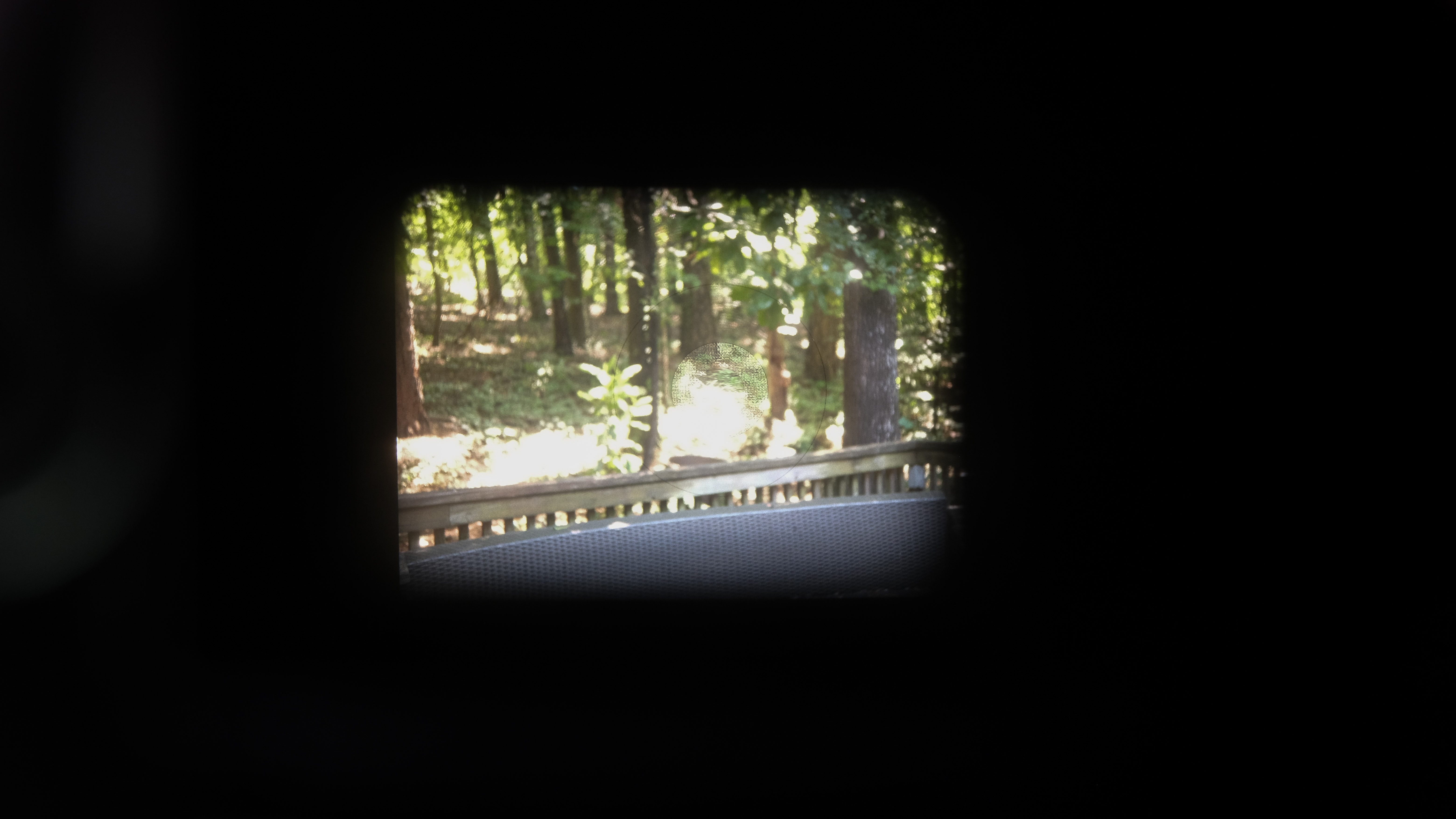
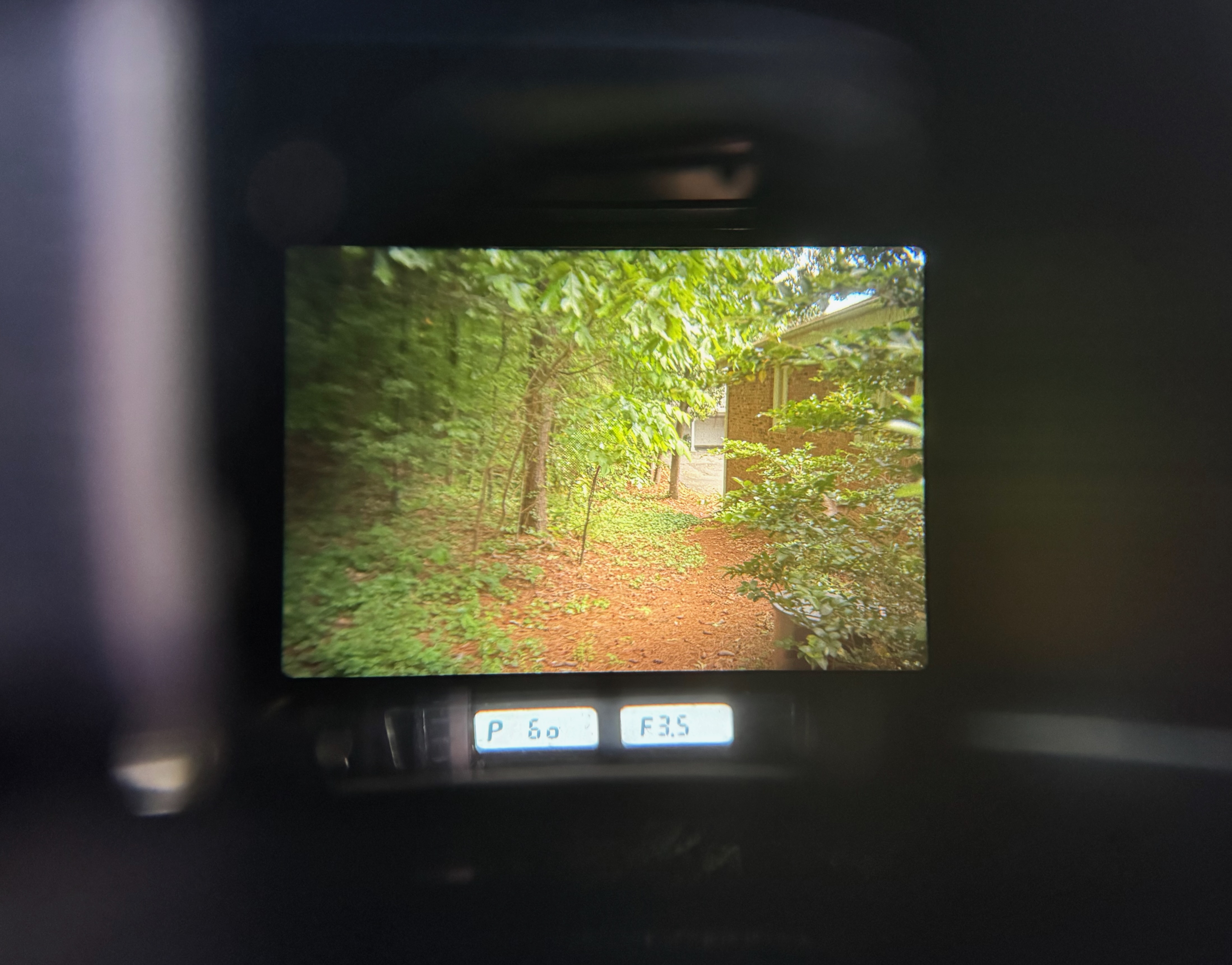
In the gallery above – shot from the exact same distance from the rear lens of the viewfinder and not cropped in any way- what you see from the viewfinder of a Pentax K-r, a Pentax K-5, and a very good “pro-level” film camera: the Canon T90. The K-5’s viewfinder is not as large as a the viewfinder of a “full-frame” camera, but it’s actually pretty good for an APS-C. The difference with a K-r is very visible.

Shooting with the K-5

Shooting with the K-5 is a pleasant experience The combination of small size, impressive build quality and great ergonomics with a good viewfinder makes for a pretty unique experience.
With the K-5, most commands fall naturally under the fingers while shooting, and after a few minutes you’re totally comfortable with the camera.

You would have to move up to full frame dSLRs to find a larger viewfinder, but I’m not sure the improvement is significant enough to justify the weight and heft penalty, at least when you need to be mobile or operate discreetly.

Image quality was considered among the best for an APS-C camera in 2010 – its 16 Megapixel was praised by testers and users, but obviously 15 years later, the best in class APS-C mirrorless cameras will outclass it when it comes to fine detail resolution and control of noise.

Another area where camera makers have made significant progress since the K-5 was launched is the quality of the JPEG images out of camera – they can be uploaded to a phone wirelessly and from there shared on social media without any post-processing. But since the K-5 does not offer any form of wireless connectivity and can not interact with Ricoh’s iOS and Android app (it’s only supported on cameras launched after 2014), you will need to connect an SD card reader to a computer to upload the images anyway, and you might as well shoot RAW and post-process your images quickly in Lightroom Mobile or Classic while you’re at it.

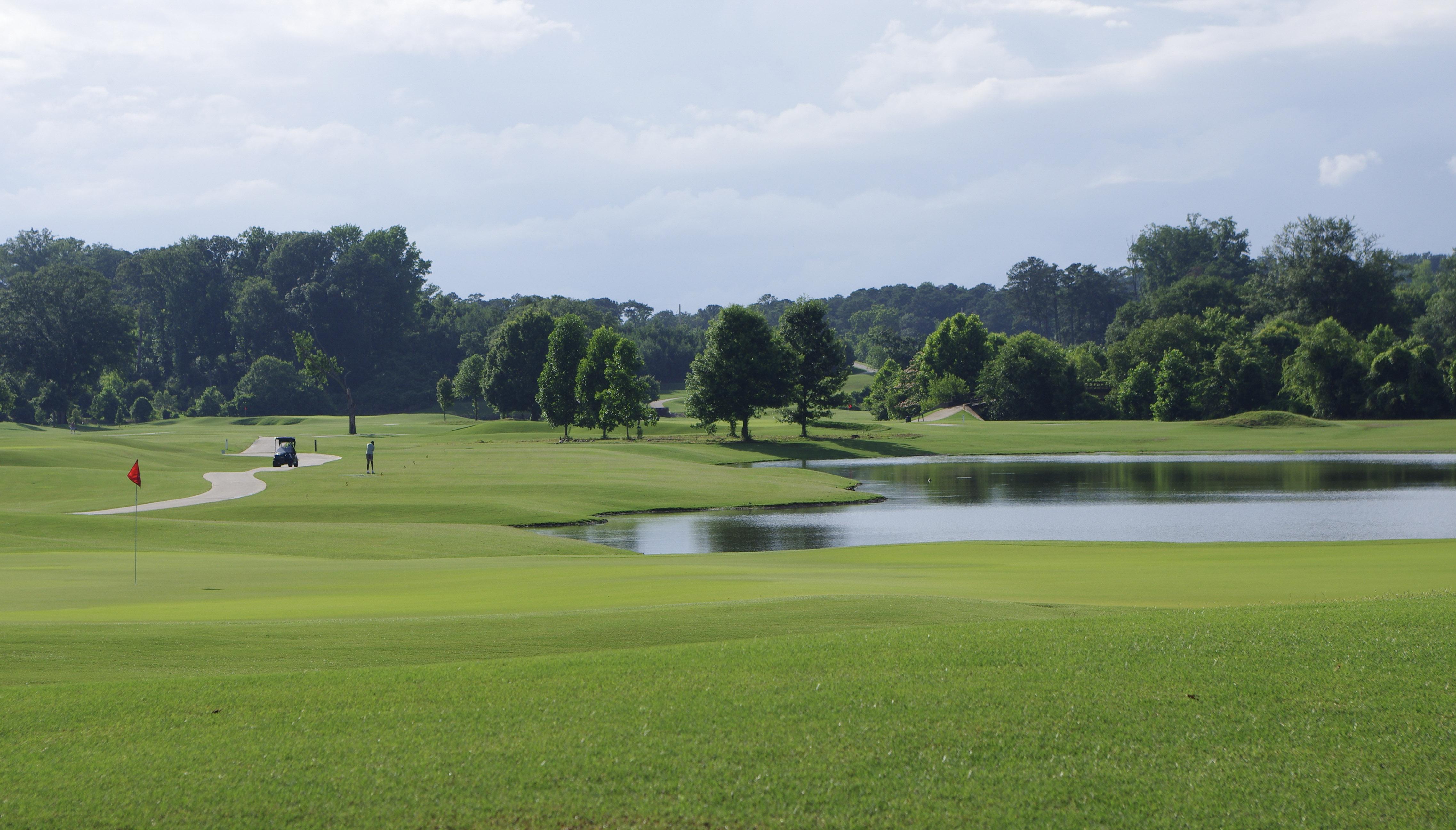
Atlanta – Bobby Jones Golf Course – Pentax K-5 / Pentax lens 18-55 f/3.5-5.6 AL WR

A characteristic unique to Pentax dSLRs is the brand’s “Shake Reduction” system (the SR logo has been on their cameras since 2006). The image sensor is mounted on a platina that moves to counteract camera shake, allowing photographers to capture sharp hand-held images at shutter speeds 2.5 to 4 stops slower than would otherwise be possible – you won’t be afraid of shooting at 1/20sec with a short tele anymore.

Other dSLRs have to rely on an image stabilization system implemented in their lenses (which increases the lenses’ size and their cost) – but Pentax’s SR system works with any lens mounted on the camera (old and recent) because it’s implemented in the camera’s body.

We know that Pentax has been using the same physical “K” lens mount since 1975. Of course the current “KAF4” variant of the lens mount has more electrical contacts and all the autofocus gear needed to support the features specific to today’s cameras, but the K-5 is compatible to various degrees with any Pentax lens made since the mid seventies.

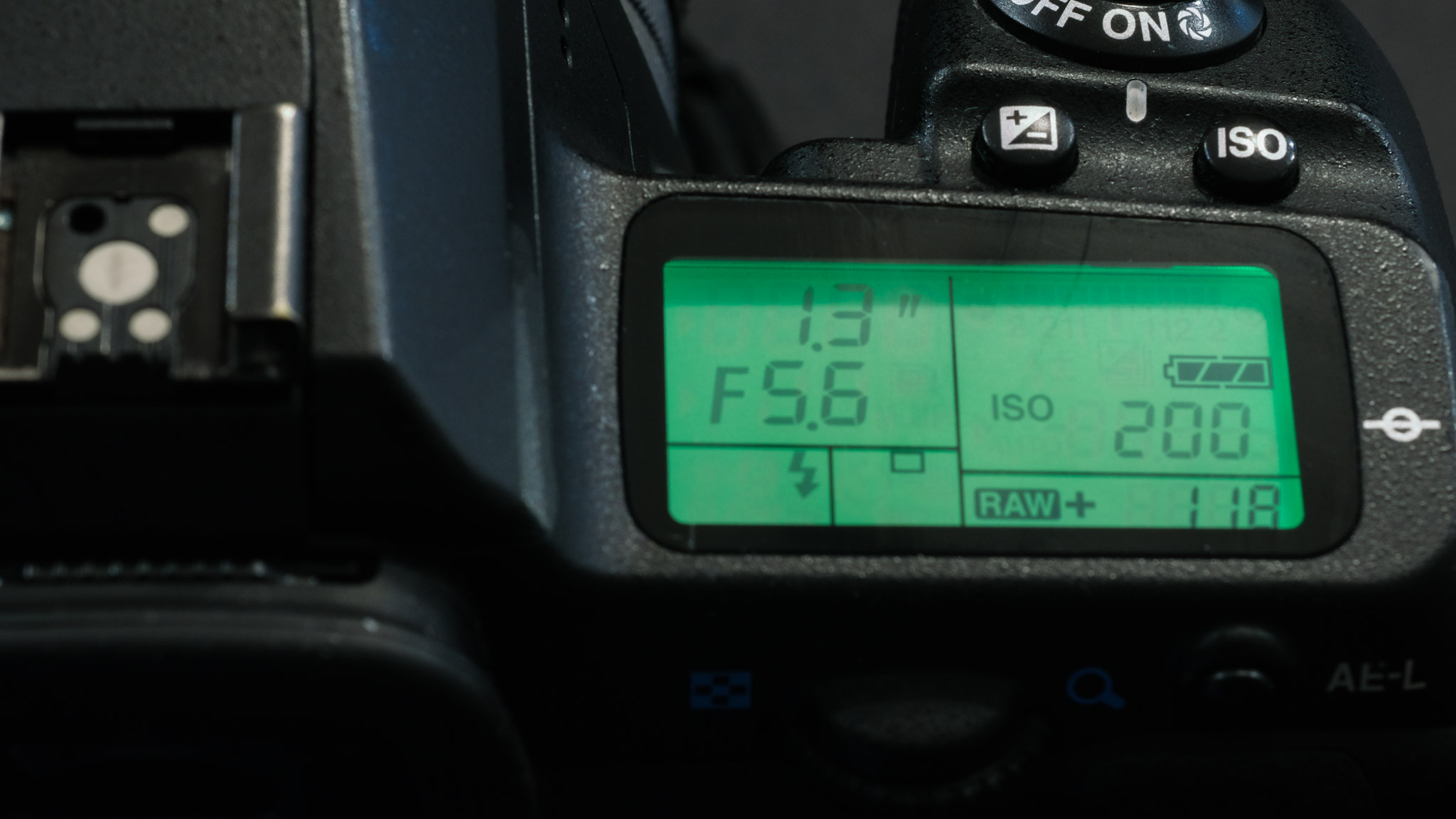
The top plate display – very few APS-C cameras still have one.

As a conclusion

A K-5 can be had for $150, with patience and a bit of luck. It was launched fifteen years ago, and it’s futile to compare its capabilities and performance to what its younger Pentax brother the K-3 Mark III or a Nikon D500 can deliver. And I won’t even start comparing the K-5 with current top of line APS-C mirrorless cameras from Canon, Fujifilm or Nikon.

But dollar for dollar, the K-5 offers a tremendous value: as an introduction to high quality cameras (for photographers upgrading from a smartphone or a digital point and shoot camera), it’s difficult to beat and it’s definitely worth every cent.

For the nostalgics of the optical viewfinder, shooting with a K-5 is also a way to indulge without breaking the bank. Used for what it’s good at, the camera is a pleasure to use and delivers high quality results. As far I could find, it’s also reliable, without any of the issues experienced with Pentax’s more amateur oriented cameras (like the K-30/K-50).

A modern mirrorless camera will do better in more situations and I don’t expect any mirrorless user to sell all their equipment to go back to a K-5, but as a complement to a good mirrorless kit, the K-5 also makes a lot of sense. Enjoy!

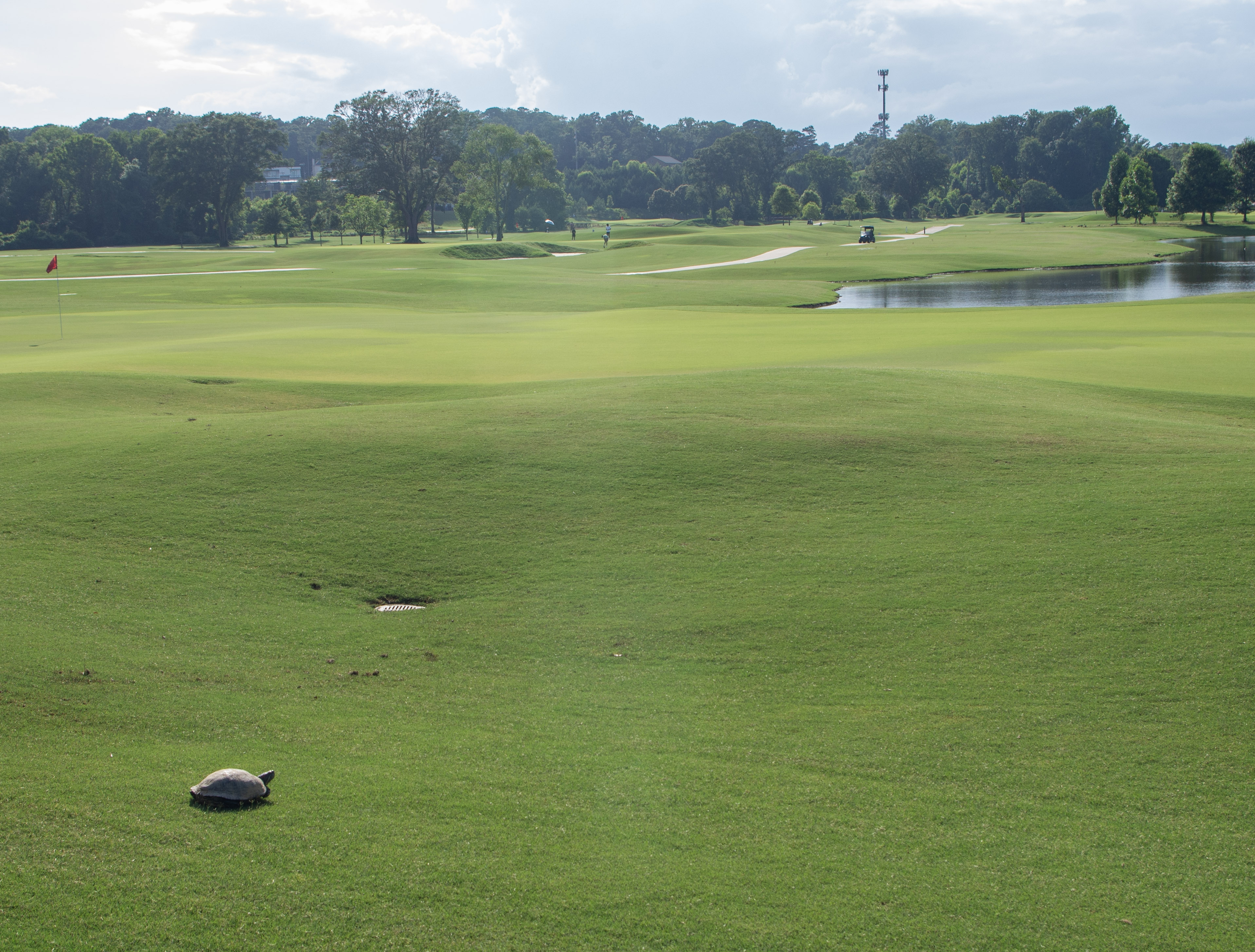
Tortoise lost on the golf course – Atlanta – Pentax K-5 / Pentax lens 18-55 f/3.5-5.6 AL WR

Do cameras and megapixels really matter?

Concerned about working with a “small” 16 megapixel sensor?

I have posted approximately 500 pictures on Flickr since the beginning of the year. The four images with the highest all time views were shot (recently) with a seventeen year old 12 Megapixel dSLR.

Even if high end PCs and laptops can support resolutions up to 8K (that would be 33 million points), most web sites and apps recommend not to upload images larger than 1920×1080 – (roughly 2 million points), and the most popular social network will down scale your images so that they fit in a square no larger than 2048x 2048 (4 million points).

What about prints?

As long as you don’t crop at all, a 10 Megapixel sensor has enough resolution for a high quality print in A4 or Letter format (assuming 300dpi), without any form of interpolation or over-sampling.

A 12 Megapixel sensor will give you more headroom, but you’ll need at least 16 Megapixels for a 11×14 inch high quality print (20 Megapixels would be better), and 24 Megapixels for a high quality 30×45 print (that’s centimeters- roughly 11x17in).

Obviously printing at a marginally lower resolution (250 dpi, for instance) will raise the maximum print size proportionately.

More megapixels and a large sensor may be needed in some circumstances, but ultimately, the old saying “f8 and be there” still rules. Be there. With a camera you’re comfortable with. Nothing else really counts.


More about Pentax cameras in CamerAgX


Atlanta skyline from the reservoir in the Shirley Franklin Park – Pentax K-5 / Pentax lens 18-55 f/3.5-5.6 AL WR
Atlanta – Colonial Homes – Pentax K-5 / Pentax lens 18-55 f/3.5-5.6 AL WR
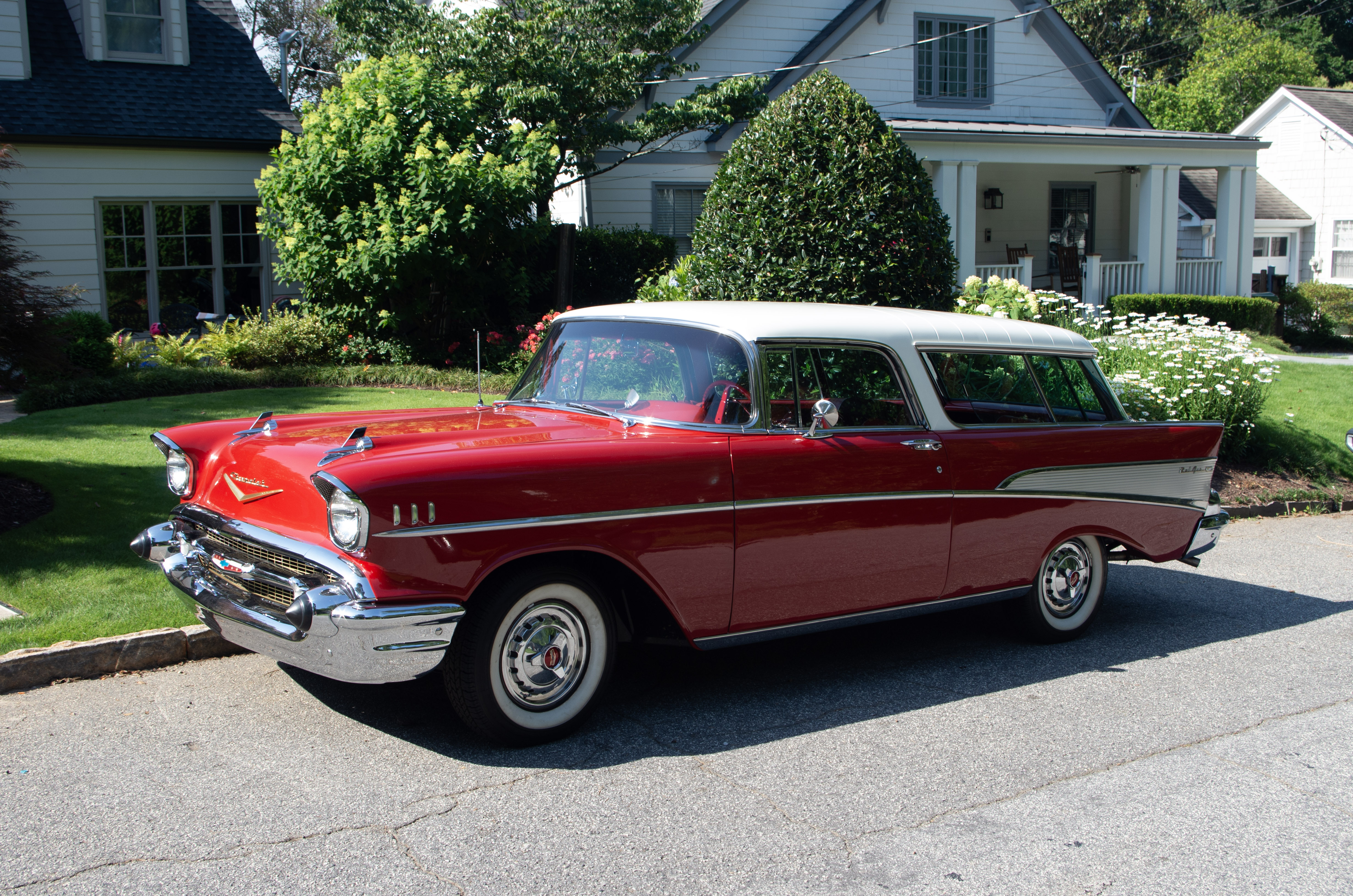
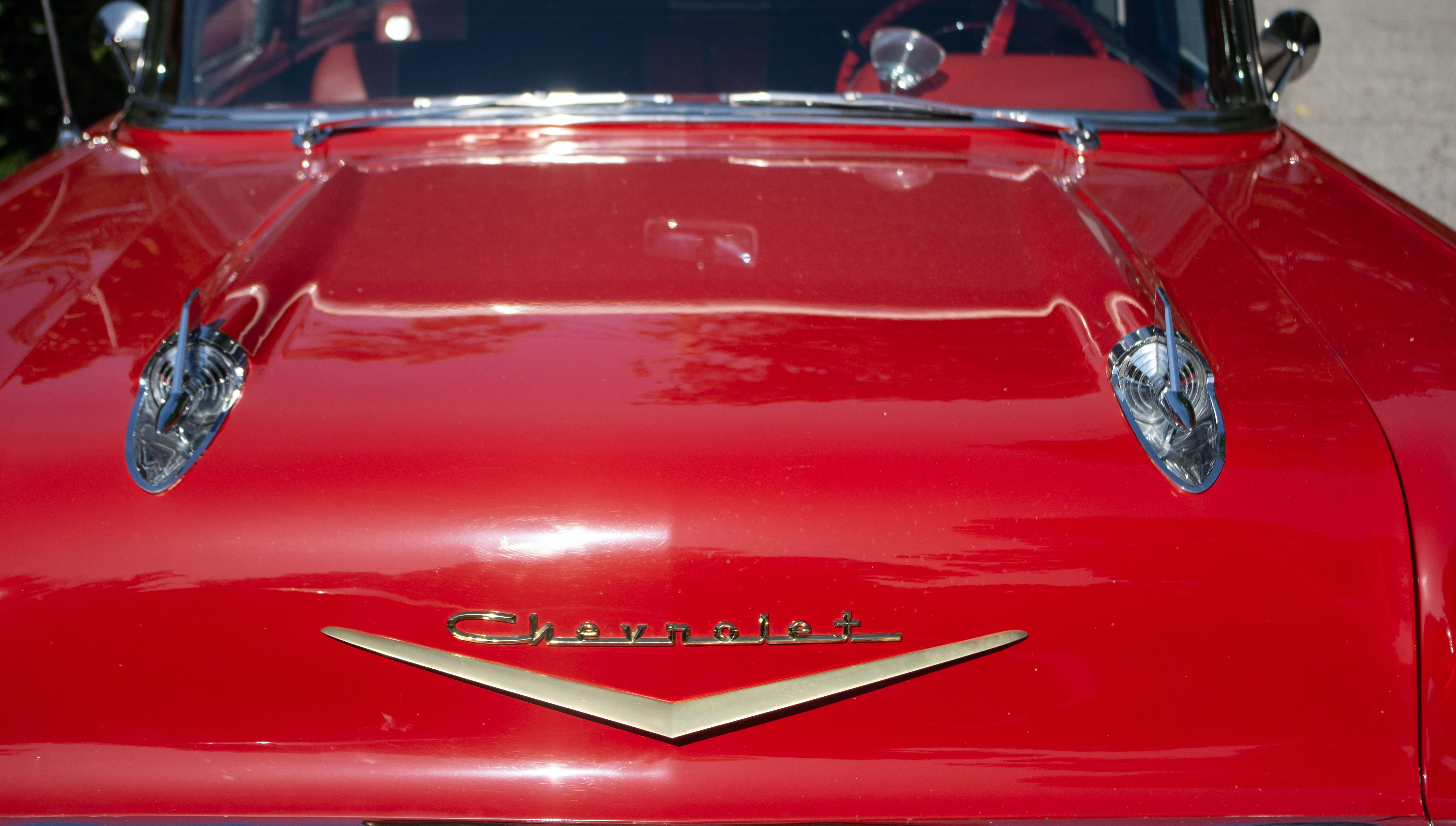
Chevrolet Bel Air
Chevrolet Bel Air

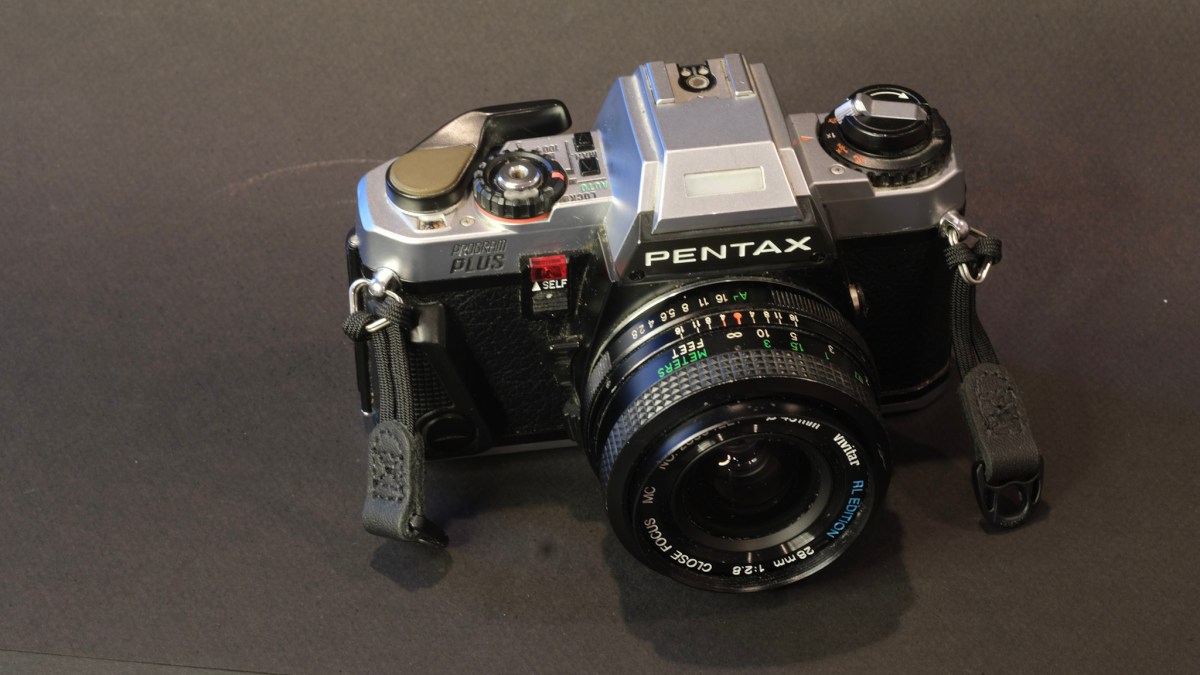
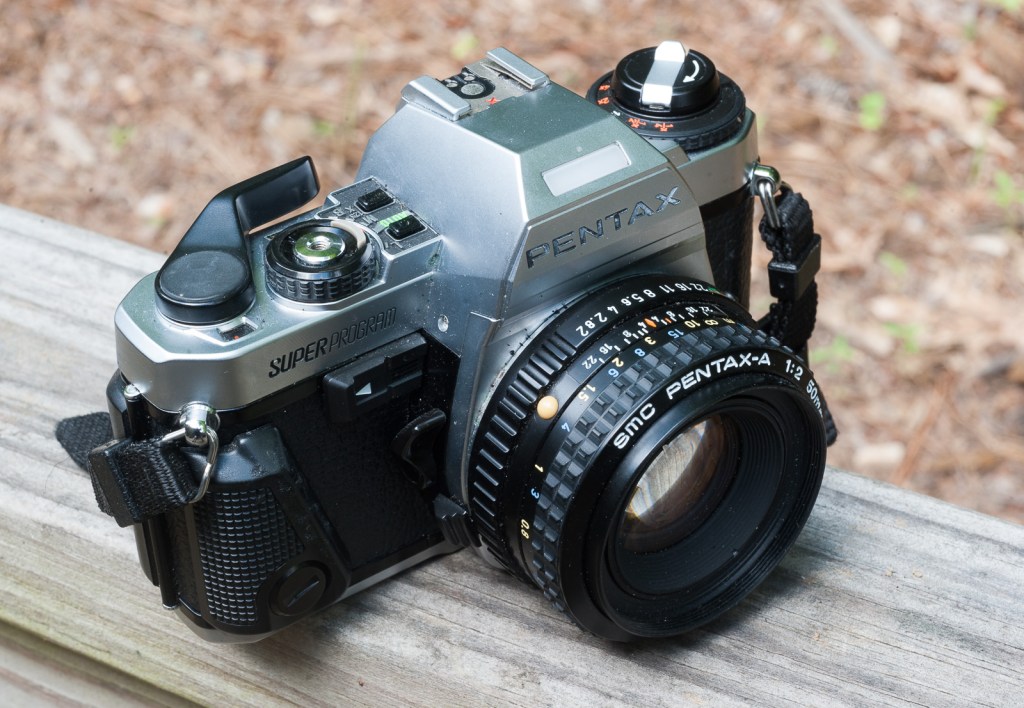
Pentax Program Plus – you can still get a good film camera for $20.00

With a good wide angle lens included in the set…

I’ve been lucky with ShopGoodwill.com lately — I recently won a Pentax Program Plus with a 28mm Vivitar lens, all for the princely sum of $21.

Let’s clarify one thing to begin with: like most Japanese camera companies, Pentax was selling its cameras under different models names in different geographies – the camera sold as the Super-Program in North America was sold as the Super-A in the rest of the world, and the Program-Plus was simply known as the Program-A outside of North America [*].

I had been looking for a Program Plus at a good price for a while – it’s the last of the ME family of cameras, a marginally simplified version of the Super Program, that I hoped would strike the perfect balance between too little features (the Pentax ME) and a bit too much (the Super-Program).

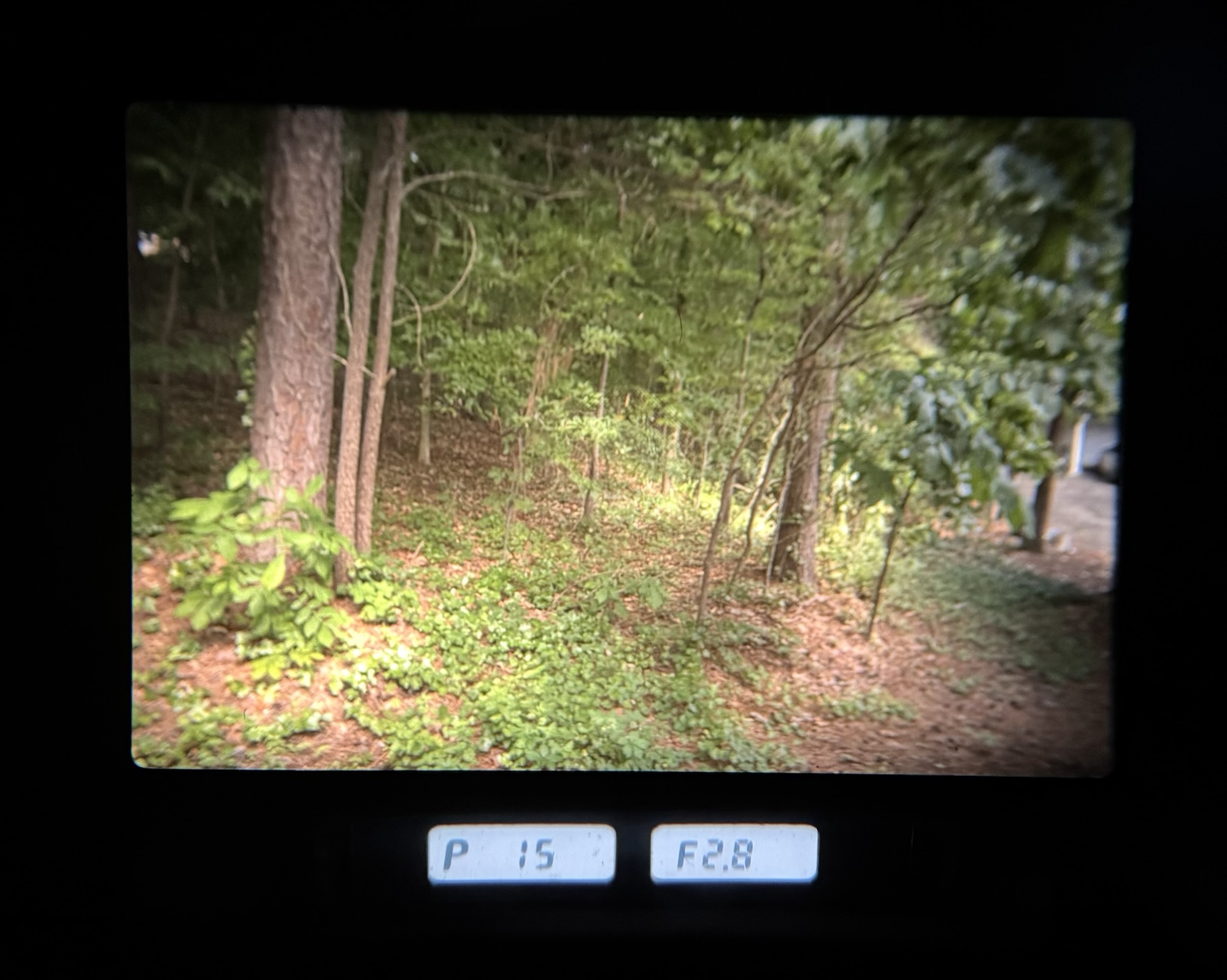
Pentax Program Plus – Program Mode (shutter speed and aperture determined by the camera).

Pentax launched the Program Plus one year after the Super Program, and did not remove much: the maximum shutter speed is limited to 1/1000 instead of 1/2000, and the camera only offers two auto exposure modes (program and aperture priority) instead of three on the Super Program.

But the right side of the top plate is a bit less cramped (it does not have a tiny LCD screen showing the selected shutter speed forced between the mode selector and the film advance lever) and the mode selector has been redesigned to be a little bit easier to set as a result.

Pentax Program-Plus with the 28mm Vivitar lens

Vivitar

I had not paid much attention to the lens that came with the camera. I had assumed it was one of those horrible third party lenses that you generally find on cameras donated to Goodwill. Not this time. It was a Vivitar lens – but not any Vivitar lens – it was the highly regarded 28mm F/2.8 Close Focus MC “RL Edition” manufactured by Komine.

You can still find Vivitar entry level digital cameras at Walmart nowadays, but today’s Vivitar is a shadow of what the brand was in the seventies. They used to be a major distributor of very good lenses and electronic flashes, a credible alternative to the leading camera companies. Some historical context, then.

Vivitar 28mm f/2.8 Close Focus MC RL Edition

When the Japanese camera industry started its expansion in the years following WW2, it was still for the most part a cottage industry – even the largest players were relatively small and highly specialized companies (in the early fifties, Nikon was only manufacturing lenses, and Canon only camera bodies, and some of Canon’s cameras came equipped with Nikkor lenses).

Only very few of those companies grew enough to find the financial strength to establish their own distribution networks outside of their country of origin.

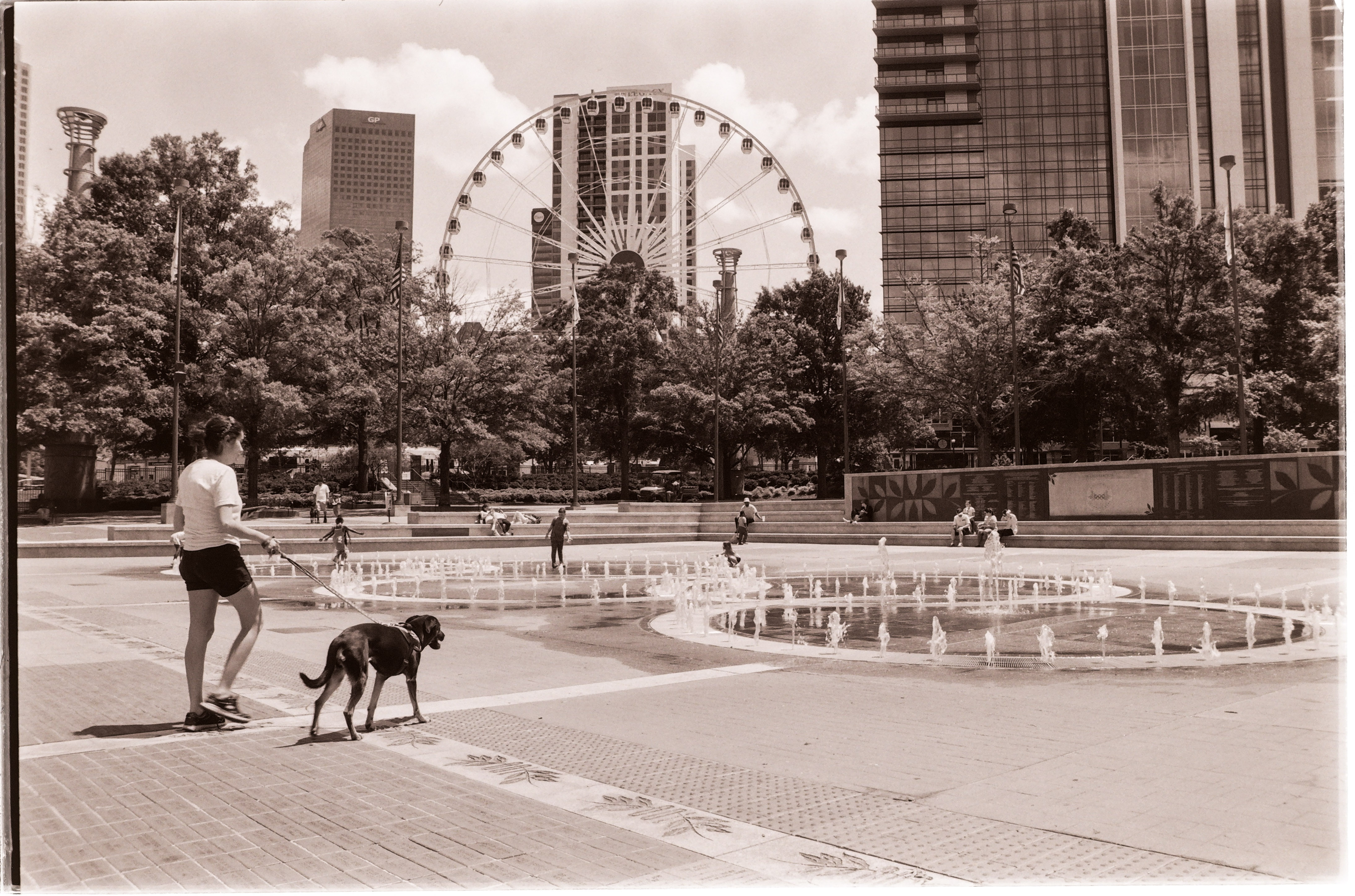
Atlanta – Centennial Park – Pentax Program-Plus – Vivitar 28mm – Ilford FP4 Plus – a pretty good lens.

An American company named Ponder & Best saw an opportunity, and started distributing under its own “Vivitar” label the lenses and accessories that it procured from a myriad of small Japanese workshops. Most of those products were probably average, but a few were very good.

Vivitar never disclosed who their suppliers were, but the urban legend attributes the best of the Vivitar lenses to a Japanese company named Komine. Vivitar lenses benefitted from a 5 year warranty, but on the “RL Edition” models made by Komine it was extended to a total of seven years. So, this 28mm from Komine is supposed to be Vivitar’s very best.

A very pleasant little camera

Shooting with the Program Plus

I’ve burnt a few rolls of film with almost each representant of the Pentax ME family recently, and the Program-Plus is the one I prefer. The ME only works in Aperture Priority auto exposure mode, and the Super-Program is borderline too complicated. Even if there is not a huge difference in the organization of the commands on the right of the top plate, it’s a bit less cramped on the Program-Plus and easier to live with.

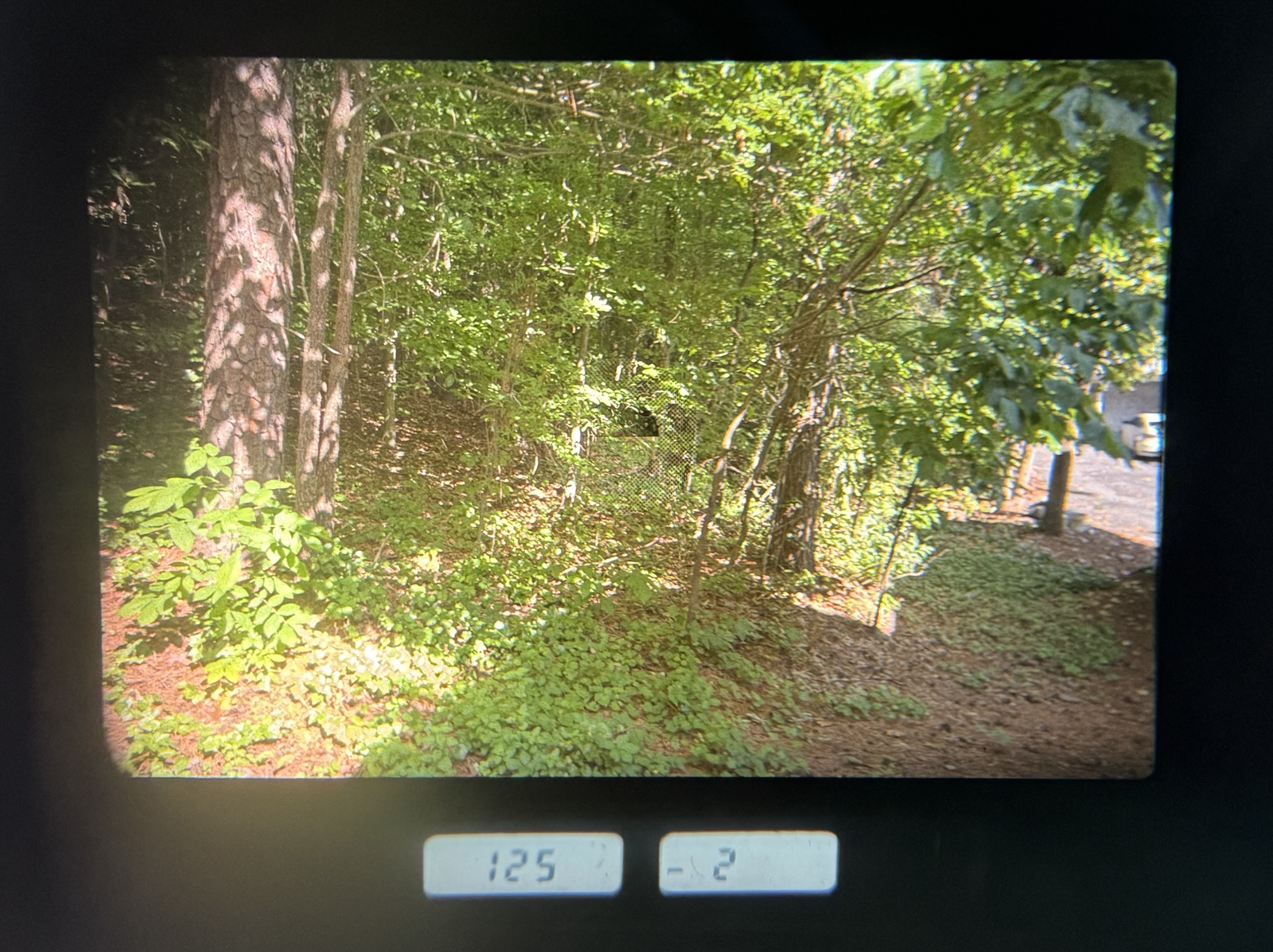
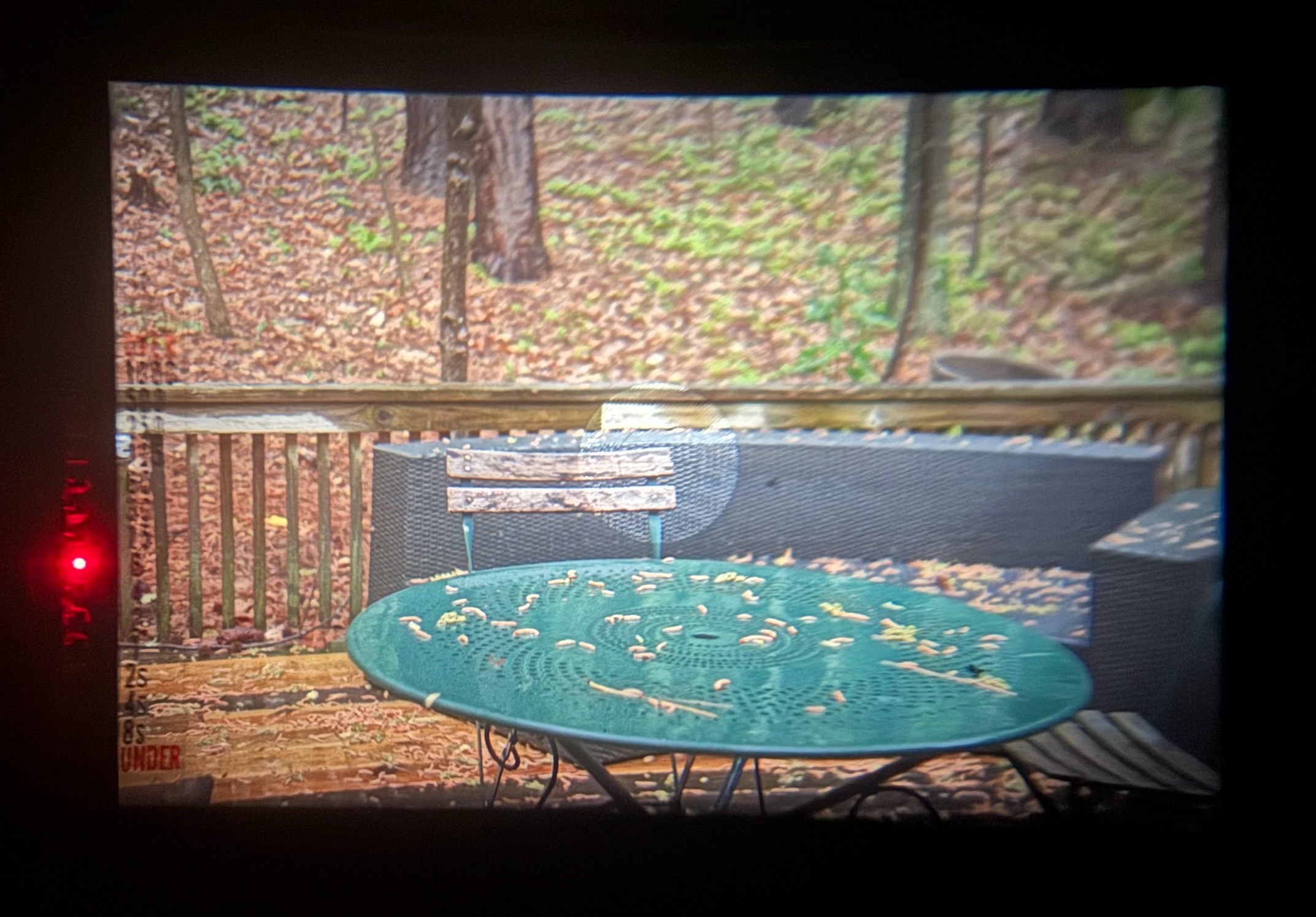
Pentax Program Plus – Semi Auto mode -here the operator has selected a shutter speed of 1/125sec, and the metering system determines that the image will be under exposed by 2 stops.

For an amateur interested in the technique of photography, the Program Plus is a very nice little camera. It’s among the smallest and lightest film SLRs of the eighties, but its compacity does not come at the cost of the user experience – the viewfinder remains very good – wide, bright and informative. The “programmed auto exposure mode” in particular is very well implemented – it lets the photographer know (on two LCD displays in the viewfinder) the aperture and shutter speed selected by the camera’s program. And in semi-auto mode, it displays the selected shutter speed on the left display, and the level of over or under exposure (in EVs) on the right one. Pretty unique in this class of camera in 1983.

Of course, nothing is perfect: the LCDs are back-lit through a large window cut at the front of the prism cover, and become very difficult to read in the dark. The Super Program is equipped with a little lamp that the photographer can activate at the push of a button, but I found it totally useless and I don’t miss it here (one of the things that were removed from the Program Plus).

Pentax Program Plus – three exposure determination modes (named M, A & P on a modern camera) are present and selected by playing with the Aperture ring (A or an aperture value) and the mode selector (Auto or Manual) – for instance, P is obtained by setting the aperture ring and the model selector on A/Auto.

For the rest, it’s one of the good Pentax cameras – no horror stories when it comes to reliability, and because it was designed for the “KA” version of the Pentax lens mount, it operates with a very wide range of lenses – anything from Pentax K lenses of 1976 up to some of the most recent D FA models.

While not as nicely finished as an ME or a Super Program, it’s still a well build and solid camera – nothing to be compared with the plastic-fantastic cameras of the following decade that look so cheap today.

Like all the cameras of the ME series, it simply needs two easy to find and (relatively) cheap SR44 1.5 batteries, that it does not seem to tax too rapidly.

As a conclusion

Eight years separate the Pentax ME from the Program-Plus. Being based on a similar platform, they’re not that different of course, but the Program-Plus is definitely a better camera for an amateur who is interested in photography – in addition to the Aperture priority mode of the ME, there is a very useful Program Auto Exposure mode, and a real semi auto mode to use when the exposure is too tricky to trust the automatism. The focusing screen is probably a bit finer as well, and the fragile mechanical selfie timer has been replaced by an electronic one that should be more durable.

Pentax Program-Plus (top) and Super-Program – some cost cutting is visible on the Plus, but the commands are not as cramped.

At $21.00 (good lens included), my copy is probably on the cheap side (I admit I was lucky on this one), but even from a reputable seller, you should not pay more than $50.00 for a nice one.

The Program-Plus sits with a few other cameras of the same vintage (the Nikon FE2, the Olympus OM-2 and the Canon AT-1) at the top of my very personal list of preferred manual focus film cameras. And it’s definitely one of my keepers.


[*] I don’t know why the Japanese camera makers were using different names for models sold in the US – “to reflect the local preferences” is often mentioned as an explanation (for instance, naming a model “Rebel” would be perceived positively in the US but would not in other parts of the world). I suspect there are other reasons as well – like protecting the US distributors from grey imports, or (maybe), helping the Japanese revenue service make the difference between cameras destined for local consumption (and subject to sales tax), and cameras destined ultimately to be taken out of the country and sold to tourists or Army personnel in the duty free shops or in the PX.


More about Pentax film cameras in CamerAgX


Atlanta – Centennial Park – Pentax Program-Plus – Ilford FP4 Plus
Atlanta – Centennial Park – Pentax Program-Plus – Ilford FP4 Plus – May, 4th, 2025 – May the Fourth be with him.
Atlanta – Centennial Park – Pentax Program-Plus – Ilford FP4 Plus. Centennial Park – all 4 photos developed with the Lomo Daylight Developing Tank and digitized with the JJC adapter.

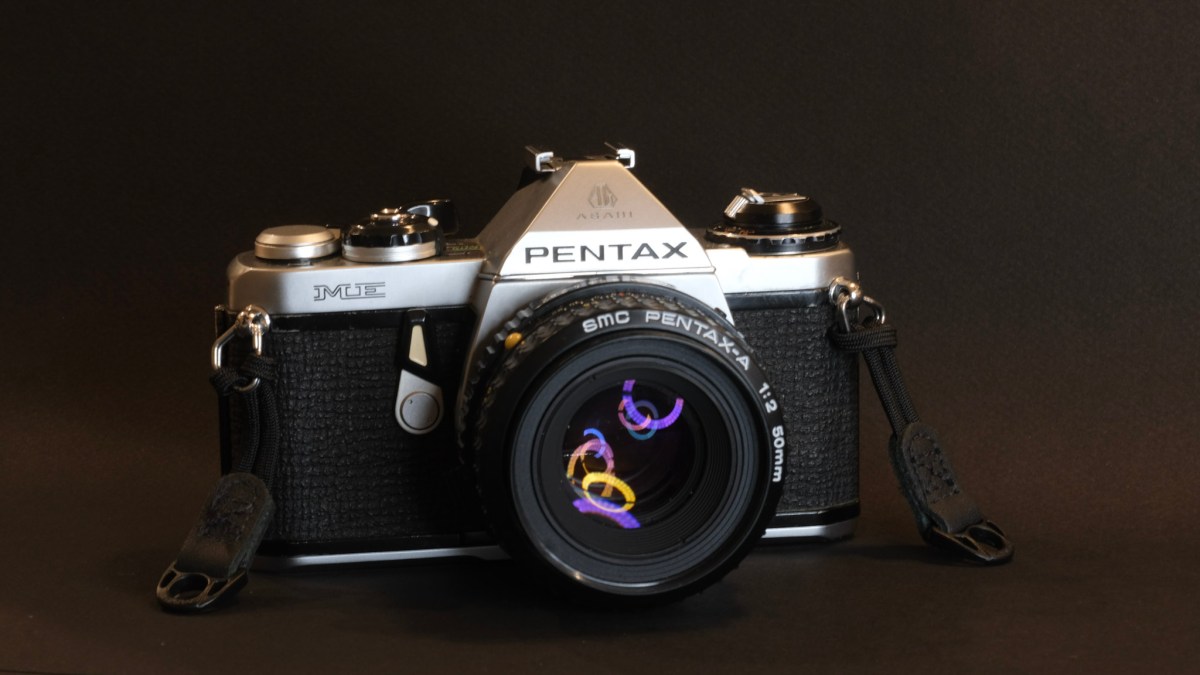
Pentax ME – a deeper look at a very likable film camera

I rediscovered the Pentax ME and its close family of derivatives recently, after having been disappointed by the Pentax P3 (also know as the P30).

I would have loved to like the Pentax P3. When it works, it’s a great camera. But I bought three copies of them (a P3, a P3n, a P3t) at different times, and they all failed me. Always an issue with the film advance. But if I could not rely on a P3, what about shooting with the Pentax cameras of the following or previous generations?

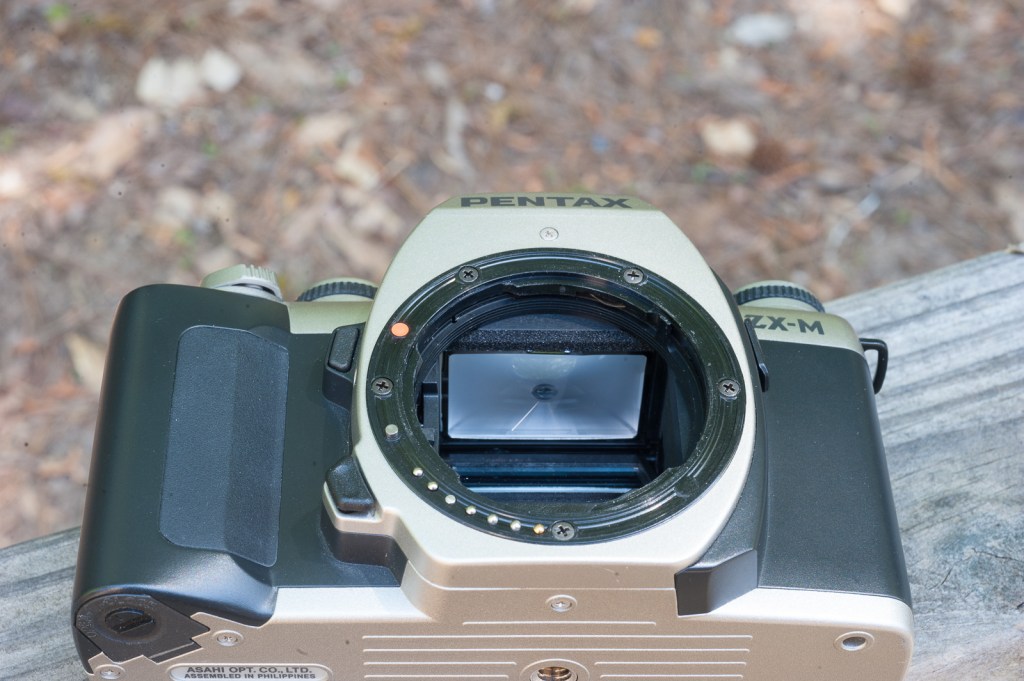
Pentax ZX-M: the bayonet mount is in polycarbonate, like almost everything else in this camera

I’ve burned a few rolls of film with a plastic-fantastic ZX-M (also sold as the MZ-M), a motorized entry-level autofocus camera that Pentax had deprived of its autofocus system to make it a “learner’s camera”. Launched in 1997 to replace at the same time the venerable K1000 and the P3, the ZX-M was one of the last film SLRs released by a major vendor before the amateur photographers switched to digital, and for that reason it did not sell in large quantities.

It works well, but it’s plasticky, it’s loud, the exposure metering is a bit too primitive, and its pentamirror viewfinder is dark and narrow. People shooting with film nowadays do it at least partially for the gratifying experience of interacting with a nice piece of conventional machinery – and it’s definitely something that the MZ-M can’t provide.

At the other end of the timescale, pre-dating the K1000 and the P3, the Pentax ME and all its derivatives – ME Super, MV, MG, Super Program, Program-A – were a sales success, and are still abundant on the second hand market. They are all built on the same very compact platform. So compact there was no room for a conventional shutter speed selector. That’s the series we’re going to explore today.

The ME generation

In 1975, Pentax finally abandoned the 42mm screw mount for the “K” bayonet, and launched a new line of K cameras (KM, KX, K2) which were – to a large extent – similar to their screw mount predecessors, except for the bayonet mount, of course. The K1000 was not part of the initial launch – its turn came a few years later – essentially a KM with a few minor features removed.

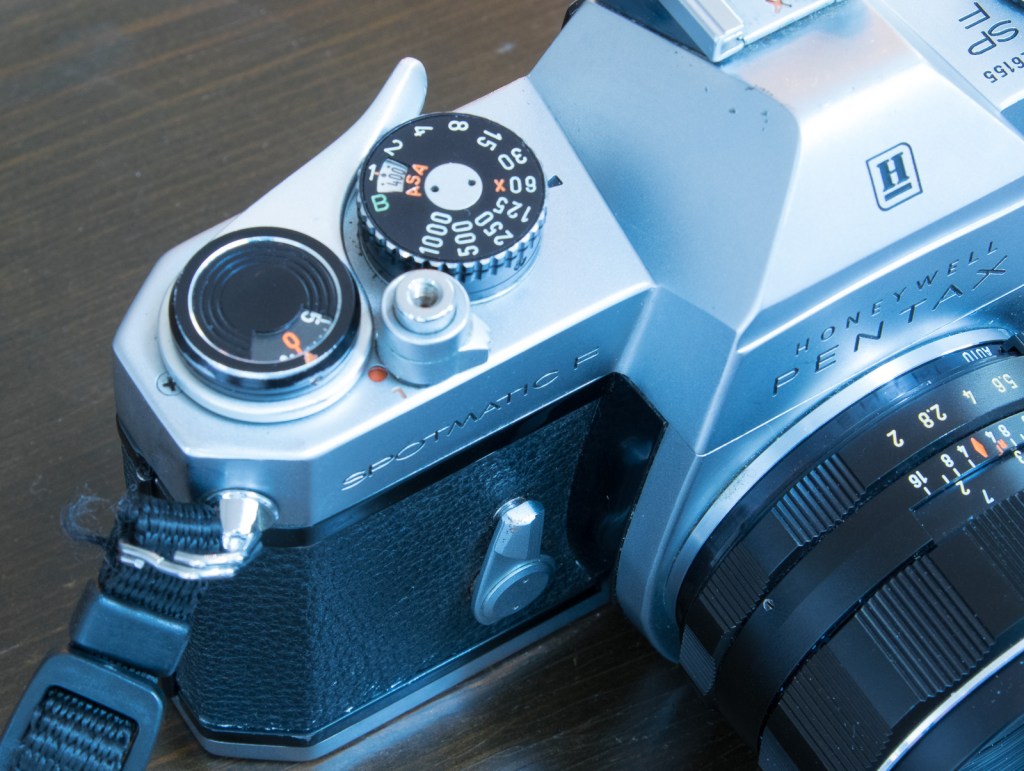
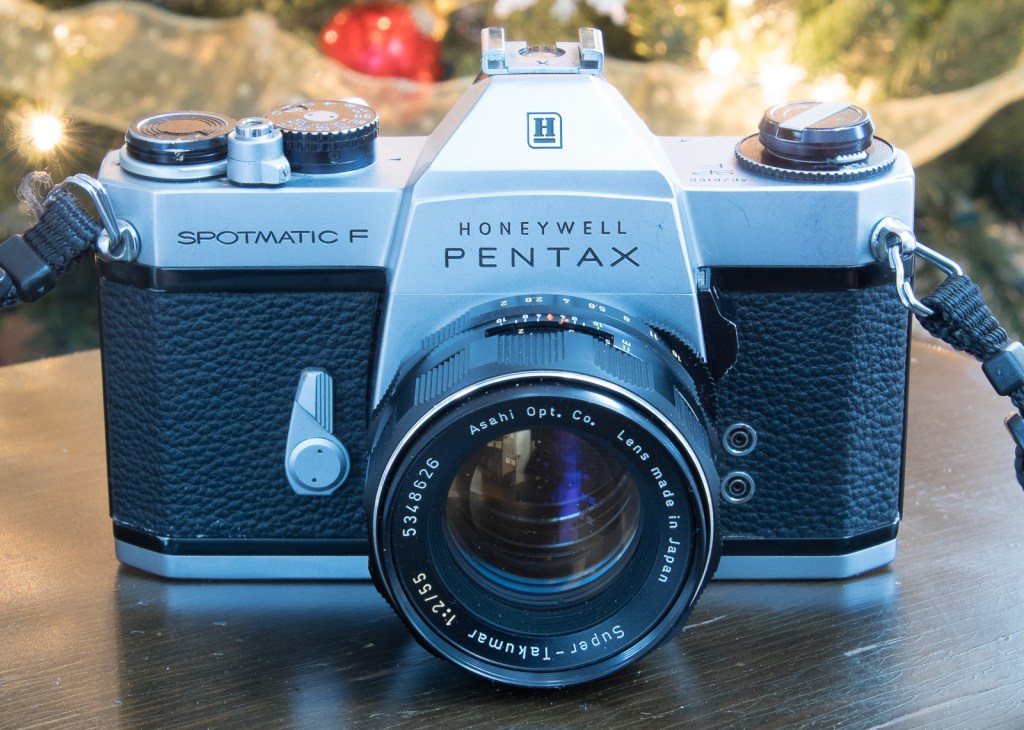
A Spotmatic F from 1973. From this angle it looks almost identical to a KM. The K1000 is a slightly decontented KM.

One year after the KM-KX-K2 cameras, Pentax launched two completely new models, the semi-auto MX, and the Aperture Priority Auto Exposure ME. Both were technically advanced, and really represented the state of the art in the heart of the market. Except for their small size, the two cameras had little in common (their winders and motor drives were physically different and not inter-compatible, for instance).

Pentax MX and ME – from the sales brochure (1976) – Courtsey of Pacific Rim Cameras

The Pentax MX is what an Olympus OM-1 Mark II could have been if Olympus had bothered updating the technology content of their camera. The MX is a super compact, semi auto SLR, with a huge viewfinder. It was my main camera in my younger days. Its electronics ultimately failed, otherwise I’d probably still be shooting film with it. But while it worked (a good 15 years) it was a great little camera.

The MX remained unchanged until Pentax sent it into retirement in 1985, with no direct successor. In the meantime, the buying public had shown it was more interested in cameras offering auto exposure modes, and it was the ME and its derivatives that brought the money to Pentax’s coffers.

When it was launched, the Pentax ME had a singular characteristic: contrarily to almost every single lens reflex before it, it did not have a shutter speed selector – just a rather difficult to move four position switch (off, auto, synchro flash and B). It could only operate in auto exposure mode (you set the aperture, the camera picks the shutter speed), and in totally manual mode at 1/100sec (no meter indication to guide the photographer).

A new category of SLRs without a shutter speed selector rapidly followed the formula inaugurated by the Pentax ME (Nikon EM, Olympus OM-10, Canon AV-1, for instance).

A simplified MV model was launched at a lower price point in 1979, followed one year later by the ME-Super, which offered the ability to select the shutter speed by pushing two small buttons on the top plate. Then came the MG (spec’d like the original ME), then the Super-Program and the Program-Plus [*], with the same tiny shutter speed push buttons already seen on the ME Super, and more automatic modes (Program mode for the Program-Plus, Program and Shutter priority modes for the Super-Program). All models were developed on the same technical platform, and could share accessories like winders and motor drives.

* [Like most Japanese camera companies, Pentax was selling its cameras under different models names in different geographies – the camera sold as the Super-Program in North America was sold as the Super-A in the rest of the world, and the Program-Plus was simply known as the Program-A outside of North America]

Pentax ME – a very nice detailing

Shooting with the ME

Shooting with a Pentax camera such as the ME is a pleasure. The camera is small, light, reactive, and provided you control from time to time that the shutter speed (determined automatically by the camera) is still the desired range, you’ll be fine. The viewfinder is extremely large, but I was surprised by how difficult it was to set the focus though – I know I’m getting older (aren’t we all) but I found the glass plane rather dark and the micro-prism telemeter difficult to use. I was shooting with a not very luminous zoom (and not very good if I judge by the results) Pentax A 35-70 f/3.5-4.5 zoom, on a camera that was originally designed and sold for more luminous prime lenses such as the 50mm f/1.7, so it could explain some of that.

A Pentax Program-Plus I was testing in parallel fared better in that regard – in the viewfinder the ring of micro-prisms offered more contrast and focusing was significantly easier.

Pentax ME – Top plate

The absence of a depth of field preview is not a problem for me (I seldom use it when a camera offers the option), and not having a conventional shutter speed knob at my disposal was not really a hindrance. But when the lighting of the scene becomes complex, and without an exposure memorization button and no semi-auto exposure mode, you have to play with the ISO settings dial for exposure compensation, which I’ve always found very difficult (I never know if I need to set the dial to +2 or -2). If only for that reason, I would not bring a ME with me if I knew in advance that the lighting conditions would be tricky.

Viewfinder of the Pentax ME – a shutter speed scale on the left, split image and microprism focusing aids at the center. The 0.97 magnification ratio was exceptional .

The camera is nicely finished with a few Pentax touches (red markers on the top plate, little indicator on the back of the camera to show that the film is correctly attached to the film spool). The film spool itself follows an original Pentax design (they called it “Magic Needles”) that makes loading film easier than with most contemporary competitors.

What about the reliability?

The ME and its derivatives are 40 to 45 year old, and as with any other camera of the same vintage, there are quite a few things that can go wrong: their electronics (in general), their exposure metering and their film advance mechanism to name the most obvious.

Pentax ME – the receiving spool is composed of white “Magic Needles” that make film loading very easy.

By very empirical means (counting the hits on Google for a question about film advance reliability) – I came to the conclusion that the ME Super definitely had an issue with the film advance as well. I’m on the fence for the ME, the MV and the Super-Program – there seem to be far fewer Google hits about reliability issues with those cameras, but they sold in smaller numbers than the ME Super. In any case, it’s highly preferable to buy a vintage Pentax SLR from a photographer who has actually used it to shoot film, as those film advance issues are often impossible to detect without having put a roll of film in the camera.

How much?

Film cameras are getting more expensive these days – but you can still find a nice ME for $50.00 on eBay, and probably for a bit less on various auction sites if you’re patient.

Of all major camera vendors, Pentax is the one that has maintained the inter-compatibility between new and old bodies and lenses for the longest time – anything – manual focus, autofocus – sold by Pentax until they launched their first digital SLRs in 2004 will work with the ME.

Pentax Super Program and ME – the former benefits from an electronic self timer, a depth of field preview, and a removable grip.

Pentax has been catering to amateurs more than pros, and it will be difficult to find on the second hand market the specialty lenses (ultra-wide angle, f/2.8 constant aperture zooms) that are relatively abundant in Nikon F or Canon EOS mounts. But as long as you look for lenses typically purchased by amateurs, the offer is plentiful and the prices reasonable.

As a conclusion

The Pentax ME was launched in 1976, at the beginning of a ten year period which saw a whole new generation of amateurs come to “serious” photography and buy their first SLR. Ultra compact, reactive, nicely finished, with a good (for the time) viewfinder and a simplified set of commands, the ME was the right camera at the right time, and sold in the millions.

But this new breed of photographers was demanding more convenience, program mode auto-exposure and zoom lenses, and as result the SLRs launched towards the end of the period of manual focus SLR supremacy (1983, 1984) are simpler to use and have more luminous viewfinders.

Prices on the second hand market do not necessarily follow a perfect logic – and cameras or lenses of the same family (in this case the ME, ME Super, Super Program and the Program Plus) can be had for roughly the same price – irrespective of the performance hierarchy between the different models.

So… the ME is a nice little camera, eminently likable, but if for the same $50.00 price you can find a Super Program or a Program Plus, I would recommend you pick the “Program” over the ME.


More about Pentax Manual Focus SLRs in CamerAgX:


A few shots taken during the Inman Park festival a few weeks ago. The Pentax ME behaved – it’s very nice to use as a street photography camera, but the Pentax SMC A 35-70 lens disappointed me, again.

The film was developed in a Lomography Daylight Developing tank with Ilford Simplicity chemicals, and digitized on an APS-C camera using a JJC adapter.

Inman Park Festival – Atlanta – Shot with Pentax ME and Pentax SMC A 35-70 f/3.5-4.5 Zoom
Inman Park Festival – Atlanta – Shot with a Pentax ME and the Pentax SMC A 35-70 f/3.5-4.5 Zoom
Inman Park Festival – Atlanta – A local politician and a fan. Shot with a Pentax ME and the Pentax SMC A 35-70 f/3.5-4.5 Zoom
Beltline – Atlanta – Shot with a Pentax ME and the Pentax SMC A 35-70 f/3.5-4.5 Zoom

Pentax K-r: a pretty good dSLR and its lens for less than $150

New entry level interchangeable lens cameras can not be had for much less than $800 nowadays in the US, and that’s before the new tariffs start showing their ugly face on the shelves of the resellers. Giving a new Life to Old Gear and buying used equipment is the best answer in the short term.

We’ve seen a few weeks ago that early mirrorless cameras like the Panasonic G1, G2 or G3 can be had for less than $150.00 – those cameras are modern and pleasant to use, and the lenses you would buy for them totally compatible with the current micro four third (m43) cameras from Panasonic and Olympus/OM-System. But the dynamic range of the sensor leaves a lot to be desired.

In the same price range, an alternative is to look for entry level APS-C dSLRs. In that category, Canon and Nikon cameras abound, but a better deal can be found with Pentax, whose entry level dSLRs were well spec’d, and often available in very interesting colors. I recently found a “Gundam” Pentax K-r body at a good price in a Japanese eBay store (for those who are not in the know, “Gundam” is a Japanese science fiction media franchise, featuring giant robots painted in shades of blue, purple and yellow).

a Gundam inspired toy

Launched in 2010 (like the Panasonic G2), the K-r is also a 12 Megapixel camera, but with a significantly larger sensor (APS-C) provided by Sony. Of course, and contrarily to the Panasonic G series, it’s a “conventional” digital SLR with a flipping mirror, and therefore the body and the lenses are larger and heavier than the Panasonic’s. The viewfinder is optical, and the autofocus of the “phase detection” type, as opposed to the electronic viewfinder and contrast detection autofocus of the Panasonics. Lastly, it accepts (with various limitations, of course) almost any lens graced with a variant of the Pentax K bayonet mount – even if it will give its best with Pentax DA, DA-L and DA Limited lenses, designed specifically for small sensor digital cameras.

Pentax K-r “Gundam”

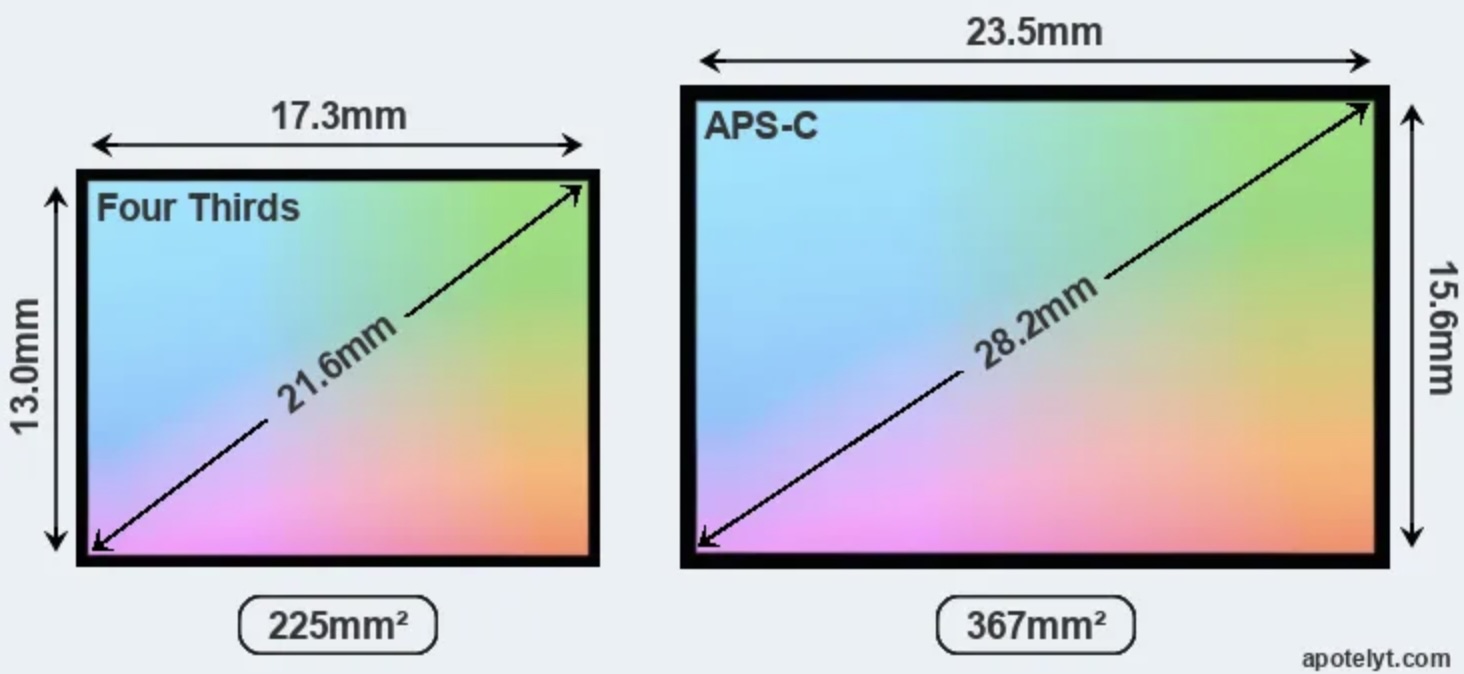
Does the size of the sensor matter?

On today’s market, it will be difficult to find any interchangeable lens camera in the $100 to $150 price range with a resolution higher than 12 Megapixels. But 12 Megapixels is not that bad – it’s enough for a 8x10in (roughly A4) print at 300 dpi, and much higher than what is typically needed to share images on social media: most social media platforms downscale the imported images to bring them down to 2000×1200 points (approximately), when a camera like the Pentax K-r captures images of 4288 x 2848 pixels. Which leaves plenty of headroom.

Comparison of the size of a micro four thirds (m43) sensor with an AS-C sensor (source: apotelyt.com)

There are more factors in the quality of an image than the resolution of the sensor: cameras of the K-r’s generation still needed a low-pass filter to control moire to the detriment of the resolution of small details, and the practical difference in image resolution between a K-r and a 16 Megapixel camera deprived of a low-pass filter will be higher than what a simple math would lead us to believe. The dynamic range of the sensor was also more limited, and the control of noise was more aggressive and not as efficient as what cameras launched a few years later offer.

Only one chance to give a first impression: the size of the camera with its kit zoom

For a dSLR with an APS-C sensor, the K-r is a small camera. And the body on its own is not that big. But mount a lens, any lens with the exception of a few Pentax pancake prime lenses, and it becomes a large object, that it will be impossible to store in the glove box of a car or a lady’s hand bag. If you stop at a bar or a restaurant, and you don’t carry a back pack, you will not know where to place the camera – on the table? hanging at the back of a chair? Nothing seems right. In that regard, it can not be compared to a compact digital camera or to a micro four thirds mirrorless camera like the Panasonic G2, that you can drop in the pocket of a coat.

That being said, the K-r is not heavy, its body is well designed with a big hand grip, the commands are logically placed, the LCD screen on the back of the body large enough, and it’s a very pleasant camera to shoot with. If only those lenses were not so large.

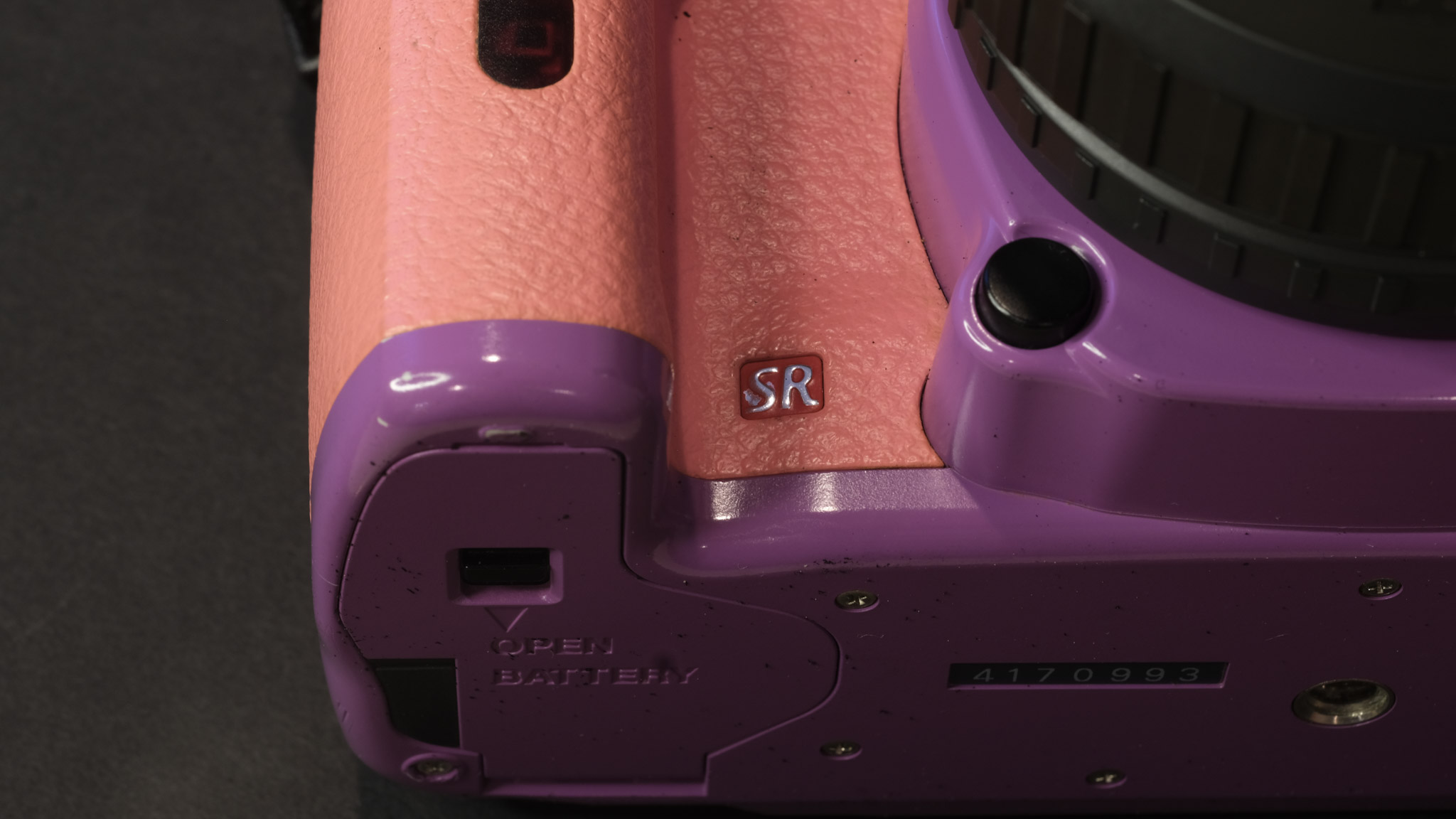
Pentax K-r – “SR” is for “Shake Reduction” (the brand’s image stabilization).

Only one chance to give a first impression: the viewfinder

Besides the size, the second thing that strikes you is the viewfinder. Again, after you’ve spent a few hours with the camera, you’ll find it perfectly fine, but if you’re used to shooting with a 35mm reflex, a full frame dSLR or a recent mirrorless camera with a high resolution electronic viewfinder, you’re in for a shock. The optical viewfinder is small and relatively dark, good enough to compose but not always to be sure you’ve captured the “decisive moment”. You really need to check the image on the display at the back of the camera to be sure it’s any good.

To Pentax’s defense, the viewfinders of their dSLRs are generally better (larger, more luminous) than what you find on equivalent Canon or Nikon models. And entry level mirrorless cameras in a similar price range (Sony NEX3, Olympus Pen) don’t have a viewfinder at all and require the photographer to compose on the rear LCD, as if using a smartphone. But when mirrorless cameras have an electronic viewfinder (an EVF), it’s not constrained by the size of the sensor, of the mirror or of the penta-prism. Even the Panasonic G2 with its comparatively tiny sensor has a large viewfinder, and provides an experience not dissimilar to the EVF of a full frame camera. Admittedely the image in Panasonic’s EVF is relatively low resolution and its dynamic range is limited, but it’s definitely showing a larger view of the scene than the optical viewfinder of an entry level APS-C camera.

Videos

Not the K-r’s cup of tea obviously. dSLRs in general are not very good at shooting movies, and this one is probably worst than average at that exercise – it only records 720p and autofocus is not available while shooting videos.

The ergonomics

The physical commands are organized more or less the same way as on the Panasonic G2 – one control wheel under the thumb, a few buttons to control sensitivity (ISO), over/under exposure, as well as AF and AE lock. Easy to use if you’re familiar with the modal interface used by most film SLRs since the mid nineteen eighties.

Pentax K-r – the back LCD and the commands

The unique selling proposition: in body image stabilization

One of the oldest rules of photography is that (on a hand held 35mm film camera), the shutter speed should never be slower than the focal length of the lens – if you mount a 28mm lens on your camera, 1/30sec is the minimal shutter speed that will avoid the blur caused by camera (and operator) shake; for a 135mm lens, the minimum speed would be 1/125sec., and so on.

That is, unless some form of image stabilization system is involved. Some camera makers (Canon, Nikon, Panasonic) have elected to equip some of their lenses with optical components that move inside the lens when a picture is being shot to compensate for camera shake. Other camera makers (Olympus, Pentax, Sony) have elected to move the image sensor itself while the picture is being shot. And more recently, both in-lens and in-body image stabilization have been combined to push the performance of the system to a higher level.

Pentax dSLRs – including their entry level models – have been equipped with a “Shake Reduction” system since the K10D of 2006. Because it’s an in-body system, it works with any lens, including manual focus lenses from the early K and KA mount era.

Maxence – Pentax K-r – Pentax lens KAF 35-105 f/4-5.6 – from .dng (RAW) file; processed in Lightroom

Performance

Pentax is a brand for money conscious traditionalists. Across the years, they have preserved the compatibility of their bodies with any lens they’ve made better than any other camera maker, including Nikon. It has its good sides, and its bad sides.

The autofocus is definitely old school. Even today Pentax bodies come with a DC motor to drive the focusing mechanism of lens – something that ensures compatibility with any Pentax Autofocus lens made since 1986. Nikon stopped offering this type of compatibility with the D3000, D5000 series and on the newest of the D7000 series, the D7500.

Pentax K-r – the commands

On the K-r, the autofocus system is generally accurate, but rather slow and definitely loud.

Image quality is very good for a 12 Megapixel camera, but the K-r is one of those old-school cameras that produce significantly nicer RAW files than JPGs. In the absence of Wi-Fi or Bluetooth connectivity (remember, this is a camera launched in 2010), the photographer will have to upload the pictures from the SD card to a photo management software (on a smartphone, a tablet or a personal computer) and will have the ability to process the RAW files before sharing the resulting JPEGs on social media.

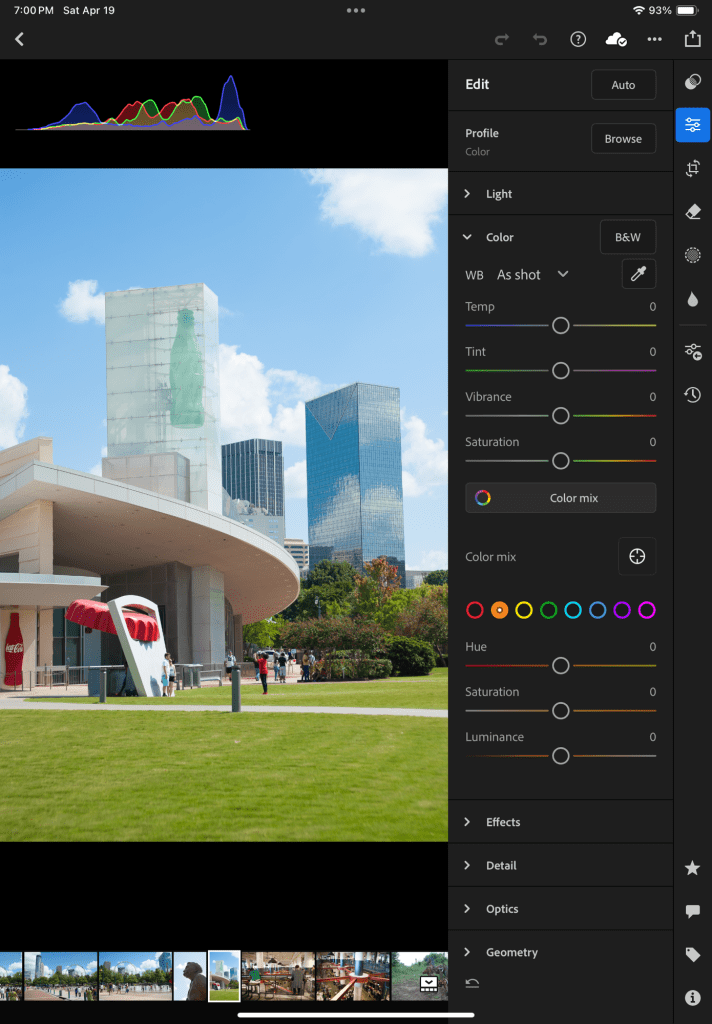
Atlanta – the entrance of the “World of Coca-Cola”

Reliability

It’s now a 15 year old model, but nothing really bad has been reported in the Interwebs regarding the reliability of the K-r. As usual buy a camera with a battery and a charger, that the seller has personally tested: “I could not test the camera because it came without a battery or a charger” is a major red flag for me.

A reason I chose a K-r rather than a much better spec’d 16 Megapixels K-30 and K-50 is that those models are known for an “aperture control mechanism” issue, that renders the camera virtually unusable. A small part accessible through the lens mount (an easy to procure solenoid) is the apparent culprit, and DIYers confident enough in their dexterity with a soldering iron can attempt a repair and replace it. Definitely not for me.

Pentax K-r and Panasonic G2 – an APS-C dSLR is definitely larger once a lens in mounted on the body

Lens availability

The K-r is compatible to some level with almost any 35mm lens manufactured by Pentax since 1975, when they launched the Pentax K mount. Lenses released before 1985 won’t offer autofocus, of course, and won’t support certain exposure control modes. With a 42mm to K adapter, pre-1975 Pentax Takumar lenses can even be mounted.

You also have to remember that the K-r’s image sensor is smaller than a 35mm frame, and an old 28mm lens will have the viewing angle of a 42mm lens once mounted on the K-r. In the recent Pentax lens range, the DA lenses are designed for “cropped sensor” (aka APS) cameras like the K-r, and the FA lenses for the full-frame K1.

In order to address the issue of the size of the lens of dSLR cameras, Pentax has developed a line of very compact prime lenses, and (like almost every other camera manufacturer), a retractable standard zoom to make carrying and storing the camera less of a concern.

Atlanta-Centennial Park – one advantage of an optical viewfinder is that there is no lag – you see in the viewfinder the action as it’s happening

How much

As long as you’re ready to go for a black or white body, the Pentax k-r can be found at less than $100.00. The Japanese public could order almost any color combination for the body and the grip, and some models are really unique – but command prices up to $500.00, like this pink camo model below.

Because they’re abundant on the second hand market, Pentax lenses tend to be on the cheap side compared to the lens of other major camera makers. A 18-55 kit zoom can be obtained for less than $15.00 on Shopgoodwill.

Another Pentax K-r: listing on eBay (from a Japanese store, of course)

As a conclusion: early mirrorless or mature dSLR?

For less than $150.00 for a body and its 18-55mm lens (if you’re patient and bid wisely), the Pentax K-r is a combination difficult to beat. Even the cheapest EVF-less 12 megapixel mirrorless cameras from Olympus or Panasonic will cost you more once you’ll have added a small trans standard zoom.

The image quality of the K-r is significantly better than what a Panasonic G1, G2 or G3 offers, and there is a wide choice of lenses available at comparatively low prices. The camera is pleasant to use and will be a good learning platform for photographers looking for their first interchangeable less camera.

But, like the Nikon D3000 series or the equivalent entry level Canon cameras, the K-r is also a representent of a dying category: the single lens reflex camera. All major camera manufacturers – except for Pentax – have moved on and launched mirrorless cameras and a new range of lenses, which offer much better video performance and are – for some of them at least – very significantly smaller and lighter than a conventional dSLR like the K-r.

Unless you’re sure you don’t want to shoot videos, you don’t mind the size, and you love the experience of composing your images through the optical viewfinder of a reflex camera, you have to wonder whether you would not be better off spending more (let’s be honest: at least twice as much) for an early 16 megapixel mirrorless camera from Panasonic, Olympus or Sony and its kit lens [*]. To a large extent, 16 Mpix represent the current sweet spot on the used market nowadays: images captured by a Panasonic GH3, an Olympus OM-5 or a Sony NEX-3 will be visibly better than pictures shot with the K-r’s, and your “investment” will be future proof. And yes, the early NEX-3 cameras were also available in interesting shades of pink, if that’s your thing.


[*] I did not mention Canon and Nikon’s early mirrorless cameras as a viable option in this price range. Canon and Nikon had both created and later abandoned a line of small mirrorless cameras (the Nikon Series One and the Canon EOS M). The early models (that can compete today on price with a Pentax K-r or a Panasonic G2 on the second hand market) were half hearted efforts not devoid of issues and I would not recommend them. Fujifilm mirrorless cameras came later than Panasonic, Olympus or Sony’s, and Fujifilm bodies and lenses are all in another price category. The image quality (out of camera) is outstanding, but the early models are handicapped by a really slow autofocus (X-Pro1, X-M1, X-A1). Later models that addressed those issues (X-Pro2, X-T1, X-E2, X-A5 and above) are also much more expensive, in the same price range as recent mirrorless models of the big three (Canon, Sony and Nikon).


More about the Panasonic G2 and the Nikon D700:


Other opinions about the Pentax K-r

DPReview’s review of the K-r: https://www.dpreview.com/reviews/pentaxkr

Pentaxforum’s review of the K-r: https://www.pentaxforums.com/reviews/pentax-kr/review.html

Pentaxforum’s review of one of the variants of the Pentax 18-55: Pentax smc da 18-55mm f3.5-5.6 al wr


Atlanta – Centennial Park – Pentax K-r and Pentax KAF lens 35-105 f/4-5.6

The Pentax P30 – the last mass market manual focus SLR

With 3 million units sold between 1985 and 1997, the Pentax P30 (known as the P3 in the “rest of the world”) is the last mass market manual focus SLR to come from a major manufacturer (*). Originally designed as a simple entry level tool for amateurs, it was rapidly upgraded to support more auto-exposure modes, and became the go-to camera for a generation of learners and enthusiasts, who wanted to grow their skills but were not ready to purchase an expensive and overly complex auto-focus camera.

In this blog entry, I’ll use indifferently the names P3 and P30 – even if in theory the American models were P3s, Pentax also sold P30s in the US.

On the P3, film winding and rewind are manual, but the winding lever and the rewind crank are recessed and from a distance one could believe the camera is motorized. Note the very large on-off switch (left).

In parallel, Pentax was still selling another manual focus SLR, the K1000, whose technical roots went as far back as 1964 (the first Spotmatic camera), and the production of both cameras was stopped in 1997 to make room for a much more modern model, the ZX-M.


Contrarily to many previous entry level SLRs from Canon, Fujica or Nikon which were excessively simplified, even the first version of the P30 was a well specified model, at the same time easy to use for casual photography (it had a reliable Program Mode and a good viewfinder), and capable enough for the enthusiast or the motivated learner (it could also be operated in semi-auto mode, and had easy to use exposure lock and depth of field preview commands). It was also pleasantly designed, and better built than many cheap entry level SLRs from lesser brands.

Pentax P3 – all controls are well positioned and large enough, even for photographers with big hands

The original P30 had two big weaknesses:

  • even if it did its best to hide the film rewind crank and the shutter lever, it was still a non-motorized camera, when some of its direct competitors (other entry level cameras operating primarily in Program mode like Canon’s T50) were relieving the photographer from the chore of loading and unloading the film.  Even though the film loading process was greatly simplified (you align the end of the film with a red marker and the camera takes care of the rest), you still have to rewind the exposed film (press the rewind button, pull the rewind crank, and turn and turn until all the film is safely back into the cartridge). I assume it was a trade-off (non motorized cameras are smaller, lighter, quieter and cheaper, and they don’t need expensive and short lived lithium batteries)  but cameras with motorized film loading and rewind are much easier to use for a true amateur.
  • It only worked in the Program mode with the (by then) relatively new Pentax KA lenses (manual focus with electrical contacts to control the aperture), and Pentax users upgrading from a K1000, KM, KX, MX, ME, MG, MV who had bought Pentax K lenses a few years earlier were condemned to the Manuel (semi-auto) exposure mode.

The first weakness was inherent to the base design of the camera and not much could be done – but that second weakness was easier to fix: in 1988 Pentax added an aperture priority auto-exposure mode to the P30n. The camera would remain virtually unchanged from thereon, except for the color of the body and the orientation of the split screen telemeter when it became the P30t in 1990.

A few months ago, I bought a P30 (a first generation model, still made in Japan) for the lens that came with it (on auction sites, it’s often cheaper to buy a lens with a camera attached to it, than the lens alone). I needed the lens for a Pentax Super-Program I had just bought. But I ended liking this P3 more than the Super-Program, and those cameras are so cheap that I rapidly purchased a P30n and a P30t – the aperture priority automatic exposure versions of the camera. In retrospect, that was a bad idea. But more about this later…

The P30 is a bit larger than the Super-Program, which leaves enough room for a conventional shutter speed dial, it is also easier to load with film, and it’s one of the first SLRs to have adopted DX coding. There is no exposure compensation dial, (just a very useful exposure lock button, which I tend to prefer), the shutter is a bit slower (1/1000 sec only), and the viewfinder is not as informative (only the shutter speed is indicated, there is no way to know the aperture selected by the camera in program mode) – but the column of bright LEDs at the left of the viewfinder is easier to read than the two small and dark LCD displays at the bottom of the Super-Program’s focusing screen .

Pentax P3 (first generation)

Where was it made?

The P30 proudly shows it’s made by Asahi Pentax in Japan. The P30n shows it’s manufactured by Asahi Pentax Co in an undisclosed country (some copies have an “assembled in China” sticker, so there’s no real doubt about its provenance), while the P30t is simply “assembled in China, under license and supervision of Asahi Pentax” – which means that manufacturing had been outsourced to a local Chinese partner.

P30, P30n, P30t – the differences

On the outside, not much. There’s more metal in the P30 – the film door, the bottom plate, which are replaced with good quality plastic molded components on the P30n and P30t. There may have been variations during the long production run of the P30n/t, bu they all share the same plastic bottom plate with its new and improved battery compartment door.

Technically, the major difference is that the P30n and P30t have an extra position on the shutter speed dial: a big green “A” for aperture – the cameras offer Aperture Priority Auto-exposure – with any Pentax K lens: the photographer selects the aperture, and the camera picks the right shutter speed, which is indicated by a LED on a scale at the left of the viewfinder. The other modes (Programmed auto-exposure and semi-auto) are still available.

Reliability?

Pentax P30 – the part in the background in the yellow circle acts as a sort of ratchet when the photographer pulls the winding lever to advance the film and cock the shutter. On broken cameras, it takes multiple actions on the winding lever to fully lock the ratchet in place.

It’s a light camera designed for amateurs – it’s not a tank guaranteed for 250,000 exposures. But, normally, a well preserved copy gently used by amateurs should be expected to work. It’s not exactly the case here.

I had no problem initially with the P30, but the P30n and the P30t I bought afterwards have the same issue: a single action on the winding lever is not enough to cock the shutter: the P30n generally requires two very slow actions (which means every other frame is wasted), and the P30t only cocks the shutter after multiple and extremely slow actions on the winding lever, when it does at all.

  • it makes the cameras unusable in the real life.
  • it’s not uncommon for the P30 – there are multiple messages in Pentax forums about this issue
  • I removed the bottom plate of both cameras, and could very distinctly see the culprit – a lever in the shutter mechanism that doesn’t engage completely (too much friction in the assembly or a spring too weak to pull the lever to the “cocked” position). Two suggestions on the forums: lubricate the assembly with silicon, or cock the shutter a few hundreds times to loosen the assembly – I’ve tried the hundred times method (as well as my tried and tested “hair dryer” method) with no success so far. And buying $20.00 worth of specialized lubricant to fix a $10.00 camera looks pretty much like throwing good money after bad.
  • The P30 that I considered immune to the quirks of the P30n/t has also started misbehaving – it did not let me rewind the film to the end, I had to wait for my return home to open the film door of the camera in a dark room, and push the last 10 inches of film in the cartridge manually. And my dark room being what it is, I probably lost 15 shots in the process, if not more.
  • Three cameras, three issues, all related to the shutter cocking and film advance and rewind mechanisms – that’s too much for bad luck – there is something intrinsically flawed with this line of cameras – they don’t age gracefully and can’t be relied upon.

How much?

There is little love for the P30 – postage often costs more than the camera itself – and I’m talking standard domestic US Postal Service rates here. The reliability issues mentioned above probably play their part here.

As a conclusion

Two non functioning cameras out of three, and a third that misbehaved while I was trying to rewind the film – that’s a major disappointment – I’ve never experienced such a thing with any camera maker before, even with the Fujica AX series which have a pretty bad reputation.

When it works, it’s a very pleasant camera. But the risk that is does not is simply too high. My verdict: avoid.


(*) – After the P30 was retired from the market in 1997, a few manual focus SLRs kept on being released and manufactured by other major camera makers (the Nikon FM3a, the Contax Aria and the Leica R9 come to mind) but they were more expensive niche products made in small quantities (a total of 112,000 copies for the FM3a, and 8,000 for the R9, for instance); they did not address the “mass market”.


More about Pentax (and other) cameras in CamerAgX


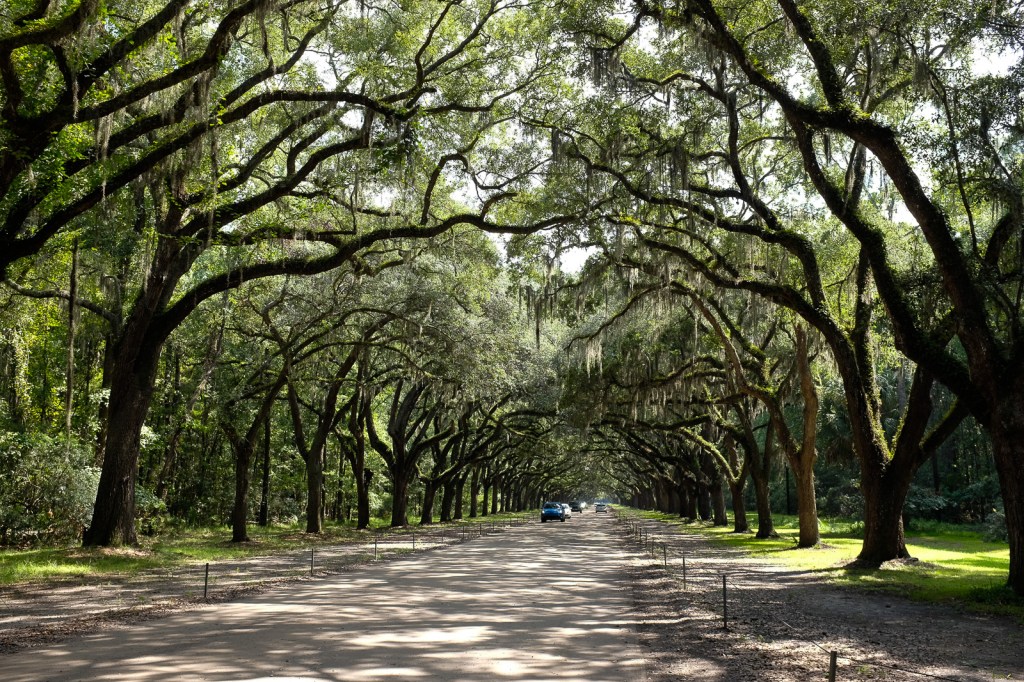
Out of the three P30s I recently purchased, only one was usable. It made the trip to Savannah in my photo equipment bag. But after it refused to fully rewind the roll of film I had just exposed, it also found itself out of commission, leaving me with no choice but to finish the week-end with the excellent (and so far, reliable) Fujifilm X-100t.

Savannah, GA – Wormsloe Plantation – Fujifilm X-100t – the gate was built in 1913, the live oak trees were planted in the late 1800s, but the plantation itself has been occupied by the British colonists and their remote descendants since 1733.
Wormsloe Plantation – the oldest remaining structure built by British colonists in Georgia (1736)
Wormsloe Plantation – the Salt Marsh – one of the functions of the plantation was to control the access to the city of Savannah through the Marsh – an English military outpost was located nearby.
Live Oak – Spanish Moss – Savannah as you’ve always imagined it…

The Pentax Super-Program: the most elaborate manual focus Pentax SLR

After the Super-Program, Pentax released a few other manual focus single lens reflex (SLRs), but targeting the beginners, learners  or  photographers who want to keep it cheap and simple: the P30 (P3 in the US) and very late in the game, the MZ-X (ZX-M in the US). But the Super-Program will remain known as the last manual focus Pentax camera aiming squarely at the “expert” or “enthusiast” photographer market.

Pentax Super-Program – the right of the top plate is pretty cramped. The small display next to the winding lever shows 1000 until the photographer has taken enough blank shots to reach the first frame on the film roll.

Launched in 1983, it was followed one year later by the Program-Plus, a marginally simplified version deprived of shutter priority mode, of TTL/OTF Flash and equipped with a cheaper shutter (1/1000 sec instead of 1/2000).

As was customary for Pentax at the time, the camera was sold under a different model name in Asia (Super-A), in Europe (Super-A “European Camera of the Year”), and in North America (Super-Program). The North American models had a silver body, while in the rest of the world the camera was sold in a nicer all black version.

Typical Pentax – the take up spool with its white “magic needles”.

The Super-Program came to life as Pentax’s competitors were accelerating the introduction of innovations in an attempt to re-animate a depressed SLR market. That year, Canon and Konica introduced SLRs with automatic film loading and motorized film advance (a real simplification for the occasional photographer), Nikon launched the FA with Matrix Metering (a major innovation), and almost everybody released an experimental auto-focus camera.

Canon A-1 vs Fujica AX-5 – two multi-automatic cameras, launched a few years before the Super-Program (1978, 1979 and 1983 respectively)

In this context, the Super-Program was a very conventional camera – its only “innovation” being the addition of a very small LCD display showing the selected shutter speed at the right of the top plate, almost under the winding lever. It was a well designed and pleasant to use camera (we’ll come to it), but not different on paper from many other multi-automatic cameras launched a few years before (Minolta XD-7, Canon A-1, Fujica AX-5, to name a few).

Typical Pentax – the orange-black signal is set in motion by the take up spool when the photographer cocks the shutter – it does not move if the film is not properly attached to the spool.

The Super-Program was apparently built around the chassis of the ME (same dimensions, same motor drive options, same absence of a shutter speed knob) and as a result was among the smallest and lightest 35mm SLRs ever made in the pre-polycarbonate era (it competed with the Olympus OM series and the Nikon EM/FG for that distinction).

For the camera to support the Program Auto-Exposure mode (and, for the Super-Program, the Shutter priority mode), it had to be fitted with one of the new Pentax-A lenses (the ones with electrical contacts). The camera was still compatible with the older K lenses, but only in aperture priority and semi-auto exposure modes.

Pentax Super-Program in Auto-exposure, shutter priority mode – the mode selector is on “M”, and the shutter speed selected by the photographer is 1/15 sec.
Pentax Super-Program in Auto Exposure – aperture priority mode – the photographer has selected an aperture of f/2.8 – the camera’s metering system has chosen a shutter speed of 1/15sec.
  • Weight, Size and ergonomics
    Derived from the successful Pentax ME series, the Super-A is a very compact and very light camera. There is probably more plastic used in its construction than in the first models of the ME series (the prism housing is clearly made out of polycarbonate), but the chassis is still made of metal and the camera feels pleasantly dense.

    As with cameras of the Pentax ME generation, there is no shutter speed dial on the Super-A, just two up and down buttons. On the ME Super, the only way to know what shutter speed had been selected (either by the auto exposure system or by the photographer in manual mode) was to look through the viewfinder.

    On the Super-A, the selected shutter speed is also shown on a very small LCD display next to the film wind lever, which is convenient (the Program-Plus is deprived of this small LCD), and makes the lack of a proper shutter speed knob more acceptable. Film loading is still a manual process, but Pentax has tried to make it as easy and reliable as possible, with multiple safeguards – for instance, the camera will not operate and will simply display 1000 on the shutter speed display until the film has been advanced to the first frame.

    The camera falls in the hands nicely, with a small removable grip and a thumb rest on the right side of the body, and an easy to access depth of field preview lever.  That being said, people with large hands would be better off with a larger camera: you really need small fingers and long nails to unlock and move the main mode selector from Lock to Auto or Manual, and the two push buttons that control the shutter speed are also tiny.

  • Viewfinder
    Derived from the M series, the Super-Program inherited some of their qualities – the viewfinder is large, wide, with a reasonably long eye-point (you can still see the whole frame if you wear glasses). The focusing screen is fine and luminous, with a split image telemeter surrounded by a ring of micro-prisms.

    The shutter speed and aperture information is displayed at the bottom of the viewfinder, on a grey LCD. The LCD is backlit – a window at the top of the prism collects the ambient light, and a push button on the left side of the lens mount flange turns on a rather faint light – so that the displays can be seen in when there is not enough ambient light.
    Honestly, this setup is far less legible than the green displays we’re used to if we shoot with dSLRs, or than the red LEDs used by the Canon A-1. But the camera only needs two small SR44 batteries (as opposed to the larger 6 volt battery of the A-1 or the large lithium batteries of modern cameras).
  • Metering system
    The Super-Program is very conventional: a center weighted average metering system, that’s all. No spot metering, no matrix metering (not invented yet…), and no DX coding (not invented yet).
    The camera obviously was designed for knowledgeable amateurs and enthusiasts, but surprisingly there is no exposure memory lock push button.
  • Battery:
    The Super-Program does not work – at all – without batteries. But it seems to manage them very carefully, and lets the photographer know in advance when the batteries will need to be changed. It simply needs a pair of the very easy to find Silver Oxide 1.5v batteries (SR44) that you can buy in any pharmacy or drugstore in the US.
  • Compatibility:
    Designed for the new KA mount (with electrical contacts to control the aperture), the Super-Program also works with any Pentax K compatible lens (SMC-Pentax, Pentax-M) as well as with the auto-focus FA lenses that followed. Considering the very long production run of the K mount family (available under one form or another since 1976), the wide adoption of the Pentax K bayonet mount amongst second tier camera makers, and the relative broad diffusion of Pentax branded lenses, finding a lens that fits the Super-Program is not an issue.

    Most of the accessories (winder, in particular) are shared with the previous ME generation.Pentax only released two manual focus cameras with TTL/OTF flash metering (Through The Lens, On The Film), the high end, modular LX and the Super A. Of course, specific flash units are needed to take advantage of the TTL mode, but at least the LX and the Super-A are using the same line of TTL flash guns. Other Pentax (or third party) flash units can be used, but won’t support TTL (*)
  • Reliability
    Electronic cameras from the mid-seventies-mid eighties have a bad reputation when it comes to reliability or battery management, in general. In certain cases, it’s totally justified (Fujica AX-3, AX-5, OM-2sp, Canon T90). I’ve not heard or read about any recurring horror story about the Super-A.
    That being said, if you shun electronics and want to use a relatively recent mechanical camera, there are not many alternatives in the Pentax family: the K1000 is about the only option – it was manufactured until 1997, and it’s possible to find fairly recent copies.
  • Scarcity and price – the Super-Program, and its little brother the Program-Plus were widely distributed (a total of 2 million cameras sold), and enough of them were treated with respect that good copies are easy to find on eBay, ShopGoodwill.com, and with resellers of second hand equipment. So, they’re not scarce, but not cheap either. The Super-Program is one of those cameras whose value is going up at the moment: it meets the criteria of a new-classic: it’s a manual focus, full featured and at the same time easy to use camera that will satisfy beginners and enthusiasts. You can find nice copies between $50.00 and $100.00 – and if you like your cameras all black, you’ll have to buy a Super-A from European or Japanese sellers, at roughly the same prices.
Pentax Super Program in… Program Mode (P). 1/30 sec; f/2
Pentax Super-Program – semi-auto exposure (the camera will operate at 1/8sec and the exposure is as determined by the metering system (at zero)

As a conclusion

It’s a nice little camera – for people who, in 1983, wanted “everything” – a relatively fast shutter (1/2000 sec), three automatic and a manual exposure mode, a good viewfinder with depth of field preview, exposure compensation, TTL Flash, and the ability to mount a winder.

It can draw from a very large range of Pentax K compatible lenses, and is still very affordable.

Doing “everything” in a non-motorized camera of such a small form factor leads to pretty cramped top plate, and difficult to operate controls for people with large hands or short nails.

Those who need “everything” and don’t mind shooting with a bigger/heavier camera can pick the Canon A-1, or the T90. The Nikon FA is also an option – although it shares some of its limitations with the Super-Program (no exposure memory lock, small and dark LCDs in the viewfinder **)

In the Pentax family of cameras, the P3 of 1985 is an alternative to consider [please read the update below] – a bit larger, it’s easier to use (with a large shutter speed knob and a large on-off switch, and easier to read information in the viewfinder). Sold as an entry level camera, it only has a 1/1000s shutter, can not be motorized, does not support TTL flash, and only offers a semi-auto mode in addition to the default Program mode. Its successors, the P3n and the P3t,  add an Aperture priority mode. All have a good viewfinder and the very useful (for me) exposure lock function. They’re cheaper and even easier to find than the Super-Program, have everything a film photographer may need today, and are good cameras to discover film photography.

a June 2025 update: I can’t recommend the P3 (also known as the P30) as an alternative to the Super Program. I bought three P3s at different times in the past five years, and all failed me. And a quick Google Search will return pages and pages about failures of the film winding mechanism. To be avoided.

Google Search also returns a suspiciously high number of hits about issues with the Pentax ME Super. On the other hand, the Super-Program and its marginally simplified sibling, the Program-Plus, seem to be immune from major reliability issues. I tend to prefer the Program-Plus – but the differences between the two cameras are marginal, and all things considered, the Super Program is still a very good film camera.


More about Pentax film cameras in CamerAgX


(*) flash – I’m not sure that flash control is an issue now – considering 1/ the high fail rate when shooting with flash with old cameras and old flash units, and 2/ how quick it is to check the quality of the lighting if you shoot with a flash mounted on a digital camera, you would have to be more of a purist than I am to shoot with a flash on a film camera.

(**) I’ve never used Minolta’s manual focus SLRs and can’t really comment on them – but there are good cameras in Minolta’s line-up obviously.


Pentax Program-Plus (top) and Super-Program – Minor differences.

Pictures taken recently with a Super-Program on my Flickr account.


Sorry, no picture taken with the Super-Program this time (I don’t travel much because of Covid – and the opportunities for interesting shots are pretty limited in my backyard…)

The three pictures below were taken with another member of the Pentax family, the *ist DS, twelve years ago, in Georgetown.

Georgetown – the original workshop where the company that would become IBM started was in a street like this one.
Right here…
Georgetown (DC) – the plaque at the place where IBM started…

Pentax – the road to insignificance

It’s a bit early to write Pentax’s obituary. But there’s no denying that the company (now a subsidiary of Ricoh) is  a mere shadow of its former self.

Pentax--6056
The Spotmatic – a great camera in the sixties – but Pentax should have replaced it earlier than 1975

From the mid fifties to the early seventies, the Asahi Optical Corporation  was an innovator. They scored an impressive number of “first” :

  • First Japanese single lens reflex camera to enter production (Asahiflex – 1952)
  • First reflex camera with instant return mirror (Asahiflex II b – 1954)
  • First modern single lens reflex (SLR) camera,  with a pentaprism at the center of the top plate, a winder arm and shutter speed knob on the right side, and a folding rewind crank to the left (the “original” Pentax of 1957). This was to be the model for all other reflex cameras for the next 20 years. The camera was so important for Asahi that the whole corporation became later known as “Pentax Corp”.
  • First SLR with Through the Lens (TTL) metering on the market  (Pentax Spotmatic – 1964)
  • First automatic exposure SLR with an electronic shutter (Pentax Electro Spotmatic – 1971)
  • First multi layer coated lens  (or at least the first manufacturer to communicate about multi-layer coated lenses to the public at large – 1971)

As a result, Asahi Pentax was a sales leader in the sixties and early seventies: for example, it was the first Japanese camera company to sell over one million SLRs.

Pentax lost its supremacy during the first half of the seventies

  • they stuck to the Spotmatic form factor until 1975
  • they stuck with stopped down metering on their line of bread and butter Spotmatic cameras until the launch of the Spotmatic F in 1973, and to the m42 screw mount until far too late. Because they had adopted a proprietary bayonet early on, Minolta and Nikon had been able to offer full aperture metering (a major comfort improvement for the photographer) since 1966, with Canon and Olympus following in 1971.
  • As a result, Pentax was out-innovated by new entrants:  Olympus OM-1 (the first ultra-compact SLR and camera system); Fujica ST-801 and ST-901 (first use of Silicon metering cells and of LED displays in the viewfinder); Olympus OM-2 (first implementation of On The Film (OTF) real time flash metering).

The Pentax Spotmatic F (1973) with a Pentax specific version of the universal 42mm screw mount – designed  for full aperture metering.

The second half of the seventies was not better:  Pentax was in reactive mode and started progressively being pushed to the bottom of the market :

  • Changes to their lens mount are always very risky for camera manufacturers. It may not bother the beginner or the amateur who are only going to shoot with the kit lens they bought with the camera, but it’s an invitation for enthusiasts and pros to reconsider their aleigence to the brand.  Between 1971 and 1976, Pentax changed the lens mount of its cameras twice.
  • Pentax could not compete with Canon and Nikon in the “pro” market because they did not have a modular camera to offer until they launched the LX in 1980, and after they did, they lacked some of the specialized lenses and the support network that the pros required,
  • they were out-innovated in the heart of the enthusiast market: Canon with cheaper to manufacture and feature rich micro-processor driven cameras such as the AE-1 and the A-1, Minolta with multi-mode SLRs.
  • they had to face new competitors in the “amateur” segment of the market with  Nikon and Olympus successfully entering the broader consumer market with cameras such as the EM and the OM-10 in 1979.

By the end of the eighties, Pentax had been relegated to the 4th position on the photo-equipment market, behind Canon, Minolta and Nikon. They had completed the transition to auto-focus SLRs, but were primarily known for their two remaining manual focus SLRs (the K1000 and the P3) and their water-resistant point and shoot cameras.

2020-04-Pentax-6673
Pentax P3 – a camera for beginners – very successful on the market (3 million sold between 1985 and 1997)

They survived until the advent of digital photography. Konica-Minolta’s deep troubles gave them one last chance of resurgence in 2003-2004. They recovered the #3 position on the market for a while. But after early successes – their first dSLRs, the *ist D and *ist DS were good cameras, technically on par with contemporary Canon and Nikon offerings –  they did not (or could not) keep up with the pace of their competitors, and let their market share decline to the point where their presence is hardly noticeable today.


More about Pentax’s last manual focus cameras in a few weeks with reviews of the Super-Program (Super-A),  P3 (P30) and ZX-M.

2020-04-Pentax-6660
Pentax’s last manual focus SLR – 1997


IMGP0885
Haleakalā volcano, Maui, Hawaii – Pentax *ist DS – Pentax 18-55mm lens.

IMGP0993
Hawaii – Big Island – Pentax *ist DS

IMGP0968
Hawaii – Big Island – Pentax *ist DS

Pentaprism, Contax, Pentax and Pentacon

Who created the first 35mm camera, or the first 35mm single lens reflex camera?

Difficult questions. First, you would have to agree on what constitutes exactly a “real” 35mm camera, or a “real” 35mm SLR, and then, you would have to determine what really counts: is it presenting a prototype at a trade show, applying for a patent, launching a limited series production, or inundating the world with tens of thousands copies of a “game changing” camera?

It is generally recognized that with the Leica, Leitz created the first commercially successful 35mm camera in the early twenties, and but it was not until 1932 when they launched the Leica II that the rangefinder camera with interchangeable lens had found its “real” final form.

Foca *** / Olympus OM-1n
Foca *** with a Foca turret viewfinder (left) / Olympus OM-1n (right) The Foca, a French derivative of the pre-war Leica, is a good example of what a rangefinder camera with interchangeable lenses looks like. With its pointy prism housing, the Olympus illustrates the typical SLR shape.

The Contax S

1932 is also the year when Zeiss launched Leica’s most serious pre-war competitor, the Contax.

Zeiss was at that time the largest manufacturer of cameras in the world. They had a long tradition of innovation and a great team of engineers; conscious of the limitations of the rangefinder formula, they kept on working on a better solution until, after the war, they finally presented the Contax S, one of (if not the first) modern 35mm single reflex lens camera.

With its pentaprism, its horizontal curtain shutter and its 42mm screw lens mount, the Contax S was very close to the typical 35mm SLR design, and should have been commercially successful.

contax-S-1950-Pentax-SLRdotcom
Contax S – (second series from 1950). Courtesy of Pentax-SLR.com – the best source of information about early SLRs (not only Pentax)

But at that time, the Zeiss factories were in the Russian occupation zone (soon to become the German Democratic Republic) and all sorts of issues slowed down the roll-out to production: the Contax S only started to be mass produced at the very end of 1949. The launch of the Contax S also coincided with the start the Cold War – products from communist countries were not always welcome on the more affluent markets of the West – and to make the matters worse, the East German entity of Zeiss lost the rights to the Contax name in 1956. After considering multiple options (including apparently the “Pentax” name), the East Germans rebranded their cameras “Pentacon” (a portmanteau for Pentaprism and Contax) and the Contax S line of SLRs was abandonned.

Why is a pentaprism so important, that Zeiss and (later) Asahi changed the name of their cameras to include “Penta”? 

Ground-Glass
On the ground glass of a plate camera, the image is reverse (top/down, left right) – image courtesy of http://www.michaelstricklandimages.com/

Composing a picture on a piece of ground glass located behind the lens is nothing new (plate cameras have been following that model forever), but the image is reversed top-bottom and left-right, which makes the composing process very slow and totally unsuitable to candid photography.

If a mirror inclined at 45 degrees is placed behind the lens, and the image projected on a piece of ground glass, it is not reversed top/bottom anymore, but is still reversed left/right. The photographers has to shoot from waist level, after having used a magnifying glass for focusing. It’s workable, but not the best formula for action shots,  journalism or simply spontaneous family photographs.

IMG_5841
Nikon F3 with the pentaprism viewfinder removed: the image formed on the focusing screen is reversed laterally.


IMG_5839
Left is right, right is left and of course the Coke and Powerade labels are also reversed

The pentaprism addresses all those issues – and as we all know from experience  with SLRs, the image is fully redressed, focusing is easy, and eye-level composition makes action photography intuitive even for beginners.

IMG_5838
Nikon F3 – The view of the same scene from the eye-level pentaprism viewfinder

Asahi Optical Co

Asahi started manufacturing lenses in Japan in 1919, and launched the first Japanese 35mm single lens reflex camera – the Asahiflex – in 1952. It was inspired by the pre-war German Praktiflex, but brought some improvements:  it had two finders: a waist level through the lens viewfinder (for focusing)  and a smaller eye level optical viewfinder to be used when taking candid snapshots.

In two critical areas, the Asahiflex was not as advanced as the Contax S:  it did not have a pentaprism viewfinder, and it used a narrower 37mm screw mount.

Asahi’s first major innovation came two years later with the introduction of the instant return mirror on the Asahiflex IIb (1954). The IIb was without equivalent for a while, but the step forward it represented was nothing compared to Asahi’s next giant leap, with the “Pentax” of 1957. The first (mass produced) Japanese camera with a pentaprism, it combined for the first time in a compact, elegant and well made camera the instant return mirror, the film advance lever, easy film loading with a hinged back, and the 42mm screw mount.

img_asahi_pentax
The original Asahi Pentax camera from 1957 (source: official Pentax Web site).

The Pentax line of cameras sold by the millions and became the model that all other manufacturers would copy in the subsequent years. The Pentax name became so well known that the Asahi Optical Co. decided to sell all its products (including its line of medical equipment) under the name Pentax, before it finally changed its own name to Pentax Corporation in 2002.

Spotmatic_NikFM-15
Pentax Spotmatic F from 1973 (left) and Nikon FM from 1977 (right). More than 15 years after its launch, the design of the “original” Pentax was still the model that all camera manufacturers were following

It is widely assumed that  “Pentax” is also a portmanteau for Pentaprism and Contax. According to Wikipedia, the name was purchased  by Asahi from the East German Zeiss  company just before the launch of the original Pentax SLR in 1957.

pentax ap_top_plate
Asahi Pentax – the top plate of the original model (1957) – source: eBay

cameras--6630
The Pentax Spotmatic F on 1973 – still true to the model defined by the “original” Pentax of 1957

Today, the single lens reflex formula is on its last breath – superseded by mirrorless cameras where the pentaprism has been replaced with a high resolution LCD – the Contax brand is dormant, and Pentax, as a subsidiary of Ricoh, is in life support with a line of three rather old dSLRs and no plan to launch a mirrorless system.

Sic transit…


More about

By far the most comprehensive source about Pentax cameras, as well as early SLRs of all makes: Pentax-slr.com

Asahi Optical Historical Club 

The official corporate history of Pentax (the Ricoh-imaging-co Web site)

The Asahi Pentax original (AP) from 1957 – CameraQuest


From a Pentax to another Pentax…

2017-11-spotmatic--20
Big Birds – Mableton, GA – Pentax Spotmatic F. Lens Pentax Super-Takumar 55mm f/2

IMGP1654
Cumberland Island National Seashore (GA) –  Some of the islands of the national park are limited to 50 visitors/day and have to be vacated before sunset. Pentax *ist DS – Lens Pentax 18-55mm

IMGP1668
Cumberland Island National Seashore (GA) – The Cumberland forts were built by the British in 1733 to protect their most southern colonies from the Spaniards. The forts were abandoned after the final defeat of the Spaniards at the Battle of Bloody March in 1742. Pentax *ist DS. Lens Pentax 18-55mm