If you’ve spent time on Pentax dedicated forums, you may have read that Pentax and Ricoh (the owner of the Pentax brand) follow a “blue ocean strategy” and want Pentax dSLRs to become “the Leica M of the dSLRs”.
I don’t know if those statements are coming directly from Ricoh or are just an invention of creative bloggers. But it aligns very well with what Ricoh have been doing with the GR series, and Pentax with the K-3 Mk III.
“Blue Ocean” means that instead of competing with sharks in an area rich in preys – so rich it’s tainted red by the blood of the victims, you retreat to a zone with fewer fish, but also fewer competing predators, and no blood. The Blue Ocean. As for becoming a Leica M equivalent, it obviously relates to a strategy where – by sticking to a technology that everybody else has abandoned, you build a niche for yourself and serve a small group of highly motivated (and wealthy) users with products which are without an equivalent anywhere else.
You can see the Blue Ocean strategy at play in the way Ricoh declines its ultra compact GR camera into a series of extremely specialized products (GR IIIX with 40mm lens, GR IV monochrome, GR IV High Diffusion Filter, …). As for being the Leica M of dSLRs, consider the case of the Pentax K-3 Mk III: the last and arguably most elaborate APS-C dSLR launched by any camera manufacturer, it was proposed at a comparatively very high price, and was followed by an even more expensive variant equipped with a monochrome sensor – that’s taken directly from the Leica marketing playbook.
You can argue that Pentax did not have much success as an innovator in the recent years (the Q series and the K-01 did not meet their public), and that until recently they were selling cameras primarily on value.

The K-7, K-5 and the K-3 Mk I and Mk II are a good example: not rated as highly as Canon or Nikon’s best cameras when it came to autofocus or video performance (for instance), they produced images of high quality, and offered advantages unique in their category (in body image stabilization, full weather sealing) at a price point lower than their competition.
The pricing strategy started changing with the launch of the Pentax KP in 2017 and became obvious with the release of the K-3 Mk III – which clearly tried to be the best dSLR with an APS-C sensor – ever – but was at the same time more expensive than Canon and Nikon’s offerings.
As of today, you still have to spend almost $1800 for a new K-3 Mk III (that’s the 2025 Holiday promotion, it still lists officially at $2000) and up to $2200 for a K-3 Mk III Monochrome, which is much higher than Canon’s 90D at $1200, and Nikon’s only remaining new APS-C dSLR, the d7500 currently selling for $700.
It percolates on the cost of older Pentax dSLRs on the second hand market – the K-5 and the first two K-3 models could still be considered bargain buys not so long ago, but the K-3 Mk III has pulled the prices upwards. Being the most recent predecessors of the K-3 Mk III, the K-3 Mk II and the KP are logically the most impacted.
The introduction of tariffs on second hand cameras coming from Japan has made the matter worse by cutting the main source for cheap Pentax cameras: imported second hand Pentax dSLRs are subject to tariffs, factor that if you buy from a Japanese retailer.
More about Pentax cameras in CamerAgX

The recent Pentax cropped sensor dSLRs line up today: from the K-5 to the KP in a few words
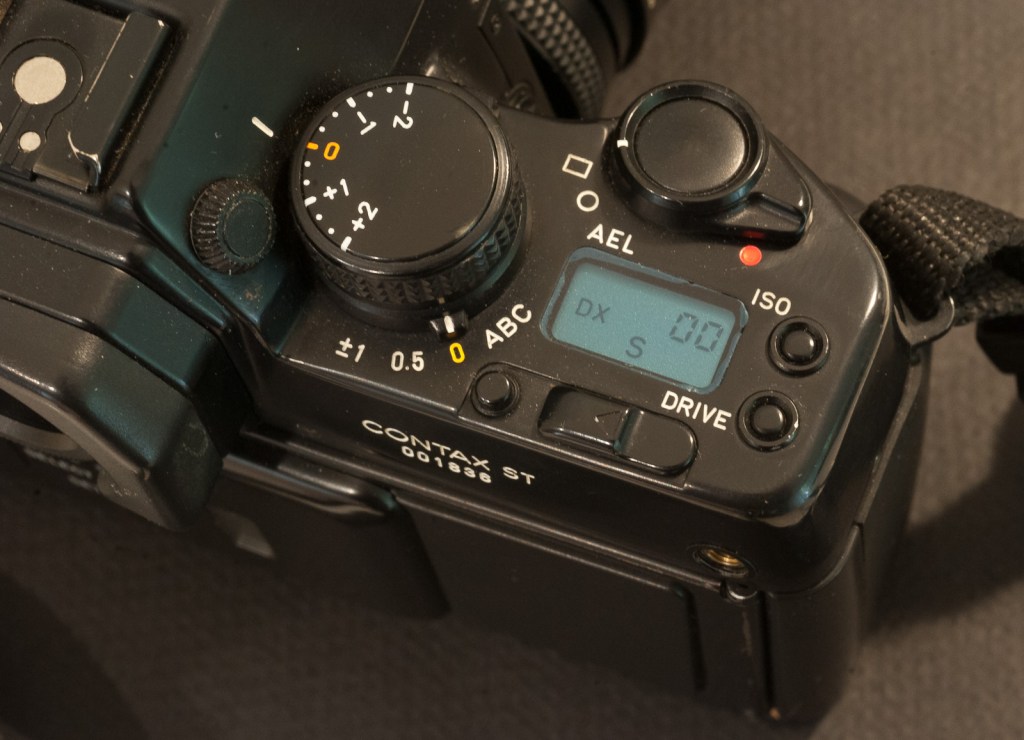
The Pentax K-5, K-5 II and K-5 IIs: Available new between 2010 and 2013, the K-5 remains a very good value proposition – with a solid build, a long battery life, great ergonomics and a very good 16 MPIX sensor delivering very good images. Some details are dated: there is no WiFi, and live view and video capabilities are very limited, but it’s still a very good camera if you’re shooting exclusively still images. Nice copies of the K-5 can still be found between $200.00 and $250.00. The K-5 IIs is approx. $100 more expensive.

The Pentax K-3 and K-3 II: – Sold between 2013 and 2017, the K-3 and the K-3 II are essentially a K-5 IIs with a 24 Mpix sensor. The K3 II gets a better autofocus system and an integrated GPS but the K-3 and the K-3 II keep the same fundamental qualities and limitations as the K-5. And they make you pay dearly for their 24 Mpix sensor (up to $650 for a K-3 Mk II).
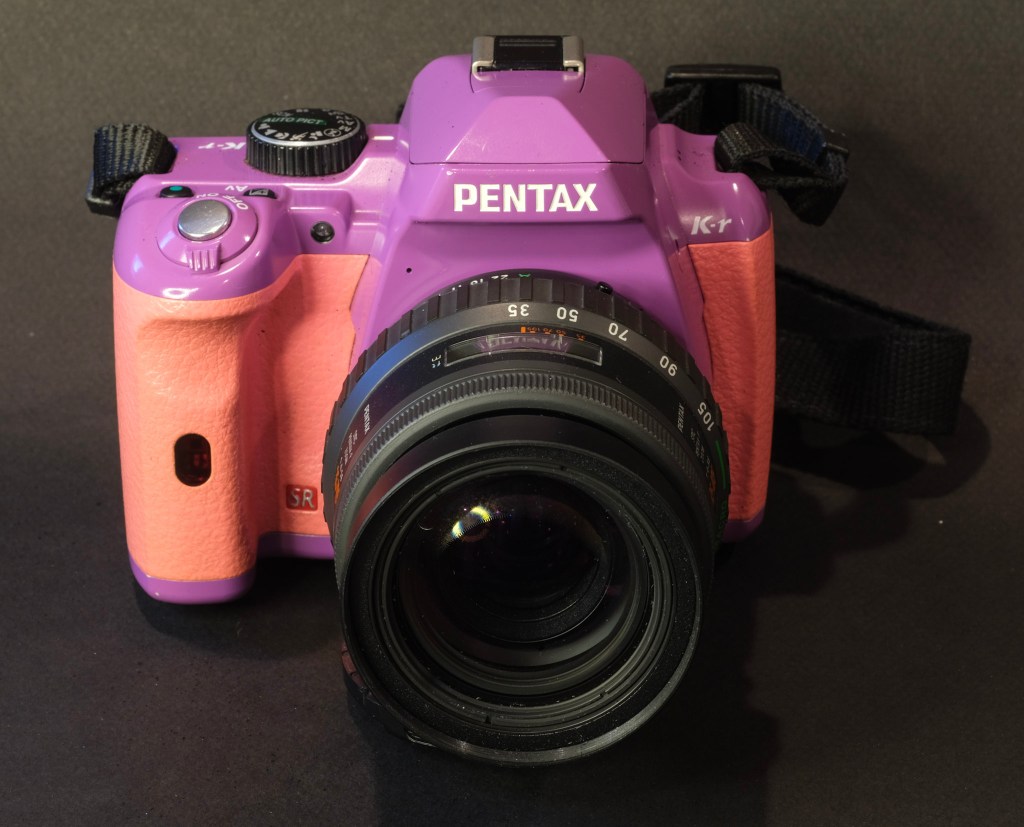
The Pentax K-70 and KF – launched respectively in 2017 and 2022 – are more or less the same camera under a different name – they are the remote successors of cameras like the K-r tested last year in those pages, the last two representents of a long line of the mid-level Pentax dSLRs. They benefit from some “pro” features like weather sealing and in body image stabilization, they have the same 100% viewfinder and the same 24 Mpix sensor as the K-3 or the KP and offer WiFi and Bluetooth connectivity. The LCD display at the back is fully articulated. But their autofocus module is dated and limited, they’re not as solidly built as a K-3 or the KP (polycarbonate instead of a magnesium alloy), they are deprived of the K-5 and K-3’s top plate display and only have one SD card slot and a smaller battery.
Note that the entry-level or mid level Pentax dSLRs (starting with the K-30 up to the K-70s built before 2021) may all suffer from issues with the solenoid controlling the aperture – the most recent K-70s and the KF are using a different component and will be OK. The KF is still available new for approximately $650.00 in the US, and a nice second hand K-70 can be had for $400.
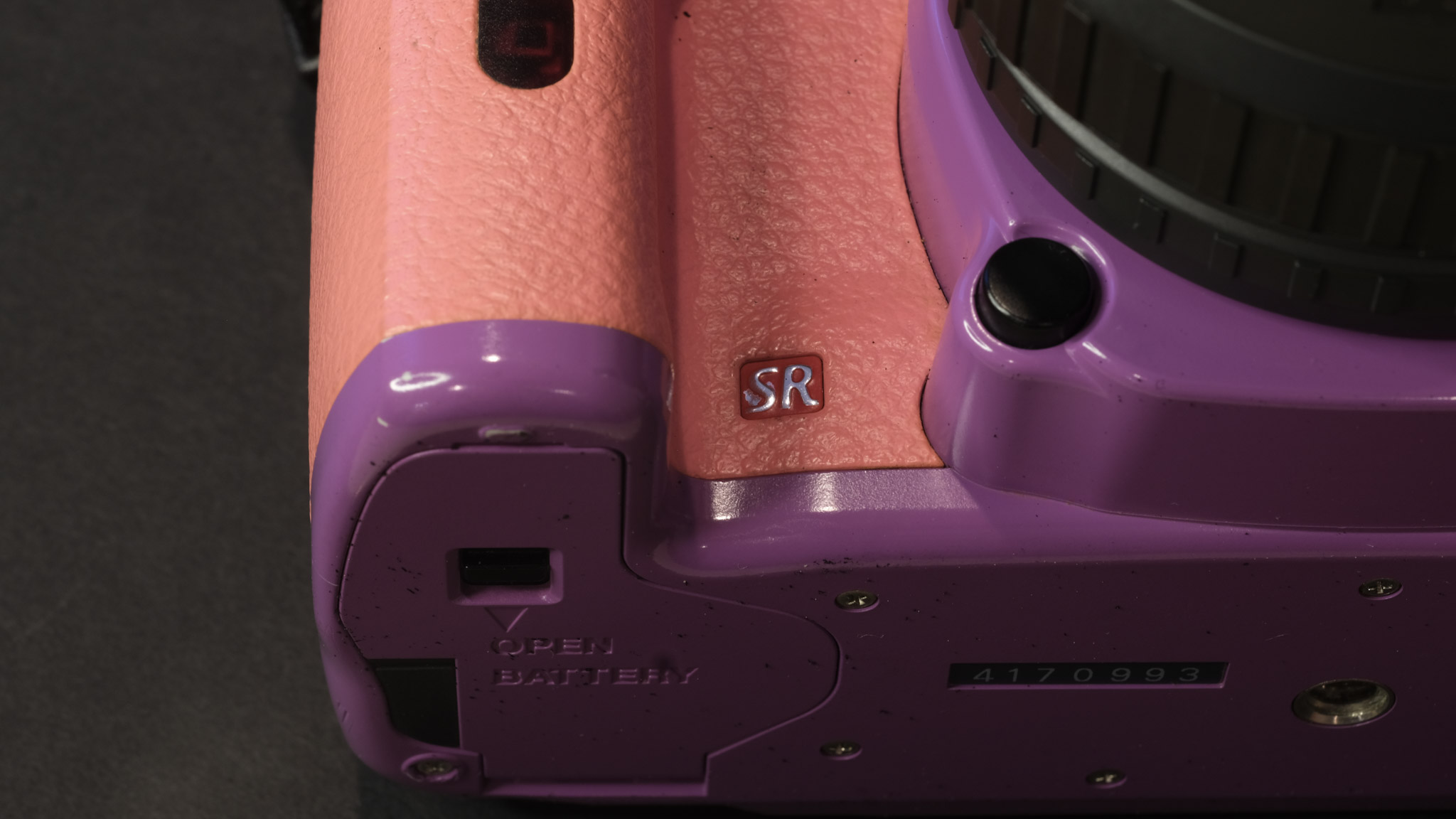
The Pentax KP was launched in 2017 as a replacement of the K-3 II, and discontinued in 2021. It introduced a new slim, retro-inspired body design with user replaceable hand grips – esthetically pleasant but with controversial ergonomics. It benefited from a new and improved image processing engine and from a tiltable rear display. It combined characteristics inherited from the K-3 II (24 mpix sensor, all metal construction, 27 point autofocus system) with characteristics typically seen on entry level cameras (only one SD card slot, small battery, no top plate LCD display). If you can live with those limitations and its ergonomics, it’s the closest you’ll get to the image quality of the K-3 Mk III, at a fraction of the price.
Like the K-3 Mk II, the KP has become expensive – the typical second hand price being in the $600 to $750 range.
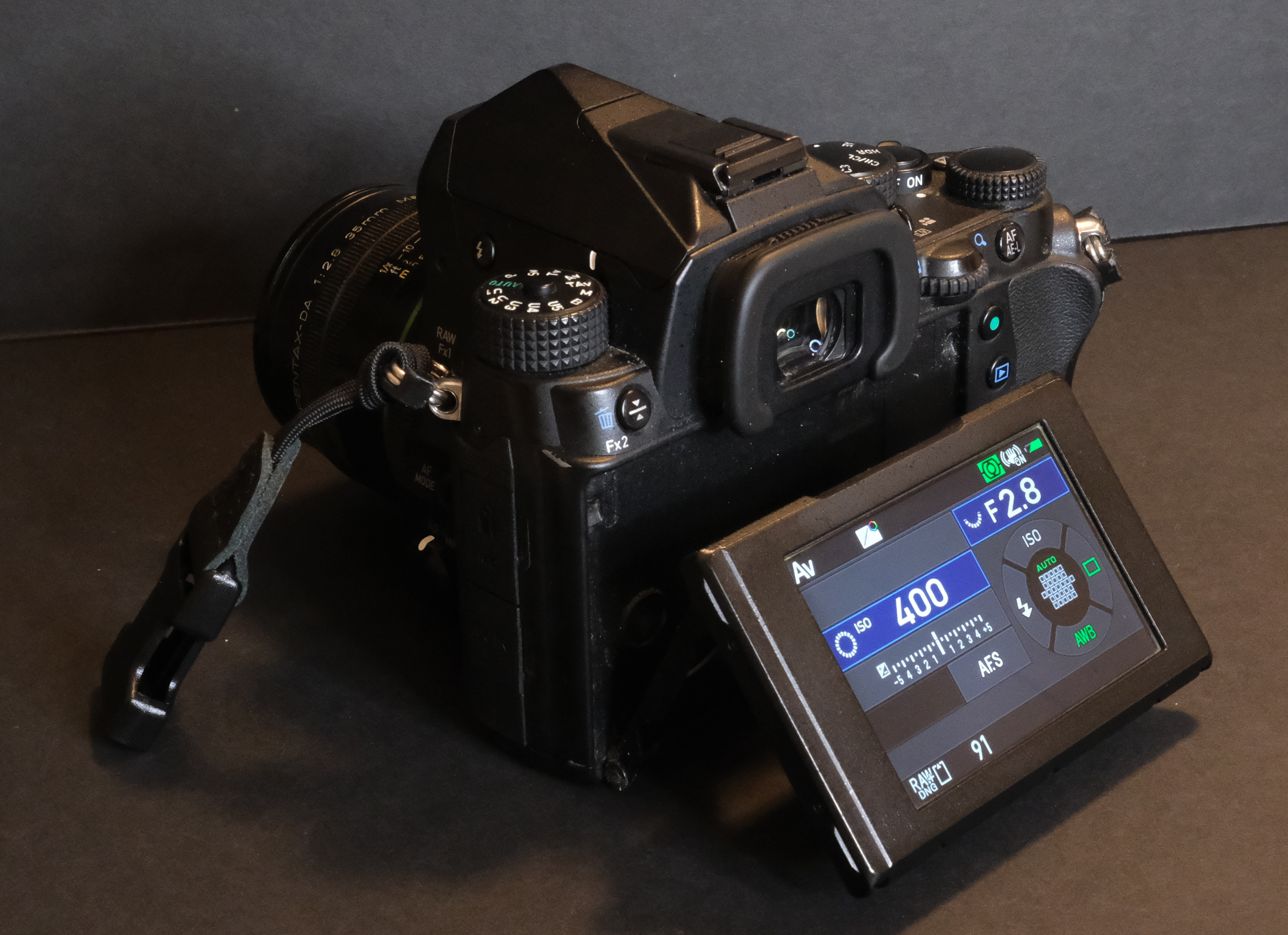
I only know the Pentax K-3 Mk III from its specs sheet, and reviews I’ve read or watched here and there. Under a body that looks similar to the previous K-3s, it’s a very different camera, and now that the Nikon D500 has been discontinued, a credible candidate to the title of most elaborate APS-C dSLR.
With a new 26 MPIX BSI sensor, a new autofocus system, a top plate LCD display, a third control wheel, a touch screen and a joystick to select from 41 autofocus points – it’s a very significant step above the K-3 II and the KP. It has almost everything expected from a top of the line dSLR, and its specs sheet compares favorably with the best APS-C mirrorless cameras. The only glaring omission is the lack of an articulated or tiltable rear screen, which can be an issue when shooting with wide angle lenses or for macro-photography. Still available new from retailers, it can not be found second hand for less than $1300, more than twice as much as a more abundant Nikon D500.


 CamerAgX - a new life for old gear