Fujifilm Instax Printer: the gift that keeps on giving

You “take” pictures, but how do you “give back” to the people you’ve just photographed? Here is a suggestion: print the pictures, and give the prints, on the spot, right after you’ve shot them. It’s a nice gift to family and friends with whom you’re sharing good moments, and to the people who have generously let you capture their image, and, maybe, a bit of their soul.

Very few people still create photo albums. Because nobody has prints. Composing a photo-album online takes time, effort and money, and it can be one to two weeks before you receive it. Printing a selection of images on a pocket printer is an easy way to create pocketable photo albums with no hassle; wherever, just when you feel like it, for not much money. Instant gratification.
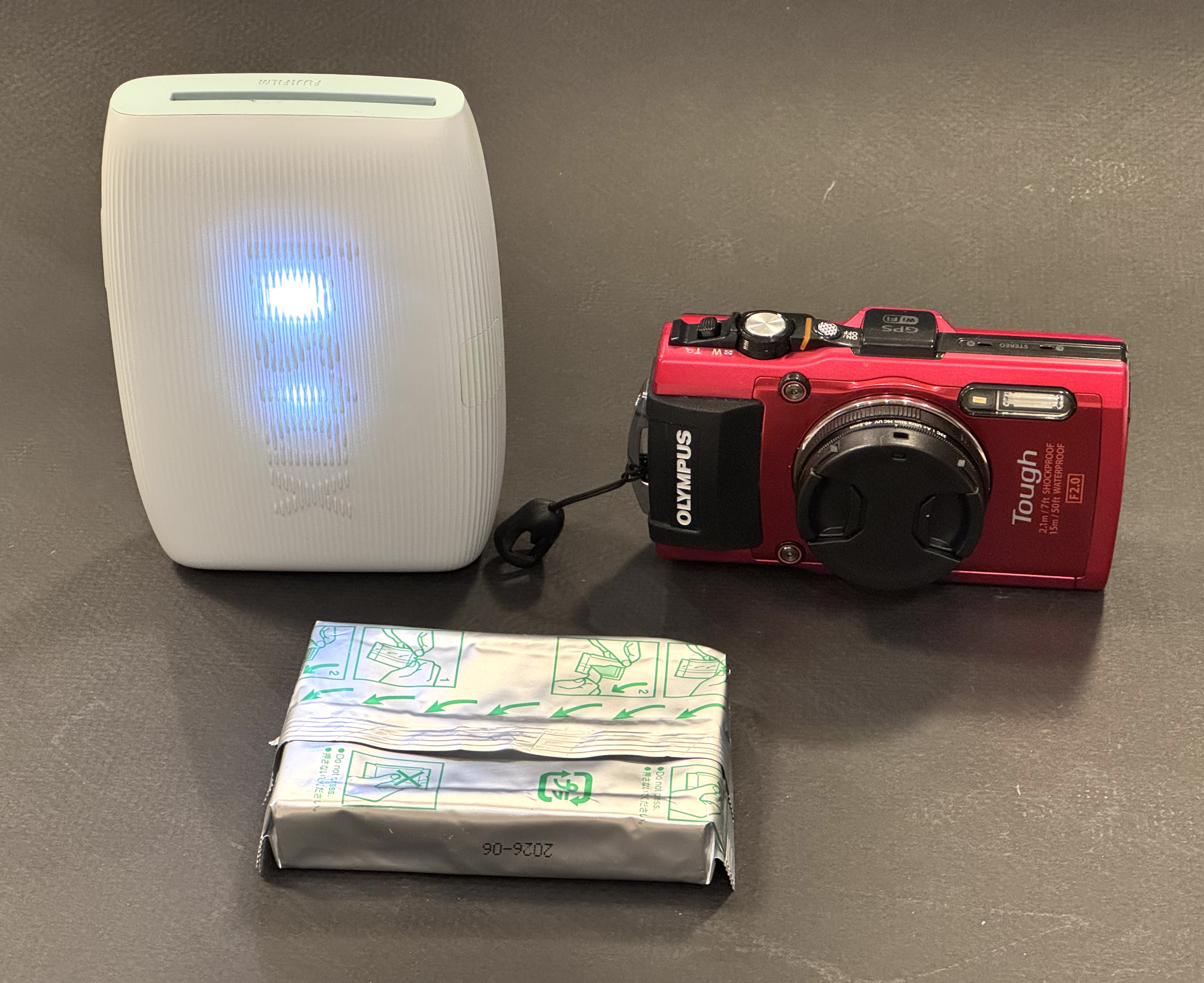
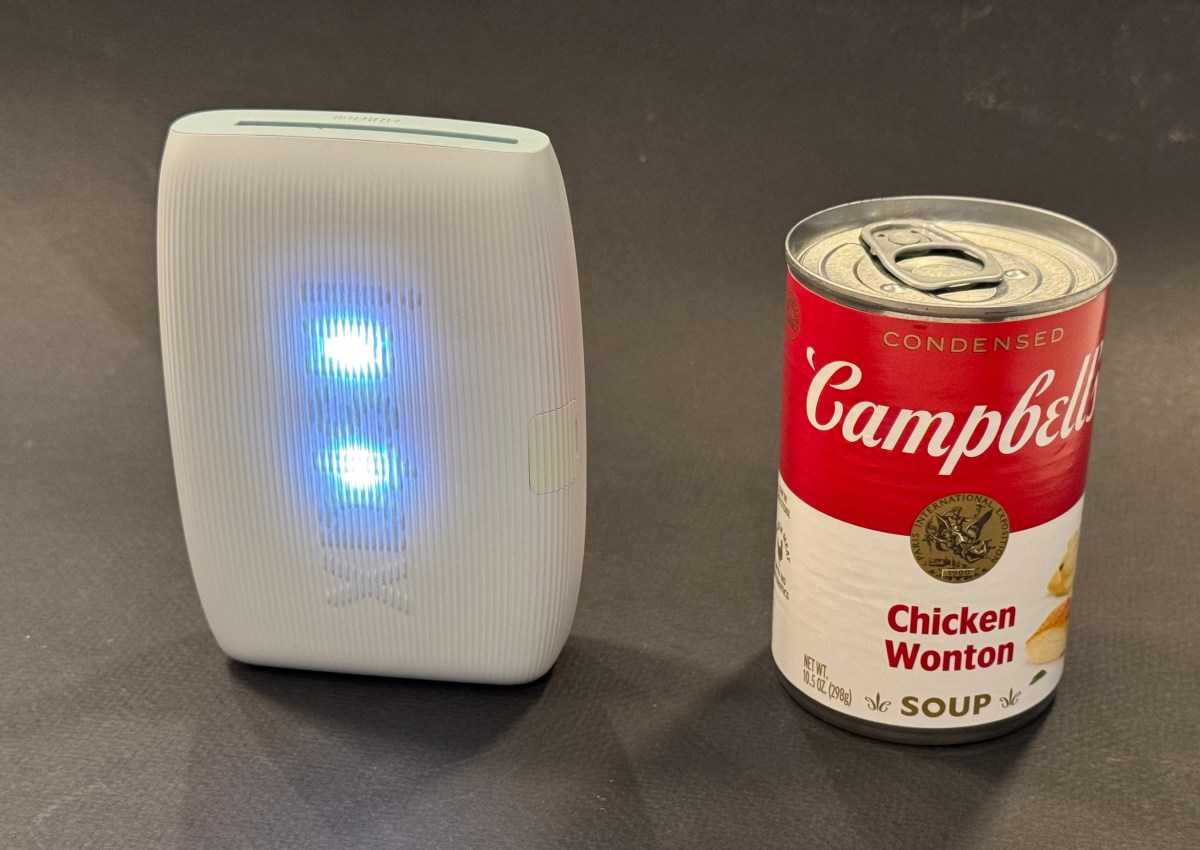
No Campbell Soup for you – the mini Link 3 is about twice the size of a compact camera. It’s totally wireless and the battery is good for 100 prints between two charges.

There are many more ways to use those mini-prints: in Japan school girls insert their Instax prints in plastic cases that they use to accessorize their bags, and I create my own personalized luggage tags – you won’t confuse my suitcase with anybody else’s. Your imagination is the limit.

How does it work?

Fujifilm sell their instant film in 3 sizes: Instax Mini (the image is roughly the size of a business card), Instax Square (a bit larger, and square), and Instax Wide (twice the size of the Mini). They manufacture cameras for each of the three formats, as well as dedicated portable printers.
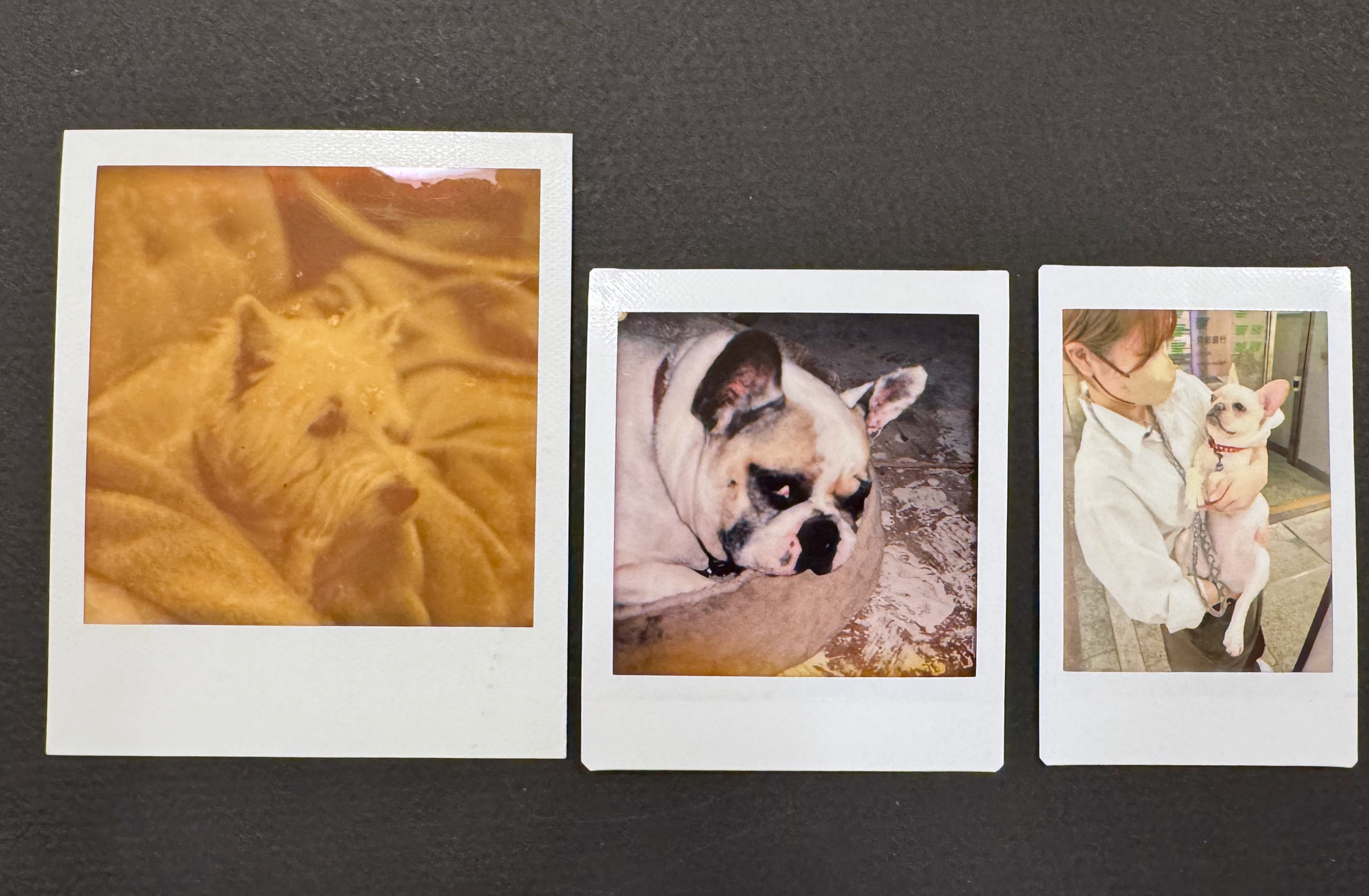
Comparing print sizes: Polaroid SX-70 vs Fujifilm Instax Square vs Fujifilm Instax mini.

Other makers of pocketable printers use different technologies (zero ink paper, generally) but with Fujifilm, it’s about silver halide, of course. Once a print is ejected from the printer, the image needs a few minutes to fully develop, but it’s part of the magic of instant film. Today we’ll focus on Fujifilm’s Instax Mini Link 3. It’s a pocketable, battery operated printer, that, when paired with a smartphone and loaded with a 10 print Instax Mini pack, will print business card size pictures. Of course, there’s an Instax Mini Link app to download and install on your smartphone.

Images can be printed directly from the photo gallery of the mobile device (with Fujifilm’s default settings), but the output will be better if you first bring the images in the Mini Link app, play with the contrast slider (I always boost it a notch), and print them from there.
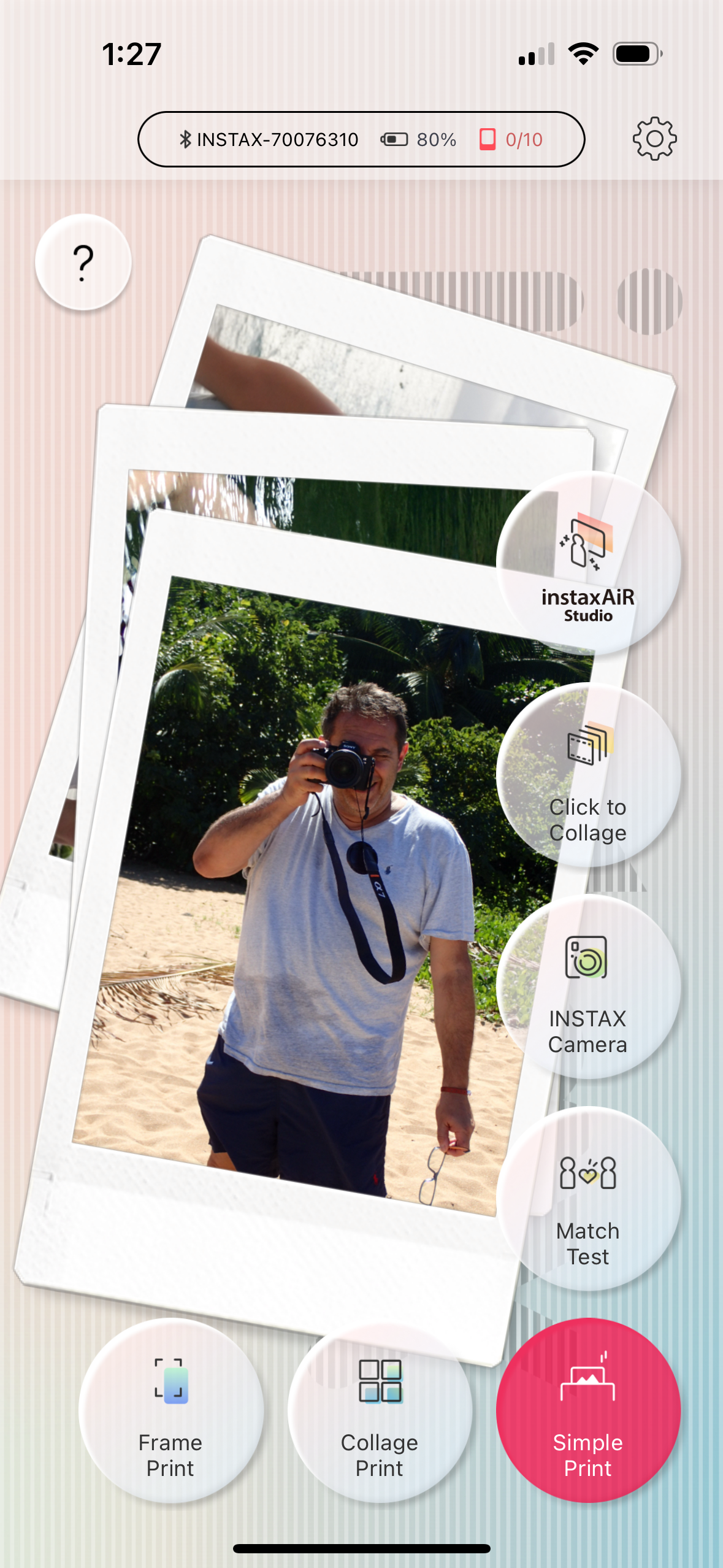
The Mini Link app. For me “Simple Print” will do.

In my experience, the Mini Link transposes the colors and the exposure of the original picture accurately, and its prints are more defined and massively nicer than what you would get if you took a picture with a Fujifilm Instax camera. The Instax film is a much better performer than the very basic Fujifilm cameras designed to consume it, and the printer takes advantage of its potential. When you start from a good picture taken by a smartphone (or a dedicated camera), you’ll be happy with the prints.
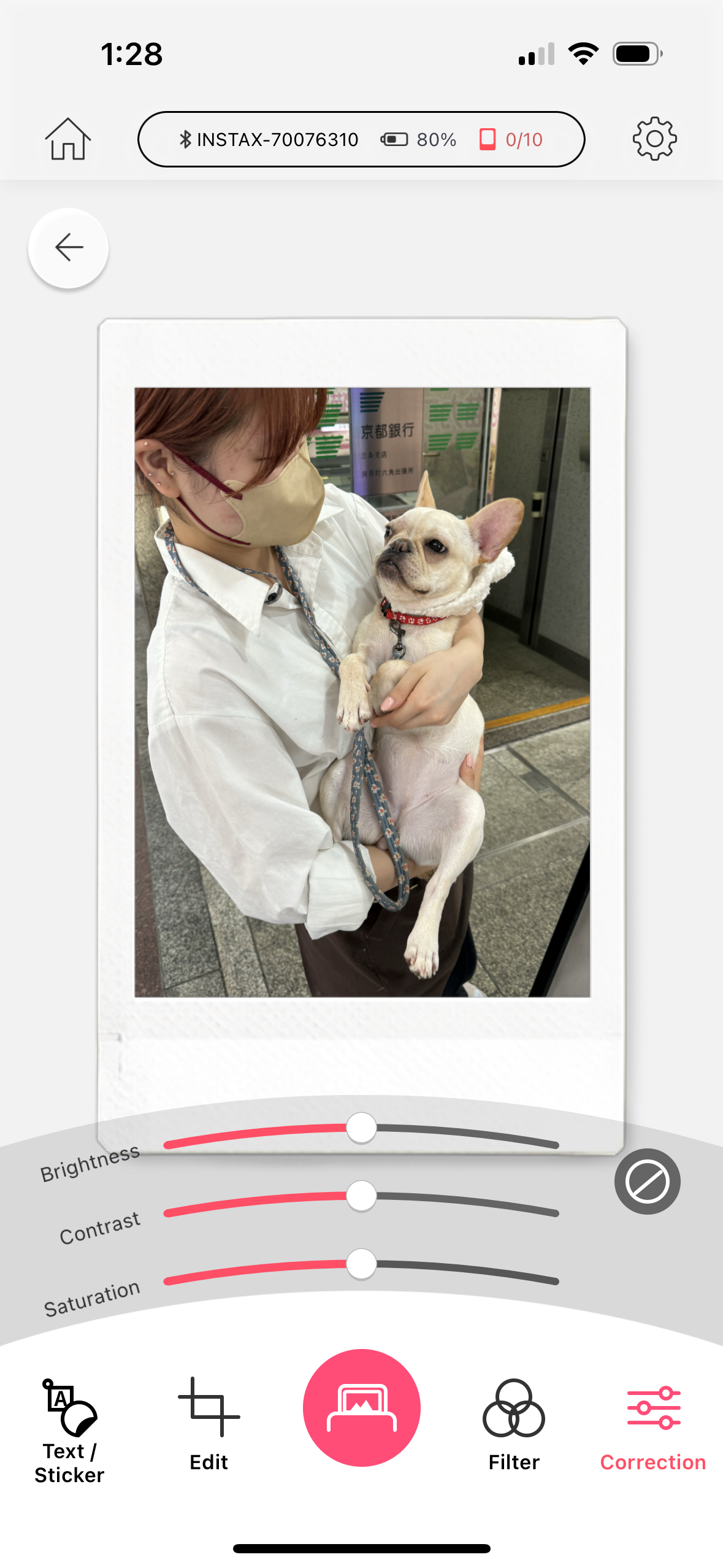
The mini Link app and its basic settings.

I understand why people use instant cameras. There is a “fun”, almost magic component to it. But instant cameras are bulky, the quality of the prints generally poor, and if by pure luck you get an interesting picture, it will be unique, and the only way to share it will be to take a photo of it with a smartphone, and print the copies. From a totally dispassionate point of view, it’s a rather inefficient and wasteful way to use a pack of film.

No such issue with the Instax printer. You lose some of the magic – it’s not as “immediate” as pushing the shutter button on a Instax camera and the results are not as unpredictable – but you only print your good images after you’ve had an opportunity to crop them and tweak the exposure parameters on your smartphone. Your “keeper” rate will be very close to 100%, and you will print as many copies as your budget (and your patience) allow.

The image is being printed. It only takes a few seconds.

There is not much else to say about the Mini Link. It simply works. Prints are small and but good enough for the intended use – reminiscing of good times spent with loved ones, and instantly sharing a token of appreciation.
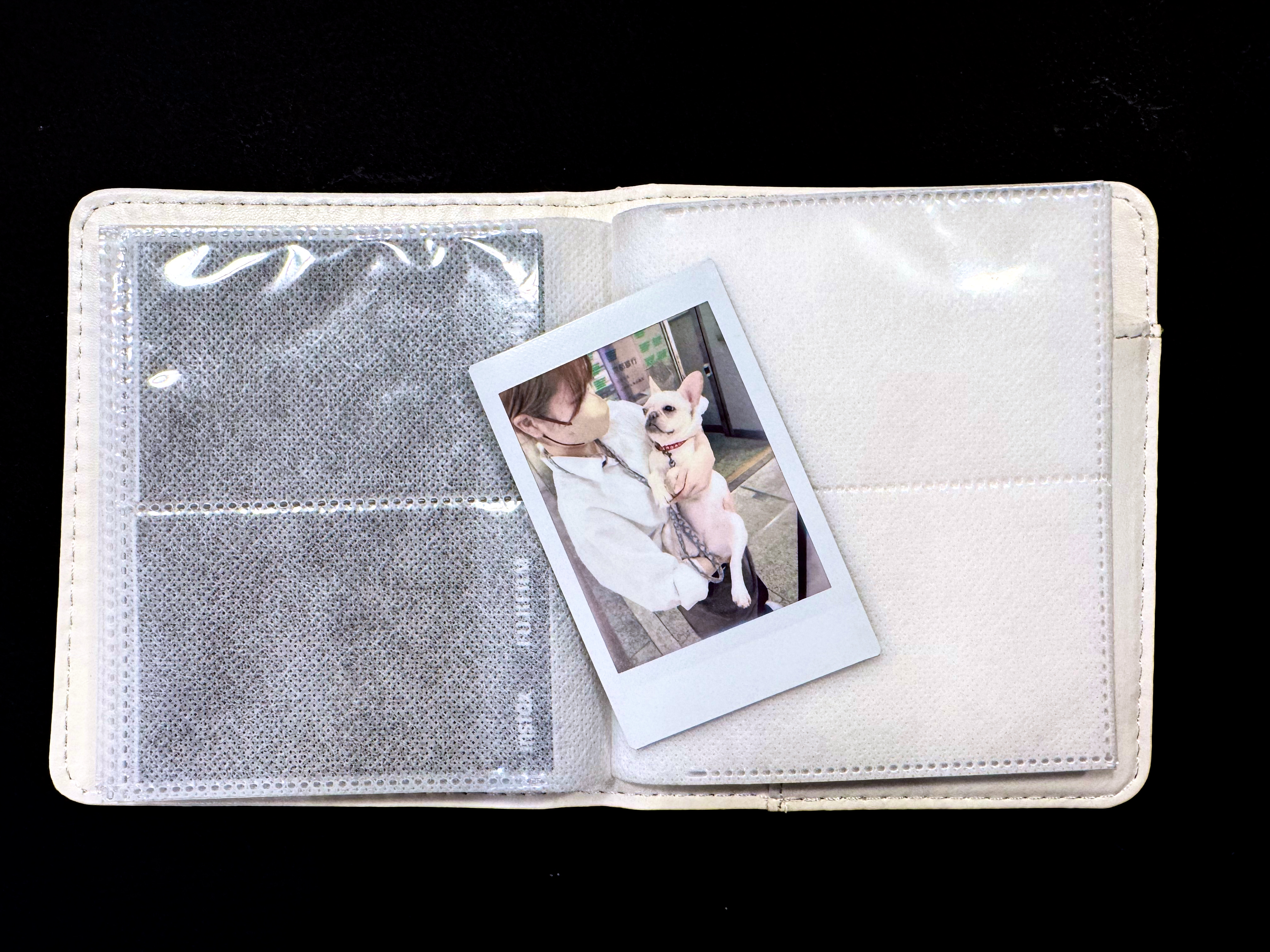
The mini print and one of the mini photo albums proposed by Fujifilm. This one is not particularly nice but came for free with an Instax camera.

The Mini Link 3 comes in three different colors (mine is “matcha green”) and sells for approximately $100. Prints cost a bit less than $1.00 each. I’m leaving mine permanently in my photo bag, and share the love whenever I can.


Hybrid Instax cameras: In addition to conventional “analog” Instax cameras and pocketable printers, Fujifilm also has a few hybrid Instax cameras in its lineup (Instax LiPlay, Instax Evo). Hybrids can be described as Instax printers, with a tiny 5 Megapixel sensor and a lens in the front, and a small color display at the back, packaged as a compact integrated device. The camera captures a digital image, that the photographer can evaluate on the color display, and decide to print, or not to print. Because the images are captured as digital files and saved on a micro-SD card, they can be edited, printed once or multiple times (in camera), and uploaded to a smartphone.

Zero Ink paper – if you over simplify, it’s not dissimilar to the thermal printer technology used to print receipts at the cash register or at the gas pump. But nicer, and more stable over time. The photo paper contains microscopic dye crystals that are initially colorless, and change color when they are heated. I had tested a Zero Ink (Zink) printer from Polaroid a long time ago. The prints aged well. Polaroid, Kodak and Canon are currently selling pockable printers integrating Zink technologies.

Fujifilm’s marketing campaign.

Fujifilm and the instant film bonanza


The Photokina took place in Cologne a few weeks ago. To a large extent, it was a Fujikina. Fujifilm announced a brand new medium format digital system, and presented a black and white version of their Instax Mini film. And they pre-announced a square (6cm by 6cm) version of their Instax Color film. And special editions (Michael Kors, Colette, ..) of their Instax instant film cameras. At the same time, Leica was showing a Leica branded Fujifilm camera (the Leica Sofort), a clone of the Fuji Instax Mini 90 Neo Classic, with Leica branded black and white and color instant film.

Instax Mini Film - Holga 120 CFN camera with Holga 120 -IB back
Instax Mini Film – Holga 120 CFN camera with Holga 120 -IB back.


Fujifilm has been in the instant film business for a very long time – with their own technology and through cross licensing agreements with Polaroid. Until April 2016 Fuji was still producing peel apart film compatible with Polaroid pack film cameras and backs, years after Polaroid themselves had ceased to manufacture instant film. As a sidebar, the conventional Polaroid film was called peel-apart film, because the photographer had to wait for the image to be processed, and then had to peel a sort of negative apart from the developed picture on paper. A more modern implementation of instant photography is the “integral” film, in which  the picture itself contains all the chemicals needed for an automatic development of the photo.


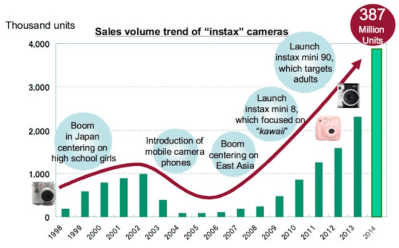
Fujifilm’s integral film success story started at the end of the nineties, when they introduced the Instax Mini, a new small size instant film system in Japan (the Instax Mini image size is approx 6 x 4.5cm, and as a consequence the size of the cameras can be kept reasonably small). The system was adopted with enthusiasm by  pre-teen and teen age Japanese girls, and Fuji has been very intelligently building on this initial success to convert foreign and older customers (first in Asia, and more recently in the West). In addition to the Instax Mini film, Fujifilm also introduced Instax Wide films and cameras. The Instax Wide image is larger than the Mini’s (twice the size at 10cm x 6cm), but the cameras are anything but pocket friendly.


The growth has been phenomenal (3.8 Million cameras sold in 2014, 5 million in 2015, and on target to 6 million in 2016).

sales_Instax_other
Sales of Fujifilm Instax cameras – 1998 to 2014. The sales volume in 2014 is 3.87 million. Source: Fuji film

 
Those volumes are far from being negligible if compared to the 40 million digital cameras  sold in 2015.


More important still for Fujifilm’s bottom line, instant film photography is a repeat business:  each camera consumes film, and a pack of Instax Mini film which costs approximately US$ 10.00  is only good for… 10 pictures.


On the instant film market, Fuji has only one competitor: The Impossible Project, aka TIP. TIP took over a Polaroid plant in the Netherlands when Polaroid left the film business, and started manufacturing their own integral films (they don’t have the original Polaroid recipes, their films are their own creations). I had tested their first black and white integral film just after they started their business a few years ago – and I had not been impressed. They have improved their products massively in terms of predictability and usability, and they’ve extended their product line to include color films and to support more models of Polaroid cameras; I’ve seen really beautiful pictures made with their current line of films. However, compared to Fujifilm, they remain a small scale operations with expensive products and a very limited distribution network. As opposed to Fujifilm, The Impossible Project can only propose one model  to people who want to buy a new camera. Their customers still  primarily use very capable but old SX70 and 600 Polaroid cameras – which are still abundant on the used market, but don’t have a reputation for aging gracefully.

holga2
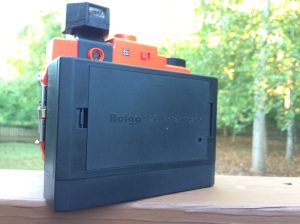
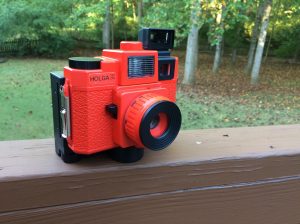
Holga 120 with 120-IB Instax back.


Lomography (the promoters of Lo-Fi photography and makers of the Lomo, Holga, Diana and Belair cameras) have developed two lines of instant film cameras,  one for the Instax Mini film, one for the Instax Wide, as well as add-on backs for the Holga, the Diana and the Belair.  They offer more control to the photographer but they don’t have the reputation of being user friendly or to offer consistent results. More about it below.


Lastly, a cottage industry has been busy refurbishing old Polaroid cameras (for use with The Impossible Project’s film or with Instax), and converting old medium format cameras – in particular the Mamiya Press – to Instax film. For all sorts of reasons, Fujifilm recently stopped producing the conventional peel and apart instant film that many lovers of high quality instant photography were using. Since Fujifilm’s  own Instax Wide cameras are rather basic, the best option for serious photographers is to convert old medium format cameras to accept Fuji’s integral film. At the moment, it’s a very limited market – the  cameras capable of taking advantage of the size of the Instax Wide film are necessarily very large,  heavy, and difficult to use, and the conversion is as expensive as the camera itself. But the release of the Instax Square film in 2017 will open the door for the conversion to integral film of smaller 6×6 and 6×7 cameras. If the Instax Square cartridge is designed like the Instax Mini, cameras with a deep interchangeable back will be the easiest to convert. It’s time to buy a good medium format SLR system before the prices go up.

holga_1
Holga with 120-IB Instax back (with add-on viewfinder and Neutral density filter)

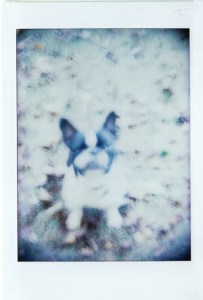
Jules (French Bouledogue). Holga camera with defective shutter.


A few weeks ago, I wanted to have a feel for the Instant film phenomenon, and I mounted an Instax Mini back (the Holga 120-IB) on the Holga 120 CFN  I had brough with me to Rome a few years back. I bought the kit from a on-line store in Hong-Kong. It is composed of the back itself, a corrective lens  to place at the front of the Holga’s lens, and an additional viewfinder. It’s very simple – there is no battery as the picture is processed and extracted when the photographer turns a crank hidden under the bottom of the back.


My first test was not devoid of issues: either the back was poorly assembled, or I did not insert the pack of film properly, but I could not extract the pictures from the camera with the crank as I was supposed to: after each shot, I had to go to a dark room, open the camera and extract the picture manually. I finally solved the problem, probably by brute force, and the back worked flawlessly with the subsequent packs of film. Then with  the second pack of film, the shutter of the Holga decided to misbehave. I had to disassemble  it and lube it. The third pack of film gave better results, but almost all of the pictures were over or under exposed:  the exposure latitude of the Instax film is rather narrow, and nailing the right exposure is very difficult: don’t believe the specs sheet, the Holga only has one aperture (there is a sunny day/ cloudy day selector, but the aperture is F/13 in both cases) and the shutter is inconsistent and unreliable. Not the best recipe for success. Overall, it’s a frustrating experience as you feel you are wasting a good film in a poor camera.

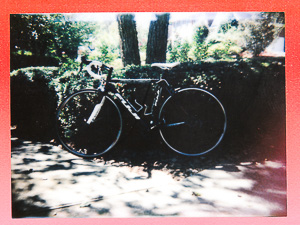
But as always with an Holga, some of the pictures – while technically flawed – have an almost surrealistic quality.

Fuji bicycle - Instax Mini film - Holga camera with Instax back (AFAIK Fujifim is not in the bicycle business. It's a coincidence)
Fuji bicycle – Instax Mini film – Holga camera with Instax back (AFAIK Fujifim is not in the bicycle business. It’s a coincidence)

More about Fujifilm’s instant photography adventures:


Fujifim and Instant Photography (camera-wiki.org)