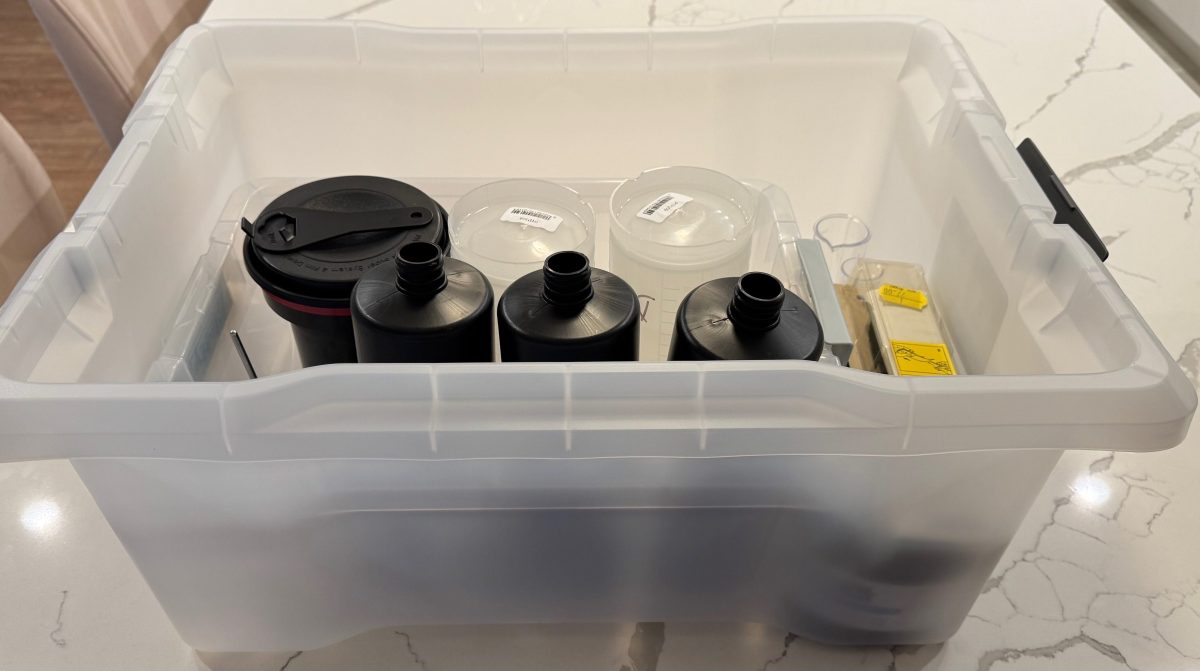
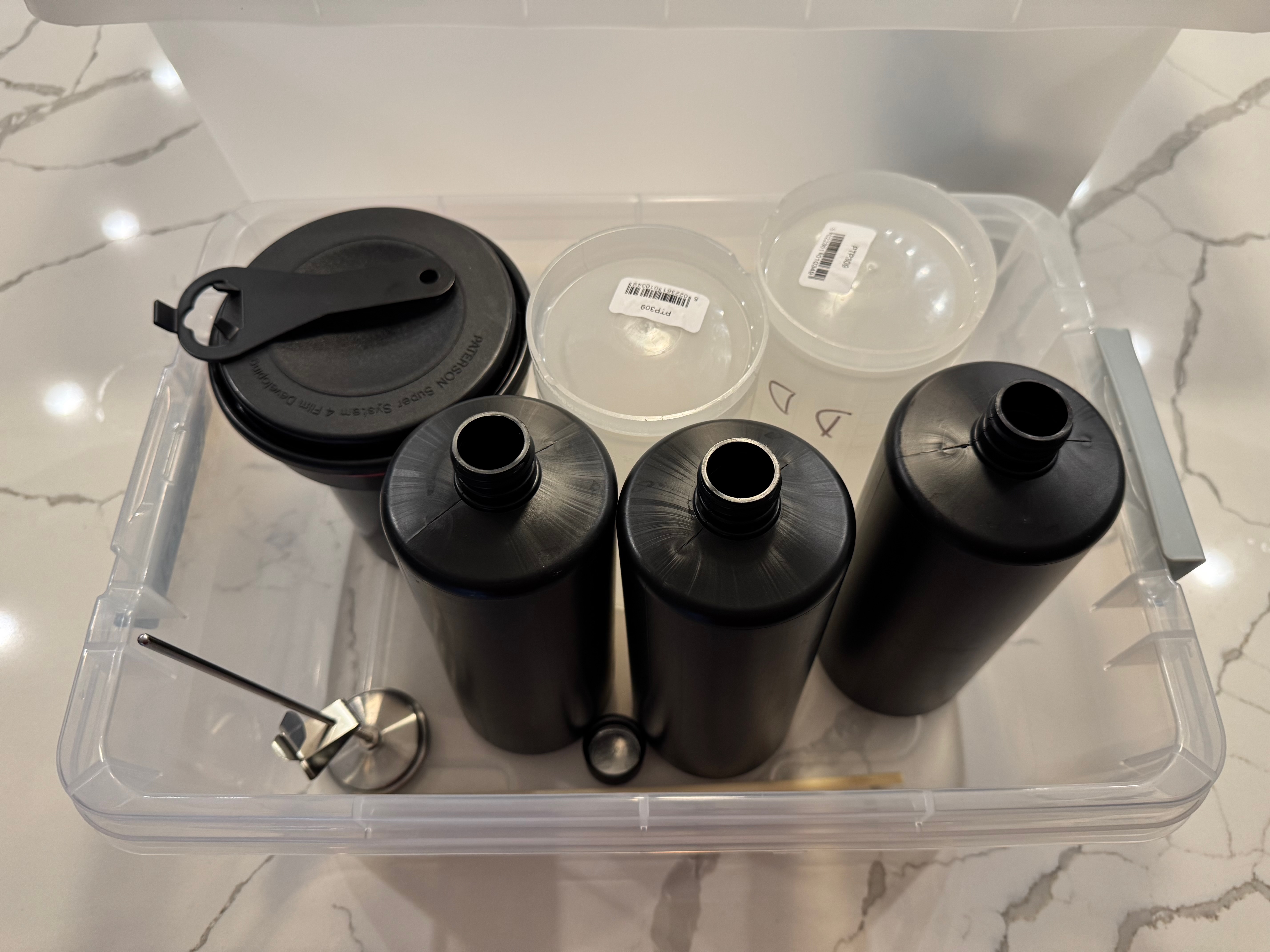
A photo lab in a 20 by 15 by 10in plastic bin.

Not everybody has the luxury of dedicating a room – or even a large cabinet – to use as a home photo lab.

If you still enlarge and process your prints at home, you need a dark room, and plenty of space for the enlarger and the developing trays – but if you only process film, and immediately digitize it, you simply need a few square feet on the countertop of your kitchen. Once you’ve cleaned your equipment, it will fit in a 20x15x10in plastic bin, chemicals included.


Everything can fit in a 20x15x10in plastic bin, including the chemicals


A 20x15x10in plastic bin is still rather large object to carry around (and I can’t imagine people traveling with their diluted chemicals and processing film in their hotel room), but it’s easy to find it a storage place at home, even in a small apartment.
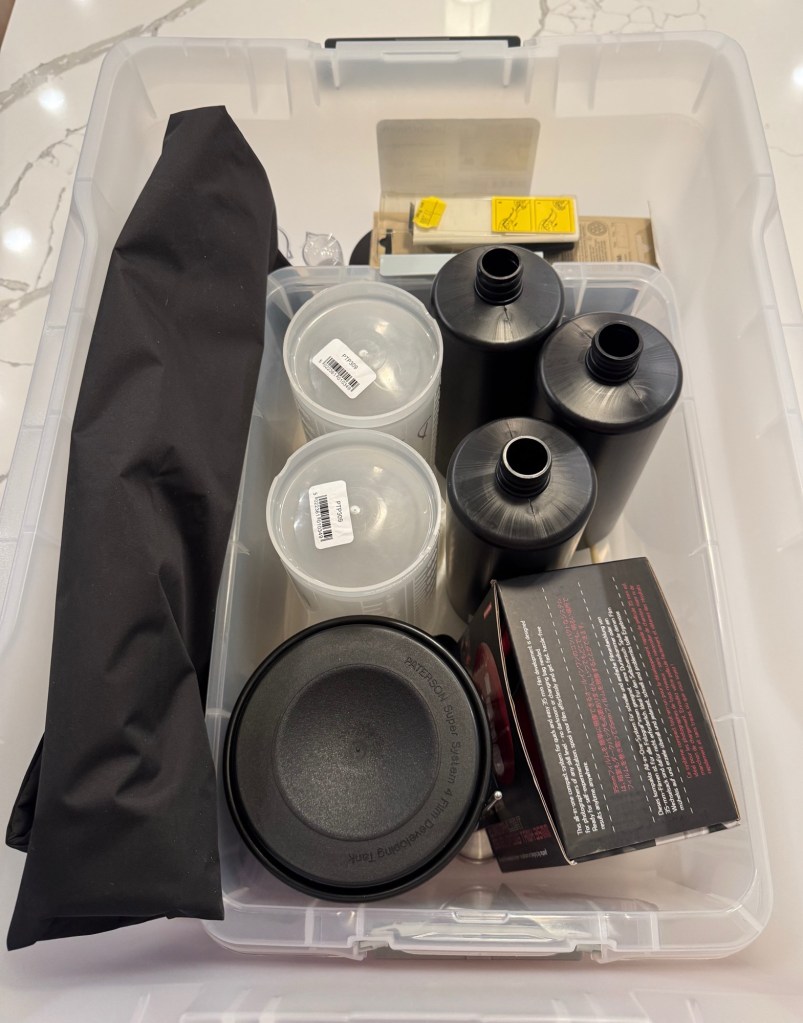
the 12 gallon bin with enough room for two tanks (one Lomo, one Paterson), bottles and even chemicals (the Tetenal tabs).

I started processing film again a few months ago, and I’m still re-discovering the secrets of the trade. I still make mistakes and I’m not ready to develop color film at home yet, but it’s one of my mid-term goals. I’m trying to keep the whole process simple and low cost, and I’m sharing here what I’ve learned, so far.
A smaller storage bin to use as a sous vide if needed

Preparing the chemicals

Preparing and storing the chemicals is the thorniest issue, in particular if you only process one or two rolls of film per month. Products (developer, fixer) are always delivered as liquid concentrate or powder, and need to be diluted before use.
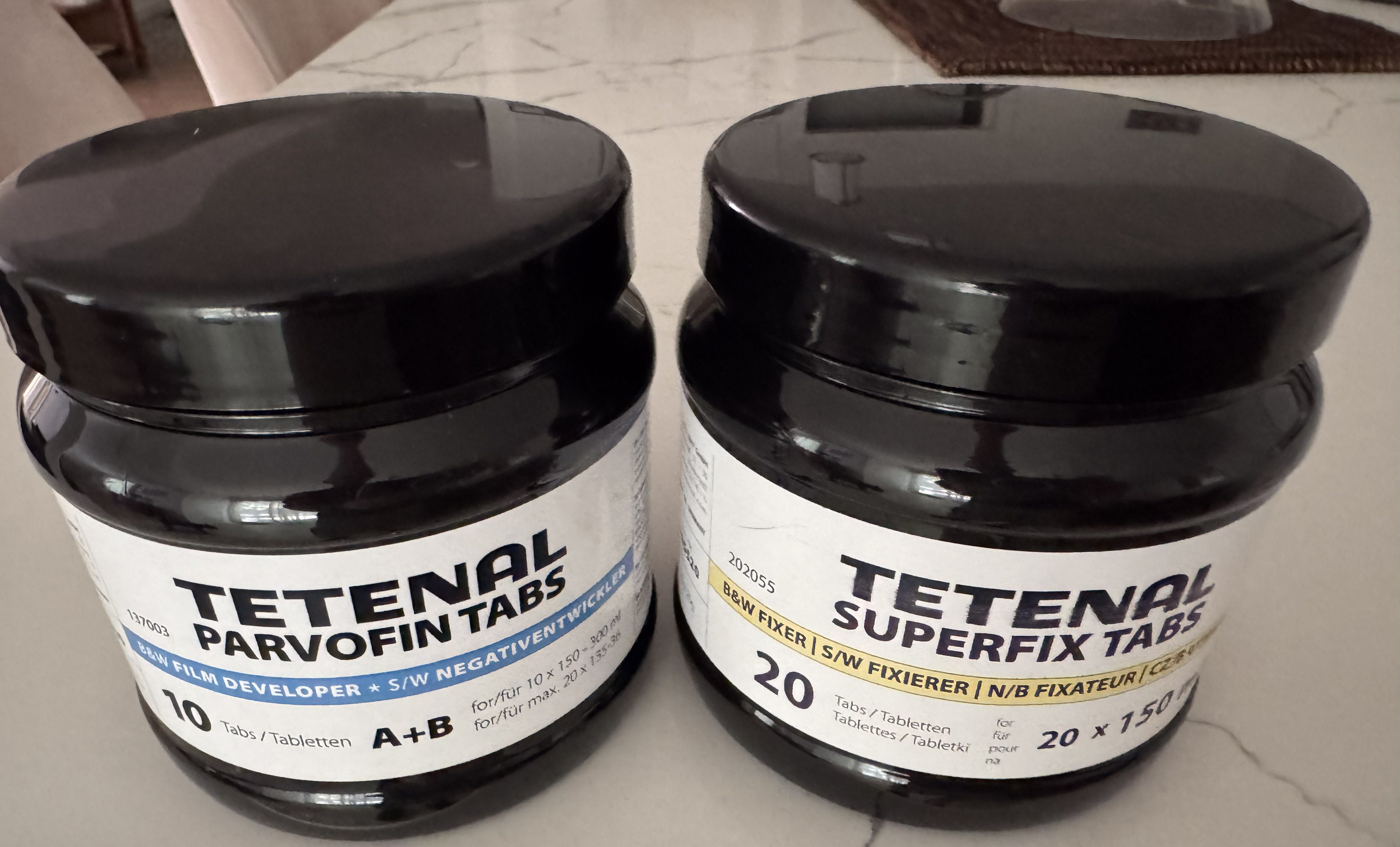
Tetenal – the developer and the fixer come is two easy to store bottles.

Ilford sells a beginners starter kit (the Simplicity Starter Pack) with enough product to process two cartridges of 35mm film, but it’s horrendously expensive at almost $35.00 once you have included the cost of shipping (that’s $17.00 per roll of film… ouch!).

Tetenal has run out of business, but Freestyle Photo (and a few other retailers) still have a some of their products in store – I bought a bottle of Tetenal Parvofin tabs (the developer) , and a bottle of Tetenal Superfix tabs (the fixer). The products are packaged as tablets (like an Alka Seltzer effervescent tab), don’t take much space, and can be stored for a long time (four years). Each tablet is good for one roll of film: you just dilute what you need a few hours before use (you have to let it cool down). It looks like a good solution if you don’t process huge volumes of film, and don’t want to store chemicals in liquid form. The Tetenal tablets are still expensive (approximately $5.00 per processed roll of film) but they’re convenient.
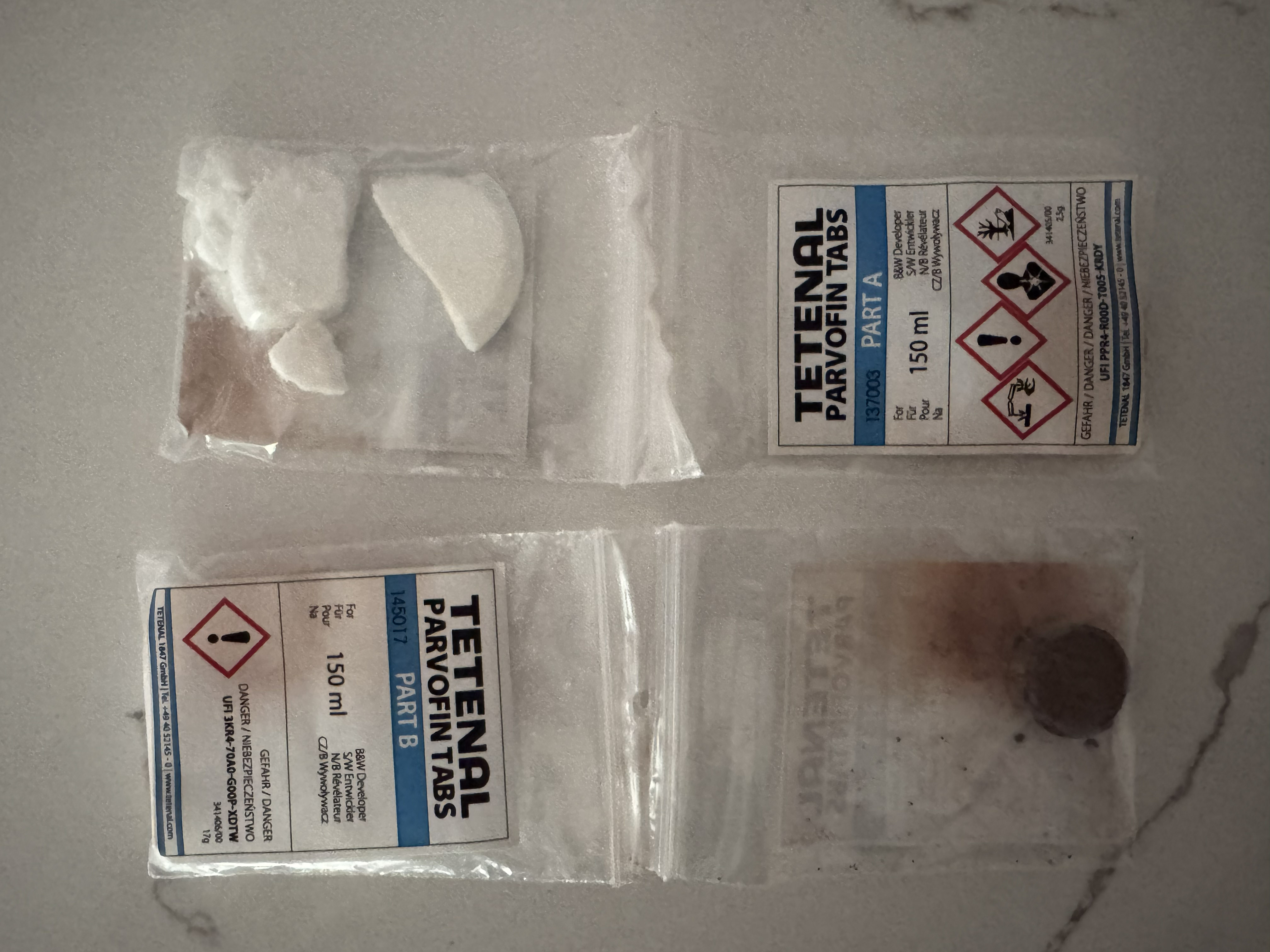
Tetenal: the Parvofin tablets. The developer solution is obtained by placing the two tabs (Part A, Part B) in hot water.

Processing the film

Amateurs typically process roll film (135 or 120) in developing tanks.
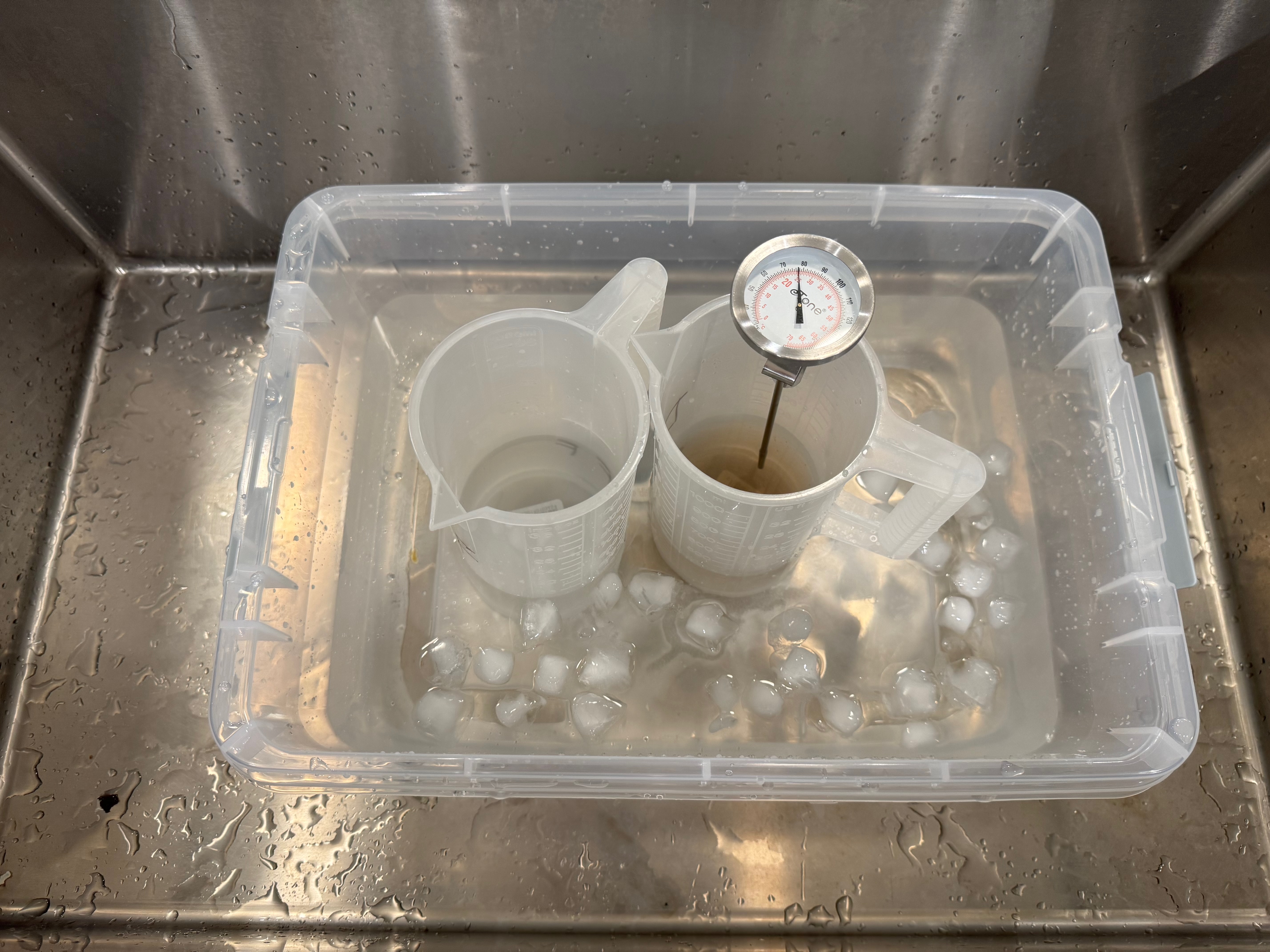
Maintaining the developer and the fixer at 22 degrees c. (It’s Atlanta in July, you have to cool the B&W baths).

Paterson, Jobo (and all sort of copycats) manufacture developing tanks that have to be loaded in the dark. I’ve never trusted a dark room to be dark enough to load film, and I’ve always used a charging bag. 

You slide your hands in the two sleeves, load the film on the reel, place the reel in the tank, and close the tank. Without seeing what you’re doing – of course.

Intimidating, but not that difficult after one or two dry runs.

Lomo and Lab-Box have been promoting an easier way to process film, with tanks that can be loaded in full daylight – no charging bag needed. You simply place the film cartridge in a receptacle, turn a crank, and the film is loaded. I’ve been using the Lomo Daylight Developing Tank for a few months. Yes, it works, but I’m not totally sold on it – I may even return to a conventional Paterson tank (there was a promo recently and I bought one for cheap).


Lomo Daylight imposes a trade-off between simplicity and convenience, on the one hand, and reliability and flexibility, on the other hand
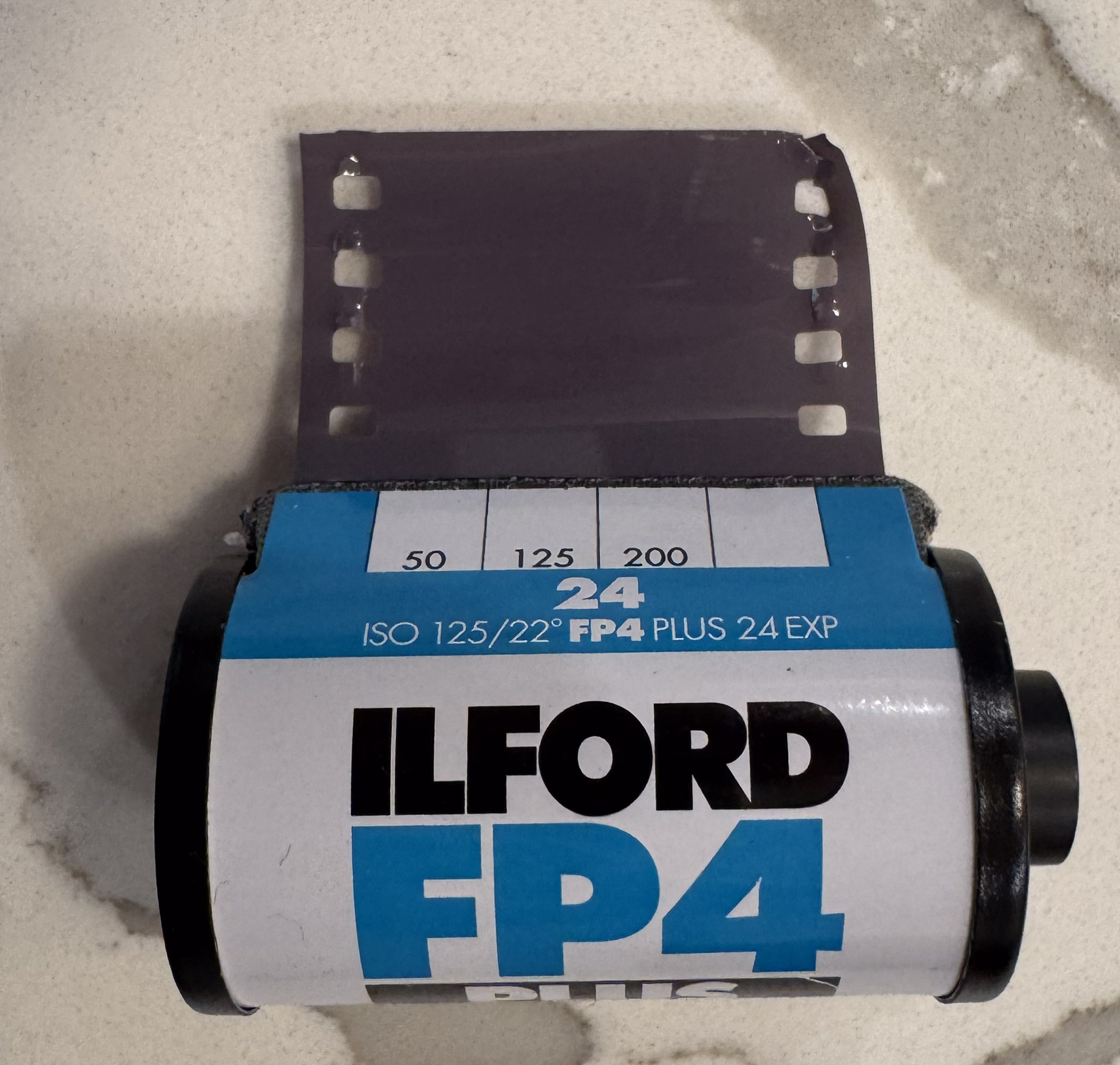

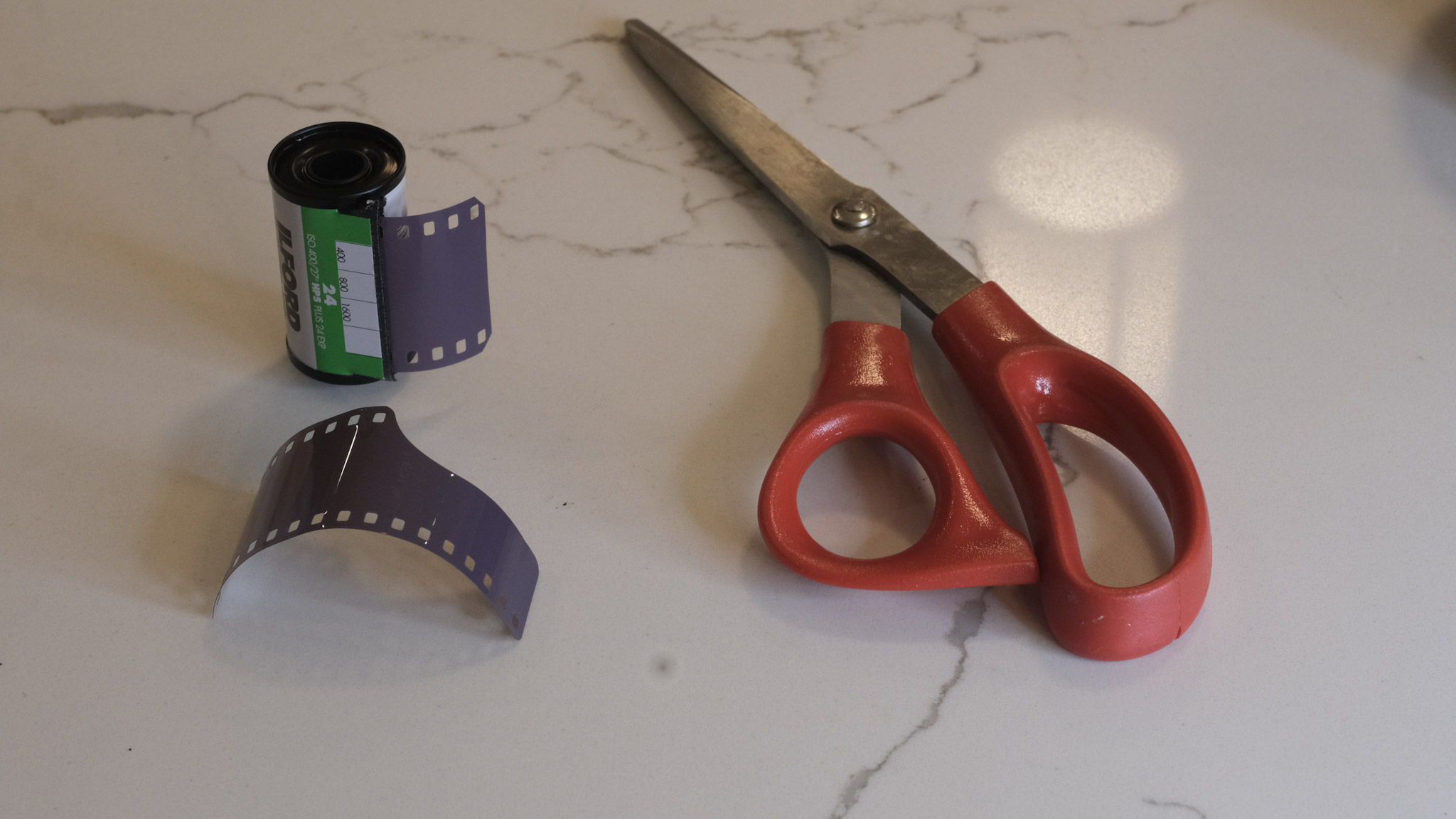
The Lomo Daylight teared the peforations of the film. If it happens, the cartridge has to be removed from the loader, and the damaged section cut off before another attempt at loading the film can be made.

I’ve never seen or tested the Lab-box, but the Lomo Daylight imposes a trade-off between simplicity and convenience, on the one hand, and reliability and flexibility, on the other hand.

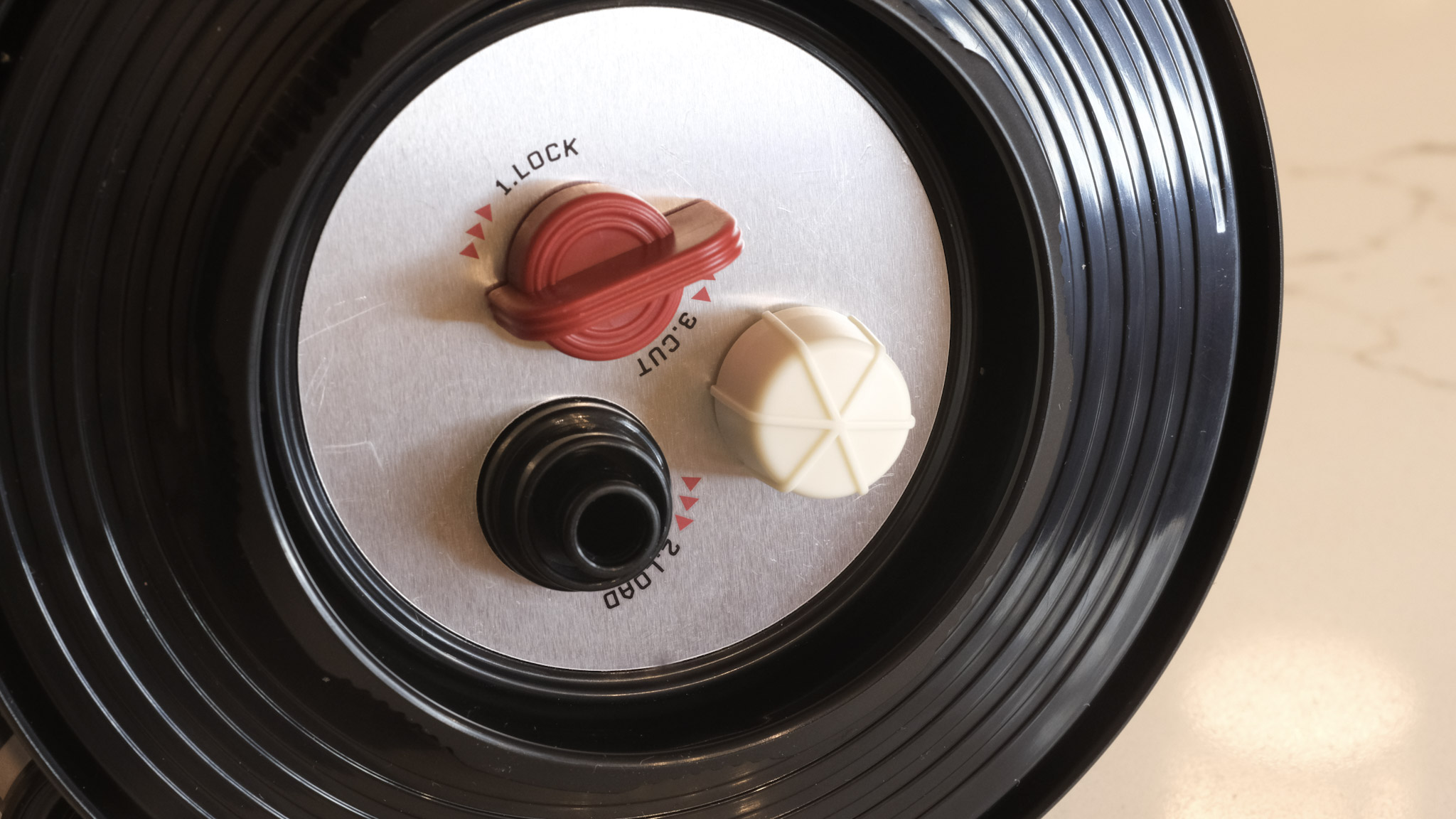
  • Reliability because to push the film on the reel hidden inside the tank, Lomo relies on a pair of sprockets (that engage in the film perforations) – and will tear those perforations if there is any resistance. If it happens in the middle of the film loading process, you have to turn the red button to cut the film, remove the film receptacle from the tank, develop the film which is already inside the tank, clean and dry the whole thing, then return to your film cartridge, cut the section where the perforations were teared down, resume film loading, and start a new film processing cycle. Of course, you lose a few pictures in the process, and a few hours of your time. Not great.
  • Flexibility, because the Lomo only works with one roll of 35mm film at a time, as opposed to a conventional developing tank that will offer the flexibility of developing one or two 35mm film cartridges or a single 120 film roll in one run. Also, the Lomo tends to require more product per cycle than a conventional tank, and because of its shape, may (I’ve not tested) be more difficult to use when processing color film.

Film scanning or digitizing

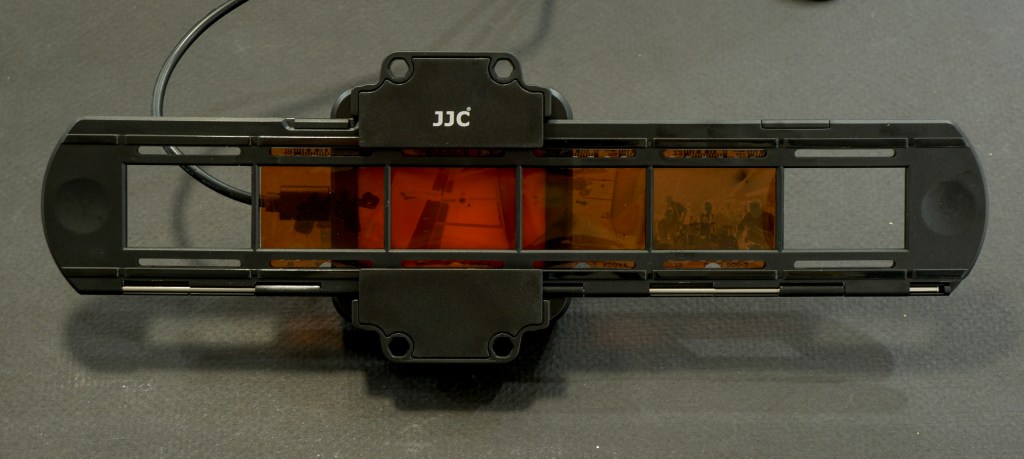
I don’t own a dedicated film scanner. I simply mount a macro lens (an old 55mm Nikkor) on my current digital camera, screw the JJC Film Digitizing adapter on the front of the lens, and digitize a full roll of film in a few minutes. I have absolutely no reservation about that part of the work flow. It’s quick, easy, and it simply works.
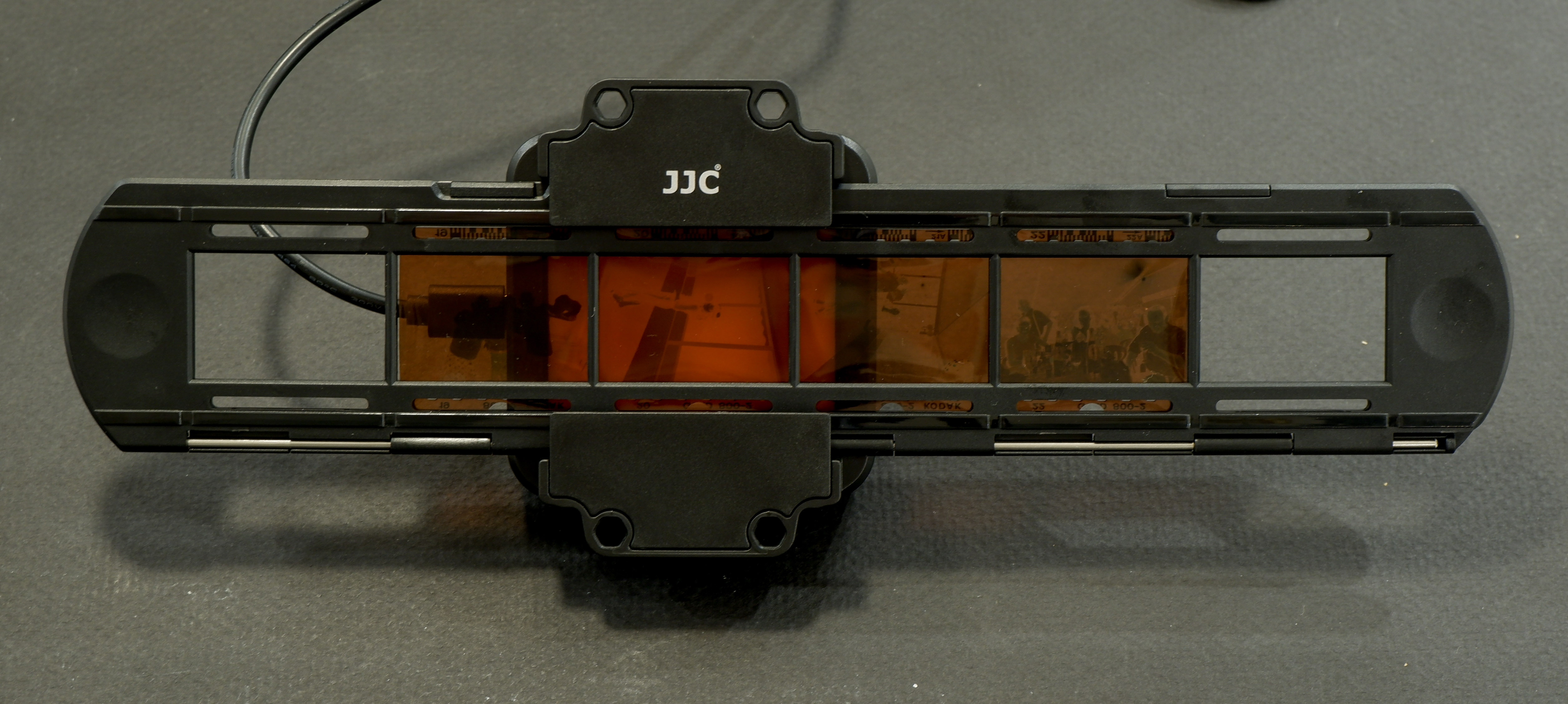
JJC Digitizing kit: the film strip holder
In action – Fujifilm X-T4, Fotasy Nikon F to Fujifilm X Adapter, Nikon Micro-Nikkor 55mm, JJC kit. The lightbox is included in the JJC solution, a big advantage over a similar product offered by Nikon.

Editing and sharing your images

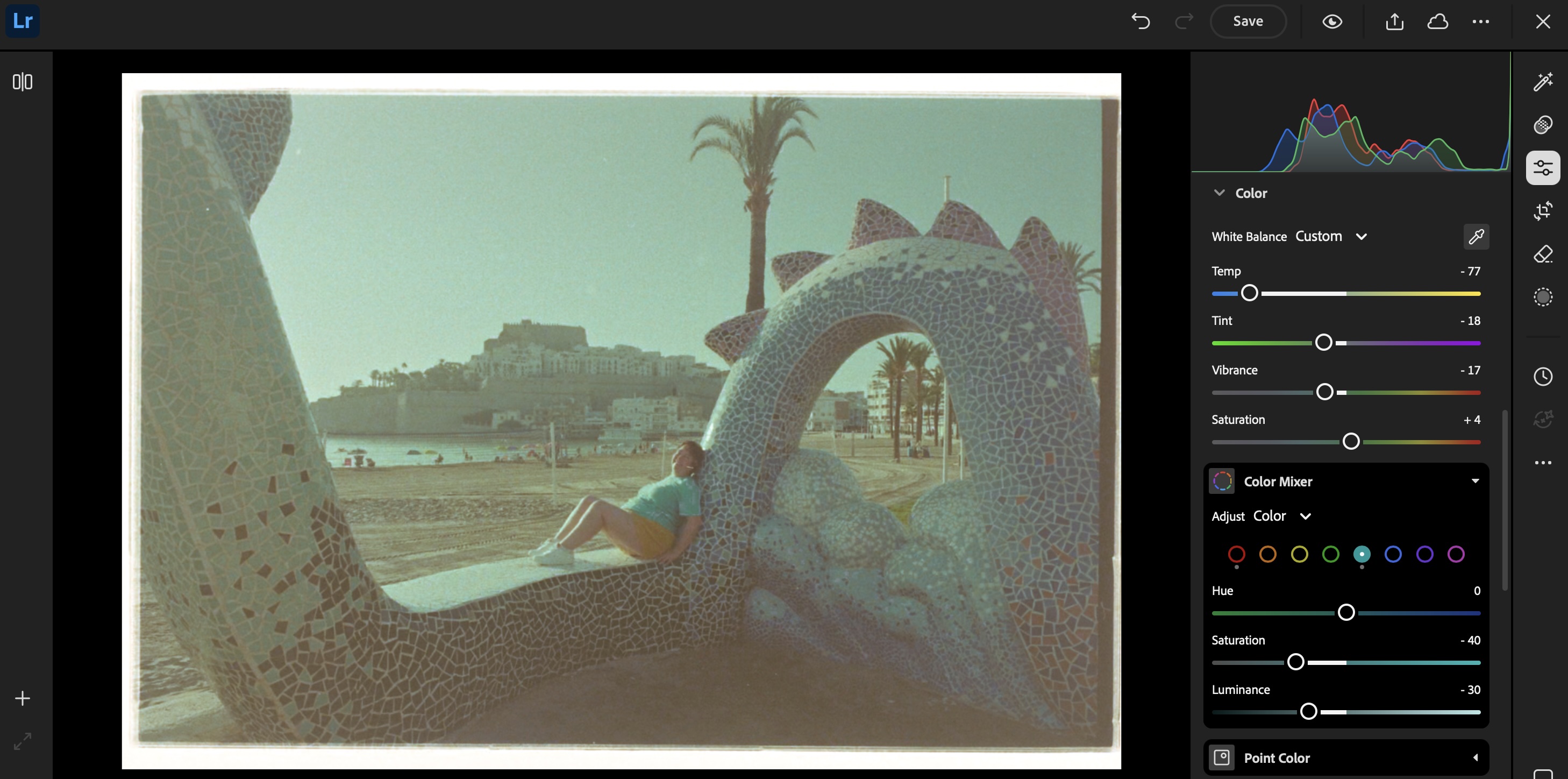
The rest of the process takes place on a “computer” (PC, Mac or iPad). I simply connect a SD card reader to my iPad or to my PC, and upload the images to Lightroom Mobile or Lightroom Web. Even the junior versions of Lightroom will let you invert the negative (by flipping the two ends of the Point Curve), and finalize the image by playing with the exposure, contrast and while balance sliders.

If correctly exposed, processed and digitized, black and white film will require very little work in a photo editing tool like Lightroom Mobile. Color film requires more effort – but so far, I’ve not felt the need to upgrade to Lightroom Classic and to a dedicated Negative Film Processing plug-in.
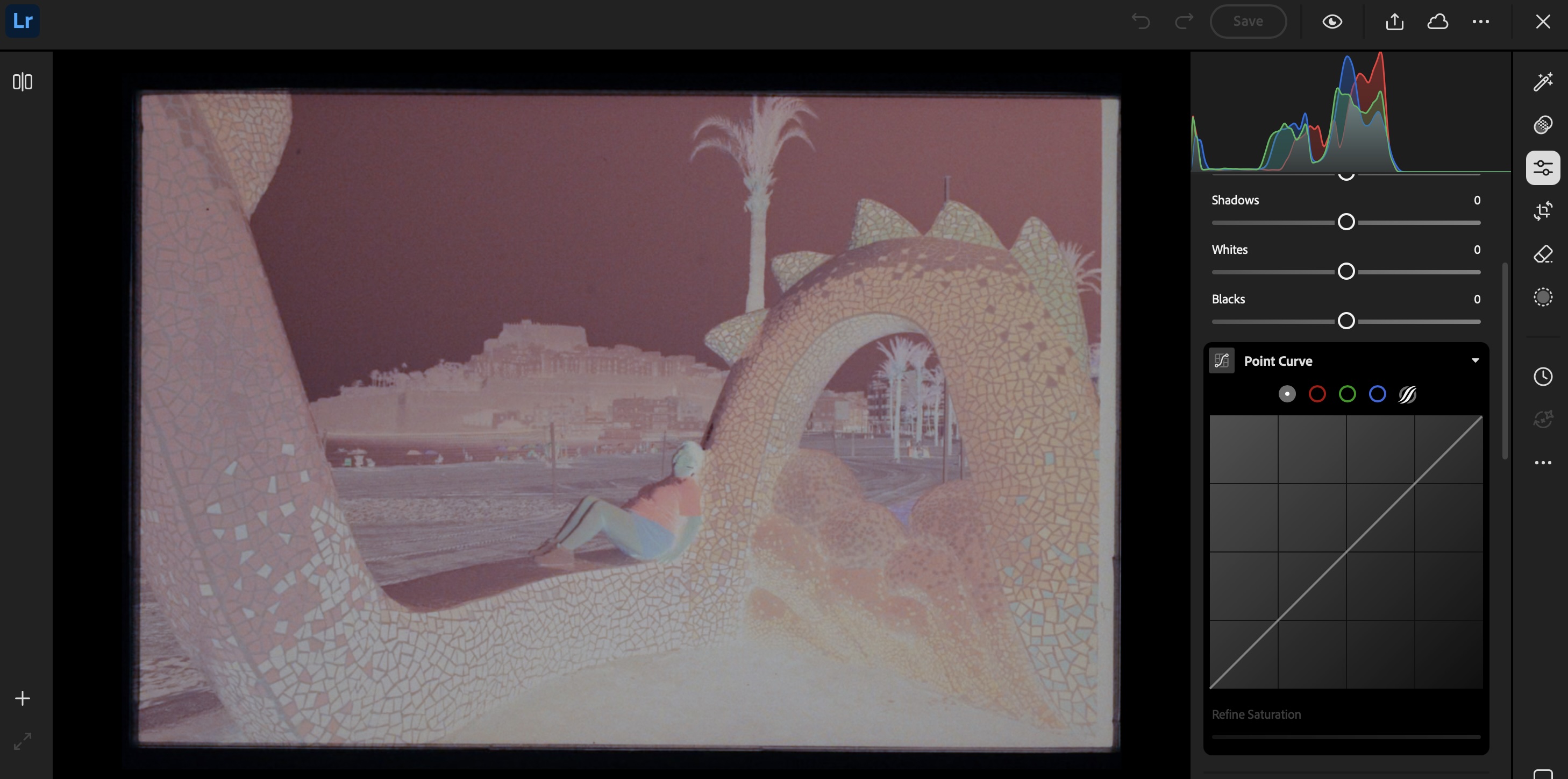
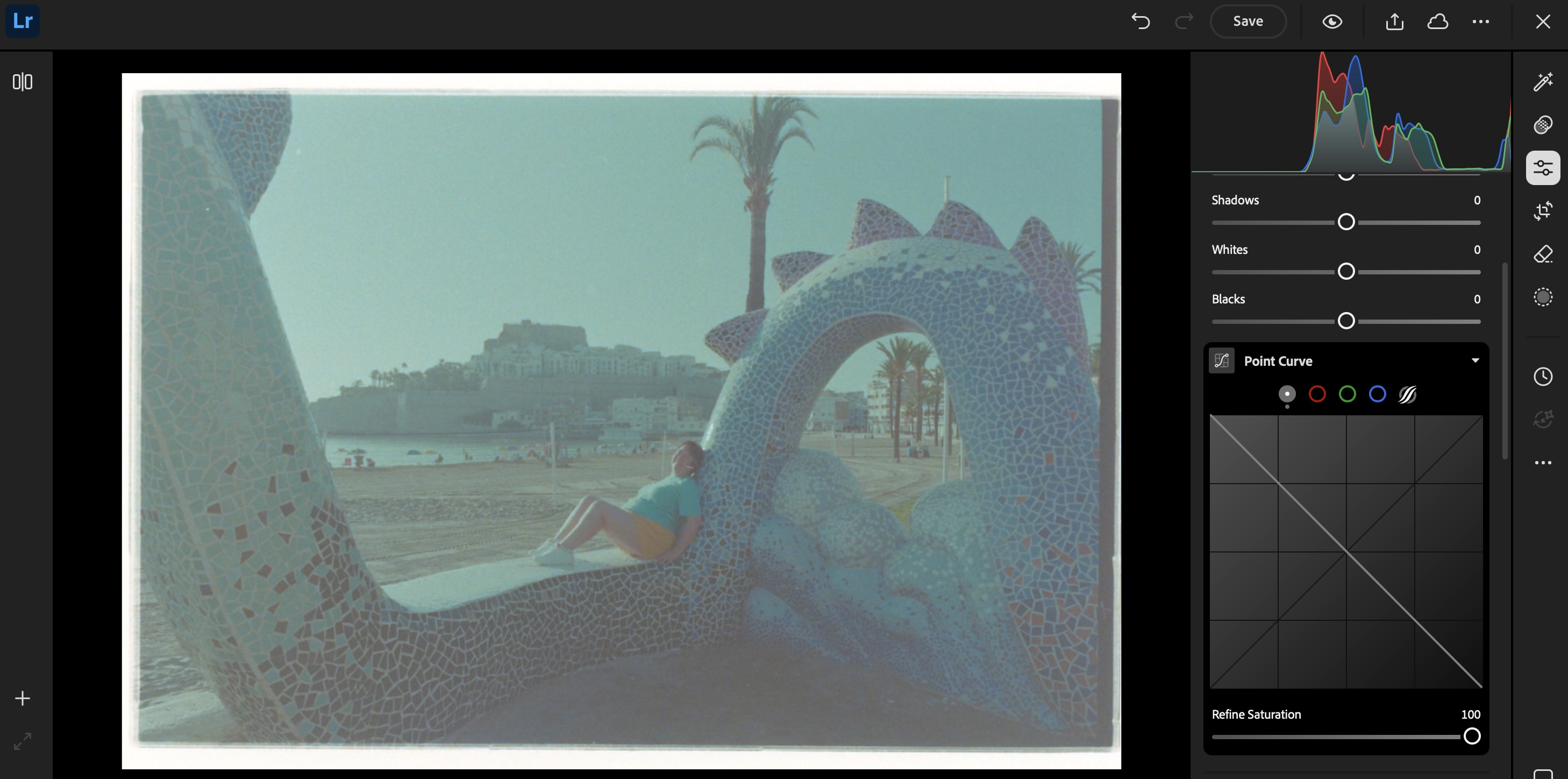
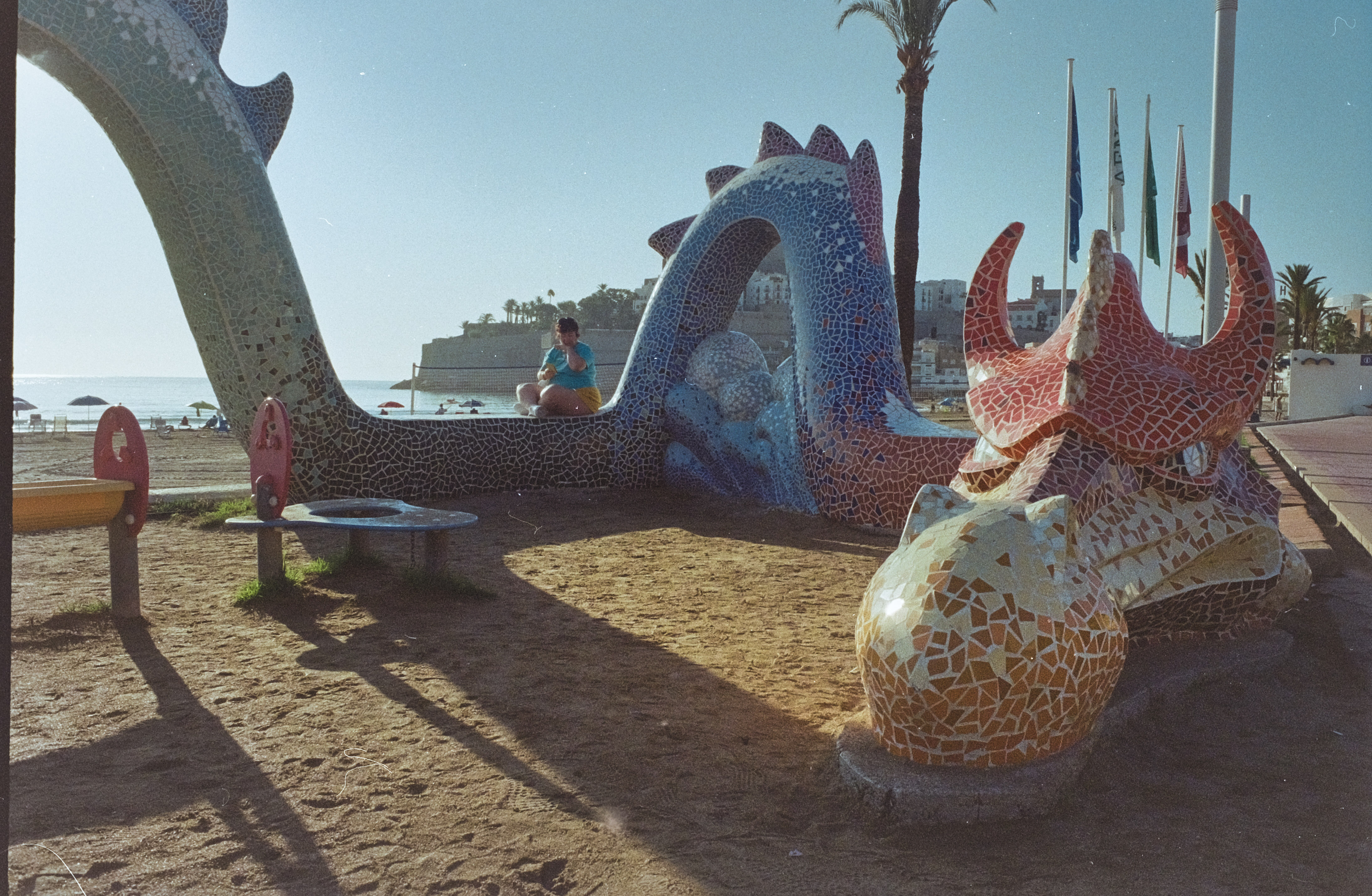
The final result: Peñíscola (Spain) – a few episodes of Game of Thrones were shot in the citadel. It explains the dragon. Digitized from film, inverted and adjusted in LightRoom Web.

As a conclusion: what’s in my plastic bin?

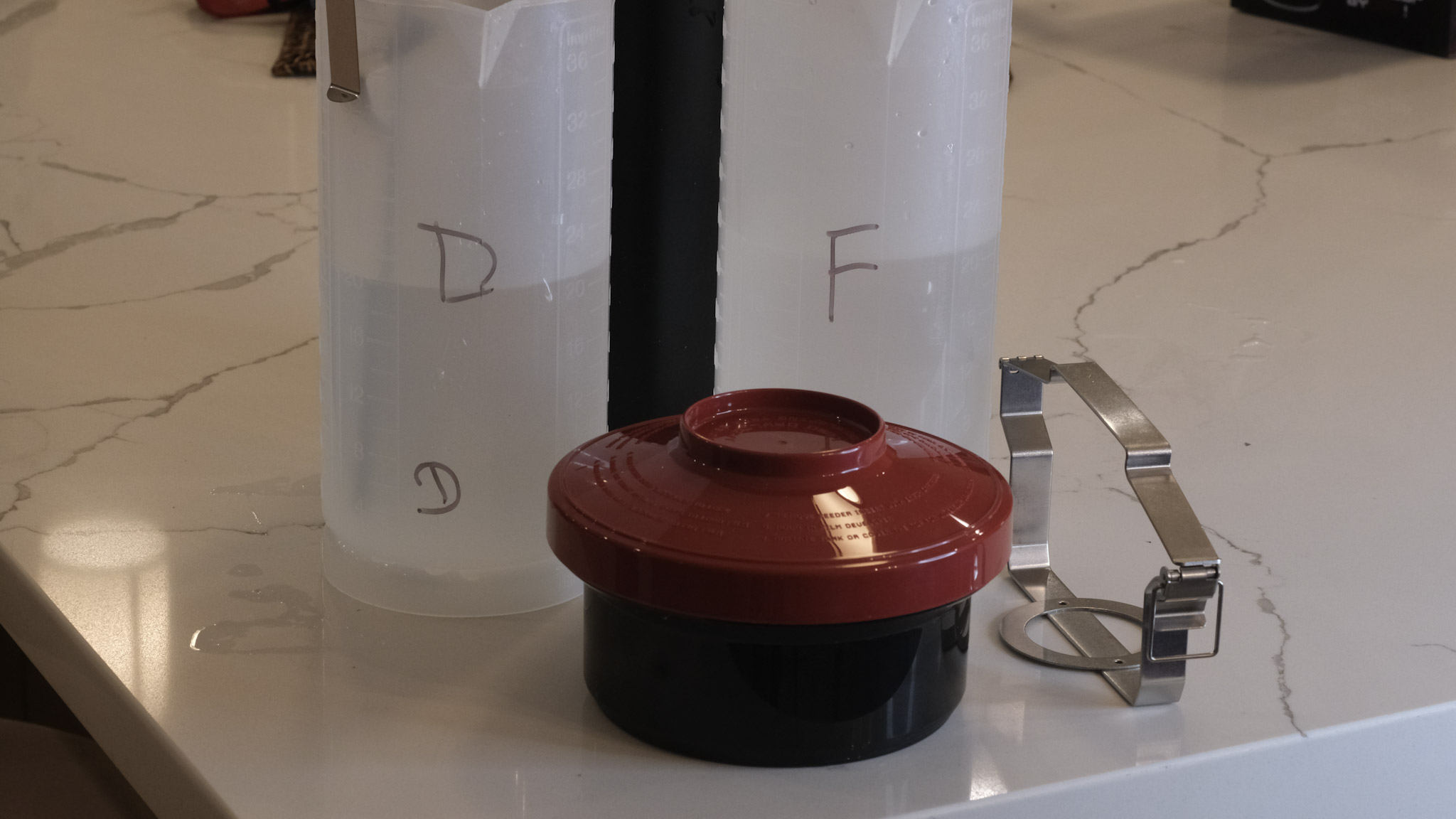
Developer, fixer, bottles, tank, thermometer, beakers, samigons, squeegee, weighted clips – everything fits in my 12 gallon plastic bin. Color processing would require an extra device to maintain the temperature of the baths and the tank at 38 degrees C, but I don’t need one for B&W film (in the Atlanta summers, the difficulty is to keep the temperature of the B&W baths low enough).

I included in my kit a smaller bin to use as a sous-vide, to keep the chemicals at a controlled temperature while processing the film. It also fits in the larger bin.

Digitizing adapter, macro lens and digital camera are stored separately, of course.


More about film development in CamerAgX

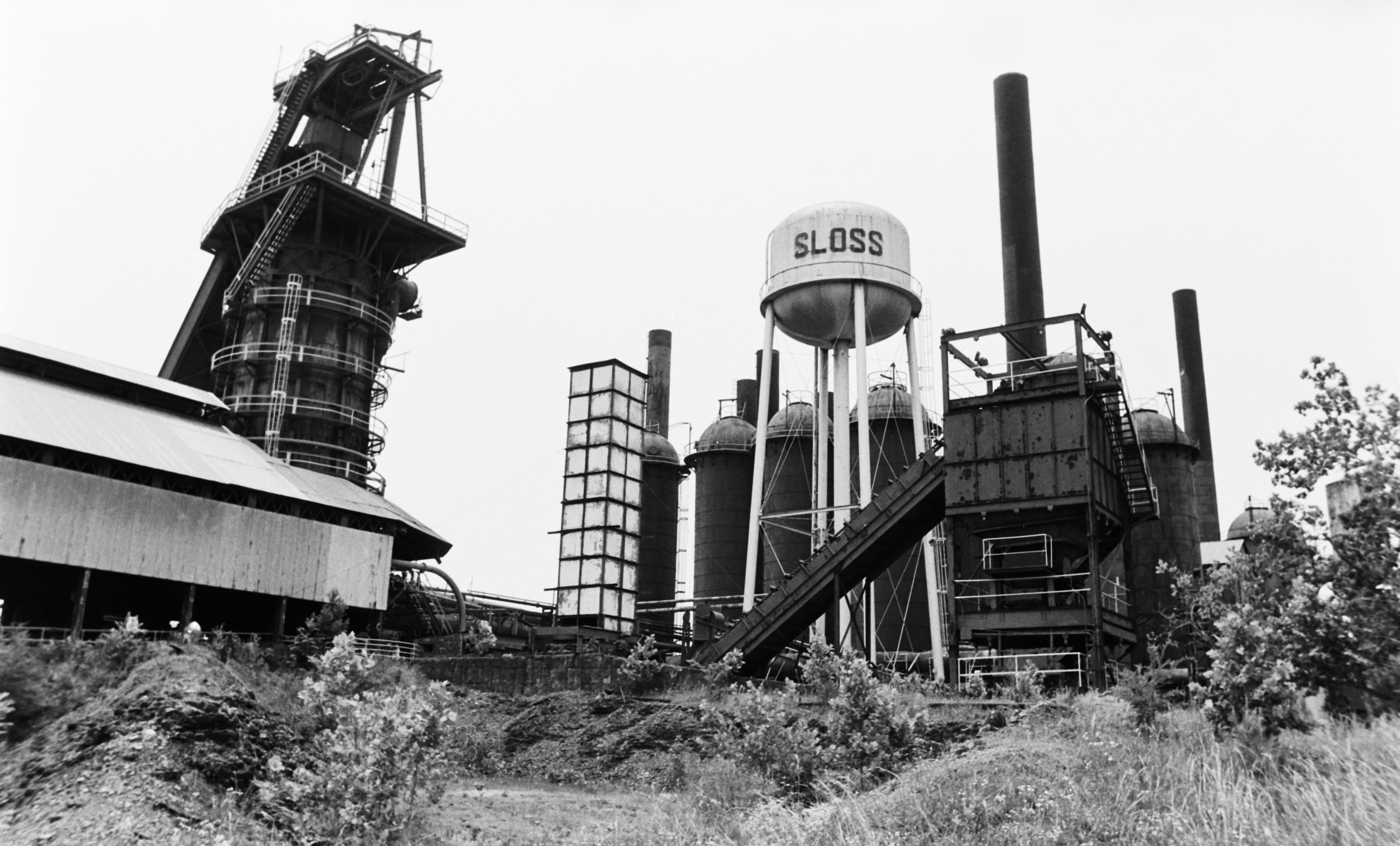
Sloss Furnaces – Birmingham, AL
Pentax Program-A – Ilford FP4
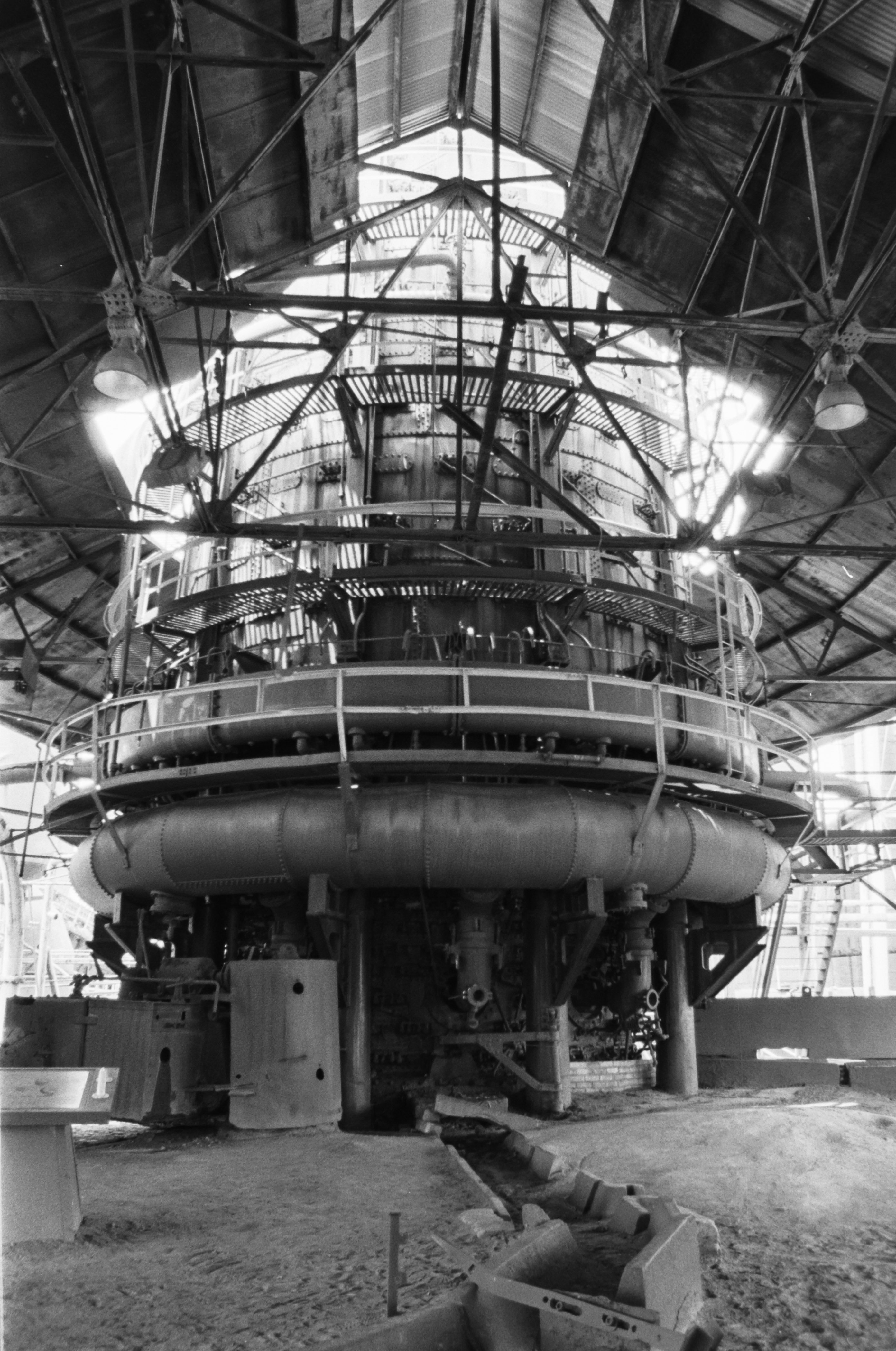
Sloss Furnaces – Birmingham, AL
Pentax Program-A – Ilford FP4
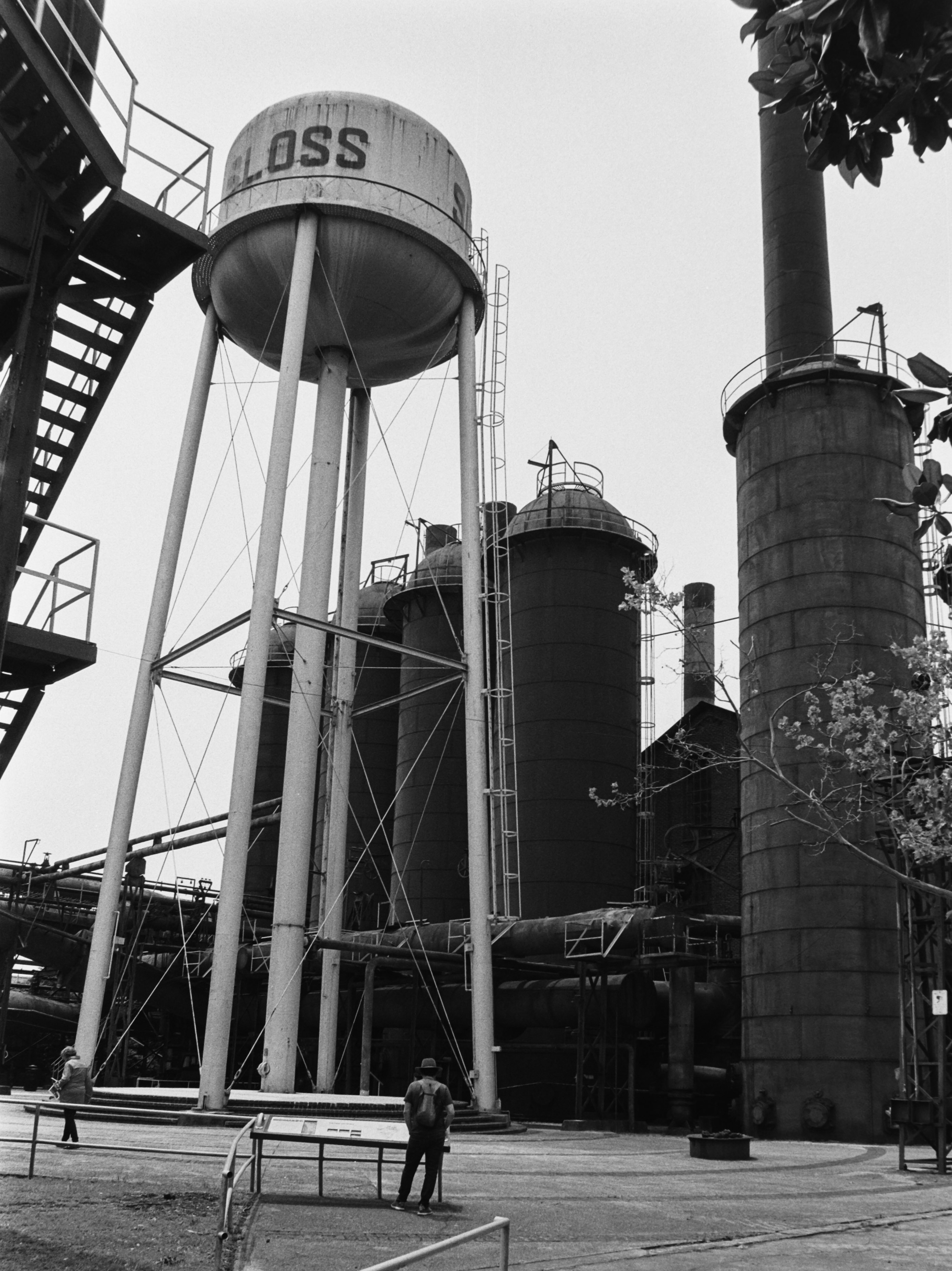
Sloss Furnaces – Birmingham, AL
Pentax Program-A – Ilford FP4
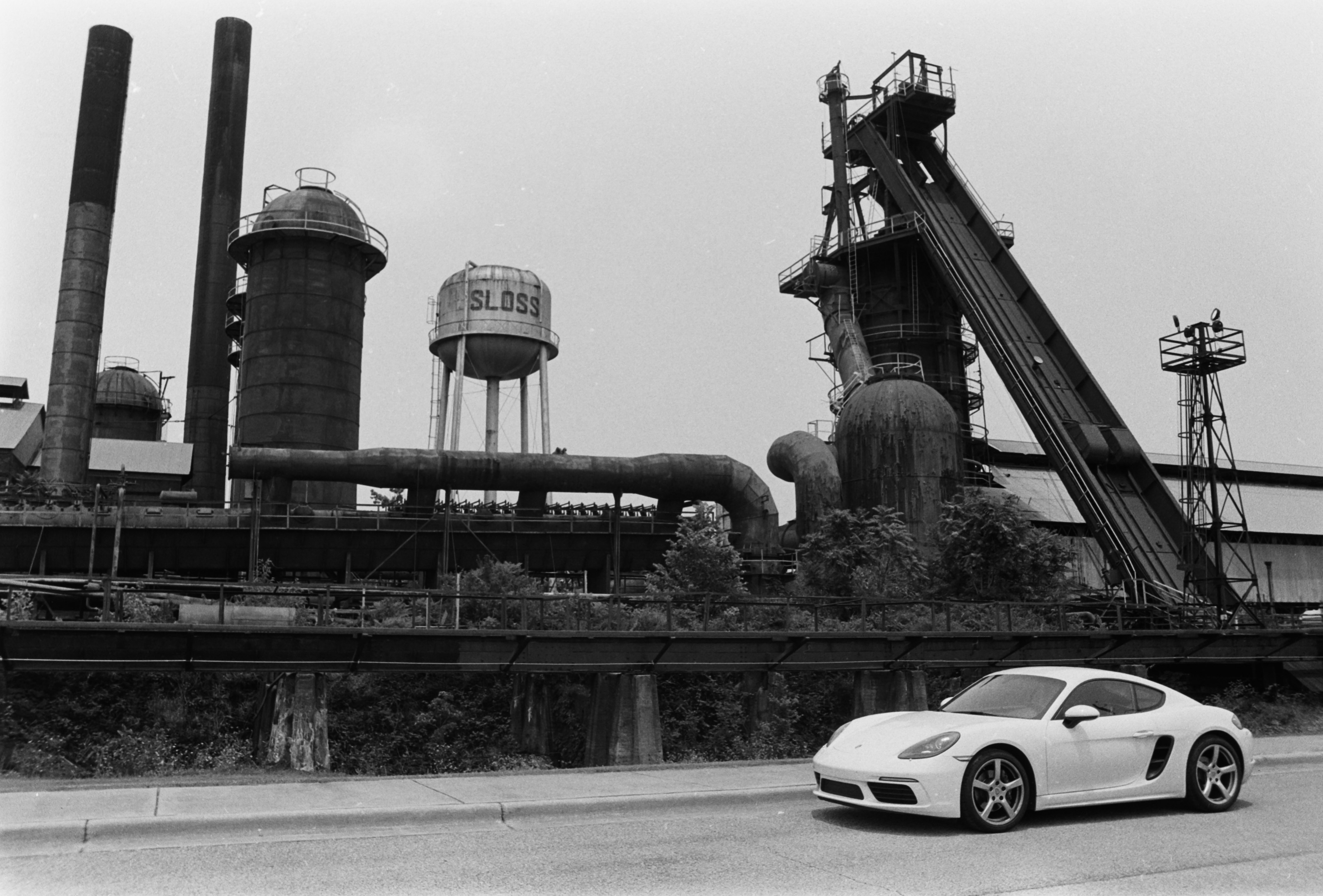
Sports car at the Sloss Furnaces. I found the contrast between the modern white car and the dark industrial ruins interesting. All pictures of the furnaces were shot on Ilford FP4 – Developed at 22 degrees C in Tetenal PARVOFIN. Negative shot with the JJC Film Digitizing adapter and inverted in Lightroom Mobile.

Lomo Daylight Developing Tank – true to the promise?

I had been tempted to start processing film again for a while, but I did not want to invest in dark room equipment or a dedicated film scanner. Two products launched recently, the Lomo Daylight Developing Tank and the JCC Film Digitizer, promise to make film processing at home easier than it has ever been, and made me take the plunge.

I ordered the “Lomo Daylight Developing Tank” a few weeks ago, and since I had just shot a few rolls of Ilford Black and White film, I put it to its paces.

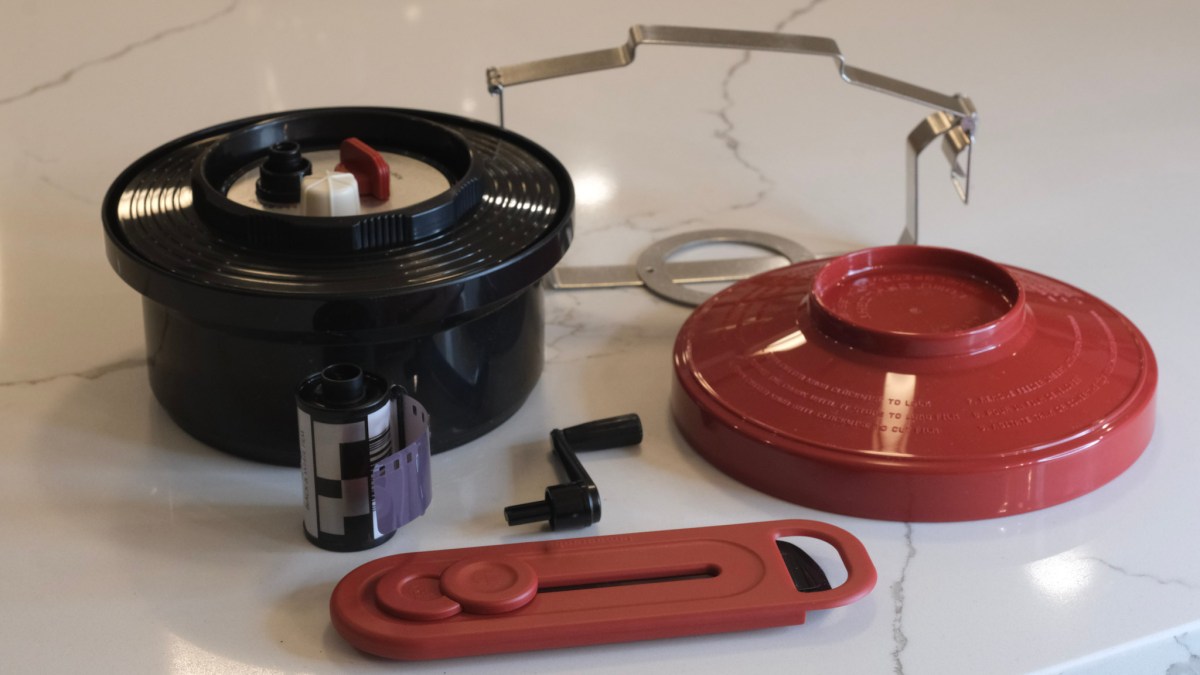
It’s probably best to watch the Youtube video posted by Lomo to see how it works. High level, the development tank contains a spiral reel (on the left in the picture below), and you will use the film loader (on the right) to move the film from the cassette to the spiral. In full daylight.

Where the magic happens: place the cassette of film in the loader and drop it in the development tank. Turn the crank to load the film on the spool inside the tank, remove the film loader, and process your film.

Let’s cut the chase: It works

The set (tank, spiral, loader, film extractor) is build of plastics of good quality and looks durable. It’s very cleverly designed, and it does the job:

  • if you follow the instructions carefully (no user manual, watch the Youtube video at the bottom of this post), it works as promised, and in full daylight: cut the leader of the film, place the cassette in the loader, place the loader in the tank, turn the crank of the loader until all the film has been loaded on the spiral reel, turn a knob to activate a cutter that will separate the film from the cassette, remove the loader from the tank – and from then on, develop, agitate, stop, fix, agitate, rinse – as you would do with a conventional Paterson or Jobo tank.
  • the film is not damaged in the process, and when you open the tank at the end of the development process, you see the film perfectly rolled on the spool.
  • There is no light leaks, and no stain on the developed negatives – the system obviously respects your film.
  • It seems to be fool proof – while I was struggling with a piece of debris (user error, more about this below), I may have lost a few frames, but the rest of the film was never at risk and gave me negatives I can be proud of.
The whole kit (the film leader extractor was included in the kit I purchased).

So, is it the greatest invention since sliced bread, or a solution in search of a problem?

Well, somewhere in between – it’s a clever system, but there are couple of drawbacks.

First, you can only develop one roll of 135 film at a time, when the “market standard”, the Paterson Universal System 4 Development tank, has room for two rolls of 135 film. And because the capacity of a Paterson tank is 600ml, most single use processing kits are designed to be diluted to produce a 600ml solution.

The film loader (right) and the development tank (right). Capacity: 350ml

Unfortunately, the capacity of the cuve of the Lomo is 350ml – so you need to dilute a bit more if you want to process two rolls of film with one dose from a standard processing kit.

Secondly, the film should not be fully rewound, and the film leader should be accessible. If you use a darkroom bag and load your conventional Paterson cuve in the bag, it does not matter that the film leader is still accessible or fully rewound in the film cassette, since you’re going to use a cassette opener to access the film. It’s different with the Lomo.

The film leader as to be cut in a specific way before the cassette can be placed in the loader

The Lomo Developing Tank’s loading mechanism only works if the film leader is accessible – if the film has been fully rewound in the cassette, the photographer will have to use a film extractor to pull the leader from the cassette. There is one included in the kit, and it works reasonably well for a film extractor, but it’s an extra step that the user of a darkroom bag would not have to perform.

Extracting the film leader from the cassette – the tool provided by Lomo (top) and my old and trusted Hama extractor. The Lomo tool worked better.

Thirdly, when the loader is finished loading the film on the spool, the operator has to turn the red knob to the left to cut the last section of film and separate it from the cassette – so that the loader (and the now empty cassette) can be removed from the cuve. You have to fully, and decisively, turn that knob to the left.

Because it could happen (it happened to me) that if the cut is not perfect, a little tiny bit of film is kept prisoner in the cutting mechanism and obstructs the very narrow slot where the next (undeveloped) roll of film is supposed to pass to reach the spiral reel. It makes loading the film impossible, until you have found that tiny piece of film and removed it. Lessons learned, the hard way.

Processing my second roll of film, I had to fight to load the film because of a tiny piece of film of the first roll kept prisoner on the cutting mechanism – after I found it and removed it, everything worked fine.

Lastly, when you cut the film to separate the section which is reeled on the spiral from the cassette which still sits in the loader, a short length of film remains attached to the cassette (11 perforations, approximately two inches or 5cm), which (depending on the camera and how you loaded the film) may (or may not) mean that the very last frame of each roll of film will not be processed, and will be lost forever.

As a conclusion

The main benefit of the Lomo Daylight Developing Tank is that it makes film development at home less intimidating for the beginners.

They won’t have to use a darkroom bag, and won’t need to learn how to operate a cassette opener and load the film on a spiral reel just by touch, without seeing what they’re doing.

With the Lomo Daylight Developing system, everything takes place in full daylight, and does not require any particular skill, experience or muscle memory. If the equipment is clear of any film debris and you follow the instructions, it simply works.

Film Loader – detail

The system is intelligently designed, seems carefully built using components of quality, and should withstand the test of time.

At $89.00, it’s probably a bit more expensive than a good quality set composed of a universal tank, a darkroom bag and a cassette opener, but not by much. And as an easy introduction to film processing, it’s worth it.

But…

Does it save time? I doubt it.

First, unless your camera can be set not to fully rewind the film and leave the leader outside of the cassette (or you remember not to fully rewind it if you use a non motorized camera), you will have to extract the leader with a specialized tool before you can place the film cassette in the loader of the Lomo system.

Which is a step you don’t need to go through if you use a darkroom bag and a cassette opener.

Secondly, after you’ve developed your first roll of film of the day, you will have to carefully disassemble, rinse, dry and patiently reassemble the whole system, which takes definitely more time than simply rinsing the components of a Paterson tank.

And if you want to avoid the trouble I experienced with the second roll of film I processed, you will thoroughly check that there is no tiny piece of film obstructing the film insertion slot inside the cuve.

The film is now loaded on the spool – from there on it’s absolutely similar to what you would do with a Paterson tank.

If you are already equipped with a darkroom bag, a cassette opener and a conventional development tank , and know how to use them, I honestly don’t see any benefit in switching to the Lomo Daylight Developing Kit.

And I would not consider developing color film (whose chemistry is much more temperature sensitive) in a Lomo Daylight as well.

As for me? It’s been ages since I used a conventional development tank and a darkroom bag for the last time. I’m pretty sure I would still be able to use it, but I was not be able to locate my old kit – probably lost when moving from one place to another. I had to start afresh. So why not try something different?

The Lomo Daylight Developing Tank is not perfect. It will not be as efficient at processing large quantities of film as a conventional Paterson or Jobo development tank, but I’m not planning on processing a large volume of film (one or two rolls of black and white film per month at the most).

For my use case, the Lomo Daylight makes sense. And used in conjunction with the JJC Digitizing kit, it will give me access to my images a few hours after they have been shot, with a minimal hassle, and no darkroom.

Details – the tank, the spiral reel and the loader. You see the spiral reel for the first time when you open the tank to remove the developed film


More about the film processing at home in CamerAgX


More reviews

Another test of the Lomo Daylight Developing Tank on 35mmc.com: https://www.35mmc.com/21/04/2025/lomo-daylight-developing-tank-a-review/


The reward

The first roll (HP5 Plus) was not a complete success – my bad – I did not configure the timer correctly, but I’m pleased with the second roll (Ilford FP4 Plus)

Atlanta – Beltline – Pentax ME – Ilford HP5 Plus
Atlanta – Centennial Park – Pentax Program-Plus – Ilford FP4 Plus