Canonet GIII QL17 – better than the Leica CL?

DSC_6942
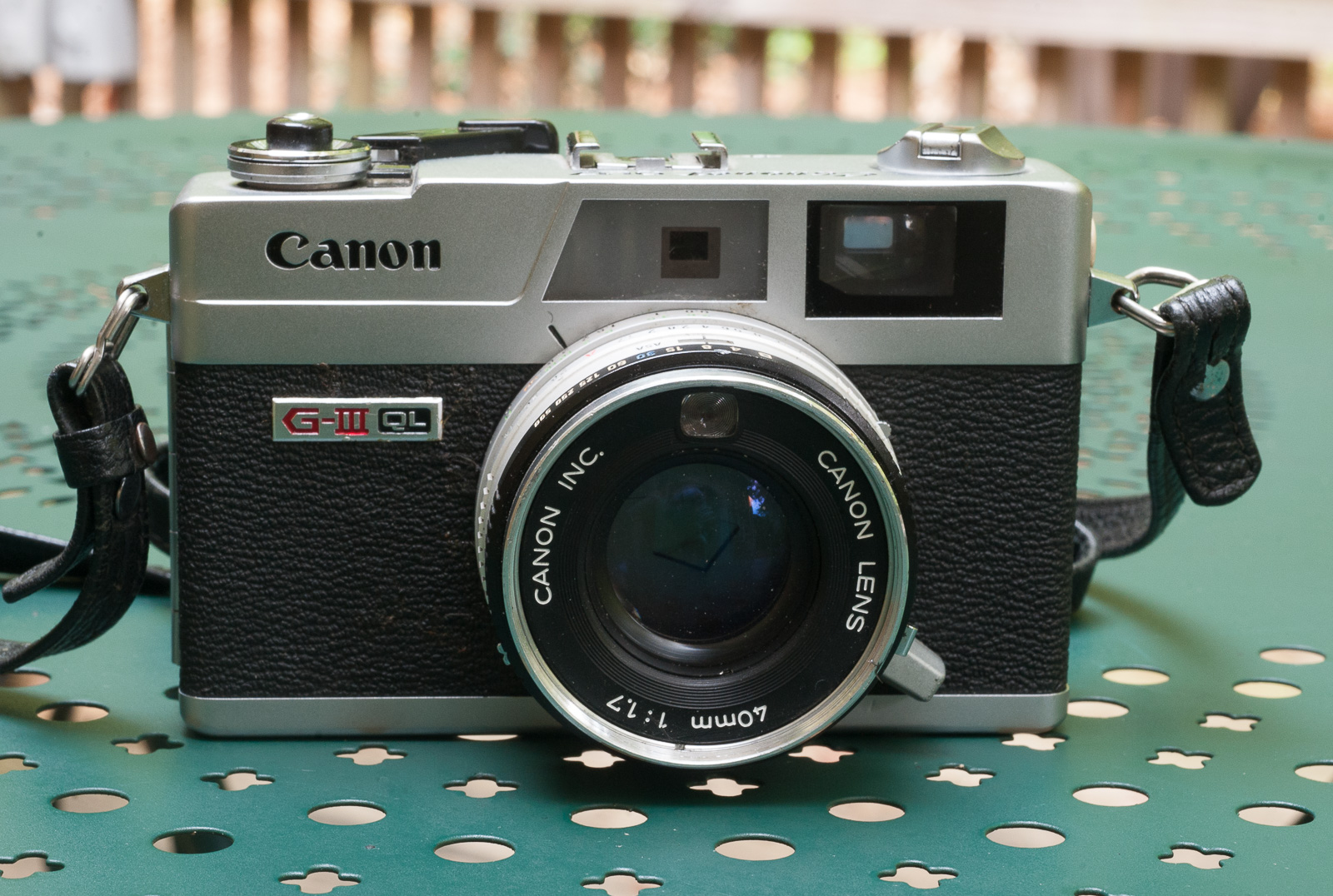
Canon “Canonet” QL17 GIII

At the beginning of the seventies, every camera maker had to have a super-compact camera in its line-up. They were designed for the amateurs who did not want to carry a heavy, expensive and complex single lens reflex, but were still looking for good quality camera offering more control than a Kodak Instamatic.

The most successful camera of this category was Canon’s Canonet series (which sold in the millions), but German camera makers also tried their luck – in cooperation with Minolta in the case of Leitz.

Manufactured in Japan by Minolta, the Leica CL was a sort of mini-Leica M5, with a similar semi-automatic exposure system, the same M bayonet, and a large viewfinder equipped with a coupled rangefinder. The CL was much smaller than the rather bulky M5, the base of its rangefinder was much narrower than the M5’s, and it only accepted two specifically designed interchangeable lenses (a 40mm and a 90mm), as well as the standard 50mm Leica lenses. The CL had a short sales career, but its general design was refreshed by Minolta a few years later, when they launched the Minolta CLE, which supported a dedicated 28mm Minolta Rokkor lens (in addition to the 40mm and 90mm lenses), and offered Minolta’s first flash system with on the film (OTF) metering.

DSC_6955
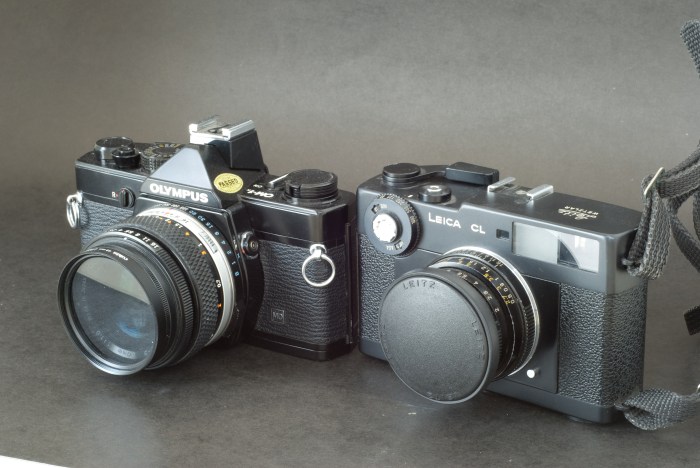
The Leica CL with its standard 40mm lens is a tad smaller than the Canon.

Apart from having interchangeable lenses and a Leica price tag, the CL’s characteristics were pretty much in line with what the other manufacturers of compact cameras were offering.

Canon  was the undisputed leader of the “super-compact” camera category, with its highly successful line of “Canonet” cameras. The GIII is the last iteration of the Canonet series, and the QL17 (named for its impressive 40mm f/1.7 lens) formed the top of the line. Let’s compare the Leica CL (from 1973) with the GIII QL17.

What they have in common :

  • rangefinder compact camera
  • focal length = 40mm
  • Fast Maximum aperture: F/1.7 (Canon); F/2 (Leica)
  • Size/Weight: Canon: 120 x 75 x 60 mm / 620g / Leica: 120x 76 x 32 (no lens)/400g without the  lens; 510g with the lens
  • Same PX625 battery (unfortunately)
  • CdS cell
  • both can work without a battery
DSC_6956
Both cameras are rangefinders with very good 40mm lenses.

There are significant differences though:

  • the Leica has a curtain shutter and offers a range of interchangeable lenses. But the Leica only supports 3 focal lengths (40mm, 50mm, 90mm) – it does not have the viewfinder markings needed to support Minolta’s Rokkor 28mm.
  • The Canonet has a central shutter, and a fixed lens (40mm F/1.7 in our case, but cheaper versions of the cameras were equipped with a slower lens). A big plus of this super-compact is Canon’s exclusive Quick film Loading system (hence the “QL” acronym), which is so much better than Leica’s film loading process  – which at best can be described as acrobatic (it requires a table, a chair and 2 hands, at a minimum).
  • Canon is either auto (shutter speed preferred) or fully manual (the meter is off if the camera is set to manual); the Leica is a semi auto camera (the well known matching needle arrangement).
IMG_7981
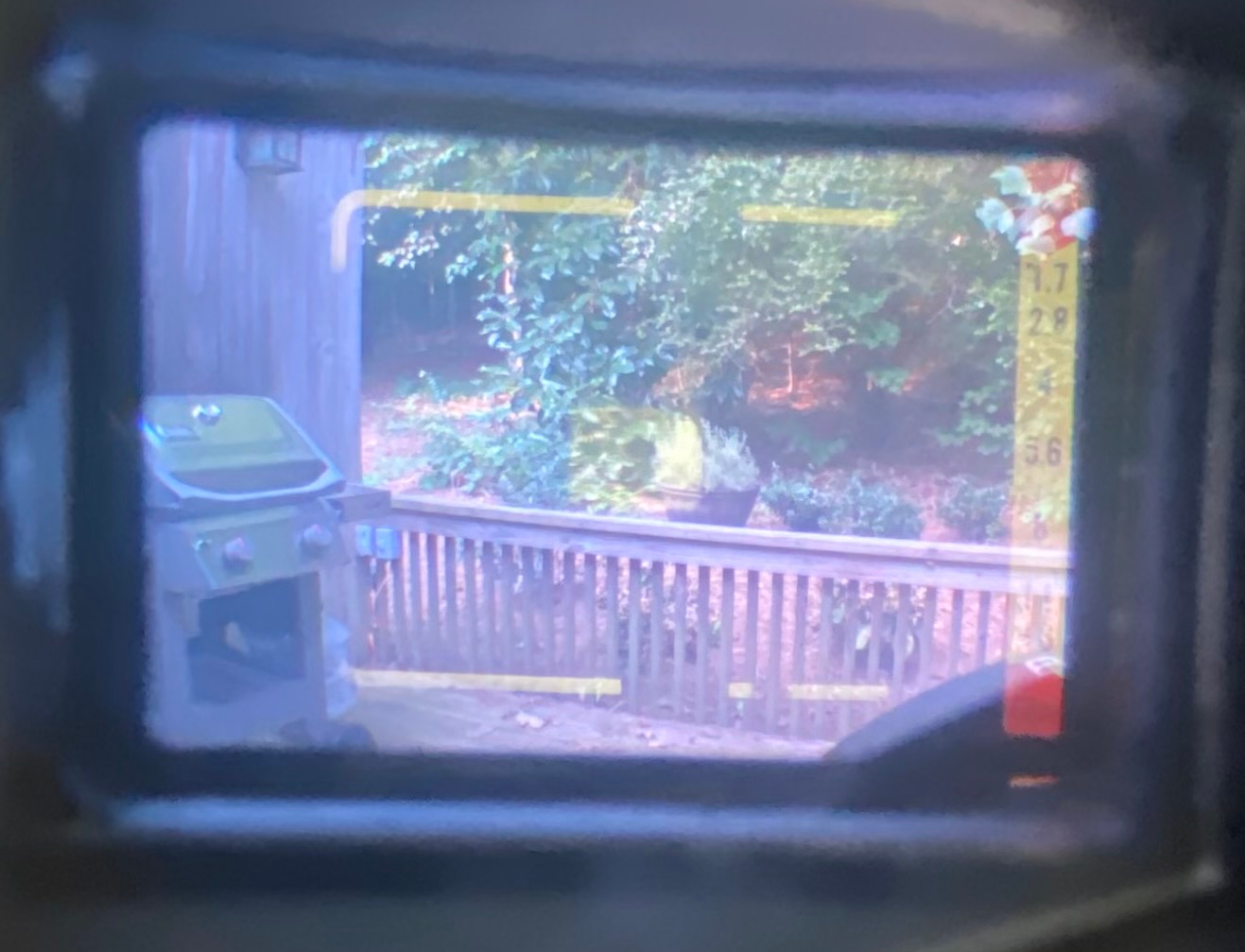
the viewfinder – in yellow – the frames, the rangefinder patch at the center, and the aperture scale on the right.

Metering

Both cameras use CdS sensors for metering, and because they were using Mercury batteries producing 1.35v (the PX625 model)  which are now absolutely unavailable, workarounds are necessary. The Leica only seems to work with Wein’s 625 Zinc-Air cell. The Canon seems to be a bit more tolerant, but I still recommend using a Zinc-Air battery, as they provide the same voltage as the original PX625 Mercury battery.

To tell the truth, I don’t really trust the exposure system of any of the cameras, and I use an app named Pocket Light Meter on an iPhone to determine the best exposure. With a tolerant film, the exposure will be OK.
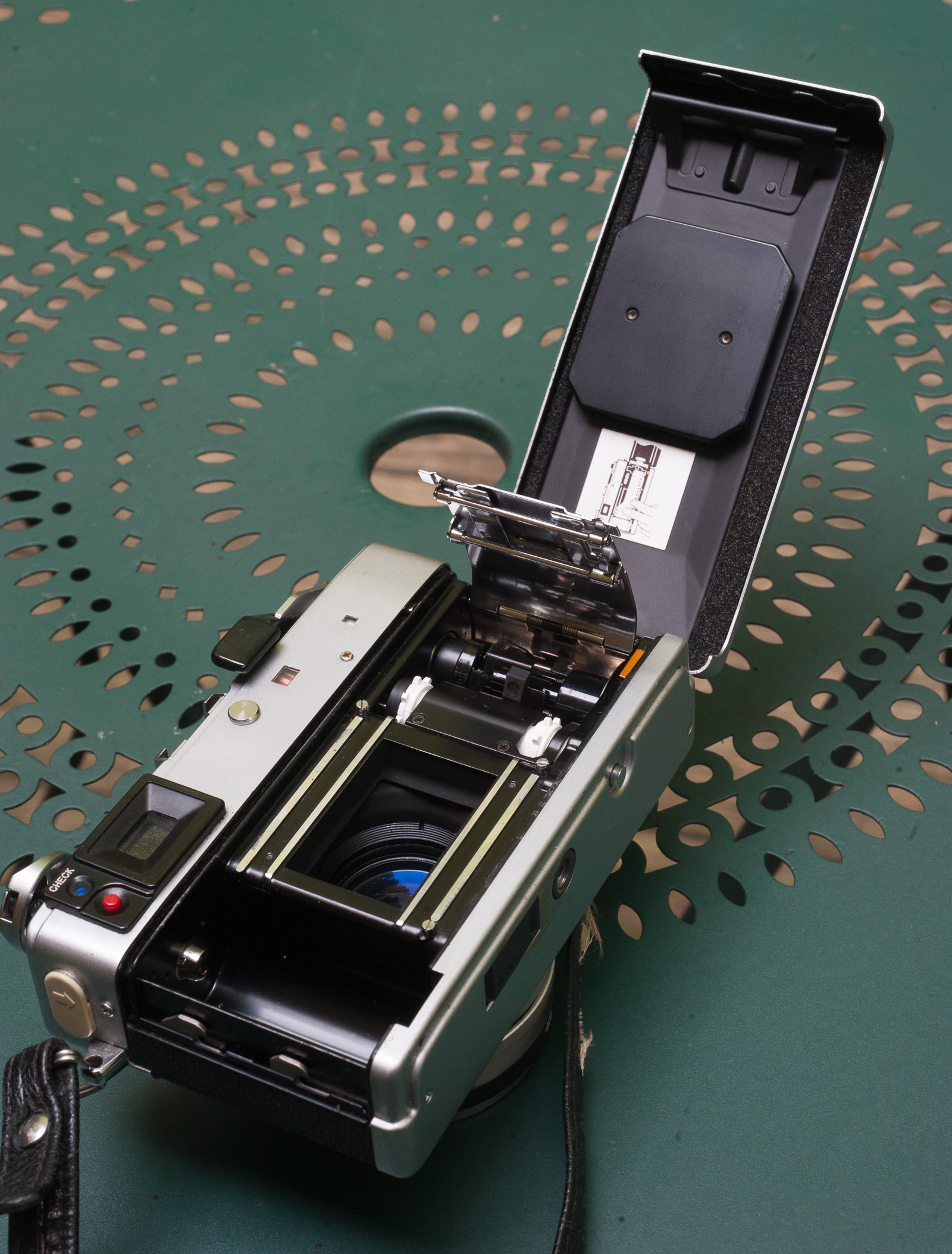
DSC_6953
QL stands for Quick Loading – the mechanism works extremely well.

Hands-on with the Canonet GIII QL17

I bought this camera at an antique market, from a specialist who used to own one of the two or three remaining photo equipment stores in Atlanta, and was dispersing what was left of his inventory – he said he had completely reconditioned the camera (the combo lens-shutter in particular) but that he could not guarantee that the metering and the auto-exposure system would work.

The camera was expensive (at the top of the range for such a model) – but when I received the scans, I was happy I had spent my money on it: the optical quality of the images was really impressive – it’s difficult to beat a well-designed 40mm prime lens. 

Being small, silent and graced with a good viewfinder, it’s a good camera for street photography, provided the subject is not too mobile and leaves you all the time you need to set the focus and the exposure.   

DSC_6947
The QL17 seen from the top – it’s a “shutter speed” priority camera, that can also be operated in manual exposure mode. All the controls are on the lens.

I was very favorably impressed by the technical quality of the pictures I shot with the Canonet – obviously the film plays a role here (I like Kodak’s Ektar 100 for its color rendering and high definition) but this 40mm f/1.7 is definitely a great lens, and the mechanical shutter/iris combo is accurate enough for the shots to be correctly exposed (I was using an external light meter, though).

Would have the pictures been better if shot with the Leica CL? Probably not. The lens of this Canon camera is that good.   
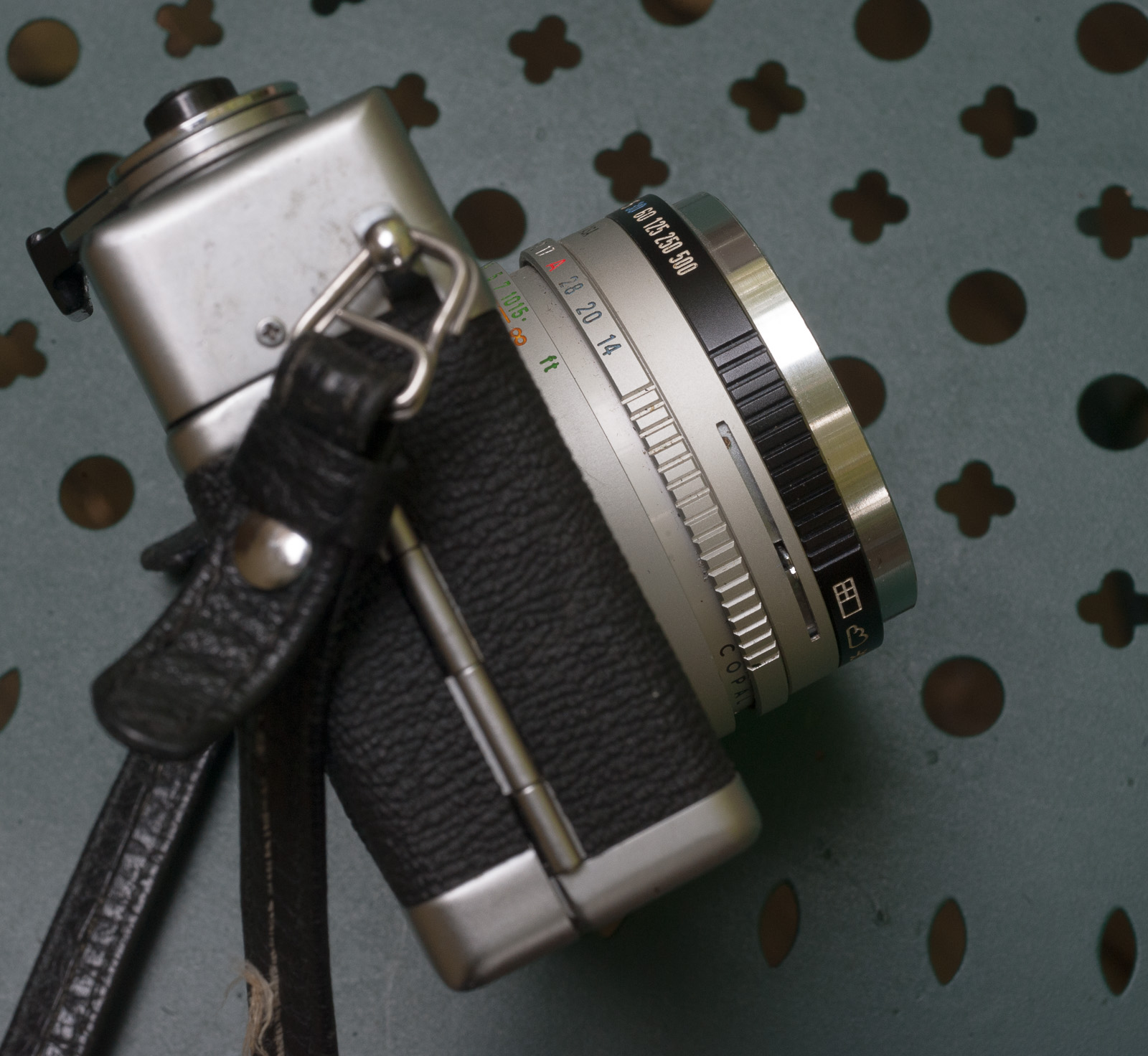
DSC_6950
The black ring controls the shutter speed, the silver ring the aperture (it can be set to A) and the guide number for the flash.

Buying

  • Leica CL : it sold well, aged well, and does not seem to be in high demand. In addition, even if the CL’s Summicron-C 40mm lens can be physically mounted on the full size M cameras (M5, M6 and the like), there is no corresponding frameline in their viewfinder, limiting the practical interest of the lens for the other Leica photographers. Therefore,  the CL and its 40mm lens form the most accessible combination to enter the Leica M system. Interestingly, the non-Leica alternatives supporting the 40mm lens  (Minolta CLE, Voigtlander Bessa R3) are all more expensive than the CL. Expect to spend at least $300.00 for a nice body and $400.00 for the lens.
  • Canon – the Canonet line was sold over almost 15 years, and specific models like the GIII QL f/1.7 are rather sought after. Most of the copies are either “untested”, or “cosmetically perfect”, but  few vendors promise that the metering system and the shutter are going to work, let alone be accurate. You can find a nice “untested” copy for $50.00. Fully functional cameras are more expensive (typically above $150.00).

Conclusion

I’ve never been much of a rangefinder guy – I like the clear view and the fact that the viewfinder shows more than what will be captured on the film, but I always tend to forget to set the focus – or if I set it right at the beginning of a series of pictures, I forget to adjust it if my subject moves or if I change the angle of view. My success rate at that exercise is abysmal.

The rangefinder of the Leica CL tends to be easier on the eyes than the Canon’s (the focus zone is significantly more luminous than the rest of the viewfinder and pops out, as opposed to the Canon where it’s simply a yellow patch). But the Summicron-C  lens on the Leica is smaller and its focusing ramp stiffer than the lens of the Canonet, so it’s more difficult to operate for the casual photographer.
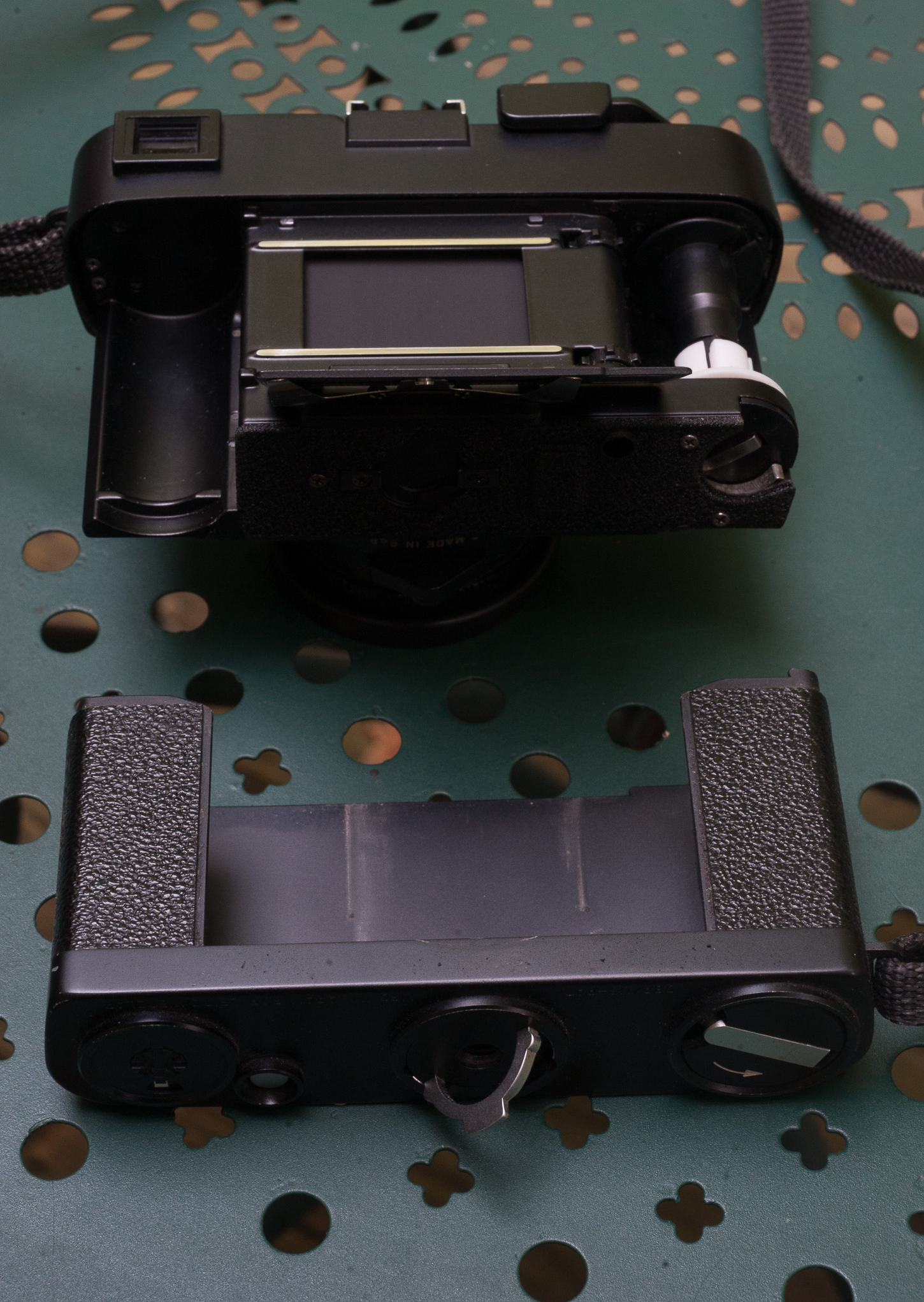
DSC_6957
The back of the Leica CL – loading the film is a cumbersome process

All in all, the Canon is definitely easier to use than the Leica, and the quality of the images roughly equivalent. But just a few years after those two cameras were released (in the second part of the seventies), automatic exposure SLRs had become so small and light (think Olympus OM-2, Pentax ME or Nikon EM) that provided you paired them with a tiny pancake 35 or 40mm lens, they were almost as compact as those two rangefinders, and so much easier to use. 

At least for me, SLRs will produce better results, with more consistency and a lower effort. Rangefinder cameras of the film era require a lot of practice and muscle memory to produce images of quality – and in the hands of a casual photographer who simply shoots a few rolls of film per year, I feel that they simply leave too much to chance.  Truth to be told, the only camera equipped with an optical finder that I can really live with is the Fujifilm X100t – it gives you the best of what the Canonet and the Leica CL offer (image quality, direct optical view, compactness, silence), but has enough automatic systems (reliable auto-focus, reliable auto-exposure, switchable digital viewfinder) to overcome the lack of practice of the occasional user.


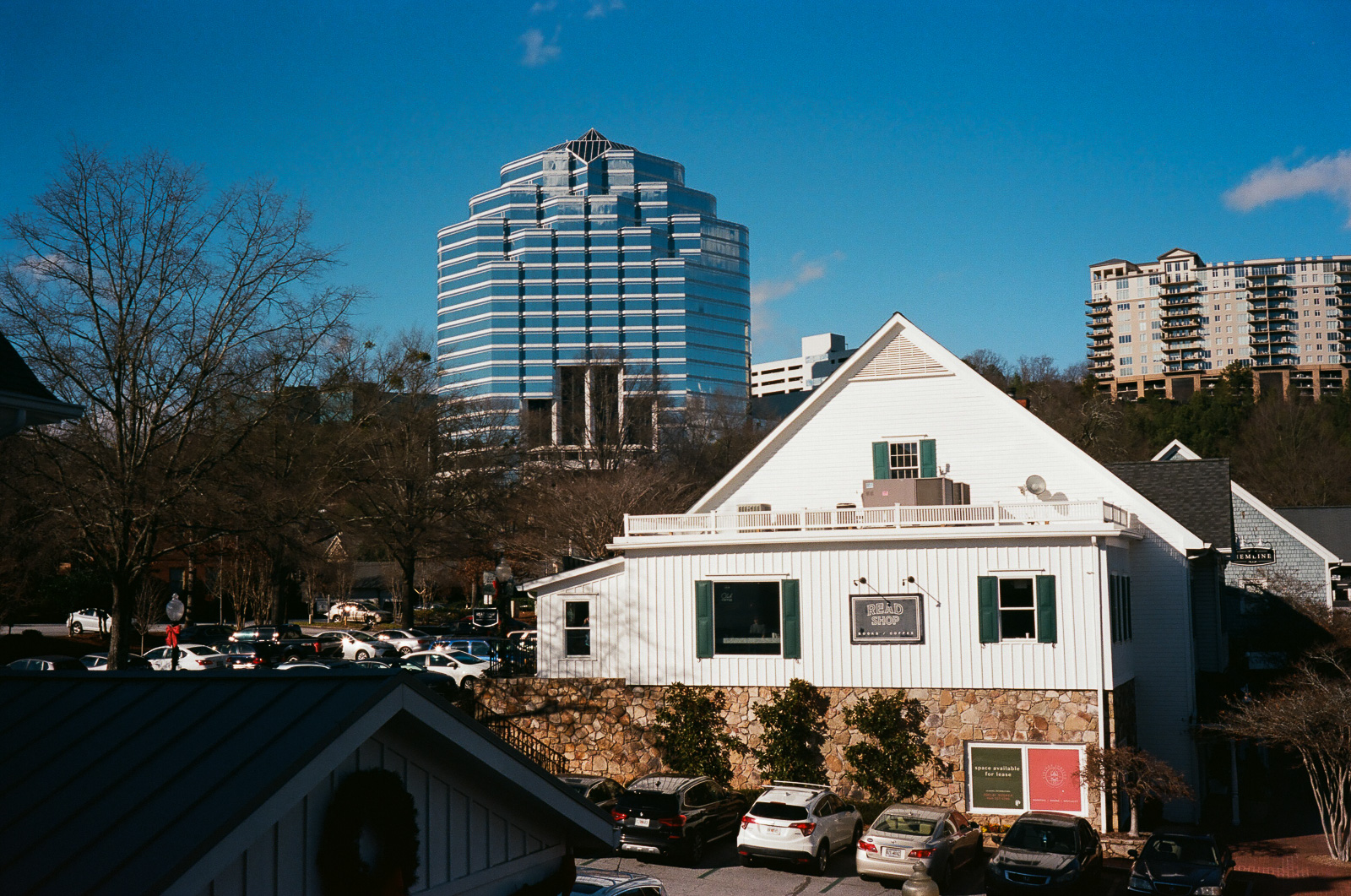
Atlanta – Piedmont Park – Canonet GIII QL 17 – Kodak Ektar 100 – Piedmont Park is where all semi-pro photographers bring their clients for outdoors pictures, and where lovers spend quality time together.
Atlanta – Piedmont Park – Canonet GIII QL 17 – Kodak Ektar 100
Atlanta – Vinings Jubilee – Canonet G III QL 17 – Kodak Ektar 100 – you can see the limits of the lens – the signage of the shops is barely readable.

Are film cameras grossly over valued today?

I don’t know what percentage of film cameras collectors actually use them.  But the value of a camera is at least in part related to its capacity to be used … as a camera, and help the photographer shoot good, beautiful, interesting pictures.  Without film, film cameras are little more than paper weights.

IMG_5924
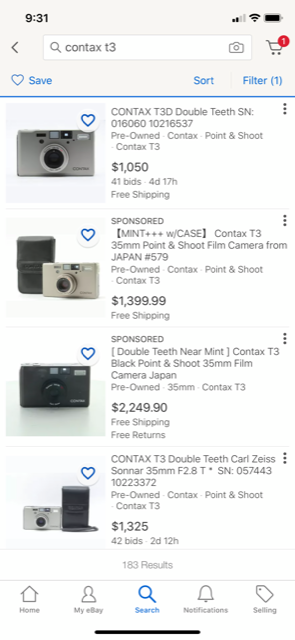
Contax T3 – cameras proposed for sale on eBay 0n 4/24/2020

So if film was to become unavailable, the value of film cameras would change. I don’t believe it’s going to happen anytime soon – Kodak  (Altaris) and Ilford (Harman) are still committed to film because it’s their core business, and Fujifilm will keep one or two film plants running, if only for sentimental reasons. The rebirth of the Polaroid instant film packs (the Impossible Project) and the success of Lomography are also showing that when the big players disengage, boutique producers step in and fill in the void.

Contax T2 - completed listings
Contax T2 – a bit cheaper than the T3. The “completed” listings on eBay show that even if sellers ask for prices in excess of $2,000, the cameras that actually sell are priced a bit more reasonably.

So, let’s assume that film remains available and affordable, and that 35mm film cameras keep a certain usage value. And let’s forget about those commemorative editions, cameras with remarkable serial numbers or other gold plated models, that Leica (and to a lesser extent Nikon), release from time to time for avid collectors. They are destined to be kept forever in their original packaging and in a safe, with no concern for their potential usage value.

In the realm of cameras that actual photographers use to take pictures, Leica cameras hold a special place. They’re “classics“.

On eBay, the price of Leica’s rangefinders has been remarkably stable over the years, with the M5 and the M4 at the bottom of the ladder (around $800), followed by the M2 and M3 a bit above $1,000 (depending on condition, of course). The more modern Leica M (M6, M6 TTL, M7) are selling for two or three times more, reflecting their comparatively higher usage value.

image3
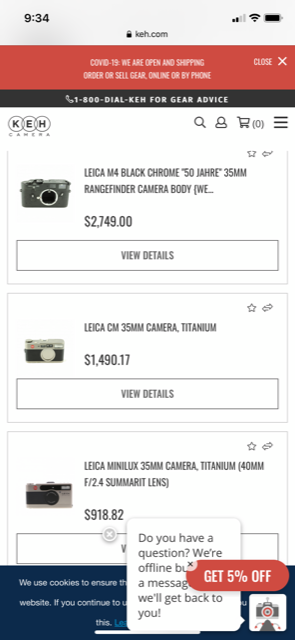
KEH app – the price asked for the T2 is a bit more reasonable – but still in Leica M territory

Manual focus SLRs designed for enthusiasts or pros, and known to be at the same time simple to use and reliable have seen their value rise spectacularly (Nikon FM2, FE2, FM3a or F3, Canon AE-1, Pentax Super Program or LX), while more complex or less reliable models don’t attract the same high prices (Nikon FA, Canon T90). Those new classics were launched between 1975 and 1985, a decade which is increasingly being seen as the golden age of film SLRs.

dirt cheap
Entry level manual focus SLRs with lots of polycarbonate (Canon T50), or amateur-grade autofocus cameras – nobody wants them and the prices reflect that.

At the other end of the price scale, cameras that did not do very well on the second hand market a few years ago are doing even worse now. The list includes any entry level model from any manufacturer if it was launched after 1980, and almost any autofocus SLR except for the very last enthusiast and pro models, probably because of their good compatibility with the current digital offerings of their respective manufacturer (Nikon F100 and F6, Minolta Maxxum 9 and 7, Canon EOS-3).

Photographs don’t like that those cameras were built out of plastics, with a bizarre feature set (often deprived of useful functions – reserved for the “pro” models – and at the same time loaded with useless gimmicks and encumbered by unconventional controls). And many of them require expensive and hard to find single use Lithium batteries. They have little appeal for today’s would-be film shooters,  and can be had for a few dollars, even from specialized stores.

“La Mode, c’est ce qui se démode”*

What’s hot? Any luxury compact (point and shoot) camera, with a titanium body and a lens with a famous name: the top of the top is occupied by Contax with the T2 and T3: the craze started with a few actors and celebrities in Hollywood posting pictures of themselves shooting with their T2 on Instagram), but similarly positioned models such as the  Leica CM and Minilux or the Nikon 35ti also command big bucks (they’re all in Leica M territory).

Pictured-Kendall-Jenner
Kendall Jenner and a Contax T2. Image Source: Getty / Kevin Mazur/MG18

Cameras like the Olympus XA, and even the Cosina CX-2**, which were far cheaper than the luxury cameras from Contax or Leica in the eighties, have also been contaminated – with sellers asking for hundreds if not thousands of dollars for a somehow basic camera.

cosina CX-2
The Cosina CX-2 – the ancestor of the Lomo LC-A – a cheap camera in its heyday. Prices are all over the map now ($240 to $1,250 for what looks like two cameras in the same condition)

As a conclusion:

Old classics hold their value, new classics are on the rise: if you buy one of those, you may not win big, but you won’t lose money if you decide to resell  it after a few years.

Contax luxury compacts are reaching insane values. They’re nice cameras, with a great little Zeiss lens, and demand currently outstrips supply. But those luxury compact cameras (Contax’s and the others) rely heavily on electronics and generally can’t be repaired if a component goes bad. If you don’t have one already, you missed the boat, and I would not spend thousands of dollars trying to get one. You can also wonder how long will celebrities be seen playing with their T2, pushing demand and prices to the sky? Prices could very well go back to more normal levels in a few years.

leica_cm
Two other Titanium-clad point and shoot cameras (Leica CM and Leica Minilux) selling for more than old Leica M3s

There are still bargains to be found if you’re not obsessed with shooting with a “classic” : the Canon AT-1 has not reached the “new classic” level of the AE-1 and AE-1 Program, and sells for half the price. But in my view, it’s a better camera for an enthusiast photographer. Early Canon EOS cameras  (650, 620) are solid, very pleasant to use (a T90 with matrix metering and without the bugs), and dirt cheap. An entry level camera from the mid eighties, the Pentax P3n, is at least as competent as its more expensive Super Program predecessor, but can still be had for next to nothing. Nikon’s partially motorized N2000/F301 (the manual focus version of the N2020/F501) is also a great buy. So is the Olympus OM-2. Future classics? I don’t think so. But great everyday cameras at a great price, for sure.


(*) “La Mode, c’est ce qui se démode”  (Literally, “Fashion, that’s what going out of fashion” or “Fashion is made to become unfashionable”) – the aphorism is generally attributed to Jean Cocteau and Coco Chanel. Coco Chanel famously added that “Fashion fades, only style remains the same”.

(**) Cosina CX-1 and CX-2  – those cute and very small point and shoot cameras sold reasonably well in the early eighties. With their tiny wide-angle lens they were subject to severe vignetting but they offered more controls to the photographers than the other ultra-compact P&S cameras. A few years later, an almost identical camera was launched as the Lomo LC-A by the LOMO PLC in Saint Petersburg (Russia). The little Lomos were adopted enthusiastically by a group of photographers in Austria, and it started the Lomography movement. But that’s a whole other story.


The Olympus OM-2n – a “new classic” – in my opinion the best camera of the Olympus OM single digit series (OM-1,OM-2, OM-3, OM-4, OM-4ti) for everyday use. Photos shot a few years ago at the Universal Studios in Burbank, CA.

2010-08_California-24040023
Universal studios – Burbank CA – the Studio tour – here the house from Psycho. Olympus OM-2n.

2010-08_California-24040019
Universal Studio (Burbank, CA) – the set of the movie “Waterworld”. Olympus OM-2n

2010-08_California-24040037
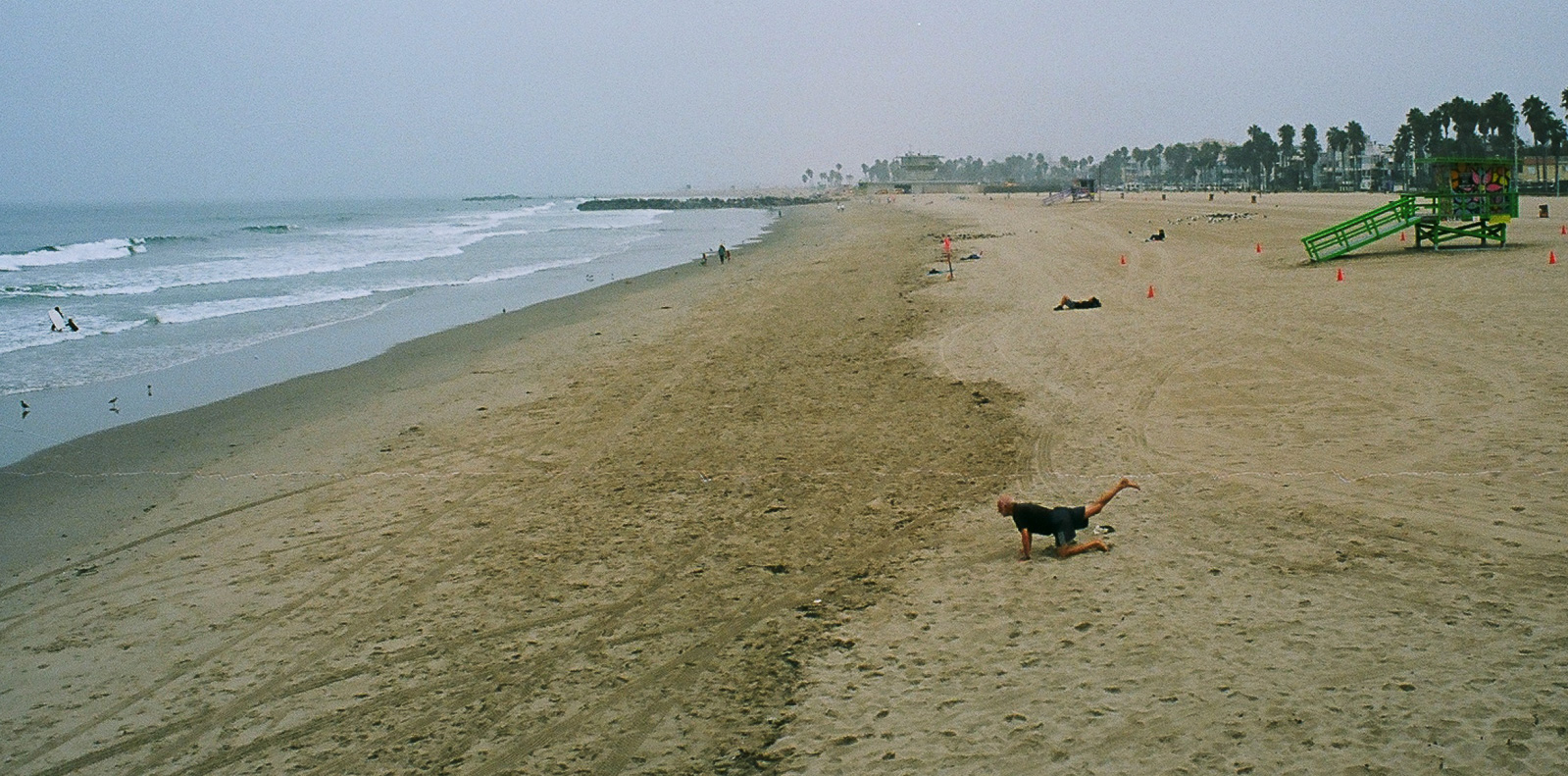
Venice Beach (CA). Olympus OM-2n


Why are manual exposure cameras worth more than automatics ?


The facts


Let’s take three lines of manual focus cameras which still have a very active second hand market today: the Leica R series, the Nikons FM & FE and their derivatives, and the Olympus OM-1 & OM-2 and their “single digit” descendants. Each line contains automatic exposure cameras (Leica R4, R5, R7; Nikon FE, FE2, FA; Olympus OM-2, OM2s, OM4, OM4t), and manual exposure cameras (Leica R6, R6.2; Nikon FM and FM2; Olympus OM-1 and OM-3).


For a given generation of camera, manual exposure models are almost always worth more than their automatic exposure siblings.


Average retail price of a camera in Excellent Condition (source: a reputable specialist of used photographic equipment)

Brand Manual Camera Auto exposure Camera
Leica R6.2: $ 999 R7: $ 550
Nikon FM: $ 190 FE: $ 170
Nikon FM2: $ 245 FE2: $ 199
Olympus OM-1: $ 150 OM-2: $ 190
Olympus OM-3: much more than $500 * OM-4: $ 235
Olympus OM-3T: much more than $1,000 * OM-4T or TI: $ 450


* No OM-3 or OM3 TI in excellent condition available – prices derived from eBay completed listings.


Nikon FM - Mechanical Shutter - It does not need batteries to operate. 1/1000s. Synchro Flash up to 1/125s

The reasons why


Buyers of film cameras belong to two non-mutually exclusive categories: collectors looking for rare, technically or historically significant cameras, and photographers looking for an alternative to modern all automatic digital cameras. Each category has different reasons for preferring cameras with mechanical shutters, which also happen to be manual exposure cameras.

  • Collectors


    One can only speculate when trying to understand what makes a camera valuable on the collectors’ market. Rarity and the perceived technical value of the camera are probably the two main factors driving the price of film SLRs on the second hand market. In the decade which saw the end of manual focus cameras (from 1980 to 1990), automatic exposure cameras sold in greater number than their manual exposure equivalent. Manual exposure cameras were already considered a specialty item, when automatic exposure SLRs were more mainstream, even for professional activities (Nikon F3, Canon T90). Even Leica users, who are among the most respectful of traditions, bought more automatic R7 than manual R6.2 in the nineties (29,500 vs 22,500 units produced).


    The case for the technical value is more difficult to make. Electronic cameras offering multiple auto-exposure modes were very elaborate, and could be considered more valuable technically than simpler manual exposure SLRs, but this technical sophistication is now seen as an unnecessary source of complexity and unreliability.


    The same way mechanical watches appeal to the collector who will ignore electronic time pieces, SLRs built around a mechanical shutter are generally more sought after than their electronic siblings. And when the manufacturer originally positioned the manual exposure camera as a high price/low volume item, the collectors go crazy about it. The Olympus OM-3TI sold for more than $1,500 when new, and only 4,000 were produced. No wonder that it’s extremely difficult to find now, and that it can reach prices in excess of $3,000.


  • Nikon FE2 - Electronically controlled shutter - it needs 2 silver oxide or one lithium battery to operate. 1/4000s - synchro flash up to 1/250s - backup mechanical shutter speed: 1/250s

  • Users


    I don’t know what is the proportion of buyers of film cameras who actually use them. I hope a lot of them do. Photographers may use film cameras as a way to learn the basics of photography, as a backup – in case the battery or the electronics of their dSLR goes on strike, or because they like the direct control over the aperture, shutter speed and focus provided by cameras built before the advent of all-electronic-all automatic SLRs.


    To my taste, aperture priority automatic exposure cameras are faster and easier to use their manual exposure equivalents – I miss a smaller proportion of potential interesting shots in auto exposure mode – and provided they benefit from some form of exposure memorization, automatic cameras will yield a higher proportion of good pictures than what I would get with manual cameras.


    But I recognize I may be an exception. Photographers generally have two issues with auto exposure cameras: their dependency on batteries, and their supposed absence of reliability of their electronic circuits as they age.


    When the battery of an auto exposure camera is dead, the camera will – in the best of the cases – limp on a single back-up mechanical shutter speed (1/60sec or 1/125s for most of the cameras, 1/250s for the Nikon FE2 or FA). The silver oxide batteries used in the eighties did not like cold temperatures, and auto exposure cameras were not ideal when attempting to shoot winter sports. But batteries are small, light and inexpensive, and keeping a set of fresh batteries in the camera bag is not too big of a constraint. Most cameras from the eighties can now use CR1/3n Lithium batteries, which have a very long (10 years) shelf life and are much more resistant to the cold than the silver oxide batteries commonly sold 30 years ago.


    Manual exposure cameras have a mechanical shutter which wears with time, but is supposed to be easier to service or repair than the electronic controlled shutter of automatic cameras. Electronic components do not always age well, and can not be serviced or repaired; if they fail, they have to be replaced, and since they are not available from the manufacturers anymore, a circuit failure makes the camera as useful as a paperweight. Unless the photographer has an alternate source of spare parts, of course. If you really like a particular model of automatic camera, the best solution is probably to buy an extra one (or two) for parts, just in case.


  • The reason for the exceptions


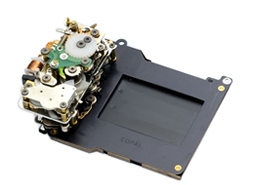
    Hybrid Shutter of the Nikon FM3a
    The Hybrid Shutter of the FM3a - It can operate as a mechanical or as an electronic controlled shutter - Source: Nikon's official web site


    There is no rule without a small list of exceptions. Two exceptions have to be mentioned.

  • The manual Olympus OM-1 is less expensive than its automatic siblings, the OM-2 and OM2-s. It’s a camera of the early seventies, which was produced in the millions during a fourteen years production run, and needs batteries of a type outlawed in the US since the eighties. There are substitutes, but they come with limitations (see the article about batteries in Photoetnography.com). The OM-2 and OM-2s work with easy to find alcaline or silver oxide batteries.

  • The Nikon FM3a. Built as a limited series camera by Nikon from 2001 to 2006, the FM3A combines in the same body the mechanical components and the electronic circuits needed to operate as a manual, mechanical shutter camera, and as an automatic, electronic shutter SLR. The best of both worlds. Its unique characteristics combined with relatively low production numbers (for a Nikon SLR) explain its high value on the second hand market: at least $500 for a nice one, much more for like-new items in their original box.


    More


    A good source for second hand cameras: KEH


    Everything you need to know about camera batteries: photoethnography.com


    Casa Batlo (lamp) - Barcelona - Jan 2009 - Nikon FM

  • Single Lens Reflex or Rangefinder Camera? A few days with a Leica CL


    I was back in Paris for a few days at the end of last year, and since there was still room in my equipment bag, I pulled my old and battered Leica CL from a drawer and took it with me. A good opportunity to check whether I could get acceptable results out of it this time.


    I never was a rangefinder guy. When I started being interested in photography, semi-automatic Single Lens Reflex cameras (SLRs) were already the norm, and Leica an expensive brand of obsolete cameras. My formative years were spent with a Pentax MX, and I’ve always found natural to see the world on the matte focusing screen of a reflex camera. But I was intrigued by the Leica legend, and one day, purchased a Leica CL. Over the last 15 years, I used it rarely, but being light and compact, it could find a slot in my equipment bag from time to time.


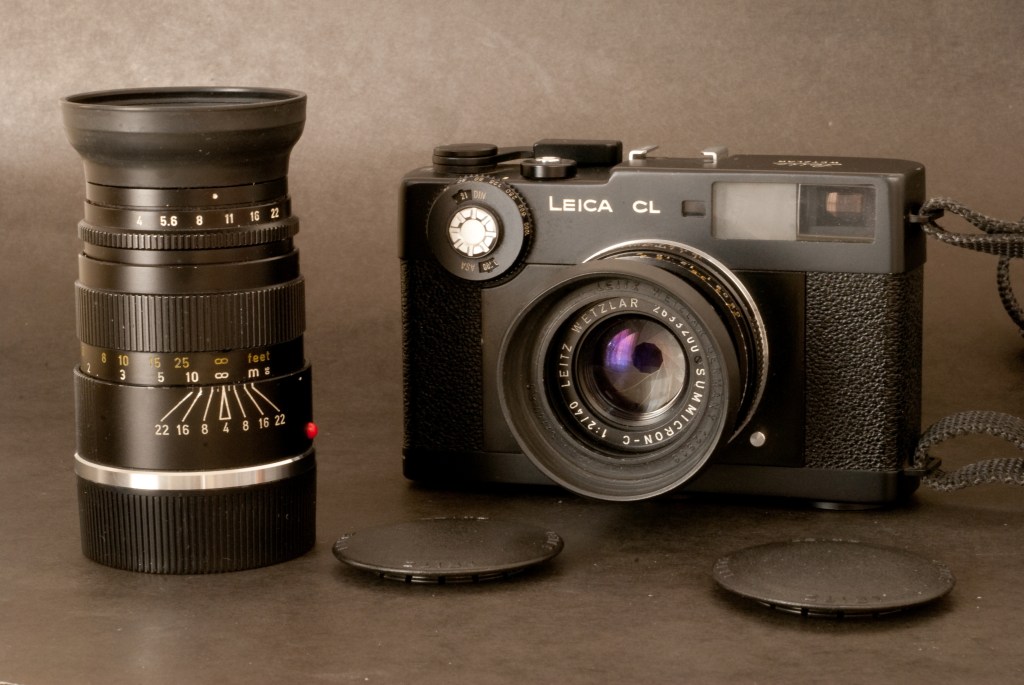
    Leica CL with its two lenses
    Leica CL with its two lenses

    The CL was a sort of entry-level rangefinder camera, designed by Leitz in Germany and built by Minolta in Japan from 1973 to 1976.


    From a technical point of view, it is a miniature M5, and very advanced for a Leica of its time. A semi-auto camera with through the lens metering, it used a mechanism very similar to the system used in the much maligned M5’s.


    After the CL and the M5 were abandoned in the mid seventies, Leitz reverted to fully manual cameras with no metering capabilities, and aficionados had to wait for another 10 years before a semi-auto rangefinder camera was proposed again by the German firm.


    With its M bayonet mount, the CL could use the 50 mm lenses of its bigger brothers, but Leitz had also designed two lenses specifically for the CL, a 40mm Summicron (F:2) and a 90mm Elmar (F:4).

    Using the Leica CL


    A true Leica, it also used a focal plan textile shutter (1/2 sec up to 1/1000 sec). The rangefinder has a short base and is not as accurate as the M6’s, but is good enough for the 90mm Elmar.

    A class at the Louvres Museum- Jan.2010. Paris
    A class at the Louvres Museum- The CL is small and silent, and nobody paid attention to me or to the camera.


    With its mechanical shutter, the CL only needs a battery for metering, and uses it sparingly. Mine still has the mercury battery I bought it with, but I suspect it must be at the end of its life, because the recommendations of the metering system were so bizarre that I decided to forget about it and apply the “sunny 16” rule. With a battery in working order, the determination of the exposure is very simple (a match needle at the right of the viewfinder).


    On the CL, the image in the viewfinder is large and clear. The viewfinder has a greater field of view than the 40mm lens normally mounted on the camera, and projected bright lines show to the photographer what the actual picture will look like. There is little difference between the respective field of views of the viewfinder (similar to a 35mm) and of the 40mm lens, but the bright frame projected of the 90mm lens will seem minuscule at the center of a viewfinder, whose enlargement factor does not change. Disconcerting, but not dramatic.


    What really requires adaptation is focusing. On a manual focus Single Lens Reflex camera, the image of the subject is projected on a matte ground glass, and the photographer can see immediately whether the image is in focus or not. Similarly, with tele-zooms used at large apertures, the effects of the reduced depth of field are easily visible, and the photographer can visualize what will be in focus, and what will be pleasantly blurred.

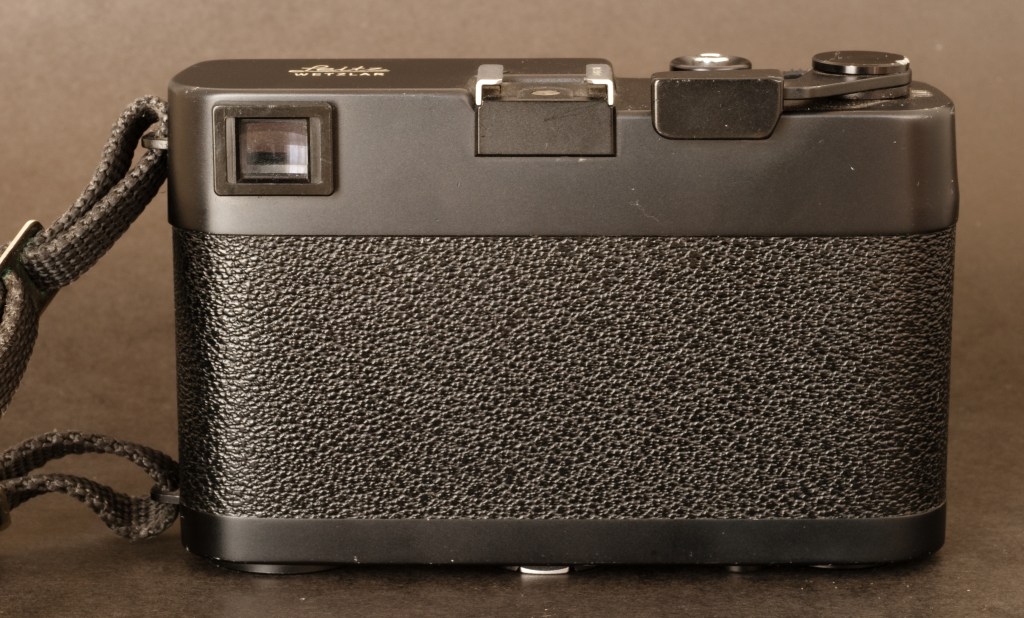
    The back of the Leica CL
    The back of the Leica CL – Note the viewfinder at the top left corner of the body, leaving ample space for the nose of the photographer


    On a rangefinder camera, the finder does not provide any feed-back when it comes to focusing. Every element of the image seems in focus: it’s very easy too forget to set the focus, and very difficult to predict the depth of field.


    The coupled rangefinder is materialized by a small window at the center of the viewfinder. It’s extremely accurate, but the focusing ring on the small lens is narrow and rather stiff, and you get the impression that you could have reacted much faster with the large focusing ring of the 50mm lens of your SLR.


    I guess it gets better with experience, but it’s very frustrating for a beginner.


    If you can get over the idiosyncrasies of the viewfinder, the Leica experience is very rewarding. The camera is virtually silent, and being small and black, gets totally unnoticed. The pictures are sharp, with a lot of micro-contrast, and give the impression of being of higher quality than the images taken with most of the SLRs (provided you could master the focusing system). Your success rate will be lower than with a manual SLR, and far lower than with a dSLR of the latest generation, but when the images are good, they’ll be very good.


    Buying a rangefinder camera


    Rangefinder cameras are markedly different from SLRs, and will not produce good pictures without some serious practice. The first attempts will be frustrating, and there is no point in spending a lot of money in a Leica M9 if you discover after a few days that you’re totally allergic to this style of cameras.


    The Leica CL is one of the cheapest options for a photographer who would like to try rangefinder cameras. Good Leica CL are rather easy to find in the US or in Europe. Even in a pristine condition, they never cross the $1,000 threshold, and nice items can be found between $300 and $600. In Japan, the CL was sold as a Leitz-Minolta camera, with no other difference with the “Leitz only” CL than the logo.


    A few years after the production of the CL was stopped, Minolta launched the CLE, an automatic exposure version of the CL, and the first camera to propose On the Film (OTF) flash metering. There is no semi-auto or manual mode. The CLE contains much more electronics than the CL, and it can not be repaired if the main circuit decides it had enough. The CLE is much more difficult to find than the CL. Expect to pay $600 for a nice one, and thousands for collector editions.


    Full size M series Leica are either more primitive (no exposure metering) or more recent and significantly more expensive than the CL. Even in poor condition, a Leica M6 can not be found for less than $1,000. Cosina is still producing a line of rangefinder cameras, sold under the Voigtlander brand, and available with Leica M lens mount as well as less common mounts such as the Nikon and Contax rangefinder mounts. Amongst all the the rangefinder cameras from Voigtlander, the Bessa R3M is the closest to the CL (it accepts the same 40 and 90mm lenses), and can be found between $400 (used) and $600 (new).

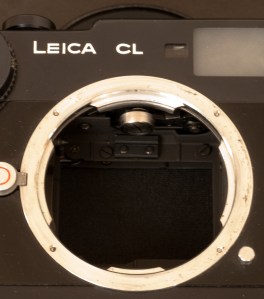
    Leica CL - The shutter is not armed
    The light chamber of the Leica CL – In this picture, the shutter is not armed. As a consequence, the CdS sensor of the exposure meter is not deployed.

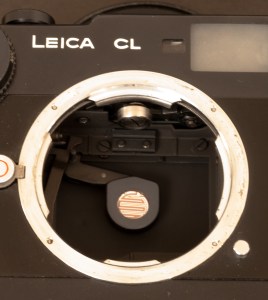
    Leica CL -Armed shutter
    The shutter is armed; the CdS sensor of the exposure meter is deployed. It will retract when the shutter release is pressed, just before the shutter opens.


    References and links


    A specialized source for rangefinder cameras (Leica, Nikon and modern Voigtlander): http://www.cameraquest.com/leicacl.htm


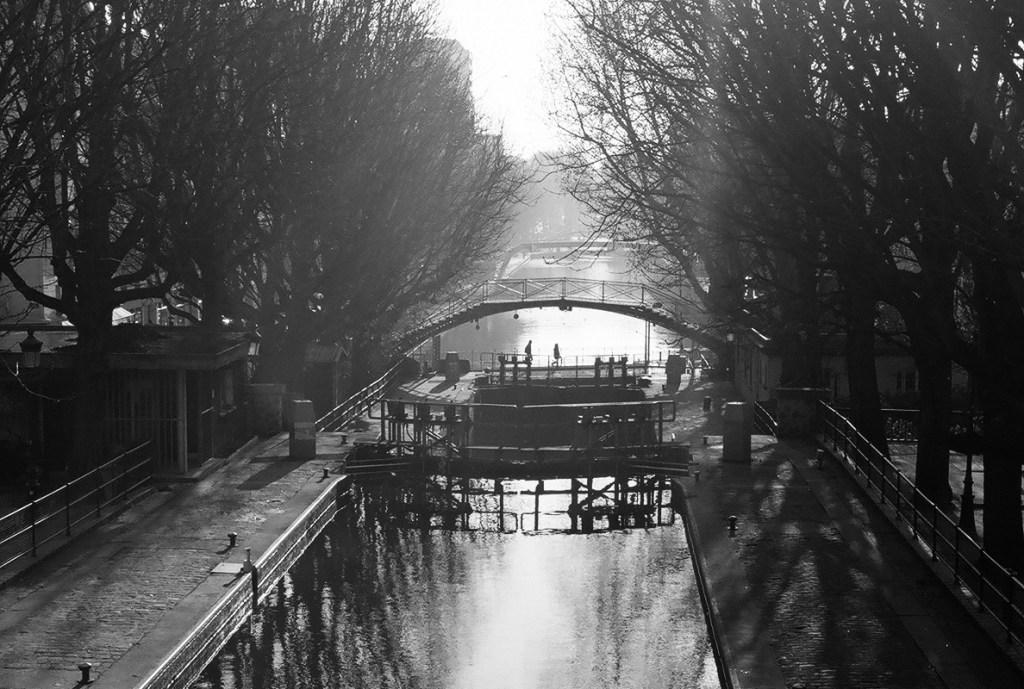
    Canal St Martin - Paris - Located between the Gare de l'Est and the Bastille, the canal was a favorite set of the French film makers in the thirties. Using a Leica with B&W film seemed appropriate.
    Canal St Martin – Paris – Located between the Gare de l’Est and the Bastille, the Canal was a favorite set of the French film makers in the thirties. Using a Leica with B&W film seemed appropriate

    Leica, Witness to a Century (book review)


    “What camera took these pictures?”


    That’s the question that photographers hate the most. Nobody ever asked Picasso what type of brush he was using to paint “Guernica”, and photographers believe they are the ones taking the pictures. For them, their camera is just a tool, that they use it to communicate their vision.


    Well, it’s not completely true. Granted, the camera is a tool, and tools don’t create. But the camera’s characteristics, its size, its weight, its ability to withstand adverse environmental conditions, the number of manual steps needed to take a picture, the performance of the shutter, the aperture of the lens, all limit the ability of the photographer to take a usable picture of what he’s witnessing, or to convert his vision into an image. Every now and then, a breakthrough in the design of cameras gives photographers more opportunities to report what they see. Whenever a new generation of cameras hits the market, photographers start experimenting, and in the process, harvest a new crop of pictures, which sometimes, will change the way they show the world to the rest of us, and ultimately, change the way we all see the world.


    Few cameras had an impact comparable to that of Leica cameras’ in the first half of the 20th century. The originality of Alessandro Pasi’s book – “Leica, Witness of a Century”, is that it’s an attempt to show how the Leica changed photography, and how photographers still use it today to make different pictures.


    Leica - witness of a century (Alessandro Pasi)
    Leica - witness of a century (Alessandro Pasi)


    Alessandro Pasi’s book is organized is six chapters, each covering a different period, and showing in detail the most emblematic Leica camera of the era, as well as the pictures taken with it by the most prominent photographers of the time.


    There will be no striking discovery for the well learned Leica aficionado. The cameras shown here have already been described in detail in many books, and at least half of the photographs assembled by Alessandro are well known “classics”.


    But the author also included less known pictures taken by Italian photographers, as well as family snapshots taken by amateurs over the course of the century.


    The texts are well written and informative, the layout is clear and the pictures are always given the priority.


    This book is a very good illustration of the saying about the whole being greater than the sum of its parts.


    It’s a pleasant voyage through one century of photography, an homage to the ingenuity of the creators of the Leica, and the proof that sometimes, “what camera took these pictures?” is not as stupid a question as it sounds.


    Leica, Witness to a Century, is available in brick and mortar book stores, and also at Amazon . 159 pages. $35.00


    For the 75th anniversary of the Leica, in 1989, the Leica Camera Group published “75 Years of Leica Photography”, which showcases more than 300 pictures taken with Leica cameras, from the test shots of Oscar Barnak in 1914 to the fall of Berlin wall in 1989. A very interesting follow up if you liked Alessandro’s book. It can still be found – used – for a bit less than $100.00

    Leica M9 – a few thoughts


    Leica launched the M9 today – the full-frame digital version of M rangefinder camera series. DPreview published its hands-on review already.


    With its 24x36mm 18 Mpixels sensor, the M9 will be positioned in the same price category as the Nikon D3X and the Canon 1DS Mk III, both proposed above $6,500.


    As far as I know, no price has been published for the North American market yet, but the list price published for the UK and for Continental Europe leads me to believe that the M9 will sell somewhere between US$6,750 and US$7,500 on this side of the Atlantic.


    That’s a lot of money. I’m not a Leica collector, or a pro photographer always looking for ways to produce different images. I’m just an amateur, taking a few thousands of pictures per year, most of them in situations where a single lens reflex is far more efficient than a rangefinder camera like the M9. And I could not help doing some math:

    • a used Leica M7 can be found for $2,500. The cost difference with a brand new M9 will be $4,250 at least
    • $4,250 can buy enough B&W film to take 10,928 pictures and have them processed, scanned medium res and copied on CDs at Costco
    • $4,250 can buy enough B&W film to take 3,400 pictures and have them developed, scanned in high res and copied on CDs by a pro photo lab.
    • $4,250 can also buy a plane ticket to the destination of my dreams, where I would spend two months taking pictures


    I would not even use a M7. Leicas are about street photography, the smaller, the better. An old Leica CL (or even better, its Minolta sibling, the CLE) is not as prestigious as an M7, but it does the job. For $400. How many more pictures?

    Olympus OM-1n (50mm f:1.8 lens) / Leica CL (40mm F:2 lens)
    Olympus OM-1n (50mm f:1.8 lens) / Leica CL (40mm F:2 lens)

    Why are manual exposure cameras worth more than automatics ? (Intro)


    The facts


    Let’s take three lines of manual focus cameras which still have a very active second hand market today: the Leica R series, the Nikons FM & FE and their derivatives, and the Olympus OM-1 & OM-2 and their “single digit” descendants. Each line contains automatic exposure cameras (Leica R4, R5, R7; Nikon FE, FE2, FA; Olympus OM-2, OM2s, OM4, OM4t), and manual exposure cameras (Leica R6, R6.2; Nikon FM and FM2; Olympus OM-1 and OM-3).


    For a given generation of camera, manual exposure models are almost always worth more than their automatic exposure siblings.


    Average retail price of a camera in Excellent Condition (source: a reputable specialist of used photographic equipment)

    Brand Manual Camera Auto exposure Camera
    Leica R6.2: $ 999 R7: $ 550
    Nikon FM: $ 190 FE: $ 170
    Nikon FM2: $ 245 FE2: $ 199
    Olympus OM-1: $ 150 OM-2: $ 190
    Olympus OM-3: much more than $500 * OM-4: $ 235
    Olympus OM-3T: much more than $1,000 * OM-4T or TI: $ 450


    More after the jump